

Support us by contributing to StratNewsGlobal on the following UPI ID
ultramodern@hdfcbank

Strategic affairs is our game, South Asia and beyond our playground. Put together by an experienced team led by Nitin A. Gokhale. Our focus is on strategic affairs, foreign policy and international relations, with higher quality reportage, analysis and commentary with new tie-ups across the South Asian region.
You can support our endeavours. Visit us at www.stratnewsglobal.com and follow us on YouTube, Twitter, Facebook and Instagram.
र 500 per month
र 1000 per month
र 5000 per year
र 10000 per year
Donate an amount of your choice
र 500 per month
Donate र 500 per month

र 1000 per month
Donate र 1000 per month
र 5000 per year
Donate र 5,000 per year
र 10000 per year
Donate र 10,000 per year
Donate an amount of your choice
Donate an amount of your choice
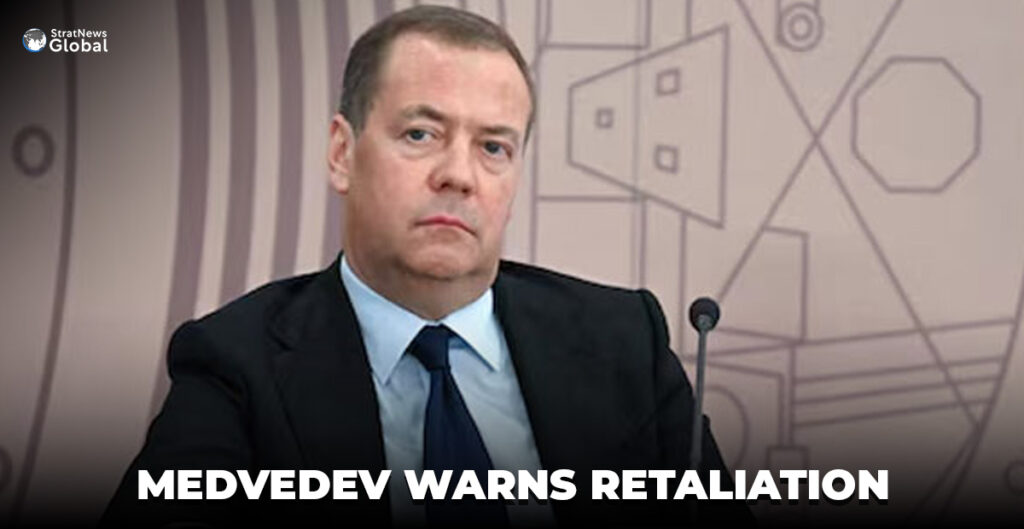


Medvedev Says Russia May Need Preemptive Strikes On West: TASS
Former Russian President Dmitry Medvedev said on Thursday that the West is effectively waging a full-scale war against Russia, and Moscow should respond forcefully—potentially with preemptive strikes if necessary, according to the TASS state news agency.
Medvedev, deputy chairman of Russia’s Security Council, cast himself as a liberal moderniser when he was president from 2008-2012, but has since emerged as an anti-Western Kremlin hawk. Diplomats say his remarks give an indication of thinking among some within the political elite.
“What is happening today is a proxy war, but in essence it is a full-scale war (launches of Western missiles, satellite intelligence, etc), sanctions packages, loud statements about the militarisation of Europe.
“It’s another attempt to destroy the ‘historical anomaly’ hated by the West – Russia, our country,” TASS cited Medvedev – who accused the West of trying to undermine Moscow for centuries – as saying.
“We need to act accordingly. To respond in full. And if necessary, launch preemptive strikes,” Medvedev was quoted as saying, adding that many in the West had treachery in their blood and an outdated view of their own superiority.
Russia Threat Looms
The U.S.-led NATO military alliance casts Russia as a major threat, and politicians across Western Europe have said that Russia, which in 2022 sent tens of thousands of troops into Ukraine, could one day attack a member of NATO.
Medvedev dismissed claims that Russia could one day attack NATO or Europe as complete rubbish, noting that President Vladimir Putin had repeatedly rejected such assertions, too.
“The statements of Western politicians on this topic are complete nonsense. I would add that this nonsense is being deliberately thrown into the information space in order to destabilise an already difficult situation. This is another flank of the West’s open war against us,” he said.
Russia and the United States are by far the world’s biggest nuclear powers, with about 87% of all nuclear weapons, followed by China, France, Britain, India, Pakistan, Israel and North Korea, according to the Federation of American Scientists.
(With inputs from Reuters)
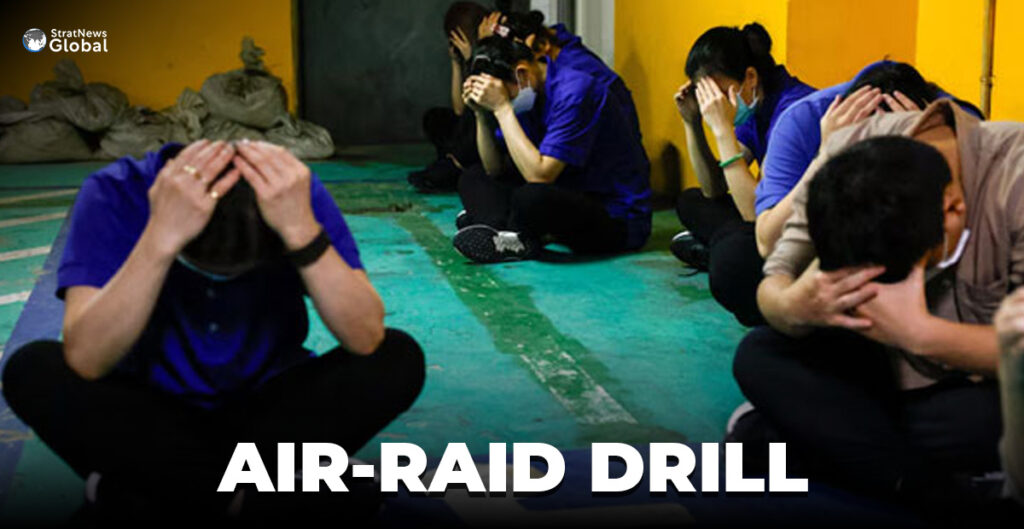
Taipei Falls Silent As Air-Raid Drill Prepares For Possible Chinese Missile Strike
Sirens blared, streets cleared, and residents were ordered indoors in Taiwan‘s capital, Taipei, on Thursday during an annual air-raid drill preparing for a potential Chinese missile strike.
Sirens sounded at 1:30 p.m. (0530 GMT) for the mandatory street evacuation drills, which effectively shut towns and cities across northern Taiwan for 30 minutes.
An alert, asking people to evacuate to safety immediately, was sent via phone text message by the defence ministry.
“Air Defence Drill. Missile attack. Seek immediate shelter,” it read in Chinese and English, accompanied by a shrill alarm.
Taiwan authorities this month updated instructions on what people should do when air-raid alerts are issued, including for citizens who are not able to get into shelters in time or for those who are driving a car.
China, whose government views democratically governed Taiwan as its territory despite the island’s rejection, has ramped up its military pressure over the past five years, including almost daily fighter jet flights into the skies around the island.
Rising Chinese Military Activities
In the past 24 hours, 58 Chinese military planes, including fighter jets, were detected around Taiwan, its defence ministry said. Among them, 45 crossed the Taiwan Strait median line, an unofficial buffer zone.
Taiwan President Lai Ching-te, whom China reviles as a “separatist”, rejects Beijing’s sovereignty claims and says only Taiwan’s people can decide their future. He has repeatedly offered talks with China but has been rebuffed.
China has never renounced the use of force to bring Taiwan under its control.
During the drill, police in Taipei directed vehicles to move to the side of the roads, and people not already inside were told to seek shelter. Some shops and restaurants pulled down shutters and turned off lights – steps aimed at reducing the risk of becoming a target in the event of a night-time attack.
Sirens sounded 30 minutes later to give the all-clear.
The civil defence drills are taking place at the same time as Taiwan’s largest ever military drills, which simulated attacks on its command systems and infrastructure, as well as China’s grey zone tactics, including military incursions and a disinformation campaign designed to test Taiwan’s response.
(With inputs from Reuters)
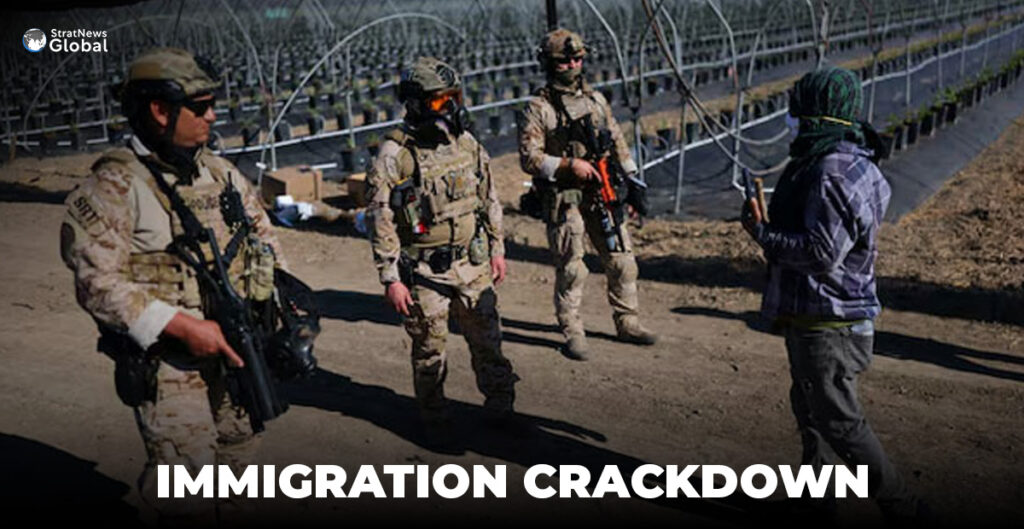
US Citizen Says He Was Jailed For Three Days After California Immigration Raid
A U.S. citizen and Army veteran working as a security guard at a California cannabis farm said on Wednesday that he was arrested during an immigration raid last week and detained for three days without explanation.
George Retes, 25, told reporters he was manhandled by federal agents who broke his car window, damaged his vehicle and sprayed him with tear gas during the raid last Thursday, when immigration officers were confronted by throngs of angry protesters in Camarillo, about 50 miles (80 km) northwest of Los Angeles. He said he was released on Sunday afternoon.
“I told them everything – that I was a citizen, I worked there, and they didn’t care. They still never told me my charges, and they sent me away. They sent me to a place in downtown L.A. without even telling me what I was arrested for,” Retes told reporters in a video press conference organised by the United Farm Workers labour union.
“They took two officers to kneel on my back and then one on my neck to arrest me, even though my hands were already behind my back and I was covered in OC (oleoresin capsicum) spray,” Retes said.
Trump’s Immigration Crackdown
The raid was part of an intensified immigration crackdown launched by the administration of President Donald Trump in June. Protesters regularly appear at immigration raids in the Los Angeles area, demonstrating their opposition to the government’s display of force.
Immigrant rights groups have said the raids have periodically ensnared U.S. citizens and legal permanent residents.
Tricia McLaughlin, a spokesperson for the Department of Homeland Security, confirmed in a statement that Retes was arrested, released and has not been charged.
“The U.S. Attorney’s Office is reviewing his case, along with dozens of others, for potential federal charges related to the execution of the federal search warrant in Camarillo,” McLaughlin said.
Retes, who said he works for a security company contracted by the Glass House cannabis farm, said he missed his daughter’s third birthday while in jail, and he was planning to sue the federal government.
“It doesn’t matter if you’re an immigrant, it doesn’t matter the colour of your skin. … No one deserves to be treated this way,” Retes said. “I hope this never happens to anyone ever again.”
(With inputs from Reuters)
Trump Says India Trade Agreement Is Close, Europe Deal Also Possible
The United States is very close to a trade deal with India, possibly with Europe, but it’s too early to tell regarding Canada, President Donald Trump said in a Wednesday interview on Real America’s Voice.
To press for what Trump views as better terms with trading partners and ways to shrink a huge U.S. trade deficit, his administration has been negotiating trade deals ahead of an August 1 deadline, when duties on most U.S. imports are due to rise again.
“We’re very close to India, and … we could possibly make a deal with (the) EU,” Trump said, when asked which trade deals were on the horizon.
Trump’s comments come as EU trade chief Maros Sefcovic was headed to Washington on Wednesday for tariff discussions, while an Indian trade delegation arrived in Washington on Monday for fresh talks.
“(The) European Union has been brutal, and now they’re being very nice. They want to make a deal, and it’ll be a lot different from the deal that we’ve had for years,” he added.
Asked about the prospects of a deal with Canada, which, like the EU, is readying countermeasures if talks with the U.S. fail to produce a deal, Trump said: “Too soon to say.”
His comment was in line with the assessment of Canadian Prime Minister Mark Carney, who said earlier on Wednesday that a deal that works for Canadian workers was not yet on the table.
Trump also said he would probably put a blanket 10% or 15% tariff on smaller countries.
India Eyes Competitive Advantage
Trump has indicated that Washington is seeking market access into India similar to what Indonesia granted under a recent trade deal.
However, Indian officials are aiming to secure an agreement with the U.S. that includes even lower tariff rates than those offered to Indonesia.
On Tuesday, Trump announced a deal with Indonesia that lowered the tariff rate from a proposed 32% to 19%.
According to a Bloomberg report, Indian officials are negotiating with the Trump administration to finalise a trade agreement before the August 1, 2025, deadline, targeting tariff concessions more favourable than both Indonesia’s 19% and Vietnam’s proposed 20% rate.
A delegation from India is currently in Washington for another round of talks, with both sides working toward a tariff rate under 20%.
Indian negotiators argue that India deserves better terms than its Southeast Asian peers, noting that the U.S. views it differently from countries like Vietnam, which are often seen as transhipment hubs.
According to a source quoted by Bloomberg, ongoing talks suggest India could receive more advantageous tariff treatment compared to regional counterparts.
(With inputs from Reuters and IBNS)
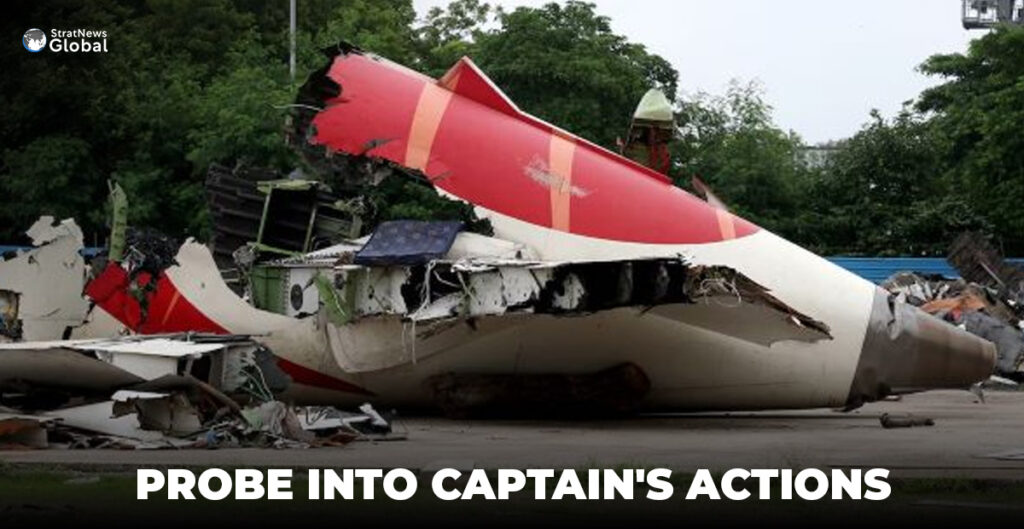
Air India Crash Investigation Centers on Captain’s Actions, Says WSJ
A cockpit voice recording from the Air India flight that crashed last month suggests the captain may have shut off the fuel supply to the engines, according to a Wall Street Journal report on Wednesday.
The newspaper cited people familiar with U.S. officials’ early assessment of evidence uncovered in the investigation into the June 12 crash of a Boeing 787 Dreamliner in Ahmedabad, India, that killed 260 people.
A preliminary report into the crash released by India’s Aircraft Accident Investigation Bureau (AAIB) on Saturday said one pilot was then heard on the cockpit voice recorder asking the other why he cut off the fuel and “the other pilot responded that he did not do so.”
Investigators did not identify which remarks were made by Captain Sumeet Sabharwal and which by First Officer Clive Kunder, who had total flying experience of 15,638 hours and 3,403 hours, respectively.
Kunder, who was flying the plane, asked Sabharwal why he moved the fuel switches to the “cutoff” position seconds after lifting off the runway, the Wall Street Journal reported.
No Concrete Evidence
The Journal did not say if there was any evidence that Sabharwal did move the switches, beyond the verbal exchange it cited. But it quoted U.S. pilots who have read the Indian authorities’ report as saying that Kunder, the pilot actively flying, likely would have had his hands full pulling back on the Dreamliner’s controls at that stage of the flight.
India’s AAIB, Directorate General of Civil Aviation, Ministry of Civil Aviation, Air India and two unions representing Indian pilots did not immediately comment on the Wall Street Journal report. Boeing also declined to comment.
The AAIB’s preliminary report said the fuel switches had switched from run to cutoff a second apart just after takeoff, but it did not say how they were flipped.
Almost immediately after the plane lifted off the ground, closed-circuit TV footage showed a backup energy source called a ram air turbine had deployed, indicating a loss of power from the engines.
The London-bound plane began to lose thrust, and after reaching a height of 650 feet, the jet started to sink.
The fuel switches for both engines were turned back to run, and the airplane automatically tried restarting the engines, the report said.
But the plane was too low and too slow to be able to recover, aviation safety expert John Nance said.
The plane clipped some trees and a chimney before crashing in a fireball into a building on a nearby medical college campus, the report said, killing 19 people on the ground and 241 of the 242 on board the 787.
No Safety Recommendations
In an internal memo on Monday, Air India CEO Campbell Wilson said the preliminary report found no mechanical or maintenance faults and that all required maintenance had been carried out.
The AAIB’s preliminary report had no safety recommendations for Boeing or engine manufacturer GE.
After the report was released, the U.S. Federal Aviation Administration and Boeing privately issued notifications that the fuel switch locks on Boeing planes are safe, according to sources.
The circumstantial evidence increasingly indicates that a crew member flipped the engine fuel switches, Nance said, given there was “no other rational explanation” that was consistent with the information released to date.
Nonetheless, investigators “still have to dig into all the factors” and rule out other possible contributing factors which would take time, he said.
Most air crashes are caused by multiple factors, and under international rules, a final report is expected within a year of an accident.
The Air India crash has rekindled debate over adding flight deck cameras, known as cockpit image recorders, on airliners.
Nance said investigators likely would have benefited greatly from having video footage of the cockpit during the Air India flight.
Air India has faced additional scrutiny on other fronts after the crash.
The European Union Aviation Safety Agency said this month it plans to investigate its budget airline, Air India Express, after it was reported the carrier did not follow a directive to change engine parts of an Airbus A320 in a timely manner and falsified records to show compliance.
(With inputs from Reuters)
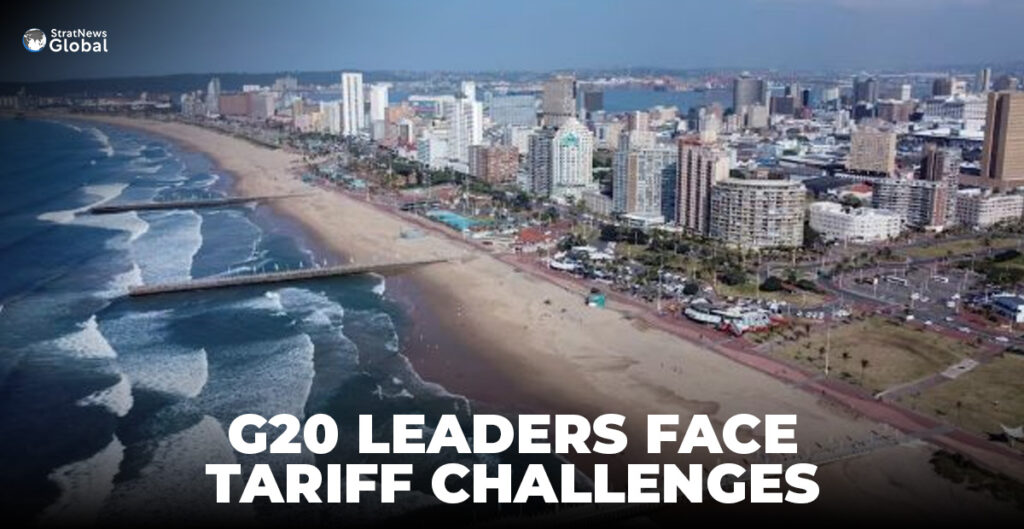
G20 Finance Chiefs Set To Meet In South Africa Amid Tariff Tensions
G20 finance leaders are scheduled to gather in South Africa on Thursday, with the meeting overshadowed by U.S. President Donald Trump’s tariff threats and growing doubts about the group’s ability to respond collectively to global economic challenges.
The club, which came to fore as a forum for international cooperation to combat the global financial crisis, has for years been hobbled by disputes among key players exacerbated by Russia’s war in Ukraine and Western sanctions on Moscow.
Host South Africa, under its presidency motto “Solidarity, Equality, Sustainability,” has aimed to promote an African agenda, with topics including the high cost of capital and funding for climate change action.
The G20 aims to coordinate policies but its agreements are non-binding.
Absence Of Leaders
U.S. Treasury Secretary Scott Bessent will not attend the two-day meeting of finance ministers and central bank governors in the coastal city of Durban, marking his second absence from a G20 event in South Africa this year.
Bessent also skipped February’s Cape Town gathering, where several officials from China, Japan and Canada were also absent, even though Washington is due to assume the G20 rotating presidency at the end of the year.
Michael Kaplan, U.S. acting undersecretary for international affairs, will represent Washington at the meetings.
A G20 delegate, who asked not to be named, said Bessent’s absence was not ideal but that the United States was engaging in discussions on trade, the global economy and climate language.
Finance ministers from India, France and Russia are also set to miss the Durban meeting.
South Africa’s central bank governor Lesetja Kganyago said that representation was what mattered most.
“What matters is, is there somebody with a mandate sitting behind the flag and are all countries represented with somebody sitting behind the flag?” Kganyago said.
U.S. officials have said little publicly about their plans for the presidency next year, but one source familiar with the plans said Washington would reduce the number of non-financial working groups, and streamline the summit schedule.
Brad Setser, a former U.S. official now at the Council on Foreign Relations, said he expected it to be “kind of a scaled-back G20 with less expectation of substantive outcomes.”
‘Turbulent Times’
Trump’s tariff policies have torn up the global trade rule book. With baseline levies of 10% on all U.S. imports and targeted rates as high as 50% on steel and aluminium, 25% on autos and potential levies on pharmaceuticals, extra tariffs on more than 20 countries are slated to take effect on August 1.
His threat to impose further 10% tariffs on BRICS nations — of which eight are G20 members — has raised fears of fragmentation within global forums.
German finance ministry sources said on Tuesday that the Durban meeting would seek to deepen global relationships in “turbulent times”.
South Africa’s Treasury Director General Duncan Pieterse said the group nonetheless hoped to issue the first communique under the South African G20 presidency by the end of the meetings.
The G20 was last able to take a mutually agreed stance to issue a communique in July of 2024, agreeing on the need to resist protectionism but making no mention of Russia’s invasion of Ukraine.
(With inputs from Reuters)
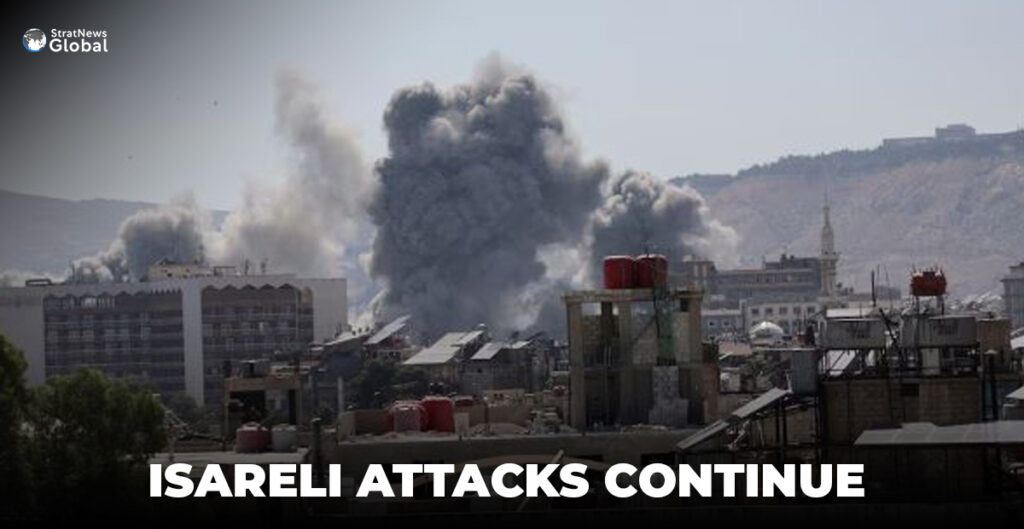
Israel Carries Out Major Airstrikes In Damascus, Pledges To Protect Druze
Israel carried out heavy airstrikes in Damascus on Wednesday, destroying part of the defence ministry and striking near the presidential palace. The Israeli government pledged to dismantle Syrian government forces targeting Druze populations in southern Syria and demanded their immediate withdrawal.
The attacks marked a significant Israeli escalation against the Islamist-led administration of interim President Ahmed al-Sharaa. They came despite his warming ties with the U.S. and his administration’s evolving security contacts with Israel.
Describing Syria’s new rulers as barely disguised jihadists, Israel has said it will not let them move forces into southern Syria and vowed to shield the area’s Druze community from attack, encouraged by calls from Israel’s own Druze minority.
The U.S. said the fighting would stop soon.
“We have engaged all the parties involved in the clashes in Syria. We have agreed on specific steps that will bring this troubling and horrifying situation to an end tonight,” Secretary of State Marco Rubio said on social media.
The United Nations Security Council will meet on Thursday to address the conflict, diplomats said.
“The council must condemn the barbaric crimes committed against innocent civilians on Syrian soil,” said Israel’s ambassador to the U.N., Danny Danon. “Israel will continue to act resolutely against any terrorist threat on its borders, anywhere and at any time.”
Warplanes Over Damascus
Scores of people have been killed this week in violence in and around the predominantly Druze city of Sweida, pitting fighters from the Druze minority against government security forces and members of Bedouin tribes.
People heard warplanes swoop low over the capital and unleash a series of massive strikes mid-afternoon. Columns of smoke rose from the area near the defence ministry. A section of the building was destroyed, the ground strewn with rubble.
A Syrian medical source said the strikes on the ministry killed five members of the security forces.
An Israeli military official said the entrance to the military headquarters in Damascus was struck, along with a military target near the presidential palace. The official said Syrian forces were not acting to prevent attacks on Druze and were part of the problem.
“We will not allow southern Syria to become a terror stronghold,” said Eyal Zamir, Israel’s military chief of staff.
New Clashes
Sharaa faces challenges to stitch Syria back together in the face of deep misgivings from groups that fear Islamist rule. In March, mass killings of members of the Alawite minority exacerbated the mistrust.
On Monday, Syrian government troops were dispatched to the Sweida region to quell fighting between Druze fighters and Bedouin armed men. The troops ended up clashing with the Druze militias.
New clashes broke out in the city, according to a witness, after the Syrian interior ministry and a Druze leader, Sheikh Yousef Jarbou, said a ceasefire had been reached.
Sweida residents said they were holed up indoors. “We are surrounded and we hear the fighters screaming … we’re so scared,” a resident of Sweida said by phone.
Cracks of gunfire interspersed by booms could be heard in the background. “We’re trying to keep the children quiet so that no one can hear us,” the man added, asking not to be identified for fear of reprisals.
Syria’s health ministry said dozens of bodies, including fighters and civilians, had been found in a hospital in the city.
The Syrian Network for Human Rights said 169 people had been killed in this week’s violence. Security sources put the toll at 300.
An Offshoot Of Islam
Druze, followers of a religion that is an offshoot of Islam, are spread between Syria, Lebanon and Israel.
Following calls in Israel to help Druze in Syria, scores of Israeli Druze broke through the border fence on Wednesday, linking up with Druze on the Syrian side, a witness said.
Israeli Prime Minister Benjamin Netanyahu said the Israeli military was working to save the Druze and urged Israeli Druze citizens not to cross the border. The Israeli military said it was working to safely return civilians who had crossed.
Israeli Druze man Faez Shkeir said he felt helpless watching the violence in Syria. “My family is in Syria – my wife is in Syria, my uncles are from Syria, and my family is in Syria, in Sweida, I don’t like to see them being killed. They kicked them out of their homes, they robbed and burned their houses, but I can’t do anything,” he said.
A Syrian government statement on Wednesday said those responsible for lawlessness in Sweida would be held accountable. It said the government was committed to protecting the rights of the people in Sweida.
Sharaa has repeatedly promised to protect minorities.
(With inputs from Reuters)
US House Moves Closer To First Federal Crypto Law
The Republican-led US House of Representatives on Wednesday cleared crucial procedural hurdles on crypto legislation, just a day after President Donald Trump stepped in to rescue the initiative — paving the way for America’s first federal law on digital assets.
The votes came after more than nine hours of private talks as leaders worked to win over lawmakers skeptical of how the package was structured.
A bill to establish a federal framework for stablecoins is likely to be the first to be passed, in what would be a watershed victory for the crypto industry.
It has already been approved by the Senate, and if approved by the House, it would go to Trump for his signature.
Stablecoins
Stablecoins, a type of cryptocurrency designed to maintain a constant value, usually a 1:1 dollar peg, are commonly used by crypto traders to move funds. They have gained much momentum in recent years, offering faster and cheaper transaction costs than moving money through a bank.
In addition to stablecoins, the House is set to consider a bill to establish market structure rules for crypto products, including defining when the products are a commodity and not subject to oversight from the Securities and Exchange Commission. The Senate has yet to take up a similar measure.
Third Bill
The third bill, strongly backed by conservatives, would prohibit the Federal Reserve from issuing a digital currency of its own. Some Republicans argue a Fed digital currency could give the government too much control over Americans’ finances. Current Fed leaders have said they are not considering such an initiative.
House Majority Whip Tom Emmer said on X late Wednesday that the third bill would be attached to a separate defence authorisation bill as part of the overall compromise.
House Republicans had suffered a setback in their bid to advance the bills on Tuesday, when several conservative Republicans joined with Democrats to block an earlier procedural vote. But Trump met with the hold-outs and paved the way for another vote on Wednesday.
Even after those talks, subsequent procedural votes required to consider the legislation proved fraught, as Republican leaders had to spend several hours convincing conservative lawmakers to allow the bills to proceed. A handful of members had resisted efforts to consider the three main pieces of crypto legislation separately.
(With inputs from Reuters)
Sharaa Pledges Safety For Druze Amid Israeli Airstrikes
Syria’s interim President Ahmed al-Sharaa on Thursday said safeguarding Druze citizens and their rights remains “our top priority”, even as Israel vowed to eliminate Syrian forces targeting the Druze community in southern Syria.
In his first televised statement after powerful Israeli air strikes on Damascus on Wednesday, Sharaa addressed Druze citizens saying “we reject any attempt to drag you into hands of an external party”.
“We are not among those who fear the war. We have spent our lives facing challenges and defending our people, but we have put the interests of the Syrians before chaos and destruction,” he said.
He added that the Syrian people are not afraid of war and are ready to fight if their dignity is threatened.
Presidential Palace Hit
Israel’s airstrikes blew up part of Syria’s defence ministry and hit near the presidential palace as it vowed to destroy government forces attacking Druze in southern Syria and demanded they withdraw.
The attacks marked a significant Israeli escalation against Sharaa’s Islamist-led administration. They came despite his warming ties with the US and his administration’s evolving security contacts with Israel.
Describing Syria’s new rulers as barely disguised jihadists, Israel has said it will not let them move forces into southern Syria and vowed to shield the area’s Druze community from attack, encouraged by calls from Israel’s own Druze minority.
Fighting Would Stop Soon: US
“We have engaged all the parties involved in the clashes in Syria. We have agreed on specific steps that will bring this troubling and horrifying situation to an end tonight,” US Secretary of State Marco Rubio said on social media.
The United Nations Security Council will meet on Thursday to address the conflict, diplomats said.
“The council must condemn the barbaric crimes committed against innocent civilians on Syrian soil,” said Israel’s ambassador to the UN, Danny Danon. “Israel will continue to act resolutely against any terrorist threat on its borders, anywhere and at any time.”
Warplanes Over Damascus
The Syrian Network for Human Rights said 169 people had been killed in this week’s violence. Security sources put the toll at 300. Reuters could not independently verify the tolls.
Reuters reporters heard warplanes swoop low over the capital Damascus and unleash a series of massive strikes on Wednesday afternoon. Columns of smoke rose from the area near the defence ministry. A section of the building was destroyed, the ground strewn with rubble.
An Israeli military official said the entrance to the military headquarters in Damascus was struck, along with a military target near the presidential palace. The official said Syrian forces were not acting to prevent attacks on Druze and were part of the problem.
“We will not allow southern Syria to become a terror stronghold,” said Eyal Zamir, Israel’s military chief of staff.
Challenges
Sharaa faces challenges to stitch Syria back together in the face of deep misgivings from groups that fear Islamist rule. In March, mass killings of members of the Alawite minority exacerbated the mistrust.
Druze, followers of a religion that is an offshoot of Islam, are spread between Syria, Lebanon and Israel.
Following calls in Israel to help Druze in Syria, scores of Israeli Druze broke through the border fence on Wednesday, linking up with Druze on the Syrian side, a Reuters witness said.
Israeli Prime Minister Benjamin Netanyahu said the Israeli military was working to save the Druze and urged Israeli Druze citizens not to cross the border. The Israeli military said it was working to safely return civilians who had crossed.
Israeli Druze Faez Shkeir said he felt helpless watching the violence in Syria.
“My family is in Syria – my wife is in Syria, my uncles are from Syria, and my family is in Syria, in Sweida, I don’t like to see them being killed. They kicked them out of their homes, they robbed and burned their houses, but I can’t do anything,” he said.
(With inputs from Reuters)
Malaysia Faces Heat Over Trump’s Pick For US Envoy
Malaysia’s government is under growing pressure to reject a self-proclaimed “alpha male” influencer nominated by President Donald Trump as US ambassador — a move that could strain bilateral ties amid crucial tariff negotiations.
The White House has proposed 40-year-old author and outspoken political commentator Nick Adams to the Senate as its nominee for ambassador to Malaysia, triggering concerns in the Muslim-majority nation over Adams’ views on Islam and support for Israel’s military campaign in Gaza, among other sensitive topics.
No date is set for the Senate vote, but Adams is expected to be approved, with the Republican-held Senate green-lighting every Trump nominee since he became president in January.
Hooters, Hot Dogs And Muscle Cars
Adams, a naturalised US citizen originally from Australia, has an outsized persona on social media and is known for his appeal among young males in the “manosphere”, an online space for men’s issues. He lists interests including a love for hot dogs, steak, muscle cars, and restaurant chain Hooters, where servers wear revealing uniforms.
In posts on online platform X, Adams has railed against alleged efforts to “teach Islam in schools” and described those expressing solidarity with Palestinians as supporters of terrorism.
The posts have sparked outrage in Malaysia, which has a majority of mostly Muslim ethnic Malays alongside significant ethnic Chinese and ethnic Indian minorities of other faiths. Malaysia has also long supported the Palestinian cause, with Prime Minister Anwar Ibrahim rejecting what he described as Western pressure to condemn Palestinian militant group Hamas.
‘Open Insult’
The youth wing of Anwar’s People’s Justice Party said this week it would submit a memorandum of protest to the US embassy in Kuala Lumpur against Adams’ proposed appointment as envoy, adding any rejection “should not be misconstrued as hostility but rather seen as a necessary measure to safeguard the integrity of bilateral relations.”
Mohamed Sukri Omar, a member of Islamic opposition party PAS, said in a statement the appointment would be “an open insult towards the sensitivities of the Malaysian people,” while a group representing 20 pro-Palestine organisations in Malaysia urged the government to reject Adams.
Malaysian government spokesperson Fahmi Fadzil said on Tuesday Adams’ appointment had not yet been raised in cabinet, which has the authority to accept new diplomatic appointments.
‘No Elegant Solution’
Shahriman Lockman of Malaysia’s Institute of Strategic and International Studies, said protests from Muslim groups and ruling bloc allies could be too politically costly for Anwar’s government to ignore, although Adams may be a useful conduit during trade talks due to his perceived closeness to Trump.
Refusing Adams could also provoke retaliation from Trump at a time when Malaysia faces pressure to make trade concessions in exchange for lowering a potentially hefty 25% US tariff, he said.
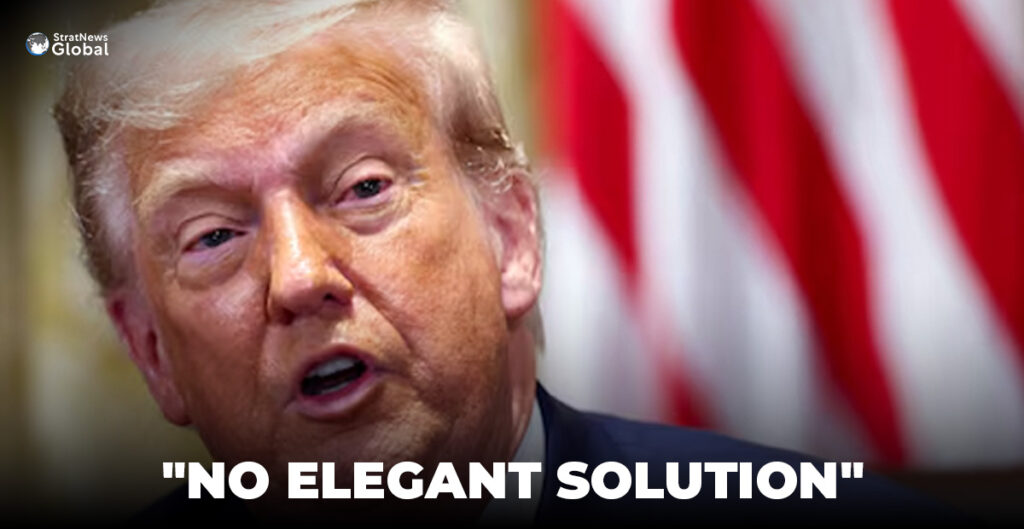
“There’s no elegant solution here. It’s damned if you do, damned if you don’t,” Shahriman said.
Adams’ office did not immediately respond to a request for comment. In an X post on July 10, he thanked Trump for the nomination, describing it as “the honour of a lifetime”. Trump described Adams on Truth Social as “an incredible Patriot and very successful entrepreneur, whose love of, and devotion to, our Great Country is an inspiration.”
When contacted for comment, the US embassy in Kuala Lumpur pointed to remarks made by US Secretary of State Marco Rubio during a visit to Malaysia last week. Rubio said he supported Adams’ nomination and looked forward to his confirmation.
‘Tone Matters’
Former diplomats say Malaysia was unlikely to reject Adams’ appointment outright, but could make its objections known through informal channels or by delaying its approval.
“That would send a subtle but clear diplomatic signal: we value the bilateral relationship, but we also expect a standard of decorum, cultural sensitivity, and respect appropriate to such a posting,” said Ilango Karuppannan, a retired former Malaysian ambassador who was once deputy chief of mission in Washington.
While concerns over Adams’ appointment were unlikely to have a direct impact on trade negotiations, “the broader tone of the bilateral relationship always matters,” he said.
“A smooth, professional handling of this nomination can help ensure those trade discussions stay on track, while an avoidable public clash might risk unnecessary complications,” Karuppannan said.
‘Cannot Compromise On Certain Principles’
Former Malaysia Foreign Minister Saifuddin Abdullah, a member of the largely ethnic Malay opposition bloc Perikatan Nasional, said Malaysia should stand firm in upholding its values despite Adams’ relationship with Trump.
“Yes it would be good to have a US ambassador who is very close to Trump… but you cannot compromise on certain principles,” he said.
Tricia Yeoh, an associate professor at the University of Nottingham Malaysia, said Adams’ success as envoy would be highly dependent on his ability to win the trust of Malaysia’s political and policy leadership.
“If the comments he has previously made on social media are accurate depictions of his position on sociopolitical matters, he might find it challenging to do so, especially if he intends to make these positions publicly and explicitly known,” she said.
(With inputs from Reuters)