

Support us by contributing to StratNewsGlobal on the following UPI ID
ultramodern@hdfcbank

Strategic affairs is our game, South Asia and beyond our playground. Put together by an experienced team led by Nitin A. Gokhale. Our focus is on strategic affairs, foreign policy and international relations, with higher quality reportage, analysis and commentary with new tie-ups across the South Asian region.
You can support our endeavours. Visit us at www.stratnewsglobal.com and follow us on YouTube, Twitter, Facebook and Instagram.
र 500 per month
र 1000 per month
र 5000 per year
र 10000 per year
Donate an amount of your choice
र 500 per month
Donate र 500 per month

र 1000 per month
Donate र 1000 per month
र 5000 per year
Donate र 5,000 per year
र 10000 per year
Donate र 10,000 per year
Donate an amount of your choice
Donate an amount of your choice
India, Argentina Deepen Ties In Critical Minerals, Energy Security
India and Argentina are ramping up cooperation in the critical minerals sector, with focus on lithium exploration and mining. Earlier this month during PM Modi’s meeting with Argentine President Javier Milei in Buenos Aires, both leaders had called for enhanced cooperation in a host of sectors, including critical minerals.
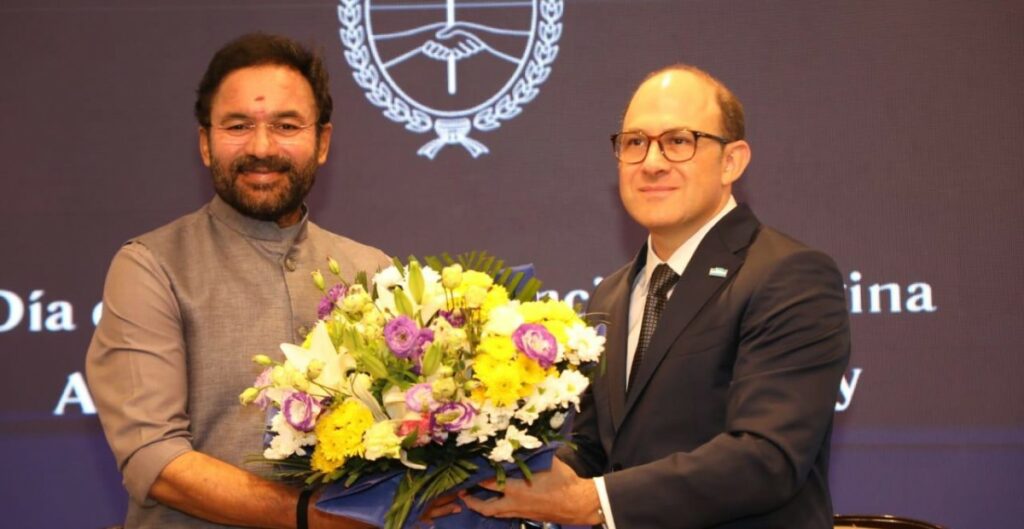
The collaboration was highlighted during Argentina’s National Day celebrations in New Delhi, with senior Indian and Argentine officials reaffirming shared interests and expanding engagement across multiple sectors.
Speaking at the event, G. Kishan Reddy, Minister of Coal and Mines, stressed the central role of critical minerals in the future of India-Argentina relations.
“There are several promising areas where India and Argentina can work together to build a stronger mutual, beneficial partnership. From trade and defence to space cooperation, nuclear energy and critical minerals,” he said.
“As Mines minister, my special interest is in the mining of minerals Argentina holds—the third largest lithium reserves in the world. As India’s demand for critical minerals continues to grow rapidly, Argentina can cooperate and join hands as a reliable and strategic partner in meeting these essential needs,” he added.
“These minerals are critical for new technologies and the digital economy in the future. India and Argentina hold a greater promise for cooperation in this sector.”
India has launched the national critical mineral mission. It is building a robust domestic policy ecosystem to support the development of the critical mineral value chain. India and Argentina have the potential to establish mutually beneficial partnership in the exportation, extraction and processing of critical minerals.
“Together, we can lay the foundation for strong centres, for future mineral development in the Global South,” the minister said. He also highlighted the active involvement of Indian state-run entities, noting: “Public sector unit, KABIL is working in five lithium classes in the Catamarca region of Argentina.”
Mining Projects Gain Momentum
The growing importance of lithium cooperation was echoed by Argentine Ambassador Mariano A Caucino of Argentina. He spotlighted Indian mining ventures in Catamarca, a resource-rich province in northwestern Argentina.
“Recent years marked a significant milestone for Indian mining companies. The province of Catamarca is now hosting Indian firms that are not only exploring lithium but also showing interest in copper and gold. Governor Raúl Jalil of Catamarca visited India two months ago in order to enhance and promote these ties,” the Ambassador stated.
“These investments are particularly important as India advances its electric vehicle (EV) development, aiming to secure a resilient and diversified supply chain for critical minerals essential for various industries in India,” he added.
Energy Security And Strategic Cooperation
The Ambassador pointed to recent engagements between Indian energy companies and YPF, Argentina’s leading oil and gas firm, “We can contribute to India’s energy security as well,” said the Ambassador.
“It should be remembered that this year Horacio Daniel Marín, President of YPF, Argentina’s main oil and gas company, visited India and signed a MoU with Indian energy companies, in what represented an important step ahead for our relations on that matter.”
A Broader Strategic Partnership
The Argentina-India partnership spans a range of sectors, including trade, defence, science and technology and space cooperation. The Ambassador underscored the growing diplomatic momentum between the two countries.
“We celebrate the historical visit that Prime Minister Narendra Modi made to Argentina just two weeks ago,” Ambassador Caucino noted.
“Prime Minister Modi and President Javier Milei had the chance to exchange views on several areas of mutual interest, including on the importance of free markets, deregulation, limited government and the rule of law,” he said.
Indian Saver, Turns Investor
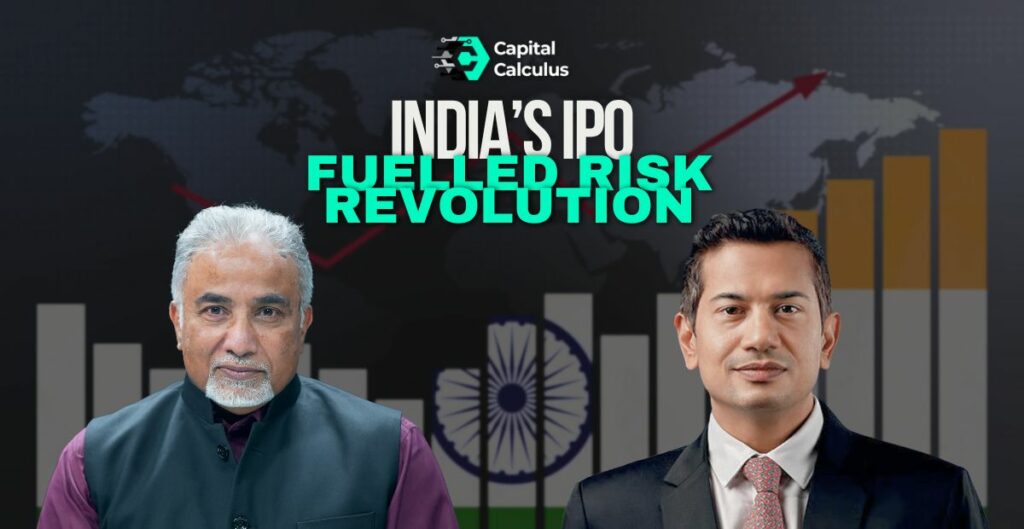
Trumpian economics and fluid geopolitics notwithstanding, Indian companies are poised to raise over $2 billion from Initial Public Offerings (IPOs) in July alone.
In fact, the country’s share in global IPO listings has risen from 17% in 2023 to 30% in 2024—the highest in the world.
A subtext of this phenomenon is the contribution of the Indian retail investor. For long they were considered risk averse, preferring safety over returns. No longer. Their growing risk appetite is the subtext of this IPO boom.
To unpack India’s makeover from a saver to an investor nation, StratNewsGlobal.Tech spoke to Pranav Haldea, Managing Director, Prime Database on Capital Calculus.
As Demand For Critical Minerals Grows, India Looks To An Old Friend
As India intensifies its quest for secure and diversified sources of critical minerals, its long-standing strategic partnership with Russia could play a key role.
StratNewsGlobal learns that critical minerals will be high on the agenda when Prime Minister Narendra Modi and President Vladimir Putin, meet later this year.
“Critical minerals are vital for India’s high-tech future, and our countries share a strong interest in building a reliable framework for cooperation in this space,” Russia’s Ambassador Denis Alipov, told StratNewsGlobal.
He said Russian enterprises are not only ready to partner with Indian firms in Russia, but also in joint exploration projects across Asia and Africa.
Russia is home to around 22% of rare earth elements, making it the world’s fifth largest. The US Geological Survey says it has about 3.8 million metric tons of rare earths, but Russia says that figure is only the reserves currently under development.
Russia says it has a staggering 28.7 million tons comprising no less than 15 rare earth metals. But domestic demand is low and competition from China prevented any substantial investment.
But given growing worldwide demand and China playing hooky with the rare earths supply chain, President Putin has termed the sector as a priority. India and Russia have been stepping up discussions through various high-level platforms.
At the 9th meeting of the Subgroup on Mining held in November 2024, critical minerals emerged as a key theme. Follow-up discussions in June 2025 during the St. Petersburg International Economic Forum between Russia’s Deputy Prime Minister Alexey Overchuk and India’s Minister for Electronics and IT, Ashwini Vaishnaw, reinforced the strategic understanding in this regard.
Tech-Driven Exploration and Co-Development
Earlier this week, the 10th meeting of the India-Russia Subgroup on Mining focused on enhancing cooperation in the aluminium sector, joint sourcing of rare earth elements, and collaborative projects in mining and geological exploration.
Among the areas being identified are AI-powered exploration techniques and the use of unmanned aerial vehicles for mineral surveys. An MoU is expected to be signed in the coming months.
Three months back, India’s Institute of Minerals and Materials Technology of the CSIR (CSIR-IMMT) signed strategic agreements with two leading Russian research bodies: JSC Giredmet—part of Rosatom—which specialises in the development of new materials based on rare metals, and the National Institute of Science & Technology which specialises in steelmaking and mettalurgy.
These agreements aim to advance R&D in sustainable mineral processing, resource efficiency, and cutting-edge extraction technologies, further anchoring science and technology as pillars of the India-Russia mineral alliance.
Looking Ahead: From Dialogue to Delivery
India’s ambitions to emerge as a hub for clean energy and advanced manufacturing require assured access to critical minerals. With Russia’s vast reserves and technical know-how, the partnership holds significant potential.
Officials suggest that the leaders’ meeting later this year could formalize new agreements that not only secure India’s supply chains but also support Russia’s move toward deeper economic engagement with Asian partners.
The shared geopolitical and economic calculus makes this cooperation more than transactional—it reflects a strategic alignment rooted in mutual resilience and long-term development.
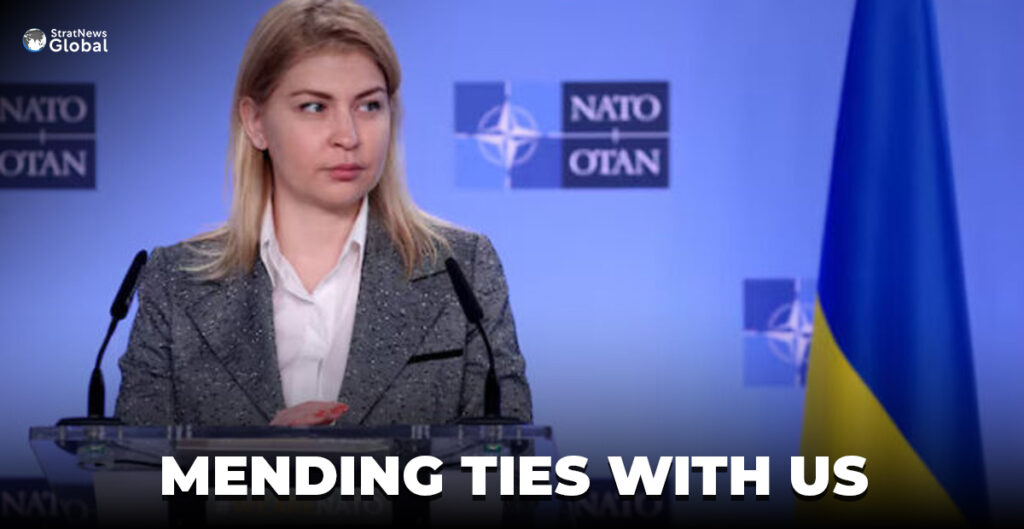
Stefanishyna Appointed As Ukraine’s New US Envoy
In a significant diplomatic move, Ukraine’s President Volodymyr Zelenskyy announced on Thursday that Olha Stefanishyna, the Deputy Prime Minister in charge of Euro-Atlantic integration, will be appointed as the country’s new ambassador to the United States.
Taking to Telegram, President Zelenskyy shared the news of the new appointment, enabling her to begin engaging with Washington and strengthening bilateral ties even as the formal procedures for her ambassadorial appointment are being completed.
Mending Ties
Ukraine is making efforts to repair its strained relationship with the United States, following a public clash between President Zelenskyy and US President Donald Trump during their meeting at the White House in February — an incident that drew significant international attention and highlighted growing diplomatic tensions.
Stefanishyna has served as Ukraine’s minister for European and Euro-Atlantic Integration since 2020, during which time Ukraine began its accession process to the EU.
Ukraine’s current ambassador to the US, Oksana Markarova, incurred the wrath of Trump’s incoming administration during the 2024 election battle with his predecessor Joe Biden.
Markarova was accused by Republicans of helping Biden’s Democratic Party by organising Zelenskyy’s visit to a Pennsylvania ammunition factory in autumn 2024, which was attended by Democratic politicians but not by Republicans.
The incident was prominently raised by US Vice President JD Vance during a heated exchange with President Zelenskyy in the diplomatically tense Oval Office meeting, which many described as disastrous. Markarova was also present during the meeting.
Full Audit
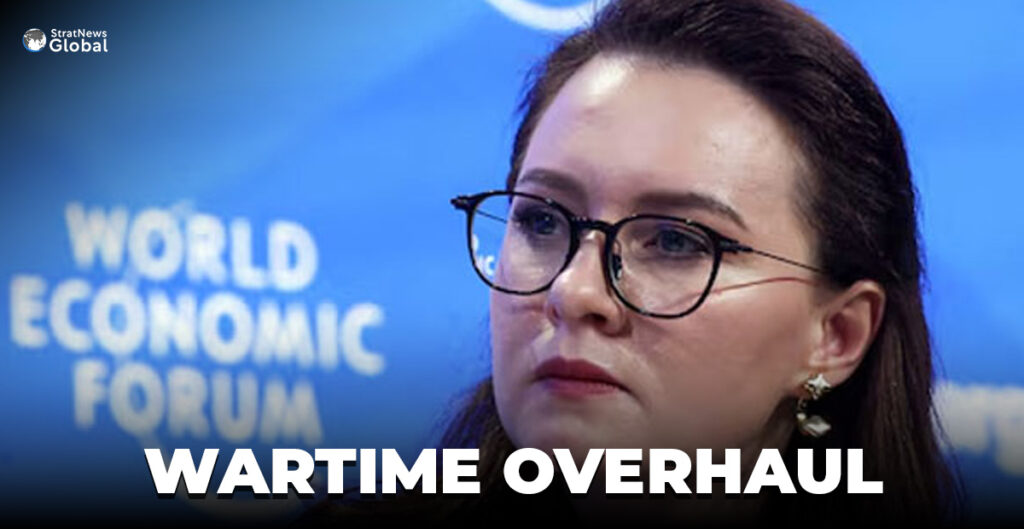
Meanwhile, Ukraine’s newly appointed Prime Minister Yuliia Svyrydenko, who was voted in by parliament earlier in the day, said on X that her priorities in the role would be to ensure reliable supplies to the army and to expand domestic weapons production.
Svyrydenko said on Thursday that her government would be launching a full audit of public finances to achieve “real savings”, and that large-scale privatisations should be accelerated.
(With inputs from Reuters)
Ukrainian Parliament Appoints Yulia Svyrydenko As New Prime Minister
Ukraine’s parliament voted on Thursday to appoint Yulia Svyrydenko as the country’s new prime minister, according to statements from lawmakers on social media.
According to several lawmakers, 262 of them voted for Svyrydenko, a comfortable majority in the 450-seat parliament. Ukraine’s parliament does not broadcast its sessions in wartime.
Zelenskyy-Supported Candidate
Her appointment was supported by President Volodymyr Zelenskyy as part of his biggest government reshuffle since Russia’s invasion began in February 2022.
Svyrydenko, 39, has served as the economy minister and one of Ukraine’s deputy prime ministers since November 2021.
A photograph of the electronic vote table in the chamber posted by another lawmaker, Yaroslav Zheleznyak, showed 22 votes against her appointment and 26 abstentions.
Parliament is also expected to vote through the appointment of outgoing PM Denys Shmyhal, who served for more than five years in the role, as defence minister.
Cabinet Reshuffle
Zelenskyy said he wanted his reshuffled cabinet to focus on deregulation, expanding economic co-operation with allies, and stronger punishments for those who threatened Ukraine’s statehood and “stole Ukraine’s potential.”
Svyrydenko has experience working with top officials in Washington, having negotiated and signed a deal with Treasury Secretary Scott Bessent in April that gave the U.S. preferential access to new Ukrainian minerals deals and will help fund investment in Ukraine’s reconstruction.
In a speech to parliament on Thursday, shortly before the vote to confirm Svyrydenko, Zelenskyy spoke of unspecified future agreements with the United States, which he said would strengthen Ukraine.
The incoming PM was congratulated on her appointment by European Commission President Ursula von der Leyen.
“We stand fully behind you as you fight for Ukraine’s survival and work for your country’s recovery and EU future.”
However, some Ukrainian opposition lawmakers voiced scepticism about the new government.
Yaroslav Zheleznyak of the Holos party said the new government would be largely in hock to Zelenskyy, who has significant wartime powers under Ukraine’s constitution.
“They will be told by the president’s office what they should really do,” he wrote.
Audit Of Public Spending
Ukraine’s newly appointed PM Yuliia Svyrydenko said on Thursday that her government would be launching a full audit of public finances to achieve “real savings”, and that large-scale privatisations should be accelerated.
Svyrydenko, who was voted in by parliament earlier in the day, said on X that her priorities in the role would be to ensure reliable supplies to the army and to expand domestic weapons production.
(With inputs from Reuters)
North Korea Enhances Rocket Site With Maritime Pier
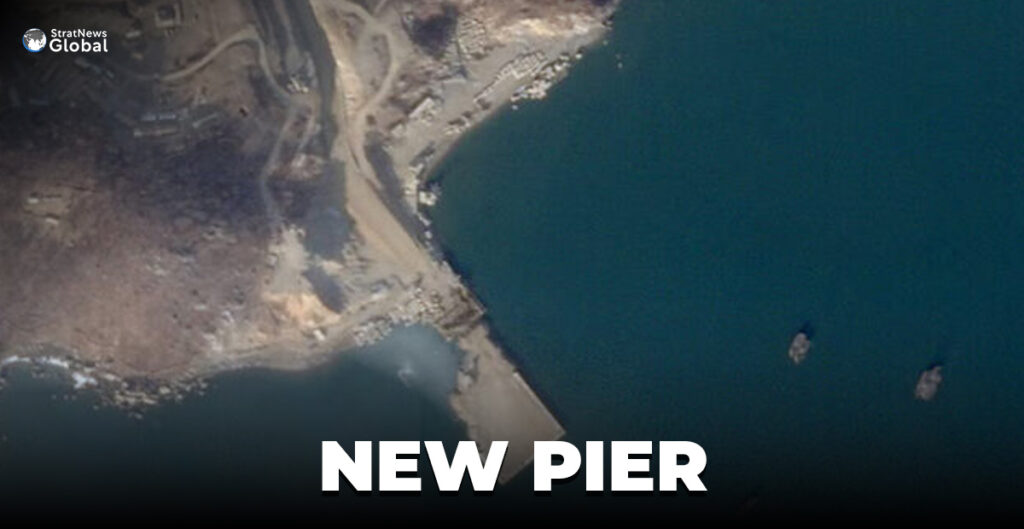
Recent satellite imagery reveals that a new maritime pier has been completed at North Korea’s prominent rocket launch facility, where recent spy satellite launches and other missile tests have taken place, according to satellite operator ICEYE.
The pier at the Sohae Satellite Launching Station seen via the imagery “enables transport of larger rocket components than previously possible via rail”, ICEYE said in findings provided to Reuters. Larger components would allow the site to host rockets that can travel longer distances.
Acting On Kim’s Order
North Korean leader Kim Jong Un in 2022 inspected the Sohae facility and ordered it to be modernised and expanded to ensure that various rockets, including those capable of carrying military spy satellites, could be launched, state media said.
The facility has been used to put a satellite in orbit and also to test various missile components including rocket engines and space launch vehicles that South Korean and US officials say require similar technology to that used in intercontinental ballistic missiles (ICBM).
An image from July 9 also shows the pier with a newly constructed jetty and vessels indicating potential operational status, according to ICEYE, a sign that could help enhance Sohae’s logistical capabilities.
ICEYE added that it took about 28 months from initial reports to develop and complete the pier.
Work to expand the road and rail infrastructure throughout the facility continues, according to 38 North, a Washington-based North Korea monitoring programme.
Not Giving Up
Satellite images, taken from December to July by the commercial satellite firm Planet Labs, also show what appears to be a pier under construction on the shore.
Pyongyang’s latest attempt to launch a military spy satellite at the Sohae site failed in May 2024 but Kim has vowed to never give up the space reconnaissance project that he views as crucial for national self defence against enemy threats.
North Korea successfully placed its first spy satellite in orbit in November 2023.
As part of growing military ties with Moscow, North Korea is likely getting help from Russia on its satellite programme in exchange for sending troops to support Russia in its war against Ukraine, South Korean officials have said.
North Korea says its military activities, including nuclear weapons, are its sovereign right and only for self defence. It accused the United States and its allies of threatening it with “hostile policies” such as military drills and sanctions.
(With inputs from Reuters)
US Senate Approves Aid, Slashes Public Broadcasting In Win for Trump
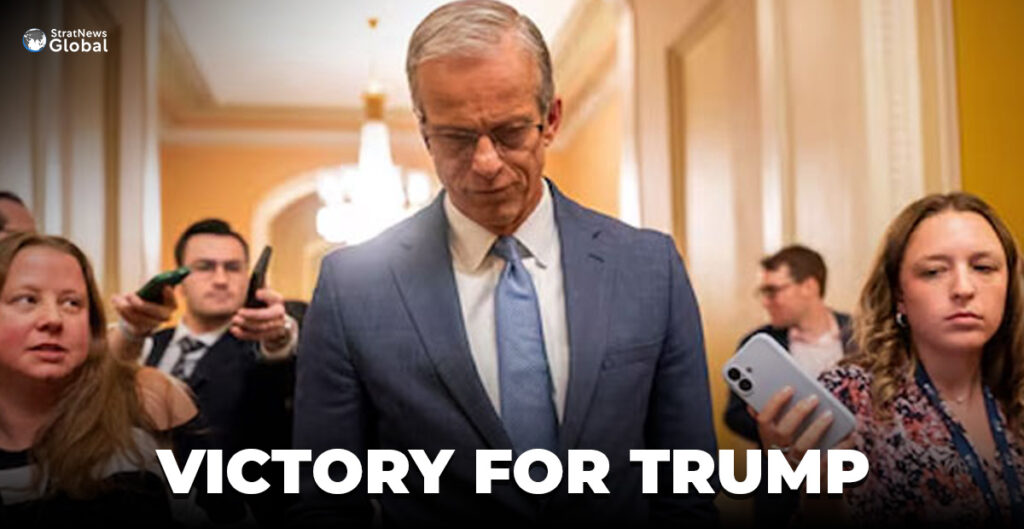
The U.S. Senate early on Thursday approved President Donald Trump’s proposal to slash billions from foreign aid and public broadcasting, marking another win for the Republican leader as he tightens his grip on Congress with minimal resistance.
The Senate voted 51 to 48 in favour of Trump’s request to cut $9 billion in spending already approved by Congress.
Most of the cuts are to programmes to assist foreign countries suffering from disease, war and natural disasters, but the plan also eliminates all $1.1 billion the Corporation for Public Broadcasting was due to receive over the next two years.
Trump and many of his fellow Republicans argue that spending on public broadcasting is an unnecessary expense and reject its news coverage as suffering from anti-right bias.
Standalone rescissions packages have not passed in decades, with lawmakers reluctant to cede their constitutionally mandated control of spending. But Trump’s Republicans, who hold narrow majorities in the Senate and House, have shown little appetite for resisting his policies since he began his second term in January.
Spending Cut
The $9 billion at stake is extremely small in the context of the $6.8 trillion federal budget, and represents only a tiny portion of all the funds approved by Congress that the Trump administration has held up while it has pursued sweeping cuts, many ordered by billionaire Elon Musk’s Department of Government Efficiency, or DOGE.
As of mid-June, Trump was blocking $425 billion in funding that had already been appropriated and previously approved by Congress, according to Democratic lawmakers tracking frozen funding.
However, Trump and his supporters have promised more of the “rescission” requests to eliminate previously approved spending in what they say is an effort to pare back the federal government.
The House of Representatives passed the rescissions legislation without altering Trump’s request by 214-212 last month. Four Republicans joined 208 Democrats in voting no.
But after a handful of Republican senators baulked at the extent of the cuts to global health programs, Russell Vought, director of the Office of Management and Budget, said on Tuesday that PEPFAR, a global program to fight HIV/AIDS launched in 2003 by then-President George W. Bush, was being exempted.
The change brought the size of the package of cuts to $9 billion from $9.4 billion, requiring another House vote before the measure can be sent to the White House for Trump to sign into law.
The rescissions must pass by Friday. Otherwise, the request would expire, and the White House would be required to adhere to spending plans passed by Congress.
Republican ‘No’ Votes
Two of the Senate’s 53 Republicans – Lisa Murkowski of Alaska and Susan Collins of Maine – joined Democrats in voting against the legislation.
“You don’t need to gut the entire Corporation for Public Broadcasting,” Murkowski said in a Senate speech.
She said the Trump administration also had not provided assurances that battles against diseases such as malaria and polio worldwide would be maintained. Most of all, Murkowski said, Congress must assert its role in deciding how federal funds are spent.
Republican Senate Majority Leader John Thune of South Dakota called Trump’s request a “small, but important step toward fiscal sanity.”
Democrats scoffed at that, noting that congressional Republicans earlier this month passed a massive package of tax and spending cuts that nonpartisan analysts estimated would add more than $3 trillion to the nation’s $36.2 trillion debt.
Democrats charged Republicans with giving up Congress’s Constitutionally-mandated control of federal spending.
“Today, Senate Republicans turn this chamber into a subservient rubber stamp for the executive, at the behest of Donald Trump,” Senate Democratic Leader Chuck Schumer of New York said.
“Republicans embrace the credo of cut, cut, cut now, and ask questions later,” Schumer said.
The cuts would overturn bipartisan spending agreements most recently passed in a full-year stopgap funding bill in March. Democrats warn that a partisan cut now could make it more difficult to negotiate government funding bills that must pass with bipartisan agreement by September 30 to avoid a shutdown.
Appropriations bills require 60 votes to move ahead in the Senate, but the rescissions package needs just 51, meaning Republicans can pass it without Democratic support.
(With inputs from Reuters)
China’s Grouse: Dalai Lama And His Presence In India
Tensions between China and India have long simmered over territorial disputes and historical grievances, but Tibet remains one of the most sensitive flashpoints in this uneasy relationship. The center of this tension is the presence of the Dalai Lama in India, which continues to provoke strong reactions from Beijing.
However China’s frustration today goes far beyond symbolic gestures or diplomatic statements; it is deeply tied to the country’s domestic challenges and the broader unraveling of the global political order.
“China is quite mad at India and His Holiness Dalai Lama,” says Dr. Ming Xia, Professor of Political Science at the City University of New York.
Domestically, China faces bigger problems of growing local government debt, and rising youth unemployment.
“The Chinese economy is making a very difficult situation for Xi Jinping to face,” Dr. Xia noted. Key sectors, particularly real estate, are collapsing, with major developers like Evergrande and Country Garden facing a severe financial crisis.
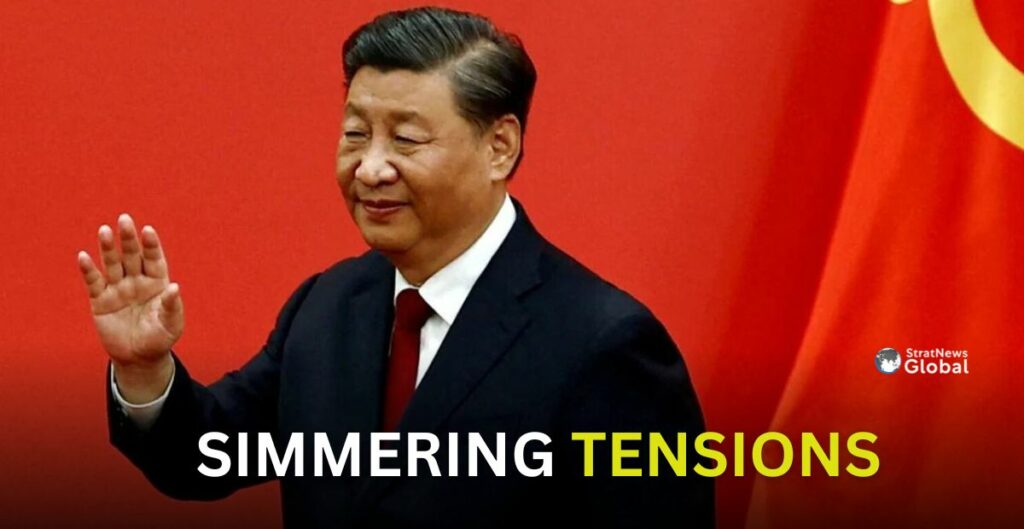
Amidst this, Tibet and the Dalai Lama’s global recognition pose a critical problem for Xi Jinping. As 2027 draws near and potentially the end of Xi’s third term, the pressure to project national unity and strength is increasing.
That unification effort includes an ideological campaign led by Xi’s close ally Wang Huning. Wang, who heads the United Front Work Department, has introduced the concept of a “Great United Front” to consolidate control over ethnic minorities, overseas Chinese, and dissenting voices. For Tibetans, this means tighter surveillance, reduced religious freedoms, and a broader campaign to erode the Dalai Lama’s influence.
India plays a crucial role in this dynamic. By hosting the Dalai Lama and supporting Tibetan exiles, New Delhi is viewed by Beijing not just as offering refuge to a political opponent, but as challenging China’s internal unity.
Tibet remains more than a cultural or spiritual issue for China. It is a symbol of unresolved control, and the Dalai Lama represents a challenge to Xi’s vision of a tightly unified, ideologically disciplined China. As Xi Jinping tightens his grip on power while facing growing problems at home, Tibet is likely to stay a key point of conflict between China and India.
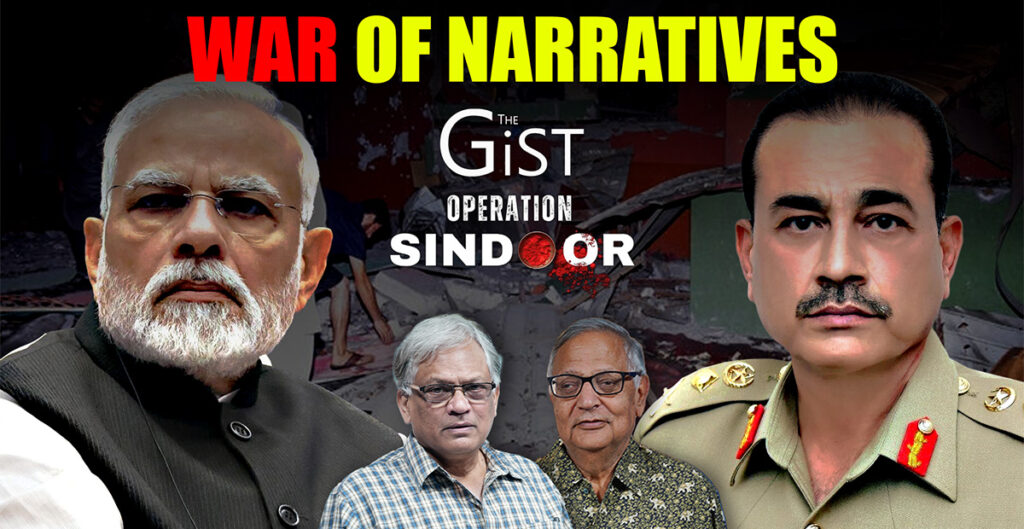
Op. Sindoor: Pak Claims Win In War Of Narratives But India Holds Edge
“The enduring belief they have is the four-day war has created a new normal, in that Pakistan responded resolutely to India’s actions through their strategy of calibrated deterrence … bottom line here is not going for all out war but ensure I have enough credible capacities to deal with any escalation,” says Brig Arun Sahgal (Retd), of the Forum for Strategic Initiatives.
He was speaking on The Gist programme, analysing Pakistan’s moves during Operation Sindoor, its narratives, what the Pak army wants and what does India do.
Sahgal argues that the Pakistani army’s aim was to ensure that its narrative of a great victory against India, was accepted by the public at large, and that Pakistan was not found wanting in responding to India.
“They also believe they’ve been able to sell this whole idea that India is overusing terrorism,” he says, “so give us the evidence that Pahalgam was done by us … we have sought a joint investigation … we have asked for your witnesses to come but they are not coming to Pakistan.”
Pakistan is now pushing the case for dialogue but insisting that alleged Indian terrorism in Balochistan and Khyber Pakhtunkhwa should also be on the agenda. So India cannot just get away with wanting to discuss terrorism in Kashmir.
They claim that if India can come up with dossiers of Pakistan’s involvement in terrorism, they have compiled thicker dossiers of India’s interference in these two provinces.
The larger Pakistani argument is that by crossing the international border and hitting the Punjab heartland, India has declared war.
How is this seen in world capitals? Sahgal argues that the world is tired of India vs Pakistan. They accept that India militarily had the better of the exchanges during Operation Sindoor, so India is militarily a more capable power.
But India’s strike on the Nur Khan Airbase, a nuclear command centre, held out the potential for dangerous escalation breaching the nuclear threshold, and India as the bigger and more mature power, should act more responsibly.
The worry for Pakistan is that the game of one upmanship with India can only go up to a point. It lacks backup in terms of economic muscle, and increases the risk of dependence on one or more big players.
Tune in for more in this conversation with Brig Arun Sahgal on post Operation Sindoor.
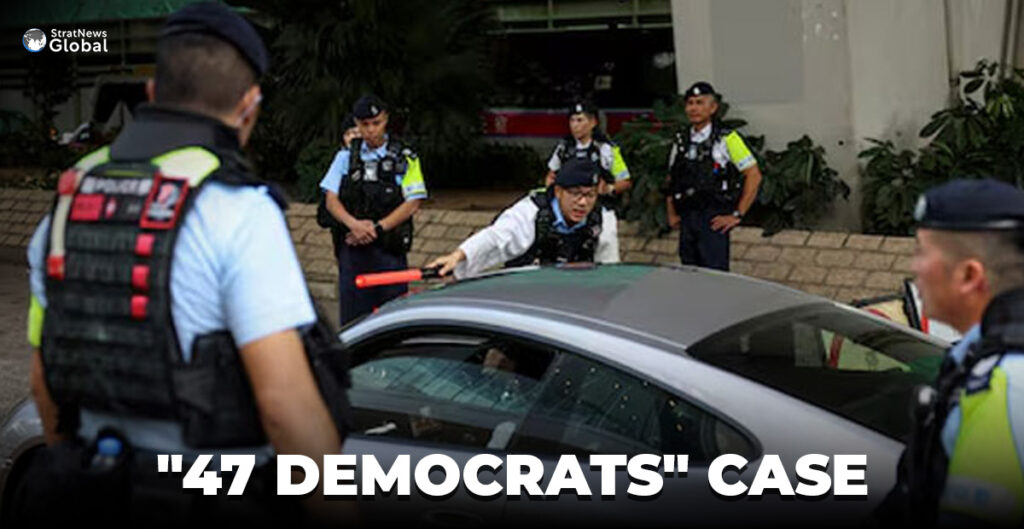
Appeal Ends For 12 Hong Kong Activists Amid Unfair Trial Allegations
An appeal hearing for 12 pro-democracy activists convicted under Hong Kong’s national security law concluded earlier than expected on Thursday, as two defence lawyers argued their clients were denied a fair trial.
The appeal stems from the “47 democrats” case, named for the number of activists who were arrested and charged with conspiracy to commit subversion in 2021.
Forty-five of the defendants were jailed last year for holding an unofficial primary election in July 2020, soon after Beijing imposed a sweeping national security law in response to pro-democracy protests the year before.
Their sentences ranged from four to 10 years. Two were acquitted, while 12 appealed the conviction on July 14.
Judge Jeremy Poon said on Thursday that the judgment would be made within nine months, given the case’s complexity. After that, it would still be possible to seek an appeal to Hong Kong’s highest court.
Government prosecutor Andy Lo said on Thursday that the case involved “an unprecedented conspiracy”.
Erik Shum, representing former lawmakers Helena Wong and Lam Cheuk-ting, said “the court sentencing process was wrong in principle, and hence the ultimate sentence was incorrect and it should be toned down”. Wong was sentenced to 6 years and 6 months, while Lam was sentenced to 6 years and nine months.
Judges Disrupted Cross-Examination
During the four-day hearing, two defence lawyers argued on Wednesday that the three judges who presided over the earlier trial had frequently interrupted some defendants during cross-examination.
“The trial court was interventionist from very early on,” said Robert Pang, a lawyer for unionist Winnie Yu. He said that the court repeatedly disallowed questions on the grounds of irrelevance.
Lawyer Steven Kwan said his client, activist Owen Chow, did not receive a fair trial as “his evidence was disbelieved very early on”. He also said the judges posed 45% of all the questions put to Chow, who was later sentenced to 7 years and 9 months.
Prosecutor Derek Lau said judges had the right to ask questions, noting it was not a jury trial.
“There is no unfairness that can be observed, that is to the prejudice of the defender in these questions,” Lau said.
Prosecutors had said the defendants sought to paralyse the government and force the city’s leader to resign by securing a legislative majority to indiscriminately veto budget proposals.
Under Article 52 of Hong Kong’s mini-constitution, the Basic Law, the chief executive must step down if the legislature twice rejects the government’s budget.
Lawyer Trevor Beel, representing activist Gwyneth Ho, said on Wednesday that legislators had a duty to use whatever legitimate means to negotiate with the government and that the Basic Law allows for a budget not to be passed.
Hong Kong was handed back to China by Britain in 1997 with a promise of freedom and autonomy under the “one country, two systems” framework, and eventual universal suffrage under the Basic Law.
If Ho wanted to achieve dual universal suffrage and an effective legislature, then it “was not radical, and this is not against the principle of one country, two systems,” Beel said.
(With inputs from Reuters)