

Support us by contributing to StratNewsGlobal on the following UPI ID
ultramodern@hdfcbank

Strategic affairs is our game, South Asia and beyond our playground. Put together by an experienced team led by Nitin A. Gokhale. Our focus is on strategic affairs, foreign policy and international relations, with higher quality reportage, analysis and commentary with new tie-ups across the South Asian region.
You can support our endeavours. Visit us at www.stratnewsglobal.com and follow us on YouTube, Twitter, Facebook and Instagram.
र 500 per month
र 1000 per month
र 5000 per year
र 10000 per year
Donate an amount of your choice
र 500 per month
Donate र 500 per month

र 1000 per month
Donate र 1000 per month
र 5000 per year
Donate र 5,000 per year
र 10000 per year
Donate र 10,000 per year
Donate an amount of your choice
Donate an amount of your choice

Ukrainian President Zelenskyy Urges More Momentum In Russia Talks
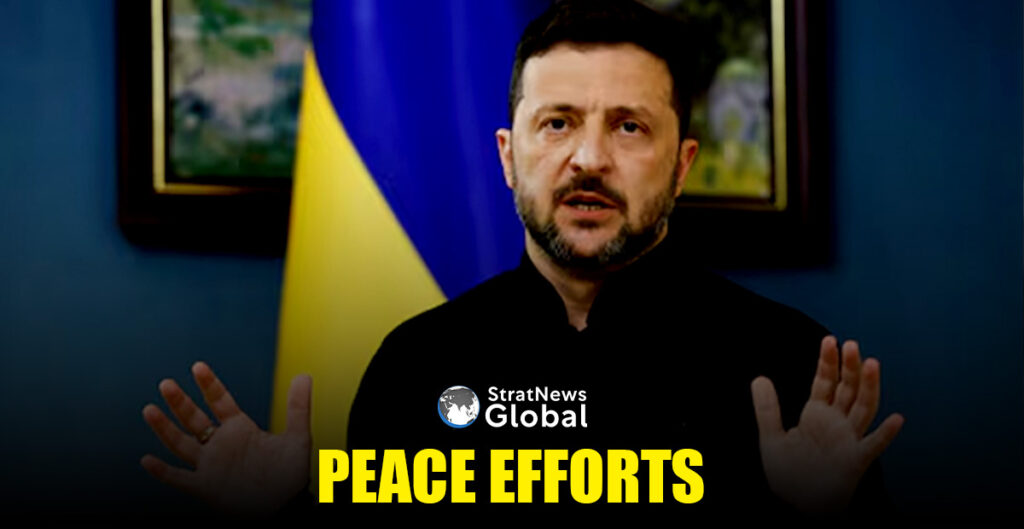
Ukrainian President Volodymyr Zelenskyy said on Friday that peace talks with Russia require “more momentum” and has tasked new National Security and Defence Council Secretary Rustem Umerov with intensifying the negotiation efforts.
Two rounds of talks between Ukraine and Russia in Turkey earlier this year have yielded little more than an agreement to exchange prisoners and soldiers’ remains. No date has been set for a new round of talks.
“The implementation of the agreements from the second Istanbul meeting is ongoing,” Zelenskyy wrote on X. “This process needs more momentum.”
Russia, which is continuing a grinding offensive along much of the eastern front, has repeatedly said it is ready for a new round of talks but has not backed down from what Kyiv and its allies describe as its maximalist war aims.
Trump’s Sanction Threat
U.S. President Donald Trump, who has sharpened his tone against Russia in recent weeks amid worsening air strikes on Ukrainian cities, threatened harsher sanctions on Russia earlier this week if a peace deal was not reached within 50 days.
Zelenskyy added that he was also assigning Umerov, who until a major government reshuffle on Thursday had served as defence minister, to work on weapons agreements with Kyiv’s allies.
Kyiv, which still relies on Western partners for more than half of its battlefield supply, is hoping a scaled-up domestic defence industry will help fend off a bigger and better-armed Russian war machine.
“We must fully implement every agreement with our partners on weapons supplies,” Zelenskyy wrote, “as well as new special agreements on establishing joint manufacturing and building production facilities on partners’ territories.”
(With inputs from Reuters)
Syrian Government Denies Troop Redeployment Plans To Sweida City
Syria’s interior ministry spokesperson said on Friday that government forces are not preparing to deploy to Sweida Province, according to state news agency reports.
Noureddin al-Baba denied a Reuters report citing an interior ministry media officer as saying security forces were preparing to redeploy to Druze-majority Sweida city to quell fighting involving Bedouin tribes and the Druze, part of a religious minority in Syria that has followers in Lebanon and Israel.
A fragile truce was holding in Syria’s south on Friday after a ceasefire announced on Wednesday briefly ended days of fighting that began when Bedouin and Druze fighters clashed in Sweida province in southern Syria, prompting the Syrian government to send in troops.
The clashes drew in Israel, which said it would not allow Syria’s Islamist-led government to deploy troops to the south. Israel hit Syrian troops in Sweida and Syria’s defence ministry, and struck close to the presidential palace in Damascus.
Syrian troops withdrew from Sweida after the truce was announced, but clashes resumed late on Thursday between the tribal Bedouin fighters and the Druze.
Israel’s military carried out new attacks in Sweida province overnight.
‘Shielding’ Druze Community
Describing Syria’s new rulers as barely disguised jihadists, Israel has vowed to shield the area’s Druze community from attack, encouraged by calls from Israel’s own Druze minority.
Its deep distrust of Syria’s new Islamist-led leadership appears to be at odds with the United States, which said it did not support recent Israeli strikes on Syria.
The U.S. intervened to help secure the earlier truce between government forces and Druze fighters, and the White House said on Thursday that it appeared to be holding.
Syrian leader Ahmed al-Sharaa, who has worked to establish warmer ties with the U.S., accused Israel of trying to fracture Syria and promised to protect its Druze minority.
(With inputs from Reuters)
EU Approves Fresh Russia Sanctions, Lowers Oil Price Cap
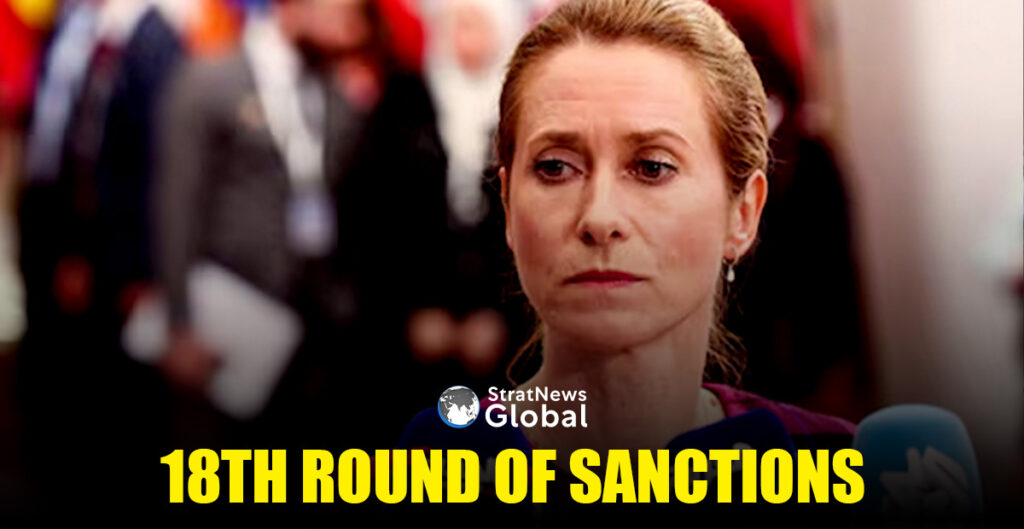
The European Union (EU) on Friday approved an 18th round of sanctions against Russia, targeting its oil and energy sectors amid the ongoing war in Ukraine.
The package aims to lower the G7’s price cap for buying Russian crude oil to $47.6 per barrel, diplomats told Reuters.
“The EU just approved one of its strongest sanctions packages against Russia to date,” EU foreign policy chief Kaja Kallas said on X.
“We will keep raising the costs, so stopping the aggression becomes the only path forward for Moscow.”
G7 Price Cap Ineffective So Far
Yet Russia has so far managed to sell most of its oil above the previous price cap as the current mechanism makes it unclear who must police its implementation, and traders doubt the new EU sanctions will significantly disrupt Russian oil trade.
The package also has a ban on transactions related to Russia’s Nord Stream gas pipelines under the Baltic Sea and on Russia’s financial sector.
Kallas said the sanctions also targeted 105 ships in Russia’s “shadow fleet”, the term used by Western officials for ships that Moscow uses to circumvent oil sanctions, and “Chinese banks that enable sanctions evasion”.
She did not name the banks.
Ukrainian President Volodymyr Zelenskyy called the decision “essential and timely” as Russia intensifies its air war on Ukrainian cities and villages.
And Foreign Minister Andrii Sybiha said: “Depriving Russia of its oil revenues is critical for putting an end to its aggression.”
The Group of Seven Western economic powers have tried to impose a price cap on purchases of Russian oil price since December 2022.
It aims to ban trade in Russian crude bought at a higher price by prohibiting shipping, insurance and re-insurance companies from handling tankers carrying such crude.
US Declines To Back Europe On Price Cap
The European Union and Britain have been pushing to lower the cap for the last two months after a fall in oil futures made the current level of $60 a barrel largely irrelevant.
But the United States has resisted, leaving the EU to move forward on its own, but without real power to enforce the measure, analysts and oil traders say.
As the dollar dominates global oil transactions, and U.S. financial institutions play the central role in clearing payments, the EU has no means to block trades by denying access to dollar clearing.
Agreement on the new EU package was held up for weeks as Slovakian Prime Minister Robert Fico demanded concessions on a separate plan to phase out EU dependence on Russian oil and gas.
Fico announced on Thursday night that he was ending his opposition.
Countries such as Greece, Cyprus and Malta had expressed concerns about the effect of the oil price cap on their shipping industries. But Malta, the last of the trio to hold out, also came on board on Thursday.
(With inputs from Reuters)
South Korea Rains: 4 Dead, 2 Missing, Thousands Sheltered
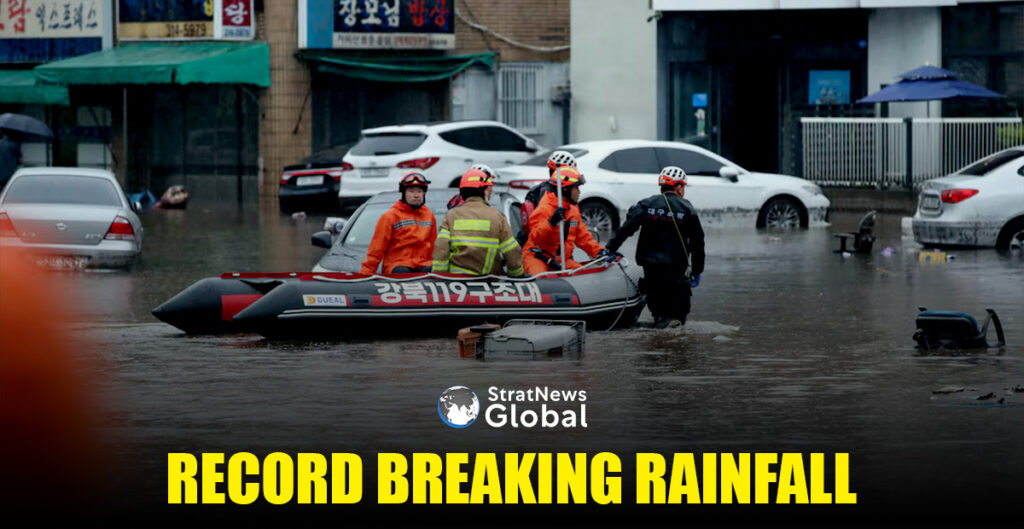
For the third consecutive day, South Korea has been battered by heavy rains, resulting in the tragic loss of at least four lives, displacement of thousands, and widespread damage to property and infrastructure.
Warnings for torrential rainfall continued to remain in place across large parts of South Korea’s western and southern regions, as the weather department urged the public to exercise utmost caution. Authorities have also flagged the heightened risk of landslides and flash floods, which are likely to persist through Saturday.
Over 5,000 people were compelled to evacuate their homes due to the relentless downpour. However, as per the latest update provided by the Interior and Safety Ministry, the number of individuals currently taking refuge in temporary shelters had come down to 3,297 by 11 a.m. (0200 GMT).
Record-Breaking Rainfall
Rainfall of more than 400 millimetres (16 inches) hit some southern regions, including the city of Gwangju, in the 24 hours to early Friday, the ministry said.
Thursday’s downpour in Gwangju was the highest daily total for 86 years.
Four people have died in the rains and two were missing, the ministry said. Two were trapped in cars on flooded roads and another died in a basement under flood water in the central South Chungcheong province, it said.
A driver was killed after a 10-metre-high (33 ft) roadside wall collapsed on top of a moving vehicle on Wednesday in Osan, some 44 kilometres (27 miles) south of Seoul, fire agency officials said.
President Lee Urges Stronger Govt. Role
President Lee Jae Myung has called for a stronger government role in disaster prevention and response, saying that while natural disasters are hard to prevent, more can be done to anticipate damage and warn the public.
“I see there were cases where casualties occurred because of a poor response when the situation was reasonably predictable,” he said at an emergency meeting on the weather on Friday, calling for all available resources to be deployed.
(With inputs from Reuters)
China Seeks Stable US Trade Ties, Urges No Tariff War
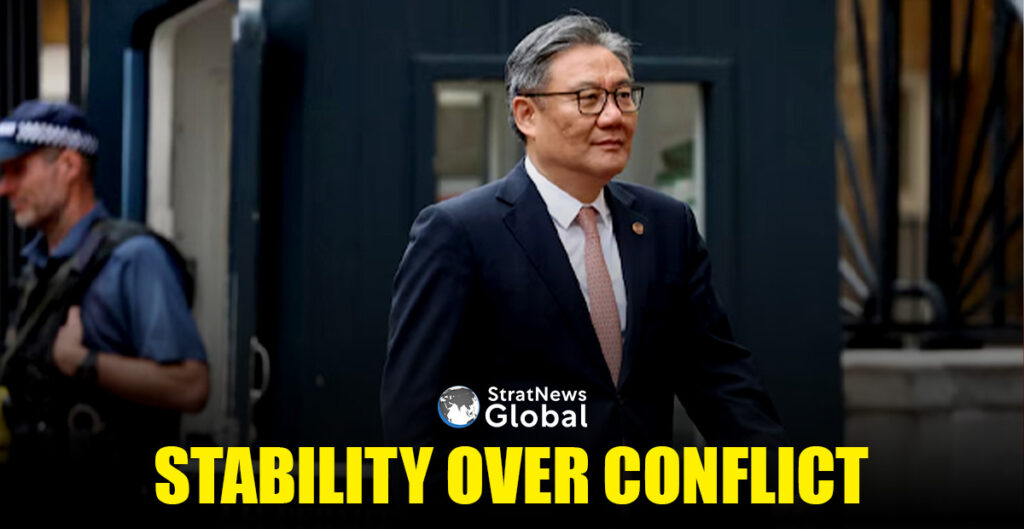
China aims to restore stable trade ties with the United States, its commerce minister said, citing recent European talks as evidence that a tariff war is unnecessary and urging Washington to act responsibly as a global superpower.
Commerce Minister Wang Wentao told reporters on Friday that the “ups and downs” in the two countries’ relationship underscored their economic interdependence.
Asked about the United States specifically, Wang said: “Major countries should act like major countries. They must shoulder their responsibilities,” adding that China would protect its national interests.
China is facing an August 12 deadline to reach a durable tariff agreement with the United States, after Beijing and Washington reached a preliminary deal last month to end weeks of escalating tit-for-tat tariffs.
If no deal is reached, global supply chains could face renewed turmoil from duties exceeding 100%.
Wang said negotiations in Geneva and London earlier this year demonstrated there was no need to return to a trade war.
“Practice has proven that through dialogue and consultation, with leadership and communication at the highest levels, we can properly manage contradictions and resolve our differences,” he said.
“We will continue to strengthen dialogue and communication, deepen consensus, reduce misunderstandings, enhance cooperation, to jointly put China-U.S. economic and trade relations back on track to achieve healthy, stable and sustainable development.”
Rare Earths Exports
China’s rare earths exports rose 32% month-on-month in June, customs data showed on Monday, in a sign that agreements struck last month in London to free up the flow of the metals were possibly bearing fruit.
Chipmaker Nvidia will also resume selling its H20 AI chips to China, Chief Executive Jensen Huang said at an event in Beijing this week, a move U.S. Commerce Secretary Howard Lutnick said was also part of negotiations on rare earths.
Wang said on Friday that he had met Huang the previous day, describing the meeting as evidence that “as the dust settles, everyone has come to the conclusion – especially the U.S. side – that forced decoupling is impossible.”
Wang said the current overall tariff level imposed by the U.S. on China was “still high” at 53.6%. Analysts have said that additional duties exceeding 35% will probably wipe out Chinese manufacturers’ profit margins.
“Both sides have come to understand that they need each other, as lots of the goods and services that we exchange are irreplaceable, or at least difficult to exchange in the short-term,” Wang said.
“China does not want a trade war, but it is not afraid of one,” he reiterated.
($1 = 7.1811 Chinese yuan renminbi)
(With inputs from Reuters)
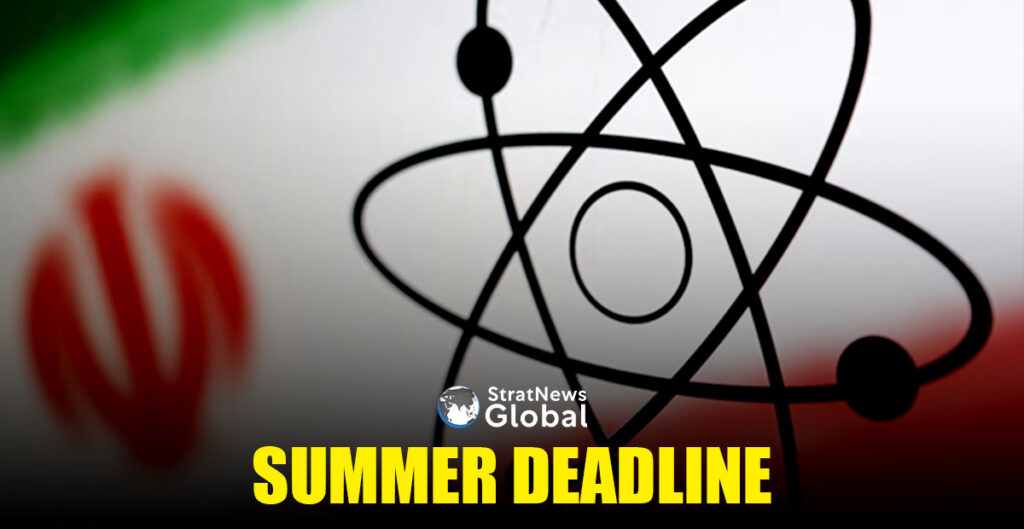
Europe Warns Iran Of UN Sanctions Without Concrete Progress On Nuclear Talks
France, Britain, and Germany on Thursday told Iran to immediately resume diplomatic talks on its nuclear programme, warning that U.N. sanctions would be reinstated by the end of summer if no concrete progress is made.
The foreign ministers of the so-called E3, along with the European Union’s foreign policy chief, held their first call with Iran’s Foreign Minister Abbas Araqchi since Israel and the United States carried out air strikes in mid-June on Iran’s nuclear programme.
Speaking after the call, a French diplomatic source said the ministers had called on Iran to resume diplomatic efforts immediately to reach a “verifiable and lasting” nuclear deal.
The three countries, along with China and Russia, are the remaining parties to a 2015 deal with Iran that lifted sanctions on the country in return for restrictions on its nuclear programme.
A U.N. Security Council resolution, which enshrines the deal, expires on October 18 and under its terms, U.N. sanctions can be re-imposed beforehand. The process would take about 30 days.
Snapback Mechanism
The Europeans have repeatedly warned that unless there is a new nuclear accord, they will launch the “snapback mechanism”, which would restore all previous U.N. sanctions on Iran if it is found to be in violation of the agreement’s terms.
“The ministers also reiterated their determination to use the so-called ‘snapback’ mechanism in the absence of concrete progress toward such an agreement by the end of the summer,” the diplomatic source said.
The source did not elaborate on what concrete progress would entail.
Since the air strikes, inspectors from the U.N. atomic watchdog have left Iran. While Iran has suggested it is open to diplomacy, there are no indications a sixth round of nuclear talks between Washington and Tehran will resume imminently.
Diplomats say that even if they were to resume talks, reaching a comprehensive accord before the end of August – the final deadline the Europeans have given – seems unrealistic, especially without inspectors on the ground to assess Iran’s remaining nuclear programme.
Two European diplomats said they hoped to coordinate strategy with the United States in the coming days with a view to possibly holding talks with Iran soon.
(With inputs from Reuters)
US Labels Outfit Behind Pahalgam Attack A ‘Foreign Terrorist Organisation’
The U.S. government has designated The Resistance Front (TRF)—an alleged offshoot of Pakistan-based extremist group Lashkar-e-Taiba (LeT)—as a “foreign terrorist organisation” in response to the April 22 terrorist attack in Jammu and Kashmir that killed 26 people, Secretary of State Marco Rubio announced on Thursday.
The Resistance Front, also known as Kashmir Resistance, initially took responsibility for the deadly terrorist attack in Pahalgam before denying it days later.
‘Justice For Pahalgam Attack’
Lashkar-e-Taiba, listed as a “foreign terrorist organisation” by the United States, is an Islamist group accused of plotting attacks in India and in the West, including the three-day deadly assault on Mumbai in November 2008.
TRF’s designation by Washington as a “foreign terrorist organisation” and “specially designated global terrorist” enforced President Donald Trump’s “call for justice for the Pahalgam attack,” Rubio said in a statement.
Rubio called TRF, which emerged in 2019, a “front and proxy” for Lashkar-e-Taiba. It is considered an offshoot of Lashkar-e-Taiba, according to the South Asia Terrorism Portal, a Delhi-based think tank.
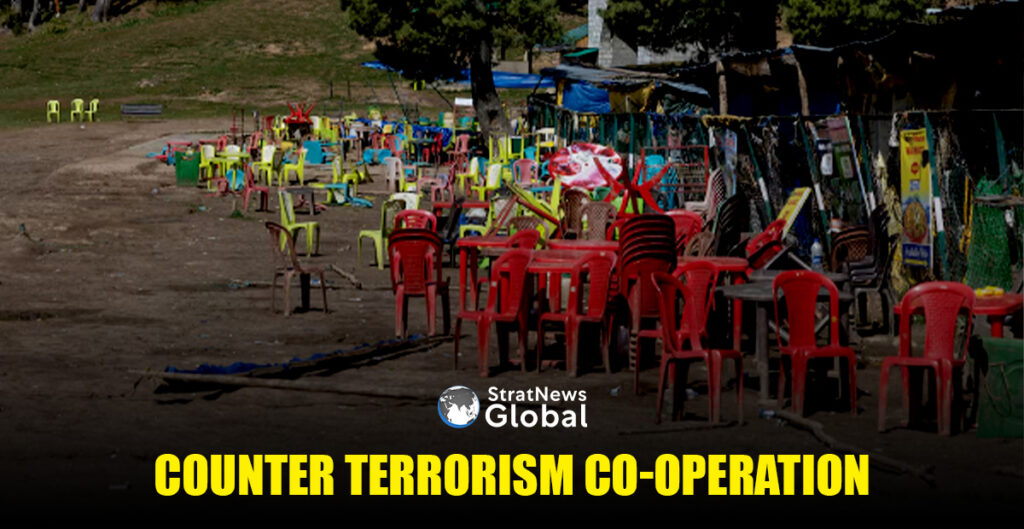
‘Counter Terrorism Co-Operation’
India said it appreciated the move, with Foreign Minister Subrahmanyam Jaishankar calling it a “strong affirmation of India-US counter terrorism co-operation,” in a post on X.
The April attack sparked heavy fighting between nuclear-armed Asian neighbours India and Pakistan in the latest escalation of a decades-old rivalry. New Delhi blamed the attack on Pakistan, which denied responsibility while calling for a neutral investigation. Washington condemned the attack but did not directly blame Islamabad.
Michael Kugelman, a Washington-based South Asia analyst and writer for Foreign Policy magazine, said in designating TRF, “Washington is flagging its concern about the terrorist attack that provoked the recent India-Pakistan conflict, and siding with New Delhi’s view that the group is linked to Lashkar-e-Taiba.”
He added: “This can be a shot in the arm for a U.S.-India relationship looking to rebound after a few tough months.”
India-Pakistan Tensions
On May 7, Indian jets bombed sites across the border that New Delhi described as “terrorist infrastructure,” setting off an exchange of attacks between the two countries by fighter jets, missiles, drones, and artillery that killed dozens until a ceasefire on May 10.
The ceasefire was first announced by Trump on social media after Washington held talks with both sides, but India has differed with Trump’s claims that it resulted from his intervention and his threats to sever trade talks.
India’s position has been that New Delhi and Islamabad must resolve their problems directly and with no outside involvement.
India is an increasingly important U.S. partner in Washington’s effort to counter China’s rising influence in Asia, while Pakistan is a U.S. ally.
Both Hindu-majority India and Islamic Pakistan claim Muslim-majority Kashmir in full while ruling only parts of the Himalayan territory, over which they have also fought wars.
(With inputs from Reuters)
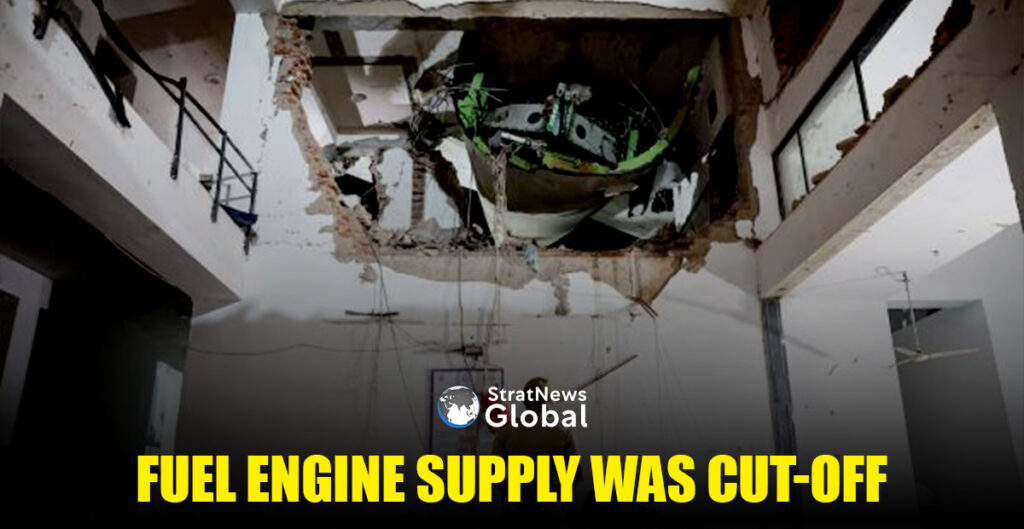
Air India Cockpit Audio Points To Captain Turning Off Engine Fuel Supply Before Crash: Source
A cockpit voice recording of the conversation between the two pilots of the Air India flight that crashed last month indicates that the captain cut off fuel supply to the engines, according to a source familiar with the early assessment by U.S. officials.
The first officer was at the controls of the Boeing 787 and asked the captain why he moved the fuel switches into a position that starved the engines of fuel and requested that he restore the fuel flow, the source said on condition of anonymity because the matter remains under investigation.
The U.S. assessment is not contained in a formal document, said the source, who emphasized the cause of the June 12 crash in Ahmedabad, India, that killed 260 people remains under investigation.
There was no cockpit video recording definitively showing which pilot flipped the switches, but the weight of evidence from the conversation points to the captain, according to the early assessment.
The Wall Street Journal first reported similar information on Wednesday about the world’s deadliest aviation accident in a decade.
Too Early To Draw Conclusions
India’s Aircraft Accident Investigation Bureau (AAIB), which is leading the investigation into the crash, said in a statement on Thursday that “certain sections of the international media are repeatedly attempting to draw conclusions through selective and unverified reporting.” It added the investigation was ongoing and it remained too early to draw definitive conclusions.
Most air crashes are caused by multiple factors, and under international rules, a final report is expected within a year of an accident.
A preliminary report released by the AAIB on Saturday said one pilot was heard on the cockpit voice recorder asking the other why he cut off the fuel and “the other pilot responded that he did not do so.”
Investigators did not identify which remarks were made by Captain Sumeet Sabharwal and which by First Officer Clive Kunder, who had total flying experience of 15,638 hours and 3,403 hours, respectively.
From ‘Run’ To ‘Cutoff’
The AAIB’s preliminary report said the fuel switches had switched from “run” to “cutoff” a second apart just after takeoff, but it did not say how they were moved.
Almost immediately after the plane lifted off the ground, closed-circuit TV footage showed a backup energy source called a ram air turbine had deployed, indicating a loss of power from the engines.
The London-bound plane began to lose thrust, and after reaching a height of 650 feet, the jet started to sink.
The fuel switches for both engines were turned back to “run”, and the airplane automatically tried restarting the engines, the report said.
But the plane was too low and too slow to be able to recover, aviation safety expert John Nance said.
The plane clipped some trees and a chimney before crashing in a fireball into a building on a nearby medical college campus, the report said, killing 19 people on the ground and 241 of the 242 on board the 787.
No Safety Recommendations
In an internal memo on Monday, Air India CEO Campbell Wilson said the preliminary report found no mechanical or maintenance faults and that all required maintenance had been carried out.
The AAIB’s preliminary report had no safety recommendations for Boeing or engine manufacturer GE.
After the report was released, the U.S. Federal Aviation Administration and Boeing privately issued notifications that the fuel switch locks on Boeing planes are safe, a document showed and four sources with knowledge of the matter said.
The U.S. National Transportation Safety Board has been assisting with the Air India investigation and its Chair Jennifer Homendy has been fully briefed on all aspects, a board spokesperson said. That includes the cockpit voice recording and details from the flight data recorder that the NTSB team assisted the AAIB in reading out, the spokesperson added.
“The safety of international air travel depends on learning as much as we can from these rare events so that industry and regulators can improve aviation safety,” Homendy said in a statement. “And if there are no immediate safety issues discovered, we need to know that as well.”
The circumstantial evidence increasingly indicates that a crew member flipped the engine fuel switches, Nance said, given there was “no other rational explanation” that was consistent with the information released to date.
Nonetheless, investigators “still have to dig into all the factors” and rule out other possible contributing factors which would take time, he said.
The Air India crash has rekindled debate over adding flight deck cameras, known as cockpit image recorders, on airliners.
Nance said investigators likely would have benefited greatly from having video footage of the cockpit during the Air India flight.
(With inputs from Reuters)
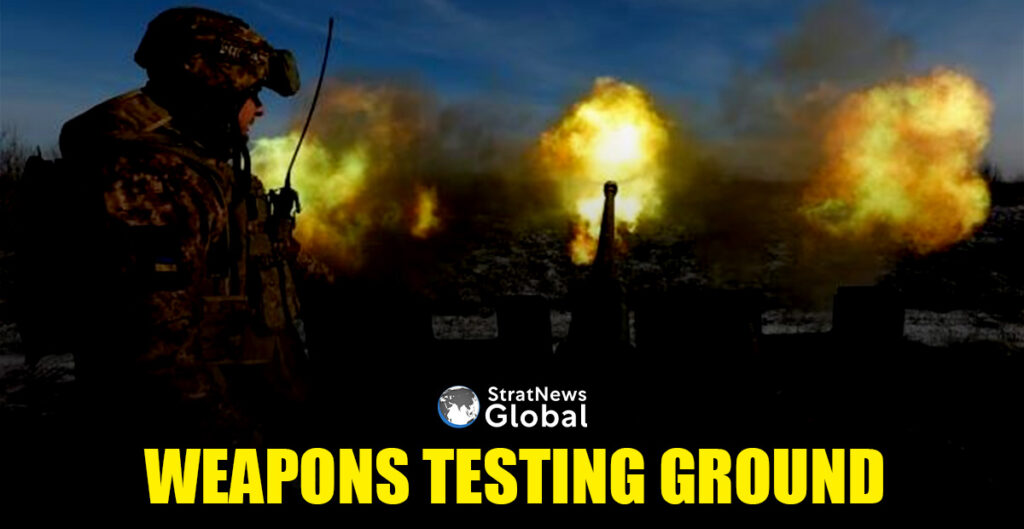
Ukraine Offers Front Line As Testing Ground For Foreign Weapons
Ukraine will allow international weapons manufacturers to trial their latest arms on the front lines of its war with Russia, the state-backed procurement agency Brave1 said on Thursday.
Under the “Test in Ukraine” scheme, companies would send their weapons to Ukraine, give some online training on how to use them, then wait for Ukrainian forces to try them out and send back reports, the group said in a statement.
“It gives us understanding of what technologies are available. It gives companies understanding of what is really working on the front line,” Artem Moroz, Brave1’s head of investor relations, said at a defence conference in Wiesbaden, Germany.
Moroz said there has been strong interest in the scheme, but did not name any companies that have signed on to use it and declined to go into more detail on how it would operate or what, if any, costs would be involved.
Investment In Defence Industry
More than three years after their invasion of Ukraine, Russian forces are pressing a grinding offensive across the sprawling, more than 1,000-km (620-mile) front line and intensifying air strikes on Ukrainian cities.
Ukraine is betting on a budding defence industry, fuelled in part by foreign investment, to fend off Russia’s bigger and better-armed war machine.
Brave1 – set up by the government in 2023 with an online hub where Ukrainian defence companies can seek investment, and also where Ukrainian military units can order up arms – had drawn up a list of the military technologies it wanted to test, Moroz added.
“We have a list of priorities. One of the top of those would be air defence, like new air defence capabilities, drone interceptors, AI-guided systems, all the solutions against gliding bombs,” he said.
Unmanned systems in the water and electronic profile systems on the ground are also on Ukraine’s list of priorities, as are advanced fire control systems or AI guidance to make howitzers more accurate.
(With inputs from Reuters)
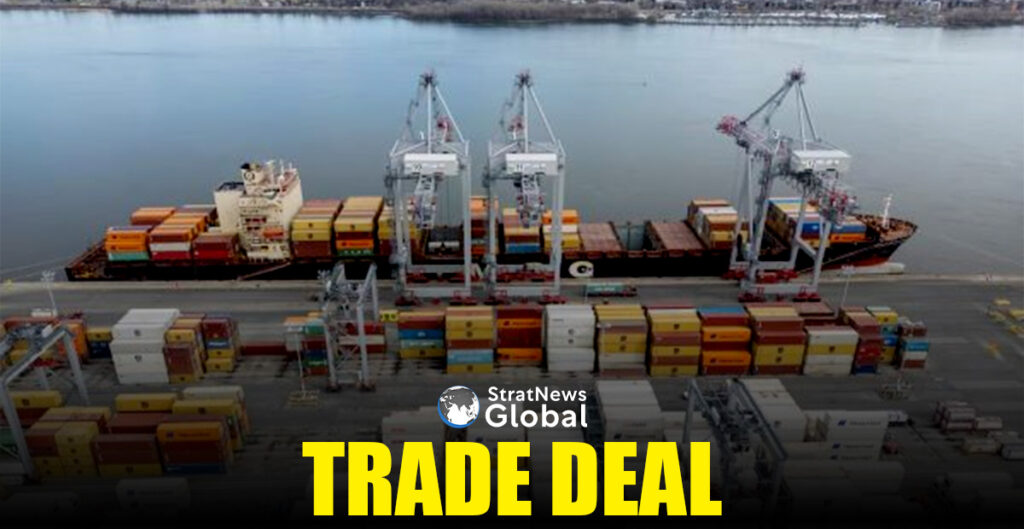
Canada Seeks Mercosur Trade Pact To Cut U.S. Dependence, Says Minister
Canada’s International Trade Minister said on Thursday that both Canada and the South American trade bloc Mercosur were interested in moving forward with trade negotiations. Ottawa is aiming to secure new agreements as part of its broader effort to reduce economic reliance on the United States.
Prime Minister Mark Carney and his team have been locked in talks with U.S. President Donald Trump to hash out a trade deal by August 1, which could help reduce tariffs on Canada.
But his government is also preparing to rely less on a relationship that generated bilateral trade of over C$1 trillion ($727.33 billion) last year and to focus on diversifying trade by signing free trade pacts globally.
Trade Challenges
“I had conversations with the foreign minister of Brazil, and there is appetite to carry out conversations around Mercosur,” Minister Maninder Sidhu said in an interview.
Brazilian President Luiz Inacio Lula da Silva had said in April that he was interested in advancing talks for a trade deal between South America’s Mercosur bloc and Canada.
Mercosur – which includes Brazil, Argentina, Paraguay and Uruguay – has had negotiation rounds for a trade deal with Canada in the past.
Canada is also keen to continue talks with China to address trade challenges and views a thawing of relations between India and Canada as an important step to support trade, the Minister said.
“With China, there are opportunities, there are challenges,” he said, adding that the countries are holding frank discussions on a path forward on trade tariffs around exports of canola, beef, pet food and many other products.
Canada has 15 free-trade deals covering 51 countries, giving it access to 1.5 billion consumers and Sidhu said that Ottawa will be pursuing more such deals in the coming months without giving a specific target.
He had signed a free trade deal with Ecuador and an investment promotion pact with the UAE in his first two months in office and said discussions are on with the ASEAN countries and also individually with countries in the Indo-Pacific, including Indonesia and the Philippines.
Over-Exposure
Sidhu said Canadian companies are over-exposed to the U.S. and they are not as competitive as they used to be due to Trump’s tariffs.
“My job is to be out there opening doors,” he said, adding that he would seek to diversify not only trade but Canada’s defence procurements from the U.S.
Carney has promised to increase defence spending by an additional C$9 billion this year to meet NATO’s target of spending 2% of GDP.
“We are working with the European Union and other partners around the world to help unlock some of those procurement opportunities in defence for our Canadian companies,” he said.
Canadian exports to the U.S. dropped in May to 68% of total exports from a monthly average of 75% last year. The U.S. share in May was the lowest on record as companies pushed to diversify from the U.S.
He did not respond directly on what a trade deal between Canada and the U.S. would look like, but said the government would “work towards a deal that’s best for Canadian businesses and Canadian workers.”
(With inputs from Reuters)