

Support us by contributing to StratNewsGlobal on the following UPI ID
ultramodern@hdfcbank

Strategic affairs is our game, South Asia and beyond our playground. Put together by an experienced team led by Nitin A. Gokhale. Our focus is on strategic affairs, foreign policy and international relations, with higher quality reportage, analysis and commentary with new tie-ups across the South Asian region.
You can support our endeavours. Visit us at www.stratnewsglobal.com and follow us on YouTube, Twitter, Facebook and Instagram.
र 500 per month
र 1000 per month
र 5000 per year
र 10000 per year
Donate an amount of your choice
र 500 per month
Donate र 500 per month

र 1000 per month
Donate र 1000 per month
र 5000 per year
Donate र 5,000 per year
र 10000 per year
Donate र 10,000 per year
Donate an amount of your choice
Donate an amount of your choice
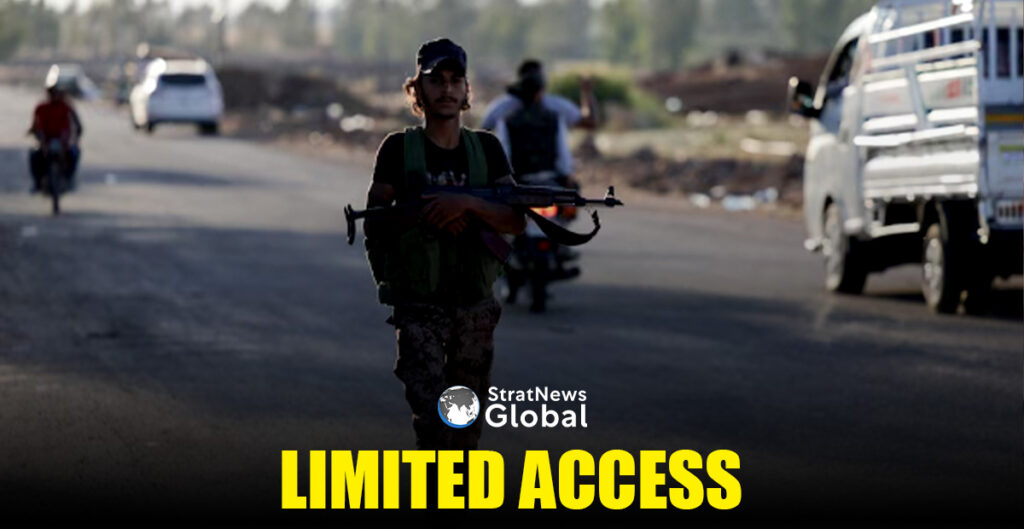

Israel Allows Limited Syrian Troop Access To Sweida Amid Ongoing Unrest
Israel has agreed to grant limited access to Syrian forces in the Sweida region of southern Syria for the next two days, an Israeli official said on Friday, following several days of bloodshed in and around the Druze-majority city.
“In light of the ongoing instability in southwest Syria, Israel has agreed to allow limited entry of the (Syrian) internal security forces into the Sweida district for the next 48 hours,” the official, who declined to be named, told reporters.
Syria’s interior ministry spokesperson said on Friday that government forces were not preparing to redeploy to Sweida Province, the state news agency reported.
Ongoing Unrest
Syrian troops withdrew from Sweida after a truce was announced on Wednesday, but clashes resumed late on Thursday between fighters from Bedouin tribes and the Druze, who are part of a religious minority in Syria that has followers in Lebanon and Israel.
The clashes in parts of Sweida province continued into Friday, according to residents of Sweida and Ryan Marouf, the head of local news outlet Sweida24.
Damascus had this week deployed troops to Sweida, which is adjacent to territory controlled by Israel, to try to quell some of the most intense internal fighting in Syria since the interim government took power late last year.
The Syrian Network for Human Rights monitoring group said it had documented 254 dead in four days of fighting, among them medical personnel, women and children.
Israel became involved in the hostilities on Wednesday. It said it would not allow Syria’s Islamist-led government to deploy troops to the south, attacked Syrian troops in Sweida and Syria’s defence ministry, and struck close to the presidential palace in Damascus.
Describing Syria’s new rulers as barely disguised jihadists, Israel has vowed to shield the area’s Druze community from attack, encouraged by calls from Israel’s own Druze minority.
Israel’s military carried out new attacks in Sweida province overnight.
UN Agencies’ Concerns
The head of the U.N. human rights office urged Syria’s interim authorities to ensure accountability and justice for what it said are credible reports of widespread rights violations during the fighting, including summary executions and kidnappings, the office said in a statement.
At least 13 people were unlawfully killed in one recorded incident on July 15 when affiliates of the interim authorities opened fire at a family gathering, the OHCHR said. Six men were summarily executed near their homes the same day.
The UN refugee agency on Friday urged all sides to allow humanitarian access, which it said had been curtailed by the violence.
Israel’s deep distrust of Syria’s new Islamist-led leadership appears to be at odds with the United States, which said it did not support the recent Israeli strikes on Syria.
The U.S. intervened to help secure the earlier truce between government forces and Druze fighters, and the White House said on Thursday that it appeared to be holding.
Syrian leader Ahmed al-Sharaa, who has worked to establish warmer ties with the U.S., accused Israel of trying to fracture Syria and promised to protect its Druze minority.
(With inputs from Reuters)
US Tariffs Spur Africa To Fast-Track Free Trade Deal
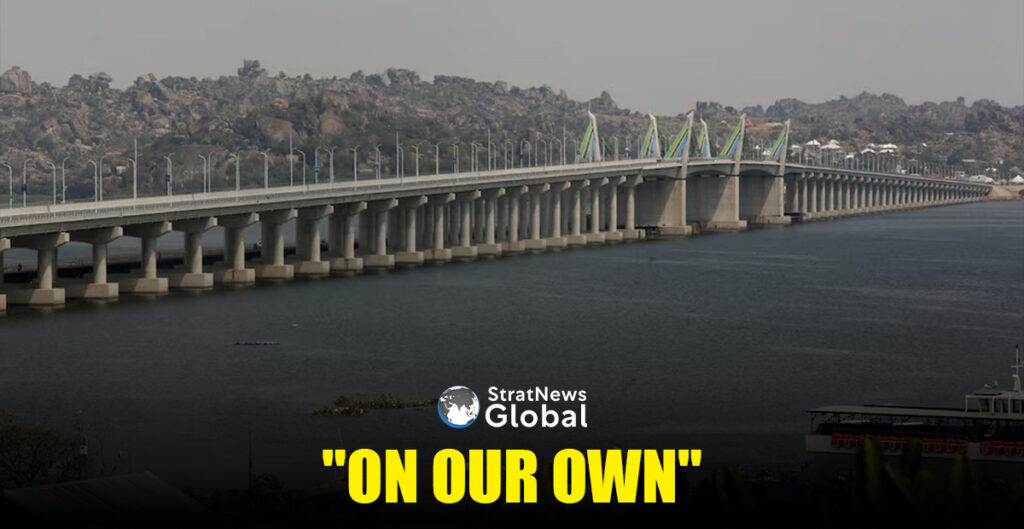
Amid rising concerns over steep US tariffs, African leaders are stepping up efforts to fast-track a continent-wide trade agreement, fearing the punitive duties — including rates as high as 50% for Lesotho — could severely impact industries and hamper economic growth.
The African Continental Free Trade Area pact designed to unify all 1.4 billion people under Africa’s more than 50 nations into a single market, has been legally ratified by 49 countries and officially launched trading in 2021.
But translation into action has been sluggish, with less than half of member states actively trading under the framework.
‘On Our Own’
The World Bank estimates AfCFTA could increase Africa’s intra-continental exports by 81% and proponents point to last year’s 12.4% boost in intra-African trade, to $208 billion, according to Afreximbank figures, as early signs of success.
“We’ve got to accelerate the establishment of our own value chain systems. What we are observing now — the weaponisation of trade policy, investment policy, nationalism — is unprecedented and it has a very negative impact on the multilateral trading system,” AfCFTA Secretary-General Wamkele Mene told Reuters.
“The lesson to observe is that we are on our own as a continent.”
US President Donald Trump’s return to the White House in January put trade relations centre-stage for policymakers worldwide, with his breathless cycle of punitive tariff policies poised to upend decades of globalisation and reshape flows of money and goods.
G20 finance chiefs meeting in Durban this week, under South Africa’s presidency, have trade high on the agenda.
But despite the urgent need to boost African continental trade, accelerating it is beset with challenges.
Inconsistent Implementation
African Union countries have a combined GDP of some $3 trillion – not far off the size of France’s economy, a G7 nation.
So far, 24 countries are officially trading under AfCFTA, Mene said, including South Africa and Nigeria.
Implementation has been inconsistent, said Raheema Parker of Oxford Economics, with weak governance undermining overall effectiveness and informal trade adding complexities.
“These barriers are especially pronounced in smaller sub-Saharan economies, which are more vulnerable to external shocks and often lack the administrative and financial capacity,” Parker said.
Infrastructure Gap
The biggest constraint to intra-Africa trade is an infrastructure deficit, Mene said.
The African Development Bank and Afreximbank collectively invested $65 billion in infrastructure projects since 2020 – barely making a dent in the $100 billion plus estimated annual infrastructure investment shortfall.
Johannesburg-based Standard Bank CEO Bill Blackie warned that “without hardened bridges and faster rail links, AfCFTA will remain a paper promise.”
Other barriers include border delays and complex paperwork requirements.
“We need to diminish all the commercial barriers,” said Chad’s ex-finance minister Abbas Mahamat Tolli.
Down With The Dollar?
Currency is also contentious; nearly two-thirds of payments across more than 40 African currencies are clearing through dollar corridors. Afreximbank has called for a shift away from the dollar, citing volatility and high fees.
“Local-currency corridors must become the norm to slash costs and tame volatility,” said Afreximbank group chief economist Yemi Kale.
The recently launched Pan-African Payments and Settlement System links 16 central banks and aims to reduce costs.
Leaders say AfCFTA’s transformative potential is worth tackling the challenges.
“We have a generational chance to build value chains that keep wealth on the continent, develop competitive industries, and create millions of jobs while shaping global supply chains from a position of strength,” Kenyan President William Ruto said earlier this month.
(With inputs from Reuters)
Dozens Protest In Malaysia Against Trump’s Pro-Israel Pick As Envoy
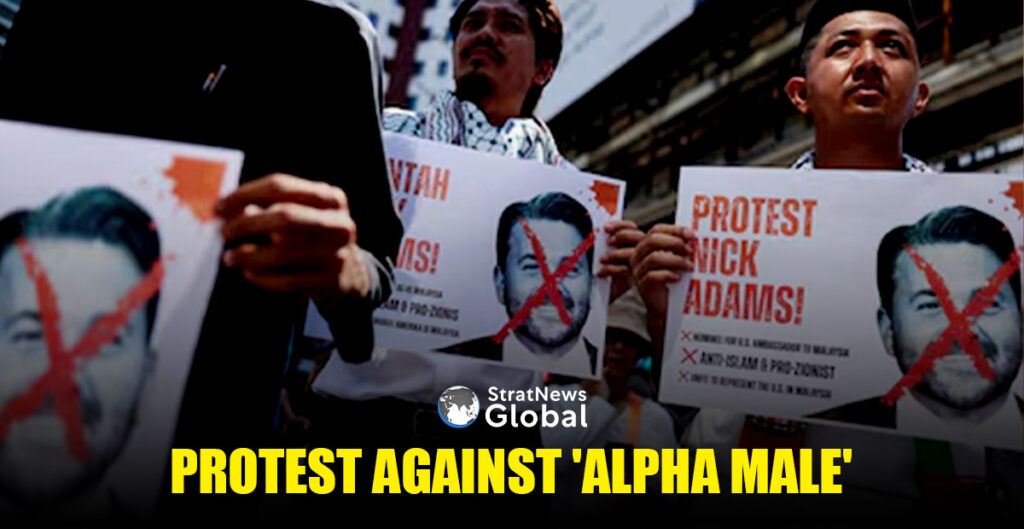
Dozens of protesters gathered outside the U.S. embassy in Kuala Lumpur on Friday to oppose the proposed appointment of Nick Adams, a self-proclaimed “alpha male” influencer, as the next United States envoy to Malaysia.
President Donald Trump last week named outspoken author and political commentator Adams as the White House’s nominee for U.S. ambassador to Malaysia.
Adams, a naturalised U.S. citizen originally from Australia, has cultivated a brash social media persona, using a macho, “alpha male” branding to weigh in on cultural issues and appeal to an audience of mainly young men.
But it is his posts harshly criticising Islam and showing support for Israel’s military campaign in Gaza that have angered Muslims in Malaysia, triggering a rare protest against a foreign diplomatic appointment in the Southeast Asian country.
The outcry comes at a critical time for Malaysia, which has until August 1 to reach a trade deal with Washington to avoid a steep 25% tariff imposed on its exports to the United States.
Prime Minister Anwar Ibrahim told reporters on Friday it was too early in the process to decide on Adams’ appointment, but his government would give the matter due consideration.
“At the same time, we will seek to protect the good relations between Malaysia and the United States,” Anwar said, according to a recording of his remarks provided by his office to Reuters.
Call For Reconsideration
Demonstrators led by youth leaders from Anwar’s ruling coalition submitted a memorandum of protest to the U.S. embassy in Kuala Lumpur asking for Trump to reconsider his nomination of Adams.
The memorandum cited “divisive rhetoric” used by Adams, and characterised his postings as insensitive towards Malaysia’s multi-cultural society.
Malaysia, which has a majority of mostly Muslim ethnic Malays alongside significant ethnic Chinese and ethnic Indian minorities, has long been a staunch supporter of the Palestinian cause.
“An ambassador’s task is to be the bridge between two countries, and we don’t want that person to be someone who destroys that bridge instead,” said Muhammad Izuan Ahmad Kasim, a member of Anwar’s People’s Justice Party.
The embassy and Adams’ office did not respond to requests for comment.
The protestors also called on Malaysia’s government to exercise its right under international norms to reject Adams’ proposed appointment.
Under the Vienna Convention on Diplomatic Relations, host countries have the discretion to accept or reject ambassadorial appointments without having to provide a reason.
Government spokesperson Fahmi Fadzil said on Tuesday that the cabinet had not yet received any formal notice of Adams’ appointment to Malaysia.
Adams’ nomination has not yet been approved, but he is widely expected to be confirmed by the Republican-held U.S. Senate.
(With inputs from Reuters)
US Judge Considers Fresh Block On Trump’s Birthright Citizenship Order
A federal judge on Friday may deliver another setback to President Donald Trump’s efforts to restrict birthright citizenship, despite a recent Supreme Court ruling that made it harder for lower courts to halt White House directives.
A group of Democratic attorneys general from 18 states and the District of Columbia will urge U.S. District Judge Leo Sorokin at a hearing in Boston at 10 a.m. ET Friday to maintain an injunction he imposed in February that blocked Trump’s executive order nationwide.
The order directs U.S. agencies to refuse to recognise the citizenship of children born in the United States after February 19 if neither their mother nor father is a U.S. citizen or lawful permanent resident.
The states’ case is back in Sorokin’s courtroom so he can assess the impact of the Supreme Court’s landmark June 27th decision. In that 6-3 ruling authored by conservative Justice Amy Coney Barrett, the court directed lower court judges like Sorokin who had blocked Trump’s policy to reconsider the scope of their orders.
Rather than address the legality of Trump’s executive order, the justices used the case to discourage nationwide, or “universal,” injunctions — in which a single district court judge can block enforcement of a federal policy across the country.
Complete Relief
But the court raised the possibility that universal injunctions are still permissible in certain circumstances, including class actions, in which similarly situated people sue as a group, or if they are the only way to provide “complete relief” to litigants in a particular lawsuit.
Friday’s hearing will shed light on how lower courts plan to address what providing complete relief entails, said George Washington University law professor Paul Schiff Berman.
“One of the questions the Supreme Court left open in its nationwide injunction decision is whether states can assert claims on behalf of their citizens and, if so, whether a large-scale injunction would then be necessary to vindicate the rights of large numbers of citizens from large numbers of states,” Berman said.
Spokespersons for the White House and the attorneys general did not immediately respond to a request for comment.
A ruling from Sorokin, an appointee of Democratic President Barack Obama, in favour of the states would be the second blow to Trump’s executive order this month.
On July 10, at a hearing in New Hampshire, U.S. District Judge Joseph Laplante, an appointee of Republican President George W. Bush, issued a nationwide injunction blocking Trump’s order after he found that children whose citizenship status would be threatened by it could pursue their lawsuit as a class action.
The Democratic-led states, backed by immigrant rights groups, argue the White House directive violated a right enshrined in the U.S. Constitution’s 14th Amendment that guarantees that virtually anyone born in the United States is a citizen.
They have argued that, if the executive order is allowed to take effect, it would wreak havoc on the administration of federal benefits programs like Medicaid and the Supplemental Nutrition Assistance Program by making it difficult to verify eligibility.
They also argue that, because children often move across state lines or are born outside their parents’ state of residence, a “patchwork” of injunctions would be unworkable.
“Families are likely to be confused if federal benefits eligibility — let alone U.S. citizenship — differs by State,” the states wrote in a July 15 court filing.
They have urged Sorokin to double down on his February injunction, saying in the court filing that the Supreme Court decision has no bearing on the case before him.
“This Court correctly remedied the States’ injuries via a nationwide injunction, based on the same complete-relief principle that the Supreme Court recently recognised and endorsed,” the brief argued.
The Justice Department has countered that Sorokin’s injunction from February was “clearly overbroad and inappropriate.”
In a July 8 court filing, the department argued that individuals are best situated to litigate their own citizenship status.
(With inputs from Reuters)
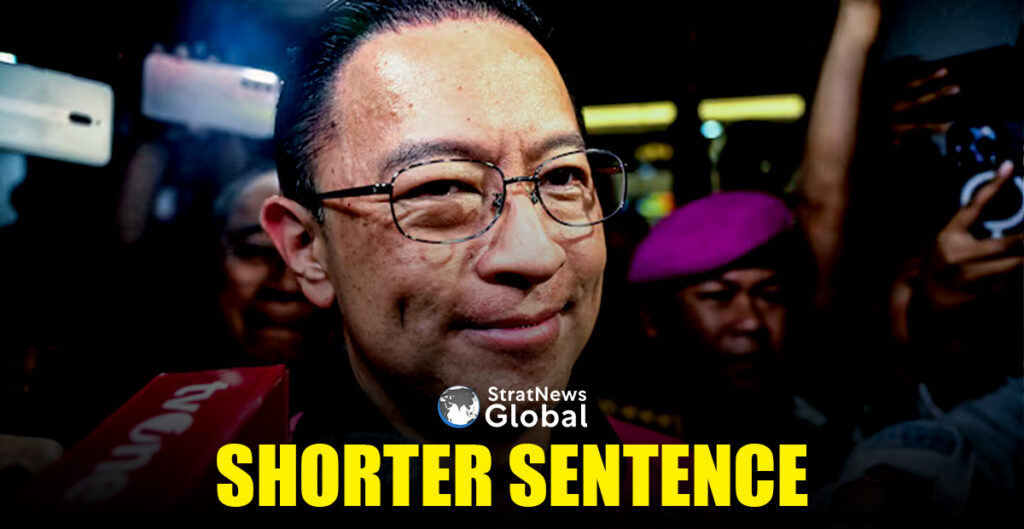
Indonesia: Ex-Minister Jailed 4.5 Years In Sugar Import Scandal
In a major development, an Indonesian court on Friday sentenced the country’s former trade minister to four-and-a-half years in prison for the improper issuance of sugar import permits, which reportedly led to state losses amounting to nearly 600 billion rupiah ($36.84 million).
Thomas Trikasih Lembong served as trade minister in 2015 and 2016 under President Joko “Jokowi” Widodo. Once seen as Jokowi’s close aide, Lembong turned into one of the government’s staunchest critics after leaving office.
Punished For Being Critical?
Judges at the corruption court in the capital Jakarta said Lembong, as minister, was guilty of improperly granting import permits for sugar to private companies when the Southeast Asian country had a surplus of sugar.
Indonesia’s sugar output in 2015 was 2.49 million metric tons, while consumption was 2.12 million.
In last year’s presidential election, Lembong was the campaign manager for candidate Anies Baswedan. The election was won in a landslide by Prabowo Subianto, whom Jokowi backed.
Lembong, who was arrested days after Prabowo’s inauguration last year, had claimed in court that his prosecution was due to his involvement in the opposition camp, local media reported.
Prosecutors had denied his arrest was politically motivated.
“The defendant was proven legally and convincingly to be guilty of having committed a corruption act,” Judge Purwanto S. Abdullah said, to jeers from the crowd.
Shorter Sentence
Before handing the sentence, the judges had argued the import permits did not go through the proper procedures of consulting with other state bodies and that he had prioritised “capitalistic” interests over social justice.
However, the judges said he did not enrich himself, leading to a shorter sentence than the seven years prosecutors had demanded. Prosecutors said Lembong had enriched the private companies.
Holding up his handcuffed hands, Lembong told reporters after the sentencing that he would consider whether or not to appeal, saying judges had ignored his defence team. His lawyer Ari Yusuf Amir did not immediately respond to a Reuters request for comment on Friday.
($1 = 16,285.0000 rupiah)
(With inputs from Reuters)
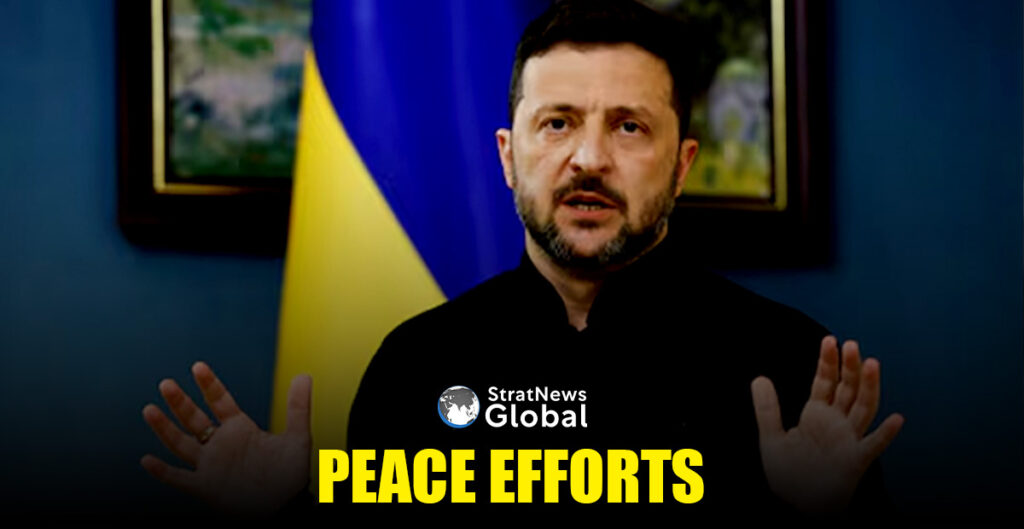
Ukrainian President Zelenskyy Urges More Momentum In Russia Talks
Ukrainian President Volodymyr Zelenskyy said on Friday that peace talks with Russia require “more momentum” and has tasked new National Security and Defence Council Secretary Rustem Umerov with intensifying the negotiation efforts.
Two rounds of talks between Ukraine and Russia in Turkey earlier this year have yielded little more than an agreement to exchange prisoners and soldiers’ remains. No date has been set for a new round of talks.
“The implementation of the agreements from the second Istanbul meeting is ongoing,” Zelenskyy wrote on X. “This process needs more momentum.”
Russia, which is continuing a grinding offensive along much of the eastern front, has repeatedly said it is ready for a new round of talks but has not backed down from what Kyiv and its allies describe as its maximalist war aims.
Trump’s Sanction Threat
U.S. President Donald Trump, who has sharpened his tone against Russia in recent weeks amid worsening air strikes on Ukrainian cities, threatened harsher sanctions on Russia earlier this week if a peace deal was not reached within 50 days.
Zelenskyy added that he was also assigning Umerov, who until a major government reshuffle on Thursday had served as defence minister, to work on weapons agreements with Kyiv’s allies.
Kyiv, which still relies on Western partners for more than half of its battlefield supply, is hoping a scaled-up domestic defence industry will help fend off a bigger and better-armed Russian war machine.
“We must fully implement every agreement with our partners on weapons supplies,” Zelenskyy wrote, “as well as new special agreements on establishing joint manufacturing and building production facilities on partners’ territories.”
(With inputs from Reuters)
Syrian Government Denies Troop Redeployment Plans To Sweida City
Syria’s interior ministry spokesperson said on Friday that government forces are not preparing to deploy to Sweida Province, according to state news agency reports.
Noureddin al-Baba denied a Reuters report citing an interior ministry media officer as saying security forces were preparing to redeploy to Druze-majority Sweida city to quell fighting involving Bedouin tribes and the Druze, part of a religious minority in Syria that has followers in Lebanon and Israel.
A fragile truce was holding in Syria’s south on Friday after a ceasefire announced on Wednesday briefly ended days of fighting that began when Bedouin and Druze fighters clashed in Sweida province in southern Syria, prompting the Syrian government to send in troops.
The clashes drew in Israel, which said it would not allow Syria’s Islamist-led government to deploy troops to the south. Israel hit Syrian troops in Sweida and Syria’s defence ministry, and struck close to the presidential palace in Damascus.
Syrian troops withdrew from Sweida after the truce was announced, but clashes resumed late on Thursday between the tribal Bedouin fighters and the Druze.
Israel’s military carried out new attacks in Sweida province overnight.
‘Shielding’ Druze Community
Describing Syria’s new rulers as barely disguised jihadists, Israel has vowed to shield the area’s Druze community from attack, encouraged by calls from Israel’s own Druze minority.
Its deep distrust of Syria’s new Islamist-led leadership appears to be at odds with the United States, which said it did not support recent Israeli strikes on Syria.
The U.S. intervened to help secure the earlier truce between government forces and Druze fighters, and the White House said on Thursday that it appeared to be holding.
Syrian leader Ahmed al-Sharaa, who has worked to establish warmer ties with the U.S., accused Israel of trying to fracture Syria and promised to protect its Druze minority.
(With inputs from Reuters)
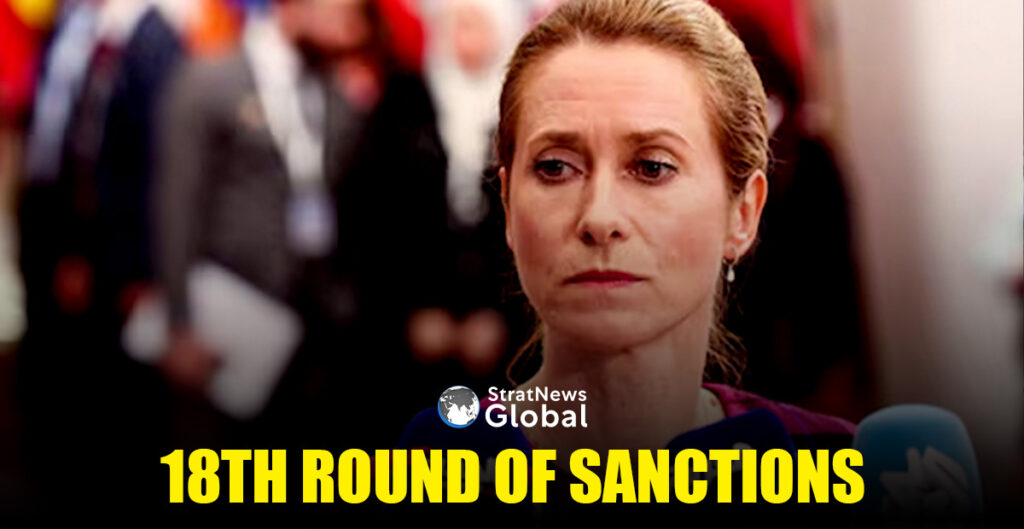
EU Approves Fresh Russia Sanctions, Lowers Oil Price Cap
The European Union (EU) on Friday approved an 18th round of sanctions against Russia, targeting its oil and energy sectors amid the ongoing war in Ukraine.
The package aims to lower the G7’s price cap for buying Russian crude oil to $47.6 per barrel, diplomats told Reuters.
“The EU just approved one of its strongest sanctions packages against Russia to date,” EU foreign policy chief Kaja Kallas said on X.
“We will keep raising the costs, so stopping the aggression becomes the only path forward for Moscow.”
G7 Price Cap Ineffective So Far
Yet Russia has so far managed to sell most of its oil above the previous price cap as the current mechanism makes it unclear who must police its implementation, and traders doubt the new EU sanctions will significantly disrupt Russian oil trade.
The package also has a ban on transactions related to Russia’s Nord Stream gas pipelines under the Baltic Sea and on Russia’s financial sector.
Kallas said the sanctions also targeted 105 ships in Russia’s “shadow fleet”, the term used by Western officials for ships that Moscow uses to circumvent oil sanctions, and “Chinese banks that enable sanctions evasion”.
She did not name the banks.
Ukrainian President Volodymyr Zelenskyy called the decision “essential and timely” as Russia intensifies its air war on Ukrainian cities and villages.
And Foreign Minister Andrii Sybiha said: “Depriving Russia of its oil revenues is critical for putting an end to its aggression.”
The Group of Seven Western economic powers have tried to impose a price cap on purchases of Russian oil price since December 2022.
It aims to ban trade in Russian crude bought at a higher price by prohibiting shipping, insurance and re-insurance companies from handling tankers carrying such crude.
US Declines To Back Europe On Price Cap
The European Union and Britain have been pushing to lower the cap for the last two months after a fall in oil futures made the current level of $60 a barrel largely irrelevant.
But the United States has resisted, leaving the EU to move forward on its own, but without real power to enforce the measure, analysts and oil traders say.
As the dollar dominates global oil transactions, and U.S. financial institutions play the central role in clearing payments, the EU has no means to block trades by denying access to dollar clearing.
Agreement on the new EU package was held up for weeks as Slovakian Prime Minister Robert Fico demanded concessions on a separate plan to phase out EU dependence on Russian oil and gas.
Fico announced on Thursday night that he was ending his opposition.
Countries such as Greece, Cyprus and Malta had expressed concerns about the effect of the oil price cap on their shipping industries. But Malta, the last of the trio to hold out, also came on board on Thursday.
(With inputs from Reuters)
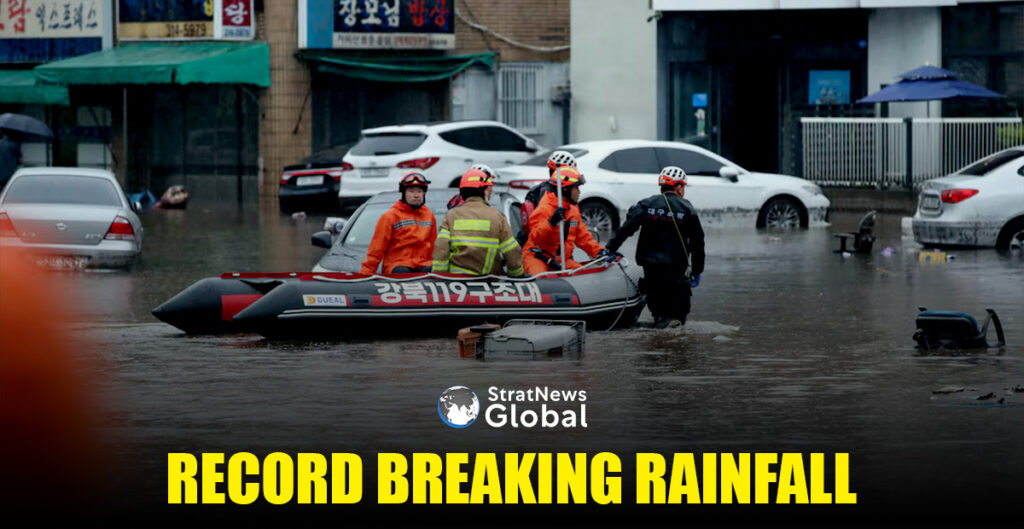
South Korea Rains: 4 Dead, 2 Missing, Thousands Sheltered
For the third consecutive day, South Korea has been battered by heavy rains, resulting in the tragic loss of at least four lives, displacement of thousands, and widespread damage to property and infrastructure.
Warnings for torrential rainfall continued to remain in place across large parts of South Korea’s western and southern regions, as the weather department urged the public to exercise utmost caution. Authorities have also flagged the heightened risk of landslides and flash floods, which are likely to persist through Saturday.
Over 5,000 people were compelled to evacuate their homes due to the relentless downpour. However, as per the latest update provided by the Interior and Safety Ministry, the number of individuals currently taking refuge in temporary shelters had come down to 3,297 by 11 a.m. (0200 GMT).
Record-Breaking Rainfall
Rainfall of more than 400 millimetres (16 inches) hit some southern regions, including the city of Gwangju, in the 24 hours to early Friday, the ministry said.
Thursday’s downpour in Gwangju was the highest daily total for 86 years.
Four people have died in the rains and two were missing, the ministry said. Two were trapped in cars on flooded roads and another died in a basement under flood water in the central South Chungcheong province, it said.
A driver was killed after a 10-metre-high (33 ft) roadside wall collapsed on top of a moving vehicle on Wednesday in Osan, some 44 kilometres (27 miles) south of Seoul, fire agency officials said.
President Lee Urges Stronger Govt. Role
President Lee Jae Myung has called for a stronger government role in disaster prevention and response, saying that while natural disasters are hard to prevent, more can be done to anticipate damage and warn the public.
“I see there were cases where casualties occurred because of a poor response when the situation was reasonably predictable,” he said at an emergency meeting on the weather on Friday, calling for all available resources to be deployed.
(With inputs from Reuters)
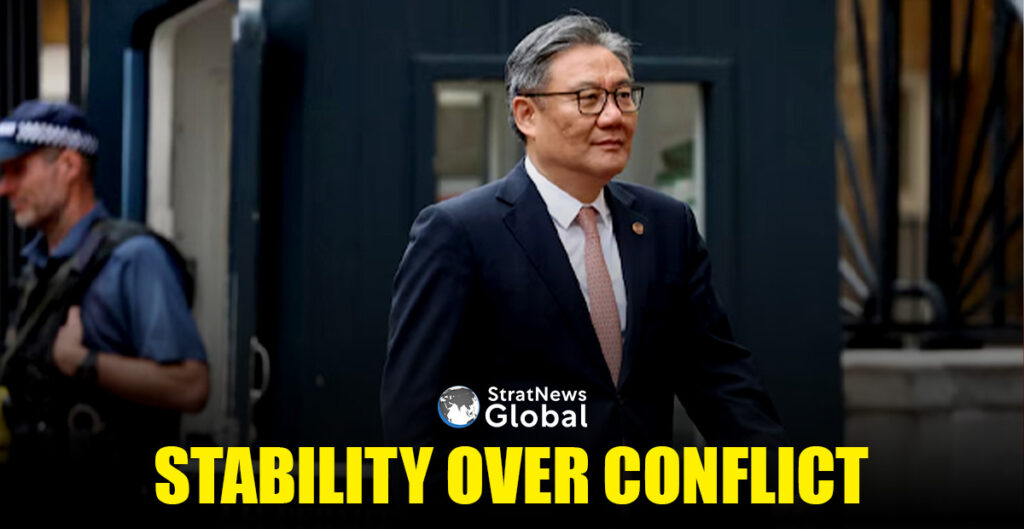
China Seeks Stable US Trade Ties, Urges No Tariff War
China aims to restore stable trade ties with the United States, its commerce minister said, citing recent European talks as evidence that a tariff war is unnecessary and urging Washington to act responsibly as a global superpower.
Commerce Minister Wang Wentao told reporters on Friday that the “ups and downs” in the two countries’ relationship underscored their economic interdependence.
Asked about the United States specifically, Wang said: “Major countries should act like major countries. They must shoulder their responsibilities,” adding that China would protect its national interests.
China is facing an August 12 deadline to reach a durable tariff agreement with the United States, after Beijing and Washington reached a preliminary deal last month to end weeks of escalating tit-for-tat tariffs.
If no deal is reached, global supply chains could face renewed turmoil from duties exceeding 100%.
Wang said negotiations in Geneva and London earlier this year demonstrated there was no need to return to a trade war.
“Practice has proven that through dialogue and consultation, with leadership and communication at the highest levels, we can properly manage contradictions and resolve our differences,” he said.
“We will continue to strengthen dialogue and communication, deepen consensus, reduce misunderstandings, enhance cooperation, to jointly put China-U.S. economic and trade relations back on track to achieve healthy, stable and sustainable development.”
Rare Earths Exports
China’s rare earths exports rose 32% month-on-month in June, customs data showed on Monday, in a sign that agreements struck last month in London to free up the flow of the metals were possibly bearing fruit.
Chipmaker Nvidia will also resume selling its H20 AI chips to China, Chief Executive Jensen Huang said at an event in Beijing this week, a move U.S. Commerce Secretary Howard Lutnick said was also part of negotiations on rare earths.
Wang said on Friday that he had met Huang the previous day, describing the meeting as evidence that “as the dust settles, everyone has come to the conclusion – especially the U.S. side – that forced decoupling is impossible.”
Wang said the current overall tariff level imposed by the U.S. on China was “still high” at 53.6%. Analysts have said that additional duties exceeding 35% will probably wipe out Chinese manufacturers’ profit margins.
“Both sides have come to understand that they need each other, as lots of the goods and services that we exchange are irreplaceable, or at least difficult to exchange in the short-term,” Wang said.
“China does not want a trade war, but it is not afraid of one,” he reiterated.
($1 = 7.1811 Chinese yuan renminbi)
(With inputs from Reuters)