

Support us by contributing to StratNewsGlobal on the following UPI ID
ultramodern@hdfcbank

Strategic affairs is our game, South Asia and beyond our playground. Put together by an experienced team led by Nitin A. Gokhale. Our focus is on strategic affairs, foreign policy and international relations, with higher quality reportage, analysis and commentary with new tie-ups across the South Asian region.
You can support our endeavours. Visit us at www.stratnewsglobal.com and follow us on YouTube, Twitter, Facebook and Instagram.
र 500 per month
र 1000 per month
र 5000 per year
र 10000 per year
Donate an amount of your choice
र 500 per month
Donate र 500 per month

र 1000 per month
Donate र 1000 per month
र 5000 per year
Donate र 5,000 per year
र 10000 per year
Donate र 10,000 per year
Donate an amount of your choice
Donate an amount of your choice



Search Operations Continue For Four Missing In Vietnam Boat Tragedy
Dozens of rescuers in Vietnam were racing on Sunday to locate four missing people after a thunderstorm capsized a boat in Halong Bay, killing dozens, authorities said.
Despite a calm sea, rescuers, from police and border guards to divers and navy personnel, were battling limited visibility hours before the expected landfall in northern Vietnam of Typhoon Wipha, which is now approaching Hong Kong.
The government said rescuers had managed to retrieve the sunken boat and revised down the death toll to 35 from an initial 38 on Saturday, while cutting an estimate of those aboard to 49 from 53, though officials fear the toll could still rise.
All the tourists aboard were Vietnamese, including several children, the official Vietnam News Agency said.
“My brother can swim, but I was told everything happened too fast,” Tran Trung Tu, 39, whose sibling was 32, told Reuters at a funeral parlour on Sunday.
The accident was one of the worst in recent years in the UNESCO-protected archipelago of thousands of limestone islands about 200 km (125 miles) northeast of Hanoi, which draws tens of thousands of visitors each year.
Deadly Thunderstorm
The sudden thunderstorm turned the sky dark in a matter of minutes, felling trees in the capital of Hanoi, where officials at the Noi Bai international airport said nine flights were diverted and three departures temporarily halted.
“It is the first time I have experienced an accident with so many casualties here,” said insurance agent Do Thi Thuy.
A tour boat sank in Halong Bay in 2011, killing 12, with some foreign tourists among them.
The government said the accident was caused by a “sudden” storm. Strong winds, heavy rain and lightning were reported around the time of the event, at 2 p.m. on Saturday.
“I was told life vests were available, but it was too sudden,” said Do Van Hai, 42, a Halong resident. “Hopefully, the missing ones will be found soon.”
(With inputs from Reuters)
Calm Prevails In Syria’s Sweida As Damascus Confirms Ceasefire Is Holding
Residents reported a return to calm in Syria‘s Sweida on Sunday after the Islamist-led government announced the withdrawal of Bedouin fighters from the predominantly Druze city, as a U.S. envoy indicated that a deal to end the recent days of fighting was taking effect.
With hundreds reported killed, the Sweida bloodshed is a major test for interim President Ahmed al-Sharaa, prompting Israel to launch airstrikes against government forces last week as it declared support for the Druze. Fighting continued on Saturday despite a ceasefire call.
Interior Minister Anas Khattab said on Sunday that internal security forces had managed to calm the situation and enforce the ceasefire, “paving the way for a prisoner exchange and the gradual return of stability throughout the governorate”.
Reuters images showed interior ministry forces near the city, blocking the road in front of members of tribes congregated there. The Interior Ministry said late on Saturday that Bedouin fighters had left the city.
‘Navigated To A Pause’
U.S. envoy Tom Barrack said the sides had “navigated to a pause and cessation of hostilities”. “The next foundation stone on a path to inclusion, and lasting de-escalation, is a complete exchange of hostages and detainees, the logistics of which are in process,” he wrote on X.
Kenan Azzam, a dentist, said there was an uneasy calm, but the city’s residents were struggling with a lack of water and electricity. “The hospitals are a disaster and out of service, and there are still so many dead and wounded,” he said by phone.
Another resident, Raed Khazaal, said aid was urgently needed. “Houses are destroyed … The smell of corpses is spread throughout the national hospital,” he said in a voice message to Reuters from Sweida.
The Syrian state news agency said an aid convoy sent to the city by the government was refused entry, while aid organised by the Syrian Red Crescent was let in. A source familiar with the situation said local factions in Sweida had turned back the government convoy.
Druze Minority
Israeli public broadcaster Kan reported on Sunday that Israel sent urgent medical aid to the Druze in Sweida, and the step was coordinated with Washington and Syria. Spokespeople for Prime Minister Benjamin Netanyahu, the Foreign Ministry and the military did not immediately respond to requests for comment.
The Druze are a small but influential minority in Syria, Israel and Lebanon who follow a religion that is an offshoot of a branch of Shi’ite Islam. Some hardline Sunnis deem their beliefs heretical.
The fighting began a week ago with clashes between Bedouin and Druze fighters. Damascus sent troops to quell the fighting, but they were drawn into the violence and accused of widespread violations against the Druze.
Residents of the predominantly Druze city said friends and neighbours were shot at close range in their homes or in the streets by Syrian troops, identified by their fatigues and insignia.
Sharaa on Thursday promised to protect the rights of Druze and to hold to account those who committed violations against “our Druze people”.
He has blamed the violence on “outlaw groups”.
While Sharaa has won U.S. backing since meeting President Donald Trump in May, the violence has underscored the challenge he faces in stitching back together a country shattered by 14 years of conflict, and added to pressures on its mosaic of sectarian and ethnic groups.
Coastal Violence
After Israel bombed Syrian government forces in Sweida and hit the defence ministry in Damascus last week, Prime Minister Benjamin Netanyahu said Israel had established a policy demanding the demilitarisation of territory near the border, stretching from the Israeli-occupied Golan Heights to the Druze Mountain, east of Sweida.
He also said Israel would protect the Druze.
The United States, however, said it did not support the Israeli strikes. On Friday, an Israeli official said Israel agreed to allow Syrian forces limited access to the Sweida area for two days.
A Syrian security source told Reuters that internal security forces had taken up positions near Sweida, establishing checkpoints in western and eastern parts of the province where retreating tribal fighters had gathered.
On Sunday, Sharaa received the report of an inquiry into violence in Syria’s coastal region in March, where Reuters reported in June that Syrian forces killed 1,500 members of the Alawite minority following attacks on security forces.
The presidency said it would review the inquiry’s conclusions and ensure steps to “bring about justice” and prevent the recurrence of “such violations”. It called on the inquiry to hold a news conference on its findings – if appropriate – as soon as possible.
The Syrian Network for Human Rights said on July 18 it had documented the deaths of at least 321 people in Sweida province since July 13. The preliminary toll included civilians, women, children, Bedouin fighters, members of local groups and members of the security forces, it said, and the dead included people killed in field executions by both sides.
The Syrian Observatory for Human Rights, another monitoring group, has reported a death toll of at least 940 people.
Reuters could not independently verify the tolls.
(With inputs from Reuters)
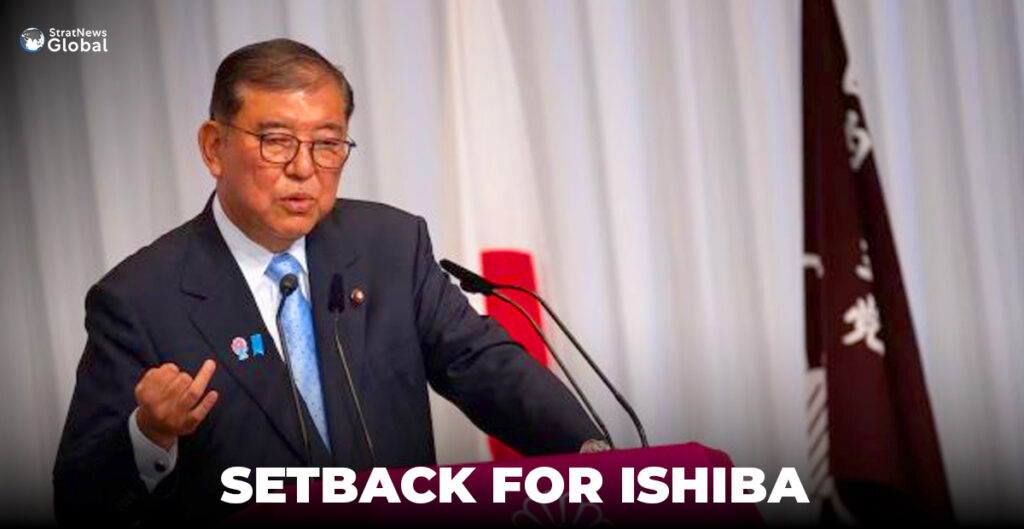
Japan’s PM Ishiba Pledges To Stay In Power After Heavy Election Setback
Japanese Prime Minister Shigeru Ishiba on Monday committed to staying in office despite a major loss for his ruling coalition in the upper house elections, which has sparked internal party debate over his leadership and led the opposition to consider a no-confidence motion.
The embattled premier told a news conference he would remain in office to oversee tariff talks with the United States and other pressing matters such as rising consumer prices that are straining the world’s fourth largest economy.
Analysts say his days may be numbered, having also lost control of the more powerful lower house in elections last year and shedding votes on Sunday to opposition parties pledging to cut taxes and tighten immigration policies.
Leadership Change
“The political situation has become fluid and could lead to a leadership change or the reshuffling of the coalition in coming months, but Prime Minister Shigeru Ishiba will likely stay to complete the tariff negotiations with the U.S. for now,” said Oxford Economics’ lead Japan economist Norihiro Yamaguchi.
Facing a voter backlash over rising consumer prices, investors fear his administration will now be more beholden to opposition parties advocating for tax cuts and welfare spending that the world’s most indebted country can ill afford.
Markets in Japan were closed for a holiday on Monday, although the yen strengthened and Nikkei futures rose slightly, as the election results appeared to be priced in.
Yields on Japanese government bonds sold off sharply ahead of the ballot as polls showed the ruling coalition – which had been calling for fiscal restraint – was likely to lose its majority in the upper house.
Adding to the economic anxiety, Ishiba’s lack of progress in averting tariffs set to be imposed by its biggest trading partner, the United States, on August 1 appears to have frustrated some voters.
“Had the ruling party resolved even one of these issues, it (its approval rate) would have gone up, but we didn’t feel anything and it seems like the U.S. would continue to push us around,” Hideaki Matsuda, a 60-year-old company manager, said outside Tokyo’s bustling Shinjuku station on Monday morning.
Japan’s chief tariff negotiator Ryosei Akazawa departed for trade talks in Washington on Monday morning, his eighth visit in three months.
Populist Politics
Ishiba’s Liberal Democratic Party (LDP), which has ruled Japan for most of its post-war history, and coalition partner Komeito returned 47 seats, short of the 50 seats it needed to ensure a majority in the 248-seat upper chamber in an election where half the seats were up for grabs.
The leader of the main opposition Constitutional Democratic Party (CDPJ), Yoshihiko Noda, said on Sunday he is considering submitting a vote of non-confidence in the Ishiba administration as the result showed it did not have voters’ trust.
The CDPJ returned 22 seats in the ballot, finishing second.
Some senior LDP lawmakers were also quietly voicing doubts over whether Ishiba should stay, according to local media reports on Monday.
Among them was former prime minister Taro Aso, leader of a powerful faction within the ruling party, who said he “couldn’t accept” Ishiba staying on, Japan’s TV Asahi reported. Senior party members including Aso met on Sunday evening to discuss whether Ishiba should resign, Sankei newspaper reported.
The far-right Sanseito party clocked the biggest gains of the night, adding 14 seats to one elected previously.
Launched on YouTube during the pandemic by spreading conspiracy theories about vaccinations and a cabal of global elites, the party found wider appeal with its ‘Japanese First’ campaign and warnings about a “silent invasion” of foreigners.
Dragging once-fringe rhetoric into the mainstream, its success could mark the arrival of populist politics in Japan, which until now has failed to take root as it has in the United States and western Europe.
Sanseito’s party leader Sohei Kamiya, a former supermarket manager and English teacher, has previously pointed to Germany’s AfD and Reform UK as a possible blueprint for future success.
(With inputs from Reuters)
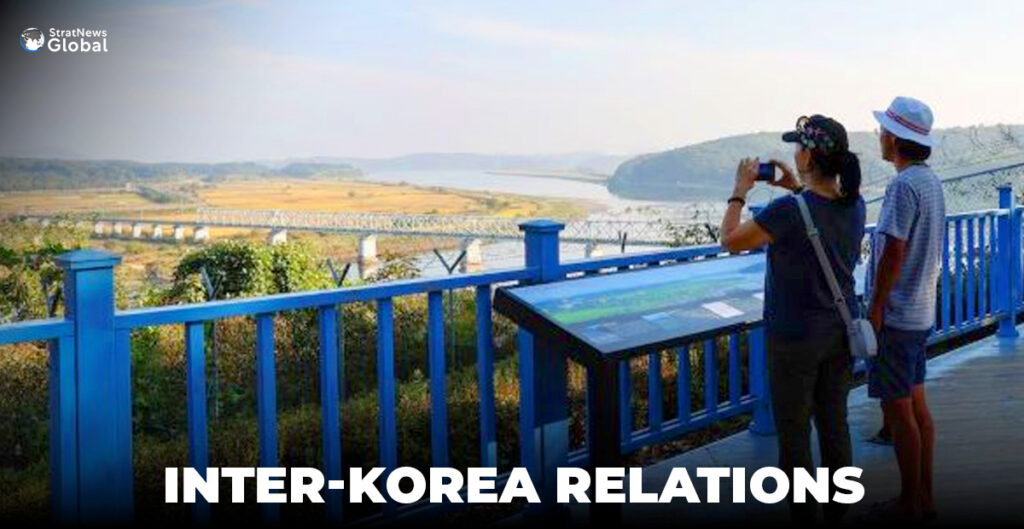
South Korea Explores Multiple Approaches To Strengthen Ties With North Korea
South Korea is examining a range of options to enhance its relationship with North Korea, a spokesperson from the Unification Ministry said on Monday, following media reports suggesting that Seoul may consider permitting individual travel to the North Korea.
The ministry clarified that no final decision has been made, but various proposals are under review to foster people-to-people exchanges and ease longstanding tensions.
Koo Byung-sam, a spokesperson for the ministry that handles inter-Korea affairs, refused to comment on a “particular issue”.
But, Koo said he understood individual tours were not in violation of international sanctions.
Tourism is one of a narrow range of cash sources for North Korea that are not targeted under United Nations sanctions over its nuclear and weapons programs.
Plans To Improve Strained Relations
South Korean President Lee Jae Myung has pledged to improve strained relations with Pyongyang that have reached their worst level in years.
In a bid to ease tensions, Lee suspended anti-North Korea loudspeaker broadcasts along the border and ordered a halt to leaflet campaigns criticising the North’s leaders by anti-Pyongyang activists.
The president has said he will discuss further plans with top security officials to resume dialogue with North Korea that is technically at war with the South.
North Korea recently opened a beach resort in the city of Wonsan, a flagship project driven by leader Kim Jong Un to promote tourism.
But, the tourist area is temporarily not accepting foreign visitors, according to a July 16 note by DPR Korea Tour, a website operated by North Korea’s National Tourism Administration.
North Korea first needs to open the area to the outside world, the Unification Ministry spokesperson said, asked if South Koreans could travel to Wonsan.
South Korea once ran tours to North Korea’s Mount Kumgang area, but suspended them in 2008, when a South Korean tourist was shot dead by a North Korean soldier.
(With inputs from Reuters)
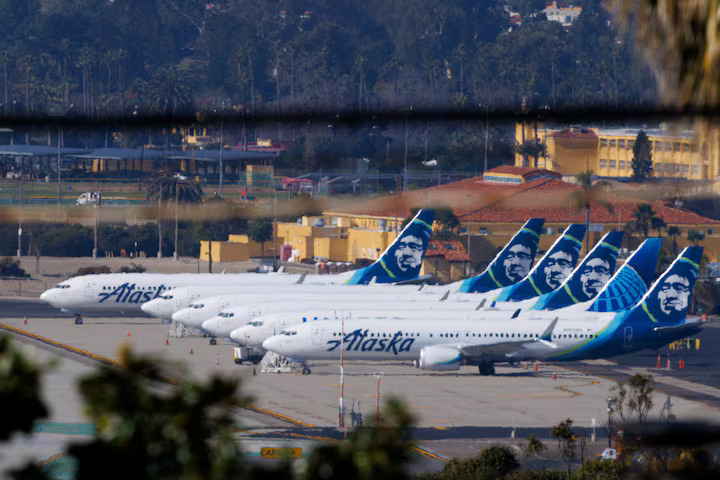
Alaska Airlines Hit By IT Outage, Grounds Entire Fleet
Alaska Airlines grounded all its flights on Sunday following an IT outage, the US airline said, without detailing the cause — marking the second such fleet-wide disruption in just over a year.
“At approximately 8 p.m. Pacific on Sunday (0300 GMT on Monday), Alaska Airlines experienced an IT outage that’s impacting our operations. We requested a temporary, system-wide ground stop for Alaska and Horizon Air flights,” Alaska said in an emailed statement to Reuters on Sunday evening.
Alaska Withholds Details
The Seattle-based airline said there would be residual impacts to its operations throughout the evening, without providing more details.
The FAA did not immediately respond to Reuters’ requests for comment outside regular business hours.
The FAA status page showed all destinations affected by the ground stop of Alaska’s mainline aircraft, and the suspension of Horizon’s operations.
In April 2024, Alaska grounded its entire fleet due to an issue with the system that calculates the weight and balance of its planes, just a few months after a door panel on an Alaska Airlines-operated Boeing 737 MAX 9 jet blew off midair.
Alaska Air Group maintains an operational fleet of 238 Boeing 737 aircraft, and 87 Embraer 175 aircraft, according to its website.
In June, Alaska Air Group-owned Hawaiian Airlines said some of its IT systems were disrupted by a hack. Alaska Air Group said it was still determining the financial impact of that event.
‘Scattered Spider’
The news of Alaska’s IT issues comes at a time when tech companies Google and Palo Alto Networks have warned of the “Scattered Spider” hacking group’s interest in the aviation sector.
Canada’s WestJet Airlines was struck by an unspecified cyber incident in June, while Australia’s Qantas experienced a data breach in July where a cyber hacker accessed the personal information of millions of customers.
It remains unclear whether Alaska’s outage is related to Microsoft stating on Sunday that there were “active attacks” on its server software used by government agencies and businesses.
Alaska did not immediately respond to a request seeking comment on whether the outage was related to the Microsoft announcement.
(With inputs from Reuters)
‘Japanese First’ Party Rises As Major Force In Election With Hardline Stance On Immigration
The fringe far-right Sanseito party became one of the biggest winners in Sunday’s upper house election in Japan, drawing voter support through its warnings of a “silent invasion” by immigrants, along with promises of tax reductions and increased welfare spending.
Birthed on YouTube during the COVID-19 pandemic spreading conspiracy theories about vaccinations and a cabal of global elites, the party broke into mainstream politics with its “Japanese First” campaign.
The party won 14 seats adding to the single lawmaker it secured in the 248-seat chamber three years ago. It has only three seats in the more powerful lower house.
“The phrase Japanese First was meant to express rebuilding Japanese people’s livelihoods by resisting globalism. I am not saying that we should completely ban foreigners or that every foreigner should get out of Japan,” Sohei Kamiya, the party’s 47-year-old leader, said in an interview with local broadcaster Nippon Television after the election.
Prime Minister Shigeru Ishiba’s Liberal Democratic Party and its coalition partner Komeito lost their majority in the upper house, leaving them further beholden to opposition support following a lower house defeat in October.
“Sanseito has become the talk of the town, and particularly here in America, because of the whole populist and anti-foreign sentiment. It’s more of a weakness of the LDP and Ishiba than anything else,” said Joshua Walker, head of the U.S. non-profit Japan Society.
In polling ahead of Sunday’s election, 29% of voters told NHK that social security and a declining birthrate were their biggest concern. A total of 28% said they worried about rising rice prices, which have doubled in the past year. Immigration was in joint fifth place with 7% of respondents pointing to it.
“We were criticized as being xenophobic and discriminatory. The public came to understand that the media was wrong and Sanseito was right,” Kamiya said.
Kamiya’s message grabbed voters frustrated with a weak economy and currency that has lured tourists in record numbers in recent years, further driving up prices that Japanese can ill afford, political analysts say.
Japan’s fast-ageing society has also seen foreign-born residents hit a record of about 3.8 million last year, though that is just 3% of the total population, a fraction of the corresponding proportion in the United States and Europe.
Inspired By Trump
Kamiya, a former supermarket manager and English teacher, said before the election that he had drawn inspiration from U.S. President Donald Trump’s “bold political style”.
He has also drawn comparisons with Germany’s AfD and Reform UK although right-wing populist policies have yet to take root in Japan as they have in Europe and the United States.
Post-election, Kamiya said he plans to follow the example of Europe’s emerging populist parties by building alliances with other small parties rather than work with an LDP administration, which has ruled for most of Japan’s postwar history.
Sanseito’s focus on immigration has already shifted Japan’s politics to the right. Just days before the vote, Ishiba’s administration announced a new government taskforce to fight “crimes and disorderly conduct” by foreign nationals and his party has promised a target of “zero illegal foreigners”.
Kamiya, who won the party’s first seat in 2022 after gaining notoriety for appearing to call for Japan’s emperor to take concubines, has tried to tone down some controversial ideas formerly embraced by the party.
During the campaign, Kamiya, however, faced a backlash for branding gender equality policies a mistake that encourage women to work and keep them from having children.
To soften what he said was his “hot-blooded” image and to broaden support beyond the men in their twenties and thirties that form the core of Sanseito’s support, Kamiya fielded a raft of female candidates on Sunday.
Those included the single-named singer Saya, who clinched a seat in Tokyo.
Like other opposition parties, Sanseito called for tax cuts and an increase in child benefits, policies that led investors to fret about Japan’s fiscal health and massive debt pile, but unlike them it has a far bigger online presence from where it can attack Japan’s political establishment.
Its YouTube channel has 400,000 followers, more than any other party on the platform and three times that of the LDP, according to socialcounts.org.
Sanseito’s upper house breakthrough, Kamiya said, is just the beginning.
“We are gradually increasing our numbers and living up to people’s expectations. By building a solid organization and securing 50 or 60 seats, I believe our policies will finally become reality,” he said.
(With inputs from Reuters)
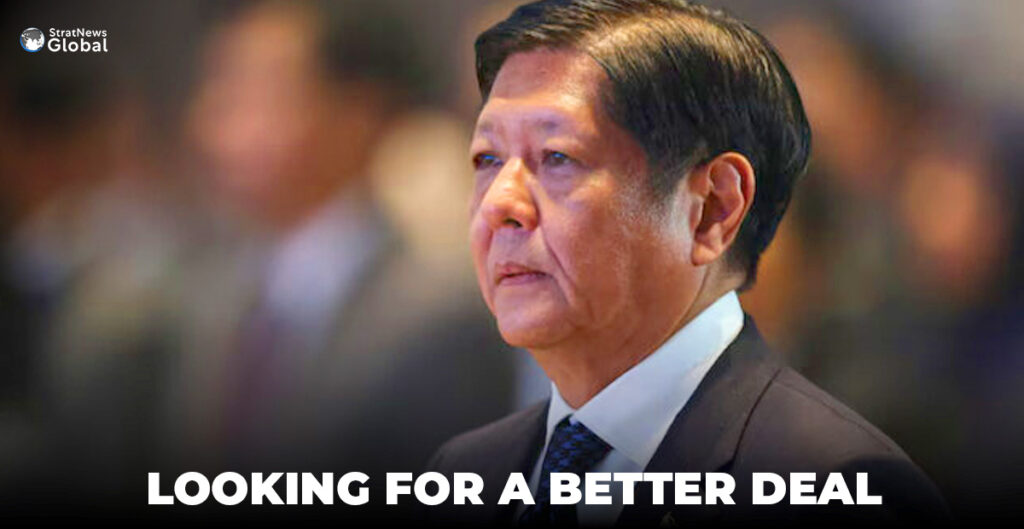
Marcos To Meet Trump, Pushes For Better Trade Deal
Philippine President Ferdinand Marcos Jr. is scheduled to meet US President Donald Trump this week, aiming to leverage Manila’s position as a key Asian ally to secure a better trade deal before the August 1 deadline.
Marcos will be the first Southeast Asian leader to meet Trump in his second term. Trump has already struck trade deals with two of Manila’s regional partners, Vietnam and Indonesia, driving tough bargains in trade talks even with close allies that Washington needs to keep onside in its strategic rivalry with China.
Discussions On Security, Defence, Trade
“I expect our discussions to focus on security and defence, of course, but also on trade,” Marcos said in a speech before leaving Manila. “We will see how much progress we can make when it comes to the negotiations with the United States concerning the changes that we would like to institute to alleviate the effects of a very severe tariff schedule on the Philippines.”
The United States had a deficit of nearly $5 billion with the Philippines last year on bilateral goods trade of $23.5 billion. Trump this month raised the threatened “reciprocal” tariffs on imports from the Philippines to 20% from 17% threatened in April.
Although US allies in Asia such as Japan and South Korea have yet to strike trade deals with Trump, Gregory Poling, a Southeast Asia expert at Washington’s Center for Strategic and International Studies, said Marcos might be able to do better than Vietnam, with its agreement of a 20% baseline tariff on its goods, and Indonesia at 19%.
“I wouldn’t be surprised to see an announcement of a deal with the Philippines at a lower rate than those two,” Poling said.
Marcos, who arrived in Washington on Sunday, is due to hold talks with Secretary of State Marco Rubio and Defence Secretary Pete Hegseth on Monday before meeting Trump at the White House on Tuesday. He will also meet US business leaders investing in the Philippines during his trip.
‘Mutually Beneficial’ Deal
Philippine officials say Marcos’ focus will be on economic cooperation and Manila’s concerns about the tariffs. They say he will stress that Manila must become economically stronger if it is to serve as a truly robust partner for the US in the Indo-Pacific.
Philippine Assistant Foreign Secretary Raquel Solano said last week trade officials have been working with US counterparts seeking to seal a “mutually acceptable and mutually beneficial” deal for both countries.
Trump and Marcos will also discuss defence and security, and Solano said the Philippine president would be looking to further strengthen the longstanding defence alliance.
The South China Sea Factor
With the Philippines facing intense pressure from China in the contested South China Sea, Marcos has pivoted closer to the US, expanding its access to Philippine military bases amid China’s threats towards Taiwan, the democratically governed island claimed by Beijing.
The United States and the Philippines have a seven-decade-old mutual defence treaty and hold dozens of annual exercises, which have included training with US Typhon missile system, and more recently with the NMESIS anti-ship missile system, angering China.
Manila and the US have closely aligned their views on China, Poling said, and it is notable that Rubio and Hegseth made sure their Philippine counterparts were the first Southeast Asian officials they met.
Poling said Trump also seemed to have a certain warmth towards Marcos, based on their phone call after the election.
(With inputs from Reuters)
Trade Troubles Loom As China, EU Prepare For Key Summit In Beijing
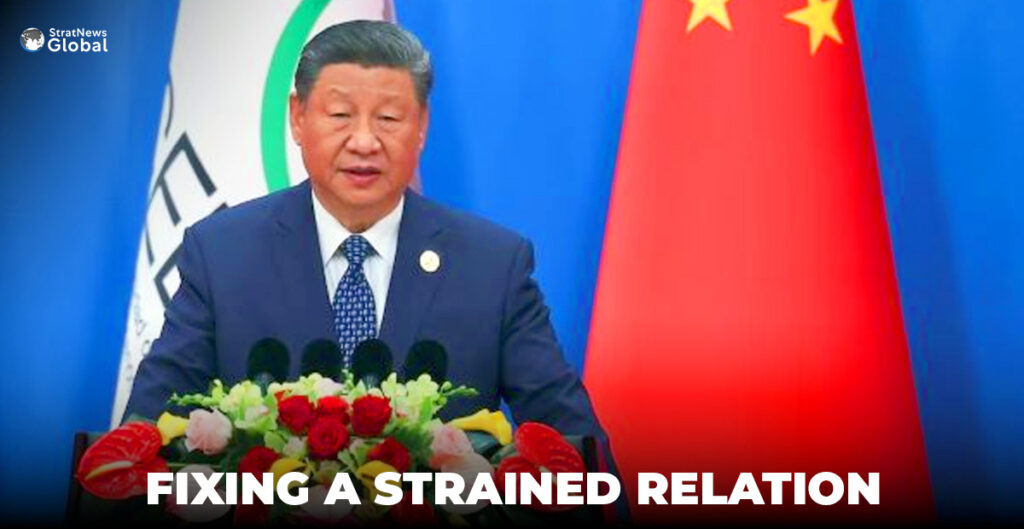
Marking 50 years of diplomatic ties, China on Monday confirmed it will host a high-level summit with the European Union (EU) in Beijing this week, as both sides aim to ease trade tensions amid growing global economic uncertainty.
European Commission President Ursula von der Leyen and European Council President Antonio Costa will visit China on Thursday and meet Chinese President Xi Jinping, the Chinese foreign ministry said on Monday.
China’s Premier Li Qiang will be co-chairing the 25th China-EU summit with the EU leaders the same day.
Fixing Strained Relations?
The meeting comes as global trade frictions heat up, with Beijing seeking to secure closer economic and political ties with the bloc to hedge against uncertainties in its relations with the United States.
EU-China relations deteriorated sharply in 2021 when Brussels sanctioned Chinese officials over alleged human rights abuses in the Xinjiang region, a move that saw swift retaliatory sanctions from Beijing, halting much of their bilateral exchanges.
Relations have also been marred by various trade disputes in recent years, including those over Chinese-made electric vehicles, European brandy and pork, government purchases of medical devices, and rare earths.
A Partner For Cooperation
In a recent speech, von der Leyen praised China’s economic progress but said the country had flooded global markets with its overcapacity, limited access to its market, and de-facto enabled Russia’s war economy.
The bloc, which calls China “a partner for cooperation, an economic competitor and a systemic rival,” has also said it saw the need to thaw ties amid global trade uncertainties.
After US President Donald Trump announced sweeping tariffs in April, von der Leyen told China’s Premier Li in a phone call that it was EU and China’s responsibility “to support a strong reformed trading system, free, fair and founded on a level playing field”.
(With inputs from Reuters)
67 Palestinians Killed While Waiting For Aid In Gaza
At least 67 Palestinians lost their lives in Israeli firing while waiting for UN aid trucks in northern Gaza on Sunday, according to the Gaza health ministry, even as Israel issued fresh evacuation orders for areas already teeming with displaced civilians.
The ministry said dozens of people were also wounded in the incident in northern Gaza. It was one of the highest reported death tolls among repeated recent cases in which aid seekers have been killed, including 36 on Saturday. Another six people were killed near another aid site in the south, it said.
Israel’s military said its troops had fired warning shots towards a crowd of thousands of people in northern Gaza on Sunday to remove what it said was “an immediate threat”.
It said initial findings suggested reported casualty figures were inflated, and it “certainly does not intentionally target humanitarian aid trucks”.
It did not immediately comment on the incident in the south.
The UN World Food Programme (WFP) said that shortly after entering Gaza, a WFP convoy of 25 trucks carrying food aid encountered “massive crowds of hungry civilians” who then came under gunfire.
“WFP reiterates that any violence involving civilians seeking humanitarian aid is completely unacceptable,” it said in a statement.
A Hamas official told Reuters that the militant group was angered over the mounting deaths and the hunger crisis in the enclave, and that this could badly affect ceasefire talks underway in Qatar.
In total, health authorities said 90 people had been killed by Israeli gunfire and airstrikes across the enclave on Sunday.
Displaced Gazans Evacuate
After Israel’s military dropped leaflets urging people to evacuate from neighbourhoods in central Gaza’s Deir al-Balah, residents said Israeli planes struck three houses in the area.
Dozens of families began leaving their homes, carrying some of their belongings. Hundreds of thousands of displaced Gazans have been sheltering in the Deir al-Balah area.
Israel’s military said it had not entered the districts subject to the evacuation order during the current conflict and that it was continuing “to operate with great force to destroy the enemy’s capabilities and terrorist infrastructure in the area”.
Israeli sources have said the reason the army has so far stayed out is because they suspect Hamas might be holding hostages there. At least 20 of the remaining 50 hostages in captivity in Gaza are believed to still be alive.
Hostage families demanded an explanation from the army.
“Can anyone (promise) to us that this decision will not come at the cost of losing our loved ones?” the families said in a statement.
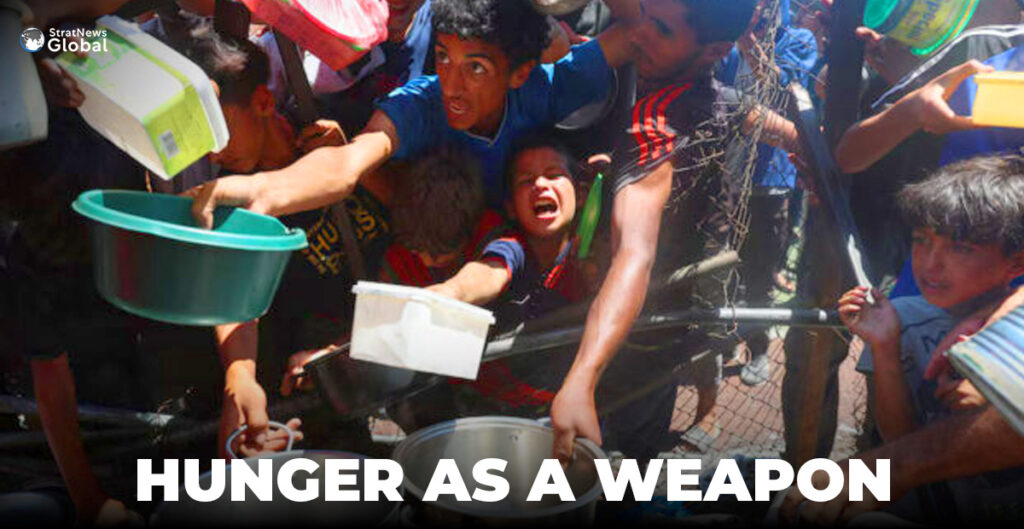
Accelerating Starvation
Much of Gaza has been reduced to a wasteland during more than 21 months of war and there are fears of accelerating starvation.
Palestinian health officials said hundreds of people could soon die as hospitals were inundated with patients suffering from dizziness and exhaustion due to the scarcity of food and a collapse in aid deliveries.
“We warn that hundreds of people whose bodies have wasted away are at risk of imminent death due to hunger,” said the health ministry, which is controlled by Hamas.
The United Nations also said on Sunday that civilians were starving and needed an urgent influx of aid.
Pope Leo called for an end to the “barbarity of war” as he spoke of his profound pain over an Israeli strike on the sole Catholic church in Gaza that killed three people on Thursday.
Hunger, If Not Bombs And Guns
Gaza residents said it was becoming impossible to find essential food such as flour. The health ministry said at least 71 children had died of malnutrition during the war, and 60,000 others were suffering from symptoms of malnutrition.
Later on Sunday, it said 18 people have died of hunger in the past 24 hours.
Food prices have increased well beyond what most of the population of more than two million can afford.
Several people who spoke to Reuters via chat apps said they either had one meal or no meal in the past 24 hours.
“As a father, I wake up in the early morning to look for food, for even a loaf of bread for my five children, but all in vain,” said Ziad, a nurse.
“People who didn’t die of bombs will die of hunger. We want an end to this war now, a truce, even for two months,” he told Reuters.
Others said they felt dizzy walking in the streets and that many fainted as they walked. Fathers leave tents to avoid questions by their children about what to eat.
UNRWA, the UN refugee agency dedicated to Palestinians, demanded Israel allow more aid trucks into Gaza, saying it had enough food for the entire population for over three months which was not allowed in.
Israel’s military said that it “views the transfer of humanitarian aid into the Gaza Strip as a matter of utmost importance, and works to enable and facilitate its entry in coordination with the international community”.
Truce Talks
Some Palestinians suggested the move on Deir al-Balah might be an attempt to put pressure on Hamas to make more concessions in long-running ceasefire negotiations.
Israel and Hamas are engaged in indirect talks in Doha aimed at reaching a 60-day truce and hostage deal, although there has been no sign of breakthrough.
The war began when Hamas-led militants stormed into Israel on October 7, 2023, killing 1,200 people and taking 251 hostages back to Gaza.
The Israeli military campaign against Hamas in Gaza has since killed more than 58,000 Palestinians, according to health officials, displaced almost the entire population and plunged the enclave into a humanitarian crisis.
(With inputs from Reuters)
Japan: PM Ishiba Hit By Upper House Loss
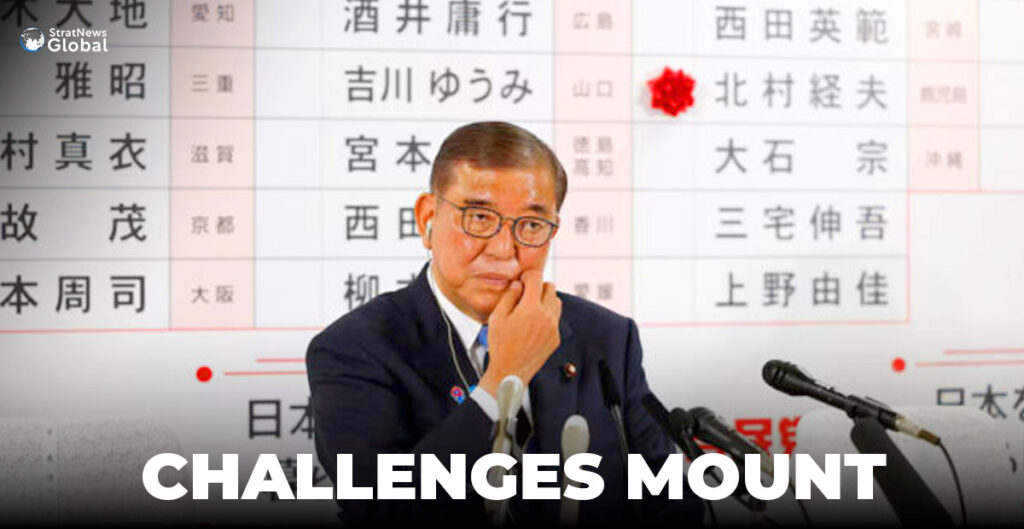
In a political setback, Japan’s ruling coalition on Sunday lost its majority in the upper house, dealing a fresh blow to Prime Minister Shigeru Ishiba’s hold on power — even as he pledged to stay on as party leader, citing the urgency of upcoming tariff talks with the United States.
While the ballot does not directly determine whether Ishiba’s administration will fall, it heaps pressure on the embattled leader who also lost control of the more powerful lower house in October.
‘Harsh Result’
Ishiba’s Liberal Democratic Party (LDP) and coalition partner Komeito returned 47 seats, short of the 50 seats it needed to ensure a majority in the 248-seat upper chamber in an election where half the seats were up for grabs.
That comes on top of its worst showing in 15 years in October’s lower house election, a vote which has left Ishiba’s administration vulnerable to no-confidence motions and calls from within his own party for leadership change.
Speaking late on Sunday evening after exit polls closed, Ishiba told NHK he “solemnly” accepted the “harsh result”.
“We are engaged in extremely critical tariff negotiations with the United States…we must never ruin these negotiations. It is only natural to devote our complete dedication and energy to realizing our national interests,” he later told TV Tokyo.
Asked whether he intended to stay on as premier, he said “that’s right”.
Far-Right Sanseito’s Arrival
Japan, the world’s fourth largest economy, faces a deadline of August 1 to strike a trade deal with the United States or face punishing tariffs in its largest export market.
The main opposition Constitutional Democratic Party finished second with 22 seats.
Meanwhile, the far-right Sanseito party announced its arrival in mainstream politics, adding 14 seats to one elected previously. Launched on YouTube a few years ago, the populist party found wider appeal with its ‘Japanese First’ campaign and warnings about a “silent invasion” of foreigners.
‘Hammered Home’
Opposition parties advocating for tax cuts and welfare spending struck a chord with voters, as rising consumer prices – particularly a jump in the cost of rice – have sowed frustration at the government’s response.
“The LDP was largely playing defence in this election, being on the wrong side of a key voter issue,” said David Boling, a director at consulting firm Eurasia Group.
“Polls show that most households want a cut to the consumption tax to address inflation, something that the LDP opposes. Opposition parties seized on it and hammered that message home.”
Challenges Mount
The LDP has been urging fiscal restraint, with one eye on a very jittery government bond market, as investors worry about Japan’s ability to refinance the world’s largest debt pile. Any concessions the LDP must now strike with opposition parties to pass policy will only further elevate those nerves, analysts say.
“The ruling party will have to compromise in order to gain the cooperation of the opposition, and the budget will continue to expand,” said Yu Uchiyama, a politics professor at the University of Tokyo.
“Overseas investors’ evaluation of the Japan economy will also be quite harsh.”
‘Japanese People Are Disrespected’
Sanseito, which first emerged during the COVID-19 pandemic spreading conspiracy theories about vaccinations and a cabal of global elites, is among those advocating fiscal expansion.
But it is its tough talk on immigration that has grabbed attention, dragging once-fringe political rhetoric into the mainstream.
It remains to be seen whether the party can follow the path of other far-right parties with which it has drawn comparisons, such as Germany’s AfD and Reform UK.
“I am attending graduate school but there are no Japanese around me. All of them are foreigners,” said Yu Nagai, a 25-year-old student who voted for Sanseito earlier on Sunday.
“When I look at the way compensation and money are spent on foreigners, I think that Japanese people are a bit disrespected,” Nagai said after casting his ballot at a polling station in Tokyo’s Shinjuku ward.
Japan, the world’s fastest aging society, saw foreign-born residents hit a record of about 3.8 million last year.
That is still just 3% of the total population, a much smaller fraction than in the United States and Europe, but comes amid a tourism boom that has made foreigners far more visible across the country.
(With inputs from Reuters)