

Support us by contributing to StratNewsGlobal on the following UPI ID
ultramodern@hdfcbank

Strategic affairs is our game, South Asia and beyond our playground. Put together by an experienced team led by Nitin A. Gokhale. Our focus is on strategic affairs, foreign policy and international relations, with higher quality reportage, analysis and commentary with new tie-ups across the South Asian region.
You can support our endeavours. Visit us at www.stratnewsglobal.com and follow us on YouTube, Twitter, Facebook and Instagram.
र 500 per month
र 1000 per month
र 5000 per year
र 10000 per year
Donate an amount of your choice
र 500 per month
Donate र 500 per month

र 1000 per month
Donate र 1000 per month
र 5000 per year
Donate र 5,000 per year
र 10000 per year
Donate र 10,000 per year
Donate an amount of your choice
Donate an amount of your choice

Iran’s Deputy FM Warns Reimposing UN Sanctions Could Complicate Nuclear Standoff
Reimposing international sanctions on Iran would further complicate the situation surrounding its nuclear programme, Iranian Deputy Foreign Minister Kazem Gharibabadi said on Tuesday, according to state media.
He was speaking ahead of a meeting on Friday with three European states known as the E3 – Britain, France and Germany.
‘Snapback’ Mechanism
The E3 have said that if no progress is reached by the end of August over Iran’s nuclear programme, they will invoke a “snapback” mechanism – a process that would reimpose U.N. sanctions on Tehran that were lifted under a 2015 deal in return for restrictions on Iran’s nuclear programme
“We will express our position regarding the E3’s comments on the snapback mechanism, which we think lacks any legal ground,” Gharibabadi said, referring to Friday’s meeting in Istanbul.
“Nonetheless, our effort will be to see if we can find common solutions to manage the situation.”
The three European countries, along with China and Russia, are the remaining parties to the 2015 nuclear deal – from which the United States withdrew in 2018.
“It has been seven years since the nuclear deal was not being implemented by the Europeans following the U.S. departure from it. How can they argue that Iran is not following the deal when they themselves have not done so?” Gharibabadi added.
Tehran denies seeking a nuclear weapon and says its nuclear programme is solely meant for civilian purposes.
Regional Instability
Iran may withdraw security commitments if European countries trigger a U.N. mechanism to reimpose sanctions, a parliamentary security commission member said on Monday, according to Borna News.
“We have many tools in our disposition. We can withhold our commitment to security in the region, Persian Gulf and Hormuz Strait as well as other maritime areas,” Abbas Moqtadaei said in reference to Tehran’s potential counter-measures to the reimposition of international sanctions.
(With inputs from Reuters)
Declining Interest In Mandarin Amid Geopolitical Tensions
Interest in learning Mandarin, once seen as a language of great relevance, is waning worldwide. According to the US-based Modern Language Association, which is the premier body for scholars of language and literature, in the US, UK and New Zealand, enrollments in Chinese language programmes have dropped significantly, as the language is caught in the crosshairs of geopolitical tensions and growing skepticism towards China.
In U.S. universities, enrollment in Mandarin language course were down 25% in 2021 compared to their 2013 peak. In the UK 35% fewer students were studying Chinese in 2023 than in 2016. New Zealand has also seen a steady decline in high school students learning Mandarin since 2020.
Experts say the decline is partly due to China’s economic slowdown and a less welcoming environment for foreigners. The country’s strict pandemic lockdowns drove many international students and workers to leave.
The turning away from Mandarin is also driven by tensions between China and Western governments, especially around national security. The Confucius Institutes, once seen as the flag bearers of Chinese culture and language, are now shut following accusations of promoting Chinese Communist Party ideology.
There were also allegations of political interference and security concerns with these institutes seen as tools of Chinese soft power, raising concerns about propaganda and foreign influence.
Mainland China has also become less accessible to foreign academics, journalists, and researchers and extended stays now carry risks for foreign experts, including potential impacts on careers or security clearances.
This is not the case in the Global South, where from Southeast Asia to the Arab region, Mandarin continues to grow driven by economic ties with China. Meanwhile, Taiwan has become an alternative for Chinese language learning, the island offers scholarships and growing opportunities for international students.
As China turns inward, the rest of the world is adjusting its relationship with the language that once symbolized boundless opportunity.
Death Toll Rises To 27 In Bangladesh Air Force Jet Crash
At least 25 children were among the 27 people found dead in charred buildings after a Bangladesh Air Force training jet crashed into a college and school campus in Dhaka, officials said on Tuesday, while 88 people are undergoing treatment in the hospital.
The F-7 BGI aircraft crashed soon after it took off at 1:06 p.m. (0706 GMT) on Monday from the airbase in Kurmitola in the capital on a routine training mission. The military said the plane experienced a mechanical failure.
Visuals showed rescue workers scouring the charred buildings for debris as distressed family members surrounded the site.
Sayedur Rahman, special assistant to the chief adviser on health, told reporters that 27 people had died and 88 were admitted to hospital with burn injuries. Those dead included 25 children, a teacher and the pilot.
The government announced a day of mourning, with flags at half-mast and special prayers at all places of worship.
The F-7 BGI is the final and most advanced variant in China’s Chengdu J-7/F-7 aircraft family, according to Jane’s Information Group. Bangladesh signed a contract for 16 aircraft in 2011, and deliveries were completed by 2013.
Fiery Wreckage
Firefighters sprayed water on the mangled remains of the plane, which appeared to have rammed into the side of a building, damaging iron grills and creating a gaping hole in the structure, Reuters TV visuals showed.
Visuals also showed people screaming and crying as others tried to comfort them.
“When I was picking (up) my kids and went to the gate, I realised something came from behind…I heard an explosion. When I looked back, I only saw fire and smoke,” said Masud Tarik, a teacher at the school.
Yunus Assures Investigation
Muhammad Yunus, head of Bangladesh’s interim government, said “necessary measures” would be taken to investigate the cause of the accident and “ensure all kinds of assistance”.
“The loss suffered by the Air Force…students, parents, teachers and staff, and others in this accident is irreparable,” he said.
The incident comes as neighbour India is still grappling with the world’s worst aviation disaster in a decade after an Air India plane crashed into a medical college hostel in Ahmedabad last month, killing 241 of the 242 people on board and 19 on the ground.
(With inputs from Reuters)
India Sceptical As Chinese Netizens Laud Yarlung Zangbo Hydro Project
Two parallel but contradictory narratives were visible as China announced it had begun work on the multibillion dollar hydropower project on the Yarlung Zangbo, which flows into India as the Brahmaputra.
The one from China was enthusiastic and applauding while the one from India was pesimisstic and negative.
Chinese media outlets and social platforms like Weibo, Zhihu and WeChat went live with nationalistic commentary, with many netizens confident it would propel Tibet into the position of a growth hub for China. Oddly, some even said it would serve as a “geopolitical buffer” against India. Other commentators said the development would transform Tibet and result in “strategic rebalancing” along the border with India.
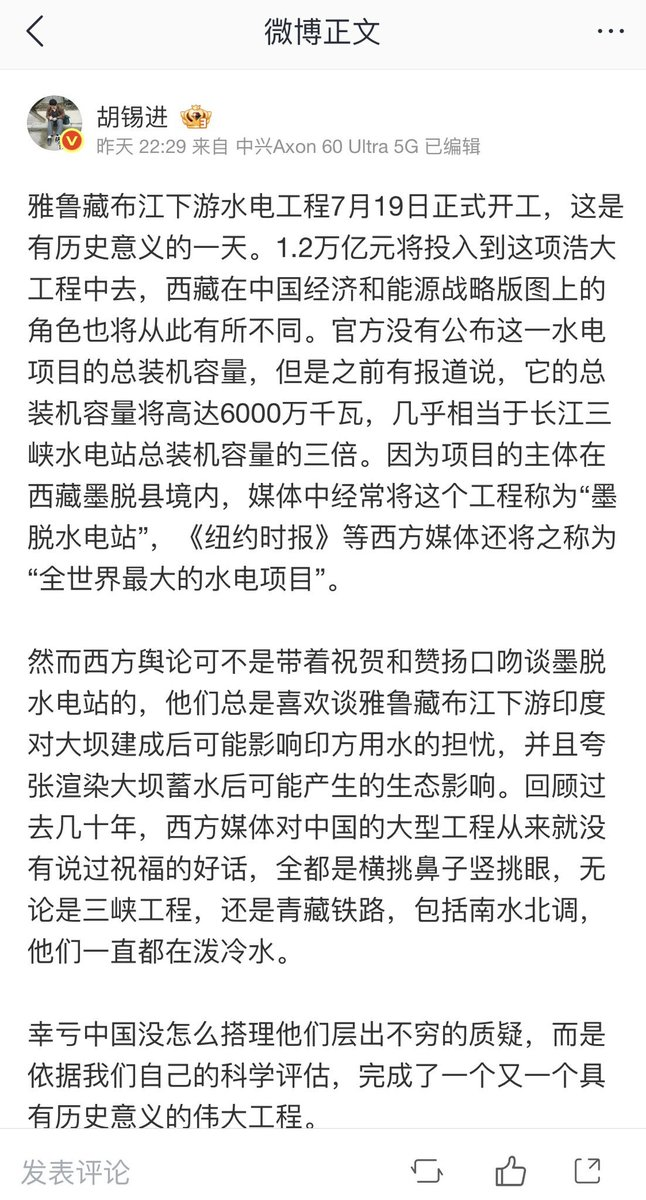
Hu Xijin, former editor of the Global Times, posted shortly after the project was announced. He implied that India is following the West by criticising China’s major infrastructure projects while failing to acknowledge their success. Drawing comparisons to previous projects like the Three Gorges Dam and Qinghai-Tibet Railway, Hu dismissed Indian and Western criticism as repetitive and biased.
“Western media never congratulates us on projects like the Motuo Hydropower Station,” Hu wrote. “They focus only on India’s water concerns or exaggerate possible environmental impacts.”
Another popular nationalist influencer on Weibo released a three-minute video arguing that India’s concerns about the dam are exaggerated and overly emotional.
Many posts questioned Prime Minister Narendra Modi’s silence on the issue and wondered if it was a sign of diplomatic weakness. “Modi’s silence hides three shackles India cannot admit,” one widely shared commentary read, referring to India’s economic dependency on Chinese rare earth supplies, its military vulnerabilities, and its diplomatic isolation.
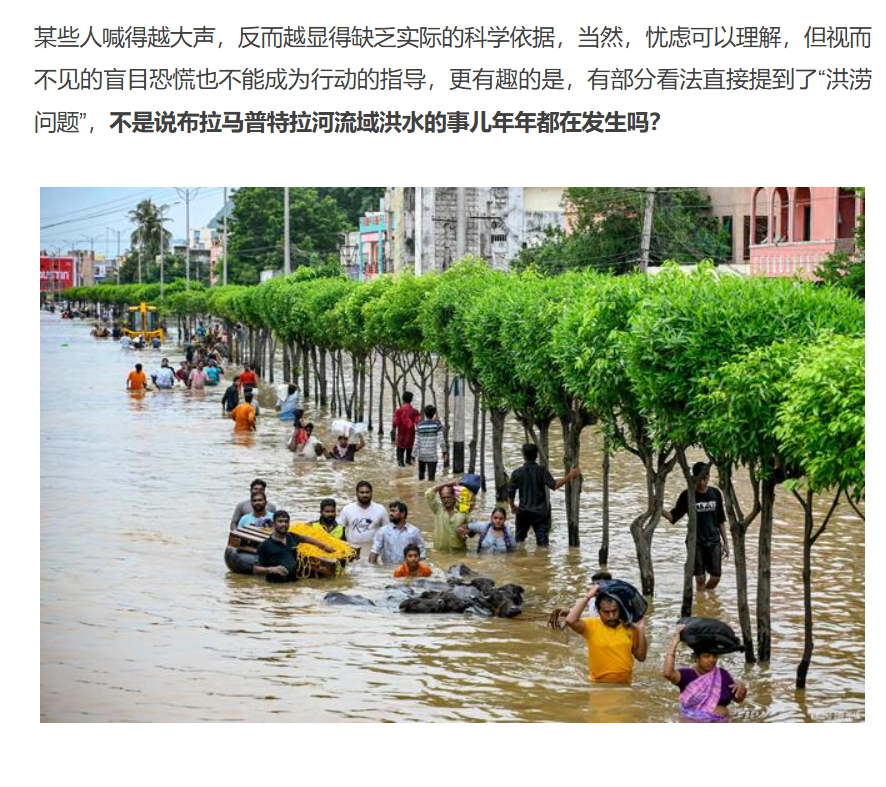
On Zhihu, multiple articles dismissed Indian concerns about China weaponising the waters of the Yarlung Zangbo as “fear mongering”. They argued that flooding is already a recurring issue in the Brahmaputra River basin and suggested controversially, that the Chinese dam might actually help reduce flood risks downstream.
Some commentators even referenced Assam Chief Minister Himanta Biswa Sarma, praising his more balanced tone and focus on dialogue with China, rather than panic.
Chinese media highlights the project’s environmental standards and clean energy potential. In fact, Tibet’s integration into China’s broader energy and transport infrastructure is seen as an economic necessity and a geopolitical safeguard.
With India is yet to issue an official response, water experts have suggested that since 70% of Brahmaputra waters are sourced from the monsoon and other rivers in Arunachal Pradesh, there should be no great concern about the Yarlung Zangbo project.
But China going ahead with a project which has transboundary implications, has come in for comment and criticism in India. China’s miserly efforts at sharing water resources data has been widely slammed, also its refusal to look at water as humanity’s shared resource and therefore the need to discuss with neighbours.
UK Unveils Sanctions Regime To Crack Down On People-Smuggling Networks
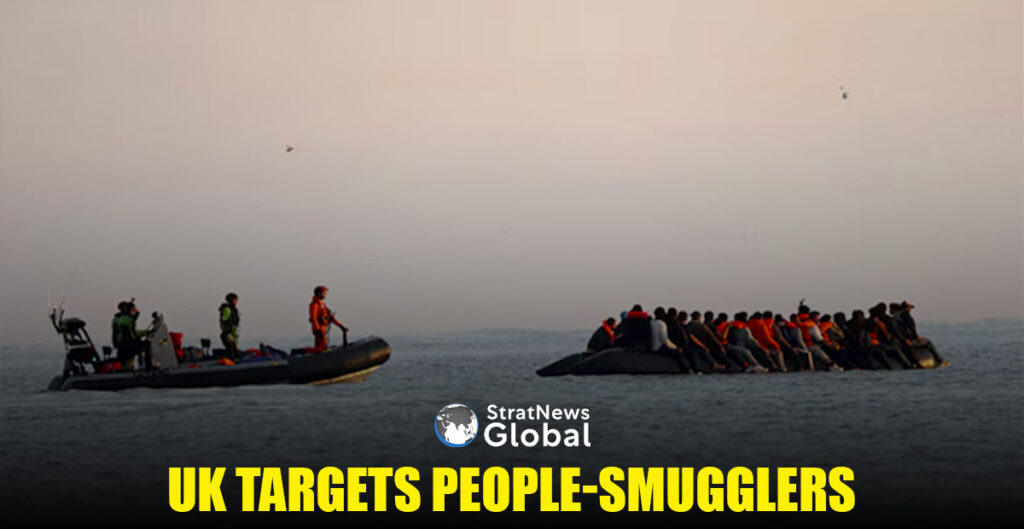
The UK on Monday introduced a new sanctions regime aimed at people-smuggling gangs and their enablers, calling it the first initiative of its kind worldwide.
The United Kingdom will be able to freeze assets, impose travel bans and block access to the country’s financial system for individuals and entities involved in enabling irregular migration, without relying on criminal or counterterrorism laws.
The regime was previously outlined by Foreign Minister David Lammy in January. The British government said it would complement new powers in the Border, Security, Asylum and Immigration Bill that has yet to be enacted.
Starmer Faces Migration Challenge
The Labour government of Prime Minister Keir Starmer is under pressure to meet a pledge to stop the flow of tens of thousands of people into Britain from across the Channel in small boats.
“For too long, criminal gangs have been lining their corrupt pockets and preying on the hopes of vulnerable people with impunity as they drive irregular migration to the UK,” British foreign minister David Lammy said in a statement.
“ That’s why the UK has created the world’s first sanctions regime targeted at gangs involved in people smuggling and driving irregular migration, as well as their enablers.”
The government said the measures would target those who supply small boats, fake documents and financial services used by smuggling networks.
Opposition Demands More
Chris Philp, in charge of the security and immigration portfolio in parliament for the main opposition Conservatives, said in a statement that it would take more to stop the crossings.
“The truth is you don’t stop the Channel crossings by freezing a few bank accounts in Baghdad or slapping a travel ban on a dinghy dealer in Damascus,” he said. “Swathes of young men are arriving daily, in boats bought online, guided by traffickers who laugh at our laws and cash in on our weakness.”
Starmer has recently agreed deals with France and Germany to help stop the arrival of small boats as he tries to stem the rise of the right-wing populist Reform UK party, led by Brexit campaigner Nigel Farage.
(With inputs from Reuters)
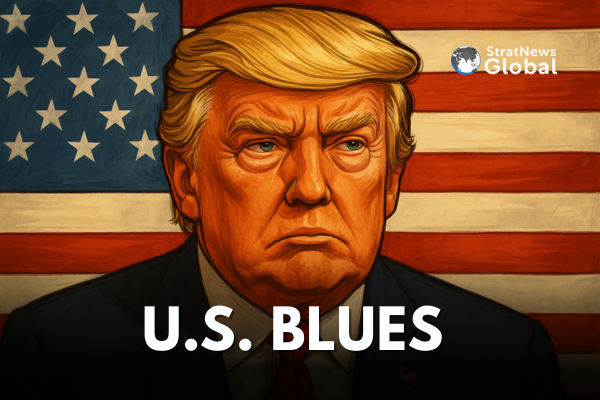
When MAGA Goes Global, U.S. Power Shrinks
Donald Trump’s posts condemning Jair Bolsonaro’s arrest followed by a 50% Tariff slap on Brazil as a retaliation are symptomatic of a larger phenomenon. Since 2016, Trump, as the leader of the anti-establishment MAGA movement, has sought to build an image as a pioneer, protector, and promoter of a global right-wing populist resurgence. This pursuit of legacy-building risks not only undermining the MAGA movement but also the strategic interests of the United States.
The global resurgent-right can be characterized by some common factors, such as strong-man leadership, economic protectionism or broader opposition to globalisation, a form of cultural nationalism, and a pro-business posture. In addition, they contain a strong strand of anti-immigrant politics. These factors have facilitated the rise of right-wing populist leaders around the world, including Trump, Bolsonaro, Boris Johnson, Viktor Orban, and Recep Tayyip Erdogan during the mid-2010s.
Trump as the Symbol of Global Populism
Trump’s 2016 election was emblematic of this phenomenon. Given the US’ stature as the “leader of the free world”, Trump’s success validated the movement globally. His popularity and colorful personality brought right-wing populism into the mainstream, marking the beginning of a more coordinated global alignment. He was one of the first leaders to openly endorse fellow populists abroad, often without regard to formal diplomatic relationships. The MAGA social-media ecosystem also began broadcasting opinions on international politics, boosting candidates and parties sympathetic to their values. The global reach of US-media platforms further reinforced Trump’s image as the de-facto leader of the movement.
Trump’s resounding victory in the 2024 US elections has bolstered this trend with Trump and prominent MAGA comrades—such as Elon Musk—begining endorsing right-wing populist candidates abroad. Slogans like “Make Europe Great Again” (MEGA) gained traction in parts of Europe. In Canada, at least initially, MAGA-aligned endorsements gave conservative candidates a perceived edge.
However, these endorsements soon proved to be double-edged swords. Trump’s foreign policy rehtoric and use of tariffs ignited anti-Trump sentiment within nationalist, right-wing voter bases in countries like Canada. In parts of Europe, including Germany and Romania, pro-Trump candidates faced voter backlash with a higher turnout of progressive and centrist voter blocs, leading to unexpected electoral defeats. Rather than serving as a boost, Trump became a polarizing force, galvanizing opposition and introducing external baggage into local elections.
Despite these setbacks, Trump and the MAGA movement remain steadfast in positioning themselves as the ideological heart of the global right. Trump continues to enjoy close relationships with prominent populists of the UK, France, Germany, Italy, Hungary, and Poland.
Ambition vs National Interest
Since the 1990s, U.S. national interest and grand strategy have largely centered on preserving its post–Cold War hegemony, with China and Russia emerging as its principal challengers since the 2010s. President George H. W. Bush’s vision of a “New World Order” relied on the promotion of international institutions, free trade, and liberal democratic norms—such as elections, rule of law, and free speech—as the foundational tools of global American hegemony.
Successive presidents from both parties—Clinton, Bush Jr., Obama, and even Biden—have upheld this vision in varying degrees, reinforcing partner states, institutions and norms that support U.S. primacy. Donald Trump, however, marked a departure from this consensus. His administration expressed open skepticism toward partners, international institutions, embraced economic nationalism, and endorsed leaders who shared anti-globalist and anti-institutional stances.
Parallel to this shift, many right-wing movements across U.S. allies and partners began to reject supranational structures—framing them as threats to national identity and economic sovereignty. This was most evident in the United Kingdom’s Brexit vote and the growing calls within Germany and France to reduce or even exit European Union integration.
It is owing to this nature of the movement that Trump openly speaks against partner leaders and nations, claiming the US military support to NATO, Japan or South Korea to be unjust. Conversely Trump’s admiration for traditionally anti-US strongmen like Xi and Putin—while simultaneously publicly humiliating progressive leaders from partner countries such as Volodymyr Zelensky—underscores the conflict between his personal ambition for ideological legacy and the strategic imperatives of US foreign policy.
From supporting Brexit, which disrupted US supply chain routes and market share in Europe, to taking a softened stance during the latest Ukraine negotiations, Trump’s legacy-building efforts are damaging US global interests.
By pursuing an international legacy rooted in partisan populism, Trump risks undermining time-honored partnerships of American diplomacy and transforming strategic partnerships into personal battlegrounds. State-to-state relations risk becoming entangled with domestic populist posturing and personal grand standing.
Trump’s latest comments defending Bolsonaro, for instance, could jeopardize the US-Brazil relationship by further straining ties with President Lula da Silva’s administration. Conversely, leaders like Zelensky, who were venerated for standing up to Trump, may unintentionally incentivize others to distance themselves from the US or openly resist Trump.
Trump’s ambition to lead the resurgent right has begun to eclipse US grand strategy and foreign policy priorities. It has not only strained traditional alliances but also backfired on right-wing candidates who received MAGA-endorsed support abroad.
It further alienates long-standing US allies while incentivising distance from the current US leadership. It brings personal partisan sentiments into state-on-state diplomatic relations risking the credibility of American leadership. Lastly, it systematically dismantles the social-economic and ideological tools of free trade, international institutions and democratic values that have supported US hegemony and amplifies the questions raised on US’ motivations globally. Trump’s quest for legacy thus, might not benefit US strategic interest nor further the mission of the global resurgent right.
Abhishek Kadiyala is a Research Analyst at the Takshashila Institution’s Indo-Pacific program with a focus on United States and US-India relations. Views expressed in this article do not represent the views of the institution.
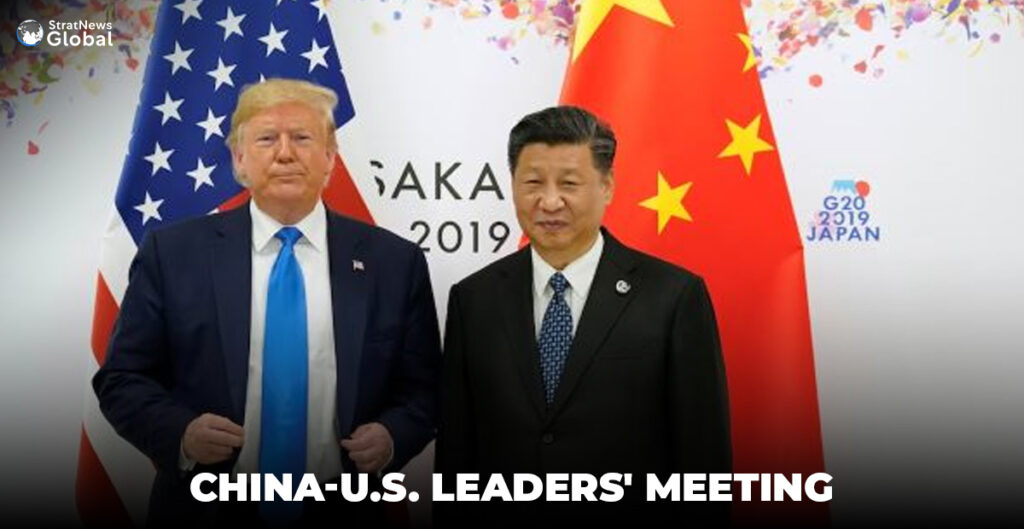
Trump, Xi Aides Hold Talks On Possible US-China Leaders’ Meeting This Autumn: Sources
Advisors to U.S. President Donald Trump and Chinese President Xi Jinping have discussed the possibility of a meeting between the two leaders during Trump’s planned visit to Asia later this year, according to two sources.
While plans for a meeting have not been finalized, discussions on both sides of the Pacific have included a possible Trump stopover around the time of the Asia-Pacific Economic Cooperation summit in South Korea or talks on the sidelines of the October 30-November 1 event, the people said.
Trump has sought to lower tensions with Beijing in recent weeks after pausing a tit-for-tat tariff war that has upended global trade and supply chains.
China has also sought the attendance of international guests, including some from the United States, for a September 3 Beijing ceremony commemorating the 80th anniversary of the end of World War Two, said a spokesperson for China’s embassy in Washington in a briefing last week for reporters.
The Kremlin said on Monday it did not rule out the possibility of Russian President Vladimir Putin and Trump meeting in Beijing in September if Trump decides to attend that ceremony. Putin has confirmed his attendance.
“Diplomacy between heads of state plays an irreplaceable strategic leading role in Sino-U.S. relations,” said Chinese Foreign Affairs Ministry spokesperson Guo Jiakun on Monday, declining to comment on a possible Trump-Xi meeting.
The White House declined to comment.
‘Talks In Near Future’
U.S. Treasury Secretary Scott Bessent said on Monday there would be “talks in the very near future” between the countries.
“Trade is in a good place, and I think now we can start talking about other things. The Chinese, unfortunately … are very large purchasers of sanctioned Iranian oil, sanctioned Russian oil,” he told CNBC.
He added: “We could also discuss the elephant in the room, which is this great rebalancing that the Chinese need to do.”
Trump has sought to impose tariffs on virtually all foreign goods, which he says will stimulate domestic manufacturing and which critics say will make many consumer goods more expensive for Americans.
He has called for a universal base tariff rate of 10% on goods imported from all countries, with higher rates for imports from some, including China. Imports from China have the highest tariff rate of 55%.
Trump has set a deadline of August 12 for the U.S. and China to reach a durable tariff agreement.
Other points of friction between the countries include China’s support for Russia, trade in fentanyl-related chemicals, regional security worries, and exit bans on some American residents.
The most recent high-level U.S.-China meeting was on July 11, when U.S. Secretary of State Marco Rubio and Chinese Foreign Minister Wang Yi had what both described as a productive and positive meeting in Malaysia about how trade negotiations should proceed.
Rubio said then that Trump had been invited to China to meet with Xi, and said that both leaders “want it to happen.”
On Friday, China Commerce Minister Wang Wentao said China wants to bring its trade ties with the U.S. back to a stable footing and that recent talks in Europe showed there was no need for a tariff war.
(With inputs from Reuters)
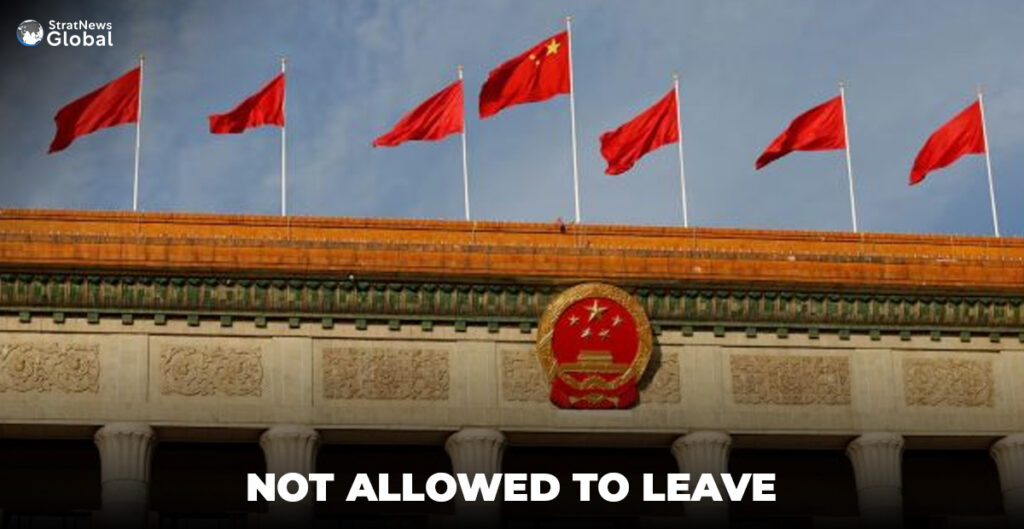
China Is Preventing Government Employee From Leaving Country: U.S.
The U.S. State Department stated on Monday that Chinese authorities have barred an U.S. citizen and employee of the Patent and Trademark Office—who was visiting China in a personal capacity—from departing the country.
“We are tracking this case very closely and are engaged with Chinese officials to resolve the situation as quickly as possible,” a State Department spokesperson said.
The U.S. Patent and Trademark Office is part of the federal Department of Commerce.
The individual’s name and whether the person was detained were not disclosed.
The Chinese embassy in Washington and the U.S. Commerce Department did not immediately respond to requests for comment.
The Washington Post reported on Sunday that a U.S. citizen who works for the Commerce Department had traveled to China several months ago to visit family. The man was being prevented from leaving the country after he failed to disclose on his visa application that he worked for the U.S. government, the newspaper said, citing sources.
Not Allowed To Leave
Beijing has used exit bans on both Chinese and foreign nationals in connection with civil disputes, regulatory enforcement and criminal investigations. Analysts say the tactic is at times used to crack down on local dissent and also as diplomatic leverage in disputes with other nations.
Washington and Beijing have had friction for years over issues ranging from tariffs to the origins of COVID-19 and Taiwan.
Chenyue Mao, a Wells Fargo banker, has also been blocked from leaving China. Beijing’s foreign ministry said on Monday she was involved in a criminal case and obliged to cooperate with an investigation.
Mao was the latest of several executives from foreign corporations to be stopped as they tried to depart China.
The U.S. bank suspended all employee travel to China after Mao’s exit ban, a person familiar with the matter said last week, saying Mao was a U.S. citizen.
(With inputs from Reuters)
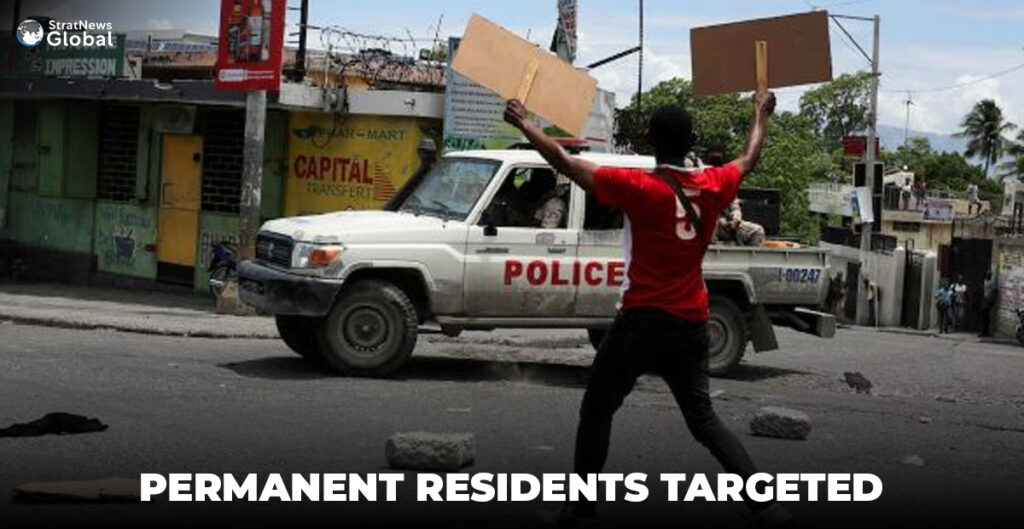
U.S. To Deport Permanent Residents Accused Of Aiding Haitian Gang Leaders
U.S. Secretary of State Marco Rubio on Monday cleared the path for deporting certain lawful permanent residents, stating that Washington had determined some individuals provided support to Haitian gang leaders linked to a group designated by the U.S. as a “terrorist” organization.
Rubio in a statement said certain U.S. lawful permanent residents had supported and collaborated with gang leaders tied to Viv Ansanm, the armed alliance that controls most of Haiti’s capital, Port-au-Prince, which President Donald Trump’s administration labeled a Foreign Terrorist Organization in May.
Following the determination, the Department of Homeland Security can pursue the deportation of the lawful permanent residents, also known as green-card holders, Rubio added. It was unclear how many people could be targeted for deportation, and no individuals were named in his statement.
The U.S. Department of Homeland Security said late on Monday that its Immigration and Customs Enforcement officials arrested Pierre Reginald Boulos, a lawful permanent resident of the U.S. and citizen of Haiti, over alleged engagement in violence and contribution to “destabilization of Haiti.”
The Miami Herald described Boulos, 69, as “an influential Haitian businessman and controversial political powerbroker” who was an American-born entrepreneur and physician.
Trump To Ramp Up Deportations
The move by Rubio comes as the Trump administration has sought to ramp up deportations as part of its wide-ranging efforts to fulfill the president’s hardline immigration agenda, with the secretary of state making unprecedented use of his power to try to revoke the visas and green cards of pro-Palestinian student protesters.
“The United States will not allow individuals to enjoy the benefits of legal status in our country while they are facilitating the actions of violent organizations or supporting criminal terrorist organizations,” Rubio said on Monday.
Stephen Yale-Loehr, a retired immigration law professor at Cornell University, said that prior to this Trump administration, trying to take away someone’s permanent-resident status in this manner was “very rare” but that the administration had shown a willingness to target students.
He said it seemed unlikely that many Haitians would have their green card revoked as a result of the policy because of the difficulty of identifying them and then proving the affiliation in immigration court.
“Three years from now, how many people from Haiti will be deported under this ground? I think very few,” he said.
Haiti’s transitional government did not immediately respond to a request for comment.
Almost 5,000 people have been killed in Haiti between October 2024 and June 2025 amid worsening gang violence nationwide, according to a U.N. High Commissioner for Human Rights report.
Immigration Crackdown
The surge in violence is deepening Haiti’s humanitarian crisis, destabilizing the country and raising concerns of spillover effects in the region.
The gang conflict in Haiti has been met with little international response, while neighbouring countries, including the U.S., have continued to deport migrants back to the Caribbean nation despite pleas by the United Nations to stop the practice, citing humanitarian concerns.
Trump has taken several steps to strip deportation relief and work permits from Haitians in the U.S., although a federal judge earlier this month blocked an attempt to end Temporary Protected Status for more than half a million Haitians.
During his 2024 presidential campaign, Trump falsely said during a debate that Haitians in Springfield, Ohio, were eating people’s pets.
Washington’s designation of Viv Ansanm and Gran Grif as terrorist groups followed similar measures made recently for Latin American drug cartels and was intended to isolate the groups, denying them access to financing from U.S. people or companies.
(With inputs from Reuters)
Beijing Boosts Taiwan Opposition In Parliament-Altering Recall Vote
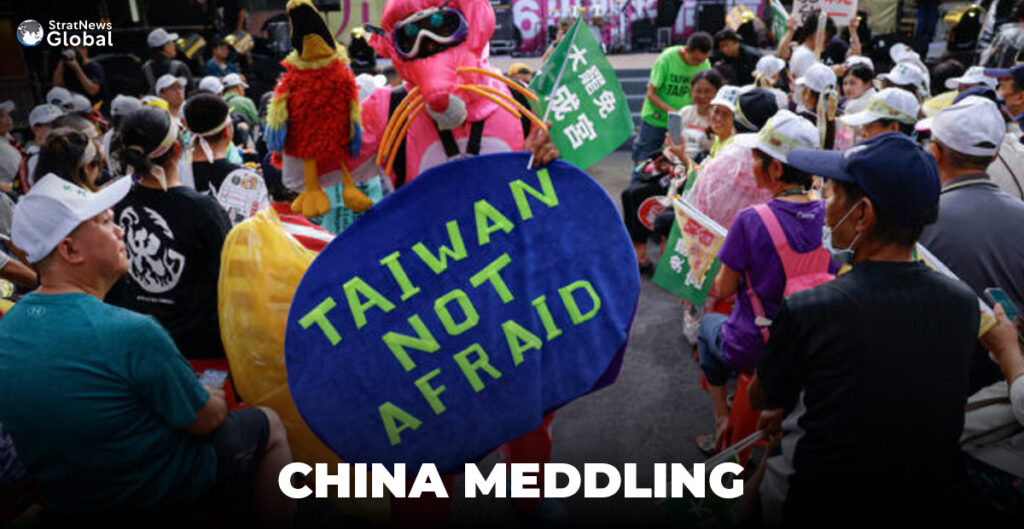
As Taiwan prepares for a crucial recall vote that may alter its parliament, opposition lawmakers facing challenges are receiving unexpected support from Chinese officials and state-run media backing their campaigns.
While President Lai Ching-te won the election last year, his Democratic Progressive Party (DPP) lost its legislative majority. The opposition has flexed its muscles since then to pass laws the government has opposed and impose budget cuts, complicating efforts to boost defence spending in particular.
‘Green Terror’
The political drama has been happening against a backdrop of China ramping up its own military and diplomatic pressure campaign against Taiwan to assert territorial claims Lai and his government resolutely reject. Lai has offered talks with Beijing many times, but been rebuffed.
Civic groups formally started the recall campaign earlier this year, and on Saturday voters will decide on the fate of 24 lawmakers from Taiwan’s largest opposition party, the Kuomintang (KMT), around one-fifth of all lawmakers.
The recall groups say theirs is an “anti-communist” movement, accusing the KMT of selling out Taiwan by sending lawmakers to China, not supporting defence spending, and bringing chaos to parliament. The KMT rejects those accusations, denouncing Lai’s “dictatorship” and “green terror” – the DPP’s party colour.
China Not A Silent Spectator
China has not sat quietly on the sidelines, to the KMT’s unease, ever wary of being “painted red” by its opponents.
In June, two senior Chinese officials overseeing Taiwan policy denounced the recalls as a “political scheme” of Lai’s.
Lai is “engaging in dictatorship under the guise of democracy” and “using every means possible to suppress the opposition,” China’s Taiwan Affairs Office spokesperson Zhu Fenglian told a news briefing in June.
Taiwanese tycoon Robert Tsao, one of the most prominent recall campaigners, said such comments would only support their cause.
“It shows they (the KMT) are together with the communist party. It helps us,” he told reporters at a campaign event on Monday.
‘Our Business’
The KMT says it neither asked for nor wants China’s support, can’t control what China says, and that it is not pro-Beijing.
“We feel the same way as all the people of Taiwan – this is our business. It is the two parties, the DPP and the KMT, fighting for public support, for public recognition. It has nothing to do with the mainland,” party spokesperson Crystal Yang told Reuters.
Chinese state media outlets and their affiliated social media accounts published some 425 articles or videos describing the recall campaign as “dictatorship” or “green terror” in the first half of 2025, according to Taiwan research organisation IORG, which analyses Chinese state media.
In an April commentary, China’s ruling Communist Party’s official People’s Daily said Lai was “presumptuously abusing the recall system to crack down on the opposition party, attempting to establish a ‘green dictatorship'”.
Pointing to the similarity between China and the KMT’s arguments against the recalls, Wu Szu-yao, secretary general of the DPP’s legislative caucus, said Beijing is “offering ammunition” to the KMT to sway voters.
“China is really concerned that the mass recall will be successful and win the support of Taiwan’s public,” she said.
China’s Taiwan Affairs Office did not respond to a request for comment.
‘Unfair Criticism’
The KMT says its China engagement is vital given Beijing’s refusal to talk to Lai, who it says is a “separatist”, and to advocate for Taiwan’s interests, such as promoting agricultural exports.
“This is an unfair criticism,” Tony Lin, chair of the KMT’s Culture and Communication Committee, said, referring to the accusations they are pro-Beijing. “What we have always stressed is that we are pro-communication.”
The KMT hopes people will turn out to also express their dissatisfaction with Lai, whom they say is incompetent and has stoked tensions with China.
“The DPP uses its overwhelming propaganda network to bring up a sense of fear (about China) in Taiwan society,” said Huang Kwei-bo, a professor of diplomacy at Taipei’s National Chengchi University and a former KMT deputy secretary general.
(With inputs from Reuters)