

Support us by contributing to StratNewsGlobal on the following UPI ID
ultramodern@hdfcbank

Strategic affairs is our game, South Asia and beyond our playground. Put together by an experienced team led by Nitin A. Gokhale. Our focus is on strategic affairs, foreign policy and international relations, with higher quality reportage, analysis and commentary with new tie-ups across the South Asian region.
You can support our endeavours. Visit us at www.stratnewsglobal.com and follow us on YouTube, Twitter, Facebook and Instagram.
र 500 per month
र 1000 per month
र 5000 per year
र 10000 per year
Donate an amount of your choice
र 500 per month
Donate र 500 per month

र 1000 per month
Donate र 1000 per month
र 5000 per year
Donate र 5,000 per year
र 10000 per year
Donate र 10,000 per year
Donate an amount of your choice
Donate an amount of your choice
Malaysia PM Ibrahim Unveils Cash Aid, Fuel Cuts Amid Protests
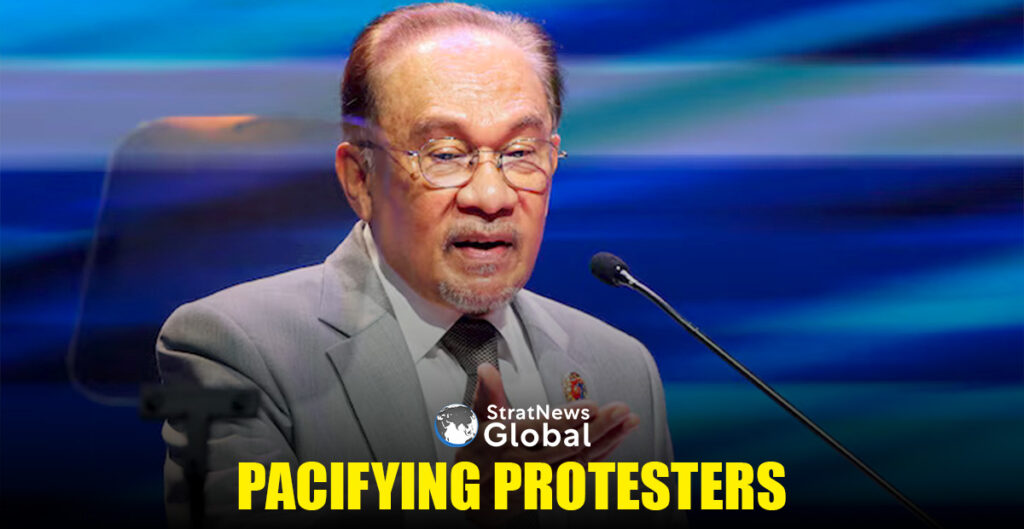
In a bid to tackle rising public concern over the soaring cost of living, Malaysian Prime Minister Anwar Ibrahim on Wednesday unveiled a series of relief measures, including direct cash handouts for all adult citizens and a pledge to reduce fuel prices.
The announcement came ahead of a planned protest to be held in Malaysia’s capital Kuala Lumpur on Saturday, calling for Anwar to step down over escalating prices and a failure to deliver on promised reforms, among other concerns.
New Tax, Minimum Wage Hike
Anwar’s administration has carried out a number of measures to boost revenue and productivity this year, including a minimum wage hike, increased electricity tariffs on heavy power users, and new sales taxes on some imported fruits and luxury goods.
Anwar has said the moves were mainly targeted at large businesses and the wealthy, but critics have voiced fears that higher costs would eventually be passed down to consumers, including lower and middle income earners.
On Wednesday, Anwar said all adult Malaysians above 18 years old will receive a 100 ringgit ($23.67) one-off cash aid to be disbursed from August 31.
The government will spend a total 15 billion ringgit ($3.55 billion) in cash aid in 2025, up from 13 billion ringgit originally allocated for the year, he said.
Protests
Police have said they expect between 10,000 and 15,000 people to attend the Saturday protest, which has been organised by opposition parties.
“I acknowledge the complaints and accept that the cost of living remains a challenge that must be addressed, even though we have announced various measures thus far,” Anwar said.
He added that further initiatives to aid those in poverty will be launched on Thursday.
Anwar said the government will also announce details on a long-awaited plan to remove blanket subsidies on the widely used RON95 transport fuel before the end of September.
Once the subsidy changes are implemented, Malaysians will see fuel prices at the pump drop to 1.99 ringgit per litre, compared to the current price of 2.05 ringgit, Anwar said.
Rising Prices, No Respite For Foreign Nationals
Foreign nationals however will have to pay unsubsidised market prices for the fuel, he added.
Anwar also announced additional allocations for a government programme aimed at increasing access to affordable goods and necessities, and vowed to improve other existing aid measures.
Malaysia has seen inflation fall this year, but worries persist over increasing prices of basic necessities like food.
Data released this week showed consumer prices rising 1.1% from a year earlier last month, but the costs of food and beverages were up at a faster pace of 2.1%.
($1 = 4.2250 ringgit)
(With inputs from Reuters)
Japan PM Ishiba Likely To Resign Next Month: Reports
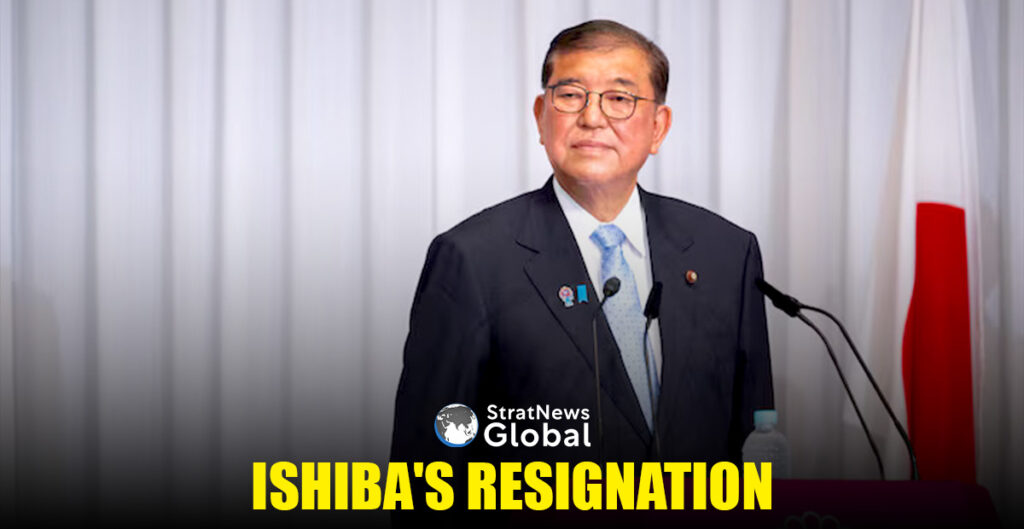
In a significant political development, Japanese Prime Minister Shigeru Ishiba is expected to formally announce his resignation by the end of next month, according to a report published by the Mainichi newspaper on Wednesday.
Ishiba is facing growing opposition from within his Liberal Democratic Party for his vow to stay in power despite the ruling coalition’s bruising defeat in Sunday’s upper house election.
According to the Yomiuri daily, Ishiba told his close associates on Tuesday evening that he would explain how he would take responsibility for the election loss once a solution was reached on trade negotiations.
US-Japan Trade Deal
In a post on Truth Social posted on Wednesday Asian hours, US President Donald Trump said he had just completed a “massive” deal with Japan that included $550 billion in investments into the United States.
Speaking after Trump’s post, Ishiba said he was ready to meet or speak over the phone with Trump after being briefed on the details by Japan’s top trade negotiator Ryosei Akazawa, who has been in Washington for trade talks.
“I can’t say until I scrutinise the outcome of the agreement,” Ishiba told reporters when asked how the deal with Washington could affect his decision on whether to step down.
Ishiba To Meet Party Heavyweights
In explaining his decision to stay on, Ishiba has stressed the need to avoid creating a political vacuum as Japan faced challenges including difficult trade negotiations with the US that would have a huge impact on the export-reliant economy.
“I will stay in office and do everything in my power to chart a path toward resolving these challenges,” Ishiba said in a news conference on Monday, adding that he intended to speak directly with Trump as soon as possible and deliver tangible results.
Ishiba is expected to meet ruling party heavyweights later on Wednesday for discussions on the election outcome.
(With inputs from Reuters)
Trump Accuses Obama Of Treason Over 2016 Russia Allegations
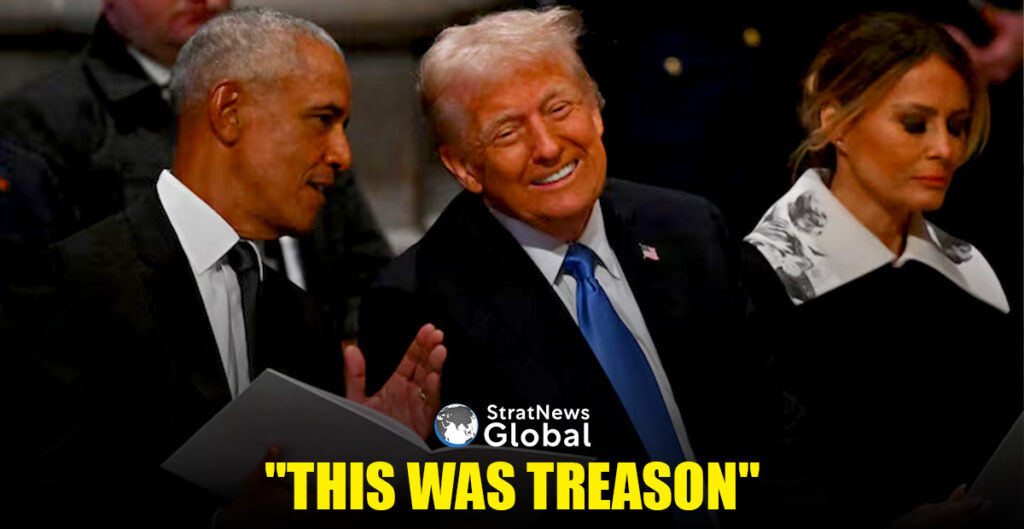
US President Donald Trump on Tuesday accused former President Barack Obama of “treason”, alleging—without offering proof—that Obama orchestrated efforts to falsely link him to Russia and sabotage his 2016 election campaign.
A spokesperson for Obama denounced Trump’s claims, saying “these bizarre allegations are ridiculous and a weak attempt at distraction”.
While Trump has frequently attacked Obama by name, the Republican president has not, since returning to office in January, gone this far in pointing the finger at his Democratic predecessor with allegations of criminal action.
‘He’s Guilty’
During remarks in the Oval Office, Trump leaped on comments from his intelligence chief, Tulsi Gabbard, on Friday in which she threatened to refer Obama administration officials to the Justice Department for prosecution over an intelligence assessment of Russian interference in the 2016 election.
She declassified documents and said the information she was releasing showed a “treasonous conspiracy” in 2016 by top Obama administration officials to undermine Trump, claims that Democrats called false and politically motivated.
“It’s there, he’s guilty. This was treason,” Trump said on Tuesday, though he offered no proof of his claims. “They tried to steal the election, they tried to obfuscate the election. They did things that nobody’s ever imagined, even in other countries.”
An assessment by the US intelligence community published in January 2017 concluded that Russia, using social media disinformation, hacking and Russian bot farms, sought to damage Democrat Hillary Clinton’s campaign and bolster Trump. The assessment determined that the actual impact was likely limited and showed no evidence that Moscow‘s efforts actually changed voting outcomes.
A 2020 bipartisan report by the Senate intelligence committee had found that Russia used Republican political operative Paul Manafort, the WikiLeaks website and others to try to influence the 2016 election to help Trump’s campaign.
“Nothing in the document issued last week (by Gabbard) undercuts the widely accepted conclusion that Russia worked to influence the 2016 presidential election but did not successfully manipulate any votes,” Obama spokesperson Patrick Rodenbush said in a statement.
Trump Under Pressure
Trump, who has a history of promoting false conspiracy theories, has frequently denounced the assessments as a “hoax.” In recent days, Trump reposted on his Truth Social account a fake video showing Obama being arrested in handcuffs in the Oval Office.
Trump has been seeking to divert attention to other issues after coming under pressure from his conservative base to release more information about Jeffrey Epstein, who died by suicide in 2019 while awaiting trial on sex trafficking charges.
Backers of conspiracy theories about Epstein have urged Trump, who socialized with the disgraced financier during the 1990s and early 2000s, to release investigative files related to the case.
Trump, asked in the Oval Office about Epstein, quickly pivoted into an attack on Obama and Clinton.
“The witch hunt that you should be talking about is they caught President Obama absolutely cold,” Trump said.
Trump suggested action would be taken against Obama and his former officials, calling the Russia investigation a treasonous act and the former president guilty of “trying to lead a coup.”
“It’s time to start, after what they did to me, and whether it’s right or wrong, it’s time to go after people. Obama has been caught directly,” he said.
‘This Is A Lie’
Democratic Representative Jim Himes responded on X: “This is a lie. And if he’s confused, the President should ask @SecRubio, who helped lead the bipartisan Senate investigation that unanimously concluded that there was no evidence of politicization in the intelligence community’s behavior around the 2016 election.”
Former Republican Senator Marco Rubio is now Trump’s secretary of state.
Since returning to office, Trump has castigated his political opponents whom he claims weaponized the federal government against him and his allies for the January 6, 2021, attack on the US Capitol by his supporters and his handling of classified materials after he left office in 2021.
Attacks On Predecessors
Obama has long been a target of Trump. In 2011 he accused then-President Obama of not being born in the United States, prompting Obama to release a copy of his birth certificate.
In recent months, Trump has rarely held back in his rhetorical broadsides against his two Democratic predecessors in a way all but unprecedented in modern times.
He launched an investigation after accusing former President Joe Biden and his staff, without evidence, of a “conspiracy” to use an autopen, an automated device that replicates a person’s signature, to sign sensitive documents on the president’s behalf. Biden has rejected the claim as false and “ridiculous”.
Gabbard’s Charge
Gabbard’s charge that Obama conspired to subvert Trump’s 2016 election by manufacturing intelligence on Russia’s interference is contradicted by a CIA review ordered by Director John Ratcliffe and published on July 2, a 2018 bipartisan Senate report and declassified documents that Gabbard herself released last week.
The documents show that Gabbard conflated two separate US intelligence findings in alleging that Obama and his national security aides changed an assessment that Russia probably was not trying to influence the election through cyber means.
One finding was that Russia was not trying to hack US election infrastructure to change vote counts and the second was that Moscow probably was using cyber means to influence the US political environment through information and propaganda operations, including by stealing and leaking data from Democratic Party servers.
The January 2017 US intelligence assessment ordered by Obama built on that second finding: that Russian President Vladimir Putin authorized influence operations to sway the 2016 vote to Trump.
The review ordered by Ratcliffe found flaws in the production of that assessment. But it did not contest its conclusion and upheld “the quality and credibility” of a highly classified CIA report on which the assessment’s authors relied.
(With inputs from Reuters)
US, Japan Strike Trade Deal, Slash Tariffs, Boost Investment
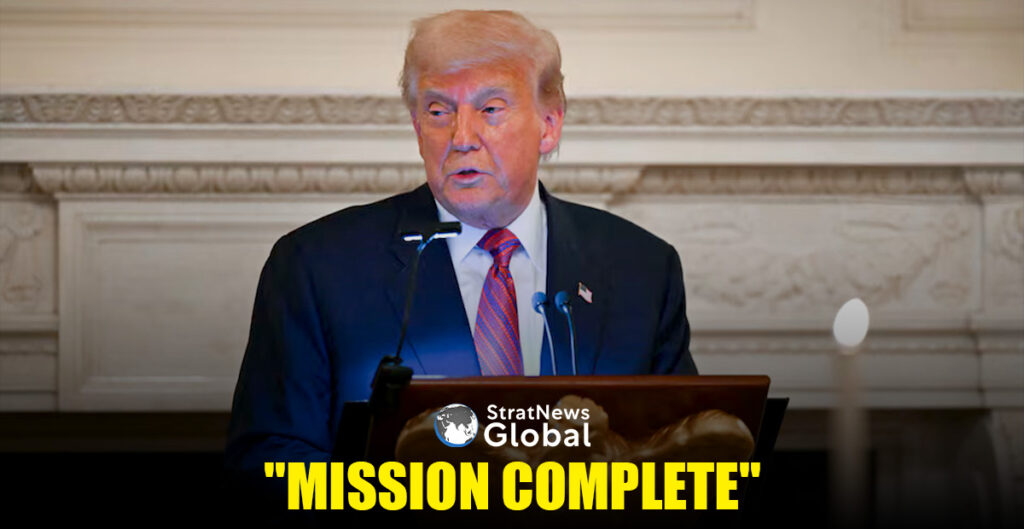
US President Donald Trump on Tuesday announced that Washington and Tokyo have reached a deal to avoid steep tariffs on Japanese goods, with Japan agreeing to invest $550 billion in the US and ease market access for American products.
The agreement – including a 15% tariff on all imported Japanese goods, down from a proposed 25% – is the most significant of the string of trade deals the White House has reached ahead of an approaching August 1 deadline for higher levies to kick in.
‘Very Exciting Time’
“This is a very exciting time for the United States of America, and especially for the fact that we will continue to always have a great relationship with the Country of Japan,” Trump said on his Truth Social platform.
Trump’s announcement included few details, and he made no mention of easing tariffs on Japanese automobiles, which account for more than a quarter of all the country’s exports to the United States and are subject to a 25% tariff. The deal lowers the auto tariff to 15%, according to industry and government officials briefed on the agreement.
Two-way trade between the two countries totaled nearly $230 billion in 2024, with Japan running a trade surplus of nearly $70 billion. Japan is the fifth-largest US trading partner in goods, US Census Bureau data show.
Automakers Gain
The announcement sent stocks in Japan higher, led by big gains in automakers as Honda, Toyota and Nissan all gained 8% or more, and US equity index futures gained ground. The yen strengthened against the dollar.
Reuters could not immediately confirm the elements of the deal announced by Trump, and details were scant. The White House did not immediately respond to a request for additional details.
Speaking early on Wednesday in Tokyo, Japanese Prime Minister Shigeru Ishiba said he had received an initial report from his trade negotiator in Washington but declined to comment on the specifics of the negotiation.
Ishiba is under intense political pressure in Japan, where the ruling coalition was set back by losing control of the upper house in an election on Sunday.
Ishiba said he couldn’t say how a trade deal would affect his decision on whether to step down from office until he saw the details.
‘Mission Complete’
Trump’s announcement followed a meeting with Japan’s top tariff negotiator, Ryosei Akazawa, at the White House on Tuesday, according to a person familiar with the matter.
“#Mission Complete,” Akazawa wrote on X.
Kazutaka Maeda, an economist at Meiji Yasuda Research Institute, said that “with the 15% tariff rate, I expect the Japanese economy to avoid recession.”
The deal was “a better outcome” for Japan than it potentially could have been, given Trump’s earlier unilateral tariff threats, said Kristina Clifton, a senior economist at the Commonwealth Bank of Australia in Sydney.
“Steel, aluminium, and also cars are important exports for Japan, so it’ll be interesting to see if there’s any specific carve-outs for those,” Clifton said.
Autos are a huge part of US-Japan trade, but is almost all one way to the US from Japan, a fact that has long irked Trump. In 2024, the US imported more than $55 billion of vehicles and automotive parts while just over $2 billion were sold into the Japanese market from the US.
More Deals
Speaking later at the White House, Trump also expressed fresh optimism that Japan would form a joint venture with Washington to support a gas pipeline in Alaska long sought by his administration.
“We concluded the one deal … and now we’re going to conclude another one because they’re forming a joint venture with us at, in Alaska, as you know, for the LNG,” Trump told lawmakers at the White House. “They’re all set to make that deal now.”
Japanese officials had initially doubted the practicality of the project but warmed to it – and a range of other investments dear to Trump – as a potential incentive to resolve trade disputes with Washington.
Trump aides are feverishly working to close trade deals ahead of an August 1 deadline that Trump has repeatedly pushed back under pressure from markets and intense lobbying by industry. By that date, countries are set to face steep new tariffs beyond those Trump has already imposed since taking office in January.
EU-US Meet
While Trump has said that unilateral letters declaring what rate would be imposed are tantamount to a deal, his team has nonetheless raced to close agreements. Trump has announced framework agreements with Britain, Vietnam, Indonesia and paused a tit-for-tat tariff battle with China, though details are still to be worked out with all of those countries.
At the White House, Trump said negotiators from the European Union would be in Washington on Wednesday.
Trump’s announcement on Tuesday was of a pattern with some previous agreements. He announced the deal on social media shortly after a meeting or a phone call with a foreign official, leaving many key details a mystery, and before the other country issued its own proclamations.
Nearly three weeks after Trump announced an agreement with Vietnam – in similar fashion – no formal statement has been released by either country spelling out the particulars of the deal that was ostensibly reached.
(With inputs from Reuters)
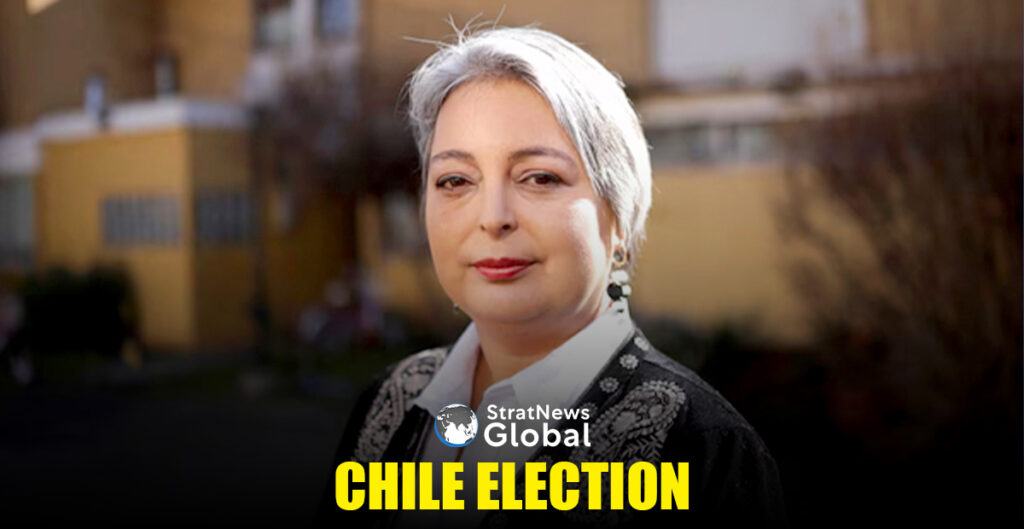
Chile’s Left Picks Communist Jeannette Jara To Challenge Right In November Election
Burdened by an unpopular incumbent, Chile’s left has chosen Communist Party member Jeannette Jara to take on a resurgent right in November’s election.
Jara, who was chosen by voters last month to be the candidate for the ruling Unity for Chile coalition, told Reuters she plans to win over sceptical voters by championing her track record of pushing through popular legislation on pensions and a reduced workweek under President Gabriel Boric.
But Jara still faces an uphill battle, encumbered by Boric’s unpopularity and her own party affiliation in a country that remains haunted by the Augusto Pinochet dictatorship that followed the 1973 coup against democratically elected Marxist president Salvador Allende.
“I think a lot of stories about the (Communist Party) stem from the Cold War and aren’t representative of the current situation,” Jara said in an interview. “In Chile, we have a profound commitment to democracy and respect for institutional norms.”
Jara joined the party as a student leader in the 1990s and bounced between the government and the private sector. Before serving as Boric’s labour minister, Jara worked in several ministries under centre-left former president Michelle Bachelet.
Jara Rides Youth Wave
In the primary vote, the charismatic 51-year-old Jara beat out three other candidates, including the presumptive favourite. She benefited from her popularity with younger voters and vowed to build a broad coalition.
“We were looking at a situation where there was no competition or representative leadership to build a broad view under a single candidate, and I thought I could contribute that,” Jara said.
Speaking to Reuters outside her small, plant-filled, yellow-brick home in Santiago on Friday, Jara said she is seeking to emphasise her pragmatism and dealmaking, noting her leadership role in legislation that reduced the workweek to 40 hours and reformed pensions.
“I didn’t do it alone, I did it hand-in-hand with workers and Chilean business owners to come to an agreement,” Jara said. “We have experience, we don’t have all the answers – nobody is infallible. But we have the ability to govern the country with the reforms it needs.”
Opinion polls show that Jara is likely to make it to a run-off, but most scenarios have her losing to a right-wing candidate in the second round. Chile’s presidential elections are slated for November 16 and will go to a run-off in December if no candidate receives a majority.
Campaign Focus
Jara said her campaign would have three pillars: economic growth, social issues and public safety. She said she wants to focus on matters that impact a majority of Chileans, such as job creation and recurring questions over income inequality, which triggered widespread protests in 2019.
“We can’t keep having two Chiles in the same country, one for the well-off sectors and the other for the vast majority,” she said.
She said she would also seek to address crime. While Chile remains one of the safest countries in Latin America, an influx of organised crime has led to a rising murder rate and hurt economic growth, with a recent spike in high-profile incidents like kidnappings and assassinations.
But she blasted hardline proposals like building border walls or placing landmines along the border that have been suggested by some right-wing candidates, who have blamed the rising crime on increasing numbers of migrants.
“While some shout louder or have ideas that aren’t grounded in reality, I trust citizens’ ability to evaluate proposals that could lead to solutions,” Jara said, adding that she would seek to increase funding for the police and introduce biometric screening at the border.
“None of this is an easy fix,” she said.
Lithium Extraction
As the world’s largest copper producer and one of the largest lithium producers, Chile’s economy relies heavily on mining.
Boric has sought to boost lithium production with a joint venture between state-run copper giant Codelco and local lithium miner SQM. But the deal has faced opposition from right-wing candidates, Indigenous groups and Jara herself.
“I don’t agree with an agreement with (SQM) that would extend their lithium concession by 30 years,” Jara said, citing a campaign finance scandal in 2015 and SQM’s sale to Pinochet’s son-in-law during the dictatorship.
“If Boric closes the deal during his government, I’ll respect it. If not, I’ll propose a national public company to operate alongside the private sector like Codelco with copper,” she said.
U.S. President Donald Trump has threatened heavy tariffs on copper, and Jara said in response that she would focus on strengthening trade with Latin America, China and others.
“We recently signed a trade agreement with India that I hope to expand and strengthen,” Jara said.
Relations with the United States would remain diplomatic and cordial under her government if she were elected, she said, adding: “We have to act prudently to safeguard our national interest.”
(With inputs from Reuters)
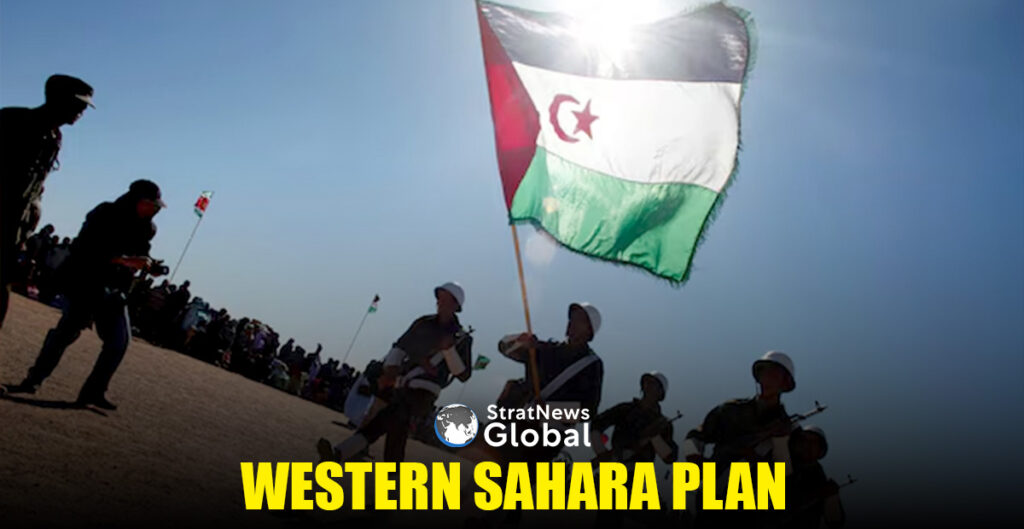
Portugal Backs Morocco’s Western Sahara Autonomy Proposal
Portugal aligned with other Western nations in endorsing Morocco’s autonomy proposal for the disputed Western Sahara, with Foreign Minister Paulo Rangel on Tuesday calling it a “serious and credible” plan.
The dispute, dating back to 1975, pits Morocco – which claims sovereignty over Western Sahara – against the Algeria-backed Polisario Front, which seeks an independent state there.
Rangel showed support for the autonomy proposal, first presented by Moroccan King Mohammed VI to the United Nations in 2007, following a meeting in Lisbon with Moroccan Foreign Minister Nasser Bourita.
The plan would establish a local legislative, executive, and judicial authority for Western Sahara elected by its residents, while Rabat would retain control over defence, foreign affairs, and religion.
“Following movements made by France, Spain, Britain and others, Portugal considers that this … will be the most serious basis for a solution, but always under the auspices of the U.N.,” Rangel later told reporters, falling short of recognising Morocco’s sovereignty over the territory.
‘Carefully Considered’
Jose Tomaz Castello Branco, a professor of political science at Lisbon’s Catholic University, said Portugal’s position was “quite diplomatic, reasonable, and opens the door to a future formal recognition of Morocco’s sovereignty”.
“However, the Portuguese government is reserving room to manoeuvre to decide in the future, not committing completely yet,” he said, adding that Lisbon’s position should always be “carefully considered because Morocco is also Portugal’s neighbour”.
During a high-level meeting in 2023, Portugal’s previous Socialist government had already formalised its view of Morocco’s proposal as “realistic, serious and credible”, but Rangel’s comments cemented the current centre-right government’s position.
In 1976, following Spain’s withdrawal from what was until then its colony, the Polisario Front proclaimed the Sahrawi Arab Democratic Republic as a government-in-exile, based on the right to self-determination.
France and Spain have also backed the autonomy proposal, with Madrid in 2022 formally describing it as “the most serious, realistic and credible” framework for resolving the dispute.
(With inputs from Reuters)
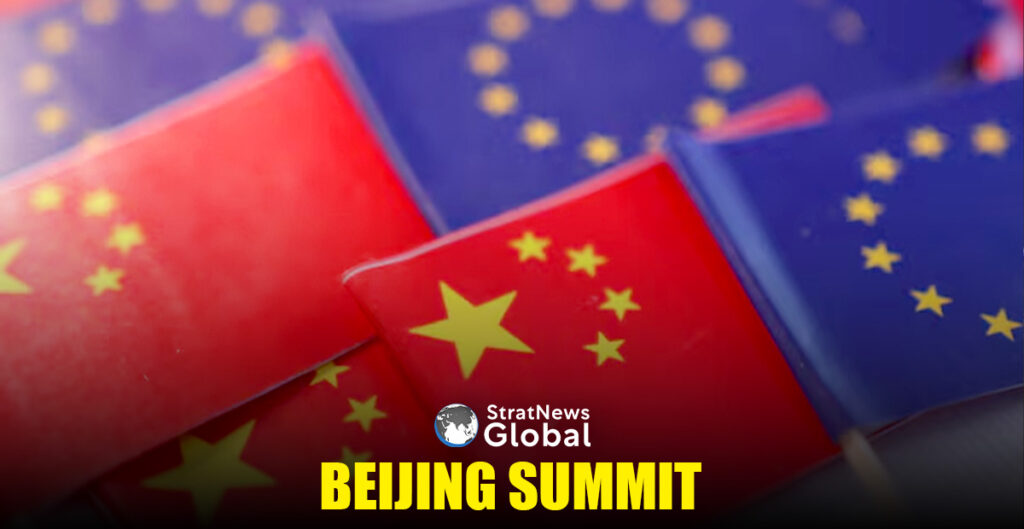
EU-China Summit To Test European Unity Amid Global Trade Pressures
Expectations are low ahead of Thursday’s EU-China summit, which analysts say will challenge European unity as it navigates mounting trade pressure from Beijing and Washington.
European Commission President Ursula von der Leyen and European Council President Antonio Costa plan to press Chinese leaders on rare earths and the war in Ukraine, both areas of tension, during the summit in Beijing.
There is little hope for headway at a time when both sides face major challenges sustaining economic growth, and Europe struggles to shore up support for Ukraine.
‘Scheduling Conflict’
The summit was shortened from two days to one due to a “scheduling conflict” raised by Chinese officials, two sources familiar with the planning told Reuters. A business roundtable that was meant to happen on the second day in the city of Hefei will now take place in Beijing, one of the sources said.
Both sides may reach a modest joint statement on climate, one of the sources said, but no other tangible achievements are expected.
In multiple recent speeches, von der Leyen has revived hawkish China rhetoric, accusing China on July 8 of “enabling Russia’s war economy” and flooding global markets with overcapacity.
“We know that we don’t see eye to eye with China on many issues, but we believe that it is essential to have this kind of very direct and open and constructive conversation,” said one EU official.
The official and the sources declined to be identified as they were not authorised to speak to the media.
A spokesperson for the European Commission referred to a statement announcing the summit, which said leaders would discuss ways of ensuring “a more balanced, reciprocal and mutually beneficial trade relationship”.
In response to Reuters’ questions, the Chinese foreign ministry referred to a spokesperson’s statement on Monday.
“Some people in Europe continue to … exaggerate specific economic and trade issues and make groundless accusations against China on the Ukraine issue, causing unnecessary interference to China-EU relations,” its spokesperson said.
Rising Tensions
The 27-member European Union has also been negotiating hard with Washington after U.S. President Donald Trump threatened 30% tariffs on most EU exports from Aug. 1, with prospects for a broader trade deal fading.
At the Beijing summit, China hopes to press the EU for a solution to its tariffs on China-built electric vehicles, for which Beijing claims price commitment negotiations are in the “final stages”. But European officials say there has been little progress for months.
Last week, China threatened to respond to EU sanctions on two Chinese banks and five firms over the Ukraine war. Its commerce ministry said on Monday the sanctions “seriously harmed trade, economic and financial ties”.
Other trade disputes are simmering in the background. China retaliated against EU restrictions on medical device procurement with its own curbs on July 6, and slapped duties on French cognac producers.
China’s exports to the EU grew in May while its U.S. exports plunged 34.5% in value terms the same month, sparking fears that Chinese trade overcapacity is being diverted to the bloc due to U.S. tariffs on Chinese goods.
There is also a growing sense that EU firms are collateral damage for China’s rare earth export controls that primarily targeted Washington but have disrupted European defence and automotive supply chains.
In return for concessions on rare earths, China’s asks could include reviving a long-stalled investment agreement after Beijing lifted sanctions on European Parliament members in May, and pushing back on U.S. export curbs on Dutch firm ASML’s chipmaking equipment.
China has raised both in the weeks leading up to the summit, two sources familiar with the matter said.
‘Gloves Off’
“The mood is extremely pessimistic in Europe regarding the summit,” said Mathieu Duchatel, a director at the Institut Montaigne think tank in Paris, adding that Washington rejected previous EU proposals for coordination on China policy.
“There is a sense that the gloves are completely off on the Chinese side … They sense the transatlantic relationship has weakened and are trying to seize the opportunity.”
Diplomats and analysts also say that China is growing increasingly frustrated behind closed doors with European officials’ repeated insistence on the war in Ukraine, which Beijing views as an obstacle in the relationship.
There is little space for constructive dialogue on this, another EU official admitted, with Chinese counterparts denying evidence of Chinese firms’ involvement in supplying dual-use goods to Russia.
Meanwhile, China believes Europe will cave in to U.S. tariff pressure, said a diplomat familiar with Chinese official thinking.
Beijing succeeded in getting Trump to lower crushing 145% tariffs during talks in May and scored a further win when Washington agreed to resume Nvidia H20 AI chip exports, leaving it in a relatively strong position.
“This will be the latest in a long list of EU-China summits that have delivered next to nothing,” said Noah Barkin, senior advisor at Rhodium Group’s China practice.
“It is a sign that the economic and security problems in the relationship have become so deep-seated as to be irreconcilable.”
(With inputs from Reuters)
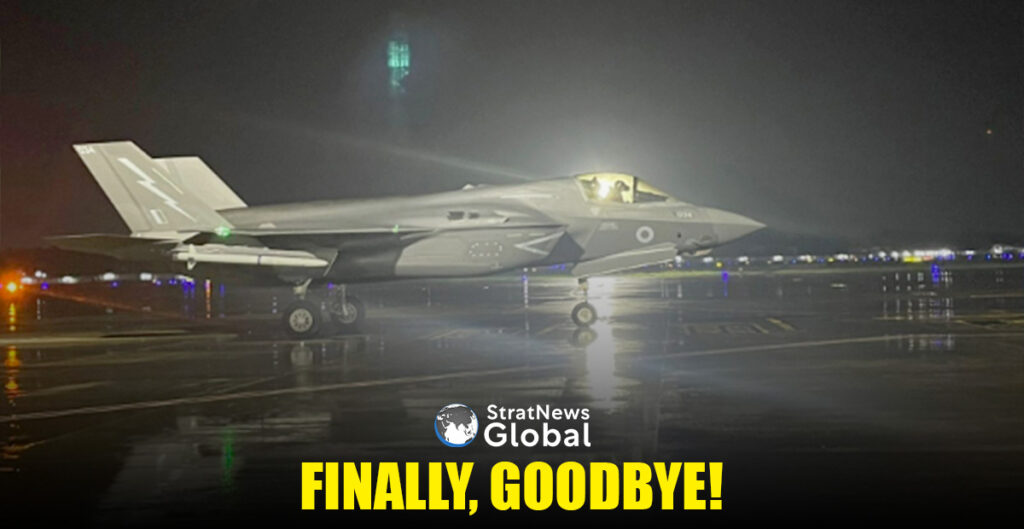
British F-35B Jet Stranded In Kerala For 5 Weeks Finally Takes Off
After over a month of uncertainty, the British Royal Air Force’s F-35B stealth fighter jet, which had remained grounded since June 14, finally took off from Kerala’s Thiruvananthapuram International Airport on Tuesday.
The F-35B aircraft, one of the world’s most expensive and advanced fighter jets, was en route to Darwin, Australia, according to reports.
The jet, which had encountered technical difficulties and made an emergency landing last month, was moved out of the hangar on Monday (July 21) by a specialist team flown in from the U.K. after they completed over two weeks of intensive maintenance work on the state-of-the-art aircraft.
In a statement issued by the British High Commission, a spokesperson said, “The U.K. deeply appreciates the support and cooperation extended by the Indian authorities and airport staff throughout the entire repair and recovery operation. We remain committed to deepening our defence ties with India.”
The F-35B, a fifth-generation stealth aircraft designed by Lockheed Martin, had been stationed in Thiruvananthapuram since June 14 after experiencing a technical malfunction.
The aircraft was forced to land in an emergency after it reportedly ran low on fuel that night.
Though the exact nature of the repair work hasn’t been disclosed by British officials, sources indicate the problem stemmed from a serious fault in the auxiliary power unit, necessitating the involvement of U.K.-based experts.
Attempts to fix the issue immediately following the emergency landing proved unsuccessful.
After the arrival of the British maintenance crew on July 6, the fighter jet was carefully moved to the airport’s hangar facility for extensive diagnostics and repair. At the time of the incident, the aircraft was part of the HMS Prince of Wales fleet operating in the Indian Ocean.
Hefty Parking Charges
During its extended stay, British authorities have accrued approximately Rs 5 lakh in parking charges at the Thiruvananthapuram airport.
The fee was calculated based on the jet’s size, weight, duration of stay, and the services availed by the crew during this period.
Estimates place the daily parking fee at around Rs 15,000 to Rs 20,000. The fee will be paid on behalf of the U.K. by Bird Group, a Delhi-based ground handling service provider.
While the airport will collect the total parking charges for the aircraft’s stay since June 14, a separate fee for the hangar usage and associated services will be levied by AI Engineering Services Ltd. (AIESL), which owns the hangar and provides aircraft maintenance, repair, and overhaul services.
The F-35B is a cutting-edge stealth fighter operated by the Royal Air Force and is known for its unique capability of short take-off and vertical landing, making it a crucial asset in modern aerial combat operations.
(With inputs from IBNS)
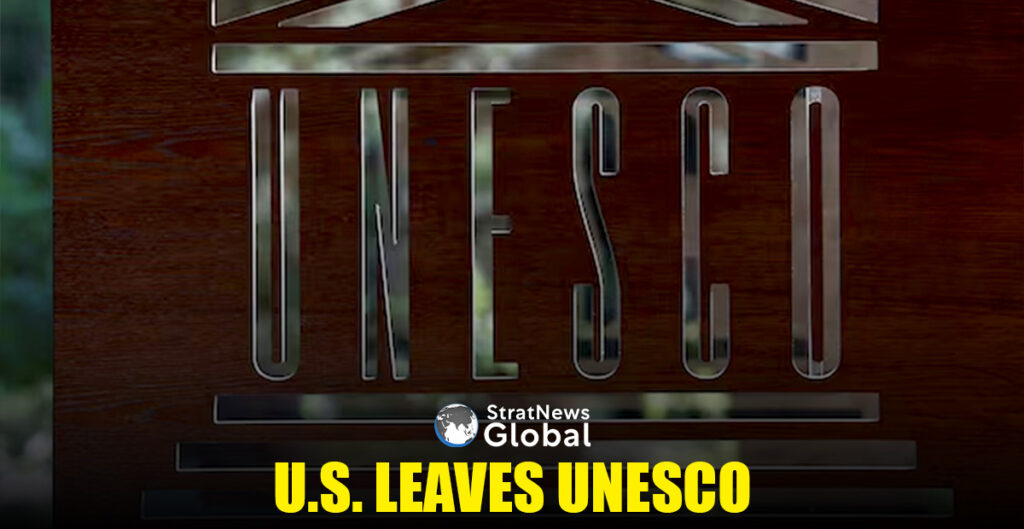
‘Not In Our National Interest’: Under Trump, US Exits UNESCO Again
The administration of President Donald Trump on Tuesday announced that the United States will withdraw from the United Nations’ cultural and education agency UNESCO, reinstating a decision he had previously made during his first term but which was reversed by former President Joe Biden.
The withdrawal from the Paris-based agency, which was founded after World War Two to promote peace through international cooperation in education, science, and culture, will take effect on December 31, 2026.
“President Trump has decided to withdraw the United States from UNESCO – which supports woke, divisive cultural and social causes that are totally out-of-step with the commonsense policies that Americans voted for in November,” White House spokeswoman Anna Kelly said.
The State Department said remaining in UNESCO was not in the national interest, accusing it of having “a globalist, ideological agenda for international development at odds with our America First foreign policy”.
UNESCO chief Audrey Azoulay said she deeply regretted Trump’s decision, but that it was “expected, and UNESCO has prepared for it”.
The agency had diversified its sources of funding, receiving only about 8% of its budget from Washington, she said.
French President Emmanuel Macron wrote on X: “Unwavering support for UNESCO, universal protector of science, the ocean, education, culture, and world heritage.”
“The withdrawal of the United States will not weaken our commitment to those who are fighting this battle.”
UNESCO was one of several international bodies Trump withdrew from during his first term, along with the World Health Organisation, the Paris Agreement global climate change accord and the U.N. Human Rights Council. During his second term, he has largely reinstated those steps.
UNESCO officials said the U.S. withdrawal would have some limited impact on programs the United States was financing.
Tensions?
Israel welcomed the U.S. decision to quit UNESCO.
The U.S. State Department said one of the reasons for the withdrawal was UNESCO’s decision to admit Palestine as a member state, which was “contrary to U.S. policy and contributed to the proliferation of anti-Israel rhetoric within the organisation.”
UNESCO officials said all relevant agency statements had been agreed with both Israel and the Palestinians over the past eight years.
“The reasons put forward by the United States to withdraw from the Organisation are the same as seven years ago, even though the situation has changed profoundly, political tensions have receded, and UNESCO today constitutes a rare forum for consensus on concrete and action-oriented multilateralism,” Azoulay said.
“These claims also contradict the reality of UNESCO’s efforts, particularly in the field of Holocaust education and the fight against antisemitism.”
Diplomats said it was felt at UNESCO that the withdrawal was inevitable for political reasons, given that Biden had brought the U.S. back and had promised to repay arrears from the first time Trump pulled out.
UNESCO, whose full name is the United Nations Educational, Scientific and Cultural Organisation, is best known for designating World Heritage Sites, including the Grand Canyon in the United States and the ancient city of Palmyra in Syria.
The United States initially joined UNESCO at its founding in 1945 but withdrew for the first time in 1984 in protest against alleged financial mismanagement and perceived anti-U.S. bias, returning in 2003 under President George W. Bush, who said the agency had undertaken needed reforms.
(With inputs from Reuters)
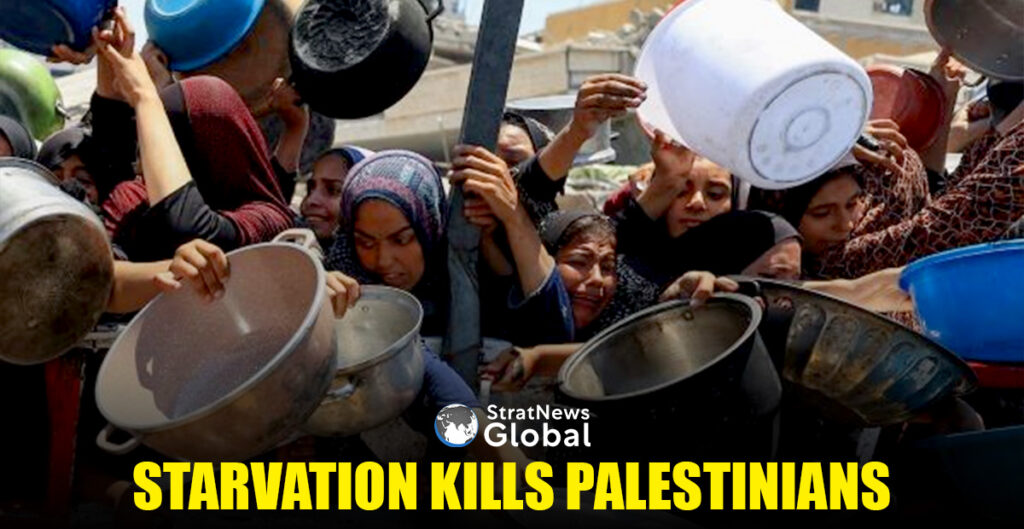
Fifteen Palestinians Dead From Starvation Amid Gaza’s Escalating Hunger Crisis, Medics Report
Fifteen people, including a six-week-old baby, have died of starvation in Gaza within the past 24 hours, according to local health officials, as the deepening hunger crisis claims lives at a faster rate than at any other point in the 21-month long conflict.
The infant died at a hospital ward in northern Gaza, the health officials said, naming him as Yousef al-Safadi. Three of the others were also children, including 13-year-old Abdulhamid al-Ghalban, who died in a hospital in the southern city of Khan Younis. The other two children were not named.
Palestinian health officials say at least 101 people have died of hunger during the conflict, including 80 children, with most of them in recent weeks.
Israel controls all aid supplies into the war-ravaged enclave, where most of the population has been displaced multiple times and faces acute shortages of basic necessities.
Hunger And Exhaustion
The head of the U.N. Palestinian refugee agency said on Tuesday that its staff, as well as doctors and humanitarian workers, were fainting on duty in Gaza due to hunger and exhaustion.
“No one is spared: caretakers in Gaza are also in need of care. Doctors, nurses, journalists and humanitarians are hungry,” UNRWA Commissioner General Philippe Lazzarini said in a statement.
There has been international condemnation of mass killings of civilians and dire shortages of aid in Gaza, but no action that has yet stopped the conflict, or significantly increased supplies.
European Commission President Ursula von der Leyen said on Tuesday that images of civilians killed during the distribution of aid were “unbearable” and urged Israel to deliver on pledges to improve the situation, but did not say what action European countries would take.
Israel’s military said that it “views the transfer of humanitarian aid into Gaza as a matter of utmost importance”, and works to facilitate its entry in coordination with the international community.
It has denied accusations it is preventing aid from reaching Gaza and has accused Palestinian terrorist group Hamas of stealing food, an allegation Hamas denies.
Food And Medicine Shortages
“Hospitals are already overwhelmed by the number of casualties from gunfire. They can’t provide much more help for hunger-related symptoms because of food and medicine shortages,” said Khalil al-Deqran, a spokesperson for the health ministry.
Deqran said some 600,000 people were suffering from malnutrition, including at least 60,000 pregnant women. Symptoms among those going hungry include dehydration and anaemia, he said.
Baby formula in particular is in critically short supply, according to aid groups, doctors and residents.
Israel says its assault on Gaza aims to destroy Hamas, which waged the deadliest attack in Israel’s history on October 7, 2023, killing at least 1,200 Israelis including civilians, by its tallies.
Israeli bombs and gunfire have killed nearly 60,000 people in Gaza since then, according to local health authorities.
Tank shelling killed another 16 people living in tents in Gaza City on Tuesday, as Israeli troops launched attacks across the strip, health officials said. The Israeli military said it wasn’t aware of any incident, or artillery in the area at that time.
The health ministry said at least 72 Palestinians were killed by Israeli gunfire and military strikes in the past 24 hours.
More Trucks Needed
Daily food gathering has become a deadly task for Gazans, with UNRWA estimating that more than 1,000 people have died while trying to receive food aid since May.
On Tuesday, men and boys lugged sacks of flour past destroyed buildings and tarpaulins in Gaza City, grabbing what food they could from aid warehouses.
“We haven’t eaten for five days,” said Mohammed Jundia. “Famine is killing people.”
Israeli military statistics showed on Tuesday that an average of 146 trucks of aid per day had entered Gaza over the course of the war. The United States has said a minimum of 600 trucks per day are needed to feed Gaza’s population.
Twenty-five Western countries, which have backed Israel’s war against Hamas, issued a statement on Monday condemning Israel over the “inhuman killing” of civilians in Gaza, but there was no indication that further action would be taken against Israel.
European Union foreign policy chief Kaja Kallas said the Israeli military “must stop killing people at distribution points,” and that “all options” were on the table if Israel didn’t expand humanitarian access, but did not say what those options included.
The EU remains divided over how hard a line to take. Germany refrained from signing the statement, which Israel dismissed as “disconnected from reality”, saying Hamas was shooting civilians at aid distribution points. It provided no evidence for the claim.
Israel and Hamas are engaged in indirect talks in Doha aimed at reaching a 60-day truce and hostage deal, although there has been no sign of breakthrough.
(With inputs from Reuters)