

Support us by contributing to StratNewsGlobal on the following UPI ID
ultramodern@hdfcbank

Strategic affairs is our game, South Asia and beyond our playground. Put together by an experienced team led by Nitin A. Gokhale. Our focus is on strategic affairs, foreign policy and international relations, with higher quality reportage, analysis and commentary with new tie-ups across the South Asian region.
You can support our endeavours. Visit us at www.stratnewsglobal.com and follow us on YouTube, Twitter, Facebook and Instagram.
र 500 per month
र 1000 per month
र 5000 per year
र 10000 per year
Donate an amount of your choice
र 500 per month
Donate र 500 per month

र 1000 per month
Donate र 1000 per month
र 5000 per year
Donate र 5,000 per year
र 10000 per year
Donate र 10,000 per year
Donate an amount of your choice
Donate an amount of your choice


Israeli Airstrike Kills Starving Gaza Journalist, Her Family In Their Sleep
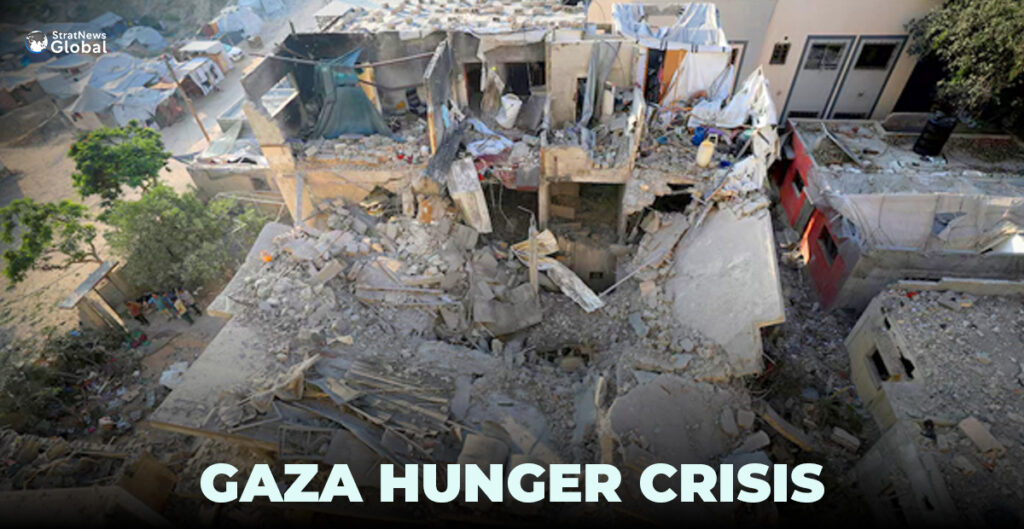
The Al-Shaer family—freelance journalist Wala al-Jaabari, her husband, and their five children—went to bed hungry in Gaza City and were killed in their sleep by an Israeli airstrike, among over 100 fatalities reported in 24 hours of strikes and gunfire, according to health officials.
Their corpses lay in white shrouds outside their bombed home on Wednesday, with their names scribbled in pen. Blood seeped through the shrouds as they lay there, staining them red.
“This is my cousin. He was 10. We dug them out of the rubble,” Amr al-Shaer, holding one of the bodies after retrieving it.
Iman al-Shaer, another relative who lives nearby, said the family hadn’t eaten anything before the bombs came down. “The children slept without food,” he said.
The Israeli military did not immediately comment on the strike at the family’s home, but said its air force had struck 120 targets throughout Gaza in the past day, including “terrorist cells, military structures, tunnels, booby-trapped structures, and additional terrorist infrastructure sites”.
Relatives said some neighbours were spared only because they had been out searching for food at the time of the strike.
Ten more Palestinians died overnight from starvation, the Gaza health ministry said, bringing the total number of people who have starved to death to 111, most of them in recent weeks as a wave of hunger crashes on the Palestinian enclave.
Gaza Food Crisis
The World Health Organisation said on Wednesday that 21 children under the age of five were among those who died of malnutrition so far this year. It said it had been unable to deliver any food for nearly 80 days between March and May and that a resumption of food deliveries was still far below what is needed.
In a statement on Wednesday, 111 organisations, including Mercy Corps, the Norwegian Refugee Council and Refugees International, said mass starvation was spreading even as tons of food, clean water and medical supplies sit untouched just outside Gaza, where aid groups are blocked from accessing them.
Israel, which cut off all supplies to Gaza from the start of March and reopened it with new restrictions in May, says it is committed to allowing in aid but must control it to prevent it from being diverted by militants. It says it has let enough food into Gaza during the war and blames Hamas for the suffering of Gaza’s 2.2 million people.
Israel has also accused the United Nations of failing to act in a timely fashion, saying 700 truckloads of aid are idling inside Gaza. “It is time for them to pick it up and stop blaming Israel for the bottlenecks which are occurring,” Israeli government spokesman David Mercer said on Wednesday.
The United Nations and aid groups trying to deliver food to Gaza say Israel, which controls everything that comes in and out, is choking delivery, and Israeli troops have shot hundreds of Palestinians dead close to aid collection points since May.
“We have a minimum set of requirements to be able to operate inside Gaza,” Ross Smith, the director of emergencies at the U.N. World Food Programme, told Reuters. “One of the most important things I want to emphasise is that we need to have no armed actors near our distribution points, near our convoys.”
Israel’s U.N. Ambassador Danny Danon told the Security Council on Wednesday that Israel will now grant only one-month visas to international staff from the United Nations Office for the Coordination of Humanitarian Affairs.
Faltering Peace Talks
The war between Israel and Hamas has been raging for nearly two years since Hamas killed some 1,200 Israelis and took 251 hostages from southern Israel in the deadliest attack in Israel’s history.
Israel has since killed nearly 60,000 Palestinians in Gaza, decimated Hamas as a military force, reduced most of the territory to ruins and forced nearly the entire population to flee their homes multiple times.
U.S. Middle East peace envoy Steve Witkoff is expected to hold new ceasefire talks, travelling to Europe this week for meetings on the Gaza war and a range of other issues, a U.S. official said on Tuesday.
Talks on a proposal for a 60-day ceasefire between Israel and Hamas, which would include the release of more of the 50 hostages still being held in Gaza, are being mediated by Qatar and Egypt with Washington’s backing.
Successive rounds of negotiations have achieved no breakthrough since the collapse of a ceasefire in March.
Israel’s President Isaac Herzog told soldiers during a visit to Gaza on Wednesday that “intensive negotiations” about returning the hostages held there were underway and he hoped that they would soon “hear good news”, according to a statement.
A senior Palestinian official told Reuters Hamas might give mediators a response to the latest proposals in Doha later on Wednesday, on the condition that amendments be made to two major sticking points: details on an Israeli military withdrawal, and on how to distribute aid during a truce.
Israeli Prime Minister Benjamin Netanyahu’s cabinet includes far-right parties that oppose any agreement that ends without the total destruction of Hamas.
“The second I spot weakness in the prime minister and if I come to think, heaven forbid, that this is about to end with us surrendering instead of with Hamas’s absolute surrender, I won’t remain (in the government) for even a single day,” Finance Minister Belalel Smotrich told Army Radio.
(With inputs from Reuters)
US-Funded Contraceptives Meant For Poor Countries To Be Destroyed In France: Sources
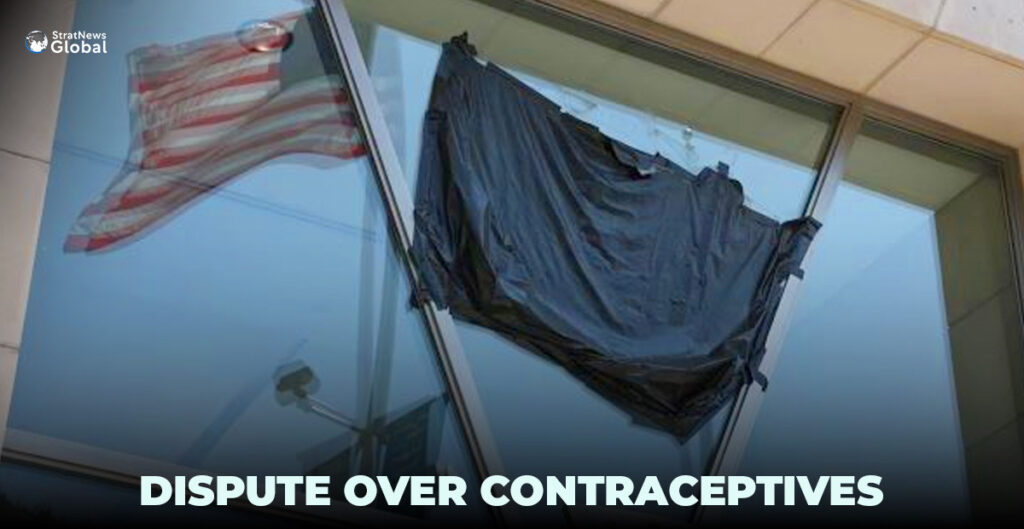
Nearly $10 million worth of U.S.-funded contraceptives are being transported from Belgium to France for incineration, according to two sources, after Washington declined offers from the United Nations and family planning organisations to purchase or distribute the supplies to low-income countries.
The supplies have been stuck for months in a warehouse in Geel, a city in the Belgian province of Antwerp, following President Donald Trump’s decision to freeze U.S. foreign aid in January.
They comprise contraceptive implants and pills as well as intrauterine devices to help prevent unwanted pregnancies, according to seven sources and a screengrab shared by an eighth source confirming the planned destruction.
The U.S. government will spend $160,000 to incinerate the stocks at a facility in France that handles medical waste, according to four of the sources with knowledge of the matter, following Trump’s decision to shut down the U.S. Agency for International Development (USAID).
Options To Save The Contraceptives
The U.S. State Department did not respond to a request for comment on the negotiations to save the contraceptives from destruction or the plans to incinerate them.
U.S. lawmakers have introduced two bills this month to prevent the destruction of the supplies but aid groups say the bills are unlikely to be passed in time to stop the incineration.
The Belgian foreign ministry said Brussels had held talks with U.S. authorities and “explored all possible options to prevent the destruction, including temporary relocation.”
“Despite these efforts, and with full respect for our partners, no viable alternative could be secured. Nevertheless, Belgium continues to actively seek solutions to avoid this regrettable outcome,” it said in a statement on Tuesday.
“Sexual and reproductive health must not be subject to ideological constraints,” it added.
Expiry Date
The supplies, worth $9.7 million, are due to expire between April 2027 and September 2031, according to an internal document listing the warehouse stocks and verified by three sources.
Sarah Shaw, Associate Director of Advocacy at MSI Reproductive Choices, said the non-profit organisation had volunteered to pay for the supplies to be repackaged without USAID branding and shipped to countries in need, but the offer was declined by the U.S. government.
“MSI offered to pay for repackaging, shipping and import duties but they were not open to that… We were told that the U.S. government would only sell the supplies at the full market value,” said Shaw.
She did not elaborate on how much the NGO was prepared to pay, but said she felt the rejection was based on the Trump’s administration’s more restrictive stance on abortion and family planning.
“This is clearly not about saving money. It feels more like an ideological assault on reproductive rights, and one that is already harming women.”
She added that many countries in sub-Saharan Africa had relied on USAID for access to contraception and that the aid cuts would lead to a rise in unsafe abortions.
The United Nations’ sexual and reproductive health agency, UNFPA, also offered to buy the contraceptives outright, three sources said, without disclosing the financial terms of the proposal.
However, negotiations broke down, a source with knowledge of the talks said, in part due to a lack of response from the U.S. government. UNFPA declined to comment.
Anti-Abortion Pact
One of the sources with knowledge of the issue said that the Trump administration was acting in accordance with the Mexico City policy, an anti-abortion pact in which Trump reinstated U.S. participation in January. The pact forbids the U.S. government from contributing to or working with organisations providing funding or supplies that offer access to abortions.
The source said there was no way for the U.S. government to ensure that UNFPA would not share the contraceptives with groups offering abortions, violating the Mexico City policy.
The source also said the matter was complicated by the fact that the contraceptives in Belgium were embossed with the USAID trademark and Washington did not want any USAID-branded supplies to be rerouted elsewhere.
UNFPA did not immediately respond to requests for comment on the concerns raised by the source.
MSI, which says on its website that it fights for a future where everyone can access contraception and abortion, accused the State Department earlier this month of being “hellbent on destroying life-saving medical supplies, incurring additional costs for the U.S. taxpayer in the process.” The State Department declined to comment.
Abortion is a divisive issue in U.S. politics and was a major issue in the 2024 election won by Trump. In 2022, the U.S. Supreme Court ruled to eliminate a nationwide right to abortion, leaving abortion laws to each of the 50 states.
‘Dozens Of Truckloads’
One of the two sources who said the stocks of contraceptives were being trucked to France further added that it would likely take dozens of truckloads and at least two weeks to move the supplies out of the Geel warehouse, with a third source also confirming the scale of the operation. The French government did not immediately respond to requests for comment.
Chemonics, the contractor managing the supply chain for USAID’s family planning programme, declined to comment on the plans to destroy the supplies.
An internal USAID memo, sent in April, said a large quantity of contraceptives was being kept in warehouses and they should be “immediately transferred to another entity to prevent waste or additional costs”.
(With inputs from Reuters)
Turkiye Close To Eurofighter Jet Deal After UK, Germany Agreements
Turkiye reached agreements with NATO allies the UK and Germany on Wednesday, clearing the path to acquire dozens of Eurofighter Typhoon jets to strengthen its defences amid growing regional volatility.
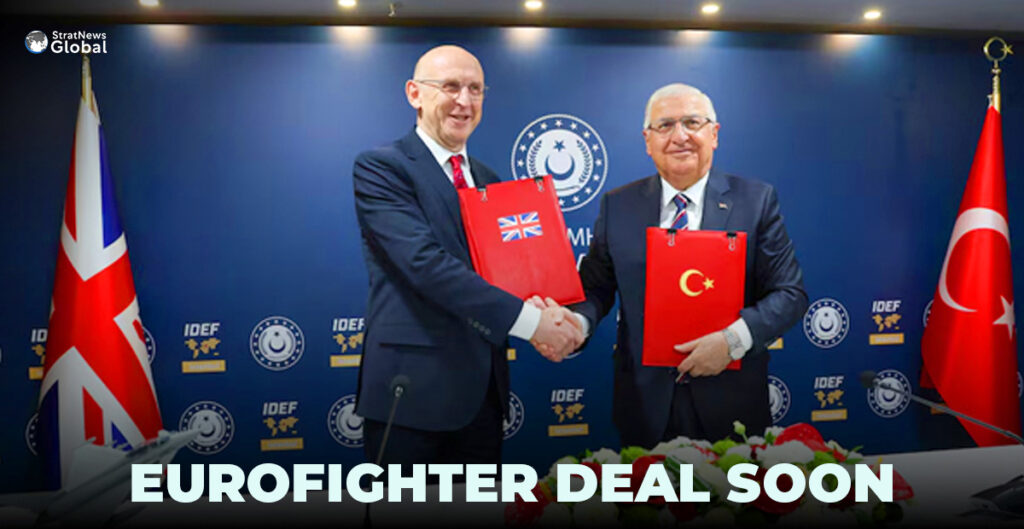
Britain signed a preliminary deal allowing Ankara to operate the jets while Germany approved delivery of 40 of them to Turkiye, which has relied on both foreign purchases and its own defence industry projects, including domestic jets, to ramp up deterrence.
Beyond the Eurofighters, Ankara is also in talks with Washington to purchase 40 F-16s.
Israel’s attacks on regional countries, including its 12-day conflict with Turkiye’s neighbour Iran and more recent strikes on another neighbour, Syria, have unnerved Ankara, prompting a push for rapid armament in order to counter any potential threats.
Turkiye has been in talks since 2023 to purchase 40 Eurofighter Typhoons, which are built by a consortium of Germany, Britain, Italy and Spain, represented by Airbus, BAE Systems and Leonardo.
Speaking at a signing ceremony with British Defence Secretary John Healey in Istanbul, Defence Minister Yasar Guler said the deal brought Turkiye “one step closer to a fully comprehensive agreement” on the jets, adding it would also strengthen NATO and Turkiye’s aerial capabilities.
“We welcome this positive step toward our country joining the Eurofighter Typhoon club, and want to reiterate our mutual ambition to complete the necessary arrangements as soon as possible,” he said.
Guler also told reporters that the composition of the planned acquisition was for 40 jets but that different options were being considered.
New Lease Of Life For BAE UK Factory
Separately, the German government – initially opposed to the sale – has cleared the way for the delivery of 40 jets to Turkiye following a positive decision by the Federal Security Council, the Spiegel news magazine reported on Wednesday.
The German defence ministry declined to comment, and the Federal Council, whose approval is needed for arms exports, does not generally comment on its decisions.
The agreements come after weeks of positive statements from Ankara and the Eurofighter consortium on the sale, with Turkish President Tayyip Erdogan praising the German and British stance on the issue this week.
Britain said negotiations with Turkiye over an ultimate sale will continue over the coming weeks.
The deal would be the first export order secured by Britain for the jet since 2017 and would give a new lease of life to the final assembly line at BAE’s factory in northern England.
Prime Minister Keir Starmer said the multi-billion-dollar agreement with Turkiye would “sustain and protect 20,000 UK jobs for future years to come”, while an official at BAE Systems said last week the company was confident of winning new orders from countries, including Turkiye.
(With inputs from Reuters)
Japan’s PM Ishiba Denies Resignation Plans Amid Election Defeat Reports
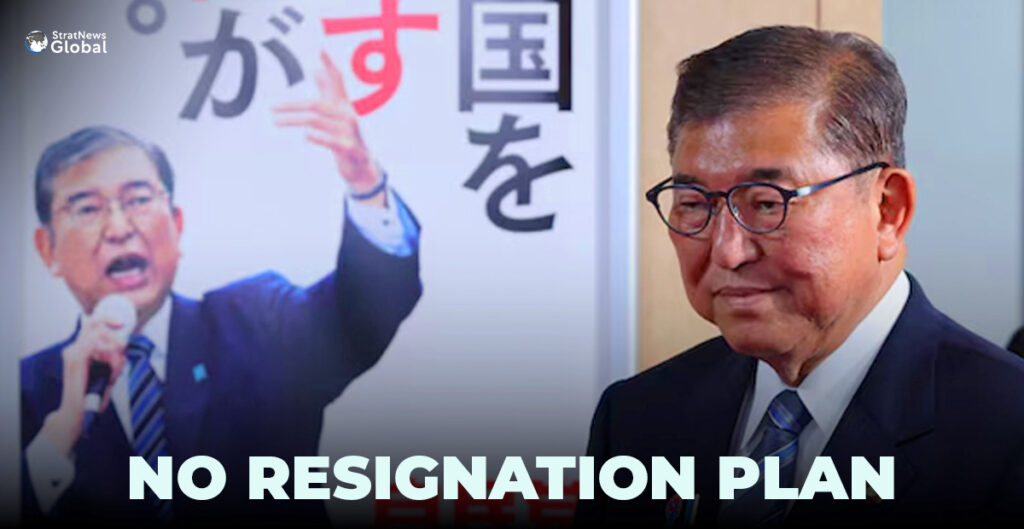
Japan‘s Prime Minister Shigeru Ishiba on Wednesday denied resignation plans, countering media reports and a source’s claim that he would step down following a heavy upper house election loss.
Asked about media reports that he had expressed his intention to step down as early as this month, the 68-year-old leader Ishiba told reporters at party headquarters on Wednesday: “I have never made such a statement…The facts reported in the media are completely unfounded.”
The reports came after Ishiba and Trump unveiled a trade deal on Tuesday that lowers tariffs on imports of Japanese autos and spares Tokyo from punishing new levies on other goods.
Ishiba chose not to quit straight after the election to prevent political instability as the August 1 deadline for clinching the trade deal approached, a source close to the prime minister said, asking not to be identified because they are not authorised to talk to the media.
Ishiba will announce his resignation next month, Japanese media reported earlier.
His departure less than a year after taking office would trigger a succession battle within the ruling Liberal Democratic party as it contends with challenges from new political parties, particularly on the right, that are chipping away at its support.
‘Japanese First’
Among them is the “Japanese First” Sanseito far-right group, which surged in Sunday’s vote, growing its representation in the 248-seat upper house to 14 from one. The party has attracted voters with pledges to curb immigration, slash taxes, and provide financial relief to households squeezed by rising prices.
Ishiba, a former defence minister who failed four times to win the party leadership, defeated hardline conservative Sanae Takaichi in his fifth attempt in a runoff last year.
Whoever succeeds him as head of the LDP, which has ruled Japan for most of the post-war period, would have to govern without a majority in either house of parliament following the government’s lower house election defeat in October.
Their immediate priority would be to secure support from enough opposition party lawmakers to win confirmation as prime minister.
Any incoming leader is unlikely to call a general election straight away, in order to bolster the party’s appeal before seeking a mandate from voters, the source said.
(With inputs from Reuters)
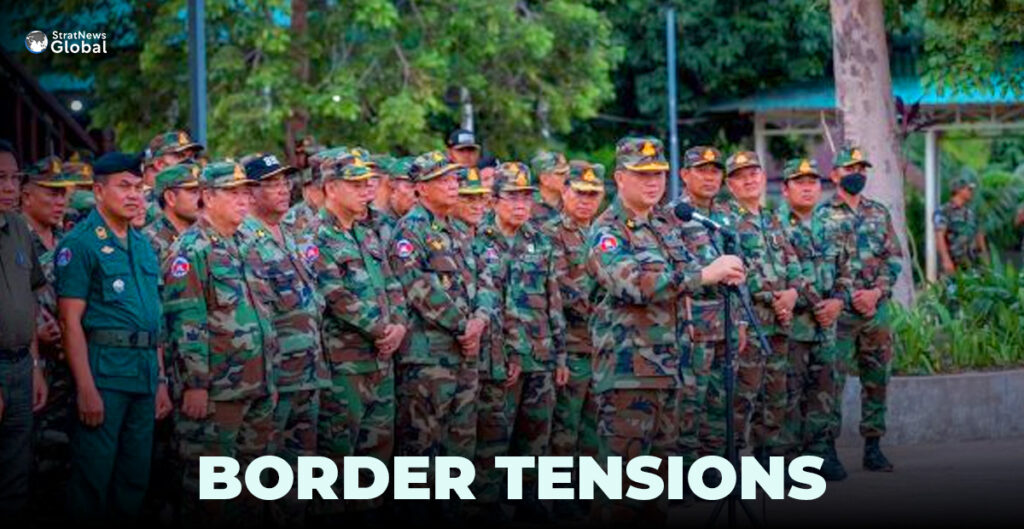
Thailand Withdraws Envoy To Cambodia As Border Tensions Rise, Says Ruling Party
Thailand has recalled its ambassador to Cambodia and plans to expel Cambodia’s envoy, the ruling Pheu Thai Party said on Wednesday, after a landmine blast along the disputed border injured a Thai soldier.
The Thai Foreign Ministry has lodged a formal protest with Cambodia, saying the landmines found in the area were newly deployed and had not been encountered during previous patrols, the party said on social media.
Thailand has downgraded diplomatic relations with Cambodia, it said.
Cambodia’s government did not immediately respond to a request for comment. Its government spokesperson referred to the foreign ministry.
Thailand’s foreign ministry said it had yet to be informed of the decision to recall the Thai envoy and the plan to expel Cambodia’s ambassador.
Border Closure
The government has also ordered the closure of all border checkpoints under the jurisdiction of Thailand’s Second Army, the Pheu Thai Party said.
“Tourists are strictly prohibited from entering these border areas,” it said.
In the landmine incident on Wednesday, the soldier sustained injuries and lost his right leg, the party said.
Earlier, Thailand accused Cambodia of placing landmines on the Thai side of the disputed border area after three soldiers were injured, but Phnom Penh denied the claim and said the soldiers had veered off agreed routes and triggered a mine left behind from decades of war.
Thai authorities said the soldiers were injured, with one losing a foot, by a landmine while on a patrol on July 16 on the Thai side of the disputed border area between Ubon Ratchathani and Cambodia’s Preah Vihear Province.
Cambodia’s foreign ministry denied that new mines had been planted, and said in a statement on Monday night that the Thai soldiers deviated from agreed patrol routes into Cambodian territory and into areas that contain unexploded landmines.
The country is littered with landmines laid during decades of war.
(With inputs from Reuters)
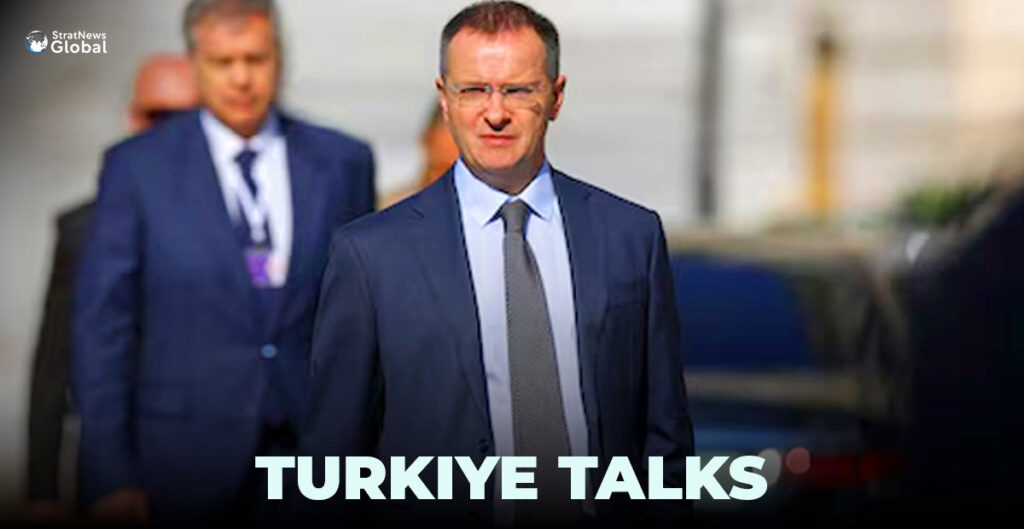
Russia, Ukraine Set To Resume Peace Talks After Seven-Week Pause
Russian negotiators have flown to Turkiye for peace talks with their Ukrainian counterparts on Wednesday, marking the first direct discussions in over seven weeks, the Kremlin said.
Russia played down expectations of any breakthrough at the meeting, which Ukrainian President Volodymyr Zelenskyy said this week should focus in part on preparing a summit between himself and President Vladimir Putin.
“Naturally, no one expects an easy road. Naturally, this will be a very difficult conversation. The projects (of the two sides) are diametrically opposed,” Kremlin spokesman Dmitry Peskov told reporters.
PoW Swap
Previous talks in Istanbul on May 16 and June 2 led to the exchange of thousands of prisoners of war and the remains of dead soldiers. But those meetings lasted less than three hours in total and made no breakthrough towards a ceasefire or a settlement to end almost three and a half years of war.
U.S. President Donald Trump last week threatened heavy new sanctions on Russia and countries that buy its exports unless a peace deal was reached within 50 days.
But three sources close to the Kremlin told Reuters that Putin, unfazed by Trump’s ultimatum, would keep on fighting in Ukraine until the West engaged on his terms for peace, and that his territorial demands may widen as Russian forces advance.
On Wednesday, Russia said its forces had captured the settlement of Varachyne in Ukraine’s Sumy region, where Putin has ordered his troops to create a buffer zone after Ukraine mounted a shock incursion into Russia last year and held onto a chunk of its territory for months. Reuters could not independently confirm the battlefield report.
In recent weeks, Russian forces have launched some of their heaviest air attacks of the war, focusing especially on the Ukrainian capital Kyiv.
Ukraine has hit back with attacks of its own, and last month inflicted serious damage on Russia’s nuclear-capable strategic bomber fleet by smuggling drones close to air bases deep inside the country.
Conflicting Demands
Zelenskyy said earlier this week that the agenda for talks was clear: the return of prisoners of war and of children abducted by Russia, and the preparation of a meeting between himself and Putin.
Putin turned down a previous challenge from Zelenskyy to meet him in person and has said he does not see him as a legitimate leader because Ukraine, which is under martial law, did not hold new elections when Zelenskyy’s five-year mandate expired last year. Russia also denies abducting children.
The Kremlin said this week it was unrealistic to expect “miracles” from the talks.
At the last meeting on June 2, Russia handed Ukraine a memorandum setting out its key demands, including: full withdrawal of Ukrainian forces from four regions of the country that Russia has claimed as its own; limits on the size of Ukraine’s military; enhanced rights for Russian-speakers in Ukraine; and acceptance by Kyiv of neutral status, outside NATO or any other alliance.
Ukraine sees those terms as tantamount to surrender, and Zelenskyy described the Russian stance as an ultimatum.
Ukraine wants an immediate ceasefire, reparations, international security guarantees and no restrictions on its military strength.
(With inputs from Reuters)
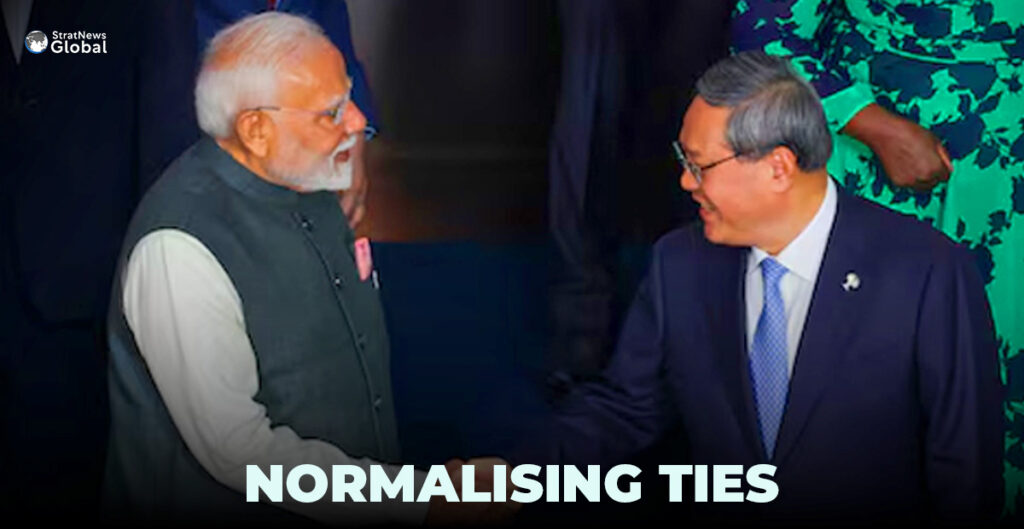
India To Resume Issuing Tourist Visas For Chinese Citizens After Five-Year Hiatus
India will resume issuing tourist visas to Chinese citizens starting July 24, its embassy in China announced on Wednesday, marking the first time in five years as both nations seek to mend strained ties.
Tensions between the two countries escalated following a 2020 military clash along their disputed Himalayan border. In response, India imposed restrictions on Chinese investments, banned hundreds of popular Chinese apps and cut passenger routes.
China suspended visas to Indian citizens and other foreigners around the same time due to the COVID-19 pandemic, but lifted those restrictions in 2022, when it resumed issuing visas for students and business travellers.
Tourist visas for Indian nationals remained restricted until March this year, when both countries agreed to resume direct air service.
Relations have gradually improved, with several high-level meetings taking place last year, including talks between Chinese President Xi Jinping and Indian Prime Minister Narendra Modi in Russia in October.
China’s Foreign Ministry spokesperson Guo Jiakun said on Wednesday that Beijing had noted the positive move.
“China is ready to maintain communication and consultation with India and constantly improve the level of personal exchanges between the two countries,” he said.
India and China share a 3,800 km (2,400-mile) border that has been disputed since the 1950s. The two countries fought a brief but brutal border war in 1962, and negotiations to settle the dispute have made slow progress.
In July, India’s foreign minister told his Chinese counterpart that both countries must resolve border friction, pull back troops and avoid “restrictive trade measures” to normalise their relationship.
(With inputs from Reuters)
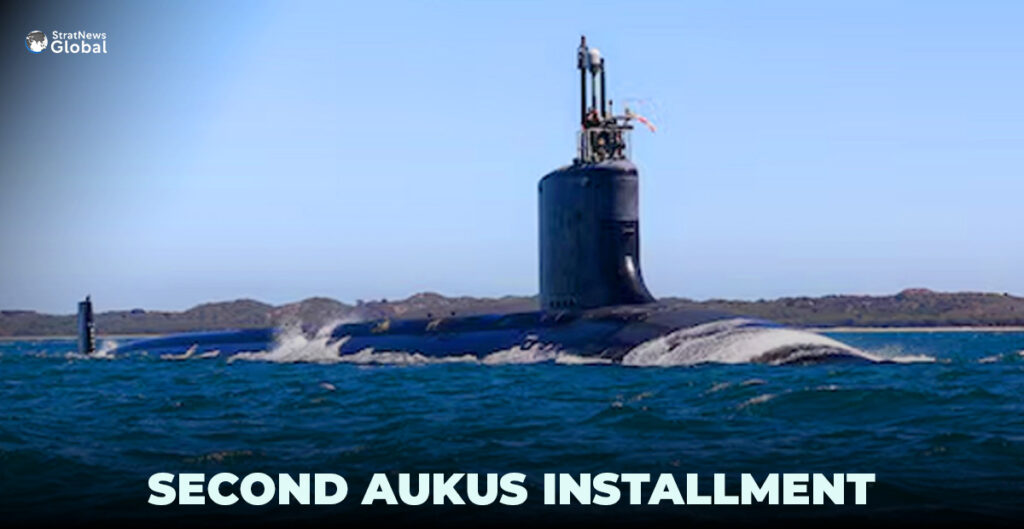
Australia Makes Second $525 Million AUKUS Payment Amid US Review
Australia has paid A$800 million ($525 million) to the United States as the second instalment of the AUKUS submarine deal, despite a formal review by President Donald Trump‘s administration.
Australian Prime Minister Anthony Albanese confirmed the latest instalment on Wednesday, following an initial $500 million paid in February.
Indo-Pacific Defence Pact
In 2023, the United States, Australia and Britain unveiled details of a plan to provide Australia with nuclear-powered attack submarines from the early 2030s to counter China’s ambitions in the Indo-Pacific.
Australia committed to spending A$368 billion over three decades in its biggest-ever defence deal.
Canberra is due to pay the U.S. $2 billion by year-end to support the expansion of American submarine shipyards, Reuters reported in April.
Boosting Allied Industrial Capacity
“There’s a schedule of payments to be made. We have an agreement with the United States as well as with the United Kingdom, it is about increasing their capacity, their industrial capacity,” Albanese told national broadcaster ABC.
“As part of that as well, we have Australians on the ground, learning those skills.”
Trump launched a formal review of AUKUS in June to examine whether the pact met his “American First” criteria. It will be led by Elbridge Colby, who in the past has expressed scepticism about AUKUS.
Australia ‘Supports’ AUKUS
Australia, which sees the submarines as critical to its own defence as tensions grow over China’s military buildup, has maintained it is confident the pact will proceed.
“We support AUKUS,” Albanese said. “We have an agreement to a treaty level, with our partners, signed, of course, in San Diego with the United States and the United Kingdom.”
Washington will sell several Virginia-class nuclear-powered submarines to Australia, while Britain and Australia will later build a new AUKUS-class submarine.
($1 = 1.5230 Australian dollars)
(With inputs from Reuters)
Racist Attacks On Indians In Australia, Ireland Spark Global Outrage
Two brutal assaults on Indian nationals abroad—one in Adelaide in Australia, and another in Dublin, the capital of Ireland—have sent shockwaves across the Indian diaspora and ignited growing fears about racism and safety for immigrants.
Both incidents, which took place over the weekend, involved graphic violence and are being investigated as hate crimes by local authorities.
Adelaide Attack
In Australia, 23-year-old Charanpreet Singh, an Indian student, was viciously beaten in a suspected racially motivated assault in the heart of Adelaide.
Singh, along with his wife, had parked near Kintore Avenue on the night of July 19 to attend the Illuminate light show.
What was meant to be a peaceful outing turned violent when a vehicle pulled up and five men—some reportedly armed with metal knuckles and sharp objects—confronted him.
“They just said ‘f*** off, Indian’, and after that, they just started punching,” Singh told 9News from his hospital bed.
The attackers punched him through the car window, pulled him out, and stomped on him repeatedly.
Singh lost consciousness during the attack. He was rushed to the Royal Adelaide Hospital, where he was diagnosed with brain trauma, multiple facial fractures, a broken nose, and eye injuries.
Surgery was required, and he remains under medical care.
South Australia Police arrested a 20-year-old man from Enfield the following day, charging him with assault causing harm.
He has since been released on bail. Police are continuing the search for the remaining four suspects and have retrieved CCTV footage from the vicinity.
A video of the assault has circulated on social media, deepening anger and concern among Indian students across Australia.
Singh, while recovering, shared his emotional trauma: “Things like this, when they happen, it makes you feel like you should go back… You can change anything in your body, but you can’t change the colours.”
South Australian Premier Peter Malinauskas condemned the attack, calling it “deeply disturbing” and “completely unwelcome in our state.”
He assured the community that the matter is being treated with urgency.
Dublin Horror
Just hours before the Adelaide incident, another shocking assault occurred in Dublin.
An Indian man in his 40s—reportedly an Amazon employee who had just arrived in Ireland weeks earlier—was stripped, beaten, and left bleeding on a street in Tallaght, a suburb of the Irish capital.
According to the Gardaí, the Irish national police, the attack occurred around 6 pm on Saturday, July 19, on Parkhill Road.
The man was taken to Tallaght University Hospital for treatment and discharged early the next morning.
Reports suggest he was targeted by a group of youths who falsely accused him of inappropriate behaviour around children—a claim that Irish media say was amplified by far-right, anti-immigrant groups online.
‘Pure Racism’
Eyewitness Jennifer Murray, a local resident who intervened, described the violence as “pure racism.”
She recounted how the attackers struck the man in the head, dragged him, and rammed his head into a lamp post multiple times. He was then stripped of his shoes, trousers, and underwear, and robbed of his phone and money.
“They basically left him for dead,” Murray told The Journal, adding that the victim had large gashes above both eyebrows and was too dazed to respond.
India’s Ambassador to Ireland, Akhilesh Mishra, condemned the attack, calling it “horrible” and expressing concern over increasing racist incidents targeting the Indian community.
Mishra said the Embassy is in touch with Irish authorities and has offered assistance to the victim. Taking to social media platform X (formerly Twitter), he posted a graphic image of the man’s injuries, saying, “Aghast at the insensitivity & obfuscation… Hope the perpetrators are brought to justice.”
Local politician and former mayor Baby Pereppadan, Ireland’s first Indian-origin mayor, met the victim and noted that he remained in a state of shock.
“Most Indians in Ireland are here on work or student permits, contributing critical skills to the healthcare and IT sectors. Such acts of violence are unacceptable,” he told the Irish Independent.
No arrests had been made in the Dublin case at the time of writing. The investigation remains ongoing, and authorities are treating it as a hate crime.
A Growing Pattern Of Racism?
These back-to-back incidents come at a time when immigrant communities in both Ireland and Australia are grappling with rising xenophobia and online hate.
In Ireland, far-right groups have amplified anti-immigration rhetoric, with a recent viral post calling the influx of Indian immigrants since 2020 “unsustainable” and “making the country unrecognisable.”
Meanwhile, in Australia, concerns have long simmered about safety for international students, particularly from South Asia.
Diplomatic missions in both countries are urging calm, calling for swift justice, and emphasising the need to protect immigrant communities from targeted violence.
(With inputs from IBNS)
World Court Set To Shape The Future Of Climate Litigation
The United Nations‘ (UN) top court will issue an opinion on Wednesday that could shape global climate action for years to come.
Known as an advisory opinion, the deliberation of the 15 judges of the International Court of Justice in The Hague is legally non-binding. It nevertheless carries legal and political weight, and future climate cases would be unable to ignore it, legal experts say.
“The advisory opinion is probably the most consequential in the history of the court because it clarifies international law obligations to avoid catastrophic harm that would imperil the survival of humankind,” said Payam Akhavan, an international law professor.
In two weeks of hearings last December at the ICJ, also known as the World Court, Akhavan represented low-lying, small island states that face an existential threat from rising sea levels.
In all, over a hundred states and international organisations gave their views on the two questions the U.N. General Assembly had asked the judges to consider.
They were: what are countries’ obligations under international law to protect the climate from greenhouse gas emissions, and what are the legal consequences for countries that harm the climate system?
Wealthy countries of the Global North told the judges that existing climate treaties, including the 2015 Paris Agreement, which are largely non-binding, should be the basis for deciding their responsibilities.
Developing nations and small island states argued for stronger measures, in some cases legally binding, to curb emissions and for the biggest emitters of climate-warming greenhouse gases to provide financial aid.
Paris Agreement And An Upsurge In Litigation
In 2015, at the conclusion of U.N. talks in Paris, more than 190 countries committed to pursuing efforts to limit global warming to 1.5 degrees Celsius (2.7 degrees Fahrenheit).
The agreement has failed to curb the growth of global greenhouse gas emissions.
Late last year, in the most recent “Emissions Gap Report,” which takes stock of countries’ promises to tackle climate change compared with what is needed, the UN said that current climate policies will result in global warming of more than 3 °C (5.4 °F) above pre-industrial levels by 2100.
As campaigners seek to hold companies and governments to account, climate‑related litigation has intensified, with nearly 3,000 cases filed across almost 60 countries, according to June figures from London’s Grantham Research Institute on Climate Change and the Environment.
So far, the results have been mixed.
A German court in May threw out a case between a Peruvian farmer and German energy giant RWE, but his lawyers and environmentalists said the case, which dragged on for a decade, was still a victory for climate cases that could spur similar lawsuits.
Earlier this month, the Inter-American Court of Human Rights, which holds jurisdiction over 20 Latin American and Caribbean countries, said in another advisory opinion that its members must cooperate to tackle climate change.
Campaigners say Wednesday’s court opinion should be a turning point and that, even if the ruling itself is advisory, it should provide for the determination that U.N. member states have broken the international law they have signed up to uphold.
“The court can affirm that climate inaction, especially by major emitters, is not merely a policy failure but a breach of international law,” said Fijian Vishal Prasad, one of the law students who lobbied the government of Vanuatu in the South Pacific Ocean to bring the case to the ICJ.
Although it is theoretically possible to ignore an ICJ ruling, lawyers say countries are typically reluctant to do so.
“This opinion is applying binding international law, which countries have already committed to. National and regional courts will be looking to this opinion as a persuasive authority, and this will inform judgments with binding consequences under their own legal systems,” Joie Chowdhury, senior attorney at the Centre for International Environmental Law, said.
The court will start reading out its opinion at 3 p.m. (1300 GMT).
(With inputs from Reuters)