

Support us by contributing to StratNewsGlobal on the following UPI ID
ultramodern@hdfcbank

Strategic affairs is our game, South Asia and beyond our playground. Put together by an experienced team led by Nitin A. Gokhale. Our focus is on strategic affairs, foreign policy and international relations, with higher quality reportage, analysis and commentary with new tie-ups across the South Asian region.
You can support our endeavours. Visit us at www.stratnewsglobal.com and follow us on YouTube, Twitter, Facebook and Instagram.
र 500 per month
र 1000 per month
र 5000 per year
र 10000 per year
Donate an amount of your choice
र 500 per month
Donate र 500 per month

र 1000 per month
Donate र 1000 per month
र 5000 per year
Donate र 5,000 per year
र 10000 per year
Donate र 10,000 per year
Donate an amount of your choice
Donate an amount of your choice
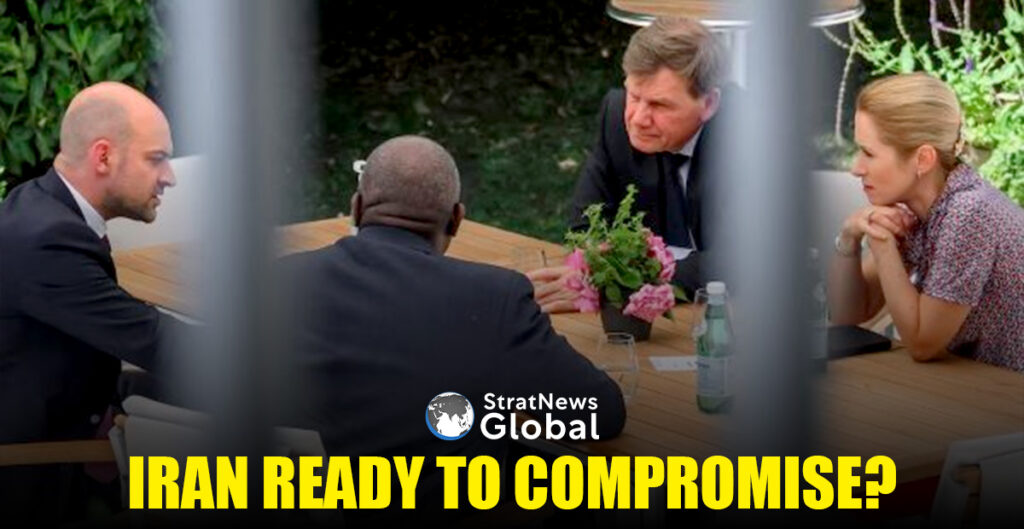

Europeans To Assess Iran’s Willingness For Nuclear Deal As Sanctions Approach
France, Britain, and Germany will meet with Iranian officials on Friday for their first direct talks since U.S. and Israeli attacks on Iranian nuclear facilities in June, seeking to assess Tehran’s readiness to reach a compromise for a nuclear deal and avoid looming sanctions, according to diplomats.
The three European countries, along with China and Russia, are the remaining parties to a 2015 deal – from which the U.S. withdrew in 2018 – that lifted sanctions on Iran in return for restrictions on its nuclear programme.
Friday’s talks between senior diplomats from the so-called E3 group and Iran’s negotiating team will be held in Istanbul.
The United States held five rounds of talks with Iran prior to its airstrikes in June, which U.S. President Donald Trump, said had “obliterated” a programme that Washington and its ally Israel say is aimed at acquiring a nuclear bomb. Iran denies seeking a nuclear weapon.
European and Iranian diplomats say there is no prospect of Iran re-engaging with the U.S. at the negotiating table for now.
But the Europeans say negotiations must be revived due to a halt in inspections of nuclear facilities by the International Atomic Energy Agency (IAEA) and as an October 18 deadline for the expiration of the 2015 deal draws closer.
They also want answers over the location of 400 kg (880 pounds) of near-weapons grade highly enriched uranium, whose whereabouts have not been known since last month’s strikes.
“We are determined to do everything to reach a diplomatic solution,” German Foreign Minister Johann Wadephul told a press conference in Paris on July 18.
Snapback Or Extension?
Under the terms of the U.N. Security Council resolution enshrining the 2015 deal, U.N. sanctions could be reimposed before the agreement expires – a process that would take about 30 days.
The E3, who do not want to lose leverage by letting the deal expire, have warned that unless there is a new nuclear accord they will launch the “snapback mechanism”, which would restore all previous U.N. sanctions on Iran, including on the oil, banking and defence sectors.
With Russia – an ally of Iran – taking over the Security Council presidency in October, the three European countries have signalled that the latest window to reactivate the sanctions would be the end of August.
Three European, one regional and an Iranian diplomat said the meeting in Istanbul would focus primarily on the issue of the snapback mechanism.
They said the E3 would float the possibility to Iran of extending the snapback mechanism by up to six months.
In return, Iran would need to make commitments on key issues, including eventual talks with Washington, full cooperation with the IAEA, and accounting for its stockpile of highly enriched uranium.
Speaking to reporters at the U.N. on Wednesday, Iranian Deputy Foreign Minister Kazem Gharibabadi, who will be in Istanbul, said Tehran had agreed to allow a technical team from the IAEA to visit in the coming weeks.
He warned that a triggering of the snapback mechanism would be met with a strong response from Tehran. It has previously threatened to leave the Non-Proliferation Treaty (NPT) over the issue.
Gharibabadi added that he had heard about the possibility of an extension.
“That’s very premature now to discuss the issue of the extension. We have almost about three months actually, till the deadline of 18th of October,” he said.
Sanctions To Be Reimposed?
A Trump administration official, speaking on condition of anonymity, said the U.S. was “coordinated” with the E3 when asked whether Washington was discussing the reimposition of sanctions with them, but declined to elaborate.
Israel’s Strategic Affairs Minister Ron Dermer was in Paris on Thursday and due to meet French officials for talks on various subjects, including Iran, four sources said.
Israel launched the attacks on Iran saying it wanted to remove any chance of its arch-foe developing nuclear weapons.
(With inputs from Reuters)
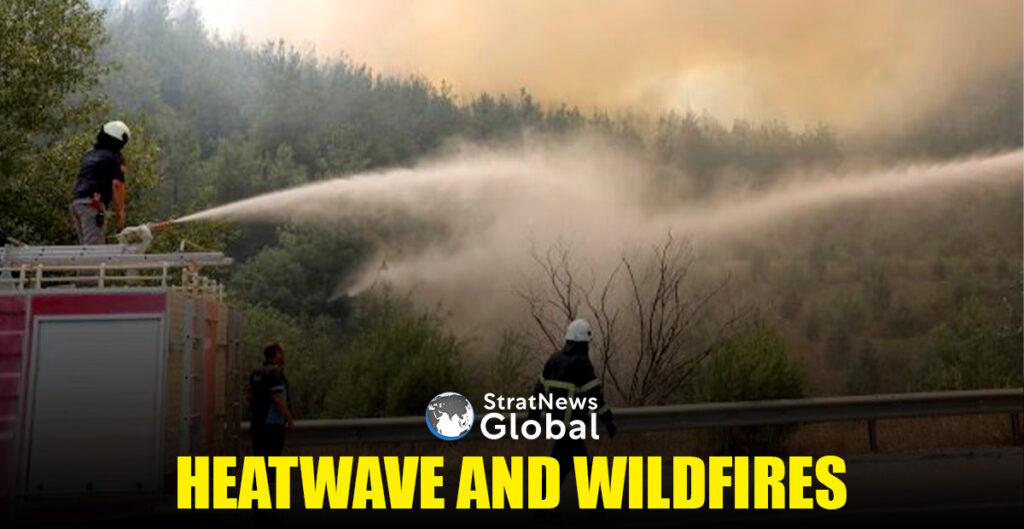
Firefighters Battle Wildfires As Heatwave Grips Turkiye And Cyprus
Firefighters were battling several wildfires across Turkiye and Cyprus on Thursday, as blazes burned through large areas of land, prompting evacuations of towns and villages. In central Turkiye, 10 firefighters lost their lives while tackling the fires during an intense Mediterranean heatwave.
At least six separate wildfires were burning across Turkiye, and Turkish Agriculture and Forestry Minister Ibrahim Yumakli warned that strong winds and blazing heat were creating extremely dangerous conditions.
Late on Wednesday, Yumakli said 10 firefighters were killed while battling a fire in the central Eskisehir province, adding that 14 others were injured. Fanned by strong winds, the fire later spread to another central province, Afyonkarahisar.
In the northwestern province of Bilecik, fires raged for a fourth straight day, as firefighters struggled to contain them.
Residents were evacuated from fire-threatened areas of all three provinces, though some residents were later allowed to return to areas in Bilecik that were declared safe.
“They couldn’t intervene. There is no decent road, forests are thick and it’s rocky. Helicopters don’t work at night, and because they don’t work, they couldn’t intervene,” said Cemil Karadag, a resident of the village of Selcik in Bilecik.
“It engulfed our village from two or three sides … It spread very quickly with the effect of the wind, but, thank God, (the centre of) our village wasn’t damaged that much.”
In the Black Sea province of Sakarya, a wildfire erupted even as firefighters worked to contain another nearby. A key highway was shut due to the blaze, while some areas were evacuated.
Another fire in the neighbouring province of Karabuk, where the UNESCO World Heritage City of Safranbolu is located, quickly grew and led to 10 villages being evacuated. A sixth blaze raged in the western province of Manisa.
‘Sheer Hell’
On the eastern Mediterranean island of Cyprus, firefighters battled for a second day to control a massive wildfire, which engulfed mountain villages north of the city of Limassol.
Two people were found dead in their car, trapped by the blaze which started on Wednesday. Scores of homes were destroyed as people fled a towering wall of flames overnight.
Although the fire’s cause was not immediately known, authorities said they would be looking into the possibility of arson.
“It was sheer hell,” said Father Michalis, a Greek Orthodox priest, who was forced to evacuate from Lofou village.
After subsiding early Thursday, authorities were struggling to contain flare-ups around midday that were being stoked by strong winds.
“When dawn came we saw a catastrophe of biblical proportions,” said Kostas Hatzikonstantinou, who struggled to maintain composure as he stood outside his home, hollowed out by the fire which razed his community on Thursday morning.
‘Unspeakable Tragedy’
“It’s an unspeakable tragedy for everyone … Unfortunately, we’ll no longer have this paradise that we enjoyed for so many years,” he said.
Cypriot government spokesperson Konstantinos Letymbiotis said the authorities were focusing on fully leveraging “all ground and air forces” to control the blaze.
“We are facing an unprecedented situation,” he said.
In addition to air assets from Spain, Egypt and Jordan, Israel has also said it would send assistance, he added. Aircraft from the British military bases on Cyprus were also assisting in the effort, while the EU said it had mobilised two aircraft to help operations.
Ersin Tatar, president of the breakaway Turkish Republic of Northern Cyprus, which is recognised only by Turkiye and has been split from the island’s south, said his government was ready to assist as well.
Although heatwaves and wildfires are common in the region, their impact on human life along with the scale of destruction have become more pronounced in recent years due to shifting weather patterns.
(With inputs from Reuters)
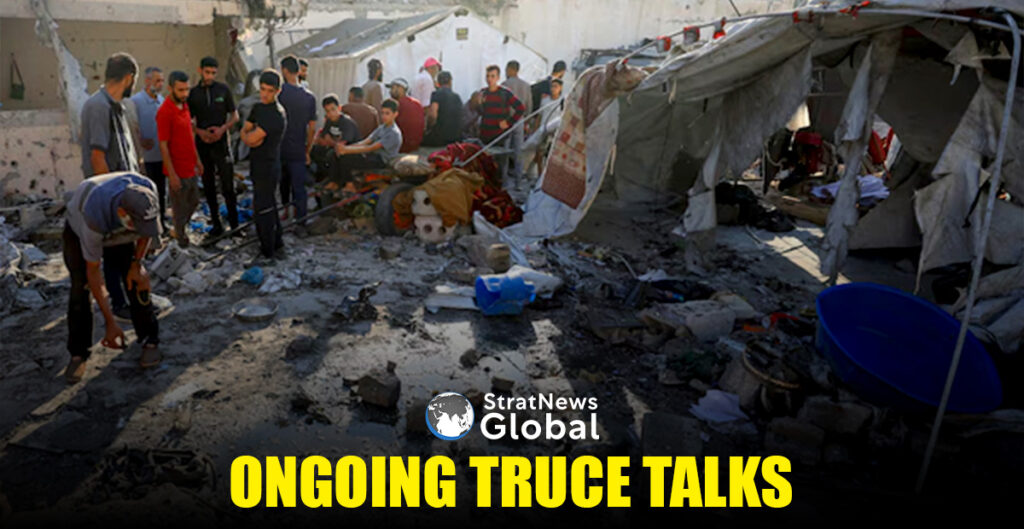
Israel Reviewing Hamas Ceasefire Response As Strikes Continue In Gaza
Israeli Prime Minister Benjamin Netanyahu‘s office stated on Thursday that Israel is reviewing a revised Hamas response to a proposed ceasefire and hostage release deal, as Israeli air and ground strikes continued across the Gaza Strip.
Hamas confirmed it had handed over a new proposal, but did not disclose its contents. A previous version, submitted late on Tuesday, was rejected by mediators as insufficient and was not even passed to Israel, sources familiar with the situation said.
Both sides are facing huge pressure at home and abroad to reach a deal, with the humanitarian conditions inside Gaza deteriorating sharply amidst widespread, acute hunger in the Palestinian enclave that has shocked the world.
A senior Israeli official was quoted by local media as saying the new text was something Israel could work with. However, Israel’s Channel 12 said a rapid deal was not within reach, with gaps remaining between the two sides, including over where the Israeli military should withdraw to during any truce.
A Palestinian official close to the talks told Reuters the latest Hamas position was “flexible, positive and took into consideration the growing suffering in Gaza and the need to stop the starvation”.
Mass Starvation
Dozens of people have starved to death in Gaza over the last few weeks as a wave of hunger crashes on the Palestinian enclave, according to local health authorities. The World Health Organisation said on Wednesday that 21 children under the age of five were among those who died of malnutrition so far this year.
Israel, which cut off all supplies to Gaza from the start of March and reopened it with new restrictions in May, says it is committed to allowing in aid but must control it to prevent it from being diverted by militants.
It says it has let in enough food for Gaza’s 2.2 million people over the course of the war, and blames the United Nations for being slow to deliver it; the U.N. says it is operating as effectively as possible under conditions imposed by Israel.
Airstrikes
The war between Israel and Hamas has been raging for nearly two years since Hamas killed some 1,200 people and took 251 hostages from southern Israel in the deadliest single attack in Israel’s history.
Israel has since killed nearly 60,000 Palestinians in Gaza, decimated Hamas as a military force, reduced most of the territory to ruins and forced nearly the entire population to flee their homes multiple times.
Israeli forces on Thursday hit the central Gaza towns of Nuseirat, Deir Al-Balah and Bureij.
Health officials at Al-Awda Hospital said three people were killed in an airstrike on a house in Nuseirat, three more died from tank shelling in Deir Al-Balah, and separate airstrikes in Bureij killed a man and a woman and wounded several others.
Nasser hospital said three people were killed by Israeli gunfire while seeking aid in southern Gaza near the so-called Morag axis between Khan Younis and Rafah. The Israeli military said Palestinian militants had fired a projectile overnight from Khan Younis toward an aid distribution site near Morag. It was not immediately clear whether the incidents were linked.
60-Day Ceasefire
Washington has been pushing the warring sides towards a deal for a 60-day ceasefire that would free some of the remaining 50 hostages held in Gaza in return for prisoners jailed in Israel, and allow in aid.
U.S. Middle East peace envoy Steve Witkoff travelled to Europe this week for meetings on the Gaza war and a range of other issues.
An Israeli official said Strategic Affairs Minister Ron Dermer would meet Witkoff on Friday if the gaps between Israel and Hamas over the terms of a ceasefire had narrowed sufficiently.
Hamas is facing growing domestic pressure amid deepening humanitarian hardship in Gaza and continued Israeli advances.
Mediators say the group is seeking a withdrawal of Israeli troops to positions held before March 2, when Israel ended a previous ceasefire, and the delivery of aid under U.N. supervision.
That would exclude a newly formed U.S.-based group, the Gaza Humanitarian Fund, which began handing out food in May at sites located near Israeli troops who have shot dead hundreds of Palestinians trying to get aid.
(With inputs from Reuters)
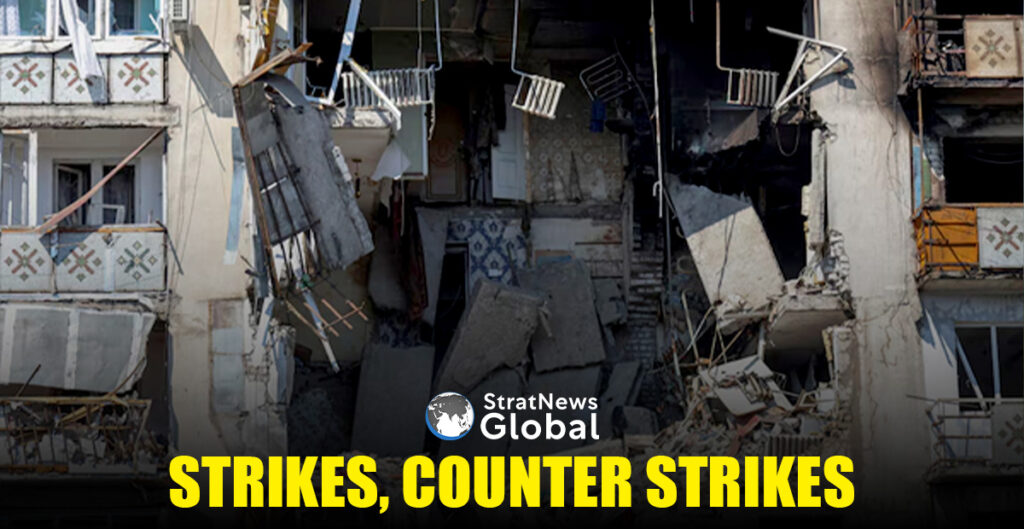
Ukraine And Russia Strike Each Other’s Black Sea Coasts After Peace Talks
Ukraine and Russia carried out airstrikes along each other’s Black Sea coasts early on Thursday, just hours after brief direct talks failed to advance efforts to end their nearly three-and-a-half-year war.
Russian forces staged the latest in a series of mass drone attacks on Ukraine’s Black Sea port of Odesa, injuring at least four people and causing several fires as well as damage in the historic centre, a UNESCO world heritage site.
The famous Pryvoz market in Odesa was among the places hit, Regional Governor Oleh Kiper said. “It is not just a place of trade, it is the living heart of Odesa,” he added.
On Thursday morning, some residents were cleaning up shattered glass in the streets nearby.
“So what if the (drones) are flying? We will shoot them down; they will not break us,” Yevhen, a 20-year-old student among those helping with the cleanup, told Reuters.
Emergency officials in Russia’s Krasnodar region on the Black Sea said debris from a falling drone struck and killed a woman in the Adler district near the resort city of Sochi. A second woman was being treated in the hospital for serious injuries, they said on the Telegram messaging app.
The administrative head of the Sirius federal district south of Sochi said a drone hit an oil base, giving no further details. Russia’s aviation authority said operations were suspended at Sochi airport for about four hours.
Russia also attacked the central region of Cherkasy overnight, injuring seven people, including a nine-year-old, and damaging more than a dozen residential apartment buildings.
Talks Stall Again
Negotiators had earlier discussed further prisoner swaps at a brief session of peace talks in the Turkish city of Istanbul, but they remained far apart on ceasefire terms and a possible meeting of their leaders.
“Yesterday, at a meeting in Istanbul, the Russian side was again presented with a proposal to immediately and completely cease fire. In response, Russian drones are striking residential buildings,” Ukrainian President Volodymyr Zelenskyy wrote on Telegram.
He said Russia had launched 103 drones and four missiles during its overnight attack, which deputy prime minister Oleskiy Kuleba said struck civilian infrastructure, including seaports, transport hubs, and residential areas.
Russian forces have in recent weeks intensified drone attacks on towns and cities far from the 1,000 km (620-mile) frontline across eastern and southern Ukraine.
Ukraine’s military has been targeting energy and military sites in Russia in response to concerted Russian attacks, which have destroyed towns and cities and devastated its energy infrastructure.
(With inputs from Reuters)
Thai F-16 Jet Bombs Targets In Cambodia As Border Dispute Escalates
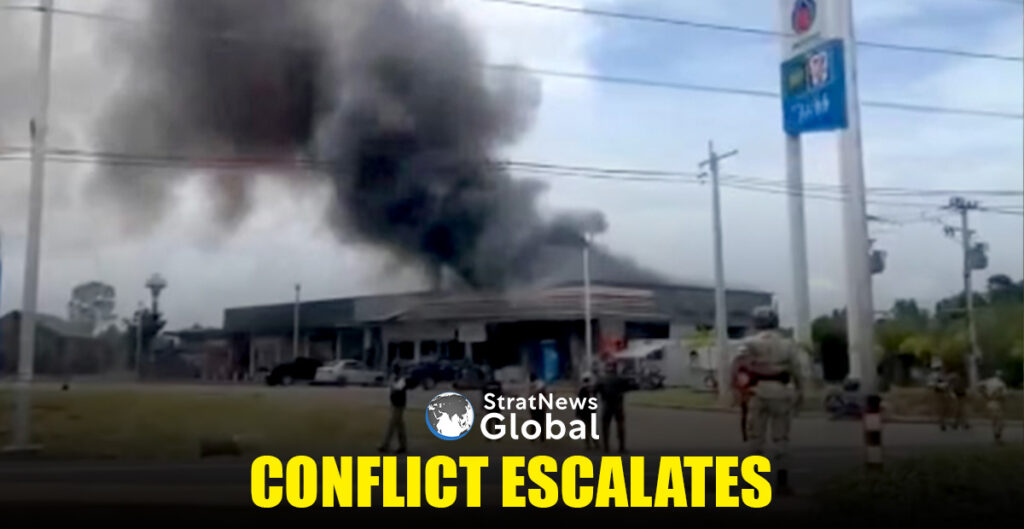
A Thai F-16 fighter jet bombed targets in Cambodia, both countries confirmed, as weeks of border tensions erupted into clashes on Thursday, killing at least 12 people, including 11 civilians.
Of the six F-16 fighter jets that Thailand readied to deploy along the disputed border, one of the aircraft fired into Cambodia and destroyed a military target, the Thai army said. Both countries accused each other of starting the clash early on Thursday.
“We have used air power against military targets as planned,” Thai army deputy spokesperson Richa Suksuwanon told reporters.
Thailand also closed its border with Cambodia.
Cambodia’s defence ministry said the jets dropped two bombs on a road, and that it “strongly condemns the reckless and brutal military aggression of the Kingdom of Thailand against the sovereignty and territorial integrity of Cambodia”.
Escalating Disputes
The skirmishes came after Thailand recalled its ambassador to Cambodia late on Wednesday and said it would expel Cambodia’s envoy in Bangkok, after a second Thai soldier in the space of a week lost a limb to a landmine that Bangkok alleged had been laid recently in the disputed area.
Thailand’s health minister said 11 civilians, including a child, and one soldier were killed in artillery shelling by Cambodian forces, while 24 civilians and seven military personnel were wounded. There was no immediate word of casualties in Cambodia.
“The Thai Army condemns Cambodia for using weapons to attack civilians in Thailand. Thailand is ready to protect sovereignty and our people from inhumane action,” the country’s military said in a statement.
Prime Minister Anwar Ibrahim of Malaysia, the current chair of the Southeast Asian bloc ASEAN, in which Thailand and Cambodia are also members, urged calm and said he would speak to leaders of both countries to peacefully resolve their dispute. China also expressed concern at the fighting and said it was willing to play a role in promoting de-escalation.
Thai residents, including children and the elderly, ran to shelters built of concrete and fortified with sandbags and car tires in the Surin border province.
“How many rounds have been fired? It’s countless,” an unidentified woman told the Thai Public Broadcasting Service (TPBS) while hiding in the shelter as gunfire and explosions were heard intermittently in the background.
‘Unprovoked’ Attacks
Cambodia’s foreign ministry said Thailand’s air strikes were “unprovoked” and called on its neighbour to withdraw its forces and “refrain from any further provocative actions that could escalate the situation”.
For more than a century, Thailand and Cambodia have contested sovereignty at various undemarcated points along their 817-km (508-mile) land border, which has led to skirmishes over several years and at least a dozen deaths, including during a weeklong exchange of artillery in 2011.
Tensions were reignited in May following the killing of a Cambodian soldier during a brief exchange of gunfire, which escalated into a full-blown diplomatic crisis and now has triggered armed clashes.
The clashes began early on Thursday near the disputed Ta Moan Thom temple along the border between Cambodia and Thailand, around 360 km (225 miles) east of the Thai capital, Bangkok.
Thailand’s Health Minister Somsak Thepsuthin told reporters the deaths took place across three border provinces and included an 8-year-old boy in Surin.
He added that the Cambodian shelling included a strike on a hospital in Surin province, which he said should be considered a war crime.
“Artillery shells fell on people’s homes,” Sutthirot Charoenthanasak, district chief of Kabcheing in Surin province, told Reuters, adding authorities had evacuated 40,000 civilians from 86 border villages to safer locations. “Two people have died,” he added.
Video footage showed a plume of thick black smoke rising from a gas station in the neighbouring Thai Sisaket province, as firefighters rushed to extinguish the blaze.
Casualties Reported
A total of eight people have been killed and 15 wounded in Sisaket, the health minister said, adding another person was killed in the border province of Ubon Ratchathani.
The army said Cambodia deployed a surveillance drone before sending troops with heavy weapons, including rocket launchers, to an area near the Ta Moan Thom temple.
A spokesperson for Cambodia’s defence ministry, however, said there had been an unprovoked incursion by Thai troops and Cambodian forces had responded in self-defence.
Thailand’s acting Prime Minister Phumtham Wechayachai said the situation was delicate.
“We have to be careful,” he told reporters. “We will follow international law.”
An attempt by Thailand’s then-premier Paetongtarn Shinawatra to resolve the recent tensions via a call with Cambodia’s influential former Prime Minister Hun Sen, the contents of which were leaked, kicked off a political storm in Thailand, leading to her suspension by a court.
Hun Sen said in a Facebook post that two Cambodian provinces had come under shelling from the Thai military.
Thailand this week accused Cambodia of placing landmines in a disputed area that injured three soldiers. Phnom Penh denied the claim and said the soldiers had veered off agreed routes and triggered a mine left behind from decades of war.
Cambodia has many landmines left over from its civil war decades ago, numbering in the millions according to de-mining groups.
But Thailand maintains that landmines have been placed at the border area recently, which Cambodia has described as baseless allegations.
(With inputs from Reuters)
Russian An-24 Plane Crashes In Far East, All 50 People On Board Feared Dead
A Russian Antonov An-24 passenger plane with around 50 people on board crashed in the country’s far east on Thursday, with all feared dead, according to emergency services officials.
The burning fuselage of the plane, which was made in the Soviet era and was nearly 50 years old, was spotted on the ground by a helicopter, and rescue crews were rushing to the scene.
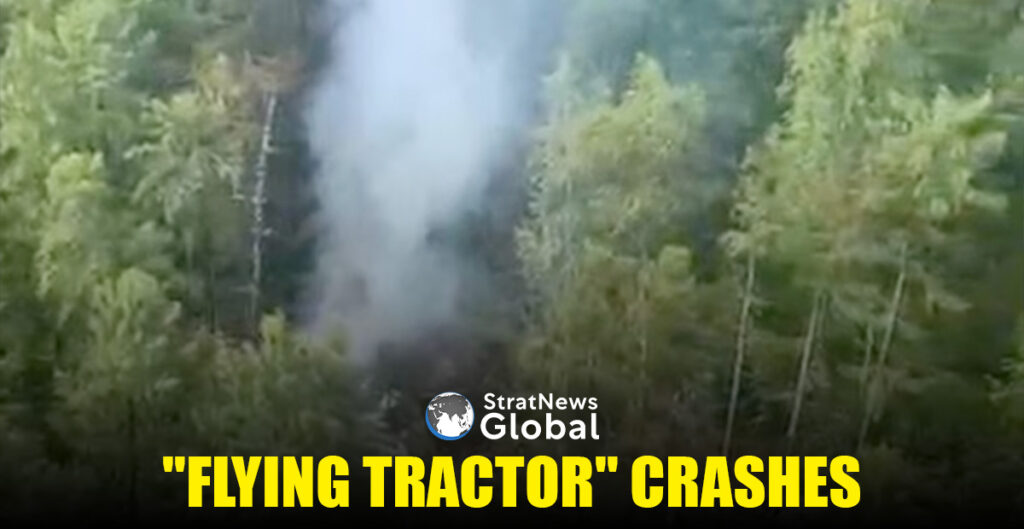
Video shot from a helicopter and posted on social media showed the plane came down in a densely forested area. Pale smoke could be seen rising from the crash site.
The plane was on a flight by a privately owned Siberian-based regional airline called Angara. The aircraft’s tail number showed it was built in 1976 and was operated by Soviet flag carrier Aeroflot before the 1991 collapse of the Soviet Union.
The plane was en route from the city of Blagoveshchensk to Tynda, a remote town and important railway junction in the Amur region bordering China. It dropped off radar screens while preparing to land.
There were 43 passengers, including five children, and six crew members on board, according to preliminary data, Vasily Orlov, the regional governor, said.
The Russian federal government put the number of passengers on board at 42.
Debris from the plane was found on a hill around 15 km (10 miles) from Tynda, the Interfax news agency quoted emergency service officials as saying.
“During the search operation, an Mi-8 helicopter belonging to Rossaviatsiya discovered the fuselage of the aircraft, which was on fire,” the emergency services ministry said on Telegram.
“Rescuers continue to make their way to the scene of the accident.”
A representative from Angara told Reuters they could not offer any more details.
The federal Russian government said it had set up a commission to deal with the aftermath of the crash and authorities announced an investigation into the cause.
The Kremlin said President Vladimir Putin had been notified of the crash.
‘Flying Tractors’
Angara airline is based in the Siberian city of Irkutsk and serves airports in Siberia and Russia’s far east. It operates 10 An-24s built between 1972 and 1976, according to the RussianPlanes web portal.
Angara was one of two Siberian airlines that last year asked the Russian government to extend the service life of the Antonov aircraft, many of which are over 50 years old, as Russian planemakers scramble to plug the gap left by an exodus of foreign manufacturers.
Nicknamed “flying tractors” by some, the propeller-driven An-24s are regarded as reliable workhorses by the Russian aviation industry and are well-suited to the harsh conditions in Siberia, as they are able to operate in sub-zero conditions and don’t have to land on runways.
But airline executives, pilots and industry experts say the cost of maintaining the Antonovs – which make up a fraction of Russia’s fleet of over 1,000 passenger planes – has increased after Western sanctions against Russia over the war in Ukraine hit investment and access to parts.
Many of the planes were due to be retired from service in the coming years, but regional airlines are trying to keep them flying until a replacement enters into service, as they say there is no alternative until then.
Mass production of the new Ladoga aircraft, the same class as the An-24, is not due to begin until 2027 at the earliest.
(With inputs from Reuters)
‘India-UK FTA Is A Political Signal To Move Forward In Defence, Energy’
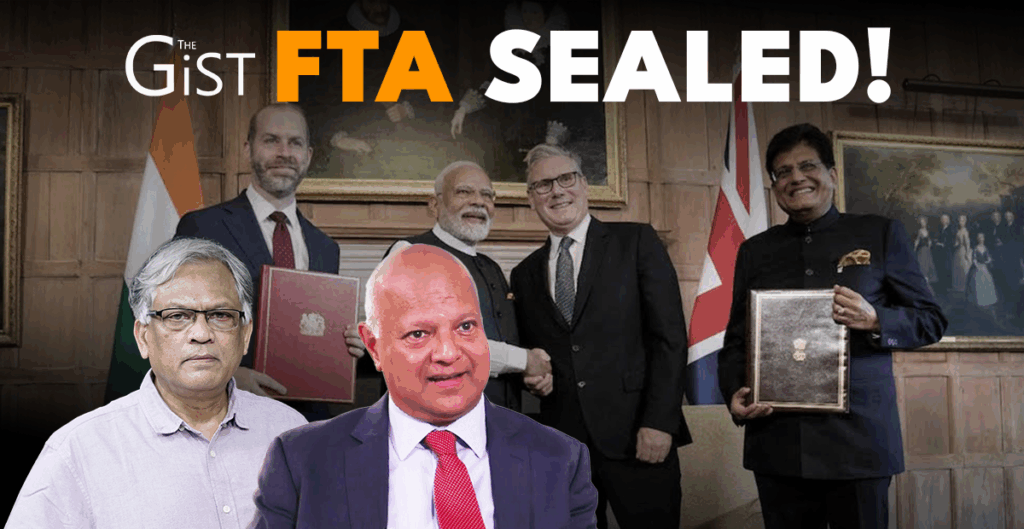
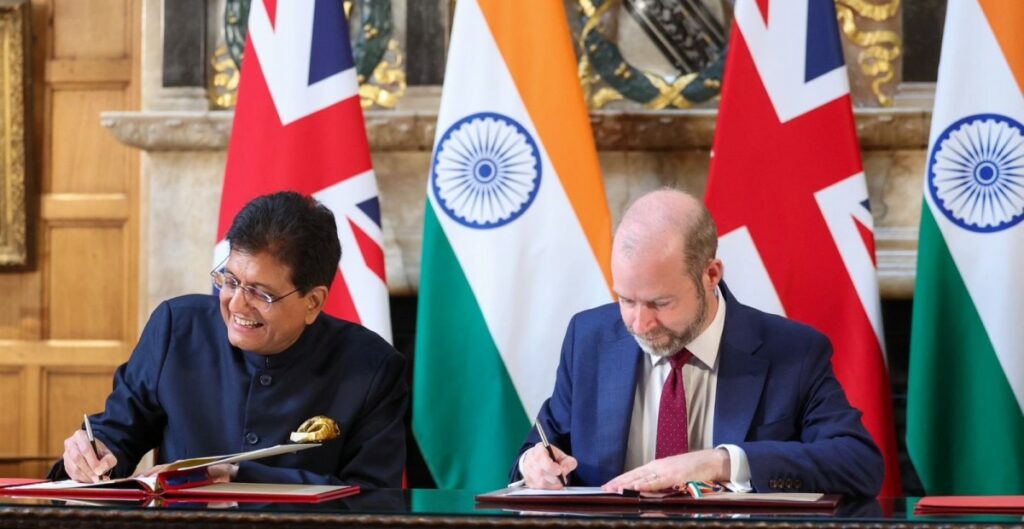
“The deal is now signed, sealed and delivered,” was how UK Prime Minister Keir Starmer described the free trade agreement with India, formalised after three years of negotiations and across two governments.
“This is the first, major trade deal that the UK has signed after Brexit, which took place five years ago,” said Rahul Roy Chaudhury of the International Institute for Strategic Studies in London. “And it is the first significant trade deal that India has signed with the West. Ever. As you know, there was a smaller trade deal, a few years ago with some European, not European countries like Lichtenstein.”
The FTA brings down India’s tariffs for a range of British products including automobiles and whisky. It is expected to boost job growth in the UK (India is among the largest investors in that country) and more than anything else, according to Roy Chaudhury, send a political signal to India.
“There is a momentum now to develop the relationship, to develop greater mutual trust including in areas such as defense, security, technology. And that is why we have today’s announcement for the first time of Vision 2030.”
Chaudhury underscored that “there is a strong possibility of significant defense and security partnerships and deals with India. Not because there are no challenges on the Indian side for foreign OEMs, but the fact that other countries and other companies have actually made tremendous progress in these deals. And so what we argued is that, there needs to be possibly greater risk appetite, by UK, companies in relation to investing in India.”
The last major defence deal between the two countries was 15 years ago when India procured British Hawk jet trainers. While some smaller deals have taken place, UK public limited firms are also not required by their government to do business with countries like India when there may be easier opportunities elsewhere.
Tune in for more in this conversation with Rahul Roy Chaudhury of the International Institute for Strategic Studies in London.
India’s Social Time Bomb Is Ticking
India is undergoing another profound demographic shift. While it is often celebrated as a young country, India has started aging—much faster than what was thought so far.
Declining fertility, atomistic living associated with rapid urbanization and improving age longevity are accelerating this phenomenon.
According to the United Nations Population Fund (UNFPA), the population aged 60 years and above in India is projected to grow to over 347 million by 2050. In other words, a fifth of the population will be a senior citizen.
Is India prepared to deal with this demographic transition, which will unleash profound social and economic consequences?
To answer all this and more, StratNewsGlobal.Tech spoke to Rajit Mehta, CEO Max India and MD and CEO of Antara Senior Health Care on Capital Calculus.
Gaza Suffering Man-Made ‘Mass Starvation,’ Warns WHO Chief Tedros
Gaza is enduring a man-made “mass starvation” due to an aid blockade, Tedros Adhanom Ghebreyesus, chief of the World Health Organisation (WHO), said on Wednesday.
He spoke following an appeal by more than 100 aid agencies warning of hunger in Gaza while tons of food, clean water and medical supplies sit untouched just outside the territory.
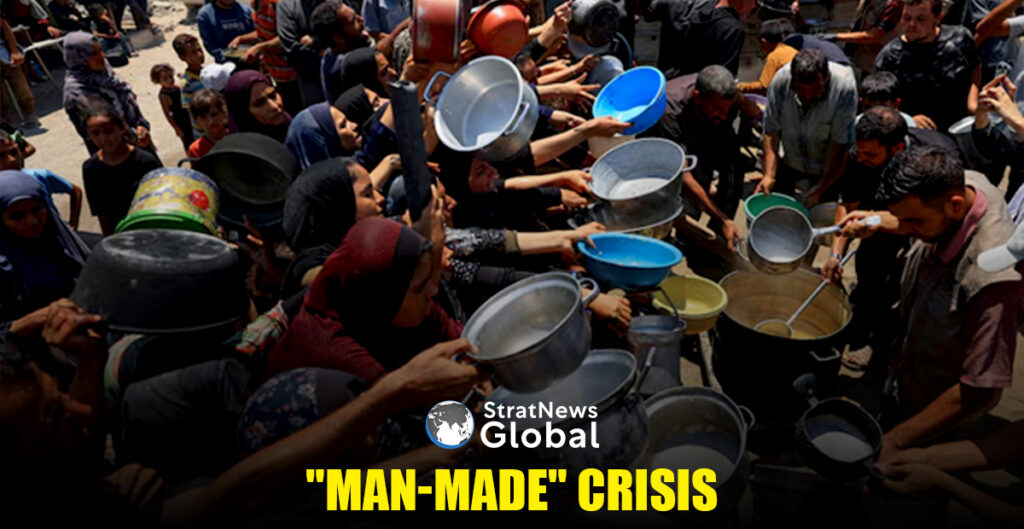
“I don’t know what you would call it other than mass starvation, and it’s man-made, and that’s very clear,” Tedros told a virtual press conference live-streamed from Geneva. “This is because of (the) blockade.”
Gaza’s food stocks have run out since Israel, at war with Palestinian militant group Hamas since October 2023, cut off all supplies to the territory in March and then lifted that blockade in May – but with restrictions that it says are needed to prevent aid from being diverted to militant groups.
As a result, international aid agencies say that only a trickle of what is needed is currently reaching people in Gaza.
Israel says it is committed to allowing in aid but must control it to prevent it from being diverted by militants. It says it has let enough food into Gaza during the war and blames Hamas for the suffering of Gaza’s 2.2 million people.
Starvation Crisis Spirals
Ten more Palestinians died overnight from starvation, the Gaza health ministry said, bringing the total number of people who have starved to death to 111, most of them in recent weeks as a wave of hunger crashes on the Palestinian enclave.
The WHO said the deadly surge in malnutrition has caused the deaths of at least 21 children reported to the agency in 2025, but stressed those figures are likely the tip of the iceberg.
Centres for treating malnutrition are full without sufficient supplies for emergency feeding, the WHO added, as the hunger crisis has been compounded by the collapse of aid pipelines and restrictions on access.
Tedros also said the U.N. and its humanitarian partners were unable to deliver any food for nearly 80 days between March and May, and the resumption of deliveries was still insufficient.
The situation is dire, he and other WHO officials said, with around 10% of people screened experiencing either severe or moderate malnutrition, and up to 20% of pregnant women.
In July alone, 5,100 children have been admitted to malnutrition programmes, including 800 who were severely emaciated, said Rik Peeperkorn, WHO’s representative for the occupied Palestinian territories.
(With inputs from Reuters)
Explained: How India-UK Trade Deal Can Transform Business, Jobs And Economic Ties
India and the United Kingdom have signed a Free Trade Agreement (FTA), also known as the Comprehensive Economic and Trade Agreement (CETA). The signing ceremony, attended by Prime Minister Narendra Modi and UK Prime Minister Keir Starmer in London, capped over two years of negotiations and is the most ambitious trade pact either country has signed in recent times. With this agreement, India and the UK aim to double bilateral trade to $120 billion by 2030.
The agreement promises to eliminate tariffs on 99 per cent of Indian exports to the UK. Besides, it will significantly reduce duties on UK exports entering India. This shift is expected to substantially benefit businesses and consumers on both sides. For India, it opens up access to one of the world’s most valuable and consumer-driven economies. For the UK, it creates a competitive foothold in one of the fastest-growing markets, at a time London is actively forging post-Brexit economic alliances.
Gains For India
India stands to gain from the immediate removal or phased reduction of tariffs across key sectors, particularly labour-intensive industries. Textiles, garments, seafood, gems and jewellery, leather and engineering products will enter the UK at zero or sharply reduced duties, enhancing their competitiveness. The textiles and apparel industry, for example, which has long faced tariff disadvantages compared to Bangladesh and Cambodia, will now benefit from a level playing field. Similarly, Indian seafood exporters, particularly those dealing in shrimp and white fish, will now have duty-free access to the UK market valued at over $5 billion. That will directly support coastal economies in states like Kerala, Andhra Pradesh and Odisha.
Agricultural exporters are expected to benefit from unprecedented access to the UK’s high-value food and beverage market. Products like basmati rice, mangoes, spices, fresh produce and processed foods will now enter the UK with zero tariffs, enabling Indian farmers and agri-businesses to fetch premium prices. These gains are not just about expanding export volumes but also about encouraging value-added production and packaging tailored to international markets. States such as Maharashtra, Punjab, Gujarat and the Northeast stand to see enhanced returns for their local crops and horticulture products.
Perhaps one of the most anticipated aspects of the agreement is the boost it provides for Indian professionals seeking to work in the UK. The deal includes provisions that ease mobility for a wide range of workers—from software engineers and yoga instructors to chefs and teachers. Under the agreement, business visitors, intra-company transferees and independent professionals will find it easier to obtain work permissions and bring their families, who will also have the right to work. These mobility provisions have been hailed as a breakthrough, especially for India’s services sector, which accounts for a significant portion of its export economy.
The CETA also opens new avenues for India’s digital, IT and software services. Indian firms will receive national treatment in sectors such as telecom, construction and environmental services in the UK, and benefit from stronger protections for cross-border data flows and digitally delivered services. This development is particularly important as Indian software exports to the UK—already valued at over $30 billion—are projected to grow at double-digit rates in the coming years.
Gains Tor The UK
For the UK, the agreement provides a gateway into India’s rapidly expanding consumer market. High-end products such as Scotch whisky, British gin, premium automobiles and medical devices will see significant tariff reductions in India, with some duties falling from over 100 per cent to 10 percent over a phased timeline. This could prove particularly advantageous for British manufacturers like Jaguar Land Rover (JLR), which already has a strong brand presence in India. British firms will also gain access to India’s government procurement market and benefit from new investment protections.
The agreement is expected to deliver transformative results for micro, small and medium enterprises (MSMEs) in both countries. In India, MSMEs dominate exports in sectors like leather, textiles and handicrafts. The removal of tariffs will improve their margins and help them compete more effectively against manufacturers from countries that already enjoy free trade access to the UK. The deal also includes provisions for cooperation in trade finance, business matchmaking and regulatory transparency, helping smaller businesses scale operations internationally.
Future-Proofing Trade
One of the standout features of the agreement is its commitment to future-proofing trade. Provisions on standards, digital trade, e-commerce and mutual recognition of professional qualifications ensure that the partnership adapts to emerging business realities. In the pharmaceutical sector, where India is a global leader in generic drugs, the CETA secures zero-duty access for Indian exports while facilitating regulatory collaboration on clinical trials and manufacturing practices. This not only benefits the Indian pharmaceutical industry but also aligns with the UK’s post-pandemic focus on affordable, high-quality healthcare products.
Equally important are the implications for India’s chemicals, plastics, engineering goods and electronics sectors. In each of these areas, India currently supplies only a small share of the UK’s large import demand. For instance, India exports just over $4 billion worth of engineering goods to the UK, while the UK imports nearly $200 billion globally. The CETA is expected to double Indian engineering exports to the UK within five years by removing duties as high as 18 per cent and streamlining customs procedures.
While the agreement has been signed, it is not yet in force. It must still be ratified by both sides—by Parliament in the UK and by the Union Cabinet in India. This process may take up to a year. However, once implemented, the CETA will become a cornerstone of the India–UK economic relationship, providing stability, predictability and a legal framework to foster long-term growth.
Geopolitical Alignment
Beyond the immediate economic benefits, the agreement signals a shift in geopolitical alignment. It demonstrates India’s rising clout as a trade partner of choice and reflects the UK’s strategic pivot toward the Indo-Pacific. It also serves as a blueprint for how future trade agreements can blend market access with worker mobility, innovation and sustainability.
In many ways, the India–UK CETA is more than just a trade pact. It is a partnership for the future—one that connects factories in Ludhiana and Leeds, classrooms in Bengaluru and Birmingham and markets from Surat to Scotland.