

Support us by contributing to StratNewsGlobal on the following UPI ID
ultramodern@hdfcbank

Strategic affairs is our game, South Asia and beyond our playground. Put together by an experienced team led by Nitin A. Gokhale. Our focus is on strategic affairs, foreign policy and international relations, with higher quality reportage, analysis and commentary with new tie-ups across the South Asian region.
You can support our endeavours. Visit us at www.stratnewsglobal.com and follow us on YouTube, Twitter, Facebook and Instagram.
र 500 per month
र 1000 per month
र 5000 per year
र 10000 per year
Donate an amount of your choice
र 500 per month
Donate र 500 per month

र 1000 per month
Donate र 1000 per month
र 5000 per year
Donate र 5,000 per year
र 10000 per year
Donate र 10,000 per year
Donate an amount of your choice
Donate an amount of your choice

Philippines Supreme Court Dismisses Impeachment Complaint Against VP Sara Duterte
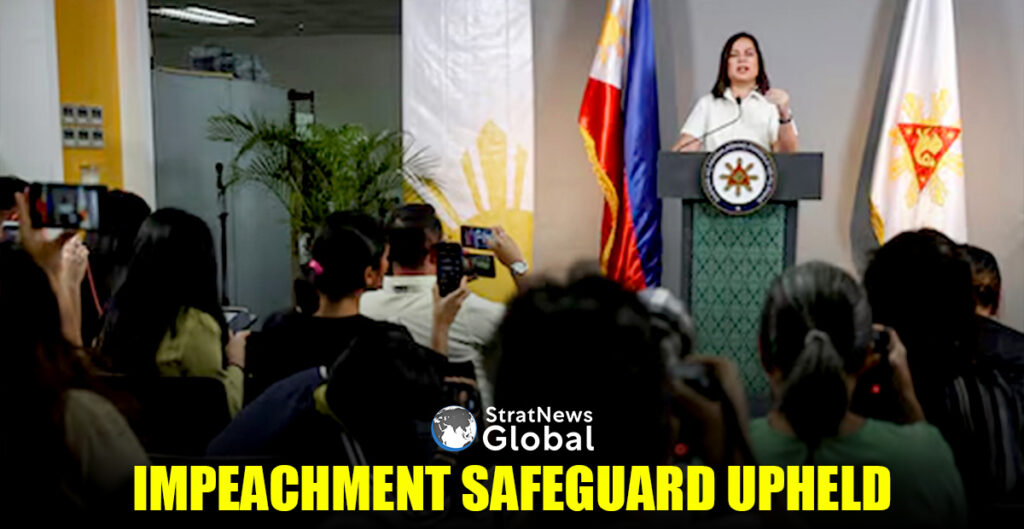
Philippine Vice President Sara Duterte secured a major legal victory on Friday as the Supreme Court ruled an impeachment complaint against her unconstitutional.
The lower house of Congress had impeached Duterte in February, accusing her of misusing public funds, amassing unusual wealth and threatening to kill Philippine President Ferdinand Marcos Jr, the First Lady, and the House Speaker.
The court said it was not absolving Duterte of the charges, but the ruling may nevertheless be a huge boost for her political ambitions.
She is widely seen as a strong contender for the 2028 presidency, which Marcos cannot contest due to a single-term limit for Philippine presidents, but an impeachment trial conviction would have seen her banned from office for life.
Duterte has said the move to impeach her, which came amid a bitter feud with Marcos, was politically motivated.
“This unanimous decision has once again upheld the rule of law and reinforced the constitutional limits against abuse of the impeachment process,” Duterte’s lawyers said in a statement.
Duterte is the daughter of firebrand former President Rodrigo Duterte, who is now in the custody of the International Criminal Court over his bloody war on drugs. He has denied wrongdoing.
Impeachment Safeguard Upheld
In a unanimous decision, the country’s top court agreed with Duterte’s contention that Congress violated a constitutional safeguard against more than one impeachment proceeding against the same official within a year.
More than 200 members of the lower house had endorsed the fourth impeachment complaint to the Senate, having not acted on the first three filings.
“The articles of impeachment, which were the fourth complaint, violated the one-year period ban because there were three complaints that came ahead of it,” Supreme Court spokesperson Camille Ting told a media briefing.
As a result, the Senate then did not have the authority to convene an impeachment tribunal, the court added.
Marcos has distanced himself from the proceedings against his estranged Vice President, saying the government’s executive branch cannot intervene in the matter.
His office said on Friday that the court’s decision must be respected.
A spokesperson for the Senate said the upper chamber was duty-bound to respect the court’s ruling.
There was no immediate comment from members of the House prosecution panel, but a spokesperson for the lower house said that while it respects the court, “its constitutional duty to uphold truth and accountability does not end here.”
The Supreme Court said a fresh complaint could be filed against Duterte once the ban expires.
“We remain prepared to address the allegations at the proper time and before the appropriate forum,” Duterte’s lawyers said.
(With inputs from Reuters)
Debt-Ridden Maldives Welcomes Modi As It Rebuilds Ties With Key Lender
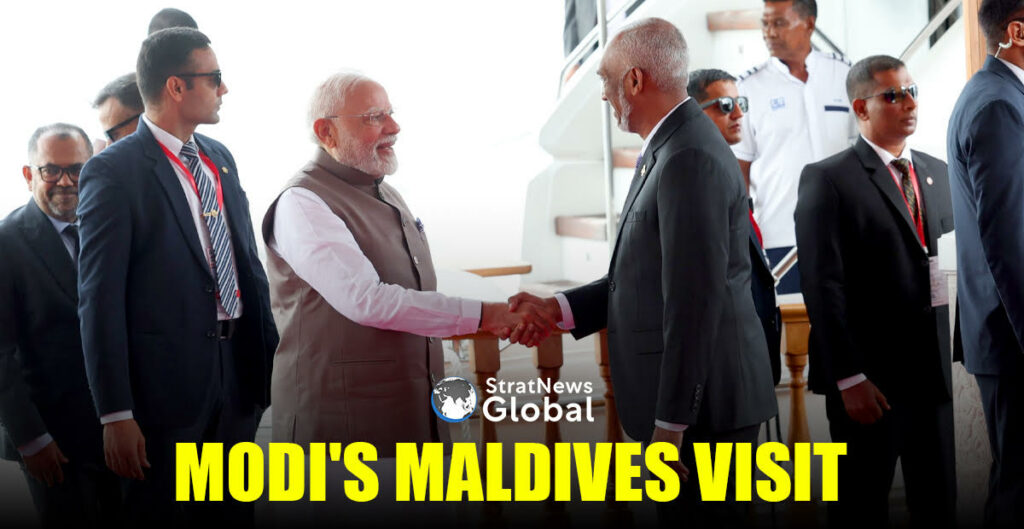
Prime Minister Narendra Modi is set to strengthen India’s development ties with the Maldives during a two-day visit amid ongoing rivalry with China for regional influence.
Modi, who landed in Male on Friday, is the first foreign leader to visit President Mohamed Muizzu after he took office in 2023 with a pledge to end the Maldives’ “India first” policy, and upgraded ties with China.
Muizzu’s moves briefly soured relations with New Delhi, before India helped to prevent the $7.5 billion economy from defaulting on its debt as the Maldives struggled to get tourists to its white-sand beaches and luxury resorts.
Courting Allies, Securing Deals
He has since visited both countries, the Maldives’ main bilateral lenders, to secure financial support, as well as signing trade pacts with China and Turkey and initiating talks with India on a trade agreement and an investment treaty.
Indian Foreign Secretary Vikram Misri said steady diplomacy had helped to rebuild ties.
“There will always be events that will impact or try to intrude on the relationship. But I think this is testimony to the kind of attention that has been paid to the relationship, including attention at the highest levels,” Misri said.
Former Maldives foreign minister Abdulla Shahid told Reuters that Modi’s visit indicated Muizzu had “decided to step back and correct the narrative”.
Line Of Credit
India is expected to extend a line of credit worth $565 million to the Maldives, and talks on a Free Trade Agreement are expected to begin formally.
Modi will also remotely inaugurate an expansion of the International Airport on the island of Hanimadhoo, which India is helping to finance, and attend Saturday’s celebration of the Maldives’ 60th anniversary of independence from Britain.
(With inputs from Reuters)
USAID Finds No Evidence Of Widespread Hamas Theft Of Gaza Aid
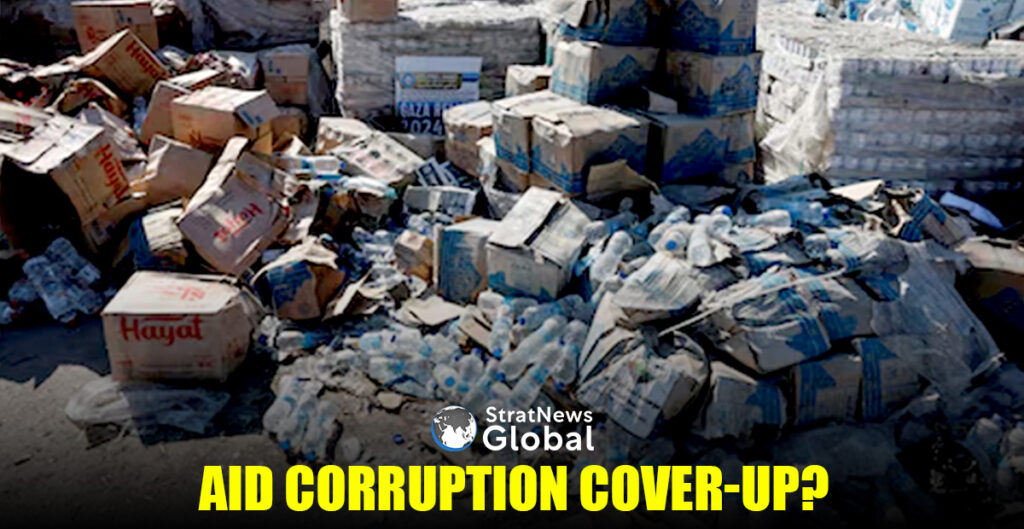
An internal U.S. government review found no proof of systematic theft of American aid by Hamas in Gaza, undermining the key justification for a proposed armed private aid operation backed by Israel and the U.S.
The analysis, which has not been previously reported, was conducted by a bureau within the U.S. Agency for International Development and completed in late June. It examined 156 incidents of theft or loss of U.S.-funded supplies reported by U.S. aid partner organisations between October 2023 and this May.
It found “no reports alleging Hamas” benefited from U.S.-funded supplies, according to a slide presentation of the findings seen by Reuters.
‘Aid Corruption’
A State Department spokesperson disputed the findings, saying there is video evidence of Hamas looting aid, but provided no such videos. The spokesperson also accused traditional humanitarian groups of covering up “aid corruption.”
The findings were shared with the USAID’s inspector general’s office and State Department officials involved in Middle East policy, said two sources familiar with the matter, and come as dire food shortages deepen in the devastated enclave.
Israel says it is committed to allowing in aid but must control it to prevent it from being stolen by Hamas, which it blames for the crisis.
The U.N. World Food Program says nearly a quarter of Gaza’s 2.1 million Palestinians face famine-like conditions, thousands are suffering acute malnutrition, and the World Health Organisation and doctors in the enclave report starvation deaths of children and others.
Deadly Aid
The U.N. also estimates that Israeli forces have killed more than 1,000 people seeking food supplies, the majority near the militarised distribution sites of the Gaza Humanitarian Foundation (GHF), the new private aid group that uses a for-profit U.S. logistics firm run by a former CIA officer and armed U.S. military veterans.
The study was conducted by the Bureau of Humanitarian Assistance (BHA) of USAID, which was the largest funder of assistance to Gaza before the Trump administration froze all U.S. foreign aid in January, terminating thousands of programmes. It has also begun dismantling USAID, whose functions have been folded into the State Department.
The analysis found that at least 44 of the 156 incidents where aid supplies were reported stolen or lost were “either directly or indirectly” due to Israeli military actions, according to the briefing slides.
Israel’s military did not respond to questions about those findings.
The study noted a limitation: because Palestinians who receive aid cannot be vetted, it was possible that U.S.-funded supplies went to administrative officials of Hamas, the Islamist rulers of Gaza.
One source familiar with the study also cautioned that the absence of reports of widespread aid diversion by Hamas “does not mean that diversion has not occurred.”
The war in Gaza began after Hamas attacked Israel in October 2023, killing 1,200 people and capturing 251 hostages, according to Israeli tallies. Nearly 60,000 Palestinians have been killed since the Israeli assault began, according to Palestinian health officials.
‘Hamas Diverts Humanitarian Aid’
Israel, which controls access to Gaza, has said that Hamas steals food supplies from the U.N. and other organisations to use to control the civilian population and boost its finances, including by jacking up the prices of the goods and reselling them to civilians.
Asked about the USAID report, the Israeli military told Reuters that its allegations are based on intelligence reports that Hamas militants seized cargoes by “both covertly and overtly” embedding themselves on aid trucks.
Those reports also show that Hamas has diverted up to 25% of aid supplies to its fighters or sold them to civilians, the Israeli military said, adding that GHF has ended the militants’ control of aid by distributing it directly to civilians.
Hamas denies the allegations. A Hamas security official said that Israel has killed more than 800 Hamas-affiliated police and security guards trying to protect aid vehicles and convoy routes. Their missions were coordinated with the U.N.
Reuters could not independently verify the claims by Hamas and Israel, which have not made public proof that the militants have systematically stolen aid.
GHF also accuses Hamas of massive aid theft in defending its distribution model. The U.N. and other groups have rejected calls by GHF, Israel and the U.S. to cooperate with the foundation, saying it violates international humanitarian principles of neutrality.
In response to a request for comment, GHF referred Reuters to a July 2 Washington Post article that quoted an unidentified Gazan and anonymous Israeli officials as saying Hamas profited from the sales and taxing of pilfered humanitarian aid.
(With inputs from Reuters)
YouTube Generation Drives Japan’s Anti-Foreigner Sentiment Into Mainstream Politics
Yuta Kato is growing increasingly frustrated with foreigners who disregard Japan’s social etiquette, from crowding Tokyo’s upscale Ginza streets to playing loud videos in public.
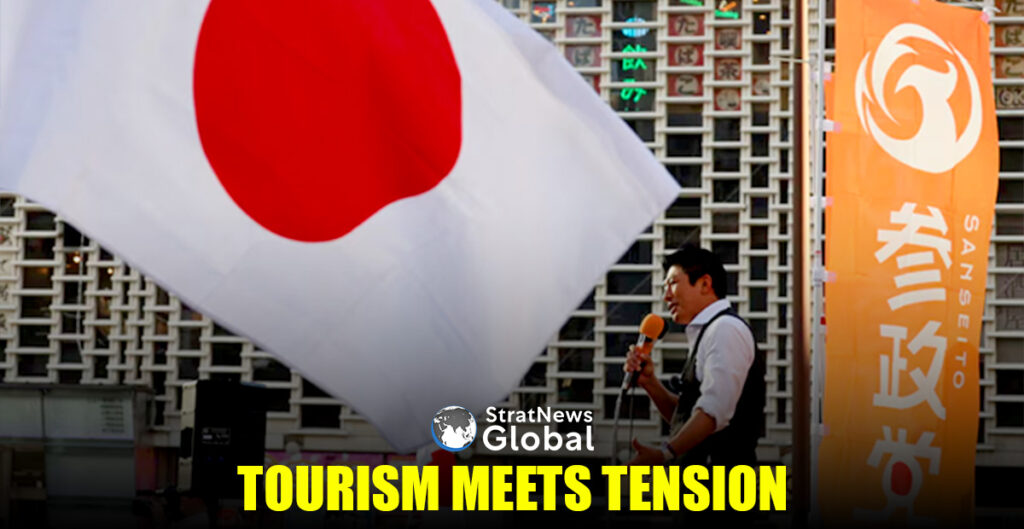
The 38-year-old hairdresser is among a growing number of Japanese voters drawn to the right-wing Sanseito party, whose warnings about foreigners helped it establish a strong foothold in an upper house election on Sunday.
‘Japanese First’
“It is not about discrimination, it’s just like, why don’t they notice?” said Kato, who, like many Sanseito supporters, obtains his information from YouTube and other social media sites, a space the party has utilised to amplify its “Japanese First” message.
Japan’s foreign-born residents account for just 3% of the total population, a fraction of the corresponding proportion in the United States and Europe, but record numbers of tourists in recent years have made foreigners more visible in major cities.
While Sanseito largely avoids identifying specific immigrant groups, Romeo Marcantuoni, a Tokyo-based academic who has studied the party, said it taps into latent concerns ranging from badly-behaved tourists to conspiracy theories about sneaking Chinese influence.
Kato said he believes the Chinese, the biggest cohort of foreign residents in Japan and among the largest visitor groups, are quietly taking over the country. Chinese are also often the focal point for anti-immigrant rhetoric propagated online.
Sanseito leader Sohei Kamiya and other party lawmakers and candidates have raised concerns about Chinese buying up land and resources in Japan. One of the party’s policies listed on its website is to “stop the silent invasion of Japan by foreign forces”.
The party did not immediately respond to a request for comment, and Kamiya has previously denied criticism that it is xenophobic.
Sanseito is most popular among 18 to 39-year-olds, with men favouring the party more than women, according to a poll conducted by public broadcaster NHK, a trend increasingly seen among support for right-wing parties in democracies worldwide.
In contrast, support for Ishiba’s ruling Liberal Democratic Party (LDP), which lost its majority in Sunday’s election, is deepest among those aged over 70 with no clear gender divide, the NHK poll showed.
Sanseito’s presence online has given them visibility among younger voters that the LDP has struggled to reach, Kato said.
The party’s official YouTube channel has three times as many followers as the LDP’s, with engagement in their content far higher than other parties, a study by Asahi newspaper found.
“They are the party of YouTube,” said Jeffrey Hall, a lecturer at Kanda University of International Studies who has authored a book on right-wing politics in Japan.
YouTube did not respond to emails seeking comment on Sanseito’s use of the platform. On its community guidelines page, YouTube says it closely monitors content and removes videos it deems to promote “harmful or dangerous behaviour”.
Broader Appeal
Birthed during the COVID-19 pandemic when they spread conspiracy theories about vaccinations, Sanseito has broadened its appeal with its tough immigration policies and pledges to help households struggling with rising prices.
It also wants to scrap Japan’s pacifist constitution and restore the Emperor’s authority, fringe ideas promoted by other right-wing groups that regularly drive around Japan’s cities in black trucks blaring imperial-era military songs.
While that megaphone politics has long been largely ignored by the Japanese, Sanseito has set its sights on emulating the successes of other far-right groups in Europe, such as Germany’s AfD and Britain’s Reform UK.
At a rally held outside Tokyo’s bustling Shimbashi train station on Monday, crowds clapped and cheered some of Sanseito’s newly elected lawmakers.
“They’re going to get things done,” said Eriko Harada, 47, a housewife wearing a kimono and a headband emblazoned with the words ‘Samurai Spirit’, who said she voted for the first time this year.
Sanseito’s rise has sparked a backlash by those who fear the party is normalising xenophobia. Monday’s rally attracted dozens of protesters who tried to drown out the speakers.
“It is people falling for lies and displacing their frustrations – economic hardship, political alienation – onto others,” said Miroko Kato, a 42-year-old haiku poet among the protestors. “We’re here to say: we’re watching you!”
(With inputs from Reuters)
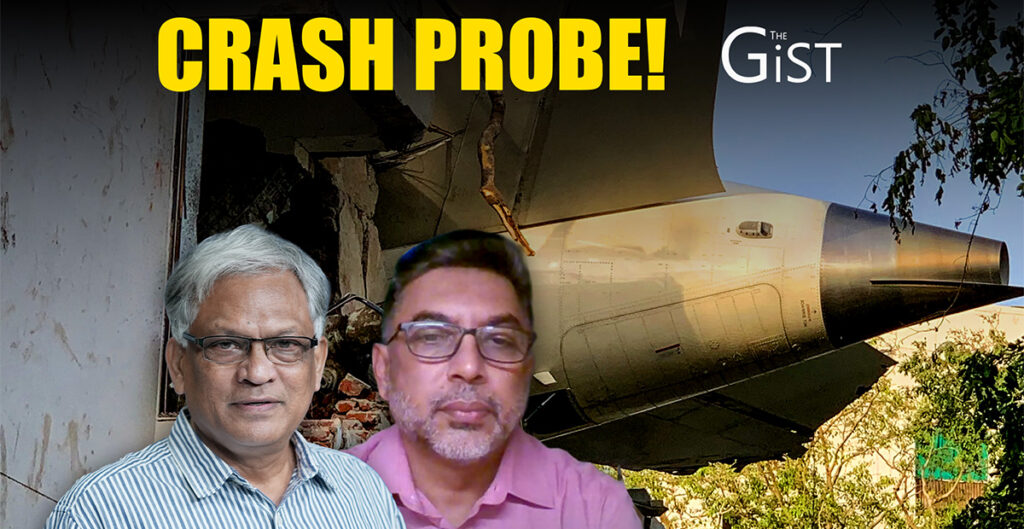
Did Air India Crash Investigation Throw Pilots Under The Bus?
The investigation into the crash of Air India 171 in Ahmedabad on June could take as long as one year, says Capt. Sam Thomas, president of the Airline Pilots Association of India.
In a conversation on The Gist, Capt. Thomas faulted the release of some details by the investigating authorities, which gave the impression that pilot error caused the crash.
“What was released is a marked example of how you could make a document without applying your mind,” he said. “There is a template or a broad guideline under which preliminary reports are released, it is advisory and not mandatory.”
It created an uproar and raised questions in various quarters that pressure from some where resulted in these points being made public.
It didn’t help that while all accident investigations are carried out independently, in India the Accident Investigation Board is under the Civil Aviation Ministry. There is also the tendency of any bureaucracy to want compliant people in charge, regardless of their competence, when sensitive matters are under investigation.
“It led to a lot of angst among the serving pilots,” Capt Thomas said, “is there pressure from say OEMs like Boeing, yes if I were Boeing I would have put even more pressure because that’s their job if I somehow want to extricate myself from here and I throw two Indian pilots under the bus.”
He says in the public mind, the dead pilots may be seen as blameworthy and “since the narrative is already set there’s very little we can do. I don’t see much hope.”
Thomas suspects there was nothing wrong with the switches since these were found in “run” position, meaning on, after the crash. He also called out the excessive secrecy surrounding the investigation.
“Is it some spy game that is going on? Invite journalists, top notch engineers, pilots, everybody … and keep it on camera … you should appear to be doing something transparently.”
Tune in for more in this conversation with Capt Sam Thomas, president of the Airline Pilots Association of India.
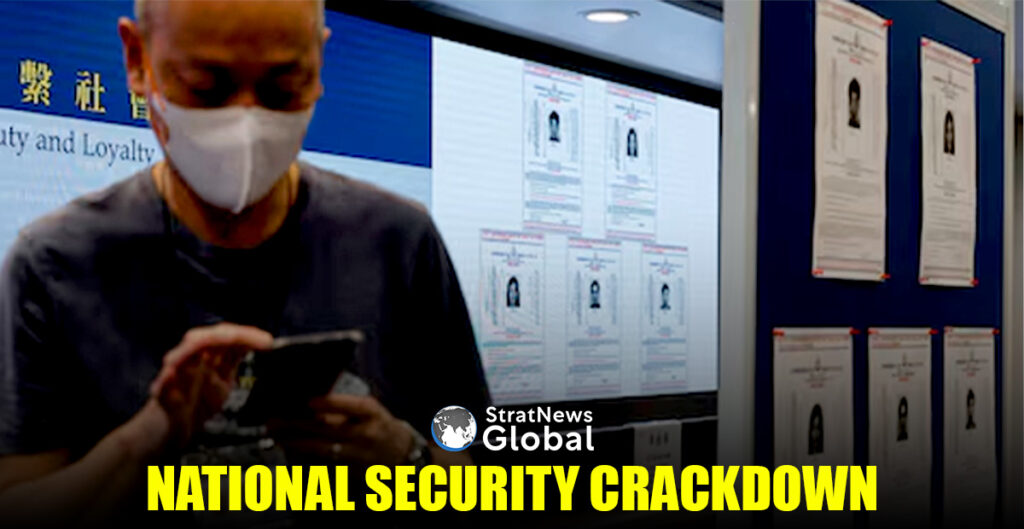
Hong Kong Issues Arrest Warrants For 19 Overseas Activists In Largest National Security Crackdown
The national security police of Hong Kong have issued arrest warrants for 19 overseas-based activists, accusing them of subversion under a sweeping national security law — the largest number targeted in a single announcement to date.
They are accused of organising or participating in the “Hong Kong Parliament”, a group authorities in the Asian financial hub say aimed to subvert state power, under the law Beijing imposed in 2020 following months of pro-democracy protests in 2019.
The activists are accused of having launched a referendum or run as candidates in the unofficial “Hong Kong Parliament” group, which authorities say aims at achieving self-determination and drafting a “Hong Kong constitution”.
Police, who said the organisation sought to overthrow the governments of China and Hong Kong by unlawful means, said they are still investigating and further arrests may follow.
Among those named are businessman Elmer Yuen, commentator Victor Ho, and activists Johnny Fok and Tony Choi. Four of them are subject to previous arrest warrants, each carrying a bounty of HK$1 million ($127,000).
Among the remaining 15, for each of whom police are offering a bounty of HK$200,000 ($25,480), are those said to have organised or run in the election and sworn in as its councillors.
None of the accused could be reached for comment.
Tool To Stifle Dissent
The former British colony returned to Chinese rule in 1997 with the guarantee of a high degree of autonomy, including freedom of speech, under a “one country, two systems” formula.
Critics of the national security law say authorities are using it to stifle dissent.
Chinese and Hong Kong officials have repeatedly said the law was vital to restore stability after the city was rocked for months by sometimes violent anti-government and anti-China protests in 2019.
Police reiterated that national security offences were serious crimes with extraterritorial reach and urged the wanted individuals to return to Hong Kong and surrender.
“If offenders voluntarily give up continuing to violate the crime, turn themselves in, truthfully confess their crimes, or provide key information that helps solve other cases, they may be eligible for reduced punishment,” they said in a statement.
Police also warned that aiding, abetting, or funding others to participate in the “Hong Kong Parliament” could be a criminal offence.
($1=7.8488 Hong Kong dollars)
(With inputs from Reuters)
Thailand’s Polarised Politics Driving Clashes With Cambodia?
The cross-border military duels between Cambodia and Thailand have their roots in Franco-Siamese border treaties signed in the 1900s, that laid out the border between the two countries. So tensions and disagreements go back decades.
What is curious here is the timing of these duels: Thailand’s Prime Minister Paetongtarn Shinawatra was suspended last month following the leak of a phone conversation with Hun Sen, Cambodia’s prime minister.
The leak was courtesy Hun Sen, says The New York Times, where Paetongtarn is heard calling him “Uncle”, promised to “arrange” anything he wanted and seemed to disparage the powerful Thai military, which has been at daggers drawn with her family for years. The army ousted her father Thaksin Shinwatra who was prime minister, in a coup in 2006.
Adding to this cocktail is a report in The Straits Times of Singapore, which notes that Thaksin was an “economic adviser” to Hun Sen in the years following his ouster and exile.
The million dollar question is why would Hun Sen want to leak the details of his phone call with Paetongtarn? Did he want her gone? Has he fallen out with the family?
Do recall that Thaksin is among the richest of Thai politicians with his wealth estimated at over $2 billion.
The Straits Times says the dalliance of the Shinawatra family with Hun Sen is only going to boost the legitimacy of the military, which has a long history of running Thailand. In fact, Thai politics is all about the struggle between pro-democracy parties and a pro-military establishment made up of wealthy elites and a royalist bureaucracy.
Thailand has seen dozens of coups and about 20 constitutions since the end of the absolute monarchy in 1932.
“If snap elections were to take place later this year or next year, conservative parties will hope to ride a wave of nationalist sentiment,” The Straits Times said. In other words, the Pheu Thai party of the Shinawatra family could be defeated with unforseen consequences for them.
The border clashes may die down as they have in the past, the real challenge lies ahead: will a victorious military-backed right wing government seek to snuff out the challenge posed by the Shinawatra family? Will it be amenable for a dialogue with the Cambodians to end these recurrent face-offs? As they say only time will tell.
India-UK Tech Pact Expands Focus To Critical Minerals, Frontier Domains
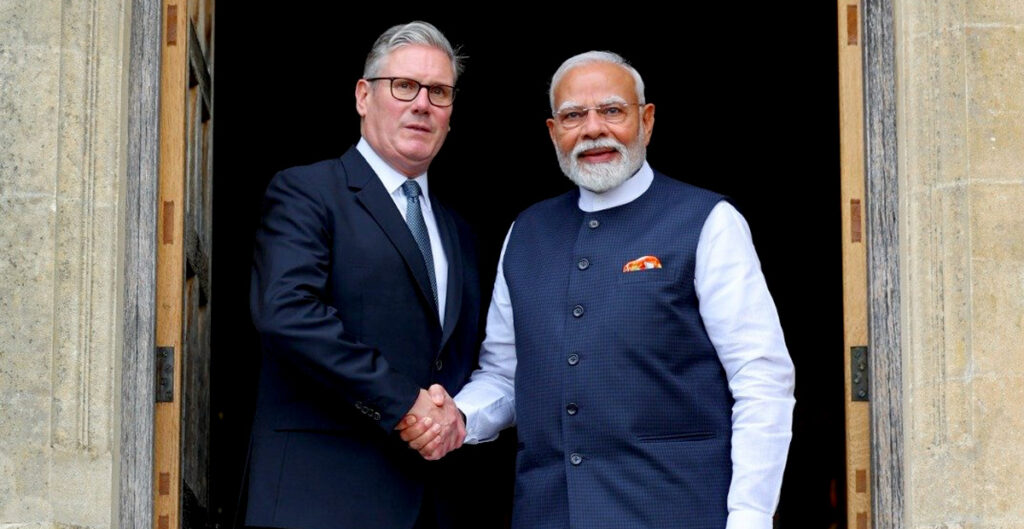
On the first anniversary of the India-UK Technology Security Initiative (TSI), Prime Minister Narendra Modi and his British counterpart Keir Starmer have reaffirmed their vision to harness cutting-edge technologies to fuel economic growth and ensure strategic resilience in an increasingly complex global landscape.
Launched in 2024, the TSI has rapidly evolved into a cornerstone of the India-UK strategic partnership. It has fostered collaboration across high-impact sectors including telecom innovation, artificial intelligence (AI), critical minerals and biotechnology. Both nations have committed to expanding the initiative into new frontier domains, unlocking fresh opportunities for industry, academia, and startups on both sides.
Tech Sovereignty Through Collaboration
Over the past year, the TSI has led to a series of tangible milestones:
• A £7 million joint research programme on Future Telecoms was initiated to advance 5G/6G technologies and establish joint Open RAN testbeds.
• Collaboration between India’s Centre for Development of Telematics (C-DOT) and the UK’s SONIC (Smart RAN Open Network Interoperability Centre) has formalised bilateral engagement in next-generation telecoms innovation and testing.
• The first UK-India AI Conference, held in Bengaluru earlier this year, kickstarted a sustained dialogue on the ethical and responsible deployment of AI technologies.
Critical Minerals Take Centre Stage
One of the standout achievements of the TSI has been the establishment of the UK–India Critical Minerals Supply Chain Observatory, the first of its kind globally. Following the successful completion of its first phase, a second phase backed by £1.8 million in new funding will create the world’s most comprehensive digital infrastructure for tracking and analysing critical mineral supply chains. A new satellite campus at the Indian School of Mines in Dhanbad will further enhance research capacity.
To institutionalise cooperation in this strategic area, both sides have announced the formation of a UK-India Critical Minerals Guild. It will work to reform global financing standards, promote sustainable mining practices and advance recycling and traceability. Emphasising circular economy principles, the partnership aims to secure supply chains essential for semiconductors, batteries and clean energy technologies.
AI, Telecom, Biotech And More
Looking ahead, the TSI will evolve to include:
• A UK-India Joint AI Centre focused on real-world applications of AI in public services, manufacturing and financial services while ensuring trust and transparency.
• The launch of an India-UK Connectivity and Innovation Centre, which will drive research into AI-powered telecom networks, secure 5G and 6G and space-based communications systems. Collaboration will also extend to international telecom standard-setting bodies such as the ITU and 3GPP.
• A deeper push into biotechnology through a potential UK-India BioTech Accelerator that will support innovation in bio-manufacturing, biofoundries, bioprinting and sustainable agriculture.
Parallelly, the two countries are continuing their work on graphene and other 2D materials, further enhancing their shared research agenda in advanced materials and emerging sciences.
Strategic Pillar For National Security
At the heart of the TSI lies a dual commitment: to catalyse economic innovation and reinforce national security in an era marked by geopolitical shifts and technological disruption. The expansion of the initiative into secure-by-design technologies, resilient supply chains and emerging digital infrastructure underscores its growing role in aligning India-UK national security priorities.
Call To Innovators And Industry
Both leaders have invited deeper engagement from start-ups, private sector players and universities, highlighting the TSI as a platform that not only delivers innovation but also scales it with global relevance.
With the TSI entering its next chapter, the India-UK partnership is being positioned not only as a bilateral cooperation model but also as a potential global template for trusted, values-led technology collaboration in the 21st century.
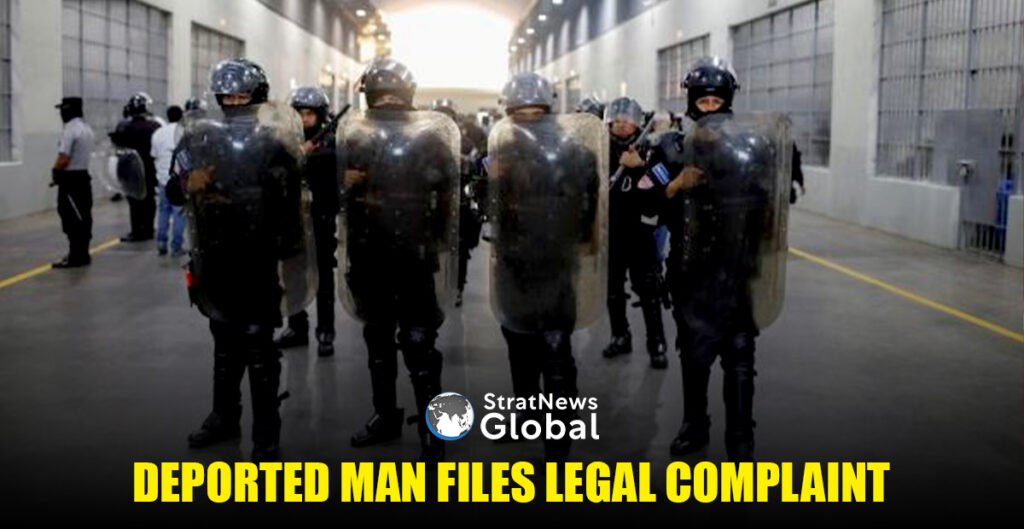
Deported Venezuelan Jailed In El Salvador Lodges Official Complaint Against U.S.
A Venezuelan national submitted an official complaint on Thursday against the U.S. government for deporting him to El Salvador’s most infamous prison, launching a legal approach that could be mirrored by others who claim they were wrongly labeled as gang members by President Donald Trump’s administration.
Neiyerver Adrián Leon Rengel, 27, filed what it called an administrative complaint with the U.S. Department of Homeland Security, contending that federal employees wrongfully removed him from the United States without cause or due process.
Rengel’s complaint, which seeks $1.3 million in monetary damages, is not a lawsuit brought in a court but rather an action filed with the government alleging a violation of law. It is the first of its kind brought by one of the 252 Venezuelan men who were deported by the Trump administration to El Salvador in March.
He invoked the Federal Tort Claims Act, a U.S. law that allows people to sue the U.S. government for wrongful acts committed by federal employees acting within the scope of their employment. Under that law, a complaint must be filed with the appropriate agency before a lawsuit can be brought.
The government now has six months to investigate and respond to Rengel’s complaint. If it denies his claim or fails to respond in that time period, Rengel could then sue in federal court.
Deportation Of Alleged Gang Members
The Republican president, who campaigned in last year’s election on a pledge of mass deportations, in March invoked a 1798 statute called the Alien Enemies Act as part of an effort to quickly deport alleged Venezuelan gang members to El Salvador.
The law authorizes the president to deport, detain or place restrictions on individuals whose primary allegiance is to a foreign power and who might pose a national security risk in wartime. The U.S. government last invoked the Alien Enemies Act, which historically has been employed only during wartime, during World War Two to intern and deport people of Japanese, German and Italian descent.
The Venezuelan deportees were held incommunicado in El Salvador’s maximum security CECOT prison until they were returned to Venezuela last week as part of a prisoner swap between the United States and Venezuela.
‘Wrongly Accused’
Family and friends of some of them said the deportees were not gang members and were wrongly accused based on tattoos, hand gestures and clothing. Venezuelan government officials and deportees have said they were tortured in prison.
Rengel’s lawyers said in the complaint that, because of his tattoos, DHS employees detained him in the parking lot of his apartment in Irving, Texas, and falsely accused him of membership in the Venezuelan Tren de Aragua gang.
Department of Homeland Security spokesperson Tricia McLaughlin in a statement on Thursday reiterated the U.S. government’s claim that Rengel was associated with Tren de Aragua and said he was “deemed a public safety threat.” McLaughlin said Trump and Homeland Security Secretary Kristi Noem “will not allow foreign terrorist enemies to operate in our country and endanger Americans.”
Rengel alleged that, after moving him to a detention center, DHS employees lied to him, telling him he was being sent to Venezuela.
“Instead, for more than four months, Rengel languished in El Salvador – which is not his country of origin and a place where he has no ties – where he suffered physical, verbal and psychological abuse,” the complaint said.
(With inputs from Reuters)
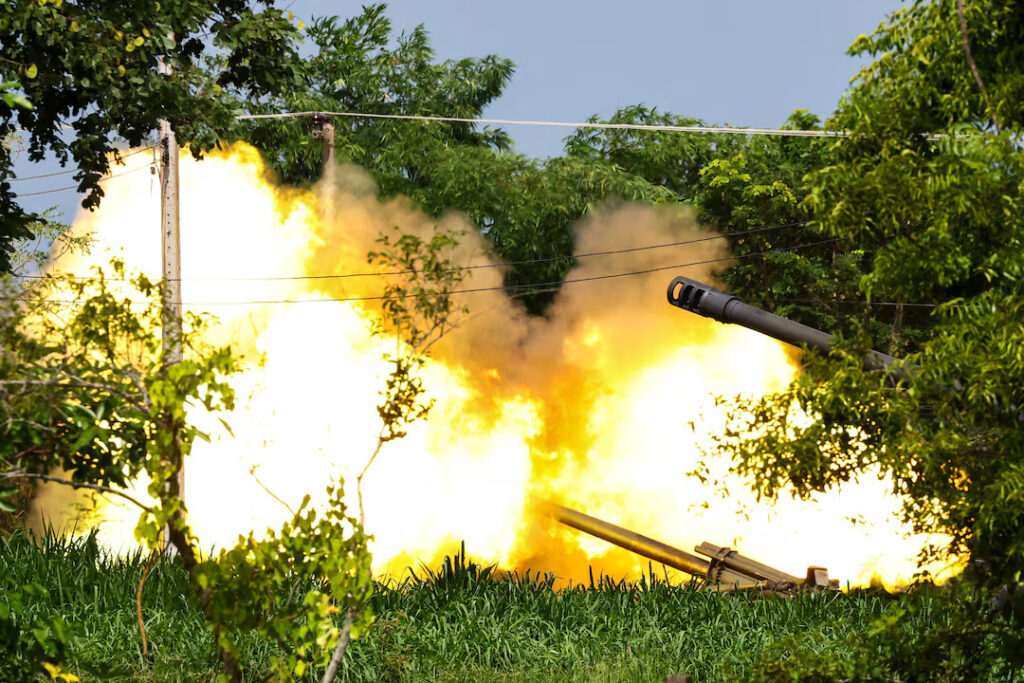
16 Dead As Thailand, Cambodia Trade Heavy Artillery Fire
In a major escalation, Thailand and Cambodia exchanged heavy artillery fire on Friday, marking their worst fighting in over a decade, despite regional and international calls for an immediate ceasefire in the border conflict that has already claimed at least 16 lives.
Thailand’s military reported clashes from before dawn in the Ubon Ratchathani and Surin provinces and said Cambodia had used artillery and Russian-made BM-21 rocket systems. Authorities said 100,000 people had been evacuated from conflict areas on the Thai side.
Thailand-Cambodia Resort To Blames
“Cambodian forces have conducted sustained bombardment utilising heavy weapons, field artillery and BM-21 rocket systems,” the Thai military said in a statement.
“Thai forces have responded with appropriate supporting fire in accordance with the tactical situation.”
Both sides blamed each other for starting the conflict on Thursday at a disputed border area, which quickly escalated from small arms fire to heavy shelling in at least six locations 209 km (130 miles) apart along a frontier where sovereignty has been disputed for more than a century.
Reuters journalists in Surin province reported hearing intermittent bursts of explosions on Friday, amid a heavy presence of armed Thai soldiers along roads and gas stations in the largely agrarian area.
A Thai military convoy, including around a dozen trucks, armoured vehicles and tanks, cut across provincial roads ringed by paddy fields and moved toward the border.
The fighting erupted on Thursday just hours after Thailand recalled its ambassador to Phnom Penh the previous night and expelled Cambodia’s envoy, in response to a second Thai soldier losing a limb to a landmine that Bangkok alleged had been laid recently by rival troops. Cambodia has dismissed that as baseless.
Death Toll Rises
The Thai death toll rose to 15 as of early Friday, 14 of them civilians, according to the health ministry. It said 46 people were wounded, including 15 soldiers.
Cambodia’s national government has not provided details of any casualties or evacuations of civilians. A government spokesperson did not immediately respond to a request for comment on the latest clashes.
Meth Meas Pheakdey, spokesperson for the provincial administration of Cambodia’s Oddar Meanchey province, said one civilian had been killed and five were wounded, with 1,500 families evacuated.
F-16 Jets
Thailand had positioned six F-16 fighter jets on Thursday in a rare combat deployment, one of which was mobilised to strike a Cambodian military target, among measures Cambodia called “reckless and brutal military aggression”.
Thailand’s use of an F-16 underlines its military advantage over Cambodia, which has no fighter aircraft and significantly less defence hardware and personnel, according to the London-based International Institute for Strategic Studies
The United States, a long-time treaty ally of Thailand, called for an “immediate cessation of hostilities, protection of civilians and a peaceful resolution.”
Malaysian Prime Minister Anwar Ibrahim, the chair of the Association of Southeast Asian Nations, of which Thailand and Cambodia are members, said he had spoken to leaders of both countries and urged them to find a peaceful way out.
“I welcome the positive signals and willingness shown by both Bangkok and Phnom Penh to consider this path forward. Malaysia stands ready to assist and facilitate this process in the spirit of ASEAN unity and shared responsibility,” he said in a social media post late on Thursday.
(With inputs from Reuters)