

Support us by contributing to StratNewsGlobal on the following UPI ID
ultramodern@hdfcbank

Strategic affairs is our game, South Asia and beyond our playground. Put together by an experienced team led by Nitin A. Gokhale. Our focus is on strategic affairs, foreign policy and international relations, with higher quality reportage, analysis and commentary with new tie-ups across the South Asian region.
You can support our endeavours. Visit us at www.stratnewsglobal.com and follow us on YouTube, Twitter, Facebook and Instagram.
र 500 per month
र 1000 per month
र 5000 per year
र 10000 per year
Donate an amount of your choice
र 500 per month
Donate र 500 per month

र 1000 per month
Donate र 1000 per month
र 5000 per year
Donate र 5,000 per year
र 10000 per year
Donate र 10,000 per year
Donate an amount of your choice
Donate an amount of your choice


UK To Recognise Palestine Only Via Peace Deal: Starmer
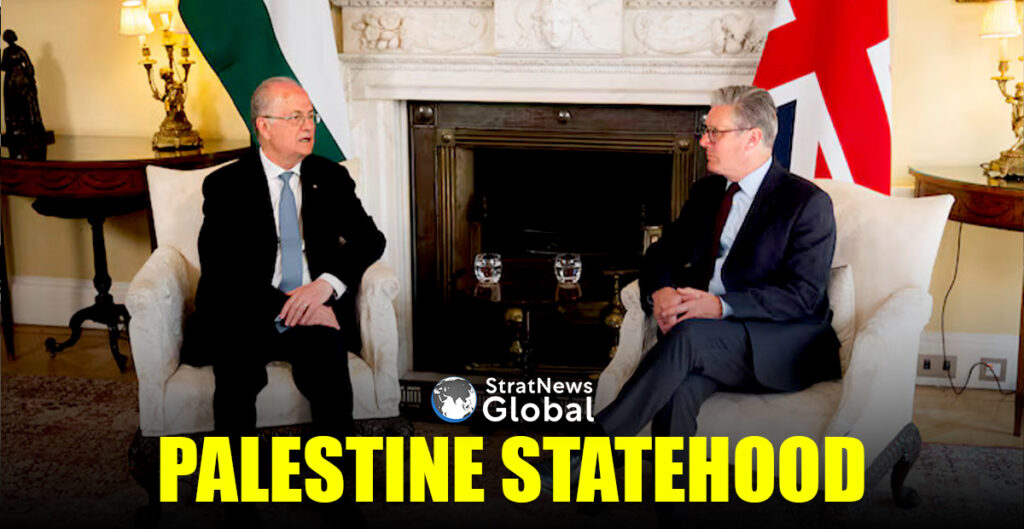
British Prime Minister Keir Starmer on Friday stated that his government would recognise a Palestinian state only as part of a negotiated peace settlement, disappointing many within his Labour Party who had urged him to follow France in taking quicker action.
President Emmanuel Macron said on Thursday France would recognise a Palestinian state, a plan that drew strong condemnation from Israel and the United States, after similar moves from Spain, Norway and Ireland last year.
After discussing with Macron and German Chancellor Friedrich Merz ways to pressure Israel to end its war in Gaza, Starmer said he was focused on the “practical solutions” that he thought would make a real difference to ending the war.
‘Lasting Security For Palestinians And Israelis’
“Recognition of a Palestinian state has to be one of those steps. I am unequivocal about that,” he said. “But it must be part of a wider plan which ultimately results in a two-state solution and lasting security for Palestinians and Israelis.”
Over 220 members of parliament – about a third of lawmakers in the House of Commons and mostly Labour members – wrote to Starmer on Friday urging him to recognise a Palestinian state.
Successive British governments have said they will formally recognise a Palestinian state when the time is right, without ever setting a timetable or specifying the necessary conditions.
‘Too Timid’
London’s Labour Mayor, Sadiq Khan, and Labour lawmakers on parliament’s foreign affairs select committee said this week Britain should recognise a Palestinian state. A government minister, Shabana Mahmood, said doing so would bring “multiple benefits” and send a message to Israel.
Parliament’s foreign affairs committee said on Friday “the government cannot continue to wait for the perfect time because experience shows that there will never be a perfect time”.
One Labour member of parliament told Reuters there was unhappiness with Starmer in the party over the government’s failure to take further diplomatic steps to condemn Israel.
“Most of us are outraged by what is happening in Gaza and think we are being too timid,” the lawmaker said.
The Trump Factor
Starmer’s approach to the issue has been complicated by the arrival in Scotland later on Friday of US President Donald Trump, with whom he has built warm relations.
In foreign policy terms, Britain has rarely diverged from the United States.
“The question becomes one around dependence on the US, and if causing a rift with Washington – which is so closely aligned with Tel Aviv – is something London can afford to do,” said H. A. Hellyer, a senior associate fellow at the Royal United Services Institute in London.
“There is a sense at the highest levels of government in London that the Trump administration could very easily and erratically change tack on issues that the UK is really concerned about.”
(With inputs from Reuters)
Modi In Maldives: A Hug, Haiykolhu, And A Diplomatic Reset
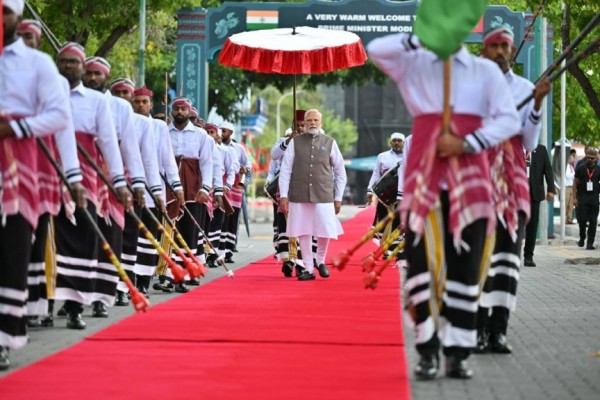
Prime Minister Narendra Modi was warmly received by Maldivian President Dr. Mohamed Muizzu with a hug at Velana International Airport on Friday morning, as he began a two-day state visit to the Maldives.
Foreign Minister Dr. Abdulla Khaleel, and other senior officials were also present to greet Modi at the airport. The visit—Modi’s third and the first by a head of state to the island nation during President Muizzu’s tenure—comes amid efforts by both countries to reset ties following a period of diplomatic strain.
Later in the day, a formal ceremonial welcome was held at Republic Square, where students from Aminiya School presented a cultural performance, followed by a 21-gun salute and a guard of honour from the Maldives National Defence Force.
He was also presented with the traditional ‘Haiykolhu,’ a traditional Maldivian gesture of hospitality and honour by the MDNF, before being escorted to the President’s Office for bilateral talks.
The two sides signed eight agreements during the visit, including a new line of credit and cooperation across several sectors.
These include:
- A negotiation framework to begin talks on an India-Maldives Free Trade Agreement (IMFTA).
- An umbrella line of credit of USD 565 million for infrastructure development, extended through India’s Exim Bank.
- An MoU on easing repayment obligations of existing Indian credit lines.
- An MoU on fisheries and aquaculture cooperation.
- An agreement on the supply of medicines meeting standards set by India’s Pharmacopoeia Commission.
- An MoU on climate and environmental monitoring collaboration.
- An MoU on digital cooperation.
- A network-to-network agreement between India’s NPCI International and the Maldives Monetary Authority to launch India’s Unified Payments Interface (UPI) system in the Maldives.
During the joint press statement following the talks, President Muizzu stressed the importance of India to the Maldivian tourism sector. He stated that both sides had discussed increasing direct flights to boost tourist arrivals from India.
Indians topped the list of visitors to the Maldives between 2020 and 2023, but dropped to sixth place after Muizzu was elected President in November 2023 on an “India out” campaign.
In a social media post earlier this week, Modi said he was honoured to participate in the Independence Day celebrations, and noted that 2025 also marks the 60th anniversary of formal diplomatic relations between the two countries.
Relations between India and the Maldives were strained in the early part of President Muizzu’s term, particularly after remarks made by Maldivian officials and a subsequent backlash over tourism.
However, both sides have since engaged in high-level dialogue to improve ties, including two visits to India by President Muizzu.
IPPF Slams US Plan To Burn $10M Worth Of Contraceptives In France
The International Planned Parenthood Federation (IPPF) on Friday strongly condemned a controversial plan to incinerate US-funded contraceptives worth nearly $10 million in France — a move first reported by Reuters earlier this week — calling it an intentional act that could deprive countless women of essential reproductive healthcare.
The supplies, including contraceptive implants and pills, have been sitting for months in a warehouse in Geel, a city in Belgium’s Antwerp province, after President Donald Trump froze US foreign aid in January. They are now being sent to France for destruction.
IPPF Urges Reconsideration
IPPF called on the French, Belgian and US governments to find a way to save the contraceptives, and on the French company that would be responsible for the destruction “to reconsider its role”.
“This is an intentional act of reproductive coercion,” it said in a statement.
Mexico City Policy
Washington has previously said it did not want any USAID-branded supplies, like the ones in Belgium, to be rerouted elsewhere.
A source familiar with the matter informed Reuters that the Trump administration was implementing the move in line with the Mexico City policy — an anti-abortion agreement that restricts US funding to foreign organisations involved in abortion-related activities — which President Trump had formally reinstated in January, reaffirming his administration’s stance on conservative reproductive health policies.
The State Department also told Reuters that related concerns about the end-destination of the contraceptives were factors in the decision.
The IPPF stated that it had proactively offered to take responsibility for collecting, transporting, repackaging, and distributing the contraceptive products to women in need across the globe — “all at no cost to the US government”.
Despite this comprehensive and humanitarian proposal, the US government reportedly rejected the offer, drawing criticism for prioritising political ideology over the urgent reproductive health needs of vulnerable women worldwide.
(With inputs from Reuters)
Trump Begins Private Scotland Visit Under Epstein Cloud
Amid ongoing questions over his links to disgraced financier Jeffrey Epstein, US President Donald Trump flew to Scotland on Friday for a largely private trip combining golf and politics.
Trump plans to visit his golf resort in Turnberry on Scotland’s west coast, where he will meet British Prime Minister Keir Starmer on Monday, before heading to his sprawling golf property 200 miles (320 km) away near Aberdeen in the east.
As part of the visit, he will open a second 18-hole course on the Aberdeen property named in honor of his mother, Mary Anne MacLeod, who was born and raised on a Scottish island before emigrating to America.
As he left the White House, told reporters that he looked forward to meeting Starmer as well as the Scottish leader John Swinney, who had publicly backed Democratic candidate Kamala Harris in the 2024 US presidential election.
‘Lot Of Love’
“We have a lot of things in Scotland. I have a lot of love – my mother was born in Scotland, and he’s a good man. The Scottish leader is a good man, so I look forward to meeting him,” Trump said.
White House press secretary Karoline Leavitt this week said the trip was intended as a “working visit that will include a bilateral meeting with Prime Minister Starmer to refine the historic US-UK trade deal”.
Epstein Saga
The overseas travel comes as Trump faces the biggest domestic political crisis of his second term in office. Allies and opponents alike have criticized his administration’s handling of investigative files related to Epstein’s criminal charges and the circumstances of his 2019 death in prison.
The issue has caused a rare breach with some of Trump’s most loyal Make America Great Again supporters, and majorities of Americans and Trump’s Republicans say they believe the government is hiding details on the case, according to Reuters/Ipsos polling.
White House officials, frustrated by the ongoing focus on the Epstein saga, are hoping the controversy dies down while Trump is abroad, one person familiar with the matter said.
Deepen Ties
The trip, initially billed as a private visit, gives Trump and Starmer a chance to deepen their already warm relationship, with key issues on the agenda to include ending Russia’s war in Ukraine, British and US sources said.
British officials have been heartened by what they see as a clear shift in Trump’s rhetoric on Ukraine and Russia in recent weeks, a British source said.
The deteriorating situation in Gaza is also likely to come up. Starmer on Thursday said he would hold an emergency call with France and Germany over what he called the “unspeakable and indefensible” suffering and starvation being reported there, and called on Israel to allow aid to enter the Palestinian enclave.
Gaza health authorities say more than 100 people have died from starvation, most of them in recent weeks. Human rights groups have said mass starvation is spreading even as tonnes of food and other supplies sit untouched just outside the territory.
Since being elected last year, Starmer has prioritized good relations with Trump, stressing the importance of Britain’s defence and security alliance with the US and being careful to avoid openly criticizing Trump’s tariff policies.
That approach helped Britain seal the first tariff-reduction deal with the US in May, which reaffirmed quotas and tariff rates on British automobiles and eliminated tariffs on the UK’s aerospace sector, but left steel tariffs in place.
Starmer is expected to press for lower steel tariffs, but sources close to the matter said it was unclear if any breakthrough was possible during Trump’s visit.
Protests
Trump has described Scotland as a “very special place” and made a similar trip there in 2016 during his first run for the presidency, but he will not necessarily get a warm welcome.
About 70% of Scots have an unfavorable opinion, while 18% have a favorable opinion, an Ipsos poll in March found.
Scottish police are girding for protests on Saturday in both Aberdeen and in Edinburgh, the country’s capital.
Trump will return to Britain from September 17-19 for a state visit hosted by King Charles. It will make Trump the first world leader in modern times to undertake two state visits to Britain. The late Queen Elizabeth hosted him at Buckingham Palace for a three-day state visit in June 2019.
(With inputs from Reuters)
Gaza Facing Shortage Of Lifesaving Therapeutic Food For Malnourished Children
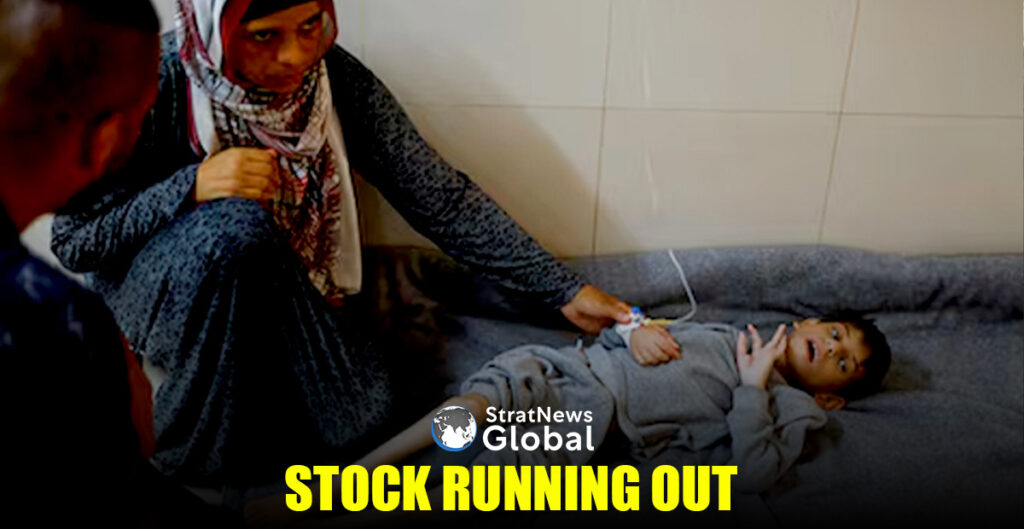
Gaza is nearing a critical shortage of specialised therapeutic food essential for saving severely malnourished children, according to the United Nations and humanitarian agencies.
“We are now facing a dire situation, that we are running out of therapeutic supplies,” said Salim Oweis, a spokesperson for UNICEF in Amman, Jordan, told Reuters on Thursday, saying supplies of Ready-to-Use Therapeutic Food (RUTF), a crucial treatment, would be depleted by mid-August if nothing changed.
“That’s really dangerous for children as they face hunger and malnutrition at the moment,” he added.
Oweis said UNICEF had only enough RUTF left to treat 3,000 children. In the first two weeks of July alone, UNICEF treated 5,000 children facing acute malnutrition in Gaza.
Nutrient-dense, high-calorie RUTF supplies, such as high-energy biscuits and peanut paste enriched with milk powder, are critical for treating severe malnutrition.
“Most malnutrition treatment supplies have been consumed, and what is left at facilities will run out very soon if not replenished,” a World Health Organisation spokesperson said on Thursday.
The WHO said that a programme in Gaza that was aiming to prevent malnutrition among the most vulnerable, including pregnant women and children under five, may have to stop work as it is running out of nutritional supplements.
Stocks Running Out
Gaza’s food stocks have been running out since Israel, at war with Palestinian militant group Hamas since October 2023, cut off all supplies to the territory in March, lifting that blockade in May but with restrictions that it says are needed to prevent aid being diverted to militant groups.
As a result, international aid agencies say that only a trickle of what is needed, including medicine, is currently reaching people in Gaza.
Israel says it is committed to allowing in aid but must control it to prevent it from being diverted by militants. It says it has let enough food into Gaza during the war and blames Hamas for the suffering of Gaza’s 2.2 million people.
COGAT, the Israeli military aid coordination agency, in response to emailed questions on RUTF supplies, said it was working with international organisations to improve the distribution of aid from the crossings where hundreds of aid trucks were waiting.
Save the Children, which runs a clinic that has treated spiking numbers of malnourished children in central Gaza, said it had not been able to bring in its own supplies since February and was relying on United Nations deliveries.
“If they’re going to run out, that’s also going to affect UNICEF partners and other organisations that rely on their supplies to provide that for children,” said Alexandra Saieh, Global Head of Humanitarian Policy and Advocacy at Save the Children.
Malnutrition Crisis Deepens
UNICEF said that from April to mid-July, 20,504 children were admitted with acute malnutrition.
Of those patients, 3,247 were suffering from severe acute malnutrition, nearly triple the number in the first three months of the year. Severe acute malnutrition can lead to death and to long-term physical and mental developmental health problems in children who survive.
The WHO said on Wednesday that 21 children under the age of five were among those who died of malnutrition so far this year.
Two more Palestinians died overnight from starvation, the Gaza health ministry said on Thursday, bringing the total number of people who have starved to death to 113, most of them in recent weeks as a wave of hunger crashes on the Palestinian enclave.
(With inputs from Reuters)
Thailand Rules Out International Mediation In Ongoing Cambodia Conflict
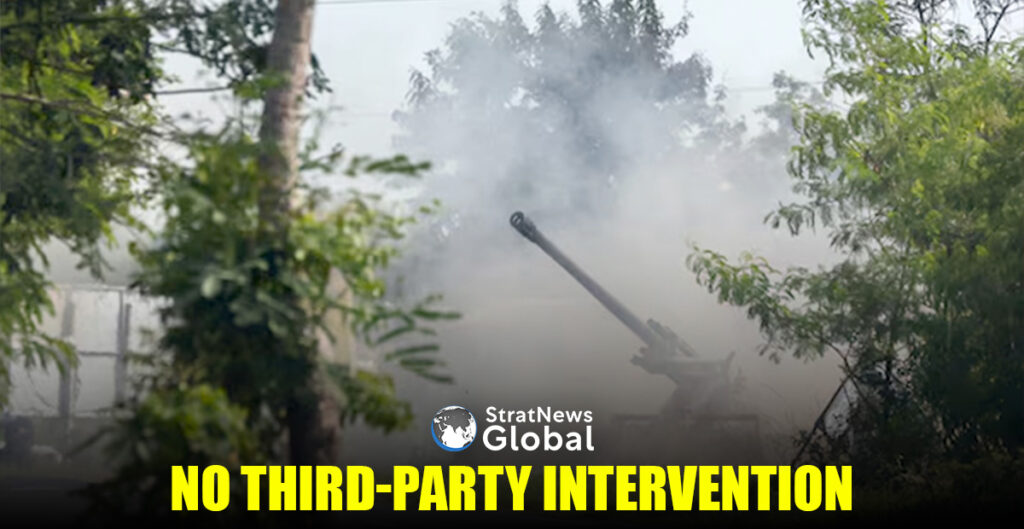
Thailand has dismissed third-party mediation offers to end its conflict with Cambodia, urging Phnom Penh to halt attacks and commit to resolving the issue through bilateral talks, its foreign ministry said on Friday.
Simmering border tensions between Thailand and Cambodia have flared into open hostilities at multiple locations along the frontline, with exchanges of artillery for a second straight day.
At least 16 people, most of them Thai civilians, have died so far in the heaviest fighting between the Southeast Asian neighbours in over a decade.
The United States, China and Malaysia, which is the current chair of the ASEAN regional bloc, have offered to facilitate dialogue, but Bangkok is seeking a bilateral solution to the conflict, Thai foreign ministry spokesperson Nikorndej Balankura told Reuters.
“I don’t think we need any mediation from a third country yet,” Nikorndej said in an interview.
Border Dispute Turns Deadly
Cambodia and Thailand accuse each other of starting the conflict early on Thursday at a disputed site, which quickly escalated from small arms fire to heavy shelling along a border where sovereignty has been disputed for more than a century.
“We stand by our position that a bilateral mechanism is the best way out; this is a confrontation between the two countries,” Nikorndej said, adding that the Cambodian side must stop violence along the border first.
“Our doors are still open.”
Cambodia’s government did not immediately respond to a request for comment. Prime Minister Hun Manet asked the United Nations Security Council on Thursday to convene a meeting on the issue, condemning what he called “unprovoked and premeditated military aggression” by Thailand.
The body has said it will hold a closed-door meeting to discuss the issue on Friday.
The fighting broke out a day after Thailand recalled its ambassador to Phnom Penh on Wednesday and expelled Cambodia’s envoy, in response to landmine explosions that injured Thai soldiers.
Thai authorities allege the mines had been laid recently by Cambodia, a charge dismissed by Phnom Penh as baseless.
ASEAN Urges Peaceful Resolution
Malaysian Prime Minister Anwar Ibrahim, the chair of the 10-nation ASEAN, of which both Thailand and Cambodia are members, said on Thursday he had spoken to the leaders of both countries and urged them to find a peaceful resolution.
“If the ASEAN family wants to facilitate a return to constructive bilateral negotiations, that’s welcome as well,” Nikorndej said.
(With inputs from Reuters)
Iran, European Powers Hold Nuclear Talks Amid Uncertainty Over Future UN Sanctions
Iran pushed back on Friday against extending a U.N. resolution endorsing the 2015 nuclear deal, as it held first in-person talks with European powers since last month’s U.S. and Israeli strikes.
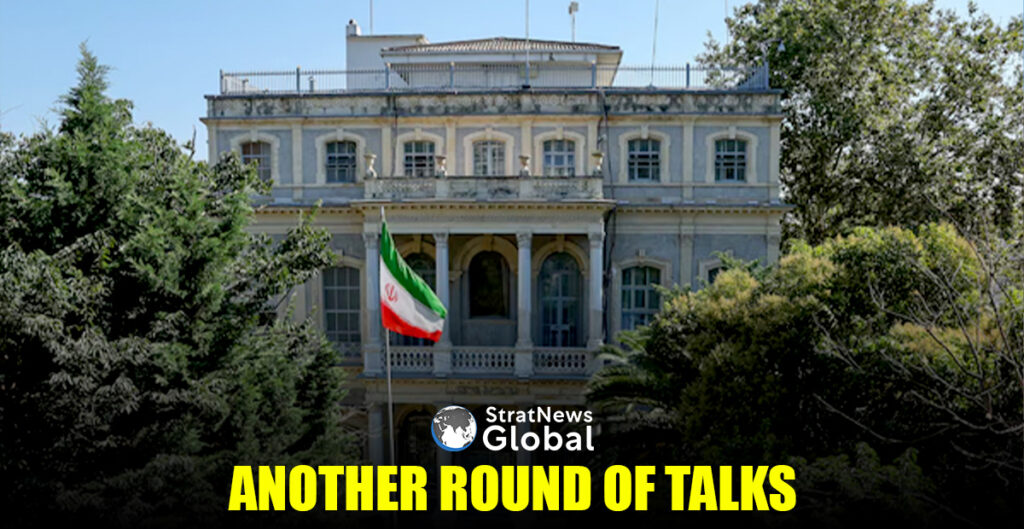
Delegations from Iran, the European Union and the so-called E3 group of France, Britain and Germany arrived at the Iranian consulate in Istanbul for talks that the United Nations nuclear watchdog said could provide an opening to resume inspections.
The European countries, along with China and Russia, are the remaining parties to a 2015 deal – from which the U.S. withdrew in 2018 – that lifted sanctions on Iran in return for restrictions on its nuclear programme.
A deadline of October 18 is fast approaching when the resolution governing that deal expires.
At that point, all U.N. sanctions on Iran will be lifted unless a “snapback” mechanism is triggered at least 30 days before. This would automatically reimpose those sanctions, which target sectors from hydrocarbons to banking and defence.
E3 Sets Deadline
To give time for this to happen, the E3 have set a deadline of the end of August to revive diplomacy. Diplomats say they want Iran to take concrete steps to convince them to extend the deadline by up to six months.
Iran would need to make commitments on key issues, including eventual talks with Washington, full cooperation with the U.N.’s International Atomic Energy Agency (IAEA), and accounting for 400 kg (880 pounds) of near-weapons-grade highly enriched uranium, whose whereabouts are unknown since last month’s strikes.
Minutes before the talks began, Iranian Foreign Ministry spokesperson Esmaeil Baghaei told the state news agency IRNA that Iran considered talk of extending U.N. Security Council Resolution 2231 to be “meaningless and baseless”.
IAEA head Rafael Grossi said he was optimistic that nuclear inspection visits might be able to restart this year and that it was important to discuss the technical details now.
“We need to agree on where to go, how to do it. We need to listen to Iran in terms of what they consider should be the precautions to be taken,” he told reporters in Singapore.
US-Iran Talks
The United States held five rounds of talks with Iran prior to its airstrikes in June, which U.S. President Donald Trump said had “obliterated” a programme that Washington and its ally Israel say is aimed at acquiring a nuclear bomb.
However, NBC News has cited current and former U.S. officials as saying a subsequent U.S. assessment found the strikes destroyed most of one of three targeted nuclear sites, but that the other two were not as badly damaged.
Iran denies seeking a nuclear weapon and says its nuclear programme is meant solely for civilian purposes.
European and Iranian diplomats say there is no prospect of Iran re-engaging with the U.S. at the negotiating table for now.
(With inputs from Reuters)
Trump Says Odds Of Trade Deal With EU Are 50-50 Or Lower
U.S. President Donald Trump said on Friday that the chances of striking a trade agreement with the European Union (EU) were about 50-50, or possibly even lower, adding that Brussels was eager to “make a deal very badly.”
“We’re working very diligently with Europe, the EU,” Trump told reporters as he left the White House to head to Scotland for several days of golfing and bilateral meetings.
“I would say that we have a 50-50 chance, maybe less than that, but a 50-50 chance of making a deal with the EU.”
Asked a second time about the prospects for an agreement, he said: “That’s the big one right now … I think the EU has a pretty good chance of making a deal right now.”
Trade Solutions
The European Commission on Thursday said a negotiated trade solution with the United States was within reach, even as EU members voted to approve counter-tariffs on 93 billion euros ($109 billion) of U.S. goods in case the talks collapse.
The 27-nation bloc’s executive has repeatedly said its primary focus is on reaching a deal to avert the 30% import tariffs that Trump has said the U.S. will apply on August 1.
To get a deal, Trump said the EU would have to “buy down” that tariff rate, although he gave no specifics.
EU diplomats say Washington and Brussels appear to be heading towards a possible deal that would result in a broad 15% tariff on EU goods imported into the U.S., mirroring a framework agreement Washington struck with Japan.
But the White House said discussions of a deal should be considered “speculation”. Trump trade adviser Peter Navarro told Bloomberg News the report from the EU should be taken with “a grain of salt”.
There was little information available about what the EU would offer the United States to secure a deal. One EU diplomat said the bloc was not looking at a pledge of investment in the United States, as Japan has agreed.
(With inputs from Reuters)
Netanyahu And Trump Seem To Drop Gaza Ceasefire Talks With Hamas
Israeli Prime Minister Benjamin Netanyahu and U.S. President Donald Trump on Friday seemed to back away from ceasefire negotiations with Hamas, stating that it was evident the Palestinian terrorists were not interested in reaching an agreement.
Netanyahu said Israel was now considering “alternative” options to achieve its goals of bringing its hostages home from Gaza and ending the rule of Hamas in the territory. Trump said he believed Hamas leaders would now be “hunted down”.
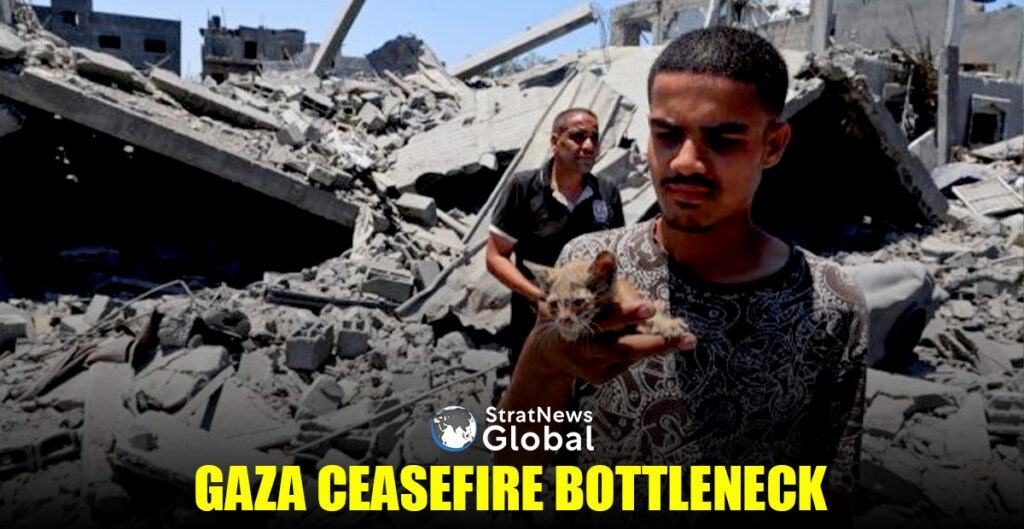
The remarks appeared to leave little to no room, at least in the short term, to resume negotiations to pause the fighting, at a time when international concern is mounting over worsening hunger in war-shattered Gaza.
French President Emmanuel Macron, responding to the deteriorating humanitarian situation in Gaza, announced overnight that Paris would become the first major Western power to recognise an independent Palestinian state. Britain and Germany said they were not yet ready to do so.
Israel and the United States withdrew their delegations on Thursday from the ceasefire talks in Qatar, hours after Hamas submitted its response to a truce proposal.
Hamas To Be Blamed
Sources initially said on Thursday that the Israeli withdrawal was only for consultations and did not necessarily mean the talks had reached a crisis. But Netanyahu’s remarks suggested Israel’s position had hardened overnight.
U.S. envoy Steve Witkoff said overnight that Hamas was to blame for the impasse, and Netanyahu said Witkoff had got it right.
Senior Hamas official Basem Naim said on Facebook that the talks had been constructive, and criticised Witkoff’s remarks as aimed at exerting pressure on Israel’s behalf.
“What we have presented – with full awareness and understanding of the complexity of the situation – we believe could lead to a deal if the enemy had the will to reach one,” he said.
The proposed ceasefire would suspend fighting for 60 days, allow more aid into Gaza, and free some of the 50 remaining hostages held by terrorists in return for Palestinian prisoners jailed in Israel.
It has been held up by disagreement over how far Israel should withdraw its troops and the future beyond the 60 days if no permanent agreement is reached.
Israel’s far-right Finance Minister Bezalel Smotrich said on X: “The humiliating negotiation ceremony with terrorists is over. Mr Prime Minister, now is the time for victory!”
Mass Hunger
International aid organisations say mass hunger has now arrived among Gaza’s 2.2 million people, with stocks running out after Israel cut off all supplies to the territory in March, then reopened it in May but with new restrictions.
The Israeli military said on Friday it had agreed to let countries airdrop aid into Gaza. Hamas dismissed this as a stunt.
“The Gaza Strip does not need flying aerobatics, it needs an open humanitarian corridor and a steady daily flow of aid trucks to save what remains of the lives of besieged, starving civilians,” Ismail Al-Thawabta, director of the Hamas-run Gaza government media office, said.
Gaza medical authorities said nine more Palestinians had died over the past 24 hours from malnutrition or starvation. Dozens have died in the past few weeks as hunger worsens.
Israel says it has let enough food into Gaza and accuses the United Nations of failing to distribute it, in what the Israeli foreign ministry called on Friday “a deliberate ploy to defame Israel”. The United Nations says it is operating as effectively as possible under Israeli restrictions.
United Nations agencies said on Friday that supplies were running out in Gaza of specialised therapeutic food to save the lives of children suffering from severe acute malnutrition.
Israeli Offensives
The ceasefire talks have been accompanied by continuing Israeli offensives on the ground. Palestinian health officials said Israeli airstrikes and gunfire had killed at least 21 people across the enclave on Friday, including five killed in a strike on a school sheltering displaced families in Gaza City.
In Gaza City, residents carried the body of journalist Adam Abu Harbid through the streets wrapped in a white shroud, his blue flak jacket marked PRESS draped across his body. He was killed overnight in a strike on tents housing displaced people.
Mahmoud Awadia, another journalist attending the funeral, said the Israelis were deliberately trying to kill reporters.
“We will stay, we will continue this message of exposing the crimes of the Israeli occupation and its systematic targeting of our journalist colleagues,” he said. Israel denies intentionally targeting journalists.
Israel launched its assault on Gaza after Hamas-led fighters stormed Israeli towns near the border, killing some 1,200 people and capturing 251 hostages on October 7, 2023. Since then, Israeli forces have killed nearly 60,000 people in Gaza, health officials there say, and reduced much of the enclave to ruins.
France Calls For Palestinian Independence
Israel and the United States criticised Macron’s decision to recognise Palestinian independence. Netanyahu called it a “reward for terrorism”.
Western countries have been committed for decades to an eventual independent Palestinian state but have long said it should arise out of a negotiated peace process.
Europe’s two other big powers, Britain and Germany, made clear there were no plans to act on Palestinian statehood right away. Germany has a long history of supporting Israel arising from its guilt in the Nazi Holocaust, while Britain has tried to avoid contradicting U.S. policy in the belief it best exerts influence as Washington’s close ally.
“Israel’s security is of paramount importance to the German government,” a German government spokesperson said. “The German government therefore has no plans to recognise a Palestinian state in the short term.”
Peter Kyle, a minister in Starmer’s cabinet, told Sky News: “We want Palestinian statehood, we desire it… But right now, today, we’ve got to focus on what will ease the suffering, and it is extreme, unwarranted suffering in Gaza that has to be the priority for us today.”
(With inputs from Reuters)
Sudan’s Islamists Eye Post-War Return By Backing Army
Sudan’s ousted Islamist movement may back prolonged army rule as it seeks a political comeback, having deployed fighters during the ongoing conflict, say key members.
In his first media interview in years, Ahmed Haroun, chairman of the former ruling National Congress Party (NCP) and one of four Sudanese wanted by the International Criminal Court, told Reuters that he foresaw the army staying in politics after the war, and that elections could provide a route back to power for his party and the Islamist movement connected to it.
More than two years of war between Sudan’s army and the RSF has caused waves of ethnic killings, famine and massive displacement, drawing in foreign powers and creating what the United Nations has called the world’s biggest humanitarian crisis.
While the RSF remains entrenched in its western stronghold of Darfur and parts of the south, and there is no sign of a stop to the fighting, the army has made major advances in recent months, gains that Islamist operatives say they helped bring about.
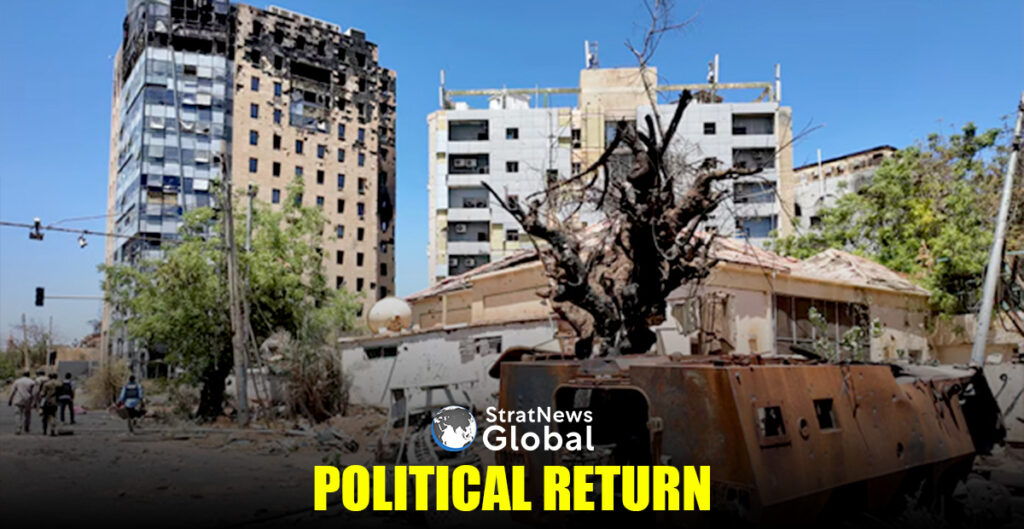
Islamists Eye Political Return
Army leaders and former regime loyalists have played down their relationship, wary of the unpopularity of ousted ex-leader Omar al-Bashir and his NCP allies. But the army’s recent advances have allowed the Islamist movement to entertain a return to a national role, according to accounts from seven of the movement’s members and six military and government sources.
The NCP is rooted in Sudan’s Islamist movement, which was dominant in the early Bashir era during the 1990s when the country hosted Osama bin Laden, but has long abandoned hardline ideology in favour of amassing power and wealth.
The movement’s resurgence could cement the reversal of Sudan’s pro-democracy uprising that began in late 2018, while complicating the country’s ties with regional players suspicious of Islamist influence, including hardening a split with the powerful United Arab Emirates.
In a sign of the trend, several Islamists and their allies have been appointed since last month to the cabinet of Kamil Idris, the technocratic new prime minister named in May by the army.
In response to a request for comment from Reuters, a representative for Sudan’s army leadership said, “some Islamist leaders may want to use the war to return to power, but we say categorically that the army does not ally or coordinate with any political party and does not allow any party to interfere.”
‘Army In Politics’
Haroun, speaking to Reuters late at night from a hideaway without electricity in northern Sudan, said the NCP foresaw a hybrid governing structure in which the army retained sovereign control “until all threats are removed”, while elections brought in civilians to run the government.
“We have taken a strategic decision to not return to power other than by the ballot box after the war,” Haroun, a Bashir ally who escaped from prison at the start of the conflict, said in the interview in late April.
“The Western model is not practical in Sudan,” he said. “We must develop a model for the role of the army in politics, given fragile security and foreign greed, as this won’t be the first or last war in the country.”
A senior army officer suggested that a transitional period run exclusively by the army prior to elections “would not be brief.”
Haroun, wanted by the ICC for alleged involvement in war crimes and genocide in Darfur in the early 2000s — charges he dismisses as political — suggested a referendum to choose which army officer would lead the country.
Factions’ Revival
The revival of Islamist factions began before the outbreak of the war in April 2023, during a period when a transition towards civilian rule was veering off course.
The factions had established deep roots in Sudan’s ruling apparatus and in the army during Bashir’s three decades in power. When army commander General Abdel Fattah al-Burhan, who became head of Sudan’s ruling council shortly after Bashir’s overthrow in 2019, staged a coup two years later, he drew on their support.
The RSF participated in the coup but was suspicious of the Islamists, and as the RSF and the army moved to protect their interests ahead of another planned transition, tensions erupted into warfare.
The RSF quickly seized most of the capital, Khartoum, and made other advances, before the army started to claw back ground, extending its control over eastern and central Sudan.
(With inputs from Reuters)