

Support us by contributing to StratNewsGlobal on the following UPI ID
ultramodern@hdfcbank

Strategic affairs is our game, South Asia and beyond our playground. Put together by an experienced team led by Nitin A. Gokhale. Our focus is on strategic affairs, foreign policy and international relations, with higher quality reportage, analysis and commentary with new tie-ups across the South Asian region.
You can support our endeavours. Visit us at www.stratnewsglobal.com and follow us on YouTube, Twitter, Facebook and Instagram.
र 500 per month
र 1000 per month
र 5000 per year
र 10000 per year
Donate an amount of your choice
र 500 per month
Donate र 500 per month

र 1000 per month
Donate र 1000 per month
र 5000 per year
Donate र 5,000 per year
र 10000 per year
Donate र 10,000 per year
Donate an amount of your choice
Donate an amount of your choice
Pakistan Says Trade Deal With US ‘Very Close’, But Washington Stays Silent On Timeline
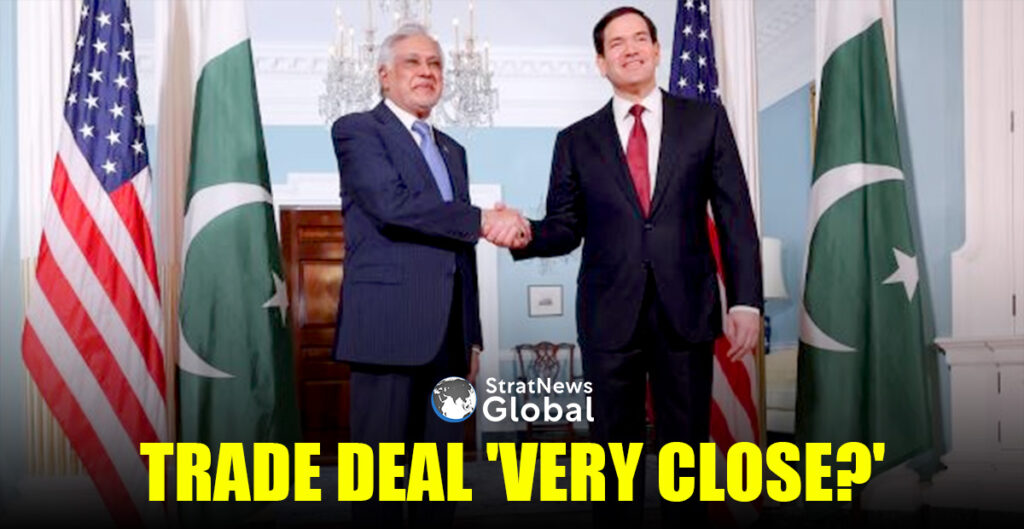
Foreign Minister of Pakistan Ishaq Dar stated on Friday that Islamabad and Washington were “very close” to finalizing a trade agreement, possibly within days. However, after Dar’s meeting with U.S. Secretary of State Marco Rubio, the American side gave no indication of a timeline.
“I think we are very close to finalizing a deal with U.S. Our teams have been here in Washington, discussing, having virtual meetings and a committee has been tasked by the prime minister to fine-tune now,” Dar said in a discussion at the Atlantic Council think tank in Washington.
“It’s not going to be months, not even weeks, I would say (just) days,” he said.
Under U.S. President Donald Trump, Washington has attempted to renegotiate trade agreements with many countries that he threatened with tariffs over what he calls unfair trade relations. Many economists dispute Trump’s characterization.
The U.S. State Department and Pakistan’s foreign ministry, in separate statements after Rubio’s meeting with Dar, said the two stressed in their discussion the importance of expanding trade and ties in critical minerals and mining. A post by Rubio on X after the meeting and the State Department’s statement mentioned no timeline for finalizing a trade deal.
Trump’s ‘Pivotal Role’
The Pakistan foreign ministry also said Dar “appreciated the pivotal role” by Trump and Rubio “in de-escalating tensions between Pakistan and India by facilitating a ceasefire.” The State Department statement did not mention India.
Trump has repeatedly taken credit for the India-Pakistan ceasefire he announced on social media on May 10 after Washington held talks with both sides. India disputes Trump’s claims that the ceasefire resulted from his intervention and trade threats.
India’s position is that New Delhi and Islamabad must resolve problems directly with no outside involvement.
An April 22 terrorist attack in India-administered Kashmir killed 26 men and sparked heavy fighting between the nuclear-armed Asian neighbours in the latest escalation of a decades-old rivalry. India struck Pakistan on May 7 and the two nations exchanged hostilities, killing dozens across three days. The ceasefire was declared on May 10.
New Delhi blamed the April attack on Pakistan, which denied responsibility and called for a neutral investigation. Washington condemned the attack but did not blame Islamabad.
(With inputs from Reuters)
Trump Visits Scotland For Golf And Talks On Potential EU Trade Agreement
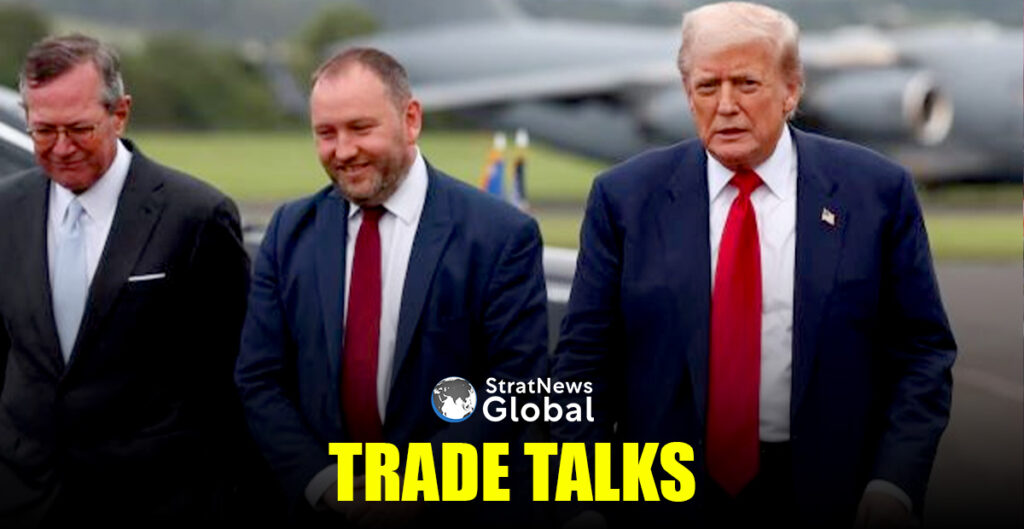
U.S. President Donald Trump, facing scrutiny over his connections to convicted financier and sex offender Jeffrey Epstein, arrived in Scotland on Friday for a round of golf and meetings that may pave the way for a trade agreement with the European Union.
Trump told reporters upon his arrival that he will visit his two golf properties in Scotland and meet with British Prime Minister Keir Starmer and European Commission President Ursula von der Leyen, whom he called a “highly respected woman.”
’50-50 Chance’
As hundreds of onlookers cheered his arrival, Trump repeated his earlier comment about a 50-50 chance of securing a deal with the EU, adding it would be his administration’s biggest trade agreement thus far, if it came together.
However, he said there were still “sticking points” with Brussels on “maybe 20 different things.”
Trump said his meeting with Starmer would be more of a celebration of the trade deal already reached than continued work on it, adding, “It’s a great deal for both.”
Before he left Washington, Trump said his administration was working hard on a possible trade deal with the EU, and Brussels was keen to make a deal. Von der Leyen said later she would meet Trump in Scotland on Sunday.
EU diplomats say a deal could result in a 15% tariff on EU goods, mirroring a framework accord with Japan reached this week and half of the 30% Trump is threatening to impose by August 1.
Trump has sought to reorder the global economy after imposing a 10% tariff on nearly all trading partners in April and threatening sharply higher rates for many countries to kick in a week from now. Trump says the moves will reduce the U.S. trade deficit and bring in extra revenue, but economists warn the new trade policies could drive up inflation.
‘Don’t Talk About Trump’
Trump, facing the biggest domestic political crisis of his second term, expressed frustration about ongoing questions about his administration’s handling of investigative files related to Epstein’s criminal charges and his 2019 death in prison.
“You make it a very big thing over something that’s not a big thing,” Trump told reporters in Scotland, urging them to focus on other prominent Americans with ties to Epstein, including former President Bill Clinton.
“Talk about Clinton. Talk about the former president of Harvard. Talk about all of his friends. Talk about the hedge fund guys that were with him all the time. Don’t talk about Trump,” he said. “What you should be talking about is the fact that we have the greatest six months in the history of a presidency.”
The Epstein issue has caused a rare breach with some of Trump’s most loyal Make America Great Again supporters, and majorities of Americans and Trump’s Republicans say they believe the government is hiding details on the case, according to reports.
White House officials are hoping the controversy dies down while Trump is abroad, two people familiar with the matter said.
Deepen Ties
Trump will stay at his Turnberry property on Scotland’s west coast this weekend, before traveling on Monday to a golf property in Aberdeen, where he will open a second 18-hole course named in honor of his mother, Mary Anne MacLeod. MacLeod was born and raised on a Scottish island before emigrating to the U.S.
As he left the White House, Trump said he looked forward to meeting both Starmer and Scottish leader John Swinney, who had publicly backed Democratic candidate Kamala Harris in the 2024 U.S. presidential election.
The trip gives Trump and Starmer a chance to deepen their already warm ties, with key issues on the agenda to include ending Russia’s war in Ukraine, British and U.S. sources said.
The deteriorating situation in Gaza is also likely to come up. Starmer on Thursday said he would hold an emergency call with France and Germany over what he called the “unspeakable and indefensible” suffering and starvation being reported there, and called on Israel to allow aid to enter the Palestinian enclave.
Gaza health authorities say more than 100 people have died from starvation, most in recent weeks. Human rights groups have said mass starvation is spreading even as tons of food and other supplies sit untouched just outside the territory.
Good Relations
Since being elected last year, Starmer has prioritized good relations with Trump, stressing the importance of Britain’s defence and security alliance with the U.S., while working to clinch the first tariff-reduction deal with the U.S. in May.
The framework agreement reaffirmed quotas and tariff rates on British automobiles and eliminated tariffs on the UK’s aerospace sector, but left steel tariffs in place.
Starmer is expected to press for lower steel tariffs, but sources close to the matter said it was unclear if any breakthrough was possible during Trump’s visit.
Trump has described Scotland as a “very special place” and made a similar trip there in 2016 during his earlier run for the presidency, but he will not necessarily get a warm welcome.
About 70% of Scots have an unfavorable opinion of Trump, while 18% have a favorable opinion, an Ipsos poll in March found.
Scottish police are girding for protests on Saturday in both Aberdeen and in Edinburgh, the country’s capital.
Trump will return to Britain from September 17-19 for a state visit hosted by King Charles. It will make Trump the first world leader in modern times to undertake two state visits to Britain. The late Queen Elizabeth hosted him at Buckingham Palace for a three-day state visit in June 2019.
(With inputs from Reuters)
Fresh Flashpoints Emerge As Thai-Cambodian Border Clashes Enter Third Day
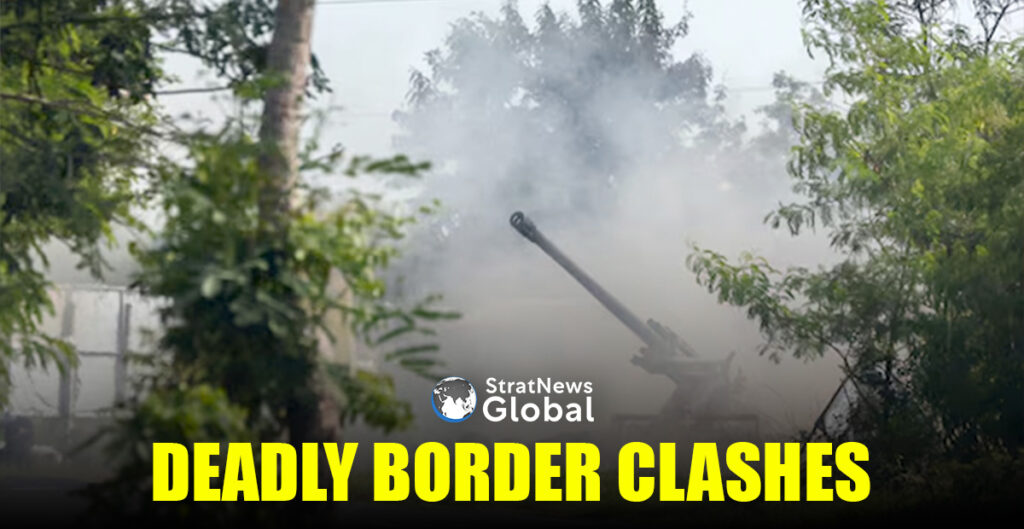
Clashes along the Thai-Cambodian border entered a third consecutive day on Saturday, with fresh flashpoints emerging as both nations sought diplomatic backing, each claiming self-defence and urging the other to halt hostilities and begin negotiations.
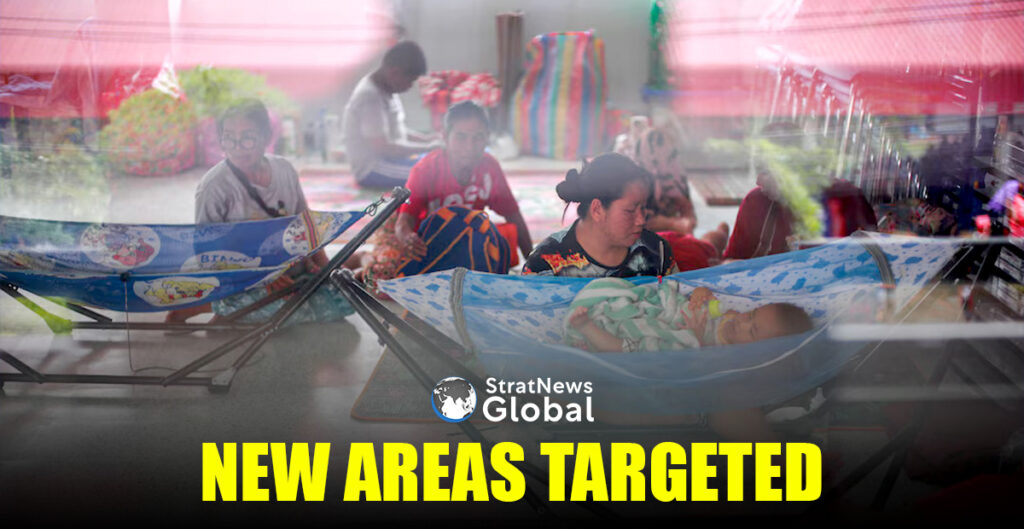
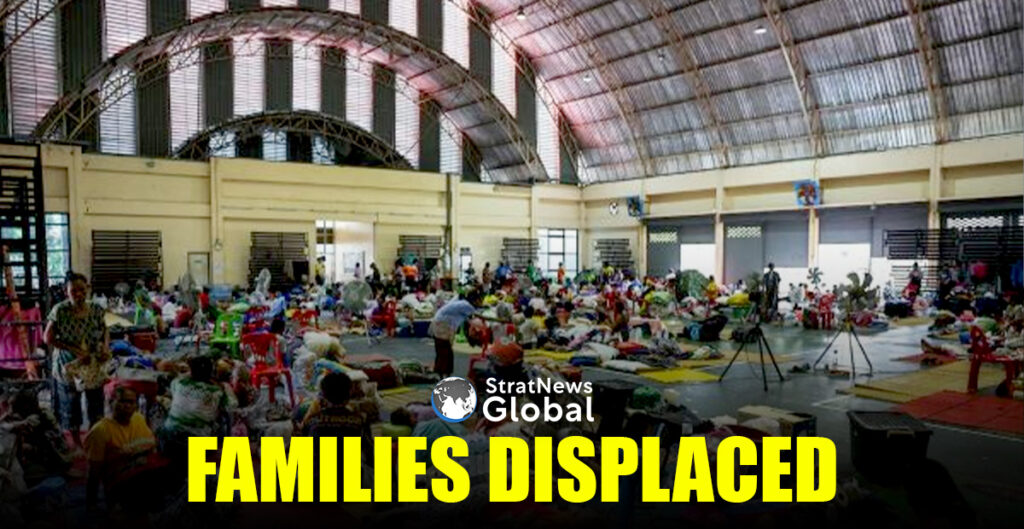
At least 30 people have been killed and more than 130,000 people displaced in the worst fighting between the Southeast Asian neighbours in 13 years.
New Areas Targeted
The Thai navy said there were clashes in the coastal province of Trat early on Saturday, a new front more than 100 km (60 miles) from other conflict points along the long-contested border.
The two countries have faced off since the killing of a Cambodian soldier late in May during a brief skirmish. Troops on both sides of the border were reinforced amid a full-blown diplomatic crisis that brought Thailand’s fragile coalition government to the brink of collapse.
‘Almost A Deserted City’
Thailand’s death toll remained at 19 on Saturday, while Cambodian Defence Ministry spokesperson Maly Socheata said five soldiers and eight civilians had been killed in the fighting. In the Kanthralak district of Thailand’s Sisaket province, on the border near some of the clashes, hotel worker Chianuwat Thalalai said the town had emptied out.
“Nearly everybody’s gone, it’s almost a deserted city,” the 31-year-old told Reuters. “My hotel is still open for some of those nearer to the border area that needs a place to stay.”
Thailand’s ambassador to the United Nations told a Security Council meeting on Friday that soldiers had been injured by newly planted land mines in Thai territory on two occasions since mid-July – claims Cambodia has strongly denied – and said Cambodia had then launched attacks on Thursday morning.
“Thailand urges Cambodia to immediately cease all hostilities and acts of aggression, and resume dialogue in good faith,” Cherdchai Chaivaivid told the council in remarks released to media.
Decades Of Disputes
Cambodia’s defence ministry said Thailand had launched “a deliberate, unprovoked, and unlawful military attack” on Thursday, and was now mobilising troops and military equipment on the border.
“These deliberate military preparations reveal Thailand’s intent to expand its aggression and further violate Cambodia’s sovereignty,” the ministry said in a statement on Saturday.
Cambodia called for the international community to “condemn Thailand’s aggression in the strongest terms” and to prevent an expansion of Thailand’s military activities.
Bangkok Urges Dialogue
Bangkok reiterated it wanted to resolve the dispute bilaterally, telling the Security Council it was “deeply regrettable that Cambodia has deliberately avoided meaningful dialogue and instead sought to internationalise the issue to serve its own political objectives”.
Thailand and Cambodia have bickered for decades over jurisdiction of various undemarcated points along their 817-km (508-mile) land border, with ownership of the ancient Hindu temples Ta Moan Thom and the 11th century Preah Vihear central to the disputes.
Preah Vihear was awarded to Cambodia by the International Court of Justice in 1962, but tension escalated in 2008 after Cambodia attempted to list it as a UNESCO World Heritage site.
That led to skirmishes over several years and at least a dozen deaths.
Cambodia in June said it had asked the court to resolve its disputes with Thailand, which says it has never recognised the court’s jurisdiction and prefers a bilateral approach.
(With inputs from Reuters)
Electric Two Wheelers Need A Bit Of Government Push: Tarun Mehta
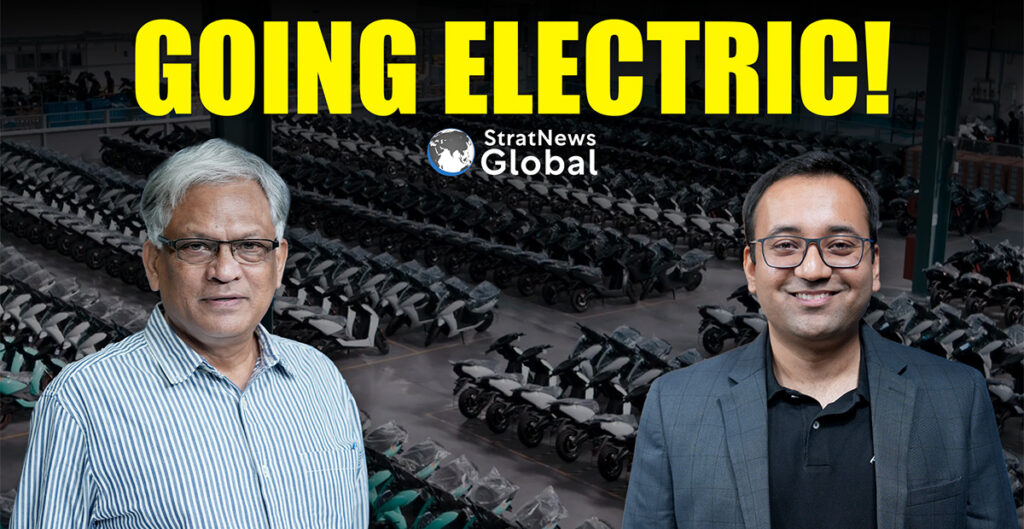
“I think on the demand side we’ve done fantastically well. Today the vast majority of scooter buyers are considering electric when they go into the purchase cycle and almost 20% of them are actually buying electric,” says Tarun Mehta, co-founder and CEO of electric two-wheeler maker Ather Energy.
In an interview on The Gist, Mehta lauded government support for lending a lot of “positive credibility” to the electric vehicle sector thereby giving it “consistent direction”. But he regretted that as a startup, Ather cannot apply for PLI subsidies since these are geared towards manufacturing.
“Despite being one of the largest sources of IP creation and one of the largest producers of electric tools,” PLI has eluded them. In his view, “the entire industry needs a whole bunch of homegrown technology,” and PLI would have been very useful.
“We run one of the largest R&D shops anywhere in the world, we have been pioneers for almost all technology and PLI will allow us to put some of the last pieces in play … we want to export but we don’t get PLI on exports.”
The homegrown technology stack is what distinguishes electric two wheeler makers from the legacy industry. In the former, the technology is grown and owned by them, in the case of the latter, much of their tech has come from Japan: so Hero Honda, Kawasaki Bajaj, TVS Suzuki and so on.
While China has a huge two-wheeler industry of its own, Mehta argues that “China is not interested in e-two wheelers because they want to build public transport and cars. Japan does not really believe in electric … so I think this is a remarkable opportunity for us given the unfolding market for electric vehicles.”
India has a lead here, Mehta says, “I think we are absolutely the leaders and we should maintain this lead going forward, so when it comes to the big guns in India today, the top five manufacturers TVS, Ather, Bajaj, Hero Motocorp and Ola and between us I think we have 80 to 85% of the industry and all have been doing a lot of their own R&D.
Tune in for more in this conversation with Tarun Mehta, co-founder and CEO Ather Energy.
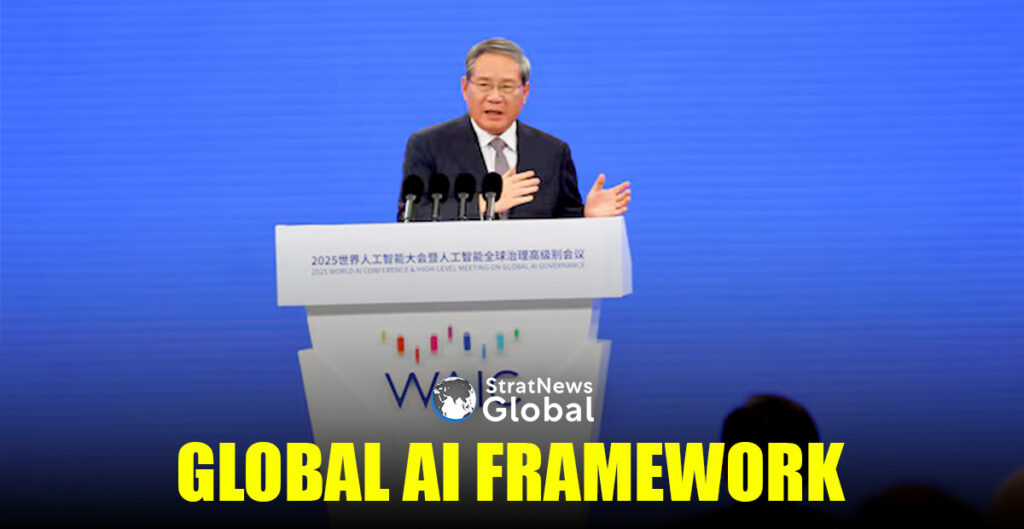
Li Qiang Pushes For AI Cooperation Amid US-China Tech Tensions
In a significant global appeal, Chinese Premier Li Qiang on Saturday urged the formation of an international organisation to enhance cooperation on artificial intelligence (AI), calling on countries to coordinate efforts in the development and security of the rapidly advancing technology.
Speaking at the opening of the annual World Artificial Intelligence Conference (WAIC) in Shanghai, Li called AI a new engine for growth, while adding that governance is fragmented and emphasising the need for greater coordination among countries to form a globally recognised framework for AI.
The three-day event brings together industry leaders and policymakers at a time of escalating technological competition between China and the United States – the world’s two largest economies – with AI emerging as a key battleground.
Global AI Governance Framework ASAP
“Currently, overall global AI governance is still fragmented. Countries have great differences particularly in terms of areas such as regulatory concepts, institutional rules,” Li said.
“We should strengthen coordination to form a global AI governance framework that has broad consensus as soon as possible,” he said.
Washington has imposed export restrictions on advanced technology to China, including the most high-end AI chips made by companies such as Nvidia and chipmaking equipment, citing concerns that the technology could enhance China’s military capabilities.
Despite these restrictions, China has continued making AI breakthroughs that have drawn close scrutiny from US officials.
‘Exclusive Game’
Li did not name the United States in his speech, but he warned that AI could become an “exclusive game” for a few countries and companies, and said challenges included an insufficient supply of AI chips and restrictions on talent exchange.
China wanted to share its development experience and products with other countries, especially those in the Global South, Li said.
WAIC
WAIC is an annual government-sponsored event in Shanghai that typically attracts major industry players, government officials, researchers, and investors.
Tesla CEO Elon Musk, who has in past years regularly appeared at the opening ceremony both in-person and via video, did not speak this year.
Besides forums, the conference also features exhibitions where companies demonstrate their latest innovations.
This year, more than 800 companies are participating, showcasing over 3,000 high-tech products, 40 large language models, 50 AI-powered devices, and 60 intelligent robots, according to organisers.
The exhibition features predominantly Chinese companies, including tech giants Huawei and Alibaba and startups such as humanoid robot maker Unitree. Western participants include Tesla, Alphabet, and Amazon.
(With inputs from Reuters)
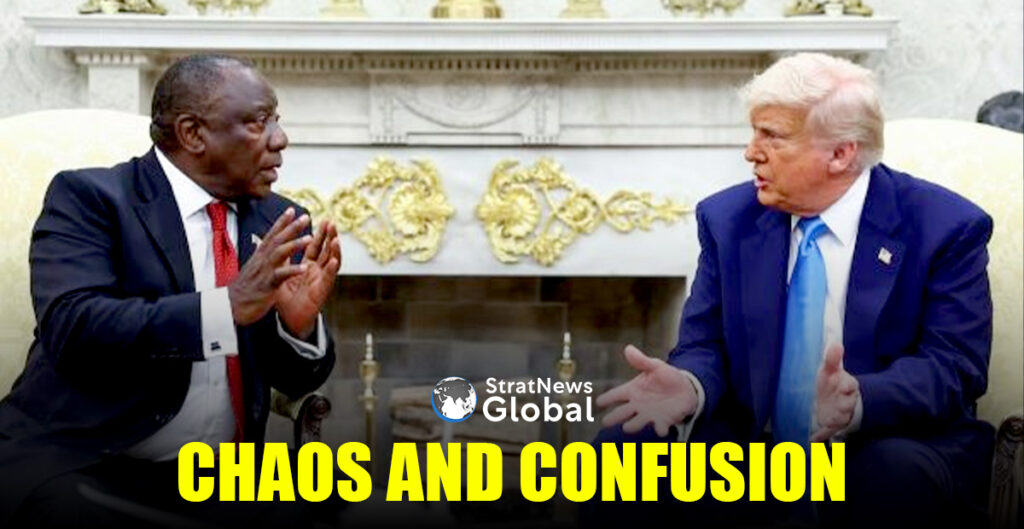
US Refugee Policy For White South Africans Sparks Confusion
Seeking clarity on a controversial US refugee policy, the top official at the US embassy in South Africa reached out to Washington in early July, asking whether non-white applicants could be considered under a programme primarily intended for white South Africans.
President Donald Trump’s February executive order establishing the programme specified that it was for “Afrikaners in South Africa who are victims of unjust racial discrimination,” referring to an ethnic group descended mostly from Dutch settlers.
Whites Only
In a diplomatic cable sent on 8 July, embassy Chargé d’Affaires David Greene asked whether the embassy could process claims from other minority groups claiming race-based discrimination, such as “coloured” South Africans who speak Afrikaans. In South Africa, the term coloured refers to mixed-race people, a classification created by the apartheid regime and still in use today.
The answer came back days later in an email from Spencer Chretien, the highest-ranking official in the State Department’s refugee and migration bureau, stating that the programme is intended for white people.
Reuters was unable to independently verify the precise language in the email, which was described to the news agency by three sources familiar with its contents.
The State Department, responding to a request for comment on 18 July, did not specifically comment on the email or the cable but described the scope of the policy as wider than the guidance in Chretien’s email.
The department said US policy is to consider both Afrikaners and other racial minorities for resettlement, echoing guidance posted on its website in May stating that applicants “must be of Afrikaner ethnicity or be a member of a racial minority in South Africa”.
Chretien declined to comment through a State Department spokesperson. Greene did not respond to Reuters’ requests for comment.
Confusion
The internal back-and-forth between the embassy and the State Department — which hasn’t been previously reported — illustrates the confusion over how to implement a policy designed to help white Afrikaners in a racially diverse country that includes mixed-race people who speak Afrikaans, as well as whites who speak English.
So far, the State Department has resettled 88 South Africans under the programme, including the initial group of 59 who arrived in May. Another 15 are expected to arrive by the end of August, one of the sources said.
Trump, a Republican who recaptured the White House pledging a wide-ranging immigration crackdown, placed an indefinite freeze on refugee admissions from around the world after taking office, stating that the US would only admit refugees who “can fully and appropriately assimilate”.
Weeks later, he issued an executive order that called for the US to resettle Afrikaners, describing them as victims of “violence against racially disfavored landowners,” allegations that echoed far-right claims but which have been contested by South Africa’s government.
Since the executive order, US diplomats working to implement the programme have been deliberating internally about which racial groups could be considered eligible, one of the sources said.
In the 8 July cable, Greene laid out a summary of the different ethnic and racial groups in the country before seeking guidance on eligibility. In addition to Afrikaners and mixed-race South Africans, Greene mentioned indigenous South Africans known as the Khoisan people.
He said that members of the Jewish community had also expressed interest, but that in South Africa they are considered a religious minority and not a racial group.
“In the absence of other guidance, [the US embassy] intends to give consideration to well-founded claims of persecution based on race for other racial minorities,” Greene wrote.
At least one family identified as coloured has already travelled to the US as refugees, two people familiar with the matter said.
The cable forced the administration to clarify its position on whether the policy is for whites only, and if it does include other aggrieved minorities, who would qualify, two of the people familiar with the matter said.
Chretien, a conservative who wrote op-eds promoting the Heritage Foundation’s “Project 2025” plan to overhaul the federal government, is the senior official at the State Department’s Bureau of Population, Refugees, and Migration.
Apartheid And Race Distribution
During the apartheid era, which ended with the first democratic elections in 1994, South Africa maintained a racially segregated society with separate schools, neighbourhoods and public facilities for people classified as Black, coloured, white or Asian.
Blacks make up 81% of South Africa’s population, according to 2022 census data. Coloured South Africans make up 8%, and Indians 3%. Afrikaners and other white South Africans constitute 7% of the population but own three-quarters of the privately held land in the country.
Trump Downplays Preferential Treatment
When asked about the programme in May, Trump said he was not giving Afrikaners preferential treatment because they are white.
“They happen to be white, but whether they are white or Black makes no difference to me,” he said.
In response to a request for comment, a White House official said the administration’s policy reflected Trump’s executive order.
“We will prioritise refugee admissions for South African citizens, including Afrikaners and other racial minorities in South Africa, who have been targeted by the discriminatory laws of the South African government,” the official said.
The assertion that minority white South Africans face discrimination from the Black majority has spread in far-right circles for years and been echoed by white South African-born Elon Musk, a US citizen who served as a top White House aide during the first four months of Trump’s administration.
The South African government has rejected the allegations of persecution and a “white genocide.” There is no evidence to back up claims of widespread, race-based attacks in the country.
During a combative Oval Office meeting with South African President Cyril Ramaphosa in May, Trump showed a printed image of a Reuters video taken in the Democratic Republic of Congo as part of what he falsely presented as evidence of mass killings of white South Africans.
The South African Chamber of Commerce said earlier this year that 67,000 people were interested in the programme.
(With inputs from Reuters)
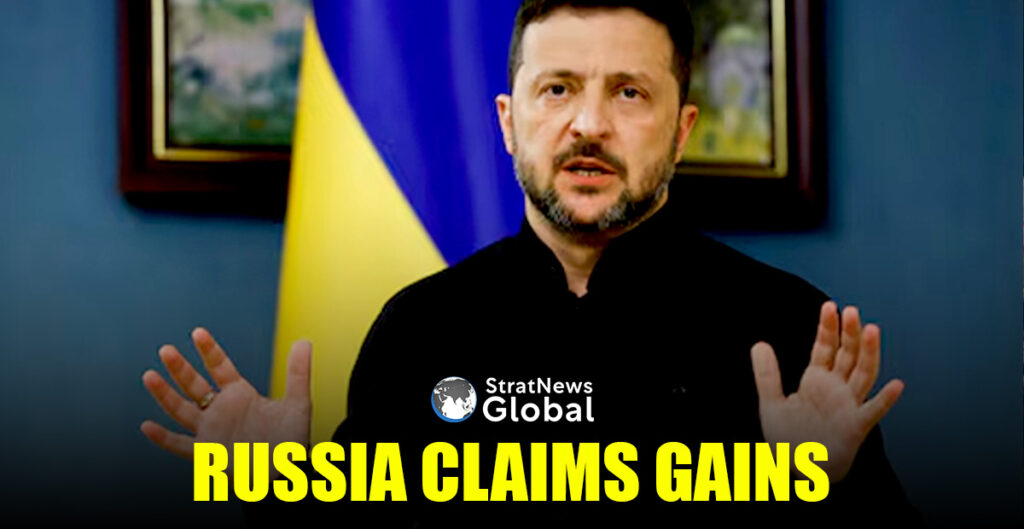
Ukraine: Fierce Fighting Around Pokrovsk, Says Zelenskyy
President Volodymyr Zelenskyy said on Friday that Ukrainian forces were facing fierce fighting around the city of Pokrovsk in the east, a logistics hub near which Russia has been announcing the capture of villages on an almost daily basis.
Zelenskyy, speaking in his nightly video address, said Ukraine’s top commander, Oleksandr Syrskyi, told a meeting of senior officials that the situation around Pokrovsk was the current focal point of its attention in the war, which began when Russia invaded in February 2022.
“All operational directions were covered, with particular focus on Pokrovsk. It receives the most attention,” Zelenskyy said.
Ukrainian forces, he said, were also “continuing to act” in border areas in the northern Sumy region, where Russian troops have gained a foothold in recent weeks.
Russia Paying ‘Maximum Price’
Syrskyi, in a separate report on the Telegram messaging app, described Pokrovsk and five other sectors as among the most difficult theatres along the 1,000-km (620-mile) front.
“The Russian Federation is paying the maximum price for attempting a ‘summer offensive’,” Syrskyi wrote.
Russian forces have for months been trying to close in on Pokrovsk, a road and rail hub whose pre-war population of about 60,000 has been all but evacuated.
Syrskyi in May reported that Kyiv’s troops had stabilised the situation around the town, also the site of the only colliery in Ukraine producing coking coal for the country’s steel industry.
Russia Claims Gains, Ukraine Yet To Acknowledge
Russia’s Defence Ministry on Thursday announced the capture of two villages on either side of Pokrovsk — Zvirove to the west and Novoekonomichne to the east. A third village near the city — Novotoretske — was declared by Moscow to be “liberated” earlier in the week.
Ukrainian officials have made no acknowledgement that the villages have changed hands. The General Staff of Ukraine’s military said in an evening report that two of them — Zvirove and Novoekonomichne – were in areas where Russian troops were trying to penetrate Ukrainian defences.
In Sumy region, where Russian troops are trying to establish what Kremlin leader Vladimir Putin calls a “buffer zone”, the popular Ukrainian military blog DeepState said Kyiv’s forces had retaken a previously lost village.
DeepState, which relies on open source reports to track the presence of Russian forces, said Ukrainian troops had restored control over the village of Kindrativka. There was no official comment from either side.
(With inputs from Reuters)
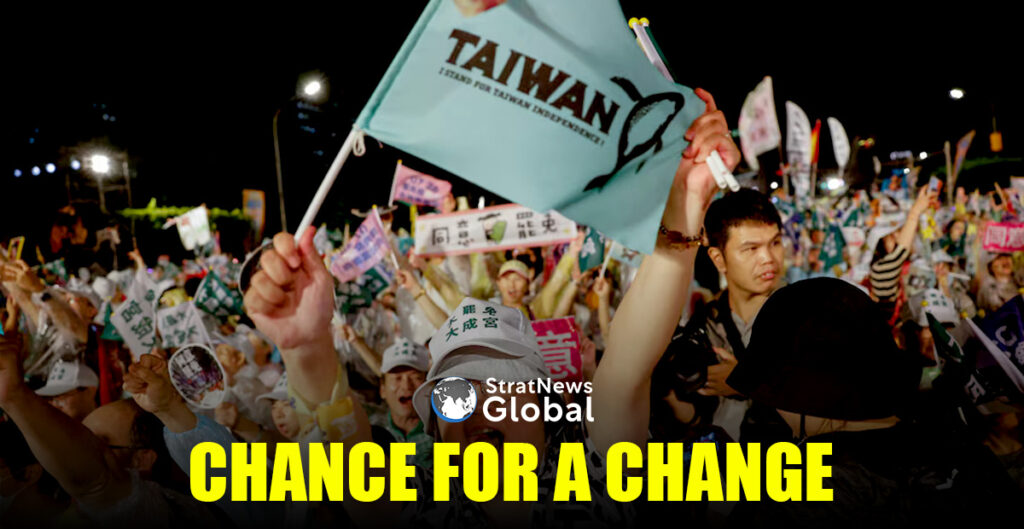
DPP Eyes Comeback As Taiwan Votes To Recall Opposition MPs
In a high-stakes political development, voters in Taiwan on Saturday began casting ballots to decide whether to recall one-fifth of the island’s parliament—all from the main opposition party—in a move supporters claim will send a strong message to China, while critics argue it threatens democratic principles.
Taiwan’s government said the island’s largest-ever recall vote has faced “unprecedented” election interference by China, which claims the democratically governed island as its own, over Taiwan’s rejection.
Chance To Regain Majority
The election could reshape the Taiwan legislature and present an opportunity for President Lai Ching-te’s Democratic Progressive Party to regain its majority.
While Lai won last year’s presidential election, the DPP lost its legislative majority. The opposition has flexed its muscles since then to pass laws the government has opposed and impose budget cuts, complicating efforts to boost defence spending in particular.
The political drama comes as China ramps up a military and diplomatic pressure campaign against Taiwan to assert the territorial claims that Lai and his government reject. Lai has offered talks with Beijing many times but been rebuffed. It calls him a “separatist”.
The heated recall campaign has been closely watched by China, whose Taiwan Affairs Office and state media have repeatedly commented on the vote and used some of the same talking points as the main opposition party Kuomintang to lambaste Lai, Reuters reported this week.
Taiwan’s Allegations
Taipei this week said Beijing was “clearly” trying to interfere in its democracy and it was up to Taiwan’s people to decide who should be removed from or stay in office.
Saturday’s vote, culminating a campaign begun by civic groups, will decide whether to oust 24 KMT lawmakers and hold by-elections for their seats. Recall votes for seven other KMT lawmakers will occur on August 23.
The recall groups say theirs is an “anti-communist” movement, accusing the KMT of selling out Taiwan by sending lawmakers to China, not supporting defence spending and bringing chaos to parliament. The KMT rejects the accusations, denouncing Lai’s “dictatorship” and “green terror” – referring to the DPP’s party colour.
The KMT went into full campaign mode against what they called a “malicious” recall that failed to respect the result of last year’s parliamentary election, saying they have simply been keeping lines of communication open with Beijing and exercising legitimate oversight of Lai’s government.
Polls close at 4 p.m. (0800 GMT) and results should become clear later in the evening.
(With inputs from Reuters)
Thailand Prefers Direct Talks Over Mediation To Resolve Cambodia Conflict
Thailand prefers direct bilateral talks over third-party mediation to resolve its military conflict with Cambodia, two Thai officials said on Friday, as border clashes continued without pause.
Simmering border tensions between Thailand and Cambodia have flared into open hostilities at multiple locations along the frontline in the heaviest fighting between the Southeast Asian neighbours in over a decade. There were exchanges of artillery for a second straight day on Friday.
The United States, China and Malaysia, which is the current chair of the ASEAN regional bloc, have offered to facilitate dialogue, but Bangkok is seeking a bilateral solution to the conflict, Thai foreign ministry spokesperson Nikorndej Balankura told Reuters.
“I don’t think we need any mediation from a third country yet,” Nikorndej said in an interview.
Malaysia Calls For Calm
Malaysian Prime Minister Anwar Ibrahim, the chair of ASEAN, of which both Thailand and Cambodia are members, said on Thursday he had spoken to both countries’ leaders and urged them to find a peaceful resolution.
“We appreciate (the offer) and we don’t want to rule out having a third country to help, but right now we believe that bilateral mechanisms have not been exhausted,” Thai vice minister for foreign affairs Russ Jalichandra told reporters.
Cambodian Prime Minister Hun Manet said in a social media post late on Friday that both Thailand and Cambodia had initially agreed to a ceasefire proposal from Anwar a day earlier, but Thailand later reversed its decision.
The Thai government did not immediately respond to a request for comment on Hun Manet’s remarks.
The two countries accused each other of starting the conflict early on Thursday along a border where sovereignty has been disputed for more than a century.
“We stand by our position that a bilateral mechanism is the best way out; this is a confrontation between the two countries,” Nikorndej said, adding that the Cambodian side must stop violence along the border first.
“Our doors are still open.”
On Thursday, Hun Manet asked the United Nations Security Council to address the fighting, condemning what he called “unprovoked and premeditated military aggression” by Thailand. The body said it would hold a closed-door meeting to discuss the issue on Friday.
The fighting broke out a day after Thailand recalled its ambassador to Phnom Penh and expelled Cambodia’s envoy, in response to landmine explosions that injured Thai soldiers. Bangkok has alleged that those were recently laid, which Phnom Penh rejected.
(With inputs from Reuters)
From Sports Day To Refuge: Thai Family Escapes Cambodian Shelling
Six-year-old Sunisa Chanprakhon had been excited to race in her school’s sports day on Thursday in their village in Thailand border when sudden explosions disrupted the peaceful morning.
“We didn’t get to run,” she said in front of a camping tent her mother had set up in a university sports hall now suddenly housing evacuees. “Instead we ran into the bunker.”
Sunisa and her mother, Lukkana Namprakhon, live just 4 km (2.4 miles) from Thailand’s disputed frontier with Cambodia, where the two countries exchanged heavy artillery fire for a second day on Friday in their worst fighting in over a decade.
Many Villagers Killed And Displaced
Both sides have accused each other of starting the conflict, which has killed at least 15 people – most of them Thai civilians – and displaced over 100,000 in Thailand and 1,500 families in Cambodia.
The mother and daughter spent 30 minutes in the bunker before evacuating to a local shelter and then the local university in Thailand’s Surin province, along with 200 other people from the border area.
Schools in the area are closed, and farming, the lifeline for most villagers in this agrarian part of Southeast Asia’s second largest economy, has halted.
Jeenjana Phapan, a 48-year-old farmer, said she fled her village with her three-year-old son after shells landed in the rice field behind their house, while her husband stayed behind to care for their cows and guard their home.
Villagers have dug bunkers in case of renewed shelling. “I hope my husband can hide if more shells come,” she said.
Thailand has accused Cambodia of targeting civilian areas with artillery and rocket barrages, while Cambodian officials say a Thai F-16 jet fighter hit non-military targets during a cross-border attack on Thursday. Both countries deny the charges.
Decades-old disagreements over jurisdiction of undemarcated points along their 817-km (508-mile) land border have led to skirmishes over several years, including a weeklong exchange of artillery in 2011.
This time, the volleys of gunfire appear to be worse, said Lukkana, who tends a garden alongside looking after her home.
“All you could hear was the sound of explosions,” she said.
(With inputs from Reuters)