

Support us by contributing to StratNewsGlobal on the following UPI ID
ultramodern@hdfcbank

Strategic affairs is our game, South Asia and beyond our playground. Put together by an experienced team led by Nitin A. Gokhale. Our focus is on strategic affairs, foreign policy and international relations, with higher quality reportage, analysis and commentary with new tie-ups across the South Asian region.
You can support our endeavours. Visit us at www.stratnewsglobal.com and follow us on YouTube, Twitter, Facebook and Instagram.
र 500 per month
र 1000 per month
र 5000 per year
र 10000 per year
Donate an amount of your choice
र 500 per month
Donate र 500 per month

र 1000 per month
Donate र 1000 per month
र 5000 per year
Donate र 5,000 per year
र 10000 per year
Donate र 10,000 per year
Donate an amount of your choice
Donate an amount of your choice
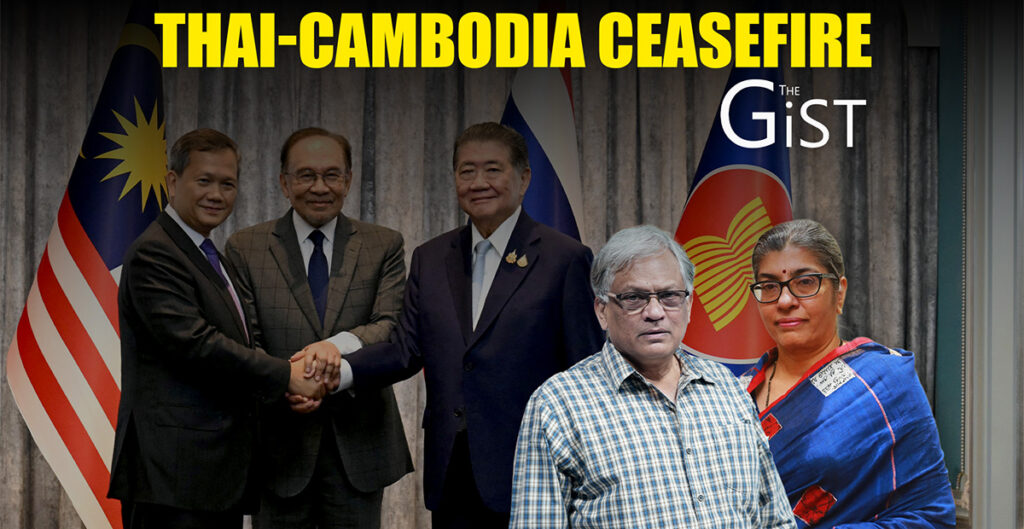

Thailand, Cambodia Agree On Ceasefire But Border Resolution Uncertain
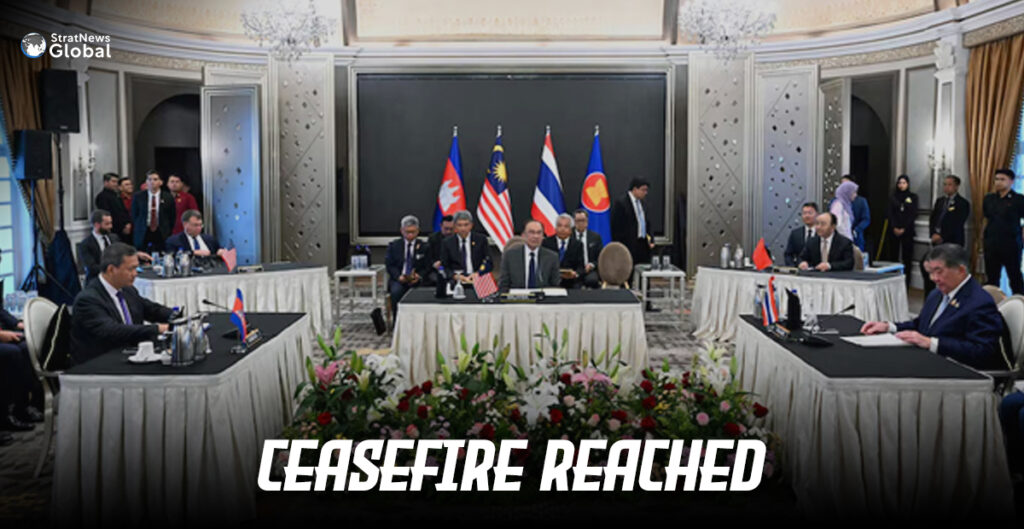
Thailand and Cambodia have agreed “to an immediate and unconditional ceasefire”, that’s according to Malaysia’s Prime Minister Anwar Ibrahim. “We have seen a very positive development and results that could augur well for Cambodia and Thailand.”
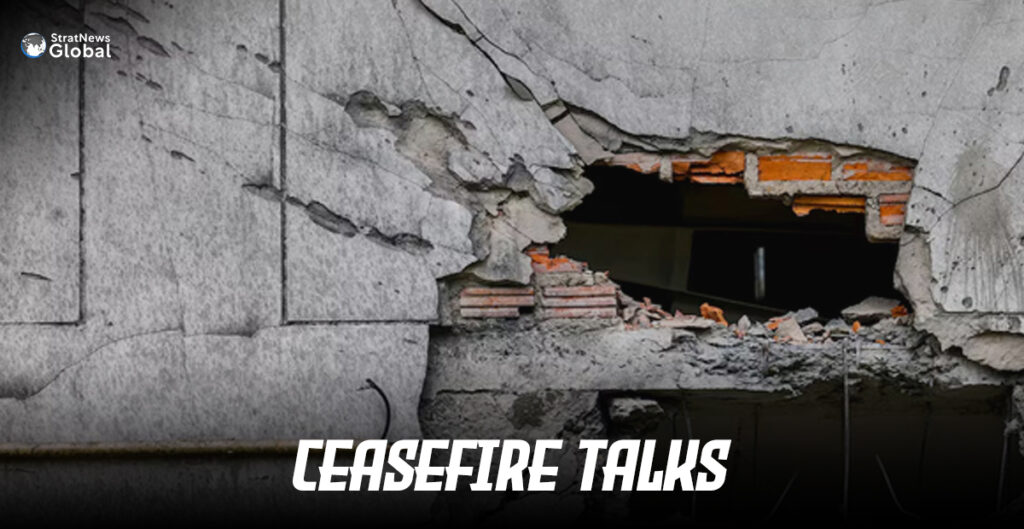
The ceasefire announcement followed talks between Cambodia’s Prime Minister Hun Manet and Thailand’s acting PM Phumtham Weychayachai, at Anwar Ibrahim’s residence. The key question is whether this will hold and for how long? Or is there a path towards a permanent resolution?
Suchitra Durai, who served as India’s ambassador in Thailand for four years, retiring in 2022, pointed out that “This is a very old dispute, and there is a strong feeling on both sides.”
But as she underscored in a chat on The Gist, “Confidence between the two governments was of a high order. In fact, even cabinet meetings were held very interestingly, you know, in both capitals, joint cabinet meetings, it showed that there was, there’s a high degree of convergence and cooperation.”
In fact, the Shinawatra family in Thailand and Hun Manet’s family including his father Hun Sen, were very close and former PM Thaksin Shinawatra during his long years in exile after being ousted by the army, was an economic adviser to Hun Sen. This is something which is common to the region.
But it may be that Hun Sen had expectations from Thaksin that was not delivered. How else does one explain a confidential conversation between him and Thaksin’s daughter Paetongtarn, when she was prime minister, being leaked triggering her suspension.
Hun Sen may have felt let down when a joint plan for exploration of the Gulf of Thailand for gas deposits fell by the wayside. Then there was the crackdown on scam centres based in Cambodia but operating on electricity supplied by Thailand.
There’s also speculation that the politically powerful Thai Army may have played a role. Whatever happened, it’s clear that if an election were held now the Pheu Thai party of the Shinawatra family could lose.
Tune in for more in this conversation with Suchitra Durai, former ambassador to Thailand.
Pahalgam Attack Mastermind Among 3 Killed In Op Mahadev Near Srinagar: Sources
As Defence Minister Rajnath Singh initiated the Operation Sindoor debate in Parliament, Indian security forces notched a major success on the ground by eliminating three Pakistani terrorists during an encounter in Dachigam near Srinagar in Jammu and Kashmir.
Two of the slain militants were reportedly involved in the brutal Pahalgam terror attack, where 26 civilians were murdered in cold blood.
Among those killed was Suleiman Shah, a top Lashkar-e-Taiba (LeT) operative identified as the mastermind of the April 22 attack that sent shockwaves across the country.
Security sources confirmed that Suleiman, who also went by the alias Hashim Moosa and had previously served in the Pakistan Army, was gunned down in this morning’s operation.
A bounty of ₹20 lakh had been placed on his head by Jammu and Kashmir Police following the Pahalgam massacre.
The anti-terror operation, codenamed Operation Mahadev, also resulted in the deaths of two other terrorists — Abu Hamza and Yasir.
Yasir, too, is suspected to have played a direct role in the Pahalgam killings.
Intel-Led Joint Operation
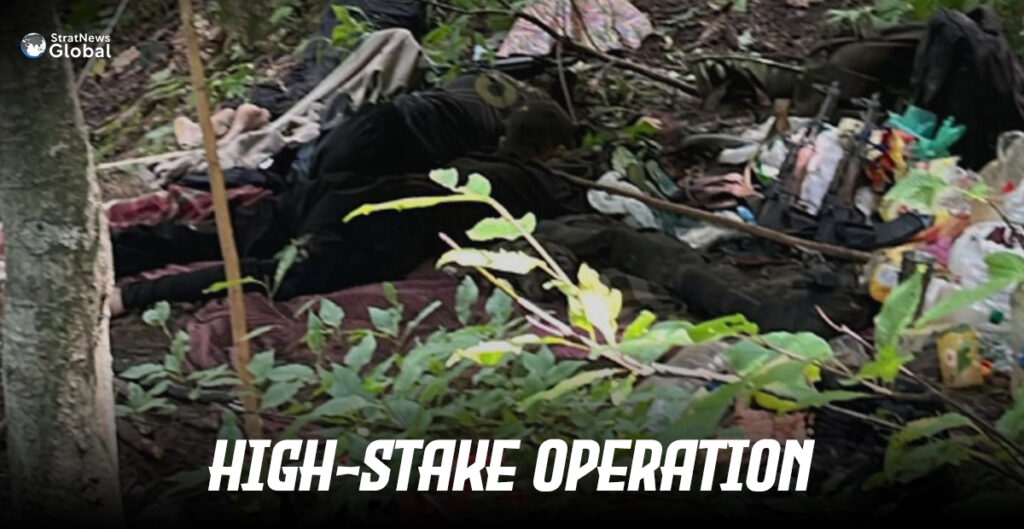
This high-stakes joint operation involved personnel from the Indian Army, the Central Reserve Police Force (CRPF), and the Jammu and Kashmir Police, all acting on specific intelligence inputs.
The Indian Army’s Chinar Corps, via its official X handle, confirmed that Operation Mahadev was launched in the Lidwas area.
“Three terrorists have been neutralised in an intense firefight. Operation Continues,” read an update, indicating that search efforts are still underway.
All three slain terrorists were considered “high-value” targets.
The operation, based on actionable intelligence, was carried out in the Mulnar region of Harwan. Reinforcements were swiftly deployed, and a detailed combing operation is ongoing in the area to flush out any remaining threats.
IBNS has obtained exclusive visuals of the targeted terrorist hideout deep within a forested area.
The images reveal a stash of weapons, including Carbine and AK-47 rifles, 17 rifle grenades, and a large cache of other arms and ammunition.
According to security officials, this stockpile points to a possible large-scale terror plot that may have been in the works for Jammu and Kashmir.
(With inputs from IBNS)
India, Japan Bolster Strategic Ties Ahead of PM Modi’s Expected Visit
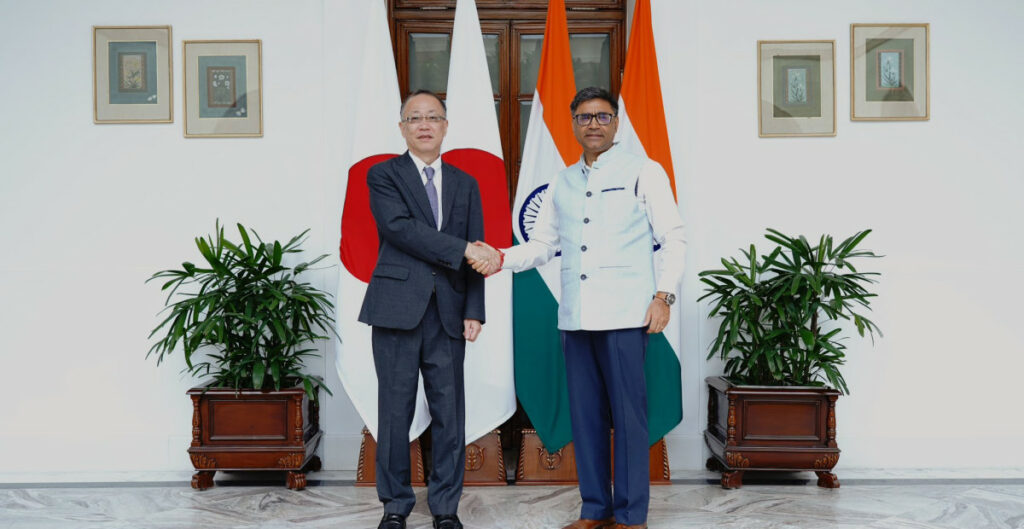
Foreign Secretary Vikram Misri held talks with Japan’s Vice-Minister for Foreign Affairs Takehiro Funakoshi in New Delhi on Monday. The meeting, which comes ahead of PM Modi’s expected visit to Japan, reinforced the deepening partnership between the two countries amid evolving geopolitical dynamics in the Indo-Pacific region. Discussions spanned defence cooperation, economic security, trade, infrastructure, digital technologies and people-to-people exchanges.
Both sides reiterated their commitment to the “Special Strategic and Global Partnership.” A relationship that has matured over the past decade and has become central to regional peace and stability. The dialogue comes amid political uncertainty in Japan following a surprise surge of the far-right Sanseito party in recent elections and mounting regional tensions, particularly over Taiwan.
The meeting also laid the groundwork for India’s hosting of the QUAD leaders’ summit later this year, which will bring together leaders from India, Japan, the United States, and Australia. While dates are not yet out, the summit is expected to serve as a crucial platform to advance shared priorities in the Indo-Pacific.
Strategic Pillar For Indo-Pacific
“India and Japan share not only mutual economic interests but also a convergence of strategic values. The dialogue today was a step forward in consolidating those pillars,” a senior official familiar with the discussions said.
Foreign Secretary Misri and Vice-Minister Funakoshi reaffirmed the centrality of India-Japan cooperation to shaping a “Free and Open Indo-Pacific”—a vision that has underpinned several bilateral and Quad initiatives since 2014, when the relationship was elevated to a Special Strategic & Global Partnership.
Japan’s Ambassador to India Ono Keiichi recently underscored India’s irreplaceable role in the Quad framework, stating, “Without India, Quad cannot exist.” His remarks, delivered at a public forum, stressed that India’s growing global stature and strategic autonomy make it an indispensable partner in addressing regional challenges.
Growing Challenges And Shared Concerns
Recent political developments in Japan have injected uncertainty into regional diplomatic planning. Prime Minister Shigeru Ishiba’s ruling coalition suffered a major setback in the latest parliamentary elections, losing its upper house majority to a resurgent Sanseito party. With internal calls for his resignation mounting, the leadership in Tokyo faces increasing pressure, potentially affecting the timing of Prime Minister Modi’s visit.
Nevertheless, Japanese officials have affirmed continuity in foreign policy. Tokyo sees its partnership with New Delhi as critical, especially given the rising tensions in the Taiwan Strait and the pressing need for resilient supply chains for semiconductors and other critical technologies.
“Taiwan is not just a flashpoint, it’s a critical node in our economic and technological ecosystems,” Ambassador Ono said. He warned that any escalation could have severe consequences for both Japanese and Indian economies.
Economic Backbone And Future Outlook
Japan remains one of India’s most significant economic partners. With over $7 billion in Foreign Direct Investment in 2023, and being the second largest equity investor in India after the United States over the past two decades, the economic dimension continues to underpin bilateral ties.
The dialogue also touched upon enhancing cooperation in advanced technologies, green energy and connectivity initiatives that align with India’s Act East Policy and Japan’s Free and Open Indo-Pacific vision.
Furthermore, Japan’s ageing population and India’s growing talent pool open new possibilities in human resource mobility and educational exchanges.
Sexual Shenanighans Of Abbot Shakes Shaolin Temple
Those of you who grew up in the 1970s would recall how knowledge of Chinese martial arts grew by leaps and bounds, driven largely by a spate of films centred around the subject. Arguably, the most well known film of that genre was the 36th Chamber of Shaolin starring Gordon Liu. Others followed even Shaolin Soccer, Kung Fu Hustle and if you want to include the 2011 film Chhota Bheem: Master of Shaolin!
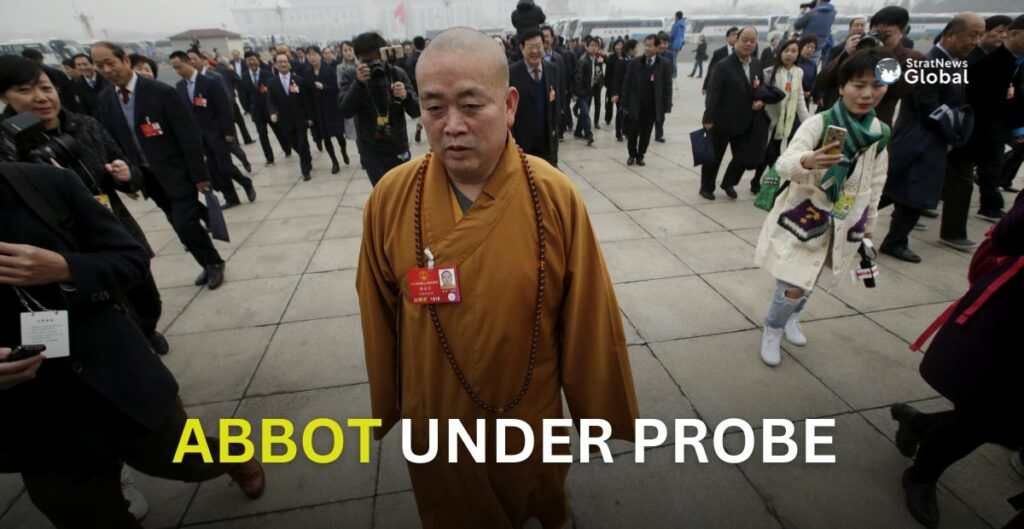
But the Shaolin brand has fallen on hard times, witness the abbot of the Shaolin Temple being held for embezzlement, financial improprieties and not to forget, violation of Buddhist discipline through improper relationships with women resulting in children!
Shi Yongxin, the abbot who has held top posts such as president of the Henan Buddhist Association since 1998 and vice president of the Buddhist Association of China since 2002, has long been a controversial figure.
Nicknamed the “CEO monk,” he is credited as well as criticized for transforming the Shaolin Temple into a global brand through business ventures, martial arts schools, and international licensing.
But the latest allegations was the last straw for the authorities. According to a July 8th post on the official Shaolin Temple website, Shi was last seen in public on July 7th, when he participated in a monks’ meeting.
Many netizens expressed frustration with the authorities responsible for supervising religious institutions.
“He had a wife and kids for years and many netizens knew about it,” said a netizen, asking “What were the concerned authorities doing all this time?”
Others dismissed Shi as a “fake monk,” and some even too aim at Buddhism, calling Daoism the “true native faith” of China.
The Shaolin Temple has said it will release more information as the investigation unfolds.
Cambodia, Thailand Agree To ‘Immediate And Unconditional’ Ceasefire After Malaysia Talks
Cambodia and Thailand’s leaders agreed on Monday to an “immediate and unconditional” ceasefire effective midnight, aiming to end their deadliest conflict in over a decade after five days of intense fighting.
Amid an international effort to quell the conflict, the Thai and Cambodian leaders held talks in Malaysia, hosted by its Prime Minister Anwar Ibrahim, the current chair of the ASEAN regional bloc, where both sides agreed to halt hostilities and resume direct communications.
Anwar said when opening a press conference alongside the Thai and Cambodian leaders that there would be “an immediate and unconditional ceasefire with effect from midnight tonight. This is final.”
The Southeast Asian neighbours accuse each other of starting the fighting last week, before escalating it with heavy artillery bombardment and Thai air strikes along their 817-km (508-mile) land border.
Anwar had proposed ceasefire talks soon after a long-running border dispute erupted into conflict on Thursday, and China and the United States also offered to assist in negotiations.
U.S. President Donald Trump called both leaders over the weekend, urging them to settle their differences, warning he would not conclude trade deals with them unless they ended the fighting.
Thailand-Cambodia Tensions
The tension between Thailand and Cambodia has intensified since the killing of a Cambodian soldier during a brief skirmish late in May.
Both sides reinforced border troops amid a full-blown diplomatic crisis that brought Thailand’s fragile coalition government to the brink of collapse.
“Today we have a very good meeting and very good results… that hope to stop immediately the fighting that has caused many lives lost, injuries and also caused displacement of people,” Hun Manet said, expressing appreciation to Trump and to China for their efforts in participating in the process.
“We hope that the solutions that Prime Minister Anwar just announced will set a condition for moving forward for our bilateral discussion to return to normalcy of the relationship, and as a foundation for future de-escalation of forces.”
Acting Thai Prime Minister Phumtham Wechayachai, who had earlier expressed doubts about Cambodia’s sincerity ahead of the negotiations in Malaysia, said Thailand had agreed to a ceasefire that would “be carried out successfully in good faith by both sides”.
(With inputs from Reuters)
Torrential Rains Slam China, Swell Rivers; Landslide Kills Four
Swollen rivers, waterways, and reservoirs across China worsened flooding and landslides on Monday, killing at least four people, as authorities warned of heavier rains and increased disaster risks in the coming days.
Forty-one rivers across the country have flooded, CCTV said, citing China’s Ministry of Water Resources. The Ministry said it had issued flood warnings for small and midsize rivers and mountain torrents.
Heavy rains intensified around Beijing and surrounding provinces on Monday, including those in central China such as Hunan and northern Inner Mongolia. Four people died in a landslide in northern Hebei, and eight people are missing.
Thousands Resettled
In the suburban area of Miyun in Beijing, more than 4,400 people have been resettled after flash floods and landslides flooded many villages, state broadcaster CCTV reported.
Images circulated on China’s WeChat app showed areas of Miyun where cars and trucks were floating on a flooded road where water levels had risen so high that it had submerged part of a residential building.
Electricity cuts are also affecting more than 10,000 people in the area, CCTV said.
Northern China has seen record precipitation in recent years, exposing densely populated cities, including Beijing, to flood risks. Some scientists link the increased rainfall in China’s usually arid north to global warming.
China’s Central Meteorological Observatory said that heavy rainfall would continue to drench northern China over the next three days. Beijing issued its highest level flood alert on Monday, the official Xinhua news agency said.
The storms are part of the broader pattern of extreme weather across China due to the East Asian monsoon, which has caused disruptions in the world’s second-largest economy.
Xiwanzi Village in Shicheng Town, near Miyun Reservoir, was severely affected, CCTV said on Monday, with an additional 100 villagers transferred to a primary school for shelter.
It comes after the maximum flood peak flow into the Miyun reservoir reached a record high of 6550 cubic meters per second, Beijing authorities said on Sunday.
Two high-risk road sections have been sealed in Beijing’s Pinggu district, authorities said.
Widespread
In neighbouring Shanxi province, videos from state media showed roads inundated by strong gushing currents and submerged vegetation, including crops and trees.
Shaanxi province, home to China’s historic city of Xian, also issued flash flood disaster risk warnings on Monday.
Authorities are carrying out search and rescue work across cities, including Datong, where a driver in a Ford car has lost contact while driving in the floods, the People’s Daily reported.
Two were dead and two missing in Hebei province, CCTV said on Sunday morning. Overnight rain dumped a record 145 mm (5.7 inches) per hour on Fuping in the industrial city of Baoding.
In Hunan’s Liudiequan Grand Canyon in Chunkou town, water rose so rapidly on Sunday that a tourist was swept away, CCTV said.
China’s National Development and Reform Commission said on Monday that it was urgently arranging 50 million yuan ($6.98 million) to support Hebei.
The funds would be used to repair damaged roads and bridges, water conservancy embankments, schools and hospitals in the disaster area. The NDRC said it was “promoting the restoration of normal life and production as soon as possible.”
Chinese authorities closely monitor extreme rainfall and severe flooding are, as they challenge the country’s ageing flood defences, threaten to displace millions and wreak havoc on China’s $2.8 trillion agricultural sector.
($1 = 7.1675 Chinese yuan renminbi)
(With inputs from Reuters)
Russian Overnight Airstrike On Kyiv Injures Eight, Including Child
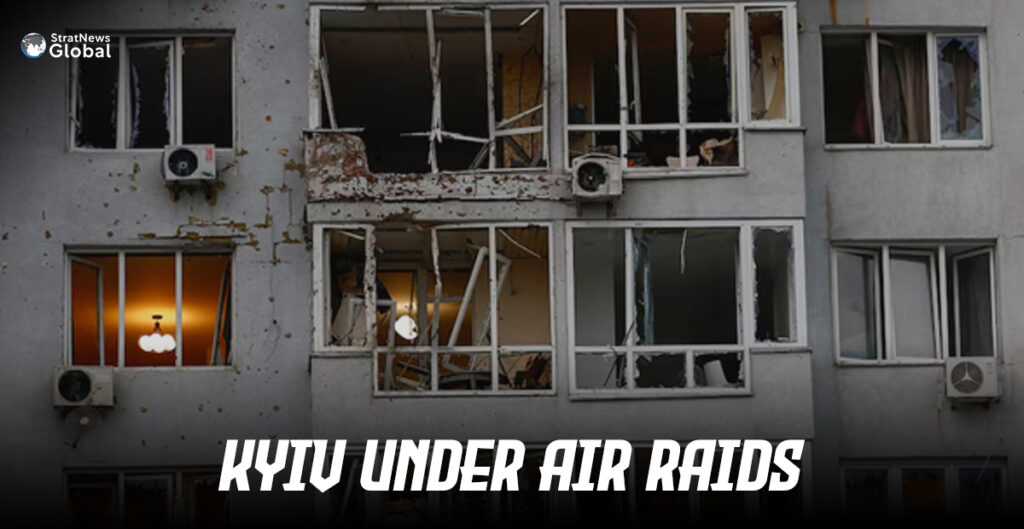
A Russian overnight airstrike on Kyiv injured eight apartment residents, including a three-year-old child, according to authorities in the Ukrainian capital on Monday.
Four of those injured in the attack, which took place soon after midnight on Monday, have been hospitalised, with one person in serious condition, the head of Kyiv’s military administration, Tymur Tkachenko, said on the Telegram messaging app.
Kyiv’s Mayor Vitali Klitschko said that all of the people were residents of a multi-storey apartment building in the city’s Darnytskyi district on the left bank of the Dnipro River.
“The blast wave damaged windows from the 6th to the 11th floor,” Klitschko said in a post on Telegram.
Kyiv Under Air Raids
The capital and most of Ukraine were under air raid alerts for several hours overnight following Ukrainian Air Force warnings of Russian missile and drone attacks.
With the threat of missile strikes on western parts of Ukraine that border Poland – a NATO member – Polish armed forces scrambled aircraft to ensure the safety of Polish airspace.
The central Ukrainian city of Kropyvnytskyi came under an attack, regional Governor Andriy Raikovych said, adding that emergency services were working on the site and information about potential damage will be released later on Monday.
The full scale of the Russian attack on Ukraine was not immediately known. Reuters’ witnesses heard loud blasts shaking the city of Kyiv overnight in what sounded like air defence units in operation.
There was no comment from Russia on the attack. Both sides deny targeting civilians in their strikes in the war that Russia started in February 2022. But thousands of civilians have died in the conflict, the vast majority of them Ukrainian.
Meanwhile, Ukrainian drones struck St. Petersburg on Sunday, officials said, prompting a five-hour airport shutdown as Russian President Vladimir Putin attended Navy Day celebrations, though the naval parade had been cancelled earlier over security fears.
(With inputs from Reuters)
Cambodia Seeks Ceasefire In Malaysia Border Talks As Thailand Questions Its Sincerity
Cambodia’s Prime Minister stated that the goal of Monday’s talks with Thailand is to secure an immediate ceasefire in the deadly border dispute, but his Thai counterpart expressed doubts about Cambodia’s sincerity ahead of the negotiations set to take place in Malaysia.
Monday’s talks to end the deadliest fighting in more than a decade between the Southeast Asian neighbours are being hosted by Malaysia, the chair of the regional ASEAN bloc.
Cambodian Prime Minister Hun Manet said the talks were co-organised by the United States and that China would also take part in them.
Border Clashes Continue
Both Thailand and Cambodia accuse the other of starting the hostilities last week and then escalating them. On Monday, officials from both countries said clashes along the disputed border were ongoing ahead of the talks later in the day.
“We are not confident in Cambodia, their actions so far have reflected insincerity in solving the problem,” acting Thai Prime Minister Phumtham Wechayachai told reporters ahead of his departure for Kuala Lumpur.
“Cambodia has violated international law, but everybody wants to see peace. Nobody wants to see violence that affects civilians.”
Cambodia has strongly denied Thai accusations it has fired at civilian targets, and has instead said that Thailand has put innocent lives at risk. It has called for the international community to condemn Thailand’s aggression against it.
“The purpose of this meeting is to achieve an immediate ‘ceasefire’, initiated by President Donald Trump and agreed to by the Prime Ministers of Cambodia and Thailand,” Hun Manet said in a post on X as he departed for the talks.
U.S. Secretary of State Marco Rubio said State Department officials would assist the peace efforts, after President Donald Trump had earlier said that he thought both leaders wanted to settle the conflict.
The tensions between Thailand and Cambodia have intensified since the killing in late May of a Cambodian soldier during a brief skirmish.
Border troops on both sides were reinforced amid a full-blown diplomatic crisis that brought Thailand’s fragile coalition government to the brink of collapse.
Malaysia-Proposed Talks
Malaysian Prime Minister Anwar Ibrahim had proposed ceasefire talks soon after the border dispute erupted into conflict on Thursday, and China and the United States also offered to assist in negotiations.
Anwar said he expected to chair the negotiations after being asked by the two governments to try to find a peace settlement, state media agency Bernama reported on Sunday.
“So, I’m discussing the parameters, the conditions, but what is important is (an) immediate ceasefire,” Anwar said.
Thailand and Cambodia have bickered for decades over undemarcated points along their 817-km (508-mile) land border, with ownership of the ancient Hindu temples Ta Moan Thom and the 11th-century Preah Vihear central to the disputes.
Preah Vihear was awarded to Cambodia by the International Court of Justice in 1962, but the situation worsened in 2008 after Cambodia attempted to list it as a UNESCO World Heritage site. Skirmishes over several years brought at least a dozen deaths.
Cambodia said in June it had asked the court to resolve its disputes with Thailand. Bangkok says it has never recognised the court’s jurisdiction and prefers a bilateral approach.
(With inputs from Reuters)
Pakistan Bestows Key Honour On US CentCom Chief Who Praised Its Counterterror Role
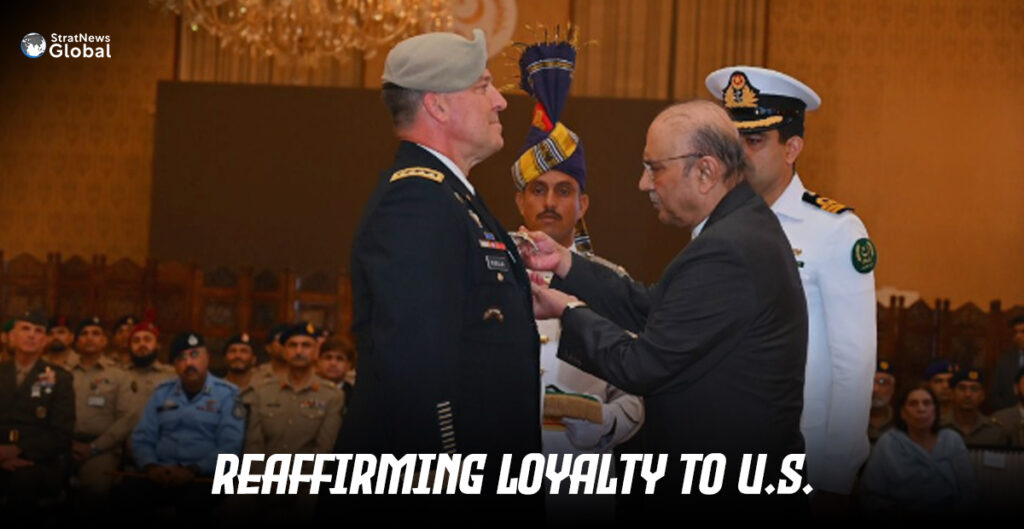
General Michael Kurilla, chief of the United States Central Command (CentCom), has received the prestigious Nishan-e-Imtiaz (Military)—one of Pakistan’s highest state honours—from President Asif Ali Zardari, in a move widely interpreted as reaffirming Islamabad’s strategic defence relationship with Washington.
The award was conferred during a formal ceremony held at the Presidential Palace in Islamabad, where General Kurilla was also accorded a Tri-Services Guard of Honour.
According to the Pakistani government, the decoration acknowledges Kurilla’s role in promoting regional stability, advancing counterterrorism collaboration, and deepening military-to-military ties between Pakistan and the United States.
As reported by state-run Radio Pakistan, the honour celebrates Kurilla’s “exceptional contribution to regional peace and defence partnerships.”
His official visit to Islamabad included high-level meetings with top civilian and military leaders, notably President Zardari and Chief of Army Staff General Asim Munir, where discussions focused on military cooperation and counterterrorism initiatives.
‘Phenomenal Partner’
The development comes shortly after Kurilla publicly described Pakistan as a “phenomenal partner” in counterterrorism, remarks that coincided with India intensifying its diplomatic campaign to highlight Pakistan’s alleged links to terror financing—especially following the recent Pahalgam terror attack.
Diplomatic insiders view the honour as part of Pakistan’s calculated effort to manage its geopolitical balancing act between the US and China, while simultaneously seeking to restore political goodwill in Washington.
Despite being removed from the Financial Action Task Force’s (FATF) grey list in 2022, Pakistan remains under scrutiny—particularly by India, which continues to urge action against Pakistan-based terrorist groups.
Given the US’s foundational role in FATF, Pakistan’s high-level diplomatic and military engagements are seen as an attempt to remain in Washington’s strategic favour.
These moves also align with Pakistan’s need for sustained IMF assistance amid ongoing economic turbulence and global financial monitoring.
“Pakistan is sending a nuanced message—it may be aligned with China, but it still values its long-standing partnership with the United States,” a diplomatic source told the Hindustan Times, noting that CentCom continues to be a key element in America’s post-Afghanistan security calculus in South Asia.
(With inputs from IBNS)
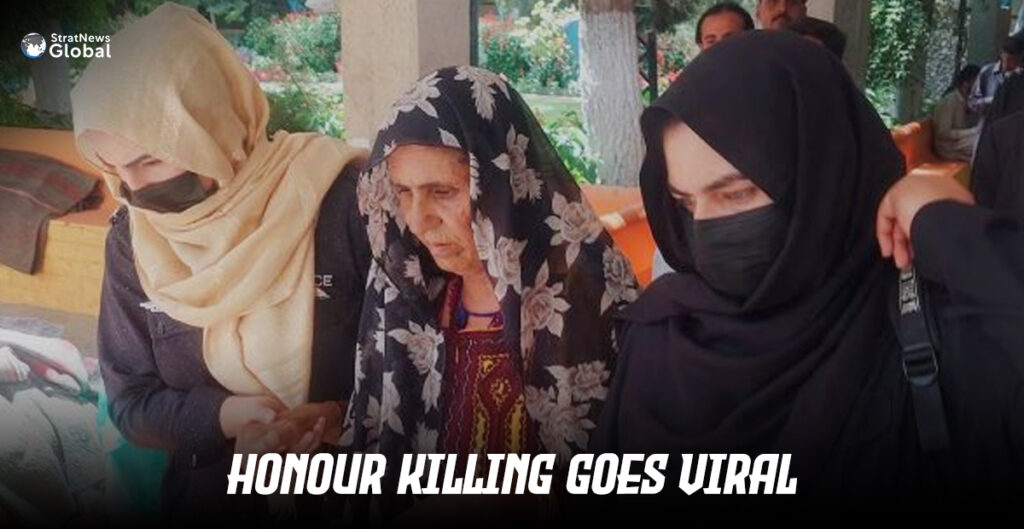
Viral ‘Honour Killing’ In Southwest Pakistan Sparks Nationwide Outcry
A widely shared video showing the “honour killing” of a woman and her lover in a remote area of southwest Pakistan has triggered public outrage, bringing attention to entrenched tribal customs and fueling demands for justice in a country where such crimes frequently go unpunished.
While hundreds of so-called honour killings are reported in Pakistan each year, often with little public or legal response, the video of a woman and man accused of adultery being taken to the desert by a group of men to be killed has struck a nerve.
The video shows the woman, Bano Bibi, being handed a Koran by a man identified by police as her brother. “Come walk seven steps with me, after that you can shoot me,” she says, and she walks forward a few feet and stops with her back to the men.
The brother, Jalal Satakzai, then shoots her three times and she collapses. Seconds later he shoots and kills the man, Ehsan Ullah Samalani, whom Bano was accused of having an affair with.
Nationwide Condemnation
Once the video of the killings in Pakistan’s Balochistan province went viral, it brought swift government action and condemnation from politicians, rights groups and clerics.
Civil rights lawyer Jibran Nasir said, though, the government’s response was more about performance than justice.
“The crime occurred months ago, not in secrecy but near a provincial capital, yet no one acted until 240 million witnessed the killing on camera,” he said.
“This isn’t a response to a crime. It’s a response to a viral moment.”
Police have arrested 16 people in Balochistan’s Nasirabad district, including a tribal chief and the woman’s mother.
The mother, Gul Jan Bibi, said the killings were carried out by family and local elders based on “centuries-old Baloch traditions”, and not on the orders of the tribal chief.
“We did not commit any sin,” she said in a video statement that also went viral. “Bano and Ehsan were killed according to our customs.”
She said her daughter, who had three sons and two daughters, had run away with Ehsan and returned after 25 days.
Police said Bano’s younger brother, who shot the couple, remains at large.
Balochistan Chief Minister Sarfraz Bugti said it was a “test” case and vowed to dismantle the illegal tribal courts operating outside the law.
Police had earlier said a jirga, an informal tribal council that issues extrajudicial rulings, had ordered the killings.
#JusticeForCouple
The video sparked online condemnation, with hashtags like #JusticeForCouple and #HonourKilling trending. The Pakistan Ulema Council, a body of religious scholars, called the killings “un-Islamic” and urged terrorism charges against those involved.
Dozens of civil society members and rights activists staged a protest on Saturday in the provincial capital Quetta, demanding justice and an end to parallel justice systems.
“Virality is a double-edged sword,” said Arsalan Khan, a cultural anthropologist and professor who studies gender and masculinity.
“It can pressure the state into action, but public spectacle can also serve as a strategy to restore ghairat, or perceived family honour, in the eyes of the community.”
Pakistan outlawed honour killings in 2016 after the murder of social media star Qandeel Baloch, closing a loophole that allowed perpetrators to go free if they were pardoned by family members. Rights groups say enforcement remains weak, especially in rural areas where tribal councils still hold sway.
At Least 405 Honour Killings In 2024
“In a country where conviction rates often fall to single digits, visibility – and the uproar it brings – has its advantages,” said constitutional lawyer Asad Rahim Khan.
“It jolts a complacent state that continues to tolerate jirgas in areas beyond its writ.”
The Human Rights Commission of Pakistan reported at least 405 honour killings in 2024. Most victims are women, often killed by relatives claiming to defend family honour.
Khan said rather than enforcing the law, the government has spent the past year weakening the judiciary and even considering reviving jirgas in former tribal areas.
“It’s executive inaction, most shamefully toward women in Balochistan,” Khan said.
Prime Minister Shehbaz Sharif in recent months has asked senior ministers to evaluate proposals to revive jirgas in Pakistan’s former tribal districts, including potential engagement with tribal elders and Afghan authorities.
The Prime Minister’s Office and Pakistan’s information minister did not immediately respond to a request for comment.
Viral And Then Forgotten?
The Balochistan killings were raised in Pakistan’s Senate, where the human rights committee condemned the murders and called for action against those who convened the jirga. Lawmakers also warned that impunity for parallel justice systems risked encouraging similar violence.
Activists and analysts, however, say the outrage is unlikely to be sustained.
“There’s noise now, but like every time, it will fade,” said Jalila Haider, a human rights lawyer in Quetta.
“In many areas, there is no writ of law, no enforcement. Only silence.”
Haider said the killings underscore the state’s failure to protect citizens in under-governed regions like Balochistan, where tribal power structures fill the vacuum left by absent courts and police.
“It’s not enough to just condemn jirgas,” Haider said.
“The real question is: why does the state allow them to exist in the first place?”
(With inputs from Reuters)