

Support us by contributing to StratNewsGlobal on the following UPI ID
ultramodern@hdfcbank

Strategic affairs is our game, South Asia and beyond our playground. Put together by an experienced team led by Nitin A. Gokhale. Our focus is on strategic affairs, foreign policy and international relations, with higher quality reportage, analysis and commentary with new tie-ups across the South Asian region.
You can support our endeavours. Visit us at www.stratnewsglobal.com and follow us on YouTube, Twitter, Facebook and Instagram.
र 500 per month
र 1000 per month
र 5000 per year
र 10000 per year
Donate an amount of your choice
र 500 per month
Donate र 500 per month

र 1000 per month
Donate र 1000 per month
र 5000 per year
Donate र 5,000 per year
र 10000 per year
Donate र 10,000 per year
Donate an amount of your choice
Donate an amount of your choice





Taiwan’s President Lai To Postpone Diplomatically Sensitive US Trip
Taiwan’s President Lai Ching-te is expected to postpone a diplomatically sensitive trip, initially proposed to the Trump administration for August, which would have included stops in the United States, according to three sources familiar with the discussions.
Such a trip was bound to infuriate Beijing at a time when U.S. President Donald Trump is trying to negotiate a deal on trade with China. China claims democratically governed Taiwan as its own territory, a claim Taiwan rejects, and regularly denounces any shows of support for Taipei from Washington.
The trip, which could have included visits to Guatemala, Belize and Paraguay, was never formally confirmed but had been discussed with the governments involved, according to a person familiar with the matter. Lai had considered stopping in New York and Dallas on the way to and from Latin America.
Set To Delay Trip
Lai is set to delay the trip until at least later this year for a handful of reasons, including the need to organise his government’s response to extreme weather in Taiwan, one of the sources said.
Two of the sources also pinned the delay on the ongoing U.S. tariff talks with Taipei and Beijing, respectively. Top U.S. and Chinese economic officials huddled in Stockholm, Sweden, on Monday to resume talks.
The White House and China’s embassy in Washington did not immediately respond to a request for comment, while Taiwan’s Presidential Office was not immediately available for comment late on Monday night.
“There’s no such thing as cancelling the trip. In fact, further arrangements for the trip will be made later this year,” according to a person with direct knowledge of the matter, who said stopovers were likely to include Texas and another city in the U.S. mainland.
Responding to media inquiries earlier on Monday, Presidential Office spokesperson Karen Kuo said once the president’s overseas visit itinerary is finalised, it will be announced to the public in a timely manner.
“However, considering the recent typhoon disaster recovery efforts in southern Taiwan, the U.S.-Taiwan reciprocal tariff measures and regional developments, the president currently has no plans for overseas visits in the near future,” Kuo said.
Lowering Tensions
The decision comes as Trump has tried to lower tensions with Chinese President Xi Jinping and potentially have a summit in Asia with him this autumn.
Lai has yet to visit the U.S. since Trump took office in January, though late last year he stopped over in Hawaii and the U.S. territory of Guam while visiting the Pacific.
The U.S., like most countries, has no formal diplomatic ties with Taiwan but is its strongest international backer, bound by law to provide the island with the means to defend itself. Washington is the island’s top arms supplier.
China has never renounced the use of force to bring the island under its control.
Taiwan’s government rejects Beijing’s sovereignty claims, saying only the island’s people can decide their future. Taiwan says it is already an independent country called the Republic of China, its official name.
Trump administration spokespeople have previously said “transits of the United States by high-level Taiwan officials, including presidents, are in line with past practice, and fully consistent with our longstanding policy.”
China’s Foreign Ministry has previously condemned what it has called “sneaky visits” to the U.S. by Taiwanese leaders under any pretext. They have said the U.S. must understand how sensitive the Taiwan issue is and act with the utmost caution.
(With inputs from Reuters)
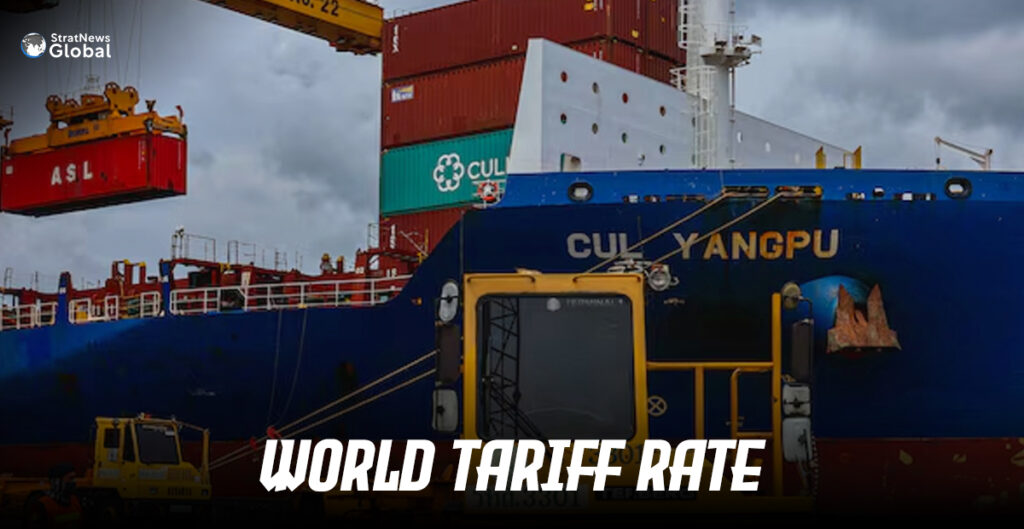
Trump Considers Global Tariffs Of 15–20% For Most Countries
President Donald Trump announced on Monday that most trading countries failing to negotiate individual trade agreements with the United States would soon face export tariffs ranging from 15% to 20%, significantly higher than the broad 10% tariff he imposed in April.
Trump told reporters his administration will notify some 200 countries soon of their new “world tariff” rate.
“I would say it’ll be somewhere in the 15 to 20% range,” Trump told reporters, sitting alongside British Prime Minister Keir Starmer at his luxury golf resort in Turnberry, Scotland. “Probably one of those two numbers.”
Trump, who has vowed to end decades of U.S. trade deficits by imposing tariffs on nearly all trading partners, has already announced higher rates of up to 50% on some countries, including Brazil, starting on Friday.
The announcements have spurred feverish negotiations by a host of countries seeking lower tariff rates, including India, Pakistan, Canada, and Thailand, among others.
Trade Deal With EU
The U.S. president on Sunday clinched a huge trade deal with the European Union that includes a 15% tariff on most EU goods, $600 billion of investments in the U.S. by European firms, and $750 billion in energy purchases over the next three years.
That followed a $550-billion deal with Japan last week and smaller agreements with Britain, Indonesia, and Vietnam. Other talks are ongoing, including with India, but prospects have dimmed for many more agreements before Friday, Trump’s deadline for deals before higher rates take effect.
Trump has repeatedly said he favours straightforward tariff rates over complex negotiations.
“We’re going to be setting a tariff for essentially, the rest of the world,” he said again on Monday. “And that’s what they’re going to pay if they want to do business in the United States. Because you can’t sit down and make 200 deals.”
Canadian Prime Minister Mark Carney said on Monday trade talks with the U.S. were at an intense phase, conceding that his country was still hoping to walk away with a tariff rate below the 35% announced by Trump on some Canadian imports.
Carney conceded this month that Canada – which sends 75% of its exports to the United States – would likely have to accept some tariffs.
(With inputs from Reuters)
Severe Floods Kill Three, Displace Hundreds In Romania
Eastern Romania faced devastating floods overnight, resulting in the deaths of three elderly people and forcing the evacuation of hundreds.
Officials confirmed on Monday that heavy rainfall and strong winds hit 25 villages across nine counties, damaging thousands of homes and blocking roads. Four helicopters were deployed to search for stranded villagers as emergency teams continued rescue operations.
The worst affected areas were Suceava and Neamț counties, where two rivers breached their banks. A 66-year-old man drowned in Neagra, Suceava, while two elderly women—aged 85 and 83—also lost their lives. In Broșteni, all access roads were blocked, making rescue efforts difficult.
Emergency responders used an excavator to recover one of the victims. In the nearby town of Ostra, firefighters rescued eight people, including two children, from rising waters.
Rivers At Record Highs
The flooding caused significant damage to infrastructure. Bridges collapsed, trees were uprooted, and national highways were blocked. Electricity supply was disrupted in several areas. The water management agency reported that the Bistrița River reached a height of 390 cm in Neamț, far exceeding the danger level of 350 cm and marking the highest level since the 1970s.
Authorities issued Code Red and Code Orange weather warnings early Monday, after rainfall exceeded 70 litres per square metre in just three hours.
The Ministry of Internal Affairs is monitoring the situation closely, while emergency teams including firefighters, mountain rescuers, police, and army units have been deployed across the affected areas. Nearly 900 people have been evacuated in Neamț, and several communities in Suceava remain isolated without mobile connectivity, making rescue coordination more challenging.
Evacuations Continue As Rescue Efforts Intensify
Rescue operations are ongoing in both Suceava and Neamț, where emergency teams are working round the clock to reach isolated villages and provide assistance. Helicopters, boats, and heavy machinery are being used to access flooded areas and deliver relief.
Many residents have taken shelter in schools and community halls after being evacuated from their homes. With mobile networks down in several locations, authorities are relying on ground teams and local volunteers to locate those still stranded or in need of help.
(With inputs from Reuters)
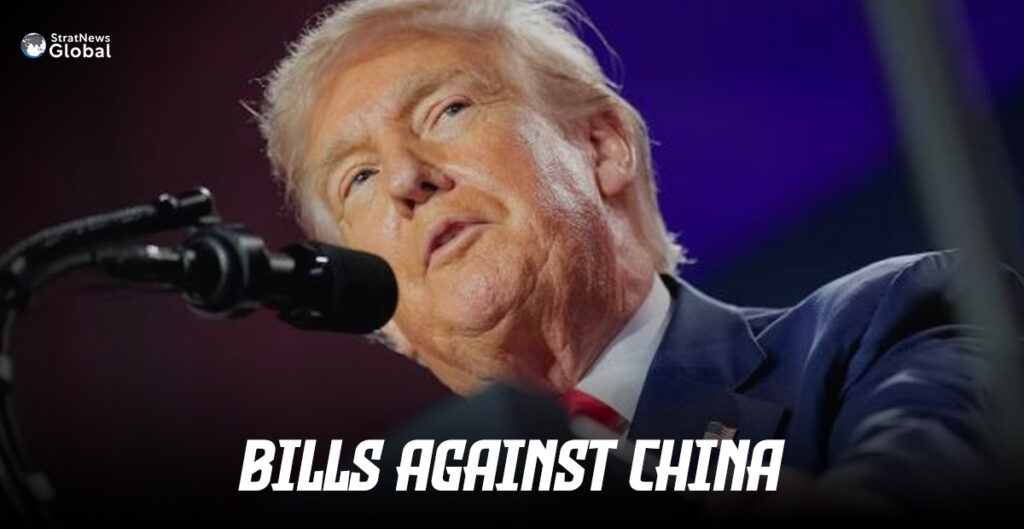
US Democrats And Republicans To Propose Bills Pressuring China As Trump Focuses On Trade
Senators from both the Democratic and Republican parties are preparing to introduce bills this week aimed at pressuring China over its actions against minority groups, political dissidents, and Taiwan, highlighting security and human rights concerns while President Donald Trump concentrates on trade negotiations with Beijing.
The three bills have Democratic and Republican sponsors, a departure from the fierce partisanship dividing Washington.
Trump’s push to reach economic agreements between the world’s two biggest economies has strong support in Congress, especially from his fellow Republicans, but has prompted some China hawks to worry that the U.S. government is de-emphasizing security issues.
“It does appear that President Trump is keen to negotiate some kind of deal with China, and gaps are opening between his approach to China and the approaches of some members of his team, as well as with Congress, which overall has been quite hawkish on China,” said Bonnie Glaser, an Asia expert at the German Marshall Fund of the United States.
Bilateral Trade Relationship
The desire for a hard line on China is one of the few truly bipartisan sentiments in the perennially divided Congress, even as many lawmakers support Trump’s efforts to rebalance the bilateral trade relationship.
“The United States cannot afford to be weak in the face of the People’s Republic of China and its aggression around the world,” said Democrat Jeff Merkley of Oregon, a lead sponsor of all three bills.
“No matter who is in the White House, America’s values of freedom and human rights must remain at the heart of a clear and principled vision that guides our leadership on the global stage,” Merkley said in a statement.
The White House did not immediately comment on the planned legislation.
Trump administration officials have said that Trump remains fully committed to Asia-Pacific security issues as he pursues his trade agenda and a good personal relationship with Chinese President Xi Jinping.
Trade Vs. Security
One bill, co-sponsored by Republican John Cornyn of Texas, would deny entry into the United States of current or former Chinese government officials who were deemed to have engaged in the forced repatriation of members of China’s Uyghur minority.
Human rights groups accuse China of widespread abuses of Uyghurs, a mainly Muslim ethnic minority numbering about 10 million in its northwestern region of Xinjiang. Beijing denies any abuses.
Another, co-sponsored by Republican John Curtis of Utah, aims to help Taiwan as the island faces increasing pressure from China. It would support countries in Latin America and the Caribbean that maintain official diplomatic relations with Taiwan and would take other steps to deepen coordination with Taipei.
China claims the democratically governed island as its own and has never renounced the use of force to bring Taiwan under its control. Beijing has stepped up military and political pressure against the island in recent years.
A third bill, co-sponsored by Republican Dan Sullivan of Alaska, seeks to combat “transnational repression” – efforts by any foreign government to reach beyond its own borders to intimidate, harass or harm dissidents, journalists or activists.
Potential Truce
Facing Trump’s August 12 deadline, top U.S. and Chinese economic officials will meet in Stockholm on Monday to try to tackle their longstanding disputes, hoping to extend a truce by three months and keep sharply higher tariffs at bay.
Trump “cares about opening foreign markets to American trade, and that’s what he’s always cared about. And that is going to run counter to a lot of national security imperatives,” said Michael Sobolik, who specializes in U.S.-China relations at the Hudson Institute.
Democrats and some of Trump’s fellow Republicans raised concerns about the announcement this month that Nvidia will resume sales of its H20 artificial intelligence chips to China, days after its CEO met with Trump. This reversed an AI restriction imposed in April that was designed to keep the most advanced AI chips out of Chinese hands.
(With inputs from Reuters)
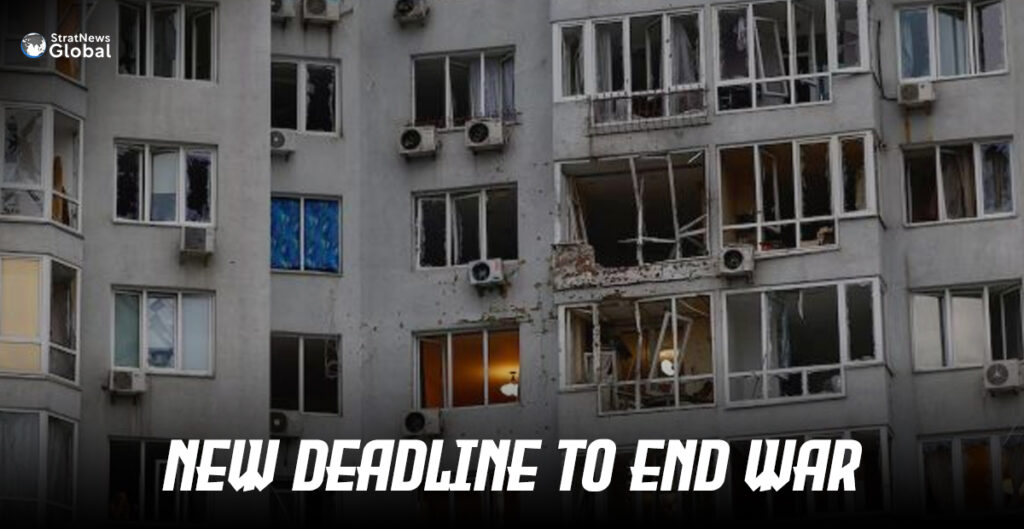
Trump Gives Russia 10 To 12 Days To Act On Ukraine Conflict
U.S. President Donald Trump on Monday announced a fresh deadline of 10 or 12 days for Russia to take steps toward resolving the war in Ukraine, expressing frustration with Russian President Vladimir Putin over the prolonged 3-1/2-year conflict.
Trump has threatened both sanctions on Russia and buyers of its exports unless progress is made. The fresh deadline suggests the U.S. president is prepared to move forward on those threats after previous hesitation to do so.
Speaking in Scotland, where he is holding meetings with European leaders and playing golf, Trump said he was disappointed in Putin and shortening a 50-day deadline he had set on the issue earlier this month.
“I’m going to make a new deadline of about … 10 or 12 days from today,” Trump told reporters during a meeting with British Prime Minister Keir Starmer. “There’s no reason in waiting… We just don’t see any progress being made.”
There was no immediate comment from the Kremlin.
Ukraine Praises Trump
Ukraine welcomed the statement. Andriy Yermak, President Volodymyr Zelenskyy’s chief of staff, thanked Trump in a social media post for “standing firm and delivering a clear message of peace through strength.”
Trump, who has expressed annoyance also with Zelenskyy, has not always followed tough talk about Putin with action, citing what he deems a good relationship that the two men have had previously.
On Monday, Trump indicated he was not interested in more talks with Putin. He said sanctions and tariffs would be used as penalties for Moscow if it did not meet Trump’s demands.
“There’s no reason to wait. If you know what the answer is going to be, why wait? And it would be sanctions and maybe tariffs, secondary tariffs,” Trump said. “I don’t want to do that to Russia. I love the Russian people.”
Ukraine had proposed a summit between Putin and Zelenskyy before the end of August, but the Kremlin has said that timeline was unlikely and that a meeting could only happen as a final step to clinch peace.
Russia’s foreign ministry said on Saturday that if the West wanted real peace with Ukraine, it would stop supplying Kyiv with weapons.
Trump’s Frustration With Putin
Trump has repeatedly voiced exasperation with Putin for pursuing attacks on Ukraine despite U.S. efforts to end the war. Trump has played up successes in other parts of the world where the United States has helped to broker peace agreements and has been flattered by some leaders who suggest he should be given the Nobel Peace Prize.
“I’m disappointed in President Putin,” Trump said on Monday. “I’m going to reduce that 50 days that I gave him to a lesser number because I think I already know the answer what’s going to happen.”
Trump, who is also struggling to achieve a peace deal in Gaza, has touted his role in ending conflicts between India and Pakistan as well as Rwanda and Congo. Before returning to the White House in January, Trump campaigned on a promise to end Russia’s conflict with Ukraine in a day.
“We thought we had that settled numerous times, and then President Putin goes out and starts launching rockets into some city like Kyiv and kills a lot of people in a nursing home or whatever,” Trump said. “And I say that’s not the way to do it.”
(With inputs from Reuters)
Pro-Ukraine Hackers Target Russia’s Aeroflot In Major Cyber Strike
More than 50 round-trip flights were cancelled by Russian airline Aeroflot on Monday, disrupting travel across the country, after two pro-Ukraine hacking groups claimed responsibility for a major cyberattack.
The Kremlin said the situation was worrying, and lawmakers described it as a wake-up call for Russia. Prosecutors confirmed the disruption at the national flag carrier was caused by a hack and opened a criminal investigation.
Digital Attack
Senior lawmaker Anton Gorelkin said Russia was under digital attack.
“We must not forget that the war against our country is being waged on all fronts, including the digital one. And I do not rule out that the ‘hacktivists’ who claimed responsibility for the incident are in the service of unfriendly states,” Gorelkin said in a statement.
Another member of parliament, Anton Nemkin, said investigators must identify not only the attackers but “those who allowed systemic failures in protection”.
Aeroflot did not say how long the problems would take to resolve, but departure boards at Moscow’s Sheremetyevo Airport turned red as flights were cancelled at a time when many Russians take their holidays.
The company’s shares were down by 3.9% by 1533 GMT, underperforming the wider market, which was 1.3% lower.
Silent Crow
A statement purporting to be from a hacking group called Silent Crow said it had carried out the operation together with Belarusian Cyberpartisans, a self-styled hacktivist group that opposes president Alexander Lukashenko and says it wants to liberate Belarus from dictatorship.
“Glory to Ukraine! Long live Belarus!” said the statement in the name of Silent Crow.
Belarusian Cyberpartisans said on its website: “We are helping Ukrainians in their fight with the occupier, carrying out a cyber strike on Aeroflot and paralysing the largest airline in Russia.”
There was no immediate comment from Ukraine.
Silent Crow has previously claimed responsibility for attacks this year on a Russian real estate database, a state telecoms company, a large insurance firm, the Moscow government’s IT department and the Russian office of South Korean carmaker KIA. Some of those resulted in big data leaks.
“The information that we are reading in the public domain is quite alarming. The hacker threat is a threat that remains for all large companies providing services to the population,” Kremlin spokesman Dmitry Peskov said.
Aeroflot said it had cancelled 54 round-trip flights but planned to operate the remaining 206 out of a total of 260 scheduled for Monday. An online departure board for Sheremetyevo airport showed dozens of flights were delayed by hours.
“Specialists are currently working to minimise the impact on the flight schedule and to restore normal service operations,” Aeroflot said.
The statements from Silent Crow and Belarusian Cyberpartisans said the cyberattack was the result of a year-long operation which had deeply penetrated Aeroflot’s network, destroyed 7,000 servers and gained control over the personal computers of employees, including senior managers.
They published screenshots of file directories purportedly from inside Aeroflot’s network and threatened to soon start releasing “the personal data of all Russians who have ever flown Aeroflot”, as well as intercepted conversations and emails of Aeroflot staff.
Angry Passengers
Since Moscow launched its war in Ukraine in February 2022, travellers in Russia have become used to flight disruptions, usually caused by temporary airport closures during drone attacks.
Russian companies and government websites have been subjected to sporadic hacking attacks, but Monday’s was potentially the most damaging, because of the widespread disruption and the high profile of Aeroflot.
Former Aeroflot pilot and aviation expert Andrei Litvinov told Reuters: “This is a serious disaster. Okay, flight delays – you can survive that. But these are losses, huge losses for a state-owned company.”
He added: “If all the correspondence, all the corporate data is exposed – this can have very long-term consequences … First the drones, and now they are blowing up this situation from the inside.”
Passengers vented their anger on social network VK, complaining about a lack of clear information from the airline.
Malena Ashi wrote: “I’ve been sitting at Volgograd airport since 3:30!!!!! The flight has been rescheduled for the third time!!!!!! This time it was rescheduled for approximately 14:50, and it was supposed to depart at 5:00!!!”
Another woman, Yulia Pakhota, posted: “The call centre is unavailable, the website is unavailable, the app is unavailable.
“How can I return a ticket or exchange it for the next flight, as Aeroflot suggests?”
Aeroflot said affected passengers could get a refund or rebook as soon as its systems were back and it was trying to get some passengers seats on other airlines.
Despite Western sanctions on Russia that have drastically limited travel and routes, Aeroflot remains among the top 20 airlines worldwide by passenger numbers, which last year hit 55.3 million people, according to its website.
(With inputs from Reuters)
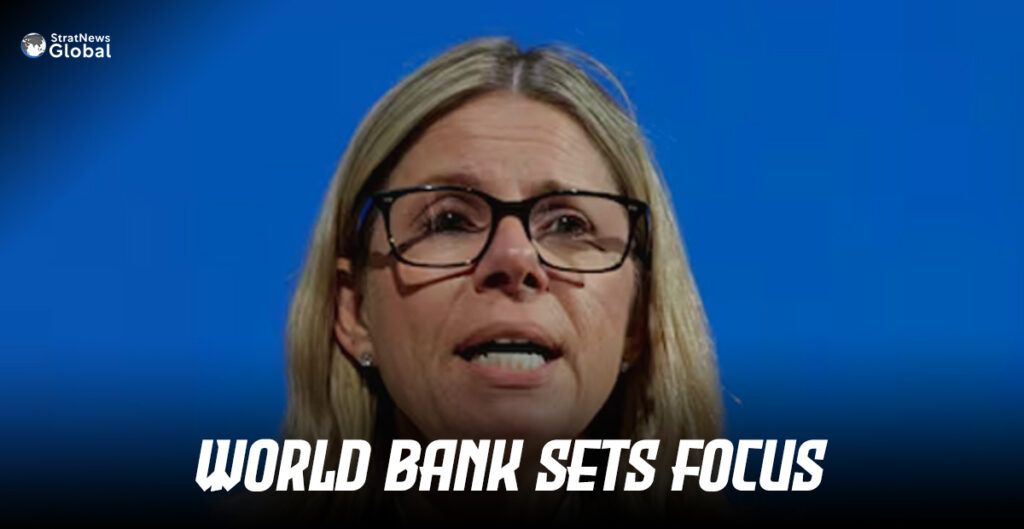
World Bank Prioritises Climate And Gender In Pacific Islands Aid
The World Bank remains committed to addressing climate change and gender equality in the Pacific, managing director of operations Anna Bjerde said during her visit to Australia, despite reduced aid in these sectors from its largest shareholder, the United States.
After meeting Pacific Islands economic ministers in Fiji, Bjerde said countries in the region continued to worry about being exposed to the accelerating effects of climate change, and had grave concerns about food security and rising debt levels.
Six Pacific Island countries are at high risk of debt distress, the bank says.
The World Bank is moving a regional vice president from Washington to Singapore, and will move directors from Australia to Fiji and Papua New Guinea, to be closer to a $3.4 billion Pacific aid programme that has grown seven-fold in 10-15 years, she said in an interview on Monday.
“We are committed to designing projects that really take into account the vulnerabilities of the countries we work in. In this part of the world, countries are vulnerable to the impact of climate change,” she said.
“We haven’t really changed our language around that,” she added.
Pacific road projects designed to be flood-resilient provide better infrastructure that can withstand the changing climate and also be counted in climate finance programmes, Bjerde said.
Women’s Workforce Participation
The World Bank was focused on boosting women’s workforce participation to help lift the region’s economic growth, she said, after meeting women leaders in Fiji who highlighted the need for childcare so women can work.
On Monday, Bjerde also met officials from the Australian government, the largest bilateral donor to the region.
Under reforms introduced last year by its president, Ajay Banga, the World Bank has started to roll out region-wide programmes to have a bigger impact among Pacific countries with small populations.
Eight countries have joined an arrangement that stops small island states from being cut off from the international financial system, while a health programme targeting non-communicable disease will potentially reach 2 million people across the Pacific Ocean and train 16,000 health workers.
A trade programme is also being designed to give access to goods faster and more cheaply, she said.
Banga will attend the region’s annual leaders’ meeting, the Pacific Islands Forum, for the first time in September.
(With inputs from Reuters)
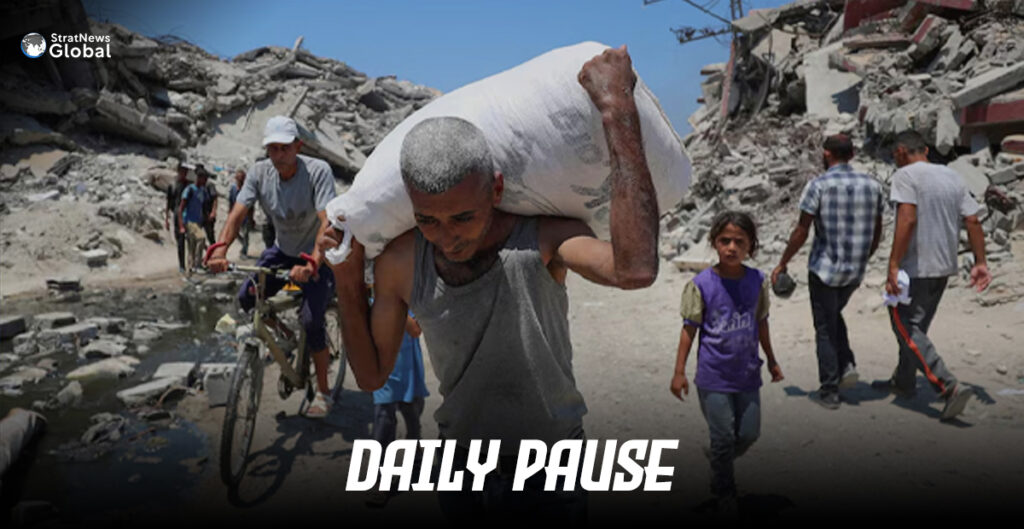
Israel Announces Daily Gaza Ceasefires As Aid Airdrops Start
Israel on Sunday declared a daily 10-hour pause in military operations in parts of Gaza and opened new aid corridors, as Jordan and the United Arab Emirates airdropped humanitarian supplies into the besieged enclave, where harrowing images of starving Palestinians have sparked global concern.
Israel has been facing growing international criticism, which the government rejects, over the humanitarian crisis in Gaza, and indirect ceasefire talks in Doha between Israel and the Palestinian militant group Hamas have broken off with no deal in sight.
U.S. President Donald Trump, on a visit to Scotland, said Israel would have to make a decision on its next steps in Gaza, and said he did not know what would happen after the collapse of ceasefire and hostage-release negotiations with Hamas.
Military activity will stop daily from 10 a.m. to 8 p.m. (0700-1700 GMT) until further notice in Al-Mawasi, a designated humanitarian area along the coast, in central Deir al-Balah and in Gaza City, to the north.
The military said designated secure routes for convoys delivering food and medicine will also be in place between 6 a.m. and 11 p.m. starting from Sunday.
The United Nations food aid agency needs quick approvals by Israel for its trucks to move into Gaza if it is to take advantage of Israel’s planned humanitarian pauses in fighting, a senior World Food Programme official said on Sunday.
United Nations aid chief Tom Fletcher said on Sunday that some movement restrictions appeared to have been eased by Israel in Gaza on Sunday after Israel decided to “support a one-week scale-up of aid.”
Initial reports indicate that more than 100 truckloads of aid were collected from crossings to be transported into Gaza, Fletcher said in a statement.
“This is progress, but vast amounts of aid are needed to stave off famine and a catastrophic health crisis,” he said.
Airdrops Begin
In their first airdrop in months, Jordan and the United Arab Emirates parachuted 25 tons of aid into Gaza on Sunday, a Jordanian official said, but added that it was not a substitute for delivery by land.
Palestinian health officials in Gaza City said at least 10 people were injured by falling aid boxes.
Work on a UAE project to run a new pipeline that will supply water from a desalination facility in neighbouring Egypt to around 600,000 Gazans along the coast will also begin in a few days, the Israeli military said.
Dozens of Gazans have died of malnutrition in recent weeks, according to the Gaza Health Ministry in the Hamas-run enclave.
The ministry reported six new deaths over the past 24 hours due to malnutrition, bringing the total deaths from malnutrition and hunger since the war began in 2023 to 133, including 87 children.
On Saturday, a 5-month-old baby, Zainab Abu Haleeb, died of malnutrition at Nasser Hospital, health workers said.
“Three months inside the hospital and this is what I get in return, that she is dead,” said her mother, Israa Abu Haleeb, as the baby’s father held their daughter’s body wrapped in a white shroud.
The Egyptian Red Crescent said it was sending more than 100 trucks carrying over 1,200 metric tons of food to southern Gaza on Sunday. Some had been looted in the area of Khan Younis after entering Gaza, residents said.
Aid groups said last week there was mass hunger among Gaza’s 2.2 million people, and international alarm over the humanitarian situation has increased.
A group of 25 states, including Britain, France and Canada, last week said Israel’s denial of aid was unacceptable.
The military spokesperson said Israel was committed to international law and monitors the humanitarian situation daily.
Brigadier General Effie Defrin said there was no starvation in Gaza, but appeared to acknowledge conditions were critical.
“When we start approaching a problematic line (threshold), then the IDF works to let in humanitarian aid,” he said. “That’s what happened over the weekend.”
Israel cut off aid to Gaza from the start of March to pressure Hamas into giving up dozens of hostages it still holds, and reopened aid with new restrictions in May.
Israel says it has been allowing aid but must prevent it from being diverted by militants and blames Hamas for the suffering of Gaza’s people.
Hope, Uncertainty
Many Gazans expressed some relief at Sunday’s announcement, but said fighting must end.
“People are happy that large amounts of food aid will come into Gaza,” said Tamer Al-Burai, a business owner. “We hope today marks a first step in ending this war that burned everything up.”
Health officials at Al-Awda and Al-Aqsa Hospitals in central Gaza said Israeli firing killed at least 17 people waiting for aid trucks.
Israel’s military said it fired warning shots at suspects endangering troops and was unaware of any casualties.
Prime Minister Benjamin Netanyahu said Israel would continue to allow the entry of humanitarian supplies, whether it is fighting or negotiating a ceasefire, and vowed to press on with the campaign until “complete victory”.
Hamas said Israel was continuing its military offensive.
“What is happening isn’t a humanitarian truce,” said Hamas official Ali Baraka.
The war began on October 7, 2023, when Hamas-led fighters stormed southern Israel, killing 1,200 people, mostly civilians, and taking 251 hostages back to Gaza, according to Israeli tallies.
Since then, Israel’s offensive has killed nearly 60,000 people in Gaza, mostly civilians, according to Gaza health officials, reduced much of the enclave to ruins and displaced nearly the entire population.
(With inputs from Reuters)
Gunman Kills Five In Bangkok Market Before Taking Own Life
A gunman opened fire at a market in Thailand‘s capital, Bangkok, on Monday, killing five individuals, including security guards and a merchant, before fatally shooting himself, according to a Thai police official.
The gunman initially killed three security guards, and then a fourth with whom he had a personal quarrel, Siam Bunsom, commander-in-chief of the Metropolitan Police Bureau, said.
“He reloaded and ran into the market, killing a female merchant and injuring another,” Siam told reporters.
In video footage shared by police, a suspect in a white hat and a backpack slung on his chest is seen walking through a parking lot at the Or Tor Kor Market.
Duangnapa Yeerunsiri, 38, who was at the market to buy groceries with her boyfriend and sister, was about to leave when she heard the shots ringing out.
“He fired many shots in rapid succession,” she said, referring to the gunman. “So we ducked down in the car and quickly called the police.”
No Tourist Killed
No tourists were killed or injured, said Sanong Saengmani, a police official in Bangkok’s Bang Sue district, where the market, which mainly sells agricultural produce, is located.
Tourism is a key economic driver in Thailand, Southeast Asia’s second-largest economy, where growth has been sluggish, and such incidents can potentially dampen sentiment.
Gun violence and gun ownership are not uncommon in Thailand. In October 2023, a 14-year-old suspect used a modified handgun to kill two people and injure five others at a luxury mall in central Bangkok.
A year earlier, a former police officer killed 36 people, including 22 children, in a gun-and-knife attack at a nursery in eastern Thailand.
(With inputs from Reuters)
Thailand, Cambodia Agree On Ceasefire But Border Resolution Uncertain
Thailand and Cambodia have agreed “to an immediate and unconditional ceasefire”, that’s according to Malaysia’s Prime Minister Anwar Ibrahim. “We have seen a very positive development and results that could augur well for Cambodia and Thailand.”
The ceasefire announcement followed talks between Cambodia’s Prime Minister Hun Manet and Thailand’s acting PM Phumtham Weychayachai, at Anwar Ibrahim’s residence. The key question is whether this will hold and for how long? Or is there a path towards a permanent resolution?
Suchitra Durai, who served as India’s ambassador in Thailand for four years, retiring in 2022, pointed out that “This is a very old dispute, and there is a strong feeling on both sides.”
But as she underscored in a chat on The Gist, “Confidence between the two governments was of a high order. In fact, even cabinet meetings were held very interestingly, you know, in both capitals, joint cabinet meetings, it showed that there was, there’s a high degree of convergence and cooperation.”
In fact, the Shinawatra family in Thailand and Hun Manet’s family including his father Hun Sen, were very close and former PM Thaksin Shinawatra during his long years in exile after being ousted by the army, was an economic adviser to Hun Sen. This is something which is common to the region.
But it may be that Hun Sen had expectations from Thaksin that was not delivered. How else does one explain a confidential conversation between him and Thaksin’s daughter Paetongtarn, when she was prime minister, being leaked triggering her suspension.
Hun Sen may have felt let down when a joint plan for exploration of the Gulf of Thailand for gas deposits fell by the wayside. Then there was the crackdown on scam centres based in Cambodia but operating on electricity supplied by Thailand.
There’s also speculation that the politically powerful Thai Army may have played a role. Whatever happened, it’s clear that if an election were held now the Pheu Thai party of the Shinawatra family could lose.
Tune in for more in this conversation with Suchitra Durai, former ambassador to Thailand.