

Support us by contributing to StratNewsGlobal on the following UPI ID
ultramodern@hdfcbank

Strategic affairs is our game, South Asia and beyond our playground. Put together by an experienced team led by Nitin A. Gokhale. Our focus is on strategic affairs, foreign policy and international relations, with higher quality reportage, analysis and commentary with new tie-ups across the South Asian region.
You can support our endeavours. Visit us at www.stratnewsglobal.com and follow us on YouTube, Twitter, Facebook and Instagram.
र 500 per month
र 1000 per month
र 5000 per year
र 10000 per year
Donate an amount of your choice
र 500 per month
Donate र 500 per month

र 1000 per month
Donate र 1000 per month
र 5000 per year
Donate र 5,000 per year
र 10000 per year
Donate र 10,000 per year
Donate an amount of your choice
Donate an amount of your choice

Divided Taiwan: KMT Could Cripple Lai’s Agenda, Says Expert
Tensions in the Indo-Pacific have escalated this week following the outcome of Taiwan’s closely watched elections.
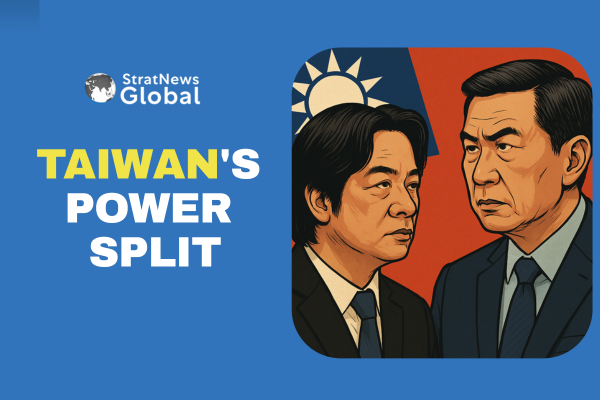
Lai Ching-te of the ruling Democratic Progressive Party (DPP) won the presidency, while the opposition Kuomintang (KMT) secured a majority in the legislature marking a rare split in executive and legislative control after Saturday (27th July) voting in Taiwan.
Taiwan also held the first round of its unprecedented “Great Recall” vote on 27 July, a mass recall effort targeting 24 Kuomintang (KMT) legislators, with a second round for seven more lawmakers scheduled for late August. This large-scale public effort, the biggest of its kind in Taiwan’s democratic history, allows citizens to unseat sitting lawmakers via district-level ballots triggered by petitions. All 24 KMT legislators survived the recall attempt.
This marks the first time Taiwan has experienced such a divided mandate, setting the stage for potentially uneasy cooperation between two deeply contrasting political forces. The Democratic Progressive Party (DPP), established in 1986 during Taiwan’s democratic transition, is widely regarded as pro-independence and sceptical of China, often championing a distinct Taiwanese identity and stronger defence ties with Western allies. In contrast, the Kuomintang (KMT), also known as the Nationalist Party, was founded in 1919 on the Chinese mainland. After losing the civil war, it relocated to Taiwan in 1949 and has since promoted engagement with Beijing through cultural and economic collaboration, favouring peaceful cross-strait relations.
Commenting on the political outcome, Suyash Desai, a political scientist specialising in China’s defence and foreign policy, in a conversation with StratNews Global noted: “This is the first time that two different parties are in power, with the DPP’s Lai Ching-te as President and the Kuomintang holding a parliamentary majority. Looking ahead, the KMT is likely to obstruct the DPP’s agenda in the legislature, potentially leading to policy paralysis.”
Suyash added, “Since the past 30 years, KMT has believed in deterrence through engagement. Thus, the KMT would push for policies of engagement with China on cultural, economic and other issues. This would also perhaps affect Taiwan’s defence posture and spending.”
Chinese Social Media Reactions
On Chinese social media platforms, the elections became a subject of ridicule, particularly among nationalist users known as “Little Pinks.” Many mocked the concept of democracy, sarcastically claiming that “in a democracy, losing is inevitable,” using such commentary to undermine Taiwan’s political system.
Although the term “democracy” is often restricted on Chinese platforms, posts criticising or mocking it were widely allowed in recent days. Phrases like “democracies are meant to lose” trended on platforms like Weibo, Zhihu and WeChat, aligning with Beijing’s anti-Taiwan and anti-Western stance.
Beijing Reacts Sharply
Reacting to the 27 July recall vote, where the KMT retained all seats, China’s Taiwan Affairs Office accused the DPP of deepening political polarisation and undermining democratic values. Spokesperson Chen Binhua accused the DPP of pursuing “one-party dominance” through pro-independence ideology and using repressive tactics to silence dissent, creating what he described as a “green terror.”
“The vote reflects growing discontent with the DPP’s political manoeuvring,” Chen said, suggesting the outcome exposes the party’s “hypocrisy” in promoting democracy while allegedly practising authoritarian control.
International Reactions And Historical Frictions
The British Defence Secretary said the UK would support Taiwan in any conflict with China in the Pacific, amid rising tensions.
On 27 July, Chinese Ambassador to Germany Deng Hongbo reaffirmed Beijing’s longstanding position on Taiwan’s sovereignty, declaring that “the historical and legal fact of Taiwan’s return to China is indisputable.”
China’s History of Election Meddling
China has faced repeated allegations of interfering in elections across the Indo-Pacific. From Taiwan to the Solomon Islands (2024), Australia (2016 & 2019), and the Marshall Islands (2023), Beijing’s influence operations have raised concern among democracies over political subversion tactics, often aimed at swaying public opinion or aiding China-friendly candidates.
What Lies Ahead
As Taiwan prepares for the second round of recall votes in August 2025, the stakes remain high. The failure of the first recall effort may embolden the KMT, but it also highlights the limits of the DPP’s current strategy. With a divided legislature and executive, Taiwan’s political system faces an internal stress test, while its external challenges most notably from Beijing continue to mount.
Taiwan’s political split will test President Lai’s leadership and the resilience of its democracy under pressure at home and from China.
Cambodian Border Refugees Await Return Home After Ceasefire With Thailand
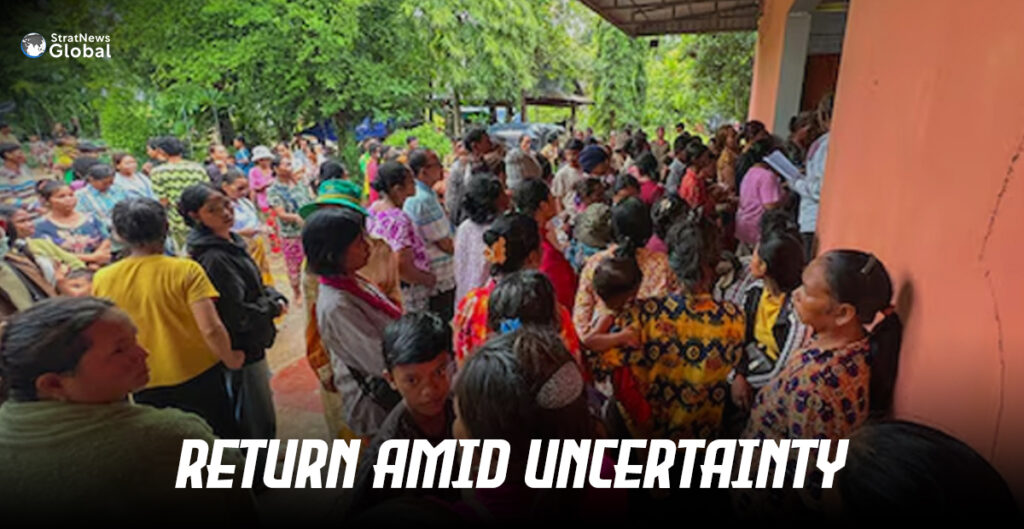
Along Cambodia‘s northwestern border, residents in temporary refugee shelters awaited their return home on Tuesday following a fierce five-day conflict with neighbouring Thailand, which concluded with a ceasefire taking effect Monday night.
“If they (the government) say that my village is safe to return, then I would go back home and reunite with my family because here is not as easy to live as my home,” said Meun Saray, a 45-year-old woman holding a child under a tarpaulin shelter in a muddy field near the border town of Samraong.
Residents Flee
Samraong, capital of Cambodia’s Oddar Meanchey province, was almost completely deserted on Monday, with most of its shops shuttered and its roads eerily quiet after many of its 70,000 residents fled the conflict.
About 320 km (200 miles) from the capital Phnom Penh, the town was caught in the middle of the most intense fighting between the two countries in more than a decade, when a simmering border dispute boiled over into a violent military confrontation starting on July 24.
“People left because they were scared of fighting,” said Inn Theary, a local resident and street vendor who couldn’t afford to leave town.
“Some people went to live with their relatives and some others went to stay in the refugee camp,” she said. “However, people who are very poor like me, we stay here to make money to feed my children.”
The town is directly south of the O Smach border crossing, and shelling and gunfire were heard on Monday afternoon, said Meach Sovannara, head of the opposition New Generation Party, adding some local villagers were injured after their homes were hit by stray bullets.
“Bullets from gunfire don’t know whether people are Cambodian or Thai,” he said.
“We all know that the war is a disaster. Separated families – they can’t farm, do business. Students can’t study. People wounded, dead.”
Border Conflict
A decades-long border dispute between the two Southeast Asian neighbours has escalated since late May, when a Cambodian soldier was killed in a skirmish and both countries began reinforcing troops along their 800-km (500-mile) border. Both sides accused the other of starting last week’s fighting.
The two neighbours agreed an “immediate and unconditional” ceasefire, effective from midnight, at a meeting in Malaysia on Monday after nearly a week of hostilities that saw at least 38 mostly civilian deaths.
Small clashes continued to break out after the ceasefire came into effect, though acting Thai Prime Minister Phumtham Wechayachai told reporters on Tuesday that the situation was now calm.
At the refugee camp, residents are still wary.
“I really wanted to return home, but I dare not go now yet,” said Seun Ruot, a 47-year-old housewife. “I’d rather wait later today or tomorrow to see what the situation looks like.”
(With inputs from Reuters)
Beyond Atmanirbhar: Adani Defence Targets Global Ammo Market
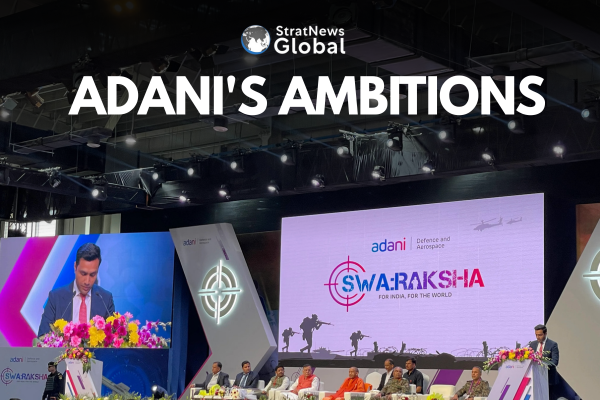
India’s push for defence self-reliance is gaining momentum, and Adani Defence and Aerospace is at the forefront of this transformation.
The company is rapidly expanding its small arms and ammunition production, with its advanced facility already supplying NATO-grade ammunition to international markets and poised to become a cornerstone of the nation’s Atmanirbhar Bharat initiative. Its state-of-the-art facility is already exporting NATO-grade ammunition, positioning the company as a cornerstone of India’s Atmanirbhar Bharat (self-reliant India) vision.
Operational since April 2024, Adani’s ammunition manufacturing complex has achieved a remarkable feat: transitioning from commissioning to exporting in record time. By June 2024, just two months after becoming fully operational, the company began shipping NATO-standard 7.62x51mm and 5.56x45mm rounds to international clients. This quick turnaround is a point of pride for company officials.
While specific client details remain confidential due to non-disclosure agreements, Adani has confirmed that exports are now a key revenue driver. The company aims for overseas markets to account for 25% of its overall turnover by 2030.
Company officials told Stratnewsglobal that their production line boasts near 100% indigenization, encompassing every step from brass strip processing to case manufacturing and final assembly. “We start from the brass strip. The cup, the case, the bullet, everything is made in-house,” a senior executive explained during a recent walkthrough of the Kanpur facility. “The only component currently imported is the primer, which we plan to indigenize within the next two years fully.”
By 2027, Adani Defence expects to achieve complete self-reliance for small and medium-calibre ammunition, eliminating any dependence on foreign components.
The company also highlights a 99.45% quality acceptance rate over the past 15 months, a metric it attributes to rigorous quality control and advanced testing infrastructure. “Our goal is not just volume, but trust. Every round must perform with absolute consistency. The frontline soldier should never have to think twice before pulling the trigger,” the executive emphasized.
The Kanpur facility currently spans 500 acres, with an additional 250 acres earmarked for future expansion. Adani’s ambition is significant: to meet 90-100% of India’s small, medium, and large-calibre ammunition needs by 2030, provided procurement pipelines align and demand forecasts remain stable.
In parallel, Adani is actively working on localizing propellant production. This initiative aims to reduce reliance on imports and public-sector suppliers like Munitions India Limited (MIL). Despite its proximity to traditional ordnance manufacturing hubs, Adani Defence maintains that it is not looking to displace public-sector players. “There’s more than enough demand. Our focus is not to compete, but to complement and to raise the bar,” the executive stated.
Adani’s aggressive entry into the small arms and ammunition segment signals a broader transformation within India’s defence ecosystem. Private sector players are increasingly sharing space with public-sector giants, driven by government reforms, a push for indigenous capabilities, and export-driven strategies, all converging to establish India as a credible global defence supplier.
Jaishankar: Op. Sindoor “New Normal”, Reiterates India’s Red Lines On Terrorism
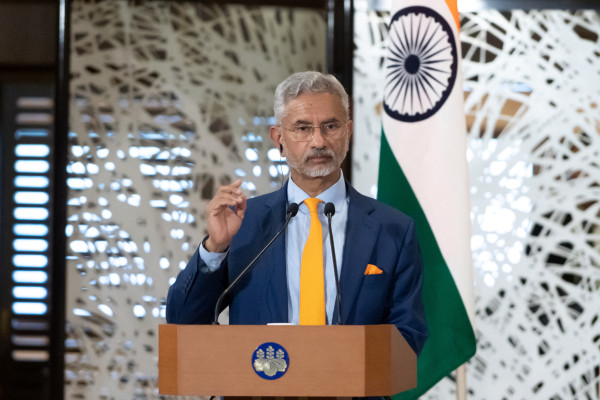
Operation Sindoor was a “new normal” in India’s anti-terror response, External Affairs Minister S Jaishankar told the Lok Sabha on Monday. He was speaking during the special debate on the military operation launched by India in the wake of the Pahalgam massacre.
“I think our objectives are very clear. We wanted to send a message to the terrorists, do not continue the support for terrorism. And on the morning of May 7th, that message went home loud and clear,” he said, referring to India’s strike on terrorist targets.
After Pahalgam, India had already adopted a pro-active policy in the UN Security Council, where Pakistan is a non-permanent member.
“If you look at the Security Council statement of 25th April the members condemned in the strongest terms the terrorist attack, they affirmed terrorism in all its forms and manifestations constitutes one of the most serious threats to international peace and security … and the Council underlined the need to hold the perpetrators, organizers, financiers and sponsors … accountable.”
He noted that Indian diplomacy also ensured The Resistance Front, which claimed responsibility for the Pahalgam attack and which Pakistan had defended, was designated a global terrorist organisation by the US Government.
He ticked off the fact that the Quad and BRICS both condemned the Pahalgam massacre, with President Putin saying “This brutal crime has no justification whatsoever.”
He confirmed that no less than US Vice President JD Vance had called up Prime Minister Modi on 9th May, warning of a “massive Pakistani attack in the next few hours,” to which the latter responded “If such an attack happens it would meet with an appropriate response from our side.”
On May 10th, India made it clear that if Pakistan wanted a ceasefire, that request must come through their DGMO and that was how the request came.
Jaishankar stressed on one point, “At no stage in any conversation with the US was there any linkage with trade and what was going on. There was no talk between the prime minister and the president from the 22nd of April when Trump called to convey his sympathy and the 17th of June when he called up the prime minister in Canada to explain why he could not meet.”
He concluded by reiterating five the red lines laid down by the prime minister: terrorists will not be treated as proxies, cross-border terrorism will get an appropriate response, terror and talks not possible together, no yielding to nuclear blackmail and blood and water cannot flow together.
Trump Rules Out Xi Summit But Considers China Visit
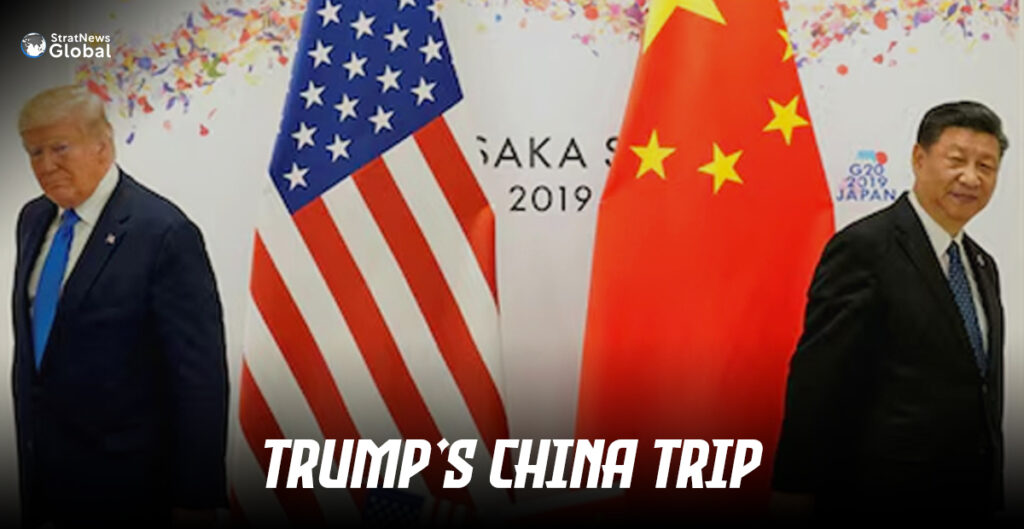
U.S. President Donald Trump said on Tuesday he is not pursuing a summit with Chinese President Xi Jinping but may visit China at Xi’s invitation, which he confirmed had been extended.
“I may go to China, but it would only be at the invitation of President Xi, which has been extended. Otherwise, no interest!,” Trump said on Truth Social.
Aides to Trump and Xi have discussed a potential meeting between the leaders during a trip by the U.S. president to Asia later this year, sources previously told Reuters.
A trip would be the first face-to-face encounter between the men since Trump’s second term in office, at a time when trade and security tensions between the two superpower rivals remain elevated.
While plans for a meeting have not been finalised, discussions on both sides of the Pacific have included a possible Trump stopover around the time of the Asia-Pacific Economic Cooperation summit in South Korea or talks on the sidelines of the October 30-November 1 event, the people said.
A new flare-up of tariffs and export controls would likely impact any plans for a meeting with Xi.
Third Round Of Talks
Top U.S. and Chinese economic officials met in Stockholm on Monday for more than five hours of talks aimed at resolving longstanding economic disputes at the centre of a trade war between the world’s top two economies, seeking to extend a truce by three months.
U.S. Treasury Chief Scott Bessent was part of a U.S. negotiating team that arrived at Rosenbad, the Swedish prime minister’s office in central Stockholm, in the early afternoon. China’s Vice Premier He Lifeng was also seen at the venue on video footage.
China is facing an August 12 deadline to reach a durable tariff agreement with President Donald Trump’s administration, after Beijing and Washington reached preliminary deals in May and June to end weeks of escalating tit-for-tat tariffs and a cut-off of rare earth minerals.
Negotiators from the two sides were seen exiting the office around 8 p.m. (1800 GMT) and did not stop to speak with reporters. The discussions are expected to resume on Tuesday.
Trump touched on the talks during a wide-ranging press conference with British Prime Minister Keir Starmer in Scotland.
“I’d love to see China open up their country,” Trump said.
(With inputs from Reuters)
Trump Administration Considers Proposals For Access To Myanmar’s Rare Earths
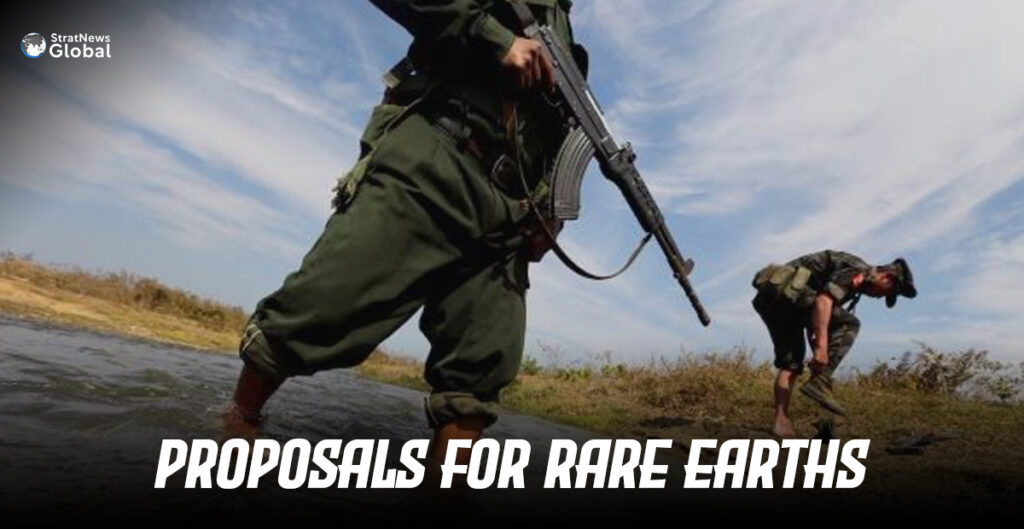
The Trump administration has reviewed rival proposals that could reshape U.S. policy on Myanmar, seeking to redirect the country’s substantial rare earth mineral resources away from China, according to four sources familiar with the talks.
Nothing has been decided and experts say there are huge logistical obstacles, but if the ideas are ever acted upon, Washington may need to strike a deal with the ethnic rebels controlling most of Myanmar’s rich deposits of heavy rare earths.
Among the proposals are one advocating talks with Myanmar’s ruling junta to get a peace deal with the Kachin Independence Army rebels and another calling for the U.S. to instead work directly with the KIA without engaging the junta.
Washington has avoided direct talks with the country’s military leaders following their overthrow of the country’s democratically elected government in 2021.
The ideas have been proposed to administration officials by a U.S. business lobbyist, a former adviser to Aung San Suu Kyi, in indirect talks with the KIA and some outside experts, the sources said.
Rare Earths
Rare earths are a group of 17 metals used to make magnets that turn power into motion. So-called heavy rare earths are used to build fighter jets and other high-performance weaponry. The U.S. produces very small amounts of heavy rare earths and is reliant on imports.
Securing supplies of the minerals is a major focus of the Trump administration in its strategic competition with China, which is responsible for nearly 90% of global processing capacity, according to the International Energy Agency.
Engaging the junta would be a sharp departure for the United States, given U.S. sanctions on the military leaders and the violence committed against the Rohingya minority that Washington calls genocide and crimes against humanity.
Last week, the Trump administration lifted sanctions designations on several junta allies, but U.S. officials said this does not indicate any broader shift in U.S. policy toward Myanmar.
Easing Tariff Threats
The ideas pitched to the U.S. administration also include easing U.S. President Donald Trump’s threatened 40% tariffs on the country, pulling back sanctions against the junta and its allies, working with India to process some heavy rare earths exported from Myanmar, and appointing a special envoy to execute these tasks, people familiar with the matter said.
Some of these suggestions were discussed in a July 17 meeting in Vice President JD Vance’s offices that included Adam Castillo, a former head of the American Chamber of Commerce in Myanmar who runs a security firm in the country, a person close to Vance’s office said. Among those present were advisers to Vance on Asian affairs and trade. Vance himself did not attend, the source said.
Castillo said he suggested to U.S. officials that the United States could play a peace-broker role in Myanmar and urged Washington to take a page out of China’s playbook by first brokering a bilateral self-governance deal between the Myanmar military and the KIA.
Myanmar’s ruling junta and the KIA did not respond to a request for comment.
While Vance’s office declined to comment on Castillo’s visit to the White House, one person familiar with the situation said the Trump administration has been reviewing policy on Myanmar, also known as Burma, since Trump’s January inauguration and had weighed direct discussions with the junta over trade and tariffs.
The White House declined to comment.
Reviewing Myanmar Policy
The White House discussions were described as exploratory and in early stages by people familiar with them, who added the talks may result in no shift in strategy at all by Trump, given the administration’s wariness about intervening in foreign conflicts and in Myanmar’s complex crisis.
“The officials took this meeting as a courtesy to the American business community and to support President Trump’s efforts to balance the U.S. $579 (million) trade deficit with Burma,” a senior administration official said when asked about the July 17 meeting.
Castillo, who describes Myanmar’s rare earth deposits as China’s “golden goose,” said he told U.S. officials that key ethnic armed groups – particularly the KIA – were tired of being exploited by China and wanted to work with the United States.
Mines in Myanmar’s Kachin region are major producers of heavy rare earths that are exported to China for processing.
Quad Grouping
He said he had repeatedly urged officials in Washington to pursue a deal with the KIA that includes cooperation with U.S. partners in the Quad grouping – specifically India – for resource processing and eventual heavy rare earths supply to the United States. The so-called Quad grouping brings together the United States with India, as well as Australia and Japan.
India’s Ministry of Mines did not respond to an email seeking comment.
An Indian government official, speaking on condition of anonymity, said he was unaware of whether the Trump administration had communicated any such plan to India but stressed that such a move would take several years to materialize because it would require infrastructure to be built for processing rare earths.
Another pitch to the White House was more in line with the Myanmar policy Trump inherited from former President Joe Biden.
Sean Turnell, an Australian economist and former adviser to Suu Kyi, whose government the junta toppled in 2021, said his rare earths proposal was to encourage the Trump administration to continue supporting Myanmar’s democratic forces.
In a visit to Washington earlier this year, Turnell said he met with officials from the State Department, the White House National Security Council and Congress, and urged continued support for the country’s opposition.
“One of the pitches was that the U.S. could access rare earths via KIA etc,” he said, adding that the group wants to diversify away from China.
There have also been multiple discussions between U.S. officials and the Kachin rebel group on rare earths through interlocutors in recent months, said a person with knowledge of the talks, which have not previously been reported.
Obstacles
In the years since the coup, Myanmar has been ravaged by civil war and the junta and its allies have been pushed out of much of the country’s borderlands, including the rare earths mining belt currently under control of the KIA.
A rare earths industry source said that U.S. officials had reached out around three months ago, following the Kachin takeover of the Chipwe-Pangwa mining belt, to ask for an overview of the Kachin rare earths mining industry.
The person added that any new, major rare earths supply chain, which would require moving the minerals out of remote and mountainous Kachin State into India and onward, may not be feasible.
Swedish author Bertil Lintner, a leading expert on Kachin State, said the idea of the United States obtaining rare earths from Myanmar from under the nose of China seemed “totally crazy” given the unforgiving mountainous terrain and primitive logistics.
“If they want to transport the rare earths from these mines, which are all on the Chinese border, to India, there’s only one road,” Lintner said. “And the Chinese would certainly step in and stop it.”
For its part, the junta appears eager to engage with Washington after years of isolation.
When Trump threatened new tariffs on Myanmar’s U.S.-bound exports this month as part of his global trade offensive, he did so in a signed letter addressed personally to the junta’s chief, Min Aung Hlaing.
Min Aung Hlaing responded by lavishing praise on Trump for his “strong leadership” while asking for lower rates and the lifting of sanctions. He said he was ready to send a negotiating team to Washington, if needed.
Senior Trump administration officials said the decision to lift some sanctions was unrelated to the general’s letter.
(With inputs from Reuters)
Pentagon Quietly Shifts $934M From Nuclear Programme For Trump’s Qatari Jet Renovation
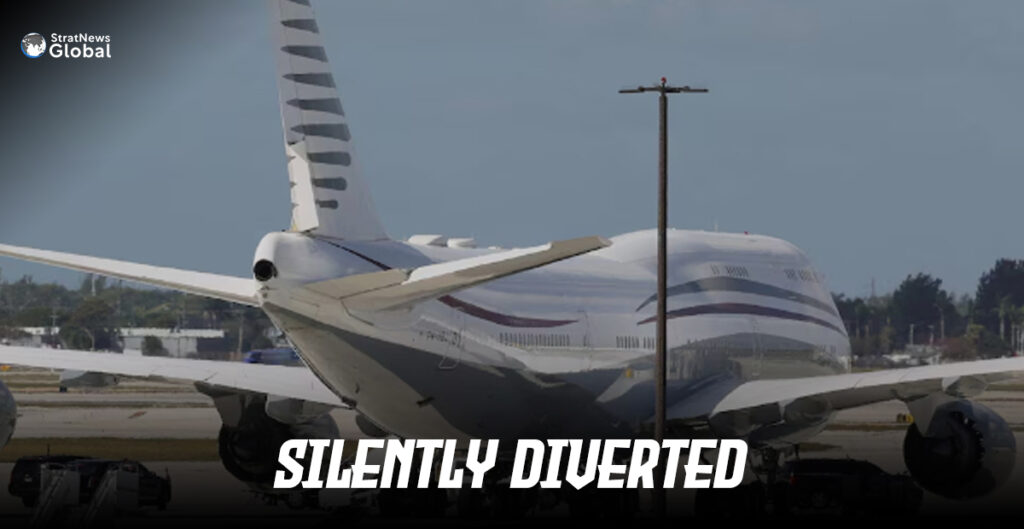
A recent financial decision by the U.S. Department of Defence has sparked widespread controversy, following revelations that the Pentagon has redirected a significant portion of funding from a key nuclear weapons modernisation programme to finance the refurbishment of a Boeing 747-8 jet.
This aircraft, originally gifted by Qatar, is set to serve as a future Air Force One for President Donald Trump.
The reallocation, ordered by Defence Secretary Pete Hegseth, involved the transfer of approximately $934 million.
Pulled From ‘Sentinel’ Programme
The money was pulled from the “Sentinel” programme, a critical initiative originally budgeted at $77.7 billion to overhaul America’s ground-based nuclear missile systems.
The Sentinel effort has already encountered significant setbacks, with cost overruns and delays pushing its expected total to over $125 billion—and potentially as high as $160 billion, based on internal Pentagon projections from last year.
At first, the Pentagon claimed the funds would support a “classified” operation.
However, Air Force insiders later confirmed that at least part of the reallocated budget will go toward adapting the Qatari-donated Boeing 747-8 to meet President Trump’s operational and personal requirements.
This revelation has drawn ire from critics who say the “free” aircraft has effectively become a multi-million-dollar taxpayer liability.
The $400 million luxury jet, handed over by Qatar in May, has been mired in controversy since its announcement.
Ethical Concerns
Critics have raised alarms over ethical concerns and potential conflicts of interest surrounding President Trump’s acceptance of the aircraft.
In June, Air Force Secretary Troy Meink stated that refurbishing the plane would cost “less than $400 million,” but sceptics remain unconvinced.
Despite ongoing bipartisan criticism, the Trump administration has withheld most details of the project, consistently invoking national security classifications.
This lack of transparency has deepened public concern, especially after aviation analysts told NBC News in May that the actual cost of fully retrofitting the aircraft could exceed $1 billion and require years to complete—separate from the $4 billion already being spent on new, custom-built presidential aircraft from Boeing.
President Trump has brushed aside the criticism.
In May, he defended the decision to accept the jet, stating, “I would never be one to turn down that kind of an offer. I mean, I could be a stupid person and say, ‘No, we don’t want a free, very expensive airplane.’”
The repurposed 747 is intended to serve as President Trump’s Air Force One during his tenure and is expected to be transferred to his presidential library once he leaves office.
The arrangement is part of a broader fundraising initiative for the Trump Presidential Library, which has also received notable contributions, including $16 million in settlements from Disney and Paramount related to defamation lawsuits brought by Trump.
(With inputs from IBNS)
Neo-Nazi Arrested In Germany For Wearing Hitler Costume In Public
A 40-year-old man identified as a neo-Nazi was taken into custody in early July in Hohenstein-Ernstthal, Germany, after appearing in public dressed as Adolf Hitler.
The arrest was confirmed by local authorities and reported by international news outlets.
According to reports, the individual wore a brown shirt emblazoned with the name “Adolf” and the number 8—symbolism that neo-Nazi circles have adopted as shorthand for the letter ‘H,’ representing Hitler. A more widely recognised version of this coded messaging is the number ‘88,’ interpreted as “Heil Hitler.”
Wearing a rubber mask styled to resemble Hitler’s face, the man was seen drinking beer in full view of spectators during a racing event, apparently drawing laughter and attention from bystanders.
Glorifying Hitler
Although German law strictly prohibits glorification of the Nazi regime and its leader—under whom six million Jews and millions of others were murdered during the Holocaust—The Jewish Chronicle reported that a surprising number of racegoers were eager to pose for photos with the Hitler impersonator.
Security teams quickly intervened and detained the individual at the venue before transporting him to a police facility for further interrogation.
“This kind of conduct has absolutely no place at our racing circuit. We acted without delay as soon as he was identified,” stated the event’s race director, who further confirmed that the individual would be permanently barred from attending future events.
Under German law, displaying the symbols or gestures of banned organisations is a criminal offence.
If convicted, the man could face a monetary penalty running into tens of thousands of euros, and a judge may also impose a prison sentence of up to three years, the Jewish Chronicle reported.
(With inputs from IBNS)
Thailand-Cambodia Border Peaceful As Military Talks Are Delayed
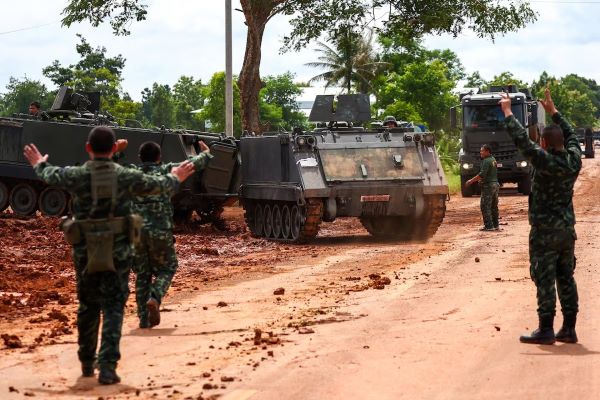
The Thailand – Cambodia border, which has seen intense fighting since last week, remained calm on Tuesday after a ceasefire agreement, while military leaders from both countries are scheduled to hold discussions later in the day, according to acting Thai Prime Minister Phumtham Wechayachai.
Phumtham and Cambodian Prime Minister Hun Manet met in Malaysia on Monday and agreed to halt their deadliest conflict in more than a decade following five days of intense fighting that killed at least 38 people, mostly civilians, and displaced over 300,000.
The Thai army said in a statement there had been attacks by Cambodian troops in at least five locations early on Tuesday, violating the ceasefire that had come into effect from midnight, and Thailand’s military had retaliated proportionately.
Phumtham played down the clashes, and said he had spoken with Cambodia’s defence minister ahead of the talks between military commanders.
“There is no escalation,” Phumtham told reporters. “Right now things are calm.”
Military Officials Yet To Hold Talks
Thai military officials in two areas had met with their Cambodian counterparts, but commanders along the stretch of the frontier that has seen the heaviest fighting during the conflict were yet to hold talks, Thai army spokesman Major Gen. Winthai Suvaree said in a statement.
The parley had been scheduled for 10 a.m. local time (0300 GMT), but it was postponed and no new time had yet been set, he added.
Maly Socheata, a spokesperson for the Cambodian Defence Ministry, said at a briefing on Tuesday that there had been no new fighting along the border.
Vehicular traffic and daily activity resumed in the Kantharalak district of Thailand’s Sisaket province on Tuesday, about 30 km (20 miles) from the frontlines, where Thai and Cambodian troops remain amassed.
Cars and motorbikes returned to the streets, which had been largely empty since the border clashes began on Thursday, with military vehicles among civilian traffic.
Chaiya Phumjaroen, 51, said he returned to town to reopen his shop early on Tuesday, after hearing of the ceasefire deal on the news.
“I am very happy that a ceasefire happened,” he said. “If they continue to fight, we have no opportunity to make money.”
Talks And Trade
The Southeast Asian neighbours have wrangled for decades over their disputed frontier and have been on a conflict footing since the killing of a Cambodian soldier in a skirmish late in May, which led to a troop buildup on both sides and a full-blown diplomatic crisis.
Monday’s peace talks came after a sustained push by Malaysian Premier Anwar Ibrahim and U.S. President Donald Trump, with the latter warning Thai and Cambodian leaders that trade negotiations would not progress if fighting continued.
Thailand and Cambodia face a tariff of 36% on their goods in the U.S., their biggest export market, unless a reduction can be negotiated. After the ceasefire deal was reached, Trump said he had spoken to both leaders and had instructed his trade team to restart tariff talks.
Pichai Chunhavajira, Thailand’s finance minister, said on Tuesday that trade talks with Washington are expected to be concluded before August 1, and that U.S. tariffs on the country are not expected to be as high as 36%.
(With inputs from Reuters)
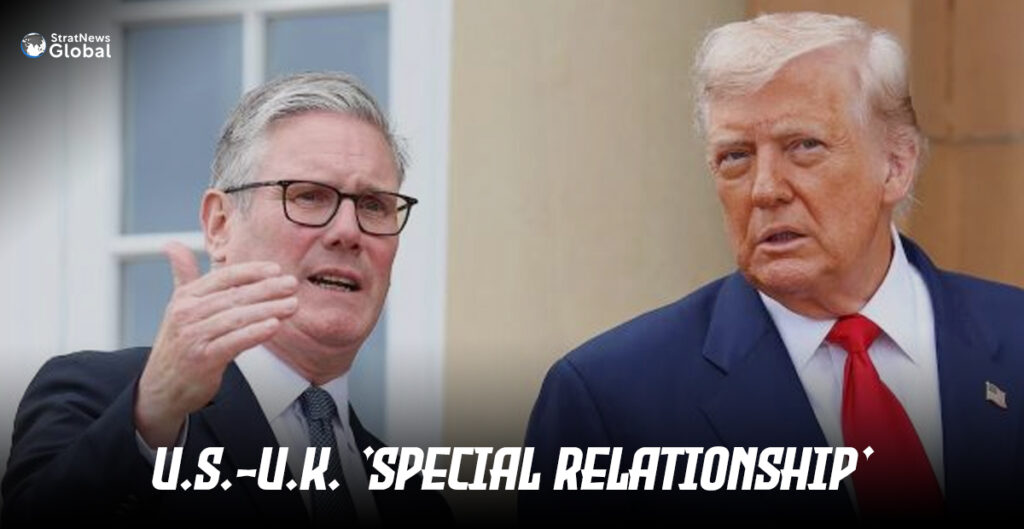
Trump And Starmer Exchange Praise While Standing By Their Differences
U.S. President Donald Trump on Monday highlighted the “special relationship” with Britain, offering compliments to Prime Minister Keir Starmer, King Charles, and his mother’s Scottish roots while speaking from his Turnberry golf club’s ballroom.
But mixed in with the compliments were warnings for Starmer on energy policy, immigration, and tax, as well as a pointed attack on London Mayor Sadiq Khan, Starmer’s political ally.
Seated side-by-side, Starmer and Trump fielded more than an hour of questions from media in a whirlwind tour of global affairs that included setting a new deadline for Russia to agree a ceasefire in Ukraine and announcing food centres to ease starvation in Gaza.
When it came to the Anglo-American relationship, Trump’s often outspoken – and sometimes confrontational approach – to such media appearances was replaced with a charm offensive.
“The prime minister, he’s been so supportive of us and so strong and so respected, and I respect him much more today than I did before, because I just met his wife and family. He’s got a perfect wife, and that’s never easy to achieve,” Trump said.
Starmer, who spoke for only a small fraction of the 72 minutes the two spent in the gaze of the world’s media, reciprocated the compliments freely in what was the latest chapter of a burgeoning friendship between the two leaders, who hail from opposing sides of the political spectrum.
“It’s fantastic to be here – thank you for your hospitality – and to see this amazing golf course. I’ll invite you to a football ground at some stage, and we can exchange sports,” Starmer joked.
Defending Khan
However, the British leader jumped in when Trump – who argued publicly with London mayor Khan during his first term as president – said Khan was doing a bad job running the British capital and called him a “nasty person”.
“He’s a friend of mine, I should add,” Starmer interjected, before Trump continued: “I think he’s done a terrible job.”
Starmer listened to Trump talk about cutting immigration – an area in which the British leader is seen by the public as failing. Trump said that policy was key to his 2024 U.S. election win, alongside his promises to reduce taxes and boost the economy.
Starmer’s government, only a year after winning a landslide victory, is facing a fiscal crunch caused by a stagnant economy, and many analysts expect tax increases later this year to plug the gap.
On energy, the two talked up the potential of small nuclear reactors, but set out opposing positions on other sources of power.
Trump gently urged Starmer to make more of Britain’s oil and gas resources and renewed criticism of the offshore wind turbines that dot the coast near his golf course, and which form a key part of Starmer’s plans for a carbon-free energy system.
“Wind is a disaster,” Trump said. “It’s a very expensive energy, it’s a very ugly energy and we won’t allow it in the United States.”
Starmer replied: “We believe in a mix.”
State Visit
Smoothing over their differences on policy, the two looked ahead to Trump’s next visit in September when he will be hosted by King Charles for a state visit.
“I hate to say it, but nobody does it like you people in terms of the pomp and ceremony,” Trump said. “I’m a big fan of King Charles. I’ve known him for quite a while. Great guy, great person.”
After accepting an invitation presented to him during Starmer’s visit to the White House in February, Trump will become the first world leader in modern times to undertake two state visits to Britain.
“This is going to be a historic occasion, and we’re all very much looking forward to it,” Starmer said.
In May, Washington and London announced the first bilateral trade deal made in the wake of steep new tariffs on global imports imposed by Trump.
Trump’s visit concludes on Tuesday, when he will open a new golf course near Aberdeen named after his mother, Mary Anne MacLeod, who was born and raised on a Scottish island before emigrating to the United States.
(With inputs from Reuters)