

Support us by contributing to StratNewsGlobal on the following UPI ID
ultramodern@hdfcbank

Strategic affairs is our game, South Asia and beyond our playground. Put together by an experienced team led by Nitin A. Gokhale. Our focus is on strategic affairs, foreign policy and international relations, with higher quality reportage, analysis and commentary with new tie-ups across the South Asian region.
You can support our endeavours. Visit us at www.stratnewsglobal.com and follow us on YouTube, Twitter, Facebook and Instagram.
र 500 per month
र 1000 per month
र 5000 per year
र 10000 per year
Donate an amount of your choice
र 500 per month
Donate र 500 per month

र 1000 per month
Donate र 1000 per month
र 5000 per year
Donate र 5,000 per year
र 10000 per year
Donate र 10,000 per year
Donate an amount of your choice
Donate an amount of your choice

Trump Announces 25% Tariff On Indian Imports Starting August 1
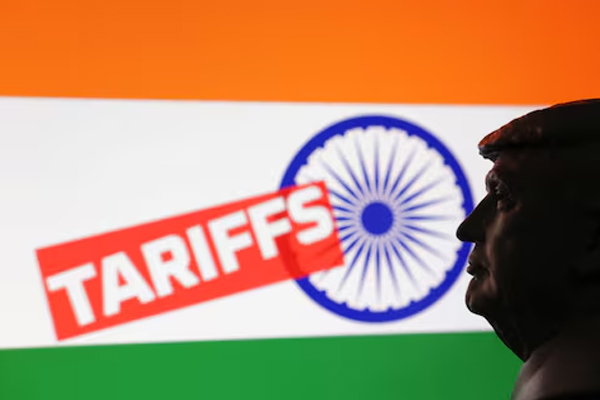
U.S. President Donald Trump announced on Wednesday that a 25% tariff will be imposed on Indian imports beginning August 1.
Trump said India will also face an unspecified penalty on August 1, but he did not elaborate on the amount or what it was for.
“While India is our friend, we have, over the years, done relatively little business with them because their Tariffs are far too high, among the highest in the World, and they have the most strenuous and obnoxious non-monetary Trade Barriers of any Country,” Trump wrote in a Truth Social post.
“They have always bought a vast majority of their military equipment from Russia, and are Russia’s largest buyer of ENERGY, along with China, at a time when everyone wants Russia to STOP THE KILLING IN UKRAINE — ALL THINGS NOT GOOD!”
India’s commerce ministry, which is leading the trade negotiations with the U.S., did not immediately respond to a request for comment.
India Plans Broader Talks
India plans to resume broader trade talks with the U.S. in mid-August when a U.S. delegation is due to visit, hoping to seal a comprehensive bilateral trade agreement by October, Indian officials said.
“Talks are progressing well,” an official said, adding Trump could issue a tariff order in a “worst-case scenario”. The official declined to be identified without authorisation to speak to the media.
“But, we assume it would be a temporary measure, considering the five rounds of trade talks that have taken place. A deal will soon be worked out,” the official said.
Trump also reiterated his claim that he helped broker a ceasefire to a conflict between India and Pakistan earlier this year, saying both sides accepted his request.
“That was great,” he said, describing his friendship with Prime Minister Narendra Modi. India disputes Trump’s claims that he brokered the ceasefire.
Analysts say Trump’s remarks on the India-Pakistan conflict have cast a shadow on trade negotiations.
‘World Tariff’ Rate
On Monday, Trump said most partners that do not negotiate separate trade deals would soon face tariffs of 15% to 20% on their exports to the United States, well above the broad 10% tariff he imposed in April. His administration will notify some 200 countries soon of their new “world tariff” rate.
U.S. Trade Representative Jamieson Greer told CNBC the India talks require more time, noting Trump wants good deals, not fast ones.
India has shown “strong interest in opening portions of its market” though its trade policy had long focused on protecting domestic interests, Greer said.
Piyush Goyal, India’s trade minister, told Reuters last week India was making “fantastic” progress in U.S. trade talks.
Tariff Cuts Offered
Indian officials said New Delhi had offered tariff cuts on a wide range of goods and was working to ease non-tariff barriers.
However, agriculture and dairy remain “no-go” areas, with India unwilling to allow U.S. imports of genetically modified soybeans or corn or to open its dairy sector.
Total bilateral goods trade reached about $129 billion in 2024, with India posting a surplus of nearly $46 billion.
Officials said India was calibrating its strategy amid broader U.S. tariff threats targeting BRICS nations, including India, over issues such as de-dollarisation and Russian oil purchases.
“We remain hopeful of securing a deal that gives Indian exporters preferential access compared to our peers,” a second Indian government official said, speaking on condition of anonymity.
(With inputs from Reuters)
Tsunami Waves Hit Hawaii After Massive Quake In Russia’s Far East
A massive 8.8-magnitude earthquake off Russia’s Kamchatka Peninsula triggered 5-metre tsunami waves and prompted evacuation orders across the Pacific, including as far as Hawaii on Wednesday.
The shallow earthquake damaged buildings and injured several people in the remote Russian region, while much of Japan’s eastern seaboard – devastated by a 9.0 magnitude earthquake and tsunami in 2011 – was ordered to evacuate.
A resident in the city of Petropavlovsk-Kamchatsky said the shaking went on for several minutes.
“I decided to leave the building,” said Yaroslav, 25. “It felt like the walls could collapse any moment. The shaking lasted continuously for at least 3 minutes.”
Video footage released by the region’s health ministry showed a team of medics in Petropavlovsk-Kamchatsky performing surgery as the tremors shook their equipment and the floor beneath them.
Tsunami Waves Hit
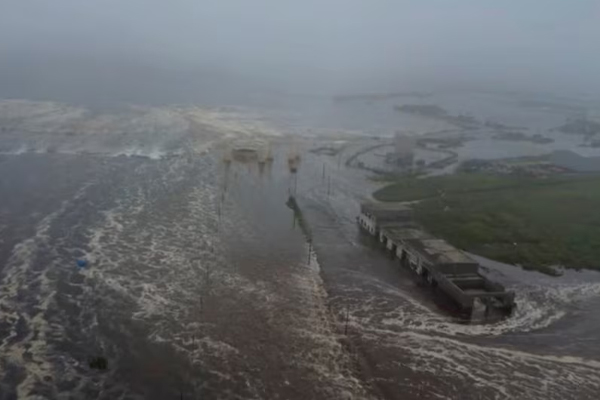
Tsunami waves struck parts of Kamchatka, partially flooding the port and a fish processing plant in the town of Severo-Kurilsk and sweeping vessels from their moorings, regional officials and Russia’s emergency ministry said.
Verified drone footage showed the town’s entire shoreline was submerged, with taller buildings and some storage facilities surrounded by water, which was seen pouring back into the sea.
“Today’s earthquake was serious and the strongest in decades of tremors,” Kamchatka Governor Vladimir Solodov said in a video posted on the Telegram messaging app. Russian scientists said it was the most powerful to hit the region since 1952.
In Hawaii, waves of up to 1.7 metres (5.5 feet) impacted the islands before the Pacific Tsunami Warning Centre reduced its warning level for the state around 0850 GMT, saying no major tsunami was expected.
Coastal residents were earlier told to get to high ground or the fourth floor or above of buildings, and the U.S. Coast Guard ordered ships out of harbours.
Flights out of Honolulu airport resumed later, the transportation department said, while the main airport in Maui remained closed, with passengers sheltering in the terminal.
Tsunami waves of nearly half a metre were observed as far as California, with smaller ones reaching Canada’s province of British Columbia.
Warnings Across The Pacific
The U.S. Geological Survey said the earthquake was shallow at a depth of 19.3 km (12 miles), and centred 119 km (74 miles) east-southeast of Petropavlovsk-Kamchatsky, a city of 165,000.
Tsunami alarms sounded in coastal towns across Japan’s Pacific coast, and evacuation orders were issued for tens of thousands of people.
Workers evacuated the stricken Fukushima nuclear plant, where a meltdown following the 2011 tsunami caused a radioactive disaster, operator TEPCO said.
Footage on public broadcaster NHK showed scores of people on the northern island of Hokkaido on the roof of a building, sheltering under tents from the sun, as fishing boats left harbours to avoid any damage from incoming waves.
Broadcaster Asahi TV reported that a 58-year-old woman died when her car fell off a cliff while she was evacuating in central Japan’s Mie prefecture.
Automaker Nissan Motor suspended operations at some factories in Japan to ensure employee safety, Kyodo news agency reported.
Three tsunami waves had been recorded in Japan, the largest of 1.3 metres (4.3 feet), officials said.
Chief Cabinet Secretary Yoshimasa Hayashi said no injuries or damage had been reported, and there were no irregularities at any nuclear plants.
Tsunami waves of 1 to 3 metres (3-9 feet) can be fatal for people who are swept away, said NHK.
The U.S. Tsunami Warning System said waves of more than 3 metres were possible along some coasts of Russia, the northern Hawaiian islands and Ecuador, while waves of 1-3 metres were possible in countries including Japan, Hawaii, Chile and the Solomon Islands.
‘Ring Of Fire’
Russia’s Ministry for Emergency Services said on Telegram that a kindergarten was damaged, but most buildings withstood the quake. No serious injuries or fatalities have been reported.
Several people in Kamchatka sought medical assistance following the quake, Oleg Melnikov, regional health minister, told Russia’s TASS state news agency.
In Severo-Kurilsk in the northern Kuril islands, south of Kamchatka, tsunami waves exceeded 3 metres, with the largest up to 5 metres, Russia’s RIA news agency reported.
Alexander Ovsyannikov, the town’s mayor, urged residents to assess damage to their homes and not to use gas stove heating until inspections had been carried out.
Kamchatka and Russia’s Far East sit on the Pacific Ring of Fire, a geologically active region that is prone to earthquakes and volcanic eruptions.
“However, due to certain characteristics of the epicentre, the shaking intensity was not as high … as one might expect from such a magnitude,” said Danila Chebrov, director of the Kamchatka Branch of the Geophysical Service, on Telegram.
“Aftershocks are currently ongoing … Their intensity will remain fairly high. However, stronger tremors are not expected in the near future. The situation is under control.”
(With inputs from Reuters)
US Scrapped Meeting With Taiwan Ahead Of China Trade Talks: FT
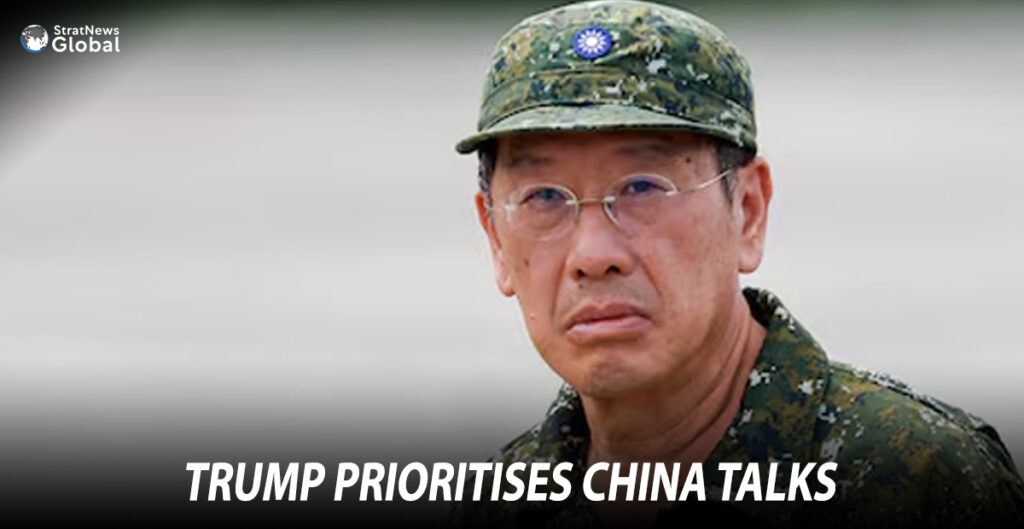
The U.S. cancelled a planned June meeting with Taiwan’s defence minister, reflecting concerns that President Donald Trump is cautious about actions that might strain relations with China, the Financial Times reported on Wednesday.
Taiwan’s Wellington Koo had planned to visit the Washington area for defence talks with Elbridge Colby, U.S. under-secretary of defence for policy, but the U.S. called off the meeting at the last minute, the FT reported, citing sources.
Reuters could not immediately confirm the report.
The White House, Pentagon and Taiwan’s embassy in Washington did not immediately respond to a request for comment.
Taiwan’s President Cancels US Stopover
Taiwan’s President Lai Ching-te is expected to postpone a diplomatically sensitive trip, initially proposed to the Trump administration for August, which would have included stops in the United States, according to three sources familiar with the discussions.
Such a trip was bound to infuriate Beijing at a time when U.S. President Donald Trump is trying to negotiate a deal on trade with China. China claims democratically governed Taiwan as its own territory, a claim Taiwan rejects, and regularly denounces any shows of support for Taipei from Washington.
The trip, which could have included visits to Guatemala, Belize and Paraguay, was never formally confirmed but had been discussed with the governments involved, according to a person familiar with the matter. Lai had considered stopping in New York and Dallas on the way to and from Latin America.
Lai is set to delay the trip until at least later this year for a handful of reasons, including the need to organise his government’s response to extreme weather in Taiwan, one of the sources said.
Two of the sources also pinned the delay on the ongoing U.S. tariff talks with Taipei and Beijing, respectively. Top U.S. and Chinese economic officials huddled in Stockholm, Sweden, on Monday to resume talks.
The White House and China’s embassy in Washington did not immediately respond to a request for comment, while Taiwan’s Presidential Office was not immediately available for comment late on Monday night.
(With inputs from Reuters)
US To Conclude Defence Pact Review With UK, Australia This Autumn
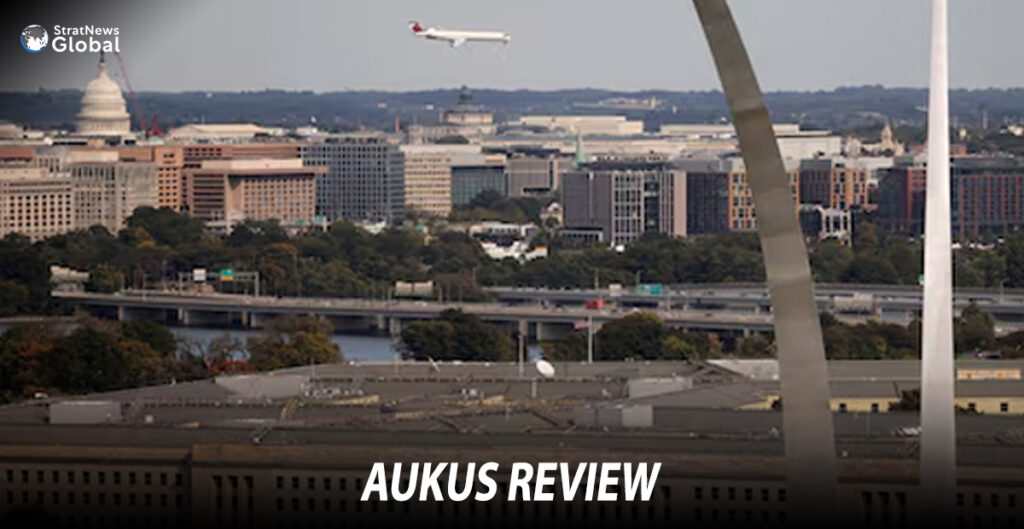
The United States will conclude its review of a defence pact with the United Kingdom and Australia by autumn in the northern hemisphere, a senior Pentagon official’s office said on Wednesday.
U.S. President Donald Trump’s administration said in June it had launched a formal review into the AUKUS defence deal – worth hundreds of billions of dollars – that will allow Australia to acquire U.S. nuclear-powered submarines, causing alarm in Canberra.
The review into the 2021 deal struck during the Biden administration is being led by Under Secretary of Defence for Policy Elbridge Colby, a public critic of the pact.
Colby’s office said in a post on X on Wednesday (Tuesday EST), the review will be an “empirical and clear-eyed assessment” of the deal.
“The Department anticipates completing the review in the fall,” the post said.
“Its purpose will be to provide the President and his senior leadership team with a fact-based, rigorous assessment of the initiative.”
AUKUS is Australia’s biggest-ever defence project, with Canberra committing to spend A$368 billion ($240 billion) over three decades to the programme, which includes billions of dollars of investment in the U.S. submarine production base.
Colby, the Pentagon’s top policy adviser, said last year that submarines were a scarce, critical commodity, and U.S. industry could not produce enough to meet American demand.
Australia, which this month paid A$800 million to the U.S. in the second instalment under AUKUS, has maintained it is confident the pact will proceed.
Australia and Britain on Saturday signed a bilateral 50-year submarine pact, which they said builds on the AUKUS alliance with the U.S.
Australia-UK AUKUS Pact
Australia announced on Saturday that it had signed a treaty with Britain to strengthen cooperation on the AUKUS nuclear submarine partnership over the next 50 years.
The AUKUS pact, agreed upon by Australia, Britain and the U.S. in 2021, aims to provide Australia with nuclear-powered attack submarines from the next decade to counter China’s ambitions in the Indo-Pacific.
Defence Minister Richard Marles said in a statement that the bilateral treaty was signed with Britain’s Defence Secretary John Healey on Saturday after a meeting in the city of Geelong, in Victoria state.
($1 = 1.5323 Australian dollars)
(With inputs from Reuters)
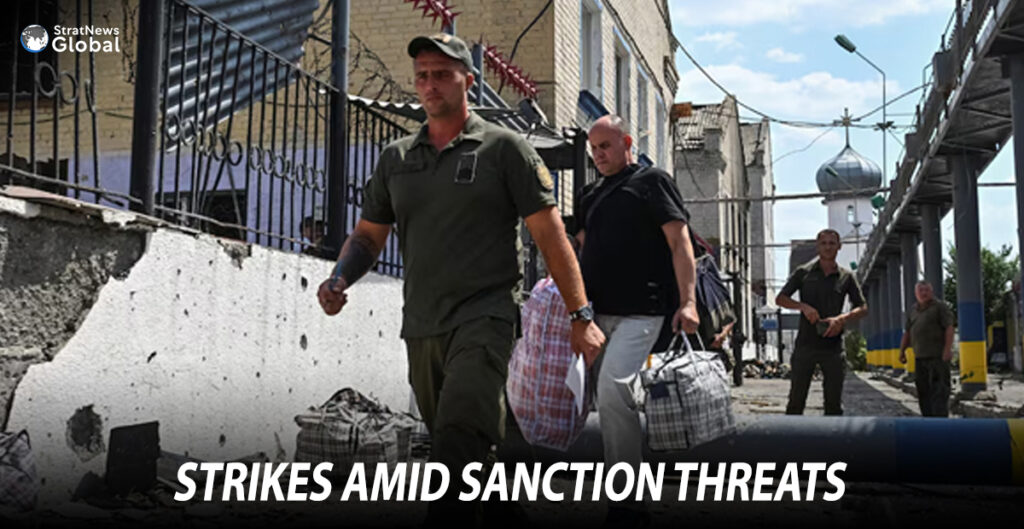
Russian Airstrikes Kill 19 In Southeastern Ukraine Amid Trump’s Sanctions Threat
Russian airstrikes on a prison and hospital in southeastern Ukraine killed at least 19 people, officials reported on Tuesday, as U.S. President Donald Trump warned he would begin imposing punitive measures on Russia within 10 days if Moscow fails to show progress toward ending its war in Ukraine.
Sixteen of the people were killed when Russia bombed a prison in the frontline Zaporizhzhia region in an attack Ukrainian President Volodymyr Zelenskyy said was deliberate. He said 43 people were injured in the incident.
“The Russians knew it was a civilian facility. They could not have been unaware,” Zelenskyy said in his nightly video address.
“Each such Russian strike, each instance of Russian arrogance in response to global calls to end the war, all this only confirms that pressure is necessary.”
Separately, a missile strike on a hospital in the neighbouring Dnipropetrovsk region killed a 23-year-old pregnant woman and two others.
Zelenskyy earlier said a total of 22 people had been killed over the past 24 hours.
Russia, which denied targeting civilians in Tuesday’s attacks, has intensified airstrikes on Ukrainian towns and cities behind the front lines of its full-scale invasion, now in its fourth year, as it gradually pushes ahead on the battlefield. Russian forces hold around a fifth of Ukrainian territory.
Trump’s New, Shorter Deadline
Trump, underscoring his frustration with Putin, said in Scotland on Monday he was shortening his earlier deadline of 50 days to 10 or 12 days for Russia to make progress towards ending the war.
On Tuesday, aboard Air Force One, he said he had heard no reply from Russia and could begin slapping tariffs and other measures on Moscow within 10 days.
The Kremlin said on Tuesday that it had “taken note” of Trump’s earlier statement. “The special military operation continues,” said Kremlin spokesman Dmitry Peskov, employing the term that Moscow uses for its war effort in Ukraine.
Following Tuesday’s attack on the prison, across the Dnipro River from Russian-occupied territory, injured inmates waded through rubble and broken glass.
Bandaged and bloody, they sat stunned as guards yelled out a roll call.
Ukraine’s Justice Ministry said the prison’s dining hall had been destroyed and other parts of the facility damaged in a strike that involved four high-explosive bombs and also wounded 42 people.
It had originally said 17 people were killed, but later revised its tally.
“People were screaming, moaning,” said prisoner Yaroslav Samarskiy, 54, recalling the aftermath of the strike.
“Some dead, some alive, some without legs – half of them burned.”
Separately, five people were killed on Tuesday morning in the northeastern Kharkiv region after a Russian strike on a humanitarian aid point in a frontline village, a senior police official said.
(With inputs from Reuters)
US, China Move To Extend Tariff Truce After ‘Constructive’ Stockholm Talks
After two days of what both sides called constructive talks in Stockholm, U.S. and Chinese officials on Tuesday agreed to pursue an extension of their 90-day tariff truce, in a bid to ease the escalating trade war between the world’s two largest economies that poses a threat to global economic growth.
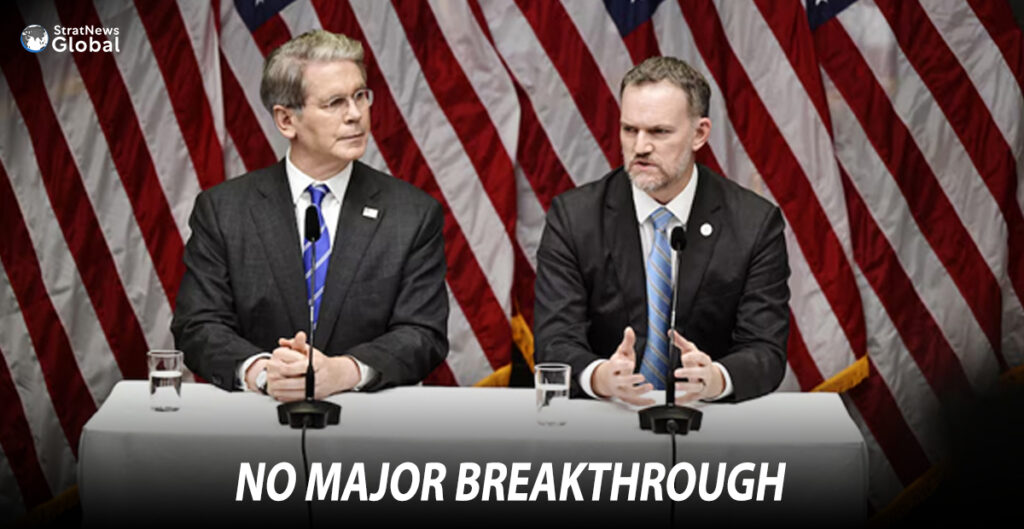
No major breakthroughs were announced, and U.S. officials said it was up to President Donald Trump to decide whether to extend a trade truce that expires on August 12 or potentially let tariffs shoot back up to triple-digit figures. But U.S. Treasury Secretary Scott Bessent tamped down any expectation of Trump rejecting the extension.
“The meetings were very constructive,” Bessent told reporters after the meetings wrapped up. “It’s just that we haven’t given the signoff.”
As Trump returned to Washington after visiting Scotland, where he inked a trade deal with the European Union, he said Bessent had just briefed him on the China talks.
“He felt very good about the meeting, better than he felt yesterday,” Trump told reporters aboard Air Force One.
After months of threatening high tariffs on trading partners, Trump has secured trade pacts with the EU, Japan, Indonesia and others, but China’s powerhouse economy and grip on global rare earth flows make these talks particularly complex.
Both sides in May walked back from imposing triple-digit tariffs on each other in what would have amounted to a bilateral trade embargo. But global supply chains and financial markets could face renewed turmoil without an agreement.
Bessent told reporters he expects to meet with Trump on Wednesday after both have returned to Washington, and the president would have the final say on any extension.
Another 90-day extension is one option, U.S. Trade Representative Jamieson Greer added.
“We had constructive meetings for sure, to go back with a positive report. But the extension of the pause, he’ll decide,” Greer said after talks at Rosenbad, the Swedish prime minister’s office in central Stockholm.
Trump Sees Meeting With Xi
Bessent said there would likely be another meeting between U.S. and Chinese officials in about 90 days, and the agreements on the flow of Chinese rare earths were becoming more refined after previous talks in Geneva and London.
“There was good personal interaction being built up, good, mutual respect. I think we understand their agenda much better,” he said.
Underlining the stakes, the International Monetary Fund on Tuesday raised its global growth forecast but flagged a potential rebound in tariff rates as a major risk.
China’s top trade negotiator Li Chenggang said both sides fully recognised the importance of maintaining a stable and sound economic and trade relationship.
“The Chinese and U.S. economic and trade teams will maintain active communication, exchange views on economic and trade issues in a timely manner, and continue to promote the stable and healthy development of bilateral economic and trade relations,” said Li.
The talks could pave the way for a meeting between Trump and Chinese President Xi Jinping later in the year, though Trump denied going out of his way to seek one and U.S. officials said the topic was not discussed. Aboard Air Force One, Trump said he thinks he will meet with Xi before the end of the year, though he did not elaborate.
The Stockholm meetings also included a lengthy discussion on the U.S. and Chinese economies, with Greer and Bessent emphasising the need for China to shift away from a state-led, export-driven manufacturing economy to one powered by increased consumer demand, which would help U.S. exports.
“Cooperation between China and the United States will benefit both sides, while if they fight, both will be hurt,” according to a readout of the meetings from China’s state news agency Xinhua. “Stable, healthy and sustainable economic and trade relations between China and the United States are not only conducive to achieving their respective development goals, but also conducive to promoting the development and stability of the world economy.”
China Vs. EU Talks
The Stockholm talks follow Trump’s biggest trade deal yet with the European Union on Sunday for a 15% tariff on most EU goods exports to the United States, and a deal with Japan.
That agreement has brought a measure of relief to the EU but also frustration and anger, with France denouncing the deal as a “submission” and Germany, Europe’s largest economy, warning of “significant” damage.
China can exercise leverage with its grip on the global market for rare earths and magnets, used in everything from military hardware to car windshield wiper motors, analysts say.
Unlike the EU, it does not rely on the United States for security ties and can let trade talks play out for several more months, Cyrus de la Rubia, chief economist at Hamburg Commercial Bank, told Reuters.
“China is well aware of its strong negotiating position, as could clearly be seen in the temporary escalation observed in April,” he said.
“But over Europe always hangs the Damocles sword of the U.S. withdrawing its security guarantee, and that is why the EU did not escalate the situation like China did.”
Previous U.S.-China trade talks in Geneva and London in May and June focused on bringing U.S. and Chinese retaliatory tariffs down from triple-digit levels and restoring the flow of rare earth minerals halted by China, and Nvidia’s H20 AI chips and other goods halted by the United States.
Among broader economic issues, Washington complains that China’s state-led, export-driven model is flooding world markets with cheap goods, while Beijing says U.S. national security export controls on tech goods seek to stunt Chinese growth.
Separately, China’s industry minister on Tuesday met with a delegation of U.S. businesses, including Apple, in Beijing, and pledged to uphold fair and open market competition and provide support and services for foreign enterprises.
(With inputs from Reuters)
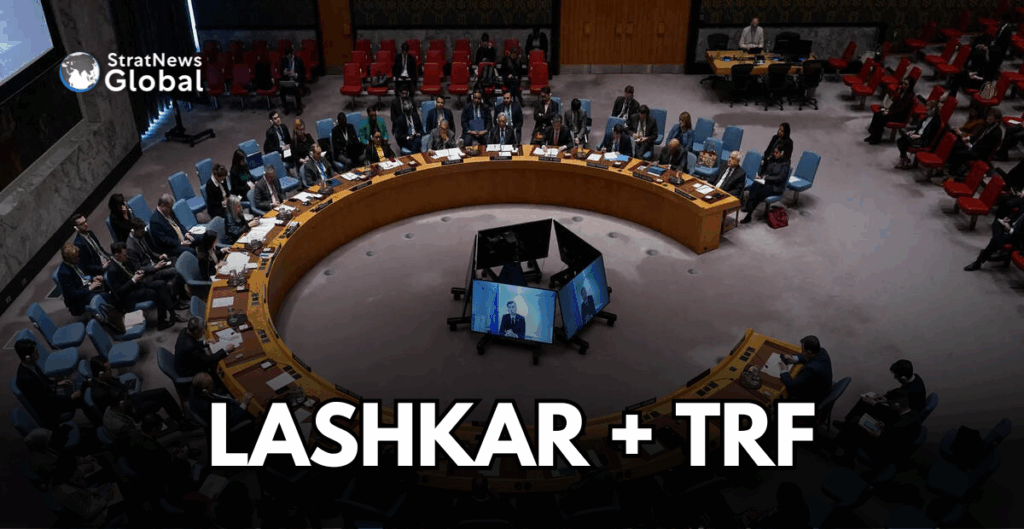
UNSC Panel Indicts Lashkar-e-Taiba For Backing TRF Pahalgam Attack
A proxy of the Lashkar-e-Taiba (LeT) has been named in a report by a monitoring team of the UN Security Council’s Sanctions Committee. The proxy known as The Resistance Front, (TRF) was involved in the terror attack that killed 26 civilians in April in Pahalgam, India.
Underscoring that the attack could not have happened without the support of the LeT, the report says “The attack was claimed the same day by The Resistance Front, who in parallel, published a photograph of the attack site.”
Incidentally, this is the first time since 2019 that the LeT has been named in the monitoring team’s report. The US had earlier designated the TRF a Foreign Terrorist Organization.
While India may see this as a diplomatic win, a study by Muhammad Amir Rana of the Pakistan Institute of Peace Studies, suggests that while some efforts have been made in that country to restrict the activities of militant networks in Kashmir, “these groups have not been entirely eliminated … and continue to damage Pakistan’s international image.”
Rana’s study pubished in the respected Dawn newspaper, notes that despite billions of (Pak) rupees being spent on rehabilitation and mainstreaming programmes for LeT cadres, “there is little transparency about who implemented them and what the outcomes were.”
The mainstreaming idea stemmed from the need to fill the space left by the Jamaat-e-Islami in Punjab, which had lost the support of the establishment. How well this progressed is not clear given that the LeT is divided with some elements in favour of continuing with miliitancy while others believe they need to disengage from armed struggle.
As for the Jaish-e-Muhammad, Rana’s study suggests the authorities saw it as a “potential risk” since some of its commanders and factions had defected to Al Qaida and Tehreek-e-Taliban after 2004. “Although its infrastructure has already been significantly weakened, it continues to pose a threat to internal security.”
More important is the assessment that “it does not have the potential to be converted into a political party as it lacks the extensive networks of groups like the LeT. Nor does it have the vision or capacity to adopt a new path. It has been kept in the domain of charity … a complete dismantling would create internal security problems, pushing its fighters to join anti-Pakistan terrorist groups.”
Rana sums up by noting that Pakistan’s militancy-landscape is changing rapidly and while there is a “zero tolerance” policy towards the Tehreek-e-Taliban and Baloch groups, a similar approach is not visible to other radical and militant outfits.
Gujarat ATS Arrests Female Al-Qaeda Operative In Bengaluru
A 30-year-old woman, Sama Parveen, has been arrested in Bengaluru by the Gujarat Anti-Terrorism Squad (ATS) for allegedly masterminding an Al-Qaeda terror module in India, days after four other suspected operatives linked to the group were held.
Crackdown On Al-Qaeda Module
On June 10, Gujarat ATS Deputy Superintendent of Police Harsh Upadhyay received actionable intelligence indicating that several Instagram accounts—namely “@sharyat_ya_shahadat”, “@f4rdeen_03”, “@_mujahideen1”, “@mujahideen.3”, and “@sefullah_muja_hid313″—were being actively used to disseminate anti-national and inflammatory content.
These accounts were allegedly promoting videos, terrorist propaganda, and extremist ideology linked to the banned terrorist organisation Al-Qaeda in the Indian Subcontinent (AQIS), with the apparent objective of radicalising Indian Muslim youth and inciting violence against the Indian state.
In response, ATS constituted a Special Investigation Team (SIT) under the leadership of Superintendent of Police K Siddharth to trace the individuals behind these social media handles.
Following a thorough investigation, the team identified and apprehended four individuals believed to be managing these accounts: Fardeen Sheikh from Fatehwadi in Ahmedabad, Saifullah Qureshi from Modasa in Gujarat, Mohammad Faiq from Chandni Chowk in Delhi, and Zeeshan Ali from Noida, Uttar Pradesh. The arrests took place on July 21 and 22.
Investigation Findings
The probe led to the seizure of AQIS literature and a sword from the possession of Fardeen Sheikh.
His mobile phone contained a video in which he is seen brandishing the sword and exclaiming, “Bas yehi kami thi, ab sab pura ho gaya… Allahu Akbar!” (“This was the only thing left, now everything is complete… God is great!”).
Incriminating material—including provocative messages, extremist videos, content endorsing terrorist activities, and posts supporting Sharia law—was uncovered on the phones and Instagram profiles of all four accused.
Further investigation revealed that Mohammad Faiq had established contact with Instagram accounts operated from Pakistan, specifically “@gujjar_sab.111” and “M Salauddin Siddiqui 1360”.
Social Media Accounts Under Watch
All four individuals have been booked under multiple sections of the Unlawful Activities (Prevention) Act, 1967 (UAPA) and the Bharatiya Nyaya Sanhita (BNS), and are currently in police custody undergoing interrogation.
In addition to these arrests, the ATS is actively investigating 62 other social media accounts suspected of being linked to similar activities.
(With inputs from IBNS)
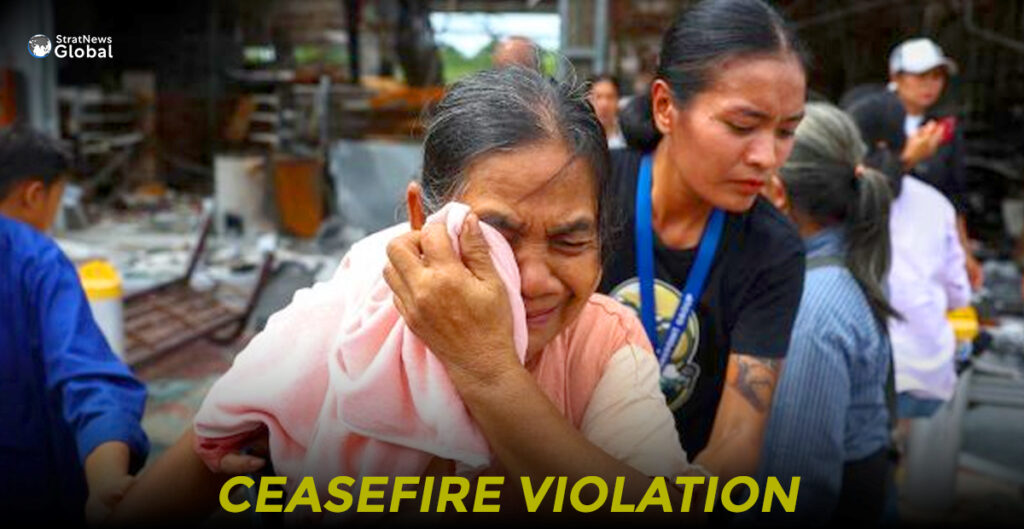
Thailand Accuses Cambodia Of Ceasefire Breach For Second Time In Two Days
Thailand’s military on Wednesday blamed Cambodian troops for violating a ceasefire at three points along the contested border, cautioning that further provocations might force a stronger Thai military response.
The allegations come less than two days after both governments agreed to a ceasefire brokered in Malaysia, which came into effect at midnight on Monday.
It aimed to stop fighting and prevent escalation of their deadliest conflict in more than a decade following five days of intense fighting that has killed at least 43 people and displaced over 300,000 civilians on either side.
The truce came after a sustained push from Malaysian Premier Anwar Ibrahim and U.S. President Donald Trump, with the latter warning Thai and Cambodian leaders that if fighting continued.
Thailand and Cambodia face a tariff of 36% on their goods in the U.S., their biggest export market, unless a reduction can be negotiated. After the ceasefire deal was reached, Trump said he had spoken to both leaders and instructed his trade team to tariff talks.
Exchange Of Fires
On Wednesday, Thailand said Cambodian forces fired on positions in northeastern Thailand’s Sisaket province on Cambodia’s northern border.
“Cambodian forces used small arms and grenade launchers, prompting Thailand to respond in self-defence,” Thai army spokesman Major-General Winthai Suvaree told reporters.
“This was the second incident since the agreement and reflects a behaviour that does not respect agreements, destroys de-escalation efforts and hampers trust between the two countries.”
Cambodia rejected the allegations, saying it was committed to the ceasefire and called for observers.
“Cambodia strongly rejects the ceasefire accusations as false, misleading and harmful to the fragile trust-building process,” Cambodian Foreign Ministry spokesperson Chum Sounry told reporters at a press conference, adding the government supports a monitoring mechanism and independent observation.
The ceasefire, which also agreed to halt troop movement, paves the way for a high-level military meeting that includes defence ministers on August 4 in Cambodia. There have been no reports of any exchange of heavy artillery fire but also no reports of troop withdrawals by either side.
(With inputs from Reuters)
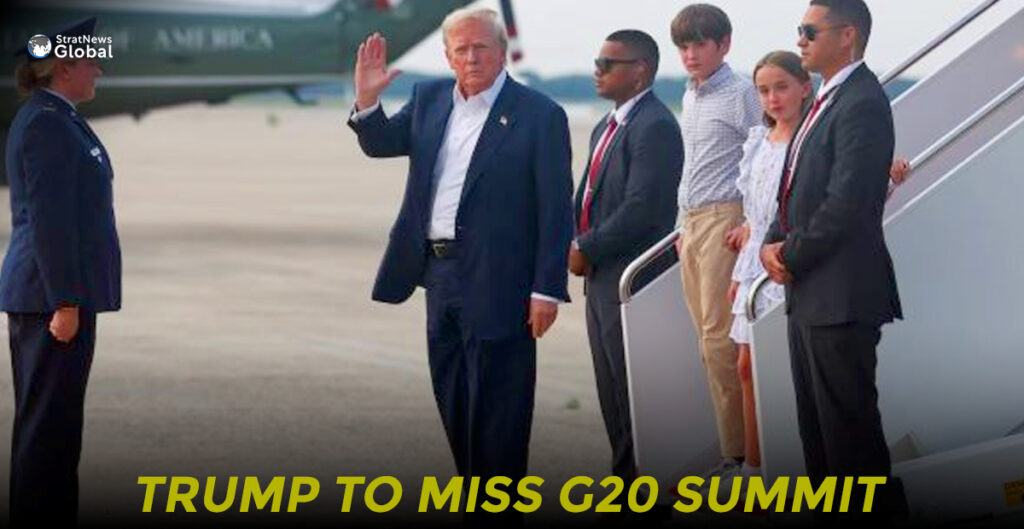
Trump Says He Might Miss G20 Summit In South Africa Over Policy Disagreements
U.S. President Donald Trump stated on Tuesday that he may not attend the G20 leaders’ summit in South Africa this November, suggesting he could send a representative instead due to his disapproval of the country’s policies.
“I think maybe I’ll send somebody else because I’ve had a lot of problems with South Africa. They have some very bad policies,” Trump told reporters aboard Air Force One.
Trump has taken issue with South African domestic and foreign policies – ranging from its land policy to its case accusing Israel of genocide in the U.S. ally’s war in Gaza.
Trump signed an executive order in February to cut U.S. financial assistance to South Africa. In May, Trump confronted South African President Cyril Ramaphosa with false claims of white genocide and land seizures during a White House meeting.
Earlier this year, Secretary of State Marco Rubio also boycotted a G20 foreign ministers’ meeting in South Africa, which has the G20 presidency from December 2024 to November 2025.
Tense Ties
Washington, both under Trump and former President Joe Biden, has complained about the case brought by South Africa at the International Court of Justice, where it accused Israel of genocide over its military assault in Gaza.
Israel’s assault has killed tens of thousands, caused a hunger crisis, internally displaced Gaza’s entire population and also led to accusations of war crimes at the International Criminal Court. Israel denies the accusations and casts its Gaza offensive as self-defence after a deadly October 2023 Hamas attack that killed 1,200 people and in which over 250 were taken hostage.
Diplomatic relations between the U.S. and South Africa have also been strained under Trump due to South Africa’s Black Economic Empowerment (BEE) policies to address the legacy of centuries of racial inequality.
Ramaphosa, who has urged Trump to attend the G20 summit, rejects Washington’s claims that South Africa will use its land policy to arbitrarily confiscate white-owned land.
(With inputs from Reuters)