

Support us by contributing to StratNewsGlobal on the following UPI ID
ultramodern@hdfcbank

Strategic affairs is our game, South Asia and beyond our playground. Put together by an experienced team led by Nitin A. Gokhale. Our focus is on strategic affairs, foreign policy and international relations, with higher quality reportage, analysis and commentary with new tie-ups across the South Asian region.
You can support our endeavours. Visit us at www.stratnewsglobal.com and follow us on YouTube, Twitter, Facebook and Instagram.
र 500 per month
र 1000 per month
र 5000 per year
र 10000 per year
Donate an amount of your choice
र 500 per month
Donate र 500 per month

र 1000 per month
Donate र 1000 per month
र 5000 per year
Donate र 5,000 per year
र 10000 per year
Donate र 10,000 per year
Donate an amount of your choice
Donate an amount of your choice
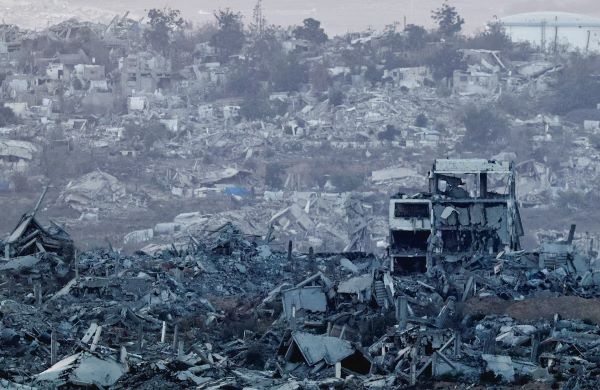
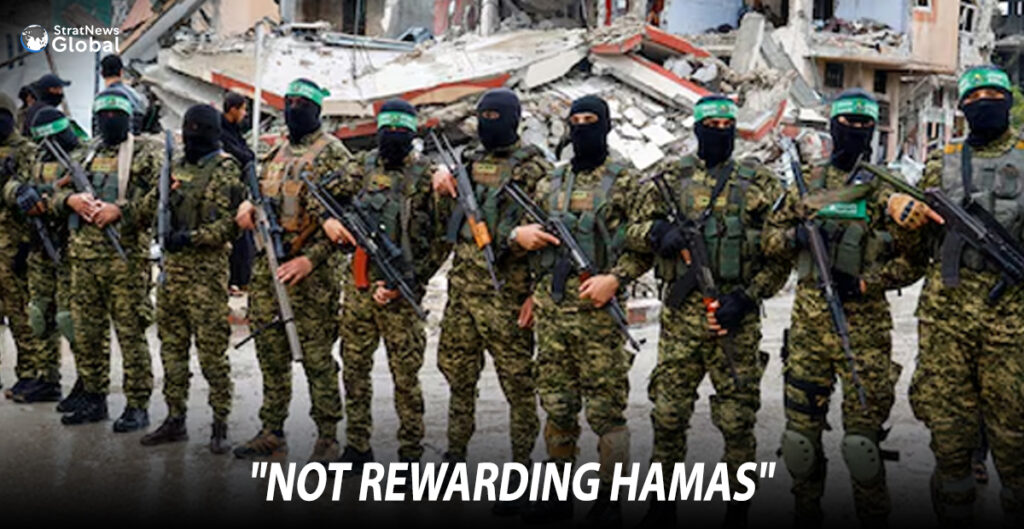
Israeli Minister Suggests Possible Annexation Of Gaza Areas
An Israeli minister said on Wednesday that Israel might consider annexing parts of Gaza to intensify pressure on Hamas, a move that would undermine Palestinian aspirations for statehood on territory currently under Israeli occupation.
The comment by security cabinet member Zeev Elkin came a day after Britain said it would recognise a Palestinian state in September unless Israel takes steps to relieve suffering in Gaza and agrees to a ceasefire in the war with Hamas.
France, which said last week it would recognise a Palestinian state in September, and Saudi Arabia issued a declaration on Tuesday, backed by Egypt, Qatar and the Arab League, outlining steps toward implementing a two-state solution.
As part of an end to the Gaza war, they said Hamas “must end its rule in Gaza and hand over its weapons to the Palestinian Authority”.
Israel has denounced moves to recognise a Palestinian state as rewarding Hamas for its October 2023 attack that precipitated the war.
Possible Ultimatum To Hamas
Accusing Hamas of trying to drag out ceasefire talks to gain Israeli concessions, Elkin told public broadcaster Kan that Israel may give the group an ultimatum to reach a deal before further expanding its military actions.
“The most painful thing for our enemy is losing lands,” he said. “A clarification to Hamas that the moment they play games with us they will lose land that they will never get back would be a significant pressure tool.”
Mediation efforts aimed at reaching a deal that would secure a 60-day ceasefire and the release of remaining hostages held by Hamas ground to a halt last week, with the sides trading blame for the impasse.
Israel is facing mounting international pressure over the situation in Gaza, where a global hunger monitor has warned that a worst-case scenario of famine is unfolding. The Gaza health ministry reported seven more hunger-related deaths on Wednesday, including a two-year-old girl with an existing health condition.
‘Monstrous’
Though recognition of a Palestinian state is largely seen as a symbolic move, Gazan man Saed al-Akhras said he hoped it marked a “real shift in how Western countries view the Palestinian cause”.
“Enough! Palestinians have lived for more than 70 years under killing, destruction, and occupation, while the world watches in silence,” he said.
Meanwhile, families of Israeli hostages still held in Gaza appealed for no recognition of a Palestinian state to come before their loved ones were returned.
“Such recognition is not a step toward peace, but rather a clear violation of international law and a dangerous moral and political failure that legitimises horrific war crimes,” the Hostages Family Forum said.
Israeli Prime Minister Benjamin Netanyahu on Tuesday said Britain’s decision “rewards Hamas’ monstrous terrorism”. Israel made similar comments last week after France’s announcement.
Two Hamas officials did not immediately respond to requests for comment on the demand for the group to hand its weapons to the PA, which now has limited control of parts of the Israeli-occupied West Bank. Hamas has previously rejected calls to disarm, while Israel has ruled out letting the PA run Gaza.
Netanyahu said this month he wanted peace with Palestinians but described any future independent state as a potential platform to destroy Israel, so control of security must remain with Israel.
His cabinet includes far-right figures who openly demand the annexation of all Palestinian land. Finance Minister Bezalel Smotrich said on Tuesday that reestablishing Jewish settlements in Gaza was “closer than ever”, calling Gaza “an inseparable part of the Land of Israel”.
Aid Going In, But Not Enough
A 2-year-old girl being treated for a build-up of brain fluid died overnight of hunger, her father said on Wednesday.
“Mekkah, my little daughter, died of malnutrition and the lack of medication,” Salah al-Gharably said by phone from Deir Al-Balah. “Doctors said the baby has to be fed a certain type of milk … but there is no milk,” he said. “She starved. We stood helpless.”
The deaths from starvation and malnutrition overnight raised the toll from such causes to 154, including at least 89 children, since the war’s start, most in recent weeks.
On Sunday the Israeli military announced steps to ease the supply of food into Gaza, including daily pauses in military operations in some areas and corridors for aid.
The U.N. Office for the Coordination of Humanitarian Affairs said the United Nations and its partners had been able to bring more food into Gaza in the first two days of pauses, but the volume was “still far from enough”.
“Most aid is still being offloaded by crowds before reaching where it is supposed to go. But market monitoring shows prices for basic goods are starting to drop – which could point to better operating conditions if aid flows further increase,” it said in an update.
The war began on October 7, 2023, when Hamas attacked communities in southern Israel, killing some 1,200 people and taking another 251 hostage, according to Israeli tallies.
Since then, Israel’s offensive in the Gaza Strip has killed more than 60,000 people and laid waste to much of the territory, the Gaza health ministry says.
(With inputs from Reuters)
UK Rejects Israeli Criticism Over Palestinian State Recognition Plans
Britain on Wednesday dismissed Israeli criticism that it was rewarding the militant group Hamas by outlining plans to recognise a Palestinian state, stating the move was conditional on Israel taking meaningful steps to improve conditions in Gaza and advance the peace process.
Prime Minister Keir Starmer’s ultimatum, setting a September deadline, prompted an immediate rebuke from Israel’s Benjamin Netanyahu, who said it rewarded Hamas and punished the victims of the fighters’ 2023 attack that triggered the war. U.S. President Donald Trump also said he did not think Hamas “should be rewarded” with recognition of Palestinian independence.
But British Transport Minister Heidi Alexander – designated by the government to respond to media questions on Wednesday – said: “This is not a reward for Hamas.
“Hamas is a vile terrorist organisation that has committed appalling atrocities. This is about the Palestinian people. It’s about those children that we see in Gaza who are starving to death,” Alexander said. “We’ve got to ratchet up pressure on the Israeli government to lift the restrictions to get aid back into Gaza.”
Starmer’s Call Follows Macron’s Move
Starmer’s decision follows that of French President Emmanuel Macron, who announced last week that Paris would recognise Palestinian statehood in September, becoming the first major Western power to do so, because of the dire humanitarian conditions in the enclave.
Previously, Britain and France, like other Western powers, had been committed to Palestinian independence, but as a goal that would best be achieved only at the conclusion of negotiations with Israel. In a televised address on Tuesday, Starmer said it had become necessary to act because the prospect of such a two-state solution was now under threat.
Britain would make the move at the U.N. General Assembly in September unless Israel took substantive steps to allow more aid into Gaza, made clear it would not annexe the West Bank and committed itself to a long-term peace process that delivered a two-state solution, Starmer said.
The most immediate impact of Britain recognising a Palestinian state may be an upgrading of diplomatic relations, according to one British government official.
Upgrading Relations
Britain now hosts a Palestinian mission in London, which could be upgraded to an embassy, and Britain could eventually open an embassy in the West Bank, the official said.
Starmer’s move “will isolate Israel more and more, but it won’t change anything on the ground,” said Azriel Bermant, a senior researcher at the Institute of International Relations Prague.
Bronwen Maddox, chief executive of the Chatham House think-tank, said the move put Britain into the forefront of countries trying to negotiate a solution, but that Starmer may have “muddled things by using recognition as a threat to Israel, when it is a goal of British foreign policy”.
“He might have done better to use other threats, for example, sanctions or arms controls against Israel for the immediate crisis in Gaza, to get Israel to change its behaviour there,” she said.
The Board of Deputies of British Jews, Britain’s biggest Jewish advocacy group, raised concerns that similarly clear conditions had not been set out for Hamas, which is still holding 50 hostages it seized in its October 2023 attack.
Alexander, when asked whether recognition was conditional on the release of hostages, said that the government would review whether to go ahead with recognition in September, and Britain had long said Hamas must release hostages.
The Muslim Council of Britain, the country’s largest Muslim umbrella organisation, said that making recognition conditional contradicted the government’s stated position that statehood was the inalienable right of the Palestinian people.
(With inputs from Reuters)
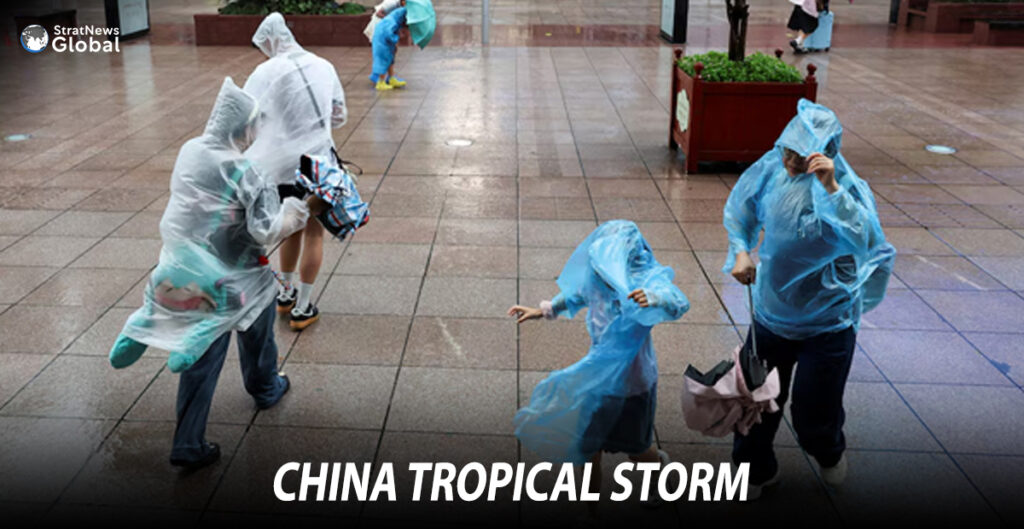
Shanghai Relocates 280,000, Halts Transport As Tropical Storm Batters Eastern China
Shanghai on Wednesday evacuated over 280,000 residents, suspended hundreds of flights and ferry services, and enforced speed restrictions on roads and railways as a tropical storm lashed eastern China with strong winds and heavy rainfall.
Landfall by Co-May in the port city of Zhoushan in Zhejiang province early on Wednesday was soon followed by warnings of a tsunami set off by a powerful earthquake off Russia’s far east, raising concerns of larger-than-expected storm surges along the Chinese coast.
Authorities lifted the tsunami warnings for Shanghai and Zhoushan later in the day.
While the winds from Co-May were weaker than those generated by typhoons, the Chinese financial hub and other cities in the Yangtze River delta have taken no chances.
At least 640 flights could be cancelled at Shanghai’s two main airports on Wednesday, including 410 at Pudong and 230 at Hongqiao, authorities said.
All ferry services in Shanghai had been cancelled since Wednesday morning, and drivers were told to drive under 60 kph (37 mph) on highways, local media reported.
Co-May made landfall in Shanghai at 4:40 p.m. (0840 GMT), with wind speeds similar to when the storm landed in Zhoushan earlier, at 23 metres per second (83 kph).
More Rains Predicted
Rainfall of up to 100 mm – about a month’s worth – is expected within a six-hour period in the city, said municipal authorities, warning about potential waterlogging around the city centre.
While some parks and the zoo have closed, Shanghai’s Disneyland and Legoland remained open, with some rides suspended at Legoland due to weather conditions, the park said.
Airports in nearby cities, Ningbo, Wenzhou and Hangzhou, saw flight cancellations and diversions. As of Wednesday morning, more than 75% of the day’s flights at Zhoushan were cancelled.
Some train services in the region were temporarily suspended, with others operated under restricted speeds, state media said.
Shanghai is rarely subject to direct hits from strong typhoons that generally make landfall further south in China. The most significant typhoon in recent years that landed directly in Shanghai was Bebinca last year, the most powerful tropical cyclone to hit China’s financial capital since 1949.
The arrival of Co-May coincided with a tsunami triggered by a magnitude 8.8 earthquake off Russia’s Kamchatka Peninsula on Wednesday, about 4,000 km (2,500 miles) from Shanghai.
While China’s National Marine Environmental Forecasting Centre said the tsunami was expected to have “disastrous impacts” on some parts of China’s coast, Shanghai’s municipal earthquake agency later discounted potentially “disastrous impacts.”
Although nearby coastal regions could see water levels rise by up to 180 cm in the evening, tidal waves around the city will not exceed warning levels, Shanghai’s marine forecasting centre said, according to state media reports.
(With inputs from Reuters)
Trump’s Brazil Tariff Threat Over Bolsonaro May Undermine Tariff Agenda
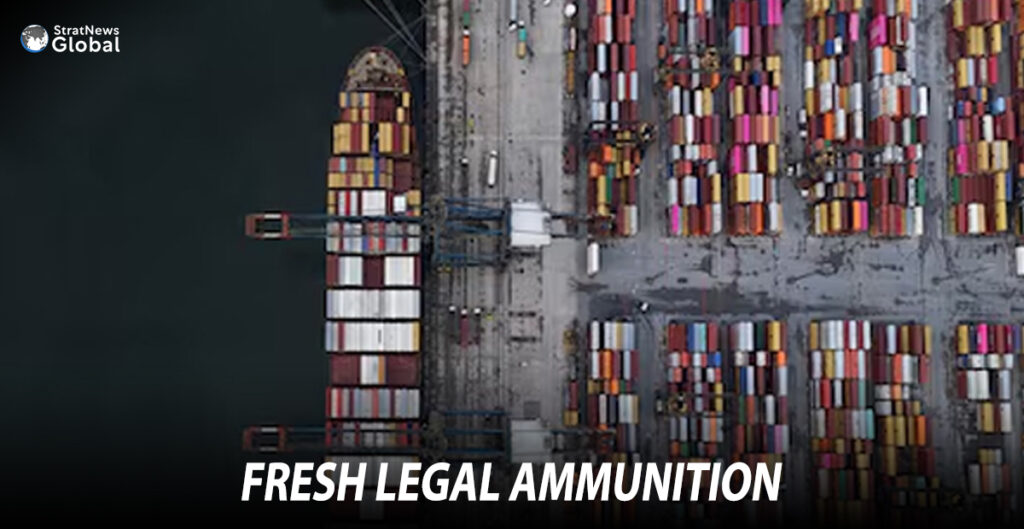
U.S. President Donald Trump threatened Brazil with 50% tariffs this month in response to the prosecution of his political ally, former President Jair Bolsonaro—a move that, while expressing Trump’s frustration, could offer legal ammunition to challengers seeking to dismantle the core of the White House’s tariff agenda.
Trade law experts and plaintiffs in a federal court challenge to Trump’s sweeping tariffs, which are backed by the 1977 International Emergency Economic Powers Act (IEEPA), say the president’s outburst against Brazil is another prime example of him far exceeding any legal authority to levy tariffs.
“It just shows that the president really thinks that he has unconstrained power to tariff. That’s a big problem for our clients, but also it’s a big problem for the rule of law,” said Jeffrey Schwab, senior counsel and interim director of litigation at the nonprofit Liberty Justice Centre.
Schwab is representing five small businesses that won the first round of a legal challenge to Trump’s use of IEEPA to impose sweeping “reciprocal” and fentanyl-related tariffs on nearly all U.S. trading partners. Schwab said he expects the threatened U.S. tariffs on Brazil to come up during oral arguments before the U.S. Court of Appeals for the Federal Circuit in Washington on Thursday.
The New York-based Court of International Trade found in May that Trump exceeded his legal authority by using IEEPA, but the appeals court has allowed the tariffs to remain in place while the case plays out – likely all the way to the U.S. Supreme Court.
The ruling, if it stands, could blow a hole in Trump’s tariff blitz, which so far has extracted concessions from a number of major trading partners, including Japan, the European Union, Indonesia, Vietnam and Britain. South Korea, Canada and Mexico are racing to negotiate deals with Trump to avoid steep tariff hikes on August 1.
‘This Brazil Nonsense’
The 50% tariff that would apply to Brazil on August 1 is the highest “reciprocal” rate announced by Trump, matched only by tiny Lesotho. Brazil is hoping to negotiate a deal to reduce the duties, but has acknowledged that it may not happen before the deadline as Trump focuses on larger trading partners.
The stakes are high for Brazil because the U.S. is the country’s second-largest trading partner after China.
Trump announced the Brazilian tariffs after a week of public feuding with President Luiz Inacio Lula da Silva, the leftist leader who narrowly defeated Bolsonaro in a 2022 election.
A week after Lula’s inauguration, Bolsonaro supporters stormed government buildings in Brasilia in an alleged plot to reinstate the right-wing former military officer as president. Bolsonaro is currently on trial in connection with the alleged coup and has been forced to wear an electronic ankle bracelet restraint. He has denied all the charges.
In a July 9 letter to Lula announcing the tariffs, Trump said the trial was a “Witch Hunt that should end IMMEDIATELY!” The U.S. president cited Brazil’s “insidious attacks on Free Elections and the fundamental Free Speech Rights of Americans” and “unlawful censorship orders” on U.S. social media platforms.
The letter did not specify whether the tariffs would be imposed under the IEEPA national emergency that Trump declared over the large and growing global U.S. trade deficit.
Trump has not issued a formal executive proclamation, and a White House spokesperson did not respond to a request for comment on the matter.
But the letter contained some language identical to tariff letters issued to other countries, explaining that the import levies were necessary to correct “unsustainable Trade Deficits against the United States.”
The U.S. has had consistent goods trade surpluses with Brazil since 2008, with a $6.8 billion surplus in 2024. Brazil was initially subjected to a 10% tariff as part of Trump’s “Liberation Day” tariff announcement in early April.
“The bottom line for me is, yes, I believe the plaintiffs can and will use this Brazil nonsense as further evidence that these tariffs are being imposed at the absolute whim of the president,” said Jennifer Hillman, a trade law professor at the Georgetown University Law Centre.
The 50% Brazil duties “bear no relationship to a national emergency in the United States,” Hillman said. “They have nothing to do with a trade deficit, even if you can define a trade deficit that we’ve been running consistently for 50 years as unusual and extraordinary.”
Daniel Esty, a professor at Yale Law School, said that even if an argument can be made for trade deficits as a national emergency under IEEPA, Trump’s tariffs to punish Brazil for acting against a former president are not legal.
“That is so clearly outside the bounds of the law as to be shocking,” Esty added.
Hillman served as counsel to a group of 191 Democratic lawmakers who filed an amicus brief in the appeals case, arguing, among other things, that Congress never intended for IEEPA to delegate tariff authority to the president, as there were other laws in place to deal with it.
The Court of International Trade followed this reasoning, and found that the fentanyl-related tariffs levied against China, Canada and Mexico failed to deal with an IEEPA national emergency that Trump declared over the deadly opioid.
(With inputs from Reuters)
Panama Calls for Closer Strategic, Economic Ties With India
Panama has reiterated its support to India’s bid for permanent membership at the United Nations Security Council (UNSC). It has backed India’s fight against terrorism, and invited New Delhi to accede to the Protocol to the Treaty Concerning the Permanent Neutrality and Operation of the Panama Canal.
Speaking to StratNews Global, Panama’s Vice Minister of Foreign Affairs, Carlos A. Hoyos, expressed solidarity with India over the recent terrorist attacks in Jammu and Kashmir, condemning the violence as “despicable acts on unsuspecting civilians who were actually there to celebrate life.”
“We stand firmly with India in its fight against terrorism. While our region has faced challenges from organised crime, we understand the global impact of terrorism and remain committed to supporting affected nations,” said Hoyos. Recently, a delegation of Indian MPs led by Shashi Tharoor had visited Panama where the issue was discussed.
Digital Cooperation And UPI
One of the promising new areas of collaboration is digital public infrastructure, particularly in the field of digital payments. Vice Minister Hoyos noted Panama’s growing interest in India’s successful Unified Payments Interface (UPI) model as a tool for financial inclusion.
“Digital payments can be transformational, especially for small businesses and underserved communities,” he said. “We are looking closely at India’s experience with UPI and see great potential to adapt such innovations in Panama and the region.”
Panama is already exploring the use of digital platforms, including municipal tax payments via cryptocurrency and is developing a broader regulatory framework to ensure safe adoption of fintech technologies. “For us, financial inclusion is a priority, and our President has said that having a bank account should be considered a human right,” he added.
UNSC Reforms Needed
On UNSC reforms, the visiting Vice Minister highlighted the urgency of restructuring the global body to reflect today’s geopolitical realities. “The UN is approaching 80 years old. Much has changed, and India, as the most populous country in the world and a rising global power, has a legitimate claim to a permanent seat. We fully support India’s bid,” he stated.
He also called on India to join the Protocol to the Treaty on the Permanent Neutrality of the Panama Canal, noting that “the Canal represents Panama’s commitment to global peace and free trade. And India’s accession would send a strong message of support for international neutrality and stability.”
Strategic Diplomacy And Bilateral Progress
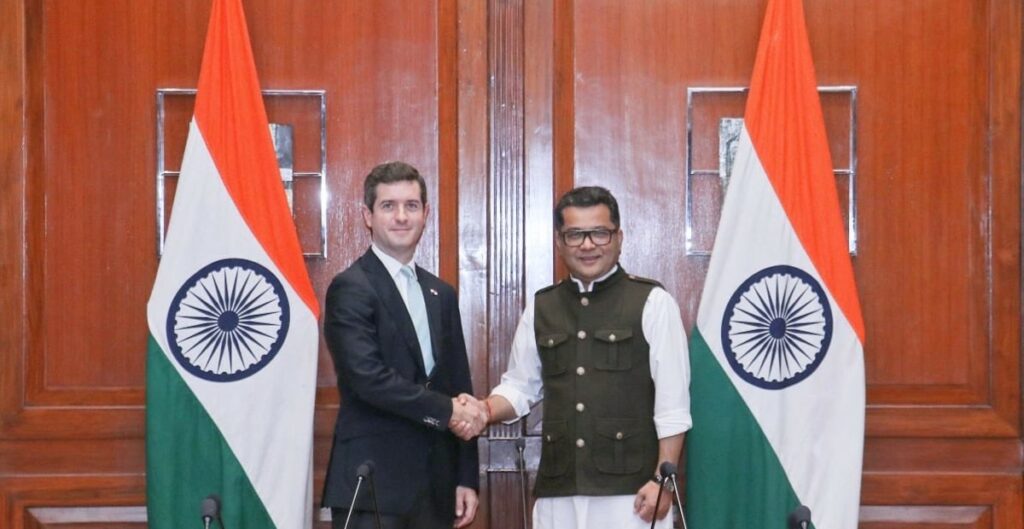
Earlier in the day, Vice Minister Hoyos met Minister of State for External Affairs Pabitra Margherita. Both sides reviewed the progress in India-Panama relations and discussed ways to expand cooperation across technology, education, renewable energy and infrastructure. India also conveyed its best wishes and full support for Panama’s forthcoming presidency of the United Nations Security Council.
Hub For India In The Americas
Vice Minister Hoyos underlined Panama’s unique value as a logistics and financial hub, offering access to a market of over 800 million people across Central, South and North America. He encouraged Indian businesses to explore Panama’s Special Economic Zones, including the SEM and EMMA regimes. He cited Panama’s removal from one of the EU restrictive lists as a sign of the country’s strong regulatory progress.
“We would like to see Indian companies set up regional headquarters in Panama. This is a win-win, for Panama’s economy and for Indian firms looking to tap into Latin American markets efficiently,” he said.
Key areas of collaboration include pharmaceuticals, education, digital payments, clean energy and semiconductors. With Panama already hosting logistics operations for companies like Haleon, Hoyos expressed interest in moving up the value chain to manufacturing and R&D.
Panama Wants An IIT
One of the proposals discussed was the establishment of an Indian Institute of Technology (IIT) campus in Panama. Hoyos said such a campus would act as a regional magnet for talent across the Americas, helping Panama position itself as a knowledge and innovation hub.
“In the global war for intellectual talent, the presence of an IIT campus in Panama could be transformational, not only for Panama but also for the entire region,” he said. He stressed that Panama’s strategic connectivity, including direct flights to nearly every capital in the Americas, makes it an ideal location.
Renewable Energy And Solar Partnership
Panama, one of the few carbon-negative countries in the world, is eager to deepen cooperation with India through the International Solar Alliance (ISA). With 84% of its energy grid sourced from renewables, mostly hydro, Panama sees solar as an integral part of its future energy mix. Hoyos confirmed Panama’s interest in advancing solar partnerships with India and acknowledged the legal and fiscal incentives already in place for solar projects in his country.
Infrastructure And Investment
Highlighting Panama’s ambitious five-year infrastructure investment plan, Hoyos invited Indian companies to participate in upcoming public tenders and private investment opportunities. Key projects include a $2 billion water reservoir for the Panama Canal, a railway line connecting Panama City with Costa Rica and major highway and port expansions.
On the multilateral front, he announced that Panama will host the World Economic Forum for Latin America and the Caribbean (LAC) again in January 2026, after a successful debut earlier this year. Hoyos expressed hope that India would send a high-level delegation, possibly even Prime Minister Narendra Modi.
“It would be a dream come true for Panama,” he said, describing Prime Minister Modi as a “stoic, serious and charismatic leader.”
What Next?
From commercial diplomacy to technology transfer and multilateral cooperation, the India-Panama relationship is being reimagined as one of mutual opportunity and regional impact. As Hoyos put it: “We are not just here for trade. We are here for a comprehensive partnership rooted in trust, innovation and shared values.”
Rights Groups In Israel Say Gaza Assault Is Genocide
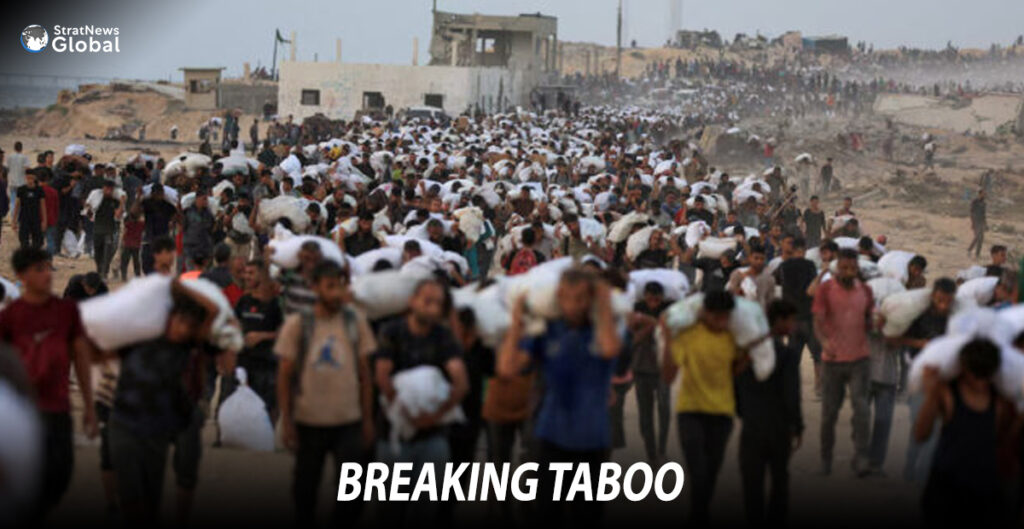
When two prominent human rights groups in Israel became the first to openly accuse the state of committing genocide in Gaza—shattering a long-standing taboo in a nation born out of the Holocaust—they knew they would face strong criticism.
B’Tselem and Physicians for Human Rights Israel released reports at a press conference in Jerusalem on Monday, saying Israel was carrying out “coordinated, deliberate action to destroy Palestinian society in the Gaza Strip”.
That marked the strongest possible accusation against the state, which vehemently denies it. The charge of genocide is deeply sensitive in Israel because of its origins in the work of Jewish legal scholars in the wake of the Nazi Holocaust. Israeli officials have rejected genocide allegations as antisemitic.
Expecting Attacks
So Sarit Michaeli, B’Tselem’s international director, said the group expected to face attacks for making the claim in a country still traumatised by the deadly Hamas-led attacks of October 7, 2023 that triggered the war in Gaza.
“We’ve looked into all of the risks that we could be facing. These are legal, reputation, media risks, other types of risk, societal risks and we’ve done work to try and mitigate these risks,” said Michaeli, whose organisation is seen as being on the political fringe in Israel but is respected internationally.
“We are also quite experienced in attacks by the government or social media, so this is not the first time.” It’s not unrealistic “to expect this issue, which is so fraught and so deeply contentious within Israeli society and internationally to lead to an even greater reaction,” she said.
Govt Spokesperson Rejects Findings
Israel’s foreign ministry and prime minister’s office did not immediately reply to a request for comment.
Shortly after the reports were released on Monday, government spokesperson David Mencer said: “Yes, of course we have free speech in Israel.” He strongly rejected the reports’ findings and said that such accusations fostered anti-semitism abroad.
‘No One Should Die’
Some Israelis have expressed concern over Israel’s military campaign in Gaza that has killed more than 60,000 Palestinians, destroyed much of the enclave and led to widespread hunger.
An international global hunger monitor said on Tuesday a famine scenario was unfolding in the Gaza Strip, with malnutrition soaring, children under five dying of hunger-related causes and humanitarian access severely restricted.
“For me, life is life, and it’s sad. No one should die there,” said nurse Shmuel Sherenzon, 31.
But the Israeli public generally rejects allegations of genocide.
Most of the 1,200 people killed and the 251 taken hostage to Gaza in the October 7 attacks in southern Israel were civilians, including men, women, children and the elderly.
In an editorial titled “Why are we blind to Gaza?” published on the mainstream news site Ynet last week, Israeli journalist Sever Plocker said images of ordinary Palestinians rejoicing over the attacks in and even following the militants to take part in violence made it almost impossible for Israelis to feel compassion for Gazans in the months that followed.
“The crimes of Hamas on October 7 have deeply burned – for generations – the consciousness of the entire Jewish public in Israel, which now interprets the destruction and killing in Gaza as a deterrent retaliation and therefore also morally legitimate.”
Israel Denies There Is A Genocide
Israel has fended off accusations of genocide since the early days of the Gaza war, including a case brought by South Africa at the International Court of Justice in the Hague that Prime Minister Benjamin Netanyahu condemned as “outrageous”.
While Israeli human rights groups say it can be difficult working under Israel’s far-right government, they don’t experience the kind of tough crackdowns their counterparts face in other parts of the Middle East.
Israel has consistently said its actions in Gaza are justified as self-defence and accuses Hamas of using civilians as human shields, a charge the militant group denies.
Israeli media has focused more on the plight of hostages taken by Hamas, in the worst single attack on Jews since the Holocaust.
‘It’s Really Incomprehensible’
In this atmosphere, for B’Tselem’s Israeli staff members to come to the stark conclusion that their own country was guilty of genocide was emotionally challenging, said Yuli Novak, the organisation’s executive director.
“It’s really incomprehensible, it’s a phenomena that the mind cannot bear,” Novak said, choking up.
“I think many of our colleagues are struggling at the moment, not only fear of sanctions but also to fully grasp this thing.”
Guy Shalev, executive director of Physicians for Human Rights Israel, said the organisation faced a “wall of denial”.
It has been under pressure for months and is expecting a stronger backlash after releasing its report.
“Bureaucratic, legal, financial institutions such as banks freezing accounts including ours, and some of the challenges we expect to see in the next days…these efforts will intensify,” he told Reuters.
(With inputs from Reuters)
Trump Announces 25% Tariff On Indian Imports Starting August 1
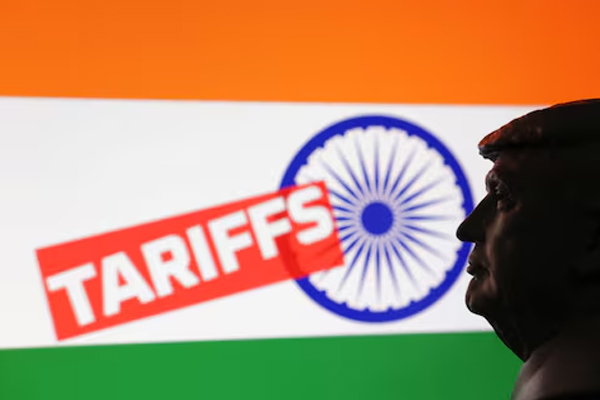
U.S. President Donald Trump announced on Wednesday that a 25% tariff will be imposed on Indian imports beginning August 1.
Trump said India will also face an unspecified penalty on August 1, but he did not elaborate on the amount or what it was for.
“While India is our friend, we have, over the years, done relatively little business with them because their Tariffs are far too high, among the highest in the World, and they have the most strenuous and obnoxious non-monetary Trade Barriers of any Country,” Trump wrote in a Truth Social post.
“They have always bought a vast majority of their military equipment from Russia, and are Russia’s largest buyer of ENERGY, along with China, at a time when everyone wants Russia to STOP THE KILLING IN UKRAINE — ALL THINGS NOT GOOD!”
India’s commerce ministry, which is leading the trade negotiations with the U.S., did not immediately respond to a request for comment.
India Plans Broader Talks
India plans to resume broader trade talks with the U.S. in mid-August when a U.S. delegation is due to visit, hoping to seal a comprehensive bilateral trade agreement by October, Indian officials said.
“Talks are progressing well,” an official said, adding Trump could issue a tariff order in a “worst-case scenario”. The official declined to be identified without authorisation to speak to the media.
“But, we assume it would be a temporary measure, considering the five rounds of trade talks that have taken place. A deal will soon be worked out,” the official said.
Trump also reiterated his claim that he helped broker a ceasefire to a conflict between India and Pakistan earlier this year, saying both sides accepted his request.
“That was great,” he said, describing his friendship with Prime Minister Narendra Modi. India disputes Trump’s claims that he brokered the ceasefire.
Analysts say Trump’s remarks on the India-Pakistan conflict have cast a shadow on trade negotiations.
‘World Tariff’ Rate
On Monday, Trump said most partners that do not negotiate separate trade deals would soon face tariffs of 15% to 20% on their exports to the United States, well above the broad 10% tariff he imposed in April. His administration will notify some 200 countries soon of their new “world tariff” rate.
U.S. Trade Representative Jamieson Greer told CNBC the India talks require more time, noting Trump wants good deals, not fast ones.
India has shown “strong interest in opening portions of its market” though its trade policy had long focused on protecting domestic interests, Greer said.
Piyush Goyal, India’s trade minister, told Reuters last week India was making “fantastic” progress in U.S. trade talks.
Tariff Cuts Offered
Indian officials said New Delhi had offered tariff cuts on a wide range of goods and was working to ease non-tariff barriers.
However, agriculture and dairy remain “no-go” areas, with India unwilling to allow U.S. imports of genetically modified soybeans or corn or to open its dairy sector.
Total bilateral goods trade reached about $129 billion in 2024, with India posting a surplus of nearly $46 billion.
Officials said India was calibrating its strategy amid broader U.S. tariff threats targeting BRICS nations, including India, over issues such as de-dollarisation and Russian oil purchases.
“We remain hopeful of securing a deal that gives Indian exporters preferential access compared to our peers,” a second Indian government official said, speaking on condition of anonymity.
(With inputs from Reuters)
Tsunami Waves Hit Hawaii After Massive Quake In Russia’s Far East
A massive 8.8-magnitude earthquake off Russia’s Kamchatka Peninsula triggered 5-metre tsunami waves and prompted evacuation orders across the Pacific, including as far as Hawaii on Wednesday.
The shallow earthquake damaged buildings and injured several people in the remote Russian region, while much of Japan’s eastern seaboard – devastated by a 9.0 magnitude earthquake and tsunami in 2011 – was ordered to evacuate.
A resident in the city of Petropavlovsk-Kamchatsky said the shaking went on for several minutes.
“I decided to leave the building,” said Yaroslav, 25. “It felt like the walls could collapse any moment. The shaking lasted continuously for at least 3 minutes.”
Video footage released by the region’s health ministry showed a team of medics in Petropavlovsk-Kamchatsky performing surgery as the tremors shook their equipment and the floor beneath them.
Tsunami Waves Hit
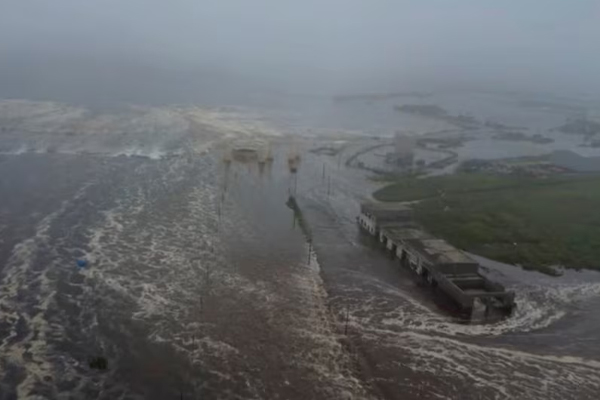
Tsunami waves struck parts of Kamchatka, partially flooding the port and a fish processing plant in the town of Severo-Kurilsk and sweeping vessels from their moorings, regional officials and Russia’s emergency ministry said.
Verified drone footage showed the town’s entire shoreline was submerged, with taller buildings and some storage facilities surrounded by water, which was seen pouring back into the sea.
“Today’s earthquake was serious and the strongest in decades of tremors,” Kamchatka Governor Vladimir Solodov said in a video posted on the Telegram messaging app. Russian scientists said it was the most powerful to hit the region since 1952.
In Hawaii, waves of up to 1.7 metres (5.5 feet) impacted the islands before the Pacific Tsunami Warning Centre reduced its warning level for the state around 0850 GMT, saying no major tsunami was expected.
Coastal residents were earlier told to get to high ground or the fourth floor or above of buildings, and the U.S. Coast Guard ordered ships out of harbours.
Flights out of Honolulu airport resumed later, the transportation department said, while the main airport in Maui remained closed, with passengers sheltering in the terminal.
Tsunami waves of nearly half a metre were observed as far as California, with smaller ones reaching Canada’s province of British Columbia.
Warnings Across The Pacific
The U.S. Geological Survey said the earthquake was shallow at a depth of 19.3 km (12 miles), and centred 119 km (74 miles) east-southeast of Petropavlovsk-Kamchatsky, a city of 165,000.
Tsunami alarms sounded in coastal towns across Japan’s Pacific coast, and evacuation orders were issued for tens of thousands of people.
Workers evacuated the stricken Fukushima nuclear plant, where a meltdown following the 2011 tsunami caused a radioactive disaster, operator TEPCO said.
Footage on public broadcaster NHK showed scores of people on the northern island of Hokkaido on the roof of a building, sheltering under tents from the sun, as fishing boats left harbours to avoid any damage from incoming waves.
Broadcaster Asahi TV reported that a 58-year-old woman died when her car fell off a cliff while she was evacuating in central Japan’s Mie prefecture.
Automaker Nissan Motor suspended operations at some factories in Japan to ensure employee safety, Kyodo news agency reported.
Three tsunami waves had been recorded in Japan, the largest of 1.3 metres (4.3 feet), officials said.
Chief Cabinet Secretary Yoshimasa Hayashi said no injuries or damage had been reported, and there were no irregularities at any nuclear plants.
Tsunami waves of 1 to 3 metres (3-9 feet) can be fatal for people who are swept away, said NHK.
The U.S. Tsunami Warning System said waves of more than 3 metres were possible along some coasts of Russia, the northern Hawaiian islands and Ecuador, while waves of 1-3 metres were possible in countries including Japan, Hawaii, Chile and the Solomon Islands.
‘Ring Of Fire’
Russia’s Ministry for Emergency Services said on Telegram that a kindergarten was damaged, but most buildings withstood the quake. No serious injuries or fatalities have been reported.
Several people in Kamchatka sought medical assistance following the quake, Oleg Melnikov, regional health minister, told Russia’s TASS state news agency.
In Severo-Kurilsk in the northern Kuril islands, south of Kamchatka, tsunami waves exceeded 3 metres, with the largest up to 5 metres, Russia’s RIA news agency reported.
Alexander Ovsyannikov, the town’s mayor, urged residents to assess damage to their homes and not to use gas stove heating until inspections had been carried out.
Kamchatka and Russia’s Far East sit on the Pacific Ring of Fire, a geologically active region that is prone to earthquakes and volcanic eruptions.
“However, due to certain characteristics of the epicentre, the shaking intensity was not as high … as one might expect from such a magnitude,” said Danila Chebrov, director of the Kamchatka Branch of the Geophysical Service, on Telegram.
“Aftershocks are currently ongoing … Their intensity will remain fairly high. However, stronger tremors are not expected in the near future. The situation is under control.”
(With inputs from Reuters)
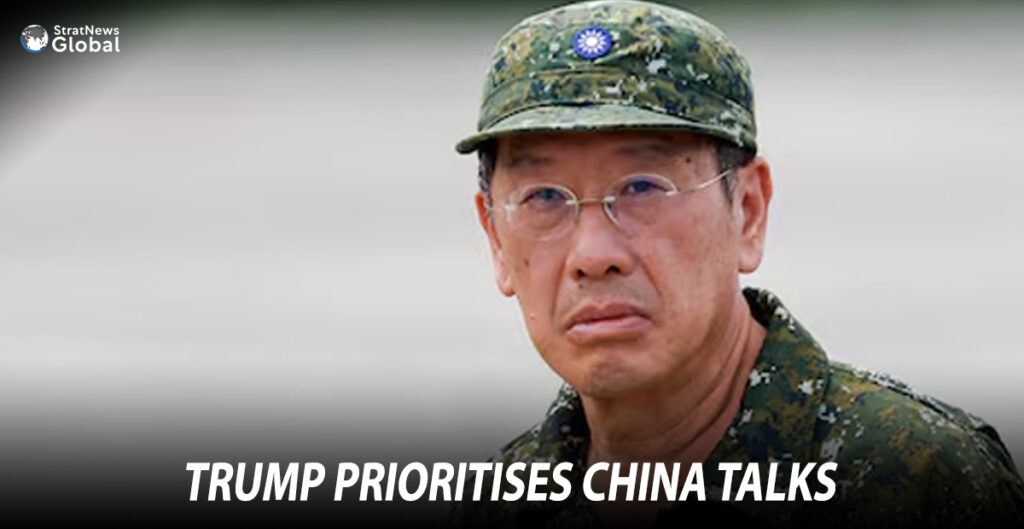
US Scrapped Meeting With Taiwan Ahead Of China Trade Talks: FT
The U.S. cancelled a planned June meeting with Taiwan’s defence minister, reflecting concerns that President Donald Trump is cautious about actions that might strain relations with China, the Financial Times reported on Wednesday.
Taiwan’s Wellington Koo had planned to visit the Washington area for defence talks with Elbridge Colby, U.S. under-secretary of defence for policy, but the U.S. called off the meeting at the last minute, the FT reported, citing sources.
Reuters could not immediately confirm the report.
The White House, Pentagon and Taiwan’s embassy in Washington did not immediately respond to a request for comment.
Taiwan’s President Cancels US Stopover
Taiwan’s President Lai Ching-te is expected to postpone a diplomatically sensitive trip, initially proposed to the Trump administration for August, which would have included stops in the United States, according to three sources familiar with the discussions.
Such a trip was bound to infuriate Beijing at a time when U.S. President Donald Trump is trying to negotiate a deal on trade with China. China claims democratically governed Taiwan as its own territory, a claim Taiwan rejects, and regularly denounces any shows of support for Taipei from Washington.
The trip, which could have included visits to Guatemala, Belize and Paraguay, was never formally confirmed but had been discussed with the governments involved, according to a person familiar with the matter. Lai had considered stopping in New York and Dallas on the way to and from Latin America.
Lai is set to delay the trip until at least later this year for a handful of reasons, including the need to organise his government’s response to extreme weather in Taiwan, one of the sources said.
Two of the sources also pinned the delay on the ongoing U.S. tariff talks with Taipei and Beijing, respectively. Top U.S. and Chinese economic officials huddled in Stockholm, Sweden, on Monday to resume talks.
The White House and China’s embassy in Washington did not immediately respond to a request for comment, while Taiwan’s Presidential Office was not immediately available for comment late on Monday night.
(With inputs from Reuters)
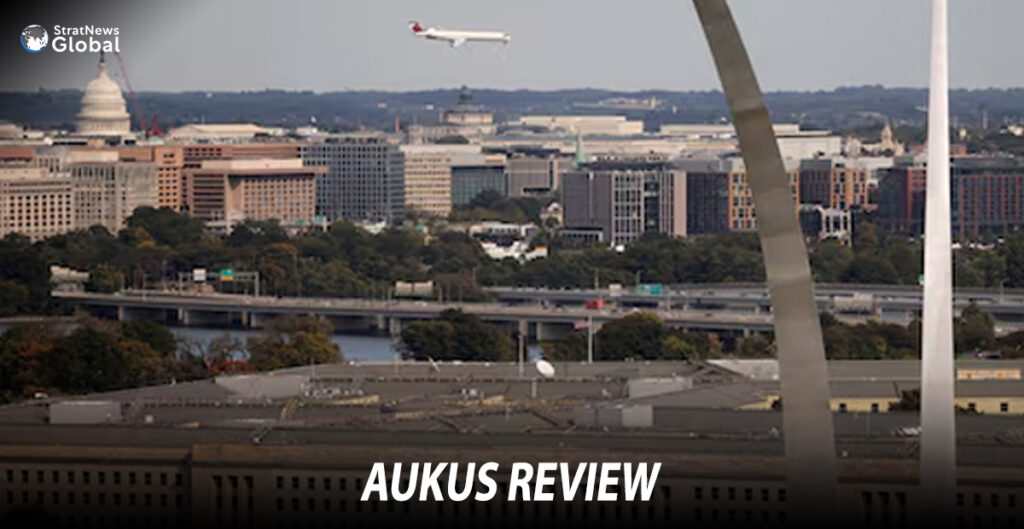
US To Conclude Defence Pact Review With UK, Australia This Autumn
The United States will conclude its review of a defence pact with the United Kingdom and Australia by autumn in the northern hemisphere, a senior Pentagon official’s office said on Wednesday.
U.S. President Donald Trump’s administration said in June it had launched a formal review into the AUKUS defence deal – worth hundreds of billions of dollars – that will allow Australia to acquire U.S. nuclear-powered submarines, causing alarm in Canberra.
The review into the 2021 deal struck during the Biden administration is being led by Under Secretary of Defence for Policy Elbridge Colby, a public critic of the pact.
Colby’s office said in a post on X on Wednesday (Tuesday EST), the review will be an “empirical and clear-eyed assessment” of the deal.
“The Department anticipates completing the review in the fall,” the post said.
“Its purpose will be to provide the President and his senior leadership team with a fact-based, rigorous assessment of the initiative.”
AUKUS is Australia’s biggest-ever defence project, with Canberra committing to spend A$368 billion ($240 billion) over three decades to the programme, which includes billions of dollars of investment in the U.S. submarine production base.
Colby, the Pentagon’s top policy adviser, said last year that submarines were a scarce, critical commodity, and U.S. industry could not produce enough to meet American demand.
Australia, which this month paid A$800 million to the U.S. in the second instalment under AUKUS, has maintained it is confident the pact will proceed.
Australia and Britain on Saturday signed a bilateral 50-year submarine pact, which they said builds on the AUKUS alliance with the U.S.
Australia-UK AUKUS Pact
Australia announced on Saturday that it had signed a treaty with Britain to strengthen cooperation on the AUKUS nuclear submarine partnership over the next 50 years.
The AUKUS pact, agreed upon by Australia, Britain and the U.S. in 2021, aims to provide Australia with nuclear-powered attack submarines from the next decade to counter China’s ambitions in the Indo-Pacific.
Defence Minister Richard Marles said in a statement that the bilateral treaty was signed with Britain’s Defence Secretary John Healey on Saturday after a meeting in the city of Geelong, in Victoria state.
($1 = 1.5323 Australian dollars)
(With inputs from Reuters)