

Support us by contributing to StratNewsGlobal on the following UPI ID
ultramodern@hdfcbank

Strategic affairs is our game, South Asia and beyond our playground. Put together by an experienced team led by Nitin A. Gokhale. Our focus is on strategic affairs, foreign policy and international relations, with higher quality reportage, analysis and commentary with new tie-ups across the South Asian region.
You can support our endeavours. Visit us at www.stratnewsglobal.com and follow us on YouTube, Twitter, Facebook and Instagram.
र 500 per month
र 1000 per month
र 5000 per year
र 10000 per year
Donate an amount of your choice
र 500 per month
Donate र 500 per month

र 1000 per month
Donate र 1000 per month
र 5000 per year
Donate र 5,000 per year
र 10000 per year
Donate र 10,000 per year
Donate an amount of your choice
Donate an amount of your choice
Zelenskyy Restores Anti-Graft Agencies’ Independence Amid Political Crisis
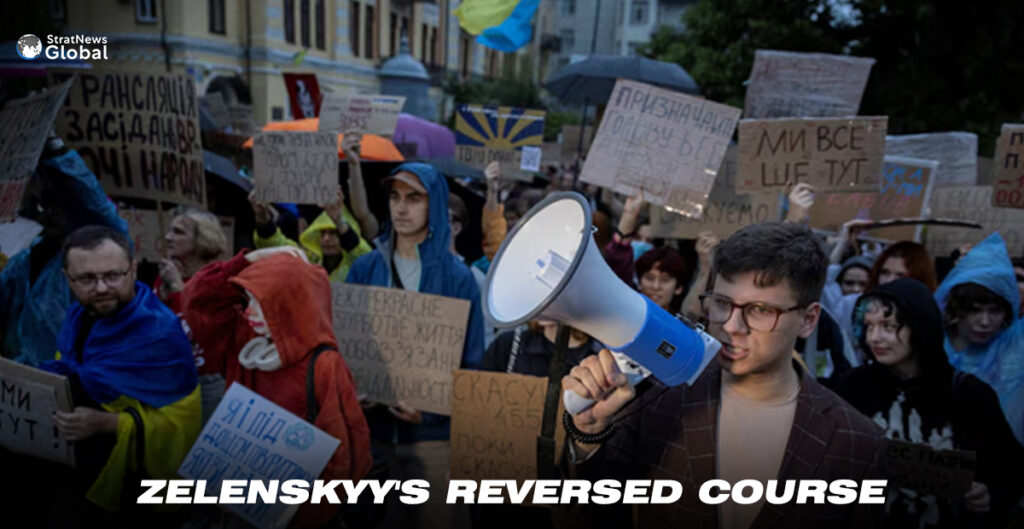
President Volodymyr Zelenskyy on Thursday reinstated the independence of Ukraine’s two key anti-corruption agencies in a bid to defuse a political crisis that has undermined confidence in his wartime leadership and raised concerns among Western allies.
Thousands of protesters rallied in Kyiv and other cities in recent days in a rare show of discontent after lawmakers led by Zelenskyy’s ruling party rushed through amendments last week defanging the respected agencies.
Zelenskyy reversed course after the outcry, under pressure from top European officials, who warned that Ukraine was jeopardising its bid for European Union membership by curbing the powers of its anti-graft authorities.
He signed a new bill on Thursday shortly after lawmakers approved it 331 to 0, saying the legislation “guarantees the absence of any kind of outside influence (or) interference”.
“Ukraine is a democracy – there are definitely no doubts,” Zelenskyy said on the Telegram messaging app.
Thursday’s law reverses amendments that had given his hand-picked general prosecutor the power to transfer cases away from the agencies and reassign prosecutors, a step critics alleged had been designed to protect his allies from prosecution.
Eradicating graft and shoring up the rule of law are key requirements for Kyiv to join the EU, which Ukrainians see as critical to their future as they fend off a Russian invasion.
European Commission President Ursula von der Leyen described Thursday’s law as “a welcome step” and urged Ukraine to continue its reform drive.
Public Pressure
Popular demonstrations had continued even after Zelenskyy submitted the new bill last week, with hundreds rallying near the presidential offices in Kyiv late on Wednesday chanting “Shame!” and “The people are the power!”.
Ukrainians, following a night of deadly Russian air strikes, also rallied near parliament ahead of Thursday’s vote to pressure lawmakers to approve the new measure.
After it passed, they burst into cheers and applause.
“Some fight on the front, and some need to put them (authorities) in their place here,” said demonstrator Mykola Pominchuk, 42.
Speaking at the rostrum before voting, opposition member Yaroslav Yurchyshyn thanked Ukrainians for stopping authorities “one step from the abyss” of autocracy.
Some lawmakers appeared in parliament with handmade placards mimicking those carried by protesters.
Corruption Fighters
The National Anti-Corruption Bureau of Ukraine (NABU) and the Specialised Anti-Corruption Prosecutor’s Office (SAPO) have stepped up a closely watched campaign against graft since Russia’s February 2022 invasion.
They have brought charges against lawmakers and senior government officials, including a then-deputy prime minister who was accused last month of taking a $345,000 kickback.
Speaking to Reuters last Friday, after Zelenskyy’s reversal, NABU chief Semen Kryvonos said he expected continued pressure on his agency from corrupt forces uninterested in cleaning up Ukraine.
He said he and other anti-corruption officials felt a greater sense of responsibility following the protests, but also called on the country’s leadership to help their effort.
“This responsibility must be shared with the government, which needs to react and say, ‘Okay, there’s corruption here – let’s destroy it.'”
(With inputs from Reuters)
Germany Says It Will React To Any Unilateral Israeli Actions In Palestinian Territories
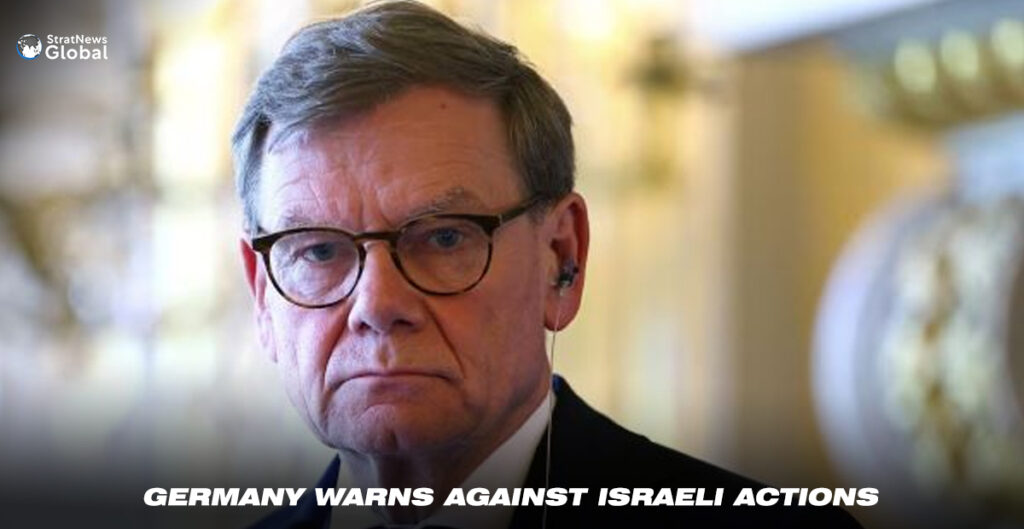
Germany’s foreign minister, Johann Wadephul, announced on Thursday that recognition of a Palestinian state should follow negotiations on a two-state solution, but cautioned that Berlin would respond to any unilateral steps, referencing annexation threats made by certain Israeli ministers.
Wadephul issued the statement before heading off to Israel and the Palestinian territories on a trip Berlin has billed as a fact-finding mission amid heightened alarm over starvation in Gaza.
His remarks marked Germany’s strongest warning yet to Israel as Western nations intensify efforts to exert pressure. In recent weeks, Britain, Canada and France have all signaled their readiness to recognise a Palestinian state in Israeli-occupied territory at the United Nations General Assembly this September.
However, critics argue that Germany’s response remains overly cautious, shaped by an enduring sense of historical guilt for the Holocaust and reinforced by pro-Israel sentiment in influential media circles, weakening the West’s collective ability to apply meaningful pressure on Israel.
Two-State Solution
In his statement, Wadephul reiterated Germany’s stance that a sustainable resolution to the Gaza war can only be achieved through a negotiated two-state solution – a Palestinian state co-existing in peace alongside Israel.
“In light of open annexation threats from parts of the Israeli government, a growing number of countries – including many in Europe – are now prepared to recognise a Palestinian state even without a prior negotiation process. The region and the Middle East peace process are therefore at a crossroads,” Wadephul said.
“That process must begin now. Should unilateral steps be taken, Germany too will be compelled to respond.”
Israeli Prime Minister Benjamin Netanyahu’s coalition includes two far-right parties that call for the outright conquest of Gaza and re-establishment of Jewish settlements there. Two senior government ministers also voiced support on Thursday for annexing the Israeli-occupied West Bank.
The death toll from almost two years of war between Israel and Palestinian terrorist group Hamas in Gaza surpassed 60,000 this week. A growing number of civilians are dying from starvation and malnutrition, Gaza health authorities say, with images of starving children shocking the world and intensifying criticism of Israel over its curbs on aid into the enclave.
Germany, together with the United States, has long remained one of Israel’s staunchest allies and largest arms suppliers.
German officials say their approach to Israel is governed by a special responsibility, known as the “Staatsraison”, arising from the legacy of the Nazi Holocaust. They say they can achieve more through diplomatic back channels than public statements.
Pro-Israel German Media
The largest media group in Germany, Axel Springer, which owns its best-selling daily Bild as well as other publications like Welt and Politico, includes a specific pro-Israel commitment in its core corporate principles.
The clause commits Axel Springer and its employees to a pro-Israel editorial stance.
Bild published a story on Thursday, for example, denouncing a “hunger campaign” against Israel and moves by Western countries to raise pressure on the country which it said had prolonged the war in Gaza by emboldening Hamas to leave ceasefire talks. The paper praised Germany for not doing so.
Another Bild story on Thursday denounced a “campaign designed to morally destroy Israel”.
Chancellor Friedrich Merz has long been pro-Israel. In February, he said he would find a way for Netanyahu to visit Germany without being arrested under a warrant by the International Criminal Court.
But the tone has shifted in Berlin in recent weeks, in tandem with a shift in public opinion, with a poll released on June 4 showing 63% of Germans saying Israel’s military campaign in Gaza has gone too far.
Merz said on Monday that steps like suspending the European Union pact governing relations with Israel were on the table now, in order to raise pressure on the country over the “catastrophic” situation in Gaza.
The EU’s executive body recommended on Monday curbing Israeli access to its flagship research funding programme but the proposal does not yet have enough support to pass, with heavyweight Germany in particular still uncertain.
(With inputs from Reuters)
India Pledges Farmer Protection As Trump’s 25% Tariff Threat Fuels Opposition Uproar
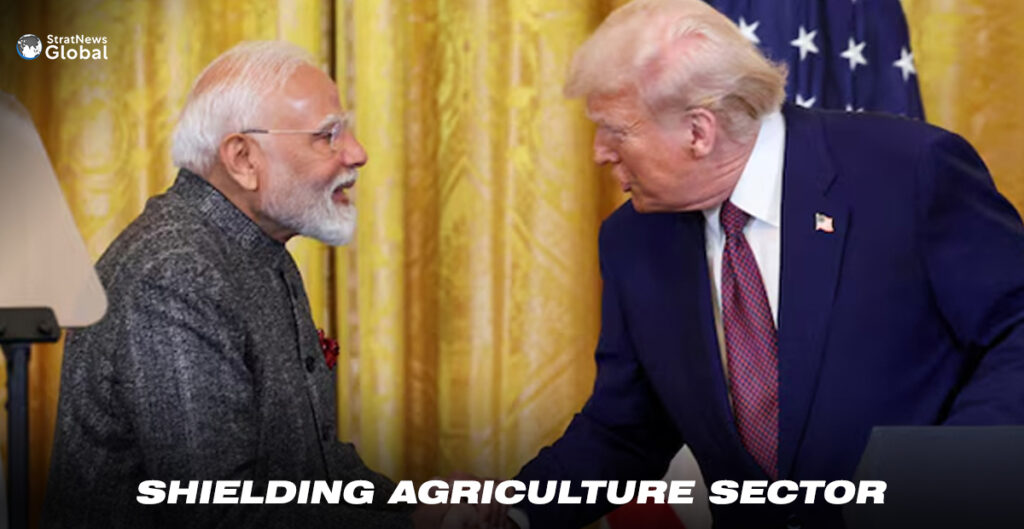
India on Thursday pledged to safeguard its labour-intensive agriculture sector—a key hurdle in stalled trade talks with the United States—after Washington threatened 25% tariff, sparking an opposition outrage and a drop in the rupee.
Without a deal, the rate will go into effect from Friday and single out India for harsher trade conditions than its major peers, potentially damaging the economy of a strategic U.S. partner in Asia seen as a counterbalance to Chinese influence.
Though negotiations are continuing, they have hit a wall due to the United States’ insistence that India open its agricultural markets.
New Delhi has long shielded the sector, which – with over 40% of the workforce engaged in farming activities – constitutes the most influential voting bloc in the world’s most populous nation.
“The government attaches the utmost importance to protecting and promoting the welfare of our farmers, entrepreneurs, and (medium and small businesses),” India’s trade minister Piyush Goyal said in a statement in the parliament.
U.S. Treasury Secretary Scott Bessent said in a CNBC interview on Thursday that the U.S. trade team was frustrated with India, adding that the future of the trade deal between the two nations was now up to India.
U.S. President Donald Trump had said on Wednesday that, in addition to the 25% tariff on imports from India, the country would face an unspecified penalty for its dealings with Russia and its membership in the BRICS grouping of nations.
“I don’t care what India does with Russia,” Trump wrote in a Truth Social post on Thursday. “They can take their dead economies down together, for all I care.”
India’s benchmark equity indices, the Nifty 50 and BSE Sensex, fell as much as 0.9% in early trade before paring losses, and both closed around 0.4% lower.
The rupee closed 0.2% down at 87.5950 to the dollar after touching its lowest level in more than five months earlier in the day.
Cooling Relations
The government’s failure to clinch an agreement with Trump, even as other major world economies like the European Union, Japan and South Korea have struck deals in recent days, sparked anger among India’s political opposition.
“The government has destroyed our economic policy, has destroyed our defence policy, has destroyed our foreign policy,” opposition leader Rahul Gandhi told reporters on Thursday.
Economists warned the steep tariff could hurt India’s manufacturing ambitions and trim up to 40 basis points off economic growth in the financial year to March 2026. Some doubted whether further negotiations would lead to improved conditions.
“While further trade talks may bring the tariff rate down, it appears unlikely that India will secure a significantly better outcome than its eastern neighbours,” said Priyanka Kishore, an economist at Asia Decoded.
Other countries have negotiated better U.S. tariff rates, with Vietnam agreeing to 20%, Indonesia to 19% and Japan and the EU both facing levies of 15%.
On Wednesday, Trump said Washington had reached a trade deal with India’s arch-rival Pakistan that Islamabad said would lead to lower tariffs on its exports, though neither side has yet revealed the agreed rate.
Since India’s short but deadly conflict with Pakistan in May, New Delhi has been unhappy about Trump’s closeness with Islamabad and has protested, casting a shadow over trade talks.
Despite previous public displays of bonhomie between Trump and Prime Minister Narendra Modi, India has hardened its stance towards the United States in recent weeks.
Trump has repeatedly taken credit for the India-Pakistan ceasefire he announced on social media on May 10, but India disputes his claim that it resulted from his intervention and trade threats.
The U.S., the world’s largest economy, currently has a trade deficit of $45.7 billion with the fifth-largest economy, India.
(With inputs from Reuters)
Promises Vs. Power: China’s Mega Dam Contradiction
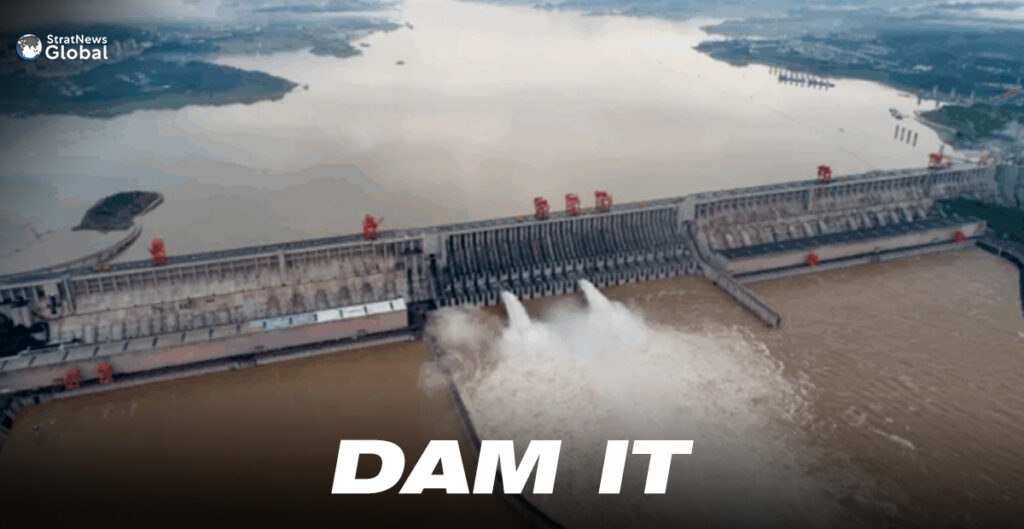
China’s decision to push ahead with constructing a massive dam on the Yarlung Tsangbo (as the Brahmaputra is known in Tibet) near the Great Bend — where the river curves sharply before entering India — has raised some concerns in India.
The project, greenlit under China’s 14th Five-Year Plan, is reportedly designed to generate 60 GW of hydropower, nearly three times the capacity of the existing Three Gorges Dam. If completed, it would be the largest hydropower project in the world by output.
The move, formally marked by the start of construction in July 2025, was announced by Chinese authorities as a major milestone in national infrastructure development.
According to a July 22 report by Al Jazeera, China has officially begun work on what it calls the world’s largest hydropower dam in Tibet’s Medog County.
The project, part of China’s broader push for clean energy and carbon neutrality, is also seen as a strategic initiative to develop the last major untapped river basin in the country — barely 30–50 km from the Indian border, in one of the most ecologically and geologically sensitive zones in Asia.
A senior Indian specialist on water resources has pointed out that 28 dams have already been proposed by China along the Yarlung Tsangbo, several of which — like Zangmu (completed in 2015), Dagu, and Jiacha — are run-of-the-river schemes. These involve minimal storage and do not significantly disrupt downstream flow. In contrast, the Great Bend project is designed for water diversion and long-term storage, potentially depriving India and Bangladesh of critical water volume.
The same expert underlines that this stretch contributes around 50 BCM out of the 115 BCM of annual water flow at India’s Tuting station — accounting for 43% of Siang flow and over 60% of the Brahmaputra’s total volume at critical points. With China controlling this upstream volume, it gains significant leverage over South Asia’s water security.
China has presented the Great Bend project as part of its effort to achieve carbon neutrality by 2060. This aligns with the rhetoric used by President Xi Jinping during the 7th Tibet Work Forum in September 2020, where he declared that “protecting the ecology of the Qinghai-Tibet Plateau is the greatest contribution to the survival and development of the Chinese nation.”
Xi’s “Ten Musts” for Tibet included environmental sustainability and even called for “systematic plans and engineering measures for protection, restoration, and governance.” Yet this very region — Pemakoe, adjacent to Arunachal Pradesh — is being targeted for a project that risks triggering devastating seismic and hydrological consequences.
The contradiction is glaring. On one hand, a vision of Tibet as a “national ecological civilization highland”; on the other, the construction of a mega infrastructure project in one of the most landslide- and earthquake-prone areas in Asia.
The region’s seismic history raises serious questions. The 1950 Rima earthquake, with its epicentre just north of Arunachal Pradesh, caused catastrophic flooding and widespread devastation. As The Times of London reported, the Brahmaputra ran black with sulfur, dead fish, and carcasses of wild animals. It took weeks for the full scale of the destruction to become known.
More recently, in November 2017, a 6.9 magnitude earthquake near Mt Namcha Barwa triggered massive landslides that blocked the Yarlung Tsangbo in several locations. The Siang River in Arunachal Pradesh turned black, alarming residents and prompting media investigations. According to SANDRP and Arunachal Times reports, three natural dams were formed over a 12-kilometre stretch, with flood risks looming for downstream Assam.
Then, in October 2018, a second landslide at Pe Village in Mainling County — just upstream of the proposed HPP site — again blocked the river. China was forced to notify India, triggering emergency protocols in Arunachal Pradesh.
These incidents underscore the fragility of the terrain and the unpredictability of tectonic activity in this zone. The prospect of a mega dam here, therefore, is not just an environmental gamble — it’s seismological negligence.
Compounding these risks is China’s decision to terminate the bilateral hydrological data-sharing MoU with India in June 2023. China now demands reciprocal data, reducing India’s access to critical flood-season information. In a region with such a volatile natural record, this loss of transparency is deeply worrying.
India’s analysts warn that beyond power generation, China’s real motive may be geopolitical leverage. With the Brahmaputra forming a crucial water source for India and Bangladesh, Beijing could influence water availability — or engineer sudden releases.
The proximity to Arunachal Pradesh, which China claims as “South Tibet,” adds a further layer of strategic intent.
China’s Great Bend hydropower project is an engineering feat, but one built on a foundation of risk. Its construction in an earthquake-prone zone contradicts the country’s own ecological proclamations. Its potential for diversion threatens the hydrological integrity of South Asia. And its opacity risks turning a regional resource into a weapon of statecraft.
Whether China will ever reconcile its green ambitions with ground realities remains to be seen. What is certain, however, is that the costs of miscalculation will not be borne by China alone, but by the millions living downstream — in India and beyond.
Part II : China’s Mega Dam And India’s Asymmetric Challenge
Part III: Strategic Waters: India’s Dam Dilemma in Arunachal Pradesh
Pakistan Sentences Over 100 Members Of Imran Khan’s Party For 2023 Riots
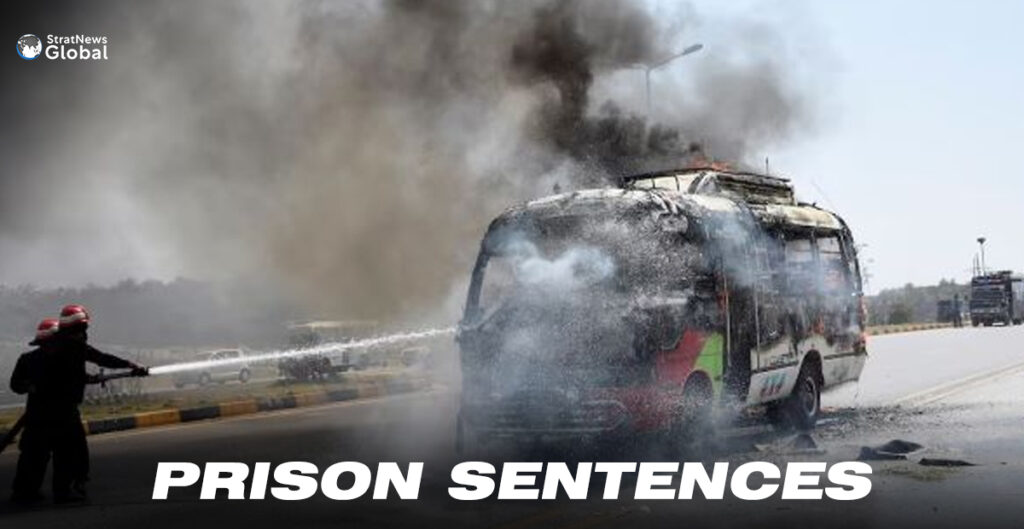
An anti-terrorism court in Pakistan on Thursday handed prison sentences to more than 100 members of former Prime Minister Imran Khan’s party for their involvement in 2023 riots that attacked military areas, according to a court ruling.
Fifty-eight of the defendants, who included parliamentarians and senior officials, were sentenced to 10 years in prison and the rest were given sentences ranging from one to three years, the court said.
The accused include Omar Ayub Khan and Shibli Faraz, the leaders of Khan’s opposition Pakistan Tehreek-e-Insaf party (PTI) in the lower and upper houses of parliament respectively, according to the court order.
“The prosecution has proved its case against the accused without a shadow of doubt,” it said in announcing the sentences.
Khan, who has been in prison since 2023 facing charges of corruption, land fraud and disclosure of official secrets, is being tried separately on similar charges related to the riot.
Khan Denies Allegations
The government accuses him and other leaders of inciting the May 9, 2023, protests, during which demonstrators attacked military and government buildings, including the army headquarters in Rawalpindi.
He denies wrongdoing and says all the cases are politically motivated as part of a military-backed crackdown to dismantle his party. The military denies it.
Khan’s arrest had prompted the countrywide violent protests.
Thursday’s ruling does not directly affect the incitement case against him in which prosecution is still presenting witnesses.
The PTI party said it will challenge the verdict.
The ruling is the third such mass conviction this month; Khan’s party says they have included at least 14 of its parliamentarians.
They will lose their seats in parliament under Pakistani laws, which will shred Khan’s opposition party’s strength.
Another 77 were acquitted for lack of evidence in the latest verdict, which is linked to an attack on the office of an intelligence agency in eastern city of Faisalabad, the court said.
The party plans new protests starting on August 5, the second anniversary of Khan’s jailing, to demand his release.
(With inputs from Reuters)
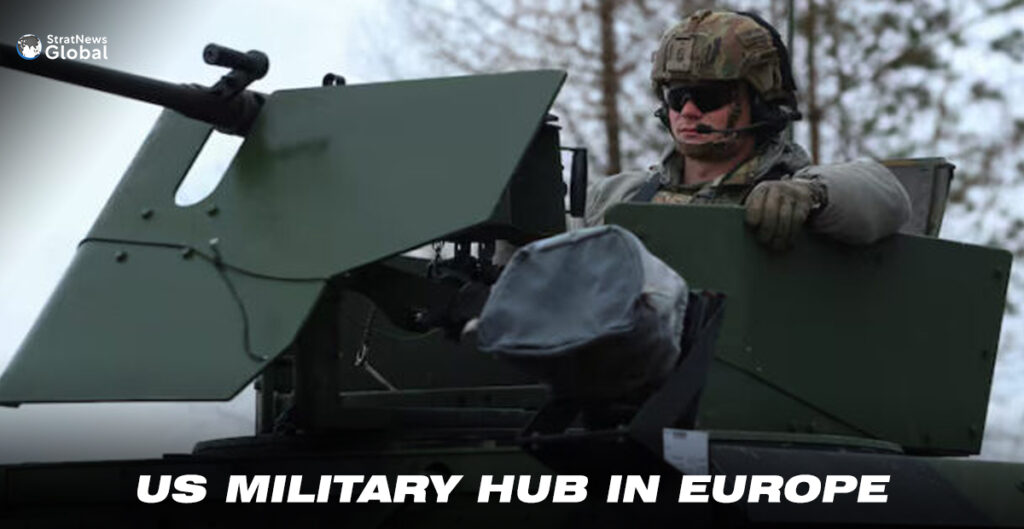
Poland Eyes Role As US Military Hub Amid Russian Threat
Poland is likely to be the last European nation to see a reduction in US troops, said its top defence official, as Washington considers cutting back its military presence across the continent.
The prospect of a US troop drawdown in Europe has been a recurring topic since the start of Donald Trump’s presidency, when Washington began pressing allies to shoulder more of the defence burden.
Deterrent Against Russia
“All the conversations we have with the Americans indicate that Poland is the last country from which the Americans would want to withdraw (its troops),” Deputy Defence Minister Pawel Zalewski told Reuters in an interview on Thursday.
Zalewski said there is a strategic rationale for the presence of American troops in Poland, on NATO’s eastern flank, to serve as a deterrent against Russia after Moscow’s invasion of Ukraine in February 2022.
Hub Of US Presence In Europe
Zalewski said Poland is seeking to be the hub of the US presence in Europe, potentially serving as a logistics, service or even production centre for the US defence industry.
“We are talking about the upgrade of F-16 aircraft or a service centre for all types of American combat vehicles, including Abrams tanks,” he said.
While Germany played such a role during the Cold War, he said it was logical for countries closer to the conflict in Ukraine to be the base for US and allied military operations.
Key Player
Poland has ramped up defence spending and accelerated efforts to modernise its military, becoming NATO’s top spender on defence in terms of the proportion of its national wealth.
As the largest buyer of US weapons in Europe, according to the Polish defence ministry, the country is positioning itself as a key player in the face of an assertive Russia.
The arsenal includes Abrams tanks, HIMARS rocket systems, and air defence assets like the Patriot missile system, modern F-16 and F-35 fighter jets and Apache helicopters.
As a leading voice calling for members of NATO to spend more on defence, Poland, which borders Ukraine, Russia and Belarus, has allocated 4.7% of gross domestic product to boosting its armed forces in 2025 with a pledge to increase to 5% in 2026.
(With inputs from Reuters)
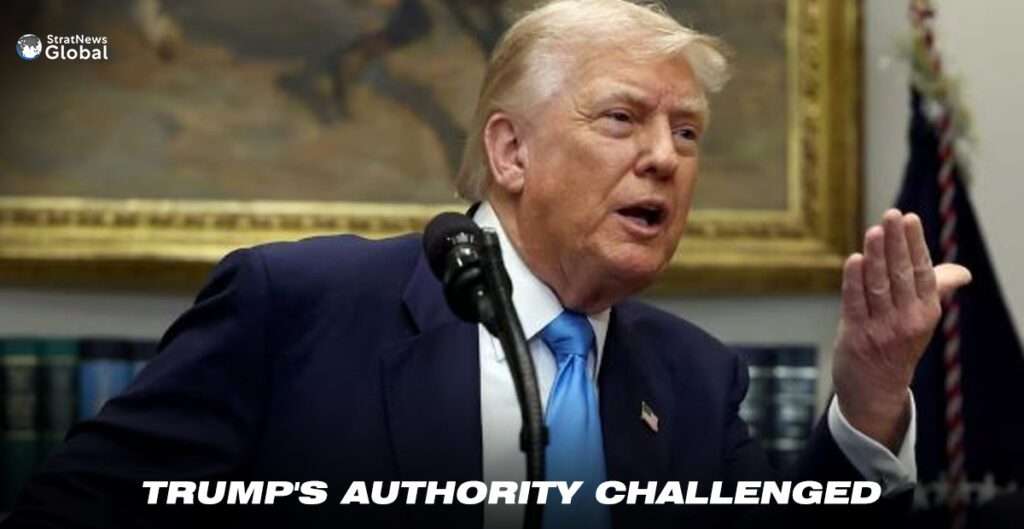
US Appeals Court Hears Case Challenging Trump’s Tariff Authority
A U.S. appeals court on Thursday began hearing oral arguments on President Donald Trump’s authority to impose tariffs, following a lower court ruling that he had overstepped his powers with sweeping duties on imported goods.
The U.S. Court of Appeals for the Federal Circuit in Washington, D.C., is considering the legality of “reciprocal” tariffs that Trump imposed on a broad range of U.S. trading partners in April, as well as tariffs imposed in February against China, Canada and Mexico.
A panel of all of the court’s active judges, eight appointed by Democratic presidents and three appointed by former Republican presidents, is hearing arguments in two cases brought by five small U.S. businesses and 12 Democratic-led U.S. states.
“Tariffs are making America GREAT & RICH Again,” Trump wrote in a social media post on Thursday morning. “To all of my great lawyers who have fought so hard to save our Country, good luck in America’s big case today.”
Tariffs are starting to build into a significant revenue source for the federal government, with customs duties in June quadrupling to about $27 billion, a record, and through June have topped $100 billion for the current fiscal year. That income could be crucial to offset lost revenue from Trump’s tax bill passed into law earlier this month.
Trump’s Tariff Threats
But economists say the duties threaten to raise prices for U.S. consumers and reduce corporate profits. Trump’s on-again, off-again tariff threats have roiled financial markets and disrupted U.S. companies’ ability to manage supply chains, production, staffing and prices.
The arguments – one day before Trump plans to increase tariff rates on imported goods from nearly all U.S. trading partners – mark the first test before a U.S. appeals court of the scope of his tariff authority. The president has made tariffs a central instrument of his foreign policy, wielding them aggressively in his second term as leverage in trade negotiations and to push back against what he has called unfair practices.
The states and businesses challenging the tariffs argued that they are not permissible under emergency presidential powers that Trump cited to justify them. They say the U.S. Constitution grants Congress, and not the president, authority over tariffs and other taxes.
Dan Rayfield, the attorney general of Oregon, one of the states challenging the levies, said that the tariffs were a “regressive tax” that is making household items more expensive.
Trump Claims Authority
Trump claimed broad authority to set tariffs under the International Emergency Economic Powers Act (IEEPA), a 1977 law historically used for sanctioning enemies or freezing their assets. Trump is the first president to use it to impose tariffs.
Trump has said the April tariffs were a response to persistent U.S. trade imbalances and declining U.S. manufacturing power.
He said the tariffs against China, Canada and Mexico were appropriate because those countries were not doing enough to stop illegal fentanyl from crossing U.S. borders. The countries have denied that claim.
On May 28, a three-judge panel of the U.S. Court of International Trade sided with the Democratic states and small businesses that challenged Trump. It said that the IEEPA, a law intended to address “unusual and extraordinary” threats during national emergencies, did not authorize tariffs related to longstanding trade deficits.
The Federal Circuit has allowed the tariffs to remain in place while it considers the administration’s appeal. The timing of the court’s decision is uncertain, and the losing side will likely appeal quickly to the U.S. Supreme Court.
Trade Negotiations
The case will have no impact on tariffs levied under more traditional legal authority, such as duties on steel and aluminum imports.
The president recently announced trade deals that set tariff rates on goods from the European Union and Japan, following smaller trade agreements with Britain, Indonesia and Vietnam. Trump’s Department of Justice has argued that limiting the president’s tariff authority could undermine ongoing trade negotiations, while other Trump officials have said that negotiations have continued with little change after the initial setback in court.
Trump has set an August 1 date for higher tariffs on countries that don’t negotiate new trade deals.
There are at least seven other lawsuits challenging Trump’s invocation of IEEPA, including cases brought by other small businesses and California.
A federal judge in Washington, D.C., ruled against Trump in one of those cases, and no judge has yet backed Trump’s claim of unlimited emergency tariff authority.
(With inputs from Reuters)
Trump’s Intervention Ends Deadlock In Thailand-Cambodia Border Conflict
Malaysia made the first push, followed by outreach from China, but Thailand only agreed to talks with Cambodia after U.S. President Trump called its leader last week, helping to defuse the escalating military conflict.
A flurry of diplomatic efforts over a 20-hour window sealed Thailand’s participation in ceasefire negotiations with Cambodia, hosted in Malaysia, halting the heaviest fighting between the two Southeast Asian countries in over a decade.
Reuters interviewed four people on both sides of the border to piece together the most detailed account of how the truce was achieved, including previously unreported Thai conditions for joining the talks and the extent of Chinese involvement in the process.
When Trump called Thai Acting Prime Minister Phumtham Wechayachai on Saturday, two days after fighting erupted along a 200-km-long stretch of the border, Bangkok had not responded to mediation offers from Malaysia and China, said a Thai government source with direct knowledge.
“We told him that we want bilateral talks first before declaring a ceasefire,” the source said, asking not to be named because of the sensitivity of the issue.
Thailand had already made it clear that it favoured bilateral negotiation and initially did not want third-party mediation to resolve the conflict.
On Sunday, a day after his initial call, Trump said that Thailand and Cambodia had agreed to meet to work out a ceasefire, and that Washington wouldn’t move ahead with tariff negotiations with both until the conflict had ended.
The source said as the Thai and Cambodian foreign ministries started talking, following Trump’s call, Bangkok set out its terms: the meeting must be between the two prime ministers and at a neutral location.
“We proposed Malaysia because we want this to be a regional matter,” the source said.
“The U.S. really pushed for the meeting,” a second Thai source said, “We want a peaceful solution to the conflict, so we had to show good faith and accept.”
A Thai government spokesperson did not immediately respond to questions from Reuters.
Cambodia had accepted the initial Malaysian offer for talks, but it was Thailand that did not move ahead until Trump’s intervention, said Lim Menghour, a Cambodian government official working on foreign policy.
Prime Minister Hun Manet’s government also kept a channel open with China, which had shown interest in joining any peace talks between the neighbours, he said, reflecting Phnom Penh’s close ties to Beijing.
“We exchanged regular communication,” Lim Menghour said.
Good Faith
On Monday, Phumtham and Hun Manet went to the Malaysian administrative capital of Putrajaya, where they were hosted by Prime Minister Anwar Ibrahim, also the current chair of the 10-member Association of Southeast Asian Nations regional bloc.
At the end of their talks, the two leaders stood on either side of Anwar, who read out a joint statement that said Thailand and Cambodia would enter into a ceasefire from midnight and continue dialogue.
The rapid parleys echoed efforts to diffuse severe border clashes between Thailand and Cambodia in 2011, which took several months, including mediation efforts by Indonesia, then chair of ASEAN.
But those talks had not directly involved the U.S. and China.
The fragile ceasefire was holding as of Thursday, despite distrust on both sides, and neither military has scaled down troop deployment along the frontier.
Thailand and Cambodia have, for decades, quarrelled over undemarcated parts of their 817 km (508 miles) land border, which was first mapped by France in 1907 when the latter was its colony.
In recent months, tensions began building between the neighbours after the death of a Cambodian soldier in a skirmish in May and escalated into both militaries bolstering border deployments, alongside a full-blown diplomatic crisis.
After a second Thai soldier lost a limb last week to a landmine that Thailand alleged Cambodian troops had planted, Bangkok recalled its ambassador to Phnom Penh and expelled Cambodia’s envoy. Cambodia has denied the charge.
The fighting began soon after.
Since the ceasefire deal, Hun Manet and Phumtham have been effusive in their praise for Trump, who had threatened 36% tariffs on goods from both countries coming to the U.S., their biggest export market.
The Thai sources did not say whether tariff talks had been impacted by the border clashes. Lim Menghour said after the “positive talks, President Donald Trump also showed positive developments” regarding tariffs, without elaborating.
Trump said tariff negotiations with both countries resumed after the ceasefire agreement. U.S. Commerce Secretary Howard Lutnick said on Wednesday that Washington has made trade deals with Cambodia and Thailand, but they have yet to be announced.
(With inputs from Reuters)
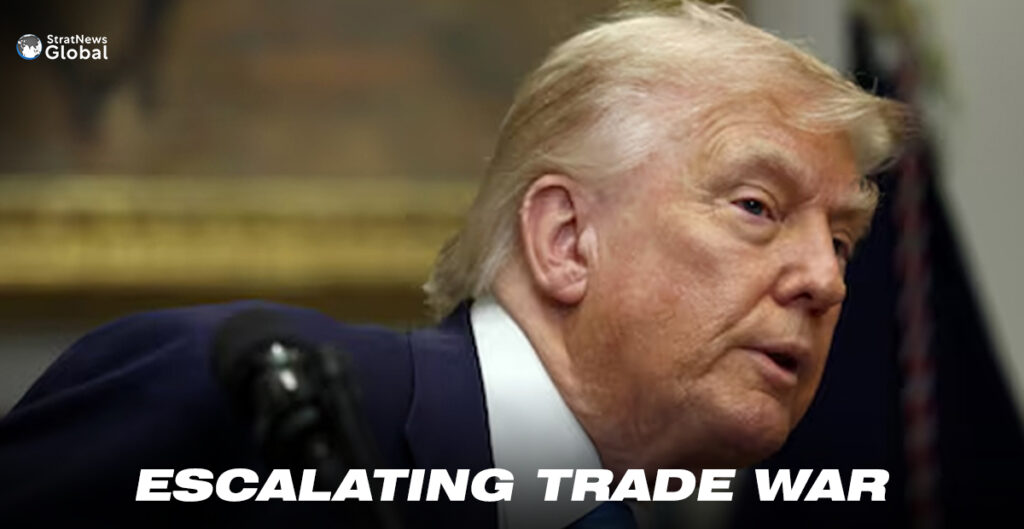
Trump Intensifies Trade War With Canada Over Palestinian Statehood Support
U.S. President Donald Trump ramped up his trade war with Canada just one day before the August 1 tariff agreement deadline, stating it would be “very hard” to reach a deal after Canada voiced support for Palestinian statehood.
Trump is set to impose a 35% tariff on all Canadian goods not covered by the U.S.-Mexico-Canada trade agreement if the two countries do not reach an agreement by the deadline.
“Wow! Canada has just announced that it is backing statehood for Palestine. That will make it very hard for us to make a Trade Deal with them,” Trump said on Truth Social.
Canadian Prime Minister Mark Carney previously said tariff negotiations with Washington had been constructive, but the talks may not conclude by the deadline. Talks between the two countries were at an intense phase, he added, but a deal that would remove all U.S. tariffs was unlikely.
Top Trading Partner
Canada is the second-largest U.S. trading partner after Mexico, and the largest buyer of U.S. exports. It bought $349.4 billion of U.S. goods last year and exported $412.7 billion to the U.S., according to U.S. Census Bureau data.
Canada is also the top supplier of steel and aluminium to the United States, and faces tariffs on both metals as well as on vehicle exports.
Last month, Carney’s government scrapped a planned digital services tax targeting U.S. technology firms after Trump abruptly called off trade talks, saying the tax was a “blatant attack.”
Carney followed France and Britain as he said on Wednesday that his country was planning to recognise the State of Palestine at a meeting of the United Nations in September.
In announcing the decision, Carney spoke of the reality on the ground, including starvation in Gaza.
“Canada condemns the fact that the Israeli government has allowed a catastrophe to unfold in Gaza,” he said.
Israel and the United States, Israel’s closest ally, both rejected Carney’s comments.
Carney’s office did not immediately respond to a request for comment on Trump’s post.
(With inputs from Reuters)
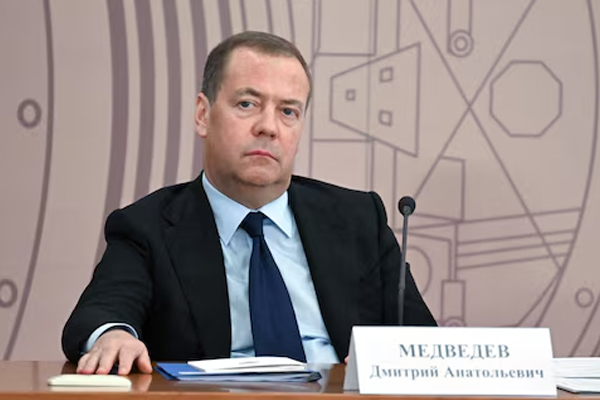
Medvedev Warns Trump Of Russia’s Doomsday Nukes Amid Escalating War Of Words
Former Russian President Dmitry Medvedev on Thursday warned United States President Donald Trump to remember Russia’s Soviet-era last-resort nuclear strike capabilities after Trump told him to “watch his words.”
Trump, in a post on his Truth social network in the early hours of Thursday, singled out Medvedev, who is deputy chairman of Russia’s Security Council, for sharp criticism after Medvedev said that Trump’s threat of hitting Russia and buyers of its oil with punitive tariffs was “a game of ultimatums” and a step closer towards a war between Russia and the United States.
“Tell Medvedev, the failed former President of Russia, who thinks he’s still President, to watch his words. He’s entering very dangerous territory!,” Trump wrote, in his second warning to the close ally of President Vladimir Putin in recent weeks.
Trump on July 29 said Russia had “10 days from today” to agree to a ceasefire in Ukraine or be hit, along with its oil buyers, with tariffs.
Moscow, which has set out its own terms for peace, which Kyiv says amount to demanding its capitulation, has not so far indicated it will comply with Trump’s deadline.
Trump, in his post on Thursday, said he didn’t care what India – one of Russia’s biggest oil buyers along with China – did with Russia.
“They can take their dead economies down together, for all I care. We have done very little business with India; their Tariffs are too high, among the highest in the World. Likewise, Russia and the USA do almost no business together. Let’s keep it that way,” he said.
‘The Fabled Dead Hand’
Medvedev said that Trump’s statement showed that Russia should continue on its current policy course.
“If some words from the former president of Russia trigger such a nervous reaction from the high-and-mighty president of the United States, then Russia is doing everything right and will continue to proceed along its own path,” Medvedev said in a post on Telegram.
Trump should remember, he said, “how dangerous the fabled ‘Dead Hand’ can be,” a reference to a secretive semi-automated Russian command system designed to launch Moscow’s nuclear missiles if its leadership had been taken out in a decapitating strike by a foe.
Medvedev has emerged as one of the Kremlin’s most outspoken anti-Western hawks since Russia sent tens of thousands of troops into Ukraine in 2022. Kremlin critics deride him as an irresponsible loose cannon, though some Western diplomats say his statements give a flavour of thinking in senior Kremlin policy-making circles.
Trump also rebuked Medvedev in July, accusing him of throwing around the “N (nuclear) word” after the Russian official criticised U.S. strikes on Iran and said “a number of countries” were ready to supply Iran with nuclear warheads.
“I guess that’s why Putin’s ‘THE BOSS'”, Trump said at the time.
(With inputs from Reuters)