

Support us by contributing to StratNewsGlobal on the following UPI ID
ultramodern@hdfcbank

Strategic affairs is our game, South Asia and beyond our playground. Put together by an experienced team led by Nitin A. Gokhale. Our focus is on strategic affairs, foreign policy and international relations, with higher quality reportage, analysis and commentary with new tie-ups across the South Asian region.
You can support our endeavours. Visit us at www.stratnewsglobal.com and follow us on YouTube, Twitter, Facebook and Instagram.
र 500 per month
र 1000 per month
र 5000 per year
र 10000 per year
Donate an amount of your choice
र 500 per month
Donate र 500 per month

र 1000 per month
Donate र 1000 per month
र 5000 per year
Donate र 5,000 per year
र 10000 per year
Donate र 10,000 per year
Donate an amount of your choice
Donate an amount of your choice

U.S. Slaps 25% Blanket Tariff On Indian Goods Effective August 7
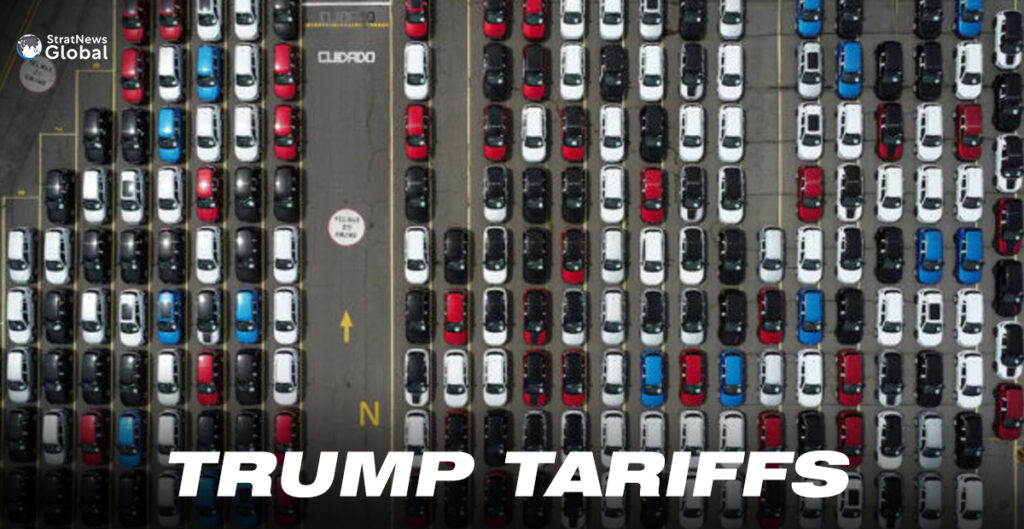
The United States has announced that 25% tariff on all Indian-origin goods will come into force on August 7. A move seen as one of the most severe trade actions the U.S. has taken against a strategic partner in recent years.
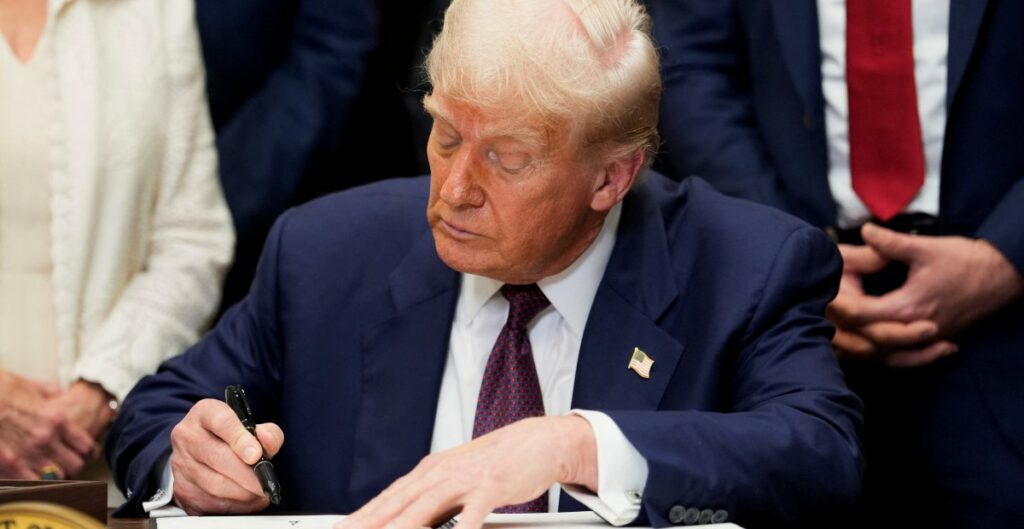
President Trump signed the executive order on Thursday. It includes no product- or sector-specific exemptions for India, unlike concessions granted to other trading nations. The flat tariff applies uniformly across categories, regardless of their criticality or existing trade volumes.
India Singled Out
Trade experts and industry observers say this measure represents more than just a tariff hike; it’s a strategic pressure tactic.
“This is not just a trade measure; it’s a geopolitical lever,” said Ajay Srivastava of the Global Trade Research Initiative (GTRI). “Unlike China and several U.S. allies who retained exemptions for sectors like pharmaceuticals and semiconductors, India has been denied all such relief, signalling a targeted push to compel India into trade concessions.”
India’s reluctance to open up sensitive sectors, particularly agriculture and energy, is believed to be a major sticking point in negotiations. The U.S. administration also cited India’s continued oil trade with Russia as a contributing factor.
No Exemptions, No Relief
While South Korea managed to reduce its exposure through negotiated settlements and China continues to enjoy carve-outs for key goods, India is being subjected to a blanket 25% duty.
Even sectors typically protected in other trade pacts, like finished pharmaceutical products, APIs, smartphones, semiconductors, and energy commodities, are included.
Furthermore, the executive order clarifies that the tariffs are in addition to standard MFN duties, significantly raising the cost of Indian exports entering the U.S. market.
Impact On Indian Exports
According to initial projections, India’s goods exports to the U.S. could drop by over 30% in FY2026—from $86.5 billion in FY2025 to around $60.6 billion.
Sectors with high import content and lower domestic value addition, such as petroleum products ($4.1 billion), smartphones ($10.9 billion), and pharmaceuticals ($9.8 billion), are expected to be hit the hardest.
Transition Period And Transit Relief
Goods already in transit will continue to be charged under the existing lower tariffs, typically around 10% on most items, until October 5, 2025. After this, all imports from India will uniformly face the 25% duty, barring any late-breaking trade agreement.
Signal To Others
Trade experts believe India is being made an example to pressure other nations into compliance.
“The U.S. is using its market access as leverage. This is not about fair trade, it’s about strategic alignment,” said Srivastava. “India is being used to send a broader message: Align with U.S. policy priorities or face consequences.”
Global Tariff Landscape
Tariff rates under the executive order range from 10% to 41%, depending on bilateral relationships and perceived national security risks:
- Brazil faces 50%, though sectors like energy and aircraft are exempted.
- South Korea agreed to a 15% rate in exchange for a $350 billion U.S. investment pledge.
- Switzerland has been hit with an unusually high 39% tariff.
- Syria faces the highest tariff at 41%.
In contrast, Canada and Mexico received selective relief under the USMCA, with Mexico granted a 90-day exemption on most tariffs, though tariffs on Mexican metals remain high.
Canada’s Prime Minister Expresses Disappointment Over Trump’s Tariff Increase
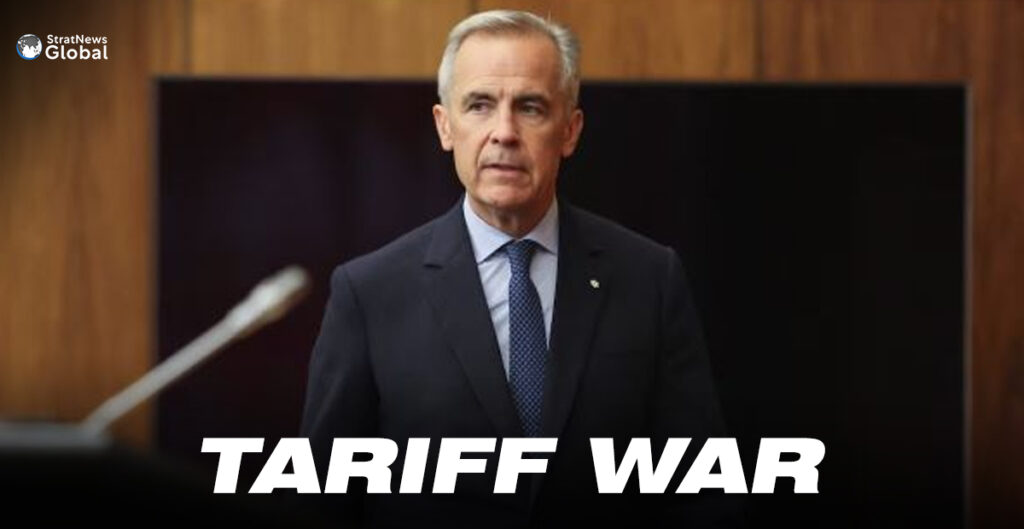
Canadian Prime Minister Mark Carney voiced his disappointment on Thursday after U.S. President Donald Trump issued an executive order raising tariffs on Canadian goods from 25% to 35% for items not covered under the U.S.-Mexico-Canada trade pact.
The move, which Washington linked in part to what it said was Canada’s failure to stop fentanyl smuggling, is the latest salvo in Trump’s months-long tariff war initiated soon after taking power.
Trump ramped up his trade war with Canada just one day before the August 1 tariff agreement deadline, stating it would be “very hard” to reach a deal after Canada voiced support for Palestinian statehood.
“Wow! Canada has just announced that it is backing statehood for Palestine. That will make it very hard for us to make a Trade Deal with them,” Trump said on Truth Social.
Tariff Negotiations
Carney previously said tariff negotiations with Washington had been constructive, but the talks may not conclude by the deadline. Talks between the two countries were at an intense phase, he added, but a deal that would remove all U.S. tariffs was unlikely.
Canada is the top supplier of steel and aluminium to the United States, and faces tariffs on both metals as well as on vehicle exports.
US duties and tariffs will heavily affect lumber, steel, aluminum, and automobiles, Carney said in a post on X, vowing action to protect Canadian jobs, buy its goods, invest in industrial competitiveness and diversify export markets.
To justify its step, the U.S. has cited the cross-border flow of fentanyl, even though Canada accounts for just 1% of U.S. fentanyl imports and has been working intensively to further reduce the volumes, Carney added.
Canada is the second-largest U.S. trading partner after Mexico, and the largest buyer of U.S. exports. It bought $349.4 billion of U.S. goods last year and exported $412.7 billion to the U.S., according to U.S. Census Bureau data.
(With inputs from Reuters)
Russian Attacks On Kyiv Kill 16, Including Two Children
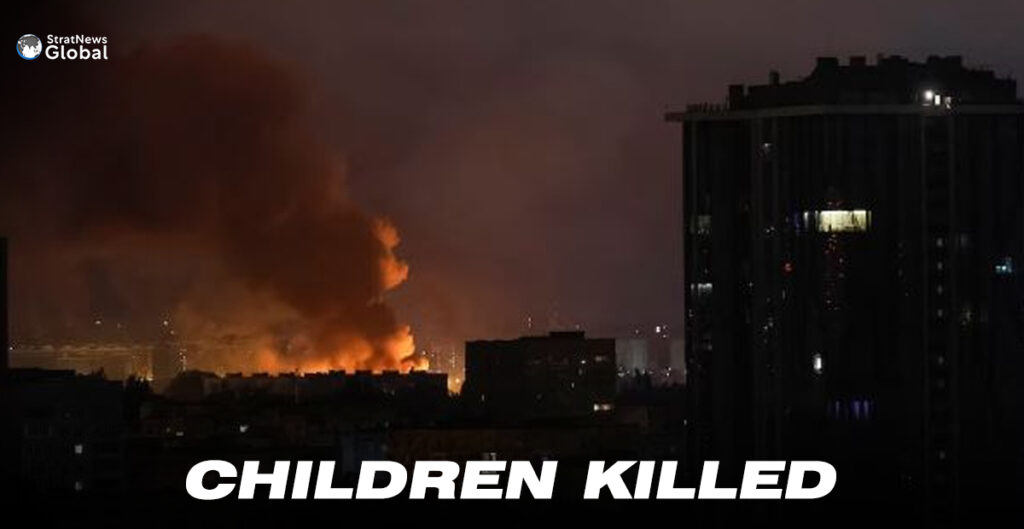
Russian forces fired multiple missiles and drones at Kyiv early Thursday, killing 16 people, including two children, and injuring more than 100, according to officials in the Ukrainian capital.
President Volodymyr Zelenskyy, speaking earlier in his nightly video address, put the death toll at 14 and said rescue operations were continuing into the evening. The Interior Ministry said more than 1,200 police and rescuers were tackling the aftermath.
Ukraine’s national rescue service said the toll rose to 16 after another body had been retrieved from underneath rubble.
Zelenskyy said dozens remained in hospital.
The rescue service said 16 of the injured were children, the largest number of children hurt in a single attack on the city since Russia started its full-scale invasion almost 3-1/2 years ago.
In an earlier post on Telegram, the president said Russia had launched more than 300 drones and eight missiles. “Today the world has once again seen Russia’s response to our desire for peace … Therefore, peace without strength is impossible.”
City authorities announced a day of mourning to be held on Friday.
Military Sites Targeted
Russia’s Defence Ministry said it targeted and hit Ukrainian military airfields and ammunition depots as well as businesses linked to what it called Kyiv’s military-industrial complex.
Explosions rocked Kyiv from about midnight onward and blazes lit up the night sky.
Yurii Kravchuk, 62, stood wrapped in a blanket next to a damaged building with a bandage around his head. He had heard the missile alert but did not get to a shelter in time, he said.
“I started waking up my wife and then there was an explosion. My daughter ended up in the hospital,” he said.
Russia, which denies targeting civilians, has stepped up air strikes in recent months on Ukrainian towns and cities far from the front lines of the war.
Thousands of civilians, the vast majority of them Ukrainian, have been killed since Moscow invaded in 2022.
Kyiv and Moscow have held three rounds of talks in Istanbul this year that yielded exchanges of prisoners and bodies, but no breakthrough to defuse the conflict.
Burning Ruins
At one location in Kyiv, rescuers spent more than three hours reaching a man trapped in rubble by cutting through the wall of a neighbouring apartment, the Interior Ministry said.
The man talked to the emergency services during the operation and was pulled out alive, it added.
A five-month-old baby was among the wounded, with five children hospitalized, the head of Kyiv’s military administration, Tymur Tkachenko, said on national television.
Schools and hospitals were among the buildings damaged across 27 locations in the capital, officials said.
“The attack was extremely insidious and deliberately calculated to overload the air defence system,” Zelenskyy wrote on X.
He posted a video of burning ruins, saying people were still trapped under the rubble of one partially-ruined residential building as of the morning.
Trump Criticises Russia’s ‘Disgusting’ Behaviour
U.S. President Donald Trump, speaking to reporters in the Oval Office, sharply criticized Russia’s “disgusting” behaviour against Ukraine and said he planned to impose sanctions on Moscow if no agreement could be reached.
Trump said he was not sure whether sanctions would deter Russia. He has given Russian President Vladimir Putin until August 8 to make a deal or else he will respond with economic pressure.
Trump said U.S. special envoy Steve Witkoff would travel to Russia after his current trip to Israel.
A senior U.S. diplomat, John Kelly, told the United Nations Security Council that Trump had made clear that he wants a deal to end the war by August 8.
On Tuesday, Trump said Washington will start imposing tariffs and other measures on Russia if Moscow shows no progress toward ending the conflict.
“This is Putin’s response to Trump’s deadlines,” Ukrainian Prime Minister Yulia Svyrydenko said. “The world must respond with a tribunal and maximum pressure.”
The air force reported five direct missile hits and 21 drone hits in 12 locations. Ukrainian air defence units downed 288 drones and three cruise missiles, the air force added.
(With inputs from Reuters)
Trump Envoy Holds Talks With Netanyahu On Gaza Ceasefire And Aid Efforts
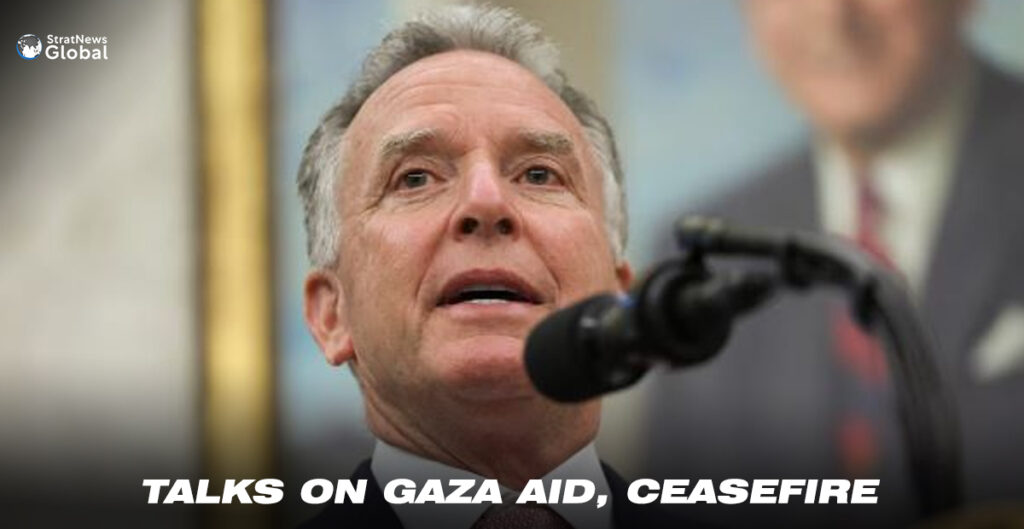
U.S. special envoy Steve Witkoff met with Israeli Prime Minister Benjamin Netanyahu on Thursday to revive stalled ceasefire negotiations in Gaza and address the worsening humanitarian crisis, as a global hunger watchdog warned of an emerging famine due to Israel’s ongoing military offensive.
Shortly after Witkoff’s arrival, President Donald Trump posted on his Truth Social network: “The fastest way to end the Humanitarian Crises in Gaza is for Hamas to SURRENDER AND RELEASE THE HOSTAGES!!”
The U.S. State Department also announced sanctions on officials of the Palestinian Authority and the Palestine Liberation Organization, saying the groups were undermining peace efforts. It was Washington’s latest apparent diplomatic shift backing Israel against the Palestinians and diverging from its European allies.
The PA and PLO, rivals of the Hamas fighters that control Gaza, are internationally accepted as the representatives of the Palestinian people and administrators of a Palestinian state that France, Britain and Canada have said in recent days they could soon recognise as independent.
A spokesperson for the Palestinian Authority did not immediately respond to a request for comment. The full impact of the U.S. move was not immediately clear: the State Department said targeted individuals would be barred from travelling to the United States but did not identify those targeted.
International Pressure
Witkoff arrived in Israel with Netanyahu’s government facing mounting international pressure over the widespread destruction of Gaza and constraints on aid in the territory.
Following the meeting, a senior Israeli official said an understanding between Israel and the U.S. was emerging that there was a need to move from a plan to release some of the hostages to a plan to release all the hostages, disarm Hamas terrorists, and demilitarize the Gaza Strip.
The official did not provide details on what that plan would be, but added Israel and the United States will work to increase humanitarian aid, while continuing the fighting in Gaza.
Witkoff will travel to Gaza on Friday to inspect food aid delivery as he works on a final plan to speed deliveries to the enclave, the White House said.
“The special envoy and the ambassador will brief the president immediately after their visit to approve a final plan for food and aid distribution into the region,” White House press secretary Karoline Leavitt told reporters.
Trump on Thursday called the situation in Gaza “a terrible thing,” when asked about comments from his ally and Republican U.S. Representative Marjorie Taylor Greene, who termed Israel’s offensive in the Palestinian enclave a genocide.
“Oh it’s terrible what occurring there, yeah, it’s a terrible thing. People are very hungry,” Trump told reporters when asked about Greene’s social media comments. Trump also noted financial assistance by Washington to address the hunger crisis in Gaza.
Israel Denies Accusations
Israel denies genocide accusations at the International Court of Justice and war crimes accusations at the International Criminal Court while calling its war in Gaza self-defence after the deadly October 2023 Hamas attack.
Indirect ceasefire talks between Israel and Hamas in Doha ended in deadlock last week with the sides trading blame for the impasse and gaps lingering over issues including the extent of an Israeli military withdrawal.
On Thursday, two senior Israeli cabinet ministers, Defence Minister Israel Katz and Justice Minister Yariv Levin, voiced support for annexing the West Bank, Israeli-occupied territory where the Palestinians hope to build their state.
“At this very moment, there is a moment of opportunity that must not be missed,” they wrote. Palestinians say annexation would foreclose the prospect of a two-state solution and terminate any peace process.
60-Day Ceasefire Proposal
Israel on Wednesday sent a response to Hamas’ latest amendments to a U.S. proposal that would see a 60-day ceasefire and the release of some hostages in exchange for Palestinian prisoners, a source familiar with the details said.
There was no immediate comment from Hamas.
Gaza medical officials said at least 23 people were reported killed by Israeli fire across the enclave, including 12 people among crowds who had gathered to receive aid around the Netzarim corridor, an area held by Israeli troops in central Gaza.
The Israeli military said its troops had fired warning shots to disperse crowds, and had not identified any casualties.
Since Israel’s offensive began, the Gaza health ministry has recorded 156 deaths from starvation and malnutrition, most of them in recent weeks, including at least 90 children.
Confronted by rising international outrage over images of starving children, Israel said on Sunday it would halt military operations for 10 hours a day in parts of Gaza and designate secure routes for convoys delivering food and medicine.
Calls On Hamas To Disarm
The U.N. Office for the Coordination of Humanitarian Affairs said on Wednesday the United Nations and its partners had been able to bring more food into Gaza in the first two days of pauses, but the volume was “still far from enough”.
Residents face peril from Israeli forces and Palestinian looters when trying to reach supplies.
“I have tried several times to grab a sack of flour. The only time I managed to do so, someone with a knife froze me in the street and took it away, threatening to stab me,” one man from Deir Al-Balah said, asking not to be identified.
Pressure has been mounting in Gaza on Hamas to reach a ceasefire deal with Israel. Hamas is still holding 50 hostages in Gaza, of whom around 20 are believed to be alive.
Mothers of hostages led a protest outside Netanyahu’s office, calling on the government to end Israel’s war in Gaza, which has killed over 60,000 Palestinians since October 2023.
Netanyahu, whose ruling coalition includes two far-right parties that want to conquer Gaza and re-establish Jewish settlements there, has said he will not end the war until Hamas no longer rules the enclave and lays down its arms. Hamas rejects calls to disarm.
Qatar and Egypt, who are mediating ceasefire efforts, backed a declaration on Tuesday by France and Saudi Arabia which outlined steps for a two-state solution to the Israeli-Palestinian conflict.
The declaration says Hamas “must end its rule in Gaza and hand over its weapons to the Palestinian Authority.” Israel has ruled out the PA gaining control of Gaza.
‘Resistance Will Not Stop’
Hamas-led factions said on Thursday Palestinian resistance will not stop until “the occupation” ends and an independent, fully sovereign state with Jerusalem as its capital is established.
Israel has denounced declarations by France, Britain and Canada since last week that they may recognise a Palestinian state, which Israel says amounts to rewarding Hamas for its October 7, 2023, assault on Israeli territory.
That attack, in which fighters killed 1,200 people and took 251 hostages back to Gaza, precipitated Israel’s ongoing assault in the enclave and sparked the latest bloodshed in the decades-old Israeli-Palestinian conflict.
German Foreign Minister Johann Wadephul, embarking on a visit to Israel, said negotiations for a two-state solution must begin, while for Germany the recognition of a Palestinian state would come at the end of that process.
(With inputs from Reuters)
Germany Urges Dialogue, Warns Israel Over Annexation Plans
Germany’s foreign minister on Thursday said that recognising a Palestinian state should follow the conclusion of two-state solution talks, but warned that Berlin would respond to any unilateral actions — citing “annexation threats” made by certain Israeli ministers.
Johann Wadephul issued the statement before heading off to Israel and the Palestinian territories on a trip Berlin has billed as a fact-finding mission amid heightened alarm over starvation in Gaza.
His remarks marked Germany’s strongest warning yet to Israel as Western nations intensify efforts to exert pressure. In recent weeks, Britain, Canada and France have all signaled their readiness to recognise a Palestinian state in Israeli-occupied territory at the United Nations General Assembly this September.
Overly Cautious Response
However, critics argue that Germany’s response remains overly cautious, shaped by an enduring sense of historical guilt for the Holocaust and reinforced by pro-Israel sentiment in influential media circles, weakening the West’s collective ability to apply meaningful pressure on Israel.
In his statement, Wadephul reiterated Germany’s stance that a sustainable resolution to the Gaza war can only be achieved through a negotiated two-state solution – a Palestinian state co-existing in peace alongside Israel.
“In light of open annexation threats from parts of the Israeli government, a growing number of countries – including many in Europe – are now prepared to recognise a Palestinian state even without a prior negotiation process. The region and the Middle East peace process are therefore at a crossroads,” Wadephul said.
“That process must begin now. Should unilateral steps be taken, Germany too will be compelled to respond.”
Rising Death Toll
Israeli Prime Minister Benjamin Netanyahu’s coalition includes two far-right parties that call for the outright conquest of Gaza and re-establishment of Jewish settlements there. Two senior government ministers also voiced support on Thursday for annexing the Israeli-occupied West Bank.
The death toll from almost two years of war between Israel and Palestinian militant group Hamas in Gaza surpassed 60,000 this week. A growing number of civilians are dying from starvation and malnutrition, Gaza health authorities say, with images of starving children shocking the world and intensifying criticism of Israel over its curbs on aid into the enclave.
Germany, together with the United States, has long remained one of Israel’s staunchest allies and largest arms suppliers.
German officials say their approach to Israel is governed by a special responsibility, known as the “Staatsraison”, arising from the legacy of the Nazi Holocaust. They say they can achieve more through diplomatic back channels than public statements.
Pro-Israel German Media
The largest media group in Germany, Axel Springer, which owns its best-selling daily Bild as well as other publications like Welt and Politico, includes a specific pro-Israel commitment in its core corporate principles.
The clause commits Axel Springer and its employees to a pro-Israel editorial stance.
Bild published a story on Thursday, for example, denouncing a “hunger campaign” against Israel and moves by Western countries to raise pressure on the country which it said had prolonged the war in Gaza by emboldening Hamas to leave ceasefire talks. The paper praised Germany for not doing so.
Another Bild story on Thursday denounced a “campaign designed to morally destroy Israel”.
Chancellor Friedrich Merz has long been pro-Israel. In February, he said he would find a way for Netanyahu to visit Germany without being arrested under a warrant by the International Criminal Court.
Shift In Tone
But the tone has shifted in Berlin in recent weeks, in tandem with a shift in public opinion, with a poll released on June 4 showing 63% of Germans saying Israel’s military campaign in Gaza has gone too far.
Merz said on Monday that steps like suspending the European Union pact governing relations with Israel were on the table now, in order to raise pressure on the country over the “catastrophic” situation in Gaza.
The EU’s executive body recommended on Monday curbing Israeli access to its flagship research funding programme but the proposal does not yet have enough support to pass, with heavyweight Germany in particular still uncertain.
(With inputs from Reuters)
Trump Keeps Low Tariffs For Australia, Boosting Export Hopes
Australian goods may gain a competitive edge in the US market, helping businesses increase exports, Trade Minister Don Farrell said on Friday, after US President Donald Trump decided to retain the minimum tariff rate of 10% for Australia — a move seen as a positive signal for bilateral trade ties.
Trump set higher import duties of 10% to 41% starting in seven days for 69 trading partners including a 35% duty on many goods from Canada, 50% for Brazil and 15% for Australia’s south Pacific neighbour New Zealand.
“What this decision means in conjunction with all of the other changes to other countries is that Australian products are now more competitive into the American market,” Farrell told reporters in Adelaide.
“We will assist all of our exporters in ensuring we take advantage of this situation and increase the volume of exports.”
New Zealand-US Talks
New Zealand Trade Minister Todd McClay said he was hoping to have talks with his US counterparts.
“The first step will be to talk to them directly. And we’ve engaged in a lot. In fact, it’s been very good engagement,” he told Radio New Zealand.
Trade Talks
Trump’s decision to put Australia among countries facing the lowest tariff levels will be a relief for Prime Minister Anthony Albanese after the opposition criticised him for not meeting the US president in person.
But Farrell said Australia’s negotiations helped it to retain the baseline tariff rate.
‘Vindication For The Albanese Government’
“This is a vindication for the Albanese government and particularly the prime minister in the cool and calm way we have conducted diplomacy with the United States,” Farrell said.
Australia last week eased restrictions on beef imports from the United States, potentially smoothing trade talks with Trump, although Albanese said the decision had long been considered and was not related to any trade negotiations.
(With inputs from Reuters)
El Salvador Passes Bill Allowing Bukele Indefinite Re-Election
El Salvador’s ruling party on Thursday passed a bill to overhaul the country’s electoral system, paving the way for President Nayib Bukele to seek another term.
Bukele won a second term last year despite a clear prohibition in the country’s constitution. El Salvador’s top court, filled with Bukele-backed judges, ruled in 2021 that it was the leader’s human right to run again.
The constitutional amendment passed on Thursday by Bukele’s New Ideas party, which dominates Congress, will allow indefinite presidential re-election, extend terms from five years to six and scrap run-offs.
After his re-election last year, Bukele told reporters he “didn’t think a constitutional reform would be necessary”, but evaded questions on whether he would try to run for a third term.
Overwhelming Support
The bill passed 57-3 as Congress prepares to break for recess.
The overhaul will also shorten the president’s current term to synchronize elections in 2027, as presidential, legislative and municipal elections are currently staggered.
Consolidating the voting schedule would likely favor the ruling party across the board.
“This is quite simple, El Salvador: only you will have the power to decide how long you wish to support the work of any public official, including your president,” said lawmaker Ana Figueroa, a New Ideas member who proposed the bill for the constitutional changes. “You have the power to decide how long you support your president and all elected officials.”
‘Democracy Has Died’
The few non-ruling party lawmakers in Congress opposed the proposal over concerns it will entrench one-party rule in the country.
“Today, democracy has died in El Salvador,” said legislator Marcela Villatoro of the opposition Republican National Alliance (ARENA).
Bukele remains one of the most popular leaders in the region, largely due to his across-the-board crackdown on gangs that has caused homicides to plummet, despite an outcry from human rights groups, which say innocent people have been caught up in the dragnet.
“The day before vacation, without debate, without informing the public, in a single legislative vote, they changed the political system to allow the president to perpetuate himself in power indefinitely and we continue to follow the well-traveled path of autocrats,” said Noah Bullock, executive director of rights group Cristosal.
The group recently left El Salvador, declaring itself in exile due to Bukele’s drive to consolidate his grip on power and crack down on critics and humanitarian organizations.
(With inputs from Reuters)
US Slaps Heavy New Tariffs On Multiple Key Trade Partners
In a major escalation ahead of Friday’s trade deal deadline, US President Donald Trump imposed steep tariffs on several key trading partners — including 35% on many Canadian goods, 50% on Brazilian imports, 25% for India, 20% for Taiwan, and 39% for Switzerland.
Trump released an executive order listing higher import duty rates of 10% to 41% starting in seven days for 69 trading partners as the 12:01 a.m. EDT (0401 GMT) deadline approached. Some of them had reached tariff-reducing deals and some had no opportunity to negotiate with his administration.
The order said that goods from all other countries not listed in an annex would be subject to a 10% US tariff rate.
Trump’s order said that some trading partners, “despite having engaged in negotiations, have offered terms that, in my judgment, do not sufficiently address imbalances in our trading relationship or have failed to align sufficiently with the United States on economic and national-security matters.”
Targeting Canada
Trump issued a separate order for Canada that raises the rate on Canadian goods subject to fentanyl-related tariffs to 35% from 25% previously, saying Canada had “failed to cooperate” in curbing fentanyl flows into the US.
The higher tariffs on Canadian goods contrasted sharply with Trump’s decision to grant Mexico a 90-day reprieve from higher tariffs of 30% on many goods to provide more time to negotiate a broader trade pact.
A US official told reporters that more trade deals were yet to be announced as Trump’s higher “reciprocal” tariff rates were set to take effect.
“We have some deals,” the official said. “And I don’t want to get ahead of the President of the United States in announcing those deals.”
Regarding the steep tariffs on goods from Canada, the second largest US trading partner after Mexico, the official said that Canadian officials “haven’t shown the same level of constructiveness that we’ve seen from the Mexican side”.
The extension for Mexico avoids a 30% tariff on most Mexican non-automotive and non-metal goods compliant with the US-Mexico-Canada Agreement on trade and came after a Thursday morning call between Trump and Mexican President Claudia Sheinbaum.
Mexico Says ‘Very Good’
“We avoided the tariff increase announced for tomorrow,” Sheinbaum wrote in an X social media post, adding that the Trump call was “very good”.
Approximately 85% of US imports from Mexico comply with the rules of origin outlined in the USMCA, shielding them from 25% tariffs related to fentanyl, according to Mexico’s economy ministry.
Trump said the US would continue to levy a 50% tariff on Mexican steel, aluminum and copper and a 25% tariff on Mexican autos and on non-USMCA-compliant goods subject to tariffs related to the US fentanyl crisis.
“Additionally, Mexico has agreed to immediately terminate its Non Tariff Trade Barriers, of which there were many,” Trump said in a Truth Social post without providing details.
Korea Deal, India Discord
South Korea agreed on Wednesday to accept a 15% tariff on its exports to the US, including autos, down from a threatened 25%, as part of a deal that includes a pledge to invest $350 billion in US projects to be chosen by Trump.
But goods from India appeared to be headed for a 25% tariff after talks bogged down over access to India’s agriculture sector, drawing a higher-rate threat from Trump that also included an unspecified penalty for India’s purchases of Russian oil.
Although negotiations with India were continuing, New Delhi vowed to protect the country’s labor-intensive farm sector, triggering outrage from the opposition party and a slump in the rupee.
Trump’s rollout of higher import taxes on Friday comes amid more evidence they have begun driving up consumer goods prices.
Commerce Department data released Thursday showed prices for home furnishings and durable household equipment jumped 1.3% in June, the biggest gain since March 2022, after increasing 0.6% in May. Recreational goods and vehicles prices shot up 0.9%, the most since February 2024, after being unchanged in May. Prices for clothing and footwear rose 0.4%.
Tough Questions From Judges
Trump hit Brazil on Wednesday with a steep 50% tariff as he escalated his fight with Latin America’s largest economy over its prosecution of his friend and former President Jair Bolsonaro, but softened the blow by excluding sectors such as aircraft, energy and orange juice from heavier levies.
The run-up to Trump’s tariff deadline was unfolding as federal appeals court judges sharply questioned Trump’s use of a sweeping emergency powers law to justify his sweeping tariffs of up to 50% on nearly all trading partners.
Trump invoked the 1977 International Emergency Economic Powers Act to declare an emergency over the growing US trade deficit and impose his “reciprocal” tariffs and a separate fentanyl emergency.
The Court of International Trade ruled in May that the actions exceeded his executive authority, and questions from judges during oral arguments before the US Appeals Court for the Federal Circuit in Washington indicated further skepticism.
US Treasury Secretary Scott Bessent said earlier that the United States believes it has the makings of a trade deal with China, but it is “not 100% done,” and still needs Trump’s approval.
US negotiators “pushed back quite a bit” over two days of trade talks with the Chinese in Stockholm this week, Bessent said in an interview with CNBC.
China is facing an August 12 deadline to reach a durable tariff agreement with Trump’s administration, after Beijing and Washington reached preliminary deals in May and June to end escalating tit-for-tat tariffs and a cut-off of rare earth minerals.
(With inputs from Reuters)
Court Backs Epic, Orders Google To Allow Rival App Stores On Play
In a setback for Google, Alphabet’s tech giant on Thursday failed to convince a US appeals panel to overturn a jury verdict and court order requiring changes to its Play Store.
The San Francisco-based 9th US Circuit Court of Appeals, in a unanimous ruling, rejected claims from Google that the trial judge made legal errors in the antitrust case that unfairly benefited “Fortnite” maker Epic Games, which filed the lawsuit in 2020.
Epic accused Google of monopolizing how consumers access apps on Android devices and pay for transactions within apps. The Cary, North Carolina-based company convinced a San Francisco jury in 2023 that Google illegally stifled competition.
US District Judge James Donato in San Francisco ordered Google in October to restore competition by allowing users to download rival app stores within its Play store and by making Play’s app catalog available to those competitors, among other reforms.
Donato’s order was on hold pending the outcome of the 9th Circuit appeal. The court’s decision can be appealed to the full 9th Circuit and ultimately to the US Supreme Court.
‘Will Significantly Harm User Safety’
In a statement, Lee-Anne Mulholland, Google’s vice president of regulatory affairs, said the appeals court’s ruling “will significantly harm user safety, limit choice, and undermine the innovation that has always been central to the Android ecosystem.”
The company said it would continue to focus on “ensuring a secure platform as we continue our appeal.”
Epic CEO Tim Sweeney said in a social media post: “Thanks to the verdict, the Epic Games Store for Android will be coming to the Google Play Store!”
Google told the appeals court that the tech company’s Play store competes with Apple’s App Store, and that Donato unfairly barred Google from making that point to contest Epic’s antitrust claims.
The tech company also argued that a jury should never have heard Epic’s lawsuit because it sought to enjoin Google’s conduct — a request normally decided by a judge — and not collect damages.
‘Suffering Under Anti-Competitive Behaviour’
Epic has defended the verdict and court injunction, telling the 9th Circuit judges that the Android app market has been “suffering under anti-competitive behavior for the better part of a decade.”
In the trial court and in the appeal, Epic disputed arguments by Google that changes to its app business ordered by the court would harm user privacy and security.
Microsoft filed a brief backing Epic, as did the US Justice Department and Federal Trade Commission.
Epic separately is battling Apple over a US judge’s order requiring the iPhone maker to give developers greater freedom to steer consumers to make purchases outside its App Store.
Apple has appealed a ruling that said it violated a prior injunction in a lawsuit that Epic filed in 2020.
(With inputs from Reuters)
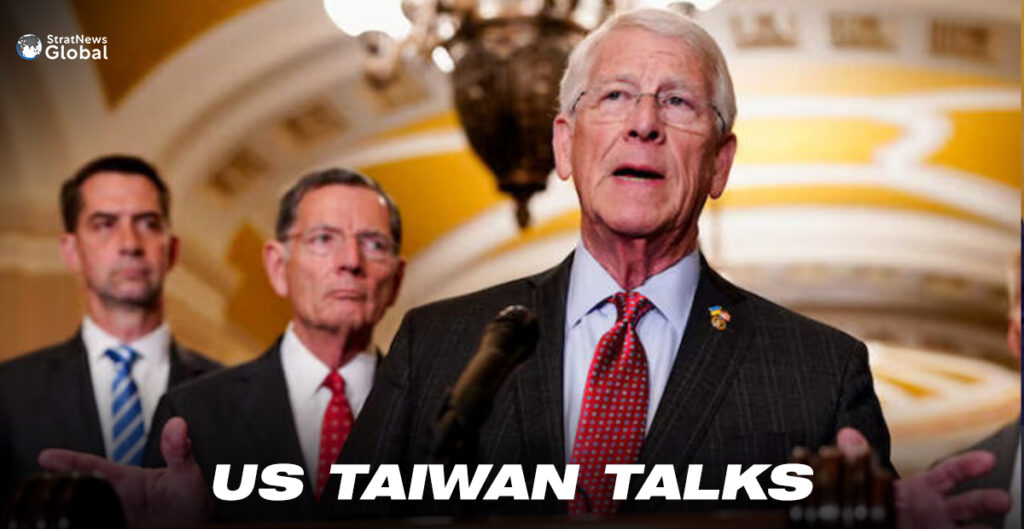
US Senator Wicker To Visit Taiwan Amid China Tensions, Trade Talks
In a significant political move, US Senator Roger Wicker, chair of the influential Senate Armed Services Committee, will lead a congressional delegation to Taiwan in August, a senior official said on Thursday.
The trip, which was first reported by the Financial Times, takes place as some members of Congress – both President Donald Trump’s fellow Republicans and Democrats – have expressed concern that Trump is de-emphasizing security issues as he works on negotiating a trade deal with China.
Pressure On China
Lawmakers have proposed legislation to put pressure on China and voiced unhappiness with reports that Taiwanese President Lai Ching-te is set to delay a diplomatically sensitive trip his team had floated to the Trump administration for August that would have included stops in the United States.
Administration officials have said that Trump remains fully committed to Asia-Pacific security matters as he pursues his trade agenda and a good personal relationship with Chinese President Xi Jinping.
The White House did not immediately respond to a request for comment on Wicker’s upcoming trip.
Wicker is one of the fiercest advocates in the US Congress for Taiwan, and his visit is likely to anger Beijing, which regularly denounces any shows of support for Taipei from Washington.
China Unhappy
The Chinese embassy urged Wicker and lawmakers to cancel their plans.
“China firmly opposes any form of official exchanges between the US and Taiwan and urges the relevant lawmakers to abide by the one-China principle and the provisions of the three China-US joint communiques and immediately cancel their plans to visit Taiwan,” the spokesperson said in a post on X.com.
China claims the democratically governed island as its own and has never renounced the use of force to bring Taiwan under its control. Beijing has stepped up military and political pressure against the island in recent years.
(With inputs from Reuters)