

Support us by contributing to StratNewsGlobal on the following UPI ID
ultramodern@hdfcbank

Strategic affairs is our game, South Asia and beyond our playground. Put together by an experienced team led by Nitin A. Gokhale. Our focus is on strategic affairs, foreign policy and international relations, with higher quality reportage, analysis and commentary with new tie-ups across the South Asian region.
You can support our endeavours. Visit us at www.stratnewsglobal.com and follow us on YouTube, Twitter, Facebook and Instagram.
र 500 per month
र 1000 per month
र 5000 per year
र 10000 per year
Donate an amount of your choice
र 500 per month
Donate र 500 per month

र 1000 per month
Donate र 1000 per month
र 5000 per year
Donate र 5,000 per year
र 10000 per year
Donate र 10,000 per year
Donate an amount of your choice
Donate an amount of your choice

As Delhi Preps For First IMEC Meet, Here’s A Roadmap
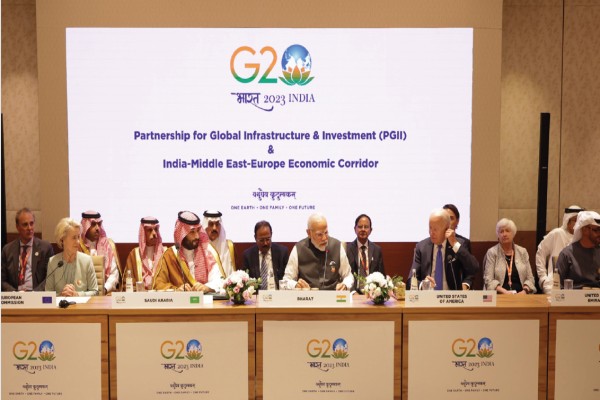
As Delhi gets ready to host the first meeting of the India-Middle East-Europe Economic Corridor (IMEC) partner countries on August 5, a long-awaited opportunity has emerged to breathe life into what has so far remained a promising but stalled initiative.
Announced at the G20 Summit in New Delhi in September 2023, IMEC was envisioned as a transformative infrastructure and connectivity project linking India to Europe via the Arabian Peninsula. Now, with the first official gathering of stakeholders imminent, a policy brief authored by Col. Rajeev Agarwal (Retd) and published by the Chintan Research Foundation offers a detailed and clear-eyed set of policy recommendations to move this ambitious project forward.
The brief describes IMEC as a multidimensional connectivity corridor encompassing maritime routes, high-speed rail, green hydrogen pipelines, digital cables, and energy transmission infrastructure.
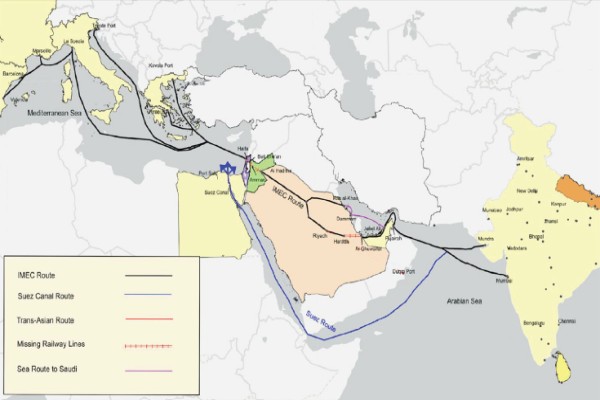
Billed as a strategic alternative to China’s Belt and Road Initiative, IMEC includes eight core partners—India, the U.S., UAE, Saudi Arabia, France, Germany, Italy, and the European Union—with other aligned countries like Jordan, Israel, Greece, and potentially Egypt and Oman playing vital transit or logistical roles. It has been positioned as a high-value, rules-based initiative focused on secure, sustainable trade and energy flows between Asia and Europe.
Despite strong diplomatic backing—evident in Prime Minister Narendra Modi’s 2025 visits to Washington and Paris and the European Commission’s emphasis on IMEC as a “modern golden road”—progress has been elusive.
The October 2023 outbreak of war in Gaza exposed the corridor’s vulnerability to geopolitical shocks and effectively derailed early momentum. As the Chintan report notes, the MoU signed at the G20 Summit envisaged a meeting of partner countries within 60 days, but that meeting is only now happening, nearly two years later.
Crucial implementation challenges persist. Over 600 kilometres of rail infrastructure connecting Al Guwaifat in the UAE to Haifa in Israel via Saudi Arabia and Jordan remain incomplete. Without integrated rail, customs, and security agreements—especially between politically sensitive links like Saudi Arabia and Israel—the project risks delays and inefficiencies. Bilateral efforts such as the India-UAE ‘MAITRI’ digital trade corridor are a step forward but insufficient to support IMEC at scale. A coordinated regulatory framework is still lacking.
Strategic contradictions are another concern. As first highlighted in an earlier StratNewsGlobal report, Haifa Port—a critical IMEC node—is operated by China’s state-run Shanghai International Port Group. This undercuts IMEC’s foundational premise of reducing strategic dependence on Chinese-led infrastructure models and exposes it to external influence in a project designed to enhance autonomy from Beijing’s Belt and Road Initiative.
European involvement also remains fragmented. France, Italy, and Greece are pushing rival ports—Marseille, Trieste, and Piraeus—as IMEC’s primary European landing points. In the absence of a unified EU approach, the corridor’s integration into Europe’s existing rail and trade systems remains aspirational. With attention diverted by the war in Ukraine and rising defence expenditure, the political will to prioritise IMEC remains weak across much of Europe.
To address these vulnerabilities, the Chintan report proposes a suite of realistic and actionable steps. First, it recommends that India take the lead by establishing an IMEC Secretariat in New Delhi, drawing from its experience anchoring the International Solar Alliance. A central coordinating body with representation from all partners could help navigate political complexities, resolve technical disputes, and accelerate decision-making.
Second, the report calls for complementary alignments to the core IMEC route—particularly via Egypt and Oman. Egypt’s Suez Canal Economic Zone, multiple operational ports, and extensive green hydrogen infrastructure make it an ideal logistics hub and staging point for IMEC’s Mediterranean leg. Oman’s Duqm Port, located outside the Strait of Hormuz, provides an alternate maritime route less vulnerable to regional tensions. Both countries maintain neutral foreign policies, which could enhance IMEC’s long-term viability.
Third, the report places heavy emphasis on integrating energy and digital flows into the corridor. A proposed 700-km undersea High-Voltage Direct Current (HVDC) link connecting India to the Gulf could enable real-time cross-border energy exchange, especially in solar power. This would align closely with India’s One Sun, One World, One Grid (OSOWOG) initiative. The undersea cable could also carry data and hydrogen pipelines, creating a multi-utility conduit across continents. However, regulatory convergence in power-sector laws and standards across IMEC countries is essential for this vision to materialise.
On the economic front, the report points to India’s urgent need to scale up its manufacturing base, currently just 3% of global output, compared to China’s 30%. Without expanding its industrial corridors and logistics backbone, India risks becoming a transit country rather than a value-adding hub. IMEC must be tied into domestic infrastructure development, particularly through linkages to India’s Northeast and the Trilateral Highway extending to Thailand and ASEAN.
Financing, perhaps the biggest uncertainty, remains unresolved. The Chintan Foundation recommends the creation of an IMEC Funding Secretariat to coordinate inputs from sovereign wealth funds (especially from Saudi Arabia and the UAE), multilateral development banks, and private investors. A hybrid approach would allow national governments to fund internal infrastructure while international institutions support shared or cross-border components like undersea cables or transnational rail.
Ultimately, the brief underscores a central truth: while geopolitically driven, IMEC must make economic sense to succeed. The comparison with the International North-South Transport Corridor (INSTC)—which took nearly 24 years to materialise—is instructive. IMEC can and should move faster, given the stronger political alignment and economic heft of its partners. But that requires institutional capacity, realistic timelines, and above all, a clear and coordinated implementation strategy.
As India prepares to host the first IMEC partner meeting, the opportunity exists to reset the narrative—from promises and press releases to plans and performance.
The Chintan Research Foundation’s policy recommendations provide a credible roadmap. But unless the corridor’s strategic contradictions are resolved, its financing structure clarified, and its regional linkages secured, IMEC risks becoming another grand vision weighed down by geopolitics and inertia.
Canada, US Coordinating On Handling Countries Resisting Deportee Returns, Document Reveals
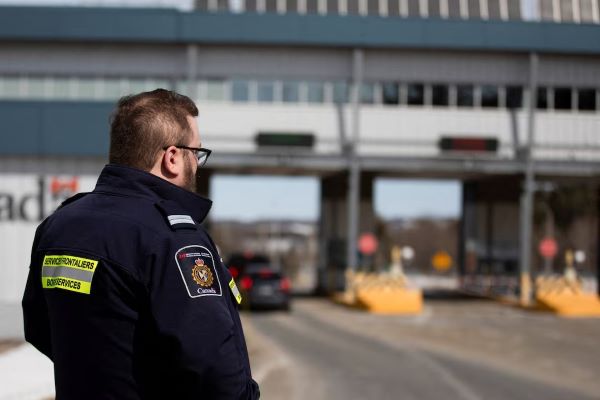
Canada is collaborating with the United States to address nations that are hesitant to take back deported citizens, as both governments step up initiatives to return migrants to their home countries, a government document reveals.
Since President Donald Trump began his second term in January, the United States has cracked down on migrants in the country illegally. But the U.S. has at times struggled to remove people as quickly as it would like in part because of countries’ unwillingness to accept them.
As Canada has increased deportations, which reached a decade-high last year, it has also run up against countries reluctant to accept deportees. Canadian officials issued a single-use travel document in June to a Somali man they wanted to deport because Somalia would not provide him with travel documents.
In a redacted message to an unknown recipient, cited in a February 28 email, the director general of international affairs for Canada’s Immigration Department wrote, “Canada will also continue working with the United States to deal with countries recalcitrant on removals to better enable both Canada and the United States to return foreign nationals to their home countries.”
Common Impediments
The department referred questions about the message to the Canada Border Services Agency, which declined to specify how Canada and the U.S. were cooperating, when the cooperation started, and whether the working relationship had changed this year.
“Authorities in Canada and the United States face common impediments to the removal of inadmissible persons, which can include uncooperative foreign governments that refuse the return of their nationals or to issue timely travel documents,” an agency spokesperson wrote in an email.
“While Canada and the United States do not have a formal bilateral partnership that is specific to addressing this challenge, the Canada Border Services Agency continues to work regularly and closely with United States law enforcement partners on matters of border security.”
When the email was sent, then-Prime Minister Justin Trudeau was in his last days in office before being replaced in March by Prime Minister Mark Carney. The Canada-U.S. relationship was strained by Trump’s threat of tariffs, which he said were partly a response to migrants illegally entering the U.S. from Canada.
The spokesperson added the CBSA has committed to deporting more people, from 18,000 in the last fiscal year to 20,000 in each of the next two years.
Immigration has become a contentious topic in Canada as some politicians blame migrants for a housing and cost-of-living crisis.
The rise in Canada’s deportations largely reflects an increased focus on deporting failed refugee claimants. Refugee lawyers say that could mean some people are sent back to countries where they face danger while they try to contest their deportation.
The U.S. Department of Homeland Security did not immediately respond to a request for comment.
(With inputs from Reuters)
Trump Dismisses US Labor Official Over Job Data, Gains Early Opportunity To Reshape Fed
U.S. President Donald Trump on Friday removed a senior Labor Department official following a disappointing U.S. jobs report, alleging—without proof—that she tampered with the data, intensifying worries over the credibility of federal economic statistics.
In a second surprise economic policy development, the door for Trump to make an imprint on a Federal Reserve with which he clashes almost daily for not lowering interest rates opened much earlier than anticipated when Fed Governor Adriana Kugler unexpectedly announced her resignation on Friday afternoon.
The two developments further rattled a stock market already reeling from his latest barrage of tariff announcements and the weak jobs data. The benchmark S&P 500 Index sank 1.6% in its largest daily drop in more than two months.
Trump accused Erika McEntarfer, appointed by former President Joe Biden, of faking the jobs numbers. There is no evidence to back Trump’s claims of data manipulation by the Bureau of Labor Statistics, the statistical agency that compiles the closely watched employment report as well as consumer and producer price data.
A representative for the BLS did not respond to a request for comment.
Friday began with BLS reporting the U.S. economy created only 73,000 jobs in July, but more stunning were net downward revisions showing 258,000 fewer jobs had been created in May and June than previously reported.
“We need accurate Jobs Numbers. I have directed my Team to fire this Biden Political Appointee, IMMEDIATELY. She will be replaced with someone much more competent and qualified,” Trump said in a post on Truth Social.
Data Concerns
A Trump administration official who requested anonymity said that while all economic data is noisy, the White House has been dissatisfied with how large the revisions have been in the recent data and issues with lower survey responses.
The problem started during COVID and has not been addressed in the years since.
“There are these underlying problems that have been festering here for years now that have not been rectified,” the person said. “The markets and companies and the government need accurate data, and like, we just weren’t getting that,” the official said.
The BLS has already reduced the sample collection for consumer price data as well as the producer price report, citing resource constraints. The government surveys about 121,000 businesses and government agencies, representing approximately 631,000 individual worksites for the employment report.
The response rate has declined from 80.3% in October 2020 to about 67.1% in July, BLS data shows.
Policy Experts’ Worries
According to reports, last month it was found 89 of 100 top policy experts had at least some worries about the quality of U.S. economic data, with most also concerned that authorities are not addressing the issue urgently enough.
In addition to the concerns over job market data, headcount reductions at BLS have resulted in it scaling back the scope of data collection for the Consumer Price Index, one of the most important gauges of U.S. inflation, watched by investors and policymakers worldwide.
Trump’s move fed into concerns that politics may influence data collection and publication.
“Politicizing economic statistics is a self-defeating act,” said Michael Madowitz, principal economist at the Roosevelt Institute’s Roosevelt Forward.
“Credibility is far easier to lose than rebuild, and the credibility of America’s economic data is the foundation on which we’ve built the strongest economy in the world. Blinding the public about the state of the economy has a long track record, and it never ends well.”
Fed Change Sooner Than Expected
Meanwhile, Kugler’s surprise decision to leave the Fed at the end of next week presents Trump an earlier-than-expected opportunity to install a potential successor to Fed Chair Jerome Powell on the central bank’s Board of Governors.
Trump has threatened to fire Powell repeatedly because the Fed chief has overseen a policymaking body that has not cut interest rates as Trump has demanded. Powell’s term expires next May, although he could remain on the Fed board until January 31, 2028, if he chooses.
Trump will now get to select a Fed governor to replace Kugler and finish out her term, which expires on January 31, 2026. A governor filling an unexpired term may then be reappointed to a full 14-year term.
Some speculation has centered on the idea Trump might pick a potential future chair to fill that slot as a holding place. Leading candidates for the next Fed chair include Trump economic adviser Kevin Hassett, Treasury Secretary Scott Bessent, former Fed Governor Kevin Warsh and Fed Governor Chris Waller, a Trump appointee who this week dissented with the central bank’s decision to keep rates on hold, saying he preferred to start lowering them now.
Trump, as he was leaving the White House to spend the weekend at his Bedminster, New Jersey, estate, said he was happy to have the open slot to fill.
“I would not read any political motivation into what [Kugler is] doing, although the consequence of what she’s doing is she’s calling Trump’s bluff,” said Derek Tang, an analyst at LH Meyer, a research firm. “She’s putting the ball in his court and saying, look, you’re putting so much pressure on the Fed, and you want some control over nominees, well, here’s a slot.”
(With inputs from Reuters)
US And NATO Craft New Funding Plan For Ukraine Arms Supplies
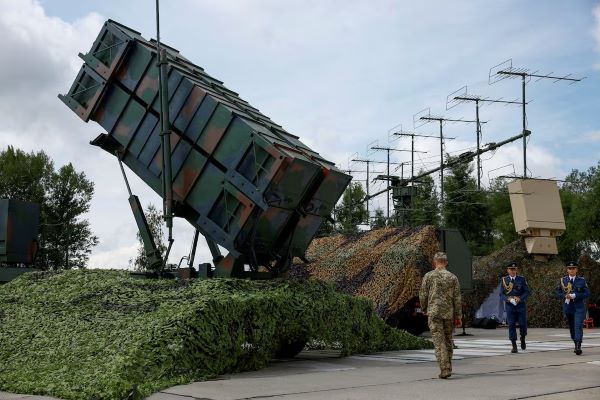
The United States and NATO are devising a new system to fund arms deliveries to Ukraine, where NATO member states would contribute funds to finance the purchase or transfer of American military equipment, three informed sources said.
The renewed transatlantic cooperation on Ukraine comes as U.S. President Donald Trump has expressed frustration with Moscow’s ongoing attacks on its neighbour.
Trump, who initially took a more conciliatory tone toward Russia as he tried to end the more than three-year war in Ukraine, has threatened to start imposing tariffs and other measures if Moscow shows no progress toward ending the conflict by August 8.
The president said last month the U.S. would supply weapons to Ukraine, paid for by European allies, but did not indicate how this would be done.
New Mechanism
NATO countries, Ukraine, and the United States are developing a new mechanism that will focus on getting U.S. weapons to Ukraine from the Priority Ukraine Requirements List, known under the acronym PURL, the sources said.
Ukraine would prioritize the weapons it needs in tranches of roughly $500 million, and NATO allies – coordinated by NATO Secretary General Mark Rutte – would then negotiate among themselves who would donate or pay for items on the list.
Through this approach, NATO allies hope to provide $10 billion in arms for Ukraine, said a European official, speaking on condition of anonymity. It was unclear over what timeframe they hope to supply the arms.
“That is the starting point, and it’s an ambitious target that we’re working towards. We’re currently on that trajectory. We support the ambition. We need that sort of volume,” the European official said.
A senior NATO military official, also speaking on condition of anonymity, said the initiative was “a voluntary effort coordinated by NATO that all allies are encouraged to take part in”.
The official said the new scheme included a NATO holding account, where allies could deposit money for weapons for Ukraine, approved by NATO’s top military commander.
NATO headquarters in Brussels declined to comment. The White House, Pentagon, and Ukrainian embassy in Washington did not respond to requests for comment.
Russian forces are gradually advancing against Ukraine, and control one-fifth of Ukraine’s territory.
Faster Arms Restocking
If a NATO country decides to donate weapons to Ukraine, the mechanism would allow that country to effectively bypass lengthy U.S. arms sales procedures to replenish its own stocks, said one U.S. official, speaking on condition of anonymity.
Money for the arms would be transferred into a U.S.-held account, possibly at the U.S. Treasury Department, or to an escrow fund, although the exact structure remains unclear, the official said.
The new mechanism would be in addition to the United States’ own effort to identify arms from U.S. stockpiles to send to Ukraine under the Presidential Drawdown Authority, which allows the U.S. president to draw from current weapons stocks to help allies in an emergency.
At least one tranche of weapons for Ukraine is currently being negotiated under the new mechanism, two sources said, though it was unclear if any money has yet been transferred.
Trump’s fellow Republicans in Congress have introduced legislation, known as the PEACE Act, that aims to create a fund at the U.S. Treasury in which allies can deposit money that would pay to replenish U.S. military equipment donated to Ukraine.
Ukraine’s needs remain consistent with previous months – air defences, interceptors, systems, rockets, and artillery.
The last statement of need from Ukraine came in a July 21 video conference of the country’s allies, known as the Ramstein group, now led by Britain and Germany.
(With inputs from Reuters)
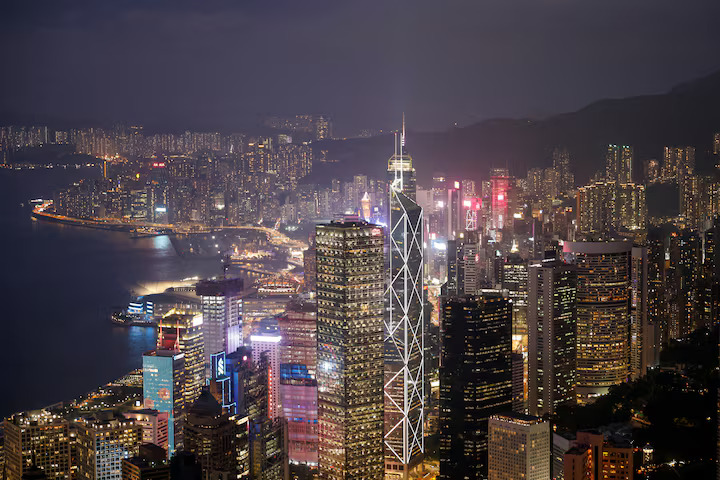
Hong Kong Issues Second Black Rainstorm Warning of 2025
On Saturday morning, Hong Kong issued its second black rainstorm warning of the year, just days after the first one was raised on Tuesday. The Hong Kong Observatory downgraded the black signal to red, and then to amber by 12.30am, within less than an hour. Some parts of the city continued to deal with flash flooding as the weather remained unstable.
The forecaster said intense thundery showers associated with an active southwest monsoon were affecting the Pearl River Delta region. “Please continue to exercise due care. People who have to travel should carefully consider weather and road conditions and take necessary precautions,” the Observatory said while issuing the amber signal, as quoted by SCMP.
Flooding Reported Across City
The Drainage Services Department confirmed four cases of flooding as of 11.15am. These took place at North Lantau Highway, Tuen Mun Road, Tai Mong Tsai Road in Sai Kung, and the Northwest Tsing Yi Interchange. The authorities said they had finished handling flooding at Lantau and Sai Kung but were still working on the other two sites.
Photos shared online showed severe flooding at Tai Mong Tsai Road, with muddy water covering the area and vehicles keeping to one side to avoid deeper sections.
Authorities had earlier deployed water pumps and workers to Chai Wan Road Roundabout as a precaution, since it was one of the flooded locations during Tuesday’s heavy rain.
Schools, Services Adjust Operations
In response to the unstable weather, the Education Bureau announced that all afternoon school classes would be suspended. It added that schools already in session should continue until normal hours and only release students once it was safe.
The Social Welfare Department confirmed that its care centres and service units would remain open as per their standard schedules. The Home Affairs Department also said it would open temporary shelters for those affected by the rain.
The Leisure and Cultural Services Department said all gazetted beaches under its management would be closed temporarily. “Members of the public should stay away from the shoreline during inclement weather and should not conduct any water sports activities on beaches to avoid causing danger to themselves and rescue personnel,” a department spokesperson said. Those failing to follow instructions may face fines of up to HK$2,000 or 14 days in jail.
Travel, Rainfall Updates
The MTR Corporation said it had earlier closed exit A1 at Choi Hung station, exit B3 at Wong Tai Sin, and exit A2 at Sham Shui Po as flood prevention measures. In a later update, it said all exits were now open.
The Agriculture, Fisheries and Conservation Department asked the public to avoid visiting country parks due to the risk of landslides and flash floods.
According to the Observatory, more than 30mm of rain was recorded on Saturday morning across Hong Kong Island, Kowloon East, Sai Kung, and Lamma Island. “Residents who are likely to be affected are advised to take necessary precautions to avoid possible flood damage,” it said.
The weather is expected to remain unstable in the next few days, with heavy showers and thunderstorms forecast. The Observatory said conditions would likely improve gradually by the middle to later parts of the coming week.
Earlier in the week, Chief Secretary Eric Chan Kwok-ki defended the city’s extreme weather response after criticism from residents. He said Hong Kong had a “holistic and effective” mechanism to handle such events.
Epstein Aide Maxwell Moved To Lower-Security Texas Prison
Ghislaine Maxwell has been moved from a Florida jail to a lower-security prison in Texas to continue her 20-year sentence for aiding Jeffrey Epstein in the sexual abuse of underage girls, the US Bureau of Prisons said on Friday.
Maxwell’s move from FCI Tallahassee, a low-security prison, to the Federal Prison Camp in Bryan, Texas, comes a week after she met with Deputy US Attorney General Todd Blanche, who said he wanted to speak with her about anyone else who may have been involved in Epstein’s crimes.
Maxwell’s lawyer, David Markus, confirmed she was moved but said he had no other comment. Spokespeople for the US Department of Justice did not immediately respond to requests for comment.
‘I Know Nothing About The Case’
Asked during a White House interview with Newsmax on Friday about the possibility of pardoning Maxwell, President Donald Trump said, “I’m allowed to do it, but nobody’s asked me to do it.” He added, “I know nothing about the case.”
Asked about what was discussed between Maxwell and the deputy attorney general last week, Trump said he believed Blanche “just wants to make sure that innocent people aren’t hurt” should documents in the Epstein probe be released.
Why Was Maxwell Transferred?
The BOP classifies prison camps such as Bryan as minimum-security institutions, the lowest of five security levels in the federal system. Such facilities have limited or no perimeter fencing. Low-security facilities such as FCI Tallahassee have double-fenced perimeters and higher staff-to-inmate ratios than prison camps, according to the bureau.
Asked why Maxwell was transferred, BOP spokesperson Donald Murphy said he could not comment on the specifics of any incarcerated individual’s prison assignment, but that the BOP determines where inmates are sent based on such factors as “the level of security and supervision the inmate requires.”
Transcripts
Blanche’s meeting with Maxwell came as Trump faces pressure from both his base of conservative supporters and congressional Democrats to release more information from the Justice Department’s investigations of Maxwell and Epstein.
The department is seeking court approval to release transcripts of law enforcement officers’ testimony before the grand juries that indicted Maxwell and Epstein. Such transcripts are usually kept secret. Two federal judges in Manhattan are weighing the government’s requests.
Lawyers for Maxwell, Epstein, and their alleged victims are due to share their positions on the potential unsealing with the judges in filings on Tuesday.
Epstein died by suicide in a Manhattan jail cell in 2019 while awaiting trial on sex trafficking charges. He had pleaded not guilty.
Neither Markus nor Blanche has provided detailed accounts of what they discussed. Markus has said Maxwell would welcome relief from Trump.
Maxwell was found guilty at a 2021 trial of recruiting and grooming girls for Epstein to abuse. She had pleaded not guilty and is asking the US Supreme Court to overturn her conviction.
(With inputs from Reuters)
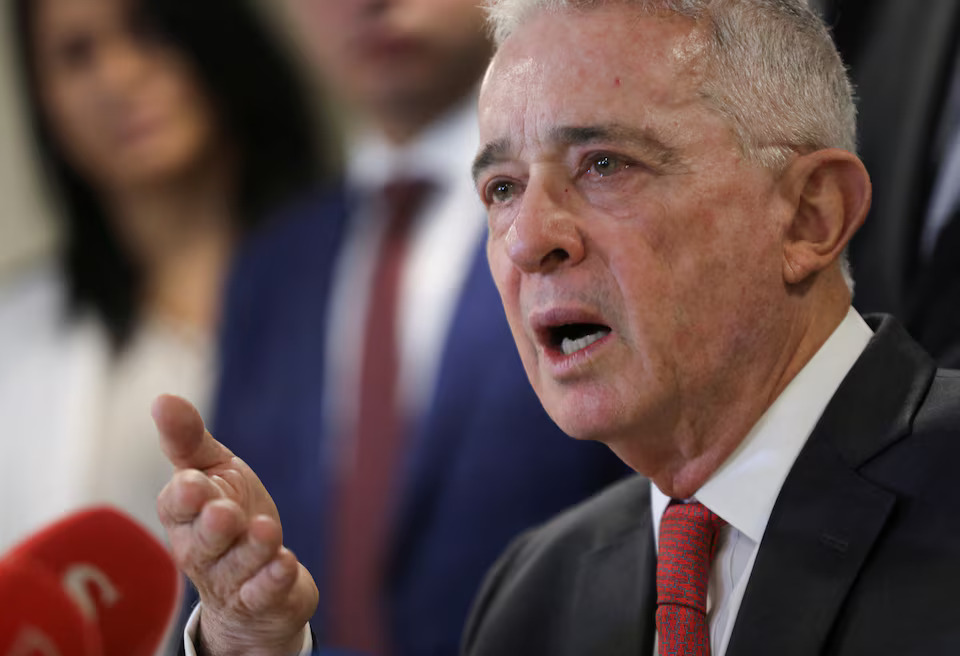
Colombia Ex-President Uribe Jailed At Home In Landmark Verdict
In a major legal setback, former Colombian President Alvaro Uribe was on Friday sentenced to 12 years’ house arrest for abuse of process and bribing a public official, in a long-standing case linked to his alleged ties with right-wing paramilitaries.
Uribe was convicted of the two charges on Monday by Judge Sandra Liliana Heredia in a witness-tampering case that has run for about 13 years. He has always maintained his innocence.
Heredia read the sentence to the court in an afternoon hearing on Friday. Uribe will be fined $578,000, Heredia’s ruling said, and barred from public office for more than eight years.
Compliance With Judgement
Uribe, whose legal team has said it will appeal, is to report to authorities in Rionegro, in Antioquia province, where he resides, and then “proceed immediately to his residence where he will comply with house arrest,” the ruling said.
The conviction made Uribe the country’s first ex-president to ever be found guilty at trial and came less than a year before Colombia’s 2026 presidential election, in which several of Uribe’s allies and proteges are competing for top office.
‘Radical Judges’
It could also have implications for Colombia’s relationship with the United States. Secretary of State Marco Rubio said this week that Uribe’s conviction was a “weaponisation of Colombia’s judicial branch by radical judges” and analysts have said there could be cuts to U.S. aid in response.
Uribe, 73, and his supporters have always said the process is a persecution, while his detractors have celebrated it as deserved comeuppance for a man who has been accused for decades of close ties with violent right-wing paramilitaries but never convicted of any crime until now.
“In my condition as a convict, because of this ruling, I request very respectfully before you an appeal,” Uribe said during the hearing, where he and his lawyers appeared virtually, adding his legal team will formally appeal in writing to overturn the convictions in their entirety.
Heredia has attacked his defense team and his family during the trial, Uribe added, an accusation the judge has denied.
He still has a right to be considered innocent, Uribe said, adding the case is meant to “destroy a voice for the democratic opposition”.
Testimonies From Former Paramilitaries
Uribe, who was president from 2002 to 2010 and oversaw a military offensive against leftist guerrillas, was charged over allegations he ordered a lawyer to bribe jailed paramilitaries to discredit claims he had ties to their organizations.
Those claims stemmed from leftist Senator Ivan Cepeda, who collected testimonies from former paramilitaries who said Uribe had supported their organizations in Antioquia, where he once served as governor.
Uribe alleged in 2012 that Cepeda orchestrated the testimonies in a plot to tie him to the paramilitaries, but the Supreme Court ruled six years later that Cepeda had not paid or pressured the ex-paramilitaries.
Instead, the court said it was Uribe and his allies who pressured the witnesses. Cepeda has been classed as a victim in the case and attended both Monday and Friday’s hearings in person.
Two jailed former paramilitaries testified that Diego Cadena, the lawyer formerly representing Uribe, offered them money to testify in Uribe’s favor.
Cadena, who is also facing charges, has denied the accusations and testified, along with several other ex-paramilitaries, on Uribe’s behalf.
Each charge carried a potential sentence of six to 12 years.
Uribe, who was placed under house arrest for two months in 2020, is head of the powerful Democratic Center party and was a senator for years both before and after his presidency.
He has repeatedly emphasized that he extradited paramilitary leaders to the United States.
Deaths, Violence, Forced Disappearances
Colombia’s truth commission says paramilitary groups, which demobilized under deals with Uribe’s government, killed more than 205,000 people, nearly half of the 450,000 deaths recorded during the ongoing civil conflict.
Paramilitaries, along with guerrilla groups and members of the armed forces, also committed forced disappearances, sexual violence, displacement and other crimes.
Uribe joins a list of Latin American leaders who have been convicted and sometimes jailed, including Peru’s Alberto Fujimori, Brazil’s Luiz Inacio Lula da Silva, Ecuador’s Rafael Correa, Argentina’s Cristina Fernandez and Panama’s Ricardo Martinelli.
(With inputs from Reuters)
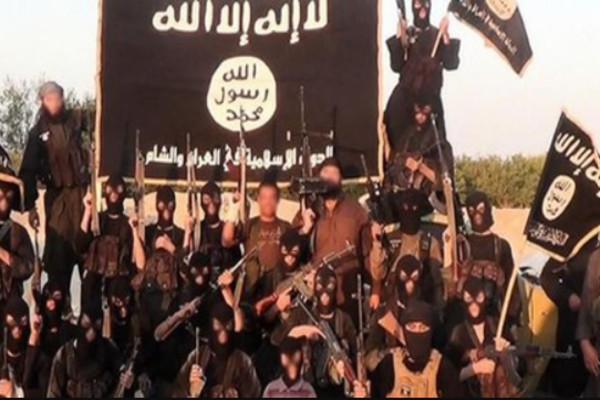
Forecasting the Fifth Wave: A Dangerous Continuity in Global Terrorism
In a July 25 article for Small Wars Journal titled “Forecasting the Fifth Wave: Emerging Terrorist Threats in a Changing World”, Prof Mahmut Cengiz examines how global counterterrorism efforts continue to falter—not because of a lack of resources, but due to the persistent failure to anticipate the next phase of terrorist evolution.
From the September 11 attacks to the 2002 Bali bombings, the 2015 Paris massacre to the October 7, 2023 Hamas operation, time and again, security establishments have been caught off-guard. The pattern, as Cengiz points out, is not accidental. It reflects deep-rooted limitations in how governments and scholars conceptualise terrorism. While policy practitioners tend to react after the fact, academics often lack models flexible enough to predict new threats emerging from old ideological foundations.
To explore this challenge, Cengiz revisits David Rapoport’s influential theory of terrorism’s four historical “waves”. Each wave, according to Rapoport, lasts around 40 years and is marked by a dominant ideology and method of violence.
The Anarchist Wave, which spanned the 1880s to 1920s, was characterised by revolutionary violence and symbolic assassinations—many carried out with dynamite and often involving women.
The Anti-Colonial Wave that followed (1920s–1960s) saw insurgent groups like the IRA, FLN, and Irgun use targeted violence against occupying colonial powers, often backed by diaspora funding and political sympathy.
The New Left Wave (1960s–1980s) focused on revolutionary Marxism, with groups like the Red Brigades and Weather Underground launching attacks on state institutions and capitalist structures in the name of global solidarity.
Then came the Religious Wave, beginning around 1979, with Salafi-jihadist groups redefining terrorism through the lens of divine sanction. Suicide bombings, martyrdom narratives, and ideological rigidity became central to this phase, which continues to dominate the global terrorism landscape today.
But now, Cengiz argues, the world may be entering a Fifth Wave of terrorism—though it may not look radically different from the fourth. Drawing on recent data from the Global Terrorism Trends and Analysis Center (GTTAC), he proposes that what we’re witnessing is not a clean ideological break but an evolved phase of the religious wave.
The most credible indicators of this shift, based on GTTAC findings, are the enduring strength of Salafi-jihadist groups and the growing global reach of Iran-backed terrorist networks. Instead of a fresh start, the fifth wave may be a dangerous continuity—a structural and geographical transformation within the same ideological framework.
Cengiz is careful not to overstate novelty. He stresses that waves do not vanish suddenly; they morph, overlap, and evolve. What we’re seeing now is a slow mutation. The religious wave, nearly five decades old, is showing signs of ideological fatigue and fragmentation, but it is far from dead. Rather, it is being repurposed by emerging groups that operate with looser hierarchies, regional ambitions, and hybrid support structures.
These actors are not abandoning religious justification—they are adapting it. Whether through Salafi dogma or Shia revolutionary theology, the goal remains the same: to legitimise violence through appeals to divine authority and historical grievance.
The transition period Cengiz identifies—roughly the early 2020s to present—is therefore critical. It marks a moment when new threats are crystallising under old banners. Among the most prominent are resilient Salafi-jihadist groups, still active across Africa, the Middle East, and South Asia, and Iranian proxy networks like Hezbollah, whose integration into regional politics and asymmetric warfare makes them uniquely dangerous.
Unlike the traditional non-state actor, Iran-backed groups blend state sponsorship, ideological indoctrination, and strategic patience. They operate across multiple domains—from conventional warfare to cyber operations, from targeted assassinations to influence campaigns—expanding the toolkit of modern terrorism far beyond suicide vests and IEDs.
While Cengiz does not mention Pakistan, the fact remains that the country trains, arms, shelters and uses terrorists as an instrument of state policy.
Importantly, Cengiz does not indulge in speculation about entirely new ideological movements taking centre stage. He rejects the temptation to declare the rise of, say, techno-terrorism or eco-extremism as the defining feature of a fifth wave. Instead, he insists that analysts and practitioners must focus on what is actually changing within existing threats. This includes shifts in group structure, the role of digital communication, transnational funding mechanisms, and state facilitation.
The fifth wave is not coming—it may already be here, wearing the familiar mask of the fourth, only more agile and embedded in state systems.
This has profound implications for global security. The prevailing assumption that the religious wave is fading because al-Qaeda and ISIS have lost territory or leadership is deeply flawed. Cengiz warns against equating territorial loss with ideological death. The data shows that ideologies endure, tactics evolve, and threats persist in new forms. The fifth wave, then, will not be defined by grand declarations or new manifestos, but by adaptive survival, ideological recycling, and the integration of militant violence into broader geopolitical strategies.
Policymakers must shed the illusion that the next threat will look dramatically different. As Cengiz makes clear, the real danger lies not in what is new, but in what is unfolding in plain sight. Salafi-jihadist movements and Iranian proxies are not yesterday’s threats—they are today’s evolving challenge. Counterterrorism strategies that fail to recognise this risk becoming obsolete.
In the end, the article in Small Wars Journal is less a prediction than a warning: the fifth wave of terrorism is not a rupture but a continuity cloaked in transformation. If the past failures to foresee major attacks offer any lesson, it is this—underestimating the capacity of old ideologies to adapt is itself a dangerous blind spot. The future of terrorism may not belong to something entirely new, but to something very old that refuses to die.
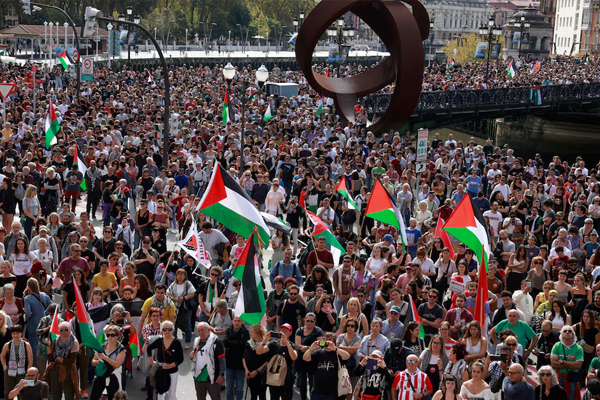
How Gaza Frustration Drove Three Israeli Allies Towards Recognising Palestinian State
When Spain, Ireland, and Norway announced in May 2024 their decision to recognise a Palestinian state, Israel’s closest allies deemed the move unhelpful to resolving the Gaza crisis.
While France, Britain and Canada stressed their support for establishing two states with recognised borders as the long-term solution to the Israel-Palestinian conflict, they were wary of being seen to reward Hamas, of damaging relations with Israel and Washington, and of squandering diplomatic capital.
“I will not do an ’emotional’ recognition,” French President Emmanuel Macron said at the time.
But as Israeli restrictions on aid escalated Gaza’s humanitarian crisis and a two-month truce ended in March, talks began in earnest that would lead three of the Group of Seven major Western economies to set out plans to recognise a Palestinian state in September.
Two-State Solution Fears Boost Recognition Drive
“The possibility of a two-state solution is being eroded before our eyes … that has been one of the factors that has brought us to this point to try to reverse, with partners, this cycle,” Canadian Prime Minister Mark Carney said on Thursday.
France and Saudi Arabia formed a plan to have more Western countries move towards Palestinian recognition, while Arab states would be pushed to take a stronger line against Hamas.
The pair wanted their proposals to gain acceptance at a United Nations conference in June, but they struggled to gain traction, and the meeting was then postponed due to Israeli airstrikes on Iran and amid intense U.S. diplomatic pressure.
The strikes led to a pause in public criticism of Israel from Western allies, and Arab states were hard to win round, but discussions continued behind the scenes. Macron, Carney and British Prime Minister Keir Starmer were communicating with each other regularly by phone and texts during June and July, according to a Canadian source with direct knowledge of the events.
Canada was wary of acting alone, and Britain wanted to ensure any move would have maximum impact, but Macron was more strident.
Alarm was growing about images of starving children, and fears were mounting that Israel’s Gaza offensive, combined with settler attacks on Palestinians in the West Bank, would further undermine any chance of creating a sovereign Palestinian state.
On July 24, Macron made a surprise announcement that France would recognise a Palestinian state at the U.N. General Assembly in September.
Neither Britain nor Canada followed immediately. But the relatively muted reaction by U.S. President Donald Trump – saying the statement carried no weight but that Macron was still a “great guy” – brought some reassurance that the diplomatic fallout would be manageable if others went the same way.
Macron, Starmer, Merz, Carney
Macron spoke with Starmer and German Chancellor Friedrich Merz two days later to discuss a “sustainable route to a two-state solution”, according to Starmer’s spokesperson, just before the prime minister was due to meet Trump in Scotland.
With Trump, Starmer pressed the case to do more to help Gaza, although, according to Trump, he never explicitly said a recognition plan was on the cards, though Trump has since criticised such moves as “rewarding Hamas”.
With Trump still in Britain on Tuesday, opening a golf course, Starmer recalled his cabinet from their summer break to get approval for his recognition plan. Britain would recognise a Palestinian state in September unless there were a ceasefire and a lasting peace plan from Israel.
Like Macron, Starmer gave Carney a few hours’ warning. Once Britain and France had moved, Canada felt it had to follow suit, according to the Canadian source.
“International cooperation is essential to securing lasting peace and stability in the Middle East, and Canada will do its best to help lead that effort,” Carney said on Wednesday, six days after Macron’s announcement.
In practical terms, the three countries’ move will not change much. U.S. Secretary of State Marco Rubio dismissed the recognition as “irrelevant” while its other major Group of Seven allies – Germany, Italy and Japan – have given no indication they will follow suit.
More than three-quarters of the 193 members of the U.N. General Assembly already independently recognise a Palestinian state. But the opposition of the U.S., with its veto power on the U.N. Security Council, means the U.N. cannot admit Palestine as a full member – a move that would effectively recognise a Palestinian state at the global level.
However, Richard Gowan, U.N. director at the International Crisis Group, said the declarations mattered “precisely because we are seeing some big U.S. allies catching up with the bulk of the Global South on the Palestinian question at the U.N.”.
“That makes it a little harder for Israel to write off the pro-recognition camp as irrelevant.”
(With inputs from Reuters)
Trump Orders Nuclear Submarines Near Russia After Medvedev’s Threat
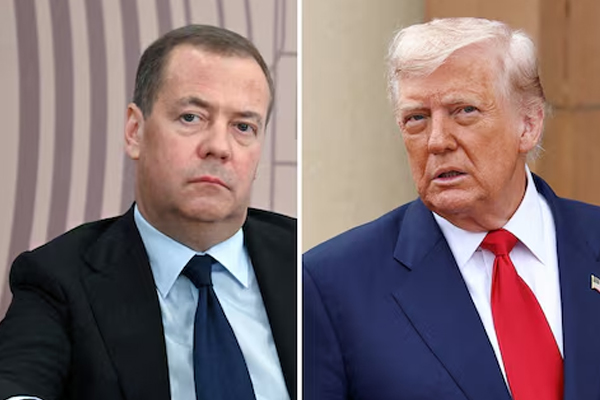
U.S. President Donald Trump said on Friday he had ordered two nuclear submarines deployed near Russia in response to threats from former Russian President Dmitry Medvedev.
“I have ordered two Nuclear Submarines to be positioned in the appropriate regions, just in case these foolish and inflammatory statements are more than just that,” Trump said in a social media post that called Medvedev’s statements highly provocative.
He said he ordered the submarines moved “just in case these foolish and inflammatory statements are more than just that. Words are very important, and can often lead to unintended consequences, I hope this will not be one of those instances.”
Trump and Medvedev, who is deputy chairman of Russia’s Security Council, traded taunts in recent days after Trump on Tuesday said Russia had “10 days from today” to agree to a ceasefire in Ukraine or be hit, along with its oil buyers, with tariffs.
Moscow, which has set out its own terms for peace in Ukraine, has shown no sign that it will comply with Trump’s deadline.
War Of Words
Medvedev on Monday accused Trump of engaging in a “game of ultimatums” and reminded him that Russia possessed Soviet-era nuclear strike capabilities of last resort after Trump told Medvedev to “watch his words.”
“If some words from the former president of Russia trigger such a nervous reaction from the high-and-mighty president of the United States, then Russia is doing everything right and will continue to proceed along its own path,” Medvedev said in a post on Telegram.
Trump should remember, he said, “how dangerous the fabled ‘Dead Hand’ can be,” a reference to a secretive semi-automated Russian command system designed to launch Moscow’s nuclear missiles if its leadership had been taken out in a decapitating strike by a foe.
Medvedev has emerged as one of the Kremlin’s most outspoken anti-Western hawks since Russia sent tens of thousands of troops into Ukraine in 2022. Kremlin critics deride him as an irresponsible loose cannon, though some Western diplomats say his statements illustrate the thinking in senior Kremlin policy-making circles.
(With inputs from Reuters)