

Support us by contributing to StratNewsGlobal on the following UPI ID
ultramodern@hdfcbank

Strategic affairs is our game, South Asia and beyond our playground. Put together by an experienced team led by Nitin A. Gokhale. Our focus is on strategic affairs, foreign policy and international relations, with higher quality reportage, analysis and commentary with new tie-ups across the South Asian region.
You can support our endeavours. Visit us at www.stratnewsglobal.com and follow us on YouTube, Twitter, Facebook and Instagram.
र 500 per month
र 1000 per month
र 5000 per year
र 10000 per year
Donate an amount of your choice
र 500 per month
Donate र 500 per month

र 1000 per month
Donate र 1000 per month
र 5000 per year
Donate र 5,000 per year
र 10000 per year
Donate र 10,000 per year
Donate an amount of your choice
Donate an amount of your choice

Rwanda, Congo Reach Economic Framework Agreement Under Peace Deal
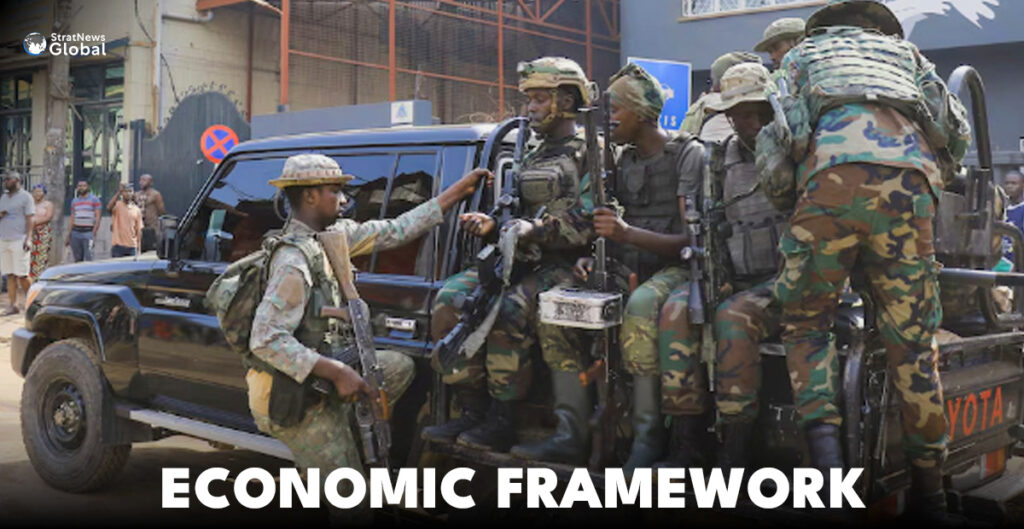
Rwanda and the Democratic Republic of Congo agreed on Friday on a framework for regional economic integration, the U.S. State Department said, marking progress on a peace deal signed in Washington in June.
The tenets agreed on Friday summarise the framework, which includes elements of cooperation on energy, infrastructure, mineral supply chains, national parks and public health, the State Department said in a statement.
Rwanda and Congo signed a peace deal in Washington in June at talks held by U.S. President Donald Trump’s administration, which aims to bring an end to fighting that has killed thousands and attract billions of dollars of Western investment to a region rich in tantalum, gold, cobalt, copper, lithium and other minerals.
As part of the deal, Kinshasa and Kigali agreed to launch a regional economic integration framework within 90 days, the agreement said.
A source familiar with the matter said a preliminary draft of the framework has been agreed to, and there would now be an input period to get reactions from the private sector and civil society before it is finalised.
The framework is planned to be signed at a meeting of heads of state at the White House. No date has been set yet for that meeting, the source said.
In the Friday statement, Rwanda and Congo affirmed that each country has “full, sovereign control” over the exploitation, processing and export of its natural resources and recognised the importance of developing mineral processing and transformation capacity within each country, according to a copy seen by Reuters.
Kinshasa views the plundering of its mineral wealth as a key driver of the conflict between its forces and Rwanda-backed M23 rebels in eastern Congo.
Reuters reported in May that Congolese minerals such as tungsten, tantalum and tin, which Kinshasa has long accused neighbouring Rwanda of illegally exploiting, could be exported legitimately to Rwanda for processing under the terms of the deal being negotiated by the U.S., according to sources.
The two countries are committed to ensuring that the minerals trade no longer provides funding to armed groups and to creating a world-class industrial mining sector in the region, as well as to ensuring better cross-border interoperability on mineral supply chains, according to the statement.
New Infrastructure
They also agreed to connect new infrastructure to the U.S.-backed Lobito Corridor, underscoring Washington’s aim of greater access to resources in the region and efforts to counter China.
The Ruzizi III hydropower project and Lake Kivu methane exploitation were the only specific projects mentioned in the statement, despite the U.S. emphasis on critical minerals. The countries said they intended to prioritise financing for Ruzizi and work together to exploit the methane gas sustainably.
Friday’s announcement comes after the two countries held the first meeting of a joint oversight committee on Thursday in a step toward implementing the Washington peace deal, even as other commitments are yet to be fulfilled.
In the Washington agreement, the two African countries pledged to implement a 2024 deal that would see Rwandan troops withdraw from eastern Congo within 90 days.
Congolese military operations targeting the Democratic Forces for the Liberation of Rwanda (FDLR), a Congo-based armed group that includes remnants of Rwanda’s former army and militias that carried out a 1994 genocide, are meant to conclude over the same timeframe.
The deal also said Congo and Rwanda would form a joint security coordination mechanism within 30 days and implement a plan agreed last year to monitor and verify the withdrawal of Rwandan soldiers within three months.
But 30 days from the signing have passed without a meeting of the joint security coordination mechanism.
The source familiar with the matter said the joint security coordination mechanism meeting would be held on August 7 in Addis Ababa.
Congo is also involved in direct talks with M23 hosted by Qatar, and last month the two sides pledged to sign a separate peace agreement by August 18, though many outstanding details need to be negotiated.
(With inputs from Reuters)
Hamas Refuses To Disarm Without Creation Of Independent Palestinian State
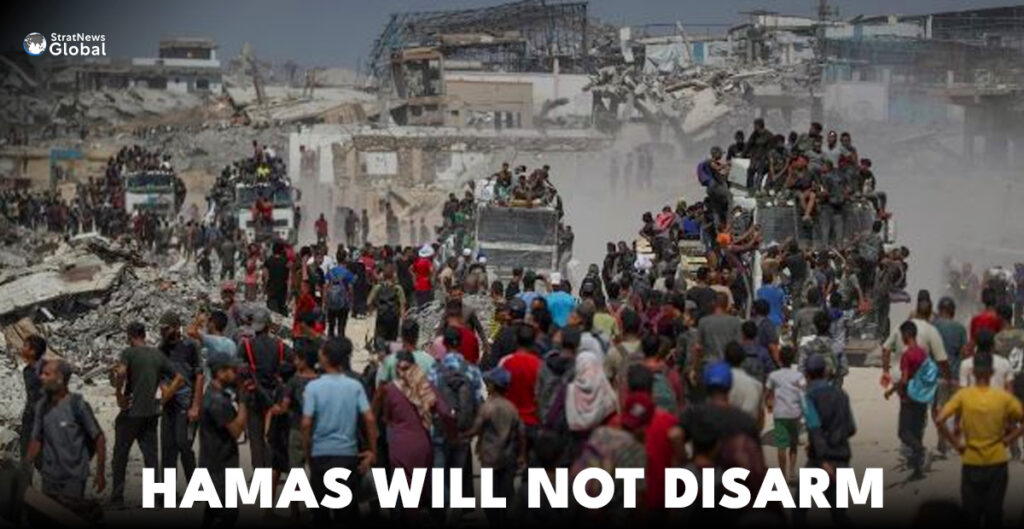
Hamas declared on Saturday that it will not lay down arms unless an independent Palestinian state is formed, rejecting a core Israeli condition for ending the Gaza conflict.
Indirect negotiations between Hamas and Israel aimed at securing a 60-day ceasefire in the Gaza war and deal for the release of hostages ended last week in deadlock.
On Tuesday, Qatar and Egypt, who are mediating ceasefire efforts, endorsed a declaration by France and Saudi Arabia outlining steps toward a two-state solution to the Israeli-Palestinian conflict and saying that as part of this Hamas must hand over its arms to the Western-backed Palestinian Authority.
In its statement, Hamas – which has dominated Gaza since 2007 but has been militarily battered by Israel in the war – said it could not yield its right to “armed resistance” unless an “independent, fully sovereign Palestinian state with Jerusalem as its capital” is established.
Condition To End Conflict
Israel considers the disarmament of Hamas a key condition for any deal to end the conflict, but Hamas has repeatedly said it is not willing to lay down its weaponry.
Last month, Israeli Prime Minister Benjamin Netanyahu described any future independent Palestinian state as a platform to destroy Israel and said, for that reason, security control over Palestinian territories must remain with Israel.
He also criticised several countries, including the UK and Canada, for announcing plans to recognise a Palestinian state in response to devastation of Gaza from Israel’s offensive and blockade, calling the move a reward for Hamas’ conduct.
The war started when Hamas-led terrorists stormed into southern Israel on October 7, 2023, killing 1,200 people and taking 251 hostages back to Gaza.
Israel’s subsequent military assault on Gaza has turned much of the enclave into a wasteland, killed over 60,000 Palestinians and set off a humanitarian catastrophe.
Israel and Hamas traded blame after the most recent round of talks ended in an impasse, with gaps lingering over issues including the extent of an Israeli military withdrawal.
(With inputs from Reuters)
South Africa Plans Relief For Exporters Affected By Trump Tariffs
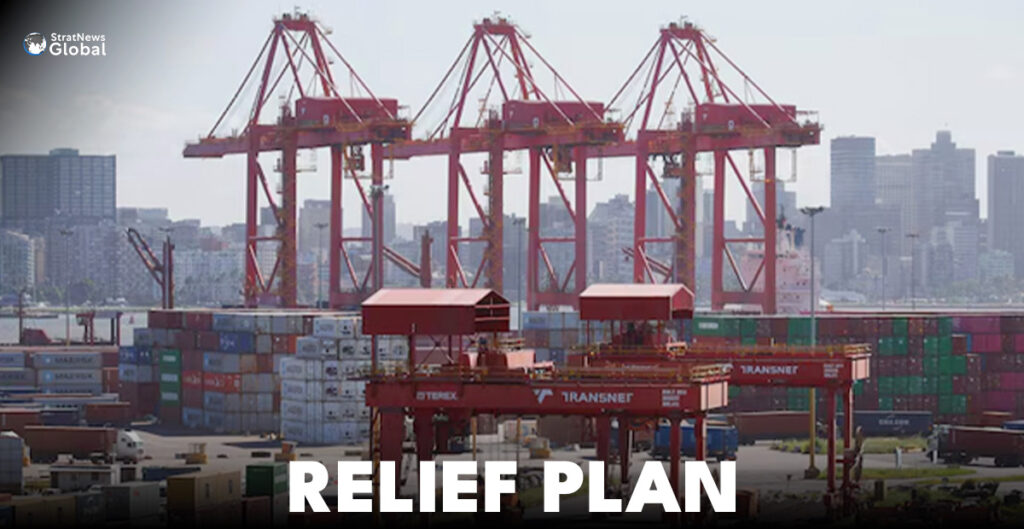
South Africa announced on Friday that it will draft support measures for exporters impacted by President Donald Trump’s new 30% tariff, which threatens jobs in the automotive and agriculture sectors.
Pretoria’s trade ministry has launched an “Export Support Desk” to assist affected companies and advise on alternative markets during a period Trade Minister Parks Tau described as “a trying moment for South Africa”.
Trump on Thursday issued an executive order imposing higher import duties on dozens of countries, which are set to take effect in seven days, as part of his push to reshape global trade in favour of the United States.
“All channels of communication remain open to engage with the U.S., and our negotiators are ready pending invitation from the U.S.,” President Cyril Ramaphosa said in a statement on Friday.
He added that the government was finalising a support package for vulnerable exporters, with details to be announced soon.
South Africa has tried for months to negotiate a deal with Washington and offered to buy U.S. liquefied natural gas and invest in U.S. industries in exchange for a lower tariff.
But Trump’s team was unresponsive to the proposal, which came amid tensions between Washington and Pretoria over South Africa’s foreign policy and domestic affirmative action laws, which Trump disapproves of.
The U.S. is South Africa’s second-largest bilateral trading partner after China, importing goods such as cars, iron and steel products, wine and citrus fruit. Mercedes-Benz South Africa is one of the country’s big auto exporters to the U.S.
Some lawmakers criticised the support desk initiative as insufficient, with the Democratic Alliance, the second-biggest party in parliament, going as far as to call it “laughable”.
Exports At Risk
Trump’s tariffs have already disrupted South Africa’s car exports to the U.S., with one industry body calling it a “socio-economic crisis in the making”.
The central bank has estimated that the latest Trump tariff could cause 100,000 job losses, mainly in the agriculture and automotive sectors.
Citrus farmers, heavily reliant on the U.S. market, have said shifting to alternative markets such as Asia would be challenging due to differences in fruit preferences.
The Steel and Engineering Industries Federation of Southern Africa (SEIFSA) said the tariff put at risk the country’s steel and related exports, which amounted to $1.8 billion last year.
“If one considers that access to the U.S. was through AGOA, which was tariff-free, increasing tariffs to 30% effectively nullifies that market,” said SEIFSA chief executive officer Tafadzwa Chibanguza, referring to the U.S. African Growth and Opportunity Act.
Chibanguza expressed concerns about losing market share to countries like Indonesia, which have negotiated lower U.S. tariffs.
“Once those export trends and relationships cement, even if you fix things in South Africa, you are unlikely then to take market share from those countries,” he told Reuters.
(With inputs from Reuters)
Over 1,000 Weapons Surrendered In UK Amnesty As Ninja Sword Ban Begins
The UK interior ministry announced on Friday that over 1,000 weapons have been surrendered under a government amnesty launched last month to tackle knife crime, coinciding with the introduction of a new ban on the ninja sword.
Overall, knife crime in England and Wales has risen 87% over the past decade, with 54,587 offences recorded last year alone, a 2% rise from 2023 and among the highest rates in Europe.
On July 29, 2024, teenager Axel Rudakubana attacked a Taylor Swift-themed children’s dance event in the northern English town of Southport, killing three girls and stabbing 10 people in one of Britain’s most harrowing knife assaults.
Since then, the government has pledged tougher age checks for knife buyers, warned social media firms they could face fines for failing to curb sales and promotion of weapons, and banned zombie-style knives, machetes and ninja swords.
Amnesty Campaign
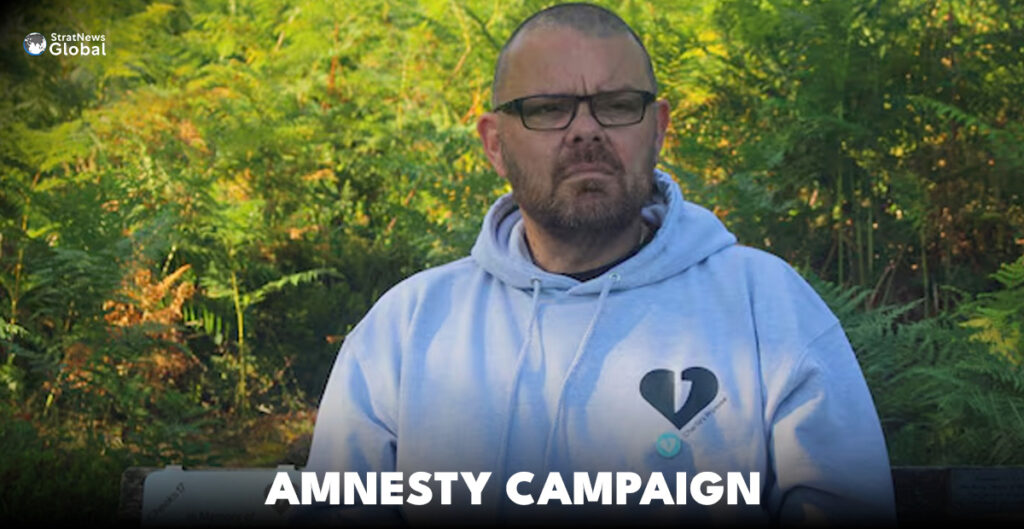
Over the month of July this year, the government urged young people to drop off weapons, including bladed ones, at “amnesty” bins or a mobile van – part of efforts to control knife crime, particularly when it involves youths. The government said at least 1,000 weapons have been handed in.
A mobile van will be deployed at the Notting Hill Carnival in London later this month in response to past knife-related violence by a small number of attendees.
It is unclear whether the “amnesty” bins will stay in place once the month-long campaign comes to an end.
The interior ministry did not immediately respond to Reuters’ request for comment.
Charities and experts call the government’s efforts a step forward but say they fail to address the root causes.
The interior ministry said that knife-related robberies have fallen in the seven highest-risk areas, dropping from 14% of all robberies in the seven highest-risk areas in the year ending June 2024 to 6% in the same period to June 2025.
The ban on buying and selling ninja swords is part of the government’s pledge to introduce Ronan’s Law, named in honour of 16-year-old Ronan Kanda, who was fatally stabbed with a ninja sword in 2022.
Campaigner Martin Cosser, whose son was killed in a knife attack two years ago, previously told Reuters that the issue was not just about the weapon itself, but about the “emotional drivers” that lead people to carry knives in the first place.
(With inputs from Reuters)
Mediterranean Migration Tops Agenda At Turkiye-Italy-Libya Summit In Istanbul
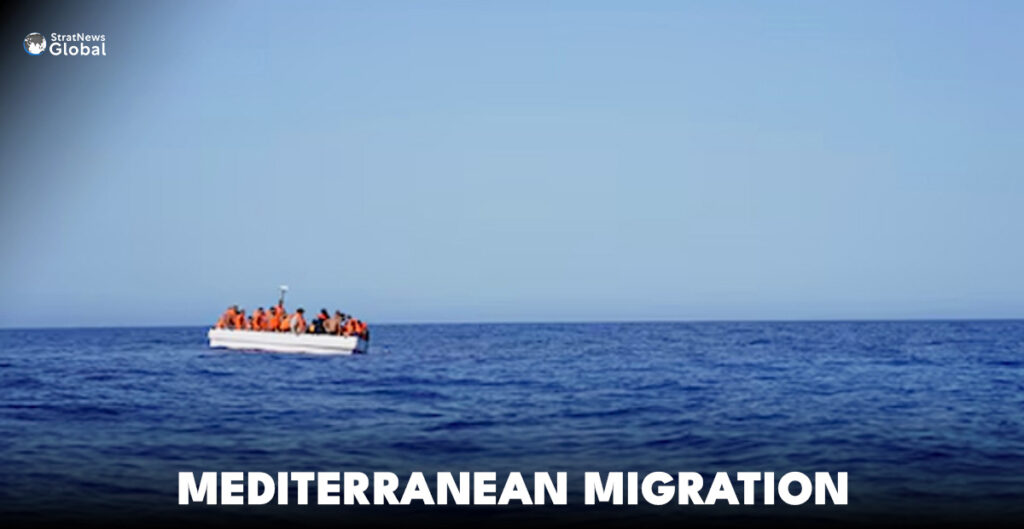
The migration route from Libya across the Mediterranean, used by thousands heading to Europe, was a key focus of Friday’s Istanbul meeting between the leaders of Turkiye, Italy, and Libya, according to Turkiye’s presidency.
President Tayyip Erdogan met Italian Prime Minister Giorgia Meloni and Libyan Prime Minister Abdulhamid al-Dbeibah to discuss migration and other potential cooperation areas.
“Erdogan pointed to the importance of the cooperation between the three countries against the tests that the Mediterranean basin is facing, including irregular migration flows,” the presidency said in a statement.
He added that “long-term and sustainable solutions” were needed to stop such migration flows, and that multilateral coordination was needed to achieve this, it said.
Libya’s Migrant Crossroads
Major energy exporter Libya, long split between rival eastern and western factions, is one of the main jumping-off points for migrants crossing the Mediterranean from North Africa.
Rival regional powers – Russia, Turkiye, Egypt and the United Arab Emirates – have also been drawn into its political divisions.
NATO member Turkiye has militarily and politically supported Libya’s Tripoli-based internationally recognised government.
In 2020, it sent military personnel there to train and support its government and later agreed to a maritime demarcation accord, which has been disputed by Egypt and Greece.
In 2022, Ankara and Tripoli also signed a preliminary accord on energy exploration, which Egypt and Greece also oppose.
Turkiye-Italy Strategic Ties
NATO allies Turkiye and Italy, meanwhile, have strong ties and have pledged to boost cooperation in the defence industry, while also increasing their reciprocal trade.
Italy’s Leonardo and Turkiye’s Baykar announced in March that they were setting up a joint venture to produce unmanned aerial vehicles, while Ankara has been inching closer to securing a procurement of 40 Eurofighter Typhoon fighter jets from a consortium that includes Italy.
Erdogan’s office also said the three leaders agreed to meet to evaluate any decisions taken by their cooperation committees later.
(With inputs from Reuters)
US Appeals Court Upholds Ban On Los Angeles Federal Immigration Arrests
A federal appeals court on Friday upheld a lower court’s order temporarily blocking U.S. agents from making immigration arrests in Los Angeles without probable cause.
Rejecting the Trump administration’s request to pause the lower court’s order, the three-judge appeals panel ruled that the plaintiffs would likely be able to prove that federal agents had carried out arrests based on people’s appearance, language and where they lived or worked.
President Donald Trump called National Guard troops and U.S. Marines into Los Angeles in June in response to protests against the immigration raids, marking an extraordinary use of military force to support civilian police operations within the United States.
The city of Los Angeles and other Southern California municipalities joined a lawsuit filed in June by the American Civil Liberties Union, accusing federal agents of using unlawful police tactics such as racial profiling to meet immigration arrest quotas set by the administration.
Judge Blocks Racial Profiling
A California judge last month blocked the Trump administration from racially profiling immigrants as it seeks deportation targets and from denying immigrants’ right to access to lawyers during their detention.
In Friday’s unsigned decision, the judges of the U.S. Court of Appeals for the Ninth Circuit largely rejected the administration’s appeal of the temporary restraining order.
The judges agreed with the lower court in blocking federal officials from detaining people based solely on “apparent race or ethnicity,” speaking Spanish or accented English, or being at locations such as a “bus stop, car wash, tow yard, day labourer pick up site, agricultural site, etc.”
The Department of Homeland Security and U.S. Immigration and Customs Enforcement did not immediately respond to requests for comment outside business hours.
Los Angeles Mayor Karen Bass called the order a victory for the city.
“The Temporary Restraining Order that has been protecting our communities from immigration agents using racial profiling and other illegal tactics when conducting their cruel and aggressive enforcement raids and sweeps will remain in place for now,” she said in a statement.
Mohammad Tajsar, senior staff attorney at the ACLU Foundation of Southern California, welcomed the ruling in a statement: “This decision is further confirmation that the administration’s paramilitary invasion of Los Angeles violated the Constitution and caused irreparable injury across the region.”
(With inputs from Reuters)
India To Continue Russian Oil Imports Despite Trump’s Sanctions Threats
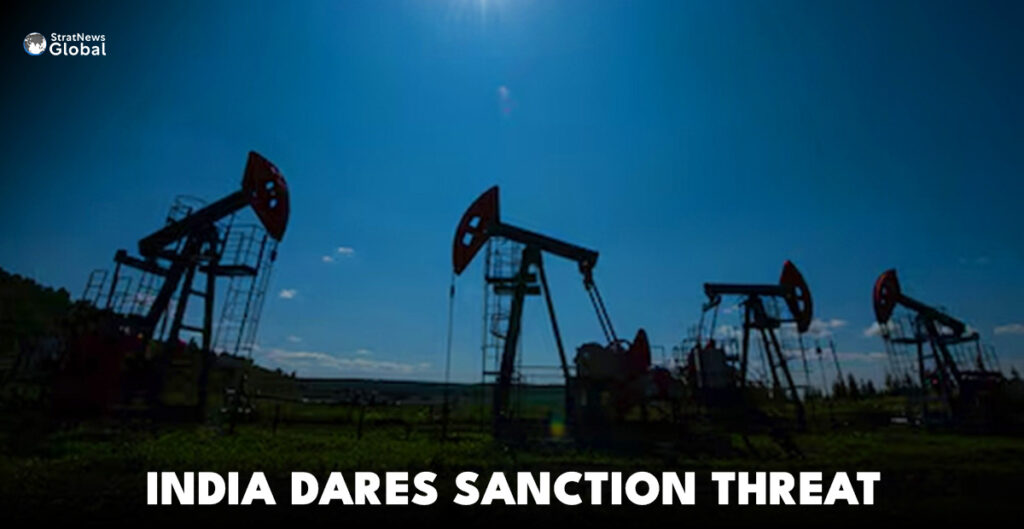
India will continue buying Russian oil from Russia despite U.S. President Donald Trump’s threats of sanctions, according to two Indian government officials speaking anonymously due to the issue’s sensitivity.
“These are long-term oil contracts,” one of the sources said. “It is not so simple to just stop buying overnight.”
Trump last month indicated in a Truth Social post that India would face additional penalties for purchases of Russian arms and oil. On Friday, Trump told reporters that he had heard that India would no longer be buying oil from Russia.
The New York Times on Saturday quoted two unnamed senior Indian officials as saying there had been no change in Indian government policy, with one official saying the government had “not given any direction to oil companies” to cut back imports from Russia.
Reuters reported this week that Indian state refiners stopped buying Russian oil in the past week after discounts narrowed in July.
“On our energy sourcing requirements … we look at what is there available in the markets, what is there on offer, and also what is the prevailing global situation or circumstances,” India’s foreign ministry spokesperson Randhir Jaiswal told reporters during a regular briefing on Friday.
‘Time-Tested Partnership’
Jaiswal added that India has a “steady and time-tested partnership” with Russia, and that New Delhi’s relations with various countries stand on their own merit and should not be seen from the prism of a third country.
The White House in Washington did not immediately respond to requests for comment.
Indian refiners are pulling back from Russian crude as discounts shrink to their lowest since 2022, when Western sanctions were first imposed on Moscow, due to lower Russian exports and steady demand, sources said earlier this week.
The country’s state refiners – Indian Oil Corp, Hindustan Petroleum Corp, Bharat Petroleum Corp and Mangalore Refinery Petrochemical Ltd have not sought Russian crude in the past week or so, four sources familiar with the refiners’ purchase plans told Reuters.
Trump’s Tariff Threat
On July 14, Trump threatened 100% tariffs on countries that buy Russian oil unless Moscow reaches a major peace deal with Ukraine. Russia is the top supplier to India, responsible for about 35% of India’s overall supplies.
Russia continued to be the top oil supplier to India during the first six months of 2025, accounting for about 35% of India’s overall supplies, followed by Iraq, Saudi Arabia and the United Arab Emirates.
India, the world’s third-largest oil importer and consumer, received about 1.75 million barrels per day of Russian oil in January-June this year, up 1% from a year ago, according to data provided to Reuters by sources.
Nayara Energy, a major buyer of Russian oil, was recently sanctioned by the European Union as the refinery is majority-owned by Russian entities, including oil major Rosneft.
Last month, Reuters reported that Nayara’s chief executive had resigned after the imposition of EU sanctions, and company veteran Sergey Denisov had been appointed as CEO.
Three vessels laden with oil products from Nayara Energy have yet to discharge their cargoes, hindered by the new EU sanctions on the Russia-backed refiner, Reuters reported late last month.
(With inputs from Reuters)
Trump Administration In Talks To Bring Azerbaijan, Central Asian Allies Into Abraham Accords
The administration of President Donald Trump is in active talks with Azerbaijan about joining the Abraham Accords, along with potential Central Asian allies, aiming to strengthen ties with Israel, according to five sources familiar with the discussions.
As part of the Abraham Accords, inked in 2020 and 2021 during Trump’s first term in office, four Muslim-majority countries agreed to normalise diplomatic relations with Israel after U.S. mediation.
Azerbaijan and every country in Central Asia, by contrast, already have longstanding relations with Israel, meaning that an expansion of the accords to include them would largely be symbolic, focusing on strengthening ties in areas like trade and military cooperation, said the sources, who requested anonymity to discuss private conversations.
Such an expansion would reflect Trump’s openness to pacts that are less ambitious than his administration’s goal to convince regional heavyweight Saudi Arabia to restore ties with Israel while war rages in Gaza.
The kingdom has repeatedly said it would not recognise Israel without steps towards Israeli recognition of a Palestinian state. A soaring death toll in Gaza and starvation in the enclave due to the blockage of aid and military operations by Israel have buoyed Arab fury, complicating efforts to add more Muslim-majority countries to the Abraham Accords.
The war in Gaza, where over 60,000 people, including tens of thousands of women and children, have died according to local health authorities, has provoked global anger. Canada, France and the United Kingdom have announced plans in recent days to recognise an independent Palestine.
Another key sticking point is Azerbaijan’s conflict with its neighbour Armenia, since the Trump administration considers a peace deal between the two Caucasus nations as a precondition to join the Abraham Accords, three sources said.
While Trump officials have publicly floated several potential entrants into the accords, the talks centred on Azerbaijan are among the most structured and serious, the sources said. Two of the sources argued a deal could be reached within months or even weeks.
Trump’s special envoy for peace missions, Steve Witkoff, travelled to Azerbaijan’s capital, Baku, in March to meet with Azerbaijani President Ilham Aliyev. Aryeh Lightstone, a key Witkoff aide, met Aliyev later in the spring in part to discuss the Abraham Accords, three of the sources said.
As part of the discussions, Azerbaijani officials have contacted officials in Central Asian nations, including in nearby Kazakhstan, to gauge their interest in a broader Abraham Accords expansion, those sources said. It was not clear which other countries in Central Asia – which include Kazakhstan, Uzbekistan, Turkmenistan, Tajikistan and Kyrgyzstan – were contacted.
The State Department, asked for comment, did not discuss specific countries, but said expanding the accords has been one of the key objectives of Trump. “We are working to get more countries to join,” said a U.S. official.
The Azerbaijani government declined to comment.
The White House, the Israeli foreign ministry and the Kazakhstani embassy in Washington did not respond to requests for comment.
Any new accords would not modify the previous Abraham Accords deals signed by Israel.
Obstacles Remain
The original Abraham Accords – inked between Israel and the United Arab Emirates, Bahrain, Morocco and Sudan – were centred on the restoration of ties. The second round of expansion appears to be morphing into a broader mechanism designed to expand U.S. and Israeli soft power.
Wedged between Russia to the north and Iran to the south, Azerbaijan occupies a critical link in trade flows between Central Asia and the West. The Caucasus and Central Asia are also rich in natural resources, including oil and gas, prompting various major powers to compete for influence in the region.
Expanding the accords to nations that already have diplomatic relations with Israel may also be a means of delivering symbolic wins to a president who is known to talk up even relatively small victories.
Two sources described the discussions involving Central Asia as embryonic – but the discussions with Azerbaijan as relatively advanced.
But challenges remain, and there is no guarantee a deal will be reached, particularly with slow progress in talks between Armenia and Azerbaijan.
The two countries, which both won independence from the Soviet Union in 1991, have been at loggerheads since the late 1980s when Nagorno-Karabakh – an Azerbaijani region that had a mostly ethnic-Armenian population – broke away from Azerbaijan with support from Armenia.
In 2023, Azerbaijan retook Karabakh, prompting about 100,000 ethnic Armenians to flee to Armenia. Both sides have since said they want to sign a treaty on a formal end to the conflict.
Primarily, Christian Armenia and the U.S. have close ties, and the Trump administration is wary of taking action that could upset authorities in Yerevan.
Still, U.S. officials, including Secretary of State Marco Rubio and Trump himself, have argued that a peace deal between those two nations is near.
“Armenia and Azerbaijan, we worked magic there,” Trump told reporters earlier in July. “And it’s pretty close.”
(With inputs from Reuters)
US Judge Rejects States’ Challenge To Trump’s Cuts On Diversity Research Funds
A federal judge on Friday denied a request by 16 Democratic-led states to compel the Trump administration to reinstate hundreds of millions in cancelled diversity grants for STEM (science, technology, engineering and math) fields.
Democratic state attorneys general had urged U.S. District Judge John Cronan in Manhattan to block the National Science Foundation from cancelling funding awarded to universities designed to increase the participation of women, minorities, and people in those fields, known collectively as STEM.
They had argued in a lawsuit filed in May that the Trump administration lacked the power to cap research funding and eliminate diversity programs provided by the NSF that were mandated by Congress and urged the judge to reverse grant terminations that began in April.
Challenge Dismissed
But Cronan, a Trump appointee, agreed with the administration that a challenge to NSF’s already-completed grant terminations could not be pursued in his court but instead could only be taken up by the Court of Federal Claims, a specialist court that hears monetary claims against the U.S. government.
He said the states likewise failed to show a new NSF policy stating that research “must aim to create opportunities for all Americans everywhere” and that research projects that give preference to “subgroups of people” do not reflect the agency’s priorities was inconsistent with the agency’s governing statute.
The same day that the policy was posted in April, NSF began cancelling grants that had been previously issued that touched on, among other topics of diversity, equity and inclusion. Trump has sought to eliminate DEI from the government and society.
States Cite Statutory Conflict
The states said the policy was inconsistent with the National Science Foundation Act’s mandate that the agency award grants “to increase the participation of underrepresented populations in STEM fields.”
But Cronan said NSF’s policy did not require it to cease supporting such projects and that it has, in fact, continued to fund a number of such projects, including at institutions within the plaintiff states.
“This evidence powerfully undermines Plaintiffs’ argument that the Priority Directive renders this class of projects categorically ineligible for funding,” Cronan wrote.
NSF declined to comment. A spokesperson for New York Attorney General Letitia James’ office, which took the lead for the plaintiffs, said it is reviewing the decision.
(With inputs from Reuters)
Bessent Optimistic On US-China Ties, Says ‘Makings Of A Deal’ In Place
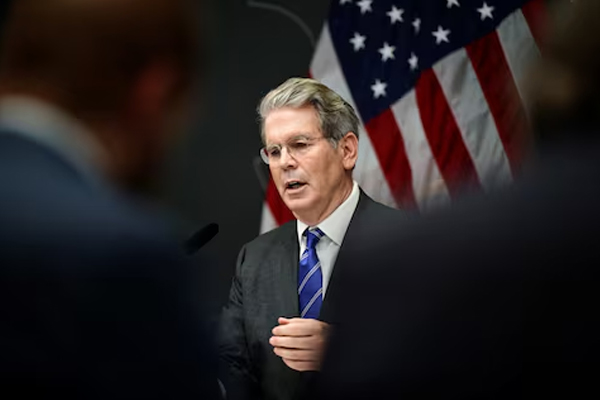
U.S. Treasury Secretary Scott Bessent said on Friday he believes Washington has the makings of a deal with China, and he is “optimistic” about the path ahead.
“This week’s negotiations in Stockholm have advanced our talks with China, and I believe that we have the makings of a deal that will benefit both of our great nations,” Bessent said in a post on X that was subsequently deleted.
“I am optimistic about the path forward,” he added.
A Treasury Department spokesperson said the post was being reposted because the images attached to it had not uploaded correctly. The spokesperson also noted that the language in the post was in line with what Bessent had said in various media interviews this week.
In an interview with CNBC on Thursday, Bessent said the United States believes it has the makings of a trade deal with China, but it is “not 100% done.”
U.S. negotiators “pushed back quite a bit” over two days of trade talks with the Chinese in Stockholm this week, Bessent told CNBC.
China is facing an August 12 deadline to reach a durable tariff agreement with President Donald Trump’s administration, after Beijing and Washington reached preliminary deals in May and June to end escalating tit-for-tat tariffs and a cut-off of rare earth minerals.
‘Constructive’ Stockholm Talks
After two days of what both sides called constructive talks in Stockholm, U.S. and Chinese officials on Tuesday agreed to pursue an extension of their 90-day tariff truce, in a bid to ease the escalating trade war between the world’s two largest economies that poses a threat to global economic growth.
No major breakthroughs were announced, and U.S. officials said it was up to President Donald Trump to decide whether to extend a trade truce that expires on August 12 or potentially let tariffs shoot back up to triple-digit figures. But U.S. Treasury Secretary Scott Bessent tamped down any expectation of Trump rejecting the extension.
“The meetings were very constructive,” Bessent told reporters after the meetings wrapped up. “It’s just that we haven’t given the signoff.”
As Trump returned to Washington after visiting Scotland, where he inked a trade deal with the European Union, he said Bessent had just briefed him on the China talks.
“He felt very good about the meeting, better than he felt yesterday,” Trump told reporters aboard Air Force One.
After months of threatening high tariffs on trading partners, Trump has secured trade pacts with the EU, Japan, Indonesia and others, but China’s powerhouse economy and grip on global rare earth flows make these talks particularly complex.
Both sides in May walked back from imposing triple-digit tariffs on each other in what would have amounted to a bilateral trade embargo. But global supply chains and financial markets could face renewed turmoil without an agreement.
(With inputs from Reuters)