

Support us by contributing to StratNewsGlobal on the following UPI ID
ultramodern@hdfcbank

Strategic affairs is our game, South Asia and beyond our playground. Put together by an experienced team led by Nitin A. Gokhale. Our focus is on strategic affairs, foreign policy and international relations, with higher quality reportage, analysis and commentary with new tie-ups across the South Asian region.
You can support our endeavours. Visit us at www.stratnewsglobal.com and follow us on YouTube, Twitter, Facebook and Instagram.
र 500 per month
र 1000 per month
र 5000 per year
र 10000 per year
Donate an amount of your choice
र 500 per month
Donate र 500 per month

र 1000 per month
Donate र 1000 per month
र 5000 per year
Donate र 5,000 per year
र 10000 per year
Donate र 10,000 per year
Donate an amount of your choice
Donate an amount of your choice

Philippines, India Hold First Joint Sail In South China Sea As Marcos Heads To Delhi
The Philippine and Indian navies conducted their first joint sail in the South China Sea, officials said on Monday, coinciding with President Ferdinand Marcos’ departure for a state visit to New Delhi.
The Philippines has conducted “maritime cooperative activities” with foreign navies since late 2023 as part of its push to counter China’s expansive claims in the waterway, including joint sails with treaty ally the United States, as well as Japan, Australia, France and Canada.
Two-Day Joint Sail
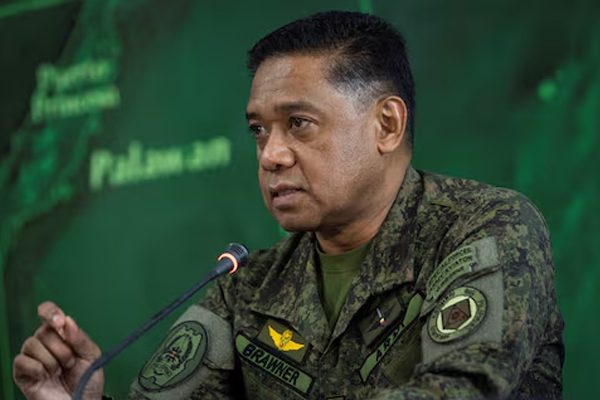
Philippine military chief Romeo Brawner said the idea for the two-day joint sail, which started on Sunday and was inside the Philippines’ exclusive economic zone, came about when he met his counterpart in India in March.
“We did not experience any untoward incidents, but there are still those shadowing us – as we had already expected,” Brawner told reporters, without naming China.
China’s foreign ministry said in a statement that territorial and maritime disputes should be resolved between the countries directly involved, and no third party should intervene.
Indian navy ships that took part in the first joint sail of the two countries included guided missile destroyer INS Delhi, tanker INS Shakti and corvette INS Kiltan. The Philippines deployed two frigates, BRP Miguel Malvar and BRP Jose Rizal.
Marcos’ India Tour
The exercise coincided with Marcos’ departure for a five-day trip to India, where he said he will look to deepen maritime ties and seek cooperation on sectors including defence, pharmaceuticals and agriculture.
China claims nearly the entire South China Sea, overlapping with maritime zones of Brunei, Indonesia, Malaysia, the Philippines and Vietnam. The waterway is a strategic shipping route where $3 trillion of annual shipborne commerce takes place.
A 2016 ruling of an international arbitral tribunal found Beijing’s sweeping claims have no basis under international law, a decision China rejects.
(With inputs from Reuters)
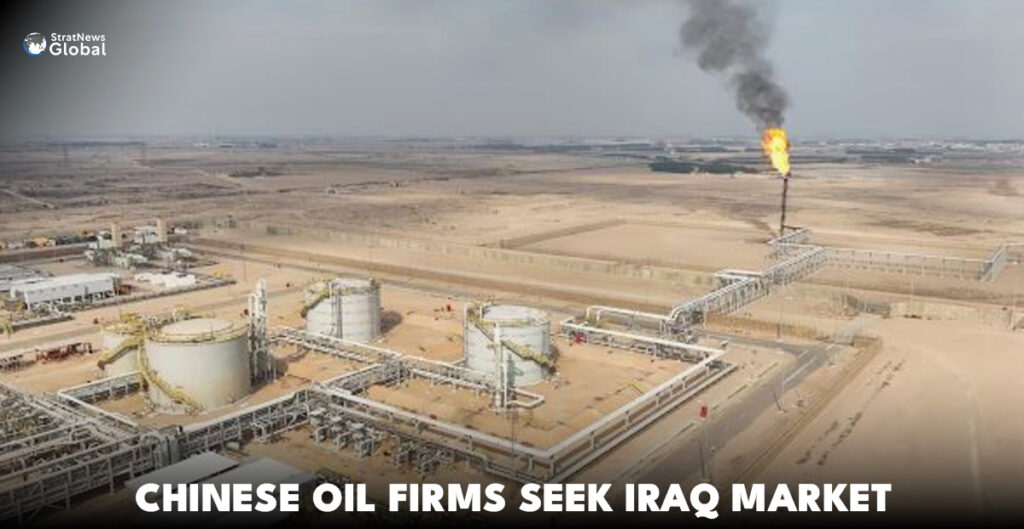
China’s Private Oil Firms Carve Out Space In Iraq’s Market Long Held By Global Giants
China’s independent oil firms are expanding their presence in Iraq, pouring billions of dollars into OPEC’s second-largest producer, even as several international oil majors retreat from a market traditionally controlled by Beijing’s large state-owned enterprises.
Drawn by more lucrative contract arrangements, smaller Chinese producers are on track to double their output in Iraq to 500,000 barrels per day by around 2030, according to estimates by executives at four of the firms, a figure not previously reported.
For Baghdad, which is also seeking to lure global giants, the growing presence of the mostly privately run Chinese players marks a shift as Iraq comes under growing pressure to accelerate projects, according to multiple Iraqi energy officials. In recent years, Iraq’s oil ministry had pushed back on rising Chinese control over its oilfields.
For the smaller Chinese firms, managed by veterans of China’s state heavyweights, Iraq is an opportunity to leverage lower costs and faster development of projects that may be too small for Western or Chinese majors.
With meagre prospects in China’s state-dominated oil and gas industry, the overseas push mirrors a pattern by Chinese firms in other heavy industries to find new markets for productive capacity and expertise.
Little-known players including Geo-Jade Petroleum Corp, United Energy Group, Zhongman Petroleum and Natural Gas Group, and Anton Oilfield Services Group made a splash last year when they won half of Iraq’s exploration licensing rounds.
Executives at smaller Chinese producers say Iraq’s investment climate has improved as the country becomes more politically stable and Baghdad is keen to attract Chinese as well as Western companies.
Iraq wants to boost output by more than half to over 6 million bpd by 2029. China’s CNPC alone accounts for more than half of Iraq’s current production at massive fields including Haifaya, Rumaila and West Qurna 1.
Profit-Sharing, Risk Tolerance
Iraq’s shift a year ago to contracts based on profit-sharing from fixed-fee agreements – an attempt to accelerate projects after ExxonMobil and Shell scaled back – helped lure Chinese independents.
These smaller firms are nimbler than the big Chinese companies and more risk-tolerant than many companies that might consider investing in the Gulf economy.
Chinese companies offer competitive financing, cut costs with cheaper Chinese labour and equipment and are willing to accept lower margins to win long-term contracts, said Ali Abdulameer at state-run Basra Oil Co, which finalises contracts with foreign firms.
“They are known for rapid project execution, strict adherence to timelines and a high tolerance for operating in areas with security challenges,” he said. “Doing business with the Chinese is much easier and less complicated, compared to Western companies.”
China’s smaller oil firms can develop an oilfield in Iraq in two to three years, faster than the five to 10 years for Western firms, Chinese executives said.
“Chinese independents have much lower management costs compared to Western firms and are also more competitive versus Chinese state-run players,” said Dai Xiaoping, CEO of Geo-Jade Petroleum, which has five blocks in Iraq.
The independents have driven down the industry cost to drill a development well in a major Iraqi oilfield by about half from a decade ago to between $4 million and $5 million, Dai said.
Trade-Offs
A Geo-Jade-led consortium agreed in May to invest in the South Basra project, which includes ramping up the Tuba field in southern Iraq to 100,000 bpd and building a 200,000-bpd refinery. Geo-Jade, committing $848 million, plans to revive output at the largely mothballed field to 40,000 bpd by around mid-2027, Dai told Reuters.
The project also calls for a petrochemical complex and two power stations, requiring a multi-billion-dollar investment, said Dai, a reserve engineer who previously worked overseas with CNPC and Sinopec.
Zhenhua Oil, a small state-run firm that partnered with CNPC in a $3 billion deal to develop Ahdab oilfield in 2008, the first major foreign-invested project after Saddam Hussein was toppled in 2003, aims to double its production to 250,000 bpd by 2030, a company official said.
Zhongman Petroleum announced in June a plan to spend $481 million on the Middle Euphrates and East Baghdad North blocks won in 2024.
Chinese firms’ cheaper projects can come at the expense of Iraq’s goal to introduce more advanced technologies.
Muwafaq Abbas, former crude operations manager at Basra Oil, expressed concern about transparency and technical standards among Chinese firms, which he said have faced criticism for relying heavily on Chinese staff and relegating Iraqis to lower-paid roles.
To be sure, some Western firms are returning to Iraq: TotalEnergies announced a $27 billion project in 2023, and BP is expected to spend up to $25 billion to redevelop four Kirkuk fields in the semi-autonomous Kurdish region, Reuters reported.
(With inputs from Reuters)
Japan: PM Ishiba Defends Auto Tariff Deal, Eyes Talks With Trump
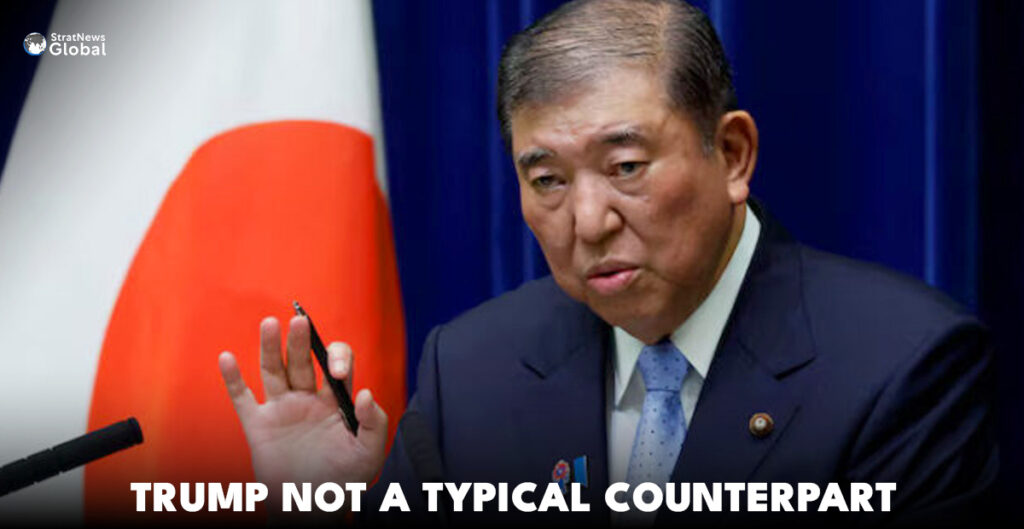
Japanese Prime Minister Shigeru Ishiba said on Monday that he would not hesitate to hold talks with US President Donald Trump to ensure the agreed reduction in US automobile tariffs is implemented at the earliest.
In a parliament session on Monday, Ishiba drew criticism from some opposition lawmakers for not having signed an official document with the US in clinching a trade deal last month.
‘Not A Typical Counterpart’
“Creating a document could have delayed the timing of tariff cuts. That was our biggest fear,” Ishiba said, defending Japan’s decision to agree on a deal without creating an official document with the US.
“He is not a typical counterpart and could overturn rules,” Ishiba said on Trump’s negotiating style.
Ishiba said he had “absolutely no hesitation” to hold talks with Trump to have Washington execute the tariff cut soon, though he declined to comment on when such talks could take place.
“Both countries will begin executing what was agreed upon, which is harder than agreeing on a deal,” Ishiba said, signaling his intention to stay on as premier to see through the process.
Under Pressure
Ishiba is under pressure from within his ruling Liberal Democratic Party to step down as prime minister to take responsibility for the party’s huge defeat in last month’s upper-house election.
Japan’s trade deal struck with Trump last month lowers US tariffs on imports of goods including automobiles, easing the pain for the export-reliant economy.
But there is no clarity on when US tariffs for automobiles and auto parts will be cut to 15% from the current 25%, clouding the outlook for Japan’s fragile recovery.
In the same parliament session, Japan’s top trade negotiator, Ryosei Akazawa, said it was hard to say how soon the US could actually implement automobile tariffs, though he added it took “more than a month” in the case of Britain.
(With inputs from Reuters)
White House Justifies Labor Chief’s Removal Amid Warnings Of Eroding Public Trust
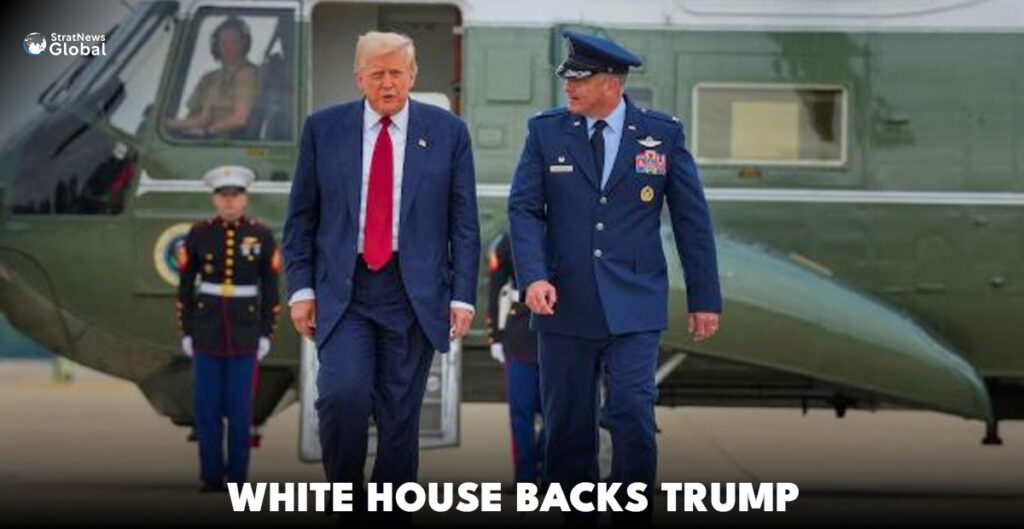
White House economic advisers, speaking on Sunday, sought to justify President Donald Trump’s decision to remove the chief of Bureau of Labor Statistics (BLS) pushing back against accusations that the firing could damage public trust in official U.S. economic figures.
Later on Sunday, Trump again criticized BLS Commissioner Erika McEntarfer, without providing evidence of wrongdoing, and said he would name a new BLS commissioner in the next three or four days.
U.S. Trade Representative Jamieson Greer told CBS that Trump had “real concerns” about the BLS data, while Kevin Hassett, director of the National Economic Council, said the president “is right to call for new leadership.”
Hassett said on Fox News Sunday the main concern was Friday’s BLS report of net downward revisions showing 258,000 fewer jobs had been created in May and June than previously reported.
Faking Data
Trump accused McEntarfer of faking the jobs numbers, without providing any evidence of data manipulation. The BLS compiles the closely watched employment report as well as consumer and producer price data.
The BLS gave no reason for the revised data but noted “monthly revisions result from additional reports received from businesses and government agencies since the last published estimates and from the recalculation of seasonal factors.”
McEntarfer responded to her abrupt dismissal on Friday in a post on the Bluesky social media platform, saying it was “the honor of her life” to serve as BLS commissioner and praising the civil servants who work there.
McEntarfer’s firing added to growing concerns about the quality of U.S. economic data and came on the heels of a raft of new tariffs on dozens of trading partners, sending global stock markets tumbling as Trump presses ahead with plans to reorder the global economy.
Investors also are watching the impact of the surprise resignation of Federal Reserve governor Adriana Kugler, which opened a spot on the central bank’s powerful board and could shake up what was already a fractious succession process for Fed leadership amid difficult relations with Trump.
Trump said on Sunday he would announce a candidate to fill the open Fed position within the next couple days.
Revisions Are Common
In an interview with CBS’ “Face the Nation,” Greer acknowledged there were always revisions of job numbers, “but sometimes you see these revisions go in really extreme ways.”
Brian Moynihan, CEO of Bank of America said large revisions of economic data could undermine public confidence and that government officials should develop ways of improving data quality.
“They can get this data, I think, other ways and I think that’s where the focus ought to be: how do we get the data to be more resilient and more predictable and more understandable?” he said on CBS. “Because what bounces around is restatements … that creates doubt about it.”
Critics, including former leaders of the BLS, slammed Trump’s move and called on Congress to investigate McEntarfer’s removal, saying it would shake trust in a respected agency.
“It undermines credibility,” said William Beach, a former BLS commissioner and co-chair of the group Friends of the BLS.
“There is no way for a commissioner to rig the jobs numbers,” he said. “Every year we’ve revised the numbers. When I was commissioner, we had a 500,000 job revision during President Trump’s first term,” he said on CNN’s “State of the Union.”
Former Treasury Secretary Larry Summers, who worked in both the Clinton and Obama administrations, also criticized McEntarfer’s firing.
“This is a preposterous charge. These numbers are put together by teams of literally hundreds of people following detailed procedures that are in manuals,” Summers said on ABC’s “This Week.”
Large Revision
The BLS surveys 121,000 employers – businesses and government agencies – each month, seeking their total payroll employment during the week in which the 12th day of the month falls. The response rate has fallen sharply since the COVID pandemic, from 80.3% in October 2020 to about 67.1% in July.
Knowing that, BLS allows late-arriving employer submissions, and revisions to earlier submissions, to be taken into account over the next two months.
That means each month’s initial estimate of employment for the immediately preceding month also contains revisions to the two months before that.
The revisions in Friday’s report were large by historic standards. The downward revision of 125,000 jobs for May was the largest between a second estimate and third estimate since a 492,000 reduction for March 2020. That was the largest ever and was reported in June 2020 for the payrolls report for May 2020.
(With inputs from Reuters)
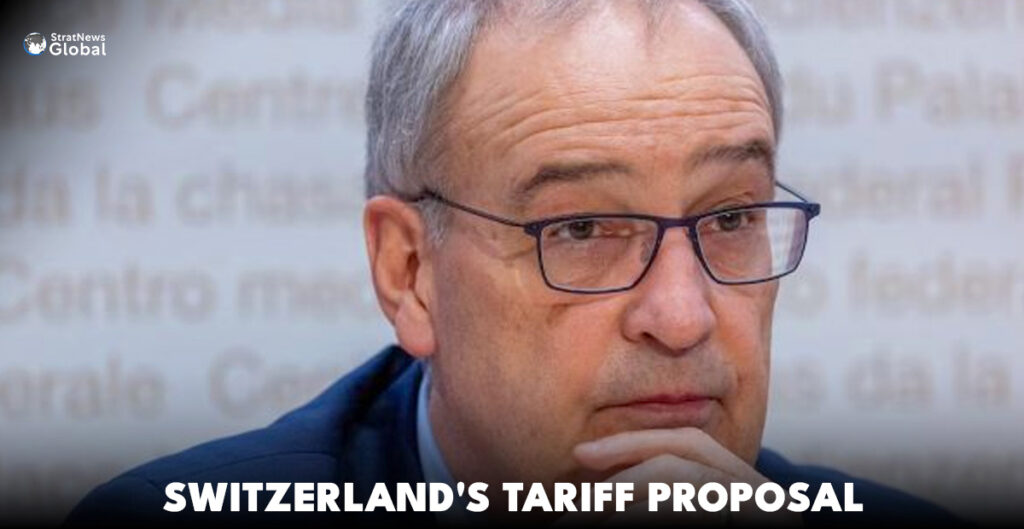
Switzerland May Adjust Proposal On Trump Tariffs, Says Business Minister
Switzerland is willing to modify its proposal to the United States regarding the proposed steep tariffs, Business Minister Guy Parmelin stated, as experts cautioned that the 39% import duties announced by U.S. President Donald Trump could lead to a recession in Switzerland.
Switzerland was left stunned on Friday after Trump hit the country with one of the highest tariffs in his global trade reset, with industry associations warning of tens of thousands of jobs being put at risk.
The country’s cabinet will hold a special meeting on Monday to discuss its next steps, with Parmelin telling broadcaster RTS that the government would move quickly before the U.S. tariffs are imposed on August 7.
“We need to fully understand what happened, why the U.S. president made this decision. Once we have that on the table, we can decide how to proceed,” Parmelin said.
“The timeline is tight, it may be hard to achieve something by the 7th, but we’ll do everything we can to show goodwill and revise our offer,” he added.
U.S. Trade Deficit With Switzerland
Parmelin said Trump was focused on the U.S. trade deficit with Switzerland, which stood at 38.5 billion Swiss francs ($48 billion) last year, with Switzerland buying U.S liquefied natural gas (LNG) among the options under consideration.
Another option could be further investments by Swiss companies in the United States, Switzerland’s biggest export market for its pharmaceuticals, watches and machinery.
“Look at the European Union, they promised to buy LNG. Switzerland imports LNG too — maybe that’s one path,” Parmelin said.
“Maybe more investments. But to be sure it’s a strong enough basis for continuing talks, we have to fully understand what the U.S. expects.”
Both Parmelin and Swiss President Karin Keller-Sutter were also ready to travel to Washington to pursue talks if necessary, he added.
Swiss officials rejected reports that the higher than expected tariffs were imposed after a bad-tempered telephone call between Keller-Sutter and Trump late on Thursday.
“The call was not a success, there was not a good outcome for Switzerland,” a government source said. “But there was not a quarrel. Trump made it clear from the very beginning that he had a completely different point of view, that 10% tariffs were not enough.
“We are working hard to find a solution and are in contact with the American side,” the source added. “We hope we can find a solution before August 7.”
Impact On Swiss Economy
Tariffs would have a huge impact on the export-orientated economy of Switzerland and raised the risk of a recession, said Hans Gersbach, an economist at ETH, a university in Zurich.
Swiss economic output would be reduced by 0.3% to 0.6% if the 39% tariff was imposed, a figure which could rise to above 0.7% if pharmaceuticals – which are currently not covered by the U.S. import duties – were included. Prolonged disruptions could shrink Swiss GDP by more 1%, Gersbach said.
“There would be a risk of a recession,” Gersbach said.
Swiss shares are expected to be hit by the tariffs news when the stock market reopens on Monday after being closed during the Swiss National Day holiday on Friday.
The tariffs could also see the Swiss National Bank cut interest rates in September, said Nomura.
“We expect one more 25bp policy rate cut from the SNB in September, which would take the rate to -0.25%,” the bank said.
“A hit to growth from U.S. tariffs on exports would likely weaken economic growth and cause further deflation pressures, adding to the likelihood of easing to a negative policy rate.”
(With inputs from Reuters)
Job Cuts, Losses Mount As China’s Solar Boom Turns To Bust
China’s largest solar companies laid off nearly one-third of their employees last year, company filings reveal, as the sector — once championed by Beijing to boost economic growth — struggles with falling prices and heavy losses.
The job cuts illustrate the pain from the vicious price wars being fought across Chinese industries, including solar and electric vehicles, as they grapple with overcapacity and tepid demand. The world produces twice as many solar panels each year as it uses, with most of them manufactured in China.
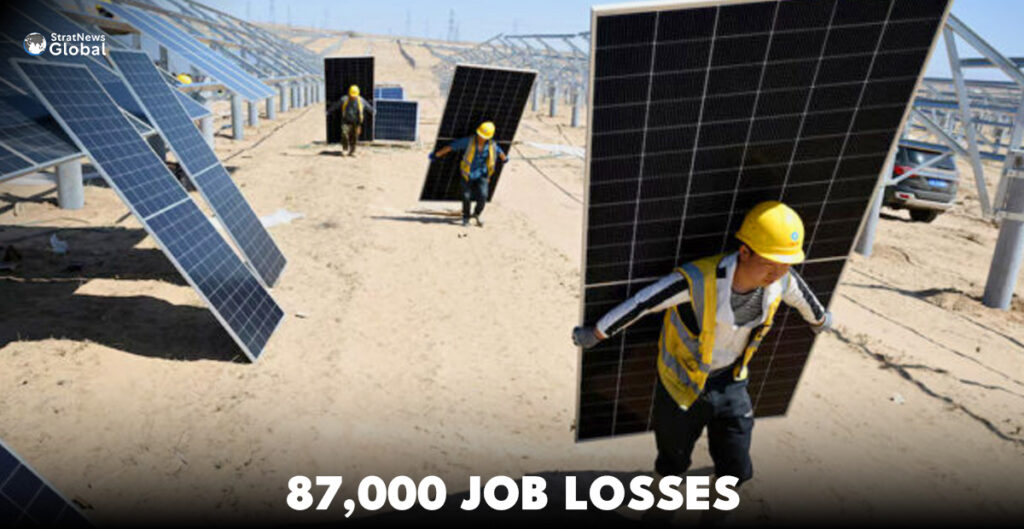
87,000 Staff Fired
Longi Green Energy, Trina Solar, Jinko Solar, JA Solar, and Tongwei, collectively shed some 87,000 staff, or 31% of their workforces on average last year, according to a Reuters review of employment figures in public filings.
Analysts say the previously unreported job losses were likely a mix of layoffs and attrition due to cuts to pay and hours as companies sought to stem losses.
Layoffs are politically sensitive in China, where Beijing views employment as key to social stability. Other than a 5% cut acknowledged by Longi last year, none of the firms mentioned above have announced any job cuts or responded to questions from Reuters.
Situation Worsening
“The industry has been facing a downturn since the end of 2023,” said Cheng Wang, an analyst at Morningstar. “In 2024, it actually got worse. In 2025, it looks like it’s getting even worse.”
Since 2024, more than 40 solar firms have delisted, gone bankrupt or been acquired, according to a presentation by the photovoltaic industry association in July.
China’s solar manufacturers built new factories at a fever pitch between 2020 and 2023 as the state redirected resources from the sinking property sector to what it used to call the “new three” growth industries: solar panels, electric cars and batteries.
That building spree led to falling prices and a brutal price war made worse by US tariffs thrown up against exports from the many Chinese-owned factories in Southeast Asia. The industry lost $60 billion last year.
More To Come
While analysts say it is unclear whether job cuts continued this year, Beijing is increasingly signalling it intends to intervene to cut capacity, sending polysilicon prices soaring nearly 70% in July while solar panel prices have increased more modestly.
Major polysilicon producer GCL told Reuters on Thursday that top producers plan to set up an OPEC-like entity to control prices and supply. The group is also setting up a 50-billion yuan vehicle to buy and shut around a third of the industry’s lower-quality production capacity.
President Xi Jinping in early July called for an end to “disorderly price competition,” and three days later the industry ministry pledged to calm price wars and retire outdated production capacity during a meeting with solar industry executives.
While Beijing has not said when or how it will act, a source with direct knowledge of the matter said it was determined to focus on the issue before the end of the current five-year plan this year.
Officials in eastern China’s Anhui province, a manufacturing hub, told solar company executives in June to stop adding new manufacturing and shut production lines operating at under 30% capacity, according to two industry sources who declined to be identified due to the sensitivity of the matter.
A board member at a solar firm in the province said new capacity had already required verbal approval from powerful state planner the National Development and Reform Commission (NDRC) this year. They asked for their company’s name to be withheld because the discussions were private.
No Easy Fix
But many provincial governments are likely to be reluctant to crack down hard on overcapacity, analysts say. These officials are scored on jobs and economic growth and are loathe to see local champions sacrificed to meet someone else’s target.
Trina Solar’s chairman told an industry conference in June that new projects had begun this year despite the NDRC calling for a halt in February.
The foot-dragging reflects the scale of the cull required. Jefferies analyst Alan Lau estimated at least 20-30% of manufacturing capacity would have to be eliminated for companies to return to profitability.
“There’s a lot of overcapacity in China, like steel, like cement, but you don’t see any industry in the past having industry-wide cash loss for one and a half years already,” Lau said.
Company-level losses are on the same scale as in real estate, another crisis-hit sector, even though solar is only about one-tenth the size, he said.
“This is highly unusual and highly abnormal.”
(With inputs from Reuters)
Brazil: Bolsonaro Supporters Rally Against Lula, Top Judge
Supporters of Brazil’s former President Jair Bolsonaro, who is accused of plotting a coup after losing the 2022 general election, took to the streets in several Brazilian cities on Sunday to protest against Supreme Federal Court (STF) Justice Alexandre de Moraes and President Luiz Inacio Lula da Silva.
The protesters called for “amnesty” for those involved in the alleged coup attempt days after Lula’s inauguration in January 2023.
Bolsonaro Trial
Far-right leader Bolsonaro did not personally attend the demonstrations, but was put on the telephone by his son, Senator Flávio Bolsonaro, during the protest in Rio de Janeiro. The former president, who is on house arrest, wears an electronic ankle bracelet and cannot leave his home on weekends and holidays, as per an order from Justice Moraes.
In March, a five-judge STF panel decided unanimously to put Bolsonaro on trial for allegedly conspiring to overthrow Lula. If found guilty in the court proceedings expected later this year, Bolsonaro could face a long prison sentence.
Last month, Moraes imposed precautionary measures against Bolsonaro because he believed he and his son, Eduardo, an elected lawmaker who is now living in the US, had collaborated with US authorities to try to interfere in Brazilian affairs.
‘With Hunt’ Allegation
Last week, the administration of US President Donald Trump imposed a 50% tariff on most Brazilian goods, citing a “witch hunt” against Bolsonaro.
It also imposed financial sanctions against Moraes under the Magnitsky Act, which allows the US to impose economic penalties against foreigners it considers to have a record of corruption or human rights abuses.
Moraes is the reporting justice in the case in which Jair Bolsonaro is a defendant.
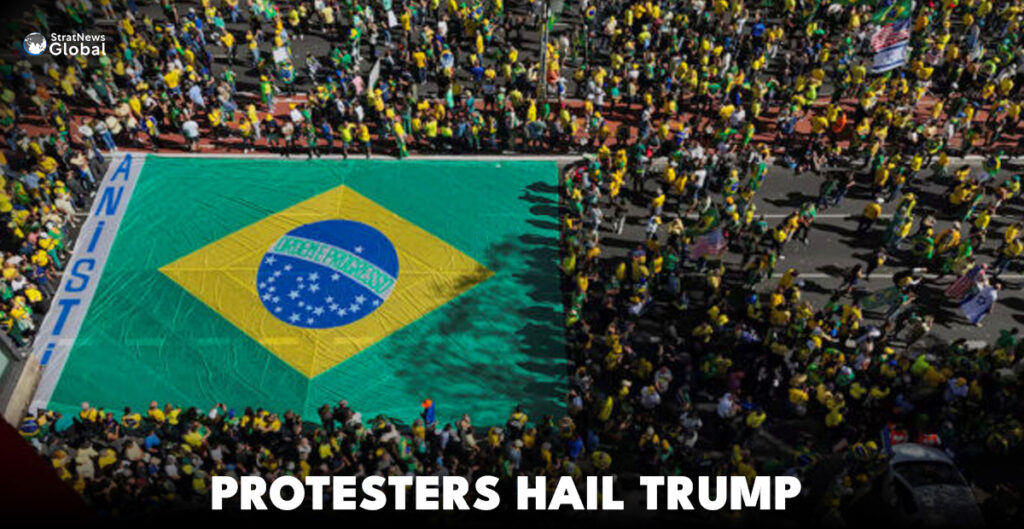
Protesters Hail Trump
In Sunday’s protests, Bolsonaro supporters, wearing Brazilian national team jerseys, chanted “Magnitsky” and insulted Moraes and Lula.
American flags and signs supporting Trump were also seen.
(With inputs from Reuters)
Japan Mulls Extra Budget Amid US Tariff Impact
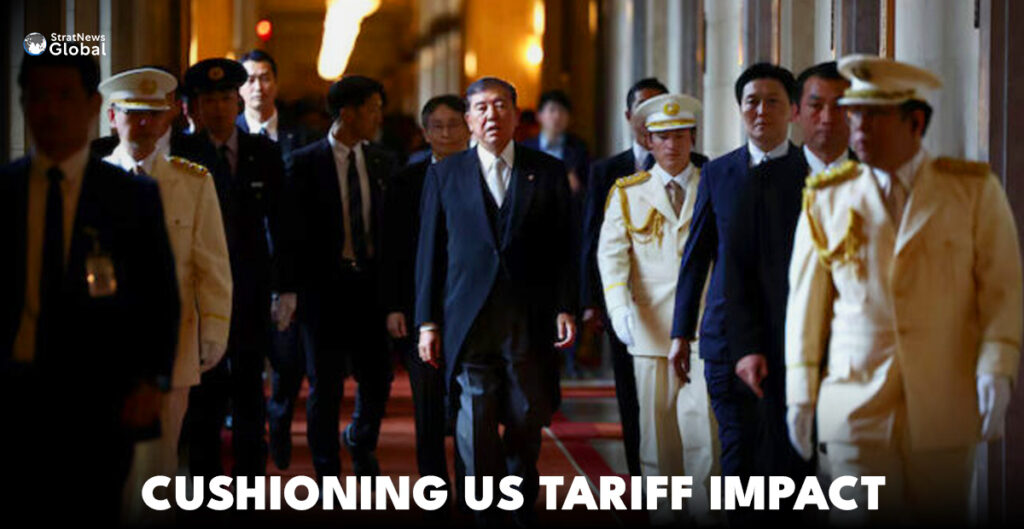
Japanese Prime Minister Shigeru Ishiba said on Monday that the government is prepared to put together an additional budget to soften the economic impact of US tariffs — a step that could further burden the country’s already deteriorating finances.
After suffering a stinging defeat in last month’s upper house election, Ishiba’s minority coalition is under pressure to heed opposition parties’ demand to boost spending and cut Japan’s sales tax.
“We will compile one if necessary, taking into account discussions with other parties,” Ishiba told parliament when asked by an opposition lawmaker whether the government would compile an extra budget that includes tax cuts.
If the government were to compile a stimulus package, an extra budget to fund the spending would be submitted to an extraordinary parliament session likely to be convened in September.
No Clarity On Auto Tariffs
Japan’s trade deal struck with President Donald Trump last month lowers US tariffs for imports of goods including its mainstay automobiles, easing the pain for the export-reliant economy.
But there is no clarity on when US tariffs for automobiles and auto parts will be cut to 15% from the current 25%, clouding the outlook for Japan’s fragile recovery.
Regular Practice
Compiling an extra budget has become a regular practice in Japan as politicians call for increasing spending to support the economy, keeping its fiscal policy loose even as other countries rolled back crisis-mode spending after the COVID-19 pandemic.
Ishiba has not commented on the possible size of an extra budget, but some analysts expect it could reach around 10 trillion yen ($67.68 billion), which would require additional debt issuance.
The extra budget would come on top of a record 115.5 trillion yen budget for the current fiscal year. Of the total, 24.5% is being spent on financing debt. Such deficit funding costs will likely rise further as the Bank of Japan eyes more interest rate hikes, analysts say.
Massive Debt Pile
With rising food costs hurting consumption, opposition parties have called for slashing or eliminating Japan’s sales tax rate, which is set at 10% except for 8% for food.
Ishiba, who is regarded as a fiscal hawk, has been cautious about cutting the sales tax, which funds social welfare costs for a rapidly ageing population.
A flurry of big spending packages and ballooning social welfare costs for a rapidly ageing population have left Japan with a debt pile 250% the size of its economy – the highest among major economies.
($1 = 147.7500 yen)
(With inputs from Reuters)
Beijing On Red Alert After Deadly Floods
Beijing issued its highest alert for heavy rainfall in most of its hilly districts on Monday and advised residents to avoid stepping out unless necessary, following the deadliest floods in the capital since 2012 that claimed dozens of lives.
Up to 200mm (7.9 inches) of rain could hit parts of Beijing over a six-hour period from midday, weather forecasters warned. The city, which has a population of 22 million people, receives on average 600mm of rainfall each year.
Dozens Killed
Late last month, at least 44 people died in Beijing after days of heavy rains. Most of the dead were people unexpectedly trapped by rapidly rising waters at a nursing home in Miyun district on the city’s northeastern outskirts. The fatalities led authorities to admit to shortcomings in their contingency plans for extreme weather.
On Monday, Beijing had six of its 16 districts on the highest alert for heavy rainfall – Mentougou, Fangshan, Fengtai, Shijingshan, Huairou and Changping – all of which lie in mountainous areas to the west and north of the city.
The risk of flash floods and landslides is “extremely high”, local authorities cautioned.
In the summer of 2012, 79 people had died in Beijing in the city’s deadliest flooding in living memory. Fangshan district was the worst-hit, with one resident reporting a rise in floodwaters of 1.3 metres in just 10 minutes.
Rain Trap
Beijing’s topography has been described by some as a rain “trap”, with its mountains to the west and north capturing moist air and amplifying any ensuing rainfall as a result.
In southern Guangdong province over the weekend, the bodies of five people were recovered after a large-scale search operation involving more than 1,300 rescuers.
The five people, who went missing on Friday night, were “swept away by water” following heavy rainfall in recent days, the official Xinhua news agency reported on Sunday.
(With inputs from Reuters)
Taiwan Floods Kill 4, Thousands Evacuated
At least four people have died and over 5,900 have been evacuated in southern Taiwan after the region received more than a year’s worth of rainfall in just a week, triggering widespread landslides and flooding.
Three people are missing and 77 have been injured since late July when a depression and strong southwesterly airstreams began causing flooding and landslides in Taiwan’s south, an area vital for the island’s agriculture sector.
More than 2.6 metres (102.3 inches) of rain were dumped on parts of the mountainous south in the past seven days, according to Central Weather Administration, compared to average annual rainfall of about 2.1 metres in subtropical Taiwan.
Rare Case
Taiwan’s premier Cho Jung-tai, who on Monday visited residents in the southern city of Tainan hit hard by Typhoon Danas and recent rains, said his cabinet was working to propose a special budget this week to provide relief efforts.
“We rarely encountered such a severe storm before. It has been a month since Typhoon Danas hit, and it has been raining continuously ever since,” Cho said.
The government said more than 2,000 people were still forced to stay away from their homes, mostly in the mountainous villages in the southern Kaohsiung and Pingtung county where rescuers were working to restore roads cut off by landslides or flooding and deliver food and medical supplies.
Largest Evacuation
“This can be said to be the largest evacuation in terms of the number of people evacuated in the past decade or so,” Kaohsiung mayor Chen Chi-mai told reporters on Sunday.
“Please don’t go up the mountain. It’s really, really dangerous.”
The rain was likely to subside from Monday, weather authorities said, as warnings for landslide and flooding continued for southern mountains.
Typhoon Danas lashed southern Taiwan with record winds in July in a rare hit to the island’s densely populated west coast, which knocked down more than 3,000 electric poles in the worst damage to the island’s power grid in decades.
(With inputs from Reuters)