

Support us by contributing to StratNewsGlobal on the following UPI ID
ultramodern@hdfcbank

Strategic affairs is our game, South Asia and beyond our playground. Put together by an experienced team led by Nitin A. Gokhale. Our focus is on strategic affairs, foreign policy and international relations, with higher quality reportage, analysis and commentary with new tie-ups across the South Asian region.
You can support our endeavours. Visit us at www.stratnewsglobal.com and follow us on YouTube, Twitter, Facebook and Instagram.
र 500 per month
र 1000 per month
र 5000 per year
र 10000 per year
Donate an amount of your choice
र 500 per month
Donate र 500 per month

र 1000 per month
Donate र 1000 per month
र 5000 per year
Donate र 5,000 per year
र 10000 per year
Donate र 10,000 per year
Donate an amount of your choice
Donate an amount of your choice

South Korea Dismantles Border Loudspeakers To Ease Tensions With North Korea
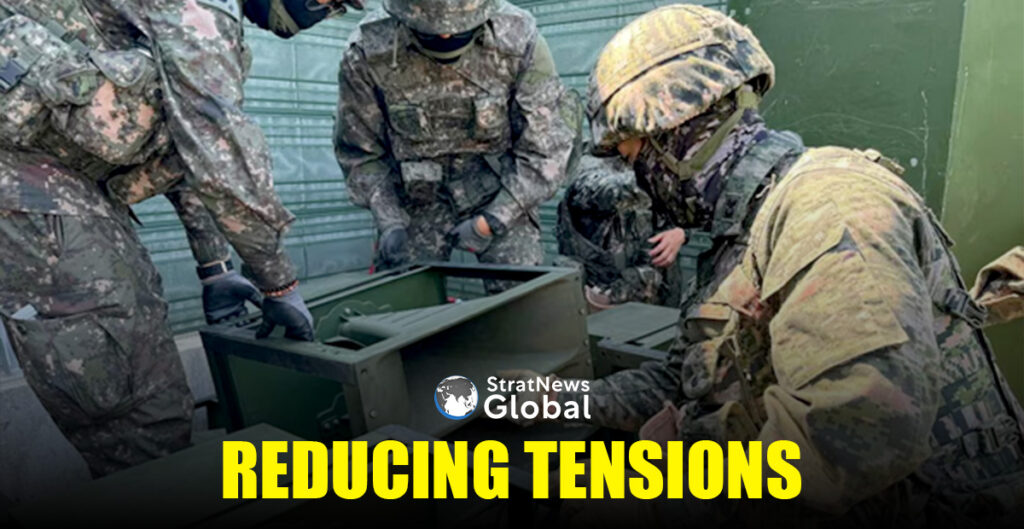
Authorities in South Korea began dismantling loudspeakers broadcasting anti-North Korea messages along the border on Monday, as President Lee Jae Myung’s new government aims to ease tensions with Pyongyang.
Shortly after he took office in June, Lee’s administration switched off propaganda broadcasts criticising the North Korean regime as it looks to revive stalled dialogue with its neighbour.
But North Korea recently rebuffed the overtures and said it had no interest in talking to South Korea.
South Korea’s dismantling of the loudspeakers from Monday is just a “practical measure to help ease tensions between the South and the North,” the ministry said in a statement on Monday.
Soldiers could be seen unplugging loudspeakers, mounted together like a wall, and taking them down, photographs provided by the defence ministry show.
The countries remain technically at war after the 1950-53 Korean War ended in a truce, and relations have deteriorated in the last few years.
Propaganda Loudspeakers
Propaganda broadcast through loudspeakers across the border has been used by both sides as relations between South and North Korea have ebbed and flowed over the years.
In 2018, the then-President Moon Jae-in dismantled the loudspeakers as his administration agreed to stop every hostile act that could be a source of military tensions.
But last year, former conservative leader Yoon Suk Yeol restarted propaganda broadcasts and blasts of K-pop music in retaliation for North Korea sending balloons to the South filled with trash amid heightened tensions.
Since Seoul suspended its own loudspeaker broadcasts in June, North Korea appears to have stopped its broadcasts, which had disturbed South Korean border residents for months, officials in the South say.
Kim Yo Jong, the powerful sister of North Korean leader Kim Jong Un, recently said, however, that South Korea’s decision to stop the broadcasts was “not the work worthy of appreciation”.
(With inputs from Reuters)
Ukraine Pins Hopes On Interceptor Drones As An Affordable Air Defence Strategy
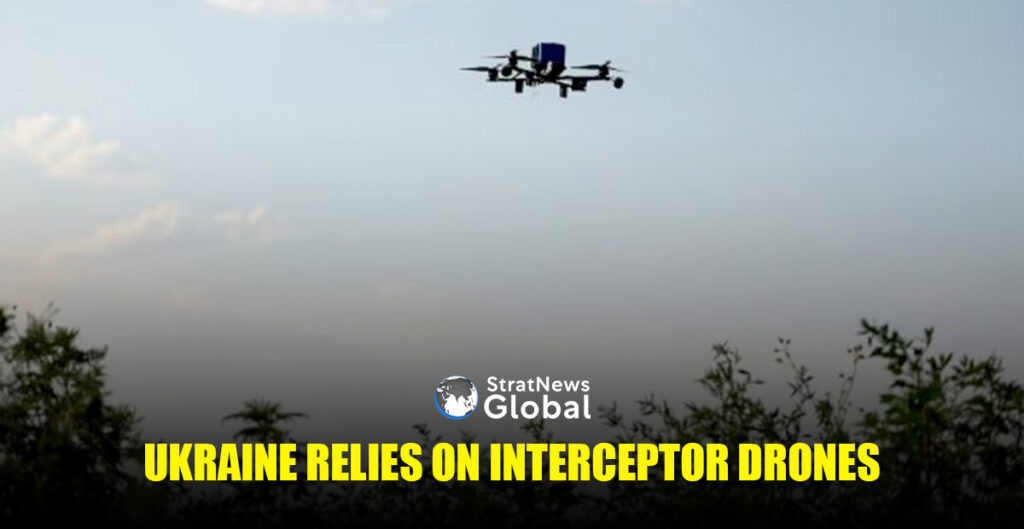
When President Volodymyr Zelenskyy announced late last month that Ukraine requires $6 billion to ramp up interceptor drone production, aiming for a daily output of 1,000 units, he had clear reasons behind the ambitious goal.
Having already reshaped the battlefield by doing work once reserved for long-range missiles, field artillery and human intelligence, drones are now fighting Russian drones – a boon for Ukraine’s dwindling stock of air defence missile systems.
In the last two months, just one Ukrainian charity supplying aerial interceptor drones says its devices have downed around 1,500 of the drones that Russia has been sending to reconnoitre the battlefield or to bomb Ukraine’s towns and cities.
Interceptors Help To Save Valuable Missile Stock
Most importantly, such interceptors have the potential to be a cheap, plentiful alternative to using Western or Soviet-made air defence missiles, depleted by allies’ inability, or reluctance, to replenish them.
Colonel Serhiy Nonka’s 1,129th air defence regiment, which started using them a year ago to ram and blow up enemy drones, estimated that they could down a Russian spotter drone at about a fifth of the cost of doing so with a missile.
As a result, the depth to which these enemy reconnaissance drones can fly behind Ukrainian lines has decreased sharply, Nonka said.
Some estimates put the interceptors’ speed at over 300 kph (190 mph), although the precise figures are closely guarded.
Other units are using interceptors to hit the long-range Shahed “kamikaze” drones that Russia launches at Kyiv and other cities, sometimes downing dozens a night, according to Zelenskyy.
In the three and a half years since Russia invaded Ukraine at scale, drones have gone from an auxiliary tool to one of the primary means of waging war for both sides.
To chase them down, interceptor drones need to be faster and more powerful than those that have already revolutionised long-range precision strikes and aerial reconnaissance.
Interceptor Drones To Become Ubiquitous
Like the First-Person View drones that now dominate the battlefield, interceptor drones are flown by a pilot on the ground through the video feed from an onboard camera.
“When we started to work (with these drones), the enemy would fly at 800 or a thousand metres,” the officer who spearheaded their adoption by the 1,129th regiment, Oleksiy Barsuk. “Now it’s three, four or five thousand – but their (camera) zoom is not infinite.
Most of the regiment’s interceptor drones are provided by military charities that crowdfund weapons and equipment through donations from civilians.
Taras Tymochko, from the largest of these, Come Back Alive, said it now supplies interceptors to 90 units.
Since the project began a year ago, the organisation says over 3,000 drones have been downed by equipment it provided, nearly half of them in the last two months.
However, such interceptors are still no match for incoming missiles or the fast jet-powered attack drones that Moscow has recently started deploying.
The organisation reports the value of the downed Russian craft at $195 million, over a dozen times the cost of the drones and equipment handed over under the project.
Sam Bendett, adjunct senior fellow at the Centre for a New American Security, said Russian forces were complaining about the effectiveness of large Ukrainian interceptors, but were also developing their own.
“We’re starting to see more and more videos of various types of interceptions by both sides … I think this is going to accelerate and it’s going to become more and more ubiquitous in the coming weeks.”
(With inputs from Reuters)
Sudan’s Last Darfur Holdout Starves Under Siege, Faces Attacks
Hundreds of thousands trapped in the Sudan‘s armed forces’ final stronghold in western Darfur face severe food shortages and relentless artillery and drone attacks, while those fleeing risk cholera and violence.
Al-Fashir, the capital of North Darfur state, is the biggest remaining frontline in the region between Sudan’s army and the paramilitary Rapid Support Forces (RSF), under fire at a pivotal point in a civil war now well into its third year.
“The RSF’s artillery and drones are shelling al-Fashir morning and night,” one resident told Reuters. Electricity was completely shut down, bakeries were closed, and medical supplies were scarce, he added.
“The number of people dying has increased every day, and the cemeteries are expanding,” he said.
The war between the Sudanese army and the RSF erupted in April 2023 when the former allies clashed over plans to integrate their forces.
RSF’s Quick Gains
The RSF made quick gains in central Sudan, including the capital Khartoum, but the army pushed them westward this year, leading to an intensification in fighting in al-Fashir.
The city’s fall would give the RSF control over nearly all of Darfur – a vast region bordering Libya, Chad, Central African Republic and South Sudan – and pave the way for what analysts say could be Sudan’s de facto division.
Besieged along with the army and its allies are hundreds of thousands of al-Fashir’s residents and people displaced by previous attacks, many living in camps that monitors say are already in famine.
One doctor, who asked not to be named for her safety, said hunger was an even bigger problem than the shelling.
“The children are malnourished, the adults are malnourished. Even I today haven’t had any breakfast because I can’t find anything,” she said.
The RSF has blocked food supplies and aid convoys trying to reach the city have been attacked, locals said. Prices for the goods that traders are able to smuggle in cost more than five times the national average.
Many people have resorted to eating hay or ambaz, a type of animal feed made out of peanut shells, residents told Reuters. One advocacy group said even ambaz was running out.
The RSF, which has its roots in the Janjaweed militias accused of atrocities in Darfur in the early 2000s, did not immediately respond to a request for comment.
Risks Of Flight
Many residents fleeing the city have sought shelter in Tawila, about 60 km (40 miles) west. Some of those who made it told Reuters they were attacked by groups of RSF fighters along the way.
“We fled to Shagra (village) first before getting to Tawila, and they attacked us again,” 19-year-old Enaam Abdallah said.
“If they find your phone, they take it. Money, they take it. A donkey or anything, they’ll take it. They killed people in front of us and kidnapped girls in front of us,” she said.
On Monday, Emergency Lawyers, a human rights group, said at least 14 people fleeing al-Fashir were killed and dozens injured when they were attacked in a village along the route.
Tawila is hosting more than half a million displaced people, most of whom have arrived since April, when the RSF stepped up its assault on al-Fashir and attacked the massive Zamzam displacement camp to the city’s south.
But Tawila offers little aid or shelter, as humanitarian organisations are stretched by foreign aid cuts. People who arrived there told Reuters they receive small amounts of grain, including sorghum and rice, but the amounts were varying and insufficient.
Cholera Outbreak
Sudan is in the throes of the rainy season, which in combination with poor living conditions and inadequate sanitation has led to an outbreak of cholera.
Since mid-June, aid group Medecins Sans Frontieres has treated 2,500 cases of cholera, a spokesperson told Reuters.
Some 52 people have died from the disease, according to the Coordinating Committee for Displaced People, a Sudanese advocacy group that operates across Darfur.
Vaccines needed to stem the outbreak, if provided, will take time to arrive, given the rains.
An assessment by the Norwegian Refugee Council found that only 10% of people in Tawila had reliable access to water, and even fewer had access to latrines. Most families report eating one meal a day or less, the organisation said.
“We don’t have houses to protect us from the rain, and we don’t have tarps. We have to wait for the rain to stop for the children to sleep,” mother-of-four Huda Ali said as she sat among roofless shelters made of straw.
She said she tried to make sure her children washed their hands and only ate food that had been properly heated.
The United Nations called for a humanitarian pause to fighting in al-Fashir last month as the rainy season began, but the RSF rejected the call.
Fighting has also raged across Sudan’s Kordofan region, which borders Darfur, as the two sides fight to demarcate clear zones of control amid stalled mediation efforts.
(With inputs from Reuters)
U.S. Ties $1.9 Billion In Disaster Aid To State Policies On Israel Boycotts
The Trump administration announced that states and cities choosing to boycott Israeli businesses will be ineligible for federal disaster preparedness funds, according to an official agency statement.
States must certify that they will not cut off “commercial relations specifically with Israeli companies” to receive the money from the Federal Emergency Management Agency, according to the agency’s terms for grantees.
The condition applies to at least $1.9 billion that states rely on to cover search and rescue equipment, emergency manager salaries and backup power systems, among other expenses, according to 11 agency grant notices.
It is the latest example of the Trump administration making use of routine federal funding to advance its political message at the state level.
FEMA said in July that U.S. states will be required to spend part of their federal terrorism prevention funds on helping the government arrest migrants, an administration priority.
Pressure On Israel
The Israel requirement takes aim at the Boycott, Divestment, Sanctions (BDS) movement, a campaign designed to put economic pressure on Israel to end occupation of Palestinian territories. The campaign’s supporters grew more vocal in 2023, after Hamas attacked southern Israel and Israel invaded Gaza in response.
“DHS will enforce all anti-discrimination laws and policies, including as it relates to the BDS movement, which is expressly grounded in antisemitism,” a spokesperson for Secretary of Homeland Security Kristi Noem said in a statement.
The requirement is largely symbolic. At least 34 states already have anti-BDS laws or policies, according to a University of Pennsylvania law journal.
FEMA will require major cities to agree to the Israel policy to receive a cut of $553.5 million set aside to prevent terrorism in dense areas, according to a grant notice posted Friday.
New York City is slated to receive $92.2 million from the program, the most of all the recipients. Allocations are based on the agency’s analysis of “relative risk of terrorism,” according to the notice.
(With inputs from Reuters)
South Korea, US Ready For Summit Amid Unresolved Trade Deal
As South Korea and the U.S. prepare for a leaders’ summit, unresolved trade deal issues could fuel further tensions, say former negotiators and experts.
President Donald Trump may use the summit with counterpart Lee Jae Myung to seek more concessions on defence costs and corporate investments, left out of the deal, while non-tariff barriers and currency could prove thorny issues, experts said.
No official summit date has been disclosed, though Trump last week gave a timeframe of two weeks.
Lack Of Binding Agreement
The absence of a written agreement underpinning last week’s talks could open the way for disputes, with some differences already emerging in the two sides’ accounts of the deal.
Key among these was Sunday’s denial by a South Korean presidential adviser of U.S. claims that it would take 90% of the profit from project investments of $350 billion by South Korea, which also agreed to open up its domestic rice market.
“Even a binding deal like the FTA has been efficiently scrapped,” warned Choi Seok-young, a former chief negotiator for the Korea-U.S. free trade deal, signed in 2007. “And this is just a promise.”
Last week’s pact was scaled down from South Korea’s previous plans for a package deal on trade, security and investment envisioned in the run-up to the summit between Trump and the newly elected Lee.
But Japan struck a deal with the United States sooner than expected, spurring South Korea into a scramble for a trade-focused pact, leaving issues of security and investment for the coming summit, presidential adviser Kim Yong-beom said.
Unclear Investment Plan
Uncertainty clouds plans for $350 billion in funds that Trump has said South Korea would invest in the United States in projects “owned and controlled by the United States” and selected by him, though he gave few details of the plan’s structure or timing.
The allies face challenges in ironing out details of the fund at upcoming working-level talks, South Korean Finance Minister Koo Yun-cheol told reporters on Friday.
“People say the devil is in the details,” he added.
In a social media post, Commerce Secretary Howard Lutnick gave an assurance of “90% of the profits going to the American people”, while White House spokesperson Karoline Leavitt said part would go to the U.S. government to help repay debt.
But Kim, the presidential adviser, said the two sides did not discuss profit distribution during talks, and South Korea expected the profit to be “reinvested” in the United States.
‘Political Rhetoric’
The idea of the United States potentially taking most of the profit is “hard to understand in a civilised country”, he added, while dismissing as “political rhetoric” Washington’s claim that it would make all decisions about the fund.
South Korea had added a safety mechanism to reduce financing risk, including U.S. commitments to buy products from the projects, under an “offtake” clause and invest in commercially feasible projects, he said.
Seoul officials have said $150 billion would go to the shipbuilding industry, with the rest earmarked for areas such as chips, batteries, critical minerals, biotechnology, nuclear power and other strategic industries.
The specifics of the structure have not been determined, said Kim, adding that loans and guarantees make up a majority of the funds, with equity investments accounting for a small part.
Leavitt said South Korea would provide “historic market access to American goods like autos and rice,” echoing earlier comments by Trump.
But South Korea said repeatedly there had been no agreement on the agricultural market, including beef and rice, despite strong pressure from Washington.
Focus On Agricultural Standards
Trump expressed keen interest in Korea’s quarantine process for fruits and vegetables, Seoul said, improvements to which will figure in planned technical talks on non-tariff barriers that will also cover vehicle safety rules, but gave no details.
Other non-tariff barriers, such as the regulation of Big Tech, could be hurdles.
“We cannot be relieved because we do not know when we will face pressure from tariffs or non-tariff measures again,” Trade Minister Yeo Han-koo said last week on returning from Washington.
Defence costs are expected to emerge as a key issue during the upcoming summit, with Trump having long said South Korea needed to pay more for the U.S. troop presence there.
In addition to the $350 billion, Trump said South Korea agreed to invest a large sum of money in the United States, to be announced during the summit, which he said on July 30 would be held within two weeks.
The allies are holding working-level talks on currency policy, put on the agenda at April’s opening round of trade talks.
(With inputs from Reuters)
Thailand, Cambodia Begin Defence Talks In Malaysia Ahead Of Ministerial Meeting
Thailand and Cambodia began preliminary defence talks in Malaysia on Monday, ahead of a key ministerial meeting on Thursday, as a fragile ceasefire holds.
The ceasefire, which came after five days of border clashes between Cambodia and Thailand, was reached last Monday following a push by Malaysia and phone calls from U.S. President Donald Trump, who threatened to hold off tariff negotiations with both countries until fighting stopped, with China also observing.
Deadly Conflict
The worst fighting between the Southeast Asian neighbours in over a decade included exchanges of artillery fire and jet fighter sorties, claiming at least 43 lives and leaving over 300,000 people displaced on both sides of the border.
The ministers of defence of both countries are due to hold a meeting of the General Border Committee to discuss how to maintain the ceasefire, authorities on both sides said.
The Thursday meeting will be observed by representatives from the United States, China and Malaysia.
Ceasefire Breaches Deepen Mistrust
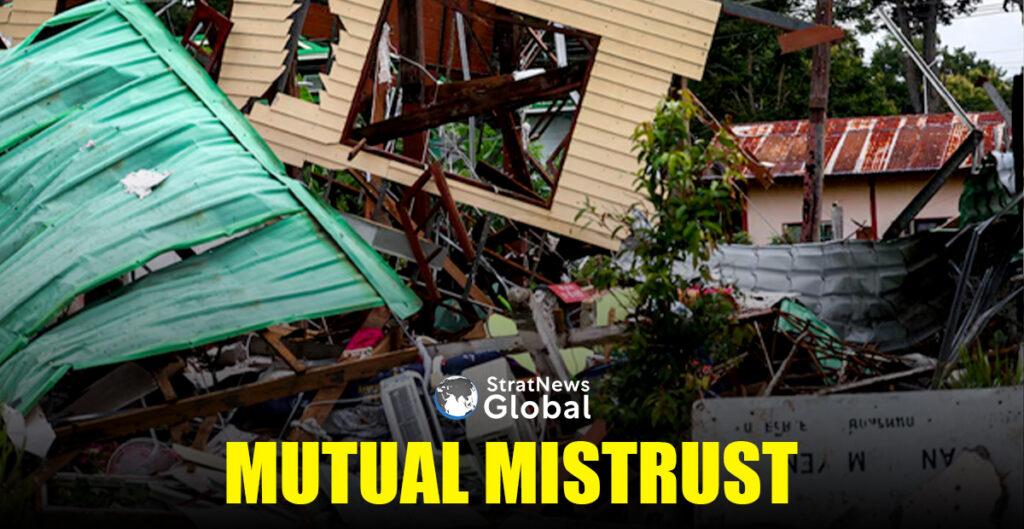
Mistrust between the two neighbours has lingered despite the ongoing talks, with the Cambodian defence ministry accusing Thailand in a statement of violating the ceasefire agreement by using excavators and laying barbed wire in a contested border area.
Thailand said both sides are maintaining their position without any significant movements.
But “there are reports that the Cambodian side has modified their positions and reinforced their troops in key areas… to replace personnel lost in each area,” said Rear Admiral Surasant Kongsiri, a Thai military spokesperson.
Cambodia Demands Soldiers’ Release
Cambodia also demanded that Thailand release 18 of its captured soldiers as soon as possible. Last week, Thailand sent home two of 20 detained Cambodian soldiers.
Thailand said in a statement that the group are being treated well as “prisoners of war” and will be released after “a complete cessation of the armed conflict, not just a ceasefire.”
(With inputs from Reuters)
Russia Warns Against Nuclear Rhetoric After Trump’s Submarine Claim
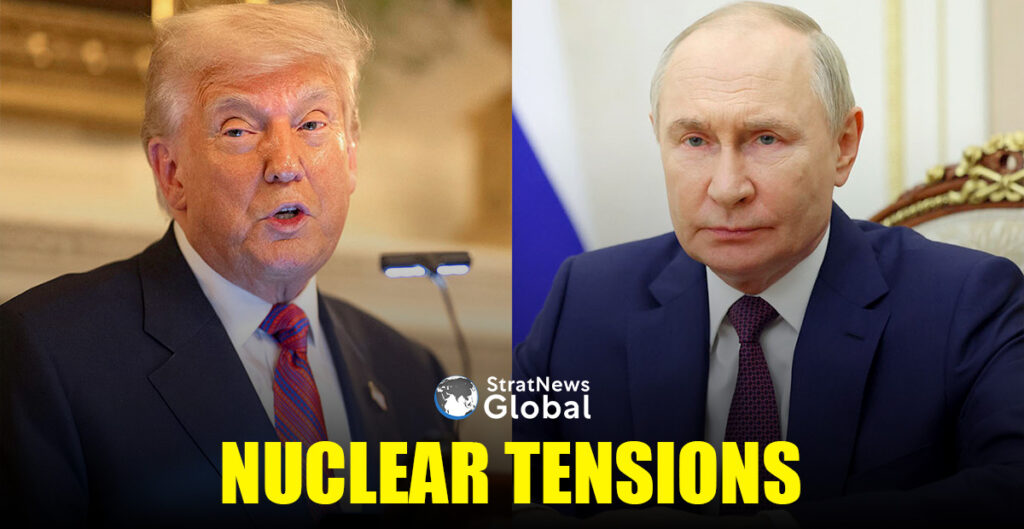
The Kremlin on Monday urged caution over nuclear rhetoric, responding to United States President Donald Trump‘s claim of ordering a repositioning of nuclear submarines.
Kremlin spokesman Dmitry Peskov played down the significance of Trump’s announcement last Friday that he had ordered two submarines to be moved to “the appropriate regions” in response to remarks from former Russian president Dmitry Medvedev about the risk of war between the nuclear-armed adversaries.
“In this case, it is obvious that American submarines are already on combat duty. This is an ongoing process, that’s the first thing,” Peskov told reporters.
“But in general, of course, we would not want to get involved in such a controversy and would not want to comment on it in any way,” he added. “Of course, we believe that everyone should be very, very careful with nuclear rhetoric.”
‘No Escalation’
Peskov said that Russia did not see Trump’s statement as marking an escalation in nuclear tension.
“We do not believe that we are talking about any escalation now. It is clear that very complex, very sensitive issues are being discussed, which, of course, are perceived very emotionally by many people,” he said.
Peskov declined to answer directly when asked whether the Kremlin had tried to warn Medvedev to tone down his online altercation with Trump.
“Listen, in every country, members of the leadership… have different points of view on events that are taking place, different attitudes.
There are people who are very, very tough-minded in the United States of America and in European countries, so this is always the case,” he said.
“But the main thing, of course, is the position of President (Vladimir) Putin,” he said. “You know that in our country, foreign policy is formulated by the head of state, that is, President Putin.”
(With inputs from Reuters)
India Needs To Stop Playing Catch-up, Get Ahead Of The Curve: Ram Madhav
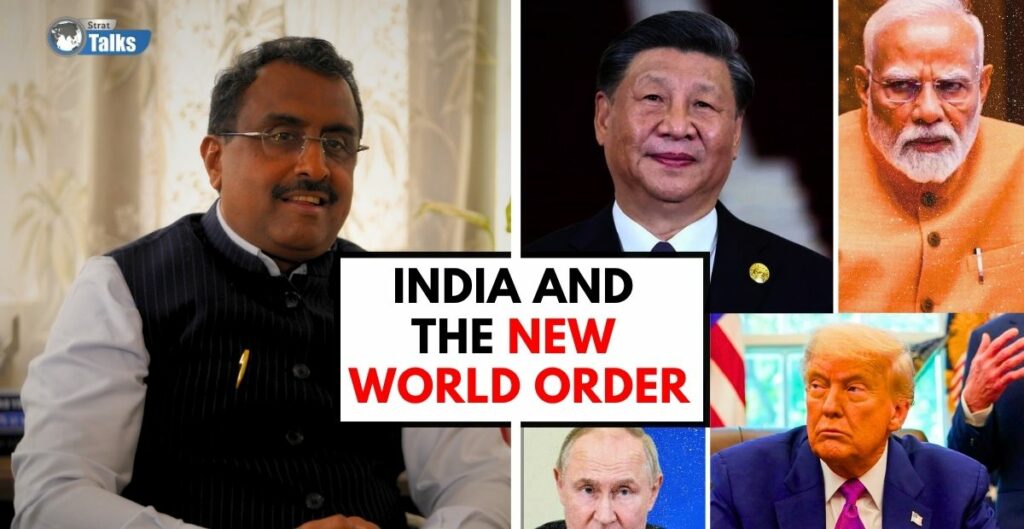
A new world order is taking shape and if India wants to be a key power, it has to equip itself. It’s important that India realises what the contours of the new world will be, says Ram Madhav, President of India Foundation, a New Delhi-based think tank.
A Heteropolar World
The West is on the decline and will have a reduced influence. Correspondingly, China is on the rise. A Cold War is brewing between China and the U.S. but going forward it will be very different from the Cold War of the last century, he adds. A number of middle powers will stay off this tussle but won’t be passive.
“I see a future where there would be no single dominant power. Regional powers will play a bigger role but even they won’t be able to sustain the new order. Here, big tech companies and even NGOs will step in.”
He cited instances of George Soros, Elon Musk, Ford Foundation and the like to drive home what he calls heteropolarity.
Is India Ready?
Ram Madhav believes India is not fully equipped to deal with the new world order. The world we will face in the next 15-odd years will be very different from now and the Prime Minister understands it, he adds. “If trade and capital were key to a country’s rise in the last century, going forward it will be capital and technology.”
India may become a $5 trillion economy but it won’t help if it lags behind in frontier technologies. Today, it’s not about how much capital you have but how much technological advancements you have made, he says.
Tech R&D Lagging
Highlighting that India severely lags behind in technological research and development, Ram Madhav says the private sector needs to rise to the occasion. He rues that some of the biggest Indian companies which are multinational “don’t even spend 1 per cent on R&D”. Pointing towards companies like IBM and Nvidia that invest heavily on R&D, Ram Madhav advocates a whole-of-nation approach in India. “India is a $4 trillion economy; Nvidia is a $4 trillion company.”
According to him, India needs to shun the catch-up mentality. “We need to think about getting ahead of the curve.”
Khalistani Violence Low In India But Has Strong Votaries Abroad
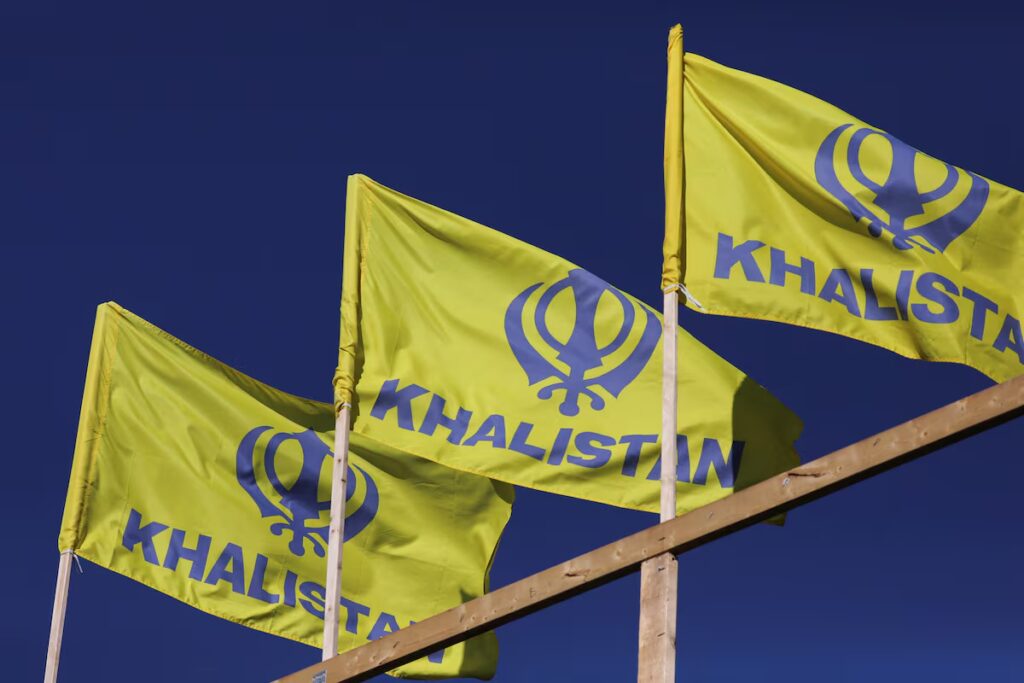
The “mysterious” death of anti-Khalistani activist Sukhi Chahal in California, comes at a time when the Sikh separatist movement probably sees more action overseas than in India. At its murderous peak between 1981 and 1993, more than 21,000 people were killed before it was comprehensively defeated.
The figures bear this out: between 2008 and 2015, according to the South Asia Terrorism Portal (SATP), no fatalities occurred in the name of the movement. However, a change is visible between 2016 and 2024, when there have been Khalistani-linked fatalities every year with a total of 22 fatalities within this period.
Ajai Sahni of the SATP told StratNewsGlobal that such killings are not conducted by ideologically-driven Khalistani terrorists but by organised gangsters associated and tasked by the Khalistani extremists who are “global terrorist-gangsters.”
Some of them are in Pakistan, but many others are located in Canada, the US, the UK and so on, where they have acquired asylum after claiming threat to their lives in India. Two years back, India’s Home Ministry released a list of 28 of its most wanted terrorist-gangsters in these countries. Associates of these groups have been arrested in Italy, Spain, and Germany.
In June, the Canadian Security & Intelligence Service (CSIS) confirmed for the first time that Khalistani extremists are using Canadian soil for fund raising and organising violent activities in India.
In its 2024 report, the CSIS warned that “Since the mid-1980s, the politically motivated violent extremist threat in Canada has manifested primarily through Canada-based Khalistani extremists seeking to use and support violent means to create a nation state called Khalistan largely within Punjab, India.”
The Indian government is hopeful that whether in Canada or elsewhere, governments will cooperate with India in curbing the activities of these extremists.
(This Article was written by Tisya Sharma, an Intern at StratNewsGlobal)
Over 3,200 Boeing Fighter Jet Workers Go On Strike, First Since 1996
More than 3,200 workers assembling Boeing fighter jets in St. Louis and Illinois launched a strike on Monday after rejecting a second contract offer — the first walkout the leading aerospace company has faced at its defence hub since 1996.
Boeing Defence said it was ready for the work stoppage, and it will implement a contingency plan that uses non-labour workers.
According to the company, the rejected four-year contract would have raised the average wage by roughly 40% and included a 20% general wage increase and a $5,000 ratification bonus. It also included increasing periodic raises, more vacation time and sick leave.
“We’re disappointed our employees in St. Louis rejected an offer that featured 40% average wage growth,” Dan Gillian, Boeing vice president and general manager of the St. Louis facilities, said in a statement.
The offer was largely the same as the first offer that was overwhelmingly rejected one week earlier.
Members of the International Association of Machinists and Aerospace Workers’ District 837 “deserve a contract that reflects their skill, dedication, and the critical role they play in our nation’s defence,” District 837 head Tom Boelling said in a statement.
CEO Downplays Impact
Boeing CEO Kelly Ortberg downplayed the impact of a strike when talking with analysts on Tuesday about second-quarter earnings, noting that the company had weathered a seven-week strike last year by District 751 members, who build commercial jets in the Northwest and number 33,000.
“I wouldn’t worry too much about the implications of the strike. We’ll manage our way through that,” he said.
District 837 workers assemble Boeing’s F-15 and F/A-18 fighters, the T-7 trainer, and the MQ-25, an aerial refuelling drone being developed for the U.S. Navy.
Boeing’s defence division is expanding manufacturing facilities in the St. Louis area for the new U.S. Air Force fighter jet, the F-47A, after it won the contract this year.
District 751’s strike ended with approval of a four-year contract that included a 38% wage increase.
(With inputs from Reuters)