

Support us by contributing to StratNewsGlobal on the following UPI ID
ultramodern@hdfcbank

Strategic affairs is our game, South Asia and beyond our playground. Put together by an experienced team led by Nitin A. Gokhale. Our focus is on strategic affairs, foreign policy and international relations, with higher quality reportage, analysis and commentary with new tie-ups across the South Asian region.
You can support our endeavours. Visit us at www.stratnewsglobal.com and follow us on YouTube, Twitter, Facebook and Instagram.
र 500 per month
र 1000 per month
र 5000 per year
र 10000 per year
Donate an amount of your choice
र 500 per month
Donate र 500 per month

र 1000 per month
Donate र 1000 per month
र 5000 per year
Donate र 5,000 per year
र 10000 per year
Donate र 10,000 per year
Donate an amount of your choice
Donate an amount of your choice


Hong Kong Issues Black Rain Alert, Shuts Public Services
Hong Kong’s weather department said its highest-level “black” rainstorm warning would remain in effect until 11 a.m. on Tuesday, as heavy rains battered the Asian financial centre, leading to the closure of hospital wards, schools, courts, and registration offices.
The storms follow deadly flash floods in Southern China over the weekend, which left five dead in Guangdong province and prompted a large-scale search operation involving over 1,300 rescuers.
Flooding, Traffic Congestion
“Persistent rainstorm will cause serious road flooding and traffic congestion. Members of the public are advised to take shelter in a safe place,” the Hong Kong Observatory said in a bulletin on its website.
The authority reported 9,837 lightning strokes over the city between 6 a.m. (2200 GMT) and 6:59 a.m.
Up to 60-90mm (2.4-3.5 inches) of rain is hitting Hong Kong and the nearby Chinese city of Guangzhou per hour, according to China’s weather authority. Hong Kong typically receives an annual average of 2,220mm of rainfall, more than half of which usually falls from June through August.
No OPD Service
The Hong Kong Stock Exchange remains open, having changed its policy to continue trading whatever the weather late last year.
Hong Kong’s hospital authority announced that accident and emergency wards will remain open, but general outpatient clinics and geriatric and psychiatric day hospitals will close due to the extreme weather.
While the judiciary said that courts, tribunals and register offices would open “as soon as practical within two hours after the ‘black’ rainstorm warning is cancelled,” in a statement.
The post office said that all its premises and delivery services would be suspended until the storm warning had passed.
The city’s airport has not reported any disruptions.
Hong Kong Disneyland remains open, with limited operations.
Earlier, the Agriculture, Fisheries and Conservation Department asked the public to avoid visiting country parks due to the risk of landslides and flash floods.
(With inputs from Reuters)
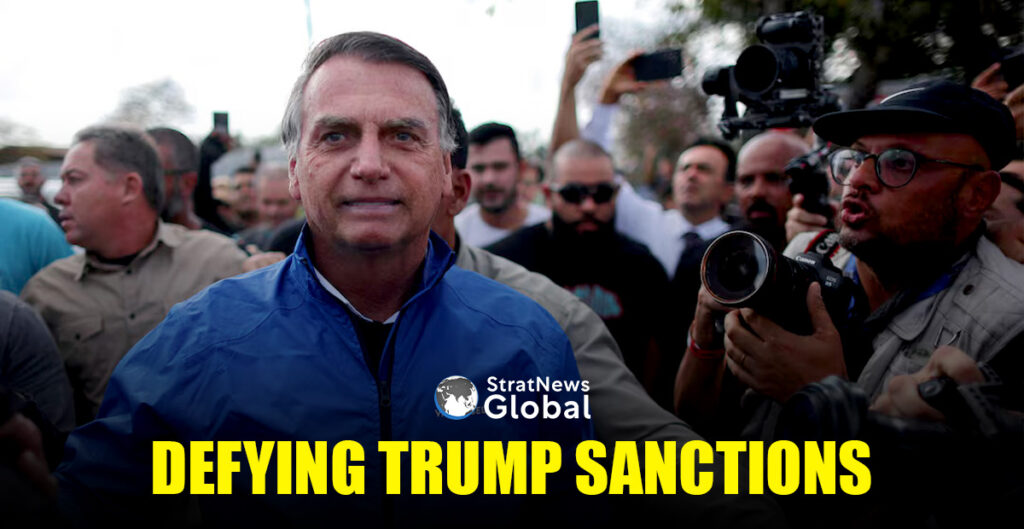
Brazil: Bolsonaro Placed Under House Arrest Ahead Of Coup Trial
Brazil’s Supreme Court placed former President Jair Bolsonaro under house arrest on Monday ahead of his trial over an alleged coup conspiracy, highlighting the court’s firm stance despite increasing tariffs and sanctions imposed by US President Donald Trump.
Supreme Court Justice Alexandre de Moraes, the target of US Treasury sanctions last week, issued the arrest order against Bolsonaro. His decision cited a failure to comply with restraining orders he had imposed on Bolsonaro for allegedly courting Trump’s interference in the case.
‘Witch Hunt’
Bolsonaro is on trial before the Supreme Court on charges he conspired with allies to violently overturn his 2022 electoral loss to leftist President Luiz Inacio Lula da Silva. Trump has referred to the case as a “witch hunt” and called it grounds for a 50% tariff on Brazilian goods taking effect on Wednesday.
The US State Department condemned the house arrest order, saying Moraes was using Brazilian institutions to silence opposition and threaten democracy, adding the US would “hold accountable all those aiding and abetting sanctioned conduct.”
It did not provide details, though Trump has said the US could still impose even higher tariffs on Brazilian imports.
The Monday order from Moraes also banned Bolsonaro from using a cell phone or receiving visits, except for his lawyers and people authorized by the court.
A press representative for Bolsonaro confirmed he was placed under house arrest on Monday evening at his Brasilia residence by police who seized his cell phone.
Gaining Support
Bolsonaro’s lawyers said in a statement they would appeal the decision, arguing the former president had not violated any court order.
In an interview with Reuters last month, Bolsonaro called Moraes a “dictator” and said the restraining orders against him were acts of “cowardice”.
Some Bolsonaro allies have worried that Trump’s tactics may be backfiring in Brazil, compounding trouble for Bolsonaro and rallying public support behind Lula’s leftist government.
However, Sunday demonstrations by Bolsonaro supporters — the largest in months — show that Trump’s tirades and sanctions against Moraes have also fired up the far-right former army captain’s political base.
‘Justice Is Blind, Not Foolish’
Bolsonaro appeared virtually at a protest in Rio de Janeiro via phone call to his son, Senator Flavio Bolsonaro, in what some saw as the latest test of his restraining orders.
Moraes said that the former president had repeatedly made attempts to bypass the court’s orders.
“Justice is blind, but not foolish,” the justice wrote in his decision.
On Monday, Senator Bolsonaro told CNN Brasil that Monday’s order from Moraes was “a clear display of vengeance” for the US sanctions against the judge, adding: “I hope the Supreme Court can put the brakes on this person (Moraes) causing so much upheaval.”
The judge’s orders, including the restraining orders under penalty of arrest, have been upheld by the wider court.
Those orders and the larger case before the Supreme Court came after two years of investigations into Bolsonaro’s role in an election-denying movement that culminated in riots by his supporters that rocked Brasilia in January 2023. That unrest drew comparisons to the January 6, 2021 riots at the US Capitol after Trump’s 2020 electoral defeat.
In contrast with the tangle of criminal cases which mostly stalled against Trump, Brazilian courts moved swiftly against Bolsonaro, threatening to end his political career and fracture his right-wing movement. An electoral court has already banned Bolsonaro from running for public office until 2030.
‘Out-Of-Control Psychopath’
Another of Bolsonaro’s sons, Eduardo Bolsonaro, a Brazilian congressman, moved to the US around the same time the former president’s criminal trial kicked off to drum up support for his father in Washington. The younger Bolsonaro said the move had influenced Trump’s decision to impose new tariffs on Brazil.
In a statement after the arrest on Monday, Congressman Bolsonaro called Moraes “an out-of-control psychopath who never hesitates to double down”.
Fuelling Trump’s Sanctions
Trump last month shared a letter he had sent to Bolsonaro. “I have seen the terrible treatment you are receiving at the hands of an unjust system turned against you,” he wrote. “This trial should end immediately!”
Washington based its sanctions against Moraes last week on accusations that the judge had authorized arbitrary pre-trial detentions and suppressed freedom of expression.
The arrest could give Trump a pretext to pile on additional measures against Brazil, said Graziella Testa, a political science professor at the Federal University of Parana, adding that Bolsonaro seemed to be consciously provoking escalation.
“I think things could escalate because this will be seen as a reaction to the Magnitsky sanction” against Moraes, said Leonardo Barreto, a partner at the Think Policy political risk consultancy in Brasilia, referring to the asset freeze imposed on Moraes last week.
(With inputs from Reuters)
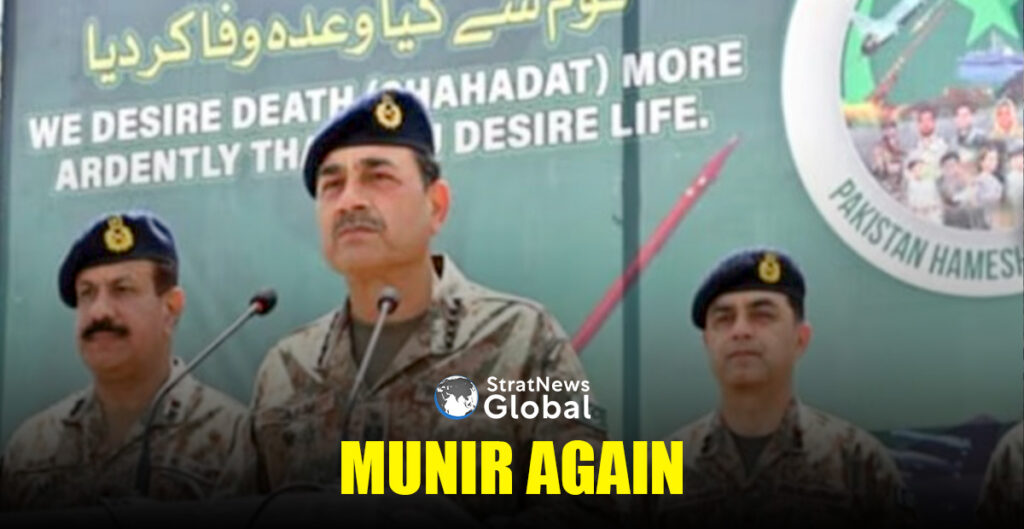
After Hindu-Muslim Dog Whistle, Asim Munir Cries ‘Proxy War’
It’s hard not to chuckle when Pakistan accuses anyone of waging a “proxy war.”
But here we are again. Field Marshal Asim Munir has stepped up to a podium, chest out, finger wagging, and declared that India is using Afghan soil to destabilise Pakistan.
Yes, Field Marshal. In a self-anointment worthy of banana republics and insecure juntas, Pakistan’s army chief Mullah Munir upgraded himself after the last limited skirmish with India, in which the two nuclear-armed neighbours launched tit-for-tat airstrikes.
That conflict, which began after a terror attack on Hindu pilgrims in Kashmir’s Pahalgam, saw Pakistan scrambling jets and issuing threats while quietly seeking backchannel de-escalation. And of course, claiming “victory” after terror camps and military airfields in Pakistan were levelled by Indian missile strikes. And thus justifying Munir’s upgrade.
Now, following a series of deadly ambushes by Baloch insurgents who killed over a dozen Pakistani soldiers, Munir is once again playing his greatest hit: Blame India. According to him, these attacks aren’t a homegrown rebellion against decades of repression, they’re part of a grand Indian conspiracy being run out of Afghanistan.
But here’s the truth: Pakistan is facing the consequences of its own actions. And it has been for a while now.
The Baloch insurgency isn’t some imported movement. It’s the product of decades of economic exploitation, political marginalisation, and military brutality. Entire villages have been razed. Thousands have “disappeared” without trial. Bodies turn up tortured. Activists are silenced or forced into exile. The military controls development and resource extraction while the local population lives in poverty. You don’t need RAW, Mossad or the CIA to incite rebellion in a place like that.
But Pakistan’s military elite has never been known for introspection. Instead, they excel at three things: Deny, Distract, and Deflect.
If the economy is tanking, blame India. If Baloch rebels hit back, blame India. If Afghan militants cross the border and attack Pakistani forces? Again, India. It’s the one-size-fits-all explanation for everything from failed state policies to poor governance and internal dissent.
And Munir is no stranger to inflammatory rhetoric. In early April, he delivered a now-infamous speech suggesting that “Hindus and Muslims cannot live together.” Barely a week later, Hindu tourists visiting Pahalgam in Kashmir were targeted in a brutal terror attack.
The result? India and Pakistan exchanged airstrikes in one of their most dangerous confrontations since Balakot. The subcontinent edged dangerously close to the brink—all because one man in uniform decided to make communal hate part of statecraft.
Now, instead of acknowledging that Pakistan’s internal crises are homegrown, Munir is recycling the same tired script. But this time, even seasoned watchers are rolling their eyes.
Pakistan is the original innovator of proxy warfare in South Asia. From the 1980s jihad in Afghanistan to the infiltration of Kashmir, from hosting Lashkar-e-Taiba and Jaish-e-Mohammed to sending thousands of fighters across borders, Islamabad’s doctrine of “strategic depth” has always involved outsourcing war to non-state actors while maintaining plausible deniability.
What Munir calls a “proxy war” by India is, in fact, the mirror image of Pakistan’s own policies now boomeranging back. It is karma in camouflage.
Let’s also spare a thought for Afghanistan, dragged yet again into Pakistan’s narrative as a staging ground for “Indian activities.” This, after Pakistan helped the Taliban return to power—imagining they’d be pliable clients once again. Instead, the Taliban have proven to be less obedient and more resentful of Pakistan’s meddling, refusing to control cross-border militants who now turn their guns westward.
What we are witnessing is a slow, grinding reckoning for a policy of exporting instability and importing denial. The Pakistani military has long believed it could play arsonist abroad and fireman at home. But when your own provinces are burning, and your own people are turning against you, you can’t keep blaming the neighbours.
Asim Munir and his brass-coated colleagues would do well to read the room. The world isn’t buying this narrative anymore. Even traditional allies are growing wary of Islamabad’s perennial victim complex. Internally, the country is reeling from economic freefall, civil unrest, and a legitimacy crisis. And yet, the generals carry on—as if invoking “India” can still hypnotise the masses into silence.
Sorry, Field Marshal, this isn’t a proxy war. It’s not foreign sabotage. It’s not RAW agents on the Durand Line. It’s the sound of a country reaping what it has long sown. A country whose establishment nurtured monsters and is now pretending to be shocked to find them at the gate.
And when the snakes you raised turn around and bite you, you don’t get to play the victim. You don’t get global sympathy.
You get a mirror. Look into it.
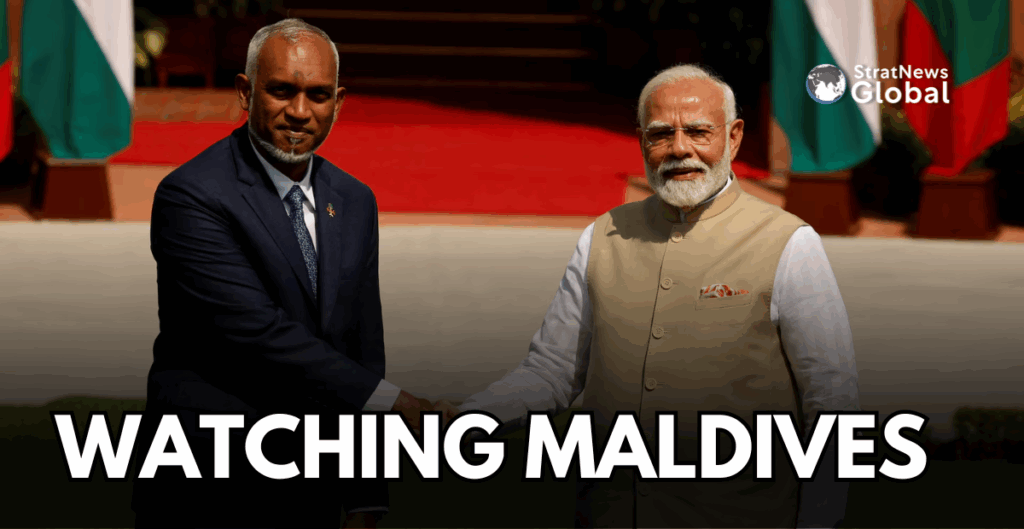
Maldives: Modi-Muizzu Have Made Up, But India Will Be Wary
It’s been less than 10 days since Prime Minister Modi visited the Maldives on invitation by President Muizzu, and the consensus in many quarters in India is of the remarkable turnaround achieved, not solely because of the visit, but it was certainly the icing on the cake.
It underscored that despite President Mohammad Muizzu’s in-your-face India Out election campaign of 2023, done in alliance with former president Mohammad Yameen, good old-fashioned common sense finally prevailed.
But is that a guarantee of no more downs in the relationship? Democracy is an uncertain beast even at the best of times, and appeals to nation, faith, or anger against the outsider can always be drummed up.
India is not without options. It has friends in the Maldives, politicians like Mohammad Nasheed, often referred to as Maldives Mandela for his singular contribution to bringing democracy to the island.
Nasheed is back after a prolonged period overseas and appears all set to return to public life. In an interview with The Week magazine, he said:
“It is important for us to be able to connect with India’s rapid economic growth. India is now one of the largest economies in the world. We understand that India’s prosperity is not meant to be achieved in isolation or at the expense of its neighbours.”
He also noted: “India is broad-shouldered and resilient. People may say different things in various quarters, but India has always maintained its strategic focus.”
It was a timely reminder to his people that, despite ‘India Out’, Delhi kept its balance, did not interfere, and waited for the political storm on the island to blow itself out.
At a recent event in Delhi where the Maldives was the subject of discussion, scholar and Maldives watcher Aditya Shivamurthy of the Observer Research Foundation said, “India knew that certain kind of reactions would come from Maldives if there is a government that has been elected on nationalism. So, in Muizzu’s initial days, India tried to play silent diplomacy.”
But India will be watching Muizzu closely, even warily. His proximity to the Islamists may be a cause for concern. His father-in-law is reported to be a radical Islamic scholar, while his brother-in-law, Sheikh Abdullah bin Mohamed Ibrahim, is president of the Jammiyath al-Salaf, a conservative organisation committed to the strict application of Islamic rules and education.
Mariah Didi, a former Maldivian defence minister who spoke at the Delhi event, warned that “Their ultra-nationalist agenda is especially more targeted at India than anything else.”
According to Bitter Winter, an online magazine on religious liberty and human rights, in July 2023, the US State Department noted 18 Islamic State and Islamic State Khorasan facilitators and two Al-Qaida operatives, along with 29 associated companies, operating on the island. But Muizzu seems unwilling to discuss it.
The Maldives has the dubious record of the highest per capita enrolment of its citizens in the Islamic State. The Lashkar-e-Tayba is active here, as also other ultra-fundamentalist Islamist groups from Pakistan.
For now, Modi seems ready to forge ahead with Muizzu rather than be bound by the past. Maldives remains a strategically important neighbour for India, and therefore, it must remain engaged at as many levels as possible.
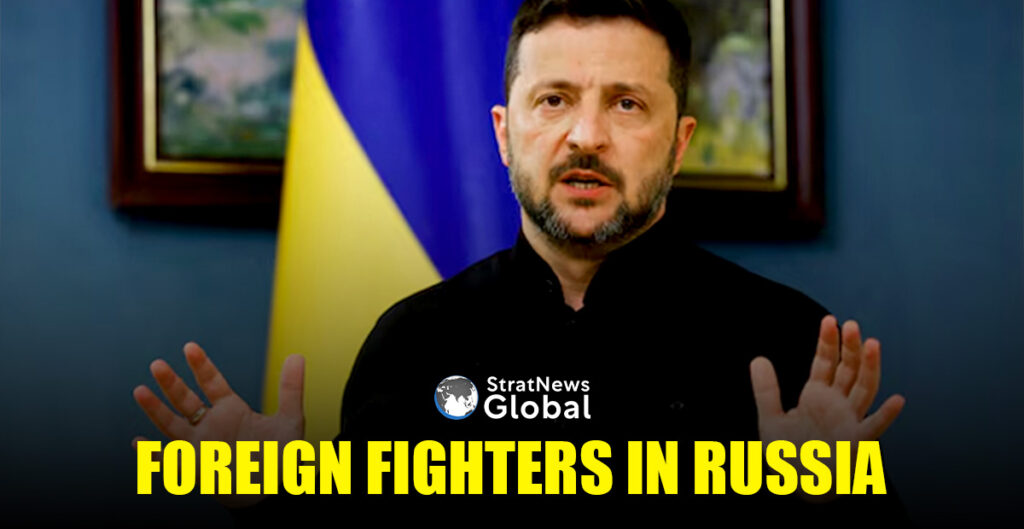
Zelenskyy Claims ‘Mercenaries’ From China, Pakistan Fighting For Russia
President Volodymyr Zelenskyy stated on Monday that Ukrainian forces in northeastern Ukraine were battling foreign “mercenaries” from countries, including China, Pakistan, and regions of Africa, and he pledged a response.
Zelenskyy has previously accused Moscow of recruiting Chinese fighters for its war effort against Ukraine, charges Beijing denied, while North Korea has also provided thousands of its own troops in Russia’s Kursk region.
“We spoke with commanders about the frontline situation, the defence of Vovchansk, and the dynamics of the battles,” Zelenskyy wrote on X after visiting a frontline area in the northeastern Kharkiv region.
“Our warriors in this sector are reporting the participation of mercenaries from China, Tajikistan, Uzbekistan, Pakistan, and African countries in the war. We will respond.”
Reuters contacted the embassies of Tajikistan, Uzbekistan and Pakistan in Kyiv to request comment.
Russia did not immediately comment publicly on Zelenskyy’s comments.
Who Are Foreign ‘Mercenaries’?
According to Ukrainian military and intelligence sources, foreign mercenaries are believed to be operating under the umbrella of Russian private military companies (PMCs) like the Wagner Group or newly formed units affiliated with the Russian Ministry of Defence.
These groups have a track record of recruiting fighters from economically disadvantaged or politically unstable regions, particularly in Africa and Asia, where Russian diplomatic and military footprints have grown in recent years.
While neither China nor Pakistan has officially confirmed the presence of their nationals in Ukraine fighting for Russia, Ukrainian officials maintain that battlefield evidence, including captured documents and communications intercepts, points to a diverse group of foreign combatants.
Some may have been lured by promises of high pay, while others could be motivated by ideology or coerced through debt or economic hardship.
In previous instances, Russia has used foreign fighters in Syria, Libya, and parts of Africa to advance its strategic goals with plausible deniability.
The alleged use of foreign mercenaries in Ukraine would follow a similar pattern, complicating accountability and allowing the Kremlin to augment its manpower without full-scale mobilisation, according to experts.
(With inputs from Reuters and IBNS)
Netherlands Taps New NATO Channel To Fund US Arms For Ukraine
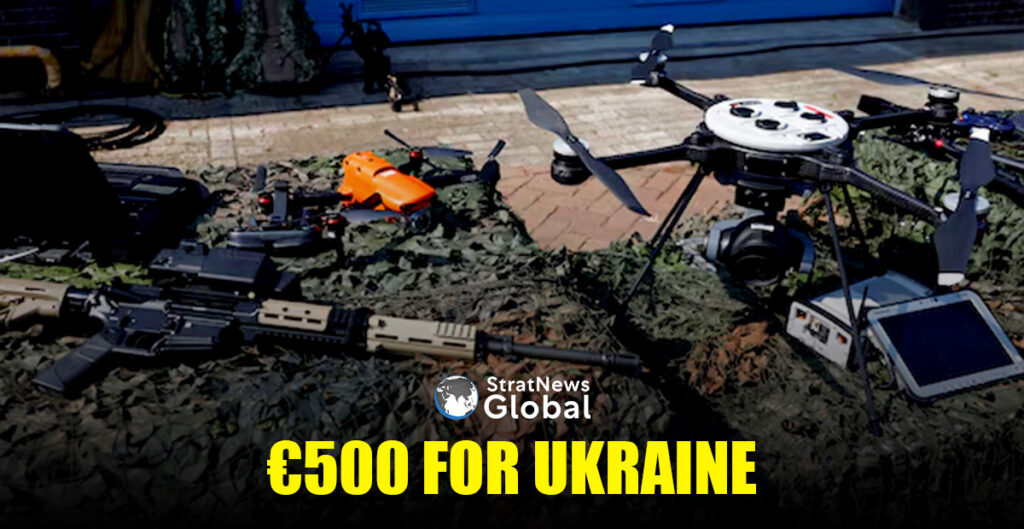
The Netherlands announced on Monday that it will provide €500 million ($578 million) to buy U.S. military equipment for Ukraine, becoming the first NATO member to contribute to a new mechanism aimed at supplying American arms to Kyiv.
President Donald Trump said last month the U.S. would provide weapons to Ukraine, paid for by European allies, but he did not provide details on how this would work.
“As the first NATO ally, the Netherlands will deliver a €500 million package of US weapon systems (including Patriot parts and missiles),” Dutch Defence Minister Ruben Brekelmans said in a post on X.
Rutte Welcomes Dutch Announcement
NATO chief Mark Rutte, a former Dutch prime minister, welcomed the announcement and said he has encouraged other alliance members to participate in the new mechanism, called the NATO Prioritised Ukraine Requirements List (PURL) initiative.
“This is about getting Ukraine the equipment it urgently needs now to defend itself against Russian aggression,” Rutte said in a statement.
“I have written to all NATO Allies, urging them to contribute towards this burden-sharing initiative, and I expect further significant announcements from other Allies soon,” he added.
The U.S. ambassador to NATO, Matthew Whitaker, told Reuters on Monday that he expected many more countries to announce over the coming weeks that they will participate.
“We’re moving as fast as possible,” Whitaker said in an interview at NATO headquarters in Brussels.
Asked about a timeline for getting U.S. deliveries to Ukraine under the new mechanism, he said, “I think we’ll see it moving very quickly, certainly in the coming weeks, but some even sooner than that.
“The Dutch are just the first of many. You’re going to see a series of announcements in the coming weeks,” he added.
NATO To Oversee Funding
NATO said it would coordinate the new initiative, which is funded by European members of the alliance and Canada and will be divided into packages worth approximately $500 million.
In a statement, the alliance said, “Working closely with Ukraine and the United States, the Supreme Allied Commander Europe, Alexus Grynkewich, will validate packages that correspond to Ukraine’s needs, such as air defence, ammunition and other critical equipment for rapid delivery from U.S. stockpiles”.
Kyiv welcomed the Dutch decision.
“Ukraine, and thus the whole of Europe, will be better protected from Russian terror,” Ukrainian President Volodymyr Zelenskyy wrote on X.
“I am sincerely grateful to the Netherlands for their substantial contribution to strengthening Ukraine’s air shield,” he added.
($1 = 0.8649 euros)
(With inputs from Reuters)
Israel Weighs Gaza Response After Ceasefire Talks Collapse
Benjamin Netanyahu is set to convene his security cabinet this week to determine Israel’s next course of action in Gaza after indirect ceasefire talks with Hamas collapsed, with a senior Israeli source indicating that increased military force remains a possible option.
Last Saturday, during a visit to the country, U.S. Middle East envoy Steve Witkoff had said he was working with the Israeli government on a plan that would effectively end the war in Gaza.
But Israeli officials have also floated ideas, including expanding the military offensive in Gaza and annexing parts of the shattered enclave.
Fruitless Doha Talks
The failed ceasefire talks in Doha had aimed to clinch agreements on a U.S.-backed proposal for a 60-day truce, during which aid would be flown into Gaza and half of the hostages Hamas is holding would be freed in exchange for Palestinian prisoners jailed in Israel.
After Netanyahu met Witkoff last Thursday, a senior Israeli official said that “an understanding was emerging between Washington and Israel,” of a need to shift from a truce to a comprehensive deal that would “release all the hostages, disarm Hamas, and demilitarise the Gaza Strip,” – Israel’s key conditions for ending the war.
A source familiar with the matter told Reuters on Sunday that the envoy’s visit was seen in Israel as “very significant.”
But later on Sunday, the Israeli official signalled that the pursuit of a deal would be pointless, threatening more force:
“An understanding is emerging that Hamas is not interested in a deal, and therefore the prime minister is pushing to release the hostages while pressing for military defeat.”
‘Strategic Clarity’
What a “military defeat” might mean, however, is up for debate within the Israeli leadership. Some Israeli officials have suggested that Israel might declare it was annexing parts of Gaza as a means to pressure the militant group.
Others, like Finance Minister Bezalel Smotrich and National Security Minister Itamar Ben-Gvir, want to see Israel impose military rule in Gaza before annexing it and re-establishing the Jewish settlements Israel evicted 20 years ago.
The Israeli military, which has pushed back at such ideas throughout the war, was expected on Tuesday to present alternatives that include extending into areas of Gaza where it has not yet operated, according to two defence officials.
While some in the political leadership are pushing for expanding the offensive, the military is concerned that doing so will endanger the 20 hostages who are still alive, the officials said.
Israeli Army Radio reported on Monday that military chief Eyal Zamir has become increasingly frustrated with what he describes as a lack of strategic clarity by the political leadership, concerned about being dragged into a war of attrition with Hamas militants.
A spokesperson for the Israel Defence Forces (IDF) declined to comment on the report but said that the military has plans in store.
“We have different ways to fight the terror organisation, and that’s what the army does,” Lieutenant Colonel Nadav Shoshani said.
Two-State Solution
On Tuesday, Qatar and Egypt endorsed a declaration by France and Saudi Arabia outlining steps toward a two-state solution to the Israeli-Palestinian conflict, which included a call on Hamas to hand over its arms to the Western-backed Palestinian Authority.
Hamas has repeatedly said it won’t lay down arms. But it has told mediators it was willing to quit governance in Gaza for a non-partisan ruling body, according to three Hamas officials.
It insists that the post-war Gaza arrangement must be agreed upon among the Palestinians themselves and not dictated by foreign powers.
Israel’s Foreign Minister Gideon Saar suggested on Monday that the gaps were still too wide to bridge.
“We would like to have all our hostages back. We would like to see the end of this war. We always prefer to get there by diplomatic means, if possible. But of course, the big question is, what will be the conditions for the end of the war?” he told journalists in Jerusalem.
(With inputs from Reuters)
Rising Death Toll In Gaza As Hunger Claims Lives And Aid Seekers Face Deadly Attacks
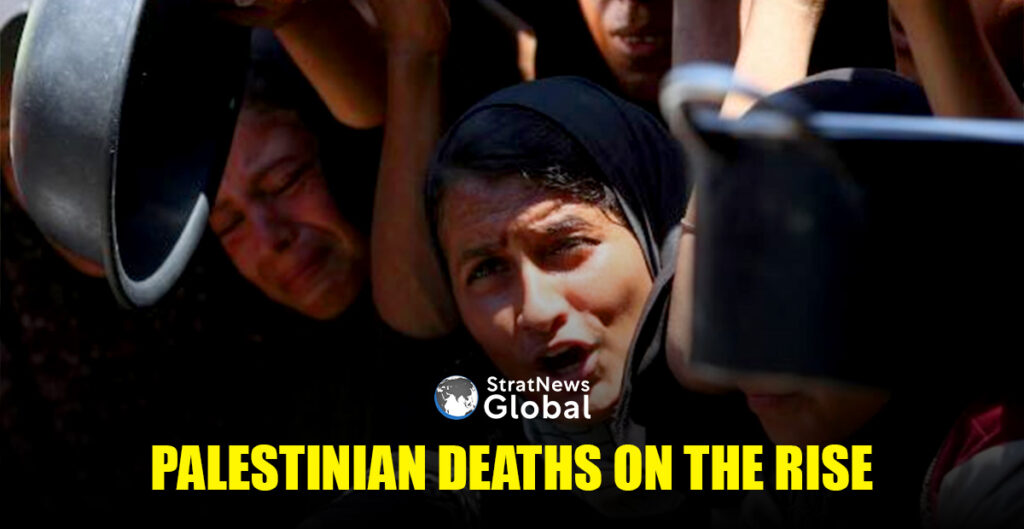
Health officials reported that Israeli gunfire and airstrikes killed at least 40 Palestinians in Gaza on Monday, including 10 people who were trying to receive aid. Additionally, five more Palestinians died from starvation, as humanitarian groups warn that a famine may be emerging.
The 10 died in two separate incidents near aid sites belonging to the U.S.-backed Gaza Humanitarian Foundation, in central and southern Gaza, local medics said.
The United Nations says more than 1,000 people have been killed trying to receive aid in the enclave since the GHF began operating in May 2025, most of them shot by Israeli forces operating near GHF sites.
“Everyone who goes there, comes back either with a bag of flour or carried back (on a wooden stretcher) as a martyr, or injured. No one comes back safe,” said 40-year-old Palestinian Bilal Thari.
He was among mourners at Gaza City’s Al Shifa hospital on Monday who had gathered to collect the bodies of their loved ones killed a day earlier by Israeli fire as they sought aid, according to Gaza’s health officials.
Palestinians Killed While Waiting For Aid
At least 13 Palestinians were killed on Sunday while waiting for the arrival of U.N. aid trucks at the Zikim crossing on the Israeli border with the northern Gaza Strip, the officials said.
At the hospital, some bodies were wrapped in thick patterned blankets because white shrouds, which hold special significance in Islamic burials, were in short supply due to continued Israeli border restrictions and the mounting number of daily deaths, Palestinians said.
“We don’t want war, we want peace, we want this misery to end. We are out on the streets, we all are hungry, we are all in bad shape, women are out there on the streets, we have nothing available for us to live a normal life like all human beings, there’s no life,” Thari told Reuters.
There was no immediate comment by Israel on Sunday’s incident.
The Israeli military said in a statement to Reuters that it had not fired earlier on Monday in the vicinity of the aid distribution centre in the southern Gaza Strip, but it did not elaborate further.
Israel blames Hamas for the suffering in Gaza and says it is taking steps for more aid to reach its population, including pausing fighting for part of the day in some areas, air drops, and announcing protected routes for aid convoys.
Israeli Prime Minister Benjamin Netanyahu said on Monday he would convene his security cabinet this week to discuss how the military should proceed in Gaza to meet all his government’s war goals, which include defeating Hamas and releasing the hostages.
Deaths From Hunger
Meanwhile, five more people died of starvation or malnutrition over the past 24 hours, Gaza’s health ministry said on Monday. The new deaths raised the toll of those dying from hunger to 180, including 93 children, since the war began.
U.N. agencies have said that airdrops of food are insufficient and that Israel must let in far more aid by land and quickly ease access to it.
COGAT, the Israeli military agency that coordinates aid, said that during the past week, over 23,000 tons of humanitarian aid in 1,200 trucks had entered Gaza but that hundreds had yet to be driven to aid distribution hubs by U.N. and other international organizations.
Israel’s military later said 120 aid packages containing food had been dropped into Gaza “over the past few hours” by six different countries in collaboration with COGAT.
The Hamas-run Gaza government media office said on Sunday that more than 600 aid trucks had arrived since Israel eased restrictions in late July. However, witnesses and Hamas sources said many of those trucks have been looted by desperate displaced people and armed gangs.
Palestinian and U.N. officials said Gaza needs around 600 aid trucks to enter per day to meet the humanitarian requirements – the number Israel used to allow into Gaza before the war.
The Gaza war began when Hamas killed 1,200 people and took 251 hostage in an attack on southern Israel on October 7, 2023, according to Israeli figures. Israel’s offensive has since killed more than 60,000 Palestinians, according to Gaza health officials.
According to Israeli officials, 50 hostages now remain in Gaza, only 20 of whom are believed to be alive.
(With inputs from Reuters)
US, EU Targeting India For Importing Oil From Russia: MEA
India has firmly rejected criticism from the United States and the European Union (EU) over its oil imports from Russia, describing the remarks as “unjustified and unreasonable,” particularly given the West’s own continued and significant trade engagements with Moscow.
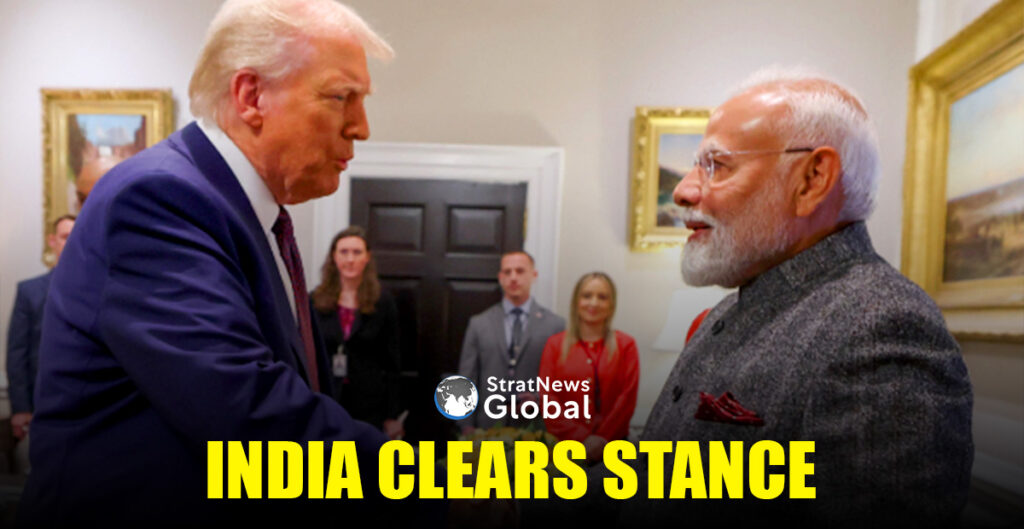
Responding to recent statements by U.S. President Donald Trump threatening sharp tariff hikes on Russian oil transactions, the Ministry of External Affairs (MEA) clarified that India’s decision to source discounted crude from Russia came after the Ukraine war disrupted global energy markets.
Traditional suppliers shifted their exports towards Europe, prompting India to secure alternative sources. At the time, Washington had even backed India’s move, viewing it as a contribution to stabilising global energy prices.
Energy Tied To ‘Necessity’
The ministry underscored that India’s energy purchases from Russia are driven by national necessity, aimed at ensuring affordable and reliable fuel access for its population.
“India’s imports are intended to provide predictable and affordable energy to Indian consumers. These are not optional luxuries but necessary responses to international market dynamics. It is ironic that the very countries criticising India continue their own economic engagements with Russia — trade that, unlike India’s, cannot be defended as a pressing national requirement,” the statement read.
Illustrating the imbalance in such criticism, the ministry pointed out that the European Union conducted bilateral trade worth €67.5 billion in goods with Russia in 2024 alone, along with an additional €17.2 billion in services trade in 2023.
The bloc’s imports of liquefied natural gas (LNG) from Russia hit a record 16.5 million tonnes in 2024, surpassing its previous peak of 15.21 million tonnes in 2022. India’s overall trade volume with Russia remains substantially lower by comparison.
The ministry also noted that the United States continues to import critical commodities from Russia, including uranium hexafluoride for its nuclear sector, palladium for electric vehicle manufacturing, and various fertilisers and chemicals.
Indian officials reiterated that the country, as a responsible global actor, would continue to make decisions rooted in its national interest and economic security.
New Delhi has consistently asserted that its foreign policy — including its approach to energy cooperation — is independent, pragmatic, and guided by the need to navigate volatile global markets effectively.
(With inputs from IBNS)
China Conducts Military Patrols In South China Sea, Says Spokesperson
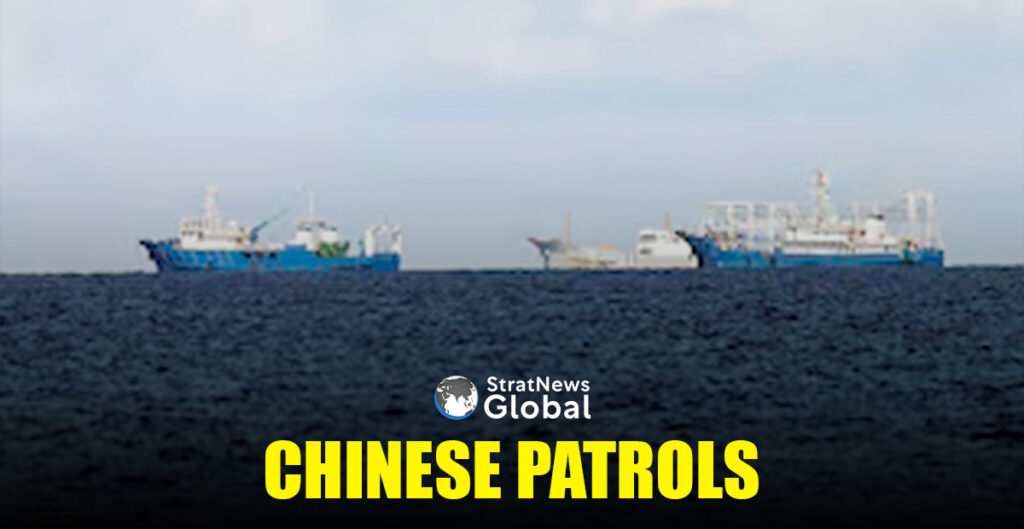
China’s military carried out patrols in the South China Sea from August 3 to 4, a Southern Theatre Command spokesperson said on Monday.
The Philippines said on Monday that its navy and that of India had sailed together for the first time in the South China Sea, which China claims nearly the whole of, overlapping with maritime zones of Brunei, Indonesia, Malaysia, the Philippines and Vietnam.
The spokesperson described the Chinese patrol as “routine” but said the Philippines’ “so-called ‘joint patrol‘ disrupted regional peace and stability”.
The Philippine embassy in Beijing did not immediately respond to a request for comment.
The Philippines has conducted “maritime cooperative activities” with foreign navies since late 2023 as part of its push to counter China’s expansive claims in the waterway, including joint sails with treaty ally the United States, as well as Japan, Australia, France and Canada.
Two-Day Joint Sail
Philippine military chief Romeo Brawner said the idea for the two-day joint sail, which started on Sunday and was inside the Philippines’ exclusive economic zone, came about when he met his counterpart in India in March.
“We did not experience any untoward incidents, but there are still those shadowing us – as we had already expected,” Brawner told reporters, without naming China.
China’s foreign ministry said in a statement that territorial and maritime disputes should be resolved between the countries directly involved, and no third party should intervene.
Indian navy ships that took part in the first joint sail of the two countries included guided missile destroyer INS Delhi, tanker INS Shakti and corvette INS Kiltan. The Philippines deployed two frigates, BRP Miguel Malvar and BRP Jose Rizal.
Marcos’ India Tour
The exercise coincided with Marcos’ departure for a five-day trip to India, where he said he will look to deepen maritime ties and seek cooperation on sectors including defence, pharmaceuticals and agriculture.
China claims nearly the entire South China Sea, overlapping with maritime zones of Brunei, Indonesia, Malaysia, the Philippines and Vietnam. The waterway is a strategic shipping route where $3 trillion of annual shipborne commerce takes place.
A 2016 ruling of an international arbitral tribunal found Beijing’s sweeping claims have no basis under international law, a decision China rejects.
(With inputs from Reuters)