

Support us by contributing to StratNewsGlobal on the following UPI ID
ultramodern@hdfcbank

Strategic affairs is our game, South Asia and beyond our playground. Put together by an experienced team led by Nitin A. Gokhale. Our focus is on strategic affairs, foreign policy and international relations, with higher quality reportage, analysis and commentary with new tie-ups across the South Asian region.
You can support our endeavours. Visit us at www.stratnewsglobal.com and follow us on YouTube, Twitter, Facebook and Instagram.
र 500 per month
र 1000 per month
र 5000 per year
र 10000 per year
Donate an amount of your choice
र 500 per month
Donate र 500 per month

र 1000 per month
Donate र 1000 per month
र 5000 per year
Donate र 5,000 per year
र 10000 per year
Donate र 10,000 per year
Donate an amount of your choice
Donate an amount of your choice

Videos Go Viral As Police Crackdown On Protests In China’s Sichuan Province
The videos said it all, people protesting as police dragged away young and old of every age and description. There were scuffles as some sought to break free from the cops, others did not resist but shouted out their anger and resentment.
这警察是真杀疯了
旁边是个人都打一顿
pic.twitter.com/x7JxJ8PfTL— 多伦多方脸 (@torontobigface) August 4, 2025
Such outbreaks are not widely seen in China where public demonstrations of any kind are either not allowed or strictly regulated. But this weekend, something broke in Jiangyou, Sichuan province bordering Xinjiang, that got people to protest.
江油,这个四川的小城,这两天成了现实版的“戏台”。剧情荒诞到让人怀疑,是谁在导演,是谁在编剧?
起因不过是一桩校园霸凌事件,一名少女被同龄人施暴,四分钟的视频像一根火柴,点燃了全城的愤怒。可愤怒并没有换来公正,而是换来了黑衣人和警棍。 pic.twitter.com/hJUdGix3jm— 真相傳媒 (@TruthMedia123) August 4, 2025
It was a school bullying case: a 14-year-old girl of deaf and mute parents surnamed Lai, was lured by three schoolmates into an unfinished building and held there for four hours during which she was beaten, verbally abused, and threatened. The perpetrators, all girls between the ages of 13 and 15, filmed it. Why they did it is not clear.
The footage later surfaced online and went viral, showing the young victim’s bruises and trauma in graphic detail. Public fury hit its peak on Tuesday and Wednesday morning, when local police finally released a statement. But many saw it as too little, too late.
Reports suggested the bullies had ties to powerful officials, and that sparked even more outrage. Citizens took to the streets in large numbers, demanding justice for Lai and “Punish the bullies!”.
The authorities responded to the protests by deploying heavily armed police, but the crackdown only intensified public outrage. Viral videos showed demonstrators being loaded into trucks typically used for transporting livestock. The footage sparked widespread backlash and inspired a meme that quickly spread on Weibo, a cartoon pig driving a caged truck filled with furious men, a pointed jab at corrupt officials.
In Chinese political satire, a pig is often used to mockingly represent corrupt or oppressive officials. The pig in a hard hat may suggest a bureaucrat or enforcer of authority cold, indifferent and in control. The angry expressions of those held captive imply that they are being forcibly transported or detained against their will.

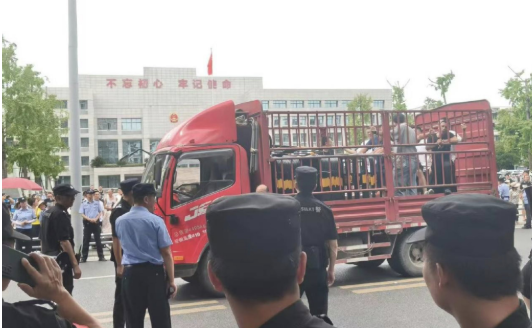
A verified handle on Weibo posted “what is this way of carrying people?”
As hashtags related to the Jiangyou protest trended on Chinese social media, particularly Weibo, the censors stepped in and within minutes, the protest topic vanished from the trending list. The posts were either buried or deleted entirely.
On the ground, people were heard shouting at the police to “serve the people!”, while others threw stones at them. There were calls urging “zero tolerance for bullying”, implying justice for Lai and also suggesting a veiled critique of China’s Communist Party that is seen as behind the climate of intimidation, censorship and unchecked power.
Witnesses also claimed that special police forces and signal-jamming equipment were deployed to cut off communication in the area. Yet the resistance persisted. Protesters included young students, elderly citizens and entire families.
Some tried to block police vehicles or prevent fellow demonstrators from being dragged away. Videos of Sichuan Police dragging away these students and beating them went viral on Weibo.
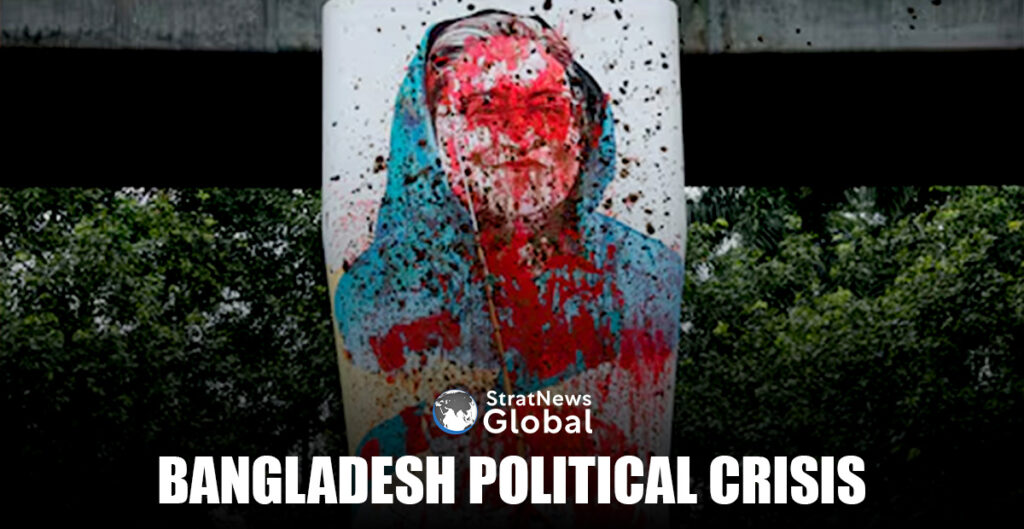
A Year After Hasina’s Exit, Bangladesh Sinks Deeper Into Political Turmoil
Bangladesh on Tuesday marks one year since former Prime Minister Sheikh Hasina fled the country amid student-led protests, yet the nation continues to struggle with deepening political instability.
Deadly July Protests
Led by the ‘Students Against Discrimination’ group, they initially targeted a quota system in public sector jobs but escalated into deadly unrest as protesters, demanding Hasina’s resignation, clashed with security forces and supporters of her Awami League party.
Protesters blamed the government for a crackdown that killed hundreds and injured thousands, with unrest peaking on August 5 when Hasina was forced to flee to neighbouring India just before protesters stormed her official residence.
Yunus Takes Charge
An interim government was formed and tasked with restoring stability and preparing for parliamentary elections. Nobel laureate Muhammad Yunus, 85, took charge as de facto prime minister.
It promised sweeping institutional reforms, but progress has been slow and fragmented, despite a broad consensus on key reforms such as restoring a non-partisan caretaker government to oversee elections, depoliticising state institutions and overhauling the Election Commission.
But deeper reforms have stalled in the face of sharp disagreements with political parties over proposals for constitutional change, judicial reform and introduction of a bicameral parliament. Political analysts point to a widening gap between public expectations and outcomes.
Election, Inclusion And Contention
Yunus’ government is caught between the need for reform and pressure for early elections, its biggest challenge.
Yunus has suggested February 2026 as a possible date after the Bangladesh Nationalist Party (BNP) of former Prime Minister Khaleda Zia called for a December 2025 deadline.
Further strain has been added by the controversy over the exclusion of Hasina’s Awami League party, after its registration was suspended, effectively barring it from contesting.
Many want it to participate, despite its top leadership being prosecuted for alleged violations of human rights during the protests. Without broad political inclusion, the legitimacy of a vote could be suspect.
The newly formed National Citizen Party (NCP), born out of the 2024 protests, is viewed by critics as being favoured by Yunus’ administration, which the government denies. But the suspicion could also cloud the credibility of the vote.
Changed Political Culture, But Fragile Gains
Law enforcement remains a challenge, though analysts say freedom of expression has expanded since Hasina’s exit, while suspected forced disappearances during her tenure appear to have stopped.
Political violence, mob attacks and harassment of journalists and minorities, especially women, are regularly reported. Mob violence claimed at least 199 lives between August 2024 and July 2025, says rights group Ain o Salish Kendra.
New York-based Human Rights Watch warns that while some authoritarian practices have ended, the interim government has adopted troubling tactics of its own.
Among these arbitrary detentions, mass arrests, and politically motivated prosecutions mostly targeted at supporters of Hasina’s party, the group said.
Torture in custody and use of the Special Powers Act continue, mirroring repressive tactics of the past, HRW said.
The government denies the charges.
July Declaration
A charter, called the ‘July Declaration’ after last year’s uprising, is set to be unveiled on Tuesday, laying out a roadmap for democratic reforms.
Drafted by the government in consultation with political and student leaders, it aims to commit to electoral reform, constitutional changes, and institutional accountability.
It is seen as both a symbolic tribute and a strategic blueprint for Bangladesh’s political transition. But critics warn it could remain merely symbolic without legal safeguards and a broad parliamentary consensus to help drive major change.
(With inputs from Reuters)
Russian Oil: India’s Strategic Autonomy Trumps Western Pressure
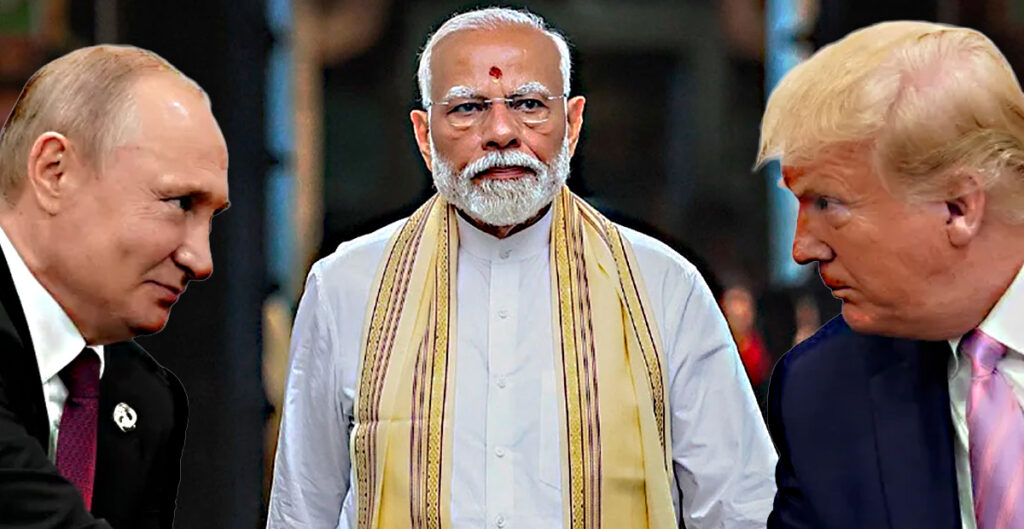
India has forcefully pushed back against criticism from U.S. President Donald Trump and European leaders over its continued imports of Russian crude oil, asserting that national interest and strategic autonomy, not external pressure, guide its energy policy.
As diplomatic visits to Moscow by National Security Advisor Ajit Doval and External Affairs Minister S. Jaishankar loom large, New Delhi is sending a clear signal: India will not be coerced into abandoning pragmatic partnerships that ensure energy security for its 1.4 billion citizens.
As the NSA leaves tonight, these visits, timed ahead of the Shanghai Cooperation Organisation (SCO) summit later this month and a potential visit by President Vladimir Putin to India later this year, reflect a deliberate recalibration of strategic priorities, not capitulation to Western pressure campaigns.
Reality Drives Energy Policy
The Ministry of External Affairs (MEA) has emphasised that India’s turn to Russian crude was a response to market disruptions, not ideology. With Western buyers snapping up Gulf and American oil following the Ukraine conflict, India sought affordable and reliable alternatives, in line with its sovereign interests.
“These are not choices of convenience but compulsion,” the MEA stated, underscoring that India’s energy strategy is based on affordability, reliability, and national need.
India also pointed out the glaring hypocrisy of the West: nations critical of Indian imports continue robust trade ties with Moscow, including in sectors unrelated to essential needs.
The Western Hypocrisy
India has been quick to expose what it calls the “double standards” of the U.S. and Europe:
• In 2024, the EU traded €67.5 billion in goods and €17.2 billion in services with Russia.
• Russian LNG imports to Europe surged to 16.5 million tonnes, exceeding pre-Ukraine war volumes.
• The EU continues to import Russian fertilisers, machinery, chemicals, and mining products.
Across the Atlantic, the U.S. remains dependent on Russian uranium hexafluoride for its nuclear reactors and palladium for its EV industry.
“These are not necessities of survival, unlike India’s need for affordable energy,” the MEA stressed, calling Western criticism “unjustified and selective.”
Fact-Checking Trump
President Trump’s accusation that India is “profiteering” by re-exporting cheap Russian oil has been firmly rebutted by independent analysts and Indian officials alike.
According to the Global Trade Research Initiative (GTRI):
• India exports zero crude oil—it is a net importer.
• Refined products such as diesel and jet fuel are exported, a standard global practice.
• China, not India, was the top buyer of Russian oil in 2024, with a purchase value of $62.6 billion compared to India’s $52.7 billion.
• U.S. officials had earlier welcomed Indian purchases of Russian crude in 2022-23 to help stabilise global markets.
GTRI’s Ajay Srivastava noted that Indian imports are already responding to market signals, with May 2025 oil imports down 9.8% year-on-year to $9.2 billion. Indian refiners adjust sourcing based on market conditions and compliance risks, not political diktats.
“In May 2025, oil imports were down 9.8% year-on-year to $9.2 billion,” he noted. Indian refiners, both public and private, adapt their sourcing based on market and regulatory factors, not political diktats,” said Srivastava.
India’s Strategic Autonomy
India’s principled stand reflects its long-standing policy of strategic autonomy, not alignment. New Delhi’s message is consistent and clear: we will not compromise national interest for geopolitical approval.
“The upcoming high-level visits to Moscow underscore India’s independent foreign policy stance,” said a senior official, pointing to an emerging multipolar world order where old paradigms of dominance no longer hold sway.
As Russian Foreign Ministry spokesperson Maria Zakharova put it: “Washington is unable to accept the erosion of its dominance in an emerging multipolar international order.”
The MEA concluded: “India’s energy decisions are transparent, market-driven and consistent with international norms. We will continue to act in our sovereign interest, as any responsible nation must.”
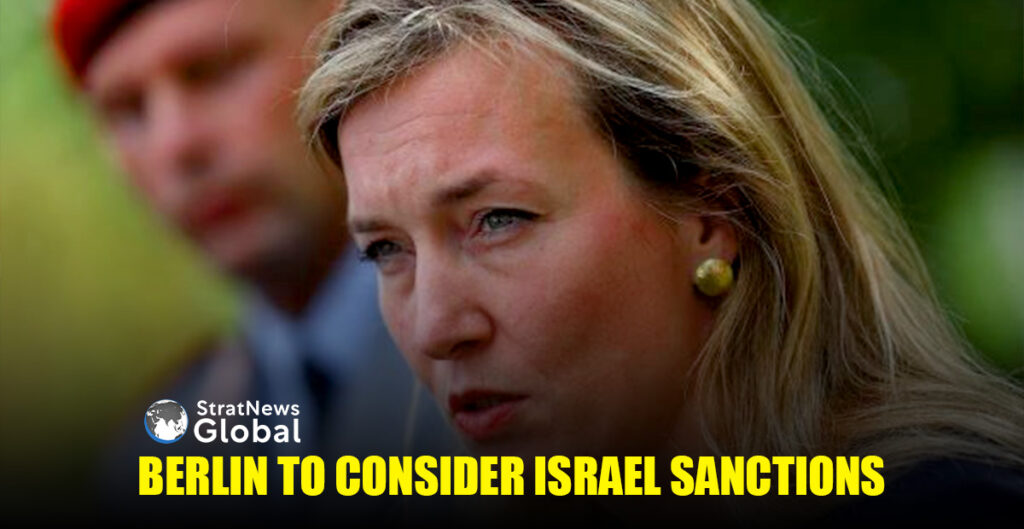
Senior German Lawmaker Calls On Berlin To Consider Sanctions Against Israel After Visit
A senior member of German Chancellor Friedrich Merz’s coalition stated on Monday that Berlin should contemplate imposing sanctions on Israel, which could include partially halting arms exports or suspending a European Union-wide political agreement.
The call by Siemtje Moeller, the deputy leader of the Social Democrats (SPD) parliamentary faction, reflects a sharpening of rhetoric from Berlin against Israel which has yet to yield any major policy changes however.
Moeller, whose SPD joined a coalition with Merz’s conservatives this year, wrote a letter to SPD lawmakers after returning from a trip to Israel with Foreign Minister Johann Wadephul last week.
“My assessment is that the Israeli government will move little without pressure. If such concrete improvements fail to materialize in the near future, there must be consequences,” she said in the letter.
Recognition of a Palestinian state should not be “taboo”, she said, adding that Israeli statements that there were no restrictions on aid to Gaza were not convincing.
At the same time, Moeller demanded the immediate and unconditional release of the hostages held by Hamas. She said Hamas must no longer play a role in a political future in Gaza. “It must be disarmed, its reign of terror must end.”
Western nations have intensified efforts to exert pressure and sanctions on Israel, with Britain, Canada and France signalling their readiness to recognise a Palestinian state in Israeli-occupied territory at the United Nations General Assembly this September.
Israel has criticised France, Britain and Canada, saying their decision will reward Hamas.
Germany’s Response ‘Overly Cautious’
Critics argue that Germany’s response remains overly cautious, shaped by an enduring sense of historical guilt for the Holocaust and reinforced by pro-Israel sentiment in influential media circles, weakening the West’s collective ability to apply meaningful pressure on Israel.
The Gaza war began when Hamas killed more than 1,200 people and took 251 hostage in a cross-border attack on southern Israel on October 7, 2023, according to Israeli figures.
Israel’s air and ground war in densely populated Gaza has since killed more than 60,000 Palestinians, according to enclave health officials. A growing number of civilians are dying from starvation and malnutrition, Gaza health authorities say, with images of starving children shocking the world and intensifying criticism of Israel over its curbs on aid into the enclave.
Israel blames Hamas for the suffering in Gaza but, in response to a rising international outcry, it announced steps last week to let more aid reach the population, including pausing fighting for part of the day in some areas, approving air drops and announcing protected routes for aid convoys.
(With inputs from Reuters)
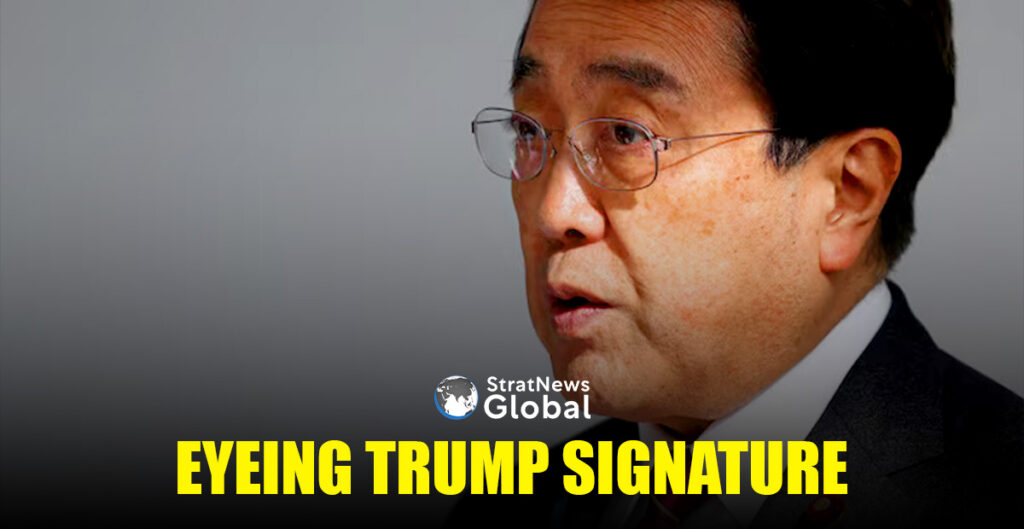
Japanese Negotiator Akazawa Heads To US To Secure Tariff Cut Order
Japan’s chief tariff negotiator, Ryosei Akazawa, said he would leave for Washington on Tuesday to push for US President Donald Trump’s signing of an executive order to implement the agreed tariff cut on Japanese auto imports.
The United States last month agreed in a trade deal to lower existing tariffs on Japanese car imports to 15% from levies totalling 27.5% previously, but a timeframe for the change to go into effect was not announced.
Duties on other Japanese goods will be cut to 15% from 25% from Thursday.
“We will push the United States to make sure that an executive order be signed on the agreed tariff on automobiles and automotive components as soon as possible,” Akazawa told parliament.
No Clear Orders
Referring to the problem of “stacking” where goods can be affected by multiple tariffs, Akazawa also said Japan wants to make sure goods that are already levied at more than 15% would be exempt from the additional 15% rate.
A table attached to Trump’s July 31 executive order that addressed tariff rates for many trading partners showed a “no stacking” condition applies to the European Union, while no such clarification was given for Japan.
Akazawa told the parliament that Japan has received reassurances from the US that it would be treated the same way as the European Union regarding the condition.
$550 Billion Investment
He stressed that there was no misunderstanding with the United States about Japan’s $550 billion investment package agreed in the tariff deal.
“We have repeatedly explained to the US that Japan will invest up to $550 billion in the form of equity, loans and guarantees” through state-owned financial institutions to jointly build supply chains critical for national security, Akazawa said. “This is what we believe is our consensus.”
Akazawa has said equity investment would account for just about 1-2% of the $550 billion.
(With inputs from Reuters)
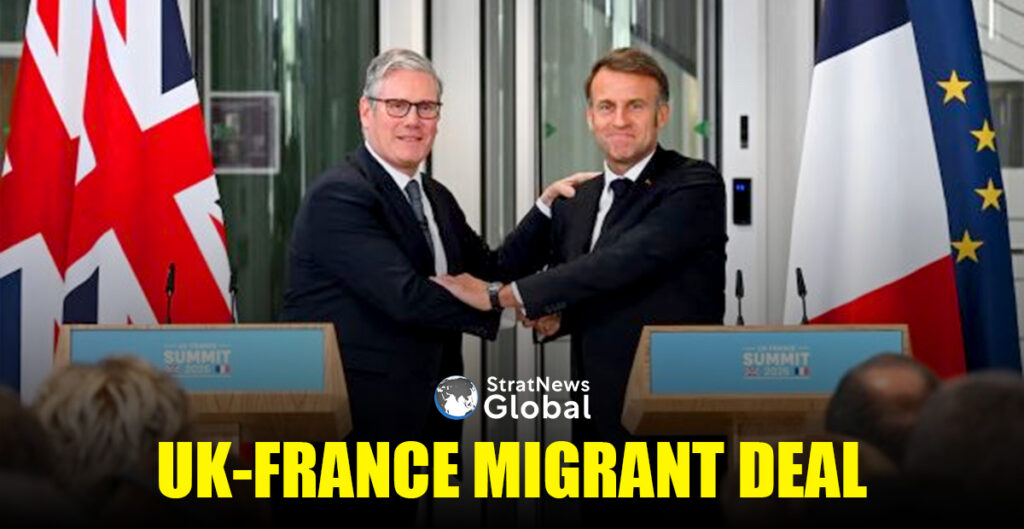
UK And France Set To Approve Migrant Return Pact Under ‘One In, One Out’ Policy
Britain said it will start implementing an agreement to send migrants back to France within days, following the ratification of a treaty on Tuesday. The arrangement, which applies to those arriving on small boats, is a key part of the UK’s efforts to curb illegal migration.
The government emphasized that this deal is aimed at discouraging unlawful entry routes and will work in parallel with increased surveillance measures and joint patrols along key crossing points.
Prime Minister Keir Starmer and French President Emmanuel Macron announced the “one in, one out” pilot scheme on migrant returns last month.
Under the new deal, France has agreed to accept the return of undocumented people arriving in Britain by small boats, in exchange for Britain agreeing to accept an equal number of legitimate asylum seekers with British family connections.
Green Light From EU Members
A treaty on the scheme was signed last week but not previously announced ahead of Tuesday’s ratification. Britain said the European Commission and EU member states had given the green light to the plan.
Starmer, whose popularity has fallen since winning an election landslide last year, is facing pressure to stop small boat arrivals from the populist Reform UK party, led by Brexit campaigner Nigel Farage.
Britain’s interior ministry said it expected detentions to begin within days.
“This is an important step towards undermining the business model of the organised crime gangs that are behind these crossings,” British interior minister Yvette Cooper said.
Under the agreement with France, government sources previously said they were looking at about 50 returns a week, or 2,600 a year, a fraction of the more than 35,000 arrivals reported last year, though the scheme could be scaled up.
More than 25,000 people have arrived on small boats so far in 2025, and the government has targeted people smugglers with sanctions, clamped down on social media adverts and is working with delivery firms to tackle the illegal work that is often promised to migrants.
(With inputs from Reuters)
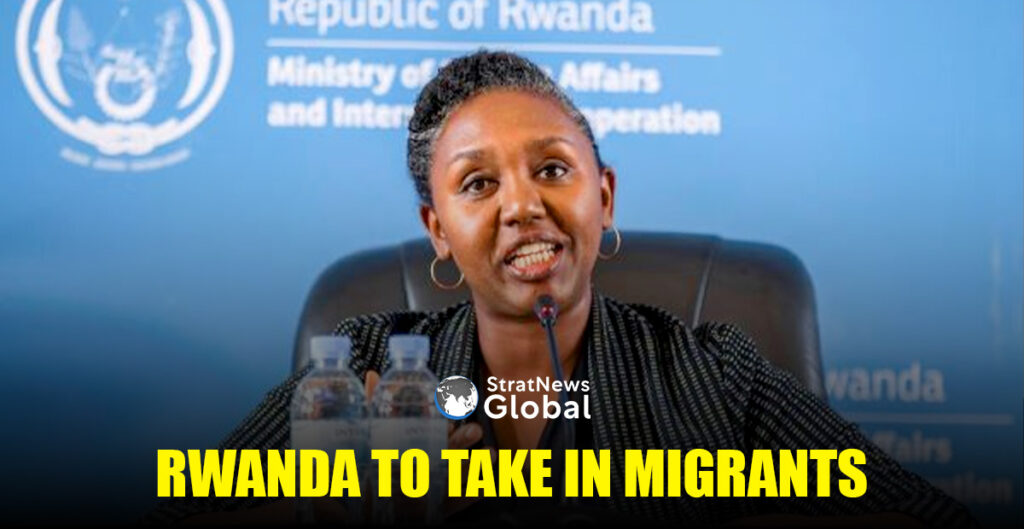
Rwanda Agrees With U.S. To Accept Up To 250 Deported Migrants, Government Confirms
Rwanda and the United States have reached an agreement for the African nation to receive up to 250 migrants deported from the U.S., a Rwandan government spokesperson and an official said, as President Donald Trump’s administration continues its strict immigration policy.
The agreement was signed by U.S. and Rwandan officials in Kigali in June, said the Rwandan official, speaking on condition of anonymity, adding that Washington had already sent an initial list of 10 people to be vetted.
“Rwanda has agreed with the United States to accept up to 250 migrants, in part because nearly every Rwandan family has experienced the hardships of displacement, and our societal values are founded on reintegration and rehabilitation,” said the spokesperson for the Rwandan government, Yolande Makolo.
“Under the agreement, Rwanda has the ability to approve each individual proposed for resettlement. Those approved will be provided with workforce training, healthcare, and accommodation support to jumpstart their lives in Rwanda, giving them the opportunity to contribute to one of the fastest-growing economies in the world over the last decade.”
The White House and State Department had no immediate comment. The Department of Homeland Security referred questions to the State Department.
U.S. To Deport Millions
President Donald Trump aims to deport millions of immigrants in the U.S. illegally and his administration has sought to ramp up removals to third countries, including sending convicted criminals to South Sudan and Eswatini, formerly known as Swaziland.
Rwanda has in recent years positioned itself as a destination country for migrants that Western countries would like to remove, despite concerns by rights groups that Kigali does not respect basic human rights.
In May, the foreign minister said Rwanda was in the early stages of talks to receive immigrants deported from the United States.
The Trump administration argues that third-country deportations help swiftly remove some migrants, including those with criminal convictions. Immigration hardliners see third-country removals as a way to deal with offenders who cannot easily be deported and could pose a threat to the public.
Opponents have criticized the deportations as dangerous and cruel, since people could be sent to countries where they could face violence, have no ties and do not speak the language.
U.S. To Provide Grant To Rwanda
Rwanda will be paid by the United States in the form of a grant, the official said, adding that the grant letter was finalized in July. The official declined to say how much the grant was for.
The U.S. and Rwanda could extend the agreement beyond 250 people by mutual consent, the official said, adding that those deported to Rwanda do not have to stay in the country and can leave anytime they choose.
Kigali will only accept those whose prison terms are complete or who have no criminal case against them, as there is no agreement with Washington that would allow people to serve out their U.S. sentence in Rwanda, the official said. No child sex offenders will be accepted.
The Trump administration has pressed other countries to take migrants. It deported more than 200 Venezuelans accused of being gang members to El Salvador in March, where they were jailed until they were released in a prisoner swap last month.
The Supreme Court in June allowed the Trump administration to deport migrants to third countries without giving them a chance to show they could be harmed. But the legality of the removals is being contested in a federal lawsuit in Boston, a case that could potentially wind its way back to the conservative-leaning high court.
Western Nations Praise Rwanda
Western and regional leaders have praised President Paul Kagame for transforming Rwanda from the ruins of the 1994 genocide that killed more than 1 million people into a thriving economy. Rights groups have accused him of abuses and of supporting rebels in neighbouring Democratic Republic of Congo, accusations that he denies.
Rwanda has also engaged in peace talks led by the Trump administration to bring an end to fighting in eastern Congo. The two African nations signed a U.S.-brokered peace agreement in Washington in June, raising hopes for an end to fighting that has killed thousands and displaced hundreds of thousands more this year.
The agreement to accept migrants deported from the U.S. is not the first such agreement Rwanda has reached. Kigali signed an agreement with Britain in 2022 to take in thousands of asylum seekers, a deal that was scrapped last year by then newly-elected Prime Minister Keir Starmer. No one was sent to Rwanda under the plan because of years of legal challenges.
(With inputs from Reuters)
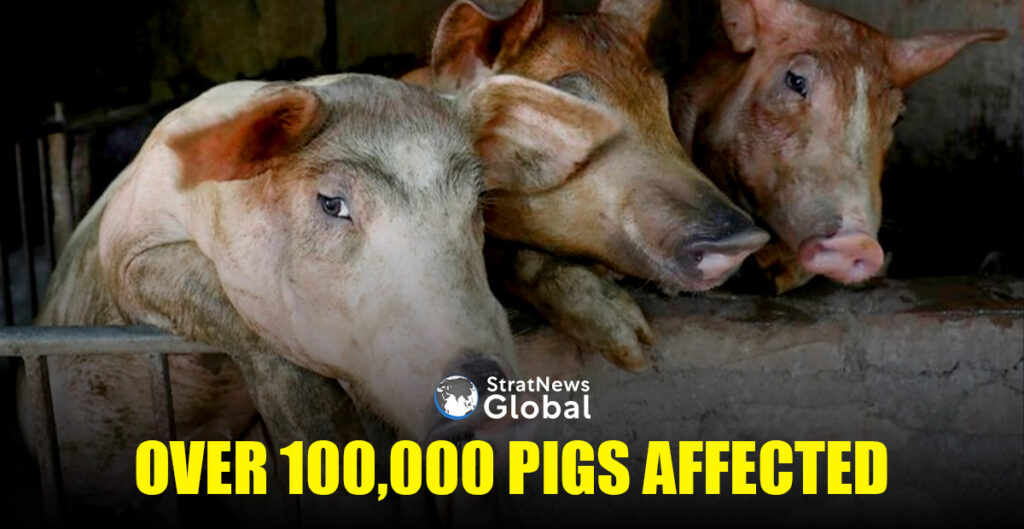
Vietnam Battles Surge In African Swine Fever Cases
Vietnam is witnessing a sharp rise in African swine fever outbreaks, with the number of infected pigs more than tripling in just two weeks, state media reported on Tuesday.
The country has detected 972 African swine fever outbreaks so far this year, up from 514 reported in mid-July, the Tien Phong newspaper reported.
The number of pigs infected has risen to more than 100,000 from 30,000 over the same period, the paper said, citing Vietnam’s agriculture ministry. The infected pigs have died or been culled.
Pork Supply Dented
“ASF has broken out on a very large scale, spreading across the country, seriously affecting the livestock industry, especially the supply of pork,” Nguyen Xuan Duong, chairman of the Animal Husbandry Association of Vietnam, was quoted as saying. He added that no province is safe from the disease.
African swine fever has disrupted the global pork market for years. In the worst outbreak over 2018-19, about half the domestic pig population died in China, the world’s biggest producer, causing losses estimated at over $100 billion.
The outbreaks in Vietnam last month prompted Prime Minister Pham Minh Chinh to send an urgent directive to provinces and government agencies to deploy measures to curb the disease, which the government said was threatening to disrupt food supplies.
Vaccination Unable To Prevent Spread
Though Vietnam was the first country reportedly to have developed an African swine fever vaccine that has been in commercial use since 2023, officials said the vaccination rate was low due to concerns about costs and efficiency.
“Vaccination is just a supporting tool that can not replace basic prevention measures,” Duong said.
AVAC Vietnam JSC, the country’s main African swine fever vaccine producer, didn’t respond to Reuters’ request for comment.
AVAC said in June it had sold 3 million vaccine doses in the domestic market and exported 600,000 doses to other countries, including the Philippines and Indonesia.
(With inputs from Reuters)
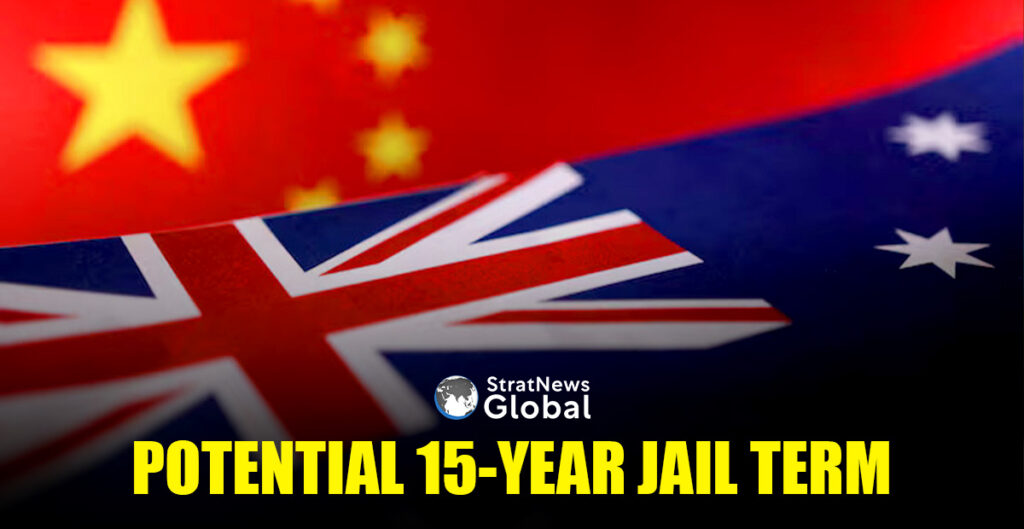
Australia Cracks Down On Chinese Interference, Woman Denied Bail
Foreign Minister Penny Wong on Tuesday said Australia would not tolerate foreign governments surveilling its communities, after a Chinese woman was charged with foreign interference and denied bail by the court.
The woman, who has not entered a plea, appeared in court in Australia’s capital Canberra on Monday after police charged her with “reckless foreign interference” for allegedly monitoring a Buddhist group in the city on behalf of a Chinese security agency.
The court heard the woman’s husband was a vice captain in a public security ministry in a Chinese province, and she had visited the Chinese consulate in Canberra in the days after her property was raided by police, the Australian Broadcasting Corporation reported.
No Tolerance Towards Harassment, Intimidation, Surveillance
In a series of television interviews on Tuesday, Wong said she couldn’t comment on an individual case, but added Australia was taking a stand against foreign interference.
“We do not tolerate harassment, intimidation, surveillance of Australians and we have a strong framework to deter foreign interference in our democracy,” she said in an ABC radio interview.
It is the third time charges have been brought under foreign interference laws introduced in Australia in 2018, and the first time a Chinese national has been charged under the legislation.
Beijing Following Developments
A Chinese Foreign Ministry spokesperson said in a statement the ministry “was not aware of the specifics of the case” but would closely follow developments and “safeguard the legitimate rights and interests of its citizens.”
“China has never interfered in the internal affairs of other countries, and firmly opposes any attempts to disrupt normal people-to-people exchanges and cooperation between China and relevant countries under the pretext of ‘foreign interference’,” the spokesperson added.
Potential 15-Year Jail Term
A court suppression order has prevented media reporting the woman’s name.
The woman, who is also a permanent resident of Australia, faces a maximum sentence of 15 years’ imprisonment if she is convicted, according to Australian Federal Police.
Police allege the woman was tasked by a Public Security Bureau of China to covertly gather information about the Canberra branch of Guan Yin Citta, a Buddhist group.
China’s embassy in Canberra did not respond to a request for comment.
(With inputs from Reuters)
Australia Picks Japan’s MHI For $6.5B Navy Frigate Deal
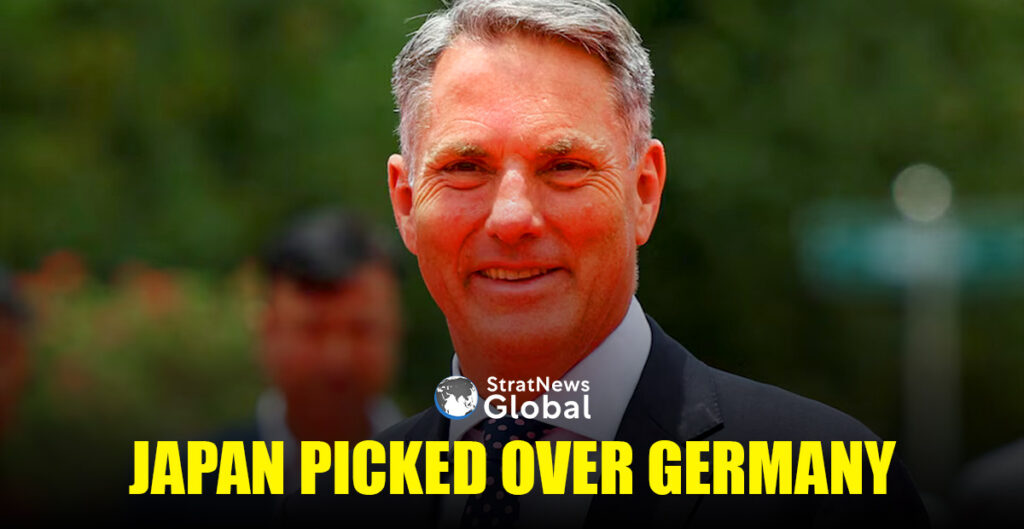
In a major defence deal worth A$10 billion (US$ 6.5 billion), Japan’s Mitsubishi Heavy Industries will deliver the first of Australia’s new navy frigates, Australian Deputy Prime Minister Richard Marles announced on Tuesday.
The three-frigate contract will be the biggest Australian defence purchase since the government in 2023 agreed to build nuclear-powered submarines with the United States and Britain, and one of Japan’s biggest defence export deals.
‘Significant Moment’ In Bilateral Ties
“Its going to be really important in terms of giving our navy the capability to project, and impactful projection is at the heart of the strategic challenge,” Marles said, adding it was “a very significant moment in the bilateral relationship between Australia and Japan”.
Japan’s Minister of Defence Gen Nakatani said it was a “major step forward in Japan’s defence cooperation efforts”.
“The benefits include enhanced joint operations and interoperability with both Australia and the United States,” he told a briefing in Tokyo.
Japan Preferred Over Germany
MHI’s Mogami frigate was selected over German company ThyssenKrupp Marine Systems’ MEKO A-200 in a meeting of the Australian government’s national security committee on Monday.
The upgraded Mogami-class frigate was capable of launching long-range missiles, and had a range of up to 10,000 nautical miles, compared to Australia’s current Anzac Class frigates, which had a range of around 6,000 nautical miles, Marles said. It also operated with a smaller crew than the Anzac class.
Anzac Class To Be Replaced
The government said in 2024 it would spend up to A$10 billion for the general-purpose frigates to replace the Anzac Class. They will be equipped for undersea warfare and air defence to secure maritime trade routes and Australia’s northern approaches.
It said the first three general-purpose frigates will be built in Japan, with the remaining eight expected to be built by Austal in Western Australia state. The first frigate is expected to be delivered in 2029.
Japan’s Biggest Defence Deal
The frigate contract is Japan’s biggest and most significant defence deal since it lifted a decades-long ban on military exports in 2014, and only the second after it agreed to supply air defence radars to the Philippines.
“This collaboration is of significant security importance to Japan,” Nakatani said.
The Japanese government had supported Mitsubishi’s bid, after losing an Australian submarine tender to France a decade earlier, he added.
Contract negotiations will begin this year with a contract expected to be signed in 2026, Australian and Japanese officials said.
Finalising pricing, maintenance and sustainment arrangements, and the later transfer of production to Australia are major issues to be addressed, the officials said.
($1 = 1.5456 Australian dollars)
(With inputs from Reuters)