

Support us by contributing to StratNewsGlobal on the following UPI ID
ultramodern@hdfcbank

Strategic affairs is our game, South Asia and beyond our playground. Put together by an experienced team led by Nitin A. Gokhale. Our focus is on strategic affairs, foreign policy and international relations, with higher quality reportage, analysis and commentary with new tie-ups across the South Asian region.
You can support our endeavours. Visit us at www.stratnewsglobal.com and follow us on YouTube, Twitter, Facebook and Instagram.
र 500 per month
र 1000 per month
र 5000 per year
र 10000 per year
Donate an amount of your choice
र 500 per month
Donate र 500 per month

र 1000 per month
Donate र 1000 per month
र 5000 per year
Donate र 5,000 per year
र 10000 per year
Donate र 10,000 per year
Donate an amount of your choice
Donate an amount of your choice


Floods And Chikungunya Outbreak Hit South China
Rescue teams across southern China geared up on Wednesday for a final wave of intense rainfall, working swiftly between heavy showers to clear mudslide debris and drain flooded roads where cars lay submerged, as the East Asian monsoon hit its peak.
Forecasters warned of more thunderstorms, a day after the skies above Hong Kong and the high-tech cities of China’s Pearl River Delta turned black and unleashed the heaviest August rainfall since 1884 on the Asian financial centre.
Chikungunya Outbreak
Videos showed shopping streets transformed into waterways in China’s southern province of Guangdong, worsening an outbreak of chikungunya fuelled by a surge of mosquitoes thriving in the stagnant floodwaters. Guangdong has reported more than 7,000 cases of the virus so far.
China is being battered by heavier-than-usual downpours as the East Asian monsoon stalls over its north and south, causing weeks of atmospheric chaos since early July. Meteorologists link the shifting pattern to climate change, testing officials as flash floods displace thousands and threaten billions of dollars in economic losses.
Massive Disaster Relief Package
Beijing allocated over 1 billion yuan ($139.21 million) in disaster relief on Tuesday to support flood relief efforts in the provinces of Guangdong and Hebei, as well as in Beijing and the northern region of Inner Mongolia, state news agency Xinhua reported, including subsidies for damage to grain-growing areas.
The extreme rainfall is expected to ease in the coming days, after sweeping at least five people to their deaths in Guangdong over the weekend and prompting a large-scale search operation involving over 1,300 rescuers.
Extensive Damage
Rescue crews on Tuesday rushed to open drains and pump water from urban areas between the showers, state media reported, with the deluge triggering mudslides that brought silt and felled trees onto highways, washing away road foundations and exposing cabling and other embedded infrastructure.
But the rains are pushing Guangdong province’s flood preparedness to the brink.
Sixteen rivers across the province have risen to levels that risk breaching their banks, according to Chinese state media, with water levels at two regional hydrology stations reaching their highest marks since 2017 and 2018.
Even as the East Asian monsoon begins to wane, China’s weather authorities warn the worst may not be over, with two to three typhoons expected to strike in August, officials from the Ministry of Emergency Management said on Tuesday.
($1 = 7.1834 yuan)
(With inputs from Reuters)
How China’s Local Govt Financing Vehicles Lost Way
China’s top leaders are known to use idioms to convey a message or signal something important. Recall the late Deng Xiao ping and his “a cat can be black or white as long as it catches mice.” It set the tone for China’s economic transformation so many years later.
More recently, paramount leader Xi Jinping said something which hinted at the country’s fiscal crisis.
“In the past GDP was used to judge heroes,” he said, but “One beautiful thing covered a hundred ugly things. Nowadays, in many matters, one ugliness covers a hundred beautiful things.”
The supreme leader did not expand on “one ugliness”, but officials in local governments knew what he was referring to: the trillions of dollars of debt held by local government financing vehicles (LGFV).
Partly these had been addressed through a debt restructuring initiative amounting to over $1.39 trillion. But it left unaddressed unpaid bills and trillions of dollars of bank loans.
The LGFVs were corporate entities created by local governments in China to raise funds for infrastructure and development. Once seen as an innovative solution to bridge funding gaps, these off-balance-sheet bodies have now become a financial risk, threatening to derail China’s growth model.
“LGFVs were created because local governments had very few tools at their disposal to meet their expansive spending responsibilities,” Amit Kumar, China scholar at the Takshashila Institution told StratNewsGlobal. “Even today, local authorities are responsible for close to 90% of all public expenditure in China, yet their ability to raise revenue remains severely constrained.”
This is because since 1994, the central government increased its share of the local revenues from 22% to 46%. It left the local governments with less money but the expenditure burden continued to rise, climbing from 70% of total spending in 1993 to around 85% today.
The local governments were also not allowed to introduce new taxes or adjust existing rates, effectively centralising all taxing authority in Beijing. New laws like the Budget Law barred local governments from directly borrowing from banks or capital markets.
“Even after the Budget Law was amended in 2014, local governments still can’t issue bonds freely, they’re limited by quotas set by the central government,” said Kumar. “That leaves a permanent shortfall.”
So local governments encouraged by Beijing, launched LGFVs that enabled them to access capital markets indirectly. Their usage soared after the 2008 global financial crisis, when Beijing actively encouraged local authorities to ramp up infrastructure spending through these vehicles.
LGFVs issued bonds and borrowed mainly from banks to fund infrastructure projects like roads, bridges and railways that could boost their local economies. Banks were quick to lend because these financing vehicles held significant land assets, often acquired cheaply from local governments and later sold to developers at a profit. This bolstered their balance sheets and made them appear creditworthy. The loans were implicitly backed by local authorities, giving the impression that if things went south, the government would bail them out.
The problem was LGFVs operated outside the strict regulations governing official government borrowing. They took on massive debt, snapped up land, and ran deficits. Encouraged by the prospect of higher land revenues, local governments kept pushing LGFVs to borrow more and matters went out of control.
Audits and independent estimates now suggest that China’s local government debt including “hidden” liabilities via LGFVs may exceed $8–9.5 trillion.
Today, with land sales in decline and income sources drying up, many of these entities are struggling to stay afloat. In response, Beijing has allowed some provinces to issue special refinancing bonds and encouraged clearer classification between government and enterprise debt. However, these interventions appear too modest to address the broader fiscal imbalance.
The real solution lies in reform. Unless China retools its local governance model granting provincial and municipal authorities greater revenue-raising powers, loosening borrowing restrictions under central oversight, and phasing out opaque off-budget financing its economy will remain dependent on a fragile, debt-driven engine.
The unchecked growth of LGFVs has laid bare structural weaknesses that can no longer be obscured by emergency borrowing or superficial stimulus. If Beijing fails to act decisively, the very mechanisms once used to fuel China’s rise could trigger a fiscal crisis with global repercussions.
Trump Administration To Scrap Musk’s ‘Five Things’ Email Programme
The Trump administration is expected to formally eliminate a programme as early as Tuesday that was introduced by billionaire and former adviser Elon Musk, according to two sources familiar with the decision.
The programme required federal employees to list their top five work accomplishments from the previous week.
‘Five Things’ Email
The Office of Personnel Management, the federal human resources agency that implemented Musk’s push to slash the federal workforce, plans to announce the end of the “five things” email to HR representatives across the federal government later on Tuesday, the two people said, declining to be named because the matter was not public.
While many federal agencies had already phased out compliance with the weekly email, the move, not previously reported, signals the Trump administration is turning the page on one of Musk’s most unpopular initiatives following a dramatic row between the two men in early June.
The White House and OPM did not immediately respond to requests for comment.
Musk, who spent over a quarter of a billion dollars to help Trump win November’s presidential election, led the Department of Government Efficiency’s efforts to slash the budget and cut the federal workforce until his departure in May to refocus on his tech empire.
Musk initially received a warm White House sendoff from Trump, but then incurred the president’s wrath by describing Trump’s tax cut and spending bill as an abomination.
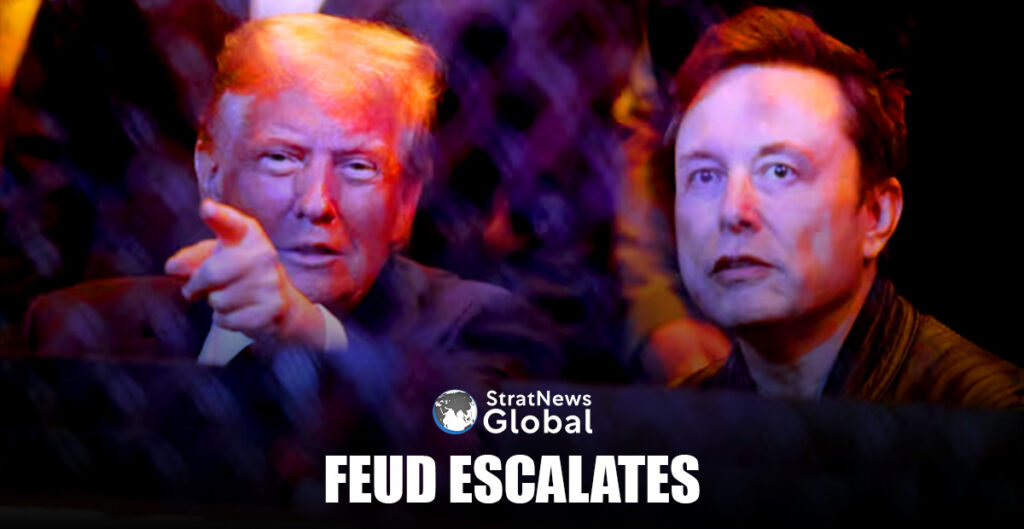
Trump-Musk Feud Escalates
Trump pulled the nomination of Musk ally and tech entrepreneur Jared Isaacman to lead NASA and later threatened to cancel billions of dollars worth of federal contracts with Musk’s companies after the blowup between the two men.
The “five things” email, launched by Musk in February to boost accountability, sparked tensions with department chiefs who were blindsided by the weekend email mandating the move. It also fueled confusion among government workers who received mixed messages about whether and how to comply.
Reuters reported in March that the White House installed two Trump loyalists at OPM to ensure better policy coordination between the White House and the agency.
Scott Kupor, a venture capitalist who took the helm at OPM in July, foreshadowed the end of the initiative last month, describing processing of the weekly response emails as “very manual” and “not efficient.”
It is “something that we should look at and see, like, are we getting the value out of it that at least the people who put it in place thought they were,” he said.
(With inputs from Reuters)
Hezbollah Chief Warns Israel Of Missile Strikes If War On Lebanon Resumes
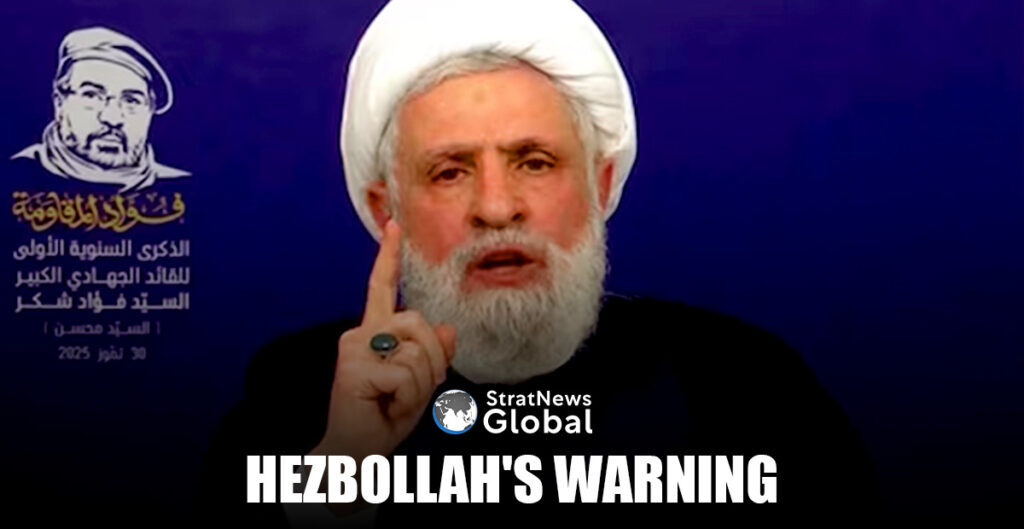
In a televised address on Tuesday, Hezbollah chief Naim Qassem issued his first direct threat to Israel in months, warning that missiles would rain down if Israel reignited a full-scale war on Lebanon.
His comments came as Lebanon’s cabinet met to discuss the fate of Hezbollah’s arsenal, after Washington pressured Lebanese officials to commit to disarming the Iran-backed group and amid fears that Israel could intensify strikes if they fail to do so.
Qassem said that, should Israel engage in a “large-scale aggression” against Lebanon, Hezbollah, Lebanon’s army, and Lebanon’s people would defend themselves.
“This defence will lead to missiles falling inside the Israeli entity, and all the security they have built over eight months will collapse within an hour,” he said.
A U.S.-brokered ceasefire in November brought an end to months of fighting between Hezbollah and Israel. The war killed much of Hezbollah’s leadership – including Qassem’s predecessor Sayyed Hassan Nasrallah – and destroyed much of its arsenal.
Qassem said the war had killed 5,000 Hezbollah fighters and wounded 13,000, the first official toll the group has given. But he said the organisation remained in good order, with fighters ready to make “the harshest sacrifices” if needed.
Minutes after he spoke, dozens of men on motorcycles carrying Hezbollah’s yellow flags emerged from its strongholds in Beirut’s southern suburbs for the second day in a row.
Rejects ‘External Dictates’
Washington and Beirut have been in talks since June on a U.S. roadmap to fully disarm Hezbollah in exchange for a halt to Israeli strikes, the withdrawal of Israeli troops still occupying five points in south Lebanon and funds to rebuild areas destroyed by Israeli bombardment during the war.
But with little progress on disarmament, Washington’s patience began wearing thin, and it pressured Lebanon’s ministers to swiftly make a public pledge so that talks could continue.
Qassem pushed back against the conditions, saying Israel must implement the ceasefire in full by halting its military activities in Lebanon before any other discussion.
“Solve the problem of the (Israeli) aggression, and then we will discuss the issue of the weapons,” he said.
Addressing Lebanese officials, he said: “I hope you don’t waste time on the storms stirred up by external dictates.”
(With inputs from Reuters)
Trump Drops Bessent From Fed Consideration, Vows New Pick Soon
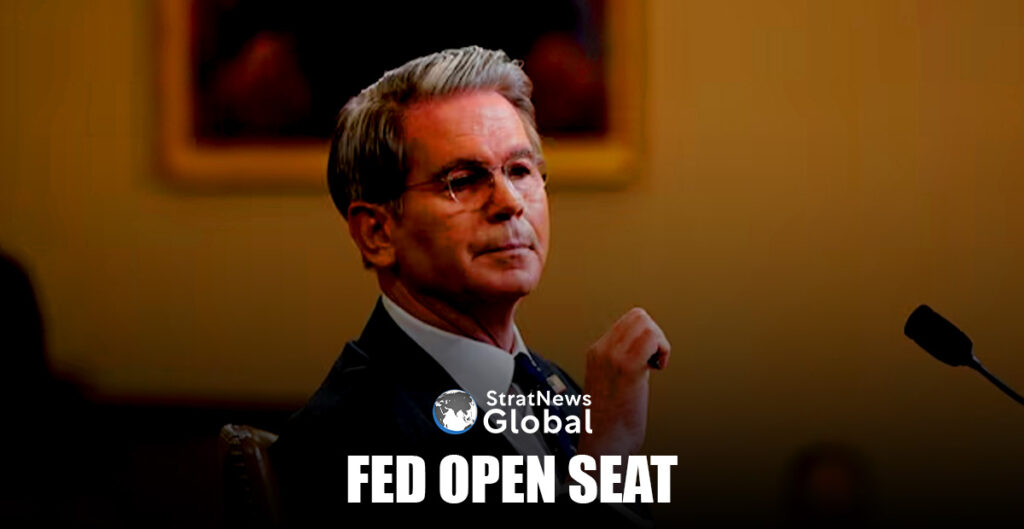
President Donald Trump announced on Tuesday that Treasury Secretary Scott Bessent is no longer being considered for an open seat on the Federal Reserve’s Board of Governors (Fed), adding that he will reveal a new nominee “very shortly.”
In an interview with CNBC, Trump said Fed Governor Adriana Kugler’s decision to vacate her seat early was a “pleasant surprise.” The departure of Kugler, whose term would have ended on January 31, appears to have accelerated Trump’s planning for the U.S. central bank, giving him an immediate opening to fill with a person who could also be promoted to the top policymaking role when Fed Chair Jerome Powell‘s term ends in May.
“It’ll be one of four people,” Trump said, adding that he considered both current White House economic adviser Kevin Hassett and former Fed Governor Kevin Warsh as “very good” possibilities. He did not name the other two, but is reportedly considering current Governor Christopher Waller, who has advocated rate cuts but not at the pace or extent Trump wants.
“There are numerous people who are qualified,” Trump said. “I am going to be announcing that very shortly,” the president said in reference to naming a replacement for Kugler, who was appointed to the Fed’s board by former President Joe Biden.
Trump said Bessent would not be in the running for the position because he wants to remain in the top Treasury job.
The nominee would, at least initially, serve the few months remaining in Kugler’s term.
But Trump could be explicit that he plans for that person to then be nominated to a full 14-year term after that time, and to also be his choice to replace Powell when the Fed chief’s term expires next May – giving his nominee several months and several policy meetings to begin to influence the policy debate.
“A lot of people say, when you do that, why don’t you just pick the person who is going to head up the Fed? That’s a possibility too,” Trump said.
The president has been critical of Powell for not cutting interest rates since Trump returned to power in January, and contemplated trying to fire him, even as Fed policymakers balance evidence of both a slowing economy and a weakening job market against the fact that inflation remains well above the central bank’s 2% target and is expected to move higher.
The Fed is charged by Congress to maintain stable prices and maximum employment, and is potentially facing a situation where the two goals conflict with each other – posing a painful set of tradeoffs.
The nominee to fill Kugler’s seat will need to be confirmed by the Senate, and would require another Senate vote for a full 14-year term early next year. The nomination for the next Fed chief would require a separate Senate confirmation process.
‘Another Level Of Problems’
Kugler’s departure was announced the same day that Trump, angered over data that showed job growth slowing in the first months of his administration, fired Bureau of Labour Statistics Commissioner Erika McEntarfer while alleging without evidence that BLS was manipulating the jobs data to make him look bad.
Economists have warned since Trump returned to the White House in January that his combination of import tariffs and erratic trade policy would likely lead to a labour market slowdown and higher inflation, a broadly shared outlook that has been among the factors keeping the Fed from lowering rates until the inflation impact becomes clearer.
The central bank last week held its policy rate steady in the 4.25%-4.50% range, though Waller dissented on the grounds that the inflation risk from tariffs appeared modest at best, while the job market and growth in general seemed to be weakening. The release on Friday of the jobs report for July, with weak monthly employment gains and downward revisions to prior months, appeared to validate those concerns and led to increased market bets the Fed would cut rates at its September 16-17 meeting.
The firing of the BLS commissioner touched off a global wave of concern about the continued integrity of U.S. government data, with Trump’s actions being given a fire-the-messenger interpretation by much of the economics and statistics community.
The president’s choice now to head the statistics agency and potentially to lead the Fed will be scrutinised all the more carefully, said Michael Strain, director of economic policy studies at the conservative American Enterprise Institute.
“Imagine if one of your concerns is that there’s a lackey in charge of the agency and the numbers are fake. That’s … another level of problems,” Strain said of the BLS. “Maybe he sees this independence thing really matters. Maybe he’s got somebody from the outside saying ‘Look, Mr. President, if you appoint somebody who’s perceived to be a lackey as the Fed chair, take the BLS freakout and multiply by 1,000.”
(With inputs from Reuters)
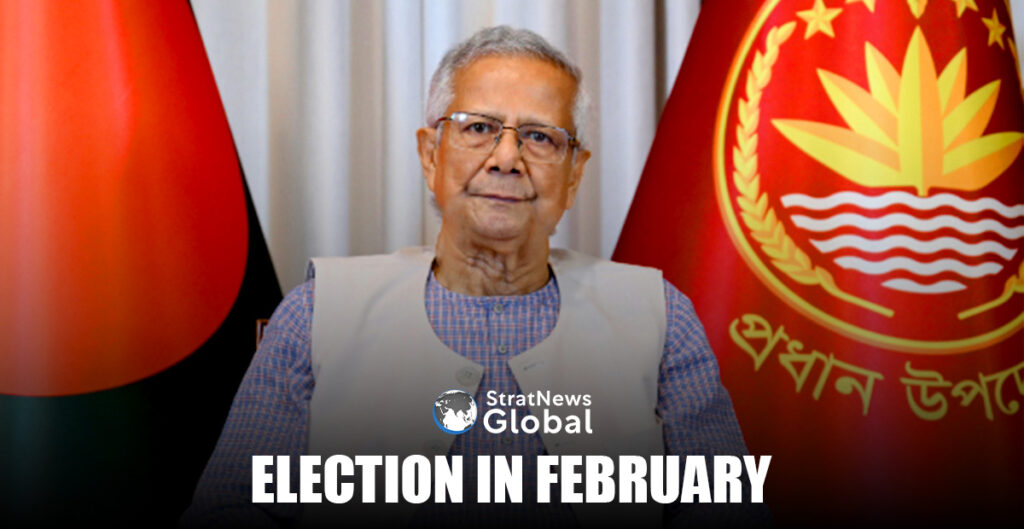
Bangladesh To Hold Elections In February 2026, Yunus Announces On Uprising Anniversary
Bangladesh will hold national elections in February 2026, interim leader Muhammad Yunus announced on Tuesday, marking the country’s first vote since last year’s mass uprising that toppled the long-standing government of Prime Minister Sheikh Hasina.
The announcement came during commemorations in Dhaka to mark the first anniversary of the mass movement that many Bangladeshis have come to call their “second liberation,” a reference to the country’s independence from Pakistan in 1971.
The Bangladeshi capital witnessed rallies, concerts, and prayer gatherings throughout the day.
Addressing the nation, Yunus, the 85-year-old Nobel Peace Prize laureate overseeing the caretaker administration, said he would formally request the Chief Election Commissioner to schedule the polls before the holy month of Ramadan begins in February.
“On behalf of the interim government, I will write to the Chief Election Commissioner asking that elections be held before Ramadan,” Yunus said during a nationally broadcast speech to mark the “historic day”.
Power Handover
Yunus, who holds the position of chief adviser in the transitional government, reiterated that he would relinquish power once an elected leadership takes office.
“We now move into the final and most important chapter: the peaceful handover of authority to a government chosen by the people,” he declared.
Earlier, elections had been tentatively planned for April. However, growing pressure from major political parties and civil society groups pushed the interim leadership to bring the schedule forward.
Holding the vote before Ramadan, Yunus said, would help ensure greater participation in the Muslim-majority country of 170 million.
Calling for national unity and support, Yunus urged citizens to pray for the success of the transition.
“Let us work together to ensure the election is free, fair, and joyous in spirit. We are committed to providing all necessary support to achieve that goal,” he said.
Tuesday’s observances came exactly one year after the climax of nationwide protests, which had erupted in July 2024 over a controversial quota system for public sector employment.
The demonstrations, led initially by university students, gained momentum and culminated on August 5 when crowds stormed Hasina’s official residence, hours before which the then-Prime Minister fled by helicopter and has since taken refuge in India.
Democratic Reforms
Yunus used the anniversary to highlight ongoing efforts toward democratic reforms. He emphasised the need for vigilance, warning that remnants of the previous regime and their allies remained intent on obstructing change.
“The defeated autocrats and their enablers are still at work, plotting to undo the progress we have made,” he cautioned.
He also underscored that discussions with political parties and civil society continue over essential reforms to Bangladesh’s political and electoral framework.
(With inputs from IBNS)
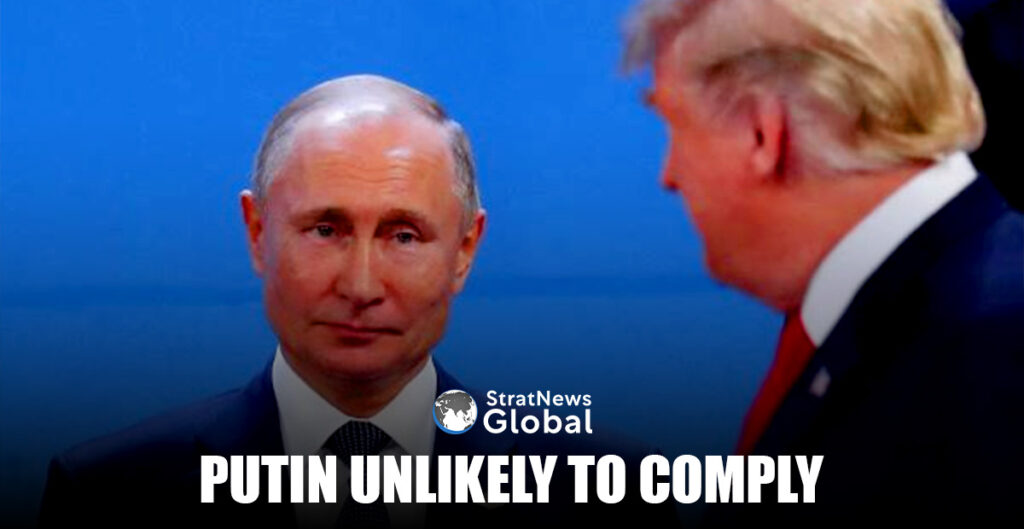
Putin Unlikely To Yield To Trump’s Sanctions Ultimatum To End War: Sources
Russian President Vladimir Putin is not expected to comply with a sanctions ultimatum set to expire this Friday from U.S. President Donald Trump, and continues to aim for the full capture of four Ukrainian regions, according to sources.
Trump has threatened to hit Russia with new sanctions and impose 100% tariffs on countries that buy its oil – of which the biggest are China and India – unless Putin agrees to a ceasefire in Russia’s war in Ukraine.
Putin’s determination to keep going is prompted by his belief that Russia is winning and by scepticism that yet more U.S. sanctions will have much of an impact after successive waves of economic penalties during 3-1/2 years of war, according to three sources familiar with discussions in the Kremlin.
The Russian leader does not want to anger Trump, and he realises that he may be spurning a chance to improve relations with Washington and the West, but his war goals take precedence, two of the sources said.
Putin’s goal is to fully capture the Ukrainian regions of Donetsk, Luhansk, Zaporizhzhia and Kherson, which Russia has claimed as its own, and then to talk about a peace agreement, one of the sources said.
“If Putin were able to fully occupy those four regions which he has claimed for Russia he could claim that his war in Ukraine had reached his objectives,” said James Rodgers, author of the forthcoming book “The Return of Russia”.
Russia-Ukraine Talks
The current talks process, in which Russian and Ukrainian negotiators have met three times since May, was an attempt by Moscow to convince Trump that Putin was not rejecting peace, the first source said, adding that the talks were devoid of real substance apart from discussions on humanitarian exchanges.
Russia says it is serious about agreeing a long-term peace in the negotiations but that the process is complicated because the two sides’ stances are so far apart. Putin last week described the talks as positive.
Moscow’s stated demands include a full Ukrainian withdrawal from the four regions and acceptance by Kyiv of neutral status and limits on the size of its military – demands rejected by Ukraine.
In a sign that there may yet be an opportunity to strike a deal before the deadline, Trump’s special envoy Steve Witkoff is expected to visit Russia this week, following an escalation in rhetoric between Trump and Moscow over risks of nuclear war. On Monday, Russia said it was no longer bound by a moratorium on short- and medium-range nuclear missiles.
Trump, who in the past has praised Putin and held out the prospect of lucrative business deals between their two countries, has lately expressed growing impatience with the Russian president. He has complained about what he called Putin’s “bullshit” and described Russia’s relentless bombing of Kyiv and other Ukrainian cities as “disgusting”.
The Kremlin has said it noted Trump’s statements but it has declined to respond to them.
Ukrainian Prime Minister Yulia Svyrydenko last week called on the world to respond with “maximum pressure” after the worst Russian air strike of the year killed 31 people in Kyiv, including five children, in what she called Russia’s response to Trump’s deadline.
“President Trump wants to stop the killing, which is why he is selling American-made weapons to NATO members and threatening Putin with biting tariffs and sanctions if he does not agree to a ceasefire,” White House spokeswoman Anna Kelly said in response to a request for comment.
Forces Advance
The first source said Putin was privately concerned about the recent deterioration of U.S. ties. Putin still retains the hope that Russia can again befriend America and trade with the West, and “he is worried” about Trump’s irritation, this person said.
But with Moscow’s forces advancing on the battlefield and Ukraine under heavy military pressure, Putin does not believe now is the time to end the war, the source said, adding that neither the Russian people nor the army would understand if he stops now.
Rodgers, the author, said Putin has invested his political reputation and legacy in the war in Ukraine.
“We know from his previous writings and statements that he sees himself as part of a strong tradition of standing up to the West and the rest of world to defend Russia’s interests,” he said.
The Kremlin leader values the relationship with Trump and does not want to anger him, however, “he simply has a top priority – Putin cannot afford to end the war just because Trump wants it,” the second Russian source said.
A third person familiar with Kremlin thinking also said Russia wanted to take all four regions and did not see the logic in stopping at a time of battlefield gains during Russia’s summer offensive.
Ukraine has suffered some of its biggest territorial losses of 2025 in the past three months, including 502 square kilometres in July, according to Black Bird Group, a Finland-based military analysis centre. In total, Russia has occupied around a fifth of Ukraine.
Russia’s military General Staff has told Putin that the Ukrainian front will crumble in two or three months, the first person said.
However, Russia’s recent gains remain relatively minor in purely territorial terms, with only 5,000 square kilometres (1,930 square miles) of Ukraine taken since the start of last year, less than 1% of the country’s overall territory, according to a June report from the Center for Strategic and International Studies, a Washington-based think tank.
Ukrainian and Western military sources, acknowledge that Russia is making gains, but only gradually and with heavy casualties. Russian war bloggers say Moscow’s forces have been bogged down during its current summer offensive in areas where the terrain and dense urban landscape favoured Ukraine, but assess that other areas should be faster to take.
‘He’s Made Threats Before’
Trump’s sanctions threat was “painful and unpleasant,” but not a catastrophe, the second source said. The third source said there was a feeling in Moscow that “there’s not much more that they can do to us”.
It was also not clear if Trump would follow through on his ultimatum, this person said, adding that “he’s made threats before” and then not acted, or changed his mind.
The source also said it was hard to imagine that China would stop buying Russian oil on instructions from Trump, and that his actions risked backfiring by driving oil prices higher.
As a consequence of previous rounds of sanctions, Russian oil and gas exporters have taken big hits to their revenues, and foreign direct investment in the country fell by 63% last year, according to U.N. trade data. Around $300 billion of central bank assets have been frozen in foreign jurisdictions.
But Russia’s ability to wage war has been unimpeded, thanks in part to ammunition supplies from North Korea and imports from China of dual-use components that have sustained a massive rise in weapons production. The Kremlin has repeatedly said that Russia has some “immunity” to sanctions.
Trump has acknowledged Russia’s skill in skirting the measures. “They’re wily characters and they’re pretty good at avoiding sanctions, so we’ll see what happens,” he told reporters at the weekend, when asked what his response would be if Russia did not agree to a ceasefire.
The first Russian source noted that Putin, in pursuing the conflict, was turning his back on a U.S. offer made in March that Washington, in return for his agreement to a full ceasefire, would remove U.S. sanctions, recognise Russian possession of Crimea – annexed from Ukraine in 2014 – and acknowledge de facto Russian control of the territory captured by its forces since 2022.
The source called the offer a “fantastic chance,” but said stopping a war was much more difficult than starting it.
(With inputs from Reuters)
Israel Weighs Full Military Control Of Gaza Amid Rising Deaths
Israeli Prime Minister Benjamin Netanyahu is reportedly in favour of a total military takeover of Gaza and is scheduled to meet senior security officials on Tuesday to finalise a revised strategy for the 22-month-long conflict.
Mediation between Israel and Palestinian terrorist group Hamas has collapsed despite intense international pressure for a ceasefire to ease hunger and appalling conditions in the besieged Palestinian enclave.
Eight more people died of starvation or malnutrition in the past 24 hours, Gaza’s health ministry said, while another 79 died in the latest Israeli fire.
Netanyahu was to meet Defence Minister Israel Katz and military Chief of Staff Eyal Zamir to decide on a strategy to take to cabinet later this week, an Israeli official said. Strategic Affairs Minister Ron Dermer, a confidant of Netanyahu, would also be present.
Control Of The Entire Territory
Israel’s Channel 12, citing an official from Netanyahu’s office, said the prime minister was leaning towards taking control of the entire territory. That would reverse a 2005 decision to pull settlers and military out of Gaza while retaining control over its borders, a move right-wing parties blame for Hamas gaining power there.
It was unclear, however, whether Netanyahu was foreseeing a prolonged occupation or a short-term operation aimed at dismantling Hamas and freeing Israeli hostages. The prime minister’s office declined to comment on the Channel 12 report.
“It is still necessary to complete the defeat of the enemy in Gaza, release our hostages and ensure that Gaza never again constitutes a threat to Israel,” Netanyahu told new recruits at a military base. “We are not giving up on any of these missions.”
On Saturday, Hamas released a video of Evyatar David, one of 50 hostages still held in Gaza, appearing emaciated in what seemed to be an underground tunnel. The images shocked Israelis and sparked international condemnation.
Throughout the war, there has been sustained international pressure on Hamas to release the remaining hostages, of whom Israeli officials estimate 20 are believed to still be alive. Most hostages have been released during ceasefires following diplomatic negotiations. Israel broke the last ceasefire.
Pressure Tactic?
A Palestinian official said the threat of a full takeover of Gaza may be a tactic to pressure Hamas into concessions, while the Palestinian Foreign Ministry urged foreign nations to take heed of the reports.
“The ministry urges countries and the international community to treat these leaks with utmost seriousness and to intervene urgently to prevent their implementation, whether these leaks are meant to exert pressure, test international reactions, or are genuine and serious,” it said.
Israel’s coalition government, the most right-wing and religiously conservative in its history, includes far-right politicians who advocate for the annexation of both Gaza and the West Bank and encourage Palestinians to leave their homeland.
Nearly two years of fighting in Gaza has strained the military, which has a small standing army and has had to repeatedly mobilise reservists. It has throughout the war pushed back against the idea of Israel fully occupying Gaza.
In a sign of differences between some members of Israel’s ruling coalition and the military, far-right National Security Minister Itamar Ben Gvir on X challenged military head Zamir to state he would comply with government directives even if a decision was made for total takeover of Gaza.
Foreign Minister Gideon Saar then said the military chief must give his professional opinion, while Defence Minister Katz weighed in to say the military would professionally implement whatever policy the government set.
Hunger
The war was triggered when Hamas-led terrorists on October 7, 2023, attacked Israel, killing around 1,200 people, mostly civilians, and capturing 251 hostages, taking them into Gaza.
Israel’s military response has devastated the tiny, crowded enclave, killing more than 61,000 people – mostly civilians – according to Palestinian health authorities.
Israel’s campaign has forced nearly all of Gaza’s over 2 million people from their homes and caused what a global hunger monitor called last week an unfolding famine.
Some 188 Palestinians, including 94 children, have died from hunger since the war began, according to Gaza authorities.
An Israeli security official, in a briefing to reporters, acknowledged there may be hunger in some parts of Gaza but rejected reports of famine or starvation.
On Tuesday, Israeli tanks pushed into central Gaza but it was not clear if the move was part of a larger ground offensive.
Palestinians living in the last quarter of territory where Israel has not yet taken military control – via ground incursions or orders for civilians to leave – said any new push would be catastrophic.
“If the tanks pushed through, where would we go, into the sea? This will be like a death sentence to the entire population,” said Abu Jehad, a Gaza wood merchant.
(With inputs from Reuters)
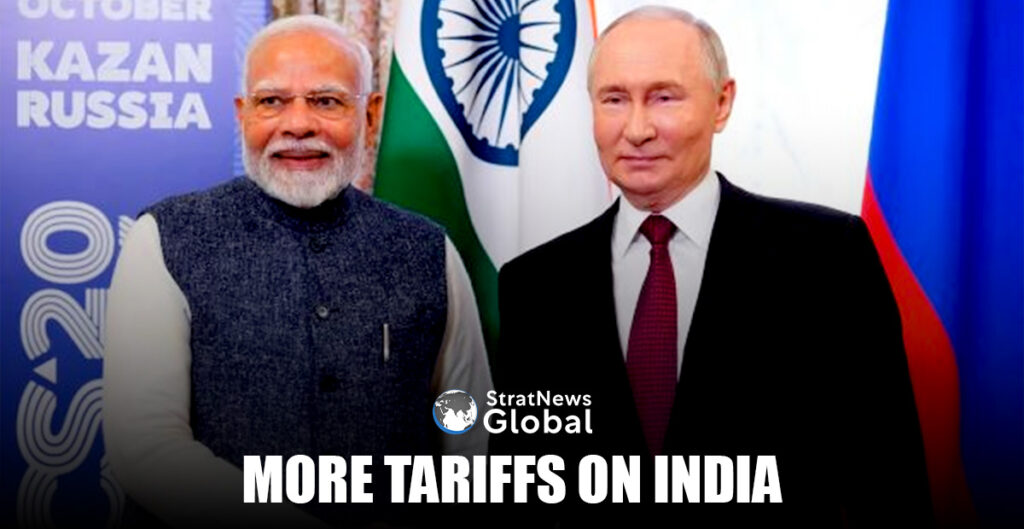
Trump Renews Threat To Sharply Raise Tariffs On India Over Russian Oil Imports
U.S. President Donald Trump announced on Tuesday that he plans to significantly raise tariffs on imports from India beyond the current 25% rate within the next 24 hours, citing New Delhi’s ongoing procurement of Russian oil as the reason for the proposed increase.
He also said a “zero tariff” offer for imports of U.S. goods into India was not good enough, alleging that India was “fuelling the war” in Ukraine.
Trump’s threat to India for buying Russian oil started on July 31, when he announced a 25% tariff for Indian goods, along with an unspecified penalty.
“They’re fuelling the war machine, and if they’re going to do that, then I’m not going to be happy,” Trump told CNBC in an interview on Tuesday, adding that the main sticking point with India was that its tariffs were too high.
“Now, I will say this, India went from the highest tariffs ever. They will give us zero tariffs, and they’re going to let us go in. But that’s not good enough, because of what they’re doing with oil, not good.”
New Tariff Threats
The latest comment followed a similar threat on Monday, which prompted India’s Foreign Ministry to say the country was being unfairly singled out over its purchases of Russian oil.
“It is revealing that the very nations criticising India are themselves indulging in trade with Russia (despite the Ukraine war),” it said in a statement issued late on Monday.
“It is unjustified to single out India,” it added.
The EU conducted 67.5 billion euros ($78.0 billion) in trade with Russia in 2024, including record imports of liquefied natural gas (LNG) reaching 16.5 million metric tons, the Indian ministry said.
The United States continues to import Russian uranium hexafluoride for use in its nuclear power industry, palladium, fertilisers and chemicals, it added, without giving a source for the export information.
The U.S. embassy and the EU’s delegation in New Delhi did not immediately respond to a request for comment.
Both the United States and EU have sharply scaled back their trade ties with Russia since it launched a full-scale invasion of Ukraine in February 2022.
Sudden Rift
India is the biggest buyer of seaborne crude from Russia, importing about 1.75 million barrels per day of Russian oil from January to June this year, up 1% from a year ago, according to data by trade sources.
It has faced pressure from the West to distance itself from Russia over the Ukraine war. New Delhi has resisted, citing its longstanding ties with Moscow and economic needs.
India’s National Security Adviser Ajit Doval is likely to go ahead with a scheduled visit to Russia this week, two government sources said. Foreign Minister S. Jaishankar is expected to visit in the coming weeks.
The sudden rift between India and the U.S. has been deepening since July 31.
Trump has said that from Friday he will impose new sanctions on Russia as well as on countries that buy its energy exports, unless Moscow takes steps to end the war with Ukraine.
The trade tensions have caused concern about the potential impact on India’s economy.
The equity benchmark BSE Sensex. BSESN closed down 0.38%, while the rupee dropped 0.17% versus the dollar.
(With inputs from Reuters)
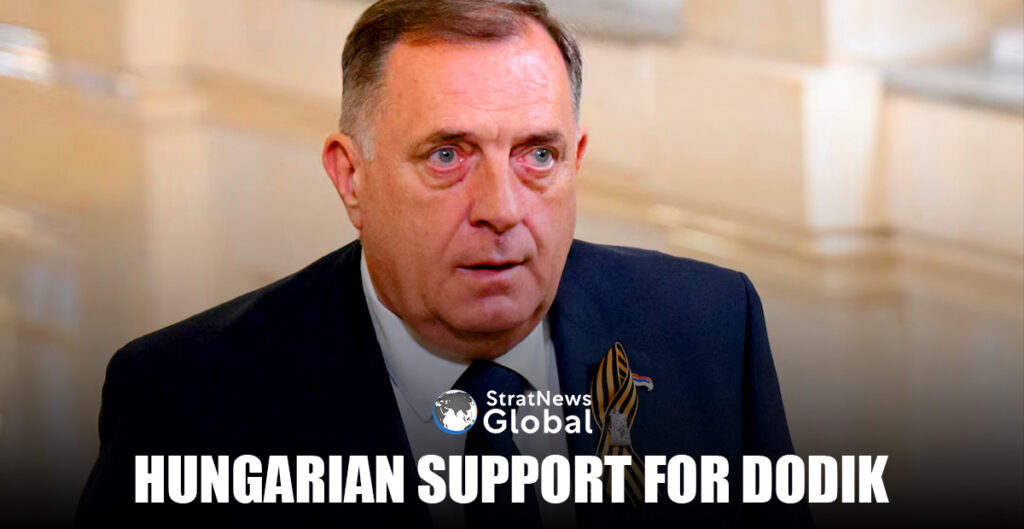
Hungary Backs Bosnian Serb Leader Dodik Amid EU Row
Hungarian Prime Minister Viktor Orban and Foreign Minister Peter Szijjarto held a meeting with Bosnian Serb leader Milorad Dodik in Budapest on Tuesday, expressing Hungary’s continued support, according to their statements on social media.
Dodik has close ties with Russia, which has also backed him, saying a one-year jail term and political ban he faces in Bosnia are politically-motivated.
‘Hungary Does Not Accept This Decision’
Orban, who has the warmest ties of any EU leader with Russian President Vladimir Putin and is a critic of European Union sanctions on Russia, posted two photos with Dodik on his Facebook page.
“Milorad Dodik, President of the Republika Srpska in Bosnia, is in Budapest. President Dodik has been condemned for refusing to dance to the tune that Brussels is whistling. Hungary does not accept this decision,” he said.
Dodik’s Vow
Last week an appeals court in Bosnia upheld the sentence handed down to Dodik in February for defying the Constitutional Court as well as the peace envoy, whose role is to prevent multi-ethnic Bosnia sliding back into civil war.
Dodik has said he will defy the ruling that bans him from political office for six years. The one-year prison term he faces could be exchanged for a fine under Bosnia’s legal system.
‘Rightful, Elected Leader’
Szijjarto said in his Facebook post that “external interference” in the Western Balkans was dangerous.
“The will of the region’s people must be respected – questioning it threatens stability and peace. Met Milorad Dodik today to confirm Hungary’s support,” Szijjarto said.
Orban, whom Dodik had decorated with the Serb Republic’s highest award, also said on Monday on social media platform X that Hungary does not recognise the court ruling against Dodik.
“Attempts by EU-appointed overseers to remove him for opposing their globalist agenda are unacceptable. He is the rightful, elected leader of the Republika Srpska,” Orban wrote.
Last year, the Hungarian government agreed to help finance 140 million euros ($161.39 million) of infrastructure and energy projects in Bosnia´s autonomous Serb Republic.
($1 = 0.8675 euros)
(With inputs from Reuters)