

Support us by contributing to StratNewsGlobal on the following UPI ID
ultramodern@hdfcbank

Strategic affairs is our game, South Asia and beyond our playground. Put together by an experienced team led by Nitin A. Gokhale. Our focus is on strategic affairs, foreign policy and international relations, with higher quality reportage, analysis and commentary with new tie-ups across the South Asian region.
You can support our endeavours. Visit us at www.stratnewsglobal.com and follow us on YouTube, Twitter, Facebook and Instagram.
र 500 per month
र 1000 per month
र 5000 per year
र 10000 per year
Donate an amount of your choice
र 500 per month
Donate र 500 per month

र 1000 per month
Donate र 1000 per month
र 5000 per year
Donate र 5,000 per year
र 10000 per year
Donate र 10,000 per year
Donate an amount of your choice
Donate an amount of your choice
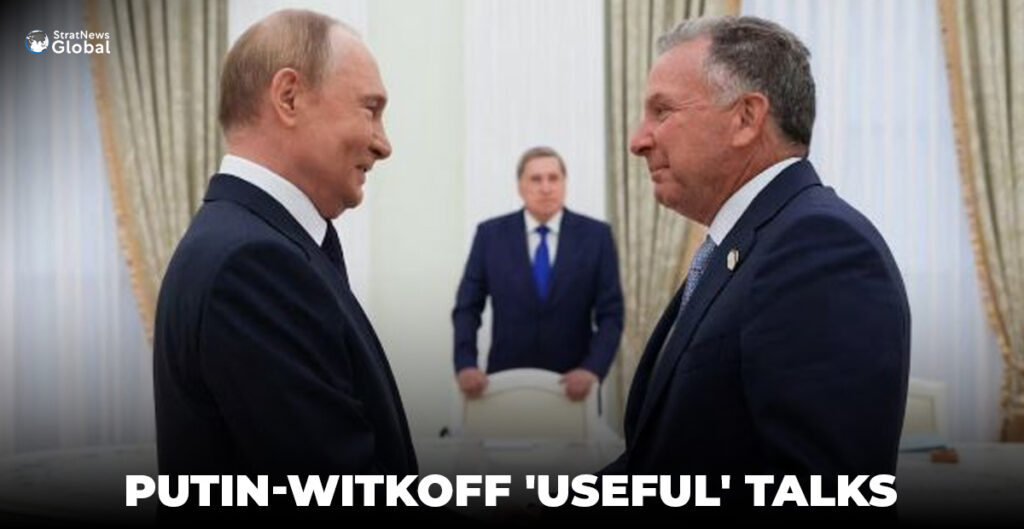
Russia: Putin And Witkoff Engage In ‘Useful’ Talks Ahead Of Trump’s Sanctions Deadline
U.S. envoy Steve Witkoff met with Russian President Vladimir Putin on Wednesday for what a Kremlin aide described as “useful and constructive” discussions, just two days before President Donald Trump’s deadline for Russia to accept a peace deal in Ukraine or face additional sanctions.
Witkoff met Putin for around three hours on a last-minute mission to seek a breakthrough in the 3-1/2-year war that began with Russia’s full-scale invasion of Ukraine.
Kremlin foreign policy aide Yuri Ushakov said the two sides had exchanged “signals” on the Ukraine issue and discussed the possibility of developing strategic cooperation between Moscow and Washington, but declined to give more details until Witkoff had reported back to Trump.
Trump’s Tariff Threats
Russian investment envoy Kirill Dmitriev, who earlier greeted Witkoff on arrival and strolled with him in a park near the Kremlin, posted on social media: “Dialogue will prevail.”
There was no immediate comment from the U.S. side.
Trump, increasingly frustrated with Putin over the lack of progress towards peace, has threatened to impose heavy tariffs on countries that buy Russian exports.
He is exerting particular pressure on India, which along with China is a huge buyer of Russian oil. The Kremlin says threats to penalise countries that trade with Russia are illegal.
It was not clear what Russia might offer to Witkoff in order to stave off Trump’s threat.
‘Useful And Constructive Conversation’
Ushakov, who was present, told Russian news outlet Zvezda: “We had a very useful and constructive conversation.”
He added: “On our part, in particular on the Ukrainian issue, some signals were transmitted. Corresponding signals were also received from President Trump.”
Bloomberg and independent Russian news outlet The Bell reported that the Kremlin might propose a moratorium on air strikes by Russia and Ukraine – an idea that was mentioned last week by Belarusian President Alexander Lukashenko during a meeting with Putin.
Such a move, if agreed, would fall well short of the full and immediate ceasefire that Ukraine and the U.S. have been seeking for months. But it would offer some relief to both sides.
Since the two sides resumed direct peace talks in May, Russia has carried out its heaviest air attacks of the war, killing at least 72 people in the capital Kyiv alone. Trump last week called the Russian attacks “disgusting”.
Ukraine continues to strike Russian refineries and oil depots, which it has hit many times.
Ukrainian President Volodymyr Zelenskyy said on Wednesday that Russia had attacked a gas pumping station in southern Ukraine in what he called a deliberate and cynical blow to preparations for the winter heating season. Russia said it had hit gas infrastructure supplying the Ukrainian military.
Andriy Yermak, chief of staff to Zelenskyy, said on Wednesday that a full ceasefire and a leaders’ summit were required. “The war must stop and for now this is on Russia,” he posted on Telegram.
‘Last-Ditch Effort’
Putin is unlikely to bow to Trump’s sanctions ultimatum because he believes he is winning the war and his military goals take precedence over his desire to improve relations with the U.S., three sources close to the Kremlin said.
“The visit of Witkoff is a last-ditch effort to find a face-saving solution for both sides. I don’t think, however, that there will be anything of a compromise between the two,” said Gerhard Mangott, an Austrian analyst and member of a group of Western academics and journalists who have met regularly with Putin over the years.
“Russia will insist it is prepared to have a ceasefire, but (only) under the conditions that it has formulated for the last two or three years already,” he said in a telephone interview.
“Trump will be under pressure to do what he has announced – to raise tariffs for all the countries buying oil and gas, and uranium probably as well, from Russia.”
The Russian sources said that Putin was sceptical that yet more U.S. sanctions would have much of an impact after successive waves of economic penalties during 3-1/2 years of war.
Putin’s Conditions For Peace
The Russian leader does not want to anger Trump, and he realises that he may be spurning a chance to improve relations with Washington and the West, but his war goals are more important to him, two of the sources said.
Putin’s conditions for peace include a legally binding pledge NATO will not expand eastwards, Ukrainian neutrality, protection for Russian speakers and acceptance of Russia’s territorial gains in the war, Russian sources have said.
Zelenskyy has said Ukraine would never recognise Russia’s sovereignty over its conquered regions and that Kyiv retains the sovereign right to decide whether it wants to join NATO.
Witkoff, a real estate billionaire, had no diplomatic experience before joining Trump’s team in January, but has been simultaneously tasked with seeking ceasefires in the Ukraine and Gaza wars, as well as negotiating in the crisis over Iran’s nuclear programme.
(With inputs from Reuters)
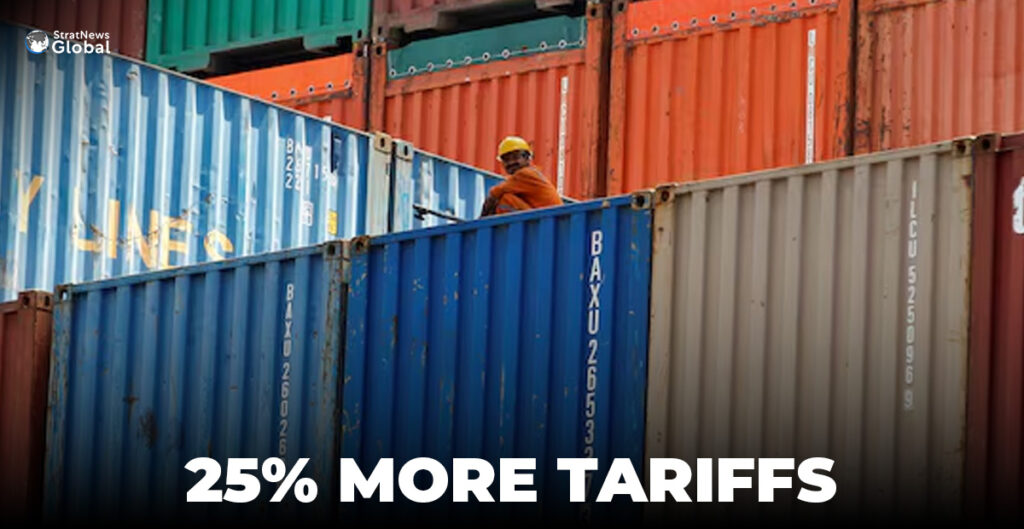
Trump Slaps Additional 25% Tariff On Indian Goods, Total Goes Up To 50%
Donald Trump, on Wednesday night, announced an additional 25% tariff on Indian imports as a “penalty” for New Delhi’s continued purchase of crude oil from Russia.
He also warned that similar punitive measures would be taken against other countries that directly or indirectly buy oil from Moscow and contribute to cash-strapped Vladimir Putin’s ongoing war in Ukraine.
This latest escalation by Trump brings total U.S. import duties on Indian goods to 50%, making them 20% higher than those imposed on China and 31% more than the tariffs on Pakistan.
The newly introduced penalty tariff is set to take effect in 21 days.
In an executive order signed earlier in the day, Trump wrote, “I find that the Government of India is currently, directly or indirectly, importing oil from the Russian Federation… and, in my judgment, I have determined it necessary to impose an ad valorem duty on imports of articles from India…”
Trump Criticises India
The move comes shortly after Trump made scathing remarks about India-U.S. trade relations. Speaking to a U.S. broadcaster, he said, “India has not been a good trading partner… we settled on 25%… but I think I’m going to raise that substantially over the next 24 hours because they’re buying Russian oil.”
Such comments, along with others in a similar tone, risk severely damaging ties between two of the world’s largest economies, potentially reshaping the global geopolitical and security order. Analysts suggest that this may push India closer to Russia, Brazil, and even China, all members of the BRICS grouping.
The shift in dynamics has also been highlighted by Trump’s sudden tariff cut for Pakistan—now down to 19%—alongside the signing of a new trade deal that includes plans for the development of Pakistan’s domestic oil reserves.
On July 30, Trump issued a directive that India would face a 25% tariff in addition to a still-unspecified penalty for continuing to purchase Russian oil and military hardware.
Trump’s Reciprocal Tariffs
That announcement came just two days before the expiry of a deadline Trump had set for applying “reciprocal tariffs” to several U.S. trading partners, a policy initially announced in April but suspended to allow negotiations.
Trump also railed against what he termed India’s “strenuous and obnoxious non-monetary trade barriers,” adding, “India is our friend (but) over the years, we’ve done relatively little business with them because their tariffs are far too high—among the highest in the world. And they have the most strenuous and obnoxious non-monetary trade barriers of any country.”
Responding to Trump’s barrage of criticism, the Indian government noted that several Western countries—including the U.S. itself—continue to engage in commerce with Russia.
New Delhi explained its reliance on Russian oil as “a necessity compelled by the global market situation,” contrasting this with countries criticising India while continuing to import non-essential goods from Russia.
The government pointed out that the European Union had purchased €67.5 billion worth of liquefied natural gas (LNG) from Russia in 2024 alone.
Escalating Friction
India-U.S. trade relations have been under increasing strain in recent months.
The escalating friction comes as the two sides struggle to finalise a comprehensive trade agreement—talks for which began in December last year under the then-President Joe Biden.
The deal would have slashed tariffs on Indian exports to the U.S., but negotiations have since stalled. India has resisted American demands for wider market access, especially for U.S. agricultural products, citing the price-sensitive nature of its domestic farm economy.
This impasse prompted Trump to accuse New Delhi of being a “very big tariff abuser.”
Despite these rising tensions, Indian government sources said last week that the 25% tariff hike would have a “negligible” effect on India’s economy.
According to those officials, the GDP impact is unlikely to exceed 0.2%—a view echoed by an India-based economist who told Bloomberg that the expected GDP slowdown would be around 0.3%.
However, those estimates were based solely on the initial 25% reciprocal tariff and did not account for the added penalty announced on Wednesday.
(With inputs from IBNS)
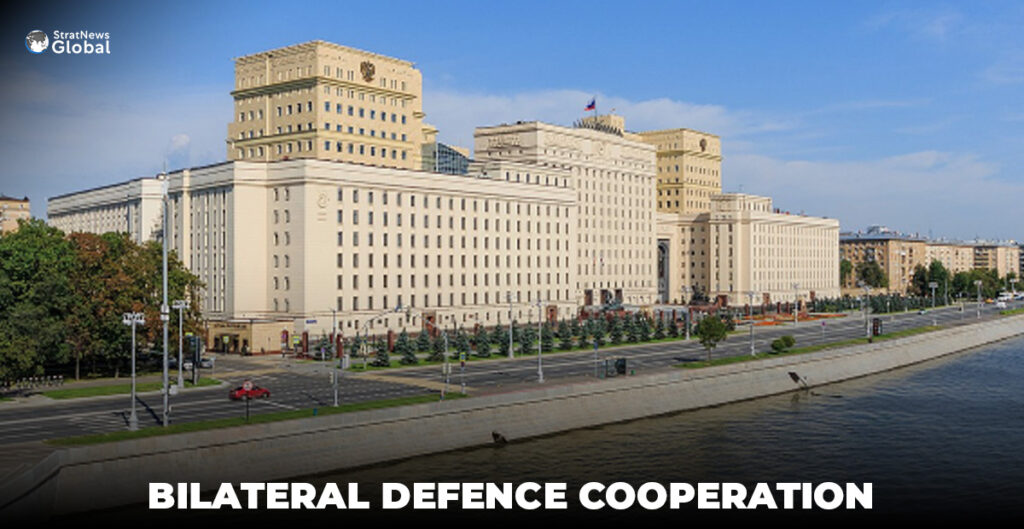
Russian Deputy Minister, Indian Envoy Discuss Strengthening Defence Ties
India and Russia, on Tuesday, reaffirmed their strong commitment to deepening bilateral defence cooperation during a high-level meeting between Indian Ambassador Vinay Kumar and Russia’s Deputy Defence Minister Colonel-General Alexander Fomin.
According to an official statement released by the Russian Ministry of Defence, Ambassador Kumar held talks with Col-Gen Fomin, who oversees Russia’s international military and defence collaboration.
Enduring Diplomatic Warmth
The meeting, the ministry noted, was conducted in a “warm and friendly atmosphere, customary for Russian-Indian ties,” underscoring the enduring nature of the relationship between the two nations.
“The two sides engaged in a detailed discussion on current issues of bilateral defence cooperation and reiterated their shared intention to further strengthen collaboration in this domain, reflecting the spirit of their particularly privileged strategic partnership,” the statement said.
The diplomatic engagement came against the backdrop of mounting pressure from U.S. President Donald Trump, who has threatened to impose severe sanctions on India over its ongoing imports of crude oil from Russia.
Kremlin Condemns US Threat
Russia on Tuesday accused the United States of applying illegal trade pressure on India following President Donald Trump’s renewed threat to raise tariffs over New Delhi’s Russian oil imports.
“We hear many statements that are in fact threats, attempts to force countries to cut trade relations with Russia. We do not consider such statements to be legal,” Kremlin spokesman Dmitry Peskov told reporters.
“We believe that sovereign countries should have and do have the right to choose their own trading partners, partners for trade and economic cooperation, and to choose for themselves the forms of trade and economic cooperation that are in the interests of a particular country.”
Trump’s Sanctions Threat
Trump has said that from Friday, he will impose new sanctions on Russia as well as on countries that buy its energy exports, unless Moscow takes steps to end its 3-1/2 year conflict with Ukraine.
Russian President Vladimir Putin has signalled no change in Russia’s stance on the war, despite the looming deadline.
New Delhi Responds
New Delhi has called Trump’s threats “unjustified and unreasonable” and vowed to protect its economic interests, deepening a trade rift between the two major economies.
The Indian Ministry of External Affairs (MEA) underscored that India’s energy purchases from Russia are driven by national necessity, aimed at ensuring affordable and reliable fuel access for its population.
“India’s imports are intended to provide predictable and affordable energy to Indian consumers. These are not optional luxuries but necessary responses to international market dynamics. It is ironic that the very countries criticising India continue their own economic engagements with Russia — trade that, unlike India’s, cannot be defended as a pressing national requirement,” the MEA statement read.
Two Indian government sources told Reuters on the weekend that India will keep purchasing oil from Russia despite Trump’s threats.
(With inputs from IBNS and Reuters)
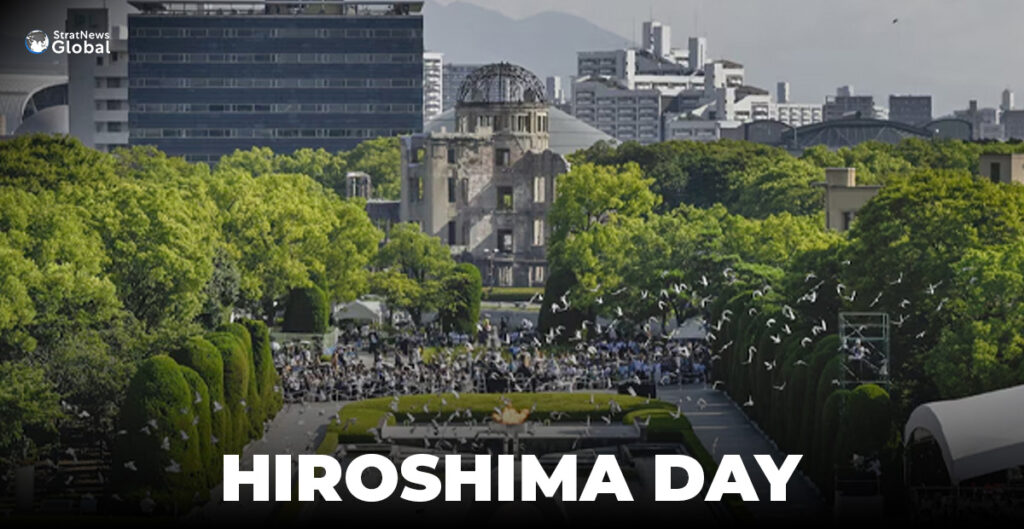
Hiroshima Marks 80 Years Since A-Bomb, Renews Warning Against Nuclear Weapons
Eighty years after the first wartime use of an atomic bomb, thousands gathered in Hiroshima on Wednesday, bowing their heads in prayer as the city’s mayor urged world leaders to confront the continued threat posed by existing nuclear arsenals.
The western Japanese city of Hiroshima was levelled on August 6, 1945, when the United States dropped a uranium bomb nicknamed “Little Boy”, killing about 78,000 people instantly.
Hiroshima was the headquarters of some military units and a major supply base during World War Two. U.S. war planners calculated that the surrounding mountains would concentrate the force of the bomb and enhance its destructiveness.
“Little Boy” unleashed a surge of heat reaching 4,000 degrees Celsius (7,200 Fahrenheit) and radiation that killed tens of thousands more by the end of the year. It was followed by a plutonium bomb on Nagasaki three days later, and Japan’s surrender on Aug. 15.
Representatives from a record 120 countries and territories, including nuclear superpower the United States, and Israel, which neither confirms nor denies having nuclear weaponry, attended the annual ceremony at the Hiroshima Peace Memorial Park for the milestone year.
After a moment of silence observed at 8:15 a.m., the exact time of the blast, Mayor Kazumi Matsui called on leaders to heed the lessons of Hiroshima and Nagasaki and warned of the consequences of the global trend towards a military buildup.
Nuclear Arms Seen ‘Unavoidable’
“Among the world’s political leaders, there is a growing belief that possessing nuclear weapons is unavoidable in order to protect their own countries,” he said, noting that the U.S. and Russia possessed 90% of the world’s nuclear warheads.
“This situation not only nullifies the lessons the international community has learned from the tragic history of the past, but also seriously undermines the frameworks that have been built for peace-building.
“To all the leaders around the world: Please visit Hiroshima and witness for yourselves the reality of the atomic bombing.”
Yoshikazu Horie, a 71-year-old tourist, expressed a similar sentiment.
“It feels more and more like history is repeating itself. Terrible things are happening in Europe … Even in Japan, in Asia, it’s going the same way, it’s very scary,” he said.
“I’ve got grandchildren and I want peace so they can live their lives happily.”
In the decades following the attacks, those who survived, called “hibakusha”, often faced discrimination as rumours spread that they carried diseases and their offspring could be tainted. Their numbers fell below 100,000 for the first time this year.
Japan, the only country to have suffered nuclear attacks, has stated its commitment to nuclear disarmament but is not a signatory or observer of the U.N. treaty to ban nuclear weapons.
(With inputs from Reuters)
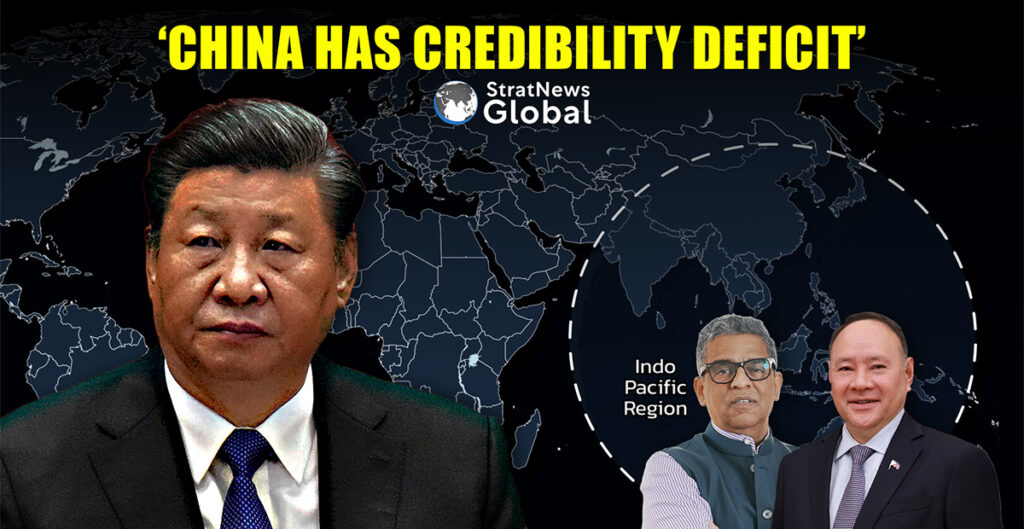
No Soft Power Without Hard Power: Philippines On India’s Response To China
The way India stood up to Chinese aggression in Eastern Ladakh has been a very useful learning experience for us, says Philippines’ Secretary of National Defence Gilberto Teodoro.
“There can be no soft power without hard power. Appeasement only breeds more hunger,” he told StratNews Global.
If India and China have an un-demarcated land boundary, the Philippines has territorial disputes with China in the maritime domain. In 2016, the Permanent Court of Arbitration at the Hague ruled in favour of the Philippines, saying some Chinese actions in the South China Sea are illegal. China rejected the tribunal’s decision.
Chinese Aggression
“China has been very aggressive in denying the Philippines access to certain areas of what we call the West Philippine Sea. We see ourselves, contrary to China’s narrative, as a target of China’s desire for dominance, for hegemony per se,” said Teodoro.
Hailing freedom of speech and that of the Press in India and the Philippines, he added that “our articulation of issues is not artificial, not contrived or state-controlled”. China’s articulation of the issue caters to its home audience, so it does not gain them any adherence in the international sphere, he added.
China’s Deficit Of Credibility
According to him, the basic stumbling block to fair and structured dispute resolution with China is the latter’s deficit of credibility and trust. “That’s true not only in the Indo-Pacific area but also in the Baltics, in Europe and in Africa. China cannot buy its way everywhere. Principles matter.”
Teodoro is part of the delegation accompanying Philippines President Ferdinand R. Marcos Jr. who is currently on a state visit to India. The visit began on a day the Indian and Philippine navies concluded their first joint maritime drills in the South China Sea. Yesterday, both countries elevated their relationship to a strategic partnership.
The BrahMos Experience
In 2022, the Philippines became the first buyer of BrahMos, India’s supersonic cruise missile. It has been a very enlightening experience for us, and it is part of our military deterrence, said Teodoro. So will there be follow-on orders? “We will continue to advance discussions on how we can envelop the partnership on a sustainable basis.”
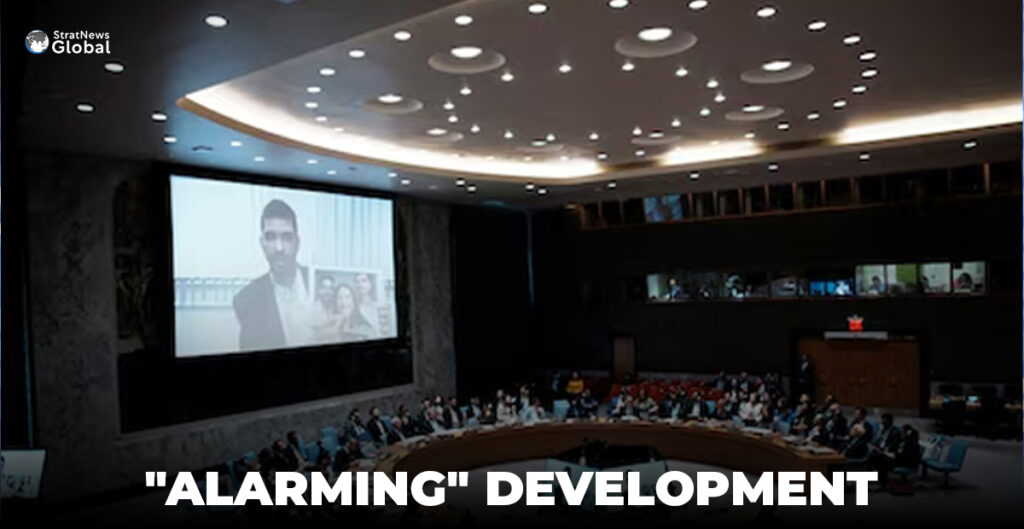
UN Calls Possible Expansion Of Israeli Operations In Gaza ‘Deeply Alarming’
The United Nations on Tuesday described reports of a potential expansion of Israeli military operations across the Gaza Strip as “deeply alarming,” if confirmed.
U.N. Assistant Secretary-General Miroslav Jenca told a U.N. Security Council meeting on the situation in Gaza that such a move “would risk catastrophic consequences … and could further endanger the lives of the remaining hostages in Gaza.
“International law is clear in this regard; Gaza is and must remain an integral part of the future Palestinian state,” he added.
Israeli Prime Minister Benjamin Netanyahu met senior security officials on Tuesday to finalise a new strategy for the nearly two-year-old war in Gaza, with media reporting he favoured a complete military takeover of the Palestinian enclave.
China’s deputy U.N. representative, Geng Shuang, expressed “great concern” about the reported plans and added: “We urge Israel to immediately halt such dangerous actions.”
He called for a ceasefire and urged countries with influence to take concrete steps to help bring one about.
Ahead of the U.N. meeting, Israeli Foreign Minister Gideon Saar addressed reporters at the U.N. and criticised countries that sought to pressure Israel by recognising a “virtual” Palestinian state, saying this had “assassinated” a hostage deal and ceasefire and prolonged the war.
Palestinian Statehood
Three Group of Seven countries have announced plans to recognise Palestinian statehood. France and Canada have said they would do so in September at the U.N. General Assembly. Britain said it would also back Palestinian statehood in September unless Israel takes substantive steps to end suffering in Gaza, where it is fighting Hamas, and meets other conditions.
The U.S. ambassador to the U.N., Dorothy Shea, called a U.N. conference last week that saw dozens of ministers urge the world to work toward a two-state solution between Israel and the Palestinians an “unproductive publicity stunt,” and said it had undercut the efforts of mediators.
The brother of Israeli hostage Evyatar David, who was shown appearing emaciated in a video released by Hamas last week, told the Security Council to use its leverage to secure the immediate unconditional release of remaining hostages and to ensure humanitarian aid reaches them.
“Every moment of delay is a step closer to the final tragic outcome,” Ilay David told the meeting.
He said the video showed his brother as “a living skeleton. He had barely the strength to move or speak, his voice barely recognisable,” the brother said, adding that neither he nor his mother could bring themselves to watch.
“We knew that if we did, we would be unable to function. My father and sister, however, felt they had to see him, to hear his voice, to feel him somehow. Now these images haunt them. My father cannot sleep, and my mother has not stopped crying ever since,” he said.
(With inputs from Reuters)
PM Modi To Visit China For SCO Summit, First Since Galwan Clash
Prime Minister Narendra Modi is set to visit China from August 31 to September 1 to attend the Shanghai Cooperation Organisation (SCO) summit in Tianjin—his first trip to the country since the 2020 Galwan Valley clash. The visit is seen as a potential move toward normalising strained bilateral ties.
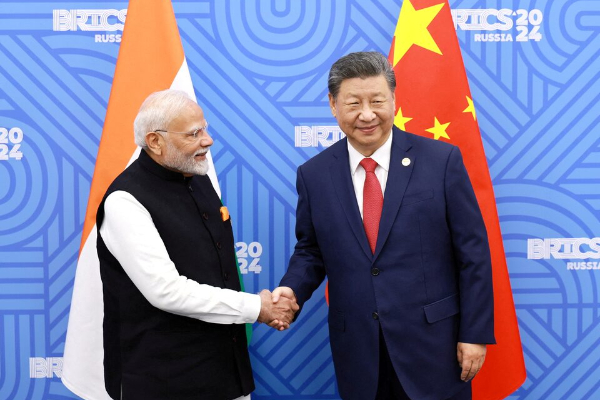
Although Modi last visited China in 2019, he did meet Chinese President Xi Jinping on the sidelines of the BRICS Summit in Kazan in October 2024.
That interaction helped spur momentum toward reducing border tensions, further aided by the resumption of the Kailash-Mansarovar yatra, which contributed significantly to restoring diplomatic engagement.
Modi’s upcoming visit comes at a time when India is under growing pressure from the United States, particularly over oil purchases from Russia, while also facing the impact of stiff tariffs imposed by U.S. President Donald Trump.
In this context, a recalibration of India-China relations could serve as a strategic counterbalance to mounting U.S. demands.
Tensions Linger Over Pahalgam
India’s participation in the SCO summit also unfolds under the shadow of persistent Chinese support for Pakistan and the unresolved tensions surrounding the April 22 Pahalgam terror attack, which killed 26 people.
In June, Indian Defence Minister Rajnath Singh declined to sign a joint statement at an SCO defence ministers’ meeting, objecting to the omission of any reference to the Pahalgam incident, while the statement included a mention of Balochistan—seen by India as a veiled accusation instigated by Pakistan.
In a notable shift, however, China took a strong stance in July following the U.S. designation of The Resistance Front, a Pakistan-based Lashkar-e-Taiba proxy, as a foreign terrorist organisation for its role in the Pahalgam attack.
Chinese Foreign Ministry spokesperson Lin Jian issued a firm condemnation of the violence, stating, “China firmly opposes all forms of terrorism and strongly condemns the terrorist attack that occurred on April 22… China calls on regional countries to enhance counterterrorism cooperation and jointly maintain regional security and stability.”
At the upcoming summit, leaders from all ten SCO member states—Belarus, China, India, Iran, Kazakhstan, Kyrgyzstan, Pakistan, Russia, Tajikistan, and Uzbekistan—are expected to discuss regional security, terrorism, and economic cooperation.
There is anticipation that Prime Minister Modi may also hold bilateral meetings with Russian President Vladimir Putin and Chinese President Xi Jinping on the sidelines, further advancing diplomatic outreach and potential collaboration.
Founded in 2001, the SCO has evolved into a key regional platform aimed at promoting stability, fostering economic and security cooperation, and enhancing mutual trust among member nations.
This year’s summit carries added weight as India navigates a complex diplomatic landscape marked by external pressure, regional rivalries, and a desire for strategic rebalancing.
(With inputs from IBNS)
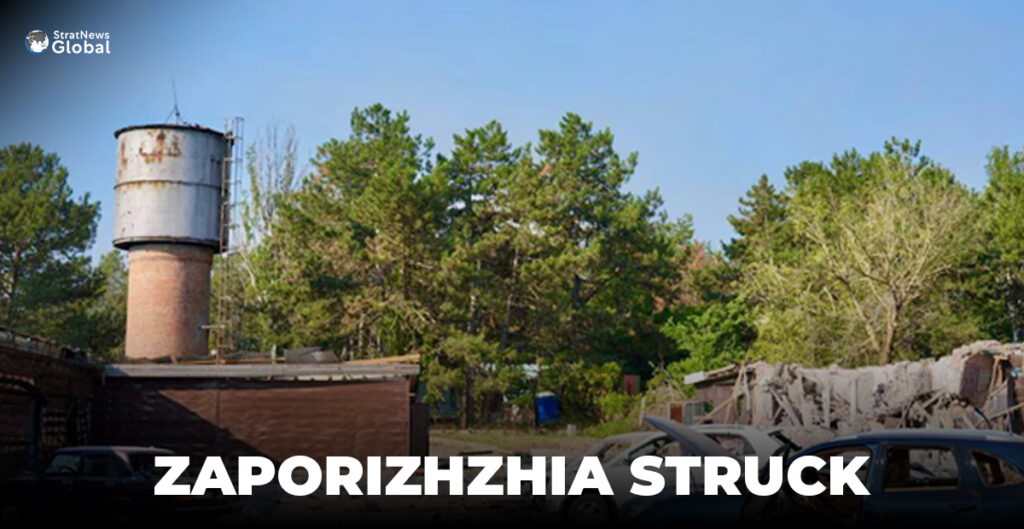
Two Killed, 10 Wounded In Russian Strikes In Ukraine’s Zaporizhzhia Region
Two people were killed and ten others, including four children, were injured in Russian strikes on Ukraine‘s Zaporizhzhia region, Governor Ivan Fedorov said on Wednesday.
Russian forces carried out 567 attacks over the 24 hours into Wednesday morning across 16 settlements in the region, Fedorov said.
Zaporizhzhia has been on the front lines of the war that Russia launched against its smaller neighbour in February 2022.
Damages Reported
At least nine buildings were damaged in the early morning strikes on the Zaporizhzhia city district alone, Fedorov said on the Telegram messaging app. Zaporizhzhia city is the administrative centre of the broader region.
“Emergency services continue to respond on the ground,” Fedorov said.
Reuters could not independently verify the report. There was no immediate comment from Russia.
Both sides deny targeting civilians in their strikes on each other’s territory. But thousands of civilians have died in the conflict, the vast majority of them Ukrainian.
Airstrikes On Kharkiv
Earlier on Tuesday, one person was killed and 10 others, including two children, were injured in Russia’s largest airstrike on the Ukrainian town of Lozova since the war began, according to officials.
The “massive strike” damaged the train station and other infrastructure in the town, a transport hub in the Kharkiv region bordering Russia, state rail operator Ukrzaliznytsia said in a statement.
Photos shared by emergency services appeared to show a damaged train and rubble covering a train platform.
Critical Infrastructure Hit
“Critical infrastructure, apartment buildings and private homes have been damaged … Lozova has endured the largest attack since the beginning of the war,” town council head Serhiy Zelenskiy wrote on the Telegram messaging app.
Two children were wounded in the attack that left parts of the region without power and water, he added.
Ukrzaliznytsia said one of its employees died and four more were injured. Emergency services said 10 people in total were injured in the attack.
(With inputs from Reuters)
Terrorism Backer Pakistan Accuses Afghanistan Of Terrorism
A case of pot calling the kettle black? Pakistan’s ambassador to the UN, Asim Iftikhar Ahmad took aim at Taliban ruled Afghanistan during the General Assembly session and warned, “We must ensure that Afghanistan does not become a breeding ground for terrorists,” referring to the Tehreek–Taliban Pakistan (TTP) and other groups operating from within Afghanistan.
Pakistan’s angst clearly stems from the repeated attacks by the TTP on military and civilian targets in the country … but there are scores of terrorist and extremist organisations that operate freely in Pakistan. To name only a few, there’s the Lashkar-e-Taiba, Jaish-e-Mohammad and so on. Also recall that the late Al Qaeda leader Osama bin Laden lived in Pakistan for as long as nine years, shifting residence no less than six times.
The US has documented Pakistan’s role in backing the Afghan Taliban when its forces were deployed in the country defending elected Afghan government, whether that of President Hamid Karzai or Ashraf Ghani.
In Kabul, Taliban officials have denied the presence of any foreign terrorist groups on Afghan soil. However, the 36th UN Security Council Monitoring Committee report on ISIS states otherwise. The report considers the threat from ISIS, Al-Queda and other affiliated groups to be “diverse and dynamic.”
The report also identified new training sites which likely belong to both Al-Qaeda and TTP. Besides this, the Islamic State Khorasan province also remains active, and has been labelled as the “most serious” regional and international threat in South Asia. The main targets of this group are Shia communities, foreigners, and the Taliban itself, and they operate close to Pakistan’s borders. Reports say they have established suicide training courses for minors.
Not to forget, Al Qaeda leader Ayman Zawahiri who succeeded bin Laden after he was killed in 2011. Zawahiri died in Kabul in a US drone strike in July 2022. Clearly, Al Qaeda has a base in Afghanistan, so does the Haqqani network which is blamed for the suicide attack on the Indian Embassy in Kabul in which 56 people including the defence attache were killed.
Although the Taliban leadership claim they are not interested in spreading their ideology through war or any other means, they may be playing a waiting game here. They need to politically stabilise and rebuild before seeking to spread the faith. The region needs to be ever watchful.
(This article was written by Tisya Sharma, she is an intern at StratNewsGlobal)
Leaders Of South Korea, Vietnam To Hold Talks Next Week Amid Trade Concerns: Sources
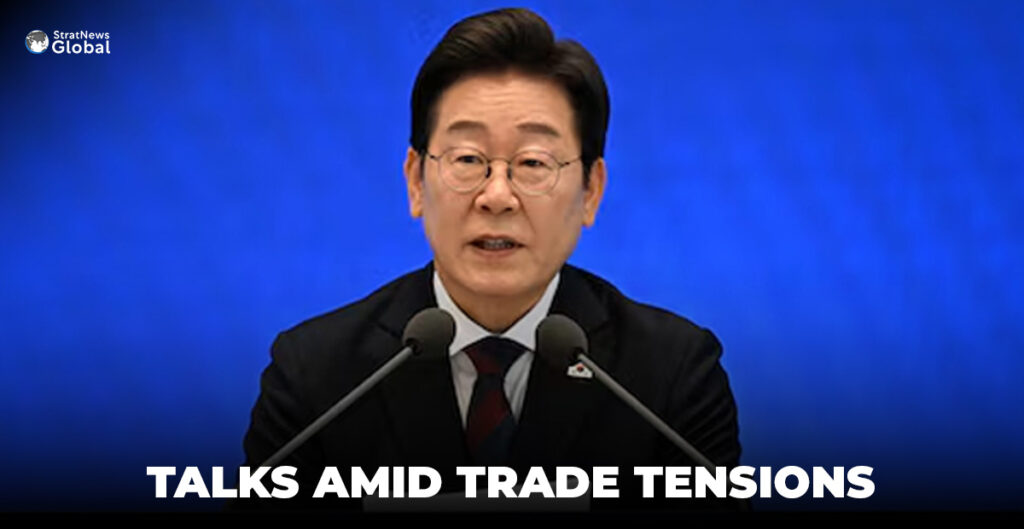
New South Korean President Lee Jae-myung is set to host Vietnamese leader To Lam next week, two sources said, as both countries seek to strengthen technological cooperation amid global trade tensions that may strain bilateral relations.
Korean companies have historically been the biggest investors in the Southeast Asian nation, pouring in $92 billion, by the end of last year, Vietnam government data shows, mainly in factories.
Lam is expected to arrive on Sunday for the four-day event, the first state visit since Lee took office in June, said the sources, who sought anonymity, as the visit has not yet been announced.
Global trade uncertainty will figure in the talks in Seoul next week, said one of the sources. They come after the Trump administration approved new tariffs last week on goods from dozens of countries, including South Korea and Vietnam.
The South Korean presidential office declined to comment. Vietnam’s foreign ministry did not immediately respond to a request for comment.
Vietnam, which raised taxes on multinationals last year, drawing criticism from large foreign investors, now faces duties of 20% on its exports to the United States, while duties on South Korean products are set at 15%.
Korean Investments In Vietnam
Korean investment in Vietnam has led to the setting up of some research centres and the transfer of valuable technology to its companies.
Many Korean multinationals have used Vietnam as an export hub, benefiting for years from lower labour costs, generous tax incentives and Hanoi’s numerous free trade pacts with dozens of countries.
Top investor Samsung Electronics has its largest overseas industrial operations in Vietnam, from where it exports more than half the telephones it sells each year, with a large number destined for the United States.
Korean companies appear to have slowed investments this year, however, as Vietnam’s latest government data does not list them among the top seven investors over the first seven months.
But companies with operations in Vietnam remain largely optimistic, ruling out immediate relocation on the grounds that it remains more attractive than rivals, the tariff impact was still unclear, and the size of existing investments discouraged sudden moves, said two people with direct knowledge.
It is not clear whether Vietnam may negotiate different rates for specific sectors, with possibly lower duties on electronics exports, which are the most relevant to Korean firms.
In April, the Trump administration exempted from new global tariffs several electronics items, such as laptops and smartphones, but left the duration and scope unclear. Duties on semiconductors are expected to be unveiled later.
(With inputs from Reuters)