

Support us by contributing to StratNewsGlobal on the following UPI ID
ultramodern@hdfcbank

Strategic affairs is our game, South Asia and beyond our playground. Put together by an experienced team led by Nitin A. Gokhale. Our focus is on strategic affairs, foreign policy and international relations, with higher quality reportage, analysis and commentary with new tie-ups across the South Asian region.
You can support our endeavours. Visit us at www.stratnewsglobal.com and follow us on YouTube, Twitter, Facebook and Instagram.
र 500 per month
र 1000 per month
र 5000 per year
र 10000 per year
Donate an amount of your choice
र 500 per month
Donate र 500 per month

र 1000 per month
Donate र 1000 per month
र 5000 per year
Donate र 5,000 per year
र 10000 per year
Donate र 10,000 per year
Donate an amount of your choice
Donate an amount of your choice

Taiwan Probes Chinese Firms For Tech Talent Poaching
Taiwanese authorities on Thursday announced a probe into 16 Chinese firms suspected of illegally recruiting talent from the island’s semiconductor and high-tech sectors, amid rising fears over technology leaks.
More than 300 agents searched 70 locations and questioned 120 people between July 15 and August 6, the Taiwan Investigation Bureau said, in coordinated raids on Chinese firms suspected of illegally recruiting engineers and operating unlicensed offices in Taiwan.
Beijing claims democratically governed Taiwan as its own territory and has never renounced the use of force to bring the island under its control. Taiwan strongly objects to China’s sovereignty claims and says only the island’s people can decide their future.
Prominent Companies Under Probe
The Chinese companies under investigation include prominent players in semiconductors, chip design, and electronics manufacturing.
Listed Chinese tech firms named in the probe include Goertek, Shenzhen-listed Victory Giant Technology, which supplies Nvidia and is a top PCB maker, NOVOSENSE Microelectronics, and VNET Group, a Nasdaq-listed Chinese data centre firm.
The companies did not immediately respond to Reuters’ requests for comment. China’s Taiwan Affairs Office did not immediately respond to a request for comment.
Competition With US
China’s scramble for chip talent and expertise has intensified as Beijing pushes for self-reliance in advanced semiconductors, amid a deepening tech rivalry with the US.
Taiwanese law prohibits Chinese investment in some parts of the semiconductor supply chain, including chip design, and requires reviews for other areas such as chip packaging, making it difficult for Chinese chip companies to operate on the island legally.
The investigation bureau said Chinese firms had long targeted Taiwan’s high-tech workforce through covert methods, including operating without regulatory approval, using shell companies registered in Hong Kong or foreign entities, or dispatching staff through local hiring agencies to conceal their identities.
Safeguarding Taiwan
“These companies operated in Taiwan without approval from our authorities, illegally conducting business and poaching our high-tech talent,” said Ya-Chun Ku, one of the investigators.
“We will continue to pursue such cases to prevent Chinese firms from unlawfully recruiting talent or operating in Taiwan, and to effectively safeguard Taiwan’s global advantage in the high-tech industry,” she added.
A special task force has handled more than 100 such cases since late 2020.
“The semiconductor and IC design sectors are the backbone of Taiwan’s economic strength, but in recent years have become key targets for Chinese talent-poaching efforts,” the bureau said in a statement.
(With inputs from Reuters)
Indonesia Prepares Island Hospital To Treat 2,000 Wounded Gazans
Indonesia will repurpose a medical facility on its uninhabited Galang Island to treat around 2,000 injured Gazans, who will return home after recovery, a presidential spokesperson said on Thursday.
Muslim-majority Indonesia has sent humanitarian aid to Gaza after Israel started an offensive in October 2023 that Gaza health officials say has killed more than 60,000 Palestinians, whether fighters or non-combatants.
“Indonesia will give medical help for about 2,000 Gaza residents who became victims of war, those who are wounded, buried under debris,” the spokesperson, Hasan Nasbi, told reporters, adding that the exercise was not an evacuation.
Galang Island For Gazans
Indonesia plans to allocate the facility on Galang island, off its island of Sumatra and south of Singapore, to treat wounded Gaza residents and temporarily shelter their families, he said, adding that nobody lived around it now.
The patients would be taken back to Gaza after they had healed, he said.
Hasan did not give a timeframe or further details, referring questions to Indonesia’s foreign and defence ministries, which did not immediately respond to Reuters’ requests for comment.
The plan comes months after President Prabowo Subianto’s offer to shelter wounded Palestinians drew criticism from Indonesia’s top clerics for seeming too close to U.S. President Donald Trump’s suggestion of permanently moving Palestinians out of Gaza.
In response to Trump’s suggestion, the foreign ministry of Indonesia, which backs a two-state solution to resolve the Middle East crisis, said at the time it “strongly rejects any attempt to forcibly displace Palestinians”.
A hospital to treat victims of the COVID-19 pandemic opened in 2020 on Galang, which had been, until 1996, a sprawling refugee camp run by the United Nations, housing 250,000 of those who fled the Vietnam War.
(With inputs from Reuters)
Putin To Meet Trump Next Week, India Visit Likely Too
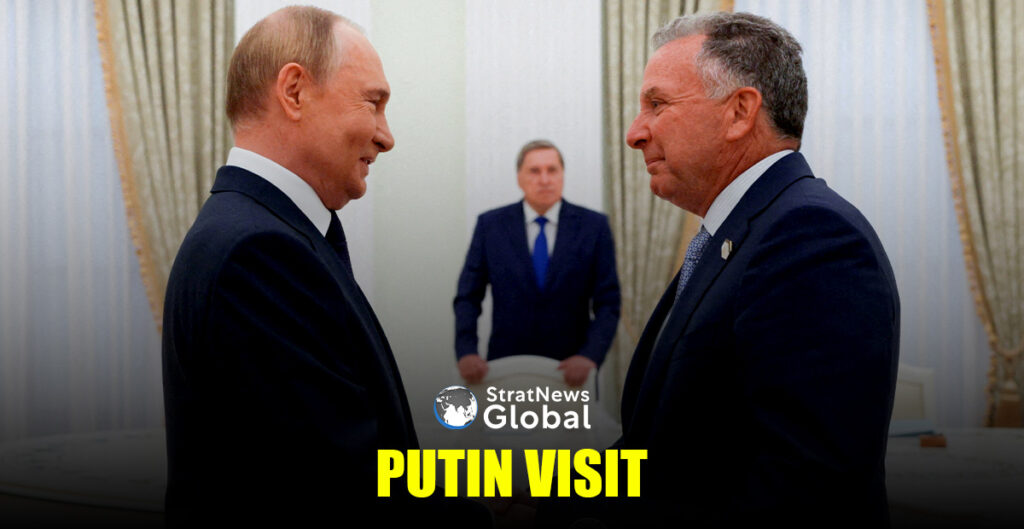
Russia’s President Vladimir Putin has a busy August ahead of him. Sputnik reports that he will be meeting Trump in the coming days. More important from India’s point of view, he is expected in India sometime soon.
National Security Advisor (NSA) Ajit Doval announced the India visit during a meeting with Russia’s Security Council Secretary Sergei Shoigu in Moscow on Thursday.
“Now we have established very good relations, which we value very much, a strategic partnership between our countries. We interact at a high level… We were pleased to know about President Putin’s visit to our country. I think that the dates are almost finalized now, ” the NSA said. He is currently in Moscow to bolster security, economic and energy ties between the two countries.
The last bilateral meeting between PM Modi and Putin took place in July 2024 in Moscow, where the 22nd Russia-India Annual Summit was held. During the meeting, the PM extended an invitation to Vladimir Putin to visit India and in May 2025, he later reaffirmed the invite, as per the Kremlin press service.
EAM S Jaishankar too is expected to travel to Russia in the third week of August for a scheduled meeting of the India-Russia Inter-Governmental Commission on Trade, Economic, Scientific, Technological and Cultural Cooperation, as reported by the Hindustan Times. India hosted the last meeting of the body in November 2024, and it is now Russia’s turn.
Since Putin will be meeting Trump next week, well ahead of his Delhi visit, Modi will get a first hand assessment of Trump’s thinking. An agreement or understanding on ending the Ukraine war would come as a relief since the US leader has tied the trade talks with India to its purchase of Russian oil.
PM Modi Pledges To Protect Farmers As Trump Fires Fresh Tariff Salvo
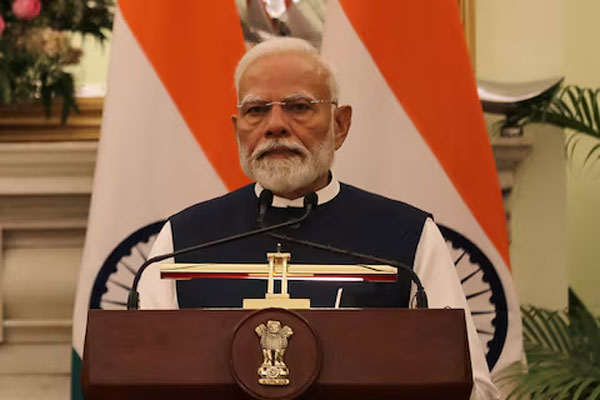
Prime Minister Narendra Modi on Thursday asserted that he would not compromise on India’s farmers’ interests, even if it comes at a heavy cost, marking his first response to United States President Donald Trump‘s 50% tariff hike on Indian goods.
“For us, our farmers’ welfare is supreme,” Modi said at an event in New Delhi. “India will never compromise on the well-being of its farmers, dairy (sector) and fishermen. And I know personally I will have to pay a heavy price for it,” he said.
Trump announced an additional 25% tariff on Indian goods on Wednesday, raising the total duty to 50% — among the highest imposed on any U.S. trading partner. The new tariff, effective August 28, is meant to penalise India for continuing to buy Russian oil, Trump has said.
While Modi did not explicitly mention the U.S. or the collapsed trade talks, his comments marked a clear defence of India’s position.
Trade talks between India and the United States broke down after five rounds of negotiations over disagreement on opening India’s vast farm and dairy sectors and stopping Russian oil purchases.
‘Extremely Unfortunate’
India’s foreign ministry has called the U.S. decision “extremely unfortunate” and said it would “take all necessary steps to protect its national interests.”
The U.S. has yet to impose similar tariffs on China, the biggest buyer of Russian oil. Experts say China’s dominance in rare earth minerals — critical to high-tech industries — gives it leverage that India currently lacks.
“The U.S. tariff hike lacks logic,” Dammu Ravi, secretary of economic relations in India’s foreign ministry, told reporters.
“This is a temporary aberration, a temporary problem that the country will face, but in the course of time, we are confident that the world will find solutions.”
India is already signalling it may seek to rebalance its global partnerships. Modi is preparing for his first visit to China in over seven years, suggesting a potential diplomatic realignment amid growing tensions with Washington.
Brazilian President Luiz Inacio Lula da Silva said on Wednesday he would initiate a conversation among the BRICS group of developing nations about how to tackle Trump’s tariffs.
He said he planned to call Modi and China’s Xi Jinping. The BRICS group also includes Russia and South Africa.
India’s Ravi added that “like-minded countries will look for cooperation and economic engagement that will be mutually beneficial to all sides.”
Modi Faces Mounting Domestic Pressure
Both supporters of Modi and the opposition Congress party have called on him to respond firmly to the U.S. tariffs, urging action “with self-respect and dignity.”
“India’s national interest is supreme. Any nation that arbitrarily penalises India for its time-tested policy of strategic autonomy, rooted in the ideology of non-alignment, does not understand the steel frame India is made of,” Congress party president Mallikarjun Kharge said.
Indian industry, already struggling with global headwinds, has expressed alarm.
Sudhir Sekhri, chairman of the Apparel Export Promotion Council, said: “There is no way the industry can absorb such a steep hike”. He demanded fiscal support from the government.
Indian billionaire Mukesh Ambani’s Reliance Industries in its annual report said continuing geopolitical and tariff-related uncertainties may affect trade flows and demand-supply balance.
India’s equity market, which has been weakening due to tariff risks and muted earnings growth, slipped another 0.5% on Thursday to three-month lows. The reaction was muted as investors bet on the tariffs being negotiated down.
(With inputs from Reuters)
Iran Executes Nuclear Scientist For Spying For Mossad
Rouzbeh Vadi, an Iranian nuclear scientist, was executed on Wednesday for allegedly passing information on Iran’s nuclear programme to Israel’s Mossad intelligence agency, according to state broadcaster IRIB on Thursday.
The judiciary’s news outlet Mizan had said on Wednesday that Vadi was convicted of spying for Israel and passing on information about a nuclear scientist killed in Israel’s June air strikes on the Islamic Republic.
Vadi’s Confession Video
“Key facilities were Fordow and Natanz (uranium enrichment plants), for which I sent information. I told them I knew this and that about Fordow, they (Mossad agent) told me to send everything,” Vadi said in what IRIB described as a confession video it ran on the air.
“The entry and exit of nuclear material into the Uranium Conversion Facility (UCF) and Fuel Manufacturing Plant (FMP) were very important to them,” Vadi, who held a PhD in nuclear engineering from Amir Kabir University of Technology, added.
A voiceover in the video said that Vadi met five times with Mossad agents while in Vienna and was asked to open a cryptocurrency account to receive payment for his services. The defendant said in the video that Mossad had promised him a foreign passport should he complete a long-term collaboration.
IRIB on Thursday shared a screenshot of an academic paper presented at an Iranian nuclear conference in 2012 that was written by Vadi as well as Ahmad Zolfaqar and Abdolhamid Minouchehr – two nuclear scientists killed in June by Israel.
In the document, Vadi is introduced as a nuclear researcher at the Atomic Energy Organisation of Iran, the country’s top nuclear body.
Increased Executions
Executions of Iranians convicted of spying for Israel have significantly increased this year, with at least eight death sentences carried out in recent months.
Israel carried out 12 days of air strikes in June, targeting Iran’s top generals, nuclear scientists and sensitive nuclear installations. Iran retaliated with barrages of missiles and drones at Israel.
(With inputs from Reuters)
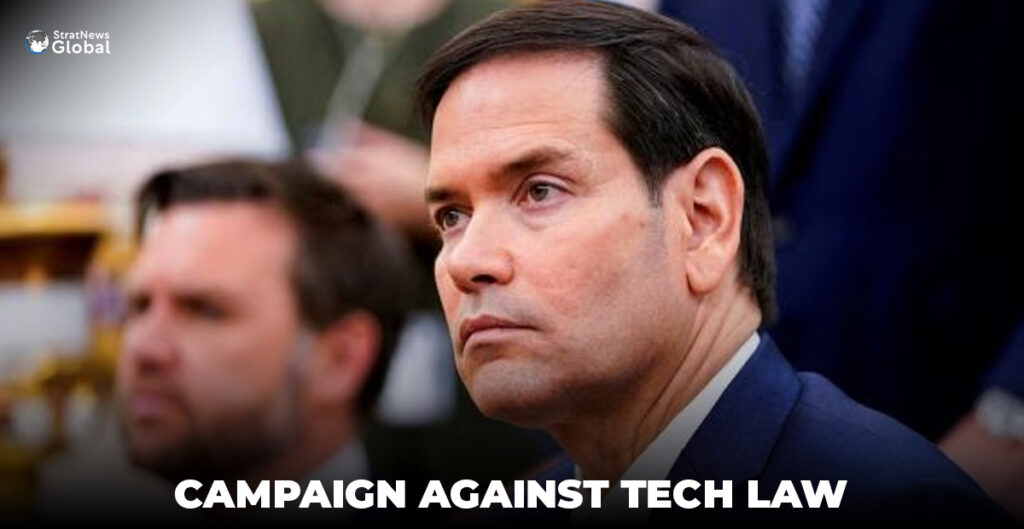
Rubio Directs U.S. Diplomats To Campaign Against EU Tech Law
President Donald Trump’s administration has directed U.S. diplomats in Europe to begin a lobbying campaign aimed at opposing the European Union’s Digital Services Act (DSA), according to an internal diplomatic cable.
Washington argues that the law restricts free speech and places financial burdens on American tech companies.
In a State Department cable dated August 4 that was signed by U.S. Secretary of State Marco Rubio, the agency said the EU was pursuing “undue” restrictions on freedom of expression by its efforts to combat hateful speech, misinformation and disinformation and the DSA was further enhancing these curbs.
Landmark Law
The EU’s DSA is a landmark law that is meant to make the online environment safer and fairer by compelling tech giants to do more to tackle illegal content, including hate speech and child sexual abuse material.
Trump has made combating censorship – particularly what he sees as the stifling of conservative voices online – a major theme of his administration. Top U.S. officials, including Vice President JD Vance, have focused on European officials and regulations, accusing them of “censoring” Americans, an accusation that the European Union rejects.
The cable, whose headline described it as an “action request”, tasked American diplomats across U.S. embassies in Europe with regularly engaging with EU governments and digital services authorities to convey U.S. concerns about the DSA and the financial costs for U.S. tech companies.
“Posts should focus efforts to build host government and other stakeholder support to repeal and/or amend the DSA or related EU or national laws restricting expression online,” the cable said in its “objective” section, referring to U.S. diplomatic missions.
It provided specific suggestions to U.S. diplomats on how the EU law may be changed and the talking points to help them make that argument.
State Department did not comment for this story. EU tech chief Henna Virkkunen’s office did not immediately respond to a request for comment.
In March, EU’s antitrust and tech chiefs told U.S. lawmakers that the new tech rule aimed to keep digital markets open and is not targeted at U.S. tech giants.
The Commission has also pushed back against speculation that the 27-member EU’s landmark tech regulatory regime could be included in the EU-U.S. negotiations. “Our legislation will not be changed. The DMA and the DSA are not on the table in the trade negotiations with the U.S.,” Commission spokesperson Thomas Regnier told a daily news conference.
A Campaign For “Free Speech”
The order to U.S. diplomats marks an acceleration of the administration’s efforts to promote what it calls “America’s free-speech tradition,” a policy that has added friction to the already fraught U.S. relationship with European allies.
That policy came into focus in February, when Vance stunned European leaders by accusing them – at a conference usually known for displays of transatlantic unity – of censoring the speech of groups such as Germany’s right-wing AfD party and backsliding on democracy.
During his trip, Vance went on to meet with the leaders of AfD — classified by Germany’s domestic intelligence service as a suspected extremist group — which became the country’s largest opposition party after the February election.
Trump and his Republican allies have repeatedly accused the administration of Democratic former President Joe Biden of encouraging suppression of free speech on online platforms, claims that have centered on efforts to stem false claims about vaccines and elections.
Free Speech
The U.S. Supreme Court ruled last year that the Biden administration’s contacts with social media companies did not violate America’s First Amendment protections around free speech.
The directive by the State Department ordered U.S. diplomats to investigate any claims of censorship which it described as “any government efforts to suppress protected forms of expression or coerce private companies to do the same”, adding that the priority should be given to any incidents that impact U.S. citizens and companies.
Examples could include arrests, court cases, property seizures and online suspensions, it said.
“Posts should meet with government officials, businesses, civil society, and impacted individuals to report on censorship cases, including but not limited to those related to the DSA,” the cable said.
In March, the chairman of the U.S. Federal Communications Commission (FCC) specifically criticized DSA saying it was not compatible with America’s free speech tradition.
In May, Rubio threatened visa bans for people who “censor” speech by Americans, including on social media, and suggested the policy could target foreign officials regulating U.S. tech companies.
“Overly Broad Controls”
U.S. tech companies like Facebook and Instagram parent Meta have weighed in too, saying the DSA amounts to censorship of their platforms.
Tesla Chief Executive Elon Musk, who also owns social media company X, was a leading adviser to the U.S. president before the two fell out, while the bosses of Amazon, Meta and Google-owner Alphabet took prominent spots at Trump’s inauguration in January.
Rubio’s directive takes particular aim at DSA’s description of illegal content, saying it was expansive and told U.S. diplomats to advocate to get the definition of “illegal content” narrowed so that it would not curb freedom of expression, including in political and religious discourse.
Another suggestion was to withdraw or amend the Code of Conduct on Disinformation, a framework under DSA, which the State Department said was setting “overly broad controls” on content in a way that was undermining freedom of expression.
Other talking points included removing or reducing fines for non-compliance to content restrictions and not relying on “trusted flaggers”, entities designated by national authorities to report illegal online content to platforms.
(With inputs from Reuters)
Brazilian President Lula Says He Will Consult BRICS Leaders On Trump’s Tariffs
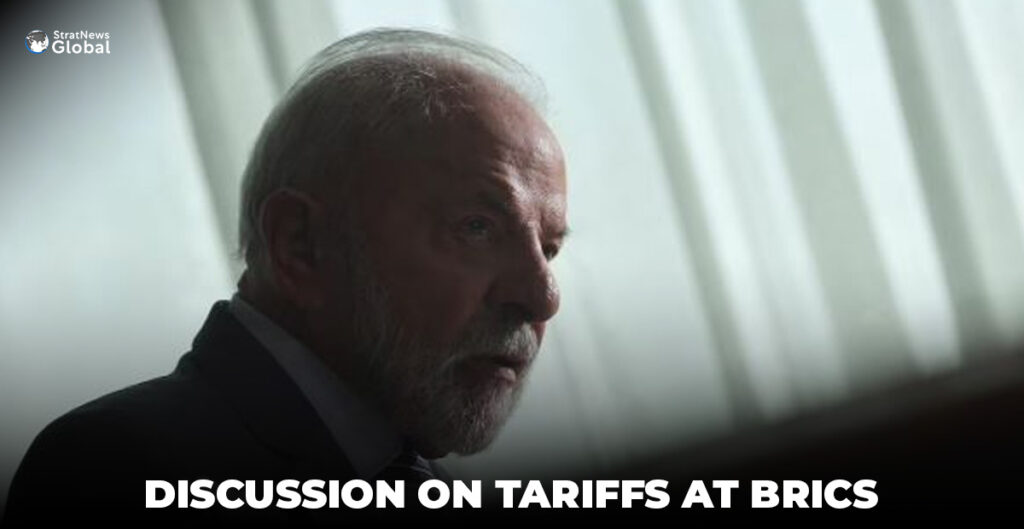
Brazilian President Luiz Inacio Lula da Silva on Wednesday described himself as an advocate for multilateralism in a divided world and said he intends to speak with the leaders of India and China about a possible joint BRICS response to the U.S. import tariffs imposed by President Donald Trump.
“What President Trump is doing is tacit — he wants to dismantle multilateralism, where agreements are made collectively within institutions, and replace it with unilateralism, where he negotiates one-on-one with other countries,” Lula said.
“What bargaining power does a small Latin American country have against the United States? None.”
Lula said he will initiate a conversation at the BRICS group of developing nations about how to tackle Trump’s tariffs.
He said he planned to call Indian Prime Minister Narendra Modi on Thursday, and China’s Xi Jinping and other leaders after. The group also has Russia and other emerging economies among its members.
Discussion With BRICS Leaders
“I’m going to try to discuss with them about how each one is doing in this situation, what the implications are for each country, so we can make a decision,” he said. “It’s important to remember that the BRICS have ten countries at the G20,” he added, referring to the group that gathers 20 of the world’s biggest economies.
Lula stressed that Brazil now holds the presidency of the BRICS and said that he wants to discuss with allies why Trump is attacking multilateralism and what his goals may be.
Trump called the BRICS “anti-American” and threatened to slap an additional 10% tariff on goods imported from those countries last month, while the group gathered in a summit in Rio de Janeiro.
Some of the highest tariffs imposed by Trump have been on imports from those countries.
Brazil climbed to the top of the list last month, when Trump tied 50% tariffs on most of the country’s exports to what he called a “witch hunt” against former President Jair Bolsonaro.
On Wednesday, Trump threatened to impose another 25% tariff on Indian imports because of the country’s reliance on Russian oil, which would add to the 25% levies that are already in place.
The 30% tariffs on goods from China and South Africa are also among the highest imposed by Trump, though some Chinese products face additional levies.
(With inputs from Reuters)
Trump’s Higher Tariffs Hit Imports From Top U.S. Trading Partners
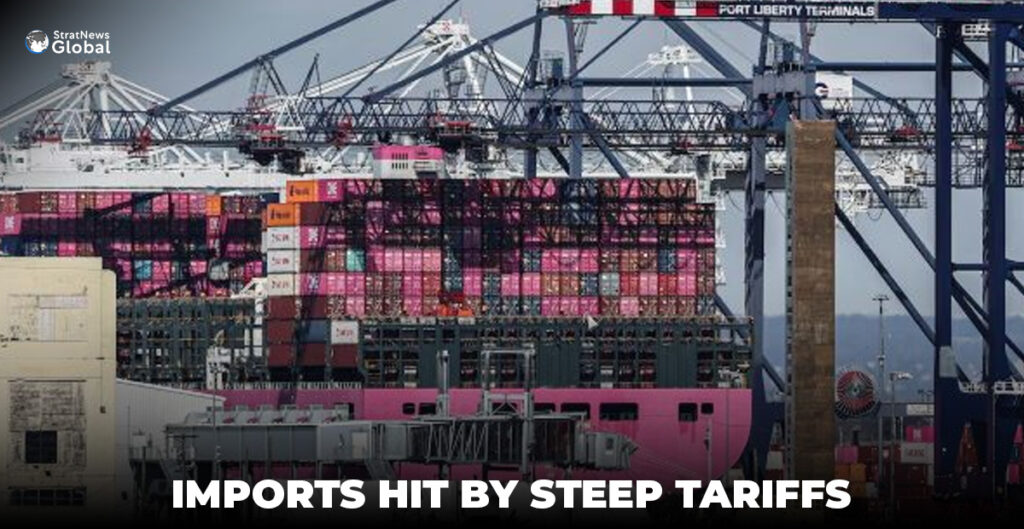
U.S. President Donald Trump’s increased tariff rates—ranging from 10% to 50%—took effect on Thursday, targeting goods from numerous major U.S. trading partners.
The move puts his strategy to reduce America’s trade deficits to the test, while attempting to avoid serious supply chain disruptions, rising inflation, and potential retaliation from affected nations.
U.S. Customs and Border Protection agency began collecting the higher tariffs at 12:01 a.m. EDT (0401 GMT) after weeks of suspense over Trump’s final tariff rates and frantic negotiations with major trading partners that sought to lower them.
Goods loaded onto U.S.-bound vessels and in transit before the midnight deadline can enter at lower prior tariff rates before October 5, according to a CBP notice to shippers issued this week. Imports from many countries had previously been subject to a baseline 10% import duty after Trump paused higher rates announced in early April.
Higher Tariff Rates
But since then, Trump has frequently modified his tariff plan, slapping some countries with much higher rates, including 50% for goods from Brazil, 39% from Switzerland, 35% from Canada and 25% from India. He announced a separate 25% tariff on Indian goods on Wednesday to be imposed in 21 days over the South Asian country’s purchases of Russian oil.
Ahead of the deadline, Trump heralded the “billions of dollars” that will flow into the U.S., largely from countries that he said had taken advantage of the United States.
“THE ONLY THING THAT CAN STOP AMERICA’S GREATNESS WOULD BE A RADICAL LEFT COURT THAT WANTS TO SEE OUR COUNTRY FAIL!” Trump said on Truth Social.
Eight major trading partners accounting for about 40% of U.S. trade flows have reached framework deals for trade and investment concessions with Trump, including the European Union, Japan and South Korea, reducing their base tariff rates to 15%.
Britain won a 10% rate, while Vietnam, Indonesia, Pakistan and the Philippines secured rate reductions to 19% or 20%.
“For those countries, it’s less bad news,” said William Reinsch, a senior fellow and trade expert at the Center for Strategic and International Studies in Washington.
“There’ll be some supply chain rearrangement. There’ll be a new equilibrium. Prices here will go up, but it’ll take a while for that to show up in a major way,” Reinsch said.
Countries with punishingly high duties, such as India and Canada, “will continue to scramble around trying to fix this,” he added.
Additional Import Duties
Trump’s order has specified that any goods determined to have been trans-shipped from a third country to evade higher U.S. tariffs will be subject to an additional 40% import duty, but his administration has released few details on how these goods would be identified or the provision enforced.
Trump’s July 31 tariff order imposed duties above 10% on 67 trading partners, while the rate was kept at 10% for those not listed.
These import taxes are one part of a multilayered tariff strategy that includes national security-based sectoral tariffs on semiconductors, pharmaceuticals, autos, steel, aluminum, copper, lumber and other goods.
Trump said on Wednesday the microchip duties could reach 100%.
China is on a separate tariff track and will face a potential tariff increase on August 12 unless Trump approves an extension of a prior truce after talks last week in Sweden. He has said he may impose additional tariffs over China’s purchases of Russian oil as he seeks to pressure Moscow into ending its war in Ukraine.
Financial markets largely shrugged off the new tariffs, with stock markets in Asia at or near record highs while the dollar dipped slightly.
Revenues, Price Hikes
Trump has touted the vast increase in federal revenues from his import tax collections, which are ultimately paid by companies importing the goods and consumers of end products.
U.S. Treasury Secretary Scott Bessent has said that U.S. tariff revenues could top $300 billion a year.
The move will drive average U.S. tariff rates to around 20%, the highest in a century and up from 2.5% when Trump took office in January, the Atlantic Institute estimates.
Commerce Department data released last week showed more evidence that tariffs began driving up U.S. prices in June, including for home furnishings and durable household equipment, recreational goods and motor vehicles.
Costs from Trump’s tariff war are mounting for a wide swath of companies, including bellwethers Caterpillar, Marriott, Molson Coors and Yum Brands.
All told, global companies that have reported earnings so far this quarter are looking at a hit of around $15 billion to profits in 2025, Reuters’ global tariff tracker shows.
(With inputs from Reuters)
Trump Targets Foreign Chipmakers, Spares US-Based Production
President Donald Trump announced that the US will levy nearly 100% tariff on imported semiconductors, but clarified that firms already manufacturing in the country or those that have pledged to set up domestic production will be exempt from this duty.
The move is part of Trump’s efforts to bring manufacturing back to the United States, and his remarks on Wednesday were made in tandem with an announcement that Apple would be investing an additional $100 billion in its home market.
For companies like Apple, which have committed to build in the United States, “there will be no charge,” he told reporters in the Oval Office.
Trump Warns Against Reneging
He warned, however, that companies should not try to wrangle out of pledges to build US factories.
“If, for some reason, you say you’re building and you don’t build, then we go back and we add it up, it accumulates, and we charge you at a later date, you have to pay, and that’s a guarantee,” Trump added.
The comments were, however, not a formal tariff announcement, and much remains unclear about how companies and countries around the world will be impacted.
His remarks produced an immediate flurry of reactions from concerned countries and business lobbies.
Contrasting Sentiments
South Korea’s top trade envoy said on Thursday that major chipmakers Samsung Electronics and SK Hynix will not be subject to 100% tariffs, and South Korea will have the most favourable levies on semiconductors under a trade deal between Washington and Seoul.
On the other end of the spectrum, the president of the Philippine semiconductor industry, Dan Lachica, said Trump’s plan would be “devastating” for his country.
In Malaysia, trade minister Tengku Zafrul Aziz warned parliament his country “will risk losing a major market in the United States if its products become less competitive as a result of the imposition of these tariffs.”
Among those expected to be relatively unscathed is Taiwanese chip contract manufacturer TSMC – which has factories in the United States, so big customers such as Nvidia are unlikely to face increased tariff costs.
Big Companies To Benefit
Nvidia, which makes cutting-edge AI graphics processing units, also plans to invest hundreds of billions of dollars in US-made chips and electronics over the next four years. An Nvidia spokesperson declined to comment for this story.
“Large, cash-rich companies that can afford to build in America will be the ones to benefit the most. It’s survival of the biggest,” said Brian Jacobsen, chief economist at investment advisory firm Annex Wealth Management.
Congress created a $52.7 billion semiconductor manufacturing and research subsidy programme in 2022. The Commerce Department under President Joe Biden last year convinced all five leading-edge semiconductor firms to locate chip factories in the US as part of the programme.
The department said the US last year produced about 12% of semiconductor chips globally, down from 40% in 1990.
“There’s so much serious investment in the United States in chip production that much of the sector will be exempt,” said Martin Chorzempa, senior fellow at the Peterson Institute for International Economics.
He added that chips made by China’s SMIC or Huawei are unlikely to be exempt, but noted that chips from these companies entering the US market were mostly incorporated into devices assembled in China.
“If these tariffs were applied without a component tariff, it might not make much difference,” he said.
Shares Climb
The EU has said it agreed to a single 15% tariff rate for the vast majority of EU exports, including cars, chips and pharmaceuticals. Japan has said that the US agreed not to give it a worse tariff rate than other countries on chips.
Shares in Asian chipmakers with big US investment plans climbed on Thursday, with TSMC and Samsung up 4.4% and 2% respectively. Silicon wafer producer GlobalWafers, which has a plant in Texas, jumped 10%.
Samsung declined to comment on Trump’s remarks. TSMC did not immediately reply to a request for comment. GlobalWafers said it has proactively implemented cost reduction strategies and believes it has an opportunity to maintain competitiveness.
(With inputs from Reuters)
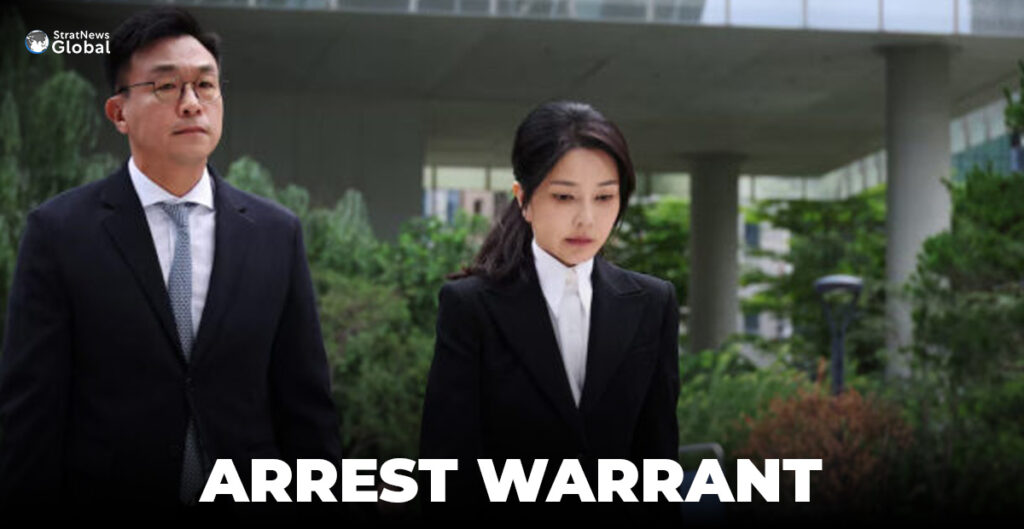
South Korea: Prosecutor Seeks Warrant For Ex-First Lady Kim Keon Hee
South Korea’s special prosecutor, assigned to probe corruption allegations against former First Lady Kim Keon Hee, on Thursday filed a court request seeking a warrant for her detention, the prosecution team confirmed.
Kim and ex-President Yoon Suk Yeol are being investigated by two separate special prosecutors appointed after the former leader was ousted in April over his brief declaration of martial law.
Kim appeared for questioning on Wednesday at the office of the special prosecutor on charges that include stock fraud, bribery and illegal influence peddling.
Kim’s Apology
She apologised for causing concern but did not answer questions from reporters about the allegations against her.
“I am truly sorry that a nobody like myself has caused concern for everyone in the country,” Kim said as she entered the office of the special prosecutor.
The special prosecutor did not immediately provide more details about its warrant request.
Several Charges
Kim faces a long list of charges including stock fraud, bribery and illegal influence peddling that have implicated big business owners, religious figures and a political power broker. The charges are punishable by years in prison.
Since Yoon’s ouster and with the appointment of special prosecutors, the probe against Kim intensified, reopening a case of stock fraud dating back to 2009 which had been previously closed by state prosecutors for insufficient cause.
The charges against her include whether she broke the law by wearing a luxury Van Cleef pendant reportedly priced more than 60 million won ($43,200) on the first couple’s trip to the NATO summit in 2022. The item was not listed in the Yoons’ financial disclosure as required by law, according to the charge.
She is also accused of receiving two Chanel bags together valued at 20 million won and a diamond necklace from a religious group as a bribe in return for influence favourable to business interests it was pursuing.
An artwork valued at several million dollars and tens of thousands of dollars in cash seized by the special prosecutor’s team are also linked to her, according to media reports that have extensively covered her travails.
Falsifying Records
Before Yoon’s election in 2022 and under intense political pressure even from his own party, Kim stood before cameras to apologise for falsifying her academic records and promised to behave as a responsible spouse of a national leader.
Allegations of wrongdoing did not fade as Yoon narrowly won the presidency and served a tumultuous term marred by a bitter row with the main opposition party which had control of parliament and kept up pressure on the first family to come clean on Kim’s personal scandals.
In a message to reporters, Kim’s lawyers in late July denied the allegations against her and said news reports about some of the gifts she allegedly received were groundless speculation.
(With inputs from Reuters)