

Support us by contributing to StratNewsGlobal on the following UPI ID
ultramodern@hdfcbank

Strategic affairs is our game, South Asia and beyond our playground. Put together by an experienced team led by Nitin A. Gokhale. Our focus is on strategic affairs, foreign policy and international relations, with higher quality reportage, analysis and commentary with new tie-ups across the South Asian region.
You can support our endeavours. Visit us at www.stratnewsglobal.com and follow us on YouTube, Twitter, Facebook and Instagram.
र 500 per month
र 1000 per month
र 5000 per year
र 10000 per year
Donate an amount of your choice
र 500 per month
Donate र 500 per month

र 1000 per month
Donate र 1000 per month
र 5000 per year
Donate र 5,000 per year
र 10000 per year
Donate र 10,000 per year
Donate an amount of your choice
Donate an amount of your choice
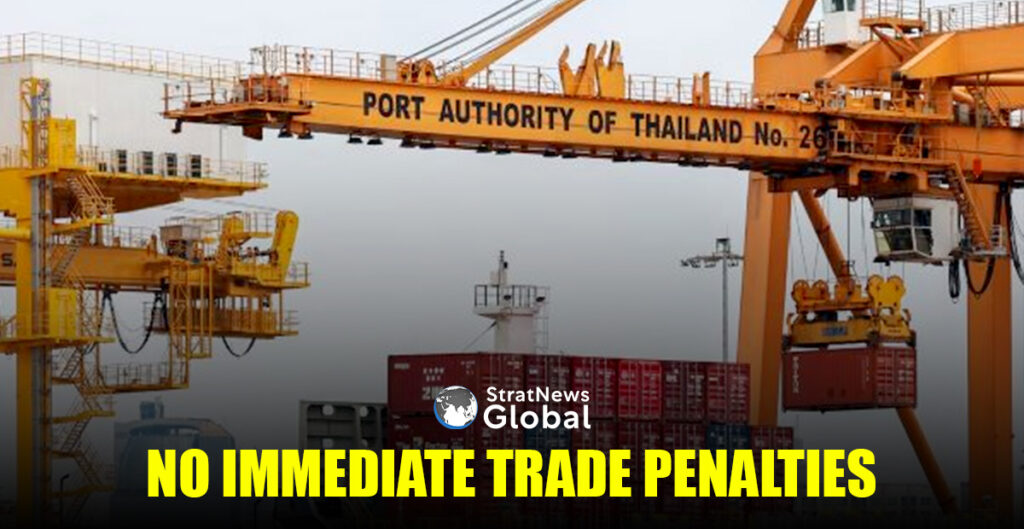
No Immediate Clampdown On Transshipped Goods As Trump’s Tariffs Take Effect: Sources
Stricter U.S. trade penalties on goods that are shipped from one country but originate in another are unlikely to be enforced right away following the implementation of new U.S. tariffs, according to three sources in Southeast Asia familiar with the matter, easing a key area of concern.
Southeast Asian countries including Vietnam and Thailand have been explicitly targeted by White House officials for their alleged role in facilitating the so-called transshipment to America of Chinese goods, which would face higher tariffs if shipped directly from China.
The Trump administration imposed tariffs on goods from dozens of countries from Thursday, and in an executive order said products determined to have been illegally rerouted to conceal their country of origin would face additional duties of 40%. But it did not clarify what constitutes transshipment.
19% Tariff Rates
U.S. imports from Southeast Asia’s biggest economies, which rely heavily on exports, are now subject to tariff rates of about 19%, most of those significantly reduced from earlier threatened rates.
Existing U.S. customs guidance states goods from countries with no free trade agreements with Washington, such as Southeast Asian nations, can be labelled as made in the country where they undergo a “substantial transformation” of components, even if those parts entirely come from another country, such as China.
And with no new U.S. guidance on rules of origin or specification on what transshipment means, some officials in Southeast Asia have told exporters existing rules apply.
That effectively limits cases of transshipment to illegal activities, like the use of forged export certificates or documents obtained illicitly.
“Currently, all exported goods (from Thailand) are subject to a 19% rate because there are no rules on transshipment yet,” Arada Fuangtong, head of the Thai Commerce Ministry’s foreign trade department, said on Thursday.
Her message was echoed by U.S. officials in Vietnam who told businessmen the tariff of 20% would apply to Vietnamese goods, even if they are entirely made with Chinese components and only assembled in Vietnam, according to one person familiar with those talks.
Tariff Rules Are ‘Vague’
Trade consultants have said rules are vague and they have advised clients, even before the new wave of U.S. tariffs, to have at least 40% of local content for their exports to the U.S. That is “to be on the safe side”, one of them said.
The U.S. embassy in Vietnam did not immediately reply to a request for comment. The Office of the U.S. Trade Representative did not immediately respond to a request for comment outside U.S. working hours.
“Goods defined by U.S. customs as transshipped are subject to 40% duties, but pending any new definition, that’s limited to old definitions,” said a Vietnam-based consultant.
Both people declined to be named in order to speak more freely.
China Dependence
According to the U.S. customs guidance, repackaging does not usually cause a “substantial transformation”, but assembly may, depending on the complexity of the operations.
It is unclear if this narrow interpretation of transshipment could be enforced in other countries.
Economic ministries in Indonesia, Malaysia, the Philippines, Vietnam and Singapore did not immediately respond to requests for comment on the issue.
Manufacturers in Southeast Asia, which rely heavily on Chinese components, have been in the dark for months on what Washington would consider transshipment.
Questions remain over whether that would include goods with a large, but yet undefined, share of components or raw materials from China, even when they are legitimately transformed in Southeast Asian nations.
A strict definition of transshipment may come later, multiple investment consultants warned.
An executive order signed by U.S. President Donald Trump last week said the U.S. will “publish every six months a list of countries and specific facilities used in circumvention schemes”.
That will “inform public procurement, national security reviews, and commercial due diligence”, it said.
“The message from Washington is deterrence,” said Marco Forster, director for Southeast Asia at investment consultancy Dezan Shira and Associates.
“If your supply chain cuts corners, it won’t be treated as a technical error. It’ll be treated as fraud.”
(With inputs from Reuters)
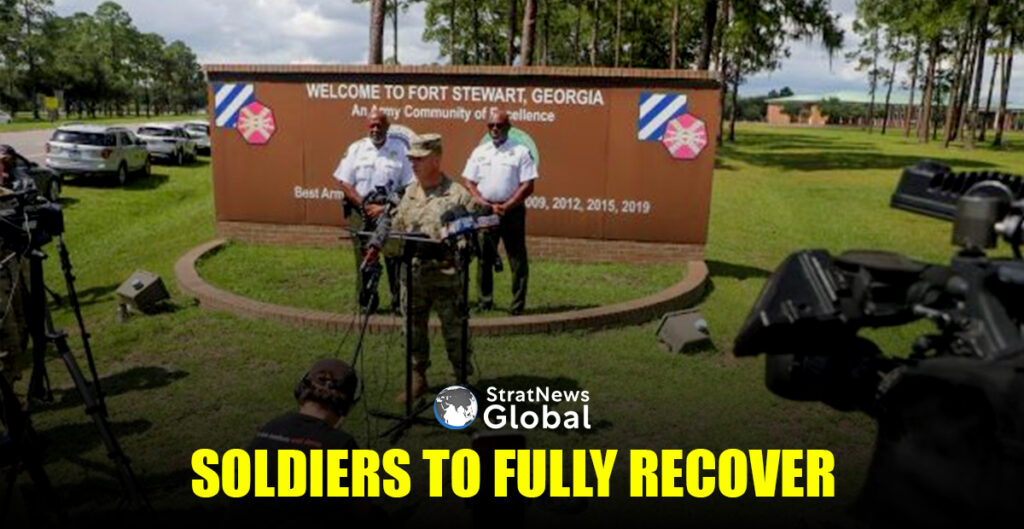
Wounded Soldiers In Georgia Base Shooting Are Expected To Make Full Recovery: U.S. Army
The U.S. Army said on Thursday that all five soldiers injured in Wednesday’s shooting at a military base in Georgia are expected to make a full recovery, with three already discharged from the hospital.
The Army commended the quick response of fellow soldiers who subdued the shooter and provided immediate aid to the wounded, which helped save lives.
A U.S. Army sergeant is suspected of having shot and wounded five soldiers with a personal handgun on Wednesday at Fort Stewart-Hunter Army Airfield near Savannah.
The suspect, who was taken into custody, has been identified as Quornelius Radford, 28, an active-duty sergeant specializing in automated logistics.
Brigadier General John Lubas, who commands Fort Stewart, said one of the injured soldiers had a “little bit longer road to recovery,” but doctors expected her to fully recover.
Suspect Restrained
Lubas, along with Army Secretary Daniel Driscoll, recounted how one soldier tackled the suspect and wrestled his gun away when the shooting started.
A second soldier jumped on the suspect and restrained him until police arrived. Others attended to the wounded soldiers.
“We talked to doctors, and one of the things that I can say unequivocally is that the fast action of these soldiers, under stress and under trauma and under fire, absolutely saved lives from being lost,” Driscoll told reporters.
The Army said it was too early to speculate on the motive for the shooting.
Mass shootings are relatively common in the United States, where guns are widely available, and military bases, which are among the highest-security places in the country, have not been spared.
The deadliest was at the Fort Hood Army base in 2009, when a major fatally shot unarmed soldiers in a medical building with a laser-sighted handgun, killing 13 people and injuring more than 30.
Less than five years later, a soldier at the same Texas base fatally shot three service members and injured 16 others before killing himself.
Fort Stewart is located in Hinesville, about 225 miles (362 km) southeast of Atlanta and 40 miles (64 km) southwest of Savannah. Nearly 9,000 people live at the base, according to the 2020 Census.
The base supports approximately 15,000 active-duty Army military personnel, as well as thousands of military retirees, family members and others, according to its website.
(With inputs from Reuters)
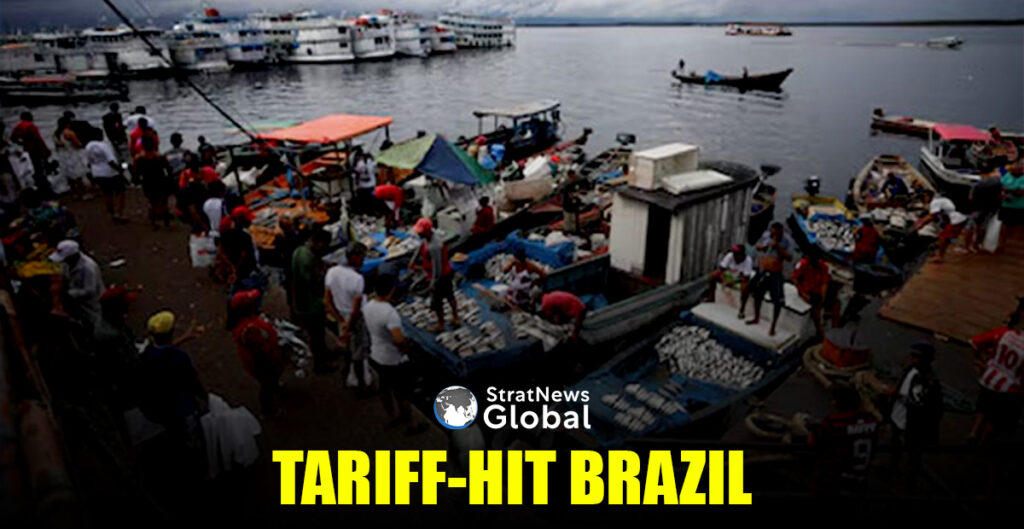
Brazil’s Fish Industry Seeks Relief After 50% US Tariff
Brazil’s seafood industry is urging the federal government for swift relief amid growing fears of job losses and bankruptcies after the U.S. imposed a 50% tariff on most Brazilian exports on Wednesday.
The new levies made the future highly uncertain for Brazilian fishing companies, which sell close to $400 million worth of seafood to the U.S. a year, or about 70% of the sector’s annual exports.
“This situation renders our business unviable,” said Arimar França Filho, the head of a fishing union in Brazil’s northeastern state of Rio Grande do Norte. “While the domestic market can absorb some of our production, it cannot take it all, and we cannot have all our boats fishing solely for Brazil.
“The fish industry is calling for an emergency credit line of 900 million reais ($165 million) to navigate the new economic climate.
Talks To Reopen Europe
It is also pushing the government to deepen negotiations aimed at reopening the European market, which has been closed to Brazilian fish exports since 2017.
Even as producers scrambled to get their goods to the U.S. ahead of the tariffs that hit on Wednesday, some fishing boats had already been sidelined to prevent excess production, the union leader said.
Eduardo Lobo, president of the lobby group Abipesca, said that the sector has no other short-term alternative.
“Without credit, it’s impossible to maintain inventories, honour commitments, and preserve jobs,” he warned in a statement, estimating that the tariffs could affect some 20,000 jobs if authorities fail to respond quickly.
“There could be giant unemployment, not tomorrow,” said Attilio Sergio Leardini, founding partner at Leardini Pescados, one of Brazil´s largest suppliers, which exports to several countries, including the U.S. “But maybe in six months, in a year, some segments may be halting production.”
Leardini is most worried about premium products – such as lobster, tuna, and croaker fish – which are highly sought after by the U.S. market but are unlikely to find enough buyers in Brazil, particularly at the prices American consumers pay.
Desperate Fishermen
Many fishermen are desperate, believing they won’t find consumers to pay prices that support a reasonable standard of living for their families.
“But as we know, it’s not in our control,” said França Filho, the union leader.
Fishermen, he predicted, will see reduced prices starting this week, while Brazilian consumers are likely to find cheaper fish in the supermarket aisle within a month.
That much was happy news to Michel de Oliveira França, the owner of a fish shop in the city of Niteroi, in Rio de Janeiro.
“The cheaper, the better,” he said. “The tendency is to sell more and more.”
(With inputs from Reuters)
Trump Risks U.S. Credibility With Intensifying Trade Wars
The hardline policies of US President Donald Trump—influenced by ‘America First’ ideology—have intensified weaponisation of sweeping tariffs to achieve political aims.
Coupled with Trump’s inclination towards unilateral action over alignment with international organisations such as the UN and WTO, these policies risk instability and gradually erode the effectiveness of economic weapons altogether.
The U.S. bombing of Iran is a case in point. Amidst the Ukraine war and a brewing Sino-Russian relationship, using the Iran playbook against Russia could prove fatal for U.S. credibility.
Moreover, waging an economic war against an emerging economy and key partner—India—risks fragmenting the world trade order and damaging Washington’s reputation as its responsible custodian.
Trump’s Iran Policy
Reeling from the loss of credibility due to an unjust war in Iraq, the U.S. decided against military intervention in Iran. Instead, it turned to economic warfare through sanctions which, in 2015, led to the Joint Comprehensive Plan of Action (JCPOA) between Iran and P5+1 countries.
Iran agreed to constrain its nuclear programme in lieu of lifting of nuclear-related sanctions by the UN, the U.S. and its allies.
The economic war succeeded in achieving U.S. aims and, as Obama boasted, it did so “without firing a shot”. However, the U.S. did not achieve this goal alone. It required backing from its western allies and the broader international community through the UN. Essentially, it needed Iran’s total isolation from the global economy for the country to defer its nuclear ambitions.
Much of this success was undone by the first Trump administration, when the U.S. unilaterally withdrew from the JCPOA. Instead, it aimed at exerting ‘maximum pressure’ on Iran’s nuclear programme and reimposed all pre-2015 U.S. sanctions.
This policy eventually failed, without the support of UN and western allies, as it revitalised Iran’s nuclear ambitions. Additionally, it damaged U.S. credibility as meeting its demands was no longer viewed to be a trade-off for sanctions relief.
In June 2025, under Trump’s second administration, the U.S. bombed Iran’s nuclear sites in Fordow, Natanz and Isfahan as Tehran edged closer to weaponising its nuclear capabilities — an outcome the sanctions were designed to avoid.
Won’t Work Against Russia
Iran’s case proved that sanctions, when used as a means to an end with international backing, may achieve their ultimate goal. Whereas, when these weapons are overused with no endgame, their credibility and effectiveness deteriorate.
In Iran, a relatively smaller economy and not a nuclear-armed state, U.S. military force backed the non-compliance of US demands. Against Russia, a global heavyweight and nuclear-armed state, the Iran playbook is unlikely to work.
During Trump’s 2024 campaign trail, he pledged to stop the war in Ukraine within 24 hours of re-entering the White House. Seven months later, the bloodshed continues despite a barrage of sanctions targeted at Russia with support from U.S. allies.
While these sanctions have caused considerable damage to the Russian economy, Moscow understands that a ceasefire in Ukraine is not a guarantee for the sanctions to be lifted — as Iran proved.
In addition, due to Moscow’s possession of nuclear weapons, Washington will be unwilling to support its economic war with military threat — as it did in Iran.
Budding Sino-Russian Friendship
Another factor preventing Russia from changing course in Ukraine is its budding friendship with China.
Both countries are in the midst of an economic war against the United States. While Moscow is burdened with sanctions related to Ukraine, Beijing faces export controls and tariffs on U.S. exports critical to China’s emerging tech industry.
Unlike Iran, Russia is a major economic power with vast natural resources, large domestic market and deep economic ties with non-western economies such as China, India, Iran, etc.
While western nations cut their reliance on Russian energy exports, China has expanded its purchase by de-dollarising trade between the two countries to evade sanctions; made possible by Russia’s alternative to SWIFT payment system — SPFS.
In addition to deepening economic relations, Moscow and Beijing are also strengthening security ties. The two countries announced a new joint naval exercise in the Pacific region in late July. This marks the 114th combined drill between the two countries since 2003, over half of which occurred in the last six years.
A prolonged war in Ukraine, along with the overuse of U.S. economic weapons, will lead to a normalisation of these ties over time, with Russia and China developing alternatives to evade Western sanctions’ threat. In such a scenario, the U.S. economic weapons will no longer pose a credible threat to its geopolitical rivals.
Expanding U.S. Trade War With India
Trump has imposed 50% tariffs on India, partly as penalty for buying Russian oil. He also announced a trade deal with Pakistan.
By provoking a trade war with India, Trump has risked pushing a key defence and trade partner into a trading bloc with Russia, China and Iran — all member countries of BRICS. In such a case, a fragmentation of the world trade order between G7 and BRICS countries may happen, upending the gains of globalisation and U.S. credibility.
Alternatively, India may absorb the tariffs while continuing to deal with Washington, which will raise the cost of Indian exports to the U.S. and ultimately be paid by American consumers. This will add to domestic political pressure on Trump, who already faces backlash over rising costs. In either case, Trump’s trade war with India will cost the U.S. its reputation as a reliable partner.
(The author is a law and politics graduate from Cardiff University. Views expressed here are personal)
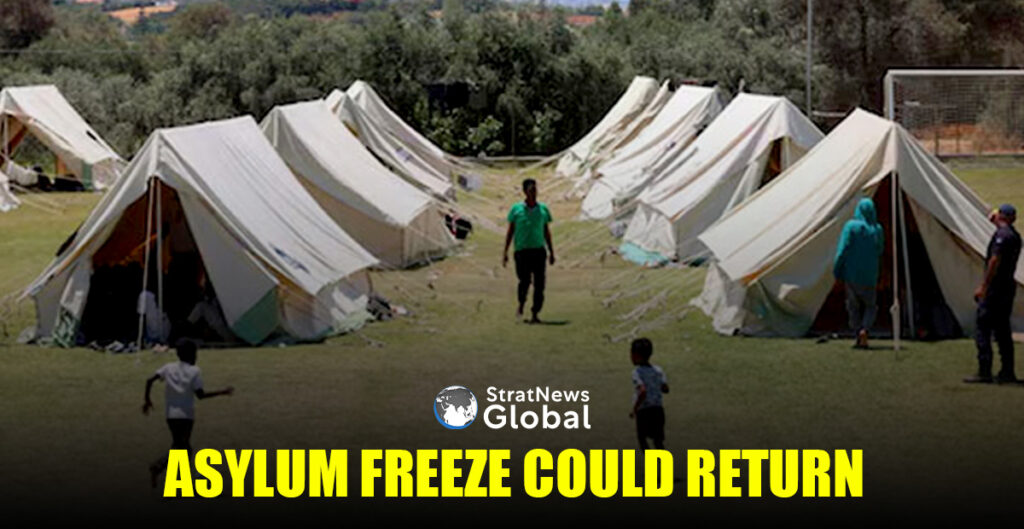
Greece May Prolong North Africa Asylum Ban If Migrant Surge Returns
Greece may extend last month’s parliamentary suspension on reviewing asylum applications if migrant arrivals from Libya increase again, Migration Minister Thanos Plevris said on Thursday.
In July, the centre-right government stopped processing asylum requests from migrants arriving from North Africa by sea for at least three months in an effort to curb arrivals from Libya to the Greek island of Crete.
In an interview with public broadcaster ERT, Plevris said he could not rule out an extension to the suspension if there was a “new crisis”.
Arrivals of irregular migrants in Crete declined rapidly after the new legislation took effect, from 2,642 in the first week of July to 900 in the whole period since then.
New legislation is being prepared that will clearly define that “whoever comes into the country illegally will face a jail term of up to five years,” Plevris said, referring to those who are not fleeing armed conflict, who could qualify for asylum.
Greece Accused Of Pushbacks
Human rights groups accuse Greece of turning back asylum-seekers by force at its sea and land borders. This year, the European Union border agency said it was reviewing 12 cases of potential human rights violations by Greece.
The government denies wrongdoing.
“All European countries now understand that it is not possible to have open borders, it’s not possible to welcome illegal migrants with flowers,” Plevris said.
“There should be a clear message that countries have borders, (that) Europe has exceeded its capabilities and will not accept any more illegal migrants.”
Greece has sent two frigates to patrol off Libya and has started training Libyan coast guard officers on Crete as part of a plan to strengthen cooperation and help the two countries stem migrant arrivals.
Greece was on the European front line of a migration crisis in 2015-16 when hundreds of thousands from the Middle East, Asia and Africa passed through its islands and mainland.
Since then, flows have dropped off dramatically. While there has been a rise in arrivals to the outlying islands of Crete and Gavdos, sea arrivals to Greece as a whole dropped by 5.5% to 17,000 in the first half of this year, U.N. data show.
(With inputs from Reuters)
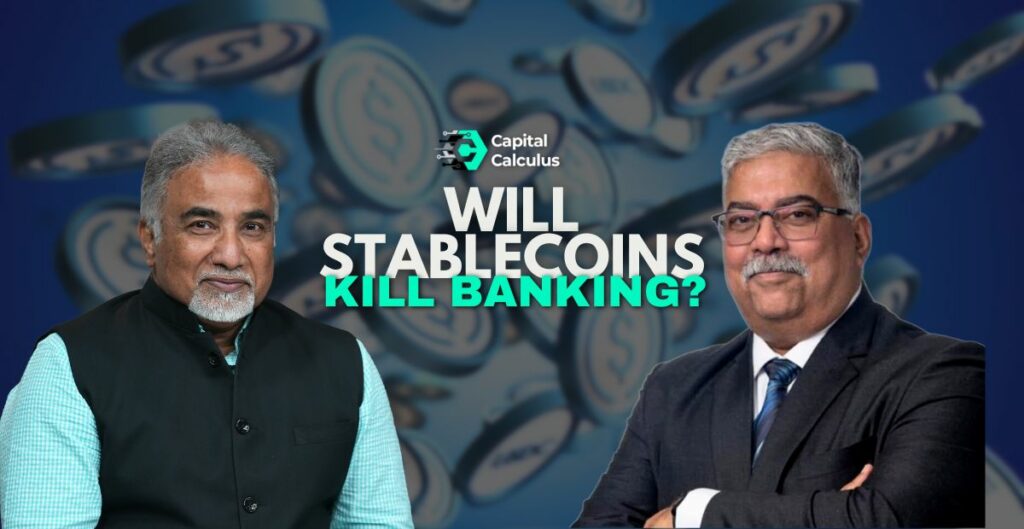
Stablecoin Revolution: Recasting Global Finance
A few weeks ago, President Donald Trump signed the GENIUS Act into law. The acronym stands for Guiding and Establishing National Innovation for US Stablecoins.
It is the first major crypto legislation approved by the US Congress and sets the stage for the formal adoption of stablecoins and their regulation.
Unlike bitcoins, stablecoins are fully backed digital currencies and hence less volatile. Their usage, including in cross-border transactions, has grown rapidly in the last few years. Stablecoins are potentially disruptive, especially to the legacy financial system. How will this then play out for the world economy? What about countries like India, which have been cautious in adopting stablecoins?
To answer all this and more, StratNewsGlobal.Tech spoke to Abu Dhabi-based Bhaskar Dasgupta on Capital Calculus. He is a veteran banker and heads the Middle East Stablecoin Association, a body which is working closely with the government to rollout stablecoins in the UAE.
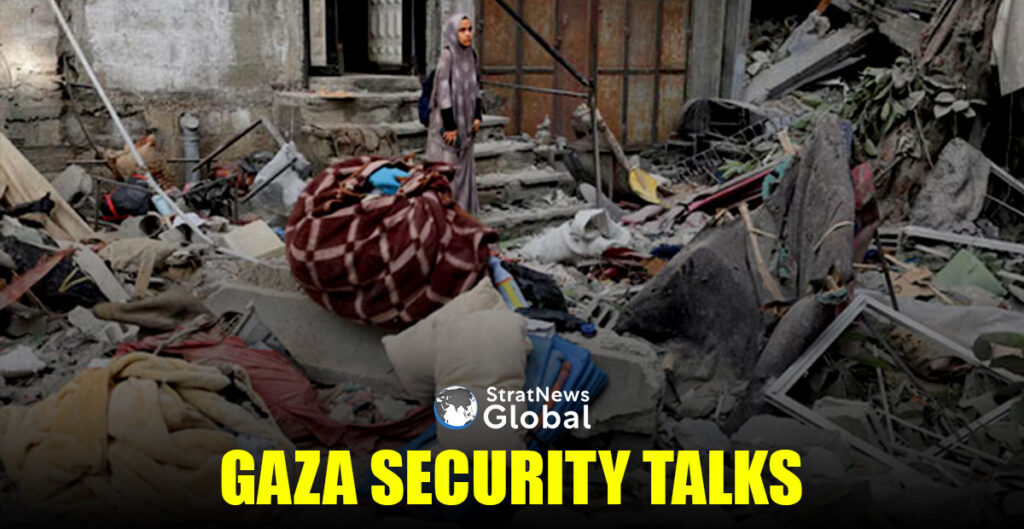
Israeli PM Netanyahu To Convene Security Talks On Expanding Gaza Offensive
Israeli Prime Minister Benjamin Netanyahu was set to meet a select group of senior ministers on Thursday to discuss military plans to seize more territory in Gaza, despite growing domestic and international criticism over the nearly two-year-long conflict.
Netanyahu will convene the security cabinet following a three-hour meeting this week with the head of the military, which Israeli officials described as tense, saying the military chief had pushed back on expanding the campaign.
Opinion polls show that most Israelis want the war to end in a deal that would see the release of the remaining hostages. Netanyahu’s government has insisted on total victory over the Palestinian militant group Hamas, which ignited the war with its deadly October 2023 attack on Israel.
Fears Over Gaza Expansion
The idea of Israeli forces pushing into areas they do not already control in the shattered Palestinian enclave has generated alarm in Israel. The mother of one hostage on Thursday urged people to take to the streets to voice their opposition to expanding the campaign.
“Someone who talks about a comprehensive deal doesn’t go and conquer the Strip and put hostages and soldiers in danger,” Einav Zangauker wrote on X in comments directed at Netanyahu.
The Hostages Families Forum, which represents captives held in Gaza, urged military Chief of Staff Eyal Zamir to oppose expanding the war and called on the government to accept a deal that would bring the war to an end and free the remaining hostages.
Defence Minister Israel Katz said on Wednesday that the military would carry out the government’s decisions until all war objectives were achieved. Israeli leaders have long insisted that Hamas be disarmed and have no future role in a demilitarised Gaza and that the hostages be freed.
‘Deeply Alarming’
The U.N. has called reports about a possible expansion of Israel’s military operations in Gaza “deeply alarming” if true.
There are 50 hostages still held in Gaza, of whom Israeli officials believe 20 are alive. Most of those freed so far came about as a result of diplomatic negotiations. Talks toward a ceasefire that could have seen some hostages released collapsed in July.
A senior Palestinian official said Hamas had told Arab mediators that an increase in humanitarian aid entering Gaza would lead to a resumption in ceasefire negotiations.
Israeli officials accuse Hamas of seizing aid to hand out to its fighters and to sell in Gazan markets to finance its operations, accusations that the militant group denies.
Videos released last week of two living hostages showed them emaciated and frail, triggering international condemnation.
Hamas, which has ruled Gaza for nearly two decades but now controls only parts, insists any deal must lead to a permanent end to the war. Israel says the group has no intention of going through with promises to give up power afterwards.
Multiple Displacements
The Israeli military says it controls about 75% of Gaza. Most of Gaza’s population of about 2 million has been displaced multiple times over the past 22 months, and aid groups are warning that the enclave’s residents are on the verge of famine.
“Where should we go? We have been displaced and humiliated enough,” said Aya Mohammad, 30, who, after repeated displacement, has returned with her family to their community in Gaza City.
“You know what displacement is? Does the world know? It means your dignity is wiped out, you become a homeless beggar, searching for food, water and medicine,” she told Reuters.
Close to 200 Palestinians have died of starvation in Gaza since the war began, nearly half of them have been children, according to Gaza’s health ministry.
Rabeeha Jamal, 65, a mother of six, has remained in her house in Gaza despite warnings in the past from the Israeli military to leave. For now, she said she intends to stay.
“Not until they force us, if the tanks roll in, otherwise, I will not go running in the street to be killed later,” she said, calling for an end to the war. “We don’t have anywhere to go.”
Ceasefire Or Full Occupation
Netanyahu is under intense international pressure to reach a ceasefire agreement, but he also faces internal pressure from within his coalition to continue the war. Some far-right allies in his government have pushed for a full occupation of Gaza and for Israel to reestablish settlements there, two decades after it withdrew.
Far-right Finance Minister Bezalel Smotrich told reporters Wednesday that he hoped the government would approve the military taking control over the rest of Gaza.
About 1,200 people were killed and 251 hostages taken to Gaza in the October 7, 2023, Hamas attack on southern Israeli communities.
More than 61,000 Palestinians have been killed by Israel’s assault on Gaza, according to the Gaza health ministry, which said 98 Palestinians have been killed by Israeli fire across the enclave in the past 24 hours.
(With inputs from Reuters)
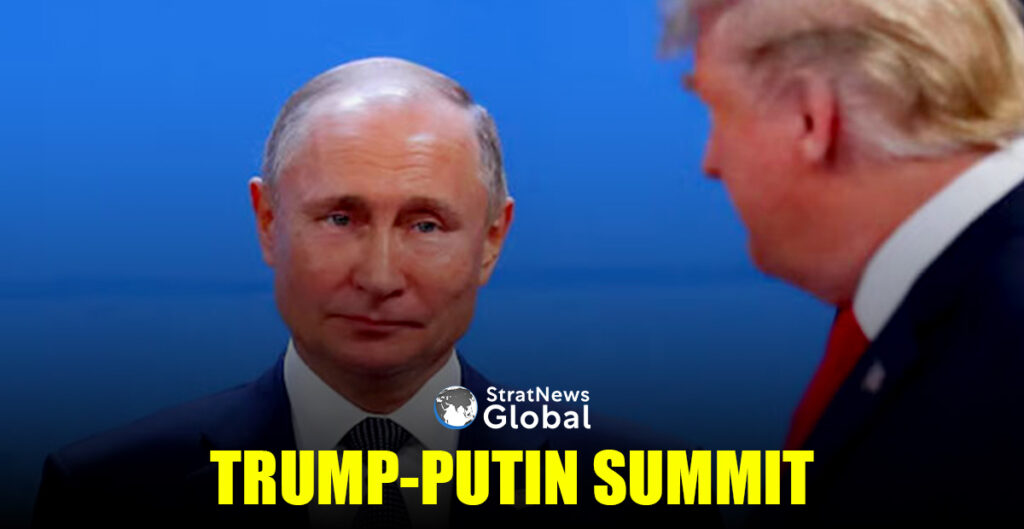
Kremlin Confirms Putin-Trump Meeting In Coming Days
Russian President Vladimir Putin and United States President Donald Trump are set to meet in the coming days, Kremlin aide Yuri Ushakov said on Thursday, marking the first summit between the two leaders since 2021.
The announcement came a day after Trump’s envoy, Steve Witkoff, held talks with Putin in search of a breakthrough to end the Ukraine war. Trump has threatened new sanctions against Russia and countries that buy its exports if there is no deal.
“At the suggestion of the American side, an agreement was essentially reached to hold a bilateral meeting at the highest level in the coming days, that is, a meeting between President Vladimir Putin and Donald Trump,” Ushakov said.
“We are now beginning concrete preparations together with our American colleagues,” Interfax news agency quoted him as saying.
He said a summit venue had been agreed, but would be announced later. Putin was due on Thursday to meet the president of the United Arab Emirates, which sources have previously suggested as a possible venue.
The Russian stock market rose more than 5% on the news, with its main MOEX index hitting its highest level in two months. The rouble hit a two-week high against the U.S. dollar and China’s yuan.
There has been no summit of U.S. and Russian leaders since Putin and Joe Biden met in Geneva in June 2021. Russia went to war in Ukraine in February 2022, plunging relations into a deep crisis.
Trump has moved to mend relations with Russia and try to end the war, although in his public comments, he has veered between admiration and sharp criticism of Putin.
‘Mutually Beneficial’
Ushakov said Trump’s envoy, Witkoff, had on Wednesday raised the possibility of a three-way meeting of Trump, Putin and Ukrainian President Volodymyr Zelenskyy.
But he said the Russian side had left this proposal “completely without comment”.
“We propose, first of all, to focus on preparing for a bilateral meeting with Trump, and we believe that the main thing is for this meeting to be successful and productive,” Ushakov said.
He said the Putin-Witkoff meeting had been businesslike and constructive.
“It was noted again that Russian-American relations can be built according to a completely different, mutually beneficial scenario, significantly different from how they have developed in recent years,” Ushakov said.
Pro-Kremlin war blogger Yuri Podolyaka, posting after the Putin-Witkoff talks, said the Russian leader had played a “masterful diplomatic game”.
“It seems that Vladimir Putin has managed to spin Trump in a ‘carousel of negotiations’,” he posted on his blog, which has more than 3 million subscribers.
Trump on Wednesday announced an additional 25% tariff on Indian goods, to come into force on August 28, citing New Delhi’s continued imports of Russian oil, sharply escalating tensions between the two nations.
He also said he may announce similar further tariffs on goods from China, another big buyer of Russian oil.
Russian security official Sergei Shoigu met Indian national security adviser Ajit Doval on Thursday and told him Moscow was committed to a “comprehensive strengthening of the joint strategic partnership” between the two countries.
Interfax news agency quoted Doval as saying Putin was expected to visit India at the end of August.
(With inputs from Reuters)
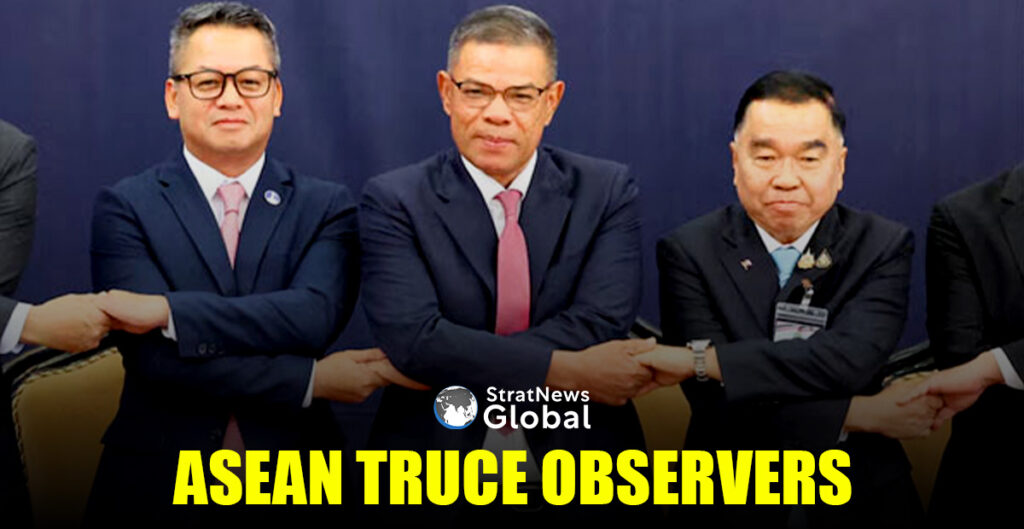
Cambodia, Thailand Agree To ASEAN Observers To Monitor Ceasefire
Top defence officials from Cambodia and Thailand agreed on Thursday to permit ASEAN observers to monitor disputed border areas and help maintain peace after July’s five-day conflict.
The Southeast Asian neighbours saw the in over a decade last month, including exchanges of artillery fire and jet fighter bombing runs that claimed at least 43 lives and displaced more than 300,000 people on both sides of the border.
Fighting continued despite diplomatic interventions from China and Malaysia, the chair of the regional bloc ASEAN, both calling for restraint.
The leaders of Cambodia and Thailand only came to the negotiating table when U.S. President Donald Trump told them that tariff negotiations would not continue unless there was peace, Reuters exclusively reported.
Defence Chiefs Discuss Ceasefire
Cambodian Defence Minister Tea Seiha and Thailand’s acting defence minister Nattaphon Narkphanit met at Malaysia’s Armed Forces headquarters in Kuala Lumpur on Thursday to thrash out the terms of a permanent cessation of hostilities.
“There will be an observation team of ASEAN military attaches based in Thailand and Cambodia, led by Malaysia,” Nattaphon told reporters at a press conference after the meeting, adding that foreign inspectors based in either country would not cross the border.
“Thailand and Cambodia are neighbours with a shared border that can move away from each other … a resolution will allow our people to return to peaceful lives,” he said.
Thailand and Cambodia said in a joint statement that they would hold more talks in two weeks and then again in a month.
The peace conditions were formulated during three days of talks between senior officials in Kuala Lumpur and were finalised on the fourth day in the presence of observers from China and the United States.
“Both sides agreed on the terms of implementation of the ceasefire and improving communication between the two armies,” Cambodian Prime Minister Hun Manet said on social media.
Thailand and Cambodia have quarrelled for decades over undemarcated parts of their 817 km (508 miles) land border, which was first mapped by France in 1907 when the latter was its colony.
(With inputs from Reuters)
Modi Sends Strong Message But Why Has Trump Singled Out India?
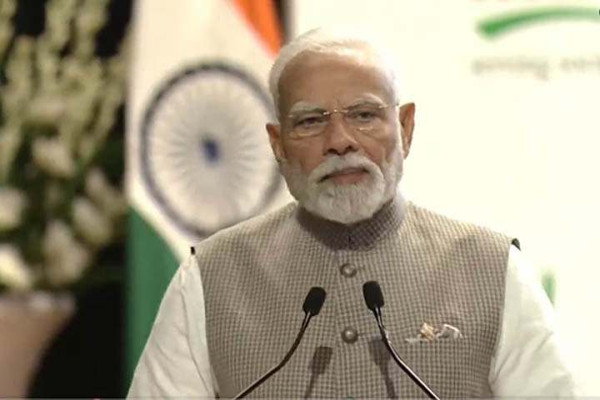
“Bharat will never compromise on the interests of its farmers, livestock rearers and fisherman and I am fully aware that I may have to pay a very heavy price personally but I am prepared for it. For the farmers of my country, for the livestock rearer’ s of my country, Bharat stands ready today.”
Those words of Prime Minister Modi, from his address to the MS Swaminathan Centenary Conference in Delhi this morning, went viral on social media after being re-tweeted by many ministers including Piyush Goyal and Amit Shah.
Not for the first time, it underscored India’s red lines in these trade negotiations with the US: no opening up the agriculture sector or dairy where the livelihoods of millions are at stake.
But did India misread the tea leaves with the US? How were things allowed to blow up in this spectacular fashion?
A senior former diplomat recalled that even during the trade negotiations in Trump’s first term, “US officials demanded concessions, were abusive of Indian officials, used pejorative language and withdrew GSP (Generalised System of Preferences that gave tariff concessions to developing countries).”
He also noted meeting US trade officials in Delhi after Trump took over in his second term. “Nothing is straight out there, weird people, young people, call it a kitchen cabinet of family and friends, not empowered to do anything. It was tough dealing with them.”
They were stigmatising India, thinking this is another Iran and linking with Russia. Various articles in the US media painted India as a “free rider” and asked the question, “what has India given us.”
India has been buying oil from Russia for the last three years, why has the US woken up now? The sense is of a frustrated White House getting nowhere with Russia, Europe or China, nothing to show in terms of success, and so lashing out at Brazil and India.”
“In the case of India, Trump has over reached because unlike Brazil or Russia, there will be blow back within the elites in the US,” another former diplomat said. “The strategic elites in the US minus the mad MAGA people are uncomfortable, those who have been silent so far are popping up and warning of disaster.
“Are you actually going to going to alienate India, Congress won’t like it. The Washington Post and New York Times have their guns out for Trump and India has come as a handy stick to beat him with.”
The question they are asking is India is one country they are comfortable with at a time when China and Russia are public enemy number one. So why poke, prod and demonise India?
There can be only one answer: the US remains the biggest export market for the world, no less India, that is power. On the other hand, China imports virtually nothing. That’s also power.
Former diplomats also note that every Indian prime minister who had a problem with the US, sought support from Russia. It seems to be “the classic Indian leadership response,” and suggests a disturbing lack any other leverage.