

Support us by contributing to StratNewsGlobal on the following UPI ID
ultramodern@hdfcbank

Strategic affairs is our game, South Asia and beyond our playground. Put together by an experienced team led by Nitin A. Gokhale. Our focus is on strategic affairs, foreign policy and international relations, with higher quality reportage, analysis and commentary with new tie-ups across the South Asian region.
You can support our endeavours. Visit us at www.stratnewsglobal.com and follow us on YouTube, Twitter, Facebook and Instagram.
र 500 per month
र 1000 per month
र 5000 per year
र 10000 per year
Donate an amount of your choice
र 500 per month
Donate र 500 per month

र 1000 per month
Donate र 1000 per month
र 5000 per year
Donate र 5,000 per year
र 10000 per year
Donate र 10,000 per year
Donate an amount of your choice
Donate an amount of your choice
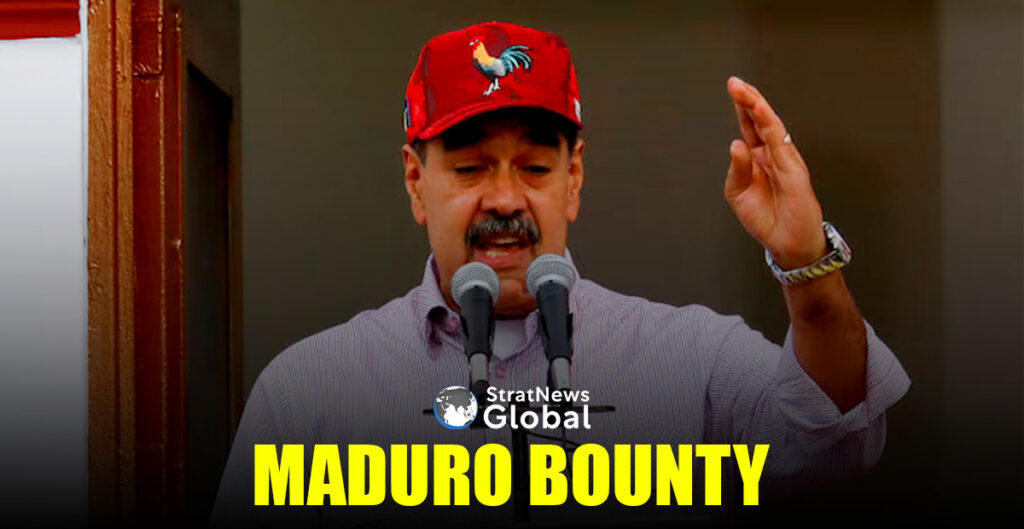

Maduro Faces $50 Million US Bounty Over Drug Links
US Attorney General Pam Bondi on Thursday announced that the United States has increased its reward to $50 million for any information leading to the capture of Venezuelan President Nicolas Maduro, citing allegations of drug trafficking and ties to criminal organisations.
In a video posted to X, Bondi accused Maduro of collaborating with prominent criminal groups such as Tren de Aragua and the Sinaloa Cartel.
Today, @TheJusticeDept and @StateDept are announcing a $50 MILLION REWARD for information leading to the arrest of Nicolás Maduro. pic.twitter.com/D8LNqjS9yk
— Attorney General Pamela Bondi (@AGPamBondi) August 7, 2025
“Maduro uses foreign terrorist organizations like TdA, Sinaloa and Cartel of the Suns to bring deadly drugs and violence into our country,” Bondi said.
‘Dignity Of Our Homeland Not For Sale’
Venezuelan Foreign Minister Yvan Gil said on Telegram that the announcement was “the most ridiculous smokescreen ever seen”.
“While we’re debunking the terrorist plots orchestrated from her country, this woman is coming out with a media circus to please the defeated far-right in Venezuela,” Gil said.
“The dignity of our homeland is not for sale. We repudiate this crude political propaganda operation,” he added.
The Venezuelan information ministry did not immediately respond to a request for comment.
2X Jump
The reward was first set at $15 million in 2020, when US prosecutors charged Maduro with drug trafficking. It was increased to $25 million in January 2025, as Maduro was sworn in for a third term, alongside new sanctions on top officials.
In February, the US State Department formally designated the Venezuelan gang Tren de Aragua as a foreign terrorist organisation, alongside MS-13 and several Mexican cartels. In July, it also designated Cartel de Los Soles as a global terrorist organisation.
US Secretary of State Marco Rubio said in a statement late on Thursday that Maduro has been a leader of Cartel de los Soles for over a decade, which is responsible for trafficking drugs into the United States.
“Since 2020, Maduro has strangled democracy and grasped at power in Venezuela. Maduro claimed to have won Venezuela’s July 28, 2024, presidential election but failed to present any evidence that he had prevailed. The United States has refused to recognise Maduro as the winner of 2024 election and does not recognise him as the President of Venezuela,” Rubio’s statement read.
(With inputs from Reuters)
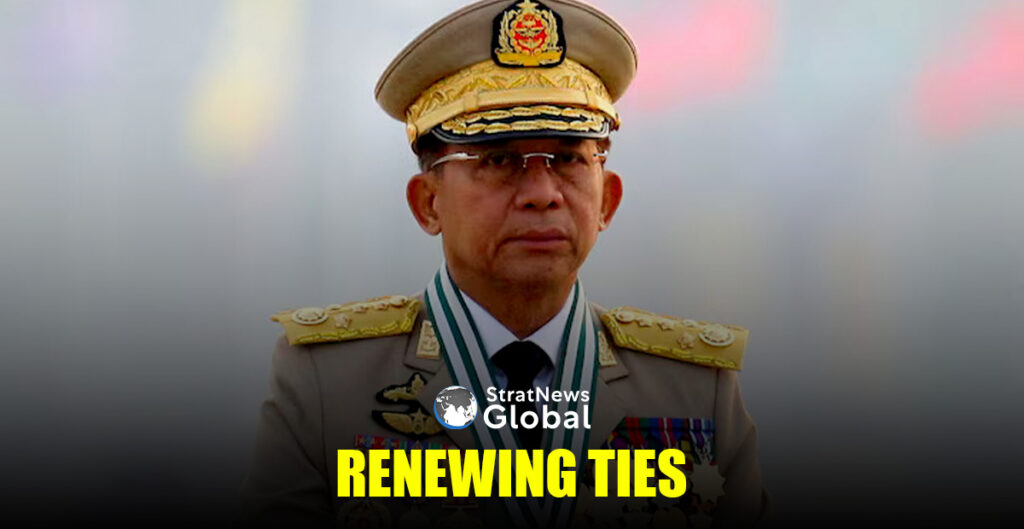
Myanmar Seeks US Engagement Through New Lobbying Deal
A Washington-based lobbying firm has entered a $3 million per year agreement with Myanmar’s Ministry of Information to assist the military-led nation in restoring ties with the US.
According to documents submitted under the US Foreign Agents Registration Act (FARA), the DCI Group signed the agreement with the ministry on July 31, the day Myanmar’s military nominally transferred power to a civilian-led interim government ahead of a planned election.
Myanmar’s leadership under military chief Min Aung Hlaing seized power in a 2021 coup and that year an Israeli-Canadian lobbyist they hired to represent them in Washington and other capitals said he had stopped his work because US sanctions on the generals prevented him from being paid.
The US Treasury Department, the DCI Group, the US State Department and Myanmar’s Washington embassy did not immediately respond to requests for comment when asked if US sanctions would affect the agreement between the Myanmar ministry and the DCI Group.
Praising Trump
The formation of an interim government signals no change to the status quo in Myanmar, with Min Aung Hlaing holding on to all major levers of power as acting president while retaining his position as chief of the armed forces.
He has appeared eager to engage with US President Donald Trump’s administration after years of isolation.
When Trump threatened new tariffs on Myanmar’s US-bound exports this month as part of his global trade offensive, he did so in a signed letter addressed personally to Min Aung Hlaing.
The general responded by lavishing praise on Trump for his “strong leadership” while asking for lower rates and the lifting of sanctions. He said he was ready to send a negotiating team to Washington, if needed.
‘Trade, Natural Resources’
According to the FARA filing, the DCI Group “shall provide public affairs services to (the) client with respect to rebuilding relations between the Republic of the Union of Myanmar and the United States, with a focus on trade, natural resources, and humanitarian relief”.
The filing was signed on August 1 by DCI managing partner Justin Peterson, who served in the previous Trump administration, and another managing partner, Brian McCabe.
Controversial Past
Reuters reported last year that the FBI has been investigating the DCI Group over its alleged role in a hack-and-leak operation that targeted hundreds of its client Exxon Mobil’s biggest critics.
The DCI Group has said the allegations that it commissioned the hacking operation were false and that it directs all of its employees and consultants to comply with the law.
In 2008, two top aides to then Republican presidential nominee John McCain resigned after work they did with the DCI Group for a previous military junta in Myanmar came to light. Jim Murphy, a former DCI president and managing partner, served as Trump’s national political director during his 2016 campaign.
Myint Swe’s Death
Myanmar’s state media reported on Thursday that Myint Swe, who became Myanmar’s president during the 2021 coup that saw the arrest of incumbent Win Myint and Nobel laureate and de facto leader Aung San Suu Kyi, had died in hospital earlier in the day.
Myint Swe, a 74-year-old former general, was placed on medical leave in July last year, with his duties passed to Min Aung Hlaing.
Engaging the junta would be a sharp departure for the United States, given US sanctions on the military leaders and the violence committed against the Rohingya minority that Washington calls genocide and crimes against humanity.
Last month, the Trump administration lifted sanctions designations on several junta allies, but US officials said this did not indicate any broader shift in US policy toward Myanmar and was unrelated to the general’s letter.
Rare Earth Minerals
Last week Reuters reported that the administration had heard competing proposals on ways to divert Myanmar’s vast supplies of rare earth minerals away from strategic rival China, although nothing had been decided upon amid major logistical and geopolitical obstacles.
Securing supplies of so-called heavy rare earths, used in high-tech weaponry, is a major focus of the administration in its competition with China, which is responsible for nearly 90% of global processing capacity.
(With inputs from Reuters)
Ecuador’s Ambassador Sees India Ties Entering ‘New, Strategic Era’
As the global race for critical minerals intensifies, India is looking far beyond its borders to secure resources such as lithium, copper and cobalt. Among the countries gaining strategic significance in this search is Ecuador.
56 Yrs Of India-Ecuador Ties
“This year, as we mark 56 years of diplomatic relations between Ecuador and India, we celebrate more than a number. We celebrate a relationship that is expanding in depth, vision and human connection,” says Fernando Xavier Bucheli Vargas, Ambassador of Ecuador to India.
Ecuador has significant reserves of copper and untapped lithium. The country has a modest mining footprint, with just two large-scale operations—the Chinese-owned Mirador and Canadian-owned Fruta del Norte.
Indian Embassy ‘Turning Point’ In Ties
The Ambassador, who recently completed one year in his post, sees the bilateral relationship entering a “new strategic era”. “India’s civilisational depth and future-oriented dynamism make it a natural partner for Ecuador. We are working together to create new pathways for trade, education, innovation and cultural exchange,” he noted.
Recently, India decided to open its embassy in Ecuador’s capital Quito. “It is a turning point in our bilateral relations. It reflects a growing political will to deepen cooperation with Latin America and signals a closer connection with Ecuador in particular,” said Bucheli Vargas.
Investment Opportunities
In addition to minerals and energy, sectors such as pharmaceuticals, clean tech, digital infrastructure and biotechnology are being prioritised for bilateral collaboration. Ecuador is also actively promoting its globally renowned cacao and eco-tourism offerings to the Indian market.
“Ecuador offers Indian investors real opportunities supported by a dollarised economy, legal predictability and strategic access to the Pacific and Latin American markets,” the Ambassador explained.
“We are expanding academic mobility, fostering university partnerships, and encouraging collaboration in science, innovation and the creative industries. These people-to-people connections form the human foundation of our diplomatic engagement.”
The sixth round of political consultations, scheduled later this year in New Delhi, is expected to formalise many of these initiatives.
Ahead of Ecuador’s National Day on August 10, the Ambassador said he’s committed to nurturing the bilateral relationship. “Our countries may be far apart on the map but we are united by respect for diversity, for Nature and for inclusive development.”
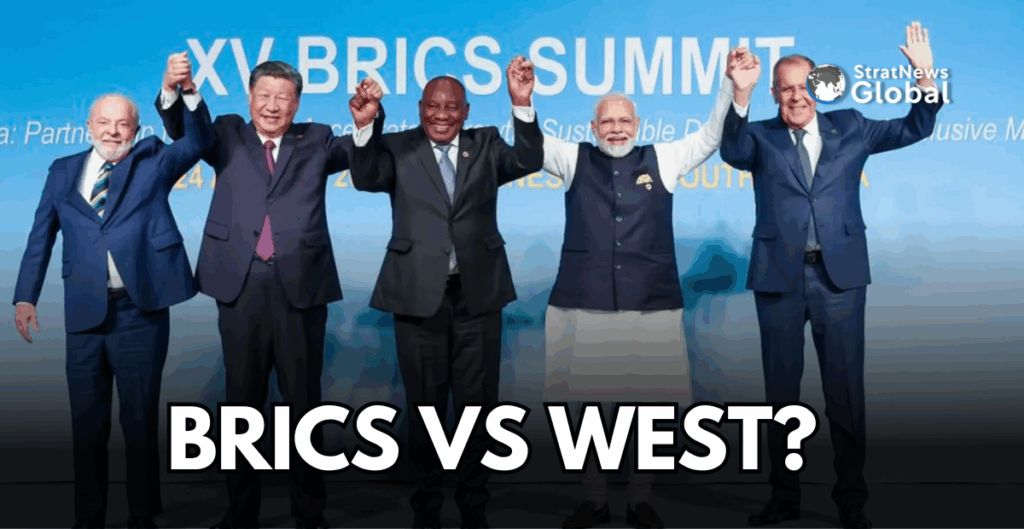
BRICS Is Not Anti-West, But Trump Is Anti-BRICS
Donald Trump’s kid gloves on trade came off some time ago; that of the BRICS grouping may be coming off soon if Brazil’s President Lula da Silva has his way.
He’s planning to dial Prime Minister Modi, China’s Xi Jinping and other BRICS leaders “to discuss how each one is doing in this situation, what the implications are for each country, so we can make a decision.”
He reminded Trump that the BRICS comprises 10 of the world’s 20 biggest economies, hinting they are not without clout and can make things difficult for the US. Does that suggest a new world order is quietly taking shape with the BRICS positioning itself in opposition to the US?
From India’s point of view, that would be unacceptable.
“Deep trade linkages with the West—especially with the US—remain vital for both India and China,” argues Pankaj Saran, former deputy national security adviser and ambassador to Russia. “The notion of an economic firewall is unrealistic.”
India also knows that the biggest economy in the BRICS is China. The demand for de-dollarization finds strong backing among the mandarins in Beijing, who see the yuan as the grand replacement of the dollar. At all costs, India does not want that to happen. The point is why replace dependence on the dollar to dependence on the currency of a country inimical to India.
So India strenuously opposes any move within the BRICS to “de-dollarize” and publicly holds the view that moving away from the US dollar is not on the agenda. It is also intended to soften the view that BRICS is inherently anti-West, given the presence of China and Russia.
“In my view, BRICS as a group will evolve into a strong entity from solutions,” says Dammu Ravi, secretary handling economic relations in the External Affairs Ministry. “Big countries within the bloc will be able to find a balance and ensure that it doesn’t go anti-West.”
Yet as Pankaj Saran acknowledges, BRICS originates from the failure of the West. The problem is, as China grows to become a dominant force in the grouping, how will it leverage its economic strength to promote the values that BRICS stands for?
What of India? Can it maintain strategic balance within the group at a time when its own interests appear at odds with Washington and Beijing?
These questions are crucial for India as it moves to assume the presidency of the BRICS next year, which ironically, coincides with the US assuming the chairmanship of the G20.
If Trump does not turn up for the G20 in South Africa, as he hinted recently, rest assured he will be there “in spirit” and through the voice of his chosen representative, who is expected to focus on “hard economics”. As for India, it has already signalled its plan to focus on digital public infrastructure and renewable energy, both key issues for the Global South and, of course, BRICS.
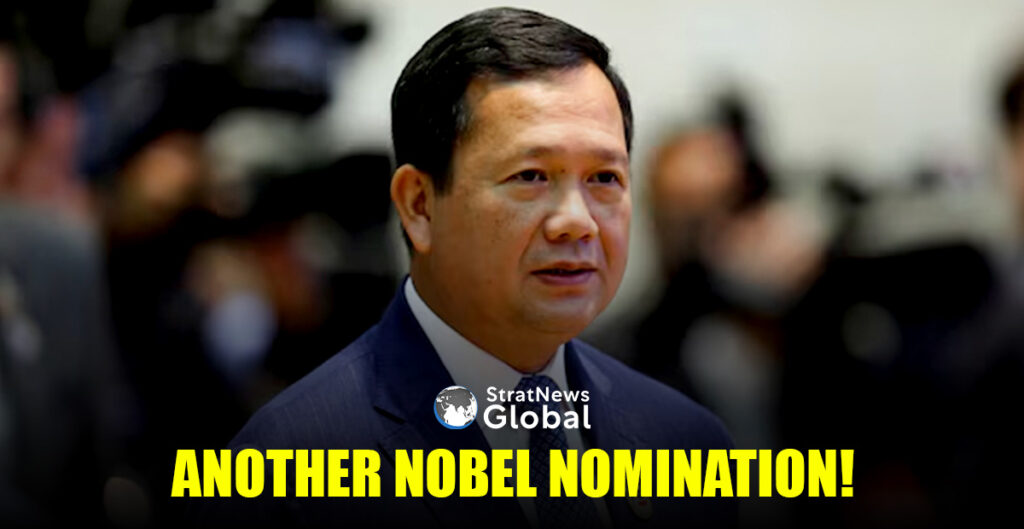
Cambodian PM Nominates Trump For Nobel Peace Prize Over Border Mediation
The Cambodian prime minister announced on Thursday that he had nominated United States President Donald Trump for the Nobel Peace Prize, praising his “extraordinary statesmanship” in helping to resolve a border conflict between Cambodia and Thailand.
Hun Manet made the announcement in a Facebook post late on Thursday, accompanied by a letter he said had been sent to the Norwegian Nobel Committee hailing Trump’s intervention as an example of his “exceptional achievements in de-escalating tensions in some of the world’s most volatile regions”.
“This timely intervention, which averted a potentially devastating conflict, was vital in preventing a great loss of lives and paved the way towards the restoration of peace,” the Cambodian leader wrote in the letter.
Trump’s Call Ended Standoff
It was a July 26 call by Trump to the leaders of both Thailand and Cambodia that broke the deadlock in efforts to end some of the heaviest fighting between the neighbours in recent history, Reuters has reported.
That led to a ceasefire negotiated in Malaysia on July 28. The two countries agreed on Thursday to ensure no reigniting of hostilities and to allow observers from Southeast Asia.
In total, 43 people were killed and more than 300,000 displaced by a five-day conflict that started with small arms fire and quickly escalated into heavy artillery and rocket fire, then Thailand’s deployment hours later of an F-16 fighter jet for air strikes.
The nomination had been expected after Cambodia’s deputy prime minister last week announced the plan, while thanking Trump for a tariff of 19% on Cambodian imports by the United States – sharply reduced from the previously threatened 49% that he said would have decimated its vital garment manufacturing sector.
Pakistan said in June that it would recommend Trump for the Nobel Peace Prize for his work in helping to resolve a conflict with India, and Israeli Prime Minister Benjamin Netanyahu said last month he had nominated Trump for the award.
(With inputs from Reuters)
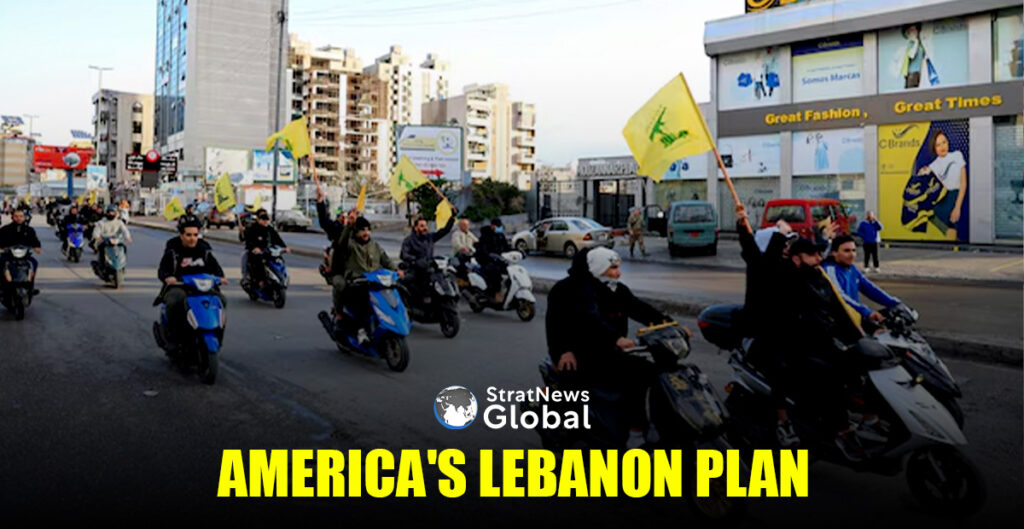
US Plan Calls For Hezbollah Disarmament, Israeli Withdrawal By Year-End
The United States has proposed a plan to Lebanon, aiming to disarm Hezbollah by year-end, halt Israeli military operations, and secure Israeli troop withdrawal from five positions in southern Lebanon, according to a Lebanese cabinet agenda reviewed by Reuters.
The plan, submitted by U.S. President Donald Trump’s envoy to the region, Tom Barrack, and being discussed at a Lebanese cabinet meeting on Thursday, sets out the most detailed steps yet for disarming the Iran-backed Hezbollah, which has rejected mounting calls to disarm since last year’s devastating war with Israel.
The U.S. State Department did not immediately respond to a request for comment.
Lebanese government ministers could not immediately be reached for comment.
The Israeli prime minister’s office declined to comment, while the defence ministry did not immediately respond.
Hezbollah had no immediate comment on the proposal, but three political sources told Reuters that ministers from the Iran-backed group and their Muslim Shi’ite allies withdrew from Thursday’s cabinet meeting in protest at discussions of the proposal.
Israel dealt major blows to Hezbollah in an offensive last year, the climax of a conflict that began in October 2023 when the Lebanese group opened fire at Israeli positions at the frontier, declaring support for its militant Palestinian ally Hamas at the start of the Gaza war.
‘Extend And Stabilise’ Truce
The U.S. proposal aims to “extend and stabilise” a ceasefire agreement between Lebanon and Israel brokered in November.
“The urgency of this proposal is underscored by the increasing number of complaints regarding Israeli violations of the current ceasefire, including airstrikes and cross-border operations, which risk triggering a collapse of the fragile status quo,” it said.
Phase 1 of the plan requires the Beirut government to issue a decree within 15 days committing to Hezbollah’s full disarmament by December 31, 2025. In this phase, Israel would also cease ground, air and sea military operations.
Phase 2 requires Lebanon to begin implementing the disarmament plan within 60 days, with the government approving “a detailed (Lebanese army) deployment plan to support the plan to bring all arms under the authority of the state”. This plan will specify disarmament targets.
During Phase 2, Israel would begin withdrawing from positions it holds in south Lebanon, and Lebanese prisoners held by Israel would be released in coordination with the International Committee of the Red Cross (ICRC).
During Phase 3, within 90 days, Israel will withdraw from the final two of the five points it holds, and funding will be secured to initiate rubble removal in Lebanon and infrastructure rehabilitation in preparation for reconstruction.
In Phase 4, within 120 days, Hezbollah’s remaining heavy weapons must be dismantled, including missiles and drones.
In Phase 4, the United States, Saudi Arabia, France, Qatar and other friendly states will organise an economic conference to support the Lebanese economy and reconstruction and to “implement President Trump’s vision for the return of Lebanon as a prosperous and viable country”.
(With inputs from Reuters)
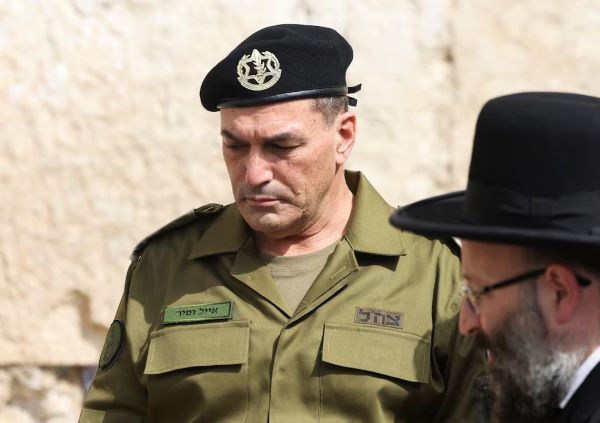
Israeli Army Chief Eyal Zamir Clashes With Netanyahu Over Gaza Strategy
Eyal Zamir, the chief of staff of Israel’s armed forces, is opposing a complete military takeover of Gaza—making him the latest in a series of senior generals to find themselves at odds with Prime Minister Benjamin Netanyahu.
Zamir fears endangering the lives of remaining hostages and miring an exhausted military in Gaza, he told Netanyahu during a stormy meeting on Tuesday, though he is expected to seize the last areas of the besieged territory if ordered to do so.
Speaking on Thursday as Netanyahu’s war cabinet prepared to meet, Zamir defended his right to speak out on the military’s behalf, calling the culture of debate “an inseparable part of the history of the Jewish people”.
But he also said the military now had the ability to establish a new security reality along the border. “Our intention is to defeat Hamas and continue to operate with our hostages at the forefront of our minds,” he said.
His hard image looks very different to Palestinians. They already knew Zamir for suppressing Gaza unrest in 2018 when more than 150 people were killed. Now they see him as the architect of utter devastation in the territory.
Tightrope Act
Eyal Zamir has a difficult line to walk.
“The challenge that stands in front of him right now, promoting a doctrine or policy that he really doesn’t support, will be very complicated,” said Michael Milshtein of the Moshe Dayan Center for Middle Eastern and African Studies at Tel Aviv University.
Still, as a former military secretary to Netanyahu, promoted by the prime minister to deputy head of the general staff in 2018 and to the top job early this year, Zamir should be well placed to argue his point, Milshtein said.
Unlike some of the other army top brass, Eyal Zamir was not tainted with the catastrophic security mistakes of Hamas’ October 7, 2023, cross-border assault on Israeli communities, he said, an attack seen as Israel’s worst military failure.
He is also the commander in chief of a military now riding high in the national mood after shattering Lebanon’s Hezbollah last year and taking out much of Iran’s nuclear programme and Revolutionary Guards leadership in June.
Military Hegemon
The scale of Israel’s successes in both conflicts re-established its reputation as the Middle East’s military hegemon, inspiring a wave of national pride over the pummelling of Iranian-backed Hezbollah and the weakening of Iran.
While internal political divisions meant trust in Netanyahu was only 40% in an Israeli poll last month, more than 68% of respondents trusted Zamir.
But at the same time, the Israeli military has come under ever greater criticism from abroad, including from major Western allies, over its conduct of the war in Gaza – with massive destruction, looming famine and a high civilian casualty toll.
Zamir has already expanded the Gaza war since replacing Herzi Halevi, who resigned as chief of staff in January over the October 7 Hamas attack.
After Israel broke a ceasefire with Hamas in March, it escalated major ground operations across Gaza. Zamir told troops in a speech that “we will continue until we break the enemy’s fighting capability — until we defeat it wherever we operate”.
Tank Soldier
Eyal Zamir began his long military career in the armoured corps after joining up in 1984, commanding tanks at a time when Israeli forces were deeply involved in their occupation of southern Lebanon.
He later ran a military doctrine and training unit, helping formulate Israeli strategic thinking, before heading the army’s 7th Brigade and then its 36th Division.
As head of Southern Command from 2015-18 he was responsible for how the military handled months of weekly protests by thousands of Gazans approaching the security fence with Israel after a partial blockade of goods and people in place since 2005, when Israel pulled its military and settlers out of the coastal enclave.
More than 150 protesters were killed in the demonstrations, with Palestinians saying the victims were unarmed and Israel calling them rioters.
One Gazan injured in the 2018 protests at the age of 16, who only gave his name as Basel, said by phone: “We don’t differentiate between the Israeli leaders. Zamir is like all the others. A war criminal.”
Army Vs Government
Zamir’s long record was roundly praised by Netanyahu and his ministers when he was appointed, but the difficulty of balancing the demands of the political leadership with the needs of a stretched army soon kicked in.
By April, Israeli media outlets were reporting clashes between the chief of staff and government ministers, particularly those from the far right in Netanyahu’s coalition, who wanted a tougher approach in Gaza.
Israeli generals have throughout the war voiced concerns about an open-ended conflict with reserve troops repeatedly called up and the military taking over governance of an enclave reduced to rubble with an embittered population.
“From the military point of view, it’s not a very complicated mission to occupy all Gaza. But it’s quite clear that the minute this occupation is accomplished, it means the IDF is responsible for 2 million Palestinians,” said Milshtein.
(With inputs from Reuters)
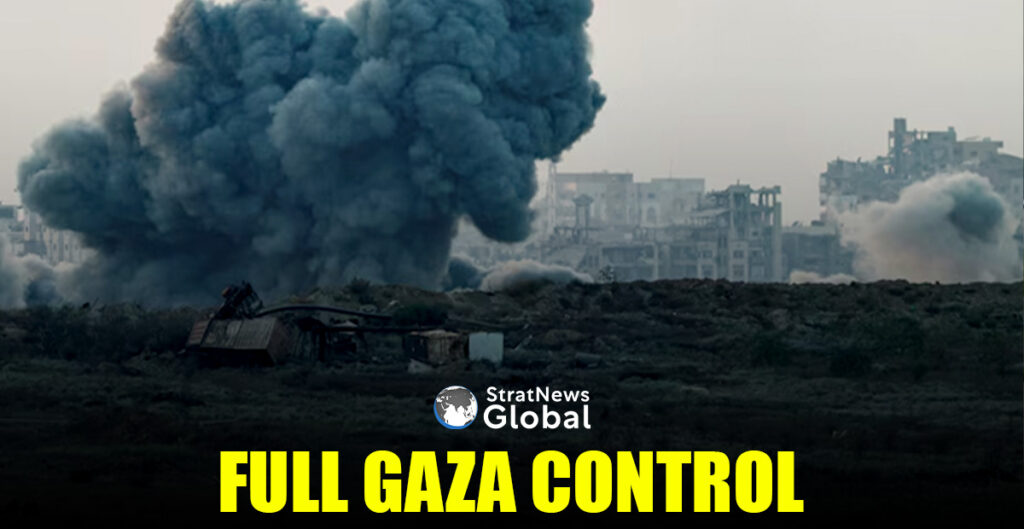
Netanyahu Vows Full Military Control Of Gaza Despite Mounting Criticism
Israeli Prime Minister Benjamin Netanyahu said on Thursday that Israel plans to assume full military control of Gaza, despite growing domestic and international criticism over the nearly two-year-long war in the Palestinian enclave.
“We intend to,” Netanyahu said in an interview with Fox News Channel’s Bill Hemmer when asked if Israel would take over the entire coastal territory. “We don’t want to keep it. We want to have a security perimeter. We don’t want to govern it. We don’t want to be there as a governing body.”
He said that Israel wanted to hand over the territory to Arab forces that would govern it. He did not elaborate on the governance arrangements or which Arab countries could be involved.
Netanyahu made the comments to Fox News shortly before a meeting he was due to have on Thursday with a small group of senior ministers to discuss plans for the military to take control of more territory in Gaza.
Military Chief Pushes Back
The security cabinet session follows another meeting this week with the head of the military, which Israeli officials have described as tense, saying the military chief had pushed back on expanding the campaign.
Two government sources said any resolution by the security cabinet would need to be approved by the full cabinet, which may not meet until Sunday.
Among the scenarios that were being considered ahead of the security meeting was a phased takeover of areas in Gaza not yet under military control, one of the sources said, speaking on condition of anonymity. Evacuation warnings could be issued to Palestinians in specific areas of Gaza, potentially giving them several weeks before the military moves in, the person added.
Total control of the territory would reverse a 2005 decision by Israel by which it withdrew Israeli citizens and soldiers from Gaza, while retaining control over its borders, airspace and utilities. Right-wing parties blame that withdrawal decision for the militant Palestinian group Hamas gaining power there in a 2006 election.
It was unclear whether Netanyahu was foreseeing a prolonged takeover or a short-term operation aimed at dismantling Hamas and freeing Israeli hostages.
‘A Balant Coup’
Hamas, in a statement, called Netanyahu’s comments “a blatant coup” against the negotiation process.
“Netanyahu’s plans to expand the aggression confirm beyond any doubt that he seeks to get rid of his captives and sacrifice them,” the statement said.
Earlier this year, Israel and the United States rejected an Egyptian proposal, backed by Arab leaders, that envisaged the creation of an administrative committee of independent, professional Palestinian technocrats entrusted with the governance of Gaza after the end of the war.
Opinion polls show that most Israelis want the war to end in a deal that would see the release of the remaining hostages held by Hamas-led Palestinian militants.
The White House did not immediately respond to a request for comment. U.S. President Donald Trump declined on Tuesday to say whether he supported or opposed a potential full military takeover of Gaza by Israel.
Netanyahu’s government has insisted on total victory over Hamas, which ignited the war when it staged a deadly October 2023 attack on Israel from Gaza.
The U.N. has called reports about a possible expansion of Israel’s military operations in Gaza “deeply alarming” if true.
The idea, pushed especially by far-right ministers in Netanyahu’s coalition, of Israeli forces thrusting into areas they do not already hold in the enclave has also generated alarm in Israel.
Demanding End To War
Outside the prime minister’s office in Jerusalem on Thursday evening, hundreds of demonstrators gathered to protest against the notion of an expanded war, demanding an immediate end to the military campaign in return for the release of all of the hostages.
Protesters held signs bearing the faces of hostages still held in Gaza and voiced deep frustration with the government’s handling of the crisis.
“I’m here because I am sick and tired of this government. It’s ruined our life,” said 55-year-old Noa Starkman, a Jerusalem resident who was born in a southern Israeli community close to where Hamas attacked in October 2023.
The Hostages Families Forum, which represents captives held in Gaza, urged military Chief of Staff Eyal Zamir to oppose widening the war and the government to accept a deal that would end the war and free the remaining hostages.
Defence Minister Israel Katz said on Wednesday that the military would carry out the government’s decisions until all war objectives were achieved.
Israeli leaders have long insisted that Hamas be disarmed and have no future role in a demilitarised Gaza and that the hostages be freed.
Remaining Hostages
There are 50 hostages still held in Gaza, of whom Israeli officials believe 20 are alive. Most of those freed so far emerged as a result of diplomatic negotiations. Talks toward a ceasefire that could have seen some more hostages released collapsed in July.
A senior Palestinian official said Hamas had told Arab mediators that an increase in humanitarian aid entering Gaza would lead to a resumption in ceasefire negotiations.
Israeli officials accuse Hamas of seizing aid to hand out to its fighters and to sell in Gazan markets to finance its operations, accusations that the militant group denies.
Videos released last week of two living hostages showed them emaciated and frail, stirring international condemnation.
Hamas, which has ruled Gaza for nearly two decades but now controls only fragmented parts, insists any deal must lead to a permanent end to the war. Israel says the group has no intention of going through with promises to give up power afterwards.
(With inputs from Reuters)
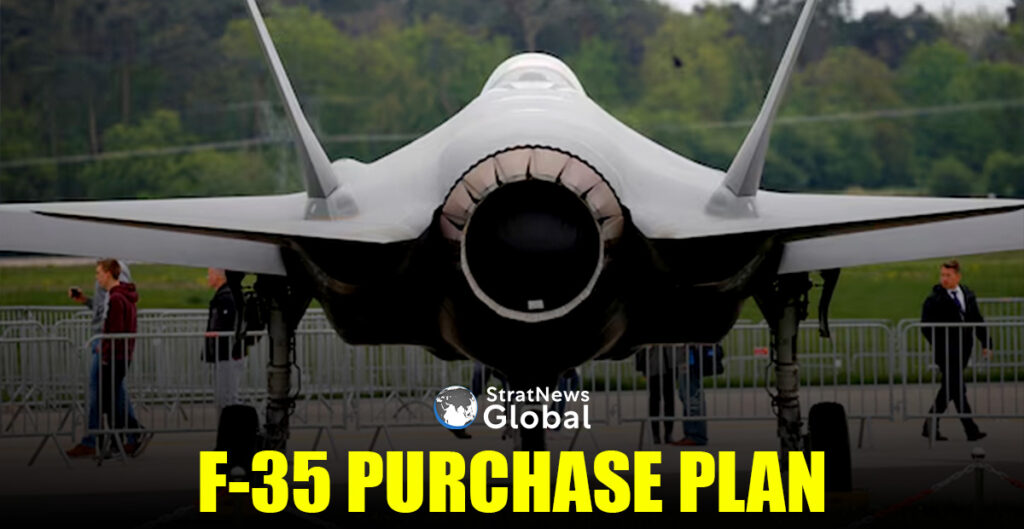
Canadian Defence Officials Push Ottawa To Stick With Full F-35 Jet Order: Sources
Canadian defence officials have firmly argued that Ottawa should proceed with its plan to purchase all 88 Lockheed Martin F-35 fighter jets, rather than divide the order, two sources familiar with the matter said on Thursday.
The review stops short of making a formal recommendation, one of the sources said.
The final decision rests with the Liberal government of Prime Minister Mark Carney, said the sources, who requested anonymity given the sensitivity of the situation.
Carney, who won the April election on a promise to stand up to U.S. President Donald Trump, had requested the review by military officials in March on the grounds that Canada was over-reliant on the U.S. defence industry.
Ottawa has made a legal commitment of funds for the first 16 F-35 aircraft. Although Carney made clear in March that Canada could seriously look at buying the remaining 72 planes from non-U.S. companies, the Defence Ministry review concluded there was no military sense in splitting the order.
F-35 Fighter Jet
The F-35 is the most advanced fighter of its type, and buying another jet from a European rival would incur extra costs in training, supplies, and maintenance. The Canadian Armed Forces are highly integrated with their U.S. counterparts.
Sticking to the original plan could remove a potential irritant in relations with the United States at a moment when talks on a new trade and security relationship have stalled.
Since winning the election, Carney has softened his tone, noting that despite U.S. tariffs on steel, aluminium, and cars, Canada is in a good position compared to other nations facing higher tariffs.
In a statement, the office of Defence Minister David McGuinty reiterated that Canada planned to buy 88 fighter jets.
“We are committed to procuring what the air force needs, while ensuring economic benefits for Canadians and the responsible use of taxpayer dollars,” it said.
Carney’s office declined to comment.
Canada announced plans to buy the F-35s in 2010, but a switch in governments, rule changes for aircraft procurement, as well as challenges from the pandemic, triggered major delays.
(With inputs from Reuters)
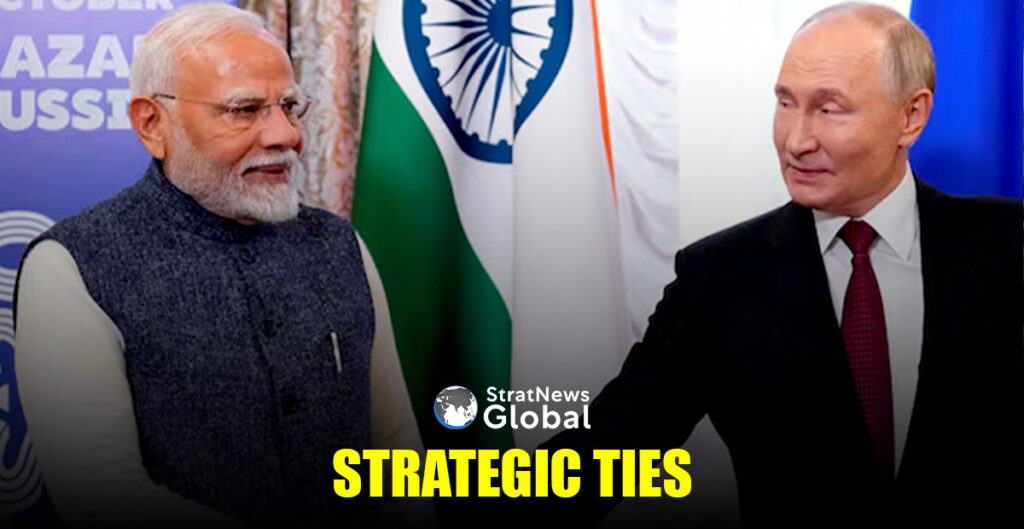
Russia, India Reaffirm ‘Strategic Partnership’ Amid Trump’s Tariff Hike
Russia and India reaffirmed their “strategic partnership” during bilateral security talks in Moscow on Thursday, a day after U.S. President Donald Trump imposed higher tariffs on Indian imports over its continued purchases of Russian oil.
Interfax news agency quoted Indian national security adviser Ajit Doval as saying that New Delhi was looking forward to a visit from President Vladimir Putin by the end of the year.
At Doval’s meeting with Sergei Shoigu, secretary of Russia’s Security Council, both sides emphasised the importance of the countries’ relations.
Later on Thursday, Doval met Putin at the Kremlin, where official footage showed the two men shaking hands. Shoigu, Kremlin foreign policy adviser Yuri Ushakov, and India’s Ambassador to Russia, Vinay Kumar, also attended the meeting.
The Kremlin did not disclose what they discussed.
50% Tariff
Trump’s imposition of an additional 25% tariff on goods from India, coming into force on August 28, signals the most serious downturn in U.S.-India relations since his return to office in January, threatening to disrupt India’s access to its largest export market.
“We are committed to further active cooperation in order to form a new, more just and sustainable world order, ensure the supremacy of international law, and jointly combat modern challenges and threats,” Shoigu told Doval in televised comments.
Interfax quoted Doval as saying: “We have now established very good relations, which we value very much, a strategic partnership between our countries”.
India and China have become the top buyers of Russian seaborne crude oil since Moscow launched its full-scale invasion of Ukraine in February 2022, precipitating Western efforts to choke the Russian economy.
Trump had threatened measures against countries buying Russian oil before he announced the new tariff on Indian goods, which raised the total duty to 50%.
Kremlin Condemns ‘Trade Pressure’
On Tuesday, the Kremlin accused the United States of exerting illegal trade pressure on New Delhi, saying India has the right to trade with whomever it chooses.
India’s state refiners have stopped Russian oil purchases as the discounts narrowed and Trump warned countries not to buy Moscow’s oil, industry sources said. Private refiners Reliance Industries and Nayara are Russia’s top oil clients in India, trade data shows.
An Indian official familiar with the matter said Doval would discuss India’s purchases of Russian crude during his visit to Moscow. He was also expected to discuss India’s defence collaboration with Russia, the official said.
India signed a $5.5 billion deal with Russia in 2018 for five S-400 Triumf long-range surface-to-air missile systems, which New Delhi says it needs to counter a threat from China.
But deliveries of the systems have been delayed several times. Moscow is expected to deliver units of the final two S-400 systems to India in 2026 and 2027.
New Delhi has traditionally relied heavily on arms imports from Russia, although it has dramatically reduced those imports and shifted to Western buyers in recent years.
(With inputs from Reuters)