

Support us by contributing to StratNewsGlobal on the following UPI ID
ultramodern@hdfcbank

Strategic affairs is our game, South Asia and beyond our playground. Put together by an experienced team led by Nitin A. Gokhale. Our focus is on strategic affairs, foreign policy and international relations, with higher quality reportage, analysis and commentary with new tie-ups across the South Asian region.
You can support our endeavours. Visit us at www.stratnewsglobal.com and follow us on YouTube, Twitter, Facebook and Instagram.
र 500 per month
र 1000 per month
र 5000 per year
र 10000 per year
Donate an amount of your choice
र 500 per month
Donate र 500 per month

र 1000 per month
Donate र 1000 per month
र 5000 per year
Donate र 5,000 per year
र 10000 per year
Donate र 10,000 per year
Donate an amount of your choice
Donate an amount of your choice
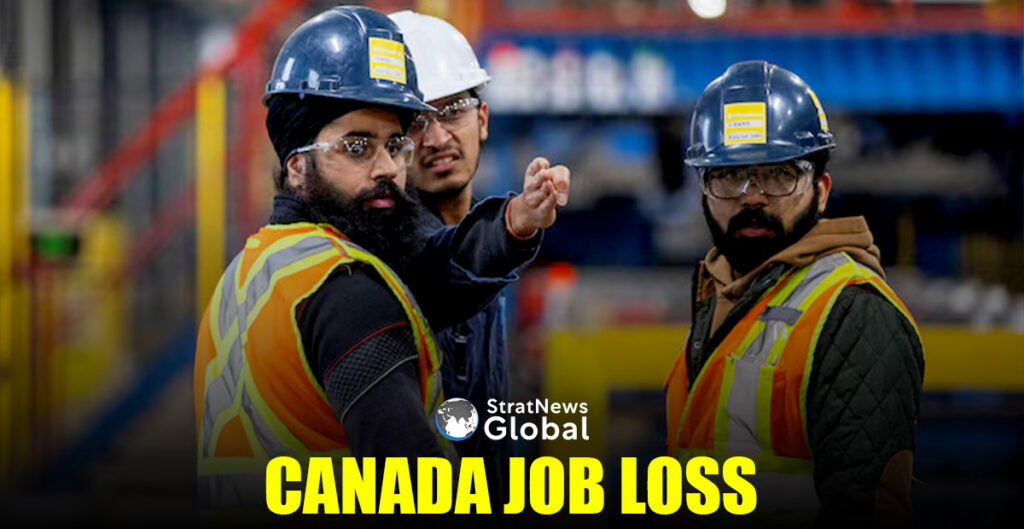

Canada Loses Over 40K Jobs In July Amid US Tariff Impact
Canada’s economy shed tens of thousands of jobs in July, pushing the employment rate to its lowest level in eight months, according to data released on Friday, as the labour market reversed the progress made in the previous month.
The economy shed 40,800 jobs in July, compared with a net addition of 83,000 jobs in June, taking the employment rate, or the percentage of people employed out of the total working-age population, to 60.7%, Statistics Canada said.
The unemployment rate, however, remained steady at a multi-year high of 6.9%.
Analysts polled by Reuters had forecast the economy would add 13,500 jobs and the unemployment rate would tick up to 7%.
“Canada’s labour market snapped back to reality in July,” Michael Davenport, senior economist at Oxford Economics, wrote in a note.
Trump’s Tariffs
US President Donald Trump’s sectoral tariffs on steel, aluminum and autos have hit the manufacturing sector hard and reduced the hiring intentions of companies, the Bank of Canada has previously said.
The number of people employed in manufacturing shrank by close to 10,000 in July on a yearly basis as sectors linked to steel, aluminum and autos curtailed hiring and experienced layoffs.
Marty Warren, the United Steelworkers’ national director for Canada, told Reuters that about 1,000 members have been laid off.
Oxford Economics’ Davenport predicts more layoffs in the coming months, forecasting about 140,000 lost jobs and an unemployment rate rising to the mid-7% range later this year.
Employment in some areas has held up well despite tariffs, the data showed.
Overall, there has been little net employment growth since the beginning of the year, StatsCan said. The layoff rate was virtually unchanged at 1.1% in July compared with 12 months earlier.
The bulk of the job losses in July occurred among workers aged between 15 and 24 – that group’s unemployment rate edged up to 14.6%, the highest since September 2010 excluding the pandemic years of 2020 and 2021.
Policy Rate
The youth unemployment rate is usually higher than the country’s average.
The employment rate for this group, which accounts for around 15% of the total working-age population, sank to 53.6%, the lowest level since November 1998 if the pandemic years are excluded.
The Bank of Canada kept its key policy rate unchanged last week, partly due to a strong labor market but indicated it might reduce lending rates if inflation stays under control and economic growth weakens.
“We are now a bit more confident in our view that the Bank of Canada will resume cutting next month, although a surprisingly strong CPI (Consumer Price Index) print next week could prompt another pause,” said Alexandra Brown, North America economist at Capital Economics.
Money market bets show the odds of a rate cut at the next monetary policy meeting on September 17 at 38%, up 11 percentage points from Thursday.
The Canadian dollar was trading down 0.07% to 1.3753 against the dollar, or 72.71 US cents.
The information, culture and recreation sector lost 29,000 jobs last month, marking the biggest decline, followed by 22,000 lost jobs in construction and 19,000 in business, building and other support services.
The average hourly wage of permanent employees – a gauge closely tracked by the Bank of Canada to ascertain inflationary trends – grew by 3.5% in July to C$37.66 per hour, against a 3.2% increase in the prior month.
(With inputs from Reuters)
US And UK Differ On Gaza Approach But Align On Regional Goals: Vance
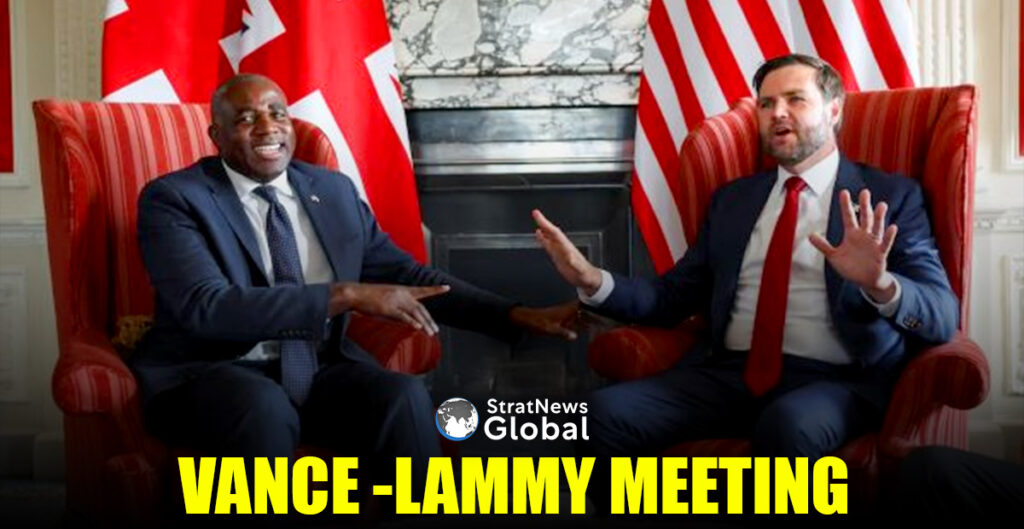
At the opening of his meeting with British Foreign Secretary David Lammy in southern England, U.S. Vice President JD Vance said that although Britain and the United States hold different views on resolving the Gaza crisis, they remain aligned in their overall objectives for the region.
Vance, who has previously criticised Britain and its governing Labour Party, landed with his wife Usha and their three children in London before heading to Chevening, the large, red-brick country residence used by the British foreign minister.
Appearing before reporters and TV cameras, the two leaders exuded plenty of bonhomie, with Lammy recommending Vance enjoy a coastal walk in Kent and the vice president professing his “love” for Britain.
Asked about Britain’s plan to recognise Palestine, Vance said the U.S. and Britain had a common goal to resolve the crisis in the Middle East, adding: “We may have some disagreements about how exactly to accomplish that goal, and we’ll talk about that today.”
Vance also reiterated that the U.S. had no plans to recognise a Palestinian state, saying he didn’t know what recognition actually meant, “given the lack of a functional government there.”
Britain, by contrast, has taken a harder stance against Israel, declaring its intention to recognise Palestine along with France and Canada to put pressure on Israeli leader Benjamin Netanyahu over the continuing conflict and humanitarian crisis in Gaza.
Earlier on Friday, Vance and Lammy also went fishing in the lake behind Chevening House, appearing relaxed in blue button-down shirts and sharing a laugh.
Bilateral Ties
Vance joked to reporters that the “one strain on the special relationship” between Britain and the U.S. was that all his children had caught fish but that the British foreign minister had not.
“Before beginning our bilateral, the Vice President gave me fishing tips, Kentucky style,” Lammy said in a post on X.
After spending two nights in Chevening’s bucolic surroundings with Lammy, the Vances will travel to the Cotswolds, a picturesque area of English countryside and a popular retreat for wealthy and influential figures, from footballers and film stars to media and political figures.
The visit comes amid heightened transatlantic tensions, domestic political shifts in both countries and increased attention on Vance’s foreign policy views as he emerges as a key figure in President Donald Trump’s administration.
A source familiar with the planning described the trip as a working visit that will include several official engagements, meetings and visits to cultural sites. Vance is also expected to meet with U.S. troops.
Vance and Lammy will also discuss the war in Ukraine, the pair told reporters.
Close to Chevening House, a small group of protesters had gathered, some waving Palestinian flags and one holding up a sign showing a meme of a bald Vance.
(With inputs from Reuters)
UN Rights Chief Urges Immediate Halt To Israel’s Gaza Takeover Plan
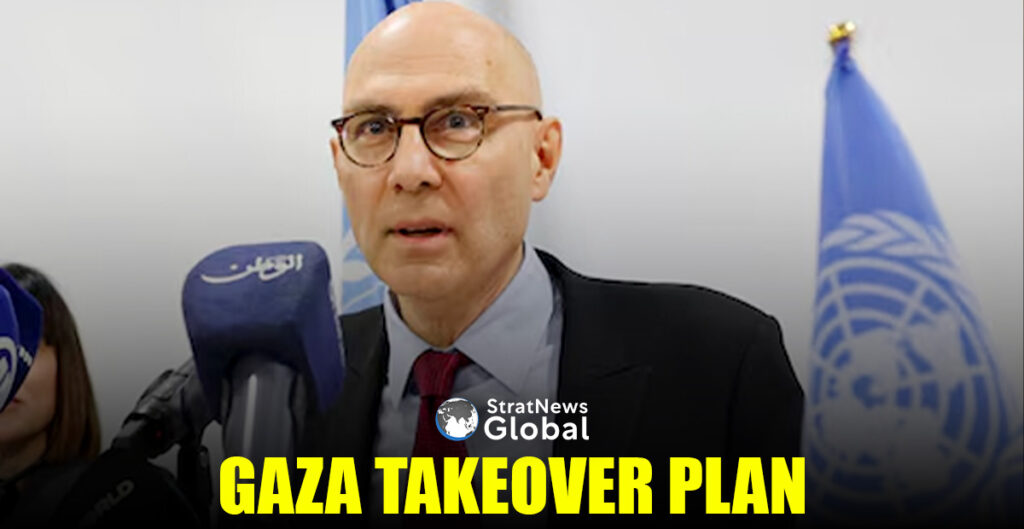
The United Nations Human Rights Chief, Volker Turk, said on Friday that Israel’s plan for a full military takeover of Gaza will cause more deaths and suffering and must be stopped immediately.
The plan runs contrary to the ruling of the International Court of Justice that Israel must bring its occupation to an end as soon as possible, to the realisation of the agreed two-state solution and the right of Palestinians to self-determination, Turk said in a statement.
Cabinet Approval
Israel’s political-security cabinet approved a plan early on Friday to take control of Gaza City, as the country expands its military operations despite intensifying criticism at home and abroad over the devastating, almost two-year-old war.
Far-right allies in Prime Minister Benjamin Netanyahu’s coalition have been pushing for a total takeover of Gaza as part of his vow to eradicate Hamas militants, though the military has warned this could jeopardise the lives of remaining hostages.
The decision came after multiple failed attempts to mediate a ceasefire and amid a rising international outcry over images of starving Palestinian children underlining a deepening humanitarian disaster in the shattered enclave.
“The IDF will prepare to take control of Gaza City while providing humanitarian aid to the civilian population outside the combat zones,” Netanyahu’s office said in a statement, referring to the Israeli Defence Forces.
Gaza Takeover Plan
Earlier, Israeli Prime Minister Benjamin Netanyahu said on Thursday that Israel intended to take military control of the entire Gaza Strip.
“On all evidence to date, this further escalation will result in more massive forced displacement, more killing, more unbearable suffering, senseless destruction and atrocity crimes,” Turk said.
“Instead of intensifying this war, the Israeli Government should put all its efforts into saving the lives of Gaza’s civilians by allowing the full, unfettered flow of humanitarian aid. The hostages must be immediately and unconditionally released by Palestinian armed groups.”
(With inputs from Reuters)
Zambia Slams US Visa Bond Rule As Financial Burden
Zambia’s government on Friday expressed concern over the “avoidable financial burden” posed by a new US visa rule that requires Zambian citizens to pay bonds of up to $15,000 for certain visa categories.
Starting August 20, President Donald Trump’s administration will require visa applicants from Zambia and Malawi to post a bond of $5,000, $10,000, or $15,000 under a pilot programme for tourist and business visas, the State Department said on Tuesday.
‘Serious Concern’
“While the (US) government has a prerogative to initiate policy changes, the Zambian government views this development with serious concern, given its potential economic implications on trade, investment, tourism and people-to-people exchanges,” Zambia’s Foreign Minister Mulambo Haimbe said in a statement.
“This includes the unnecessary financial strain on Zambian nationals.”
The move comes as Trump cracks down on illegal immigration, targeting countries with high overstay rates. The bond amount will be returned if the applicant leaves the US within the allowed window of time and complies with all the terms of their visa status.
Haimbe said his government would engage with US counterparts to explore possible solutions. He added that it would not affect Zambians applying for student visas or those issued a valid visa before August 20.
The Southern African country’s average household income is roughly $150 per month, according to the government’s latest statistical report.
‘It’s Laughable’
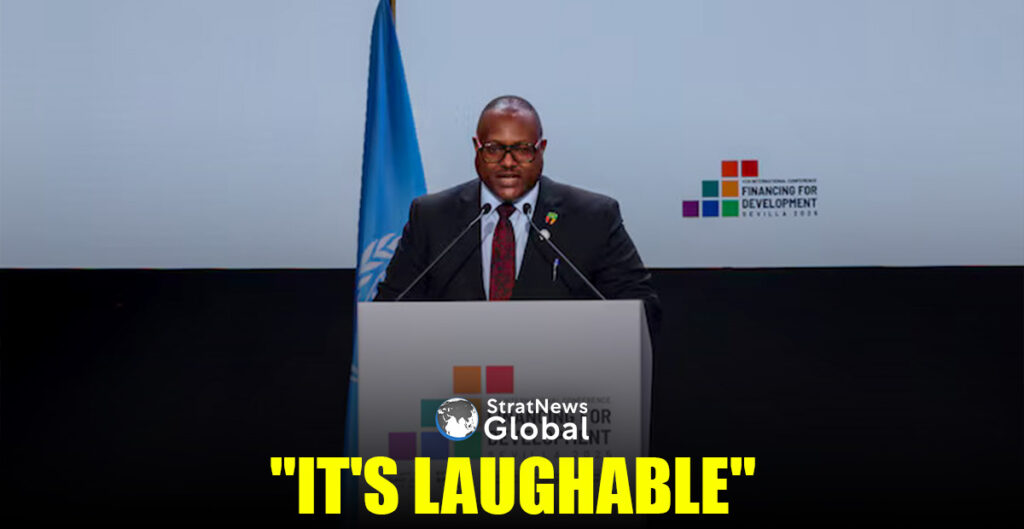
“For most Zambians… this bond is not just unaffordable, it’s laughable,” said Anthony Mukwita, a Zambian international relations analyst and former diplomat in a Facebook post.
“It could drill a borehole and bring clean water to an entire village,” Mukwita said. “Instead, it is being used to buy a chance at an American dream, a dream that’s increasingly looking like a gated community with a very expensive entry fee.”
Neighbouring Malawi’s government has not yet officially responded to the measure.
(With inputs from Reuters)
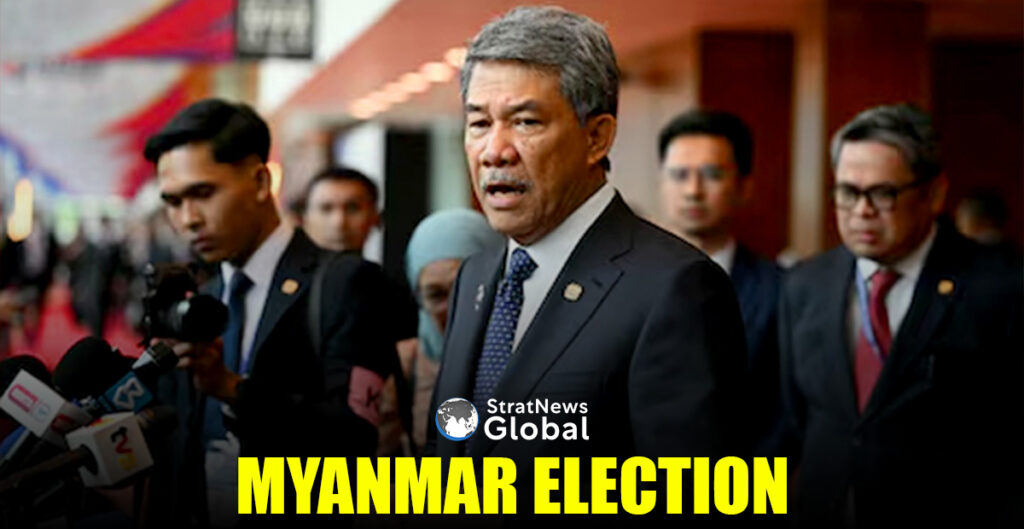
Malaysia Minister To Seek Election Clarification From Myanmar: State Media
Malaysia‘s state media reported on Friday that Foreign Minister Mohamad Hasan will lead a four-nation delegation to Myanmar next month to seek details from its military leadership about a planned election.
Myanmar has been in chaos since a 2021 military coup against an elected civilian government plunged the country into civil war.
Last week, the junta lifted a nationwide state of emergency and nominally transferred power to a civilian-led government ahead of the election, although the junta chief remained in charge of the country in his other role as acting president.
“I want to obtain a clearer picture (of the elections) to bring to the attention of ASEAN leaders in October,” Mohamad said, referring to the Association of Southeast Asian Nations grouping, Malaysian state news agency Bernama reported.
Mohamad, who will be accompanied by his counterparts from Thailand, the Philippines, and Indonesia for the trip on September 19, wanted clarity on whether Myanmar would hold a comprehensive election, Bernama reported.
Myanmar state media has reported that martial law and a state of emergency would be imposed in more than 60 townships across nine regions and states, with voting to be held in December and January.
‘Five-Point Consensus’ Peace Plan
Last month, Mohamad said ASEAN had agreed that an election in Myanmar was not a priority and urged the junta to adhere to the grouping’s “five-point consensus” peace plan instead.
Myanmar is an ASEAN member, but its generals have been barred from attending the bloc’s key meetings since 2022 for failing to honour the peace plan. Malaysia is the current chair of ASEAN.
Myanmar’s election has been dismissed by Western governments as a sham to entrench the generals’ power and is expected to be dominated by proxies of the military, with opposition groups either barred from running or refusing to take part.
(With inputs from Reuters)
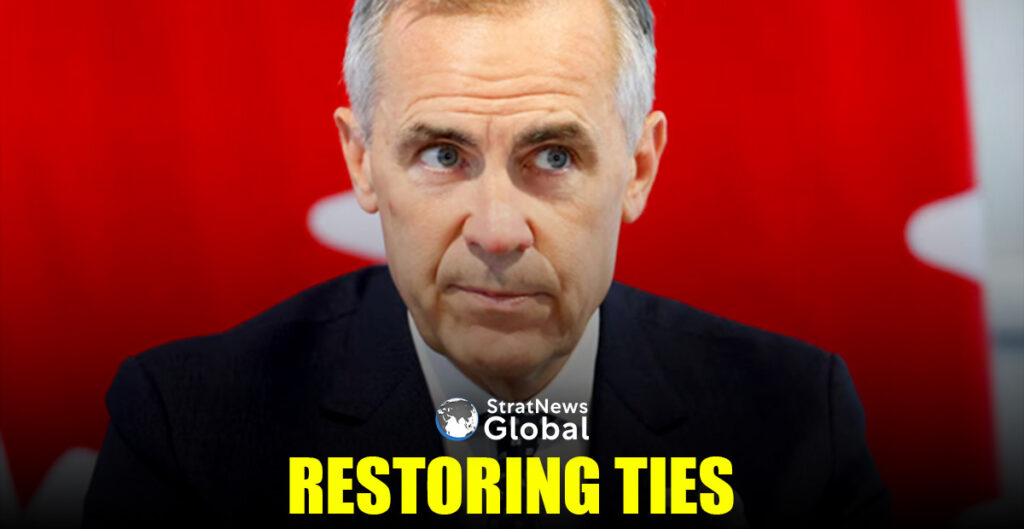
Canada Seeks To Repair Ties With Mexico After Rift With Trump
Prime Minister Mark Carney is working to repair Canada–Mexico ties after the relationship collapsed last year when Canadian officials suggested pursuing a trade deal solely with the Trump administration.
Carney attempted to break the ice in a phone call with Mexican President Claudia Sheinbaum in July by complimenting an indigenous-made soccer ball she had gifted him at their last meeting and saying he hoped to visit Mexico soon.
The warm overture, relayed to Reuters by three people familiar with the call, highlights Canada’s attempt to repair the damage after a string of public slights by Canadian officials, including Ontario Premier Doug Ford, who said in November that any comparison of Canada to Mexico was “the most insulting thing I’ve ever heard.”
Mexico and Canada are in many ways natural allies. They’ve benefited from trilateral trade deals with the U.S. for 31 years: first the North American Free Trade Agreement in 1994 and subsequently the U.S.-Mexico-Canada Agreement that replaced it in 2020.
But the relationship between the two countries has been beset by allegations of betrayal on both sides and memories of fraught negotiations with Trump. Top officials virtually stopped talking in November after former Canadian Prime Minister Justin Trudeau mused about cutting a trade deal with the U.S. without Mexico, suggesting the U.S. and Canada were more aligned on issues like China.
A few days later, Trudeau flew to Mar-a-Lago for a surprise visit with U.S. President Donald Trump, stunning Mexican officials. It seemed as if Canada had already developed a strategy for dealing with Trump while Mexico was wringing its hands, one Mexican official said.
An infuriated Sheinbaum directed her lieutenants to stop dealing with the Canadians, at least until Trudeau left office, according to the official, who spoke on condition of anonymity.
Nine months later, Canada finds itself on the back foot with Trump while Mexico is revelling in its relative success. Last week, Trump gave Mexico a 90-day pause on new tariffs going into effect, keeping the rate at 25%, while raising tariffs on Canada to 35%.
Now, in a remarkable about-face, Canadian officials are on a campaign to win back Mexico’s favour and save the trilateral trade deal Trudeau suggested he was willing to ditch, according to two people with knowledge of the countries’ tense relationship.
That treaty continues to shield a large number of Canadian and Mexican exports to the U.S. from Trump’s latest rounds of tariffs.
Carney said on Tuesday that “it’s important to preserve” the trilateral agreement while Canada’s foreign minister and finance minister travelled this week to Mexico for a two-day visit with top officials.
Asked by Reuters whether the purpose of her visit was to repair shattered ties with Mexico, Canadian Foreign Minister Anita Anand said: “It is extremely important for Canada to have a resilient relationship with Mexico, and indeed, I’m here to kick start that relationship.”
Sheinbaum, on X, reiterated that message. “We’re strengthening the relationship between our countries,” she wrote.
A spokesperson for Sheinbaum declined to comment.
‘Look In The Mirror’
Whether they repair their partnership and become a tightly-knit bloc in negotiations with the U.S. will have lasting consequences not only for the three countries but the thousands of companies that depend on free trade in the region, from automakers to medical suppliers, three trade analysts said.
“The big question I have is whether there’s a real sense of communication or coordination between Mexico and Canada,” said Kenneth Smith Ramos, a former trade negotiator for Mexico. “I don’t get the sense that is the case. I think both are operating bilaterally with the U.S. and that’s it.”
He said Mexico saved Canada from being ousted from the USMCA treaty when Canadian and U.S. negotiators got into a “severe fight” during negotiations in 2018.
“Mexico insisted that the agreement remain trilateral,” said Smith, who represented Mexico in those negotiations, adding it’s that history that likely made Mexican officials especially bitter when Canada appeared to spurn Mexico to curry favour with Trump.
A Canadian source involved in the 2018 talks sharply disputed that characterisation.
“The Mexican team went behind our back and negotiated their own bilateral deal with the U.S. Trump then used that to pressure Canada to make concessions,” said the source, who spoke on condition of anonymity.
The source said the bad blood with Mexico stemming from the 2018 negotiations is part of the reason Canadian officials expressed interest last year in a bilateral deal with the U.S.
“If there are Mexicans who feel Canada betrayed them, they should look in the mirror.”
Trading Barbs
After Trudeau came away from Mar-a-Lago empty-handed at the beginning of the year, the relationship became openly hostile, with him and Trump trading barbs. Sheinbaum, meanwhile, insisted on staying on Trump’s good side, virtually at any cost, according to three people familiar with her strategy.
As the Canadians fell into a deeper rut with Trump, Carney, who replaced Trudeau as prime minister in March, sought to make amends with Mexico by inviting Sheinbaum to attend the Group of 7 summit in Canada.
Sheinbaum delayed accepting for nearly three weeks but eventually assented. Trump left the summit early without meeting Sheinbaum, a development that “worried” Mexico’s president, one of her advisors said.
Carney’s invitation and Sheinbaum’s attendance appeared to be a reset of sorts in the two countries’ relationship, said Pedro Casas, CEO of the American Chamber of Commerce of Mexico. It sent a “clear message” that the two leaders are “in this together,” he said.
The Canadian prime minister extended his good-faith gestures to Sheinbaum during their follow-up phone call in July. He told her that the following day, Canada would announce limits on imports of steel produced in other countries in an effort to help the country’s domestic steel sector, which is reeling from Trump’s 50% tariffs.
But Carney assured Sheinbaum that the measure wouldn’t affect imports from Mexico, according to two people with knowledge of their conversation.
Whatever her reservations about Canada, Sheinbaum has made clear she is completely invested in saving the trilateral trade deal with it and the U.S. If the three countries fail to renew the pact next year, the treaty will automatically expire in 2036, creating a potentially disastrous economic blow to Mexico.
U.S. Secretary of Commerce Howard Lutnick has privately raised the idea of ditching the agreement in favour of a bilateral trade deal with Mexico, according to the Mexican official – a scenario the person said Mexico is not keen to pursue.
Secretary Lutnick did not respond to a Reuters request for comment. The White House did not respond to a request for comment.
“Mexico knows very well that if we try to go head-to-head, toe-to-toe with Washington, the asymmetry in the negotiations is going to favour the U.S,” said former Mexican trade negotiator Juan Carlos Baker. “It’s always better to have a three-player game.”
(With inputs from Reuters)
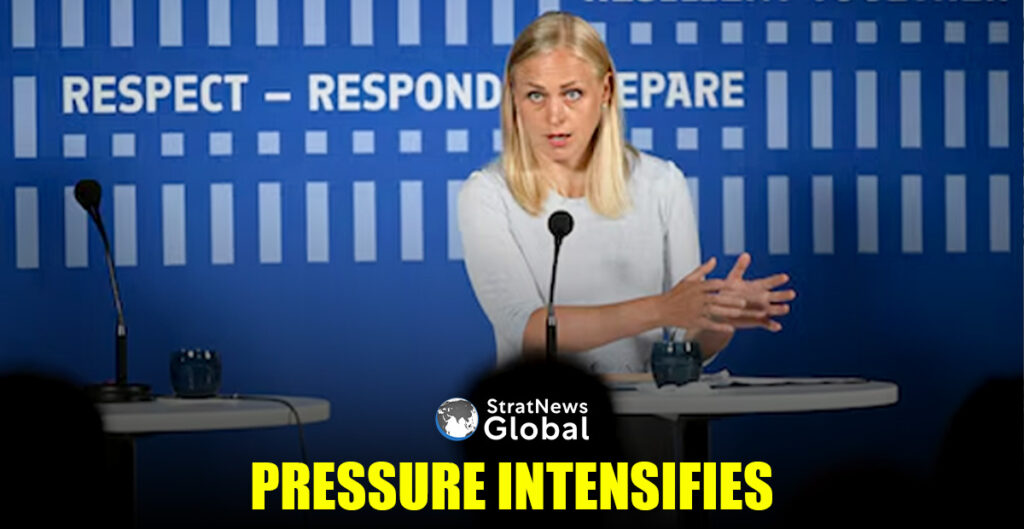
Finland Urges More US Sanctions On Russia As Trump’s Deadline Nears
Finland‘s foreign minister, Elina Valtonen, said on Friday in a Reuters NEXT Newsmaker interview that United States President Donald Trump should impose more sanctions on Russia to help end the war in Ukraine.
Trump set Friday as the deadline by which Russia had to agree to peace in Ukraine or have its oil customers face secondary tariffs. If imposed, they would sever a major source of funding for Russian President Vladimir Putin’s war effort.
However, Putin and Trump are now expected to meet as early as next week following talks between the Russian leader and U.S. special envoy Steve Witkoff in Moscow on Wednesday, raising the possibility that the new sanctions may be delayed or cancelled.
A White House official said on Wednesday that the secondary sanctions were still expected to be implemented against countries doing business with Russia from Friday, despite the latest diplomatic flurry.
“I certainly hope that President Trump will move forward with those sanctions,” Elina Valtonen said in the interview, referring to the secondary sanctions that could especially impact China and India, the biggest purchasers of Russian oil.
Europe Coordinates Ukraine Strategy
Finland’s President Alexander Stubb was among several European leaders to join a phone call with Trump on Wednesday designed to coordinate Western efforts to end the Ukraine war.
Valtonen said continued Western arms supplies to Kyiv also had a vital role to play in pressuring Putin to end the war, which began in February 2022 with Russia’s full-scale invasion of Ukraine.
“What we do see… is that the reason that Russia has again shown some willingness to talk, is that the increased arms deliveries (to Ukraine) are definitely piling up the pressure on Russia to find a way out of the war,” she said.
Finland, along with other Nordic countries and the three Baltic states, has been among Ukraine’s staunchest supporters.
The 2022 invasion prompted Finland, which shares a 1,340-km (833-mile) border with Russia, to join NATO two years ago, upending decades of non-alignment. Valtonen became the foreign minister two months after that historic step was taken.
The Russian state’s fiscal situation is not as good as it was three years ago, and its economic situation is even worse, Valtonen said, referring to the impact of sanctions and a massive diversion of resources in Russia to the war effort.
“We need to be piling up on the pressure, and then hope that Russia will react positively one day, which means that they will end their invasion,” she said.
Gaza
Asked about the situation in Gaza, Valtonen expressed “great worry” over a decision by Israel’s security cabinet to approve a plan on Friday to take control of Gaza City in an expansion of military operations despite intensifying criticism at home and abroad over the devastating nearly two-year-old war.
On Thursday, asked if Israel would take over the entire coastal territory, Netanyahu told Fox News Channel in an interview: “We intend to.”
“We do think that it is so important now… to keep alive the prospect for the two-state solution, even though it looks very difficult at this moment,” she said, referring to the creation of a sovereign Palestinian state alongside Israel.
France, Britain and Canada have announced plans in recent weeks to recognise an independent Palestinian state, but Valtonen signalled that Finland has no immediate plans to do so.
“There have to be concrete steps, which essentially means that there will be a mutual recognition of a Palestinian state at some point (with Israel), but also the normalisation of relations between Arab countries … and with Israel,” she said.
(With inputs from Reuters)
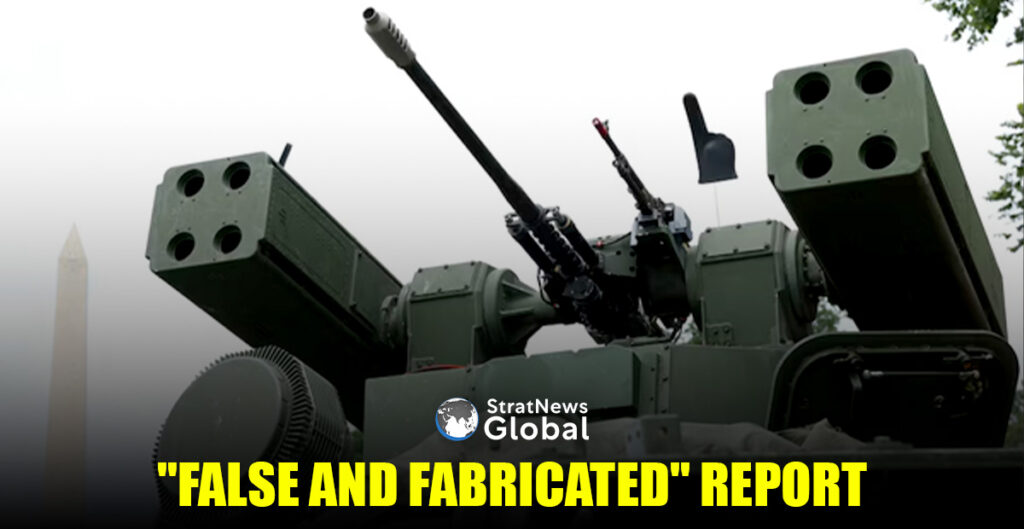
India Denies Pausing US Arms Deals, Calls News Report ‘False And Fabricated’
The Indian Ministry of Defence on Friday rejected a Reuters report saying India had paused defence purchases from the United States as “false and fabricated.”
“The news report on India pausing the talks related to defence purchases with the U.S. is false and fabricated. It is clarified that the various cases of procurement are being progressed as per the extant procedures,” sources in the Defence Ministry said.
In an earlier post on X, Nitin Gokhale, Editor in chief of Stratnewsglobal.com and Bharatshakti.in, said: “Trump’s tariff tantrums has provided an opportunity to pause/cancel the Stryker contract which, in the first place, was a bad idea when Indian companies are capable of producing equally powerful and potent platforms. I am not so sure if plans for cancelling/pausing follow on orders for the P-8 aircraft, is an equally good idea since the Indian Navy likes its utility. Whether the cancellation/pause happens or not, it is good to leverage the advantages of being a buyer’s market that India is in the defence space to send a message. If all that Trump cares for is business deals then no harm in utilising this opportunity.”
Earlier on Friday, Reuters reported, citing three Indian officials, that India has suspended plans to acquire new U.S. weapons and aircraft, marking its first clear sign of displeasure after President Donald Trump’s tariffs on Indian exports pushed bilateral ties to their lowest point in decades.
India had been planning to send Defence Minister Rajnath Singh to Washington in the coming weeks for an announcement on some of the purchases, but that trip has been cancelled, two of the people told Reuters.
50% Tariff
Trump on August 6 imposed an additional 25% tariff on Indian goods as punishment for Delhi’s purchases of Russian oil, which he said meant the country was funding Russia’s invasion of Ukraine. That raised the total duty on Indian exports to 50% – among the highest of any U.S. trading partner.
The president has a history of rapidly reversing himself on tariffs, and India has said it remains actively engaged in discussions with Washington. One of the people said the defence purchases could go ahead once India had clarity on tariffs and the direction of bilateral ties, but “just not as soon as they were expected to.”
Written instructions had not been given to pause the purchases, another official said, indicating that Delhi had the option to quickly reverse course, though there was “no forward movement at least for now.”
India’s defence ministry and the Pentagon did not respond to Reuters’ questions. Delhi, which has forged a close partnership with America in recent years, has said it is being unfairly targeted and that Washington and its European allies continue to trade with Moscow when it is in their interest.
Stryker Combat Vehicles
Reuters is reporting for the first time that discussions on India’s purchases of Stryker combat vehicles made by General Dynamics Land Systems and Javelin anti-tank missiles developed by Raytheon and Lockheed Martin have been paused due to the tariffs.
Trump and Indian Prime Minister Narendra Modi had in February announced plans to pursue procurement and joint production of those items.
Singh had also been planning to announce the purchase of six Boeing P8I reconnaissance aircraft and support systems for the Indian Navy during his now-cancelled trip, two of the people said. Talks over procuring the aircraft in a proposed $3.6 billion deal were at an advanced stage, according to the officials.
Boeing, Lockheed Martin and General Dynamics referred queries to the Indian and U.S. governments. Raytheon did not return a request for comment.
Russian Relations
India’s deepening security relationship with the U.S., which is fuelled by their shared strategic rivalry with China, was heralded by many U.S. analysts as one of the key areas of foreign-policy progress in the first Trump administration.
Delhi is the world’s second-largest arms importer, and Russia has traditionally been its top supplier. India has, in recent years, however, shifted to importing from Western powers like France, Israel and the U.S., according to the Stockholm International Peace Research Institute think-tank.
The shift in suppliers was driven partly by constraints on Russia’s ability to export arms, which it is utilising heavily in its invasion of Ukraine. Some Russian weapons have also performed poorly on the battlefield, according to Western analysts.
The broader U.S.-India defence partnership, which includes intelligence sharing and joint military exercises, continues without hiccups, one of the Indian officials said.
India also remains open to scaling back on oil imports from Russia and is open to making deals elsewhere, including the U.S., if it can get similar prices, according to two other Indian sources.
Trump’s threats and rising anti-U.S. nationalism in India have “made it politically difficult for Modi to make the shift from Russia to the U.S.,” one of the people said. Nonetheless, discounts on the landing cost of Russian oil have shrunk to the lowest since 2022.
India’s petroleum ministry did not immediately respond to a request for comment.
While the rupture in U.S.-India ties was abrupt, there have been strains in the relationship. Delhi has repeatedly rebutted Trump’s claim that the U.S. brokered a ceasefire between India and Pakistan after four days of fighting between the nuclear-armed neighbours in May. Trump also hosted Pakistan’s army chief at the White House in the weeks following the conflict.
Moscow Pushes Advanced Defence Deals
In recent months, Moscow has been actively pitching Delhi on buying new defence technologies like its S-500 surface-to-air missile system, according to one of the Indian officials, as well as a Russian source familiar with the talks.
India currently does not see a need for new arms purchases from Moscow, two Indian officials said.
But Delhi is unlikely to wean itself off Russian weapons entirely as the decades-long partnership between the two powers means Indian military systems will continue to require Moscow’s support, one of the officials said.
The Russian embassy in Delhi did not immediately respond to a request for comment.
(With inputs from Reuters)
Helicopters Airlift Flood-Stranded In Uttarakhand After Deadly Landslide
Rescuers used helicopters on Thursday to airlift people stranded by floodwaters in Uttarakhand, two days after sudden flash flooding and a landslide killed four, with more missing.
With roads cleared as rain eased, rescue teams arrived in Dharali, where Tuesday’s wall of water had submerged in sludge homes and cars in the village on the route to the Hindu pilgrim town of Gangotri.
Helicopters were carrying to safety those who had been stranded, the state’s chief minister, Pushkar Singh Dhami, said in a post on X.
Dhami said the destruction was “massive” and that the number of missing persons was still being estimated.
“If the weather supports us, then we will bring every single person by tomorrow,” he told Reuters, referring to rescue efforts.
Nearly 400 Rescued
Authorities said about 400 people stuck in Gangotri were being rescued by air, with nine army personnel and seven civilians among the missing.
Relatives of missing people gathered at the helicopter base at Matli village, desperately searching for their loved ones.
Mandeep Panwar said he wanted to reach Dharali, where his brother ran a hotel and is among those missing since Tuesday.
“If you see the videos, ours was the first hotel to be hit by the deluge. I have not heard from my brother, and he has been missing since,” Panwar said.
Communication links with rescuers and residents remained disrupted, as mobile telephone and electricity towers swept away by the floods have yet to be replaced, officials said.
Earlier, army rescuers used their hands, as well as machinery, to shift boulders from roads turned into muddy, gushing rivers, visuals showed. More than 225 army personnel were drafted into the rescue, their Northern Command said on X.
“We saw Dharali falling before our eyes,” said Anamika Mehra, a pilgrim headed for Gangotri when the flooding hit.
The hamlet of about 200 people in the state’s Uttarkashi district stands more than 1,150 metres (3,775 feet) above sea level on the climb to the temple town.
Uttarakhand is prone to floods and landslides, which some experts blame on climate change.
(With inputs from Reuters)
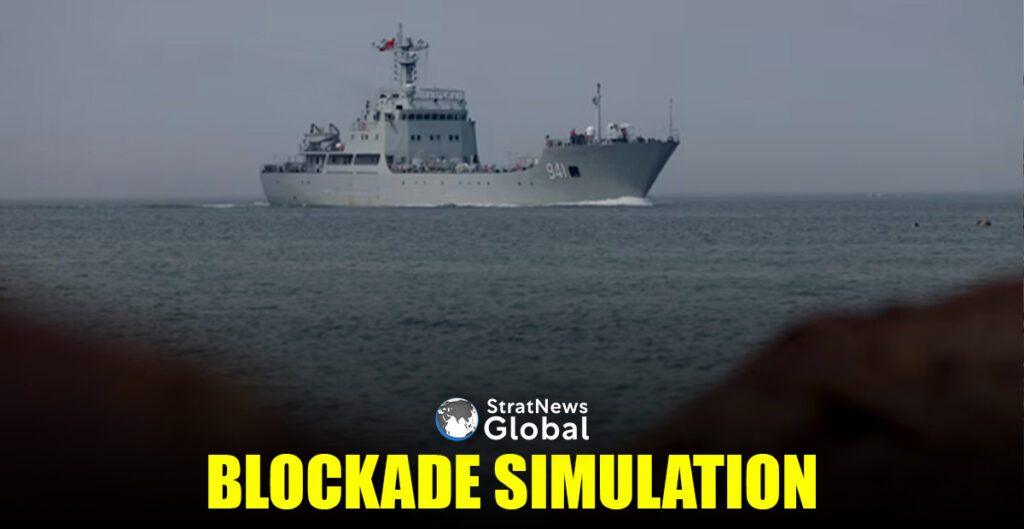
Simulated Chinese Blockade Of Taiwan Highlights Singapore As Key Lifeline
An exercise depicted a tense scenario: a simulated Chinese military blockade of Taiwan by air and sea, leaving Southeast Asian nations scrambling to plan evacuations for up to 1 million Taiwanese citizens trapped on the island.
Over two days in April at a Singapore hotel, some 40 participants and observers in the war game, including serving and retired Asia-Pacific officials and military officers, as well as security scholars, simulated their responses to the unfolding crisis, according to four people familiar with the discussions.
Hours ticked by as some players weighed unified action through the Association of Southeast Asian Nations, while others reached out to the mock U.S., Chinese and Japanese delegates to negotiate special air and sea corridors to extract foreign nationals. Eventually, the people said, a stark conclusion emerged: The Southeast Asian states needed a Singaporean airlift to have a chance of evacuating their people.
“Nothing was moving until the Singaporeans stepped in at the 11th hour,” said one participant in the event at the Jen Singapore Tanglin hotel. “They had found a way of getting their own people out, and offered to get others out, too.”
Reflecting its discreet and decades-old security presence inside Taiwan, where its forces train, Singapore was able to leverage access to airfields and aircraft, the person said. But the exercise ended before any detailed discussion of how Singapore had reached a deal with China to secure an evacuation route through the blockade, or how precisely it would work, three of the people told Reuters.
Rising Asia-Pacific Tensions
The previously unreported exercise comes amid an escalating battle between the U.S. and China for dominance in the Asia-Pacific region. It offers a rare window into contingency planning over Taiwan, which some Asian and Western military attaches and security analysts say is becoming increasingly necessary because an assault on the island by Beijing could draw in the U.S. and imperil other countries.
While the scenario didn’t reflect official policies, participants playing the roles of foreign and defence ministers worked from the known positions of at least nine governments depicted in the simulation, said the four people, who, like some others, spoke on the condition of anonymity to discuss a sensitive matter. Besides Singapore, China, Taiwan and the U.S., the rest included Indonesia, Vietnam and the Philippines, they said.
Southeast Asians account for about 94% of the almost 1 million foreign nationals resident in Taiwan, according to Taiwan’s National Immigration Agency. Indonesians, Vietnamese and Filipinos make up the vast majority of those foreigners, with comparatively small numbers of Japanese and Americans.
Singapore’s defence ministry said it wasn’t involved in the “workshop” and none of its officials attended in any capacity. Neither the defence nor the foreign ministries addressed Reuters’ questions about Singapore’s military presence in Taiwan and planning for Taiwan conflict scenarios, including evacuations.
China’s foreign ministry said it had “always resolutely opposed countries with whom it has diplomatic relations having any form of official relations with the Taiwan region, including military dialogue and cooperation,” adding that it wasn’t aware of the circumstances of the exercise.
The London-based International Institute for Strategic Studies (IISS), which organised the exercise, told Reuters in a statement that participants had attended in their private capacities, and that it could not comment on “discussions, attendees, or any other elements.”
Taiwan’s defence ministry and the ASEAN Secretariat in Jakarta didn’t respond to questions.
A Pentagon official said they were not aware of any official participation in the event by the U.S. Defence Department. “We routinely engage with allies and partners to ensure readiness for a range of contingencies, but it would be inappropriate to discuss operational planning or hypothetical evacuation scenarios,” the official said.
‘Imminent’ Threat To Taiwan
Weeks after the exercise, U.S. Defence Secretary Pete Hegseth told a security conference in Singapore that the threat of China using force to take Taiwan was “imminent” amid intensifying air and naval operations around the island by the Chinese military, the People’s Liberation Army.
Chinese officials have said Hegseth and other Trump administration officials are playing up “the so-called China threat”, with the Chinese embassy in Singapore saying his speech was “steeped in provocations and instigation”.
China claims Taiwan as its territory and has never renounced the use of force to seize it. Taiwan’s President Lai Ching-te and his government strongly object to China’s sovereignty claims, saying it is up to the island’s people to decide their future.
Drew Thompson, a Singapore-based security scholar, said it was vital for Southeast Asian countries to move beyond war games and contingency discussions to build meaningful, unofficial ties with Taiwan, particularly its military. These countries have diplomatic ties with Beijing and don’t officially recognise Taipei.
“The big takeaway here is that a plan is one thing, but you need the access and the relationships to put it into play,” said Thompson, of the S. Rajaratnam School of International Studies, who wasn’t involved in the exercise.
“Singapore has long had these ties, the Philippines is building them, but it remains an open question whether the other countries in Southeast Asia have the unofficial networks in place to meaningfully engage with Taiwan in a conflict.”
The Philippines’ foreign ministry told Reuters the government has contingency plans for a Taiwan emergency, without offering specifics. It added that Manila has “legitimate interest in Taiwan due to geographic proximity and the presence of Filipino nationals there”.
The foreign ministries of Indonesia and Vietnam didn’t respond to requests for comment. Japan’s defence ministry declined to comment.
(With inputs from Reuters)