

Support us by contributing to StratNewsGlobal on the following UPI ID
ultramodern@hdfcbank

Strategic affairs is our game, South Asia and beyond our playground. Put together by an experienced team led by Nitin A. Gokhale. Our focus is on strategic affairs, foreign policy and international relations, with higher quality reportage, analysis and commentary with new tie-ups across the South Asian region.
You can support our endeavours. Visit us at www.stratnewsglobal.com and follow us on YouTube, Twitter, Facebook and Instagram.
र 500 per month
र 1000 per month
र 5000 per year
र 10000 per year
Donate an amount of your choice
र 500 per month
Donate र 500 per month

र 1000 per month
Donate र 1000 per month
र 5000 per year
Donate र 5,000 per year
र 10000 per year
Donate र 10,000 per year
Donate an amount of your choice
Donate an amount of your choice
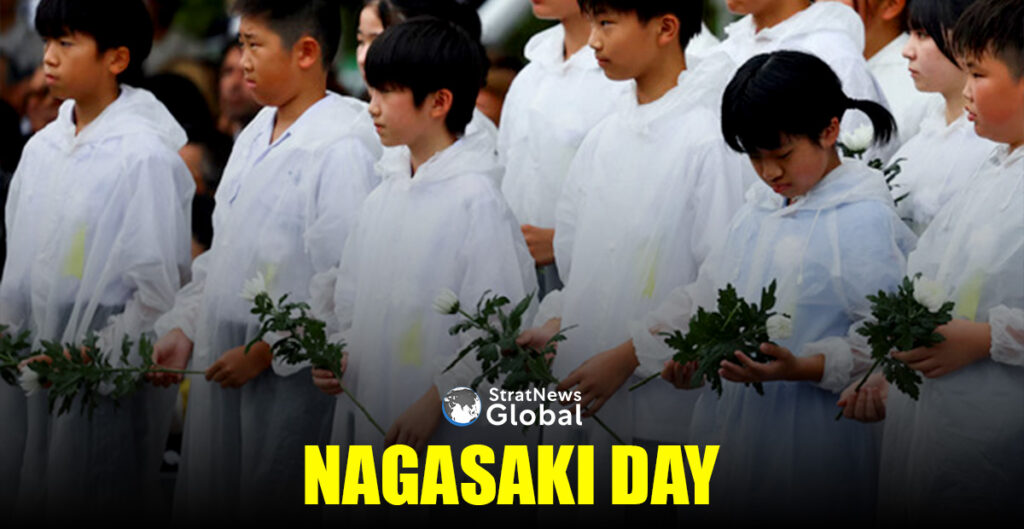


Nagasaki Mayor Warns Of Nuclear War As City Marks 80 Years Since A-Bomb
Nagasaki’s mayor warned that ongoing global conflicts could push the world toward nuclear war as the city marked the 80th anniversary of its atomic bombing with prayers.
The western Japanese city was levelled on August 9, 1945, when the United States dropped a 10,000-pound plutonium-239 bomb, nicknamed “Fat Man”, instantly killing some 27,000 of the city’s estimated 200,000 people.
By the end of 1945, the death toll from acute radiation exposure had reached about 70,000.
Nagasaki’s destruction came three days after a U.S. uranium-235 bomb destroyed Hiroshima. Japan surrendered on August 15, ending World War Two.
After a moment of silence at 11:02 a.m., marking the time of the blast, Mayor Shiro Suzuki called on leaders to return to the principles of the U.N. Charter and show a concrete path toward abolishing nuclear weapons, warning that delay was “no longer permissible”.
“This is a crisis of human survival that is closing in on each and every one of us,” Suzuki told the crowd, estimated by Japanese media at 2,700.
Scars Of 1945
He quoted the testimony of a survivor to illustrate the reality of a nuclear attack: “Around me were people whose eyeballs had popped out… Bodies were strewn about like stones.”
“Is it not this ‘global citizen’ perspective that will serve as the driving force behind stitching back together our fragmented world?” Suzuki asked, calling for a solution based on mutual understanding and solidarity.
The U.S. military is believed to have chosen Nagasaki as a target due to its significance as a major industrial and port city.
The city’s geographical features, including its hilly terrain, were also thought to concentrate the blast.
Representatives from 95 countries and territories, including nuclear superpower the United States and Israel – which neither confirms nor denies having nuclear weapons – attended the annual ceremony at the Nagasaki Peace Memorial Park for the milestone year.
Russia, which possesses the world’s largest nuclear stockpile, was also represented.
Daiji Kawanaka, a 14-year-old tourist from Osaka, echoed the mayor’s sentiments.
“I truly believe a tragedy like this must never be repeated,” he told Reuters, saying the anniversary prompts conversations about peace even among his young peers.
“We can only pledge to take the initiative ourselves in making a step toward peace.”
Japan’s leading organisation of A-bomb survivors, Nihon Hidankyo, won the Nobel Peace Prize last year for campaigning for a world without nuclear weapons.
Survivors, known as “hibakusha”, continue to suffer the effects of radiation and social discrimination.
With their numbers falling below 100,000 for the first time this year, their stories fuel ongoing efforts to advocate for a nuclear-free world.
Japan, the only country to have suffered nuclear attacks, has stated its commitment to nuclear disarmament but is not a signatory or observer of the U.N. treaty to ban nuclear weapons.
(With inputs from Reuters)
US Clears Nvidia Chip Exports To China After CEO Meets Trump
The U.S. Department of Commerce has started issuing licences to Nvidia to export its H20 chips to China after Nvidia CEO Jensen Huang met President Donald Trump at the White House.
The U.S. last month reversed an April ban on the sale of the H20 chip to China.
The company had tailored the microprocessor specially to the Chinese market to comply with the Biden-era AI chip export controls.
The curbs will slice $8 billion off sales from its July quarter, the chipmaker has warned.
Huang And Trump
Nvidia CEO Jensen Huang met with Trump on Wednesday, two sources familiar with the matter told Reuters.
A spokesperson for Nvidia declined comment. A White House spokesman did not immediately respond to a request for comment.
The company said in July it was filing applications with the U.S. government to resume sales to China of the H20 graphics processing unit and had been assured it would get the licences soon.
It is unclear how many licences may have been issued, which companies Nvidia is allowed to ship the H20s to, and the value of the shipments allowed.
Nvidia disclosed in April that it expected a $5.5 billion charge related to the restrictions.
In May, Nvidia said the actual first-quarter charge due to the H20 restrictions was $1 billion less than expected because it was able to reuse some materials.
The Financial Times first reported Friday’s developments.
Nvidia said last month that its products have no “backdoors” that would allow remote access or control after China raised concerns over potential security risks in the H20 chip.
Big Market
Exports of Nvidia’s other advanced AI chips, barring the H20, to China are still restricted.
Successive U.S. administrations have curbed exports of advanced chips to China, looking to stymie Beijing’s AI and defence development.
While this has impacted U.S. firms’ ability to fully address booming demand from China, one of the world’s largest semiconductor markets, it still remains an important revenue driver for American chipmakers.
Huang has said the company’s leadership position could slip without sales to China, where developers were being courted by Huawei Technologies with chips produced in China.
In May, Nvidia said the H20 had brought in $4.6 billion in sales in the first quarter and that China accounted for 12.5% of overall revenue during the period.
(With inputs from Reuters)
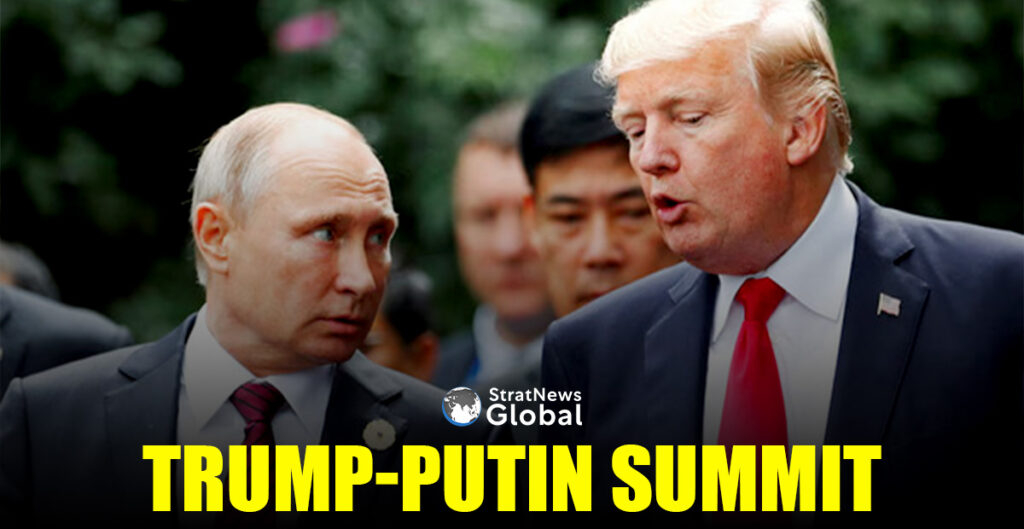
Trump To Meet Putin In Alaska Next Week For Ukraine Peace Talks
U.S. President Donald Trump will meet with his Russian counterpart, Vladimir Putin, on August 15 in Alaska to negotiate an end to the war in Ukraine.
Trump made the highly anticipated announcement on social media after he said that the parties, including Ukrainian President Volodymyr Zelenskyy, were close to a ceasefire deal that could resolve the three-and-a-half-year conflict, one that could require Ukraine to surrender significant territory.
Peace Talks
Addressing reporters at the White House earlier on Friday, Trump suggested an agreement would involve some exchange of land.
“There’ll be some swapping of territories to the betterment of both,” the Republican president said.
The Kremlin subsequently confirmed the summit in an online statement.
The two leaders will “focus on discussing options for achieving a long-term peaceful resolution to the Ukrainian crisis,” Putin aide Yuri Ushakov said.
“This will evidently be a challenging process, but we will engage in it actively and energetically,” Ushakov said.
In his evening address to the nation on Friday, Zelenskyy said it was possible to achieve a ceasefire as long as adequate pressure was applied to Russia.
He said he had held more than a dozen conversations with leaders of different countries and his team was in constant contact with the United States.
Putin claims four Ukrainian regions – Luhansk, Donetsk, Zaporizhzhia and Kherson – as well as the Black Sea peninsula of Crimea, which he annexed in 2014. His forces do not fully control all the territory in the four regions.
Earlier, Bloomberg News reported that U.S. and Russian officials were working towards an agreement that would lock in Moscow’s occupation of territory seized during its military invasion.
A White House official said the Bloomberg story was speculation. A Kremlin spokesperson did not respond to a request for comment.
Reuters was unable to confirm aspects of the Bloomberg report.
Ukraine has previously signalled a willingness to be flexible in the search for an end to a war that has ravaged its towns and cities and killed large numbers of its soldiers and citizens.
But accepting the loss of around a fifth of Ukraine’s territory would be painful and politically challenging for Zelenskyy and his government.
Tyson Barker, the U.S. State Department’s former deputy special representative for Ukraine’s economic recovery, said the peace proposal as outlined in the Bloomberg report would be immediately rejected by the Ukrainians.
“The best the Ukrainians can do is remain firm in their objections and their conditions for a negotiated settlement while demonstrating their gratitude for American support,” said Barker, a senior fellow with the Atlantic Council.
Under the putative deal, according to Bloomberg, Russia would halt its offensive in the Kherson and Zaporizhzhia regions along current battle lines.
Trump and Putin
The last time Alaska hosted a high-stakes diplomatic gathering was in March 2021, when senior officials from the administration of Democratic former President Joe Biden met with top Chinese officials in Anchorage.
The get-together involving Biden’s top diplomat Antony Blinken and his Chinese counterpart Yang Jiechi quickly turned into a stunning public clash in front of the cameras, with both sides levelling sharp rebukes of the others’ policies that reflected the high tension in bilateral ties.
Since his return to the White House in January, Trump has moved to mend relations with Russia and sought to end the war. In his public comments he has veered between admiration and sharp criticism of Putin.
In a sign of his growing frustration with Putin’s refusal to halt Russia’s military offensive, Trump had threatened to impose new sanctions and tariffs from Friday against Moscow and countries that buy its exports unless the Russian leader agreed to end the conflict, the deadliest in Europe since World War Two.
It was unclear by Friday evening whether those sanctions would take effect or be delayed or cancelled.
The administration took a step toward punishing Moscow’s oil customers on Wednesday, imposing an additional 25% tariff on goods from India over its imports of Russian oil, marking the first financial penalty aimed at Russia in Trump’s second term.
Trump’s special envoy Steve Witkoff held three hours of talks with Putin in Moscow on Wednesday that both sides described as constructive.
Prime Minister Donald Tusk of Poland, a close ally of Ukraine, said earlier on Friday that a pause in the conflict could be close. He was speaking after talks with Zelenskyy.
“There are certain signals, and we also have an intuition that perhaps a freeze in the conflict – I don’t want to say the end, but a freeze in the conflict – is closer than it is further away,” Tusk told a news conference. “There are hopes for this.”
Tusk also said Zelenskyy was “very cautious but optimistic” and that Ukraine was keen that Poland and other European countries play a role in planning for a ceasefire and an eventual peace settlement.
(With inputs from Reuters)
Strategic Waters: India’s Dam Dilemma in Arunachal Pradesh
Part I: Promises Vs. Power: China’s Mega Dam Contradiction
Part II : China’s Mega Dam And India’s Asymmetric Challenge
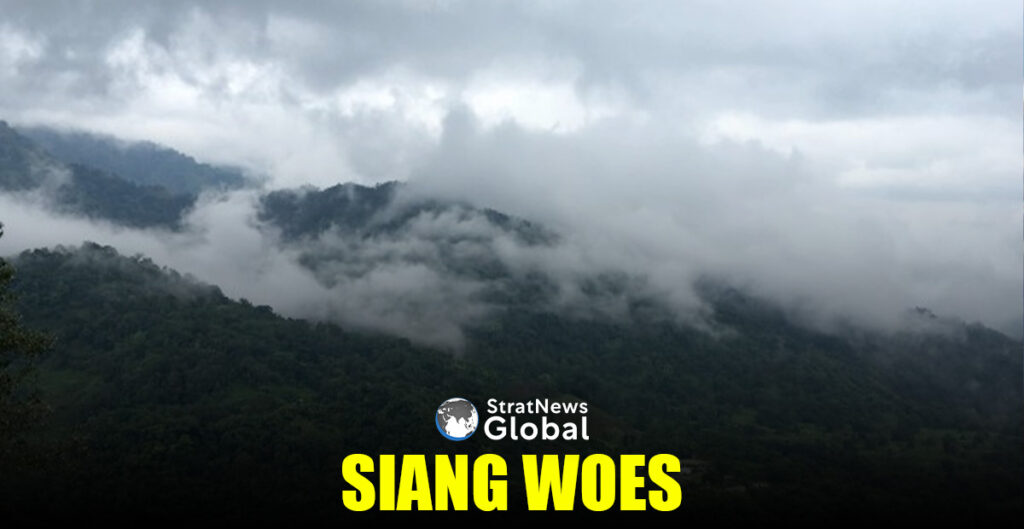
As China races ahead with the world’s largest dam on the Yarlung Tsangpo—a 60,000 MW megastructure under construction near the Great Bend—concerns are growing about its potential seismic impact on the fragile Himalayan region and the implications for water security downstream.
The project, part of Beijing’s broader infrastructure ambitions in Tibet, is being closely watched in India, where the Siang River—into which the Tsangpo flows—runs through Arunachal Pradesh before joining the Brahmaputra.
Against this backdrop, Chief Minister Pema Khandu has unveiled an ambitious plan to add 15,000 MW of hydropower capacity through 13 projects in the next three years, positioning Arunachal Pradesh as a potential “hydropower capital” of India. But as the state pushes ahead, it must also contend with intensifying local resistance, legal challenges, and environmental warnings.
One of the most controversial of these projects is the 11,500 MW Siang Upper Multipurpose Project (SUMP), which proposes a 300-metre-high dam in a geologically sensitive and ecologically rich region. Civil society groups, tribal organisations, and environmental activists have expressed alarm over the scale and potential impact of the project. They point out that it could submerge 27 villages and displace over 1.5 lakh people, mostly from the indigenous Adi tribe. For them, the river is not just a water source—it is “Ane”, or “mother,” central to their cultural and spiritual life.
The Siang basin, which includes the Dihang–Dibang Biosphere Reserve, is recognised globally for its biodiversity. Any large-scale infrastructure development here, activists warn, risks irreversible ecological damage. But the conflict is not only environmental—it is also about process. Activists argue that the Indian government is using the perceived threat of China’s upstream dam as justification for pushing ahead with its own mega-dam without adequate public consultation or consent.
Tensions have grown since early 2024. According to local activists and lawyers, both central and state governments have deployed paramilitary forces to facilitate feasibility studies for the SUMP. Bhanu Tarak, a lawyer-activist, claimed that the government was “militarising the entire region” to suppress protests, while Ebo Mili, another local lawyer, said she had been detained multiple times to prevent her from mobilising opposition to the dam.
Their concerns culminated in a letter signed by 351 environmentalists, academics, journalists, and civil society organisations, addressed to President Droupadi Murmu in December 2024. The letter called for the immediate withdrawal of security forces from project areas and urged the government to respect constitutional safeguards and environmental norms. It also questioned the rationale of proceeding with such a massive undertaking without first engaging with China to understand the hydrological implications of its upstream project.
The central government, however, appears determined to move forward. In July 2025, P.K. Mishra, Principal Secretary to the Prime Minister, convened senior officials and stakeholders to review and expedite survey work on the SUMP. The project was described as being of “national importance”—a designation that carries both symbolic and strategic weight. But for many local communities, this top-down approach only reinforces the perception that their voices are being ignored.
The result is a widening trust deficit. While the state government speaks of economic development, energy security, and strategic preparedness, many residents of the Siang valley see broken promises and a disregard for democratic process. The demand from activists is not outright rejection of hydropower, but a call for transparency, consent, and genuine dialogue. They argue that any development must be guided by the principle of free, prior, and informed consent, especially in regions protected under constitutional and environmental law.
At the heart of this unfolding drama is a deeper question: how does a democracy like India balance national interest with local rights—especially in frontier regions marked by cultural distinctiveness, ecological sensitivity, and geopolitical risk?
The Siang dam is being promoted as a shield—both literal and symbolic—against China’s upstream ambitions. But for communities in Arunachal, it is fast becoming a symbol of exclusion. They are not resisting development for its own sake. Rather, they demand a seat at the table, a say in decisions that will uproot their homes, alter their rivers, and transform their futures.
India’s response to China’s upstream dam cannot come at the cost of alienating its own citizens. The Siang project is not just about energy or strategy—it is a test of whether India can pursue national interests without sacrificing local rights and democratic processes.
Intel CEO Faces Pressure As Trump Flags China Links
Intel CEO Lip-Bu Tan is already grappling with the tough challenge of reviving the struggling chip giant. Now, with US President Donald Trump calling for his resignation over alleged links to Chinese companies, the pressure on Tan is only set to increase, say two investors and a former senior executive.
Trump said on Thursday that Tan was “highly conflicted” due to his Chinese connections. Reuters reported exclusively in April that Tan had invested in hundreds of Chinese firms, some of which were linked to the Chinese military.
Tan may now have to mount an effort to reassure Trump that he remains the right person to revive the storied American chipmaker, pulling his focus away from the cost cuts he’s trying to implement.
‘It Is Distracting’
“It is distracting,” said Ryuta Makino, analyst at Intel investor Gabelli Funds, which, according to LSEG data, owns more than 200,000 shares in Intel. “I think Trump will make goals for Intel to spend more, and I don’t think Intel has the capabilities to spend more, like what Apple and Nvidia are doing.”
AI chip market leader Nvidia and iPhone-maker Apple have committed hundreds of billions of dollars to expand domestic manufacturing, which, according to Trump, will bring jobs back home.
Until recently, Intel had emerged as one of the biggest beneficiaries of the 2022 CHIPS Act, as former CEO Pat Gelsinger laid out plans to build advanced chipmaking factories.
Tan, however, has significantly pared back such ambitions, as the company’s goal of rivaling Taiwanese chipmaker TSMC’s contract manufacturing chops have fallen short.
Unpopular Move
Tan said last month that he would slow construction work on new factories in Ohio and planned to build factories only when he saw demand for Intel’s chips, a move that is likely to further strain relations with Trump.
The company, its board and Tan were making significant investments aligned with Trump’s America First agenda, Intel said in a statement on Thursday, without any mention of Trump’s demand.
The statement was “bland”, said David Wagner, a portfolio manager at Intel shareholder Aptus Capital Advisors, which owns Intel stock through index funds.
“Either defend your leader, which will be the beginning of a difficult road ahead, or consider making a change,” Wagner said. Having this play out over a few months is not something that Intel can afford, he said.
Tan himself released a statement late on Thursday. “The United States has been my home for more than 40 years. I love this country and am profoundly grateful for the opportunities it has given me. I also love this company,” he said, adding that the board was “fully supportive of the work we are doing to transform our company.”
“Built On Trust”
Tan, a chip industry veteran, took the helm at Intel about six months ago, after the board ousted previous boss Pat Gelsinger over years of missteps and burgeoning losses. The company’s shares are largely flat this year after losing nearly two-thirds of their value last year.
Tan was the CEO of chip-design software maker Cadence Design from 2008 through December 2021.
Cadence last month agreed to plead guilty and pay more than $140 million to resolve charges for selling its products to a Chinese military university believed to be involved in simulating nuclear blasts, Reuters reported. The sales to Chinese entities occurred under his leadership.
Reuters reported on Wednesday that US Republican Senator Tom Cotton sent a letter to Intel’s board chair with questions about Tan’s ties to Chinese firms and the criminal case involving Cadence.
“There has been a lot of misinformation circulating about my past roles,” Tan said in his statement on Thursday. “I have always operated within the highest legal and ethical standards. My reputation has been built on trust,” he said.
It is not illegal for US citizens to hold stakes in Chinese companies unless those companies have been added to the US Treasury’s Chinese Military-Industrial Complex Companies List, which explicitly bans such investments. Reuters in April had found no evidence that Tan at the time was invested directly in any company on that list.
But Trump’s remarks have now forced the limelight on an issue that could erode investor confidence.
“If you add in another layer of government scrutiny, and everybody looking into how the company is doing whatever it’s doing … that just makes it harder,” said a former senior executive at Intel, who was familiar with the company’s strategy under Gelsinger.
The source, who declined to be named, was let go as part of Gelsinger’s workforce reduction drive last year.
Tan’s strategy is to “get rid of all of the non-productive parts of the company and really focus on a key few products,” the person said. “If (Tan) leaves, it’s going to just prolong whatever Intel has to do and needs to do really quickly.”
(With inputs from Reuters)
Azerbaijan, Armenia Sign US-Brokered Peace Deal To Boost Economic Ties
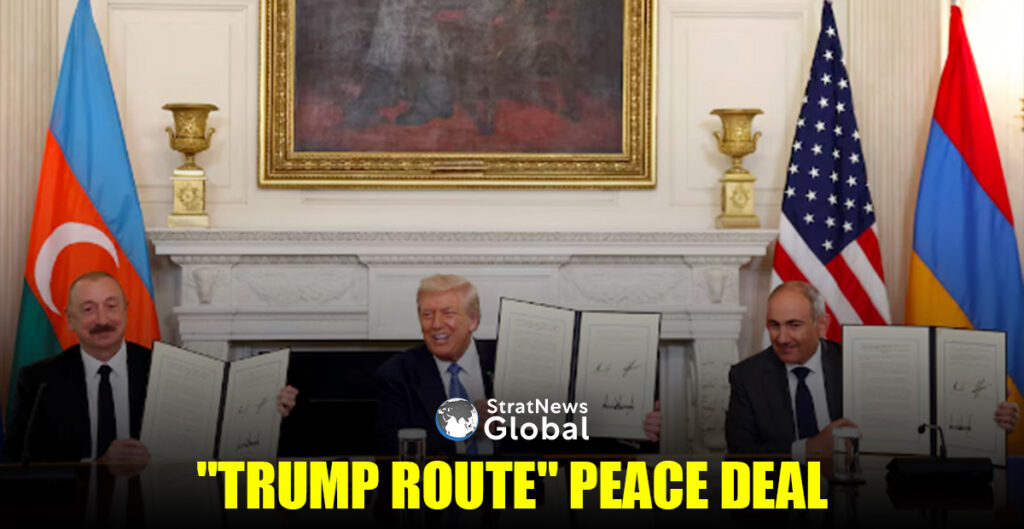
During a meeting with U.S. President Donald Trump on Friday, Azerbaijan and Armenia signed a United States-brokered peace agreement aimed at strengthening bilateral economic ties after decades of conflict.
The deal between the South Caucasus rivals – assuming it holds – would be a significant accomplishment for the Trump administration that is sure to rattle Moscow, which sees the region as within its sphere of influence.
“It’s a long time – 35 years – they fought and now they’re friends, and they’re going to be friends for a long time,” Trump said at a signing ceremony at the White House, where he was flanked by Azerbaijani President Ilham Aliyev and Armenian Prime Minister Nikol Pashinyan.
Armenia and Azerbaijan have been at odds since the late 1980s when Nagorno-Karabakh, a mountainous Azerbaijani region mostly populated by ethnic Armenians, broke away from Azerbaijan with support from Armenia. Azerbaijan took back full control of the region in 2023, prompting almost all of the territory’s 100,000 ethnic Armenians to flee to Armenia.
Trump said the two countries had committed to stop fighting, open up diplomatic relations and respect each other’s territorial integrity.
Strategic Transit Corridor
The agreement includes exclusive U.S. development rights to a strategic transit corridor through the South Caucasus that the White House said would facilitate greater exports of energy and other resources.
Trump said the United States signed separate deals with each country to expand cooperation on energy, trade and technology, including artificial intelligence.
He said restrictions had also been lifted on defence cooperation between Azerbaijan and the United States.
Both leaders praised Trump for helping to end the conflict and said they would nominate him for the Nobel Peace Prize. “So, who, if not President Trump, deserves the Nobel Peace Prize?” Aliyev said.
Trump has tried to present himself as a global peacemaker in the first months of his second term. The White House credits him with brokering a ceasefire between Cambodia and Thailand and sealing peace deals between Rwanda and the Democratic Republic of the Congo, and Pakistan and India.
However, he has not managed to end Russia’s war in Ukraine or Israel’s conflict with Hamas in Gaza.
U.S. officials said the agreement was hammered out during repeated visits to the region and would provide a basis for working toward a full normalisation between the countries.
Senior administration officials told reporters the agreement marked the first end to several frozen conflicts on Russia’s periphery since the end of the Cold War and said it would send a powerful signal to the entire region.
Transforming South Caucasus Dynamics
The peace deal could transform the South Caucasus, an energy-producing region neighbouring Russia, Europe, Turkiye and Iran that is criss-crossed by oil and gas pipelines but riven by closed borders and longstanding ethnic conflicts.
Armenia plans to award the U.S. exclusive special development rights for an extended period on the transit corridor, administration officials told Reuters this week. The so-called Trump Route for International Peace and Prosperity has already drawn interest from nine companies, including three U.S. firms, one official said on condition of anonymity.
Daphne Panayotatos, with the Washington-based rights group Freedom Now, said it has urged the Trump administration to use the meeting with Aliyev to demand the release of some 375 political prisoners held in the country.
Azerbaijan, an oil-producing country that hosted the United Nations climate summit last November, has rejected Western criticism of its human rights record, describing it as unacceptable interference.
(With inputs from Reuters)
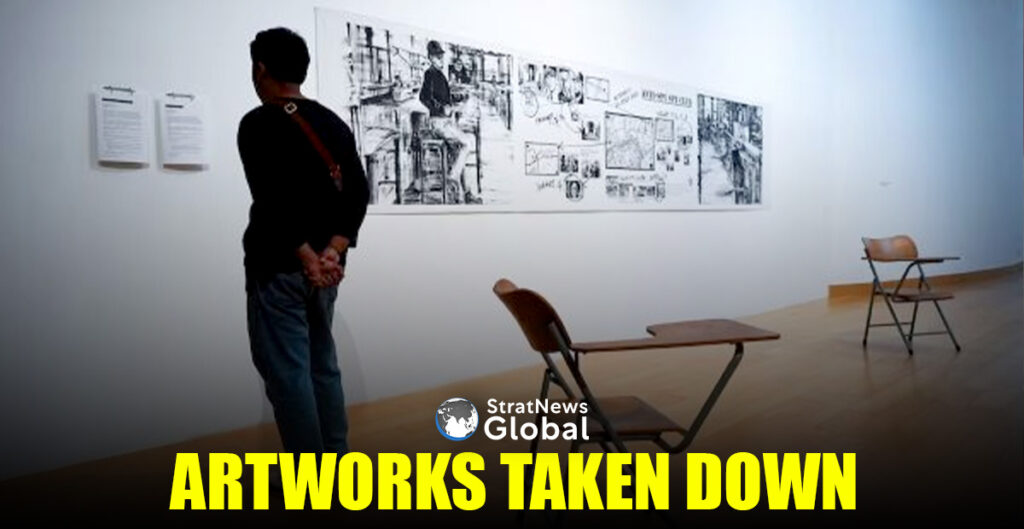
China-Themed Artworks Taken Down by Thai Gallery Following ‘Pressure’ From Beijing
One of Thailand’s leading art galleries took down materials highlighting Beijing’s treatment of ethnic minorities and the situation in Hong Kong from an exhibition on authoritarian governments, following a request from China, according to a curator and other sources.
In what the artists called the latest attempt by Beijing to silence critics overseas, the Bangkok Arts and Cultural Centre changed multiple works by artists in exile in the exhibit on authoritarian governments collaborating across borders.
Certain works previously advertised and photographed had been removed, including a multimedia installation by a Tibetan artist, while other pieces had been altered, with the words “Hong Kong”, “Tibet” and “Uyghur” redacted, along with the names of the artists.
Three days after the show, “Constellation of Complicity: Visualising the Global Machinery of Authoritarian Solidarity”, opened on July 24, Chinese embassy staff, accompanied by Bangkok city officials, “entered the exhibition and demanded its shutdown”, said the exhibit’s co-curator, Sai, a Myanmar artist who goes by one name.
In a July 30 email, the gallery said: “Due to pressure from the Chinese Embassy – transmitted through the Ministry of Foreign Affairs and particularly the Bangkok Metropolitan Administration, our main supporter – we have been warned that the exhibition may risk creating diplomatic tensions between Thailand and China.”
The email said the gallery had “no choice but to make certain adjustments”, including obscuring the names of the Hong Kong, Tibetan and Uyghur artists.
Several days later, Sai said, the embassy demanded further removals.
The Chinese embassy in Bangkok and foreign ministry in Beijing, and Thailand’s foreign ministry did not respond to multiple requests for comment.
‘Authoritarian Pressure’
Rights groups say China carries out a sophisticated campaign of harassment against critics overseas that has often extended into the art world, allegations Beijing has denied.
Sai, co-founder of Myanmar Peace Museum, the organisation that put together the exhibition, said the removed pieces included Tibetan and Uyghur flags and postcards featuring Chinese President Xi Jinping, as well as a postcard depicting links between China and Israel.
“It is tragically ironic that an exhibition on authoritarian cooperation has been censored under authoritarian pressure,” he said. “Thailand has long been a refuge for dissidents. This is a chilling signal to all exiled artists and activists in the region.”
Sai said he was speaking from overseas, where he had fled after Thai police sought to find him. The superintendent of Pathumwan Police Station, who oversees the gallery’s Bangkok neighbourhood, said he had received no reports of such an incident.
Thailand this year returned to China 40 Uyghurs, members of a mainly Muslim ethnic minority numbering about 10 million in China’s far western region of Xinjiang, in a secretive deportation. U.N. experts had warned they would be at risk of torture, ill-treatment and “irreparable harm”. China denies abusing Uyghurs.
The Bangkok exhibition also features works by artists in exile from Xinjiang as well as Russia, Iran and Syria.
China has been steadily increasing its influence in Southeast Asia, where governments are balancing cooperation with the regional giant against concerns over sovereignty.
Beijing recently sought unsuccessfully to block screenings in New Zealand of a Philippine documentary on that country’s struggles in contested parts of the South China Sea amid alleged harassment from the Chinese coast guard and maritime militia, local media reported. It was pulled from a film festival in the Philippines in March due to “external factors”, the filmmakers said.
Black Screen
Chinese officials returned to the Bangkok gallery on Wednesday, asked to remove another flyer and reiterated “enforcement of the One China policy”, Sai said, citing updates from contacts.
That policy, observed by governments that have relations with Beijing, acknowledges Beijing’s position that the People’s Republic of China is the sole legitimate government representing all of China, including Taiwan. China has never renounced the use of force over the self-governed island. Taiwan’s government says only Taiwan’s people can decide their future.
Foreign governments refer to Tibet and Xinjiang as part of China.
Works withdrawn from the Bangkok exhibit by Tibetan artist Tenzin Mingyur Paldron included video of Tibetans carrying Palestinian flags while calling for accountability for genocide and a film titled “Listen to Indigenous People”.
“By forcing (the gallery) to remove significant parts of my work, the Chinese government has once again demonstrated that it desperately wishes to cut Tibetans off from the rest of the world,” said Paldron, adding that China did not “want its complicity in other colonialisms and genocides to be recognised”.
“Who are museums for?” he said. “They should be for the people, not dictators of any ideology.”
According to reports, video monitors showed a black screen. A film by a Uyghur artist played, but there was a black mark where her name had been.
(With inputs from Reuters)
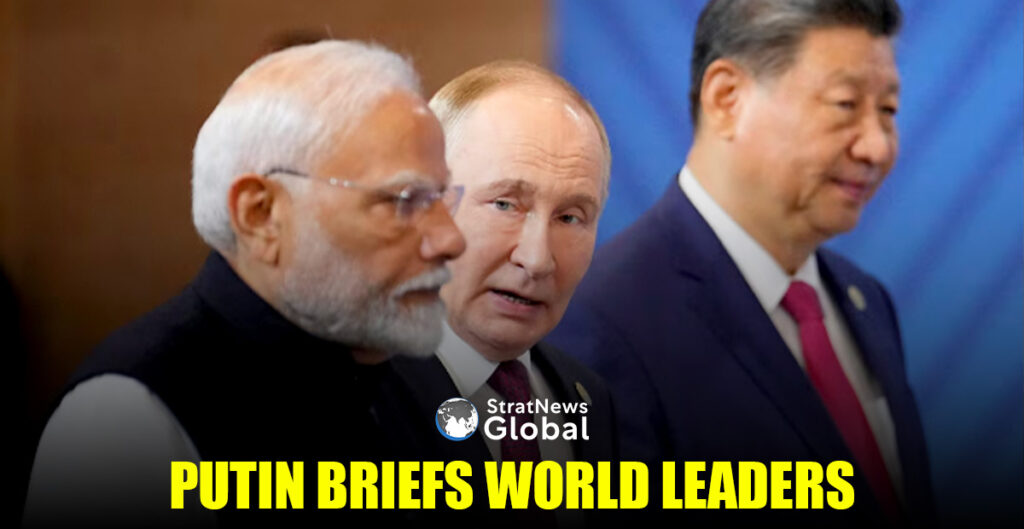
Putin Dials Xi, Modi, Other Leaders Ahead Of Trump Meeting
Russian President Vladimir Putin on Friday held a series of calls with the leaders of China, India, and three ex-Soviet states to update them on his discussions with the United States regarding the war in Ukraine.
Putin met U.S. President Donald Trump’s envoy Steve Witkoff in Moscow on Wednesday, after which the Kremlin said a summit between Putin and Trump could take place as early as next week. No venue, date or agenda has been announced.
Trump, pressing for an end to the 3-1/2-year war, had set a deadline that expires on Friday for Russia to agree to peace or face new sanctions on Moscow and countries that buy Russian exports. China and India are the biggest buyers of Russian oil.
China’s President Xi Jinping told Putin in a phone call that China is pleased to see Russia and the United States maintaining contact and improving ties to advance a political resolution of the Ukraine crisis, Chinese state broadcaster CCTV said.
China is a major backer of Russia in its confrontation with the West, as well as Russia’s biggest trading partner. Putin is due to visit China in September for events marking the 80th anniversary of the end of World War Two.
Talks With Modi
The Kremlin said that Putin also discussed his talks with Witkoff with Indian Prime Minister Narendra Modi. Trump this week announced an additional 25% tariff on Indian goods to penalise New Delhi for its purchases of Russian oil.
“Had a very good and detailed conversation with my friend, President Putin. I thanked him for sharing the latest developments on Ukraine,” Modi said in a post on X.
On Thursday, Putin spoke with South African President Cyril Ramaphosa, who expressed South Africa’s “full support to peace initiatives that will end the war and contribute to a lasting peace between Russia and Ukraine.”
Sheikh Mohammed bin Zayed Al Nahyan, President of the United Arab Emirates, met Putin in Moscow on Thursday, and Putin said the UAE was a possible venue for the Russia-U.S. summit.
Russia, China, India, South Africa and the UAE are all members of the BRICS group of countries, which Moscow sees as a counterweight to U.S. political and economic dominance.
Putin on Friday also discussed the outcome of Witkoff’s visit in calls with his ally, Alexander Lukashenko, president of Belarus, and with the leaders of Kazakhstan and Uzbekistan.
(With inputs from Reuters)
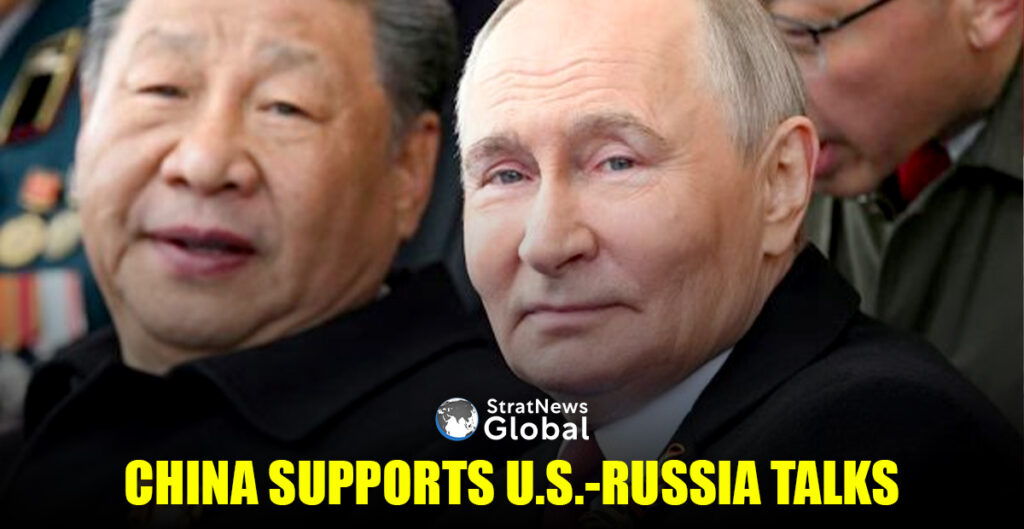
Xi To Putin: China Backs Renewed US-Russia Talks Amid Trump’s Push To End Ukraine War
During a phone conversation with Russian President Vladimir Putin on Friday, Chinese President Xi Jinping said that China is glad to see Russia and the United States staying in communication and working to improve relations in order to promote a political settlement to the Ukraine conflict.
Beijing will maintain its stance on the need for peace talks and a diplomatic solution to the conflict, Chinese state broadcaster CCTV quoted Xi as telling Putin.
The call was held at Putin’s request, CCTV said.
The call came after the Kremlin said on Thursday that Putin would meet U.S. President Donald Trump in the coming days in the search for an end to the war, now in its fourth year.
Trump’s Frustration With Putin
Trump took a more conciliatory approach towards Russia after returning to the White House in January but has voiced growing frustration with Putin over the lack of progress towards peace and has threatened to impose heavy tariffs on countries including China that buy Russian oil.
Trump on Wednesday said he could announce further tariffs on China similar to the 25% duties he has already imposed on India over its purchases of Russian oil.
A Chinese foreign ministry spokesperson, in response to those remarks by Trump, said on Friday that China’s trade and energy cooperation with Russia was “just and legitimate”.
“We will continue to take reasonable measures to ensure energy security based on our own national interests,” spokesperson Guo Jiakun said in a statement released by the Chinese Foreign Ministry.
Friday’s call between Xi and Putin was their second in less than two months.
The two countries have further bolstered their economic, trade and security cooperation since Russia’s full-scale invasion of Ukraine in February 2022, which triggered a sharp deterioration in Moscow’s relations with the West.
Putin is expected to visit China in September for events marking the 80th anniversary of the end of World War Two.
(With inputs from Reuters)
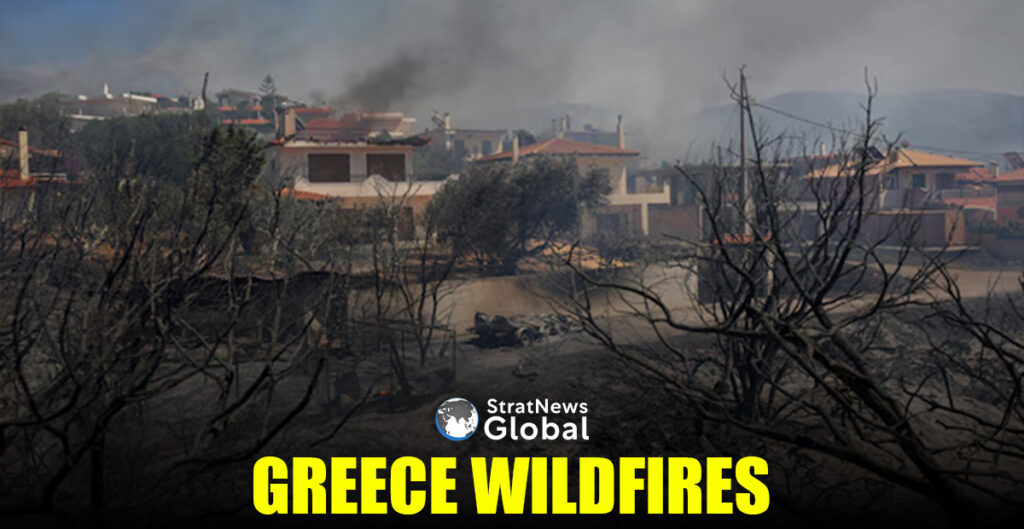
Greece Battles Blazes As One Killed In Wildfire
A wildfire on Friday claimed at least one life and destroyed homes and farmland in a town near Greece’s Athens, as Greek firefighters battled to control multiple blazes amid the beginning of several days of expected gale-force winds, officials said.
Eleven planes, 12 helicopters and 170 firefighters were deployed around Keratea, 30 kilometres southwest of the capital, and residents were called to evacuate, the fire brigade said.
Much of the area has seen barely a drop of rain in months. Wind gusts of up to 80 kilometres per hour fanned the fire, setting olive tree orchards alight. Images on local media showed houses engulfed in flames.
Firefighters discovered the body of an elderly man in a burned-out structure in Keratea, Greek Fire Brigade Spokesman Vassilis Vathrakogiannis said during a briefing
Mess
“The fire is advancing. In some places only aerial firefighting is being possible,” Yiannis Schizas, a member of the Civil Protection in the area, told SKAI TV.
“There is too much wind. It is becoming a mess,” he said.
High winds are expected through the weekend and beyond.
‘Wildfire Hotspot’
In the touristy island of Kefalonia, in western Greece, a wildfire was out of control, burning forests and farm land, authorities and local media said.
Greece and other Mediterranean countries are in an area dubbed “a wildfire hotspot” by scientists, with blazes common during hot and dry summers. These have become more destructive in recent years due to a fast-changing climate, prompting calls for a new approach.
Parched southern France is currently facing its worst wildfire in decades.
1 Killed, 18 Injured
France’s biggest wildfire in nearly eight decades has killed a woman whom officials said had disregarded evacuation orders, made 18 injuries, including 16 firefighters. The blaze destroyed 36 houses, damaged 20 others, and forced some 2,000 residents and holidaymakers to flee the area.
At the height of the crisis, approximately 5,000 households lost power, and as of Thursday evening, around 1,500 homes were still without electricity, local authorities said.
(With inputs from Reuters)