

Support us by contributing to StratNewsGlobal on the following UPI ID
ultramodern@hdfcbank

Strategic affairs is our game, South Asia and beyond our playground. Put together by an experienced team led by Nitin A. Gokhale. Our focus is on strategic affairs, foreign policy and international relations, with higher quality reportage, analysis and commentary with new tie-ups across the South Asian region.
You can support our endeavours. Visit us at www.stratnewsglobal.com and follow us on YouTube, Twitter, Facebook and Instagram.
र 500 per month
र 1000 per month
र 5000 per year
र 10000 per year
Donate an amount of your choice
र 500 per month
Donate र 500 per month

र 1000 per month
Donate र 1000 per month
र 5000 per year
Donate र 5,000 per year
र 10000 per year
Donate र 10,000 per year
Donate an amount of your choice
Donate an amount of your choice
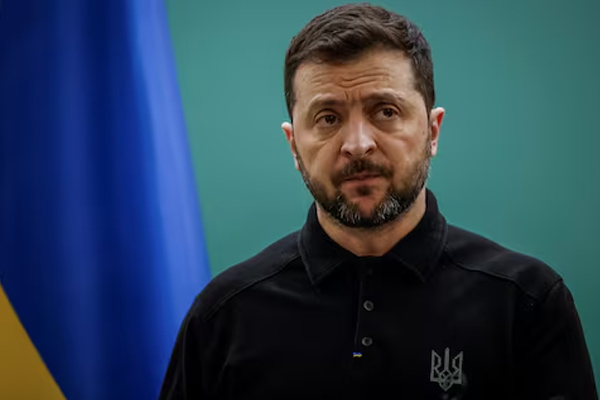





Zelenskyy Says Ukraine Won’t Cede Land Ahead Of Trump-Putin Planned Meeting
President Volodymyr Zelenskyy said on Saturday that Ukraine cannot breach its constitution on territorial matters, stressing that “Ukrainians will not give their land to occupiers.”
Commenting on U.S. President Donald Trump‘s decision to meet with Russian President Vladimir Putin in Alaska on August 15, Zelenskyy said Ukraine was ready for real solutions that could bring peace. But he added that any solutions without Kyiv would be solutions against peace.
Trump made the highly anticipated announcement on social media after he said that the parties, including Ukrainian President Volodymyr Zelenskyy, were close to a ceasefire deal that could resolve the three-and-a-half-year conflict, one that could require Ukraine to surrender significant territory.
Peace Talks
Addressing reporters at the White House earlier on Friday, Trump suggested an agreement would involve some exchange of land.
“There’ll be some swapping of territories to the betterment of both,” the Republican president said.
The Kremlin subsequently confirmed the summit in an online statement.
The two leaders will “focus on discussing options for achieving a long-term peaceful resolution to the Ukrainian crisis,” Putin aide Yuri Ushakov said.
“This will evidently be a challenging process, but we will engage in it actively and energetically,” Ushakov said.
In his evening address to the nation on Friday, Zelenskyy said it was possible to achieve a ceasefire as long as adequate pressure was applied to Russia.
He said he had held more than a dozen conversations with leaders of different countries, and his team was in constant contact with the United States.
Russia’s Territorial Claims
Putin claims four Ukrainian regions – Luhansk, Donetsk, Zaporizhzhia and Kherson – as well as the Black Sea peninsula of Crimea, which he annexed in 2014. His forces do not fully control all the territory in the four regions.
Earlier, Bloomberg News reported that U.S. and Russian officials were working towards an agreement that would lock in Moscow’s occupation of territory seized during its military invasion.
A White House official said the Bloomberg story was speculation. A Kremlin spokesperson did not respond to a request for comment.
Reuters was unable to confirm aspects of the Bloomberg report.
Ukraine had previously signalled a willingness to be flexible in the search for an end to a war that has ravaged its towns and cities and killed large numbers of its soldiers and citizens.
But accepting the loss of around a fifth of Ukraine’s territory would be painful and politically challenging for Zelenskyy and his government.
Tyson Barker, the U.S. State Department’s former deputy special representative for Ukraine’s economic recovery, said the peace proposal, as outlined in the Bloomberg report, would be immediately rejected by the Ukrainians.
“The best the Ukrainians can do is remain firm in their objections and their conditions for a negotiated settlement while demonstrating their gratitude for American support,” said Barker, a senior fellow with the Atlantic Council.
Under the putative deal, according to Bloomberg, Russia would halt its offensive in the Kherson and Zaporizhzhia regions along current battle lines.
(With inputs from Reuters)
Wildfire Near Athens Contained, Evacuations Continue Amid Strong Winds
A wildfire on the outskirts of Athens was contained on Saturday morning, but evacuations in vulnerable areas persisted as strong winds were forecast to continue through the weekend.
At least one person died and homes and farmlands were destroyed on Friday as wildfires stoked by gale-force winds broke out across Greece, from near the capital to regions around the historical site of Ancient Olympia.
The worst blaze broke out in the small town of Keratea, southwest of the capital, where firefighters discovered the body of an elderly man in a burned-out structure. A fire brigade spokesperson said on Saturday that the fire there was under control but not out.
‘Wildlife Hot Spot’
Greece and other Mediterranean countries are in an area dubbed “a wildfire hot spot” by scientists, with blazes common during hot and dry summers. These have become more destructive in recent years due to a fast-changing climate, prompting calls for a new approach.
Parched southern France is currently facing its worst wildfire in decades.
Much of the region around Athens has had barely a drop of rain in months.
Wind gusts of up to 80 kph (50 mph) fanned the flames around Keratea on Friday, setting olive orchards alight. Homes were engulfed as locals wearing flimsy face masks assisted firefighters.
Police went door to door late at night, making sure that homes had been evacuated.
Much of the area smouldered on Saturday morning, and images on local media showed houses gutted by fire.
Other blazes in the region of Ancient Olympia and on the touristy island of Kefalonia appeared to have abated also.
(With inputs from Reuters)
Seoul Says North Korea Dismantling Some Border Loudspeakers
South Korea’s military said on Saturday it observed North Korea‘s troops dismantling some border propaganda loudspeakers aimed at the South, mirroring recent actions by Seoul.
This is the first time Seoul has made such a statement since Lee Jae Myung became president two months ago and South Korea began dismantling its own speakers.
The military said further confirmation was needed on whether the dismantling was taking place across all areas, adding it would continue monitoring related activities.
Seeking to ease tensions with Pyongyang, Lee’s liberal government, which replaced a conservative one, switched off propaganda broadcasts criticising the North Korean regime soon after Lee took office.
On Monday, South Korean authorities began removing loudspeakers blaring anti-North Korea broadcasts along the country’s border, as Lee revives stalled dialogue between the longtime arch-rivals.
The countries remain technically at war after the 1950-53 Korean War ended in a truce, and relations have deteriorated in the last few years.
Propaganda Loudspeakers
Propaganda broadcast through loudspeakers across the border has been used by both sides as relations between South and North Korea have ebbed and flowed over the years.
In 2018, the then-President Moon Jae-in dismantled the loudspeakers as his administration agreed to stop every hostile act that could be a source of military tensions.
But last year, former conservative leader Yoon Suk Yeol restarted propaganda broadcasts and blasts of K-pop music in retaliation for North Korea sending balloons to the South filled with trash amid heightened tensions.
Since Seoul suspended its own loudspeaker broadcasts in June, North Korea appears to have stopped its broadcasts, which had disturbed South Korean border residents for months, officials in the South say.
Kim Yo Jong, the powerful sister of North Korean leader Kim Jong Un, recently said, however, that South Korea’s decision to stop the broadcasts was “not the work worthy of appreciation”.
(With inputs from Reuters)
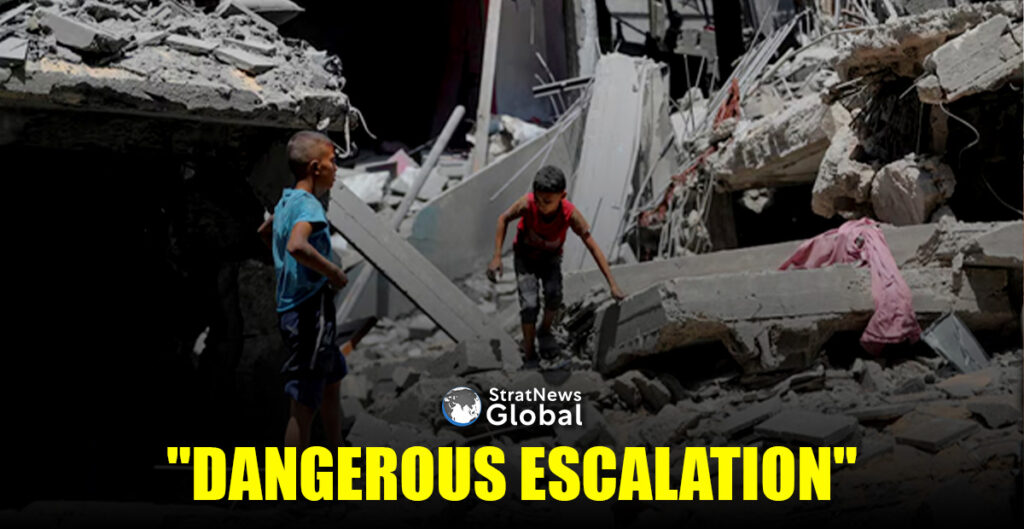
UN Chief Warns Israeli Move To Seize Gaza City Is A ‘Dangerous Escalation’
United Nations (UN) Secretary-General António Guterres on Friday condemned Israel’s plan to seize Gaza City, with his spokesperson warning it constitutes “a dangerous escalation” likely to cause the forced displacement of Palestinians.
Israel’s security cabinet has approved a plan to take control of Gaza City to further expand Israel’s military offensive in the Palestinian enclave devastated by nearly a two-year Israeli assault. The plan drew strong criticism at home and abroad on Friday.
When asked by Fox News’ Bill Hemmer on Thursday if Israel would take over the entire coastal territory, Israeli Prime Minister Benjamin Netanyahu said “we intend to.”
“This decision marks a dangerous escalation and risks deepening the already catastrophic consequences for millions of Palestinians, and could further endanger more lives, including those of the remaining hostages,” the U.N. chief’s spokesperson said in a statement.
That decision “will result in additional forced displacement, killings and massive destruction, compounding the unimaginable suffering of the Palestinian population in Gaza,” the statement added. Forced displacement is illegal under international law.
UN Rights Chief Condemns
The United Nations Human Rights Chief, Volker Turk, said on Friday that Israel’s plan for a full military takeover of Gaza will cause more deaths and suffering and must be stopped immediately.
The plan runs contrary to the ruling of the International Court of Justice that Israel must bring its occupation to an end as soon as possible, to the realisation of the agreed two-state solution and the right of Palestinians to self-determination, Turk said in a statement.
Gaza’s health ministry says Israel’s military assault has killed more than 61,000 Palestinians. It has also caused a hunger crisis, internally displaced Gaza’s entire population and prompted accusations of genocide at the International Court of Justice and of war crimes at the International Criminal Court. Israel denies the accusations.
Israel’s offensive followed an October 2023 attack in which Palestinian Hamas militants killed 1,200 people and took about 250 hostages, Israeli tallies show. That attack sparked the latest bloodshed in the decades-old Israeli-Palestinian conflict.
(With inputs from Reuters)
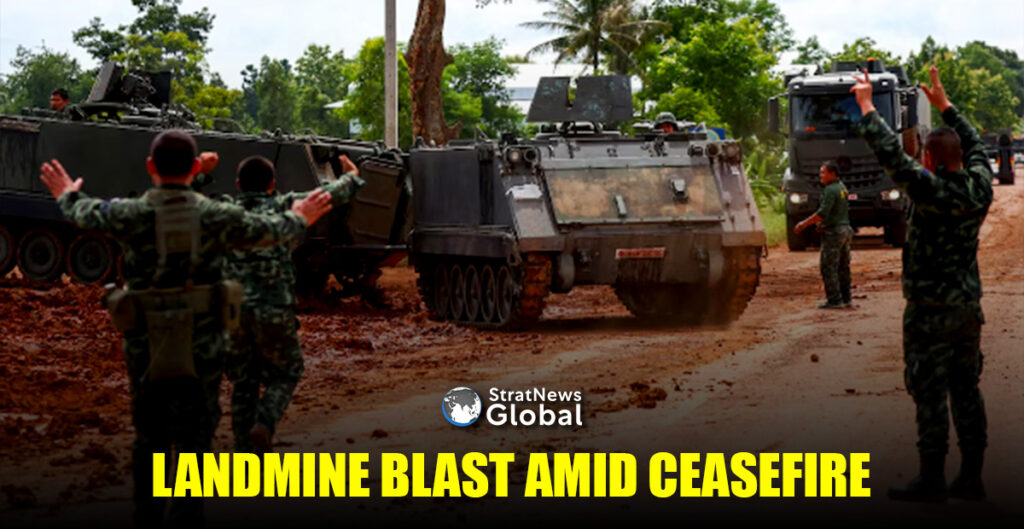
Three Thai Soldiers Wounded By Landmine On Cambodia Border Amid Fragile Truce
Three Thai soldiers sustained injuries from a landmine explosion while patrolling the Cambodia border, the army said Saturday, days after both nations finalised a detailed ceasefire following last month’s five-day conflict.
One soldier lost a foot and two others were injured after one of them stepped on a landmine as they patrolled an area between Thailand’s Sisaket and Cambodia’s Preah Vihear provinces on Saturday morning, the Thai army said.
The soldiers are being treated at a hospital, the army said.
Cambodia’s defence ministry did not immediately respond to a request for comment.
The incident is the third time in a few weeks that Thai soldiers have been injured by mines while patrolling along the border. Two previous similar incidents led to the downgrading of diplomatic relations and triggered five days of violent clashes.
Deadly Border Clashes
The Southeast Asian neighbours were engaged in deadly border clashes from July 24-28, in the worst fighting between the two in more than a decade. The exchanges of artillery fire and jet fighter sorties claimed at least 43 lives and left over 300,000 people displaced on both sides.
The leaders of Cambodia and Thailand only came to the negotiating table when U.S. President Donald Trump told them that tariff negotiations would not continue unless there was peace, Reuters exclusively reported.
A fragile ceasefire has been holding since Thailand and Cambodia agreed on Thursday to allow observers from the Association of Southeast Asian Nations (ASEAN) to inspect disputed border areas to ensure hostilities do not resume.
Bangkok accused Cambodia of planting landmines on the Thai side of the disputed border that injured soldiers on July 16 and July 23.
Phnom Penh denied it had placed any new mines and said the soldiers had veered off agreed routes and triggered old landmines left from its decades of war.
Thailand and Cambodia have quarrelled for decades over undemarcated parts of their 817 km (508 miles) land border, which was first mapped by France in 1907 when the latter was its colony.
(With inputs from Reuters)
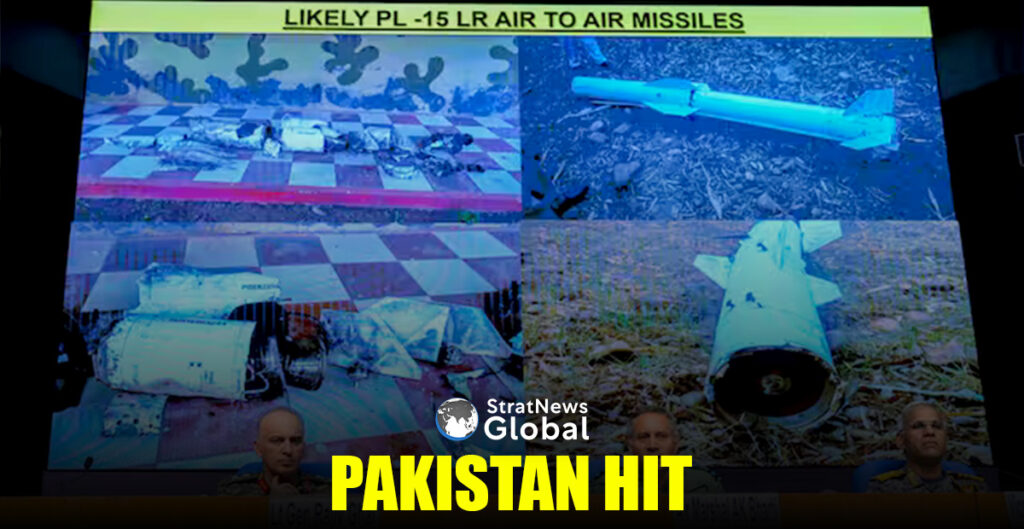
Five Pak Aircraft Destroyed In Op. Sindoor: Air Chief Marshal AP Singh
Three months after Operation Sindoor, Air Chief Marshal A P Singh revealed at a memorial lecture in Bengaluru that five Pakistani aircraft had been destroyed.
He said “We have at least five fighters confirmed kills and one large aircraft, which could be either an ELINT aircraft or an AEW&C aircraft which was taken on at a distance of about 300 km. This is actually the largest ever surface-to-air kill that we can talk about.”
Other damage inflicted on the Pakistani Air Force was at Jacobabad airfield where there is an F-16 hangar.
“One half of the hangar is gone,” he said, “and I’m sure there were some aircraft inside which got damaged. We were able to get at least two command and control centres like Murid and Chaklala, at least six radars, some of them big, some of them small.”
“We have an indication of at least one AEW&C in that hangar and one F-16, which were under maintenance there,” he added.
The air chief’s briefing fills some of the knowledge gaps and helps build a picture of the scale and intensity of the Indian attack. But the question arises, why did it take so long to reveal what is clearly major damage inflicted on the Pakistani military during Operation Sindoor?
The air chief made his remarks with supporting pictorial and video evidence at the memorial lecture for the late Air Chief Marshal LM Katre. Perhaps it has taken that much time to collate information about Pakistani losses and estimate the damage India inflicted.
He described the Russia-supplied S-400 air defence system as a game-changer.
“The range of that system kept their aircraft away from weapons like the long range glide bombs that they have. They have not been able to use any of those because they have not been able to penetrate the (air defence) system.”
Two more regiments of the S-400 are expected to be delivered next year, which would help the air force fill up any current gaps in its air defence coverage.
Germany Curtails Support For Israel Amid Gaza Starvation Crisis
The escalating humanitarian crisis in Gaza and Israel’s plan to expand military control over the enclave have compelled Germany to limit arms exports to Israel—a historically sensitive move driven by rising public opposition.
Conservative Chancellor Friedrich Merz, hitherto a staunchly pro-Israel leader, made the announcement on Friday, arguing that Israel’s actions would not achieve its stated war goals of eliminating Hamas militants or bringing Israeli hostages home.
It is a bold move for a leader who, after winning elections in February, said he would invite Benjamin Netanyahu to Germany in defiance of an arrest warrant against the Israeli prime minister issued by the International Criminal Court.
The shift reflects how Germany’s come-what-may support for Israel, rooted in its historical guilt over the Nazi Holocaust, is being tested like never before as the high Palestinian civilian death toll in Gaza, massive war destruction and images of starving children are chipping away at decades of policy.
“It is remarkable as it is the first concrete measure of this German government. But I would not see it as a U-turn, rather a ‘warning shot’,” said Muriel Asseburg, a researcher at the German Institute for International and Security Affairs.
It caps months of the German government sharpening its tone over Israel’s escalating military campaign in the small, densely populated Palestinian enclave, though still shying away from tougher steps that other European countries and some voices in Merz’s ruling coalition were calling for.
The suspension of arms deliveries to Israel would affect only those that could be used in Gaza.
The move reflects a hardening mood in Germany, where public opinion has grown critical of Israel and more demanding that its government help ease a humanitarian disaster – most of the 2.2 million population is homeless, and Gaza is a sea of rubble.
According to an ARD-DeutschlandTREND survey released on Thursday, a day before Merz’s announcement, 66% of Germans want their government to put more pressure on Israel to change its behaviour.
That is higher than April 2024, when some 57% of Germans believed their government should criticise Israel more strongly than before for its actions in Gaza, a Forsa poll showed.
Despite Germany helping air drop aid to Gaza, 47% of Germans think their government is doing too little for Palestinians there, against 39% who disagree with this, the ARD-DeutschlandTREND this week showed.
Most strikingly perhaps, only 31% of Germans feel they have a bigger responsibility for Israel due to their history – a core tenet of German foreign policy – while 62% do not.
Germany’s political establishment has cited its approach, known as the “Staatsraison”, as a special responsibility for Israel after the Nazi Holocaust, which was laid out in 2008 by then-Chancellor Angela Merkel to the Israeli parliament.
Reflecting that stance days before his most recent trip to Israel in July, Merz’s Foreign Minister Johann Wadephul told Die Zeit newspaper that Berlin could not be a “neutral mediator”.
“Because we are partisan. We stand with Israel,” he said, echoing similar statements by other conservative figures in Merz’s party.
But Merz’s junior coalition partner, the Social Democrats (SPD), had already been more explicit in wanting to put sanctions against Israel on the table.
Adis Ahmetovic, an SPD foreign policy spokesperson, said suspending weapons shipments was only the first step.
“More must follow, such as a full or partial suspension of the (European Union) Association Agreement or the medical evacuation of seriously injured children, in particular,” Ahmetovic told Stern magazine. “Furthermore, sanctions against Israeli ministers must no longer be taboo.”
Media Division
The deepening divide within Germany has also played out in its media landscape.
In two major editorials published in late July, Der Spiegel magazine accused Israel of violating international humanitarian law and condemned what it said was the German government’s complicity.
The front cover displayed a picture of Gaza women holding out empty bowls with the headline: “A Crime”.
Meanwhile, Bild, the mass-market daily owned by Axel Springer, Germany’s largest media group, decried the lack of outrage toward Islamist Hamas, whose cross-border assault on Israeli communities triggered the war, pointing to what it saw as growing anti-Israel sentiment and one-sided protests.
Filipp Piatov, a Bild reporter whose X account is followed by Merz, accused the chancellor on Friday of doing exactly what he had criticised others for, “that Germany is cutting off support to its ally in the middle of a war.”
Israel denies having a policy of starvation in Gaza, and says Hamas, which killed some 1,200 people in its October 7, 2023, attack and took 251 hostages back to Gaza, could end the crisis by surrendering.
Israel’s ground and air war in Gaza has killed over 60,000 Palestinians, according to Gaza’s health ministry.
Critics had argued that Germany’s approach has been overly hesitant, weakening the West’s collective ability to apply meaningful pressure for an end to the fighting and restrictions on humanitarian aid to the Israeli-besieged enclave.
Germany had hitherto even been cautious about a modest sanction such as supporting the partial suspension of Israel’s access to the EU’s flagship research funding programme.
There are other reasons for Germany’s reluctance to criticise Israel beyond its Nazi past, analysts say, including its strong trading relationship with Israel and the United States.
Germany is Israel’s second biggest weapons supplier after the U.S., but also buys arms from Israel as part of a massive revamp of its armed forces since Russia’s invasion of Ukraine in 2022. That includes the Arrow-3 missile interception system.
Last week, Israeli defence company Elbit Systems announced a $260 million deal with Airbus to equip the German Air Force’s A400M planes with directed infrared defence systems.
“German arrogance should be avoided,” Volker Beck, a former member of parliament and the head of the German-Israeli Society, told Reuters.
“If Israel were to retaliate by restricting arms deliveries to Germany, the future of German air security would look grim.”
($1 = 0.8590 euros)
(With inputs from Reuters)
Trump Administration Moves Against Harvard Patents
The Trump administration on Friday launched a sweeping review of Harvard University’s federally funded research projects and warned it could claim ownership of, or issue licenses for, patents from the institution’s highly profitable portfolio.
In a letter to University President Alan Garber, Commerce Secretary Howard Lutnick accused Harvard of breaching its legal and contractual requirements tied to the research programs and patents.
Lutnick also said the Commerce Department has begun a “march-in” process under the federal Bayh-Dole Act that could let the government take ownership of the patents or grant licenses.
Signed in 1980, that law ensures that Americans benefit from inventions funded through taxpayer dollars, a senior administration official said.
“The Department places immense value on the groundbreaking scientific and technological advancements that emerge from the Government’s partnerships with institutions like Harvard,” Lutnick wrote.
He said that carried a “critical responsibility” for Harvard to ensure that its intellectual property derived from federal funding is used to maximize benefits to the American people.
Harvard did not immediately respond to requests for comment.
President Donald Trump has made bolstering the country’s manufacturing and economic competitiveness a priority of his second White House term, including by raising tariffs on imports from dozens of countries.
Added Pressure
Friday’s letter ratchets up White House pressure on Harvard, which it has accused of civil rights violations for failing to address antisemitism on campus.
Harvard sued in April after the administration began stripping or freezing billions of dollars of federal research money.
Lutnick demanded that Harvard provide by September 5 a list of all patents stemming from federally funded research grants, including how the patents are used and whether any licensing requires “substantial U.S. manufacturing.”
As of July 1, 2024, Harvard held more than 5,800 patents and had more than 900 technology licenses with over 650 industry partners, according to a university website.
Other schools that have faced federal funding losses have included Columbia University, which last month agreed to pay more than $220 million to settle the government’s antisemitism claims.
The New York Times has said Harvard was open to spending up to $500 million to settle similar claims.
Signed by President Jimmy Carter about six weeks before he left the White House, the bipartisan Bayh-Dole Act was sponsored by Senators Birch Bayh of Indiana and Bob Dole of Kansas.
Carter said at the time it was important that industrial innovation promote U.S. economic health, and the legislation “goes far toward strengthening the effectiveness of the patent incentive in stimulating innovation in the United States.”
Many civil rights experts, faculty and White House critics believe the Trump administration’s targeting of schools is a pretext to assert federal control and threaten academic freedom and free speech.
(With inputs from Reuters)
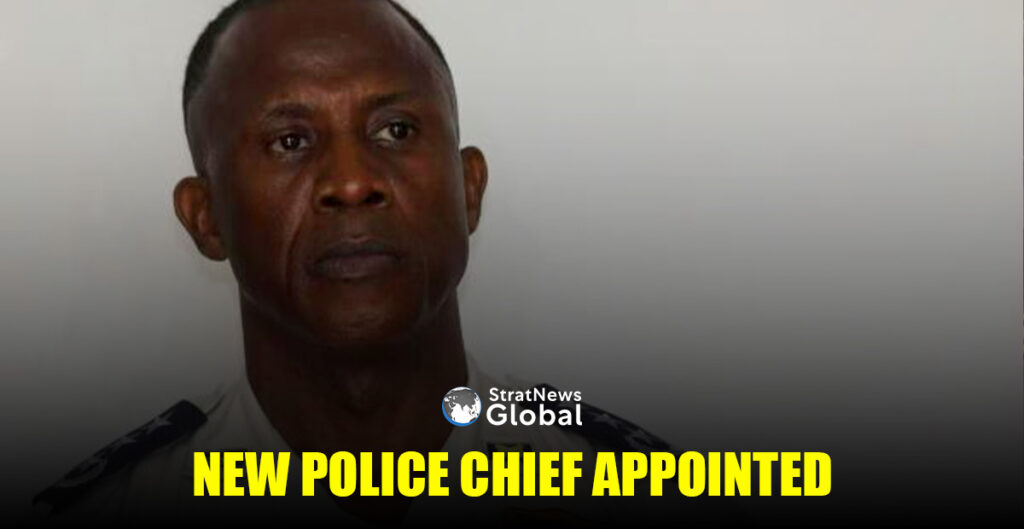
Haiti Appoints Ex-Palace Security Chief As New Police Leader
Haiti’s transitional government on Friday named Vladimir Paraison, a former head of national palace security, as the country’s new police chief. The appointment comes as the Caribbean nation intensifies efforts to confront armed gangs that have forced more than a million people from their homes.
“We the police will not sleep,” Paraison, who has the reputation of a seasoned and determined professional, told an inauguration ceremony. “We will provide security across every corner of the country.”
Paraison replaced Rameau Normil, whose tenure of just over a year was marked by tensions with a faction of the country’s presidential council, notably with Prime Minister Alix Didier Fils-Aime, who separately coordinated a task force responsible for explosive drone operations against gangs.
Most of Haiti’s capital is controlled by the gangs, who have largely grouped behind an alliance known as Viv Ansanm, which Washington has designated a terrorist organization responsible for mass killings, rapes, kidnappings and extortion.
Haiti’s cash-strapped national police and fledgling army have struggled to hold back their advances beyond Port-au-Prince, even with limited support from a U.N.-backed force.
Large Number Of Haitians Displaced
Some 1.3 million Haitians have been displaced due to the conflict, which killed more than 3,100 people in the first half of this year.
Paraison was met with a round of applause as he officially took up the job at the ceremony in Haiti’s Villa d’Acceuil, stepping to the podium using a cane after he was wounded in the leg while fighting armed gangs.
The building serves as the government’s temporary seat of power after the national palace in downtown Port-au-Prince became too insecure.
Council President Laurent Saint-Cyr, who took up the final six-month rotational leadership of the transitional government a day earlier, thanked the outgoing Normil.
“This change is not a sanction but called for by the urgency and the necessity to give new breath to the Haitian National Police,” Saint-Cyr said. “Everything rests on one thing: security.”
(With inputs from Reuters)
Trump Administration Considering Military Action On Latin American Drug Cartels: US Officials
According to US officials, President Donald Trump’s administration is exploring the possibility of deploying the military against Latin American drug cartels that have been classified as global terrorist organizations. The president has instructed the Pentagon to develop possible courses of action.
The Trump administration designated Mexico’s Sinaloa Cartel and other drug gangs as well as Venezuelan criminal group Tren de Aragua as global terrorist organizations in February, as Trump stepped up immigration enforcement against alleged gang members.
U.S. Secretary of State Marco Rubio said on Thursday the administration could now use the military to go after cartels.
“It allows us to now target what they’re operating and to use other elements of American power, intelligence agencies, the Department of Defence, whatever… to target these groups if we have an opportunity to do it,” Rubio said.
“We have to start treating them as armed terrorist organizations, not simply drug dealing organizations.”
The New York Times reported on Friday that Trump had secretly signed a directive to begin using military force against the groups.
A U.S. official, speaking on the condition of anonymity, confirmed that move but said military action against the designated groups did not appear imminent and it was unclear exactly what type of operations they would carry out.
A second U.S. official said the authority would, among other things, give the U.S. Navy the authority to carry out actions at sea and could include drug interdiction operations. Operations could also include targeted military raids.
The U.S. military has already been increasing its airborne surveillance of Mexican drug cartels to collect intelligence to determine how to best counter their activities.
Not Entering Mexican Territory?
Mexican President Claudia Sheinbaum said on Friday that members of the U.S. military would not be entering Mexican territory.
Sheinbaum said her government had been informed of a coming order but that it had nothing to do with the U.S. military operating on Mexican soil.
Any move to use U.S. military forces against cartels could raise legal questions.
Brian Finucane, with the International Crisis Group, has written that military action in Mexico would “be hard to square with domestic or international law.”
“Even though U.S. military action in Mexico would almost certainly be unlawful, as a practical matter such illegality may not serve as an effective impediment,” Finucane said after the February global terrorist designations.
Trump has previously offered to send U.S. troops to Mexico to help Sheinbaum combat drug trafficking, an offer Sheinbaum said in May she had refused. He has said publicly the U.S. would take unilateral military action if Mexico failed to dismantle drug cartels. Sheinbaum has called any such action a violation of Mexico’s sovereignty.
Trump considered military action in Mexico during his first term. His former defence secretary, Mark Esper, wrote in his memoir that Trump asked at least twice in 2020 if the military could “shoot missiles into Mexico to destroy drug labs.” Esper wrote that he replied that it would be illegal and an act of war.
Washington’s actions to prosecute and combat cartel activity in Mexico have caused tension with its southern neighbour, which sees them at times as challenges to Mexican sovereignty.
Sheinbaum on Friday questioned U.S. Attorney General Pam Bondi’s accusation a day earlier that Venezuelan President Nicolas Maduro was linked to the Sinaloa Cartel, saying Mexico was not investigating alleged ties and had no evidence of such, and that if Washington did, it should share it.
(With inputs from Reuters)