

Support us by contributing to StratNewsGlobal on the following UPI ID
ultramodern@hdfcbank

Strategic affairs is our game, South Asia and beyond our playground. Put together by an experienced team led by Nitin A. Gokhale. Our focus is on strategic affairs, foreign policy and international relations, with higher quality reportage, analysis and commentary with new tie-ups across the South Asian region.
You can support our endeavours. Visit us at www.stratnewsglobal.com and follow us on YouTube, Twitter, Facebook and Instagram.
र 500 per month
र 1000 per month
र 5000 per year
र 10000 per year
Donate an amount of your choice
र 500 per month
Donate र 500 per month

र 1000 per month
Donate र 1000 per month
र 5000 per year
Donate र 5,000 per year
र 10000 per year
Donate र 10,000 per year
Donate an amount of your choice
Donate an amount of your choice

Netanyahu: New Gaza Offensive To Begin Soon
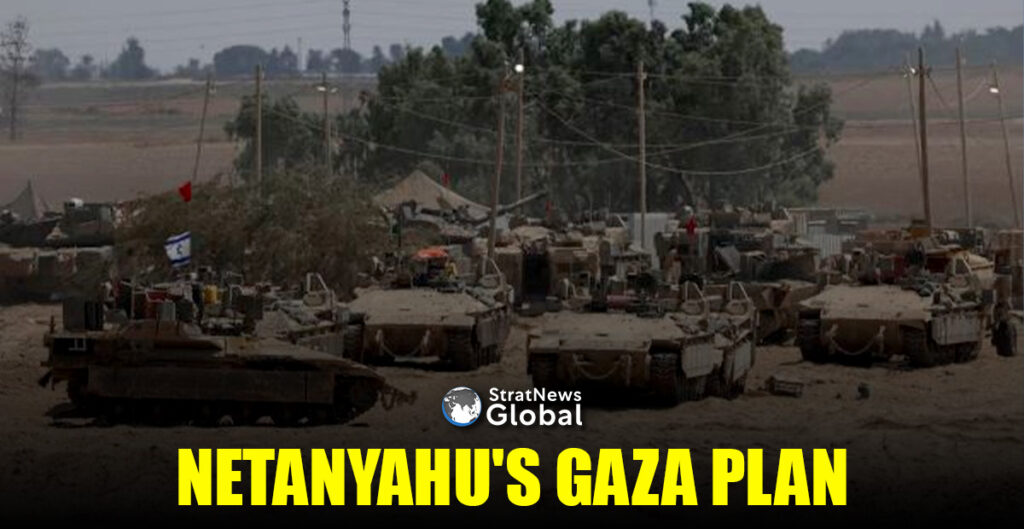
Israeli Prime Minister Benjamin Netanyahu stated on Sunday that he expects to carry out a new Gaza offensive “fairly quickly,” as the U.N. Security Council received fresh calls to end the suffering in the Palestinian enclave.
Netanyahu, speaking after his security cabinet on Friday approved a much-criticised plan to take control of Gaza City said he had no choice but to “complete the job” and defeat Hamas to free hostages seized from Israel.
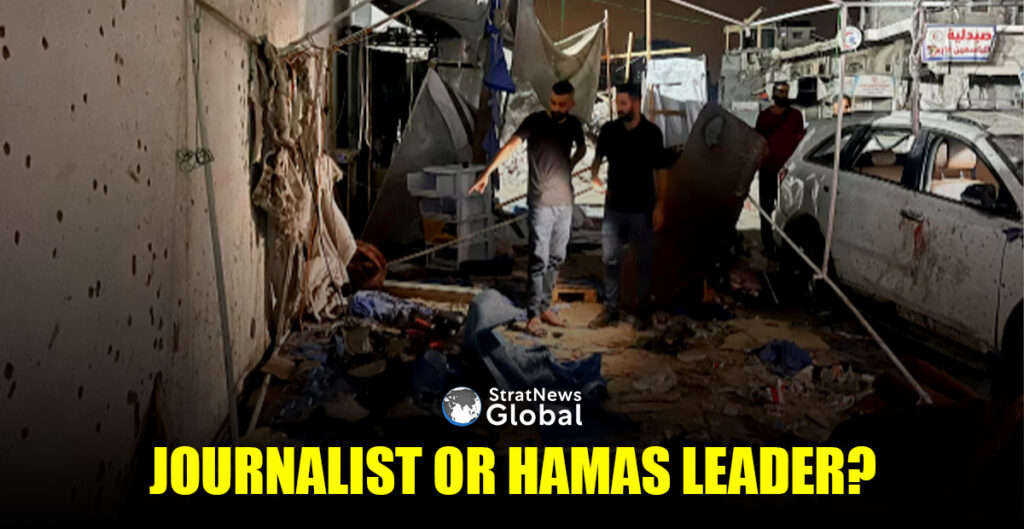
Gaza City, the enclave’s most populous center, came under escalating Israeli air strikes late on Sunday, witnesses said. At least five people were killed at a sandwich shop in the Sabra neighbourhood, health officials at Shifa Hospital said.
Palestinian media said a missile hit a tent used by journalists near the hospital, and the head of Shifa Hospital, Muhammad Abu Salamiyah, said on Al Jazeera television that seven people were killed there. Tank fire was also reported in the area.
The Hamas-run Gaza media office said five Al Jazeera staff died in the attack including journalists Anas Al Sharif and Mohammed Qreiqeh and three photojournalists. It said the fifth man was a driver and assistant.
Israel’s Plans
Israel’s military said it targeted and killed Al Sharif, whom it claimed was the head of a Hamas cell posing as a journalist. It said the accusation had been confirmed by intelligence and documents found in Gaza. U.N. Special Rapporteur Irene Khan said last month the claims were unsubstantiated.
Netanyahu’s office said late Sunday the prime minister had spoken with U.S. President Donald Trump about “Israel’s plans to take control of the remaining Hamas strongholds in Gaza.”
Earlier in the day, the Israeli leader said the new Gaza offensive aimed to tackle two remaining Hamas strongholds in what he called his only option because of the Palestinian group’s refusal to lay down its arms. Hamas says it will not disarm unless an independent Palestinian state is established.
It was not clear when the offensive, which would be the latest in successive attempts by the Israeli military to clear the terrorists from Gaza City, would begin.
“The timeline that we set for the action is fairly quickly. We want, first of all, to enable safe zones to be established so the civilian population of Gaza City can move out,” he added.
The city, home to a million people before the two-year-old war, would be moved into “safe zones”, he said. Palestinians say these have not protected them from Israeli fire in the past.
Israel’s military chief has voiced opposition to occupying the entire Gaza Strip and has warned that expanding the offensive could endanger the lives of hostages Hamas is still holding and draw its troops into protracted and deadly guerrilla warfare.
Netanyahu said his goal was not to occupy Gaza. “We want a security belt right next to our border, but we don’t want to stay in Gaza. That’s not our purpose,” he said.
Spreading Famine
European representatives at the United Nations said famine was unfolding in Gaza and Israel’s plan would only make things worse.
“Expanding military operations will only endanger the lives of all civilians in Gaza, including the remaining hostages, and result in further unnecessary suffering,” Denmark, France, Greece, Slovenia and the United Kingdom said in a joint statement.
“This is a manmade crisis, and therefore urgent action is needed to halt starvation and to surge aid into Gaza,” they said.
Malnutrition is widespread in the enclave due to what international aid agencies say is a deliberate plan by Israel to restrict aid. Israel rejects that allegation, blaming Hamas for the hunger among Palestinians and saying a lot of aid has been distributed.
Humanitarian Needs
The U.S. representative at the Security Council defended Netanhayu and said Washington was committed to addressing humanitarian needs, freeing the hostages and achieving peace.
Netanyahu said Israel was working with Washington on creating a surge of aid into Gaza, including by land. After his conversation with Trump, the prime minister’s office said he thanked the president “for his steadfast support of Israel.”
Five more people, including two children, died of malnutrition and starvation in Gaza in the past 24 hours, Gaza’s health ministry said, taking the number of deaths from such causes to 217, including 100 children.
The Hamas-run Gaza government media office said a further 23 people had been killed so far in the war by airdrops of aid which countries have resorted to due to the difficulties of getting aid in by road.
In the latest case, a parachuted aid box killed a 14-year-old boy awaiting food with other desperate Palestinians at a tent encampment in central Gaza, according to medics and video reports.
The war began on October 7, 2023, when Hamas-led terrorists stormed into southern Israel and killed 1,200 people and took 251 hostages, according to Israeli figures. Israeli authorities say 20 of the remaining 50 hostages in Gaza are alive.
Israel’s offensive since then has killed more than 61,000 Palestinians, according to health officials, and left much of the territory in ruins.
(With inputs from Reuters)
Zelenskyy Gains EU And NATO Support In Bid For Role At Trump-Putin Talks
Ukrainian President Volodymyr Zelenskyy secured diplomatic support from European leaders and the NATO alliance on Sunday, ahead of a Russia–U.S. summit this week. Kyiv remains concerned that Presidents Vladimir Putin and Donald Trump could attempt to set the terms for ending the 3½-year conflict.
Trump, who for weeks had been threatening new sanctions against Russia for failing to halt the war, announced instead on Friday that he would meet Putin on August 15 in Alaska.
A White House official has said Trump is open to Zelenskyy attending but preparations are underway for only a bilateral meeting.
Russian strikes injured at least 12 in Ukraine’s Zaporizhzhia region, the country’s foreign affairs ministry said on Sunday.
Zelenskyy, responding to the strike, said, “That is why sanctions are needed, pressure is needed.”
The Kremlin leader last week ruled out meeting Zelenskyy, saying conditions for such an encounter were “unfortunately still far” from being met.
Potential Deal
Trump said a potential deal would involve “some swapping of territories to the betterment of both (sides)”, compounding Ukrainian fears that it may face pressure to surrender land.
Zelenskyy says any decisions taken without Ukraine will be “stillborn” and unworkable. On Saturday the leaders of Britain, France, Germany, Italy, Poland, Finland and the European Commission said any diplomatic solution must protect the security interests of Ukraine and Europe.
“The U.S. has the power to force Russia to negotiate seriously,” EU foreign policy chief Kaja Kallas said on Sunday. “Any deal between the U.S. and Russia must have Ukraine and the EU included, for it is a matter of Ukraine’s and the whole of Europe’s security.”
EU foreign ministers will meet on Monday to discuss next steps, she said.
NATO Secretary General Mark Rutte told U.S. network ABC News that Friday’s summit “will be about testing Putin, how serious he is on bringing this terrible war to an end”.
He added: “It will be, of course, about security guarantees, but also about the absolute need to acknowledge that Ukraine decides on its own future, that Ukraine has to be a sovereign nation, deciding on its own geopolitical future.”
Russia holds nearly a fifth of the country.
Rutte said a deal could not include legal recognition of Russian control over Ukrainian land, although it might include de facto recognition. He compared it to the situation after World War Two when Washington accepted that the Baltic states of Latvia, Lithuania and Estonia were de facto controlled by the Soviet Union but did not legally recognise their annexation.
Zelenskyy said on Sunday: “The end of the war must be fair, and I am grateful to everyone who stands with Ukraine and our people today.”
Europe’s Counter-Proposal
A European official said Europe had come up with a counter-proposal to Trump’s, but declined to provide details. Russian officials accused Europe of trying to thwart Trump’s efforts to end the war.
“The Euro-imbeciles are trying to prevent American efforts to help resolve the Ukrainian conflict,” former Russian president Dmitry Medvedev posted on social media on Sunday.
Russian Foreign Ministry spokeswoman Maria Zakharova said in a vituperative statement that the relationship between Ukraine and the European Union resembled “necrophilia”.
Roman Alekhin, a Russian war blogger, said Europe had been reduced to the role of a spectator.
“If Putin and Trump reach an agreement directly, Europe will be faced with a fait accompli. Kyiv – even more so,” he said.
Captured Territory
In addition to Crimea, which it seized in 2014, Russia has formally claimed the Ukrainian regions of Luhansk, Donetsk, Kherson and Zaporizhzhia as its own, although it controls only about 70% of the last three. It holds smaller pieces of territory in three other regions, while Ukraine says it holds a sliver of Russia’s Kursk region.
Sergei Markov, a pro-Kremlin analyst, said a swap could entail Russia handing over 1,500 sq km to Ukraine and obtaining 7,000 sq km, which he said Russia would capture anyway within about six months.
He provided no evidence to back any of those figures. Russia took about 500 sq km of territory in July, according to Western military analysts who say its grinding advances have come at the cost of very high casualties.
Ukraine and its European allies have been haunted for months by the fear that Trump, keen to claim credit for making peace and hoping to seal lucrative joint business deals between the U.S. and Russia, could align with Putin to cut a deal that would be deeply disadvantageous to Kyiv.
They had drawn some encouragement lately as Trump, having piled heavy pressure on Zelenskyy and berated him publicly in the Oval Office in February, began criticising Putin as Russia pounded Kyiv and other cities with its heaviest air attacks of the war.
‘Catastrophe For Ukraine And Europe’
But the impending Putin-Trump summit has revived fears that Kyiv and Europe could be sidelined.
“What we will see emerge from Alaska will almost certainly be a catastrophe for Ukraine and Europe,” wrote Phillips P. O’Brien, professor of strategic studies at the University of St Andrews in Scotland.
“And Ukraine will face the most terrible dilemma. Do they accept this humiliating and destructive deal? Or do they go it alone, unsure of the backing of European states?”
Ukrainian political analyst Volodymyr Fesenko said on Sunday that Kyiv’s partnership with its European allies was critical to countering any attempts to keep it away from the table.
“For us right now, a joint position with the Europeans is our main resource,” he said on Ukrainian radio.
U.S. Vice President JD Vance said a negotiated settlement was unlikely to satisfy either side. “Both the Russians and the Ukrainians, probably, at the end of the day, are going to be unhappy with it,” he said on Fox News’ Sunday Morning Futures with Maria Bartiromo.
(With inputs from Reuters)
Trump Pledges To Remove Homeless From Washington As Official Flags Possible National Guard Deployment
On Sunday, U.S. President Donald Trump vowed to take homeless individuals off the streets of Washington D.C. and put offenders behind bars, even when the city’s mayor said crime is not currently on the rise.
While details of the plan were unclear, the administration is preparing to deploy hundreds of National Guard troops to Washington, a U.S. official said, a controversial tactic Trump used recently in Los Angeles to tackle immigration protests over the objections of local officials.
Trump has not made a final decision, the official said, adding that the number of troops and their role are still being determined.
National Guard
Unlike in California and every other state, where the governor typically decides when to activate Guard troops, the president directly controls the National Guard in Washington, D.C.
Past instances of the Guard’s deployment in the city include in response to the January 6, 2021, attack on the U.S. Capitol by a mob of Trump supporters.
“The Homeless have to move out, IMMEDIATELY,” Trump posted on his Truth Social platform. “We will give you places to stay, but FAR from the Capital. The Criminals, you don’t have to move out. We’re going to put you in jail where you belong.”
The White House declined to explain what legal authority Trump would use to evict people from Washington. The Republican president controls only federal land and buildings in the city.
Trump plans to hold a press conference on Monday to “stop violent crime in Washington, D.C.” It was not clear whether he would announce more details of his eviction plan then.
There are 3,782 single persons experiencing homelessness on any given night in the city of about 700,000, says the Community Partnership, an organization working to reduce homelessness in D.C.
Most such individuals are in emergency shelters or transitional housing, rather than on the street, it says.
Federal Troops Deployed
A White House official said on Friday more federal law enforcement officers were being deployed in the city following a violent attack on a young administration staffer that angered the president.
Alleged crimes investigated by federal agents on Friday night included “multiple persons carrying a pistol without license,” motorists driving on suspended licenses and dirt bike riding, a White House official said on Sunday.
The official said 450 federal law enforcement officers were deployed across the city on Saturday.
The city’s police department says violent crime was down 26% in D.C. in the first seven months of 2025, compared with last year, while overall crime was down about 7%.
The Democratic mayor of Washington, D.C., Muriel Bowser, said on Sunday the capital was “not experiencing a crime spike.”
“It is true that we had a terrible spike in crime in 2023, but this is not 2023,” Bowser said on MSNBC’s the Weekend. “We have spent over the last two years driving down violent crime in this city, driving it down to a 30-year low.”
Bowser said Trump was “very aware” of the city’s work with federal law enforcement after meeting him several weeks ago in the Oval Office.
The U.S. Congress has control of D.C.’s budget after the district was established in 1790 with land from neighbouring Virginia and Maryland, but resident voters elect a mayor and city council.
For Trump to take over the city, it is likely that Congress would have to pass a law revoking the law that established local elected leadership.
(With inputs from Reuters)
Israel Says It Killed Al Jazeera Journalist In Gaza, Claims Hamas Ties
Israel’s military said it killed an Al Jazeera journalist in a Gaza airstrike on Sunday, alleging he was a Hamas cell leader, but rights groups argued he was targeted for his frontline reporting on the war and that Israel’s claim lacked supporting evidence.
Anas Al Sharif, 28, was among a group of four Al Jazeera journalists and an assistant who died in an airstrike by Israel on a tent near Shifa Hospital in eastern Gaza City, Gaza officials and Al Jazeera said. An official at the hospital said two other people were also killed in the strike.
Calling Al Sharif “one of Gaza’s bravest journalists,” Al Jazeera said the attack was a “desperate attempt to silence voices in anticipation of the occupation of Gaza.”
Al Sharif was the head of a Hamas cell and “was responsible for advancing rocket attacks against Israeli civilians and IDF (Israeli) troops,” the Israeli military said in a statement, citing intelligence and documents found in Gaza as evidence.
Journalists’ groups and Al Jazeera denounced the killings.
The other journalists killed were Mohammed Qreiqeh, Ibrahim Zaher and Mohammed Noufal, Al Jazeera said.
Experts Warned Earlier
A press freedom group and a UN expert previously warned that Al Sharif’s life was in danger due to his reporting from Gaza. UN Special Rapporteur Irene Khan said last month that Israel’s claims against him were unsubstantiated.
Al Jazeera said Al Sharif had left a social media message to be posted in the event of his death that read, “…I never hesitated to convey the truth as it is, without distortion or misrepresentation, hoping that God would witness those who remained silent.”
Last October, Israel’s military had named Al Sharif as one of six Gaza journalists it alleged were members of Hamas and Palestinian Islamic Jihad, citing documents it said showed lists of people who completed training courses and salaries.
“Al Jazeera categorically rejects the Israeli occupation forces’ portrayal of our journalists as terrorists and denounces their use of fabricated evidence,” the network said in a statement at the time.
In a statement, the Committee to Protect Journalists, which in July urged the international community to protect Al Sharif, said Israel had failed to provide any evidence to back up its allegations against him.
“Israel’s pattern of labelling journalists as militants without providing credible evidence raises serious questions about its intent and respect for press freedom,” said Sara Qudah, CPJ’s director for the Middle East and North Africa.
Al Sharif, whose X account showed more than 500,000 followers, posted on the platform minutes before his death that Israel had been intensely bombarding Gaza City for more than two hours.
Hamas Warns Of Israeli Offensive
Palestinian militant group Hamas, which runs Gaza, said the killing may signal the start of an Israeli offensive. “The assassination of journalists and the intimidation of those who remain paves the way for a major crime that the occupation is planning to commit in Gaza City,” Hamas said in a statement.
Israeli Prime Minister Benjamin Netanyahu has said he would launch a new offensive to dismantle Hamas strongholds in Gaza, where a hunger crisis is escalating after 22 months of war.
“Anas Al Sharif and his colleagues were among the last remaining voices in Gaza conveying the tragic reality to the world,” Al Jazeera said.
The Hamas-run Gaza government media office said 237 journalists have been killed since the war started on October 7, 2023. The Committee to Protect Journalists said at least 186 journalists have been killed in the Gaza conflict.
(With inputs from Reuters)
Is India Shoring Up Russia Ties After Years Of Benign Neglect?
“Russia has no issues with India, there is no conflict of interest,” said a veteran former diplomat who would not be named, adding “They know we are not interested in them, we pretend to be friends with them but prefer the Americans.”
Is that a harsh view of the India-Russia relationship?
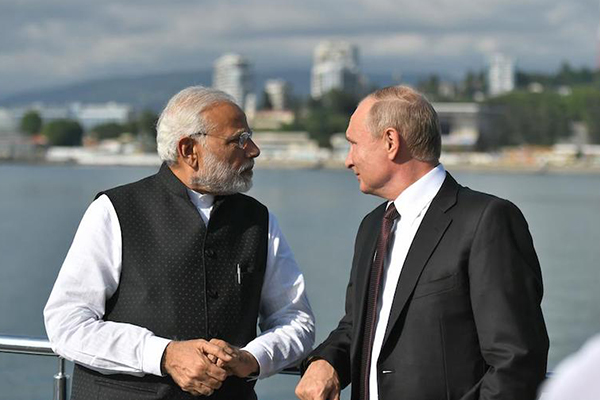
Do note that National Security Adviser Ajit Doval has just wound up an intensive round of deliberations in Moscow, he called on President Putin, Putin and Modi spoke over the phone, the ground is being laid in earnest for the Russian leader’s visit later this year.
But seen in the backdrop of India’s deteriorating relationship with the US led by Donald Trump, is India trying to shore up ties with Russia after a period of benign neglect?
Clearly, the timing of Doval’s visit when the roof seemingly collapsed on Delhi-Washington, is the issue here.
Such visits are generally planned weeks if not months in advance and while there is a buzz that the Russians wanted Doval to come a little later, a few days here or there would not have really mattered to the substance of their discussions.
But Kanwal Sibal, former foreign secretary and ambassador to Russia, admits that “Ties with Russia have weakened since we developed options with the US after the nuclear deal. India’s trade with the US is big, there is the diaspora with Indians leading America’s tech majors and the US is the biggest investor in India.”
Comparatively, the Russia relationship is largely focused on India buying their oil and selling little in return. Today, that very oil is a political hot potato with the US and Europe.
“It was not a deliberate political decision to weaken relations with Russia,” Ambassador Sibal argues, “it’s just how India’s interests evolved. Russia has a place in our matrix and as we see now, it is the only stable element in our relationships.”
What do the Russians think? The diplomat mentioned earlier who did not wish to be named, was not sanguine about the Russia relationship:
“The Russians know we are in trouble with the Americans and individually, there will be people in the Moscow establishment who may not like us, the saving grace is Modi and Putin who are invested in the relationship. But ties cannot depend on two people.
“The day Russia does a deal with the Americans (which could happen as early as Friday), they will deal with us as we dealt with them. And the day Trump does a deal with China (on trade), we will be left isolated in our region,” the diplomat warned.
So is India entirely without leverage? Not so counters Ambassador Sibal. India is balancing the Russia-China axis and in the same manner in which Russia does not make an issue of the Delhi-Washington relationship, India understands the context in which Moscow and Beijing have moved closer.
“Our options with Russia are not closed,” he said, “and if compelled we can boost relations with that country, also BRICS and the SCO. We are in fact central to the concept of BRICS. The point is we can’t accept single power hegemony and we will find ways to leverage BRICS and SCO and find space for ourselves in the global governance system.”
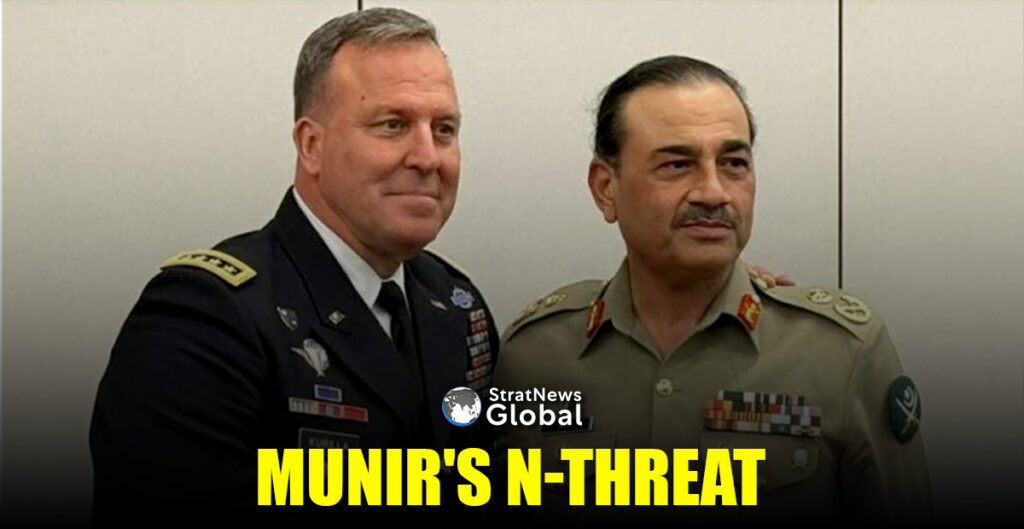
Mullah Asim Munir Now Rattles Nuclear Sabre from U.S. Soil
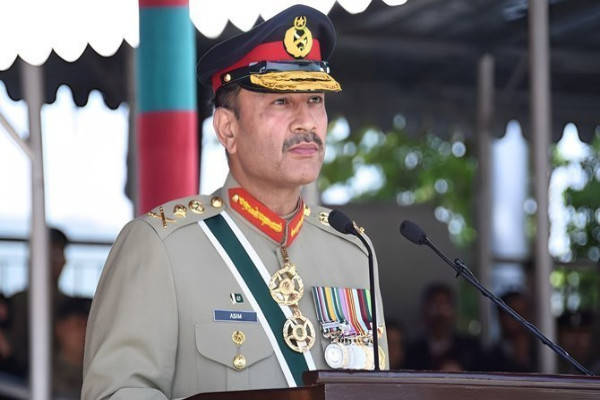
Pakistan Army Chief and selfField Marshal Asim Munir raised the nuclear issue during a dinner meeting in the United States, warning that Islamabad has the capability to target India’s nuclear assets.
According to an exclusive report in The Print, Munir claimed that Pakistan could “pick off” Indian nuclear installations.
Speaking at a black-tie dinner in Tampa, Florida, hosted to honour General Michael Kurilla, outgoing commander of U.S. Central Command, Munir delivered what The Print describes as the first nuclear threat ever known to have been uttered on U.S. soil against a third country, declaring: “We are a nuclear nation. If we think we are going down, we’ll take half the world down with us.”
No transcript was circulated, and guests were barred from using digital devices—The Print reconstructed the speech from attendees’ recollections.
Munir then pivoted to the contentious issue of the Indus Waters Treaty, warning that India’s decision to suspend the agreement could jeopardise the lives of 250 million Pakistanis.
“We will wait for India to build a dam, and when it does so, phir 10 missile sey faarigh kar dengey [we will destroy it with ten missiles],” he said, adding, “The Indus River is not the Indians’ family property. Humein missilon ki kami nahin hai, al-Hamdulillah [we have no shortage of missiles, Praise be to God],” again evading any written record as The Print pieced together his remarks from multiple sources.
According to The Print report, the function followed formalities that underscored Pakistan’s religious and ideological messaging: it began with a Quranic recitation followed by the playing of the national anthem, all in a carefully curated setting of halal western-style fare served to expatriates.
Munir mocked Indian reticence over its own combat losses, offering instead for Pakistan to reveal its sacrifices if India would reciprocate. He also invoked allegorical imagery, comparing India to a “shining Mercedes” and Pakistan to a “dump truck full of gravel,” warning, “if the truck hits the car, who is going to be the loser?”
Munir used the occasion to advocate for stronger military influence in politics, claiming that “they say war is too serious to be left to the Generals, but politics is also too serious to be left to the politicians.”
He closed with Bollywood-style imagery: “Kisi ki maa kaali ho sakti hai, aur kisi ki dharti-maa kaali ho sakti hai, par maa maa hoti hai [someone’s mother might be dark-skinned, and the earth of someone’s motherland might be dark, but a mother is a mother].”
He asserted that Pakistan, like Medina before it, was founded on the Kalimah and destined to be blessed with divine bounty—an ideological flourish that merged religious symbolism with nationalist pride.
His warning echoes Munir’s broader communications strategy, which harnesses religious and militaristic messaging to frame Pakistan’s posture toward India.
This stark nuclear sabre-rattling on American soil comes months after his military sought peace in the wake of Operation Sindoor, India’s military response to a terrorist strike on Hindu tourists in Pahalgam, Kashmir on April 22, and a day after Indian Air Chief Marshal A P Singh said the Indian Air Force (IAF) took down “at least” five Pakistani fighter jets and “one large aircraft” during Operation Sindoor in May.
Munir’s nuclear warning also fits a familiar pattern of Pakistani military leaders invoking Kashmir to divert attention from domestic turmoil.
Perhaps emboldened by his lunch with US President Donald Trump during his earlier trip to Washington in June –and the subsequent description of Pakistan as a “phenomenal partner” in counterterrorism efforts by General Kurilla during a congressional hearing, where he also praised Pakistan’s role “in promoting peace and stability” in the region — Munir has been playing the jihadi jukebox, recycling rhetoric about “unfinished agendas” in Kashmir while the country reels from economic collapse, political instability, and rising insurgency in Balochistan.
The timing of Munir’s remarks in the US is particularly notable, as Islamabad continues to seek financial bailouts from global lenders and military aid from Washington. Analysts say such nuclear brinkmanship may be aimed at keeping Pakistan relevant in Western security calculations, even as its credibility erodes in the face of repeated military setbacks.
India has yet to respond officially to Munir’s latest statement. However, New Delhi has made it clear post post Pahalgam that it would no longer submit to nuclear blackmail, that Kashmir is an internal matter, and that any attempt to alter the status quo through force will be met with decisive retaliation.
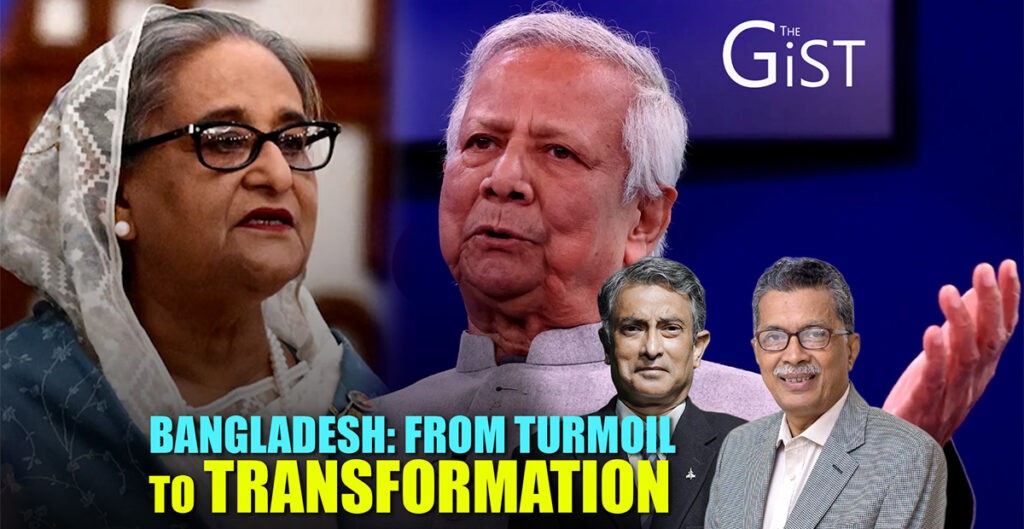
‘India Must Appreciate Bangladesh’s New Political Reality’
A year after Prime Minister Sheikh Hasina fled Dhaka in the wake of a student-led mass uprising on August 5, 2024, Bangladesh is still struggling to rebuild its political and administrative institutions, says former ambassador M. Humayun Kabir.
Speaking to The Gist, Kabir — a former envoy to the U.S., Nepal, Australia, and New Zealand, and now President of the Bangladesh Enterprise Institute — described the Hasina years as a period marked by “badly managed” elections, massive corruption, huge capital flight, and the politicization of state institutions. The collapse of police, judicial, and civil service systems left the interim government facing “the most widespread destruction since independence in 1971.”
Despite these challenges, Kabir credited the interim administration with stabilizing the economy — reviving the banking sector, mobilizing remittances, lowering inflation, and slowly moving toward restoring growth. He also cited the publication of a comprehensive human rights report by the UN Human Rights Commissioner’s Office cataloguing widespread violations under the previous regime, and the initiation of constitutional, judicial, administrative and police reforms as positive moves, most of which have been agreed upon by major political parties. The International Crimes Tribunal (ICT) has also opened proceedings against those allegedly involved in committing serious crimes.
However, he conceded that “government communications is not up to the mark and that more regular public engagement could have built trust. Public expectations remain high, but rebuilding institutions cannot be done overnight.”
On India–Bangladesh relations, Kabir said New Delhi had “failed to understand and appreciate the huge shift” in Bangladeshi politics. He pointed to the widespread public perceptions that India had backed election manipulation under Hasina, and criticized a section of Indian media, political and social media activists for creating fake narratives and spreading misinformation against Bangladesh, which fuel mistrust.
While acknowledging isolated incidents of attacks on minorities during the initial hours of change, he maintained that people from all walks of life, including the government, armed forces, political party activists, students, civil society organizations and religious leaders have firmly stood to protect the lives and properties of the members of minority and ethnic communities, and Bangladesh remains committed to a secular, pluralistic, inclusive identity.
On Indian concerns about Jamaat activists and convicted terrorists being freed, Kabir argued that these fears are mostly exaggerated. The government has repeatedly expressed its strong position against any kind of extremist orientations and activities. In addition, the political landscape had shifted: Jamaat and the BNP were now separate and even competing. The student-led uprising, he said, was rooted in demands for democracy, justice, and non-discrimination — ideals that remain secular in nature.
Despite political tension, Kabir stressed that trade, power imports, and connectivity projects continue. “We are neighbours… Let us talk and work things out together for our mutual benefit,” he concluded.
Pakistan Army Chief Asim Munir Visits US Again Amid Strengthening Ties
Pakistan’s Chief of Army Staff, General Asim Munir, is currently on a high-profile visit to the United States — his second U.S. trip in less than two months — in what is being seen as a rare and notable uptick in diplomatic and military engagement between Washington and Islamabad.
The trip, which underscores a steady improvement in bilateral relations, comes at a time when the two countries are seeking deeper cooperation on regional and global security matters.
According to a statement from the Pakistani army’s media wing issued on Sunday, General Munir met with the US Chairman of the Joint Chiefs of Staff, General Dan Caine, for discussions on “matters of mutual professional interest.”
While the official statement did not disclose the exact date of Munir’s arrival in the United States, it confirmed that he extended an invitation to General Caine to visit Pakistan.
Munir’s US Trip
As part of his itinerary, Munir travelled to Tampa, Florida, where he attended the retirement ceremony of outgoing US Central Command (CENTCOM) chief General Michael E. Kurilla, as well as the change-of-command ceremony welcoming Adm. Brad Cooper as the new CENTCOM commander.
Munir praised Gen. Kurilla for his “exemplary leadership” and “invaluable contributions” toward strengthening Pakistan-US military cooperation, while expressing optimism about future collaboration under Adm. Cooper’s command to address shared security challenges.
On the sidelines of these events, the Pakistani army chief engaged with defence chiefs from several friendly nations, held high-level talks with senior US political and military leaders, and interacted with members of the Pakistani-American community.
This visit follows months of improved ties between Washington and Islamabad, partly credited to U.S. President Donald Trump’s role in brokering a ceasefire between Pakistan and India after a tense four-day conflict in May.
In June, Trump hosted Munir for a rare luncheon at the White House — a gesture widely interpreted as a diplomatic breakthrough.
However, the renewed goodwill has been coupled with trade developments, including Trump’s imposition of a 19% tariff on Pakistani goods, alongside a steeper 50% duty on Indian imports.
(With inputs from IBNS)
Zelenskyy Backs European Peace Statement, Warns Against Territorial Concessions
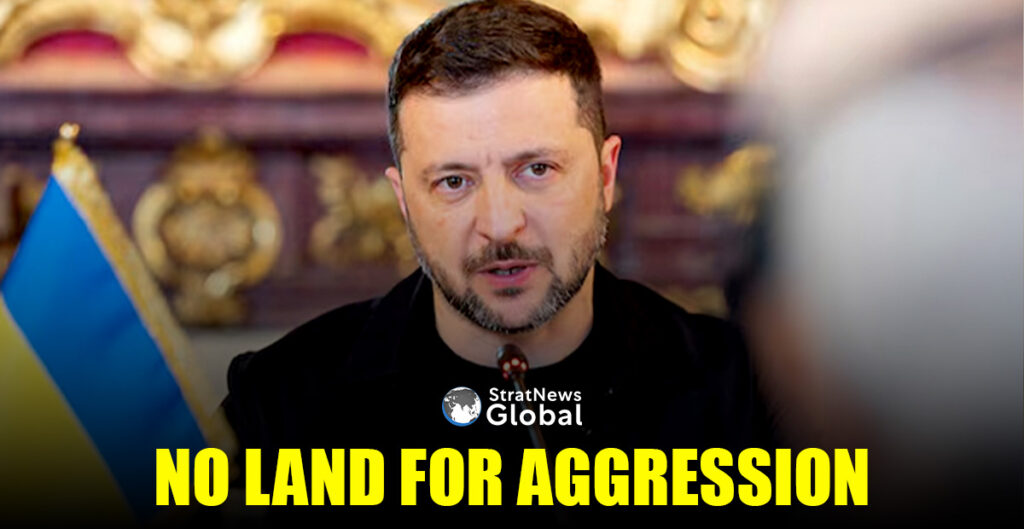
Ukrainian President Volodymyr Zelenskyy on Sunday endorsed a European peace statement, warning that ceding territory to Russia would fuel further aggression.
French, Italian, German, Polish, British, Finnish and European Commission leaders on Saturday welcomed U.S. President Donald Trump’s efforts to try to end the war but emphasised the need to pressure Russia and provide security guarantees for Kyiv.
“The end of the war must be fair, and I am grateful to everyone who stands with Ukraine and our people today for the sake of peace in Ukraine, which is defending the vital security interests of our European nations,” Zelenskyy wrote on X.
“Ukraine values and fully supports the statement by President Macron, Prime Minister Meloni, Chancellor Merz, Prime Minister Tusk, Prime Minister Starmer, President Ursula von der Leyen, and President Stubb on peace for Ukraine.”
Trump plans to meet Russian President Vladimir Putin in Alaska on Friday. He has talked up the prospect of a deal that could resolve the three-and-a-half-year-old conflict.
Zelenskyy and his European allies have warned that any deal requiring Ukraine to surrender significant parts of its territory would only encourage Russian aggression.
(With inputs from Reuters)
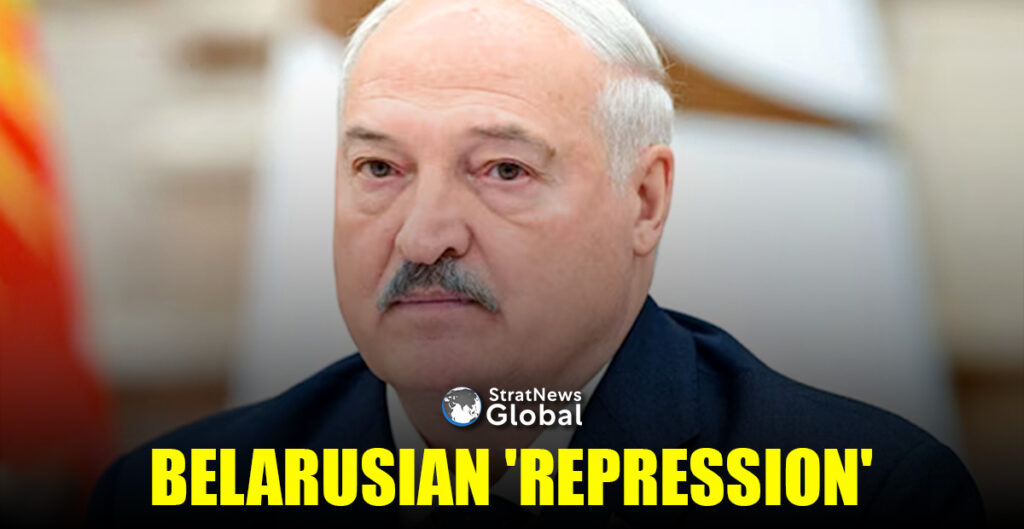
Australia, Canada, UK Condemn Belarus For Repression, Rights Abuses
The governments of Australia, Canada and the United Kingdom condemned the Belarusian authorities’ ongoing ‘repression and human rights violations’.
The countries accused them of waging a campaign to shut down civil society, independent media and any form of political opposition.
Key Quotes
“We — Australia, Canada, and the United Kingdom — stand united in condemning the ongoing repression and human rights violations,” the three countries said in a joint statement on Saturday.
“Thousands have been unjustly detained, subjected to torture, or forced into exile. These actions represent a flagrant breach of Belarus’ international law obligations and are a serious violation of human rights and fundamental freedoms,” they added, urging Belarusian authorities “to end their campaign of repression.”
Why It’s Important
Belarusian President Alexander Lukashenko, a close ally of Russian President Vladimir Putin, has led Belarus through more than three decades of authoritarian rule and was re-elected in January for a seventh five-year term.
Lukashenko crushed huge street protests in 2020 after an election the opposition and Western governments accused him of stealing, and all his leading opponents were jailed or forced to flee the country.
Context
Several hundred people convicted of extremism and other politically related offences have been released since mid-2024 in what analysts see as a bid by Lukashenko to ease his isolation from the West.
However, human rights groups say nearly 1,200 are still behind bars.
Lukashenko denies there are any political prisoners in the country.
Australia, Canada and the UK said they welcomed the recent releases of several political prisoners in Belarus but added that they remain concerned by what they termed as continued arrests and persecution of individuals for exercising their human rights.
(With inputs from Reuters)