

Support us by contributing to StratNewsGlobal on the following UPI ID
ultramodern@hdfcbank

Strategic affairs is our game, South Asia and beyond our playground. Put together by an experienced team led by Nitin A. Gokhale. Our focus is on strategic affairs, foreign policy and international relations, with higher quality reportage, analysis and commentary with new tie-ups across the South Asian region.
You can support our endeavours. Visit us at www.stratnewsglobal.com and follow us on YouTube, Twitter, Facebook and Instagram.
र 500 per month
र 1000 per month
र 5000 per year
र 10000 per year
Donate an amount of your choice
र 500 per month
Donate र 500 per month

र 1000 per month
Donate र 1000 per month
र 5000 per year
Donate र 5,000 per year
र 10000 per year
Donate र 10,000 per year
Donate an amount of your choice
Donate an amount of your choice
Trump Unsure If August 12 Deadline For China Tariffs Will Be Extended
On Monday, U.S. President Donald Trump sidestepped a question about extending the August 12 deadline for higher U.S. tariffs on Chinese goods, responding, “we’ll see what happens,” while praising China’s cooperation in ongoing trade talks with Washington.
Trump on Wednesday said he could announce further tariffs on China similar to the 25% duties announced earlier on India over its purchases of Russian oil, depending on what happens.
“We’ve been dealing very nicely with China. As you have probably heard, they have tremendous tariffs that they’re paying to the United States of America,” Trump said at a news conference at the White House.
“Could happen,” Trump told reporters, after saying he expected to announce more secondary sanctions aimed at pressuring Russia to end its war in Ukraine.
Last week, U.S. Treasury Secretary Scott Bessent warned China that it could also face new tariffs if it continued buying Russian oil.
Tariff Truce To Expire
“They’ve been dealing quite nicely,” Trump said, adding that he had a good relationship with Chinese President Xi Jinping.
A tariff truce between Beijing and Washington is set to expire on August 12, but the Trump administration has hinted the deadline may be extended. If it is not, U.S. tariffs on Chinese goods will shoot up to 145%, with Chinese tariffs on U.S. goods set to hit 125%.
The two sides in May announced a truce in their trade dispute after talks in Geneva, Switzerland, agreeing to a 90-day period to allow further talks. They met again in Stockholm, Sweden in late July, but did not announce an agreement to further extend the deadline.
U.S. Treasury Secretary Scott Bessent has said that Washington has the makings of a deal with China and he was “optimistic” about the path forward.
But Trump pushed for additional concessions on Sunday, urging China to quadruple its soybean purchases, although analysts questioned the feasibility of any such deal.
Trump did not repeat the demand on Monday.
(With inputs from Reuters)
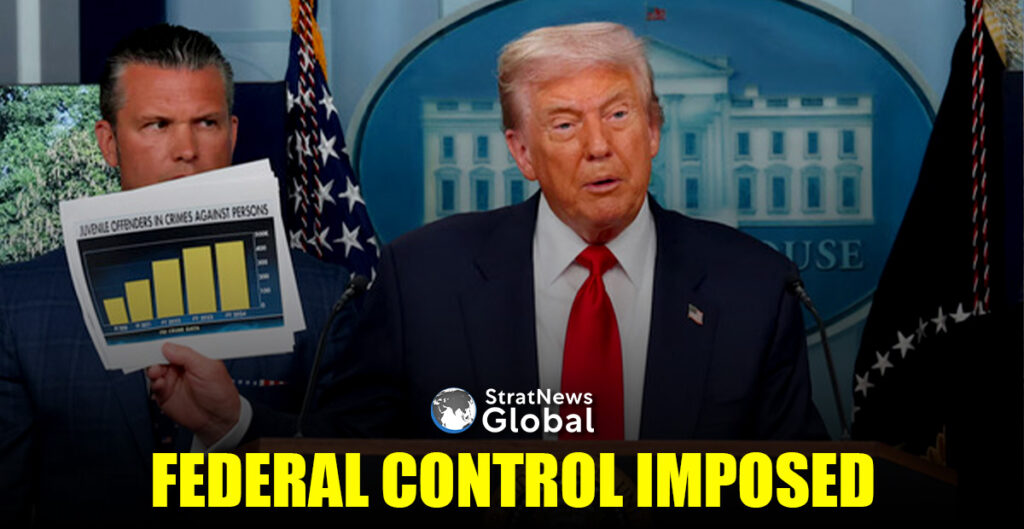
Trump Orders National Guard To D.C. Despite Record-Low Crime Rates
President Donald Trump on Monday said he was putting Washington’s police department under federal control and deploying 800 National Guard troops to the U.S.
Trump said the move was to combat lawlessness, though crime statistics show violent crime hit a 30-year low in 2024.
“I’m deploying the National Guard to help re-establish law, order and public safety in Washington, D.C.,” Trump told reporters at the White House, flanked by administration officials including Defense Secretary Pete Hegseth and Attorney General Pam Bondi.
“Our capital city has been overtaken by violent gangs and bloodthirsty criminals.”
Trump’s announcement is his latest effort to target Democratic-run cities by exercising executive power over traditionally local matters, and he has shown particular interest in asserting more control over Washington.
The Republican president has dismissed criticism that he is manufacturing a crisis to justify expanding presidential authority in a heavily Democratic city.
Hundreds of officers and agents from over a dozen federal agencies, including the FBI, ICE, DEA and ATF, have fanned out across the city in recent days.
Trump said he would also send in the U.S. military “if needed”, and Hegseth said he was prepared to call in additional National Guard troops from outside Washington. Bondi will oversee the police force takeover, Trump said.
In making his announcement, Trump described Washington as a hellscape of bloodthirsty criminals and unchecked violence.
The Democratic mayor of Washington, Muriel Bowser, has pushed back on Trump’s claims, saying the city is “not experiencing a crime spike” and highlighting that violent crime hit its lowest level in more than three decades last year.
Violent crime fell 26% in the first seven months of 2025 after dropping 35% in 2024, and overall crime dropped 7%, according to the city’s police department.
Trump Ramps Up Rhetoric
Over the past week, Trump has intensified his messaging, suggesting he might attempt to strip the city of its local autonomy and implement a full federal takeover.
The District of Columbia, established in 1790, operates under the Home Rule Act, which gives Congress ultimate authority but allows residents to elect a mayor and city council.
Trump said last week that lawyers are examining how to overturn the law, a move that would likely require Congress to revoke it.
‘Special Conditions’
In taking over the Metropolitan Police Department, Trump invoked a section of the act that allows the president to use the force temporarily when “special conditions of an emergency nature” exist.
Trump said he was declaring a “public safety emergency” in the city.
Trump’s own Federal Emergency Management Agency is cutting security funding for the National Capital Region, an area that includes D.C. and nearby cities in Maryland and Virginia.
The region will receive $20 million less this year from the federal urban security fund, amounting to a 44% year-on-year cut.
The deployment of National Guard troops is a tactic the president used in Los Angeles, where he dispatched 5,000 troops in June in response to protests over his administration’s immigration raids.
State and local officials objected to Trump’s decision as unnecessary and inflammatory.
A federal trial was set to begin on Monday in San Francisco on whether the Trump administration violated U.S. law by deploying National Guard troops and U.S. Marines without the approval of Democratic Governor Gavin Newsom.
The president has broad authority over the 2,700 members of the D.C. National Guard, unlike in states where governors typically hold the power to activate troops.
Guard troops have been dispatched to Washington many times, including in response to the January 6, 2021, attack on the U.S. Capitol by a mob of Trump supporters.
During his first term as president, Trump sent the National Guard into Washington in 2020 to help quash mostly peaceful demonstrations during nationwide protests over police brutality following the murder of George Floyd.
Civil rights leaders denounced the deployment, which was opposed by Bowser.
The U.S. military is generally prohibited under law from directly participating in domestic law enforcement activities.
Since the 1980s, Trump has used crime, especially youth crime in cities, as a political tool.
His 1989 call for the death penalty in the Central Park jogger case, involving five Black and Latino teens later exonerated of raping and beating a woman, remains among the controversial moments of his public life.
The “Central Park Five” sued Trump for defamation after he falsely said during a presidential debate last year that they had pleaded guilty.
(With inputs from Reuters)
European Leaders To Hold Virtual Meeting On Ukraine Ahead Of Call With Trump
A German government spokesperson said on Monday that European leaders will convene via videoconference on Wednesday, before a scheduled call with U.S. President Donald Trump, to coordinate efforts for ending the war in Ukraine with Russian President Vladimir Putin.
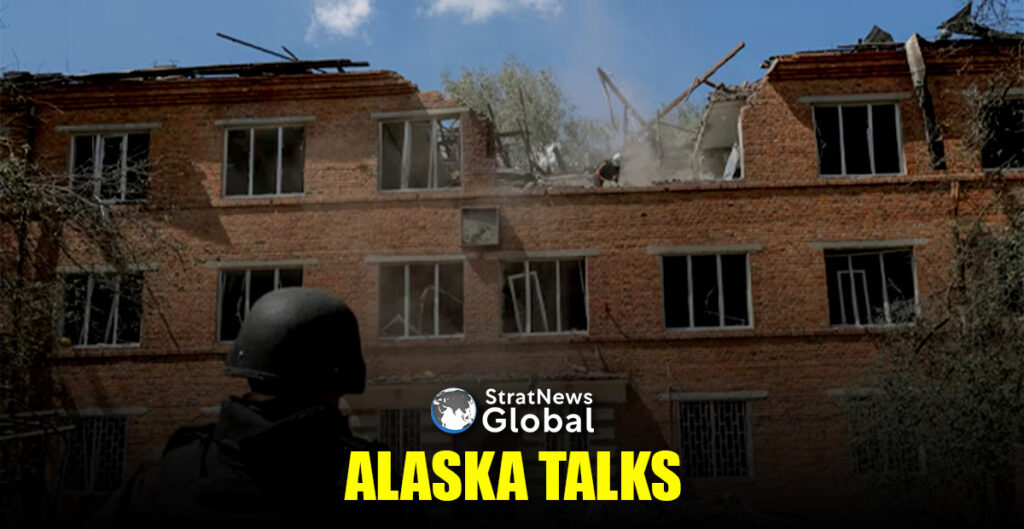
The conference calls come ahead of a scheduled meeting between Trump and Putin in Alaska on Friday. Trump has said the parties to the war were close to a deal that could resolve the 3-1/2-year-old conflict.
According to the spokesperson, the leaders are expected to review recent developments on the ground, assess diplomatic options, and reaffirm their support for Ukraine’s sovereignty and territorial integrity.
In recent weeks, EU capitals have stepped up consultations to ensure that any U.S.–Russia dialogue includes European positions and safeguards Ukraine’s interests.
‘Betterment Of Both’
Trump has said the deal would involve “some swapping of territories to the betterment of both”, suggesting it would require Ukraine to surrender significant parts of its territory, an outcome Ukrainian President Volodymyr Zelenskyy and his European allies say would only encourage Russian aggression.
The German government spokesperson said Zelenskyy and EU and NATO officials were set to join a virtual meeting hosted by Berlin at 1400 CET (1200 GMT) on Wednesday with the leaders of Germany, Finland, France, Britain, Italy and Poland, the spokesperson said.
They will discuss options to increase pressure on Russia, the sequence of steps in a possible peace process, and the future of the territories occupied by Russia as well as security guarantees for Ukraine, the spokesperson said.
European leaders will then at 1500 CET hold a videoconference with Trump and U.S. Vice President JD Vance.
Finally, the so-called “coalition of the willing”- the group of countries working on plans to support Ukraine in the event of a ceasefire – would meet at 1630 for a meeting hosted by Germany, France and Britain, the spokesperson said.
(With inputs from Reuters)
Pakistan Cuts Fuel, Water To Indian High Commission Staff In Islamabad After Op Sindoor
Amid escalating tensions between India and Pakistan, Islamabad has imposed targeted restrictions on essential supplies for Indian High Commission staff, a move described by senior government sources as “deliberate, premeditated, and in violation of the Vienna Convention,” according to a report by CNN-News18.
These measures follow the Indian Army’s successful Operation Sindoor and New Delhi’s suspension of the Indus Waters Treaty.
‘Petty Retaliation’
Officials characterise the restrictions as “petty retaliation” orchestrated by Pakistan’s Inter-Services Intelligence (ISI), intended to make life and work increasingly difficult for Indian diplomats stationed in Islamabad.
Sources informed CNN-News18 that although Sui Northern Gas Pipelines Ltd (SNGPL) has installed gas pipelines at the High Commission premises, gas supply has been intentionally withheld.
Additionally, local gas cylinder vendors who formerly supplied cooking and heating fuel to the Indian staff have been ordered by Pakistani authorities to cease sales, forcing diplomats and their families to scramble for scarce and costly alternatives on the open market, often unsuccessfully.
Water Supply Blocked
The disruption extends to the supply of drinking water as well. The mission’s contracted supplier for clean mineral water has been barred from making deliveries, while all water vendors in Islamabad have received orders not to supply the High Commission.
Given that local tap water is considered unsafe without extensive filtration, this directive has caused significant inconvenience for staff and their families.
Furthermore, newspaper vendors have been instructed to halt all deliveries of publications to the mission.
Indian officials view this as a deliberate effort to isolate diplomats from print media, thereby restricting their access to local narratives and current developments.
Violation Of Vienna Convention
According to CNN-News18, government sources emphasised that these actions contravene the Vienna Convention on Diplomatic Relations, which ensures the smooth operation of embassies and safeguards the dignity and security of diplomatic personnel.
The sources also cautioned that such measures further exacerbate the already fragile India–Pakistan relationship.
Bilateral relations have remained frozen since the 2019 Pulwama attack and the subsequent Balakot airstrikes.
In recent months, tensions have escalated following Operation Sindoor — which Indian officials claim dealt a significant blow to Pakistan-based terrorist groups — and New Delhi’s assertive stance on the Indus Waters Treaty, leveraging its provisions to India’s advantage.
(With inputs from IBNS)
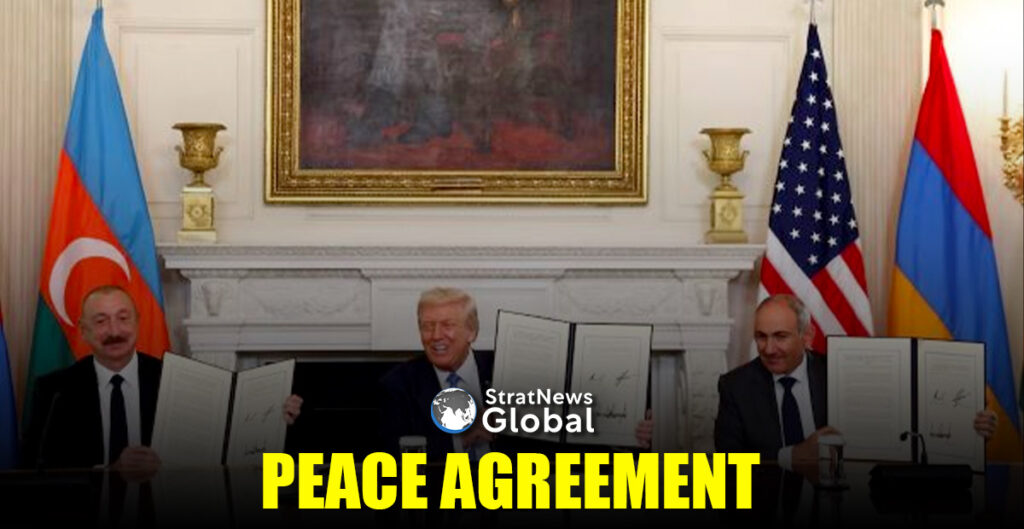
Azerbaijan And Armenia Release Text Of U.S.-Brokered Peace Deal
Azerbaijan and Armenia on Monday released the text of a peace agreement mediated by the United States, vowing to recognize each other’s territorial integrity and bring a formal end to nearly four decades of conflict.
The deal was struck in Washington last Friday, when Azerbaijani President Ilham Aliyev and Armenian Prime Minister Nikol Pashinyan met with U.S. President Donald Trump in the White House.
The text of the agreement, published by both countries’ foreign ministries, says Yerevan and Baku will relinquish all claims to each other’s territory, refrain from using force against one another and pledge to respect international law.
“This agreement is a solid foundation for establishing a reliable and lasting peace, the result of an agreement between Armenia and Azerbaijan that reflects the balanced interests of the two countries,” Pashinyan wrote on Facebook.
Armenia and Azerbaijan, neighbours in the South Caucasus region, have been locked in conflict since the late 1980s over Nagorno-Karabakh, a mountainous region at the southern end of the Karabakh mountain range, within Azerbaijan. Baku took back full control of the region in 2023, prompting almost all of the territory’s 100,000 ethnic Armenians to flee to Armenia.
Since then both sides have said they want peace, but talks have largely stalled until this month.
Bilateral Ties
At the White House meeting on Friday, the United States gained exclusive development rights to a strategic transit corridor through the South Caucasus that the Trump administration said would boost bilateral economic ties and allow for greater exports of energy.
Trump said the two countries had committed to stop fighting, open up diplomatic relations and respect each other’s territorial integrity.
He said restrictions had also been lifted on defence cooperation between Azerbaijan and the United States, a development that could also worry Moscow.
Both leaders praised Trump for helping to end the conflict and said they would nominate him for the Nobel Peace Prize.
(With inputs from Reuters)
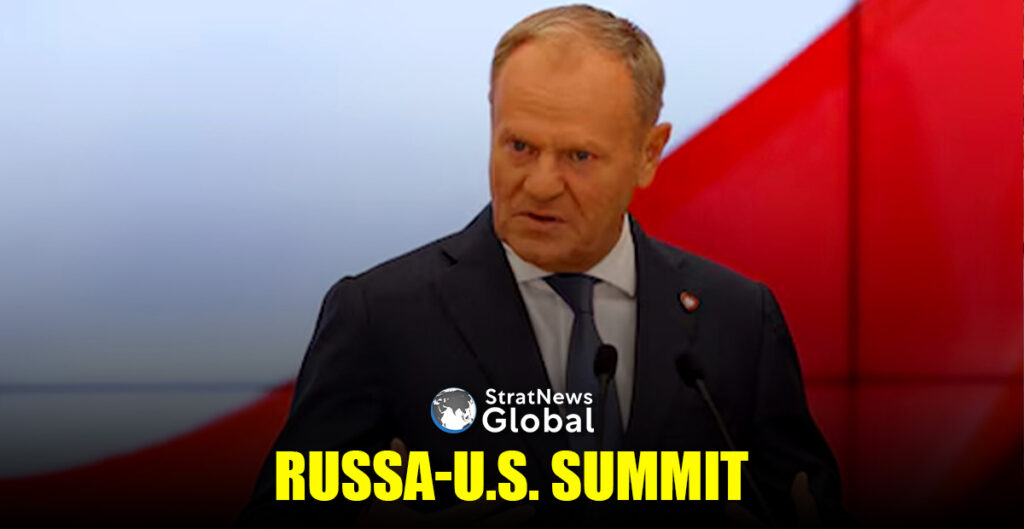
Poland PM Tusk Expresses Both Fear And Hope Ahead Of Trump-Putin Talks
Poland’s prime minister, Donald Tusk, said on Monday he felt both fear and hope ahead of this week’s Russia-U.S. summit on the Ukraine war, adding that Washington had promised to consult European partners before the meeting.
U.S. President Donald Trump will meet his Russian counterpart, Vladimir Putin, in Alaska on August 15, and Kyiv fears that the two leaders may try to dictate terms for ending the 3-1/2-year war.
“The American side has promised that it will consult with European partners on its position before the meeting in Alaska,” Donald Tusk told a news conference.
“I will wait… for the effects of the meeting between Presidents Trump and Putin – I have many fears and a lot of hope.”
He said that Trump’s recent comments on the war in Ukraine could give the impression that the U.S. president was increasingly understanding Ukrainian and European arguments regarding the conflict, but that he was not 100% sure that this position would be lasting.
French, Italian, German, Polish, British, Finnish and European Commission leaders on Saturday welcomed Trump’s efforts to try to end the war, but emphasised the need to pressure Russia and provide security guarantees for Kyiv.
Tusk said that the joint statement from European leaders showed that they were united in their approach to Ukraine peace talks, adding that Kyiv must be involved in any such discussions.
“For Poland and our partners, it is clear that state borders cannot be changed by force,” he said. “Russia’s war with Ukraine must not bring benefits to the aggressor.”
(With inputs from Reuters)
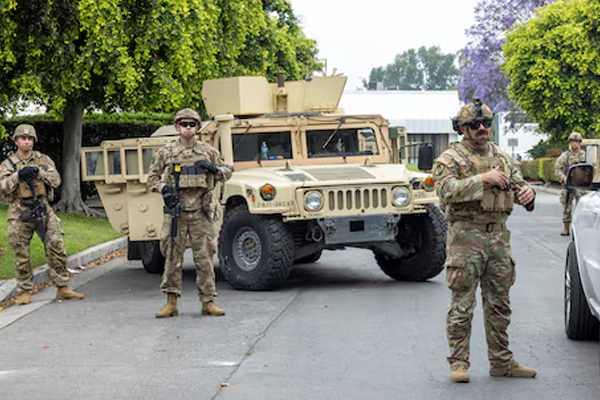
Landmark Trial Begins Over Trump’s Deployment Of National Guard In LA
A landmark trial begins on Monday over the Trump administration’s deployment of National Guard troops to aid deportation operations and suppress protests in Los Angeles, in a legal challenge underscoring the president’s departure from long-standing norms against using soldiers on American streets.
The three-day non-jury trial before U.S. District Judge Charles Breyer in San Francisco will determine if the government violated a 19th-century law that bars the military from civil law enforcement when it deployed troops to Los Angeles in June.
Los Angeles suffered days of unrest and protests sparked by mass immigration raids at places where people gather to find work, like Home Depot stores, a garment factory and a warehouse.
The administration denies that troops were used in civil law enforcement and plans to show they were protecting federal property and U.S. Immigration and Customs Enforcement (ICE) agents.
National Guard Troops Still There
Many of the troops have been withdrawn, but California said in recent court papers that 2,000 National Guard members are still going on immigration raids and restricting civilian movements in the state.
A ruling against the government could restrict those troops’ activities and constrain President Donald Trump if he tries to deploy troops to police American cities in the future.
Trump said on Wednesday he might send the National Guard, a reserve force that answers to both state governors and the president, to patrol Washington, D.C., a city he said was “very unsafe.”
California and its Governor, Gavin Newsom, have asked Breyer to prohibit the troops from directly participating in domestic law enforcement activities. California and Newsom say the National Guard is accompanying ICE agents on raids and assisting in arrests, in violation of the Posse Comitatus Act of 1878 and other laws that forbid the U.S. military from taking part in civilian law enforcement.
Trump ordered 700 Marines and 4,000 National Guard troops to Los Angeles in June against Newsom’s wishes. Trump’s decision to send troops into Los Angeles prompted a national debate about the use of the military on U.S. soil and inflamed political tension in the country’s second-most-populous city.
California sued the Trump administration over the troop deployment, arguing it violates federal law and state sovereignty. A U.S. appeals court has allowed Trump to retain control of California’s National Guard during the legal challenge.
California’s lawsuit ultimately seeks a ruling that would return its National Guard troops to state control and a declaration that Trump’s action was illegal.
(With inputs from Reuters)
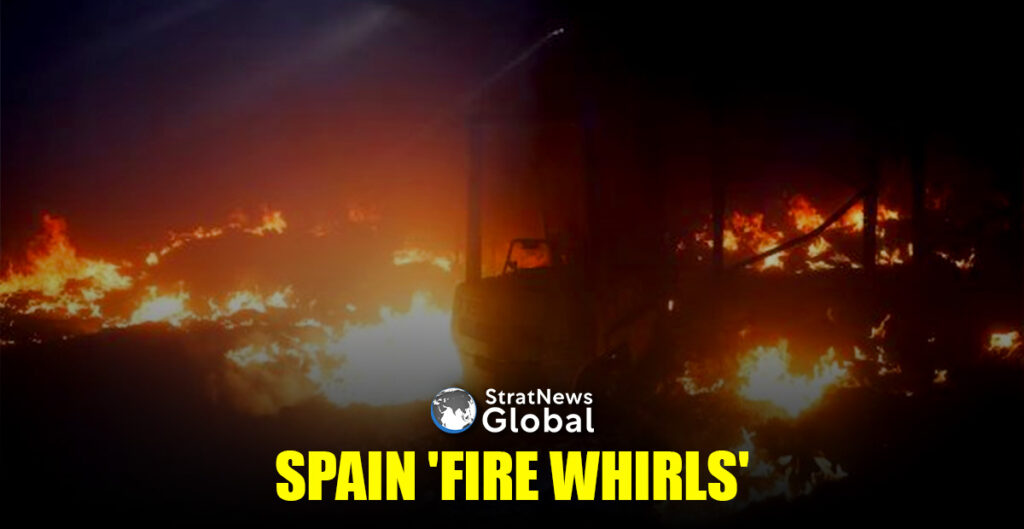
Firefighters Confront ‘Fire Whirls’ Fuelled By Blaze In Northern Spain
A combined effect of intense heat and strong winds produced “fire whirls” in northern Spain, where a blaze damaged several houses and forced hundreds of people to leave their homes near a UNESCO-listed national park, officials said on Monday.
Thirteen fires broke out in the north of the Castile and Leon region, with about 700 people told to abandon their homes in half a dozen villages.
Four fires were still live, Juan Carlos Suarez-Quinones, chief of environment for the regional government, said on Monday morning. Firefighters had extinguished the other nine.
High temperatures on Sunday had caused the so-called fire whirls near Las Medulas park, forcing firemen to retreat and burning some houses in the nearby village, according to Suarez-Quinones.
“This occurs when temperatures reach around 40 degrees Celsius (104 degrees Fahrenheit) in a very confined valley and then suddenly (the fire) enters a more open and oxygenated area. This produces a fireball, a fire whirl,” he said.
“This explosive and surprising phenomenon was very dangerous. It disrupted all the work that had been done, forcing us to start practically from scratch,” he added.
Prolonged Heatwave
Scientists say the Mediterranean region’s hotter, drier summers put it at high risk of wildfires. Once fires start, dry vegetation and strong winds can cause them to spread rapidly and burn out of control, sometimes provoking fire whirls.
A prolonged heatwave in Spain continued on Monday with temperatures set to reach 42 C in some regions.
Domingo Aparicio, 77, was evacuated to a nearby town from his home in Cubo de Benavente on Sunday after a warehouse in front of his home burned down.
“How am I supposed to feel? It’s always shocking for people close to the catastrophe,” he said.
Two or three fires may have been started by lightning strikes, Suarez-Quinones said, but there were indications that the majority were the result of arson, which he described as “environmental terrorism”.
In the northern part of neighbouring Portugal, nearly 700 firefighters were battling a blaze that started on Saturday in Trancoso, some 350 km (200 miles) northeast of Lisbon.
So far this year about 52,000 hectares (200 square miles), or 0.6% of Portugal’s total area, have burned, exceeding the 2006-2024 average for the same period by about 10,000 hectares, according to the European Forest Fire Information System.
Firefighters were also battling blazes in Navarra in northeastern Spain and in Huelva in the southwest, authorities said.
(With inputs from Reuters)
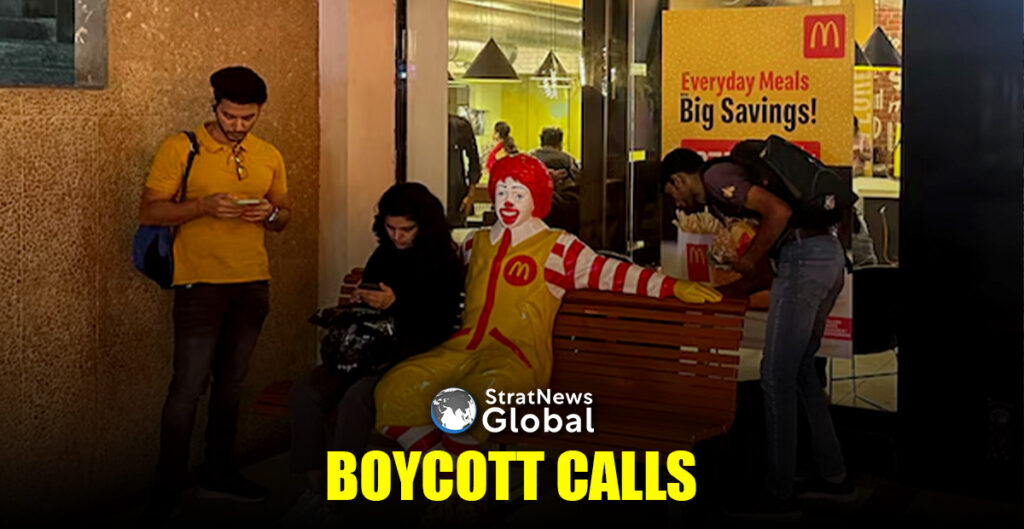
Trump’s Tariffs Trigger Calls To Boycott US Products In India
From McDonald’s and Coca-Cola to Amazon and Apple, U.S. multinationals face boycott calls in India as business leaders and Modi supporters fuel anti-American sentiment over U.S. tariffs.
India, the world’s most populous nation, is a key market for American brands that have rapidly expanded to target a growing base of affluent consumers, many of whom remain infatuated with international labels seen as symbols of moving up in life.
India, for example, is the biggest market by users for Meta’s WhatsApp, and Domino’s has more restaurants than any other brand in the country. Beverages like Pepsi and Coca-Cola often dominate store shelves, and people still queue up when a new Apple store opens or a Starbucks cafe doles out discounts.
Although there was no immediate indication of sales being hit, there’s a growing chorus both on social media and offline to buy local and ditch American products after Donald Trump imposed a 50% tariff on goods from India, rattling exporters and damaging ties between New Delhi and Washington.
McDonald’s, Coca-Cola, Amazon and Apple did not immediately respond to Reuters queries.
Manish Chowdhary, co-founder of India’s Wow Skin Science, took to LinkedIn with a video message urging support for farmers and startups to make “Made in India” a “global obsession,” and to learn from South Korea, whose food and beauty products are famous worldwide.
“We have lined up for products from thousands of miles away. We have proudly spent on brands that we don’t own, while our own makers fight for attention in their own country,” he said.
Rahm Shastry, CEO of India’s DriveU, which provides a car driver on call service, wrote on LinkedIn: “India should have its own home-grown Twitter/Google/YouTube/WhatsApp/FB — like China has.”
To be fair, Indian retail companies give foreign brands like Starbucks stiff competition in the domestic market, but going global has been a challenge.
Indian IT services firms, however, have become deeply entrenched in the global economy, with the likes of TCS and Infosys providing software solutions to clients worldwide.
On Sunday, Modi made a “special appeal” for becoming self-reliant, telling a gathering in Bengaluru that Indian technology companies made products for the world but “now is the time for us to give more priority to India’s needs.”
He did not name any company.
Don’t Drag My McPuff Into It
Even as anti-American protests simmer, Tesla launched its second showroom in India in New Delhi, with Monday’s opening attended by Indian commerce ministry officials and U.S. embassy officials.
The Swadeshi Jagran Manch group, which is linked to Modi’s Bharatiya Janata Party, took out small public rallies across India on Sunday, urging people to boycott American brands.
“People are now looking at Indian products. It will take some time to fructify,” Ashwani Mahajan, the group’s co-convenor, told Reuters. “This is a call for nationalism, patriotism.”
He also shared with Reuters a table his group is circulating on WhatsApp, listing Indian brands of bath soaps, toothpaste and cold drinks that people could choose over foreign ones.
On social media, one of the group’s campaigns is a graphic titled “Boycott foreign food chains”, with logos of McDonald’s and many other restaurant brands.
In Uttar Pradesh, Rajat Gupta, 37, who was dining at a McDonald’s in Lucknow on Monday, said he wasn’t concerned about the tariff protests and simply enjoyed the 49-rupee ($0.55) coffee he considered good value for money.
“Tariffs are a matter of diplomacy, and my McPuff, coffee should not be dragged into it,” he said.
(With inputs from Reuters)
Europe Scrambles To Shape US Stance Before Trump-Putin Talks
Polish Prime Minister Donald Tusk said the U.S. had promised to consult Europe before a summit with Russia’s Vladimir Putin, as European ministers are ready to hold talks amid concerns Washington could impose unfavourable peace terms on Ukraine.
European Union foreign ministers were due to hold a video conference on Monday afternoon to discuss their support for Kyiv and the upcoming meeting.
U.S. President Donald Trump announced last week he would meet Putin on Friday in Alaska to negotiate an end to the 3-1/2-year war, which began with Russia’s full-scale invasion of its neighbour.
“The American side has promised that it will consult with European partners on its position before the meeting in Alaska,” Poland’s Tusk told a press conference.
“I will wait… for the effects of the meeting between Presidents Trump and Putin – I have many fears and a lot of hope,” he said.
Zelenskyy Rejects Moscow Concessions
Ukrainian President Volodymyr Zelenskyy said on Monday that concessions to Moscow would not persuade it to stop fighting in Ukraine and that there was a need to ramp up pressure on the Kremlin.
European officials have sought to influence the White House’s positioning ahead of the Alaska talks, emphasising the need to safeguard Ukraine’s sovereignty, provide security guarantees and allow Kyiv to choose its own path.
U.S. Vice President JD Vance met European and Ukrainian officials over the weekend, and European leaders are expected to conduct more outreach to Washington in the coming days.
“Any deal between the U.S. and Russia must have Ukraine and the EU included, for it is a matter of Ukraine’s and the whole of Europe’s security,” EU foreign policy chief Kaja Kallas said on Sunday.
European leaders have also underscored their commitment to the idea that international borders cannot be changed by force, as EU capitals fear a deal forced on Kyiv could create a dangerous precedent.
“Regarding territorial issues, the Russian position is framed as a territorial swap, but it appears as a rather one-sided swap,” a European Commission official said on Sunday.
“In the context of these talks, the U.S. administration has been very involved and has shown interest in aligning positioning with Europe,” the official said.
“The most robust security guarantee would be that there are no limitations on Ukraine’s armed forces and third countries’ support to Ukraine.”
(With inputs from Reuters)