

Support us by contributing to StratNewsGlobal on the following UPI ID
ultramodern@hdfcbank

Strategic affairs is our game, South Asia and beyond our playground. Put together by an experienced team led by Nitin A. Gokhale. Our focus is on strategic affairs, foreign policy and international relations, with higher quality reportage, analysis and commentary with new tie-ups across the South Asian region.
You can support our endeavours. Visit us at www.stratnewsglobal.com and follow us on YouTube, Twitter, Facebook and Instagram.
र 500 per month
र 1000 per month
र 5000 per year
र 10000 per year
Donate an amount of your choice
र 500 per month
Donate र 500 per month

र 1000 per month
Donate र 1000 per month
र 5000 per year
Donate र 5,000 per year
र 10000 per year
Donate र 10,000 per year
Donate an amount of your choice
Donate an amount of your choice
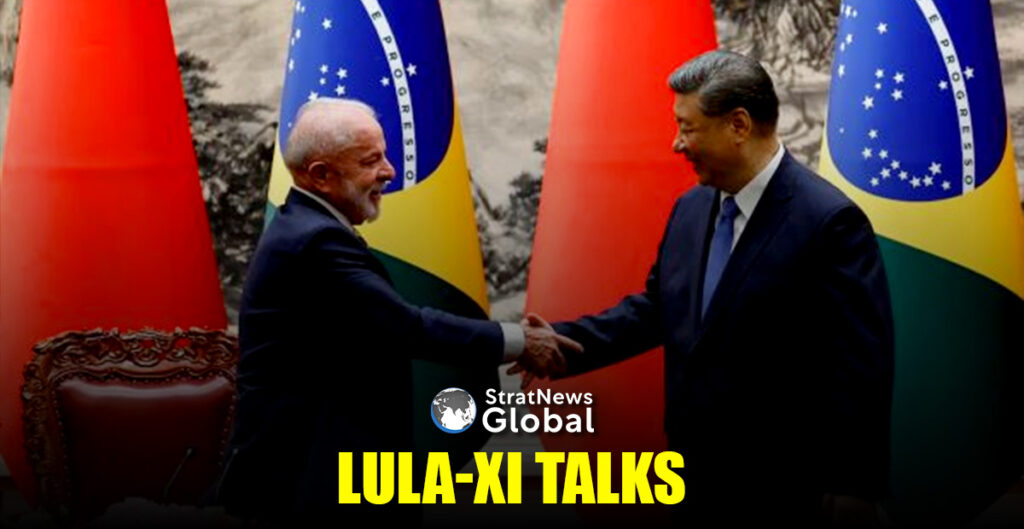



Lula And Xi Hold Talks On BRICS And Bilateral Ties
Brazilian President Luiz Inacio Lula da Silva and Chinese President Xi Jinping spoke over phone to discuss the role of the BRICS group of nations and opportunities for bilateral cooperation, according to statements from Lula’s office and Chinese state media.
The call comes as Lula seeks to rally BRICS partners in response to recent U.S. tariffs. China expressed its readiness to collaborate with Brazil in demonstrating unity and resilience across the Global South.
The leaders spoke for an hour on Monday, agreeing on the role of the G20 and BRICS in defending multilateralism,” Brazil’s presidency said in a statement.
“Both presidents also highlighted their willingness to continue identifying new business opportunities between the two economies,” the statement said.
Trump’s Tariffs
Lula said last week he would initiate a conversation about how to tackle Trump’s tariffs with BRICS nations, after Trump dubbed the group “anti-American” and threatened them with additional tariffs.
Xi called BRICS a key platform for building consensus in the Global South and said China is ready to work with Brazil to set an example of unity and self-reliance among major Global South nations, Chinese state media Xinhua reported.
Agricultural trade figured prominently in China and Brazil’s relations, with Brazil’s soybean and coffee sectors highlighted for their growing engagement with Chinese markets amid rising Western tariffs
China, the world’s biggest soybean importer, gets most of the commodity from Brazil and recently, numerous Brazilian coffee companies found entry into the Chinese market after the industry was hit by steep U.S. tariffs.
China last week also showed Brazil support in resisting the “bullying behaviour” of imposing excessive tariffs, without naming the U.S.
Xi described ties between the two countries as “at their best in history”, and said both should work together to address global challenges and promote the political settlement of the Ukraine crisis, Xinhua said.
(With inputs from Reuters)
Lee, Trump To Hold First Summit On Aug 25 In Washington
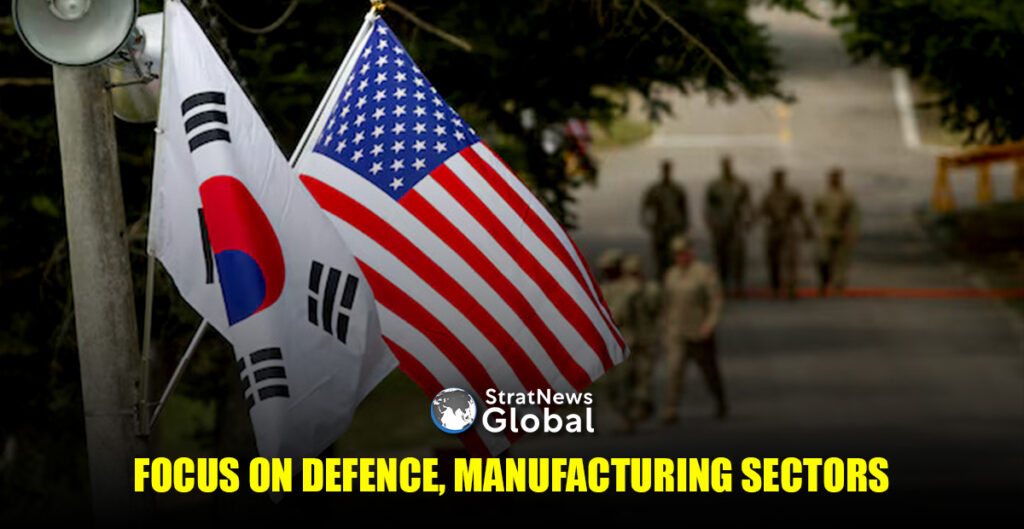
South Korean President Lee Jae Myung is set to hold his first summit with US President Donald Trump on August 25 in Washington to discuss strengthening their bilateral alliance and advancing economic security ties, Lee’s office said on Tuesday.
Lee, who was elected president in a snap election in June, has made it a top priority to help his export-dependent country navigate the dramatic changes in the global trading environment triggered by Trump’s tariff policies.
“The two leaders will discuss ways to develop the US-South Korea alliance into a comprehensive strategic alliance of the future in response to the changing international security and economic environment,” presidential spokesperson Kang Yu-jung told a briefing.
Focus On Manufacturing Sector
Based on the tariff deal reached last month, the two leaders will seek to push forward a partnership in the manufacturing sector, including in semiconductors, batteries and shipbuilding, as well as critical minerals and technology, Kang said.
Trump announced on July 30 the countries had reached a trade deal that would subject South Korean goods to 15% import duties, lowering the tariff he had initially set against one of America’s top trading partners.
In return, Trump has said South Korea will announce investment plans at the upcoming summit and that Seoul had committed to making $350 billion of investments to be “selected” by him.
South Korean officials have offered differing details, however, and topics left unresolved by the deal – which has yet to be committed to writing – provide scope for more disputes between the allies.
Defence Costs
Trump may use the summit to seek more concessions on defence costs and corporate investments, left out of the deal, while non-tariff barriers and currency could prove thorny issues, experts said.
Defence costs are expected to emerge as a key issue during the upcoming summit, with Trump having long said South Korea needed to pay more for the roughly 28,500 American troops based there as a legacy of the 1950-1953 Korean War.
The Washington Post reported on Saturday that the Trump administration wanted Seoul to boost defence spending to 3.8 percent of GDP, up from 2.6 percent last year, and to increase its $1 billion-plus contribution toward the troops.
Jeremy Chan, a senior analyst at the Eurasia Group, said it was unclear if such issues will be raised directly by Trump, but he said he expected that at least at the working level, discussions are going to move beyond trade and investment to the broader alliance.
“I think it is more likely that Trump and his team are going to raise at least quietly, issues related to the security alliance,” he said. “So that could be putting pressure on President Lee to increase the defence share of government spending.”
(With inputs from Reuters)
Colombia Presidential Hopeful Uribe Dies At 39 After Attack
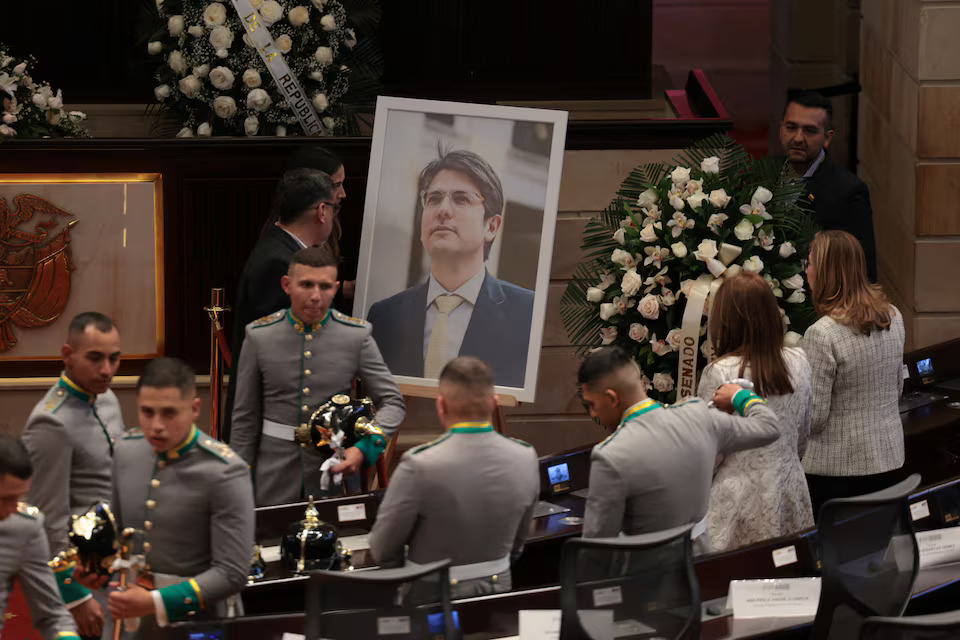
Colombian Senator and presidential contender Miguel Uribe, who was shot in the head during a campaign event two months ago, passed away in the early hours of Monday at the age of 39, the hospital treating him confirmed.
Uribe, a member of a prominent political family and a lawmaker for the right-wing opposition, was shot in Bogota on June 7 where he was speaking to try to secure his party’s nomination for 2026 elections.
His wife, Maria Claudia Tarazona, announced his death on social media. “I ask God to show me the way to learn to live without you,” she wrote. “Rest in peace, love of my life, I will take care of our children.”
Worst Outbreak Of Political Violence
The attack was the worst outbreak of political violence in some two decades and evoked memories of the turbulent years of the 1980s and 1990s, when four presidential candidates were murdered in separate attacks blamed on drug cartels.
“The investigation should be deepened. It will be the appropriate authorities, helped by international experts, who will give information when the time comes,” President Gustavo Petro said in a post on X. “Every time a Colombian is murdered, it is a defeat for Colombia and for life.”
The capital’s Santa Fe Foundation hospital – where supporters held regular vigils during Uribe’s treatment and repeated operations – said over the weekend his condition had worsened because of a hemorrhage in his central nervous system. On Monday, it said he had died at 1:56 a.m. (0656 GMT).
‘They Killed Hope’
Former President Alvaro Uribe, the leader of the senator’s Democratic Center party and no relation to the deceased lawmaker, wrote on X that “evil destroys everything; they killed hope”.
“May Miguel’s fight be a light that illuminates Colombia’s right path,” added the former president, who was sentenced by a judge earlier this month to 12 years of house arrest for abuse of process and bribery of a public official.
US Secretary of State Marco Rubio wrote on X he was deeply saddened by the news. “The United States stands in solidarity with his family, the Colombian people, both in mourning and demanding justice for those responsible.”
Arrests, Drug Connection
Six people have been arrested over the shooting, including two men that the attorney general’s office says met in Medellin to plan the assassination.
A 15-year-old accused of carrying out the shooting was arrested within hours of the crime, but police have said they are pursuing the “intellectual authors” of the attack.
In a video of the boy’s June arrest, independently verified by Reuters, he can be heard shouting that he had been hired by a local drug dealer.
Fraught Family History
Defense Minister Pedro Sanchez vowed on Monday to catch those responsible. “We will not allow the violent to intimidate or silence political voices needed in our democracy,” he wrote on X.
His ministry has said there is a 3 billion-peso (about $740,000) reward for information leading to the identification and capture of the culprits, and that the United States, Britain and the United Arab Emirates are helping with the investigation.
The death of Senator Uribe, a father and stepfather, adds further tragedy to his family’s fraught history.
His mother, journalist Diana Turbay, was killed in 1991 during a botched rescue mission after she was kidnapped by the Medellin Cartel, headed by drug lord Pablo Escobar.
Uribe himself enjoyed a rapid political rise, as a lawmaker for the right-wing Democratic Center party and presidential hopeful known for his sharp criticism of leftist President Gustavo Petro’s administration.
In videos posted on social media the day he was shot, Uribe called for respect of the separation of powers and rejected a referendum pushed by Petro on a labour reform bill.
He had also criticized the president’s restrictions on the oil industry, promising a plan to attract investment and give companies legal security.
At 25, he was elected to Bogota’s city council, where he was a prominent opponent of Petro, then the capital’s mayor, criticizing his handling of waste management and social programs.
Ex-President, Leaders In The Family
In the 2022 legislative elections, Uribe led the Senate slate for the Democratic Center party. Since the shooting, Uribe’s seat in the Senate has been draped with a Colombian flag.
His maternal grandfather, Julio Cesar Turbay, was Colombia’s president from 1978 to 1982, while his paternal grandfather, Rodrigo Uribe Echavarria, headed the Liberal Party and supported Virgilio Barco’s successful 1986 presidential campaign.
Besides his wife, son and stepdaughters, Uribe is also survived by his father and sister.
(With inputs from Reuters)
China ‘Weaponising’ Research In Indian Ocean, What India Can Do
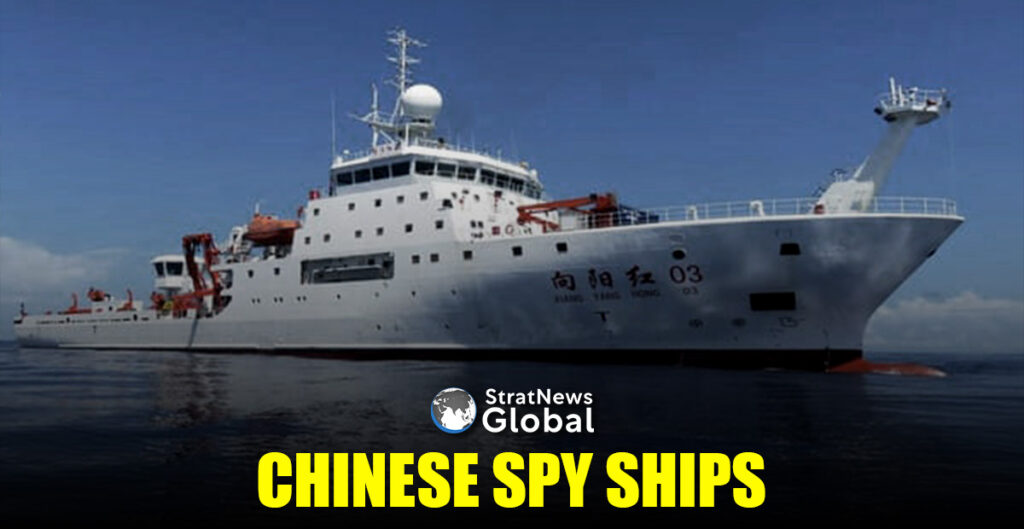
Chinese research vessels involved in deep sea exploration or oceanographic data collection in the Indian Ocean have often been looked at with suspicion by India. So as news about a Chinese research vessel headed for the Maldives swirled, the government said port calls by ships from friendly countries were welcome but Xiang Yang Hong 03 would not conduct any research while in the Maldivian waters. The vessel operated by China’s Third Institute of Oceanography, under the Ministry of Natural Resources, was inducted in 2016.
Editor’s Note: This article, first published in January 2024, is being reposted to highlight the increased Chinese activity in India’s neighbourhood.
China has developed the world’s largest fleet of civilian research vessels, according to a recent report by the Center for Strategic and International Studies (CSIS). While these ships engaged in deep sea exploration overtly support scientific and commercial objectives, they are also being used to advance Beijing’s strategic ambitions, the study said.
An analysis of oceanographic data collection missions in the Indian Ocean since 2020 reveals the involvement of about 64 active Chinese research vessels. The study surmised that the People’s Liberation Army (PLA) can leverage the oceanographic data collection from these missions to enhance its knowledge of the dynamic undersea environment—a crucial requirement to facilitate deployment of nuclear-powered submarines in the high seas.
The Chinese research vessels are owned and operated by a variety of entities, such as state-run scientific organisations (China Ocean Mineral Resource R&D Association, Chinese Academy of Sciences, Ministry of Natural Resources), law enforcement/quasi-military entities like the China Coast Guard and Maritime Safety Administration, as also by a few state-owned enterprises. Some hydrographic survey vessels are operated by the PLA Navy.
The report makes it evident that China has turned to the Indian Ocean for marine research in a big way and the increase in the number of its research vessels would need more regional partners for logistical support. Port facilities of Sri Lanka, the Maldives, Mauritius and other littoral states in the region would be crucial towards this end.
Implications of China’s Marine Research Push
As per the CSIS study, China’s 14th Five Year Plan identifies deep sea exploration as one of its seven focus areas for scientific and technological research. The Plan has called for the development of “submarine scientific observation networks”. In 2021, the Ministry of Natural Resources linked ocean surveying to military objectives towards furthering the Five-Year Plan. The PLA perceives the need for advanced deep-sea technologies to develop its fledging undersea warfare wherewithal, a domain where China has made significant strides in recent years. The surveys conducted and data collected by Chinese marine research vessels, which are fitted with state-of-the-art measurement and monitoring equipment, can help fill in major gaps in the PLA Navy’s underwater domain awareness.
The CSIS report brings out that over the past four years (2019-2023), 13 Chinese research vessels have been active in the Indian Ocean. This is a significant number, given the long operating distances from their home ports in China. Open source information indicates that in this period Chinese research vessels have visited ports in Pakistan, Myanmar, Bangladesh, Sri Lanka, the Maldives and Mauritius, all located in India’s maritime neighbourhood. In some cases, they may have undertaken collaborative activities with partner nations, like in the case of Sri Lanka, Pakistan and Bangladesh. Overall, there is a prominent thrust on China’s part to normalize and mainstream its marine research activity in the Indian Ocean.
These deployments, however, come with their own share of problems. In the contested South China Sea, vessels operated by China’s state-owned enterprises have played a key role in asserting China’s claims of sovereignty. Chinese research vessels strengthen the country’s presence in geopolitical hotspots, especially in the Western Pacific. This could be replicated in the Indian Ocean. Taking advantage of poor surveillance capabilities of regional states at sea, Chinese vessels have conducted survey operations within the exclusive economic zones (EEZs) of other countries without prior approval. The vessels’ electronic track record at sea has also raised concerns. Repeated instances of “spoofing” of the automatic identification system (AIS) which amounts to providing falsified identification information, or switching the transmission off (“going dark”) for long durations, have been noticed. In some cases, vessels have been suspected to have abandoned equipment like buoys and other material at sea. Combined with similarly opaque activities of China’s deep-water fishing fleet, the challenge to regional maritime security posed by such “grey zone” activities cannot be ignored.
These and other trends of concern could rise, as the numbers of Chinese research vessels continue to go up in the Indian Ocean. It also bears recall that in the second China-Indian Ocean Region (IOR) Forum on Development Cooperation held in hybrid format on December 7-8, 2023 in Kunming (Yunnan province), one of the ten deliverables identified is to “Push forward the development of China-Africa Marine Science and Blue Economy Cooperation Centre and carry out technical cooperation on marine survey, monitoring, forecasting and continental shelf research in Africa”. Follow up of this aim could further enhance China’s cooperation with Indian Ocean regional states in the field of oceanography and satellite based marine remote sensing, thus giving it substantial clout in the partner countries.
India’s Strengths
Among Asian nations, India was relatively an early beginner in the field of ocean sciences, having established the Department of Ocean Development (DOD) in July 1981 directly under the charge of the Prime Minister. Its early achievements included the Antarctic programme, which began in 1981 with the first Indian expedition to Antarctica. India subsequently established and commissioned the Dakshin Gangotri, Maitri and Bharati research bases in the Antarctic.
The DOD subsequently evolved into the Ministry of Earth Sciences (MoES) in 2006. The MoES has a host of scientific establishments and institutions under its charge, viz. Indian National Centre for Ocean Information Services (INCOIS), Hyderabad; National Centre for Polar and Ocean Research (NCPOR), Goa; National Institute of Ocean Technology (NIOT), Chennai; National Centre for Coastal Research(NCCR), Chennai ; Centre for Marine Living Resources and Ecology (CMLRE), Kochi; Indian Institute of Tropical Meteorology (IITM), Pune; and National Centre for Medium Range Weather Forecasting (NCMRWF), to name some. In addition, the National Institute of Oceanography, Goa operates under the Council of Scientific and Industrial Research (CSIR).
The scientific establishments have been carrying out extensive work at sea, especially in the Indian Exclusive Economic zone. India has also concluded a contract for Exploration of Polymetallic India Nodules (PMN) and Polymetallic India Sulphides (PMS) in the Indian Ocean with the Jamaica-based International Seabed Authority. India is the only country having two exploration contracts in the Indian Ocean.
Against the backdrop of China’s growing outreach, it would be desirable for MoES to take the lead, with a multi-agency approach, taking along other stakeholders like the Ministry of External Affairs, Indian Space Research Organisation (ISRO), Indian Navy, Department of Fisheries and CSIR, to craft ocean sciences diplomacy in the region. The MoES already has strong international linkages under its ongoing programmes with the U.S., the UAE, the UK, Mauritius, Norway, Germany, Jamaica, Japan, Sweden, Thailand, Seychelles, Maldives, Sri Lanka etc. At the multilateral level, it engages with the Intergovernmental Oceanographic Commission, International Seabed Authority, Arctic Council, various forums concerning Antarctica, World Meteorological Agency, Regional Integrated Multi-Hazard Early Warning System for Africa and Asia Region, (RIMES) and The Bay of Bengal Initiative for Multi-Sectoral Technical and Economic Cooperation (BIMSTEC), to name a few.
What Could India Do?
With the wealth of experience and human resource it possesses in the field of ocean sciences, India has a lot to offer to regional states in the Indian Ocean, towards capacity building and creating basic scientific capabilities in the niche domain. Training courses are being periodically undertaken by INCOIS, Hyderabad and NIO, Goa. The INCOIS contributes significantly to international training as an International Training Centre for Operational Oceanography (ITCOocean). The MoES operates a fleet of research vessels, mostly under the aegis of NIOT, Chennai. NCPOR organizes expeditions to Antarctica. Various capabilities of different scientific institutions need to be harnessed optimally to enhance India’s overall engagement in ocean sciences with friendly countries that can benefit from such assistance.
In recent years, an encouraging example has been seen in this regard in terms of oceanography cooperation under the banner of the Colombo Security Conclave – a forum comprising the Maldives, Mauritius, Sri Lanka and India as members, and Bangladesh, Seychelles as observers.
Reportedly, scientists from Bangladesh and Mauritius participated in the first ever joint scientific expedition amongst CSC nations undertaken onboard Indian research vessel Sagar Nidhi from 29 June to 24 July, 2023. A scientist from Bangladesh also participated in a second such similar expedition onboard the same vessel from 16 September to 20 October 2023. Notably, an expedition to Antarctica organised by India, with participation of scientists from Bangladesh and Mauritius, has commenced this month. A month-long training course in oceanography conducted by NIO, Goa, for scientists representing CSC nations is underway. News reports brought out that an Ocean Information Services portal for CSC nations was inaugurated during the sixth NSA level meeting of the forum held in Mauritius in December 2023.
Such focused efforts need to be enhanced and widened further by India if it seriously wishes to offer alternatives to IOR nations that are being wooed and cultivated by China in the field of ocean sciences. An Ocean Observation System led by Indian efforts in collaboration with regional partners could be envisaged. Towards this goal, the MoES could draw upon the strength of ISRO, which has a very strong record of international cooperation. The ISRO’s National Remote Sensing Centre has well established outreach facilities catering to requirements of capacity building in space-based applications, including marine remote sensing. Teaming between scientific expertise of MoES and ISRO to offer customised training and operational products to friendly foreign partners in this niche field could yield rich dividends.
Efforts would be incomplete if they do not include an augmented operational dimension in skill development & field studies, which necessitates induction of more numbers of research vessels by various scientific establishments dealing with ocean sciences.
The ‘Way Ahead’
The strength and direction of China’s strong push in science diplomacy in the Indian Ocean is unmistakable. China’s diplomatic push through the Global Developmental Initiative and Global Security Initiative would be more visible in the coming months. At the second China-Indian Ocean Forum, China pledged to set up a China-Indian Ocean Region Maritime Cooperation and Training Center to carry out cooperation in the marine field. This shows the seriousness with which China desires to pursue engagement with Indian Ocean states.
India needs to step up its act to match China’s game in the field of ocean sciences, which is undoubtedly an area of strength in Beijing’s regional diplomacy in the Indian Ocean. In India’s foreign policy, ocean sciences diplomacy currently occupies a minor segment. The effort needs to be scaled up with a dedicated strategy, steered by the scientific and diplomatic establishment joining hands together. A multi-agency approach is necessary to harness all available resources and bring quicker results.
India’s SAGAR doctrine (Security and Growth for All in the Region), which is aimed at strengthening regional maritime security and development, should necessarily include the element of ocean sciences. An “all-arms” approach abiding to a well-crafted strategy would serve India’s interests well as it braces for China’s growing challenge in marine and ocean sciences diplomacy.
Related Content:
Syria Pledges Probe Into Video Of Sweida Hospital Killing
Syria’s interior ministry announced on Monday it would launch an investigation into video footage purportedly showing men in military uniforms fatally shooting an unarmed man in medical scrubs at close range inside the main hospital in Sweida, a predominantly Druze city, last month.
Syria’s interior ministry said in a written statement that it had seen the “disturbing video” and “condemns and denounces this act in the strongest terms”.
The statement said the ministry tasked the deputy minister for security affairs “to directly supervise the investigation to ensure the perpetrators are identified and arrested as quickly as possible”.
Men In Military Fatigues
The security camera footage, verified by sources and by a doctor who witnessed the incident as being filmed inside Sweida National Hospital, shows four men in green military fatigues and one man in a black uniform with the words “Interior Ministry” printed on his back.
In the footage, the five security forces stand in front of a group of about two dozen people in hospital scrubs, kneeling or squatting on the floor. One man in scrubs is standing.
Two of the men in fatigues grab the standing man and slap him, as if trying to force him to sit. The man in scrubs resists and pulls one of the attackers in a headlock and onto the floor.
The other armed men intervene to release their colleague. The man in scrubs is then shot twice while on the floor, first with a rifle by one of the uniformed men and then with a pistol by a second uniformed man.
In the footage, which has no sound, the fighters appear to address the rest of the group, then drag the motionless man away by his feet, leaving a streak of blood on the hospital floor.
The footage is the latest to emerge of execution-style killings in Sweida, where sectarian bloodshed last month left more than 1,000 people dead, according to the Syrian Network for Human Rights. A fact-finding committee has been set up to investigate reports of abuses.
Witness
The location of the footage could be confirmed by sources from the floor, doors and walls, which matched media coverage of the hospital lobby. The date on the CCTV footage says the incident took place at about 3:16 p.m. on July 16.
Syrian armed forces were deployed to Sweida city on July 15 to quell clashes between Bedouin tribes and Druze fighters, but the violence worsened after they entered.
A senior doctor in the Sweida hospital’s orthopaedic department who was in the hospital at the time and witnessed the incident said the security forces had stormed the hospital on July 16.
The doctor identified the slain man as Muhammad Bahsas, a civil engineer who had come to the hospital to volunteer.
The doctor, who spoke on condition of anonymity out of fear of reprisals, said one of the security personnel who had shot Bahsas told the rest of the group: “Anyone who speaks up to us will end up like him.”
He also said the armed men then combed through the hospital for hours, searching for weapons and repeatedly calling the medical staff and volunteers “pigs”. The security forces kept medical staff confined to hospital rooms overnight and left the hospital by the morning, the doctor said.
(With inputs from Reuters)
Israel Signals Gaza City Offensive Could Be Delayed, Raising Ceasefire Hopes
Israel’s planned offensive in Gaza City might still be weeks from starting, leaving room for a possible ceasefire, according to officials. However, Prime Minister Benjamin Netanyahu has indicated it would begin “fairly quickly” and bring the war to an end with Hamas’ defeat.
Two officials who were at a security cabinet meeting on Thursday to approve the plan said that the evacuation of civilians from affected areas may only be completed by the start of October, giving time for a deal to be pursued.
The plan raised international alarm over the harm it could bring to the shattered enclave, where a hunger crisis has worsened. On Sunday, Netanyahu summoned foreign journalists to explain the blueprint, which includes what he described as a surge of humanitarian aid.
Netanyahu said that Israel will first allow civilians to leave the battle zones before forces move in on Gaza City, which he described as one of Hamas’ last two remaining strongholds, whose defeat will bring an end to the war.
But Israel’s Finance Minister Bezalel Smotrich, a security cabinet member who has demanded even tougher action, said the plan was designed to pressure Hamas back to the negotiating table, rather than defeat the group and urged Netanyahu to scrap it.
Israel-Hamas Negotiations
Indirect negotiations between Israel and Hamas over a U.S. proposal for a 60-day ceasefire that would have included the release of half the hostages still in Gaza ended last month in a deadlock, with major gaps still between both sides.
The mediators, Egypt and Qatar, have not given up on reviving negotiations, according to an Arab diplomat who said Israel’s decision to broadcast its new Gaza City offensive plan may not be a bluff, but it also serves to bring Hamas back to the negotiating table.
The diplomat said that there was a new willingness from Hamas to engage in constructive talks toward a ceasefire after they had seen Netanyahu’s seriousness about taking all of Gaza.
Senior Hamas official Basem Naim said the group had informed the mediators that it was still interested in reaching a ceasefire deal.
Netanyahu has not ruled out eventually opting for a deal. A source close to the prime minister said that if a relevant proposal were to emerge, it would be brought before Israel’s security cabinet.
Asked on Sunday whether he would halt the new offensive in favour of a ceasefire, Netanyahu publicly took a tougher stance.
“We are aiming for the release of all the 20 (living hostages) with the goal of defeating Hamas. We were talking about a partial deal, we went for a partial deal but we were led astray,” he said. “We are going to destroy Hamas, we are not stopping, we are advancing,” he added.
‘Death Trap’
He also said he had instructed the Israeli military to speed up its plans for the new offensive.
“I want to end the war as quickly as possible and that is why I have instructed the IDF (Israel Defence Forces) to shorten the schedule for seizing control of Gaza City,” he said. The timeline, he said, was “fairly quickly”.
But the plans laid out at the security cabinet on Thursday could take around five months to complete, according to the two officials present at the meeting.
Netanyahu’s remarks on Gaza City being the last bastion whose downfall would hasten Hamas’ defeat echoed statements ahead of another offensive, in southern Gaza, more than a year ago.
In April 2024, during a previous round of failed ceasefire negotiations, Netanyahu vowed to press on with a long promised assault in Rafah that would achieve “total victory” after tackling Hamas’ last remaining brigade there.
Israel moved on Rafah in May 2024, as hundreds of thousands of Palestinians fled the area. The group’s leader and mastermind of the 2023 attack that triggered the war, Yahya Sinwar, was killed by Israeli forces there around five months later.
But even with its top leaders dead and fighters long reduced to a guerilla force scattered among the ruins of Gaza, Netanyahu faces scepticism over the new plan – including from his military chief who called it a death trap – and of any hopes that it will end the war soon.
“This move is a danger to Israel and its security and it is pointless,” said Israel’s opposition leader Yair Lapid. “The hostages will die, soldiers will die, the economy will fall apart and Israel’s international standing will crumble.”
(With inputs from Reuters)
Trump Extends China Tariff Truce By 90 Days, White House Says
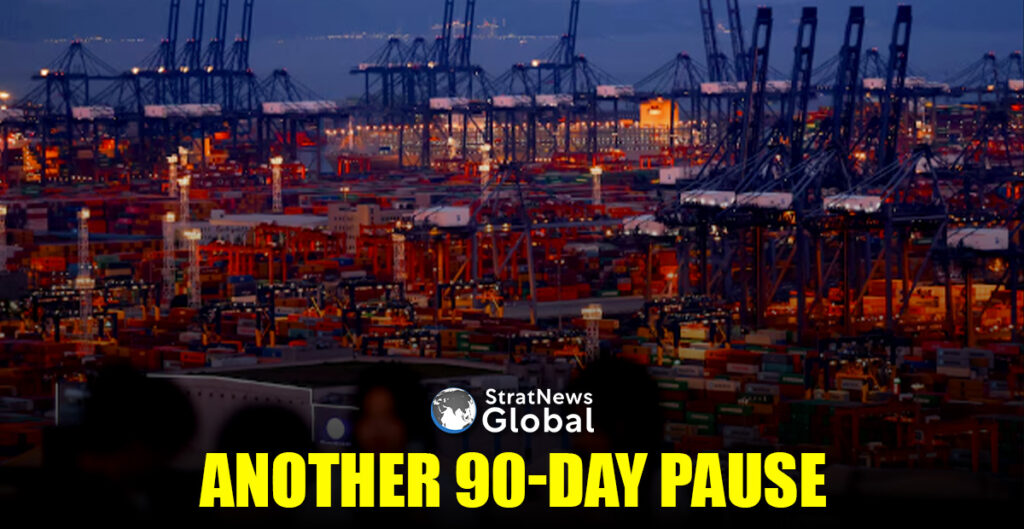
U.S. President Donald Trump on Monday extended the tariff truce with China for an additional 90 days, a White House official confirmed, preventing the imposition of triple-digit duties on Chinese products as American retailers prepared for the crucial year-end holiday shopping season.
Trump signed an executive order delaying the start of higher tariffs until mid-November, shortly after giving reporters a noncommittal answer when asked at a news conference if he planned to keep the lower tariff rates in place. On Sunday, Trump demanded China quadruple its purchases of U.S. soybeans, but it remained unclear whether Beijing had agreed.
The tariff truce between Beijing and Washington had been due to expire on Tuesday at 00:01 ET (04:01 GMT). The timing of the extension until early November buys crucial time for the seasonal autumn surge of imports for the Christmas season, including electronics, apparel and toys at lower tariff rates.
The new order prevents U.S. tariffs on Chinese goods from shooting up to 145%, while Chinese tariffs on U.S. goods were set to hit 125% – rates that would have resulted in a virtual trade embargo between the two countries. It locks in place – at least for now – a 30% tariff on Chinese imports, with Chinese duties on U.S. imports at 10%.
“We’ll see what happens,” Trump told a news conference earlier on Monday, highlighting what he called his good relationship with Chinese President Xi Jinping.
“It’s positive news. Combined with some of the de-escalatory steps both the United States and China have taken in recent weeks, it demonstrated that both sides are trying to see if they can reach some kind of a deal that would lay the groundwork for a Xi-Trump meeting this fall,” said Wendy Cutler, a former senior U.S. trade official who is now a vice president at the Asia Society Policy Institute.
Trump told CNBC last week that the U.S. and China were getting very close to a trade agreement and he would meet with Xi before the end of the year if a deal was struck.
Trade ‘Detente’ Continued
The two sides in May announced a truce in their trade dispute after talks in Geneva, Switzerland, agreeing to a 90-day period to allow further talks. They met again in Stockholm, Sweden, in late July, and U.S. negotiators returned to Washington with a recommendation that Trump extend the deadline.
Treasury Secretary Scott Bessent has said repeatedly that the triple-digit import duties both sides slapped on each other’s goods in the spring were untenable and had essentially imposed a trade embargo between the world’s two largest economies.
“It wouldn’t be a Trump-style negotiation if it didn’t go right down to the wire,” said Kelly Ann Shaw, a senior White House trade official during Trump’s first term and now with law firm Akin Gump Strauss Hauer & Feld.
She said Trump had likely pressed China for further concessions before agreeing to the extension. Trump pushed for additional concessions on Sunday, urging China to quadruple its soybean purchases, although analysts questioned the feasibility of any such deal. Trump did not repeat the demand on Monday.
“The whole reason for the 90-day pause in the first place was to lay the groundwork for broader negotiations, and there’s been a lot of noise about everything from soybeans to export controls to excess capacity over the weekend,” Shaw said.
Ryan Majerus, a former U.S. trade official now with the King & Spalding law firm, said the news would give both sides more time to work through longstanding trade concerns.
“This will undoubtedly lower anxiety on both sides as talks continue, and as the U.S. and China work toward a framework deal in the fall,” he said.
Imports from China early this year had surged to beat Trump’s tariffs, but dropped steeply in June, Commerce Department data showed last week. The U.S. trade deficit with China tumbled by roughly a third in June to $9.5 billion, its narrowest since February 2004. Over five consecutive months of declines, the U.S. trade gap with China has narrowed by $22.2 billion – a 70% reduction from a year earlier.
No formal announcement was immediately released. The Treasury Department and the U.S. Trade Representative’s Office did not respond to requests for comment.
Washington has also been pressing Beijing to stop buying Russian oil, with Trump threatening to impose secondary tariffs on China.
(With inputs from Reuters)
Another UK F-35 Jet Makes Emergency Landing In Japan Weeks After India Snag
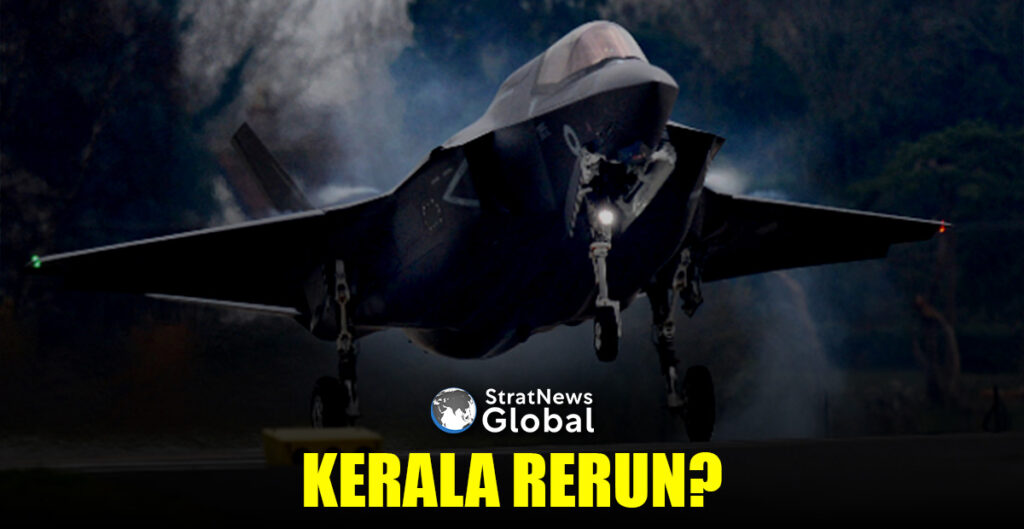
A British F-35B stealth fighter jet was compelled to make an emergency landing at Kagoshima Airport in southwestern Japan on Sunday due to a technical malfunction, according to airport officials cited by Kyodo News.
The incident occurred around 11:30 a.m., resulting in the temporary closure of the runway and disrupting several commercial flight departures and arrivals for approximately 20 minutes. Fortunately, no injuries were reported.
This jet is part of a British aircraft carrier strike group currently participating in a joint military exercise with Japan’s Maritime Self-Defence Force and U.S. forces. The drill, which began on August 4, is scheduled to continue until next Tuesday.
Kerala Rerun?
This marks the second known emergency landing involving a British F-35B in recent months.
Previously, another fighter jet from the UK’s HMS Prince of Wales aircraft carrier made an emergency landing in Thiruvananthapuram, Kerala, on June 14 due to a hydraulic system failure.
While conducting a routine sortie, the aircraft was unable to return to its carrier and diverted to Thiruvananthapuram Airport, designated as an emergency recovery site. The Indian Air Force provided comprehensive support, including refuelling and ground assistance.
The jet remained grounded at the airport for five weeks before departing on July 22. The British High Commission expressed gratitude toward Indian authorities for their cooperation during the repair and recovery process.
“We remain very grateful for the support and collaboration of the Indian authorities and airport teams throughout,” a British High Commission spokesperson said, adding that the UK looks forward to strengthening its defence partnership with India.
Criticism From Rivals
The recent emergency landing attracted attention from state-run media in China and Russia.
Russia’s Sputnik India account on X remarked, “British F-35 makes emergency landing… Again. Just weeks after one F-35 was stranded in India, another was forced into an emergency landing at Japan’s Kagoshima Airport. Collecting emergency landings like souvenirs.”
China’s state-run Global Times took a harsher stance, claiming the malfunctions underscored the F-35B’s “overly complex systems and demanding maintenance requirements.”
Citing Chinese aviation expert Wang Ya’nan, the outlet suggested that UK personnel may struggle to manage these challenges during extended deployments far from home.
The F-35B, developed by Lockheed Martin, is a cutting-edge stealth fighter known for its short take-off and vertical landing capabilities.
(With inputs from IBNS)
US Designates Pakistan-Based BLA As Foreign Terrorist Organisation
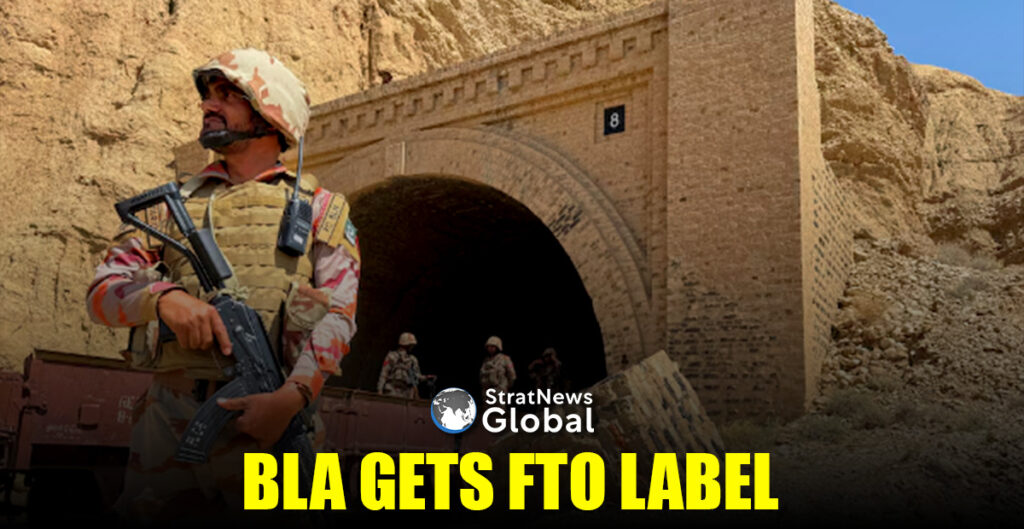
The U.S. Department of State on Monday officially designated the Pakistan-based Balochistan Liberation Army (BLA) and its alias, The Majeed Brigade, as a Foreign Terrorist Organisation (FTO).
The BLA was initially designated as a Specially Designated Global Terrorist (SDGT) group in 2019 following a series of terrorist attacks. Since that time, the group, including its Majeed Brigade faction, has claimed responsibility for multiple violent incidents, according to a statement from the U.S. State Department.
The U.S. State Department’s announcement outlined that BLA and its alias, The Majeed Brigade, are now formally recognised as an FTO, with The Majeed Brigade being added as an alias to BLA’s existing SDGT status.
Counter-Terrorism Commitment
The move is described as reflecting the Trump administration’s ongoing commitment to combating terrorism.
“Today’s action taken by the Department of State demonstrates the Trump Administration’s commitment to countering terrorism. Terrorist designations play a critical role in our fight against this scourge and are an effective way to curtail support for terrorist activities,” the statement read.
The department further noted that in 2024, the BLA claimed responsibility for suicide bombings near Karachi Airport and the Gwadar Port Authority Complex.
In 2025, the group also took responsibility for the hijacking of the Jaffar Express train travelling from Quetta to Peshawar in March. This attack resulted in the deaths of 31 civilians and security personnel, with over 300 passengers held hostage.
Baloch Liberation Army
The Baloch Liberation Army (BLA) is a militant separatist group operating primarily in Pakistan’s Balochistan province.
Founded with the aim of securing independence for Balochistan, the group has been involved in a long-running insurgency against the Pakistani state, accusing it of economic exploitation and political marginalisation of the Baloch people.
The BLA has carried out numerous attacks targeting Pakistani security forces, infrastructure, and government installations, often using guerrilla tactics and suicide bombings.
The Majeed Brigade
The Majeed Brigade is an alias or faction associated with the BLA, responsible for several high-profile attacks.
The U.S. government formally added The Majeed Brigade as an alias under the BLA’s designation in 2025, recognising its involvement in terror activities.
Notably, the group claimed responsibility for the 2024 suicide attacks near Karachi airport and the Gwadar Port Authority Complex, as well as the 2025 hijacking of the Jaffar Express train, which led to numerous civilian and security personnel casualties.
(With inputs from IBNS)
Multiple Injured In Explosion At U.S. Steel Plant Near Pittsburgh
An explosion at a U.S. Steel plant near Pittsburgh on Monday injured several people, with fire crews battling flames as thick smoke billowed from the facility, according to CBS News and other local outlets.
Dozens of injuries were reported after the explosion at the U.S. Clairton Coke Works plant, which is owned by U.S. Steel, a subsidiary of Nippon Steel opens new tab, ABC’s WTAE affiliate in Pittsburgh said, without citing sources.
The extent of the injuries was not known, it said.
Clairton Mayor Rich Lattanzi told Reuters in a phone interview from the site on Monday that he believed almost a dozen people had suffered severe injuries in the blast.
“I don’t know if people are trapped,” Lattanzi said. “There are ambulances and police and news media everywhere. It’s a horrible day for Clairton. We’re praying for everyone involved. We’re just praying this isn’t as bad as it looks.”
Lattanzi told Reuters he had heard one person was missing.
Pennsylvania Governor Josh Shapiro posted on X that his administration was in touch with local officials in Clairton as they responded to the explosion.
“The scene is still active, and folks nearby should follow the direction of local authorities,” he wrote, asking readers to join him in prayer for the Clairton community.
An official told CNN that some people were trapped under the rubble, and emergency crews were working to reach them.
There were no confirmed fatalities, said Abigail Gardner, director of communications for Allegheny County, according to CNN.
The Clairton Coke Works, located on the Monongahela River south of Pittsburgh, is the largest coke manufacturing facility in the United States.
Coke is produced by heating coal at high temperatures. It is used in blast furnaces as part of the process of making steel.
Clairton Plant operates 10 coke oven batteries and produces approximately 4.3 million tonnes of coke annually.
The facility serves customers in the commercial coke market as well as U.S. Steel’s steelmaking facilities.
In June, Nippon Steel, Japan’s biggest steelmaker, closed its $14.9 billion acquisition of U.S. Steel after an 18-month struggle to obtain U.S. government approval for the deal, which faced scrutiny due to national security concerns.
(With inputs from Reuters)