

Support us by contributing to StratNewsGlobal on the following UPI ID
ultramodern@hdfcbank

Strategic affairs is our game, South Asia and beyond our playground. Put together by an experienced team led by Nitin A. Gokhale. Our focus is on strategic affairs, foreign policy and international relations, with higher quality reportage, analysis and commentary with new tie-ups across the South Asian region.
You can support our endeavours. Visit us at www.stratnewsglobal.com and follow us on YouTube, Twitter, Facebook and Instagram.
र 500 per month
र 1000 per month
र 5000 per year
र 10000 per year
Donate an amount of your choice
र 500 per month
Donate र 500 per month

र 1000 per month
Donate र 1000 per month
र 5000 per year
Donate र 5,000 per year
र 10000 per year
Donate र 10,000 per year
Donate an amount of your choice
Donate an amount of your choice

Is This The Time For Renewed Dialogue With China?
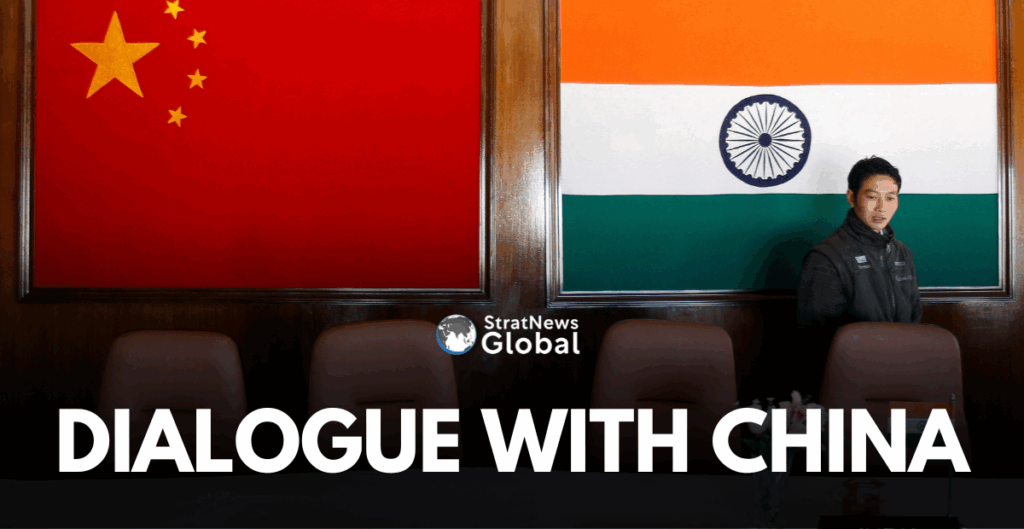
There is an emerging view in some circles in India that, given the difficulties with Donald Trump on tariffs, this may be the best time to explore an understanding and dialogue with China. Former foreign secretary Vijay Gokhale, in an editorial in The Times of India on Tuesday, has articulated this view, arguing that:
“As India’s relations with the US, its most consequential partner, enter a difficult period, China is beginning to look better than at any time in the previous five years.”
“The Chinese media is in full throttle,” he writes, “on the new dance between the dragon and the elephant. Rebalancing the relationship after recent tensions is important, but Indians must develop a nuanced view of China instead of looking at it in black and white terms.”
Do note, however, that China’s view of India as a country inferior to it in political and economic power may have even hardened given the problems with Trump. The impasse over trade has underscored India’s lack of leverage, which is why another former foreign secretary, Shyam Saran’s views are important:
“Their (China’s) posture towards India is indicative of where they stand. Now, their approach is to let India know that we are not in the same league as them and the sooner we realise this, the better.”
Dealing with this attitude is a challenge, but not something which India has not experienced before.
Professor Alka Acharya, Chairperson of the Centre for East Asian Studies at Jawaharlal Nehru University, believes an uninterrupted dialogue with China is what is needed.
“The dialogue between India and China is fractured; it gets bogged down in several issues which should not interfere with the bilateral dynamics,” she said during a recent conference in Delhi. The two countries engage at the BRICS, SCO, the G20 and even the Asian Infrastructure Investment Bank.
More controversially, China’s presence in India’s neighbourhood is a fact and a challenge for India.
“China is present all over your neighbourhood. What is the practical thing to do … that if you engage with China as far as your neighbourhood is concerned … we open ourselves to the possibility of dialogue not just directly with China … we are actually working towards addressing or reducing the scope for China to play games with us,” Prof Acharya says.
Saran’s view is different.
“Although we have said neighbourhood first policy, the kind of investment which is required to actually make that happen is unfortunately still missing,” he regrets.
India has not yet made investments that make it a net security provider, the engine of growth and the transit country of choice to its neighbours. He suggests that these are the kind of things which will give us a stable periphery; otherwise, China will fill the gap.
He notes that India has always tried to engage with China, and the visit of Foreign Minister Wang Yi next week will provide opportunities in that direction.
“We have to see in which areas there are possibilities for us being able to establish a positive relationship. This depends not only on India but also on China.” As he says, it takes two to dance.
Diplomatic Backchannel Moves Imperative To Break India, US Trade Impasse: Biswajit Dhar
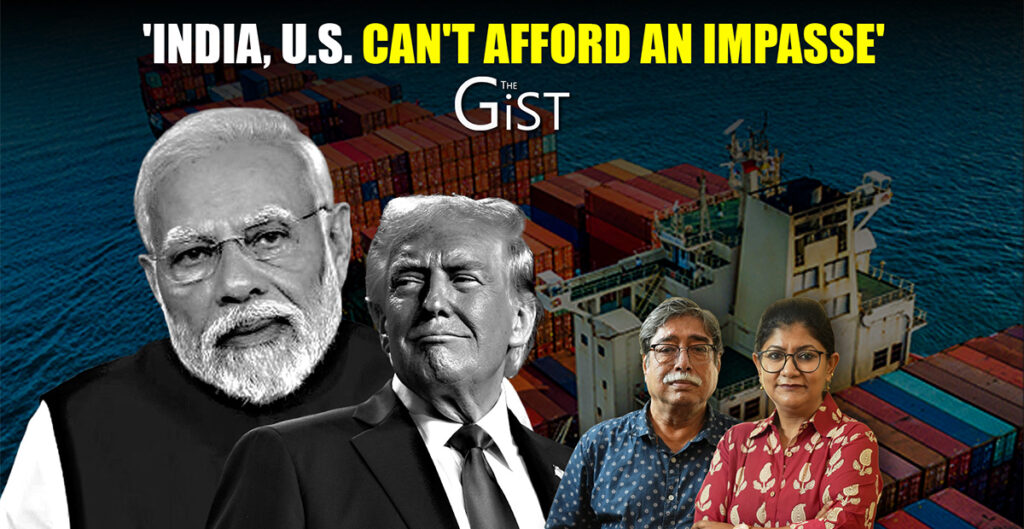
Talks for having the much-touted Bilateral Trade Agreement (BTA) between India and the United States have come to an impasse even as both sides need to activate diplomatic backchannel talks in order to break the current chill that has set in the robust bilateral relationship between New Delhi and Washington, according to Biswajit Dhar, a renowned international trade policy expert and a former advisor to the Ministry of Commerce and Industry.
“I think we have reached a stage of impulse. And I don’t see how this impasse can really be broken. And, because both sides have extremely strong entrenched positions, they are not willing to move an inch. So I don’t think the trade negotiations can go any further, despite the fact that we are hearing that on the 25th (of August), there is a US team which is going to be visiting here,” Dhar, a former Professor of JNU, told StratNews Global.
On 7 August, India was slapped with 25 percent tariffs on its exports to the US. This was followed by an additional tranche of 25 percent duties, which will come into effect from 27 August. Therefore, Indian exports of gems and jewellery, textiles, leather goods and others will face a total of 50 percent duties when they enter the US market, making the products expensive.
This happened at a time when India and the US were nearing the finishing line in signing a free trade agreement in some of the limited sectors, which would have then been followed up by a mega pact.
Apart from the 50 percent tariffs on Indian goods, the US has also imposed a 25 percent penalty specifically linked to India’s imports of Russian oil.
India has termed these tariffs “unfair, unjustified, and unreasonable” but maintains that it will continue diplomatic engagement. The Ministry of Commerce is leading discussions from India’s side and while a US trade team’s arrival is uncertain, the possibility of future talks isn’t entirely dismissed.
Last week, President Trump said trade negotiations with India won’t resume until the issue of recently imposed tariffs is resolved.
According to official sources, some of main sticking points why the BTA talks hit a roadblock was US’ insistence on greater market access in the agriculture and dairy sectors, which is a politically sensitive issue for New Delhi although India has opened up a lot of crucially key segments for the US exporters.
“India has never put agriculture and dairy, these two sectors, on the negotiating table in any of the agreements that we have negotiated so far,” said Dhar, adding that the reason being Indian agriculture has a very large number of small farmers, small and marginal farmers, who are “very poor farmers.”
He added that in its various submissions to the World Trade Organisation (WTO), India has maintained that the country has 99.4 percent farmers that are in a low income category.
“So they’re very poor farmers. Now, the apprehension here is that if the market is opened up to foreign competition and agri-businesses of the US, then the small farmers will be unable to compete with them. There will be loss of livelihoods and India’s food security. India has been maintaining its policy of self-sufficiency in food grains since the mid 1960s. And, we don’t want to move away from that position. So for the government of India, putting agriculture on the negotiating table implies that there is going to be political and economic instability,” he highlighted.
He added, “With the recent history of farmers on the warpath, the government was extremely cautious in not doing this with the US. So, under no circumstances they would have agreed to put agriculture on the negotiating table.”
‘Competitiveness Is Key’
According to Dhar, who was Head of the Centre for WTO Studies at the Indian Institute of Foreign Trade (IIFT), the current trade standoff with the United States is an opportune moment for the Modi government to take some bold moves in terms of policy measures to increase competitiveness of Indian exports across all sectors.
“The current impasse, the kind of a logjam that we are now facing, is really a defining moment for the government. It really should shake us up into thinking what needs to be done at home so that we can overcome the vulnerabilities,” he said.
Dhar also stressed that due to this inherent lack of competitiveness, India has not been able to fully take advantage of the existing FTAs with South Korea, Japan and the Association of Southeast Asian Nations (ASEAN).
“Therefore, if we want to be part of the global value chains and we want to keep engaged with the global economy then we need to do a lot at home to get our industry up and moving so that they can compete with the world’s best. And that’s how we can be a fair player in the global economy,” he added.
On the issue of tariffs that the US has been arbitrarily imposing on India, Dhar said, India’s inability to participate in the global trade agreements is “creating a whole host of problems for us.”
He underscored the fact that since the Production-Linked Incentive (PLI) scheme was rolled out by the government four years back, which was designed to boost domestic manufacturing and reduce reliance on imports, India’s manufacturing sector has not gained any competitiveness.
Activating Diplomatic Backchannels
Dhar, who has been instrumental in the designing of several trade pacts, said that the need of the hour, in order to settle the trade tiff between the US and India, is to activate the diplomatic backchannels.
“There is a need to activate the diplomatic backchannels. It is very important at this point. And, India and the US have a number of forums, bilateral forums through which they have been constantly engaging on really ticklish issues over the past several years. The sooner this happens, the better it would be for India and the global economy. Because neither India nor the US can afford to have an impasse,” he said.
Dhar also said there can be an additional challenge from India’s end to convince Trump to keep the issue of his role in Operation Sindoor aside and only then there can be some kind of rapprochement.
Trump has been consistently claiming since 10 May that it was the US that brought about a ceasefire between India and Pakistan during Operation Sindoor, which New Delhi has vehemently denied.
Thailand Reports Another Soldier Injured By Landmine Near Cambodia
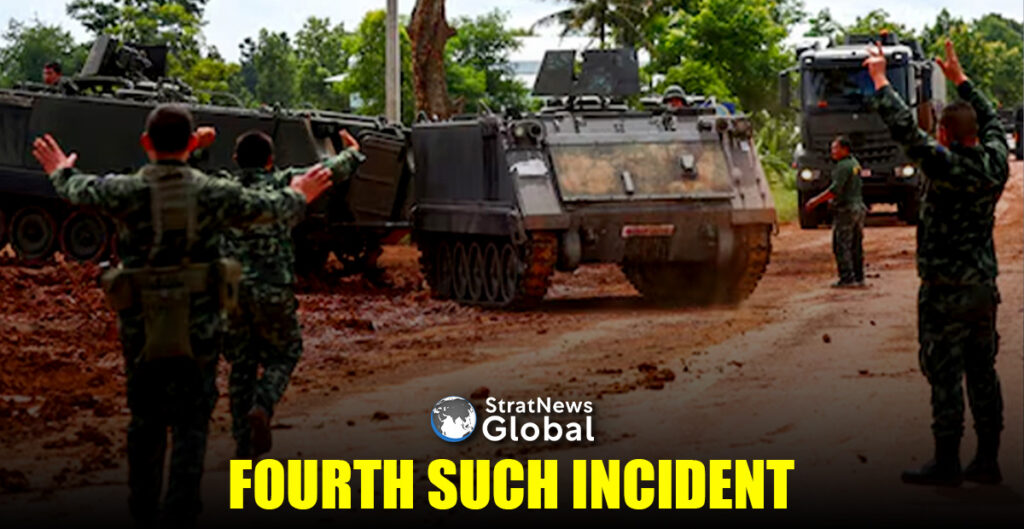
A Thai soldier sustained injuries from a landmine near the Cambodia border on Tuesday, the Thai army reported, just days after the Southeast Asian neighbours reached a ceasefire agreement following last month’s deadly five-day conflict.
The soldier’s left ankle was severely injured when he stepped on the mine while patrolling along a routine border route about 1 km (0.62 miles) from Ta Moan Thom temple in Thailand’s Surin province, the army said in a statement.
The soldier is being treated at a hospital, it said.
The incident is clear evidence that Cambodia has violated the ceasefire as well as international agreements like the Ottawa Convention against landmines, Thai army spokesman Major-General Winthai Suvaree said in the statement.
Fourth Such Incident
It was the fourth time in a few weeks that Thai soldiers had been injured by mines during patrols along the border. On Saturday, three soldiers were injured by a landmine in an area between Thailand’s Sisaket and Cambodia’s Preah Vihear provinces.
Two earlier incidents led to the downgrading of diplomatic relations and triggered the clashes.
Bangkok accused Cambodia of planting landmines on the Thai side of the disputed border that injured soldiers on July 16 and July 23.
Phnom Penh denied it had placed any new mines, saying the soldiers had veered off agreed routes and triggered old landmines left over from decades of war. It said on Saturday that it was a “proud state party” to the Ottawa Convention.
Thailand and Cambodia have bickered for decades over undemarcated points along their 817-km (508-mile) land border, with ownership of the ancient Hindu temples Ta Moan Thom and the 11th-century Preah Vihear central to the disputes.
The latest clashes that started on July 24 were the worst fighting between the countries in more than a decade, and involved exchanges of artillery fire and jet fighter sorties that killed at least 43 and left over 300,000 people displaced on both sides.
The fragile ceasefire has been holding since Thailand and Cambodia agreed last week to allow observers from the Association of Southeast Asian Nations to inspect disputed border areas, ensuring that hostilities do not resume.
(With inputs from Reuters)
Philippines Condemns ‘Dangerous’ Chinese Actions After Scarborough Shoal Collision
The Philippines on Tuesday voiced strong concern over what it characterised as “dangerous manoeuvres and unlawful interference” by Chinese vessels during a Monday coast guard supply mission intended for Filipino fishermen in the Scarborough Shoal.
“Their actions not only posed a grave danger to Philippine personnel and vessels, but also resulted in the unfortunate collision between the two Chinese vessels,” the Philippine foreign ministry said in a statement.
A Chinese navy ship collided with a smaller coast guard vessel while the latter was chasing one of the Philippine Coast Guard ships involved in the mission, according to the PCG, which captured the incident on video.
China’s defence ministry and its embassy in Manila did not immediately respond to requests for comment on the ministry’s statement.
China ‘Expels’ Philippine Vessels
On Monday, China’s coast guard said it took necessary measures to expel Philippine vessels from waters around the Scarborough Shoal.
The Philippines said it had offered medical aid and other support to the Chinese side, including an offer to tow the damaged China Coast Guard vessel out of the area.
“Yesterday’s incident demonstrates the importance of adhering to international maritime rules,” the Philippine foreign ministry said. It reaffirmed its commitment to diplomacy and dialogue in resolving differences.
Monday’s confrontation marks the latest in a series of incidents amid a period of heightened tensions between Manila and Beijing over territorial disputes in the South China Sea.
A 2016 ruling of an international arbitral tribunal voided Beijing’s sweeping claims in the region, saying they had no basis under international law, a decision China rejects.
Rear Admiral Roy Trinidad, Philippine Navy spokesperson for the South China Sea, warned at a press briefing on Tuesday that similar incidents could happen again as long as China continued to conduct what he called “illegal, coercive, aggressive and deceptive” activities in the strategic waterway.
(With inputs from Reuters)
Minsk Says Russia, Belarus To Hold Joint Military Drills In September
The Belarusian Defence Ministry said on Tuesday that Russia and Belarus will conduct joint strategic military exercises in Belarus from September 12 to 16.
The aim of the drills is to test the capabilities of Russia and Belarus and “ensure the military security of the Union State and their readiness to repel possible aggression,” the ministry cited Major General Valery Revenko as saying.
The Union State is a borderless union and alliance between the two former Soviet republics and neighbours.
Ukrainian President Volodymyr Zelenskyy warned earlier this year, without giving details or citing evidence, that Russia was “preparing something” in Belarus this summer under the guise of routine military exercises.
In an interview with Time Magazine last week, Belarusian President Alexander Lukashenko said he had decided to move the location of the joint military drills away from Belarus’ western borders with European Union countries, citing security concerns raised in Poland and the Baltic nations.
‘Complete Nonsense’
Lukashenko called the idea that Belarus would utilise the drills to attack the three Baltic countries and Poland “complete nonsense.”
Revenko, the Major General, said the Belarusian-Russian drills were “being used as a pretext for ongoing militarisation” in neighbouring NATO countries, citing upcoming joint NATO drills in Poland involving at least 34,000 troops.
Belarus, Russia’s closest ally, has seen its relations with western neighbours and Ukraine deteriorate over the last few years after Moscow used Belarusian territory as a staging ground for an assault on Kyiv it launched in February 2022.
(With inputs from Reuters)
Could The Epstein Files Be The Big Undoing Of Donald Trump?
“I could stand in the middle of Fifth Avenue and shoot somebody, and I wouldn’t lose any voters, OK?” This statement by Donald Trump reflected the unconditional loyalty of his MAGA supporters.
Today, however, the controversy surrounding the Jeffrey Epstein investigation seems to threaten that very loyalty. By offending the Republican coalition, this scandal likely opens the space for the emergence of new conservative voices in Republican politics. It could prove to be a symbolic fracture point in the current Republican coalition and a likely opening for ideological realignment under new leadership.
Jeffrey Epstein was an influential financier who was convicted for child sex-trafficking in 2019 and later died in prison under suspicious circumstances. He was known to associate with several powerful establishment figures including Donald Trump.
Among various conspiracy theories current in the MAGA base, it was believed that Epstein had a list of clients who sought his child-sex trafficking services. It was believed that these people included prominent public figures, and powerful individuals of the political and business establishments. The release of this list also became a popular election promise by the Trump campaign during the 2024 presidential elections.
However, the Trump administration’s recent statements rejecting the existence of this list sparked extreme reactions across the political aisle, especially among Republican supporters.
Republican Coalition
The current Republican coalition, consisting of Trump’s loyal MAGA supporters, establishment Republicans and traditional conservatives has had distinct interests in rallying behind Trump.
The pre-2016 Republican Party was dominated by an establishment rooted in the Reagan-era image of an economically liberal, fiscally conservative, small-government “silent majority” which remained neutral on most social issues. However, the 2008 economic crisis and the fallout from the George Bush administration’s disastrous economic record and foreign interventions, had already weakened this establishment.
The party also included a faction of traditional conservatives who attempted to further Judeo-Christian values and believed in focusing on cultural issues rather than economic ones as solutions to America’s socio-economic problems. With Trump’s emergence in 2016, a new faction of anti-establishment, anti-globalist, nationalist supporters emerged to form a revived Republican coalition – the MAGA movement.
Through his fiery rhetoric and bold promises, Trump provided this coalition with a renewed purpose and identity. He validated issues and pitched solutions which the Democrats dismissed and that establishment Republicans avoided for fear of electoral consequences. This allowed Trump to emerge as a more appealing and electorally viable option for most Republican voters than any establishment Republican or Democratic alternative.
Epstein Controversy
Despite nearly six years of his presidency, Trump’s actions often went against the interests and demands of his voter base. Under Trump, government spending increased and the fiscal deficit widened, while issues of inflation and unemployment continued. The role of states was also diminished, while he mishandled the immigration crisis and the COVID 19 response.
His actions in cutting social security under the ‘Big Beautiful Bill’ and providing tax cuts to the wealthy elite were the latest in a series of decisions that went against the direct interests of his base, and yet, the Republican coalition base continued to support him.
This seemingly unconditional support highlights how, for the base, Trump’s function was beyond acting as a means for policy execution. He became a symbol of Republican identity by validating and recognising their struggles and grievances. But the reactions to the Epstein controversy highlight how the seemingly unconditional nature of this relationship might have changed.
Epstein And The MAGA Base
These reactions reveal that certain priorities are not just priorities but core, non-negotiable interests for the Republican base. For MAGA, it is the strong actions against the establishment, potentially including arrests or at least exposing Epstein’s alleged clients, that matter. For traditional Republicans, what matters is ensuring that justice is served in the sensitive case of minor sex trafficking, which is a personal subject for families and women-dominant electorates. The priority also extends to the issue of security, and equality of law for all, even the elite.
Today, the administration seems desperately trying to replace this controversy from the news cycle, and it is likely that in the short term, this fades away. If not off the news cycle for long, however, come the mid-terms, this scandal has the ability to disrupt Trump’s dominance and open the door for the traditional conservative faction to expand its influence in the Republican Party.
For years, traditional conservatives have challenged both forms of modern liberalism: the social liberalism promoted by Democratic leaders through progressive identity politics, and the economic liberalism perpetuated by Trump and establishment Republicans through trickle-down policies and over-reliance on market-forces.
Instead, they argue that American society and family structures, rooted in Judaeo-Christian values, form the foundation of American identity and bring order to the American state. Both “woke” liberalism and consumerist market economics, in their view, have weakened these structures and triggered the socio-economic crises America faces today.
This faction, which includes figures like Vice President JD Vance, has long viewed Trump as unreliable to lead their cultural and moral project, citing his personal life, past associations, and governance record. Despite aligning with him during the 2024 elections for electoral outcomes, Epstein files might provide them leverage in positioning themselves as a credible alternative to Trump.
They have an opportunity to portray Trump as part of the very establishment that the MAGA base once sought to dismantle, pointing to his ties to Epstein. His failed business record, personal life, sexist comments, broken marriages coupled with his larger failure to deliver on socio-political and economic promises will likely become strong tools to distance him from the broader electorate that does not prioritise the Epstein controversy.
Simultaneously, the traditional conservative movement might find common ground with the small-government, fiscally-minded tech faction, led by Elon Musk, which has grown increasingly critical of Trump and the current Republican establishment.
Together, they might aim to shape a conservative movement defined not by Trumpian spectacle, but by Judaeo-Christian values, institutional justice, and a clear vision for America’s future led by a post-Trump Republican coalition.
Abhishek Kadiyala is a Research Analyst at Takshashila Institution’s Indo-Pacific program with a focus on United States and US-India relations. Views expressed in this article do not represent the views of the institution.
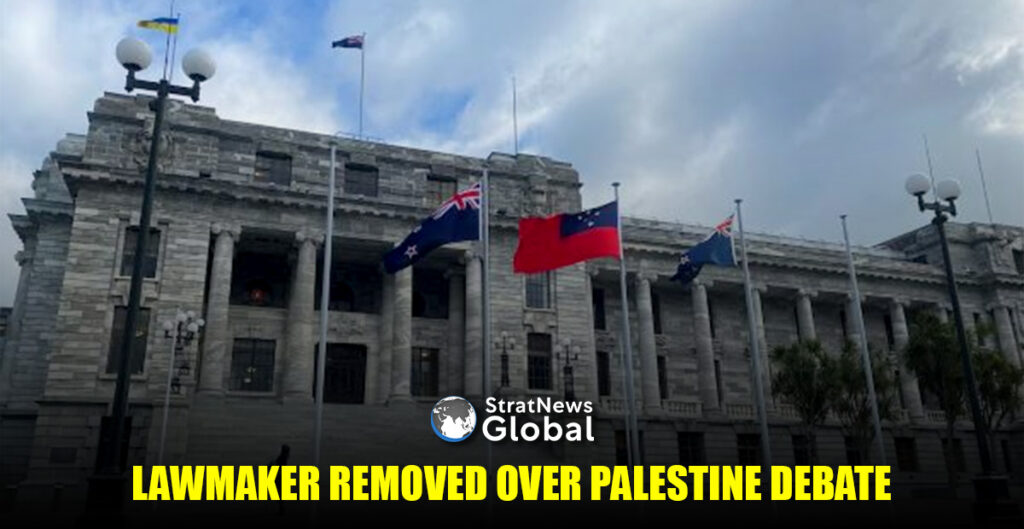
New Zealand Lawmaker Ejected From Parliament During Palestine Debate
New Zealand politician Chloe Swarbrick was removed from parliament on Tuesday after a heated dispute over the government’s position on Palestine.
An urgent debate was called after the centre-right government said on Monday it was weighing up its position on whether to recognise a Palestinian state.
Close ally Australia on Monday joined Canada, the UK and France in announcing it would recognise a Palestinian state at a U.N. conference in September.
Chloe Swarbrick, who is co-leader of the Green Party, said New Zealand was a “laggard” and an “outlier” and the lack of decision was appalling before calling on some government members to support a bill to “sanction Israel for its war crimes.” The bill was proposed by her party in March and is supported by all opposition parties.
“If we find six of 68 Government MPs with a spine, we can stand on the right side of history,” said Swarbrick.
‘Completely Unacceptable’
Speaker Gerry Brownlee said that statement was “completely unacceptable” and she had to withdraw it and apologise. When she refused, Swarbrick was ordered to leave parliament.
Brownlee later clarified Swarbrick could return on Wednesday but if she still refused to apologise she would again be removed from parliament.
New Zealand has said it will make a decision in September about whether it would recognise Palestine as a state.
Foreign Minister Winston Peters told parliament that over the next month the government would gather information and talk to partners, which would inform cabinet’s decision.
“We’ll be weighing this decision carefully rather than rushing to judgement,” Peters said.
Along with the Green Party, opposition parties Labour and Te Pati Maori support recognition of a Palestinian state.
Labour parliamentarian Peeni Henare said New Zealand had a history of standing strong on its principles and values and in this case “was being left behind.”
(With inputs from Reuters)
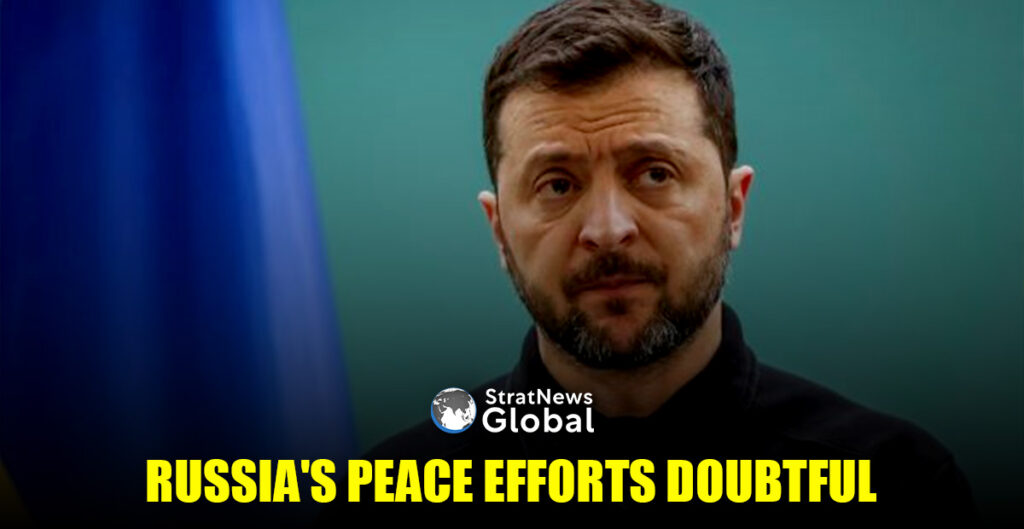
Zelenskyy: No Indication Russia Is Moving Towards Peace
Ukrainian President Volodymyr Zelenskyy said on Monday that Russia is preparing its forces for further offensives rather than working to end the war in Ukraine. His remarks came after talks with the leaders of India and Saudi Arabia, part of his push to rally support for Kyiv outside of Europe.
Zelenskyy won diplomatic backing from Europe and the NATO alliance on Sunday, amid fears that the U.S. and Russian leaders may try to dictate terms for ending the 3-1/2-year war during their Friday summit in Alaska.
Today, there was a report from the intelligence and military command about what Putin is counting on and what he is actually preparing for. In particular, military preparations. He is certainly not getting ready for a ceasefire and war end,” Zelenskyy said in a nightly address.
He added, without providing any specifics, that Russia was moving its troops for new operations on Ukrainian soil.
“There is no sign that the Russians have received signals to prepare for a post-war situation,” he said.
Further Assaults
Vladyslav Voloshyn, Ukraine’s military spokesperson for the southern frontline sector, said on Monday that Russia was moving some of its units in the Zaporizhzhia region for further assaults.
In separate statements on Monday, Zelenskyy said he had spoken to Indian Prime Minister Narendra Modi and Saudi Crown Prince Mohammed bin Salman, both of whom have taken cautious diplomatic positions on Russia’s invasion of its neighbour.
India is a major buyer of Russian oil, and Saudi Arabia has pitched itself as a mediator in the conflict. Zelenskyy said he spoke to both leaders about strengthening Ukraine’s position in any peace process.
“Communication with leaders is ongoing practically around the clock – we are in constant touch,” he wrote on X. “Now is the moment when there is a real chance to achieve peace.”
In his “long conversation” with Modi, Zelenskyy added that he had also discussed sanctions on Russian oil. Trump last week slapped an additional 25% tariff on Indian goods, citing New Delhi’s continued imports of the product.
“I noted that it is necessary to limit the export of Russian energy, particularly oil, to reduce its potential and ability to finance the continuation of this war,” Zelenskyy said, adding that leaders with “tangible leverage over Russia” should act.
Sanction On Russia To Stay
Zelenskyy also urged his country’s allies to keep their sanctions against Russia in place until Ukraine receives security guarantees.
Putin has also made a flurry of calls in recent days, speaking to the leaders of China, India, Brazil and ex-Soviet states to brief them on his contacts with the United States about the war in Ukraine.
On Wednesday, Germany will convene a virtual meeting of European leaders to discuss how to pressure Russia to end the war in Ukraine ahead of a European call with Trump. Zelenskyy and EU and NATO officials were expected to join the meeting.
Earlier on Monday, Zelenskyy warned that any concessions to Russia would not persuade it to stop fighting in Ukraine and that there was a need to ramp up pressure on the Kremlin.
“Russia refuses to stop the killings, and therefore must not receive any rewards or benefits,” he wrote on X.
“Concessions do not persuade a killer.”
(With inputs from Reuters)
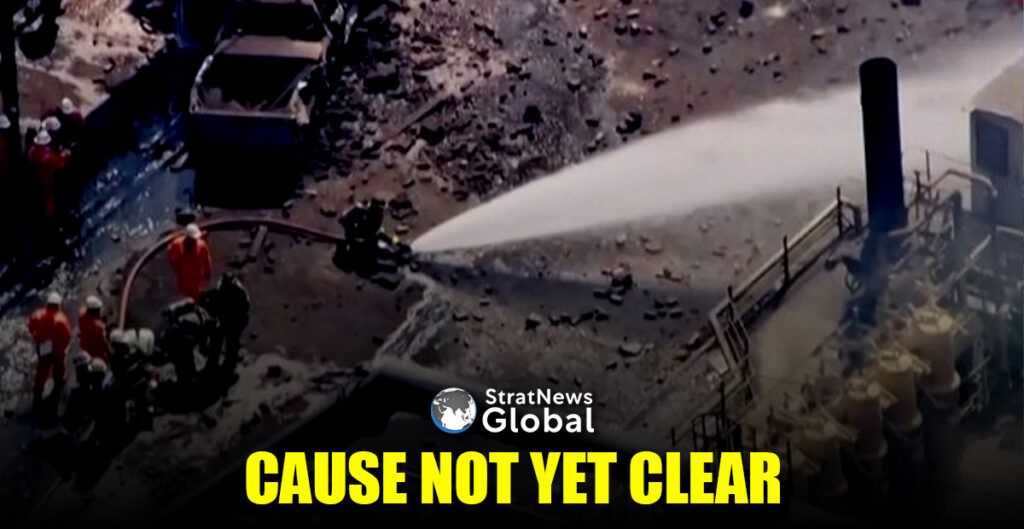
Explosions At U.S. Steel Plant Near Pittsburgh Kill 2
Two people lost their lives and 10 others were injured after multiple explosions rocked a U.S. Steel plant near Pittsburgh on Monday, according to the company and local authorities.
The blasts at the Clairton Coke Works – part of a sprawling industrial complex along the Monongahela River – took place just before 11 a.m. ET (1500 GMT). Firefighters battled flames and heavy smoke that billowed out of the plant, which is owned by U.S. Steel, a subsidiary of Nippon Steel.
Initially, two people were reported missing. One person was found and transported to a local hospital, said Allegheny County Police Assistant Superintendent Victor Joseph at an afternoon briefing.
The other individual, who had been missing, was found deceased following an extensive search and rescue effort, US Steel said in an emailed statement to Reuters late on Monday.
Cause Yet To Be Ascertained
There was no word yet on a possible cause of the explosion.
The probe into the explosion would be “a time-consuming technical investigation,” Joseph said.
David Burritt, president and chief executive officer of U.S. Steel, said in a statement that the company was working with local authorities to discover the cause.
Pennsylvania Governor Josh Shapiro posted on X that there were multiple explosions at the plant and that his administration was in touch with local officials.
“The scene is still active, and folks nearby should follow the direction of local authorities,” he wrote at the time the employee was missing.
The severity of the injuries was not known, but news accounts said that several people were taken to hospital burn units.
Horrible Day
Clairton Mayor Rich Lattanzi said it was a horrible day for the city, about 20 miles (32 km) south of Pittsburgh, long known as America’s Steel City.
U.S. Steel has produced steel in the area since the late 19th century, but in recent decades, the industry has been in decline, leading to plant closures and restructurings.
In June, Nippon Steel, Japan’s biggest steelmaker, closed its $14.9 billion acquisition of U.S. Steel after an 18-month struggle to obtain US government approval for the deal, which faced scrutiny due to national security concerns.
While air quality monitors did not detect a dangerous rise in sulfur dioxide after Monday’s explosions, residents within 1 mile of the plant were advised to remain indoors, close windows and doors, set HVAC systems to recirculate, and avoid activities that draw in outside air, said Allegheny County Executive Sara Innamorato at the briefing.
The Clairton Coke Works is the largest coke manufacturing facility in the United States, employing about 1,300 workers. It operates 10 coke oven batteries, which produce about 4.3 million tons of coke a year.
Coke is produced by heating coal at high temperatures. It is used in blast furnaces as part of the process of making steel.
(With inputs from Reuters)
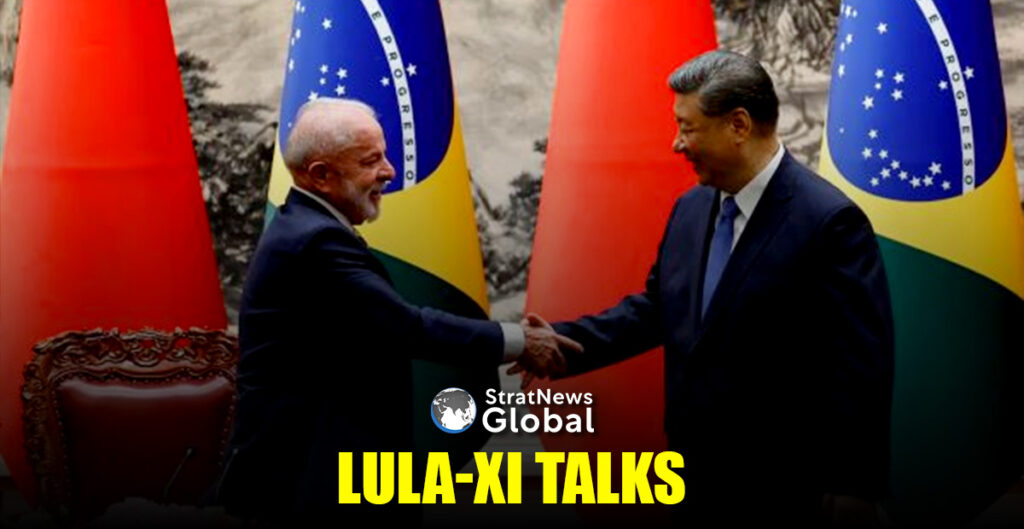
Lula And Xi Hold Talks On BRICS And Bilateral Ties
Brazilian President Luiz Inacio Lula da Silva and Chinese President Xi Jinping spoke over phone to discuss the role of the BRICS group of nations and opportunities for bilateral cooperation, according to statements from Lula’s office and Chinese state media.
The call comes as Lula seeks to rally BRICS partners in response to recent U.S. tariffs. China expressed its readiness to collaborate with Brazil in demonstrating unity and resilience across the Global South.
The leaders spoke for an hour on Monday, agreeing on the role of the G20 and BRICS in defending multilateralism,” Brazil’s presidency said in a statement.
“Both presidents also highlighted their willingness to continue identifying new business opportunities between the two economies,” the statement said.
Trump’s Tariffs
Lula said last week he would initiate a conversation about how to tackle Trump’s tariffs with BRICS nations, after Trump dubbed the group “anti-American” and threatened them with additional tariffs.
Xi called BRICS a key platform for building consensus in the Global South and said China is ready to work with Brazil to set an example of unity and self-reliance among major Global South nations, Chinese state media Xinhua reported.
Agricultural trade figured prominently in China and Brazil’s relations, with Brazil’s soybean and coffee sectors highlighted for their growing engagement with Chinese markets amid rising Western tariffs
China, the world’s biggest soybean importer, gets most of the commodity from Brazil and recently, numerous Brazilian coffee companies found entry into the Chinese market after the industry was hit by steep U.S. tariffs.
China last week also showed Brazil support in resisting the “bullying behaviour” of imposing excessive tariffs, without naming the U.S.
Xi described ties between the two countries as “at their best in history”, and said both should work together to address global challenges and promote the political settlement of the Ukraine crisis, Xinhua said.
(With inputs from Reuters)