

Support us by contributing to StratNewsGlobal on the following UPI ID
ultramodern@hdfcbank

Strategic affairs is our game, South Asia and beyond our playground. Put together by an experienced team led by Nitin A. Gokhale. Our focus is on strategic affairs, foreign policy and international relations, with higher quality reportage, analysis and commentary with new tie-ups across the South Asian region.
You can support our endeavours. Visit us at www.stratnewsglobal.com and follow us on YouTube, Twitter, Facebook and Instagram.
र 500 per month
र 1000 per month
र 5000 per year
र 10000 per year
Donate an amount of your choice
र 500 per month
Donate र 500 per month

र 1000 per month
Donate र 1000 per month
र 5000 per year
Donate र 5,000 per year
र 10000 per year
Donate र 10,000 per year
Donate an amount of your choice
Donate an amount of your choice

Cape Verde Floods Overwhelm Island, Kill 8
At least eight people lost their lives as heavy flooding struck Cape Verde’s Sao Vicente island, overwhelming emergency services and disrupting major roads, a regional civil protection councillor stated on Tuesday.
On Monday morning torrential rains lashed the northern island in the Atlantic archipelago located off West Africa, swamping roads and sweeping away vehicles and people.
Municipal councillor Jose Carlos da Luz told a state broadcaster seven people had died in floods and one person was electrocuted, adding that three others were still missing.
Thousands Displaced
In a report on Monday, the International Federation of Red Cross and Red Crescent Societies put the death toll at nine and said 1,500 people had been displaced on Sao Vicente.
Sao Vicente usually records 116 mm of rain in a year, according to Cape Verde’s meteorology institute. But early on Monday 193 mm fell in just five hours, according to Ester Brito, an executive at the institute.
“It is a rare situation because what was recorded is above our 30-year climatological average,” she told Reuters, adding that in just two hours more rain fell than the island typically receives annually.
The US National Hurricane Center said on Monday that Tropical Storm Erin was located about 280 miles (455 km) west-northwest of Cape Verde and packing maximum sustained winds of 45 miles per hour (75 kph).
‘Panic And Despair’
Interior Minister Paulo Rocha said on Monday that floodwaters disrupted transport across Sao Vicente and severed the main road to Cesaria Evora International Airport, though the facility remained operational. Rockfalls also blocked traffic.
“It was a difficult night marked by panic and despair,” Rocha told public radio, adding that first responders were inundated with distress calls.
Rescue and cleanup operations were ongoing, but Rocha said authorities were mobilising resources that would allow the island to quickly return to normal life.
(With inputs from Reuters)
UK, France Recognise Palestine, But Is That Enough?
Two of Israel’s closest allies, the United Kingdom and France, have announced that they will formally recognise the State of Palestine in September. The decision marks a notable shift after months in which many Western leaders, while condemning civilian casualties, maintained trade ties with Israel and, in some cases, cracked down on pro-Palestinian protests.
The move will place London and Paris among 149 of the 193 United Nations member states that already recognise Palestine, following countries such as Spain and Ireland, which have consistently spoken out against the crisis in Gaza. It also comes amid intensifying humanitarian concerns, with aid blockades, mass displacement, and civilian deaths mounting since October 2023.
The moral debate surrounding Palestine is long-standing. Experts have likened aspects of the current oppression to historical atrocities, including the genocide between 1933 and 1945. Then, the UK and France were among the first to confront Nazi Germany though in 1939, their decision was largely motivated by the geopolitical imperative to protect Poland. Today, both governments frame their stance on Gaza as a matter of moral outrage.
Yet the crisis is far from new. Since last October, the death toll in Gaza has exceeded 60,000, while UN agencies have repeatedly warned of famine conditions caused by restrictions on humanitarian aid. The suffering of Palestinians has been a decades-long reality, and recognition alone is unlikely to address the root causes.
Unlike the 1930s, today’s political landscape features sustained public pressure, with large-scale protests across capitals and growing calls from international bodies such as the International Court of Justice for urgent action.
Recognition of Palestinian statehood by two major European powers is politically significant and diplomatically symbolic, but history suggests it is only a first step. Without concrete measures from ensuring unimpeded humanitarian aid to holding all parties accountable under international law the danger remains that such recognition will amount to a symbolic gesture rather than a turning point.
(This article was written by Tisya Sharma, she is an intern at StratNewsGlobal)
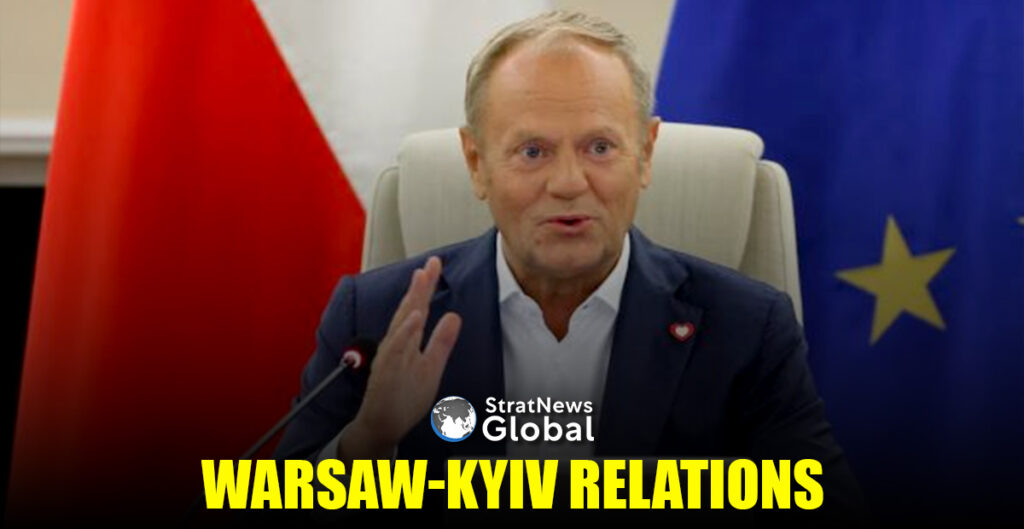
Tusk Urges Poland To Resist Russia’s Efforts To Divide Warsaw And Kyiv
Poland’s prime minister Donald Tusk warned on Tuesday that Russia is attempting to create divisions between Warsaw and Kyiv ahead of upcoming peace talks. His remarks followed public outrage over an incident in which a spectator displayed a Ukrainian nationalist flag during a concert at Poland’s national stadium.
Poland has been one of Ukraine’s staunchest backers since Russia invaded in 2022, but some Poles have grown weary of refugees from their war-torn neighbour, while historical tensions between the nations over World War Two massacres have at times risen to the surface, straining ties and boosting the Polish far-right.
Many Poles were angered by footage shared on social media which showed an audience member at a concert in the National Stadium in Warsaw on Saturday waving the red and black flag of the Ukrainian Insurgent Army (UPA), a nationalist group Poland says was involved in the 1943-1945 Volhynia massacres of Poles.
Poles And Ukrainians Must Stay United
However, Prime Minister Tusk told a government meeting that Poles and Ukrainians must not allow themselves to be divided ahead of a crucial summit between U.S. President Donald Trump and his Russian counterpart Vladimir Putin on Friday.
“It’s truly fundamental from the perspective of Polish security that Putin not receive gifts before these talks, and such a gift for Putin would undoubtedly be conflict between Ukrainians and Poles,” Tusk said.
“This is precisely the… goal of Russian agents and Russia’s actions in Poland.”
The Russian embassy in Warsaw did not immediately respond to an emailed request for comment.
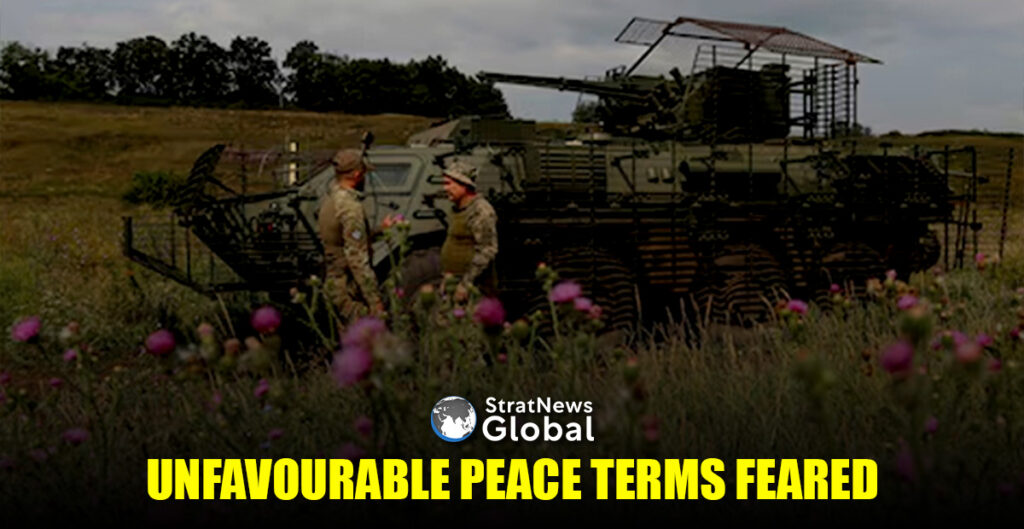
European leaders and Ukrainian President Volodymyr Zelenskyy plan to speak with Trump on Wednesday before his summit with Putin in Alaska, amid fears that Washington, hitherto Ukraine’s leading arms supplier, may dictate unfavourable peace terms to Kyiv.
Warsaw police said they had detained 109 people during the concert by Belarusian rapper Max Korzh for offences ranging from drug possession to assaulting security personnel.
Tusk said that proceedings were underway to deport 63 people following the disturbances at the concert – 57 Ukrainians and six Belarusians.
Meanwhile, the Ukrainian man who was filmed waving the UPA flag apologised for his actions in a video shared on social media, saying that he had only meant to show support for his country.
(With inputs from Reuters)
European Union Leaders Affirm Ukraine’s Right To Decide Its Future
Leaders of the European Union (EU) member states said on Tuesday that Ukraine must be free to determine its own future, speaking ahead of Friday’s meeting between U.S. President Donald Trump and Russian President Vladimir Putin.
European leaders and Ukrainian President Volodymyr Zelenskyy plan to speak with Trump on Wednesday, before the summit in Alaska, amid fears that Washington, hitherto Ukraine’s leading arms supplier, may dictate unfavourable peace terms to Kyiv.
“Meaningful negotiations can only take place in the context of a ceasefire or reduction of hostilities,” the leaders of all EU countries except Hungary said in a joint statement, adding: “We share the conviction that a diplomatic solution must protect Ukraine’s and Europe’s vital security interests.”
Russia Advances In Eastern Ukraine
Trump has said any peace deal would involve “some swapping of territories to the betterment of both” Russia and Ukraine, prompting consternation in Kyiv and European capitals as virtually all the territory in question is Ukrainian.
Ukraine’s authoritative DeepState war map showed that Russia had suddenly surged north by as much as 10 km (six miles) in two prongs near Dobropillia, close to their key target of Pokrovsk, in their drive to take full control of the Donetsk region.
Tatarigami_UA, a Ukrainian ex-officer tracking the conflict, posted on X that “in both 2014 and 2015, Russia launched major offensives ahead of negotiations to gain leverage. The current situation is serious, but far from the collapse some suggest”.
Kyiv’s military, meanwhile, said it had retaken two villages in the eastern region of Sumy on Monday, part of a small reversal in more than a year of slow, attritional Russian gains in the southeast.
Russia, which launched its full-scale invasion of Ukraine in February 2022, has mounted a new offensive this year in Sumy after Putin demanded a “buffer zone” there.
Kyiv and its European allies fear that Trump, keen to claim credit for making peace and seal business deals with Moscow, could in effect reward Russia for 11 years of efforts to seize Ukrainian territory, the last three in open warfare.
Europeans Link Ukraine To Own Security
“A Ukraine capable of defending itself effectively is an integral part of any future security guarantees,” the European statement said, adding that EU nations were ready to contribute further to security guarantees.
Zelenskyy welcomed the EU statement, adding in a message on X that Russia was preparing new offensive operations.
“Indeed, we all support President Trump’s determination, and together we must shape positions that will not allow Russia to deceive the world once again,” he said.
However, Hungarian Prime Minister Viktor Orban, Putin’s principal ally in Europe, mocked the statement from his EU counterparts.
“The fact that the EU was left on the sidelines is sad enough as it is.
The only thing that could make things worse is if we started providing instructions from the bench,” Orban said on X.
“The only sensible action for EU leaders is to initiate an EU-Russia summit, based on the example of the U.S.-Russia meeting.”
Trump had been hardening his stance towards Moscow, agreeing to send more U.S. weapons to Ukraine and threatening hefty trade tariffs on buyers of Russian oil in an ultimatum that has now lapsed.
Even so, the prospect of Trump hosting Putin on U.S. soil for the first U.S.-Russia summit since 2021 has revived fears that he might put narrow U.S. interests ahead of the security of European allies or broader geopolitics.
(With inputs from Reuters)
Maps Show Sudden Russian Advance In Ukraine Ahead Of Trump-Putin Summit
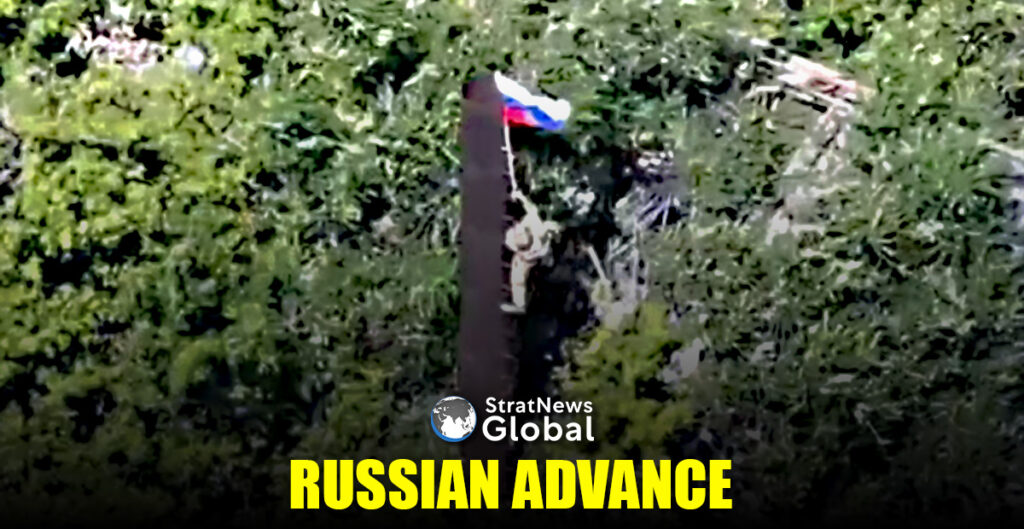
Russian forces have launched a sudden push into eastern Ukraine near the coal-mining town of Dobropillia, potentially aiming to pressure Kyiv into ceding territory as the U.S. and Russian presidents prepare to meet.
Ukraine’s authoritative DeepState war map showed on Tuesday that Russian forces had advanced by at least 10 km (six miles) north in two prongs in recent days, part of their drive to take full control of Ukraine’s Donetsk region.
The advance is one of the most dramatic in the last year. DeepState said the Russians had surged forward near three villages on a section of the frontline associated with the Ukrainian towns of Kostyantynivka and Pokrovsk, which Moscow is trying to encircle, exploiting Kyiv’s lack of manpower.
“The situation is quite chaotic, as the enemy, having found gaps in the defence, is infiltrating deeper, trying to quickly consolidate and accumulate forces for further advancement,” DeepState said on its Telegram channel.
U.S. President Donald Trump and Russian President Vladimir Putin are expected to discuss a possible deal to end the war in Ukraine when they meet in Alaska on Friday. Unconfirmed media reports say Putin has told Trump he wants Ukraine to hand over the part of the Donetsk region that Russia does not control.
There was no immediate comment on the advance from Moscow. Ukrainian military spokesperson Viktor Trehubov said only small groups were penetrating defensive lines, and that this did not amount to a breakthrough.
Pasi Paroinen, a military analyst with the Finland-based Black Bird Group, said the situation had escalated rapidly, with Russian forces infiltrating past Ukrainian lines to a depth of roughly 17 km (10 miles) during the past three days.
“Forwardmost Russian units have reportedly reached the Dobropillia – Kramatorsk road T0514, and Russian infiltration groups have also been reported near Dobropillia proper,” he wrote on X.
Russia May Gain Leverage For Trump Talks
Tatarigami_UA, a former Ukrainian army officer whose Frontelligence Insight analysis tracks the conflict, posted:
“In both 2014 and 2015, Russia launched major offensives ahead of negotiations to gain leverage. The current situation is serious, but far from the collapse some suggest.”
Sergei Markov, a former Kremlin adviser, said the Russians had been able to advance due to “a partial collapse in the front” due to Ukraine’s shortage of soldiers.
Ukraine has redeployed elite forces to try to thwart the advance, Russia’s Interfax news agency and Ukrainian war bloggers reported.
“This breakthrough is like a gift to Putin and Trump during the negotiations,” Markov said, suggesting it could increase pressure on Kyiv to cede some land to prevent the Russian army from eventually taking the rest of Donetsk by force.
To do that, though, Russian forces would first need to take control of Sloviansk, Kramatorsk, Druzhkivka and Kostiantynivka – four places Russian military analysts call “fortress cities”.
Ukrainian President Volodymyr Zelenskyy has publicly pushed back against the idea of ceding territory to Russia, saying any peace deal must be a just one.
Bohdan Krotevych, former chief of staff of Ukraine’s Azov brigade and a National Guard lieutenant colonel, took to X late on Monday to warn Zelenskyy of the threat, saying the frontline in the area was “a complete mess”.
“The line of combat engagement as a fixed line does not actually exist,” he said.
(With inputs from Reuters)
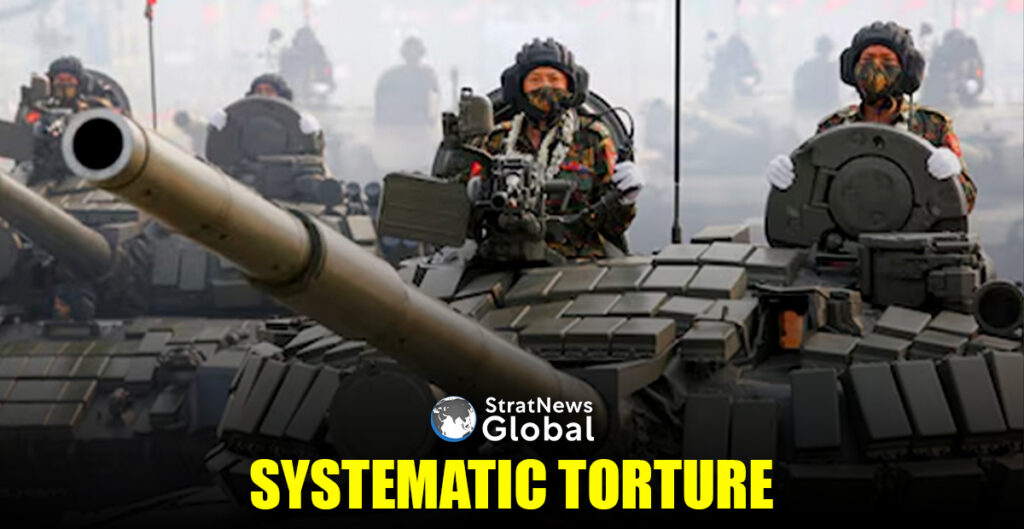
UN Report Alleges Systematic Torture By Myanmar Security Forces
United Nations investigators on Tuesday reported uncovering evidence of systematic torture by Myanmar security forces and identified several senior officials responsible.
The Independent Investigative Mechanism for Myanmar (IIMM), formed in 2018 to analyse evidence of serious violations of international law, said victims were subject to beatings, electric shocks, strangulations and other forms of torture, like the removal of fingernails with pliers.
“We have uncovered significant evidence, including eyewitness testimony, showing systematic torture in Myanmar detention facilities,” Nicholas Koumjian, Head of the Mechanism, said in a statement accompanying the 16-page report.
The torture sometimes resulted in death, the report said. Children, who are often unlawfully detained as proxies for their missing parents, were among those tortured, it said.
A spokesperson for Myanmar’s military-backed government did not immediately respond to requests for comment. The military-backed government has not responded to over two dozen requests by the U.N. team for information about the alleged crimes and requests to access the country, the U.N. report said.
The military says it has a duty to ensure peace and security. It has denied that atrocities have taken place and has blamed “terrorists” for causing unrest.
Comprehensive Evidence Uncovered
The findings in the report covering a one-year period through to June 30 were based on information from more than 1,300 sources, including hundreds of eyewitness testimonies as well as forensic evidence, documents and photographs.
The list of perpetrators identified so far includes high-level commanders, the report said. An IIMM spokesperson declined to name them, saying investigations are ongoing and it wanted to avoid alerting the individuals.
The report also said that both Myanmar security forces and opposition armed groups had carried out summary executions in the conflict, and it had identified those responsible.
A government spokesperson and an opposition spokesperson were not immediately available for comment.
Myanmar has been in chaos since a 2021 military coup against an elected civilian government plunged the country into civil war. Tens of thousands of people have been detained since then in an attempt to silence opponents and recruit soldiers, the United Nations says.
Junta chief Min Aung Hlaing ended a four-year state of emergency last month and announced the formation of a new government, with himself as acting president, ahead of a planned election.
The IIMM has been investigating abuses in Myanmar since 2011, including both crimes committed against the mainly Muslim Rohingya minority in 2017 when hundreds of thousands were forced to flee a military crackdown and violations affecting all groups since the coup.
The IIMM said that it is supporting several jurisdictions investigating the alleged crimes, such as Britain. However, the IIMM said in its report that U.N. budget cuts are threatening its work. “These financial pressures threaten the Mechanism’s ability to sustain its critical work and to continue supporting international and national justice efforts,” it said.
(With inputs from Reuters)
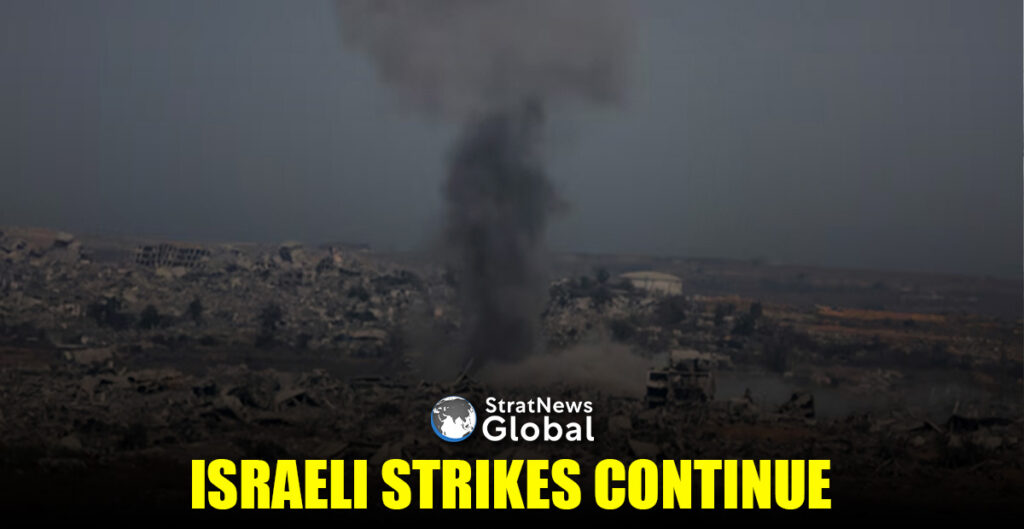
Israeli Strikes Kill 11 In Gaza As Hamas Leader Heads To Cairo For Truce Talks
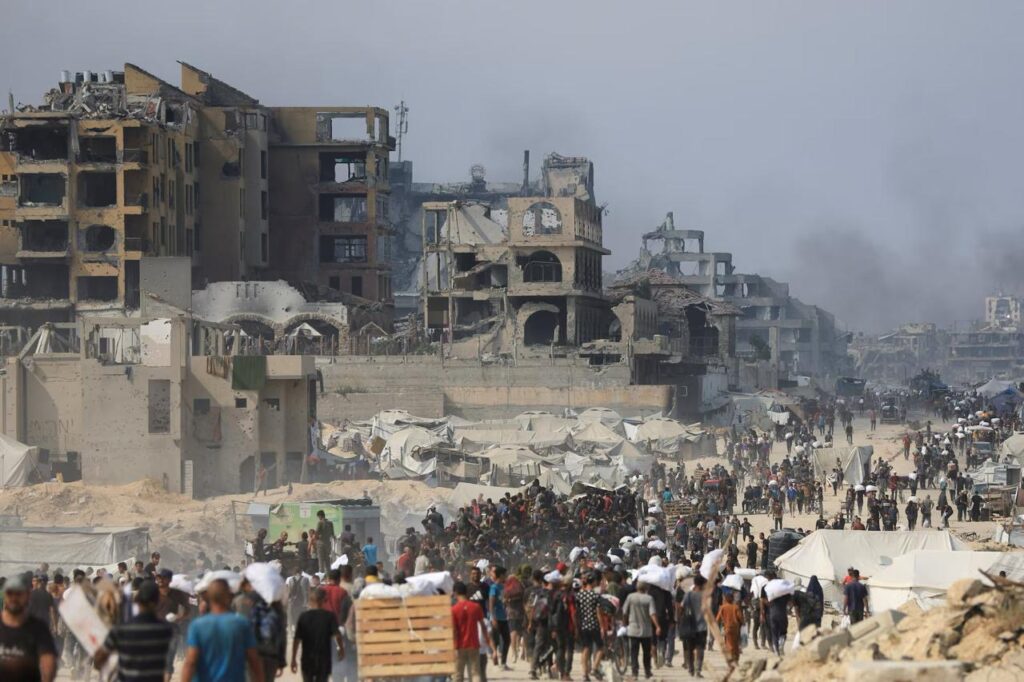
Witnesses and medics said on Tuesday that Israeli planes and tanks continued strikes on eastern Gaza City overnight, killing at least 11 people, as Hamas leader Khalil Al-Hayya prepared to travel to Cairo for talks aimed at reviving a U.S.-backed ceasefire plan.
The latest round of indirect talks in Qatar ended in deadlock in late July, with Israel and Palestinian militant group Hamas trading blame over the lack of progress on a U.S. proposal for a 60-day truce and hostage release deal.
Israel has since said it will launch a new offensive and seize control of Gaza City, which it captured shortly after the war’s outbreak in October 2023 before pulling out. Militants regrouped and have waged a largely guerrilla-style war since then.
It is unclear how long a new Israeli military incursion into the sprawling city in northern Gaza, now widely reduced to rubble, could last or how it would differ from the earlier operation.
Netanyahu’s Expansion Plan
But Israeli Prime Minister Benjamin Netanyahu’s plan to expand military control over Gaza, expected to be launched in October, has sparked a global outcry over the widespread devastation of the territory and a hunger crisis spreading among Gaza’s largely homeless population of over two million.
It has also stirred criticism in Israel, with the military chief of staff warning it could endanger surviving hostages and prove a death trap for Israeli soldiers. It has also raised fears of further displacement and hardship among the estimated one million Palestinians in the Gaza City region.
Witnesses and medics said Israeli planes and tanks pounded eastern districts of Gaza City again overnight, killing seven people in two houses in the Zeitoun suburb and four in an apartment building in the city centre.
In the south of the enclave, five people, including a couple and their child, were killed by an Israeli airstrike on a house in the city of Khan Younis and four by a strike on a tent encampment in nearby, coastal Mawasi, medics said.
The Israeli military said it was looking into the reports and that its forces take precautions to mitigate civilian harm. Separately, it said on Tuesday that its forces had killed dozens of militants in north Gaza over the past month and destroyed more tunnels used by militants in the area.
More Deaths From Starvation, Malnutrition
Five more people, including two children, have died of starvation and malnutrition in Gaza in the past 24 hours, the territory’s health ministry said. The new deaths raised the number of deaths from the same causes to 227, including 103 children, since the war started, it added.
Israel disputes the malnutrition fatality figures reported by the health ministry in the Hamas-run enclave.
The war began on October 7, 2023, when Hamas-led militants stormed over the border into southern Israel, killing 1,200 people and taking 251 hostages, according to Israeli figures, in the country’s worst ever security lapse.
Israel’s ground and air war against the Islamist Hamas in Gaza since then has killed more than 61,000 Palestinians, left much of the enclave in ruins and wrought a humanitarian disaster with grave shortages of food, drinking water and safe shelter.
Netanyahu, whose far-right ultranationalist coalition allies want an outright Israeli takeover and re-settlement of Gaza, has vowed the war will not end until Hamas is eradicated.
A Palestinian official with knowledge of the ceasefire talks said Hamas was prepared to return to the negotiating table.
However, the gaps between the sides appear to remain wide on key issues, including the extent of any Israeli military withdrawal and demands for Hamas to disarm, which it has ruled out before a Palestinian state is established.
An Arab diplomat said mediators Egypt and Qatar have not given up on reviving the negotiations and that Israel’s decision to announce its new Gaza City offensive plan may not be a bluff but served to bring Hamas back to the negotiating table.
(With inputs from Reuters)
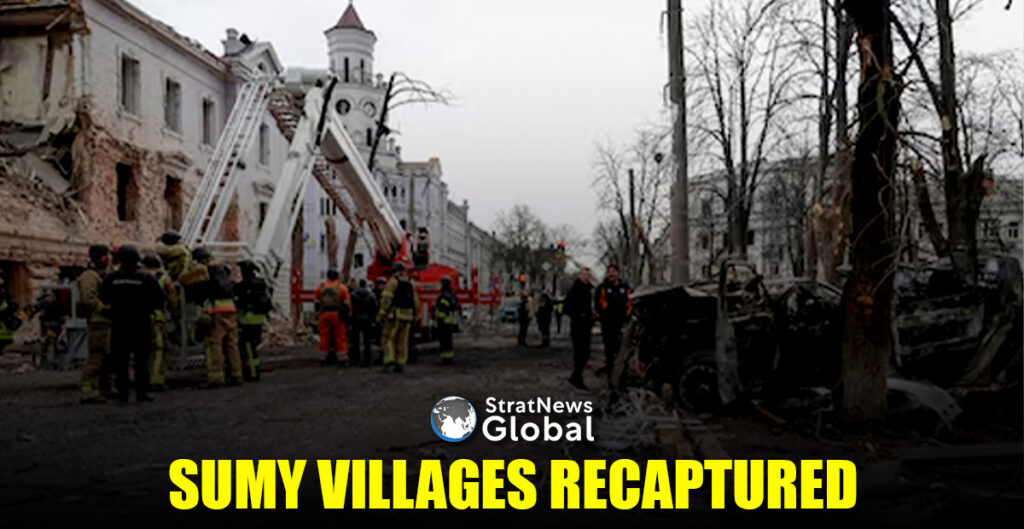
Ukraine Secures Minor Territorial Gains In Sumy Ahead Of Trump-Putin Summit
Ukraine’s military announced it has recaptured two villages in the eastern Sumy region, marking additional modest territorial gains along the border with Russia ahead of peace negotiations at a summit between the U.S. and Russian leaders scheduled for Friday.
U.S. President Donald Trump said on Monday that Kyiv and Moscow will both have to cede land to end the war in Ukraine, and this week’s talks with Russian President Vladimir Putin will show whether the Kremlin leader is willing to make a deal.
Ukraine’s forces have liberated the settlements of Stepne and Novokostiantynivka along the frontline in Sumy, the General Staff said in a Tuesday evening report.
“It’s tough. But we are holding back the enemy,” Ukraine’s top commander, Oleksandr Syrskyi, wrote on Facebook, following a meeting on Tuesday with President Volodymyr Zelenskyy and Ukraine’s top brass.
Active Ops Underway In Sumy
“In the Sumy direction, we are conducting active operations and have some success advancing forward, liberating Ukrainian land.”
Monday’s gains follow Sunday’s news that Kyiv’s military had retaken the village of Bezsalivka.
Reuters could not independently verify the reports of gains in the Sumy region.
The small gains come as Russian forces have been pushing westward for months along sections of the 1,000-km (620-mile) frontline, capturing new villages nearly on a daily basis, mainly in the Donetsk region.
Russia, which launched its full-scale invasion of Ukraine in February 2022, mounted a new offensive this year in Sumy, following Putin’s order to carve out a “buffer zone” there and threatening the regional capital.
Ukraine’s authoritative Deep State online map project shows that Russian forces control about 200 sq km (77 sq miles) of Sumy, and a total of about 114,000 square kilometres (44,000 sq miles) in Ukraine.
(With inputs from Reuters)
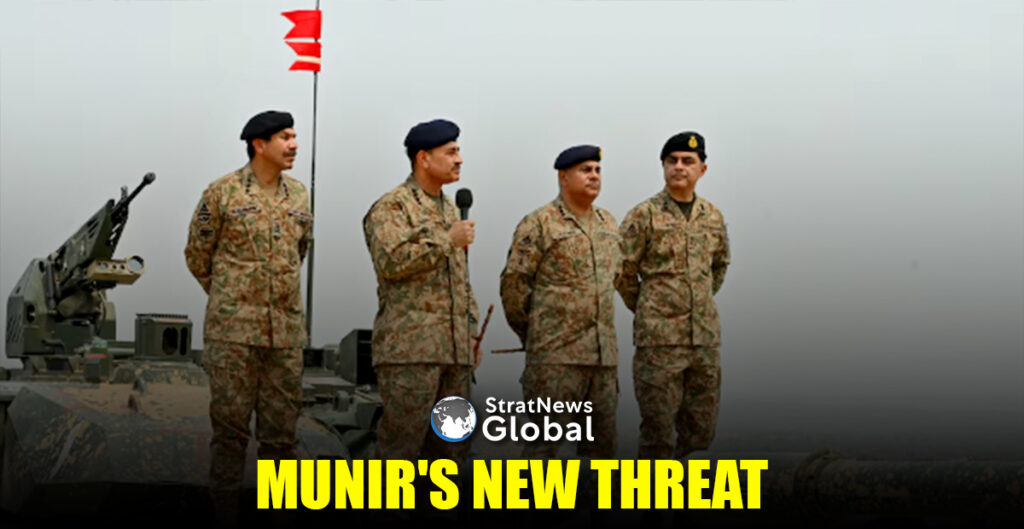
In US, Asim Munir Threatens To Target Reliance’s Jamnagar Refinery
In a provocative and hostile speech laced with threats against India, Pakistan’s Army Chief General Asim Munir reportedly suggested that Reliance Industries Ltd’s Jamnagar refinery in Gujarat could be a target in the event of a future military clash.
This is believed to be the first instance of a Pakistani military leader openly signalling an intention to strike at India’s critical oil infrastructure.
‘We’ll Show Them What’s Next’
Speaking at a private dinner gathering in Tampa, Florida, Munir referred to a social media post depicting RIL chairman Mukesh Ambani alongside a Quranic verse, claiming that he had personally authorised its release during a recent standoff with India “to show them what we will do next time,” according to a report by The Times of India.
The verse from Surah Al-Fil (The Elephant) is often interpreted as an allegory for an aerial assault in modern military terms. Historically, it refers to the ‘Year of the Elephant’ (circa 570 CE), when, according to tradition, an invading army led by Yemen’s ruler Abraha was destroyed by divine intervention—flocks of birds pelting them with stones of baked clay, the report added.
IBNS has not independently verified the developments.
By naming Mukesh Ambani, Munir appeared to single out an individual representing India’s economic clout and global stature.
Addressing members of the Pakistani diaspora, Munir also reportedly issued a nuclear threat, stating that Pakistan would resort to nuclear weapons if confronted with an existential threat in a future war with India.
India Reacts Strongly
Reacting strongly to Munir’s nuclear remarks made on US soil, India’s Ministry of External Affairs said New Delhi has consistently maintained that it will not succumb to nuclear blackmail and will continue taking all measures required to ensure national security.
The MEA further stated that Munir’s statements validated longstanding concerns over the safety and integrity of Pakistan’s nuclear command and control structure, pointing to the close nexus between its military establishment and terrorist organisations.
“Pakistan strongly rejects the immature remarks made by the Indian Ministry of External Affairs earlier today…,” Pakistan’s Foreign Office said in response to media queries regarding the MEA’s statement.
Munir’s remarks came as he wrapped up his second high-profile visit to the United States in less than two months, during which he held meetings with senior American military and civilian officials and engaged with members of the Pakistani community.
(With inputs from IBNS)
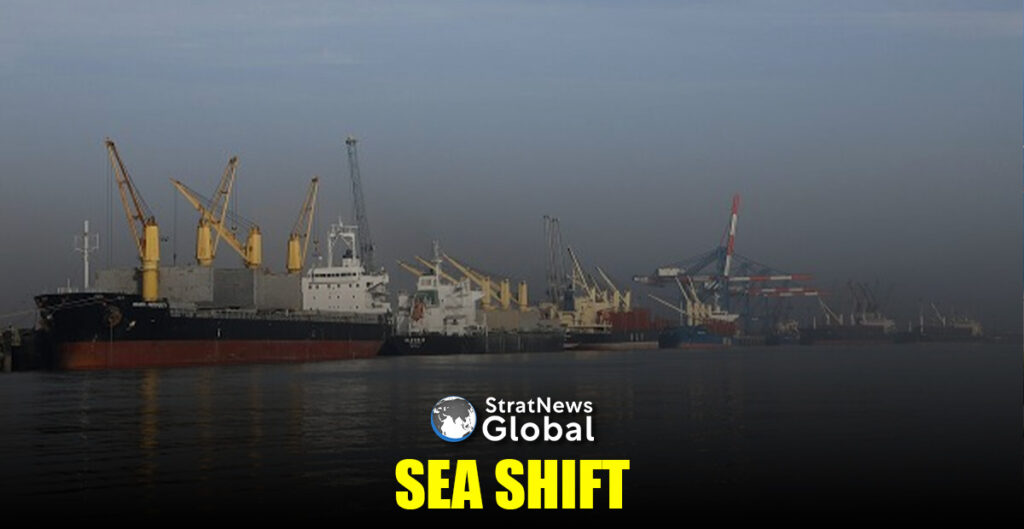
Ports Bill 2025 Sets Course For Integrated Maritime Planning
The Lok Sabha on Tuesday passed the Indian Ports Bill 2025, legislation aimed at overhauling the governance and development of India’s port sector through a coordinated framework between the Centre and coastal states.
The Bill replaces a patchwork of arrangements with a statutory, consultative body—the Maritime State Development Council (MSDC)—that will have representation from both the Union and state governments.
The MSDC, operational in a non-statutory form since 1997, will now be legally mandated to advise both levels of government on port-related issues and long-term strategy. Its remit includes formulating a National Perspective Plan for maritime infrastructure, ensuring that planning for all ports — whether major or non-major — is coordinated and regionally balanced. Ports will be required to share real-time operational data such as cargo volumes, vessel traffic, capacity, hinterland connectivity, and traffic patterns to inform evidence-based policymaking.
To strengthen governance at the state level, the Bill encourages coastal states to formally notify State Maritime Boards with uniform administrative powers for non-major ports. While the operational management of major ports will remain with their respective port authorities, State Maritime Boards will oversee non-major ports in their jurisdictions, potentially reducing administrative inconsistencies across the country.
The Bill also introduces State-level Dispute Resolution Committees for non-major ports, empowered to hear disputes between port authorities, concessionaires, and users. Appeals will go to the respective High Courts, creating the basis for sector-specific jurisprudence and a more predictable business environment.
International compliance is a central theme. The Bill incorporates India’s obligations under conventions such as MARPOL (International Convention for the Prevention of Pollution from Ships), the Ballast Water Management Convention, and the International Ship and Port Facility Security (ISPS) Code. Provisions require ports to develop and implement waste management plans, maintain adequate reception facilities, and adopt emergency preparedness and response plans for safety, security, and environmental incidents.
The legislation also supports India’s commitment under the International Maritime Organization’s Convention on Facilitation of International Maritime Traffic to implement a Maritime Single Window system. This will allow shipping companies and port authorities to exchange all required documentation electronically through a single entry point.
Transparency and ease of doing business are embedded in the Bill’s tariff and fee provisions, with a complete overhaul intended to bring clarity and predictability. It also redefines rule-making powers: state governments will have authority over State Maritime Boards and non-major ports, while the Centre will retain powers over major ports. On issues affecting all ports, the Centre will make rules in consultation with states.
Penalties for violations have been consolidated into schedules, updated to reflect current needs, and in some cases decriminalised. Outdated provisions from earlier laws have been deleted or replaced.
By institutionalising cooperation between the Centre and states, embedding international compliance, and making tariff and governance frameworks more transparent, the Indian Ports Bill 2025 is intended to strengthen India’s maritime sector for long-term growth and competitiveness.