

Support us by contributing to StratNewsGlobal on the following UPI ID
ultramodern@hdfcbank

Strategic affairs is our game, South Asia and beyond our playground. Put together by an experienced team led by Nitin A. Gokhale. Our focus is on strategic affairs, foreign policy and international relations, with higher quality reportage, analysis and commentary with new tie-ups across the South Asian region.
You can support our endeavours. Visit us at www.stratnewsglobal.com and follow us on YouTube, Twitter, Facebook and Instagram.
र 500 per month
र 1000 per month
र 5000 per year
र 10000 per year
Donate an amount of your choice
र 500 per month
Donate र 500 per month

र 1000 per month
Donate र 1000 per month
र 5000 per year
Donate र 5,000 per year
र 10000 per year
Donate र 10,000 per year
Donate an amount of your choice
Donate an amount of your choice
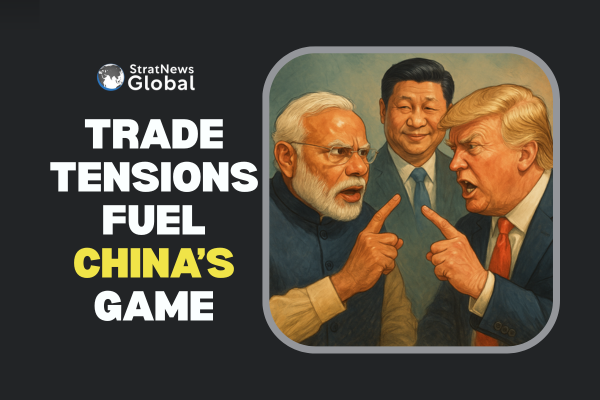


How China Leverages India-US Tariff Row For Its Benefit
The standoff between India and the US on tariffs has been likened to that old fable about two monkeys quarreling over a cake, who enlist the help of a cat to arbitrate. And before you know it, the cat has had all of the cake. The cat in this case being China.
The point being made is that while the US draws swords with friends, allies and partners on trade, China has leveraged the battle by positioning itself as a steady partner and in the process, taking a hefty slice of global trade (the cake).
China is widening trade links with ASEAN, the Arabian Gulf and Africa through targeted investments, energy agreements, and bilateral deals. Chinese firms are undercutting global rivals with competitive pricing in technology, electronics, and green energy. In a word, Beijing is projecting itself as a stable and dependable partner.
In May 2025, President Xi Jinping offered a $9 billion investment credit line to Latin American and Caribbean leaders, cementing China’s role as South America’s largest trading partner. Twenty-two Latin American countries are now part of the Belt and Road Initiative, while Africa sees expanding Chinese investment in infrastructure and minerals.
In the case of the US-India trade impasse, says Anushka Saxena of the Takshashila Institution, “China is cleverly exploiting the India–US tariff dispute to serve its own interests. Publicly, Beijing positions itself as supportive of India, enhancing its image as a friendly partner, while privately engaging with Trump to secure favourable terms for itself.”
Echoes Namrata Hasija of the Centre for China Analysis and Strategy “China’s biggest strategic gain from the India–U.S. tariff dispute is the strain it puts on the India-U.S. partnership. It could weaken the QUAD and the Indo-Pacific strategy, which are both important in countering China.”
That apart, it triggers anger and resentment, notes Amit Kumar, scholar at the Takshashila Institution. “It sends the wrong message. India feels singled out, while China benefits from exemptions.”
But there is another more insidious impact, notes Prof Jabin Jacob of Shiv Nadar University. “China’s advantages are not just economic but also political. While the Chinese market and Chinese investments have once again become attractive to Indian businesses, the real long term impact will be that the Indian government’s ability to direct its business community away from China has declined considerably.”
“While China’s supply chain or technological advantages can be eventually overcome when other sources open up or if countries/companies catch up in technology, the perceived reliability of the Chinese economic system compared to that of the American one, will slow down these diversification and catch-up efforts in India. Immediate profit is often the priority over long-term capacity-building, he added.”
“A breakdown of political trust between the two sides would augur well from a Chinese perspective,” argues China scholar Manoj Kewalramani of the Takshashila Institution. “It might result in New Delhi being far more amenable to Beijing’s political concerns and to working jointly in areas of trade and technology.”
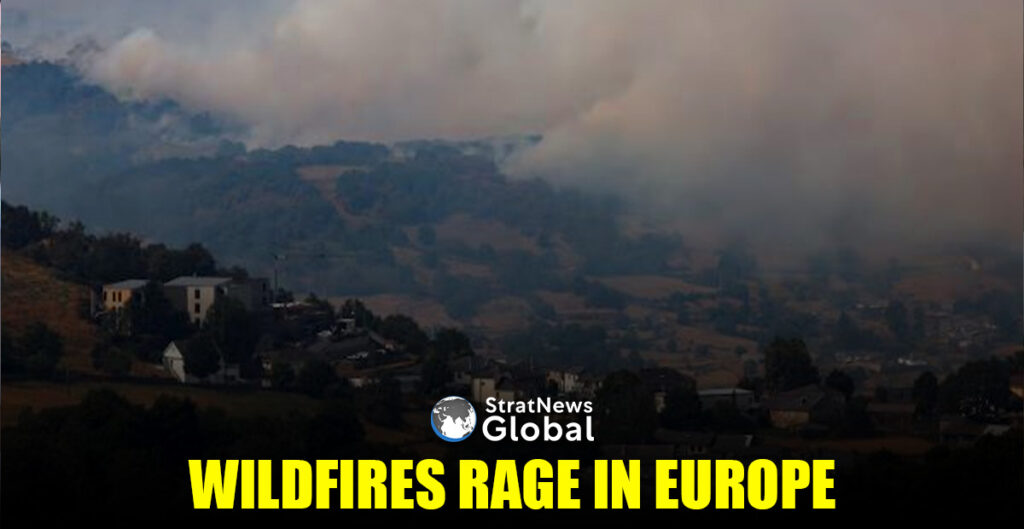
Europe’s Wildfires Scorch Tourist Areas And Forests Amid Heatwave
On Tuesday, firefighters in Spain, Portugal, Greece, Turkey, and the Balkans continued to battle wildfires as another heatwave drove temperatures above 40 degrees Celsius (104 degrees Fahrenheit) in parts of Europe.
Global warming is giving the Mediterranean region hotter, drier summers, scientists say, with wildfires surging each year and sometimes whipping up into “whirls”.
On the outskirts of the Spanish capital Madrid, a fire killed a man working at a horse stable and reached some houses and farms but was contained by Tuesday, regional authorities said.
To the south in Tarifa, on Spain’s coast close to Morocco, beachgoers and celebrity chef Jose Andres filmed flames and black smoke on the hills above elegant whitewashed villas.
More than 2,000 people were evacuated from Tarifa as the fire – believed to have started in eucalyptus and pine forests – spread, officials said. Helicopters doused the blaze with seawater.
In Albania and Montenegro, authorities issued a heatwave warning as temperatures reached 100F (38-39C).
Germany issued heat warnings for much of the country on Monday, with temperatures above 86F (30C) expected until Friday.
In Italy, red heat alerts were issued for 16 cities while in France, authorities declared red or orange weather alerts for much of the country.
In Spain, temperatures were set to reach 111.2F (44C) in some regions, according to meteorology service AEMET. Minimal rainfall and windy conditions were expected to exacerbate the risk.
Spanish Military Helps
Spain’s Interior Ministry declared a “pre-emergency”, putting national services on standby to support firefighting. Almost 1,000 members of the armed forces are already helping.
Spain’s largest region, Castile and Leon, had 32 wildfires raging on Tuesday with more than 1,200 firefighters involved.
Five of the fires were categorised as a direct threat to nearby populations. In Leon province, around 3,780 residents were evacuated, while over 600 residents of seven towns in Zamora were also ordered to leave their homes.
In north Portugal, more than 1,300 firefighters backed by 14 aircraft were battling three large fires. One of them, in the Vila Real area, has been burning for 10 days.
Local mayor Favaios pleaded for more government help. “It’s been 10 days of extremely hard fight against the flames, 10 days that our population is in panic, without knowing when the fire will knock on their door,” he told broadcaster RTP.
Temperature Soars To 40C In Portugal
With two Portuguese waterbombing planes in need of repair, authorities on Monday requested help from Morocco, which sent two replacement planes.
A heatwave that brought temperatures of around 40C to north Portugal in the past week showed signs of abating on Tuesday, with rain and thunderstorms expected, according to the weather service IPMA.
Across the region in Albania, swathes of forest and farmland have been burnt by wildfires in the past week.
Helicopters from the Czech Republic, Slovakia and the United Arab Emirates assisted the Balkan state to contain 19 separate wildfires stoked by strong winds on Tuesday.
In neighbouring Montenegro, authorities backed by helicopters from Serbia and Croatia contained a wildfire near the capital Podgorica on Tuesday, with the city covered by smoke.
Resident Dragana Vukovic said against the backdrop of her home’s smouldering rafters: “Everything that can be paid for and bought will be compensated, but the memories that burned in these four rooms and the attic cannot be compensated.”
‘Out Of Control’
In Greece at Europe’s southernmost tip, wildfires in some cases fanned by gale-force winds forced the evacuation of several villages and a hotel on the tourist islands of Zakynthos and Cephalonia in the Ionian Sea along with four other parts of the mainland.
“Winds are strong and the wildfire is out of control,” Zakynthos mayor Yiorgos Stasinopoulos told Greek public broadcaster ERT.
Another 85 firefighters and 10 aircraft fought to stop a fire reaching houses near the western Greek town of Vonitsa.
The picture was similar in Turkey where a large blaze in the northwestern province of Canakkale burned for a second day after hundreds of residents were evacuated in precaution.
Wildfires in Canakkale’s Ezine and Ayvacik districts, which saw Canakkale airport and the Dardanelles Strait closed on Monday, were largely brought under control by Tuesday. But blazes in the city centre in the southern part of the strait were still burning, Agriculture and Forestry Minister Ibrahim Yumakli said in a post on X.
(With inputs from Reuters)
Hamas Hostage Videos Halt Israeli Media Focus On Gaza Aid Crisis
In recent weeks, Israeli news outlets have largely stopped their critical coverage of Gaza’s humanitarian crisis, following the release of videos by the terrorist group Hamas showing two severely malnourished Israeli hostages.
In late July, as images of starving Gazans stirred international outcry, some Israeli press and broadcasters began to carry reports on the worsening conditions there, urging a more robust aid response.
Yonit Levi, the main news anchor of Channel 12, branded the humanitarian crisis in Gaza a “moral failure” live on air, and the heads of some universities and the national Holocaust memorial appealed to the government to help hungry Gazans.
Israeli media has largely focused during 22 months of war on the trauma and impact on Israelis of Hamas’ Oct. 7, 2023 attack, in which, according to Israeli tallies, some 1,200 people were killed and 251 taken hostage. Coverage has concentrated on the fate of the hostages and the casualties suffered by the Israeli army.
Some Israelis welcomed Levi’s comment and the spate of reports discussing conditions in Gaza as evidence of a readiness to examine the impact of the war on Palestinian civilians.
Terrible Impact Of Restricted Aid
But the mood in Israel hardened dramatically when, on July 31, Hamas released a video of the skeletal 21-year-old Israeli hostage Rom Braslavski, weeping and in pain. It was followed three days later by a video of Evyatar David, 24, who said he was being forced to dig his own grave.
The videos – which one Palestinian source said were designed to show the terrible impact of restricted aid flows in Gaza – backfired, shutting down the growing sympathy in Israel towards civilians there.
Amid international condemnation of Hamas, thousands of protestors took to the streets in Israel to demand the immediate return of the hostages. About 50 hostages are still in Gaza, but only around 20 of them are thought to still be alive.
Uri Dagon, deputy editor-in-chief of Yisrael Hayom, Israel’s most widely circulated newspaper, said that with hostages being held by Hamas in Gaza, Israelis “don’t have the ability to experience the pain of the other side.”
“I know that sounds terrible but it’s the truth,” he said.
Dagon accused foreign media of falling into a “campaign of lies” about starvation in Gaza: while his paper had published articles on suffering there, it emphasized that Hamas was to blame. He questioned why foreign outlets that published photos of emaciated Gazans had not given the same prominence to the harrowing images of Evyatar David.
“I suggest senior editors in the international press review themselves and only then discuss how the Israeli press is conducting itself,” Dagon said.
Denials Of Starvation
Polls in the wake of Oct. 7 that showed most Palestinians approved of the attack sowed anger in Israel. Videos of Gazans crowding around hostages in the immediate aftermath of the raid, filming them on their mobile phones, spitting on them and beating them also fuelled lasting resentment.
Harel Chorev, a senior researcher Moshe Dayan Center at Tel Aviv University specializing in media and Palestinian society, said such incidents made it difficult for many Israelis to feel sympathy for people in Gaza.
While international media, barred by Israel from entering Gaza, have relied on Palestinian journalists, many Israelis have little faith in their reporting. Some cite the lack of press freedom in Gaza under Hamas’ authoritarian rule.
“I don’t think there is a famine in Gaza,” said Orit Maimon, 28, a lawyer from Tel Aviv. “I don’t think the situation there is ideal or very good but I don’t think there is a famine.”
The Gaza health ministry says 222 people have died of starvation and malnutrition, including 101 children, since the war began.
Right-wing Channel 14 has devoted coverage in recent weeks to discrediting some reports of starving children. When a child featured in a front-page photograph in Britain’s Daily Express newspaper was discovered to have a pre-existing health condition, some Israeli outlets reacted with outrage.
Israeli Offensive
A poll released this month by The Israel Democracy Institute, a Jerusalem-based think tank, found that 78% of Jewish Israelis think Israel is making a substantial effort to avoid Palestinian suffering while only 15% think Israel could do more and chooses not to.
The Israeli offensive makes reporting in Gaza perilous. According to the Palestinian Journalists Syndicate, a professional body, Israel has killed more than 230 journalists in Gaza since November.
Israel denies deliberately targeting journalists and says many of those killed were members of terrorist groups working under the guise of the press.
On Sunday, Israel’s military said it killed an Al Jazeera journalist in an airstrike: it accused 28-year-old Anas Al Sharif of being a Hamas cell leader. Al Sharif had rejected the accusations, which Israel made before he was killed, and rights advocates said Al Sharif was targeted for his reporting.
More than 61,000 Palestinians have been killed by Israel’s military campaign, according to Gaza health officials
Criticism Of The Government
Polls conducted over the course of the war found that around 70% of the Israeli public wants to see Israel make a deal to release the hostages, even if that means ending the war immediately.
Several Israeli media have criticized Netanyahu’s government for failing to bring the hostages home or to enunciate a clear plan for Gaza after the conflict. Amongst its most outspoken critics has been left-leaning newspaper Haaretz, which has also published considerable reporting on the suffering in Gaza, including investigative pieces on army operations there.
In November, Netanyahu’s cabinet – which includes far-right ultranationalist parties – approved a ban on officials talking to Haaretz and government advertising boycott of the paper, accusing it of supporting “the enemies of the state in the midst of a war”.
The Israeli prime minister’s office declined to comment for this story.
Netanyahu’s ministers have also put forward a proposal to privatize Channel 11, the public broadcaster, which a spokesperson for his Likud party criticized for serving the radical left and damaging Israelis’ morale. Some media experts have warned this could have a chilling effect on media coverage of the government.
Asa Shapira, head of the Marketing and Advertising studies at Tel Aviv University, said the government’s actions impact what Israeli channels decide to show.
While editorial decisions to focus on the fate of Israeli hostages was a response to public concern, there was also fear of attracting government disapproval, he said.
(With inputs from Reuters)
Ex-First Lady Of South Korea Faces Immediate Arrest In Graft Case
South Korea’s former First Lady Kim Keon Hee is set to be jailed immediately after a court issued an arrest warrant late Tuesday over graft charges, which she has denied, Yonhap news agency reported.
Kim would be South Korea’s only former first lady to be arrested, joining her husband, ex-President Yoon Suk Yeol, in jail as he faces trial, following his ouster in April, over a botched bid to impose martial law in December.
Earlier in the day, Kim, wearing a black suit, bowed as she arrived, but did not answer reporters’ questions or make a statement. After the hearing ended she left to await the ruling at a detention centre in Seoul, the capital, in line with customary practice.
Immediate Incarceration
Kim will be incarcerated immediately, Yonhap said after the warrant was issued by the Seoul Central District Court.
The charges against her, punishable by years in prison, range from stock fraud to bribery and illegal influence peddling that have implicated business owners, religious figures and a political power broker.
Multiple Accusations
She has been accused of breaking the law over an incident in which she wore a luxury Van Cleef pendant reportedly worth more than 60 million won ($43,000) while attending a NATO summit with her husband in 2022.
The item was not listed in the couple’s financial disclosure as required by law, according to the charge.
Kim is also accused of receiving two Chanel bags together valued at 20 million won and a diamond necklace from a religious group as a bribe in return for influence favourable to its business interests.
The prosecution sought Kim’s arrest because of the risk of her destroying evidence and interfering with the investigation, a spokesperson for the special prosecutor’s team told a press briefing after Tuesday’s hearing.
The spokesperson, Oh Jeong-hee, said Kim had told prosecutors the pendant she wore was a fake bought 20 years ago in Hong Kong.
The prosecution said it was genuine, however, and given by a domestic construction company for Kim to wear at the summit, Oh said.
Kim’s lawyers did not immediately comment on Tuesday but they have previously denied the accusations against her and dismissed as groundless speculation news reports about some of the gifts she allegedly received.
Yoon’s Trial
Yoon is on trial on charges of insurrection, which could result in life imprisonment or even the death penalty.
The former president, who also faces charges of abuse of power among others, has denied wrongdoing and refused to attend trial hearings or be questioned by prosecutors.
($1=1,391.3000 won)
(With inputs from Reuters)
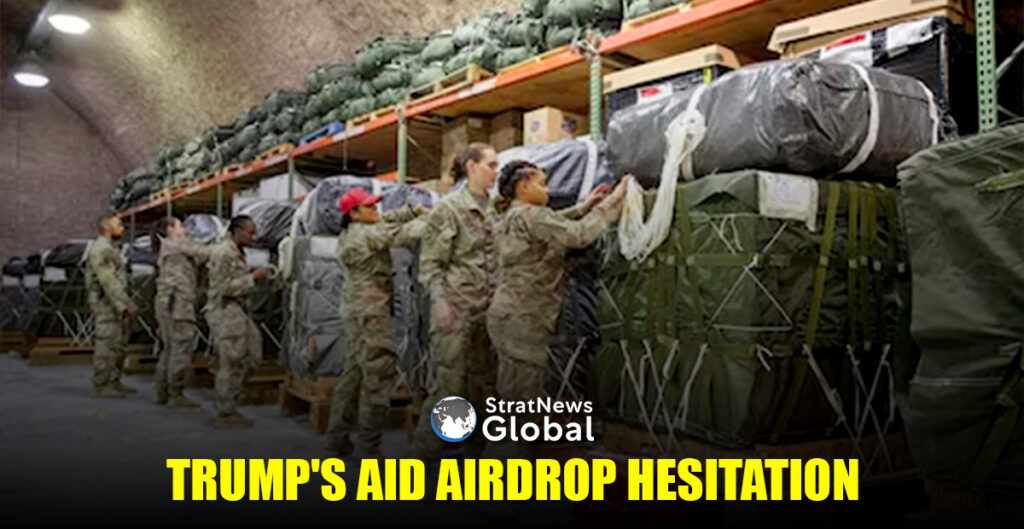
Trump Administration Never Seriously Considered US Air Drops Of Gaza Aid: Sources
While President Joe Biden’s administration delivered about 1,220 tons of food to Gaza via multiple air drops, U.S. officials say the administration of President Donald Trump has not seriously considered the option despite his expressed concern over starvation during Israel’s nearly two-year offensive against Hamas.
One source said it is seen as an unrealistic option because airdrops would not come close to meeting the needs of 2.1 million Palestinians.
This comes even as close U.S. allies, including Jordan, the United Arab Emirates and Britain, have carried out air drops of assistance to Gaza.
Humanitarian aid groups have long been critical of air drops of aid, calling them more symbolic than truly effective when the scale of the need in Gaza requires open land routes for large amounts of aid to enter the enclave.
The heavy packages could also present a danger to civilians on the ground rushing toward the parachuting aid.
“It just hasn’t been part of the discussions,” said one U.S. official, speaking on condition of anonymity to discuss internal Trump administration deliberations.
A source familiar with the issue said: “It hasn’t been a serious consideration because it’s not really a serious option at this moment.”
‘Absolutely Unrealistic’
Some U.S. officials war-gamed the option and found “it’s absolutely unrealistic,” said the source familiar with the matter. The source said it was unknown how “big a lift capacity” could be managed even if the Israelis approved U.S. use of the airspace.
A diplomatic source, speaking on condition of anonymity, said he was unaware of any U.S. interest in participating in the air drop effort.
Another official in a U.S.-allied country, which is taking part in the airdrops, said there had been no conversations with the United States about Washington taking part in the effort.
The official added that the United States was not providing logistical support for the airdrops being carried out by other countries.
Asked for comment, a White House official said the administration was open to “creative solutions” to the issue.
“President Trump has called for creative solutions ‘to help the Palestinians’ in Gaza. We welcome any effective effort that delivers food to Gazans and keeps it out of the hands of Hamas,” the White House official said.
Israel began allowing food air drops in late July, as global concern mounted about the humanitarian toll in Gaza from the war.
Mounting Pressure On Israel
Trump has backed efforts by the Gaza Humanitarian Foundation to distribute aid to Gazans. He has said the U.S. would work with other countries to provide more humanitarian assistance to the people of Gaza, including food and sanitation.
But he has also expressed frustration with the ongoing conflict, saying Hamas leaders would now be “hunted down”, telling reporters on July 26: “Hamas really didn’t want to make a deal. I think they want to die. And it’s very bad. And it got to be to a point where you’re going to have to finish the job.”
Israel faces intensifying international pressure over the humanitarian crisis in Gaza and its promotion of GHF’s aid operation, which has distribution sites only in southern Gaza and has been called dangerous and ineffective by aid groups and the United Nations – claims the group denies.
Deadly Hunger
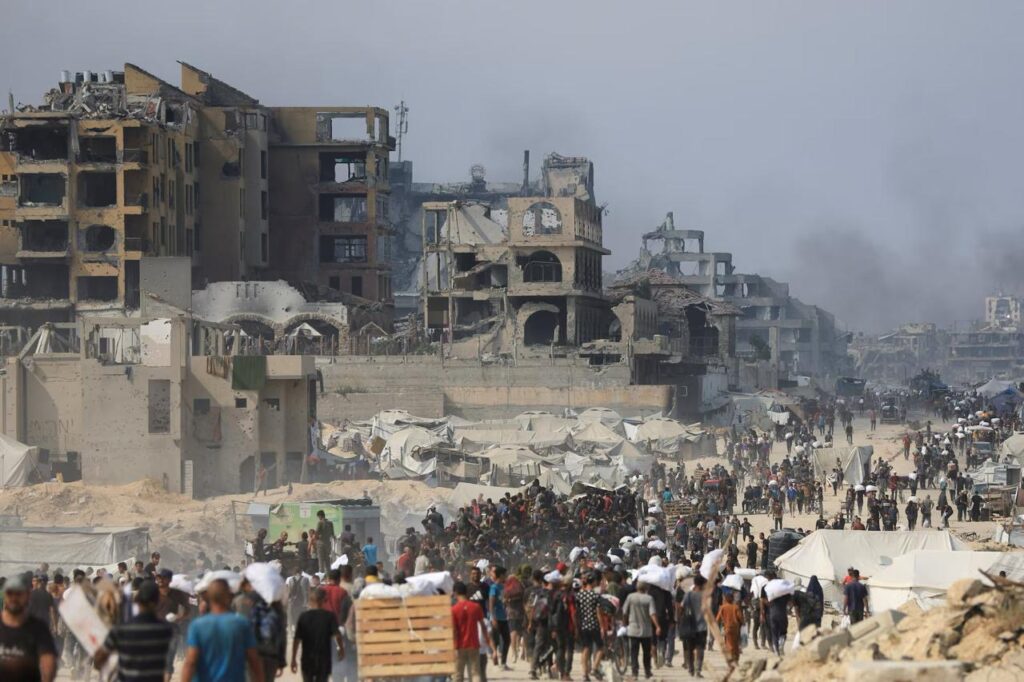
As the death toll from two years of war in Gaza nears 60,000, a growing number of people are dying from starvation and malnutrition, Gaza health authorities say, with images of starving children shocking the world and fueling international criticism of Israel over sharply worsening conditions.
Biden faced enormous pressure from fellow Democrats to alleviate the humanitarian suffering in Gaza. In addition to aid drops of food assistance, including ready-to-eat meals, Biden ordered the U.S. military to construct a temporary pier off Gaza for aid to be delivered to the enclave.
The pier, announced by the former president during a televised address to Congress in March 2024, was a massive endeavour that took about 1,000 U.S. forces to execute.
But bad weather and distribution challenges inside Gaza limited the effectiveness of what the U.S. military says was its biggest aid delivery effort ever in the Middle East. The pier was only operational for about 20 days and cost about $230 million.
(With inputs from Reuters)
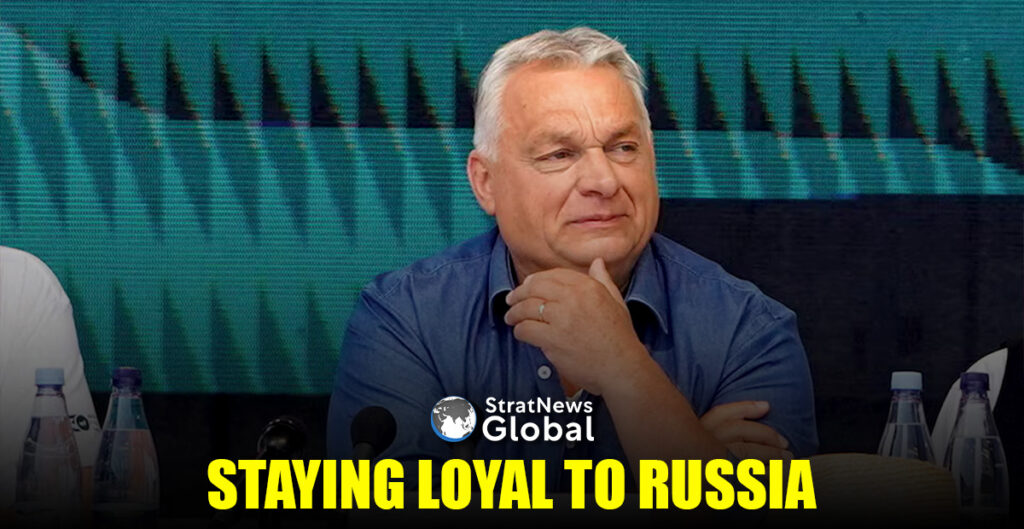
Hungary PM Orban Stands With Russia, Snubs EU Unity
Russia has emerged victorious in the Ukraine war, claimed Hungary’s right-wing Prime Minister Viktor Orban on Tuesday, ahead of the upcoming summit between US President Donald Trump and Russian President Vladimir Putin on Friday.
In power since 2010, Orban has been criticised by some European leaders for his government’s ties with Russia and opposition to military aid for Ukraine, while his cabinet is struggling to revive the economy from an inflation shock.
Orban, who has maintained close ties with Putin even after Russia’s February 2022 invasion of Ukraine, became the only European Union leader on Monday not to endorse a joint statement saying Ukraine should have the freedom to decide its future.
‘Ukrainians Have Lost The War’
“We are talking now as if this were an open-ended war situation, but it is not. The Ukrainians have lost the war. Russia has won this war,” Orban told the ‘Patriot’ YouTube channel in an interview.
“The only question is when and under what circumstances will the West, who are behind the Ukrainians, admit that this has happened and what will result from all this.”
Staying Loyal To Russia
Hungary, which gets most of its energy from Russia, has refused to send weapons to Ukraine, with Orban also strongly opposing Ukraine’s EU membership, saying it would wreak havoc on Hungarian farmers and the wider economy.
Orban said Europe had missed an opportunity to negotiate with Putin under former US President Joe Biden’s administration and now was at risk of its future being decided without its involvement.
“If you are not at the negotiating table, you are on the menu,” Orban said, adding that he partly opposed the EU’s joint statement on Ukraine as it made Europe look “ridiculous and pathetic.”
“When two leaders sit down to negotiate with each other, the Americans and the Russians … and you’re not invited there, you don’t rush for the phone, you don’t run around, you don’t shout in from the outside.”
(With inputs from Reuters)
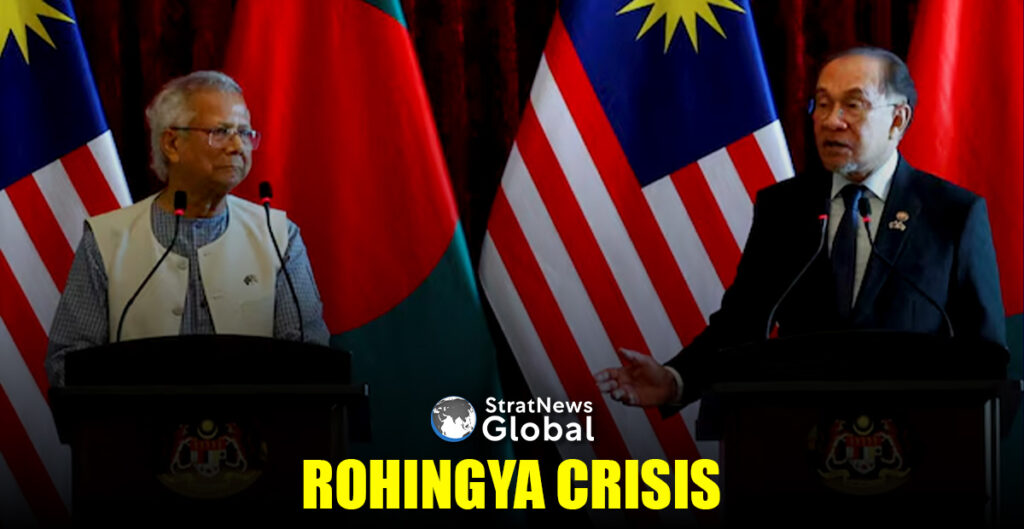
Malaysia, Partners To Send Delegation To Myanmar For Rohingya Aid
Malaysia, along with several regional partners, will depute a joint delegation to Myanmar aimed at advocating for peace and delivering humanitarian assistance to Rohingya refugees suffering in Bangladesh, Prime Minister Anwar Ibrahim of the Southeast Asian nation announced on Tuesday.
Bangladesh shelters more than 1 million Rohingya refugees in camps in its southeastern district of Cox’s Bazar, the world’s largest refugee settlement.
Anwar’s comments came at the start of a three-day visit by Bangladesh’s interim head, Nobel peace laureate Muhammad Yunus, to Malaysia.
“To secure peace in Myanmar is, of course, a great priority, along with immediate humanitarian assistance for the suffering first, the refugees and also the victims of earthquakes,” Anwar told a joint press briefing with Yunus.
Deepening Bilateral Ties
Muhammad Yunus and Anwar met bilaterally at Perdana Putra in Putrajaya on Tuesday, reaffirming their shared commitment to elevate Bangladesh–Malaysia relations into a deeper, future-focused strategic partnership.
The leaders began with a private one-on-one meeting, followed by a restricted session involving select senior officials. They led delegation-level discussions addressing a broad spectrum of bilateral topics, including trade, investment, migration, energy collaboration, the blue economy, education, and cultural exchanges.
“Our nations share a profound bond grounded in history, religion, and cultural understanding. Malaysia is a distinctive partner for Bangladesh, especially in human resources, trade, and people-to-people connections,” Yunus said.
Malaysian Prime Minister Anwar referred to Yunus as “a friend of Malaysia” and praised his leadership of Bangladesh’s interim government over the past year. He stressed the importance of enhancing trade ties and expanding cooperation in migrant worker welfare, education, and resolving the Rohingya crisis.
Malaysia and Bangladesh signed five pacts during Yunus’s visit, covering defence cooperation and collaboration in the supply and infrastructure of liquefied natural gas (LNG), petroleum products, and related facilities.
Myanmar Mission
Malaysia’s foreign minister will coordinate the Myanmar mission, set for the coming weeks, along with counterparts from Indonesia, the Philippines, and Thailand, added Anwar, who is chair of the ASEAN regional grouping this year.
“We are concerned with the burden placed on Bangladesh of having to cater for enormous numbers of Rohingya refugees.”
Escalating conflict and targeted violence against the Rohingya, a mostly Muslim minority in mainly Buddhist Myanmar’s western Rakhine state, have forced about 150,000 to flee to Bangladesh in the past 18 months, the United Nations said.
(With inputs from Reuters)
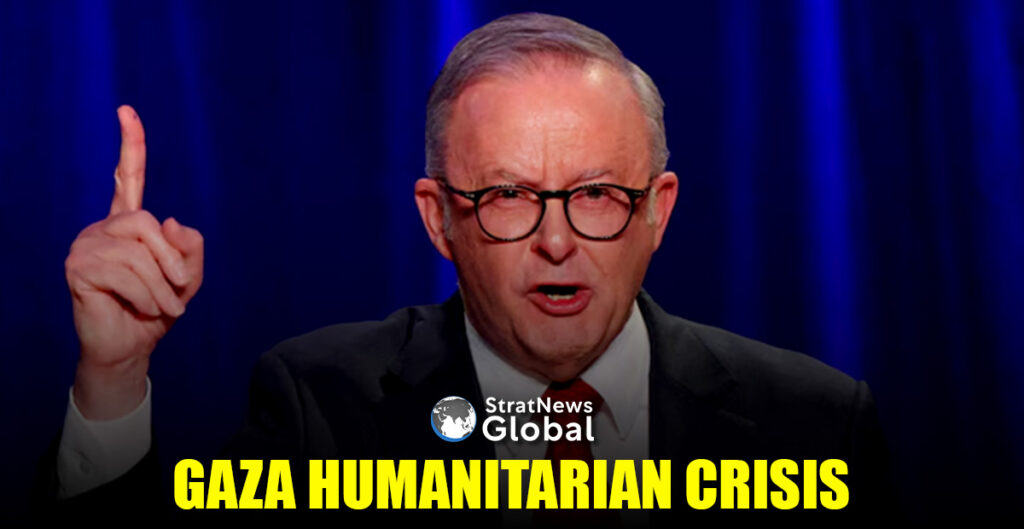
Australia PM Albanese Says Netanyahu ‘In Denial’ About Gaza Suffering
Australian Prime Minister Anthony Albanese said on Tuesday that his Israeli counterpart, Benjamin Netanyahu, was “in denial” about Gaza’s humanitarian crisis, following Australia’s announcement to recognise a Palestinian state for the first time.
Australia will recognise a Palestinian state at next month’s United Nations General Assembly, Albanese said on Monday, a move that adds to international pressure on Israel after similar announcements from France, Britain and Canada.
Albanese said on Tuesday that the Netanyahu government’s reluctance to listen to its allies contributed to Australia’s decision to recognise a Palestinian state.
“He again reiterated to me what he has said publicly as well, which is to be in denial about the consequences that are occurring for innocent people,” Albanese said in an interview with state broadcaster ABC, recounting a Thursday phone call with Netanyahu discussing the issue.
Australia’s decision to recognise a Palestinian state is conditional on commitments received from the Palestinian Authority, including that the Islamist militant group Hamas would have no involvement in any future state.
Right-leaning opposition leader Sussan Ley said the move, which breaks with long-held bipartisan policy over Israel and the Palestinian territories, risked jeopardising Australia’s relationship with the United States.
Sentiment Shift
Albanese said as little as two weeks ago, he would not be drawn on a timeline for recognition of a Palestinian state.
His incumbent centre-left Labour Party, which won an increased majority at a general election in May, has previously been wary of dividing public opinion in Australia, which has significant Jewish and Muslim minorities.
But the public mood has shifted sharply after Israel said it planned to take military control of Gaza, amid increasing reports of hunger and malnutrition amongst its people.
Tens of thousands of demonstrators marched across Sydney’s Harbour Bridge this month, calling for aid deliveries in Gaza as the humanitarian crisis worsened.
“This decision is driven by popular sentiment in Australia, which has shifted in recent months, with a majority of Australians wanting to see an imminent end to the humanitarian crisis in Gaza,” said Jessica Genauer, a senior lecturer in international relations at Flinders University.
Opposition leader Ley said the decision was “disrespectful” of key ally the United States, which opposes Palestinian statehood.
“We would never have taken this step because this is completely against what our principles are, which is that recognition, the two-state solution, comes at the end of the peace process, not before,” she said in an interview with radio station 2GB.
Neighbouring New Zealand has said it is still considering whether to recognise a Palestinian state, a decision that drew sharp criticism from former prime minister Helen Clark on Tuesday.
“This is a catastrophic situation, and here we are in New Zealand somehow arguing some fine point about whether we should recognise we need to be adding our voice to the need for this catastrophe to stop,” she said in an interview with state broadcaster RNZ.
“This is not the New Zealand I’ve known.”
(With inputs from Reuters)
Cape Verde Floods Overwhelm Island, Kill 8
At least eight people lost their lives as heavy flooding struck Cape Verde’s Sao Vicente island, overwhelming emergency services and disrupting major roads, a regional civil protection councillor stated on Tuesday.
On Monday morning torrential rains lashed the northern island in the Atlantic archipelago located off West Africa, swamping roads and sweeping away vehicles and people.
Municipal councillor Jose Carlos da Luz told a state broadcaster seven people had died in floods and one person was electrocuted, adding that three others were still missing.
Thousands Displaced
In a report on Monday, the International Federation of Red Cross and Red Crescent Societies put the death toll at nine and said 1,500 people had been displaced on Sao Vicente.
Sao Vicente usually records 116 mm of rain in a year, according to Cape Verde’s meteorology institute. But early on Monday 193 mm fell in just five hours, according to Ester Brito, an executive at the institute.
“It is a rare situation because what was recorded is above our 30-year climatological average,” she told Reuters, adding that in just two hours more rain fell than the island typically receives annually.
The US National Hurricane Center said on Monday that Tropical Storm Erin was located about 280 miles (455 km) west-northwest of Cape Verde and packing maximum sustained winds of 45 miles per hour (75 kph).
‘Panic And Despair’
Interior Minister Paulo Rocha said on Monday that floodwaters disrupted transport across Sao Vicente and severed the main road to Cesaria Evora International Airport, though the facility remained operational. Rockfalls also blocked traffic.
“It was a difficult night marked by panic and despair,” Rocha told public radio, adding that first responders were inundated with distress calls.
Rescue and cleanup operations were ongoing, but Rocha said authorities were mobilising resources that would allow the island to quickly return to normal life.
(With inputs from Reuters)
UK, France Recognise Palestine, But Is That Enough?
Two of Israel’s closest allies, the United Kingdom and France, have announced that they will formally recognise the State of Palestine in September. The decision marks a notable shift after months in which many Western leaders, while condemning civilian casualties, maintained trade ties with Israel and, in some cases, cracked down on pro-Palestinian protests.
The move will place London and Paris among 149 of the 193 United Nations member states that already recognise Palestine, following countries such as Spain and Ireland, which have consistently spoken out against the crisis in Gaza. It also comes amid intensifying humanitarian concerns, with aid blockades, mass displacement, and civilian deaths mounting since October 2023.
The moral debate surrounding Palestine is long-standing. Experts have likened aspects of the current oppression to historical atrocities, including the genocide between 1933 and 1945. Then, the UK and France were among the first to confront Nazi Germany though in 1939, their decision was largely motivated by the geopolitical imperative to protect Poland. Today, both governments frame their stance on Gaza as a matter of moral outrage.
Yet the crisis is far from new. Since last October, the death toll in Gaza has exceeded 60,000, while UN agencies have repeatedly warned of famine conditions caused by restrictions on humanitarian aid. The suffering of Palestinians has been a decades-long reality, and recognition alone is unlikely to address the root causes.
Unlike the 1930s, today’s political landscape features sustained public pressure, with large-scale protests across capitals and growing calls from international bodies such as the International Court of Justice for urgent action.
Recognition of Palestinian statehood by two major European powers is politically significant and diplomatically symbolic, but history suggests it is only a first step. Without concrete measures from ensuring unimpeded humanitarian aid to holding all parties accountable under international law the danger remains that such recognition will amount to a symbolic gesture rather than a turning point.
(This article was written by Tisya Sharma, she is an intern at StratNewsGlobal)