

Support us by contributing to StratNewsGlobal on the following UPI ID
ultramodern@hdfcbank

Strategic affairs is our game, South Asia and beyond our playground. Put together by an experienced team led by Nitin A. Gokhale. Our focus is on strategic affairs, foreign policy and international relations, with higher quality reportage, analysis and commentary with new tie-ups across the South Asian region.
You can support our endeavours. Visit us at www.stratnewsglobal.com and follow us on YouTube, Twitter, Facebook and Instagram.
र 500 per month
र 1000 per month
र 5000 per year
र 10000 per year
Donate an amount of your choice
र 500 per month
Donate र 500 per month

र 1000 per month
Donate र 1000 per month
र 5000 per year
Donate र 5,000 per year
र 10000 per year
Donate र 10,000 per year
Donate an amount of your choice
Donate an amount of your choice
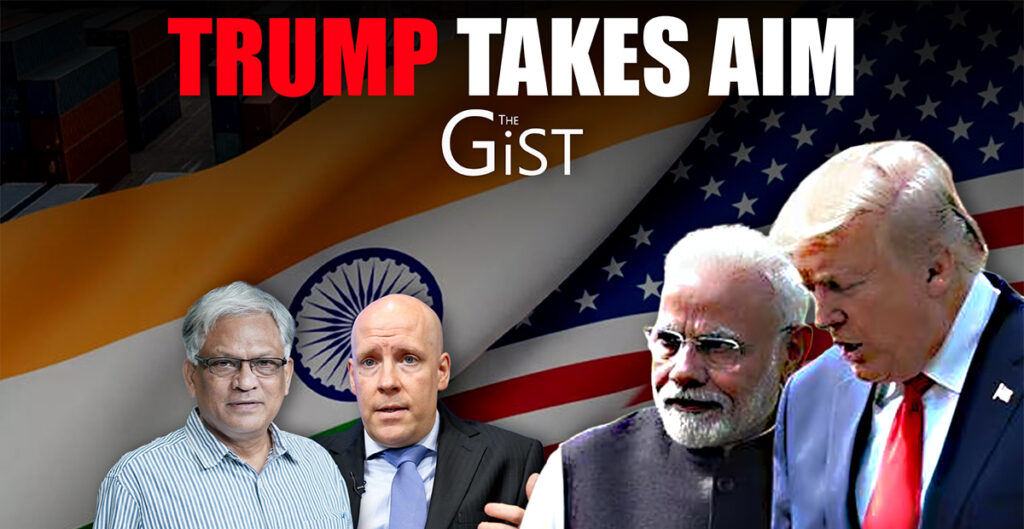

Trump 1.0 was Relatively Benign, Trump 2.0 Is Taking Direct Aim At India
Amid all the Trump tariff hoo-haa, Richard Rossow of the Centre for Strategic and International Studies in the US, who was a guest on The Gist, made an interesting point:
“It’s always important to remember that both our economies are less driven by manufacturing than by services. And US services takes up about 80% of GDP and in India that’s about 50%. And in the trade talks so far, when you think about manufactured goods … it’s a relatively small part of our economies.”
Nevertheless, India and the US are at a standoff and Rossow believes that it has not escalated into a fight because India chosen, so far, not to fight.
“India is still trying to pull out of the fire what it can and salvage the relationship, seeing if there is still a chance to get a deal across the finish line .. in which case the relationship improves quite a bit.”
But India is also diversifying, seeking to cement new commercial relationships, what Rossow describes as “deeper commercial relationships with a range of other partners. So great if I can get the deal done but it is thoughtfully building up ties with other partners.”
In his view, India should not have been terribly surprised at what has happened since the strains were visible in Trump’s first term itself. He called India tariff king and complained about the tariffs levied on the import of Harley Davidson motorcycles.
None of this struck “Homeland India”, and the warning signals were ignored. But now, Trump is going after things are a bit more politically sensitive, such as access to agricultural markets.
He acknowledged that “When we talk about opening up ….you are talking about half the population … that’s surviving on growing a decent harvest of potatoes … so I fully understand India has an extreme red line that can’t be crossed no matter how much Trump pushes.”
President Trump is throwing things at India that hit the political base a little more, which creates a different level of danger and concern, he said.
Tune in for more in this conversation with Richard Rossow of the Centre for Security and International Studies.
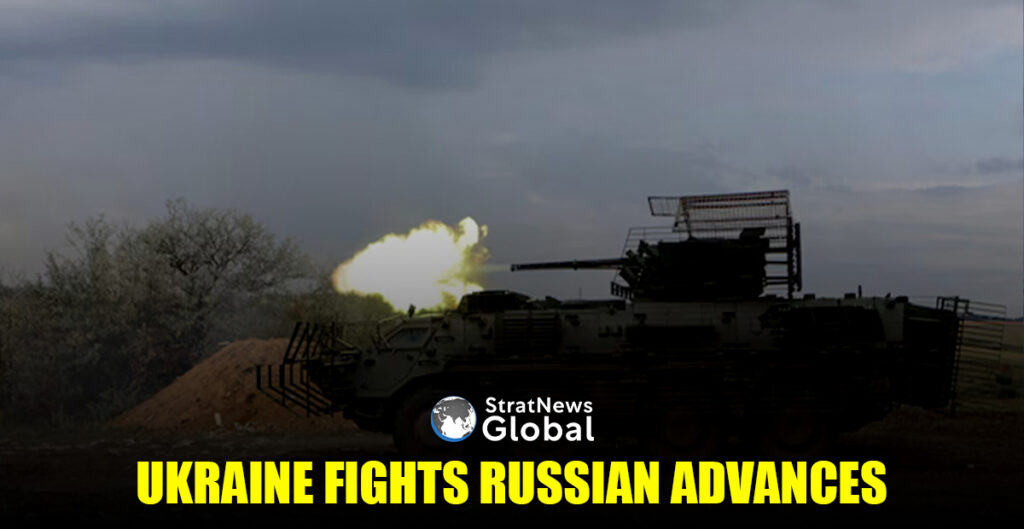
Ukraine Battles Russian Territorial Advances As Trump-Putin Summit Proceeds Without Kyiv
Small groups of Russian troops on Tuesday advanced further into eastern Ukraine ahead of a Putin–Trump summit, raising European fears of a peace deal forcing Ukraine to accept reduced borders.
In one of the most extensive incursions so far this year, Russian troops advanced near the coal-mining town of Dobropillia, part of Putin’s campaign to take full control of Ukraine’s Donetsk region. Ukraine’s military dispatched reserve troops, saying they were in difficult combat against Russian soldiers.
‘Some Swapping Of Territories’
Trump has said any peace deal would involve “some swapping of territories to the betterment of both” Russia and Ukraine, which has depended on the U.S. as its main arms supplier.
But because all the areas being contested lie within Ukraine, President Volodymyr Zelenskyy and his European Union allies fear that he will face pressure to give up far more than Russia does.
In the first U.S.-Russia summit since 2021, Putin and Trump will meet on Friday at Elmendorf Air Force Base in Anchorage, Alaska, two White House officials said.
‘Listening Exercise’
Trump’s administration on Tuesday tempered expectations for major progress toward a ceasefire, calling the summit a “listening exercise.”
Along that line, U.S. Secretary of State Marco Rubio said the president wanted to size up Putin directly.
“The president feels like, look, I’ve got to look at this guy across the table. I need to see him face-to-face. I need to hear him one-on-one. I need to make an assessment by looking at him,” Rubio told WABC radio in New York on Tuesday.
Virtual Meeting Before Summit
Zelenskyy and most of his European counterparts have said a lasting peace cannot be secured without Ukraine at the negotiating table, and a deal must comply with international law, Ukraine’s sovereignty and its territorial integrity.
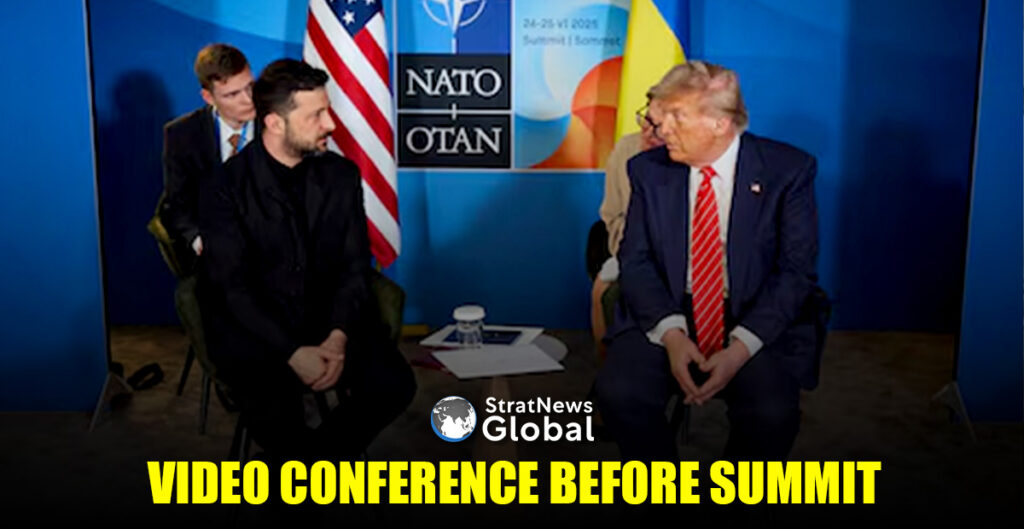
They will hold a virtual meeting with Trump on Wednesday to underscore those concerns before the Putin summit.
“Substantive and productive talks about us without us will not work,” Zelenskyy said in an interview on Tuesday with NewsNation. “Just as I cannot say anything about another state or make decisions for it.”
Zelenskyy has said Russia must agree to a ceasefire before territorial issues are discussed. He would reject any Russian proposal that Ukraine pull its troops from the eastern Donbas region and cede its defensive lines.
Asked why Zelenskyy was not joining the U.S. and Russian leaders at the Alaska summit, White House spokeswoman Karoline Leavitt told reporters the bilateral meeting had been proposed by Putin, and Trump accepted to get a “better understanding” of “how we can hopefully bring this war to an end.”
Trump is open to a trilateral meeting with Putin and Zelenskyy later, Leavitt said.
Russia Advances In Eastern Ukraine
Sergei Markov, a former Kremlin adviser, suggested Russian advances could increase pressure on Ukraine to yield territory under any deal. “This breakthrough is like a gift to Putin and Trump during the negotiations,” he said.
Despite a troop shortage, Ukraine’s military said it had retaken two villages in the eastern region of Sumy on Monday, part of a small reversal in more than a year of slow, attritional Russian gains in the southeast.
Russia, which launched its full-scale invasion of Ukraine in February 2022, has mounted a new offensive this year in Sumy after Putin demanded a “buffer zone” there.
Ukraine and its European allies fear that Trump, keen to claim credit for making peace and seal new business deals with Russia’s government, will end up rewarding Putin for 11 years of efforts to seize Ukrainian territory, the last three in open warfare.
European leaders have said Ukraine must be capable of defending itself if peace and security are to be guaranteed on the continent, and that they are ready to contribute further.
‘Ukraine Can’t Lose This War’
“Ukraine cannot lose this war, and nobody has the right to pressure Ukraine into making territorial or other concessions, or making decisions that smack of capitulation,” Polish Prime Minister Donald Tusk said at a government meeting. “I hope we can convince President Trump about the European position.”
Zelenskyy has said he and European leaders “all support President Trump’s determination.”
Hungarian Prime Minister Viktor Orban, Putin’s principal ally in Europe, was the only leader not to join the EU’s statement of unity. He mocked his counterparts as “sidelined” and said Russia had already defeated Ukraine.
“The Ukrainians have lost the war. Russia has won this war,” Orban told the “Patriot” YouTube channel in an interview.
Trump had recently hardened his stance towards Russia, agreeing to send more U.S. weapons to Ukraine and threatening hefty trade tariffs on buyers of Russian oil in an ultimatum that has now lapsed.
(With inputs from Reuters)
Trump To Discuss Ukraine With Zelenskyy, European Leaders Before Putin Summit
Europe and Ukraine’s leaders are set to meet virtually with United States President Donald Trump on Wednesday, ahead of his summit with Russian President Vladimir Putin, aiming to emphasise the risks of compromising Kyiv’s interests for the sake of a ceasefire.
Trump hosts Putin, a pariah in the West since Russia’s 2022 invasion of Ukraine, at talks in Alaska on Friday that the U.S. president has said will serve as a “feel-out” meeting in his efforts to end the Russo-Ukraine war.
Trump-Putin Summit
Trump agreed last week to the first U.S.-Russia summit since 2021, abruptly shifting course after weeks of voicing frustration with Putin for resisting the U.S. peace initiative. Trump said his envoy had made “great progress” at talks in Moscow.
The U.S. president says both Kyiv and Moscow will have to cede land to end the war. Russian troops have already occupied almost a fifth of Ukraine.
The unpredictability of how the summit will play out has fuelled European fears that the U.S. and Russian leaders could take far-reaching decisions and even seek to coerce Ukraine into an unfavourable deal.
“We are focusing now to ensure that it does not happen – engaging with U.S. partners and staying coordinated and united on the European side. Still a lot of time until Friday,” said one senior official from Eastern Europe.
Trump’s administration tempered expectations on Tuesday for major progress toward a ceasefire, calling his meeting with Putin in Alaska a “listening exercise.”
Video Conference With Trump
The video conference among Trump, Ukrainian President Volodymyr Zelenskyy and the leaders of Germany, Finland, France, Britain, Italy, Poland and the European Union is expected to take place at 1300 GMT (1500 CET), a German government spokesperson said.
NATO’s secretary general will also attend the conference hosted by German Chancellor Friedrich Merz.
Ukraine hopes the meeting will serve – at least partially – as a European counterweight to the summit in Alaska.
European leaders, who are wary of provoking Trump’s ire, have repeatedly emphasised that they welcome his peace efforts, while underlining that there should be no deal about Ukraine without Ukraine’s participation.
Half a dozen senior European officials told Reuters that they see a risk of a deal being struck that is unfavourable for Europe and Ukraine’s security. They said European unity would be vital if that happened.
A source familiar with internal U.S. deliberations said it could not be ruled out that Trump would seek a deal directly with Putin without involving Ukraine or Europe. But the source voiced doubt about that, saying it could cause problems with Kyiv and the EU.
White House press secretary Karoline Leavitt told reporters on Tuesday that the summit will be a “listening exercise” for Trump to hear what it will take to get to a deal.
After the call, Trump and Vice President JD Vance were expected to speak to European leaders at a separate online meeting at 1300 GMT (1500 CET), the German spokesperson said.
That will be followed at 1430 GMT by an online meeting of the “coalition of the willing”, a group of countries working on plans to support Ukraine in the event of a ceasefire.
Mounting Battlefield Pressure
A Gallup poll released last week found that 69% of Ukrainians favour a negotiated end to the war as soon as possible. But polls also show Ukrainians do not want peace at any cost if that means crushing concessions.
Ahead of the calls, Zelenskyy said it would be impossible for Kyiv to agree to a deal that would require it to withdraw its troops from the eastern Donbas region, a large swathe of which is already occupied by Russia.
That, he told reporters on Tuesday, would deprive Ukraine of a vast defensive network in the region, easing the way for Russia to mount a new push deeper into Ukraine in the future.
Territorial issues, he added, could only be discussed once a ceasefire has been put in place and Ukraine has received security guarantees.
Moscow’s troops have recently ramped up pressure on the battlefield, tightening their stranglehold on the cities of Pokrovsk and Kostyantynivka in eastern Ukraine.
(With inputs from Reuters)
PM Modi Likely To Meet Trump In US Next Month, Indian Express Reports
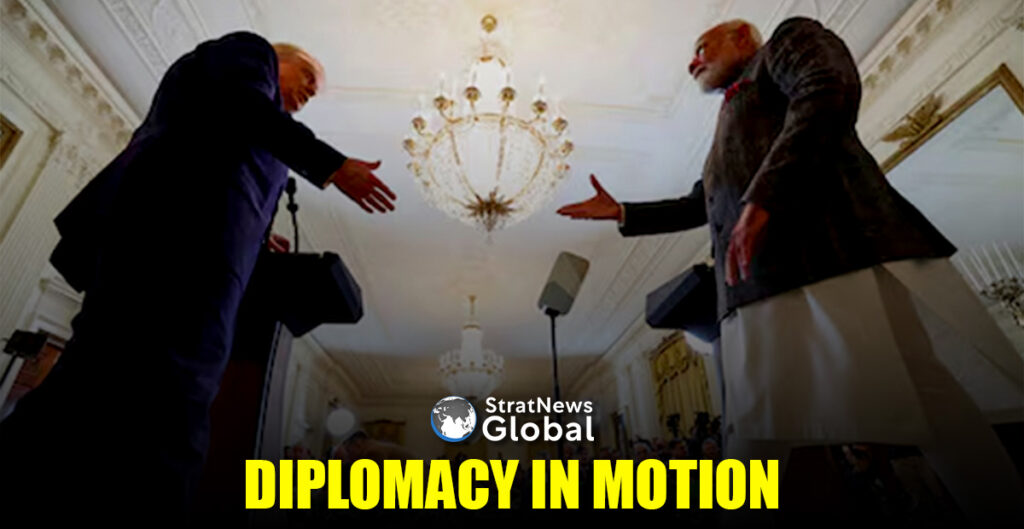
Prime Minister Narendra Modi is expected to meet U.S. President Donald Trump next month during his visit to the United States for the UN General Assembly, the Indian Express reported on Wednesday, citing its sources.
India’s foreign ministry did not immediately respond to a request for comment. An Indian official familiar with the matter said a decision has not yet been taken, and that countries usually reserve slots for the General Debate at the assembly, which is why India’s “head of government” features in a provisional list of speakers on September 26.
‘Not Decided Yet’
“The list will go through revisions,” the official said, adding that it had not yet been decided if Modi would be going to the assembly.
The General Assembly kicks off on September 9, but the debate, the annual meeting of heads of state and government, will be held from September 23-29.
Although the reason for the potential visit will be to attend the UN meeting in New York, a key objective will be to hold talks with Trump and iron out trade and tariff issues that have led to some souring of ties between the two countries, the newspaper reported.
Trump’s Tariff Salvo
News of a possible Modi trip to the U.S. comes days after Trump announced an additional 25% tariff on Indian goods to penalise New Delhi for continuing to buy Russian oil.
The penalty took the total levy on Indian goods exported to the U.S. to 50%, among the highest levied on any U.S. trading partner.
Trade Talks Collapsed
Trade talks between New Delhi and Washington collapsed after five rounds of negotiations over disagreement on opening India’s vast farm and dairy sectors and stopping Russian oil purchases.
On Tuesday, U.S. Treasury Secretary Scott Bessent said several large trade agreements were still waiting to be completed, including with Switzerland and India, but New Delhi had been “a bit recalcitrant” in talks with Washington.
Bessent told Fox Business Network’s “Kudlow” he hoped the Trump administration could wrap up its trade negotiations by the end of October.
“That’s aspirational, but I think we are in a good position,” he said, adding, “I think we can be, we will have agreed on substantial terms with all the substantial countries.”
(With inputs from Reuters)
Malaysia: Top Court Grants Ex-PM Najib Right To Pursue House Arrest Appeal
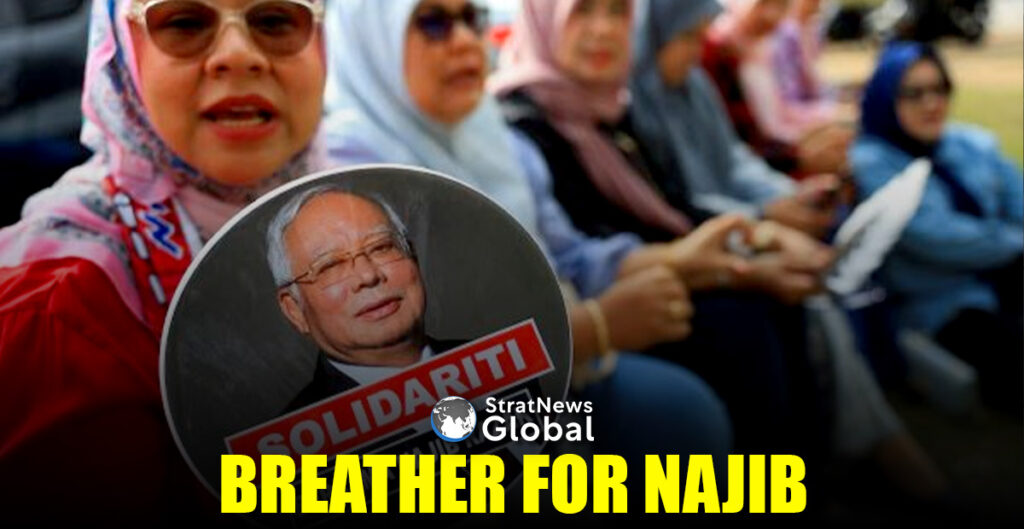
Former Malaysian Prime Minister Najib Razak, who is serving a lengthy prison sentence for his role in the multi-billion-dollar 1MDB scandal, won a key legal victory on Wednesday when the country’s highest court allowed him to move forward with his bid to serve his term under house arrest.
Najib, imprisoned since August 2022 in one of several cases related to 1MDB, has been seeking a judicial review to compel authorities to confirm the existence of and execute a royal order issued by former King Al-Sultan Abdullah entitling him to serve the remainder of his jail sentence under house arrest.
In a unanimous decision, the Federal Court, Malaysia’s top tribunal, said on Wednesday it accepted that there was a royal document related to granting house arrest for Najib but it was not in a position to determine its authenticity.
Najib has said an addendum order accompanied a pardon by Al-Sultan Abdullah in January last year that halved his sentence from 12 years to six.
The case has stirred intrigue in Malaysia, with multiple government authorities, including members of the pardons board, for months denying knowledge of the document despite the former king’s office saying an addendum had been issued.
The Federal Court’s three-member panel said while it accepted the order’s existence, it could not determine whether it was truly issued as part of the pardon.
No Further Arguments
The court declined a request by Najib’s lawyer to hear further arguments, referring the case back to a lower tribunal.
“We remit the case to the High Court for the hearing of the substantive judicial review proceedings before a new judge,” said Federal Court judge Zabariah Mohd Yusof.
Najib was found guilty in 2020 of criminal breach of trust and abuse of power for illegally receiving funds misappropriated from a unit of state investor 1Malaysia Development Berhad (1MDB).
Although some 1MDB-linked charges against him have been dropped, Najib is still awaiting a verdict in the biggest trial he faces over the scandal, with the court expected to hear closing arguments in October. He has denied all the charges against him.
Addendum’s Existence Undisputed
Wednesday’s decision is expected to boost calls by Najib’s party, the United Malays National Organisation (UMNO), for him to be granted house arrest.
UMNO campaigned against current Prime Minister Anwar Ibrahim, but joined Anwar’s coalition in government following a 2022 election that resulted in a hung parliament.
More than 100 people gathered outside the court complex on Wednesday to support Najib, who lost the 2018 election amid public anger over 1MDB.
Najib initiated his judicial review in April last year. The bid was initially dismissed by the Kuala Lumpur High Court, but was overturned on appeal in January, after Najib’s lawyers produced a letter from the former king’s palace saying there was an addendum.
The attorney-general’s office appealed the decision questioning the document’s admissibility.
A lawyer acting on behalf of the attorney-general told the court in July he did not dispute the document’s existence, but was challenging the way in which it was being submitted as evidence.
The Federal Court said the concession by the attorney-general that the order existed had a significant impact on its decision on Wednesday.
“As of now, the addendum order exists and its status vis-a-vis its validity or whether it is true needs to be ascertained at a substantive hearing,” judge Zabariah said.
The court fixed August 18 for the case to be heard at the High Court.
(With inputs from Reuters)
US Sanctions Congo Armed Group And Mining Firms Over Illicit Mineral Trade
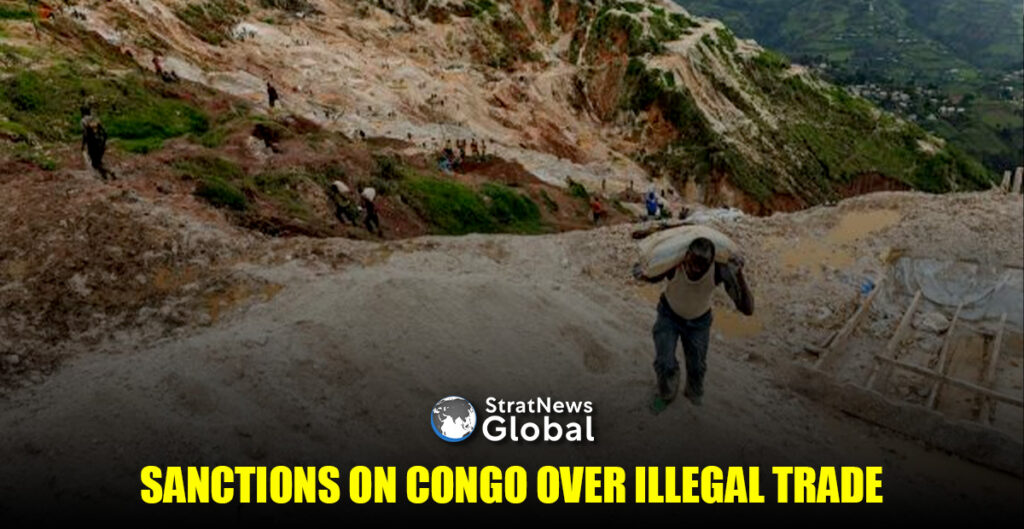
On Tuesday, the United States imposed sanctions on an armed group linked to Congo’s military, along with a Congolese mining company and two exporters based in Hong Kong, citing their involvement in armed violence and the illegal sale of critical minerals.
The measures are the latest taken by the administration of President Donald Trump to try to bring peace to eastern Congo, where Rwanda-backed M23 rebels staged a lightning advance earlier this year, spurring violence that has killed thousands of people.
The Treasury Department said it was putting sanctions on the Coalition des Patriotes Resistants Congolais-Forces de Frappe (PARECO-FF), a militia that it said controlled mining sites in the mineral-rich region of Rubaya from 2022 to 2024.
New Sanctions
Rubaya, now controlled by M23, produces 15% of the world’s coltan, which is processed into a heat-resistant metal called tantalum that is in high demand from makers of mobile phones, computers and other applications in the electronics, aerospace and medical industries.
The new sanctions, which restrict trade with U.S. companies and persons, also target the Congolese mining company Cooperative des Artisanaux Miniers du Congo (CDMC), which the Treasury Department said sold critical minerals smuggled from PARECO-FF areas of control, and the Hong Kong-based export companies East Rise Corporation Limited and Star Dragon Corporation Limited, which it said bought those minerals.
A senior U.S. government official, speaking on condition of anonymity, said Washington was seeking to raise the cost of illicit trade “to make the licit trade that much more appealing.”
The Trump administration hopes an eventual peace deal will attract billions in Western investments to a region rich in tantalum, gold, cobalt, copper, lithium and other minerals.
A report by a U.N. group of experts published last month said Congo’s army had received support from PARECO-FF in late 2024 and early 2025.
A Congolese government spokesperson and East Rise did not immediately respond to requests for comment on Tuesday. Star Dragon, CDMC and PARECO-FF could not be reached for comment.
Peace Talks
Jason Stearns, a Congo expert, said he was surprised that PARECO-FF, not M23, had been targeted in the new mining-related sanctions but said the move might be aimed at not derailing talks going on in Doha.
Qatar is hosting direct talks between Congo and M23, while Washington is hosting talks between Congo and Rwanda.
Congo, the United Nations and Western powers say Rwanda is supporting M23 by sending troops and arms.
Rwanda has long denied helping M23 and says its forces are acting in self-defence against Congo’s army and ethnic Hutu militiamen linked to the 1994 Rwandan genocide.
The senior U.S. official acknowledged M23 was involved in the illicit trade of minerals and noted that M23 has already had sanctions placed on it by the U.S. and the United Nations.
A U.S. sanctions announcement in January 2013 said M23 was “committing serious violations of international law involving the targeting of children in situations of armed conflict in the DRC, including killing and maiming, sexual violence, abduction, and forced displacement.”
It made no mention of minerals smuggling.
Last year, the Treasury Department put sanctions on the broader Alliance Fleuve Congo rebel coalition, of which M23 is a central member. It has also sanctioned members of the M23 leadership.
The senior U.S. official said the Trump administration’s diplomacy was “progressing” and that sanctions were a way of targeting “spoilers” seeking to profit off the illicit mineral trade.
It wanted all parties to realize there would be a brighter economic future if U.S. companies had confidence that they could invest in a “stable and peaceful” eastern Congo, the official said.
(With inputs from Reuters)
Mexico Transfers 26 Suspected Cartel Members To U.S. Amid Trump Pressure
Mexico on Tuesday handed over 26 alleged members of drug cartels to the United States, responding to mounting pressure from President Donald Trump to take stronger action against the country’s powerful drug gangs.
Authorities shipped 26 prisoners wanted in the U.S. for ties to drug-trafficking groups, Mexico’s attorney general’s office and security ministry said in a joint statement.
Mexico said the U.S. Department of Justice had requested their extradition and that it would not seek the death penalty for the accused cartel members.
The transfer is the second of its kind this year. In February, Mexican authorities sent 29 alleged cartel leaders to the U.S., sparking a debate about the political and legal grounds for such a move.
Extradition Of Mexican Nationals
That Mexican President Claudia Sheinbaum permitted yet another large-scale extradition of Mexican nationals underscores the balancing act she faces as she seeks to appease Trump while also avoiding unilateral U.S. military action in Mexico.
In a statement, the U.S. Embassy said among those extradited were key figures in the Jalisco New Generation Cartel and the Sinaloa Cartel, which are Mexico’s two dominant organized crime groups.
“This transfer is yet another example of what is possible when two governments unite against violence and impunity,” U.S. Ambassador to Mexico Ronald Johnson said in a statement. “These fugitives will now face justice in American courts, and the citizens of both our nations will be safer.”
Trump has tied tariffs on Mexico to the deadly fentanyl trade, claiming the country hasn’t tackled drug cartels aggressively enough. Last week, he directed the Pentagon to prepare operations against Mexican drug gangs that have been designated global terrorist organizations.
Sheinbaum has said the U.S. and Mexico are nearing a security agreement to expand cooperation in the fight against cartels. But she has flatly rejected suggestions by the Trump administration that it could carry out unilateral military operations in Mexico.
(With inputs from Reuters)
Scarborough Shoal: China Accuses US Of Violation
A US Navy destroyer was tracked and “driven away” by China’s military near the disputed Scarborough Shoal in the South China Sea, the Chinese defence ministry said on Wednesday, calling it a violation of its sovereignty.
The first known US military operation in at least six years within the shoal’s waters came a day after the Philippines accused Chinese vessels of “dangerous manoeuvres and unlawful interference” during a supply mission around the atoll.
In a statement, the Chinese military’s Southern Theatre Command said the USS Higgins had entered the waters “without approval of the Chinese government” on Wednesday.
‘High Alert At All Times’
“The US move seriously violated China’s sovereignty and security, severely undermined peace and stability in the South China Sea,” it added, vowing to keep a “high alert at all times”.
The US Indo-Pacific Command and the US embassy in Beijing, the Chinese capital, did not immediately respond to requests for comment.
China claims almost the entire South China Sea, despite overlapping claims by Brunei, Indonesia, Malaysia, the Philippines, Taiwan and Vietnam.
‘Freedom Of Navigation’ Operations
The United States regularly carries out “freedom of navigation” operations in the South China Sea, challenging what it says are curbs on passage imposed by China and other claimants.
The Scarborough Shoal has been a major source of tension in the South China Sea, a conduit for more than $3 trillion of annual ship-borne commerce.
The actions of Chinese vessels in the shoal this week also resulted in a collision of two of them, Manila said, the first such known in the area.
China’s coast guard said it had taken “necessary measures” to expel Philippine vessels from the waters.
In 2016, an international arbitral tribunal ruled there was no basis in international law for Beijing’s claims, based on its historic maps. China does not recognise that decision, however.
(With inputs from Reuters)
Golden Dome To Shield US With 4 Layers Of Defence
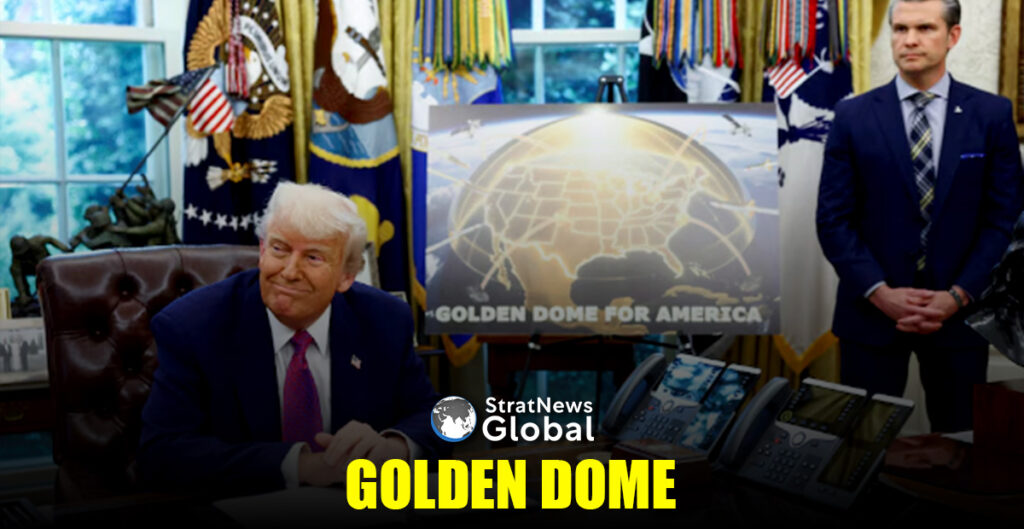
The Trump administration’s flagship Golden Dome missile defence system is set to feature four layers — one satellite-based and three land-based — with 11 short-range batteries spread across the continental US, Alaska, and Hawaii, as per a US government slide presentation first reported by Reuters.
The slides, tagged “Go Fast, Think Big!” were presented to 3,000 defence contractors in Huntsville, Alabama, last week and reveal the unprecedented complexity of the system, which faces an ambitious 2028 deadline set by US President Donald Trump.
Uncertainties Over Basic Architecture
The system is estimated to cost $175 billion, but the slides show uncertainties still loom over the basic architecture of the project because the number of launchers, interceptors, ground stations, and missile sites needed for the system has yet to be determined.
“They have a lot of money, but they don’t have a target of what it costs yet,” said one US official. So far Congress has appropriated $25 billion for Golden Dome in Trump’s tax-and-spend bill passed in July. Another $45.3 billion is earmarked for Golden Dome in his 2026 presidential budget request.
Intended as a multi-layered missile defence shield for the United States, Golden Dome draws inspiration from Israel’s Iron Dome, but is significantly bigger due to the geography it will need to protect and the complexity due to the varied threats it will face.
According to the slides, the system architecture consists of four integrated layers: a space-based sensing and targeting layer for missile warning and tracking as well as “missile defence” and three land-based layers consisting of missile interceptors, radar arrays, and potentially lasers.
US To Add Third Site
One surprise was a new large missile field – seemingly in the Midwest according to a map contained in the presentation – for Next Generation Interceptors (NGI) which are made by Lockheed Martin and would be a part of the “upper layer” alongside Terminal High Altitude Area Defence (THAAD) Aegis systems which are also made by Lockheed.
NGI is the modernized missile for the Ground-Based Midcourse Defence (GMD) network of radars, interceptors and other equipment – currently the primary missile defence shield to protect the United States from intercontinental ballistic missiles from rogue states.
The US operates GMD launch sites in southern California and Alaska. This plan would add a third site in the Midwest to counter additional threats.
Other technical hurdles the slides identified included communication latency across the “kill chain” of systems. Contractors such as Lockheed, Northrop Grumman, RTX, and Boeing have a variety of missile defence systems.
No Mention Of SpaceX
Notably, the slides did not mention Elon Musk’s SpaceX, which was part of a bid for Golden Dome contracts alongside software maker Palantir and defence systems manufacturer Anduril.
The Pentagon said it is gathering information “from industry, academia, national labs, and other government agencies for support to Golden Dome” but it would be “imprudent” to release more information on a programme in these early stages.
One key goal for Golden Dome is to shoot targets down during their “boost phase,” the slow and predictable climb through the Earth’s atmosphere of a missile. Rather, it seeks to field space-based interceptors that can more quickly intercept incoming missiles.
The presentation highlighted that the United States “has built both interceptors and re-entry vehicles” but has never built a vehicle that can handle the heat of reentry while targeting an enemy missile.
The last lines of defence dubbed the “under layer” and “Limited Area Defence” will include new radars and current systems like the Patriot missile defence system and a new “common” launcher that will launch current and future interceptors against all threat types.
These modular and relocatable systems would be designed to minimise reliance on prepared sites, allowing for rapid deployment across multiple theaters.
Timelines
Space Force General Michael Guetlein, confirmed last month to lead the Golden Dome project, has 30 days from his July 17 confirmation to build a team, another 60 days to deliver an initial system design, and 120 days to present a full implementation plan, including satellite and ground station details, people briefed on a memo signed by Defence Secretary Pete Hegseth have told Reuters.
(With inputs from Reuters)
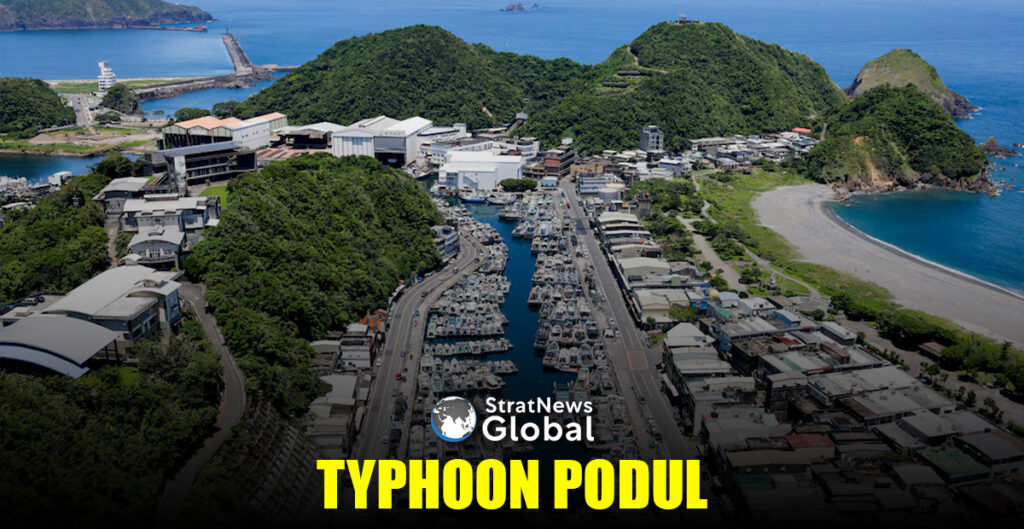
Taiwan Braces For Typhoon Podul; 5,000 Evacuated, Flights Cancelled
A vast stretch of southern and eastern Taiwan remained shut on Wednesday, with hundreds of flights cancelled and thousands evacuated, as the island braced for the arrival of Typhoon Podul later in the day.
Taiwan is regularly hit by typhoons, generally along its mountainous, sparsely populated east coast facing the Pacific.
The mid-strength Typhoon Podul, packing wind gusts as strong as 191 kph (118 mph), was heading for the southeastern city of Taitung as it intensifies and was expected to make landfall nearby on Wednesday afternoon, weather officials said.
Text Message Alert
“Destructive winds from typhoon expected. Take shelter as soon as possible,” read a text message alert issued to cellphone users in parts of Taitung early on Wednesday. The alert warned people of gusts above 150 kph (93 mph) in the coming hours.
Nine cities and counties announced the suspension of work and school for Wednesday, including the southern metropolises of Kaohsiung and Tainan. In the capital Taipei, home to Taiwan’s financial markets, there was no impact.
Authorities are also working to evacuate those whose homes were damaged by a July typhoon that brought record winds and damaged the electricity grid in a rare direct hit to Taiwan’s west coast.
The government said almost 5,000 people had been evacuated ahead of the typhoon’s arrival.
Domestic, International Flights Impacted
All domestic flights were cancelled on Wednesday, while Taiwan’s two main international carriers China Airlines and EVA Air cancelled a handful of international flights as well.
After making landfall, the storm is expected to hit Taiwan’s much more densely populated western coast before heading for China’s southern province of Fujian later this week.
As much as 600 mm (24 inches) of rain was forecast in southern mountainous areas over the next few days, the Central Weather Administration said.
More than a year’s rainfall fell in a single week this month in some southern areas, unleashing widespread landslides and flooding, with four deaths.
(With inputs from Reuters)