

Support us by contributing to StratNewsGlobal on the following UPI ID
ultramodern@hdfcbank

Strategic affairs is our game, South Asia and beyond our playground. Put together by an experienced team led by Nitin A. Gokhale. Our focus is on strategic affairs, foreign policy and international relations, with higher quality reportage, analysis and commentary with new tie-ups across the South Asian region.
You can support our endeavours. Visit us at www.stratnewsglobal.com and follow us on YouTube, Twitter, Facebook and Instagram.
र 500 per month
र 1000 per month
र 5000 per year
र 10000 per year
Donate an amount of your choice
र 500 per month
Donate र 500 per month

र 1000 per month
Donate र 1000 per month
र 5000 per year
Donate र 5,000 per year
र 10000 per year
Donate र 10,000 per year
Donate an amount of your choice
Donate an amount of your choice






Volunteer Firefighter Dies As Spain Burns
A volunteer firefighter tragically lost his life to severe burns, as dozens of wildfires swept across Spain on Wednesday, driven by intense heat and strong winds, leaving several others hospitalised.
At least six large fires were still out of control, according to regional emergency services.
“The fire situation remains serious. Extreme caution is essential,” Prime Minister Pedro Sanchez said on X.
Tens Of Thousands Of Acres Burnt
Wildfires have so far burned almost 99,000 hectares (245,000 acres) in Spain this year and extreme heat is making the situation worse. A 10-day heatwave is expected to last until Monday, state weather agency AEMET said, forecasting an “extreme” risk of wildfires on Wednesday.
“We are at the most challenging point of the season,” AEMET said on X.
The man who was killed was a 35-year-old volunteer firefighter who had been attempting to create firebreaks near the town of Nogarejas, in the central Castile and Leon region, when he was trapped in the blaze, regional officials said.
That fire had two active fronts that were still out of control, as weather services forecast another day of strong winds and thunderstorms.
Thousands Evacuated
More than 5,000 people have been evacuated in the region and efforts were focused on preventing the flames from reaching smaller towns.
Environment Minister Sara Aagesen told SER radio station that many fires across the country were suspected to be intentionally caused by arsonists due to their “virulence”, but added it was too early to say how many.
On Monday, another fire killed a man working at a horse stable on the outskirts of Madrid and reached some houses and farms before it was contained.
The leader of the Galicia region in the northwest, Alfonso Rueda, called the situation there “complicated” and said the weather wasn’t helping. Six active fires were affecting a combined 10,000 hectares in Galicia’s Ourense province.
(With inputs from Reuters)
At Least 123 Killed As Israel Pounds Gaza Ahead Of Planned Takeover
Israel’s military on Wednesday bombarded Gaza City ahead of a planned takeover, killing another 123 people in the past day, according to the Gaza health ministry, as Hamas continued talks with Egyptian mediators.
The 24-hour death toll was the worst in a week and added to the massive fatalities from the nearly two-year war that has shattered the enclave, housing more than 2 million Palestinians.
Israeli Prime Minister Benjamin Netanyahu reiterated an idea – also enthusiastically floated by U.S. President Donald Trump – that Palestinians should simply leave.
“They’re not being pushed out, they’ll be allowed to exit,” he told Israeli television channel i24NEWS. “All those who are concerned for the Palestinians and say they want to help the Palestinians should open their gates and stop lecturing us.”
Arabs and many world leaders are aghast at the idea of displacing the Gaza population, which Palestinians say would be like another “Nakba” (catastrophe) when hundreds of thousands fled or were forced out during the 1948 war.
Gaza City Re-Seizure Plan
Israel’s planned re-seizure of Gaza City – which it took in the early days of the war before withdrawing – is probably weeks away, officials say. That means a ceasefire is still possible, though talks have been floundering and conflict still rages.
Israeli planes and tanks bombed eastern areas of Gaza City heavily, residents said, with many homes destroyed in the Zeitoun and Shejaia neighbourhoods overnight. Al-Ahli hospital said 12 people were killed in an airstrike on a home in Zeitoun.
Tanks also destroyed several houses in the east of Khan Younis in south Gaza, while in the centre, Israeli gunfire killed nine aid-seekers in two separate incidents, Palestinian medics said. Israel’s military did not comment.
Eight more people, including three children, have died of starvation and malnutrition in Gaza in the past 24 hours, the territory’s health ministry said. That took the total to 235, including 106 children, since the war began.
Israel disputes those malnutrition and hunger figures reported by the health ministry in the Hamas-run enclave.
Hamas chief negotiator Khalil Al-Hayya’s meetings with Egyptian officials in Cairo on Wednesday were to focus on stopping the war, delivering aid and “ending the suffering of our people in Gaza,” Hamas official Taher al-Nono said in a statement.
Ceasefire Possibilities
Egyptian security sources said the talks would also discuss the possibility of a comprehensive ceasefire that would see Hamas relinquish governance in Gaza and concede its weapons.
A Hamas official told Reuters the group was open to all ideas if Israel ended the war and pulled out. However, “Laying down arms before the occupation is dismissed is impossible,” the official, who asked not to be named, told Reuters.
Netanyahu’s plan to expand military control over Gaza, which Israeli sources said could be launched in October, has heightened global outcry over the widespread devastation, displacement and hunger in the enclave.
About half of Gaza’s residents live in the Gaza City area.
Foreign ministers of 24 countries, including Britain, Canada, Australia, France and Japan, said this week the humanitarian crisis in Gaza had reached “unimaginable levels” and urged Israel to allow unrestricted aid.
Israel denies responsibility for the hunger, accusing Hamas of stealing aid. It says it has taken steps to increase deliveries, including daily combat pauses in some areas and protected routes for aid convoys.
The Israeli military on Wednesday said that nearly 320 trucks entered Gaza through the Kerem Shalom and Zikim crossings and that a further nearly 320 trucks were collected and distributed by the U.N. and international organisations in the past 24 hours, along with three tankers of fuel and 97 pallets of air-dropped aid.
The United Nations and Palestinians say aid entering Gaza remains far from sufficient.
The war began on October 7, 2023, when Hamas-led militants stormed into southern Israel, killing 1,200 people and taking 251 hostages, according to Israeli figures. Israel’s offensive against Hamas in Gaza since then has killed more than 61,000 Palestinians, according to local health officials.
(With inputs from Reuters)
Argentina: Milei’s Reforms Face Election Challenge
Argentina’s maverick, wild-haired President Javier Milei is set to face a crucial litmus test in an upcoming local election — one that could potentially derail his ambitious economic reforms, as his austerity-driven experiment continues to stoke social unrest.
Milei has been able to tame runaway inflation with a ruthless austerity plan and he aims to keep his unorthodox economic experiment going by generating more investor confidence and blocking any laws that the current opposition-controlled Congress could pass that would affect the country’s finances.
That plan hinges on an electoral victory in the October midterms.
Tough Election
While the October outlook is favorable for Milei, analysts say a local election in the province of Buenos Aires on September 7 could pose a challenge to the radical right-wing leader. His party will be up against the powerful center-left Peronists on their home turf, which they currently govern and which is also home to 40% of the country’s voters.
“The only question mark is the province of Buenos Aires,” said Lucas Romero, an analyst for consulting firm Synopsis, who said the local election could be an indication of how the October vote might play out. Defeat in October would “hinder his ability to assure the market that his economic changes can last years”.
“And the impact of the September election would cast doubt on that election,” he added.
Mixed Reactions
While many voters have celebrated the reduction in inflation, which is expected to fall below 30% annually this year compared to triple-digit figures in the recent past, the drastic cuts in public spending have sparked protests from retirees, teachers, and doctors.
A recent poll by the consulting firm D’Alessio IROL/Berensztein showed that Milei’s approval rating dropped to 43% from 46%, while disapproval has grown to 55% from 53%.
The consulting firm Trespuntozero highlighted that Milei’s popularity—a key factor in the ruling party’s election campaign—fell nearly 4 points to 44% in August.
“The province of Buenos Aires is in a dead heat between Peronism and La Libertad Avanza (Milei’s party),” Shila Vilker, director of Trespuntozero, told Reuters, adding that voting intent for Libertad Avanza is slightly below that 44%.
Focus On Winning October Polls
“The government’s main focus is winning the October elections,” a government source who asked not to be identified told Reuters. “The September elections (in Buenos Aires) are difficult to analyze: in some areas we have an advantage, but it’s more complicated in others.”
An August survey by the consulting firm Analogias had Peronism — grouped under the name Fuerza Patria — polling at 36.9% and La Libertad Avanza was at 32.3%.
“It’s going to be a close election. We’re going to have a good result in some areas, they’re going to have a good result in others,” said Jessica Rey, Minister of Communications for the province. “We want to show that the ‘chainsaw’ (the symbol of Milei’s austerity measures) is not the solution.”
(With inputs from Reuters)
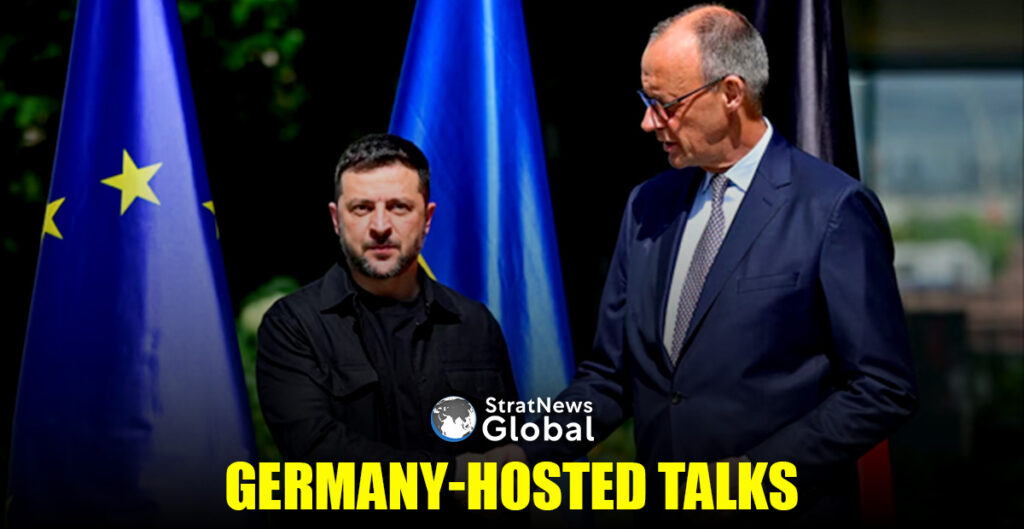
Zelenskyy Visits Berlin To Join Germany-Hosted Talks With Trump Before Putin Summit
Ukrainian President Volodymyr Zelenskyy travelled to Berlin on Wednesday for a German-hosted virtual talks with Donald Trump and European leaders, two days before the U.S. president’s summit with Russian President Vladimir Putin in Alaska.
Europe’s leaders are trying to drive home the perils of selling out Kyiv’s interests at the first U.S.-Russia summit since 2021.
Trump has said the Alaska talks will be a “feel-out” meeting as he pursues a ceasefire in Moscow’s war on Ukraine, having said last week, to consternation in Kyiv and Europe, that any deal would involve “some swapping of territories”.
Zelenskyy will meet German Chancellor Friedrich Merz before a video conference with the leaders of Germany, Finland, France, Britain, Italy, Poland and the European Union at 2 p.m. (1200 GMT), the hosts said. NATO Secretary General Mark Rutte will also attend.
Trump and Vice President JD Vance will join the call at 3 p.m. (1300 GMT).
Europe, Kyiv Fear Unpredictable Alaska Deal
The unpredictability of the summit in Alaska has fuelled Europeans’ fears that the U.S. and Russia could take far-reaching decisions over their heads and even seek to coerce Ukraine into an unfavourable deal.
“We are focusing now to ensure that it does not happen – engaging with U.S. partners and staying coordinated and united on the European side. Still a lot of time until Friday,” said one senior official from Eastern Europe.
European leaders, wary of angering Trump, have repeatedly said they welcome his efforts while stressing that there should be no deal about Ukraine – almost a fifth of which Russia has occupied – without Ukraine’s participation.
Trump’s administration tempered expectations on Tuesday for major progress toward a ceasefire, calling his meeting with Putin in Alaska a “listening exercise”.
Trump’s agreement last week to the summit with Putin was an abrupt shift after weeks of voicing frustration with Putin for resisting the U.S. peace initiative. Trump said his envoy had made “great progress” at talks in Moscow.
Half a dozen senior European officials told Reuters that they see a risk of a deal being struck that is unfavourable for Europe and Ukraine’s security. They said European unity would be vital if that happened.
White House press secretary Karoline Leavitt told reporters on Tuesday the summit would be a “listening exercise” for Trump to hear what it would take to get to a deal.
After the meeting with Trump, the “coalition of the willing”, a group of countries working on plans to support Ukraine in the event of a ceasefire, will also convene online.
Battlefield Pressure Mounts On Ukraine
A Gallup poll released last week found that 69% of Ukrainians favour a negotiated end to the war as soon as possible. But polls also indicate Ukrainians do not want peace at any cost if that means crushing concessions.
Ahead of the calls, Zelenskyy said it would be impossible for Kyiv to agree to a deal that would require it to withdraw its troops from the eastern Donbas region, a large swathe of which is already occupied by Russia.
That, he told reporters on Tuesday, would deprive Ukraine of a vast defensive network in the region, easing the way for a Russian push deeper into Ukraine in the future.
He said territorial issues could only be discussed once a ceasefire was in place and Ukraine had received security guarantees.
Moscow’s troops have recently ramped up pressure on the battlefield, tightening their stranglehold on the cities of Pokrovsk and Kostyantynivka in eastern Ukraine.
(With inputs from Reuters)
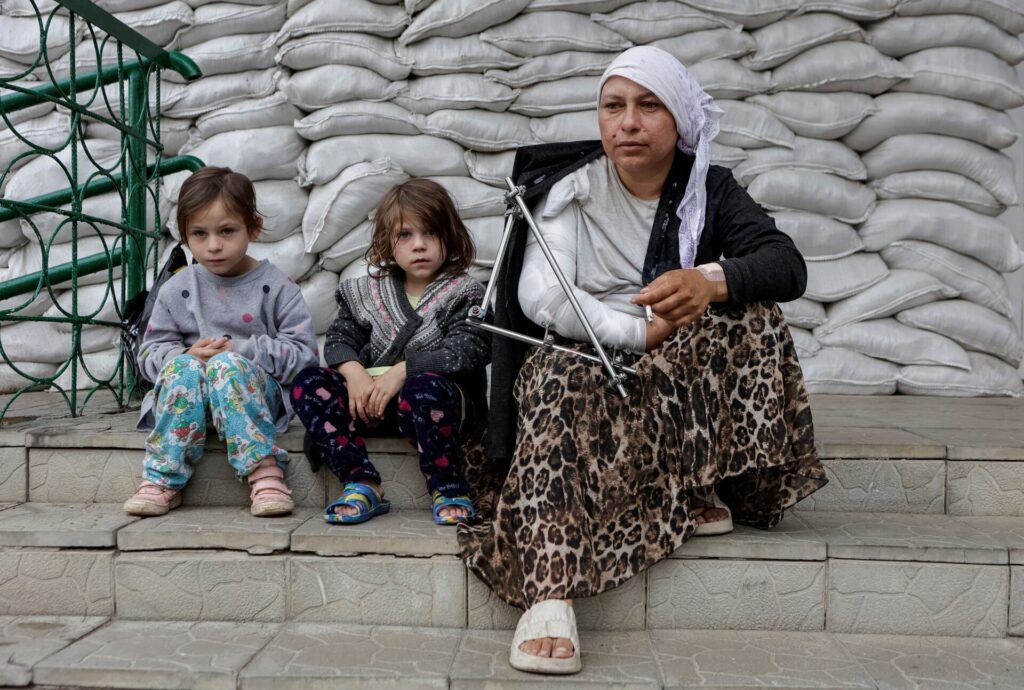
Russian Website Lists Ukrainian Children for Adoption, Says NGO
Russian occupation authorities in Ukraine have created an online “catalogue” of Ukrainian children being put up for adoption, according to reports over the past week.
The platform, hosted on the education department’s website of the Russian occupation administration in Luhansk Oblast, lists 294 children, filtered by age, gender, eye and hair colour, and personality traits.
One listing describes a 14-year-old girl as “kind, modest” and fond of dancing. Another advertises a boy as “calm, responsive” and interested in drawing, puzzles, and sports. Others are characterised as disciplined, obedient, non-conflictive, or reliable in completing tasks.
Mykola Kuleba, CEO of the Save Ukraine organisation, said most of the children were born in Luhansk. “Parents of some of them were killed by occupation authorities, others were simply issued Russian identification documents to legitimise their abduction,” he said, calling it “child trafficking in the 21st century.”
Yale’s Humanitarian Research Lab estimates that around 35,000 Ukrainian children have been forcibly deported since the war began in 2022. Just over 1,350 have been returned, with mediation from countries including Qatar and South Africa.
The lab’s executive director has said this is “likely” the largest child abduction in a war since World War II.
Whether Luhansk authorities are acting independently or under direct Russian orders is unclear. The return of abducted children remains one of Ukraine’s key demands in any peace talks.
(This article was written by Tisya Sharma, she is an intern at StratNewsGlobal)
Startup Perplexity AI Offers $34.5 Billion For Chrome
On Tuesday, Perplexity AI made an unsolicited all-cash offer of $34.5 billion for Alphabet’s Chrome browser — a bold move significantly exceeding its own valuation, as the startup eyes the browser’s massive user base, crucial in the intensifying AI search race.
Run by Aravind Srinivas, Perplexity is no stranger to headline-grabbing offers: it made a similar one for TikTok US in January, offering to merge with the popular short-video app to resolve US concerns about TikTok’s Chinese ownership.
OpenAI, Yahoo and private-equity firm Apollo Global Management have also expressed interest in Chrome as regulatory pressure threatens Google’s grip on the industry.
2.5X It’s Own Value
Google did not immediately respond to Reuters requests for comment. The company has not offered Chrome for sale and plans to appeal a US court ruling last year that found it held an unlawful monopoly in online search. The Justice Department has sought a Chrome divestiture as part of the case’s remedies.
Perplexity did not disclose on Tuesday how it plans to fund the offer. The three-year-old company has raised around $1 billion in funding so far from investors including Nvidia and Japan’s SoftBank. It was last valued at $14 billion.
Multiple funds have offered to finance the deal in full, Perplexity said, without naming the funds. Alphabet’s shares were up 1.6% in afternoon trading.
Shift In Search Habits
As a new generation of users turns to chatbots such as ChatGPT and Perplexity for answers, web browsers are regaining prominence as vital gateways to search traffic and prized user data, making them central to Big Tech’s AI ambitions.
Perplexity already has an AI browser, Comet, that can perform certain tasks on a user’s behalf and buying Chrome would allow it to tap the browser’s more than three billion users, giving it the heft to better compete with bigger rivals such as OpenAI. The ChatGPT parent is also working on its own AI browser.
Perplexity’s bid pledges to keep the underlying browser code called Chromium open source, invest $3 billion over two years and make no changes to Chrome’s default search engine, according to a term sheet seen by Reuters.
The company said the offer, with no equity component, would preserve user choice and ease future competition concerns.
Long Legal Fight
Analysts have said Google would be unlikely to sell Chrome and would likely engage in a long legal fight to prevent that outcome, given it is crucial to the company’s AI push as it rolls out features including AI-generated search summaries, known as Overviews, to help defend its search market share.
A federal judge, Amit Mehta, is expected to issue a ruling on remedies in the Google search antitrust case sometime this month.
“Judge Mehta is a pretty orthodox guy. It’s very possible that he would hold off on requiring a sale until the appeals process is worked out and that could be a very lengthy period of time,” said Herbert Hovenkamp, professor at University of Pennsylvania Carey Law School.
“It would go to the DC Circuit, which is skeptical of forced divestitures, and it’s possible it would even go to the Supreme Court after that. So that process could run out for a couple of years.”
Perplexity’s bid is also below the at least $50 billion value that rival search engine DuckDuckGo’s CEO, Gabriel Weinberg, suggested Chrome may command if Google was forced to sell it.
(With inputs from Reuters)
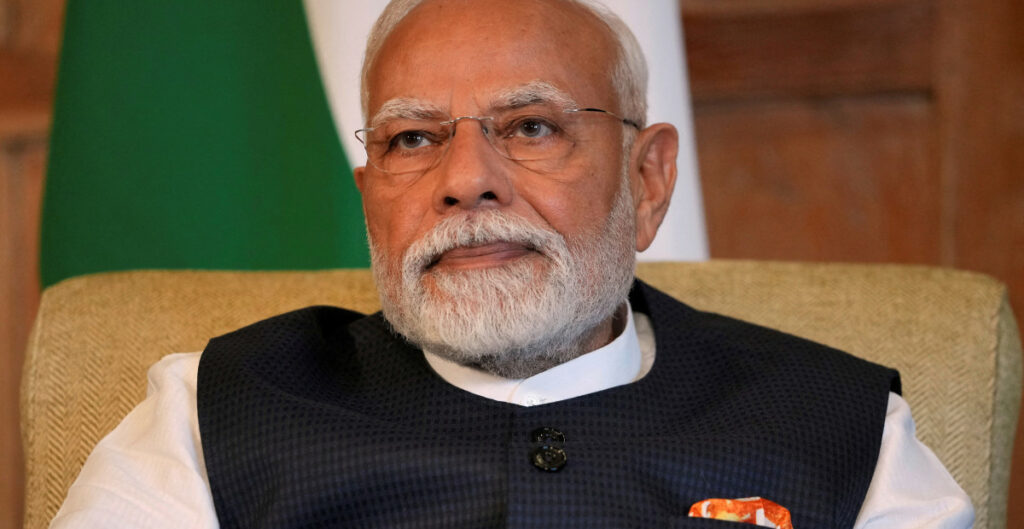
PM Modi to Visit Japan Ahead of SCO Summit In China
Prime Minister Narendra Modi is scheduled to visit Japan later this month, ahead of the Shanghai Cooperation Organisation (SCO) summit that begins in China’s Tianjin on August 31.
The visit will include stops in Tokyo and Sendai. Its timing reflects the steady growth of India-Japan Special Strategic and Global Partnership, which has evolved over the past decade into a comprehensive engagement focused on mutual interests in the Indo-Pacific region.
Recent diplomatic engagements between officials from both sides have contributed to preparing the groundwork for PM Modi’s trip. These discussions have emphasised areas such as trade, defence, digital technologies, connectivity and people-to-people exchanges.
Bilateral Agenda
During his time in Japan, PM Modi is expected to meet senior leaders and stakeholders to advance cooperation in key sectors. Likely areas of focus include:
• Defence and security collaboration, including ongoing work in defence equipment and technology, such as unmanned ground vehicles and robotics
• Emerging domains like space and cybersecurity
• Semiconductor supply chains, digital infrastructure and green technologies
• Clean energy and electric mobility, in alignment with sustainable development goals
• Connectivity and industrial competitiveness, complementing India’s Act East Policy and Japan’s vision for a Free and Open Indo-Pacific
Japan has remained a major investor in India in recent years. Both countries are working towards meeting the target of 5 trillion yen in Japanese investment in India for the 2022–2027 period.
People-to-People, Tourism Links
Discussions are also expected to include measures to enhance people-to-people exchanges. With India seeing a steady rise in outbound travel and passport issuances, there is growing potential for increased tourism between the two countries. Officials have noted that strengthening cultural and educational linkages will be important in promoting mutual understanding and long-term collaboration.
India, Japan In Indo-Pacific And Quad
The visit is also expected to contribute to broader regional discussions, particularly through the Quadrilateral Security Dialogue (Quad). India is set to host the Quad leaders’ summit later this year. Engagement with Japan remains part of preparations for that event.
Shared priorities within the Quad framework include maintaining a free, open, inclusive and rules-based Indo-Pacific; improving regional connectivity; and enhancing cooperation on global challenges such as health security, climate change and critical technologies.
Japanese Ambassador to India Ono Keiichi recently highlighted that India’s strategic presence and partnerships are integral to the Quad’s success.
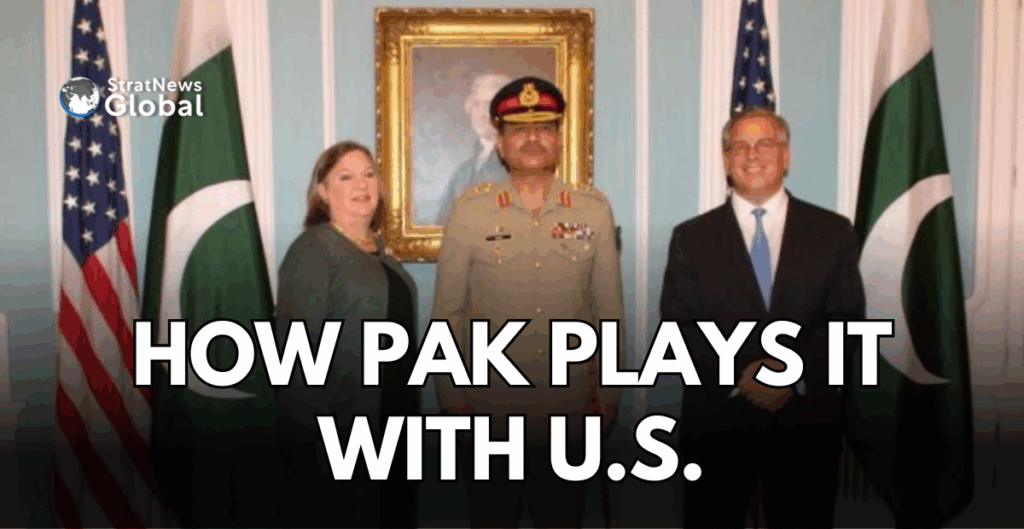
Between Pakistan’s Sabre Rattling And US Indifference
It’s the season of threats: there was Field Marshal Asim Munir’s nuclear sabre rattling from the US during an ethnic Pakistani diaspora event, and now his civilian major domo, Prime Minister Shehbaz Sharif, has thrown in his.
On Tuesday, at an event in Islamabad, he said, “I want to tell the enemy that if you threaten to hold our water, then keep this in mind that you cannot snatch even one drop of Pakistan’s … you will be again taught such a lesson that you will be left holding your ears.”
Sharif’s threat was issued from Pakistani soil, from where countless threats against India have been issued in the past, so no big deal there. But Munir’s use of US soil to threaten India with nuclear annihilation rankles, more so the complete absence of any clarification from the Trump administration.
Ambassador Sharat Sabharwal, former Indian High Commissioner to Pakistan, says, “Sometimes Americans leverage India-Pakistan issues to promote their own interests in this region. Some of the statements that Trump makes are to exert added pressure on us in the context of a trade deal.”
Pakistan watcher Tilak Devashar believes the US need for Islamabad’s services in the context of Iran could account for the wining, dining, and latitude given to Munir. Looking back, Washington has always been more comfortable dealing with generals than elected politicians, even when the perfidy of those generals has been evident.
Witness Pakistan running with the hare and hunting with the hounds throughout the period of the US involvement in Afghanistan. From Oct 2001 to Aug 2021, more than 2,400 US military personnel were killed during operations against the Taliban, which had arms, equipment, and training coming from Islamabad.
But that also defines the nature of the US-Pakistani relationship, which has always been transactional, notes Ambassador Sabharwal.
“Pakistan is a good fit for Trump in terms of everything he is looking for: to expand his business interests in cryptocurrency, build on America’s need for mineral wealth such as copper and gold or and even rare earth deposits in Balochistan.”
In return, Asim Munir gets what every US administration has given Pakistan’s generals: a slow wink when it comes to India, meaning a free hand.
Warns Sabharwal, “Whenever Pakistan gets US support, it is a little more sure that no matter what happens, the Americans will try and bail them out. Emboldened by this, Pakistan may become more adventurous and ramp up terror against India.”
Enough food for thought for Prime Minister Modi, who, reports say, is likely to attend the UN General Assembly session next month in New York. Could that include a risky sit-down with Trump (remember what happened to Zelenskyy) or the safer option of a phone call?
Trump 1.0 was Relatively Benign, Trump 2.0 Is Taking Direct Aim At India
Amid all the Trump tariff hoo-haa, Richard Rossow of the Centre for Strategic and International Studies in the US, who was a guest on The Gist, made an interesting point:
“It’s always important to remember that both our economies are less driven by manufacturing than by services. And US services takes up about 80% of GDP and in India that’s about 50%. And in the trade talks so far, when you think about manufactured goods … it’s a relatively small part of our economies.”
Nevertheless, India and the US are at a standoff and Rossow believes that it has not escalated into a fight because India chosen, so far, not to fight.
“India is still trying to pull out of the fire what it can and salvage the relationship, seeing if there is still a chance to get a deal across the finish line .. in which case the relationship improves quite a bit.”
But India is also diversifying, seeking to cement new commercial relationships, what Rossow describes as “deeper commercial relationships with a range of other partners. So great if I can get the deal done but it is thoughtfully building up ties with other partners.”
In his view, India should not have been terribly surprised at what has happened since the strains were visible in Trump’s first term itself. He called India tariff king and complained about the tariffs levied on the import of Harley Davidson motorcycles.
None of this struck “Homeland India”, and the warning signals were ignored. But now, Trump is going after things are a bit more politically sensitive, such as access to agricultural markets.
He acknowledged that “When we talk about opening up ….you are talking about half the population … that’s surviving on growing a decent harvest of potatoes … so I fully understand India has an extreme red line that can’t be crossed no matter how much Trump pushes.”
President Trump is throwing things at India that hit the political base a little more, which creates a different level of danger and concern, he said.
Tune in for more in this conversation with Richard Rossow of the Centre for Security and International Studies.
Ukraine Battles Russian Territorial Advances As Trump-Putin Summit Proceeds Without Kyiv
Small groups of Russian troops on Tuesday advanced further into eastern Ukraine ahead of a Putin–Trump summit, raising European fears of a peace deal forcing Ukraine to accept reduced borders.
In one of the most extensive incursions so far this year, Russian troops advanced near the coal-mining town of Dobropillia, part of Putin’s campaign to take full control of Ukraine’s Donetsk region. Ukraine’s military dispatched reserve troops, saying they were in difficult combat against Russian soldiers.
‘Some Swapping Of Territories’
Trump has said any peace deal would involve “some swapping of territories to the betterment of both” Russia and Ukraine, which has depended on the U.S. as its main arms supplier.
But because all the areas being contested lie within Ukraine, President Volodymyr Zelenskyy and his European Union allies fear that he will face pressure to give up far more than Russia does.
In the first U.S.-Russia summit since 2021, Putin and Trump will meet on Friday at Elmendorf Air Force Base in Anchorage, Alaska, two White House officials said.
‘Listening Exercise’
Trump’s administration on Tuesday tempered expectations for major progress toward a ceasefire, calling the summit a “listening exercise.”
Along that line, U.S. Secretary of State Marco Rubio said the president wanted to size up Putin directly.
“The president feels like, look, I’ve got to look at this guy across the table. I need to see him face-to-face. I need to hear him one-on-one. I need to make an assessment by looking at him,” Rubio told WABC radio in New York on Tuesday.
Virtual Meeting Before Summit
Zelenskyy and most of his European counterparts have said a lasting peace cannot be secured without Ukraine at the negotiating table, and a deal must comply with international law, Ukraine’s sovereignty and its territorial integrity.
They will hold a virtual meeting with Trump on Wednesday to underscore those concerns before the Putin summit.
“Substantive and productive talks about us without us will not work,” Zelenskyy said in an interview on Tuesday with NewsNation. “Just as I cannot say anything about another state or make decisions for it.”
Zelenskyy has said Russia must agree to a ceasefire before territorial issues are discussed. He would reject any Russian proposal that Ukraine pull its troops from the eastern Donbas region and cede its defensive lines.
Asked why Zelenskyy was not joining the U.S. and Russian leaders at the Alaska summit, White House spokeswoman Karoline Leavitt told reporters the bilateral meeting had been proposed by Putin, and Trump accepted to get a “better understanding” of “how we can hopefully bring this war to an end.”
Trump is open to a trilateral meeting with Putin and Zelenskyy later, Leavitt said.
Russia Advances In Eastern Ukraine
Sergei Markov, a former Kremlin adviser, suggested Russian advances could increase pressure on Ukraine to yield territory under any deal. “This breakthrough is like a gift to Putin and Trump during the negotiations,” he said.
Despite a troop shortage, Ukraine’s military said it had retaken two villages in the eastern region of Sumy on Monday, part of a small reversal in more than a year of slow, attritional Russian gains in the southeast.
Russia, which launched its full-scale invasion of Ukraine in February 2022, has mounted a new offensive this year in Sumy after Putin demanded a “buffer zone” there.
Ukraine and its European allies fear that Trump, keen to claim credit for making peace and seal new business deals with Russia’s government, will end up rewarding Putin for 11 years of efforts to seize Ukrainian territory, the last three in open warfare.
European leaders have said Ukraine must be capable of defending itself if peace and security are to be guaranteed on the continent, and that they are ready to contribute further.
‘Ukraine Can’t Lose This War’
“Ukraine cannot lose this war, and nobody has the right to pressure Ukraine into making territorial or other concessions, or making decisions that smack of capitulation,” Polish Prime Minister Donald Tusk said at a government meeting. “I hope we can convince President Trump about the European position.”
Zelenskyy has said he and European leaders “all support President Trump’s determination.”
Hungarian Prime Minister Viktor Orban, Putin’s principal ally in Europe, was the only leader not to join the EU’s statement of unity. He mocked his counterparts as “sidelined” and said Russia had already defeated Ukraine.
“The Ukrainians have lost the war. Russia has won this war,” Orban told the “Patriot” YouTube channel in an interview.
Trump had recently hardened his stance towards Russia, agreeing to send more U.S. weapons to Ukraine and threatening hefty trade tariffs on buyers of Russian oil in an ultimatum that has now lapsed.
(With inputs from Reuters)