

Support us by contributing to StratNewsGlobal on the following UPI ID
ultramodern@hdfcbank

Strategic affairs is our game, South Asia and beyond our playground. Put together by an experienced team led by Nitin A. Gokhale. Our focus is on strategic affairs, foreign policy and international relations, with higher quality reportage, analysis and commentary with new tie-ups across the South Asian region.
You can support our endeavours. Visit us at www.stratnewsglobal.com and follow us on YouTube, Twitter, Facebook and Instagram.
र 500 per month
र 1000 per month
र 5000 per year
र 10000 per year
Donate an amount of your choice
र 500 per month
Donate र 500 per month

र 1000 per month
Donate र 1000 per month
र 5000 per year
Donate र 5,000 per year
र 10000 per year
Donate र 10,000 per year
Donate an amount of your choice
Donate an amount of your choice
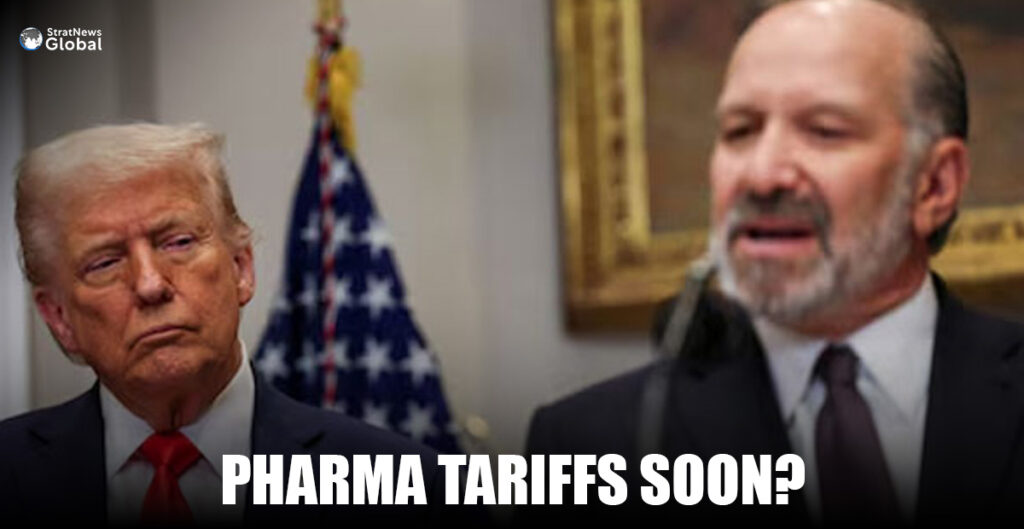


US Pharma Tariffs Expected In Weeks As Trump Readies For Alaska: Sources
President Donald Trump’s administration is likely weeks away from announcing the results of its pharmaceutical import probe and new sector-specific U.S. tariffs, four official and industry sources said, noting the delay comes as he prioritises other matters.
Commerce Secretary Howard Lutnick had said in April, when the review of whether reliance on foreign drug production threatens U.S. national security was launched, that he anticipated that it would conclude between mid-May and mid-June. Global pharmaceutical companies are bracing for the outcome of the investigation, which will usher in sector-specific tariffs that Trump has said could start small and eventually rise to 250%.
The Republican president said as recently as last week that his plan relies on phased-in tariffs, giving drugmakers time to increase manufacturing in the United States as he pushes to alter what he says are global trade distortions in many industries.
One government official in Europe and a source with knowledge of the White House process, as well as two sources at European drug firms familiar with the process, told Reuters that the report and tariffs announcement were not imminent and likely weeks away. These sources spoke on condition of anonymity.
White House Dismisses Speculation
A White House spokesperson, asked about media reporting indicating that the results of the probe could be several weeks away, cautioned that such reports were pure speculation unless confirmed by the White House. The spokesperson declined to give further details about the timing of the pharma probe or one involving semiconductors.
The investigation is examining pharmaceutical imports ranging from finished prescription drugs to active pharmaceutical ingredients, called APIs, and other raw materials, with the results to be disclosed in a Commerce Department report.
Lutnick said last month that the tariff plan, which will be based on the report, would be completed by the end of July. Lutnick then said on July 29, it would be two more weeks.
The investigation was launched under Section 232 of the Trade Expansion Act of 1962. While the investigation is ongoing, the pharmaceutical sector has been exempted from the sweeping tariffs imposed by the Trump administration.
The United States has reached bilateral trade deals with the UK, Japan, South Korea and the European Union that promised more favourable terms for their pharma exports than those expected to be levied on the sector globally.
A European government official said that an announcement before the end of August appears unlikely but cautioned that the timeline could shift depending on other developments.
Summit Focus Delays Announcement
A source at a European drugmaker said the Trump administration is focused on the U.S.-Russia summit in Alaska on Friday and, therefore, no announcement is expected this week.
The source familiar with the White House process said that the announcement is unlikely to come this week, given other priorities.
That source and one other source said that they expect the Trump administration to announce the results of its national security investigation into semiconductors first, followed by the pharma announcement, putting it a few weeks away.
The Section 232 provision authorises the president to adjust imports – including imposing tariffs – if a category of goods is being imported into the United States in quantities that “threaten or impair the national security.”
Medical goods historically have been spared from trade wars due to the potential harm to patient access, and drugmakers have said tariffs could undercut other health policy goals outlined by the Trump administration, including lowering drug prices.
U.S. tariffs on imported pharmaceutical products would mark the latest in a series of sectoral tariffs announced by the administration, following metals and cars, that some economists have predicted will drive up costs for American consumers.
(With inputs from Reuters)
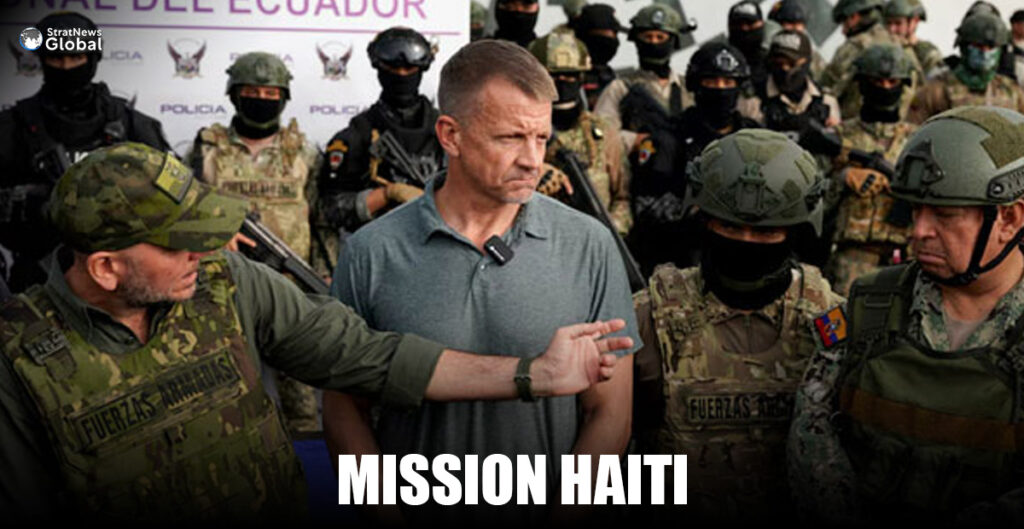
Trump Ally Erik Prince Proposes 10-Year Haiti Mission To Combat Gangs
Erik Prince, a prominent Donald Trump supporter and private security executive, says he intends to keep forces in Haiti for 10 years, eventually involving his firm in the nation’s tax-collection system.
In an interview with Reuters, Prince said his company, Vectus Global, had reached a 10-year agreement with the Haitian government to fight the country’s criminal gangs and set up a tax collection system. After the security situation is stabilised, the firm would be involved in designing and implementing a program to tax goods imported across Haiti’s border with the Dominican Republic, he said.
Prince Outlines Success Timeline
He said he expected to wrestle control of major roads and territories from the gangs in about a year. “One key measure of success for me will be when you can drive from Port-au-Prince to Cap Haitian in a thin-skinned vehicle and not be stopped by gangs,” Prince said in the interview.
Prince would not comment on how much the Haitian government would pay Vectus Global, nor how much tax he expects to collect in Haiti.
The new president of the transitional council, Laurent Saint-Cyr, who was inaugurated on August 7 as part of a planned rotation of council leaders, did not respond to requests for comment. Haiti’s former council president and prime minister also did not respond to requests for comment.
Vectus began operating in Haiti in March, deploying mainly drones in coordination with a task force led by the prime minister, but the long-term engagement and the involvement in tax collection have not been previously reported.
A person familiar with the company’s operations in Haiti told Reuters that Vectus would intensify its fight against the criminal gangs that control large swathes of Haiti in the coming weeks, deploying several hundred fighters from the United States, Europe and El Salvador who are trained as snipers and specialists in intelligence and communications, as well as helicopters and boats.
Prince, a former U.S. Navy SEAL, founded the Blackwater military security firm in 1997. He sold the company in 2010 after Blackwater employees were convicted of unlawfully killing 14 unarmed civilians while escorting a U.S. embassy convoy in Baghdad’s Nisour Square. The men were pardoned by Trump during his first term in the White House.
Expanding Role
Since Trump’s return to the White House, Prince has advised Ecuador on how to fight criminal gangs and struck a deal with the Democratic Republic of Congo to help secure and tax its mineral wealth.
“It’s hard to imagine them operating without the consent of the Trump administration,” said Romain Le Cour Grandmaison, head of the Haiti program at Geneva-based Global Initiative Against Transnational Organised Crime.
When asked for comment about Le Cour Grandmaison’s assertion, a State Department spokesperson said it has not hired Prince or his company for any work in Haiti.
A senior White House official said, “The U.S. government has no involvement with the private military contractor hired by the Haitian government. We are not funding this contract or exercising any oversight.”
It’s unclear whether Prince’s contract would be affected by the change of leadership in Haiti earlier this month.
In an August 7 televised address, Saint-Cyr said he welcomed more international support to fight the gangs. “I am inviting all the international partners to increase their support, send more soldiers, provide more training,” he said. “Help us with a more robust international force.”
Haiti Crisis
The crisis in Haiti has worsened in recent years, as armed gangs gained territory and attacked hospitals, police stations and prisons, taking control of strategic transport routes and extorting funds from the population. Rights groups accuse the gangs of massacres, rapes, kidnappings and arson. About half the population is food-insecure, and over 8,000 people in displacement camps face famine-level hunger.
Haiti used to collect half of its tax revenue at the border with the Dominican Republic, but gang control of key transport routes has crippled trade and cut off state income, a report commissioned last year by Haiti’s government and several multilateral organisations found. This has undermined the government’s ability to respond to the crisis or deliver basic services, the report said.
The Dominican Republic is a key source of grains, flour, milk, water and other food staples for Haiti, according to customs data. Haiti also relies on imports from the Dominican Republic for textiles, consumer goods, and medical supplies.
Security contractors working in Haiti have faced challenges operating in a country with entrenched links between the gangs, local police and some factions of the government.
Abandoned Mission
Earlier this year, a team from American security firm Studebaker Defence abandoned their mission in Haiti after two of their members were abducted, likely due to corrupt police officials, the New York Times reported.
Mounir Mahmalat, who serves as a country coordinator of the World Bank’s Fragility, Conflict and Violence Group, said that it was virtually impossible to ensure the safe transport of goods or the security of people working in Port-au-Prince.
Other security firms working in Haiti have raised questions about how Vectus would hold onto cleared gang territory as well as the wisdom of channelling resources to private security firms instead of the country’s own security forces.
“Resorting to private military companies cannot be seen as a solution to insecurity in Haiti,” said Gedeon Jean, head of Haiti’s Centre for Human Rights Analysis and Research.
“The use of private companies has often resulted in human rights violations.”
While a private force could help police restore security, Jean warned against large spending on a foreign company while Haiti’s own security forces lack funds and equipment.
(With inputs from Reuters)
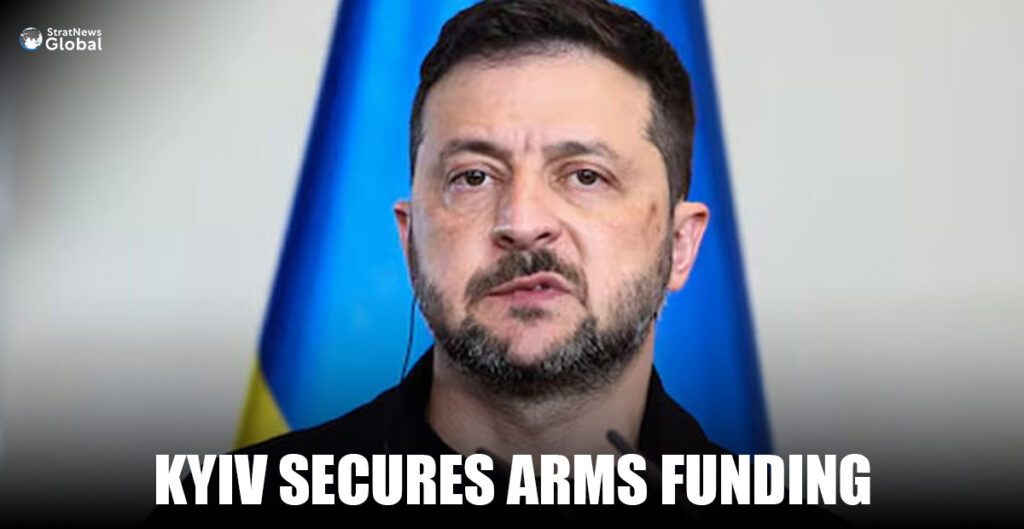
Zelenskyy Announces $1.5 Billion From Europe For US Weapons
Ukrainian President Volodymyr Zelenskyy said on Thursday that Kyiv has secured $1.5 billion from its allies in Europe to buy U.S. weapons through a mechanism he called vital to strengthening defence.
“As of today, we already have $1.5 billion pledged. Through the NATO Prioritised Ukraine Requirements List initiative, NATO members can cooperate to purchase U.S.-made weapons for Ukraine – a mechanism that truly strengthens our defence,” he wrote on X.
He said that the Netherlands contributed $500 million, Denmark, Norway, and Sweden collectively pledged $500 million, and Germany committed another $500 million.
Zelenskyy’s Europe Tour Before Summit
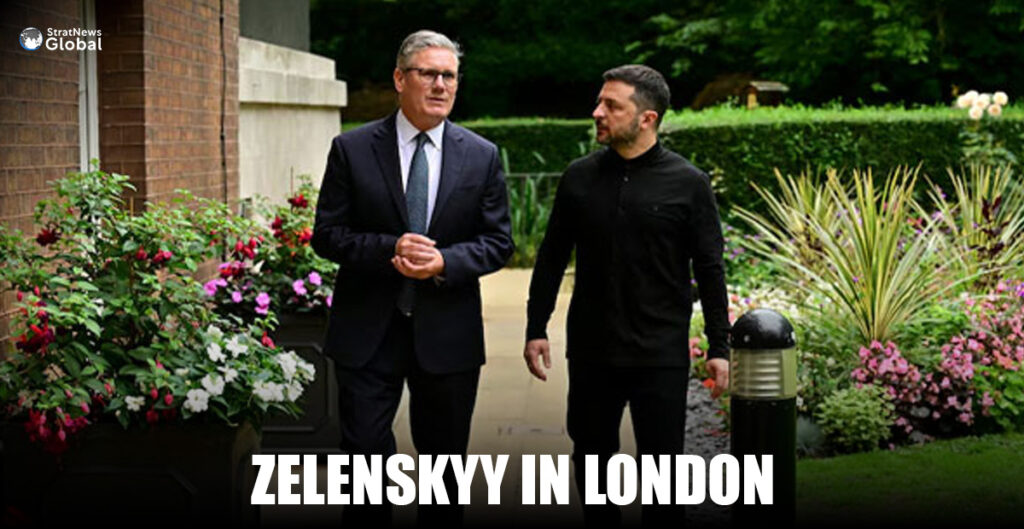
Zelenskyy is in London, and he is due to meet British Prime Minister Keir Starmer, reviewing matters before United States President Trump’s pivotal Friday talks with Russian President Vladimir Putin in Alaska.
Zelenskyy, who was in Germany on Wednesday, has been working with European leaders to press Trump not to allow Putin to carve up Ukraine’s territory at the Alaska summit.
He is due to meet Starmer at 9.30 a.m. local time (0830 GMT) at the British premier’s official residence, 10 Downing Street.
On Wednesday, Trump joined a Germany-hosted virtual meeting with European leaders, including Zelenskyy, who sought to set red lines ahead of the summit on ending the war in Ukraine.
Zelenskyy said he warned Trump that the Russian leader was “bluffing” about his desire to end the war.
Trump later threatened “severe consequences” if Putin does not agree to peace in Ukraine, and while he did not specify what the consequences could be, he has warned of economic sanctions if his meeting on Friday proves fruitless.
The comments and the outcome of the virtual conference on Wednesday could provide encouragement for Kyiv ahead of the summit.
Trump described the aim of his talks with Putin in Alaska as “setting the table” for a quick follow-up that would include Zelenskyy.
Britain, France and Germany, the co-chairs of the so-called “Coalition of the Willing”, set out their position on the pathway to a ceasefire in Ukraine in a statement released after Wednesday’s virtual meeting.
(With inputs from Reuters)
Why India Needs a Classroom Revolution in Civil Engineering
India is building big. It is rolling out highways, metros, ports, tunnels, bridges, like never before. A concrete expression of its economic ambitions.
While we celebrate marvels like the arch bridge over the Chenab, cracks are appearing. Literally so. From collapsing bridges to newly built roads giving way in the monsoon. There is a pattern
And it points to a deeper problem other than corruption, bad contractors, or tight deadlines. It begins in the classroom schooling civil engineers.
India is not generating sufficient quality civil engineers.
This begs the question: Is India’s civil engineering education system not keeping pace with the country’s growing infrastructure ambitions?
To answer this and more, StratNewsGlobal.Tech spoke to Professor Benny Raphael, who heads the Department of Civil Engineering in IIT Madras on Capital Calculus.
Israel Intensifies Gaza City Bombardment As Egypt Hosts Hamas
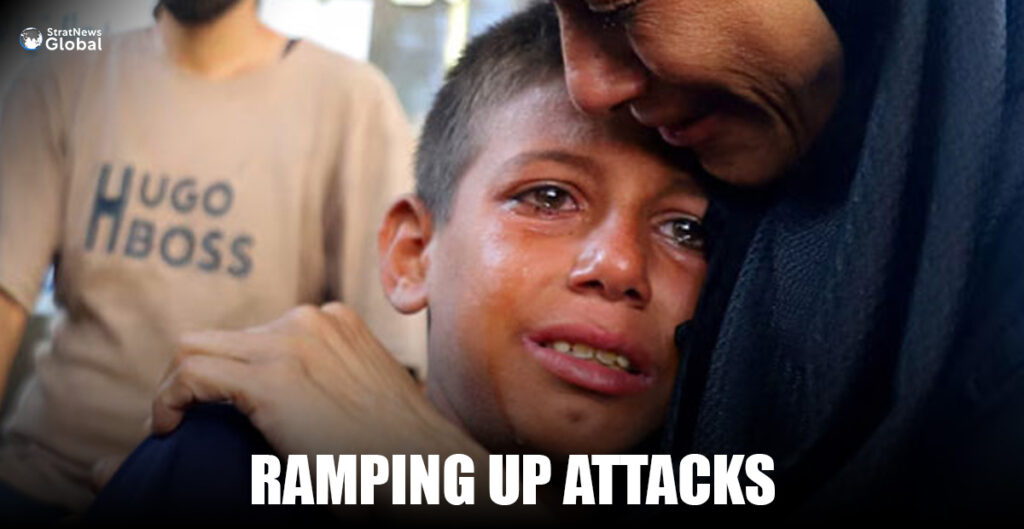
Israeli forces destroyed homes in eastern Gaza City overnight, killing at least 11 in air and tank strikes, local health officials reported, as Hamas informed mediators of its readiness to resume ceasefire talks.
Residents and medics said eight people were killed when Israeli tank shelling hit a house in the Zeitoun neighbourhood, while a man was killed in an airstrike on a building in the nearby Shejaia suburb. Two other people were killed in a tank shelling in Tuffah, a third Gaza City suburb.
Local health authorities said they had received desperate calls from families trapped in the Zeitoun area, including from people saying they were wounded, and that ambulance vehicles could not reach them.
‘Non-Stop’ Explosions
“The explosions are almost non-stop in eastern Gaza areas, mainly Zeitoun and Shejaia. The occupation (Israel) is erasing homes there, as we hear from some friends who live nearby,” said Ismail, 40, from Gaza City.
“At night, we pray for our safety as the sounds of explosions get louder and closer. We hope Egypt can secure a ceasefire deal before we are all dead,” he told Reuters via a chat app.
More than 22 months into Israel’s military offensive in Gaza, residents have also been grappling with a worsening hunger crisis.
Four more people died of starvation and malnutrition in the territory in the past 24 hours, Gaza’s health ministry said on Thursday. That took the total to 239, including 106 children, since the war began, it said.
Israel disputes malnutrition and hunger figures reported by the health ministry in Gaza, which Hamas took control of in 2007.
Israel’s planned seizure of Gaza City – which it took in the early days of the war before withdrawing – is probably weeks away, officials say.
Egypt’s Ceasefire Push
In an effort to avert the planned military escalation, Egypt has been trying to revive a push for a ceasefire in Gaza, hosting a Hamas delegation led by the group’s chief negotiator Khalil Al-Hayya.
He told mediators in Cairo on Wednesday that Hamas was ready to resume ceasefire talks to achieve a temporary truce, and was open to discussing a comprehensive agreement that would end the war, Egyptian and Palestinian sources said.
The latest round of indirect talks in Qatar ended in deadlock in late July, with Israel and Hamas trading blame over the lack of progress on a U.S. proposal for a 60-day truce and hostage release deal.
Gaps between the sides appear to remain wide on key issues, including the extent of any Israeli military withdrawal and demands for Hamas to disarm.
The war began on October 7, 2023, when Hamas-led militants stormed into southern Israel, killing 1,200 people and taking 251 hostages, according to Israeli figures. Israel’s offensive against Hamas in Gaza since then has killed more than 61,000 Palestinians, according to local health officials.
(With inputs from Reuters)
Zelenskyy To Meet UK PM Starmer In London Ahead Of Trump-Putin Alaska Talks
Ukrainian President Volodymyr Zelenskyy is in London, and he is due to meet British Prime Minister Keir Starmer, reviewing matters before United States President Trump’s pivotal Friday talks with Russian President Vladimir Putin in Alaska.
Zelenskyy, who was in Germany on Wednesday, has been working with European leaders to press Trump not to allow Putin to carve up Ukraine’s territory at the Alaska summit.
He is due to meet Starmer at 9.30 a.m. local time (0830 GMT) at the British premier’s official residence, 10 Downing Street.
On Wednesday, Trump joined a Germany-hosted virtual meeting with European leaders, including Zelenskyy, who sought to set red lines ahead of the summit on ending the war in Ukraine.
Zelenskyy said he warned Trump that the Russian leader was “bluffing” about his desire to end the war.
Trump later threatened “severe consequences” if Putin does not agree to peace in Ukraine, and while he did not specify what the consequences could be, he has warned of economic sanctions if his meeting on Friday proves fruitless.
The comments and the outcome of the virtual conference on Wednesday could provide encouragement for Kyiv ahead of the summit.
Trump described the aim of his talks with Putin in Alaska as “setting the table” for a quick follow-up that would include Zelenskyy.
“If the first one goes okay, we’ll have a quick second one,” Trump said.
“I would like to do it almost immediately, and we’ll have a quick second meeting between President Putin and President Zelenskyy and myself, if they’d like to have me there.”
Britain, France and Germany, the co-chairs of the so-called “Coalition of the Willing”, set out their position on the pathway to a ceasefire in Ukraine in a statement released after Wednesday’s virtual meeting.
(With inputs from Reuters)
Pakistan To Form New Military Unit To Oversee Missiles After Conflict With India
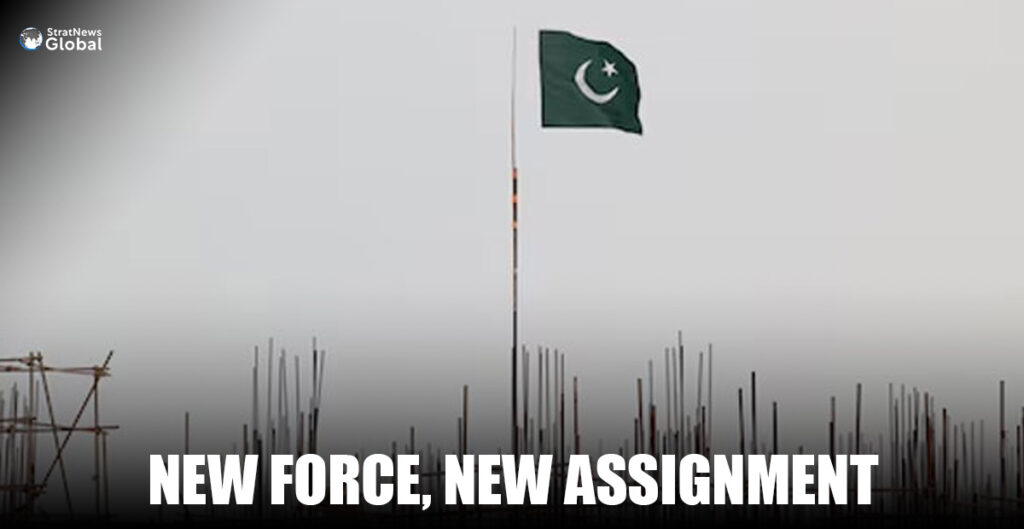
Pakistan plans to establish a new military force to oversee missile combat capabilities in conventional warfare, seemingly aiming at its rival neighbouring arch-foe India.
Pakistan Prime Minister Shehbaz Sharif announced the creation of the Army Rocket Force late on Wednesday at a ceremony held in Islamabad to commemorate the worst conflict in decades with India in May.
The ceremony was held a day ahead of Pakistan’s 78th Independence Day.
“It will be equipped with modern technology,” Sharif said in a statement from his office, adding that the force will prove to be a milestone in strengthening the combat capability of Pakistan’s army.
He did not give any further details.
A senior security official, however, said that the force will have its own command in the military, which will be dedicated to handling and deployment of missiles in any event of a conventional war.
‘Meant For India’
“It is obvious that it is meant for India,” he said.
The two nuclear-armed nations keep upgrading their military capabilities in the wake of a longstanding rivalry since their independence from British rule in 1947.
The latest tension between the two countries soared in April over the deadly terrorist attack on civilians in Jammu and Kashmir’s Pahalgam, which left 26 people — mostly tourists — dead.
Pakistan, however, denied its involvement in the attack.
A conflict then erupted in May, the most serious fighting between the two countries in decades, which saw both sides using missiles, drones and fighter jets before it ended with a cease-fire announcement by U.S. President Donald Trump.
Islamabad acknowledges the U.S. role, but India denies it, saying it was agreed directly between the two militaries.
(With inputs from Reuters)
Turkiye To Supply Weapons, Train Syrian Army: Reports
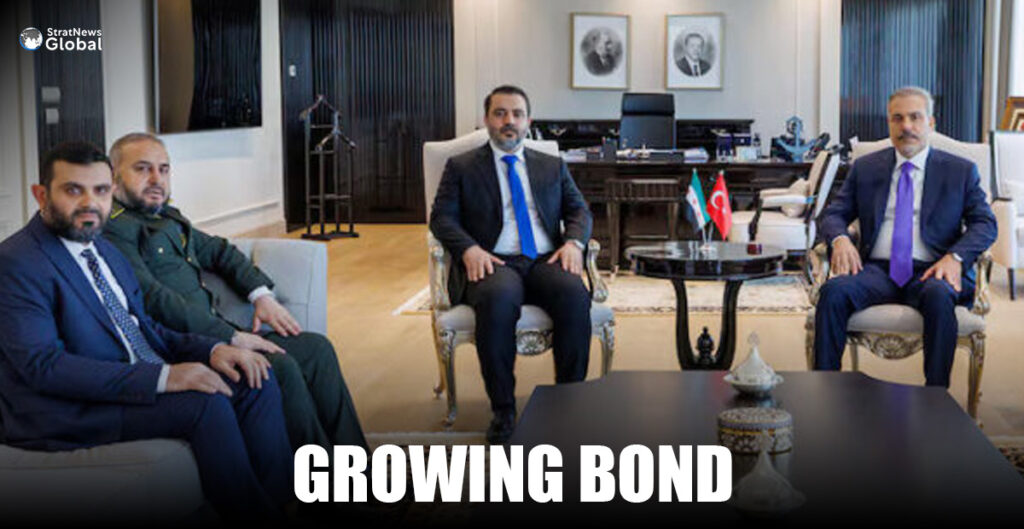
Turkiye has agreed to supply weapons systems and logistical support to Syria under a new military cooperation deal signed on Wednesday, with Ankara also prepared to train Syrian forces in using the equipment if required, according to a source in the Turkish Defence Ministry.
Turkiye, a NATO member, has been one of Syria’s main foreign allies since the ousting of President Bashar al-Assad last year. It has vowed to help train and restructure Syria’s armed forces, rebuild the country and its state institutions, and support efforts to protect Syrian territorial integrity.
Top Brass Meetings
In a first step towards a comprehensive military cooperation accord that they have been negotiating for months, Turkiye and Syria inked a memorandum of understanding on Wednesday after extensive meetings between their foreign and defence ministers, and intelligence chiefs.
“The memorandum aims to coordinate, plan military training and cooperation, provide consultancy, information and experience sharing, ensure the procurement of military equipment, weapon systems, logistical materials and related services,” the Turkiye Defence Ministry source told reporters on Thursday.
Losing Patience
Turkiye has been growing impatient with what it calls the lack of implementation of a March deal between Damascus and the Kurdish-led, US-backed Syrian Democratic Forces for integrating the SDF into the Syrian state apparatus.
Ankara has warned of military action against the SDF, which it considers a terrorist organisation and against which it has carried out cross-border operations in the past.
It has said that clashes between the SDF and Syrian government forces earlier this month and a conference held by the SDF calling for a review of Syria’s constitutional declaration threatened the country’s territorial integrity.
The Turkiye source said the SDF had not met any of the conditions of the March deal and reiterated Ankara’s accusation that its actions were undermining Syria’s political unity.
“Our expectation is full compliance with the agreement that was signed and its urgent implementation in the field,” the source added.
(With inputs from Reuters)
Reflecting On India Russia Ties Minus Defence And Oil
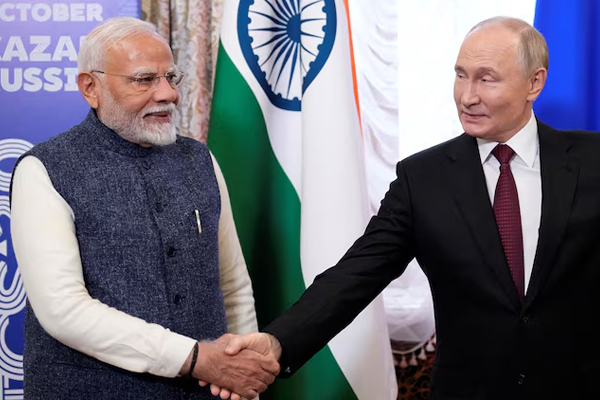
As the peripatetic S Jaishankar heads to Moscow for talks to lay the ground for President Putin’s visit to Delhi (maybe in September), it’s interesting to reflect that there doesn’t appear to be any plan to invest in new Russian military hardware.
One is not talking of what is already in the pipeline, such as the two remaining S-400 ballistic missile defence regiments or reports that Chakra-III, a nuclear-powered attack submarine is in the final stages of being leased to the Indian Navy.
Naval sources confirmed that Russia’s offer of the Amur diesel electric submarine has not found favour. Apparently the preference is for the German firm Thyssenkrup Marine’s offer of six conventional submarines with air independent propulsion.
The air force is looking at augmenting its fleet of French Rafale fighters, while the army, after decades of buying and using Russian artillery and tanks, is now working with the Indian private sector to design and build locally.
“The armed forces don’t want to go back to Russia,” a senior former diplomat told StratNewsGlobal,”it’s a good thing we are keeping our relations with Russia afloat but there’s no bounce from India when it comes to Russian equipment, although they keep proposing various things.”
“The problem is Russian technology,” said a retired naval officer, “Recall decades ago the Russians built their technological prowess by copying from Western designs, but from aircraft to semiconductor chips Russian tech has not been able to bridge the generation gap with the West.”
Does that mean Russia has nothing worthwhile to offer India? The former diplomat remarked rather caustically, that there was a time when the Russians had offered India a 5th generation fighter aircraft. But India wanted to co-develop and the Russians had already done much of the development. So that got nowhere.
“In five years, Pakistan will have a 5th generation fighter courtesy China,” he said, “then what do we do, where will we go. India has already rejected the US offer of the F-35 and while there are reports suggesting India’s interest in the Russian Su-57 fighter, it’s not clear if this is being pursued seriously.”
India’s own ambitious plan for the 5th gen AMCA (Advanced Medium Combat Aircraft), will not see fruition in the near term. Rather, given the issues with Donald Trump, there are growing doubts about the transfer of GE-F414 engine tech to India.
It explains the negotiations with French company Safran to develop a jet engine in India, where the IPR would be with India. This is a long term project and has its share of critics who wonder whether India should be spending money on this or look at the future and spend money on drones and robotic platforms and systems.
What’s clear is that while India may see diplomatic value in moving closer to Russia when relations with the US are so fraught, the interest in Russian military hardware is diminishing, something the political leadership in Moscow realises.
There’s something else. What happens if Friday’s meeting between Donald Trump and Vladimir Putin in Alaska, produces a big beautiful deal on ending the Ukraine war with side deals on lifting curbs on Russian oil exports?
That could see Trump give up his plan to hike tariffs on India by another 25% for buying discounted Russian oil. It removes the sword of damocles hanging over India, but what about Russia?
Prior to its invasion of Ukraine, India-Russia bilateral trade was a pathetic $10 billion, according to figures cited by the Indian Embassy in Moscow. Post-Ukraine invasion, sales of discounted Russian oil to India saw bilateral trade shoot up to over $64 billion.
Minus that discount, India may have no interest in Russian oil since the energy available in the neighbourhood may be more affordable. With energy out of the equation, also defence, where is the Russia relationship going?
WhatsApp Accuses Russia Of Blocking Calls, Secure Messaging
WhatsApp has accused Moscow of attempting to block millions of Russians from using its secure messaging services, after calls on the app were restricted — part of Russia’s broader push to promote local platforms and tighten control over its internet space.
Russia said on Wednesday that it had started restricting some WhatsApp, owned by Meta Platforms, and Telegram calls, accusing the foreign-owned platforms of failing to share information with law enforcement in fraud and terrorism cases.
Text messaging services and voice notes are currently unaffected.
A simmering dispute with foreign tech providers intensified after Moscow’s February 2022 invasion of Ukraine, with Russia blocking Meta’s Facebook and Instagram, slowing the speed of Alphabet’s YouTube and issuing hundreds of fines to platforms that failed to comply with Russian rules on online content and data storage.
WhatsApp Vows To Keep End-To-End Encryption
“WhatsApp is private, end-to-end encrypted, and defies government attempts to violate people’s right to secure communication, which is why Russia is trying to block it from over 100 million Russian people,” WhatsApp said late on Wednesday.
“We will keep doing all we can to make end-to-end encrypted communication available to people everywhere, including in Russia.”
Telegram said its moderators were using AI tools to monitor public parts of the platform to remove millions of malicious messages every day.
“Telegram actively combats harmful use of its platform including calls for sabotage or violence and fraud,” Telegram said.
In July 2025, WhatsApp’s monthly reach in Russia was 97.3 million people, compared to 90.8 million for Telegram, according to Mediascope data. Third-placed VK Messenger, an offering from state-controlled tech company VK, reached 17.9 million people.
Russia has a population of more than 140 million people.
Russian lawmakers Promoting MAX
Russia banning WhatsApp and Telegram users from making calls comes as the government is actively promoting a new state-controlled messaging app, MAX, that will be integrated with government services and which critics fear could track its users’ activities.
Senior politicians are migrating to MAX, urging their followers to come with them.
Anton Gorelkin, a leading regulator of Russia’s IT sector in parliament, said he would post to his MAX followers first and said many other lawmakers would soon follow suit.
Steady Degradation
WhatsApp’s other services remain available for now, but the steady degradation of a service is a tactic Russia has employed before, notably with YouTube, where slower download speeds have made it harder for people to access content.
Human Rights Watch said in a report last month that Russia has been “meticulously expanding [its] legal and technological tools to carve out Russia’s section of the internet into a tightly controlled and isolated forum”.
Lawmakers have approved a new law that tightens censorship and could have sweeping ramifications for digital privacy, with Russians facing fines if they search online for content Moscow considers “extremist”, including via virtual private networks that millions use to bypass internet blocks.
(With inputs from Reuters)