

Support us by contributing to StratNewsGlobal on the following UPI ID
ultramodern@hdfcbank

Strategic affairs is our game, South Asia and beyond our playground. Put together by an experienced team led by Nitin A. Gokhale. Our focus is on strategic affairs, foreign policy and international relations, with higher quality reportage, analysis and commentary with new tie-ups across the South Asian region.
You can support our endeavours. Visit us at www.stratnewsglobal.com and follow us on YouTube, Twitter, Facebook and Instagram.
र 500 per month
र 1000 per month
र 5000 per year
र 10000 per year
Donate an amount of your choice
र 500 per month
Donate र 500 per month

र 1000 per month
Donate र 1000 per month
र 5000 per year
Donate र 5,000 per year
र 10000 per year
Donate र 10,000 per year
Donate an amount of your choice
Donate an amount of your choice
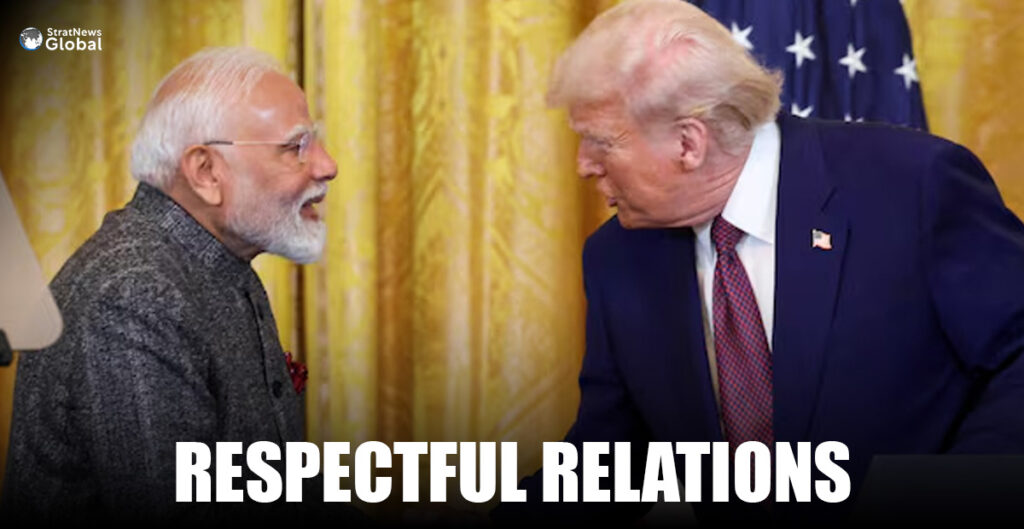
India Seeks US Ties Built On Mutual Respect, Confirms Arms Purchases On Track
India on Thursday stated that it hoped its relations with the United States would progress based on mutual respect and shared interests, aiming to alleviate concerns that the bilateral relationship was deteriorating following the imposition of high tariffs by Washington.
A U.S. defence policy team will be in New Delhi this month for talks with Indian officials, and its arms purchases from the U.S. are on course despite the strain in ties, the Indian foreign ministry said.
A new friendship built between the two countries has hit a rough patch after President Donald Trump raised tariffs on Indian goods to 50% last week from an earlier 25% saying it was a penalty for India’s continued imports of Russian oil.
Double Standards
New Delhi has accused the U.S. of double standards in singling it out for Russian oil imports and called the tariffs unfair, unjustified and unreasonable.
At the same time, it has also indicated that the warming of ties that began at the turn of the century covers a wide range of areas and should not be seen only through the prism of trade, although it hopes that trade talks will continue and result in a deal.
“This partnership has weathered several transitions and challenges…and we hope that the relationship will continue to move forward based on mutual respect and shared interests,” Indian foreign ministry spokesperson Randhir Jaiswal told a regular media briefing.
Arms Purchase ‘On Track’
Purchases of military equipment from Washington were on course, Jaiswal said, adding that a U.S. defence policy team was expected in Delhi this month.
Reuters reported last week that India has put on hold its plans to procure new U.S. weapons and aircraft and that a planned trip to Washington by the Indian defence minister had been cancelled.
The Indian government subsequently said reports of a pause in the talks were wrong.
(With inputs from Reuters)
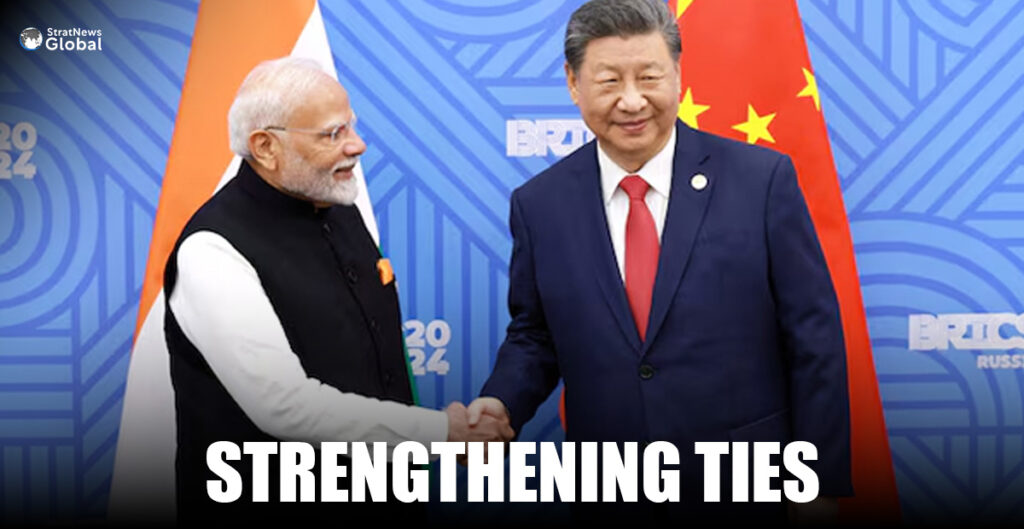
India, China Seek Better Relations Amid Trump’s Unpredictable Stance
Amid U.S. President Donald Trump’s unpredictable stance toward India and China, New Delhi and Beijing — the longtime rivals — are quietly strengthening ties through talks on direct flights and high-level bilateral visits.
Chinese Foreign Minister Wang Yi is scheduled to visit New Delhi next week for talks with India’s National Security Adviser Ajit Doval on their disputed Himalayan border, the second such meeting since a deadly clash in 2020 between Indian and Chinese troops, two people familiar with the matter said.
Prime Minister Narendra Modi is set to meet Chinese President Xi Jinping at the end of the month when he travels to China – his first visit in seven years – to attend the summit of the Shanghai Cooperation Organisation, a regional security bloc.
Thaw In Relations
The engagements follow a thaw in India and China’s five-year standoff after an agreement last October on patrolling their Himalayan border, which eased the strain on bilateral ties that had hurt trade, investment and air travel.
Relations were further boosted in recent weeks amid new tensions in India-U.S. ties after decades of progress, analysts said, as Trump imposed a 50% tariff on Indian exports to the United States – one of the highest levels among Washington’s strategic partners.
The United States and China, meanwhile, this week extended a tariff truce for another 90 days, staving off triple-digit duties on each other’s goods.
Direct Flights Resumption
China and India have already agreed to resume direct flights suspended since 2020 and are discussing easing trade barriers, including reopening border trade at three Himalayan crossings.
While border trade accounts for only a small portion of the $127.7 billion bilateral trade recorded in the last fiscal year, its revival is seen as a symbolic step toward normalising economic ties.
“We have remained engaged with the Chinese side to facilitate the resumption of border trade through all the designated trade points,” India’s foreign ministry spokesperson, Randhir Jaiswal, told a regular press conference on Thursday.
Improving Residents’ Lives
Beijing told Reuters it was also ready to resume border trade that had for a long time played an “important role in improving the lives of residents along the border and enhancing exchanges between the two peoples”.
A Chinese foreign ministry spokesperson also said Beijing has been in close communication with New Delhi to “push for the resumption of direct flights as soon as possible”.
India’s foreign ministry did not immediately respond to a request for comment on the exact timing.
Meanwhile, India’s government think-tank has proposed easing investment rules that effectively require additional scrutiny for Chinese companies — another sign of a potential shift in economic engagement.
(With inputs from Reuters)
Trump Claims Putin Ready For Ukraine Deal, US Aims To Involve Zelenskyy
U.S. President Donald Trump on Thursday said he believed Vladimir Putin was prepared to strike a deal to end the war in Ukraine, after the Russian leader suggested a potential nuclear arms agreement ahead of their Alaska summit.
Ukrainian President Volodymyr Zelenskyy and his European allies have intensified their efforts this week to prevent any deal between the U.S. and Russia emerging from Friday’s summit that leaves Ukraine vulnerable to future attack.
‘Going To Make A Deal’
“I think he’s going to make a deal,” Trump said in a Fox News radio interview, adding that if the meeting went well, he would call Zelenskyy and European leaders afterwards, and that if it went badly, he would not.
The aim of Friday’s talks with Putin is to set up a second meeting including Ukraine, Trump said, adding: “I don’t know that we’re going to get an immediate ceasefire.”
Putin earlier spoke to his most senior ministers and security officials as he prepared for a meeting with Trump in Anchorage, Alaska, on Friday that could shape the endgame to the largest war in Europe since World War Two.
In televised comments, Putin said the U.S. was “making, in my opinion, quite energetic and sincere efforts to stop the hostilities, stop the crisis and reach agreements that are of interest to all parties involved in this conflict.”
‘Huge Untapped Potential’
This was happening, Putin said, “in order to create long-term conditions for peace between our countries, and in Europe, and in the world as a whole – if, by the next stages, we reach agreements in the area of control over strategic offensive weapons.”
His comments signalled that Russia will raise nuclear arms control as part of a wide-ranging discussion on security when he sits down with Trump. A Kremlin aide said Putin and Trump would also discuss the “huge untapped potential” for Russia-U.S. economic ties.
A senior Eastern European official, who requested anonymity to discuss sensitive matters, said Putin would try to distract Trump from Ukraine at the talks by offering him possible progress on nuclear arms control or something business-related.
“We hope Trump won’t be fooled by the Russians; he understands all (these) dangerous things,” the official said, adding that Russia’s only goal was to avoid any new sanctions and have existing sanctions lifted.
‘Like A Chess Game’
Trump said there would be a press conference after the talks, but that he did not know whether it would be joint. He also said there would be “a give and take” on boundaries and land.
“The second meeting is going to be very, very, very important. This meeting sets up like a chess game. This (first) meeting sets up a second meeting, but there is a 25% chance that this meeting will not be a successful meeting,” he said.
Trump said it would be up to Putin and Zelenskyy to strike an agreement, saying: “I’m not going to negotiate their deal.”
Russia controls around a fifth of Ukraine, and Zelenskyy and the Europeans worry that a deal could cement those gains, rewarding Putin for 11 years of efforts to seize Ukrainian land and emboldening him to expand further into Europe.
An EU diplomat said it would be “scary to see how it all unfolds in the coming hours. Trump had very good calls yesterday with Europe, but that was yesterday.”
Security Guarantees For Ukraine
Trump had shown willingness to join the security guarantees for Ukraine at a last-ditch virtual meeting with European leaders and Zelenskyy on Wednesday, European leaders said, though he made no public mention of them afterwards.
Friday’s summit, the first Russia-U.S. summit since June 2021, comes at one of the toughest moments for Ukraine in a war that has killed tens of thousands and displaced millions since Russia’s full-scale invasion in February 2022.
Speaking after Wednesday’s meeting, French President Emmanuel Macron said Trump had said the transatlantic NATO alliance should not be part of any security guarantees designed to protect Ukraine from future attacks in a post-war settlement.
However, Trump also said the U.S. and all willing allies should be part of the security guarantees, Macron added.
Expanding on that, a European official told Reuters that Trump said on the call he was willing to provide some security guarantees for Europe, without spelling out what they would be.
‘A Big Step Forward’
It “felt like a big step forward,” said the official, who did not want to be named.
It was not immediately clear what such guarantees could mean in practice.
On Wednesday, Trump threatened “severe consequences” if Putin does not agree to peace in Ukraine and has warned of economic sanctions if his meeting on Friday proves fruitless.
Russia is likely to resist Ukraine and Europe’s demands and has previously said its stance had not changed since it was first detailed by Putin in June 2024.
(With inputs from Reuters)
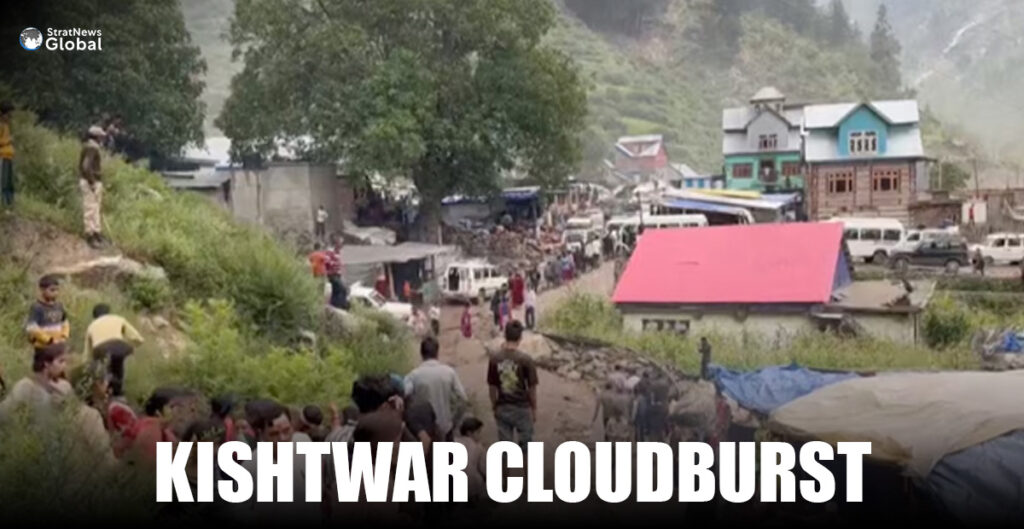
Sudden, Heavy Rain In Jammu And Kashmir Kills 46, Over 200 Missing
Sudden and heavy rain in Jammu and Kashmir has left at least 46 dead and over 200 missing, marking the Himalayas’ second such disaster in just over a week, officials said on Thursday.
The incident occurred in Chasoti town of Kishtwar district, a stopover point on a popular pilgrimage route. It comes a little over a week after a heavy flood and mudslide engulfed the entire Dharali village in Uttarakhand.
The flood washed away a community kitchen and a security post set up in the village, a pit stop along the pilgrimage route to the Machail Mata temple, said one of the officials, who declined to be named because he was not authorised to speak to the media about the incident.
Major Pilgrim Route
“A large number of pilgrims had gathered for lunch, and they were washed away,” the official said.
The Machail yatra is a popular pilgrimage to the high altitude Himalayan shrine of Machail Mata, one of the manifestations of Goddess Durga, and pilgrims trek to the temple from Chasoti, where the road for vehicles ends.
“The news is grim and accurate, verified information from the area hit by the cloudburst is slow in arriving,” Omar Abdullah, the chief minister of Jammu and Kashmir, said in a post on X.
Television footage showed pilgrims crying in fear as water flooded the village.
The disaster occurred at 11.30 am, Ramesh Kumar, the divisional commissioner of Kishtwar district, told news agency ANI, adding that local police and disaster response officials had reached the scene.
“Army, air force teams have also been activated. Search and rescue operations are underway,” Kumar said.
Cloudburst
A cloudburst, according to the Indian Meteorological Department, is a sudden, intense downpour of over 100 mm (4 inches) of rain in just one hour that can trigger sudden floods, landslides, and devastation, especially in mountainous regions during the monsoon.
The local weather office in Srinagar predicted intense showers for several regions in Kashmir on Thursday, including Kishtwar, asking residents to stay away from loose structures, electric poles and old trees as there was a possibility of mudslides and flash floods.
(With inputs from Reuters)
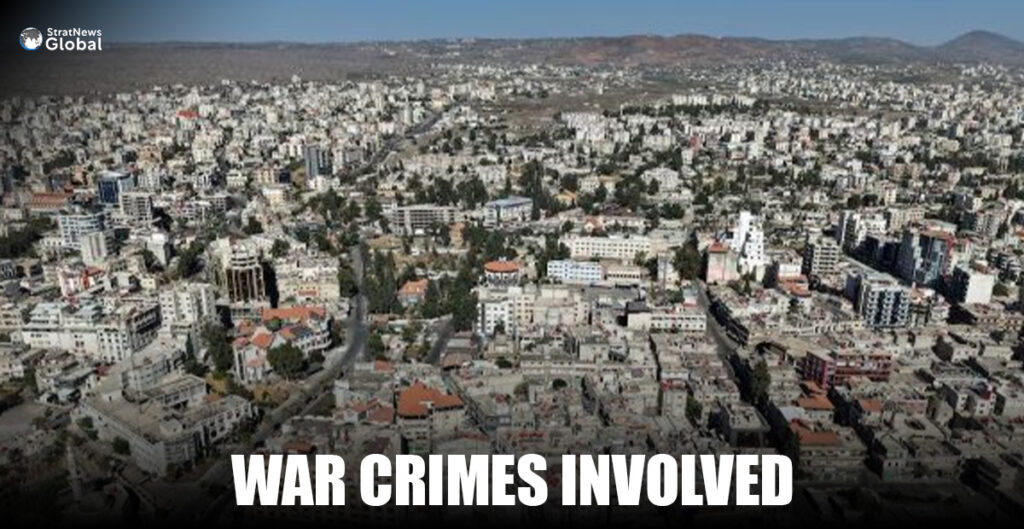
UN Says Syria’s Coastal Massacres Likely Involved War Crimes
U.N. investigators reported on Thursday that war crimes were probably committed during sectarian violence in March that ended in multiple massacres along Syria’s coast. They said both interim government forces and fighters loyal to the country’s former rulers were involved in the killings.
Some 1,400 people, mainly civilians, were reported killed during the violence in coastal areas that primarily targeted Alawites, and reports of violations such as abductions continue, according to a report by the U.N. Syria Commission of Inquiry.
“The scale and brutality of the violence documented in our report is deeply disturbing,” said Paulo Sérgio Pinheiro, Chair of the Independent International Commission of Inquiry on the Syrian Arab Republic, in a statement released with the report.
Murder, torture and inhumane acts related to the treatment of the dead were documented by the U.N. team, which based its 56-page report on more than 200 interviews with victims and witnesses as well as visits to three mass grave sites.
Worst War Crimes
Most victims were Alawite men aged between 20-50 but women, and children as young as one, were also killed, the report said. Sometimes the killers, who went door to door looking for members of Assad’s minority Alawite sect, filmed the executions themselves, it said.
Perpetrators were members of the interim government forces as well as private individuals operating or in proximity to them. Fighters loyal to the ousted Assad government also committed violations, it said.
The report is not all-encompassing since incidents in Homs, Latakia and Tartus are still being investigated by the commission, set up by the U.N. Human Rights Council in 2011.
The incidents along the coast were the worst war crimes to hit Syria since the fall of President Bashar al-Assad last year, prompting the interim government to appoint a fact-finding committee.
“The Syrian Arab Republic values these efforts and reaffirms its commitment to incorporating the recommendations into the ongoing process of institution-building and the consolidation of the rule of law in the new Syria,” Foreign Minister Asaad Hassan al-Shibani said in a letter responding to the report, which it said aligned with its own findings.
There was no immediate public comment from former Syrian officials, many of whom have left the country.
U.S. Welcomes The Report
U.S. Special Envoy for Syria Tom Barrack welcomed the report and said it was a “serious step” towards assessing responsibility for violations. The administration of President Donald Trump is gradually lifting Syria sanctions dating back to Assad’s rule.
An investigation last month found nearly 1,500 Syrian Alawites had been killed and identified a chain of command from the attackers directly to men who serve alongside Syria’s new leaders.
New Syrian President Ahmed al-Sharaa has previously denounced the violence as a threat to his mission to unite the country and promised to punish those responsible.
The commission acknowledged in its report the commitment of Syria’s interim authorities to identify those responsible but said the scale of the violence warranted further steps.
“Guarantees of non-repetition of the violations should be at the heart of Syria’s transition,” the report said.
(With inputs from Reuters)
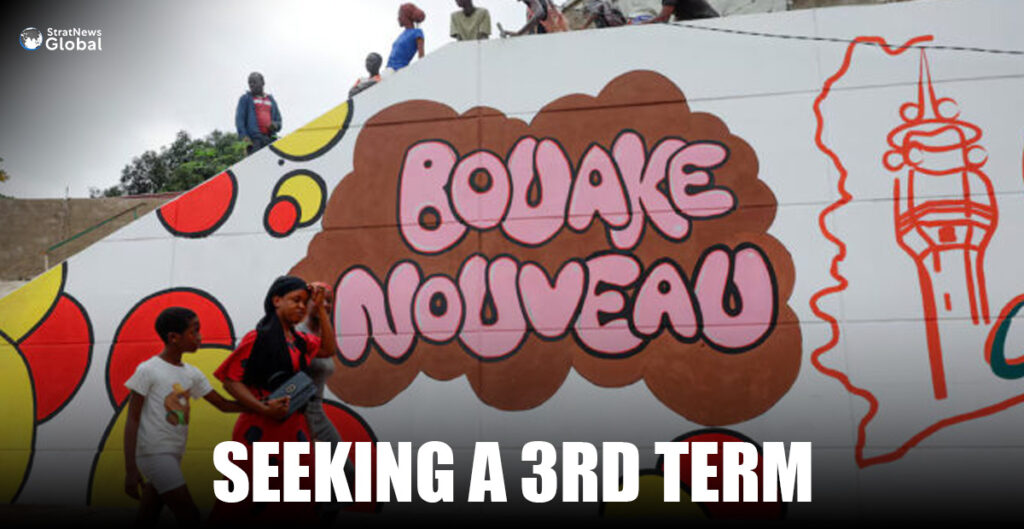
Ivory Coast: Ouattara Touts Peace In War-Scarred Bouake
Some streets in Bouake, Ivory Coast’s former rebel stronghold, still bear bullet marks — but ahead of his third re-election bid, President Alassane Ouattara is eager to showcase the city as a symbol of national recovery.
“Bouake is a city of past pain, but above all rebirth, unity and renewed brotherhood,” the 83-year-old incumbent said in his Independence Day speech last week, ahead of a parade in which he waved to supporters from a black armoured convertible.
It was the first time Bouake hosted independence festivities in over 60 years, sending the message that “peace has returned” after the civil war that preceded Ouattara’s swearing-in in 2011, said political analyst Geoffroy Julien Kouao.
Complex Story
Yet away from the pomp of official ceremonies, ex-combatants and other Bouake residents tell a more complex story of lingering division and economic struggle.
“When we go to a company to apply for jobs, we are turned away because they (employers) know we have taken up arms… They (employers) are afraid of us,” said Fousseni Toure, member of a civil society group that advocates for former fighters.
Ivory Coast, the world’s biggest cocoa producer, effectively split in two after a rebellion in 2002 against then-President Laurent Gbagbo, and Bouake became the headquarters of the New Forces rebels, many of them from Ouattara’s Dioula ethnic group.
The war was largely a result of xenophobic policies against farmers from Burkina Faso and Mali that also targeted northern Ivorians with cultural ties to them.
Thousands of UN peacekeepers deployed and new elections were held in 2010, but Gbagbo refused to accept defeat to Ouattara, setting off four months of violence that killed around 3,000 people.
Reconciliation Elusive
Ouattara, a former international banker who announced last month he would seek re-election, is widely credited for Ivory Coast’s steady economic growth since he took office.
Some former combatants say they have benefited.
Alissou Ouattara, no relation to the president, supports his wife and five children by running a small restaurant and coffee kiosk.
“I earn my living properly,” he said. “I don’t envy anyone.”
Other ethnic Dioulas have had a harder time, partly because of conflict with so-called “autochtone”, or indigenous, ethnic groups who are more likely to support Ouattara’s political opponents, said Soumaila Doumbia, coordinator of the Bouake-based Civil Society Platform for Peace and Democracy.
“There are political actors who remain in the shadows to exploit young people so that they can come into conflict,” he said.
During the last election, in 2020, clashes killed 85 people.
Protests
The exclusion of Gbagbo and Tidjane Thiam, leader of the opposition PDCI party, from the next ballot means the climate could be tense again when Ivorians vote on October 25.
An Ivory Coast court ruled in April that Thiam was ineligible because he was a French national when he registered, while Gbagbo cannot run because of a past criminal conviction.
Thousands of supporters of both men took to the streets of Abidjan’s Yopougon district to protest over the weekend.
Doumbia is nevertheless optimistic that these issues can eventually be resolved for good.
“We are certain that in the months and years to come, Bouake will be a reconciled city,” he said.
(With inputs from Reuters)
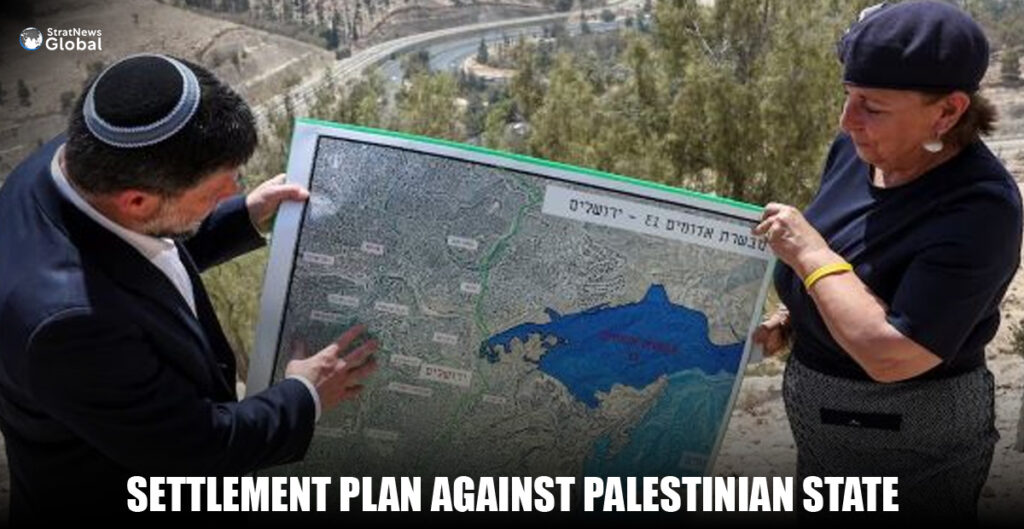
Israeli Finance Minister Smotrich Unveils Settlement Plan Aimed At Undermining Palestinian Statehood
Israeli far-right Finance Minister Bezalel Smotrich said work is beginning on a long-delayed settlement project that would split the West Bank and sever its connection to East Jerusalem. According to his office, the plan is intended to eliminate any future possibility of establishing a Palestinian state.
The Palestinian government, allies and campaign groups condemned the scheme, calling it illegal and saying the fragmentation of territory would rip up peace plans for the region.
Standing at the site of the planned settlement in Maale Adumim on Thursday, Smotrich, a settler himself, said Prime Minister Benjamin Netanyahu and U.S. President Donald Trump had agreed to the revival of the E1 development, though there was no immediate confirmation from either.
“Whoever in the world is trying to recognise a Palestinian state today will receive our answer on the ground. Not with documents nor with decisions or statements, but with facts. Facts of houses, facts of neighbourhoods,” Smotrich said.
Israel froze construction plans at Maale Adumim in 2012, and again after a revival in 2020, because of objections from the U.S., European allies and other powers who considered the project a threat to any future peace deal with the Palestinians.
Blow To Palestinian State Recognition Plan
Restarting the project could further isolate Israel, which has watched some of its Western allies condemn its military offensive in Gaza and announce they may recognise a Palestinian state.
Palestinians fear the settlement building in the West Bank – which has sharply intensified since the 2023 Hamas attack on Israel that led to the Gaza war – will rob them of any chance to build a state of their own in the area.
In a statement headlined “Burying the idea of a Palestinian state,” Smotrich’s spokesperson said the minister had approved the plan to build 3,401 houses for Israeli settlers between an existing settlement in the West Bank and Jerusalem.
In Maale Adumim, Smotrich said the plan would go into effect on Wednesday.
Breaking the Silence, an Israeli rights group established by former Israeli soldiers, said what it called a land grab “will not only further fragment the Palestinian territory, but will further entrench apartheid”.
Nabil Abu Rudeineh, the Palestinian president’s spokesperson, called on the United States to pressure Israel to stop settlement building.
“The EU rejects any territorial change that is not part of a political agreement between involved parties. So annexation of territory is illegal under international law,” European Commission spokesperson Anitta Hipper said.
Norwegian Foreign Minister Espen Barth Eide said the move by Smotrich, an ultra-nationalist in the ruling right-wing coalition who has long advocated for Israeli sovereignty over the West Bank, showed that Israel “seeks to appropriate land owned by Palestinians in order to prevent a two-state solution”.
House Building ‘In A Year’
Peace Now, which tracks settlement activity in the West Bank, said there were still steps needed before construction. But if all went through, infrastructure work could begin within a few months, and house building in about a year.
“The E1 plan is deadly for the future of Israel and for any chance of achieving a peaceful two-state solution. We are standing at the edge of an abyss, and the government is driving us forward at full speed,” Peace Now said in a statement.
Consecutive Israeli governments have initiated, approved, planned and funded settlements, according to Israeli rights group Yesh Din.
Some settlers moved to the West Bank for religious or ideological reasons, while others were drawn by lower housing costs and government incentives. They include American and European dual-citizens.
Palestinians were already demoralised by the Israeli military campaign which has killed more than 61,000 people in Gaza, according to local health authorities, and fear Israel will ultimately push them out of that territory.
About 700,000 Israeli settlers live among 2.7 million Palestinians in the West Bank and East Jerusalem. Israel annexed East Jerusalem in a move not recognised by most countries but has not formally extended sovereignty over the West Bank.
The UN and most world powers say settlement expansion has eroded the viability of a two-state solution by fragmenting Palestinian territory. The two-state plan envisages a Palestinian state in East Jerusalem, the West Bank and Gaza, existing side by side with Israel.
Israel cites historical and biblical ties to the area and says the settlements provide strategic depth and security.
(With inputs from Reuters)
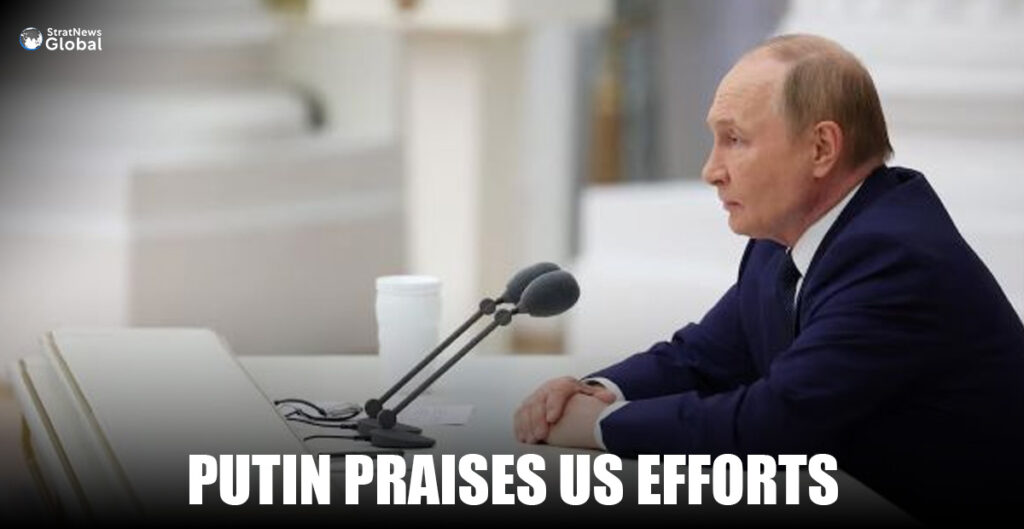
Putin Lauds ‘Sincere’ U.S. Efforts As Ukraine Awaits Trump-Putin Summit
On Thursday, Russian President Vladimir Putin commended what he called the U.S.’s “sincere efforts” to end the war in Ukraine and suggested the possibility of a nuclear arms agreement. His remarks came ahead of a summit with President Donald Trump, as European leaders pressed Trump to maintain a firm stance.
Putin was speaking to his most senior ministers and security officials as he prepared for the meeting with Trump in Anchorage, Alaska on Friday that could shape the endgame to the largest war in Europe since World War Two.
It follows intensified efforts by Ukrainian President Volodymyr Zelenskyy and his European allies to prevent any deal that carves up Ukraine’s territory and leaves it vulnerable to future attack.
‘Sincere Efforts’
Putin said in televised comments that the U.S. was “making, in my opinion, quite energetic and sincere efforts to stop the hostilities, stop the crisis and reach agreements that are of interest to all parties involved in this conflict”.
This was happening, Putin said, “in order to create long-term conditions for peace between our countries, and in Europe, and in the world as a whole – if, by the next stages, we reach agreements in the area of control over strategic offensive weapons.”
His comments signalled that Russia will raise the issue of nuclear arms control as part of a wide-ranging discussion on security when he sits down with Trump for the first Russia-U.S. summit since June 2021.
A senior eastern European official, who requested anonymity to discuss sensitive matters, said Putin would try to distract Trump from Ukraine at the talks by offering him possible progress on nuclear arms control or something business-related.
“We hope Trump won’t be fooled by the Russians, he understands all (these) dangerous things,” the official said.
“The only strategic goal for the Russians is not to receive new sanctions, and to lift the sanctions that the U.S. and others (imposed) previously. The Russians have no other big goals now. They think they will find a way to take all of Ukraine in one way or another,” the source added.
Seeking Clarity On Security Guarantees
Ukraine’s allies said Trump was willing to back security guarantees for Kyiv, a potentially significant but as yet vague offer that could give some hope to Ukraine.
Trump had shown willingness to join the guarantees at a last-ditch virtual meeting with European leaders and Zelenskyy on Wednesday, leaders said, though he made no public mention of them afterwards.
“Yesterday, together with all our partners, and today in a bilateral format, we discussed expectations for the meeting in Alaska and possible prospects,” Zelenskyy said after a meeting in London with British Prime Minister Keir Starmer.
“We also discussed in considerable detail the security guarantees that can make peace truly durable if the United States succeeds in pressing Russia to stop the killings and engage in genuine, substantive diplomacy.”
Friday’s summit comes at one of the toughest moments for Ukraine in a war that has killed tens of thousands and displaced millions since Russia’s full-scale invasion in February 2022.
Stance On NATO Alliance
Speaking after Wednesday’s meeting, French President Emmanuel Macron said Trump insisted that the transatlantic NATO alliance should not be part of security guarantees that would be designed to protect Ukraine from future attacks in a post-war settlement.
“President Trump also stated this clearly, saying things that I find important: namely, that NATO should not be part of these security guarantees – and we know this is a key point, particularly for the Russian side – but (also) that the United States and all willing allies should be part of them. That is what we are committed to,” Macron said.
Expanding on that, a European official said that Trump said on the call he was willing to provide some security guarantees for Europe, without spelling out what they would be.
The official, who did not want to be named, said this was the first time he has been so explicit about providing some guarantees since the Coalition of the Willing talks led by Britain and France began in March.
It “felt like a big step forward”, the official said.
It was not immediately clear what such guarantees could mean in practice.
On Wednesday, Trump threatened “severe consequences” if Putin does not agree to peace in Ukraine and while he did not specify what the consequences could be, he has warned of economic sanctions if his meeting on Friday proves fruitless.
Russia Likely To Resist
However, Russia is likely to resist Ukraine and Europe’s demands strongly and previously has said its stance had not changed since it was first detailed by Putin in June 2024.
A Kremlin aide said Putin and Trump will discuss the “huge untapped potential” for Russia-U.S. economic ties as well as the prospects for ending the war at the meeting.
Zelenskyy confirmed this week that Russian forces had advanced by about 9-10 km (6 miles) near the town of Dobropillia in the Donetsk region. Ukraine, suffering manpower challenges, was forced to move in reserves to stabilise the situation.
Trump has said a deal could include what he called a land swap. Russia controls around a fifth of Ukraine and a land swap within Ukraine could cement Moscow’s gains.
Zelenskyy and the Europeans worry that would reward Putin for 11 years of efforts to seize Ukrainian land and embolden him to expand further west in Europe.
(With inputs from Reuters)
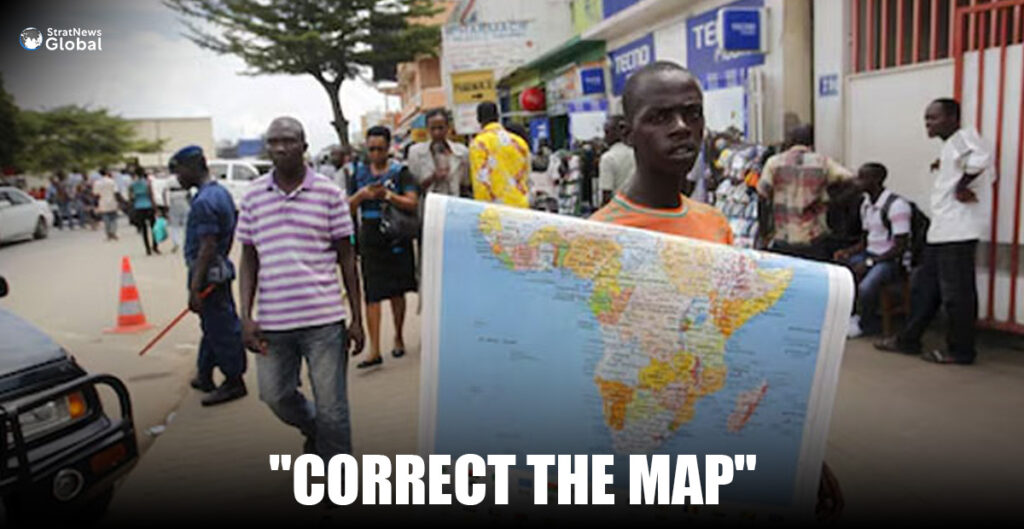
African Union Calls For Adoption Of Accurate World Map Showing Continent’s True Size
The African Union has endorsed a campaign urging governments and international organisations to replace the 16th-century Mercator world map with one that more accurately reflects Africa’s size.
Created by cartographer Gerardus Mercator for navigation, the projection distorts continent sizes, enlarging areas near the poles like North America and Greenland while shrinking Africa and South America.
“It might seem to be just a map, but in reality, it is not,” AU Commission deputy chairperson Selma Malika Haddadi told Reuters, saying the Mercator fostered a false impression that Africa was “marginal”, despite being the world’s second-largest continent by area, with 54 nations and over a billion people.
Such stereotypes influence media, education and policy, she said.
‘Correct The Map’ Campaign
Criticism of the Mercator map is not new, but the ‘Correct The Map’ campaign led by advocacy groups Africa No Filter and Speak Up Africa has revived the debate, urging organisations to adopt the 2018 Equal Earth projection, which tries to reflect countries’ true sizes.
“The current size of the map of Africa is wrong,” Moky Makura, executive director of Africa No Filter, said. “It’s the world’s longest misinformation and disinformation campaign, and it just simply has to stop.”
Fara Ndiaye, co-founder of Speak Up Africa, said the Mercator affected Africans’ identity and pride, especially children who might encounter it early in school.
“We’re actively working on promoting a curriculum where the Equal Earth projection will be the main standard across all (African) classrooms,” Ndiaye said, adding she hoped it would also be the one used by global institutions, including Africa-based ones.
Haddadi said the AU endorsed the campaign, adding it aligned with its goal of “reclaiming Africa’s rightful place on the global stage” amid growing calls for reparations for colonialism and slavery.
The AU will advocate for wider map adoption and discuss collective actions with member states, Haddadi added.
Mercator Projection
The Mercator projection is still widely used, including by schools and tech companies. Google Maps switched from Mercator on desktop to a 3D globe view in 2018, though users can still switch back to Mercator if they prefer.
On the mobile app, however, the Mercator projection remains the default.
‘Correct The Map’ wants organisations like the World Bank and the United Nations to adopt the Equal Earth map. A World Bank spokesperson said they already use the Winkel-Tripel or Equal Earth for static maps and are phasing out Mercator on web maps.
The campaign said it has sent a request to the UN geospatial body, UN-GGIM. A UN spokesperson said that once received, it must be reviewed and approved by a committee of experts.
Other regions are backing the AU’s efforts. Dorbrene O’Marde, Vice Chair of the Caribbean Community (CARICOM) Reparations Commission, endorsed Equal Earth as a rejection of the Mercator map’s “ideology of power and dominance”.
(With inputs from Reuters)
Indus Waters: Ruling By Court Of Arbitration Has No Legitimacy, Says India
“India has never accepted the legality, legitimacy, or competence of the so-called Court of Arbitration. Its pronouncements are therefore without jurisdiction, devoid of legal standing, and have no bearing on India’s rights of utilisation of waters.”
That was External Affairs Ministry spokesman Randhir Jaiswal, rejecting the Permanent Court of Arbitration’s recent ruling on Indus waters. Jaiswal said India does not recognise the Court of Arbitration’s legitimacy or authority under the 1960 treaty.
Referring to a detailed statement issued by the MEA on June 27, 2025, Jaiswal reiterated that the tribunal’s formation itself violated the terms of the Indus Waters Treaty. The MEA had dismissed the tribunal’s “supplemental award” on the Kishenganga and Ratle hydroelectric projects as “per se void” and “non-existent in the eye of law.”
“India has in exercise of its rights as a sovereign nation under international law, placed the Indus Waters Treaty in abeyance, until Pakistan credibly and irrevocably abjures its support for cross-border terrorism,” the June statement said.
India clarified that while the treaty remains suspended, it is not obliged to perform any of its obligations, and no arbitral body—especially one it considers illegally constituted—has the jurisdiction to evaluate or interfere with its sovereign actions.
The MEA also accused Pakistan of manipulating international forums to deflect from its role as a state sponsor of terrorism, calling the arbitration proceedings a “fabricated mechanism” aimed at evading accountability.
India’s decision to suspend the Indus Waters Treaty followed the Pahalgam terror attack on April 22, in which 26 civilians were killed. In retaliation, India launched Operation Sindoor on May 7, targeting terror camps in Pakistan and Pakistan-Occupied Kashmir.
MEA Warning
In response to repeated threats from Islamabad over the treaty and recent Indian actions, Jaiswal issued a blunt warning to Pakistan.
“We have seen a continuing pattern of reckless, war-mongering and hateful comments from Pakistani leadership against India,” he said. “Pakistan would be well-advised to temper its rhetoric, as any misadventure will have painful consequences, as was demonstrated recently.”
Pakistan’s Escalating Rhetoric
Amid tensions over the treaty, Prime Minister Shehbaz Sharif, speaking in Islamabad on August 12, warned that India would not be allowed to “snatch even one drop” of Pakistan’s water. “You will be taught such a lesson that you will be left holding your ears,” he said.
Former Foreign Minister Bilawal Bhutto-Zardari echoed this sentiment, framing India’s suspension of the treaty as an “attack on the Indus Valley Civilisation” and vowing national resistance.
Most concerning, however, were remarks attributed to Pakistan Army Chief Field Marshal Asim Munir in Florida last week, where he reportedly said: “We are a nuclear nation. If we think we are going down, we’ll take half the world down with us.”
He also threatened to destroy any Indian dam built to regulate river flows into Pakistan, saying: “The Indus River is not the Indians’ family property. We will destroy any dam they build.”
With Pakistan openly warning that any attempts to control river waters would be treated as an “act of war,” and India asserting its sovereign right to act against state-sponsored terrorism, water security is emerging as a new axis of confrontation in the region.