

Support us by contributing to StratNewsGlobal on the following UPI ID
ultramodern@hdfcbank

Strategic affairs is our game, South Asia and beyond our playground. Put together by an experienced team led by Nitin A. Gokhale. Our focus is on strategic affairs, foreign policy and international relations, with higher quality reportage, analysis and commentary with new tie-ups across the South Asian region.
You can support our endeavours. Visit us at www.stratnewsglobal.com and follow us on YouTube, Twitter, Facebook and Instagram.
र 500 per month
र 1000 per month
र 5000 per year
र 10000 per year
Donate an amount of your choice
र 500 per month
Donate र 500 per month

र 1000 per month
Donate र 1000 per month
र 5000 per year
Donate र 5,000 per year
र 10000 per year
Donate र 10,000 per year
Donate an amount of your choice
Donate an amount of your choice


Trump Administration Plans 40,000 Refugee Cap Prioritising White South Africans
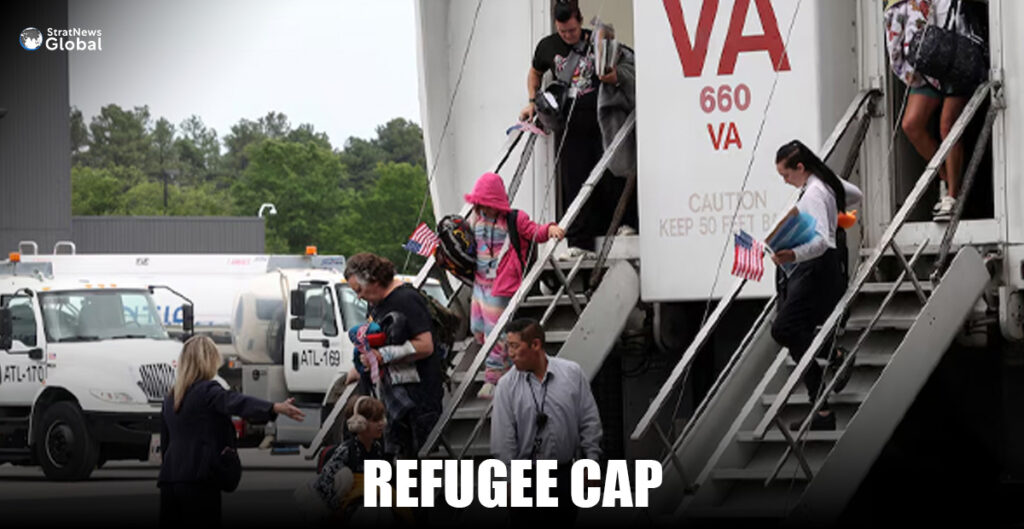
President Donald Trump’s administration is considering setting a refugee admissions cap of roughly 40,000 for the coming year, with most slots earmarked for white South Africans—marking a significant shift in U.S. refugee policy, according to two U.S. officials and an internal refugee programme email.
Angie Salazar, the top refugee programme official at the U.S. Department of Health and Human Services, told state-level refugee workers that she expected the cap to be 40,000, according to an email summary of an August 1 meeting reviewed by Reuters.
The two officials, who spoke on condition of anonymity, said some 30,000 of the 40,000 spaces would be devoted to Afrikaners, a largely Dutch-descended minority in South Africa that Trump has prioritised for resettlement.
Trump’s Refugee Policy Shift
Trump’s focus on resettling Afrikaners could upend the precedent around the refugee programme, which for decades had bipartisan support.
The 40,000-person cap would be a sharp drop from the 100,000 refugees brought in by former President Joe Biden in fiscal year 2024, but higher than the record-low 15,000-person ceiling Trump set for fiscal year 2021 before ending his first term.
A separate person familiar with the matter said that in addition to the 40,000 figure, a cap as low as 12,000 had also been discussed.
There are 37 million refugees worldwide, according to a United Nations estimate.
Trump immediately froze refugee admissions after taking office in January, but weeks later launched a program for Afrikaners, saying the white minority group suffered racial discrimination and violence in majority-Black South Africa, claims that were rejected by South Africa’s government.
The Trump administration has wrestled internally over whether non-white South Africans could qualify for the refugee program, Reuters reported in July.
In addition to Afrikaners, the Trump administration expects to bring in some Afghans who aided the U.S. government during the conflict in Afghanistan and is weighing whether to resettle Ukrainians, the email said. Some spaces would remain unallocated to potentially be filled by other nationalities, the email and officials said.
Final Decision Pending
White House deputy press secretary Anna Kelly stressed that no decisions were final until Trump issued his determination for fiscal year 2026, which begins on October 1.
“President Trump has a humanitarian heart, which is why he has welcomed these courageous individuals to the United States,” Kelly said. “Refugee admission caps will be determined next month, and any numbers discussed at this point are pure speculation.”
A senior State Department official pointed to the department’s recent human rights report, which raised concerns about “inflammatory racial rhetoric against Afrikaners and other racial minorities” in South Africa.
HHS referred questions related to the refugee cap to the White House. Salazar did not respond to requests for comment.
The first group of 59 South Africans arrived in May, but only 34 more had come as of early August, a White House official said.
The U.S. State Department laid off many refugee program staffers in major workforce reductions in July. To compensate for the fired staff, workers from HHS who normally deal with domestic refugee assistance have been reassigned to the South Africa program, one of the officials said.
Thirteen HHS staffers were dispatched to Pretoria on Monday, even though the majority had no direct experience screening refugees, the official said.
An HHS spokesperson said that trained staff had been detailed to support refugee resettlement but that they were not conducting interviews to determine whether a refugee had experienced persecution.
Initial Struggles
Some South Africans now in the U.S. with refugee status have reached out to HHS to raise concerns about a lack of benefits to support them, one of the U.S. officials said. Trump slashed refugee benefits after taking office, including reducing cash assistance and healthcare benefits that normally last a year to four months.
One of the initial group of 59 South Africans brought into the U.S. in mid-May sent an email to HHS’ refugee office two weeks later pleading for help getting a Social Security number and access to a work permit.
The person who went to Missoula, Montana, said their family had spent thousands of dollars to cover expenses.
“We have applied for jobs like crazy but to no avail because we found people here are not keen on hiring refugees without an SSN,” one of the family members wrote in a May 27 email to the HHS refugee program reviewed by Reuters. “We have spent about $4000 on Uber, food, and cell phone SIM Cards, which don’t work.”
The person was concerned the family would not be able to find housing after a government-funded hotel stay ended in early June.
Reuters could not reach the family. The HHS spokesperson said the agency takes complaints seriously and that refugees placed in temporary housing receive support for essential needs, including food.
A person familiar with the matter said some South Africans arrived in the U.S. expecting standard refugee benefits that had been paused or reduced by Trump.
(With inputs from Reuters)
Trump Says No Ukraine Peace Deal Reached With Putin At Alaska Summit
U.S. President Donald Trump stated that nearly three hours of direct talks with Russian President Vladimir Putin on Friday did not result in an agreement to halt Russia’s war in Ukraine, although he described the meeting as “very productive.”
During brief remarks to reporters, the two leaders said they had made progress on unspecified issues, but they offered no details and took no questions.
‘No Deal, Until A Deal’
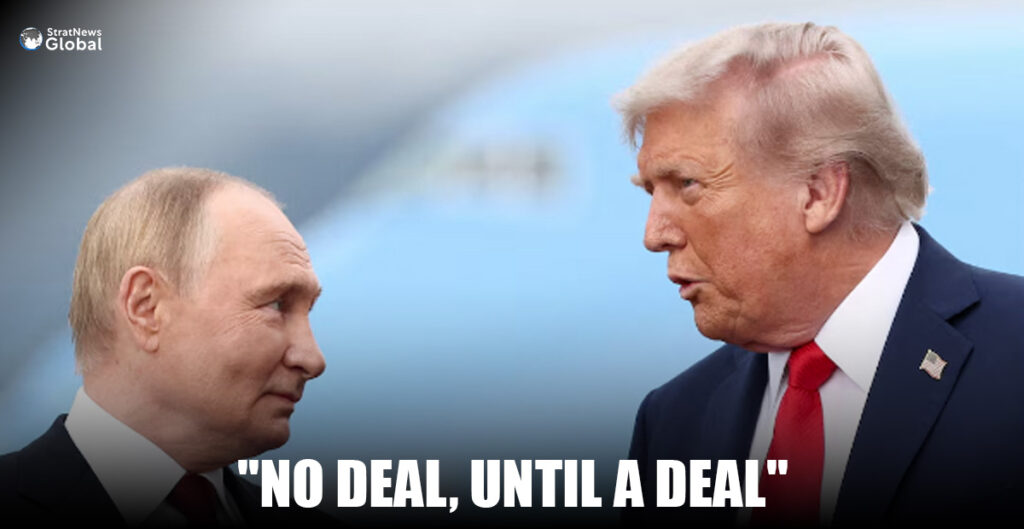
“There were many, many points that we agreed on. I would say a couple of big ones that we haven’t quite got there, but we’ve made some headway,” Trump said, standing in front of a backdrop that read, “Pursuing Peace.”
“There’s no deal until there’s a deal,” he added.
It was not immediately clear whether the talks had produced meaningful steps toward a ceasefire in the deadliest conflict in Europe in 80 years, a goal that Trump had set at the outset.
In brief remarks, Putin said he expected Ukraine and its European allies to accept the results of the U.S.-Russia negotiation constructively and not try to “disrupt the emerging progress.”
“I expect that today’s agreements will become a reference point, not only for solving the Ukrainian problem, but will also launch the restoration of business-like, pragmatic relations between Russia and the United States,” Putin said.
There was no immediate reaction from Kyiv.
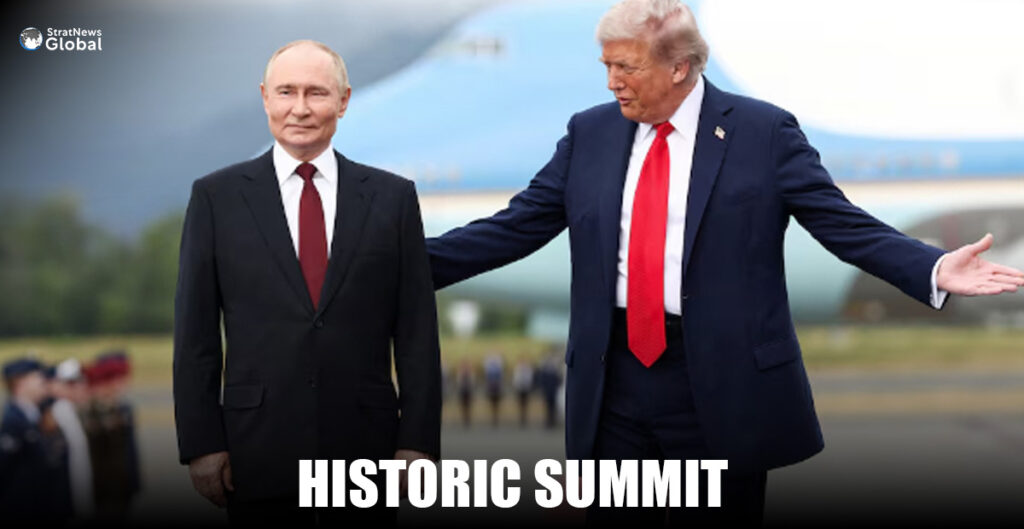
The anticlimactic end to the closely watched summit was in stark contrast to the pomp and circumstance with which it began. When Putin arrived at an Air Force base in Alaska, a red carpet awaited him, where Trump greeted Putin warmly as U.S. military aircraft flew overhead.
Putin Claims Diplomatic Win
For Putin, the summit – the first between him and a U.S. president since Russia’s full-scale invasion of Ukraine in 2022 – was already a big win, regardless of its outcome. He can portray the meeting as evidence that years of Western attempts to isolate Russia have unravelled and that Moscow is retaking its rightful place at the high table of international diplomacy.
Trump hopes a truce in the 3-1/2-year-old war that Putin started will bring peace to the region as well as bolster his credentials as a global peacemaker worthy of the Nobel Peace Prize.
Putin is wanted by the International Criminal Court, accused of the war crime of deporting hundreds of children from Ukraine. Russia denies the allegations, and the Kremlin has dismissed the ICC warrant as null and void. Russia and the United States are not members of the court.
Both Moscow and Kyiv deny targeting civilians in the war. But thousands of civilians have died in the conflict, the vast majority Ukrainian, and the war has killed or injured well over a million people from both sides.
No Ceasefire
Trump and Putin, along with top foreign-policy aides, conferred in a room at an Air Force base in Anchorage, Alaska, in their first meeting since 2019.
Trump’s publicly stated aim for the talks was to secure a halt to the fighting and a commitment by Putin to meet swiftly with Ukrainian President Volodymyr Zelenskyy to negotiate an end to the war, which began when Russia invaded its neighbour in February 2022.
Zelenskyy, who was not invited to the summit, and his European allies had feared Trump might sell out Ukraine by essentially freezing the conflict and recognising – if only informally – Russian control over one-fifth of Ukraine.
Trump sought to assuage such concerns as he boarded Air Force One, saying he would let Ukraine decide on any possible territorial concessions.
“I’m not here to negotiate for Ukraine, I’m here to get them to a table,” he said.
Asked what would make the meeting a success, he told reporters: “I want to see a ceasefire rapidly … I’m not going to be happy if it’s not today … I want the killing to stop.”
Zelenskyy has ruled out formally handing Moscow any territory and is also seeking a security guarantee backed by the United States.
Trump To Brief Zelenskyy, NATO
Trump said he would call Zelenskyy and NATO leaders to update them on the talks with Putin.
The meeting also included U.S. Secretary of State Marco Rubio; Trump’s special envoy to Russia, Steve Witkoff; Russian foreign policy aide Yury Ushakov; and Foreign Minister Sergei Lavrov.
Trump, who once said he would end Russia’s war in Ukraine within 24 hours, conceded on Thursday it had proven a tougher task than he had expected. He said if Friday’s talks went well, quickly arranging a second, three-way summit with Zelenskyy would be more important than his encounter with Putin.
Zelenskyy said Friday’s summit should open the way for a “just peace” and three-way talks that included him, but added that Russia was continuing to wage war. A Russian ballistic missile earlier struck Ukraine’s Dnipropetrovsk region, killing one person and wounding another.
“It’s time to end the war, and the necessary steps must be taken by Russia. We are counting on America,” Zelenskyy wrote on the Telegram messaging app.
(With inputs from Reuters)
Rights Groups Sue German Ministers Over Afghans’ Deportation From Pakistan
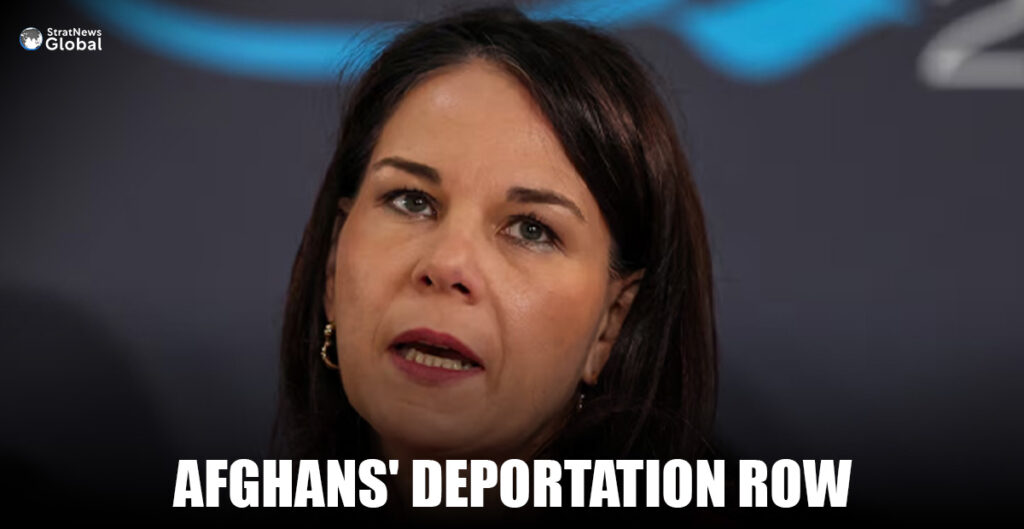
Advocacy groups on Friday filed a criminal case against the German foreign and interior ministers, accusing them of neglecting to protect Afghan nationals in Pakistan—who hold German admission approvals—from being deported to Taliban-controlled Afghanistan.
Pakistan has begun deporting documented Afghan refugees ahead of a September 1 deadline, a move the United Nations warns could force more than one million to leave.
Among those at risk are more than 2,000 Afghans approved for relocation to Germany under programmes for people deemed vulnerable under Taliban rule in Afghanistan.
The relocations have been put on hold, pending a review by Germany’s new conservative-led government as it tries to deliver on its election promise to curb migration.
Refugee group PRO ASYL and the Patenschaftsnetzwerk Ortskraefte, a non-profit supporting former local staff who worked for Germany, filed a criminal complaint with Berlin prosecutors against Foreign Minister Johann Wadephul and Interior Minister Alexander Dobrindt.
‘Failure To Render Assistance’
By allowing Pakistan to deport Afghans already accepted into German resettlement programmes, they said, the ministers had committed “abandonment” and “failure to render assistance” to people at risk under Section 221 of the Criminal Code.
They said more than 400 people approved for relocation to Germany had been arrested in Pakistan in recent weeks, and 34 people had already been deported. Deportees face grave risks under Taliban rule, including imprisonment, mistreatment or execution, the groups said.
Victoria Lies, a lawyer who represents several of those affected, said some of her clients had been separated from their families, and in one case, a girl had been sent back to Afghanistan alone.
The foreign and interior ministries did not immediately respond to requests for comment on the lawsuit.
However, Wadephul said on Friday his ministry was in “high-level contact with the Pakistani government to ensure the protection of these people and to provide rapid assistance to those who have been deported or arrested in recent days”.
The interior ministry has said it cannot provide a timeline to determine the future of the admission programme but expects decisions soon.
The two NGOs’ complaint builds on a July 8 legal opinion commissioned by them, which said German officials could be criminally liable if they fail to prevent the deportations.
It adds to more than 80 lawsuits by affected Afghans seeking German government approval for their visas, with courts siding with them in some cases, though the interior ministry has appealed those rulings.
(With inputs from Reuters)
Germany Urges Israel To Halt West Bank Settlement Expansion
Germany on Friday urged the Israeli government to halt settlement construction in the West Bank, following remarks from Israel’s far-right finance minister announcing plans to begin work on thousands of homes that would further divide the Palestinian territory.
Germany “firmly rejects the Israeli government’s announcements regarding the approval of thousands of new housing units in Israeli settlements in the West Bank,” said a foreign ministry spokesperson in a statement.
Plans for the “E1” settlement and the expansion of Maale Adumim would further restrict the mobility of the Palestinian population in the West Bank by splitting it in half and cutting the area off from East Jerusalem, said the spokesperson.
Minister’s Settlement Plan
Israeli Finance Minister Bezalel Smotrich announced on Thursday that work would start on the long-delayed settlement, a move that his office said would “bury” the idea of a Palestinian state.
In a statement, Smotrich’s spokesperson said the minister had approved the plan to build 3,401 houses for Israeli settlers between an existing settlement in the West Bank and Jerusalem.
Standing at the site of the planned settlement in Maale Adumim on Thursday, Smotrich, a settler himself, said Prime Minister Benjamin Netanyahu and U.S. President Donald Trump had agreed to the revival of the E1 development, though there was no immediate confirmation from either.
“Whoever in the world is trying to recognise a Palestinian state today will receive our answer on the ground, not with documents nor with decisions or statements, but with facts. Facts of houses, facts of neighbourhoods,” Smotrich said.
Germany has repeatedly warned the Israeli government to stop settlement construction in the West Bank, which violates international law and U.N. Security Council resolutions.
Such moves complicate steps towards a negotiated two-state solution and an end to Israeli occupation of the West Bank, said the spokesperson.
The Palestinian government, allies and campaign groups condemned the scheme, calling it illegal and saying the fragmentation of territory would rip up peace plans for the region.
(With inputs from Reuters)
Putin, Trump Begin High-Stake Summit In Alaska To Discuss Ukraine’s Fate
U.S. President Donald Trump and Russian President Vladimir Putin held a high-stakes meeting in Alaska on Friday to explore a potential ceasefire in Europe’s deadliest war since World War II.
Ahead of the summit, Trump greeted the Russian leader on a red carpet on the tarmac at a U.S. Air Force base. The two shook hands warmly and touched each other on the arm before riding in Trump’s limo to the summit site nearby.
‘Pursuing Peace’
The two leaders sat silently with their respective delegations seated to the side in their first meeting since 2019. They were seated in front of a blue backdrop that had the words “Pursuing Peace” printed on it.
Ukrainian President Volodymyr Zelenskyy, who was not invited to the talks, and his European allies fear Trump might sell out Ukraine by essentially freezing the conflict with Russia and recognising – if only informally – Russian control over one-fifth of Ukraine.
Earlier, Trump sought to assuage such concerns as he boarded Air Force One, saying he would let Ukraine decide on any possible territorial swaps. “I’m not here to negotiate for Ukraine, I’m here to get them to a table,” he said.
Asked what would make the meeting a success, he told reporters: “I want to see a ceasefire rapidly … I’m not going to be happy if it’s not today … I want the killing to stop.”
Trump was joined in his meeting with Putin by Secretary of State Marco Rubio and Trump’s special envoy to Russia, Steve Witkoff.
At a subsequent larger, bilateral meeting, Treasury Secretary Scott Bessent, Commerce Secretary Howard Lutnick, Defence Secretary Pete Hegseth and chief of staff Susie Wiles will also join Trump, press secretary Karoline Leavitt said.
The Russian officials accompanying Putin in the talks with the U.S. delegation will be foreign policy aide Yury Ushakov and Foreign Minister Sergei Lavrov.
Trump Eyes Truce
Trump hopes a truce in the 3-1/2-year-old war that Putin started will bring peace to the region as well as bolster his credentials as a global peacemaker worthy of the Nobel Peace Prize.
For Putin, the summit is already a big win that he can portray as evidence that years of Western attempts to isolate Russia have unravelled and that Moscow is retaking its rightful place at the top table of international diplomacy.
Trump, who once said he would end Russia’s war in Ukraine within 24 hours, conceded on Thursday it had proven a tougher task than he had expected. He said if Friday’s talks went well, quickly arranging a second, three-way summit with Zelenskyy would be even more important than his encounter with Putin.
Kremlin spokesman Dmitry Peskov said a three-way summit would be possible if the Alaska talks bore fruit, Interfax news agency reported. Peskov also said Friday’s talks could last six to seven hours.
Inclusive Peace Talks
Zelenskyy said the summit should open the way for a “just peace” and three-way talks that included him, but added that Russia was continuing to wage war. A Russian ballistic missile earlier struck Ukraine’s Dnipropetrovsk region, killing one person and wounding another.
“It’s time to end the war, and the necessary steps must be taken by Russia. We are counting on America,” Zelenskyy wrote on the Telegram messaging app.
Trump said before the summit that there is mutual respect between him and Putin.
“He is a smart guy, been doing it for a long time, but so have I … We get along, there’s a good respect level on both sides,” Trump said of Putin. He also welcomed Putin’s decision to bring businesspeople to Alaska.
“But they’re not doing business until we get the war settled,” he said, repeating a threat of “economically severe” consequences for Russia if the summit goes badly.
Arctic Energy Cooperation
The United States has had internal discussions on using Russian nuclear-powered icebreaker vessels to support the development of gas and LNG projects in Alaska as one of the possible deals to aim for, three sources familiar with the matter told Reuters.
One source acquainted with Kremlin thinking said there were signs Moscow could be ready to strike a compromise on Ukraine, given that Putin understood Russia’s economic vulnerability and the costs of continuing the war.
Reuters has previously reported that Putin might be willing to freeze the conflict along the front lines, provided there was a legally binding pledge not to enlarge NATO eastwards and to lift some Western sanctions. NATO has said Ukraine’s future is in the alliance.
Russia, whose war economy is showing strain, is vulnerable to further U.S. sanctions – and Trump has threatened tariffs on buyers of Russian crude, primarily China and India.
“For Putin, economic problems are secondary to goals, but he understands our vulnerability and costs,” the Russian source said.
Putin, this week, held out the prospect of something else he knows Trump wants – a new nuclear arms control accord to replace the last surviving one, which is due to expire in February.
(With inputs from Reuters)
China Criticises ‘Surveillance Empire’ Tactics By US
China’s state-run media outlet Xinhua on Friday criticised the United States for embedding location trackers in sensitive chip shipments, calling the move a reflection of the “instincts of a surveillance empire”.
Reuters reported earlier this week that US authorities had secretly placed location tracking devices in targeted shipments of advanced chips to detect diversions to China, which is under US curbs for advanced chip exports.
Surveillance Game
The Xinhua commentary, titled “America turns chip trade into a surveillance game,” cited “reports” that Washington had embedded such trackers, accusing the United States of running “the world’s most sprawling intelligence apparatus”.
The US government has in the past few years tightened restrictions on the exports of advanced chips as well as related technology and equipments to China, as the two superpowers vie for technological dominance.
The Chinese commentary comes in response to long-standing accusations from Washington and its Western allies that Beijing could exploit exported products — ranging from telecommunications gear to electric vehicles — for surveillance purposes, posing serious national security risks.
Trojan Horses
In 2022, the Biden administration banned the sale and import of new telecommunications equipment from several Chinese firms, including Huawei, citing national security concerns. In January, it intensified scrutiny by targeting China-made cars and trucks.
In its commentary, Xinhua accused the US government of seeing its trading partners as “rivals to be tripped up or taken down,” adding that “if US chips are seen as Trojan horses for surveillance, customers will look elsewhere”.
Nvidia H20 Chips
China’s cyberspace watchdog last month said it had asked US chipmaker Nvidia to explain whether its H20 chips had any backdoor security risks – a hidden method of bypassing normal authentication or security controls.
Chinese authorities have also cautioned domestic tech firms over their use of H20 chips, Reuters recently reported.
(With inputs from Reuters)
Israel And South Sudan Discuss Plan To Relocate Gaza Palestinians: Sources
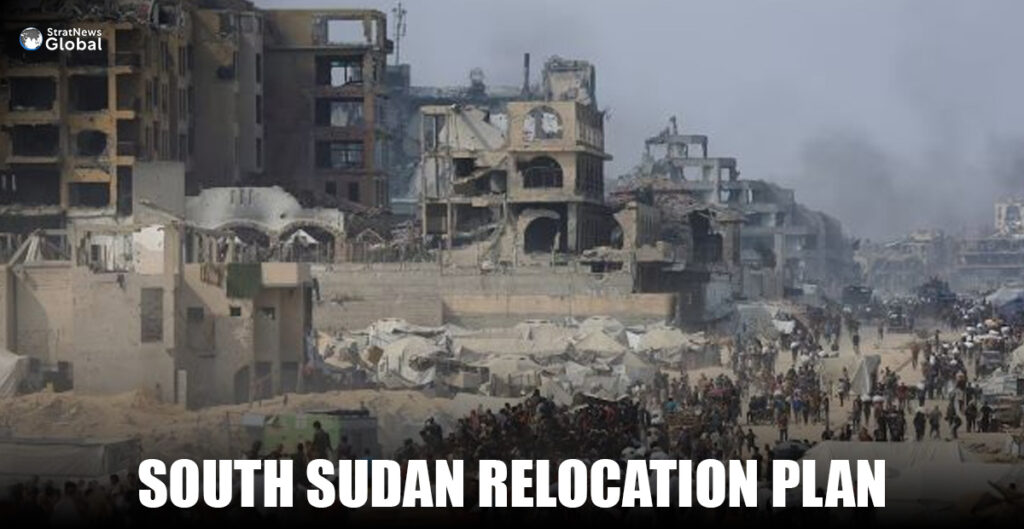
Israel and South Sudan are in talks over a proposal to move Palestinians from war-torn Gaza to the African nation, according to three sources. Palestinian leaders have swiftly rejected the idea, calling it unacceptable.
The sources, who have knowledge of the matter but spoke on condition of anonymity, said no agreement had been reached but talks between South Sudan and Israel were ongoing.
The plan, if carried further, would envisage people moving from an enclave shattered by almost two years of war with Israel to a nation in the heart of Africa riven by years of political and ethnically-driven violence.
Israeli Prime Minister Benjamin Netanyahu said this month he intends to extend military control in Gaza, and this week repeated suggestions that Palestinians should leave the territory voluntarily.
Arab and world leaders have rejected the idea of moving Gaza’s population to any country. Palestinians say that would be like another “Nakba” (catastrophe) when hundreds of thousands fled or were forced out during the Arab-Israeli war of 1948.
The three sources said the prospect of resettling Palestinians in South Sudan was raised during meetings between Israeli officials and South Sudanese Foreign Minister Monday Semaya Kumba when he visited the country last month.
Their account appeared to contradict South Sudan’s foreign ministry which on Wednesday dismissed earlier reports on the plan as “baseless”.
The ministry was not immediately available to respond to the sources’ assertions on Friday.
News of the discussions was first reported by the Associated Press on Tuesday, citing six people with knowledge of the matter.
Palestinian Leadership Rejects Relocation Plan
Wasel Abu Youssef, a member of the Executive Committee of the Palestine Liberation Organization, said the Palestinian leadership and people “reject any plan or idea to displace any of our people to South Sudan or to any other place”.
His statement echoed a statement from the office of Palestinian President Mahmoud Abbas on Thursday. Hamas, which is fighting Israel in Gaza, did not immediately respond to requests for comment.
Israeli Deputy Foreign Minister Sharren Haskel, who visited the South Sudanese capital Juba this week, said that those discussions had not focussed on relocation.
“This is not what the discussions were about,” she said when asked if any such plan had been discussed.
“The discussions were about foreign policy, about multilateral organisations, about the humanitarian crisis, the real humanitarian crisis happening in South Sudan, and about the war,” she said, referring to her talks with Juba officials.
Netanyahu, who met Kumba last month, has said Israel is in touch with a few countries to find a destination for Palestinians who want to leave Gaza. He has consistently declined to provide further details.
Netanyahu’s office and Israel’s foreign ministry did not immediately respond to a request for comment on the information given by the three sources on Friday.
(With inputs from Reuters)
Foreign Islamists Seek Syrian Citizenship After Fighting In Civil War
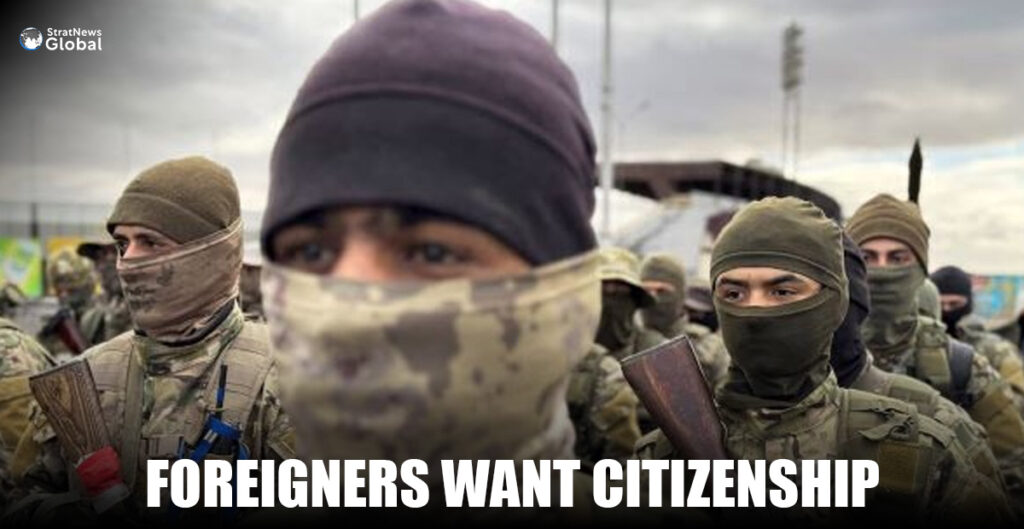
Foreign fighters and other individuals who entered Syria during the civil war have requested citizenship from the country’s new Islamist-led government. They argue that their role in helping rebel forces oust former leader Bashar al-Assad and rise to power has earned them the right to become Syrian citizens.
The fate of foreign fighters has loomed large since Hayat Tahrir al-Sham (HTS) took power, with few states willing to take back people they often view as extremists and some Syrians wary of their presence.
Many of the fighters and their families, and others including aid workers and journalists who joined the rebels, have no valid documentation. Some have been stripped of their original citizenship, and fear lengthy prison sentences or even death in their countries of origin.
But rewarding them with Syrian citizenship could alienate Syrians and foreign states whose support the new government is seeking as it tries to unify and rebuild a country devastated by war and shaken by sectarian killings.
A petition submitted to Syria’s interior ministry on Thursday argues the foreigners should be granted citizenship so they can settle down, own land and even travel.
“We shared bread, we shared sorrow, and we shared in the hope for a free and just future for Syria … Yet for us, the muhajireen (emigrants), our status remains uncertain,” reads the letter.
“We respectfully request that the Syrian leadership, with wisdom, foresight and brotherhood, grant us full Syrian citizenship and the right to hold a Syrian passport.”
Benefit To Foreigners
The letter was submitted by Bilal Abdul Kareem, a U.S. stand-up comedian-turned-war journalist residing in Syria since 2012 and a prominent voice among Islamist foreigners there.
He said that the petition aimed to benefit thousands of foreigners from more than a dozen states. That includes Egyptians and Saudis, Lebanese, Pakistanis, Indonesians and Maldivians, as well as Britons, Germans, French, Americans, Canadians and people of Chechen and Uyghur ethnicity.
A spokesperson for Syria’s interior ministry said the Syrian presidency would be the one to decide on the issue of citizenship for foreigners. A presidency media official did not respond to a request for comment.
In the weeks after taking power, Interim President Ahmed al-Sharaa, formerly HTS leader, said foreign fighters and their families might be granted Syrian citizenship, but there have been no public reports of such a move.
Some Syrians are concerned, seeing the foreigner fighters as more loyal to a pan-Islamic project than to Syria, and fearing their perceived extremism.
In the months since Assad fell, foreign fighters have been accused of participating in violence targeting members of Alawite and Druze minority religious groups.
An investigation into violence in Syria’s coastal regions in March in which more than 1,000 Alawites were killed found that Uyghurs, Uzbeks, Chechens, and some Arab fighters participated in the killings, though the majority were carried out by Syrian factions.
Life In New Syria
Thousands of Sunni Muslim foreigners flocked to Syria after popular protests in 2011 spiralled into an increasingly sectarian civil war that also drew in Shi’ite Muslim militias from across the region.
They joined various groups, some clashing with HTS, others building a reputation as fierce and loyal fighters whom the group’s leadership even relied on for their personal security.
Many married and started families.
The Uyghur fighter, who asked not to be identified due to the sensitivity of the topic, said his goal had shifted to making a life in the new Syria.
“I have a 4-year-old boy who should join school soon, and I have to think about his future away from the battlefields of jihad,” the fighter said.
Tauqir Sharif, a British aid worker who has lived in Syria since 2012, said in May that foreigners who contributed to society deserved nationality.
“The muhajireen that came were not killers, they were life savers that came here to stop the oppression,” said Sharif, who was stripped of his UK citizenship in 2017 for alleged links to an al Qaeda-aligned group, allegations he denies.
‘Just Outcome’
After taking power in December, Syria appointed foreign fighters to senior military posts. It received a U.S. green light to include several thousand in the army, and has handed foreigners other roles.
Supporters of giving foreign fighters citizenship argue it would make them accountable under the law.
“This would be the just outcome of the sacrifices these young brothers and sisters made to free the country from the clutches of Bashar al-Assad,” said Abdul Kareem, who has also been critical of HTS and the new Syrian leadership.
Orwa Ajjoub, a Syrian analyst who has studied Syrian jihadist groups since 2016, said the issue “should be addressed through dialogue with a broad spectrum of Syrian society, which still holds diverse opinions on the matter”.
(With inputs from Reuters)
Indonesia To Crack Down On Illegal Palm Oil, Mining Ops
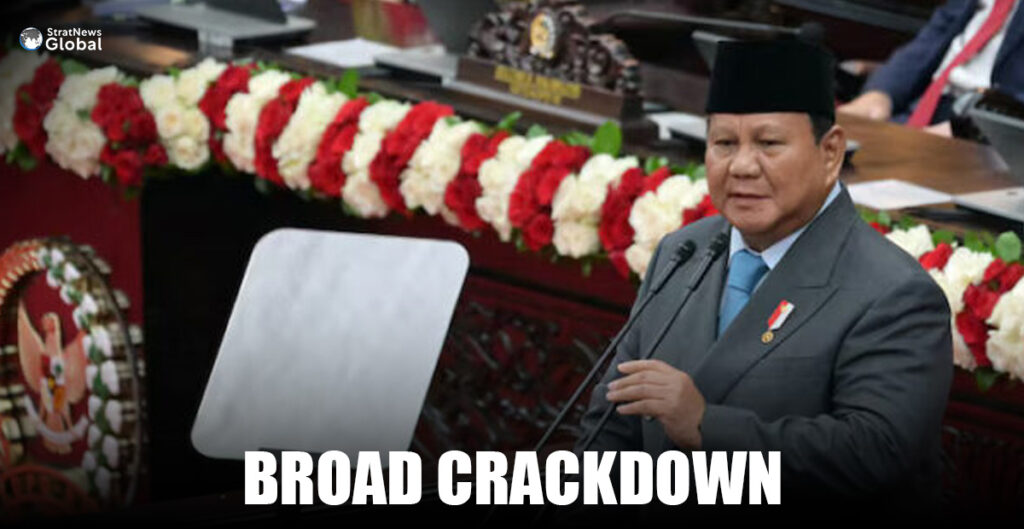
Indonesia will step up its crackdown on illegal use of natural resources, President Prabowo Subianto said on Friday, after a government survey revealed that palm oil plantations covering 3.7 million hectares were operating unlawfully.
The area is almost the size of Switzerland.
Prabowo added that a total of 5 million hectares of palm plantations have been under scrutiny for operating in protected forest areas, not reporting their actual size, or not responding to summons from auditors.
He made the comments in his first state of the nation speech, delivered as the country – the world’s largest producer and exporter of palm oil – celebrates 80 years of independence this weekend. Prabowo won a presidential election last year, and took power in October.
Military To Help
“We will ensure that the Indonesian people will not fall victim to greedy economics,” Prabowo, speaking in parliament, said, adding that the government had already seized 3.1 million hectares of illegal palm plantations with the help of the military.
“We have used the military to accompany the teams that took over the plantations because there often is resistance,” he said. Critics have expressed concern about the growing role of the military in civilian life in the country under Prabowo.
In his speech, Prabowo, a former special forces commander known for his aggressive operational tactics, also warned that the state could confiscate assets of companies that “manipulate and violate” Indonesia’s laws.
He said his government was also planning a crackdown on mining, adding that authorities had received reports of as many as 1,063 illegal operations throughout the vast, mineral-rich archipelago.
He did not specify what type of mines or the commodities they were extracting.
Fear Of ‘Negative Image’
Indonesian Palm Oil Association (GAPKI) chief Eddy Martono questioned the source of Prabowo’s figures and said his organisation had not been consulted on the 5 million hectares number.
On the 3.7 million hectares of plantations found to be operating unlawfully, he said companies and cooperatives running them had been asked to clarify their status and some had permits such as land-use concessions and ownership certificates.
“It will create a negative image internationally, suggesting that Indonesian palm oil is encroaching on forests,” he said.
There was no immediate response from the national association of miners to a Reuters request for comment on the president’s assertions.
Indonesia is also the world’s biggest producer of nickel and a major producer of thermal coal, tin, and copper.
Broad Crackdown
Prabowo added that the government would take action against businesses found to be hoarding and exploiting key commodities in Indonesia.
Large-scale rice mills would also be forced to obtain government permits to ensure rice quality and affordability, he said.
The main stock index touched its all-time high, rising 1.1%, as Prabowo started his speech, but then retreated to trade 0.4% down by the close.
The rupiah, which had strengthened in recent days, also slipped 0.3%.
Later, on Friday, Prabowo unveiled the government’s budget estimates for the next fiscal year.
(With inputs from Reuters)
Deputy To Senior Chinese Diplomat Detained For Interrogation: Sources
A deputy to a prominent Chinese diplomat under questioning has also been detained, three sources said, deepening uncertainty within China’s diplomatic leadership.
Sun Haiyan, a senior diplomat and former ambassador to Singapore, was detained in early August around the time Liu Jianchao, widely seen as a potential foreign minister candidate, was taken in for questioning, two of the people said.
Sun, the first woman to serve as a deputy head of the Communist Party’s International Department, was detained by Chinese authorities in connection with the questioning of Liu, the sources said.
None of the sources knew the basis of the questioning of either diplomat. The sources requested anonymity because of the sensitivity of the matter.
The detention of Liu, who leads the International Department, marked the highest-level disappearance of a diplomat since China ousted its former foreign minister and President Xi Jinping’s protege, Qin Gang, in 2023, following an unexplained public absence.
Detained After Singapore Trip
His detention followed a work trip to Singapore, South Africa and Algeria. His house was searched in early August.
The disappearance of Sun alongside the highly visible Liu adds to questions about China’s foreign policy establishment at a time of rising tensions with Washington around trade and geopolitical influence.
China’s State Council Information Office, which handles media queries for the government, and the International Department did not immediately respond to Reuters requests for comment.
Reuters could not verify if both Sun and Liu were still being detained. Neither could be reached for comment.
Both their profiles remain on the International Department’s website.
Sun’s last public appearance was on August 1, when she attended a reception hosted by Nepal’s embassy in Beijing.
Sun, 53, was stationed in Singapore between May 2022 and July 2023. When she left her post, she hosted a 500-person reception at a luxury Singapore hotel, according to Chinese news reports.
She joined the International Department in 1997, where she served in a wide range of roles, including spokesperson and head of the bureau responsible for ties with Southeast Asian countries. She also served as a district Party Committee official in the city of Zibo, Shandong province, in 2008.
Originally from Hebei province, Sun holds a doctorate in law from Peking University, having also studied at Japan’s Kyushu University.
(With inputs from Reuters)