

Support us by contributing to StratNewsGlobal on the following UPI ID
ultramodern@hdfcbank

Strategic affairs is our game, South Asia and beyond our playground. Put together by an experienced team led by Nitin A. Gokhale. Our focus is on strategic affairs, foreign policy and international relations, with higher quality reportage, analysis and commentary with new tie-ups across the South Asian region.
You can support our endeavours. Visit us at www.stratnewsglobal.com and follow us on YouTube, Twitter, Facebook and Instagram.
र 500 per month
र 1000 per month
र 5000 per year
र 10000 per year
Donate an amount of your choice
र 500 per month
Donate र 500 per month

र 1000 per month
Donate र 1000 per month
र 5000 per year
Donate र 5,000 per year
र 10000 per year
Donate र 10,000 per year
Donate an amount of your choice
Donate an amount of your choice




Myanmar Sets December 28 For First Phase Of General Election: State TV
Myanmar is set to conduct the first phase of its general election on December 28, according to an announcement by state television on Monday, presenting a roadmap for the first nationwide polls in the conflict-ravaged country in nearly five years, which have already drawn sharp criticism from the opposition who dismiss them as a sham.
The dates for the subsequent phases of the elections, which authorities plan to hold over December and January for security reasons, will be announced later, Myanmar’s Union Election Commission said, according to an announcement on MRTV.
Myanmar has been roiled by violence since a 2021 coup that unseated an elected civilian government led by Nobel laureate Aung San Suu Kyi, and the ruling generals, led by military chief Min Aung Hlaing, have faced fierce resistance from armed groups.
‘Sham’ Election
A total of 55 political parties have been registered for the polls, of which nine plan to compete nationwide, according to state media.
“Six parties are under review for approval and registration,” The Global New Light of Myanmar newspaper reported earlier this month.
But with anti-junta opposition groups either barred from running or refusing to take part, the election has been dismissed by Western governments as a move to entrench the generals’ power, and it is expected to be dominated by proxies of the military.
A newly-formed interim administration has announced it plans to hold voting in more than 300 constituencies nationwide, including areas currently held by armed groups opposed to the military, according to the state-run newspaper.
Last year, military-backed authorities held a nationwide census in an effort to create voter rolls, but were only able to conduct on-ground surveys in 145 out of Myanmar’s 330 townships.
The military justified its February 2021 coup as a necessary intervention following what it said was widespread fraud in an election three months earlier that was won decisively by Suu Kyi’s now-defunct ruling party.
No evidence of the alleged fraud, which would have changed the outcome, was found by election monitors.
(With inputs from Reuters)
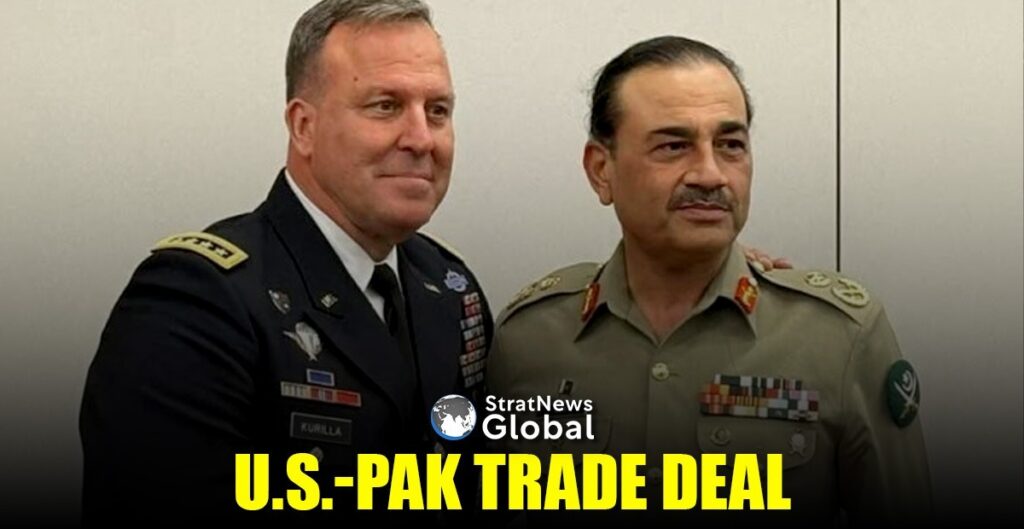
US-Pak Trade Deal: Shaky Foundations Married To Trump’s Unpredictability
Shortly after President Donald Trump imposed a 25% tariff on Indian goods, Washington inked a trade deal with Islamabad that trims US tariffs on Pakistani exports to 19% and, though not yet confirmed, is expected to grant zero tariffs for US goods entering Pakistan.
The move gives Pakistan only a narrow commercial gain, mostly in textiles, but a far bigger diplomatic prize — positioning itself as a more cooperative partner for Trump’s transactional White House than India at this moment. The deal was sweetened by Trump’s pledge to work with Pakistan in developing its oil reserves, adding a strategic energy layer to the emerging alignment.
Economic Impact
In 2024, total US–Pakistan trade hit around $7.2 billion. The US remained Pakistan’s biggest export destination, contributing to a $3.33 billion trade surplus, though Pakistan accounted for just 0.1% of total US imports and ranked 56th among US trading partners.
The new 19% rate replaces a previously floated 29%, announced around Liberation Day. In exchange, Pakistan committed to boosting imports from the US, especially cotton and soybeans, along with others.
Textiles dominate Pakistan’s exports to the US, about 77% by volume, worth $4.18 billion. That means even with better tariff terms, Pakistan’s narrow export base limits how much it can benefit from the deal. There’s minimal diversification, and other industries lack strong, resilient supply chains.
Global Trade Alert data shows Vietnam enjoys an average of 5.4% tariff advantage compared to its peers under Trump’s tariffs, more competitive than Pakistan’s 3.3% edge. Of 1,951 product lines of Pakistan’s exports, 1306 could be advantaged. Out of it, the majority is apparel, made-up textiles, and cotton fabrics, which may see access gains in the US market; however, Vietnam remains a stronger competitor in this sector.
Pakistan’s export woes, including low productivity, weak innovation, complex incentives, limited new markets, and low R&D, are real and persistent barriers which limit its export interests despite the tariff arbitrage.
Without strategic export diversification, Pakistan’s exports, heavily reliant on textiles and concentrated on the US, are risky, especially under Trump’s administration.
The second aspect of the deal entails that the US will help Pakistan develop domestic oil reserves. Currently, oil makes up nearly 20% of Pakistan’s import bill. Proven recoverable reserves are around 234–353 million barrels, placing Pakistan roughly 50th globally and comprising just 0.021% of global oil reserves.
Even if the US worked with Pakistan to develop its oil reserves, at the current rate of consumption, this would only last under two years if Pakistan ceases oil imports. Also, even to assume that the reserves will be developed, oil exploration takes years and massive capital.
Even partnering with the US, risks remain due to the unpredictability of Trump’s policies – Nobody knows anything. That unpredictability itself will be the biggest hurdle to investment in Pakistan’s energy sector.
Strategic Implications
From a strategic viewpoint, the stated tariffs on Pakistani exports to the US invigorated discourse of potential reset in US-Pakistan ties. However, terming this as a reset may be overplayed and premature. What it does signify is an attempt to diversify the traditionally security-centric relationship to strategic economic collaboration.
The Pakistani finance ministry described the developments as the “beginning of a new era” in economic cooperation listing mining, energy, cryptocurrency, and rare minerals. That said, details surrounding Pakistan’s institutional capacity, infrastructure, and regulatory stability to capitalise on these endeavours remain obscure at present.
While critical mineral resources are known to exist, especially in Balochistan and northern regions of Pakistan, the volatility of these militant-infested areas will keep security-related concerns at the forefront. As a result, the process of exploration and extraction is expected to remain protracted.
The delays and stalling of the Beijing-funded China-Pakistan Economic Corridor (CPEC), predominantly due to security factors, exemplify these difficulties.
Pakistan has reportedly instituted regulatory bodies like the Pakistan Crypto Council in March 2025 under the Virtual Assets Act, 2025, and signed an MoU with US crypto platforms, including one linked to US President Trump’s business interests.
Nonetheless, the scarcity of a robust legal and technological framework, stability in energy production to build crypto infrastructure and overall political uncertainties in Pakistan will pose predictable hurdles to such aspirations. Notably, cryptocurrencies are yet to be fully legalised in Pakistan for public use.
Therefore, this diversification can be described as recalibration driven by Trump’s transactional nature of diplomacy. These benefits come with strings attached.
Pakistan is still perceived by the US through a security prism – a counter-terrorism partner and a geo-strategically positioned country bordering Afghanistan and Iran.
Pakistan’s assistance in arresting the Islamic State Khorasan Province mastermind, responsible for the 2021 Abbey Gate bombing in Kabul, near the Afghanistan-Pakistan border in Balochistan earlier in February, resuscitated its utility in the US security calculus.
The purported collaboration of ISI-CIA for this operation and US CENTCOM chief’s acknowledgement of Pakistan as a “phenomenal partner” in counter-terrorism further ascertains this functional reliance.
Geopolitically, the timing of the tariff announcement gains high notability for its occurrence a day after the US imposed 25% tariffs on Indian imports citing its continued oil trade with Russia. This development raised inevitable concerns and contentment, depending on what capital you are in: Is the US signalling grievances with New Delhi or is it using Pakistan to gesture de-hyphenation?
While Islamabad can take this as a diplomatic victory, it would be too soon to regard this moment as a broader realignment. Despite Trump’s strong rhetoric against India-Russia oil trade, the US’s strategic bet remains on India as a significant counterweight to China in the Indo-Pacific region.
India’s economic capacity and integration with the QUAD make it indispensable to the US in present times.
Trump’s current rhetoric towards India may be informed by frustration over New Delhi’s repeated denial of US-brokered mediation between India and Pakistan, a sharp contrast to Pakistan’s public acknowledgement and praise of Washington’s role. In the current context, Islamabad remains a more cooperative partner for the transactional US administration.
The authors are Research Analysts with the Takshashila Institution
Australia: Qantas Fined $58M Over Illegal Sackings During COVID-19
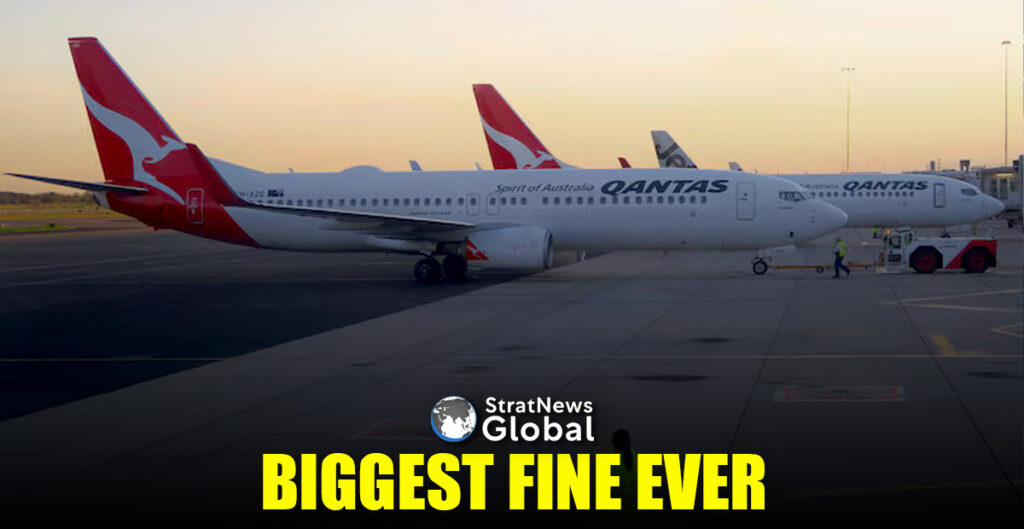
Australia’s largest airline, Qantas Airways, was on Monday ordered by a court to pay a record A$90 million (US$58.64 million) fine for unlawfully sacking 1,800 ground staff during the COVID-19 pandemic, with the judge criticising the airline for showing no genuine remorse.
In imposing the penalty, the largest ordered by a court on a company in the history of Australia’s labour laws, Federal Court Judge Michael Lee also inveighed against the airline’s litigation strategy.
Judge Unconvinced
While Qantas made changes to its board and management team, Lee said subsequent expressions of regret seemed more aligned with “the damage” the case had done to the company than remorse for the harm caused to workers.
“I accept Qantas is sorry, but I am unconvinced that this measure of regret is not, at least in significant measure … the wrong kind of sorry,” he added.
Lee said the size of the penalty, about 75% of the maximum he could have set, was important to ensure it “could not be perceived as anything like the cost of doing business”.
TWU Hails Decision As Win
He said A$50 million of the fine would be paid to the Transport Workers’ Union (TWU), which brought the case against Qantas.
After the decision, Michael Kaine, the national secretary of the TWU, said, “Against all the odds, we took on a behemoth … that had shown itself to be ruthless, and we won.”
Monday’s decision follows a December agreement on a compensation fund of A$120 million struck by the airline and the sacked workers.
No Remorse
During the pandemic in 2020, Qantas’ senior management decided to lay off 1,820 ground staff and shift their work to contractors.
Qantas said it was a commercial decision but the Federal Court in 2021 held the move to be “adverse action”, preventing staff from exercising their workplace rights and unionising, in breach of Australia’s Fair Work Act.
Assessing Qantas’ actions, Lee said he was unconvinced it was truly contrite and criticised its culture, public relations approach and litigation strategy.
For example, he said Qantas had announced it would appeal to the High Court against the 2021 court decision “without any time passing”, to consider the 431-paragraph judgment.
When its appeal failed, Qantas issued a statement “spinning” the outcome, however, and overlooking findings on its unlawful conduct, he added.
He also criticised Qantas’ conduct during litigation, such as opting to keep out of the witness box Vanessa Hudson, its current chief executive and former chief financial officer.
“It is one thing for the ‘Qantas News Room’ to issue press releases by a CEO saying sorry; it is quite another for written assertions of contrition, recognition of wrong and cultural change to be tested in a courtroom,” Lee said.
Record-Breaking Penalty
The penalty was the largest ever ordered by a court for violations of Australia’s labour laws, said Maurice Blackburn Lawyers, which represented TWU.
“This record-breaking penalty reflects the monumental scale of Qantas’ wrongdoing,” the firm’s principal, Josh Bornstein, said in a statement.
The fine also reflected the unprecedented finding of adverse action against so many workers, said Shae McCrystal, a labour law professor at the University of Sydney.
“Adverse action cases are risky,” she said. “It signals a message to employers that if they break the law, then trade unions may receive those penalties in order to assist them in enforcing the act.”
Qantas Issues Apology
Qantas said it would pay the fine as ordered.
“We sincerely apologise to each and every one of the 1,820 ground handling employees and to their families,” Chief Executive Vanessa Hudson said in a statement.
Qantas shares were down 0.4% at A$11.58 in early trading.
($1=1.5349 Australian dollars)
(With inputs from Reuters)
Hungary’s Opposition Leader Peter Magyar Urges Russia To Respect Sovereignty
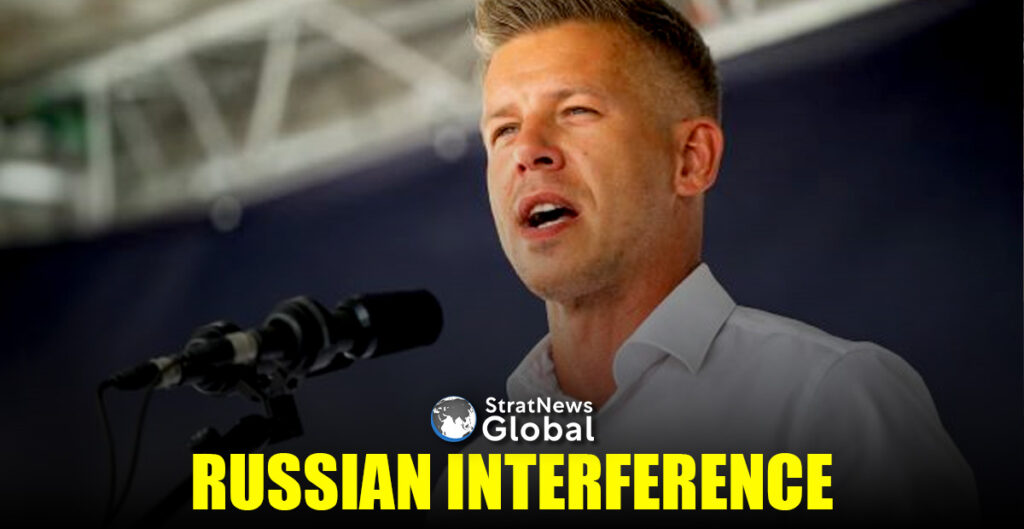
The opposition leader of Hungary, Peter Magyar, has called on Moscow to guarantee that it will not interfere in his country’s political affairs, stressing that genuine cooperation is only possible if Hungary’s sovereignty is upheld.
Earlier this week, Russia’s Foreign Intelligence Service (SVR) published a statement describing Magyar as being loyal to “globalist elites” and alleging that the European Commission was considering “regime change in Budapest.”
Magyar, whose Tisza Party is ahead of Prime Minister Viktor Orban’s Fidesz in most polls ahead of parliamentary elections due next spring, published an open letter to Russia’s ambassador in Hungary, asking what was the intended effect of the SVR statement.
Magyar Demands ‘Clear Assurances’
“I demand clear assurances that the Russian Federation will refrain from any actions that could be deemed as interference in Hungary’s domestic politics, including disinformation campaigns, cyber operations or the intimidation of politicians and citizens,” Magyar said in the letter published on Facebook on Sunday.
The Russian Embassy in Budapest did not immediately respond to emailed questions for comment.
In power since 2010, Orban has been criticised by some fellow EU leaders for his government’s warm ties with Moscow and opposition to military aid for Ukraine. Orban has also accused EU leaders of plotting to topple him.
Magyar, a former government insider, has previously said he would strive for “pragmatic relations” with Russia, which supplies Hungary with most of its energy and is also involved in an expansion of its Paks nuclear plant.
He said the SVR’s statement showed Russia was trying to intervene directly to sway voters in Hungary, which is a member of the NATO military alliance but which under Orban has refused to send weapons to neighbouring Ukraine.
“Hungary’s sovereignty and the inviolability of our democratic processes cannot be negotiable. Adherence to these principles is the minimum requirement for any meaningful bilateral cooperation between our countries,” Magyar said.
(With inputs from Reuters)
Three Killed, 17 Wounded In Russian Strike On Kharkiv, Ukraine Says
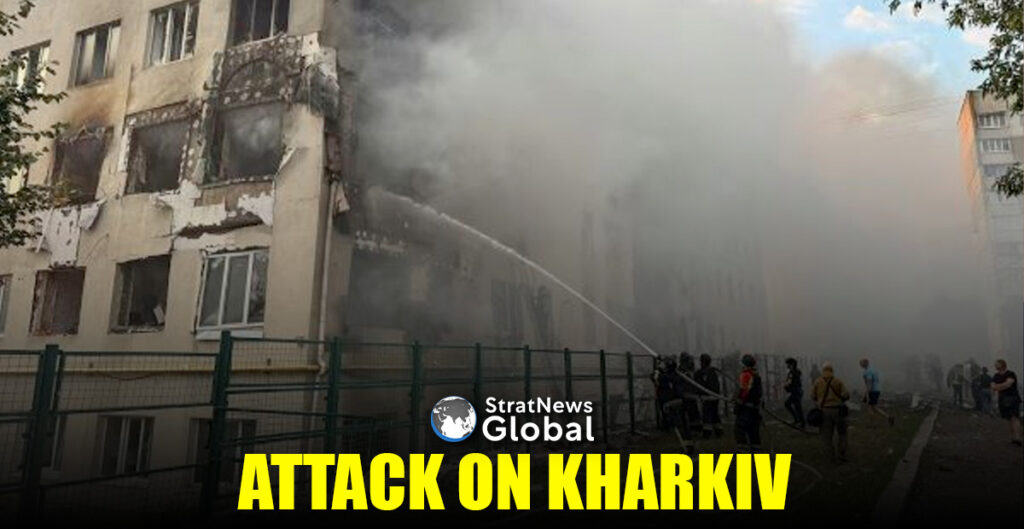
Ukrainian authorities said on Monday that a Russian strike overnight on a residential district of Kharkiv left three people dead, including a toddler, and injured 17 more. The attack came as the United States continues to press Kyiv to agree to a rapid peace deal aimed at ending the war launched by Moscow.
A drone attack killed the two-year-old boy in Ukraine’s second-largest city early on Monday, after a ballistic missile strike the previous night, Oleh Synehubov, the governor of the wider Kharkiv region, said on messaging app Telegram.
The number of the injured from the Kharkiv attack was “continuously increasing”, Synehubov added.
Also on Telegram, Mayor Ihor Terekhov said two more were killed and 17 injured in both attacks, among them six children aged from six to 17.
“A woman has just been rescued from under the rubble: she is alive,” Terekhov said in a post early on Monday, warning that more might be trapped under the rubble.
Kharkiv, A Regular Target
Kharkiv, in northeastern Ukraine near the border with Russia, has been the target of regular Russian drone and missile attacks since Moscow launched its full-scale invasion in February 2022.
The earlier ballistic missile strike on the city shattered about 1,000 windows, Synehubov said. Some residents had to be evacuated, Ukraine’s state emergency service said on Telegram.
According to witnesses, medics attended to residents on a street and rescuers inspected damage in residential buildings.
Two people were injured in Russia’s strikes on the adjacent region of Sumy that also damaged at least a dozen homes and an educational institution, authorities said.
“The enemy continues to deliberately target civilian infrastructure in the Sumy region — treacherously, at night,” Oleh Hryhorov, the head of the regional administration, said on Telegram.
There was no immediate comment from Moscow. Both sides deny targeting civilians in their strikes, but thousands of people have died, the vast majority of them Ukrainian.
President Donald Trump, who hosted President Vladimir Putin in Alaska on Friday for talks aimed at ending the war, has urged Kyiv to make a deal with Moscow, stating, “Russia is a very big power, and they’re not.”
(With inputs from Reuters)
Spain Struggles To Contain 20 Wildfires As Heatwave Forces Troop Deployment
Spain battled 20 major wildfires on Sunday as soaring temperatures made efforts to bring them under control more difficult. The government responded by sending an additional 500 soldiers from its military emergency unit to reinforce firefighting operations across the country.
In the northwestern region of Galicia, several fires have converged to form a large blaze, forcing the closure of highways and rail services to the region.
Southern Europe is experiencing one of its worst wildfire seasons in two decades, with Spain among the hardest-hit countries.
In the past week alone, fires there have claimed three lives and burned more than 115,000 hectares, while neighbouring Portugal also battles widespread blazes.
Temperatures are expected to reach up to 45 degrees Celsius (113 Fahrenheit) in some areas on Sunday, Spanish national weather agency AEMET said.
“There are still some challenging days ahead and, unfortunately, the weather is not on our side,” Prime Minister Pedro Sanchez told a news conference in Ourense, one of the most affected areas.
He announced an increase in military reinforcements, bringing the total number of troops deployed across Spain to 1,900.
Virginia Barcones, director general of emergency services, told Spanish public TV temperatures were expected to drop from Tuesday, but for now the weather conditions were “very adverse”.
“Today there are extremely high temperatures with an extreme risk of fires, which complicates the firefighting efforts,” Barcones said.
Villagers Resort To Buckets
In the village of Villardevos in Galicia, desperate neighbours have organised to fight the flames on their own with water buckets as the area was left without electricity to power water pumps.
“The fireplanes come in from all sides, but they don’t come here,” Basilio Rodriguez, a resident, said on Saturday.
Added Lorea Pascual, another local resident: “It’s insurmountable, it couldn’t be worse”.
Interior ministry data show 27 people have been arrested and 92 were under investigation for suspected arson since June.
In neighbouring Portugal, wildfires have burnt some 155,000 hectares of vegetation so far this year, according to provisional data from the ICNF forestry protection institute – three times the average for this period between 2006 to 2024. About half of that area burned just in the past three days.
Thousands of firefighters were battling eight large blazes in central and northern Portugal, the largest of them near Piodao, a scenic, mountainous area popular with tourists.
Another blaze in Trancoso, further north, has now been raging for eight days. A smaller fire a few miles east claimed a local resident’s life on Friday – the first this season.
(With inputs from Reuters)
Australia Fines Google $36 Million For Anti-Competitive Deals
Google on Monday agreed to pay an A$55 million (US$35.8 million) fine in Australia, after the country’s consumer watchdog found that the tech giant had harmed competition by paying the two largest telecom companies to pre-install its search app on Android phones, thereby excluding rival search engines.
Google’s Bumpy Ride Down Under
The fine extends a bumpy period for the Alphabet-owned internet giant in Australia, where last week a court mostly ruled against it in a lawsuit brought by Fortnite maker Epic Games accusing Google and Apple of preventing rival application stores in their operating systems.
Google’s YouTube was also last month added to an Australian ban on social media platforms admitting users aged under 16, reversing an earlier decision to exempt the video-sharing site.
On anti-competitive tie-ups with Australian telcos, the country’s consumer watchdog on Monday said Google struck deals with Telstra and Optus, under which the tech giant shared with them advertising revenue generated from Google Search on Android devices between late 2019 and early 2021.
No More Similar Deals
Google admitted the arrangement had a substantial impact on competition from rival search engines and has stopped signing similar deals while also agreeing to the fine, the Australian Competition and Consumer Commission (ACCC) added.
“Today’s outcome … created the potential for millions of Australians to have greater search choice in the future, and for competing search providers to gain meaningful exposure to Australian consumers,” ACCC Chair Gina-Cass Gottlieb said.
Google and the ACCC have jointly submitted to the Federal Court that Google should pay the A$55 million fine.
The court must still decide if the penalty is appropriate, the ACCC said, but the cooperation between the regulator and Google has helped avoid lengthy litigation.
Providing ‘More Flexibility’
A Google spokesperson said the company was pleased to resolve the ACCC’s concerns which involved “provisions that haven’t been in our commercial agreements for some time”.
“We are committed to providing Android device makers more flexibility to pre-load browsers and search apps, while preserving the offerings and features that help them innovate, compete with Apple, and keep costs low,” the spokesperson added.
Google owns Android.
A Telstra spokesperson referred Reuters to an earlier statement saying it and Optus, owned by Singapore Telecommunications, had fully cooperated with the ACCC and promised not to sign agreements with Google to pre-install its search product since 2024.
SingTel was not immediately available for comment.
($1 = A$1.5349)
(With inputs from Reuters)
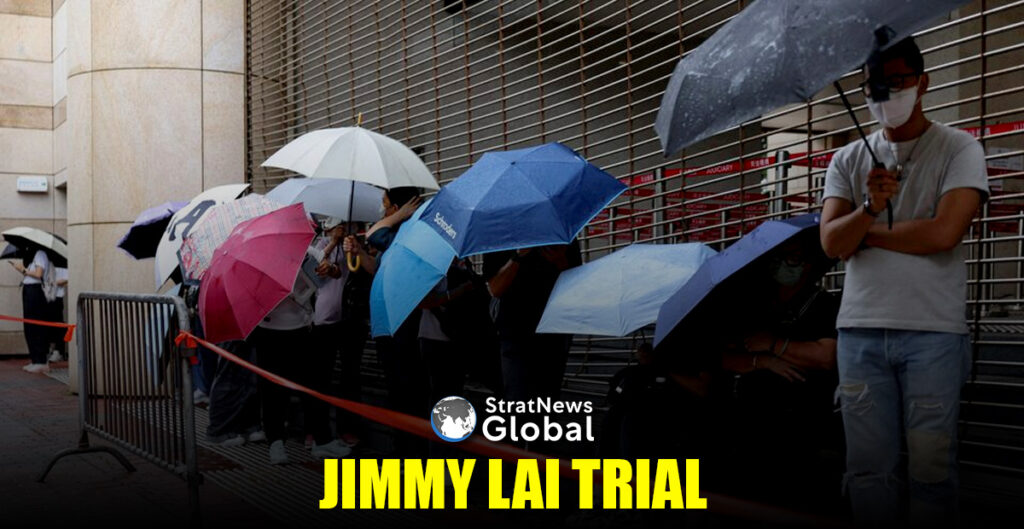
Jimmy Lai Declared Fit For Trial In Hong Kong
Pro-democracy media tycoon Jimmy Lai was given medication and fitted with a heart monitor as his landmark national security trial in Hong Kong resumed, amid concerns over recent heart palpitations.
Lai, 77, who founded the Apple Daily newspaper that was forced to close after a police raid and asset freeze in June 2021, has pleaded not guilty to two charges of conspiracy to collude with foreign forces, and a charge of conspiracy to publish seditious material.
Lai’s lawyer Robert Pang told the court last Friday that Lai had some episodes where he felt that he was collapsing and had heart “palpitations”, prompting the court to adjourn proceedings and order that he be provided with a heart monitor and medication.
Fit For Court
Prosecutor Anthony Chau confirmed that Lai had been provided with these items on Friday and that he was now fit for court.
Lai, noticeably thinner than when the trial began in late 2023, was dressed in a white jacket in the glass dock and pressed his palms together in a prayer gesture several times to his family and supporters.
One of the judges, Esther Toh, said additional breaks could be provided for Lai if need be, while also acknowledging the opinion of a medical expert who examined Lai that he was “physically and mentally fit for court”.
“I’m worried for him. He’s already in his 70s and has diabetes, and now palpitations,” said Lucille, a supporter who queued for hours to get into the packed courtroom.
Calls For Release
Lai, a British citizen, has been held in solitary confinement for around 1,700 days. His son and some rights groups have expressed fear over his deteriorating health.
Some Western governments have called for Lai’s immediate release and raised concerns about the erosion of fundamental rights in the financial hub under China-imposed national security laws. Hong Kong and Chinese authorities have said Lai is being given a fair trial and have warned against such interference in the city’s internal affairs.
US President Donald Trump said in a media interview last week that he would “do everything I can to save him.”
An Australian foreign affairs spokesperson told Reuters on Monday that Canberra was “deeply concerned by Hong Kong’s widespread application of national security laws to repress civil society and prosecute pro-democracy advocates … such as Jimmy Lai”.
(With inputs from Reuters)
Rodrigo Paz Emerges As Frontrunner In Bolivia’s Presidential Election
Early official results from Bolivia indicated a surprising lead for centrist Rodrigo Paz of the Christian Democratic Party, who secured 32.04% of the vote in Sunday’s presidential election, as per the country’s electoral tribunal.
Conservative former president Jorge “Tuto” Quiroga of the Alianza Libre coalition was in second place, with a likely second round needed.
Change Of Guard Likely
Bolivia’s ruling Movement for Socialism or MAS party was on track to suffer its worst electoral defeat in a generation on Sunday, with its candidate and other leftist challengers trailing the center-right opposition.
If no presidential candidate wins more than 40% support with a 10 percentage point lead, the election will head to a runoff on October 19.
Samuel Doria Medina, a business magnate who represented the center-right Alianza Unidad coalition and was polling third, said he would throw his support behind Paz in a runoff.
Sunday’s general election has been overshadowed by inflation at a four-decade high and the absence of former leftist president Evo Morales, who was barred from running and criticized the vote.
Eventful Day
Voter turnout on Sunday was steady, authorities said. Despite earlier concerns that the electoral process in Bolivia could be obstructed by supporters of Morales, who had called on the public to boycott the race, international observers said the vote took place without major disruptions.
Earlier on Sunday, several minor incidents took place at polling stations in the central region of Cochabamba, Morales’ political stronghold.
With a crowded field and no dominant MAS party candidate, the election marks a “crossroads moment” for Bolivia, said Southern Andes analyst Glaeldys Gonzalez Calanche of the International Crisis Group.
Economy
Bolivia’s fragile economy has been top-of-mind for voters. Price rises have surged past other Latin American countries this year, and fuel and dollars have run scarce.
Annual inflation doubled to 23% in June, up from 12% in January, with some Bolivians turning to cryptocurrencies as a hedge.
Many Bolivians, especially those who work in the informal economy, were now struggling to make ends meet, said economist Roger Lopez.
“Prices of the basic food basket are going up fast,” said Lopez. “Suddenly the math doesn’t add up anymore.”
‘We Need A Change’
Early election results indicated they chose to punish MAS on Sunday, creating a window of opportunity for centrists and the right.
“Every year the situation has got worse under this government,” said Silvia Morales, 30, from La Paz, who works in retail. A former MAS voter, she said this time she would cast her vote for the center-right.
Carlos Blanco Casas, 60, a teacher in La Paz, said he intended to vote for change. “This election feels hopeful. We need a change of direction,” he said.
Quiroga has promised “radical change” to reverse what he calls “20 lost years” under MAS rule. He supports deep public spending cuts and a shift away from alliances with Venezuela, Cuba and Nicaragua. Quiroga was president for a year in 2001-2002 after the then-leader resigned.
Paz meanwhile plans to decentralize government by introducing a “50-50 economic model” in which the central government would manage only half of public funds. The remainder would be designated to regional governments.
Silvia Morales, 30, a former MAS voter from La Paz, said she had cast her ballot for Paz on Sunday.
“He’s a new face with experience,” she said, “I think we should make space for new opportunities.”
Hope For Economic Recovery
On the left, the vote is split between the official MAS party candidate Eduardo del Castillo, who is backed by outgoing President Luis Arce, and Senate President Andronico Rodriguez, who has distanced himself from the party and is running on his own ticket.
Morales, 69, had called for a boycott of the election, but analysts said his influence is waning.
“There is widespread support for these elections,” said Calanche. “Most Bolivians see them as key to leading the country towards economic recovery.”
Full official results are due within seven days. Voters also elected all 26 senators and 130 deputies, and officials assume office on November 8.
(With inputs from Reuters)
Zelenskyy Faces Trump As Europe Rallies To Hold The Line
In a significant diplomatic development, European leaders are set to join Ukrainian President Volodymyr Zelenskyy in Washington for a crucial meeting with US President Donald Trump on Monday. The move comes as Trump, having recently met Russian President Vladimir Putin in Alaska, is reportedly pushing Kyiv to accept a quick peace deal to end Europe’s deadliest war in eight decades.
Trump’s recent shift in tone — leaning more towards Moscow’s stance and seemingly sidelining a ceasefire-first approach — has raised concerns among Ukraine’s European allies. With over a million people dead or wounded in the ongoing war, the urgency to find a resolution is palpable. However, the terms reportedly being considered have left Kyiv and its backers wary of a lopsided settlement.
Pressure Mounts On Zelenskyy
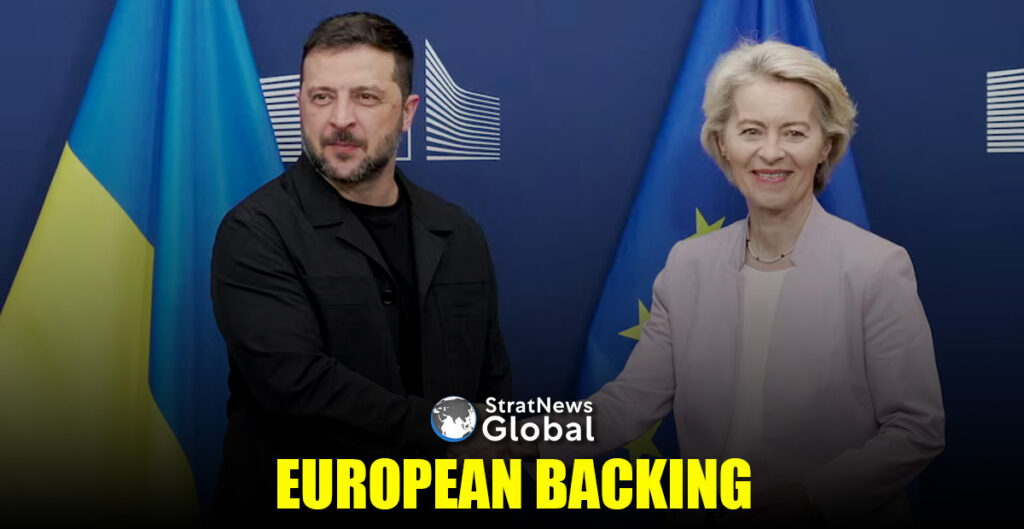
According to sources, Trump and Zelenskyy will hold a bilateral meeting ahead of the larger multilateral talks involving European leaders. The White House has not confirmed the schedule. European Commission President Ursula von der Leyen, German Chancellor Friedrich Merz, French President Emmanuel Macron, British Prime Minister Keir Starmer, Italian Prime Minister Giorgia Meloni, and Finnish President Alexander Stubb are among those expected to join the discussions.
The diplomatic push from Europe aims to bolster Zelenskyy’s hand, especially in light of his difficult last encounter with Trump and Vice President JD Vance in February, where he was publicly criticised. European allies want to ensure Ukraine is not forced into an agreement that could jeopardise its sovereignty and long-term security.
Trump, meanwhile, has been active on his Truth Social platform, suggesting that Ukraine could end the war “almost immediately, if he wants to,” while implying that reclaiming Crimea and NATO membership are off the table for Kyiv. “Remember how it started. No getting back Obama given Crimea (12 years ago, without a shot being fired!), and NO GOING INTO NATO BY UKRAINE. Some things never change!!!” he posted.
Controversial Deal
Reports suggest that Trump and Putin discussed a potential peace framework under which Russia would cede small portions of occupied territory, while Ukraine would surrender large swathes of the fortified eastern region — including the rest of Donetsk — and agree to freeze the current front lines.
In exchange, Ukraine would receive some form of security guarantees from the United States, reportedly styled like NATO’s Article 5. Trump’s envoy Steve Witkoff said on CNN that it was “the first time we had ever heard the Russians agree to that,” indicating that Moscow is open to offering such guarantees in place of Kyiv’s NATO aspirations.
However, the credibility of these assurances remains questionable. Ukraine’s borders were supposedly guaranteed when it surrendered its nuclear weapons in 1994 — a promise that failed to prevent Russia’s annexation of Crimea in 2014 or the full-scale invasion in 2022.
Russia’s envoy to international organisations in Vienna, Mikhail Ulyanov, acknowledged that any future agreement must include security guarantees for both Kyiv and Moscow. “Russia agrees with that. But it has equal right to expect that Moscow will also get efficient security guarantees,” he said on social media platform X.
US Secretary of State Marco Rubio, speaking to CBS, said, “If peace is not going to be possible here and this is just going to continue on as a war, people will continue to die by the thousands … we may unfortunately wind up there, but we don’t want to wind up there.” He confirmed that the US saw “enough movement” in the Alaska talks to justify this follow-up engagement.
European Caution And Support
European leaders, while welcoming Washington’s talk of security guarantees, have firmly stressed that no deal involving territorial concessions can proceed without Ukraine’s full consent. “You cannot negotiate peace under falling bombs,” Poland’s foreign ministry said in a statement, criticising Trump’s shift away from a ceasefire-first approach.
A joint statement by Britain, France, and Germany reaffirmed that their leaders are ready “to deploy a reassurance force once hostilities have ceased, and to help secure Ukraine’s skies and seas and regenerate Ukraine’s armed forces.” This security plan, long under discussion in European capitals, aims to provide a meaningful alternative to NATO membership while preserving Ukraine’s strategic independence.
Zelenskyy, posting on X after Sunday’s meeting, confirmed strong backing from Europe. “Everyone agrees that borders must not be changed by force,” he said. He further added that any security guarantees “must really be very practical, delivering protection on land, in the air, and at sea, and must be developed with Europe’s participation.”
Despite the diplomatic flurry, the path ahead remains fraught. Putin has reportedly briefed Belarusian President Alexander Lukashenko and Kazakh leader Kassym-Jomart Tokayev about the Alaska summit, indicating Moscow’s interest in a broader regional alignment. A source familiar with the discussions claimed that Trump relayed to Zelenskyy a Russian proposal to freeze the front lines if Kyiv surrendered all of Donetsk — a proposal the Ukrainian president firmly rejected.
Trump, meanwhile, reiterated his view that Ukraine should act quickly. “Russia is a very big power, and they’re not,” he said, urging a swift deal.
As the Monday talks loom, all eyes are on Washington to see whether diplomacy can prevail over force — and whether the emerging peace framework will honour the principle of justice or merely offer a fragile truce built on compromise.
(With inputs from Reuters)