

Support us by contributing to StratNewsGlobal on the following UPI ID
ultramodern@hdfcbank

Strategic affairs is our game, South Asia and beyond our playground. Put together by an experienced team led by Nitin A. Gokhale. Our focus is on strategic affairs, foreign policy and international relations, with higher quality reportage, analysis and commentary with new tie-ups across the South Asian region.
You can support our endeavours. Visit us at www.stratnewsglobal.com and follow us on YouTube, Twitter, Facebook and Instagram.
र 500 per month
र 1000 per month
र 5000 per year
र 10000 per year
Donate an amount of your choice
र 500 per month
Donate र 500 per month

र 1000 per month
Donate र 1000 per month
र 5000 per year
Donate र 5,000 per year
र 10000 per year
Donate र 10,000 per year
Donate an amount of your choice
Donate an amount of your choice
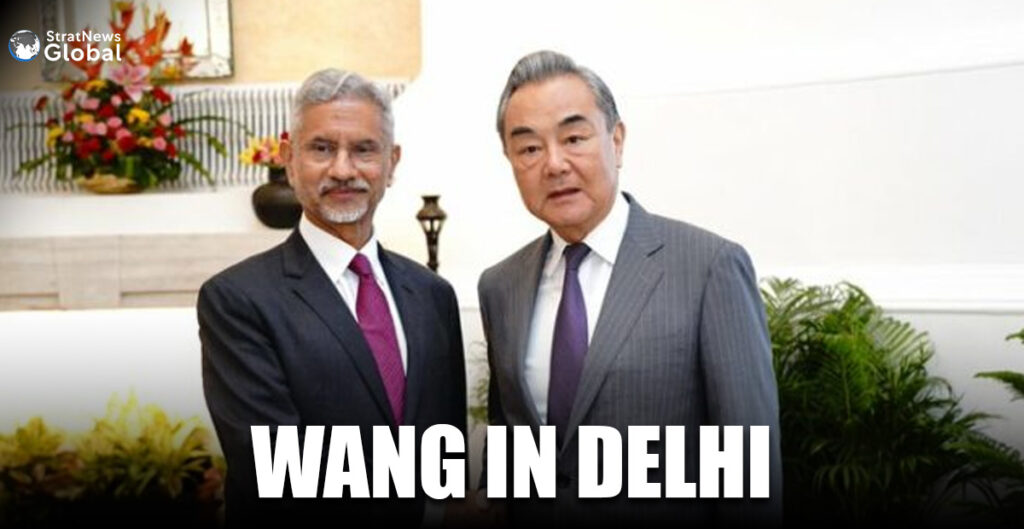
Border Calm, Tariff Tensions Frame Jaishankar–Wang Yi Talks
External Affairs Minister S. Jaishankar on Monday held talks with Chinese Foreign Minister Wang Yi in New Delhi, stressing that the future of India-China relations must be anchored in “mutual respect, mutual sensitivity and mutual interest.”
Wang Yi, also a member of the Communist Party of China’s Politburo, arrived on a two-day official visit at the invitation of National Security Advisor Ajit Doval. His trip includes the 24th round of talks between the Special Representatives of India and China on the boundary question. It is the first ministerial visit from Beijing since Prime Minister Narendra Modi and President Xi Jinping last met in Kazan in October 2024.
Wang Yi will meet NSA Ajit Doval on Tuesday to continue boundary discussions that remain at the heart of strained relations.
The talks come at a time when India’s ties with the United States are under strain following President Donald Trump’s tariff moves, adding weight to New Delhi’s engagement with Beijing.
Welcoming Wang, Jaishankar said the talks offered an opportunity to review ties after a “difficult period” in the relationship. He underlined that maintaining peace along the Line of Actual Control (LAC) remained a prerequisite for forward movement.
“The basis for any positive momentum is the ability to jointly maintain peace and tranquillity in the border areas. It is also essential that the de-escalation process move forward,” he said. The minister also highlighted counter-terrorism as a major priority and called for reforms in multilateral institutions to safeguard global stability.
Wang, in his remarks, said both countries had “maintained peace and tranquillity in the border areas” and resumed the Indian pilgrimage to Mount Kailash and Lake Manasarovar. He added that Beijing and New Delhi shared the confidence to “dispel interference, expand cooperation and consolidate the momentum of improvement” in bilateral ties.
The Chinese Foreign Ministry earlier said the visit was aimed at implementing the “important consensus” reached by the leaders, strengthening political trust, and “properly managing differences.” India’s Ministry of External Affairs spokesperson Randhir Jaiswal welcomed Wang Yi on social media, noting the importance of the upcoming discussions.
The timing of Wang’s trip is significant. It comes ahead of Prime Minister Narendra Modi’s expected visit to China for the Shanghai Cooperation Organisation (SCO) Summit in Tianjin later this month, his first since the 2020 Galwan clashes.
Analysts see Modi’s potential presence as a symbolic reset, but caution that the unresolved border standoff remains the central obstacle to a genuine thaw. For India, however, the SCO retains strategic utility as a platform for engaging not only China but also Russia and Central Asia, even as tensions with Beijing persist.
Putin Briefs Modi On His Talks With Trump, India For Peaceful Resolution
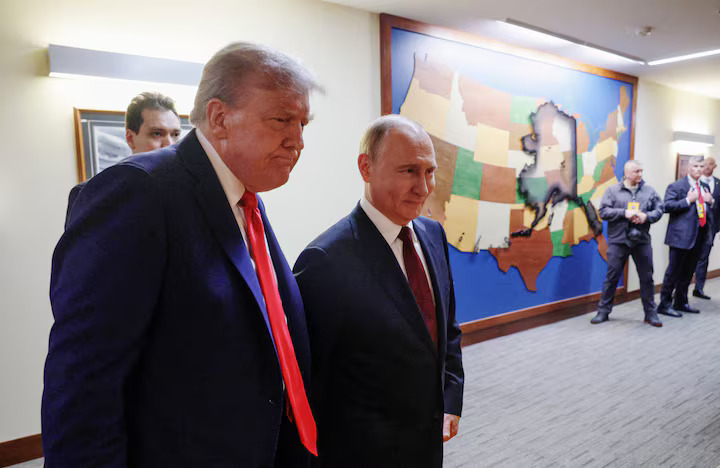
Ahead of the summit of the Shanghai Cooperation Organisation in Beijing later this month, and a day after the Putin-Trump meeting in Alaska, it was Narendra Modi’ s turn for a conversation with the Russian leader.
The Prime Minister’s Office said President Putin briefed Modi over the phone on the outcome of his high-stakes three-hour long meeting with Trump. It was the first in-person US-Russia talks since the Ukraine invasion began in early 2022. There was however no breakthrough.
Modi reiterated India’s unwavering position in favour of resolving the Ukraine conflict through peaceful means.
“India has consistently called for a peaceful resolution of the Ukraine conflict and supports all efforts in this regard,” Modi said in a post on social media platform X, formerly Twitter. He also thanked Putin for the phone call and expressed keenness to continue strategic dialogue in the coming months.
The timing of the conversation is notable, with the SCO summit around the corner and Putin’s state visit to India later this year. They reviewed bilateral cooperation under the Special and Privileged Strategic Partnership, a term both countries use to describe their decades-old and multifaceted ties.
While India has maintained a delicate diplomatic balance during the Ukraine war, engaging both Kyiv and Moscow, there is growing criticism from the West, particularly Washington, over its continued imports of discounted Russian crude oil. This issue has become a fresh flashpoint in India-US relations.
Just last week, the Trump administration doubled tariffs on a range of Indian exports, citing concerns that India’s refining and re-export of Russian oil was inadvertently helping fund Moscow’s war effort.
The move has triggered concern in New Delhi, with officials calling the tariffs “unilateral and unfair.” India has defended its energy strategy, asserting that it operates independently in line with national interests and global energy security.
Despite these tensions, the Modi-Putin call signals a continued effort by both nations to strengthen their strategic partnership.
Exiled Former Hong Kong Lawmaker Hails Australia’s Asylum Grant
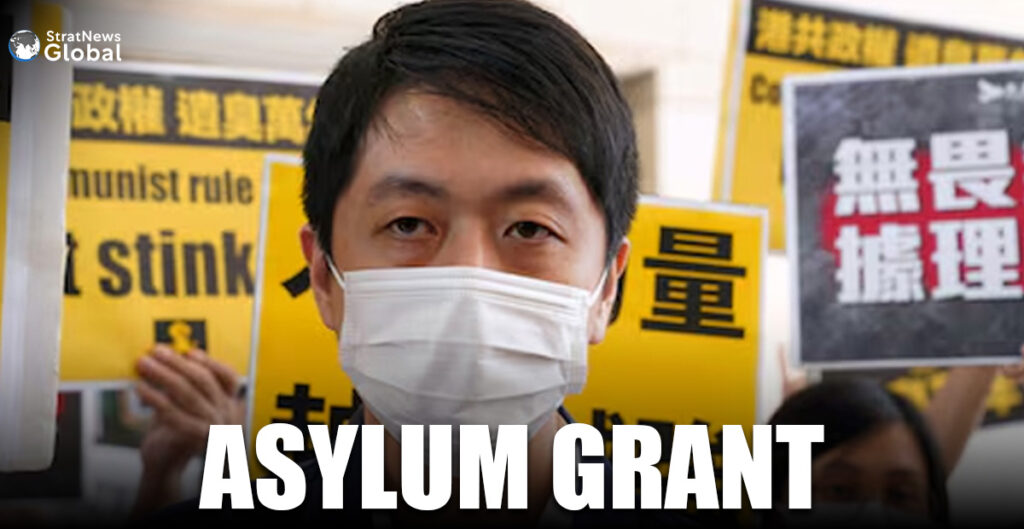
Exiled former Hong Kong lawmaker Ted Hui on Monday hailed Australia’s granting of asylum status as an important recognition of the territory’s human rights violations since its authorities suppressed the massive pro-democracy protests in 2019.
Hui, who also urged support for businessman Jimmy Lai, now being tried on national security charges, received asylum on Friday, more than four years after leaving Hong Kong, which has offered a bounty for him on criminal charges over the protests.
“It is recognition by the Australian government that human rights infringements and erosion of democracy and freedom actually happened and justified granting asylum to people like me … being persecuted because of the protests,” Hui said.
“I believe this is good for Australia to have that recognition, and I am grateful for the country, which has given me so much,” he told Reuters in an interview.
‘Anti-China Rioter’
China’s foreign ministry on Monday said Hui was an “anti-China rioter wanted by the Hong Kong police” and urged other countries to “stop interfering in Hong Kong affairs”.
Australian visa data reviewed by Reuters showed it had approved no asylum claims by citizens of the Asian financial hub since January 2021, and rejected five in 2023.
Hui, who is working as a lawyer in South Australia, said the good news for his family came in a week during which he was concerned over Hong Kong’s trial of his friend, the pro-democracy businessman Lai, on national security charges.
“Jimmy Lai is very iconic of Hong Kong’s resistance because he actually had the ability to leave Hong Kong, but he decided to stay,” he said. “That is very noble of him.”
Before his arrest, Lai had described himself to Hui as being “like a captain of a ship” in support of democratic values and would “sink with the ship”.
Hui added, “He deserves democracy’s help in rescuing him when he is in a deep plight and he is not well.”
Lai, 77, received medication and a heart monitor for the start of the trial’s final submissions, prompted by health concerns aroused by heart palpitations.
Australia Raises Espionage Concerns
Australia’s Foreign Minister Penny Wong raised concerns with her Chinese counterpart Wang Yi in a meeting last month about anonymous letters circulated in South Australia offering rewards for information about Hui and his family.
The Australian Federal Police were investigating the matter, Hui said.
“They call me to check on my safety and that of my family…,” he said. “I can say the AFP is putting in a lot of effort.”
A police spokesman declined to comment.
After Hui and his family arrived in 2021, 123 Hong Kong citizens have made asylum claims in Australia. Many more have taken up skilled visas under a program launched in 2021 for Hong Kong citizens to stay permanently, data shows.
The home affairs department did not immediately respond to a request for comment.
In a statement, the government of the former British colony said it was “against the harbouring of criminals in any form by any country”.
Chinese foreign ministry spokesperson Mao Ning told reporters Beijing hoped Australia would work with China to ensure “sustained bilateral relations” when asked about the case at a regular press conference on Monday.
(With inputs from Reuters)
India’s Most Tangible Strategic Trump Card: Malacca
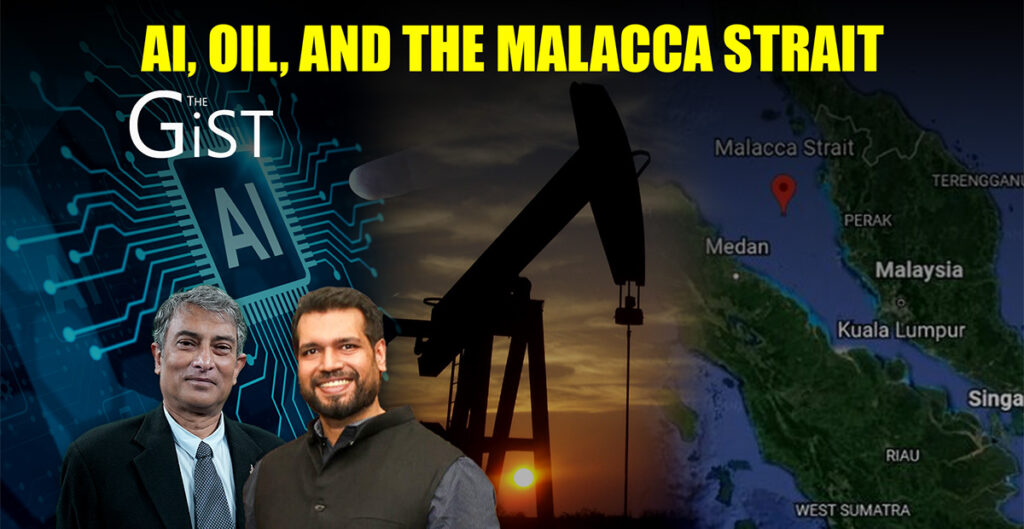
The Malacca Strait, a narrow stretch of water connecting the Indian Ocean with the South China Sea, has re-emerged as one of the most vital choke points in global geopolitics, says Nilathan Niruthan, Director of the Centre for Law and Security Studies in Sri Lanka.
A choke point, he explains, is a small area that controls access to a much larger one. From the Strait of Hormuz to the Suez Canal, these bottlenecks play a decisive role in global trade and energy flows. The Malacca Strait is among the most critical: about a quarter of the world’s maritime trade passes through a channel in places less than three kilometers wide.
Niruthan argues that the strait’s importance has only grown in recent months. First, it has become central to India’s strategic leverage. The Andaman and Nicobar Islands sit almost at the “mouth” of the strait, giving India a unique ability to monitor, and if necessary, control access. In a conflict scenario, India could impose blockades or exclusion zones, or even aid regional states like Indonesia and Singapore against piracy or non-state actors. “The Malacca Strait is India’s most tangible strategic trump card,” he notes.
Second, the rise of artificial intelligence makes energy supplies flowing through the strait even more vital. China, which is rapidly scaling up data centers, remains heavily dependent on fossil fuel imports, with up to 70% of its oil passing through the Malacca Strait. “If China wants to be an AI power, it must secure the Malacca Strait,” Niruthan stresses.
The United States also maintains a significant naval presence in the wider Indo-Pacific, but India’s geography makes it uniquely positioned. The question, Niruthan says, is whether India wields this leverage independently as a gatekeeper of the Indian Ocean, or as part of larger coalitions such as the Quad under the Indo-Pacific construct.
While alternatives like the Sunda Strait or Arctic routes are discussed, they are either too costly or politically uncertain. For now, the Malacca Strait remains indispensable. “Sea power exists to shape events on land,” Niruthan reminds, and in that equation, India’s proximity to this global choke point gives it unmatched strategic weight.
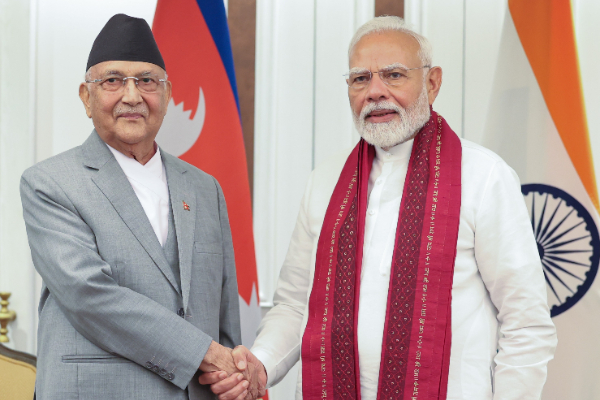
Modi To Host Nepal’s PM Oli In Holy Bodhgaya In September
Remember that chart buster song of the 1980s from the film Naam, Chitthi aayi hai aayi hai, chitthi aayi hai (literally the letter has come) sung by Pankaj Udhas?
Nepal’s Prime Minister KP Sharma Oli has received a chitthi, an invitation actually, personally delivered by Foreign Secretary Vikram Misri in Kathmandu. The invitation, diplomatic sources say, is for talks with his Indian counterpart Narendra Modi on Sept 16, in the monastic town of Bodhgaya and includes a side-trip to Nalanda.
Why Bodhgaya and why not Delhi? Oli has waited almost 14 months for this invitation. Some diplomats speculate that Bodhgaya may be linked to Modi’s visit to Lumbini later this year. Lumbini is renowned as the birthplace of Siddharth Gautama, who later became the Buddha.
Oli will fly directly to Bodhgaya from Kathmandu in an aircraft operated by the Nepal Army Air Service and for this the necessary clearances are being obtained. He will be accompanied by a high level delegation.
Oli’s trip is expected to build on recent diplomatic engagements, including his meeting with Modi at the BIMSTEC Summit in Bangkok. The India visit underlines Kathmandu’s intent to maintain strategic balance between China and India while deepening historical ties with the latter.
The agenda for the visit is being readied and Misri would have discussed some of those issues with his Nepali counterpart Amrit Bahadur Rai. Misri had called on President Ramchandra Paudel, Oli and Foreign Minister Arzu Rani Deuba during his two-day visit which ended on Monday.
Misri conveyed greetings from India’s leadership and reviewed the growing momentum in bilateral cooperation across various sectors.
He had also called on Nepal’s Army Chief Gen. Ashok Raj Sigdel and ceremonially handed over Light Strike Vehicles, military animals and advanced medical supplies, reinforcing India’s longstanding defence partnership with Nepal.
Both sides expressed satisfaction over progress in areas such as physical and digital connectivity, energy cooperation, and security collaboration.
Cricket is also on the agenda. India is facilitating the training of Nepal’s national cricket team at the BCCI Centre of Excellence in Bengaluru. This initiative, starting from August 20 to September 4, aims to prepare Nepal’s squad for the ICC Men’s T20 World Cup Qualifiers in Oman.
Clearly, the aim is to generate enough ‘feel good’ elements when Modi and Oli sit down for talks. There’s quite some negative history here: Oli is blamed for stoking the fires over the disputed Kalapani area, and also showing his disregard for tradition by making Beijing his first international port of call instead of Delhi. Can holy Bodhgaya inspire a change of heart in the Communist K P Sharma Oli?
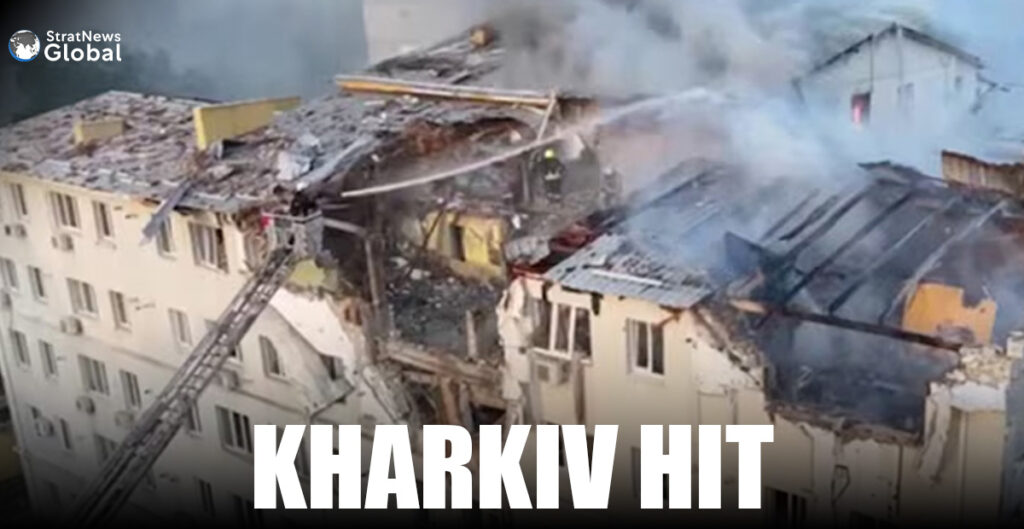
Russian Drone Strike On Kharkiv Kills Seven Civilians, Including Children
Ukrainian authorities said on Monday that a Russian drone strike on a residential area in Kharkiv overnight killed seven people, including a toddler and a 16-year-old boy, as the United States continues pressing Kyiv to accept a swift deal to end the war launched by Moscow.
Six children aged 6 to 17 were among 20 other people injured in the attack on Ukraine’s second-largest city, Oleh Synehubov, governor of the wider Kharkiv region, wrote on Telegram.
The attack came as Ukraine’s Volodymyr Zelenskyy was preparing for talks with Donald Trump in Washington later on Monday amid European fears the U.S. president could try to pressure Kyiv into accepting a peace settlement favourable to Moscow.
The air force said Russia launched 140 drones against Ukraine overnight, the largest total recorded in a single night since August 4.
Kharkiv Suffers Relentless Strikes
Kharkiv, which lies near northeastern Ukraine’s border with Russia, has been the target of Russian drone and missile attacks throughout the war.
A ballistic missile attack shattered around 1,000 windows in various buildings in the city on Sunday, Synehubov said. Some residents had to be evacuated from their homes, officials said.
Reuters witnesses saw medics attending to residents on a street and rescuers inspecting damage to residential buildings.
“Russia is a murderous war machine that Ukraine is holding back. And it must be stopped through transatlantic unity and pressure,” Ukrainian Foreign Minister Andrii Sybiha wrote on X after the attack.
He said Russia was continuing to kill civilians despite peace efforts.
Russia says it does not deliberately target civilians. Thousands have been killed since Moscow launched its full-scale invasion in February 2022.
Russia fired four missiles overnight, as well as the drones, the air force said. It said 88 drones were downed and reported impacts at 25 locations in six different regions.
Seventeen people were injured in a morning missile attack that struck unspecified critical infrastructure in the southeastern city of Zaporizhzhia, officials said.
In the Black Sea region of Odesa, an attack caused a large fire at a fuel and energy infrastructure facility, requiring a major firefighting effort, the governor said.
Two people were also injured in strikes in the northern region of Sumy, where at least a dozen homes and an educational institution were damaged, authorities said.
Reuters could not independently verify the weapons used by Russia. There was no immediate comment from Moscow.
Trump, who hosted President Vladimir Putin in Alaska on Friday for talks aimed at ending the war, has urged Kyiv to make a deal with Moscow, stating, “Russia is a very big power, and they’re not.”
(With inputs from Reuters)
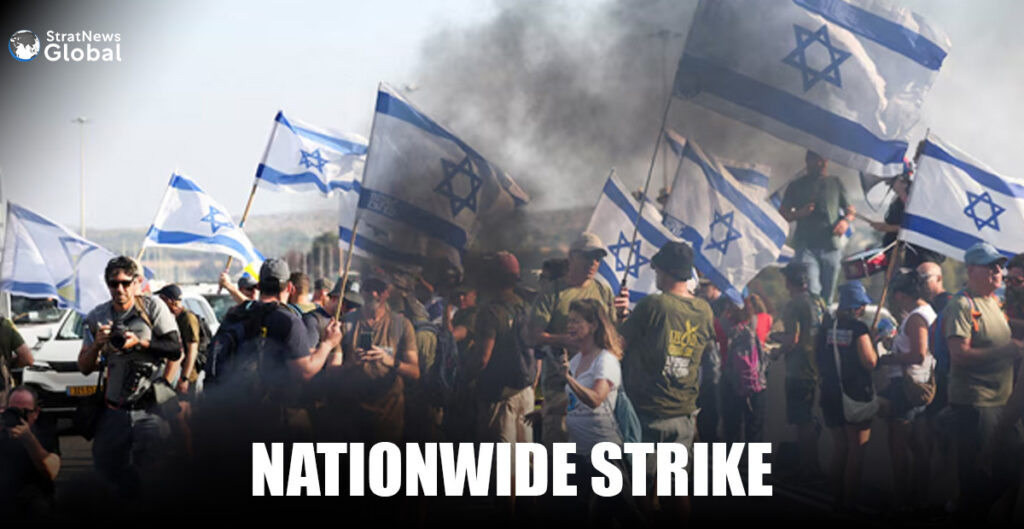
Israelis Hold Nationwide Strike Demanding Hostages’ Release, Gaza War’s End
Thousands of Israelis on Sunday joined a nationwide strike in solidarity with families of hostages held in Gaza, urging Prime Minister Benjamin Netanyahu to reach a deal with Hamas to end the war and secure the release of the remaining captives.
Demonstrators waved Israeli flags and carried photos of hostages as whistles, horns, and drums echoed at rallies across the country, while some protesters blocked streets and highways, including the main route between Jerusalem and Tel Aviv.
“Today, everything stops to remember the highest value: the sanctity of life,” Anat Angrest, the mother of hostage Matan Angrest, told reporters at a public square in Tel Aviv.
Among those who met with families of hostages in Tel Aviv was Israeli Hollywood actress Gal Gadot, known for her role as Wonder Woman and starring in the Fast & the Furious franchise.
Businesses Divided Over Strike
Ahead of Sunday, some businesses and institutions said they would allow staff to join the nationwide strike, which was called by the hostages’ families. While some businesses closed, many also remained open across the country on what is a working day in Israel. Schools are on summer recess and were not affected.
A major rally is scheduled to take place in Tel Aviv in the evening.
Israeli police said that 38 demonstrators had been detained by 2 p.m. (11 a.m. GMT). Some protesters blocking roads scuffled with police and were carried away by officers.
Demonstrations across the country were briefly halted around 4 p.m. local time when air raid sirens sounded in Tel Aviv, Jerusalem and elsewhere, warning of an incoming missile fired from Yemen. The missile was intercepted without incident.
Military Campaign
On Sunday, Netanyahu told the cabinet, “Those who call today for an end to the war without defeating Hamas are not only hardening Hamas’ position and delaying the release of our hostages. They are also ensuring that the horrors of October 7 will repeat themselves over and over again.”
The prime minister, who leads the country’s most right-wing government in history, said his government was determined to implement a decision for the military to seize Gaza City, one of the last major areas of the enclave it does not already control.
That decision is widely unpopular among Israelis and many of the hostages’ families, who fear an expanded military campaign in Gaza could risk the lives of their loved ones still held captive. There are 50 hostages held by militants in Gaza, of which Israeli officials believe around 20 are still alive.
“There is no time – not for the lives wasting away in hell, nor for the fallen who may vanish in the ruins of Gaza,” said the Hostages Families Forum, which represents many families of captives held in Gaza, on Sunday.
After nearly two years of war in Gaza, ignited by the Hamas-led attack on Israel in October 2023, most of the hostages who have been freed so far emerged as a result of diplomatic talks.
Negotiations towards a ceasefire that could have seen more hostages released collapsed in July. The Palestinian militant group Hamas has said it would only free the remaining hostages if Israel agrees to end the war, while Netanyahu has vowed that Hamas cannot stay in power.
Mounting Criticism
The Israeli government has faced sharp criticism at home and abroad, including from some of its closest European allies, over the announcement that the military would soon seize Gaza City.
On Sunday, Hamas called the plan criminal, saying it would force the displacement of hundreds of thousands from Gaza City.
More than 61,000 Palestinians have been killed in Israel’s military campaign in Gaza, according to local health officials there. They said on Sunday at least 29 had been killed in the past day.
Around 1,200 people were killed and 251 were taken into Gaza during Hamas’ attack on Israel. Over 400 Israeli soldiers have been killed in Gaza since then.
Opposition leader Yair Lapid, who attended a rally in Tel Aviv, expressed support for the protesters.
“The only thing that strengthens the country is the wonderful spirit of the people who are going out from home today for Israeli solidarity,” he wrote on X.
(With inputs from Reuters)
Iran To Continue Nuclear Talks With UN Watchdog After Curbing Access
Iran will maintain discussions with the UN nuclear watchdog, with another round of negotiations likely in the coming days, Foreign Ministry spokesperson Esmaeil Baghaei said on Monday.
International Atomic Energy Agency (IAEA) inspectors have been unable to access Iran’s nuclear sites since Israel and the U.S. bombed them during a 12-day war in June, despite IAEA chief Rafael Grossi stating that inspections remain his top priority.
“We had talks (with the IAEA) last week. These talks will continue, and there will be another round of talks between Iran and the agency, probably in the coming days,” Baghaei said.
Tehran Accuses IAEA Of Bias
Tehran has accused the IAEA of effectively paving the way for the Israel-U.S. attacks with a report on May 31 that led the IAEA’s 35-nation Board of Governors to declare Iran in breach of its non-proliferation obligations.
The Islamic Republic has long denied Western suspicions of a covert effort to develop nuclear weapons capability, saying it remains committed to the Non-Proliferation Treaty that mandates peaceful uses of atomic energy for signatories.
“The level of our relations (with the IAEA) has changed after the events that took place; we do not deny that. However, our relations…remain direct,” Baghaei said during a televised weekly news conference.
Last month, Iran enacted a law passed by parliament suspending cooperation with the IAEA. The law stipulates that any future inspections of Iranian nuclear sites need approval by Tehran’s Supreme National Security Council.
Iran Vows Cooperation
Iran’s foreign minister, Abbas Araqchi, said last month that Tehran would continue working with the IAEA despite limitations set by its parliament. However, he cautioned that allowing access to nuclear sites damaged in recent bombings presents serious safety and security challenges.
The new law stipulates that any future inspection of Iran’s nuclear sites by the International Atomic Energy Agency (IAEA) needs approval by the Supreme National Security Council, Iran’s top security body.
Araqchi’s remarks came amid renewed international scrutiny following reports of sabotage at Iranian nuclear installations.
“The risk of spreading radioactive materials and the risk of exploding leftover munitions … are serious,” state media cited Araqchi as saying. “For us, IAEA inspectors approaching nuclear sites has both a security aspect … and the safety of the inspectors themselves is a matter that must be examined.”
(With inputs from Reuters)
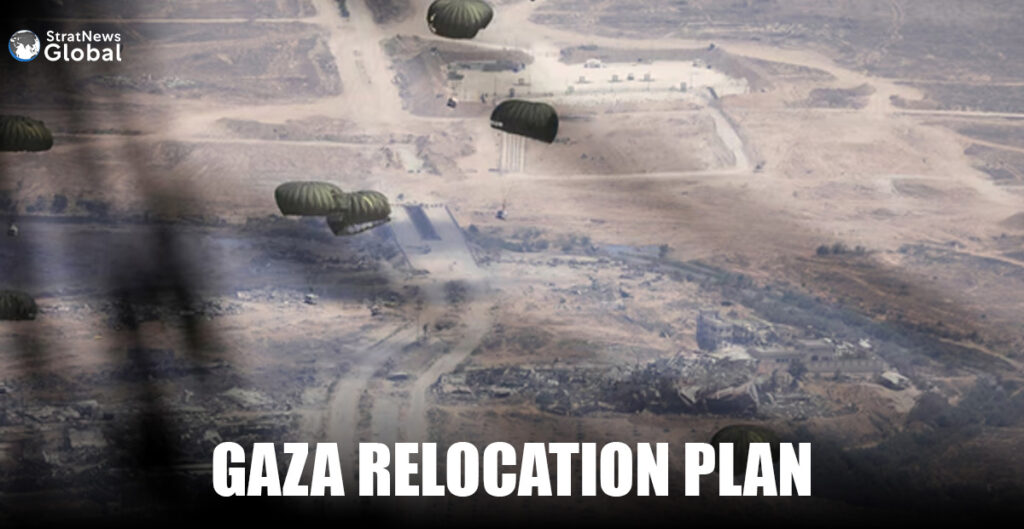
‘New Wave Of Genocide’: Hamas Denounces Israel’s Gaza Relocation Plan
Palestinian militant group Hamas declared on Sunday that Israel’s plan to relocate Gaza City residents represents a “new wave of genocide and displacement” impacting hundreds of thousands.
The group said the planned deployment of tents and other shelter equipment by Israel into southern Gaza was a “blatant deception”.
Relocation Plan
The Israeli military has said it is preparing to provide tents and other equipment starting from Sunday ahead of its plan to relocate residents from combat zones to the south of the enclave “to ensure their safety”.
This came days after Israel said it intended to launch a new offensive to seize control of northern Gaza City, the enclave’s largest urban centre, in a plan that raised international alarm over the fate of the demolished strip, home to about 2.2 million people.
Hamas’ Last Stronghold
Israeli Prime Minister Benjamin Netanyahu last Sunday said that before launching the offensive, the civilian population would be evacuated to what he described as “safe zones” from Gaza City, which he called Hamas’ last stronghold.
The shelter equipment will be transferred via the Kerem Shalom crossing in southern Gaza by the United Nations and other international relief organisations after being inspected by defence ministry personnel, the military said.
‘Balant Deception’
Hamas said in a statement that the deployment of tents under the guise of humanitarian purposes is a blatant deception intended to “cover up a brutal crime that the occupation forces prepare to execute”.
Israel said earlier this month that it intended to launch a new offensive to seize control of northern Gaza City, the enclave’s largest urban centre. The plan has raised international alarm over the fate of the demolished strip, which is home to about 2.2 million people.
The war began when Hamas attacked southern Israel on October 7, 2023, killing 1,200 people and taking 251 hostages, according to Israeli authorities. About 20 of the remaining 50 hostages in Gaza are believed to be still alive.
Israel’s subsequent military assault against Hamas has killed over 61,000 Palestinians, Gaza’s health ministry says. It has also caused a hunger crisis, internally displaced most of Gaza’s population and left much of the enclave in ruins.
(With inputs from Reuters)
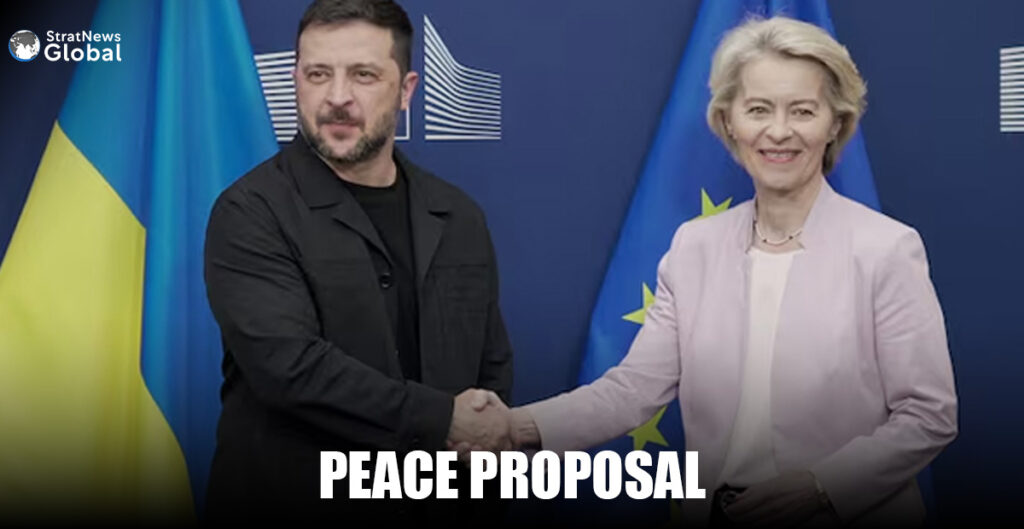
Trump Tells Ukraine To Drop NATO Bid, Crimea Claims Ahead Of Washington Talks
U.S. President Donald Trump urged Ukraine to drop hopes of reclaiming annexed Crimea or joining NATO as he prepared to host President Volodymyr Zelenskyy and European leaders in Washington on Monday, aiming to push Kyiv toward accepting a peace deal with Russia.
After rolling out the red carpet for Russian President Vladimir Putin in Alaska on Friday, Trump is leaning on Ukraine to accept a deal to end Europe’s deadliest war in 80 years, which has killed tens of thousands and displaced millions.
Washington Talks
Trump will meet Zelenskyy first and then the leaders of Britain, Germany, France, Italy, Finland, the European Union and NATO, the White House said. The European leaders are flying to Washington to show solidarity with Ukraine and to press for strong security guarantees in any post-war settlement.
Trump’s team stressed on Sunday that there had to be compromises on both sides. But Trump put the burden on Zelenskyy to end the war that Russia began with its full-scale invasion in February 2022. That, along with his comments on NATO and Crimea, annexed by Russia in 2014 during Barack Obama’s presidency, suggested he would press Zelenskyy hard at Monday’s meeting.
Zelenskyy “can end the war with Russia almost immediately, if he wants to, or he can continue to fight,” Trump said on Truth Social. “Remember how it started. No getting back Obama given Crimea (12 years ago, without a shot being fired!), and NO GOING INTO NATO BY UKRAINE.”
Ukraine and its allies have long feared that Trump could press an agreement favourable to Moscow. However, they have taken heart from some developments, including Trump’s apparent willingness to provide post-settlement security guarantees for Ukraine.
Zelenskyy Dismisses Putin’s Terms
However, Zelenskyy has already all but rejected the outline of Putin’s proposals from the Alaska meeting, including for Ukraine to give up the rest of its eastern Donetsk region, of which it currently controls a quarter.
Zelenskyy is also seeking an immediate ceasefire to conduct deeper peace talks. Trump previously backed that but reversed course after the summit with Putin and indicated support for Russia’s favoured approach of negotiating a comprehensive deal while fighting rumbles on.
Trump will meet first with Zelenskyy at 1:15 p.m. EDT (1715 GMT) in the Oval Office and then with all the European leaders together in the White House’s East Room at 3 p.m. EDT (1900 GMT), the White House said.
The Ukrainian president, seeking to avoid a repeat of the bad-tempered Oval Office meeting he had with Trump in February, said after arriving in Washington late on Sunday, he was grateful to Trump for the invitation.
“We all equally want to end this war swiftly and reliably,” Zelenskyy said on the Telegram messaging app. “Russia must end this war — the war it started. And I hope that our shared strength with America and with our European friends will compel Russia to real peace.”
Russia launched missiles and drones in overnight attacks that included strikes on Ukraine’s second-largest city, Kharkiv, near the Russian border, which killed seven people, including two children, officials said.
“They hit an ordinary apartment block, many flats, many families were living here, small children, children’s playground, residential compound, there are no offices here or anything else, we lived here peacefully in our homes,” said Olena Yakusheva, a local resident, as firefighters battled a blaze in the building and rescue workers dug in the rubble.
On the battlefield, Russia has been slowly grinding forward, pressing home its advantages in men and firepower. Putin says he is ready to continue fighting until his military objectives are achieved.
Russian Peace Proposal
The outline of Putin’s proposals, reported by Reuters earlier, appears impossible for Zelenskyy to accept. Ukrainian forces are deeply dug into the Donetsk region, whose towns and hills serve as a crucial defensive zone to stymie Russian attacks.
Concerned that they would be shut out of the conversation after a summit with Putin to which they were not invited, European leaders held a call with Zelenskyy on Sunday to align on a common strategy for the meetings with Trump.
“It’s important for the Europeans to be there: (Trump) respects them, he behaves differently in their presence,” Oleksandr Merezhko, a Ukrainian lawmaker from Zelenskyy’s ruling party, told Reuters.
“D-Day at the White House”, said Britain’s Daily Mail, while the Daily Mirror said “Europe takes a stand” in its front page headline.
Germany’s Die Welt called it the “moment of truth” for the U.S. president.
“It is probably not an exaggeration to say the whole world is looking to Washington,” Germany’s Foreign Minister Johann Wadephul said at a press briefing.
Relations between Kyiv and Washington, once extremely close, have been rocky since Trump returned to the White House in January.
However, Ukraine’s pressing need for U.S. weapons and intelligence sharing, some of which have no viable alternative, has forced Zelenskyy and his allies to work with Trump.
(With inputs from Reuters)