

Support us by contributing to StratNewsGlobal on the following UPI ID
ultramodern@hdfcbank

Strategic affairs is our game, South Asia and beyond our playground. Put together by an experienced team led by Nitin A. Gokhale. Our focus is on strategic affairs, foreign policy and international relations, with higher quality reportage, analysis and commentary with new tie-ups across the South Asian region.
You can support our endeavours. Visit us at www.stratnewsglobal.com and follow us on YouTube, Twitter, Facebook and Instagram.
र 500 per month
र 1000 per month
र 5000 per year
र 10000 per year
Donate an amount of your choice
र 500 per month
Donate र 500 per month

र 1000 per month
Donate र 1000 per month
र 5000 per year
Donate र 5,000 per year
र 10000 per year
Donate र 10,000 per year
Donate an amount of your choice
Donate an amount of your choice




Egypt Strikes Deal To Import Over 200,000 Tons Of French Wheat, State Buyer Says
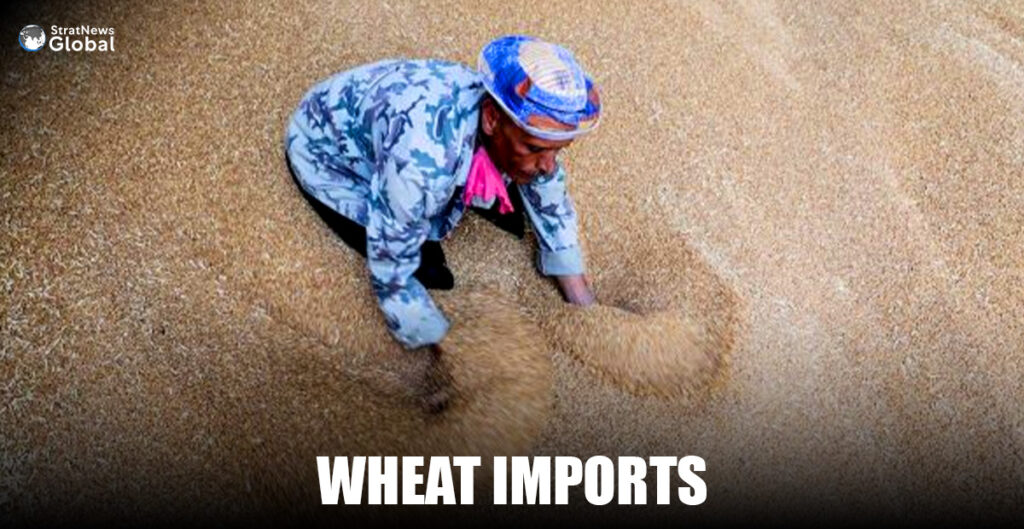
Egypt’s state grain agency, Future of Egypt, has finalized private agreements to purchase at least 200,000 metric tons of wheat from France, alongside several 30,000-ton shipments sourced from Ukraine and Romania, the agency said on Monday.
The North African nation is one of the world’s top wheat importers. On average, state agencies bring in about 5 million tons of its total wheat imports of more than 12 million tons.
The military-linked Future of Egypt, or Mostakbal Misr, took over international grain purchases from the decades-old General Authority for Supply Commodities in December, marking a significant shift in the country’s food procurement strategy.
GASC, a civilian agency under the supply ministry, traditionally imported wheat and vegetable oils through international tenders. FoE, by contrast, has made private deals with mostly local importers.
Traders said that FoE may have booked as many as seven large panamax vessels of French wheat, or more than 400,000 tons, in the past two weeks.
That included at least one 63,000-ton vessel for September 10–20 shipment with payment via 270-day letters of credit, with other cargoes also understood to be for prompt shipment in the coming weeks, traders said.
Wheat Imports
Wheat is used to produce subsidised bread for more than two-thirds of the country’s 108 million people, who are already struggling with high inflation and worsening living conditions.
This makes wheat imports vital for the country, which failed to reach its 4 million-5 million ton target for domestic wheat purchases for the 2024/25 season which ended on Friday.
Price estimates for the shipments were around $265 to $270 a ton cost and freight included, with some estimates of deals above $275 a ton c&f, they said.
FoE declined to give details on prices or payment terms.
“France’s harvest is all but finished, and French supplies are available,” one German trader said.
“I think Egypt would prefer Russian, but Russian new-crop supplies are still stubbornly tight as farmers are not selling enough, especially 11% protein wheat.”
Since the transition, some agreements have reportedly been revised or delayed, with traders citing a less predictable process.
Egypt’s wheat imports dropped by 30% to 4.9 million tons in the first half of the year. These include imports by the state buyer as well as the private sector.
FoE previously booked about 180,000 tons of French wheat in April, with loading initially expected in May and June. However, that was not completed until early August.
(With inputs from Reuters)
Over 6,000 Student Visas Cancelled Under Trump Administration, State Department Reports
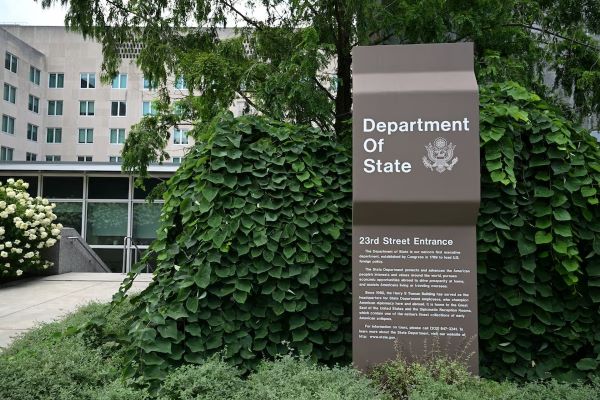
The U.S. State Department said on Monday that President Donald Trump’s administration has revoked more than 6,000 student visas for violations including overstays and other legal breaches, with a small number withdrawn over alleged “support for terrorism.”
The move, first reported by Fox Digital, comes as the Trump administration has adopted a particularly hard-line approach toward student visas as part of its immigration crackdown, tightening social media vetting and expanding screening.
Directives from the State Department this year have ordered U.S. diplomats abroad to be vigilant against any applicants whom Washington may see as hostile to the United States and with a history of political activism.
Around 4,000 visas were canceled because the visitors broke the law, with the vast majority being assault, the official said. Driving under the influence of alcohol and drugs and burglary were other offenses, the official added.
About 200 to 300 visas were revoked for terrorism, the official said, citing a rule about visa ineligibility under the State Department’s Foreign Affairs Manual. The rule identifies ineligibility grounds generally as “engaging in terrorist activities” and “having certain links to terrorist organizations.”
The official did not say which groups the students whose visas have been revoked were in support of.
Trump’s Clash With U.S. Universities
President Donald Trump has clashed with several top-level U.S. universities, accusing them of becoming bastions of antisemitism following large-scale student protests advocating for Palestinian rights amid the Gaza war. In his clash with Harvard, Trump has frozen funding for investigations and threatened to remove the university’s tax-exempt status, prompting several European nations to increase research grants to attract talent.
U.S. Secretary of State Marco Rubio has said he has revoked the visas of hundreds, perhaps thousands of people, including students, because they got involved in activities which he said went against U.S. foreign policy priorities.
Trump administration officials have said that student visa and green card holders are subject to deportation over their support for Palestinians and criticism of Israel’s conduct in the war in Gaza, calling their actions a threat to U.S. foreign policy and accusing them of being pro-Hamas.
A Tufts University student from Turkey was held for over six weeks in an immigration detention center in Louisiana after co-writing an opinion piece criticizing her school’s response to Israel’s war in Gaza. She was released from custody after a federal judge granted her bail.
Trump’s critics have called the effort an attack on free speech rights under the First Amendment of the U.S. Constitution.
(With inputs from Reuters)
Air Canada Strike Continues Despite Labour Board Order
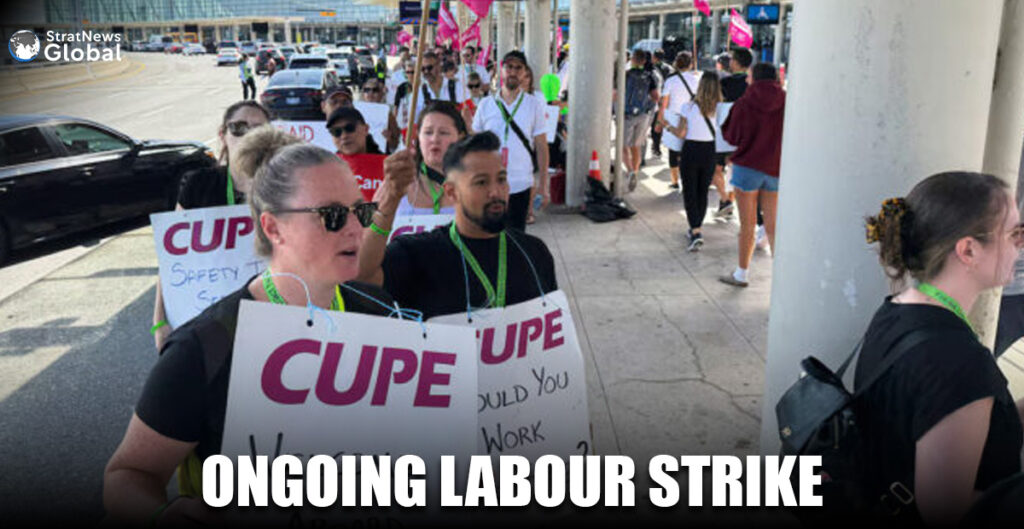
Air Canada flight attendants continued their strike for the fourth straight day on Tuesday, even as union officials confirmed that talks with the airline had resumed. The ongoing disruption has led to flight cancellations affecting hundreds of thousands of passengers during the peak summer travel season.
The Canadian Union of Public Employees’ (CUPE) refusal to follow a federal labour board order for the flight attendants to return to work has created a three-way standoff between the company, workers, and the government. It has also raised the stakes in a dispute that is now closely watched by other labour groups.
The union had met with Air Canada and mediator William Kaplan in Toronto, CUPE said in a statement on Facebook late Monday. The strike is still on, it said.
The two sides had not spoken since before the strike began. A source said there are discussions being held on whether to hold mediation, but with the condition that the flight attendants return to work.
Govt. Promises Investigation
Jobs Minister Patty Hajdu had urged both sides to consider government mediation and raised pressure on Air Canada, promising to investigate allegations of unpaid work in the airline sector, a key complaint of flight attendants who say they are not paid for work on the ground. Flight attendants have for months argued new contracts should include pay for work done on the ground, such as boarding passengers.
Air Canada’s CEO in a Reuters interview defended the airline’s offer of a 38% boost to flight attendants’ total compensation on Monday but acknowledged a big gap with the union’s demands and stopped short of offering plans to break the deadlock.
The union has said Air Canada’s offer only accounts for 17.2% higher wages over four years.
Risking Jail Time
CUPE’s leader said earlier he would risk jail time rather than allow cabin crews to be forced back to work by the labour board, which declared the strike unlawful.
The union says the strike will continue until the carrier negotiates on wages and unpaid work, even after the Canada Industrial Relations Board (CIRB) declared the strike unlawful.
Retiree Klaus Hickman missed a flight to Toronto earlier in the week. While he rebooked on another airline, he was concerned about returning to Calgary on time for a connecting flight to Germany.
Hickman sympathizes with workers demanding better pay but is worried about his own health and travel challenges. “They want to get more money to survive. And so, it is with everybody else,” he said.
Canada’s largest carrier normally carries 130,000 people daily and is part of the global Star Alliance of airlines.
Sleeping In Airports
James Numfor, 38, from Regina, Saskatchewan, has been stranded in Toronto for two nights since returning from Cameroon for his brother’s funeral. Air Canada only provided one night in a hotel for his family before leaving them without further support, he said.
“We sleep in the airport … we find any place comfortable with the kids, they just lay down,” Numfor said.
Numfor said passengers feel abandoned in a dispute between management and unions.
Government’s Options
The government’s options to force an end to the strike include asking courts to enforce the order to return to work and seeking an expedited hearing.
The minority government could also try to pass legislation that would need the support of political rivals and approval in both houses of parliament, which are on break until September 15, but has so far been cautious.
Support From Other Labour Orgs
Other labour organisations are voicing support for the flight attendants. Bea Bruske, President of the Canadian Labour Congress, Canada’s largest labour organisation, told Reuters they are ready to join the Air Canada strike if necessary.
“All cards are on the table in terms of what unions are prepared to do to ramp up a fightback campaign,” said Bruske, whose organisation represents 3 million workers across Canada. Help could include financial contributions to cover legal costs for CUPE, she said.
Air Canada’s pilot union, the Air Line Pilots’ Association, said it encouraged its members to join the picket lines during their time off.
“Air Canada pilots support our flight attendant colleagues in their ongoing struggle to achieve the fair contract they have earned,” it said in a statement. “This is an important moment for organised labour across Canada.”
(With inputs from Reuters)
Kim Jong Un Criticises Joint Drills, Demands Faster Nuclear Expansion
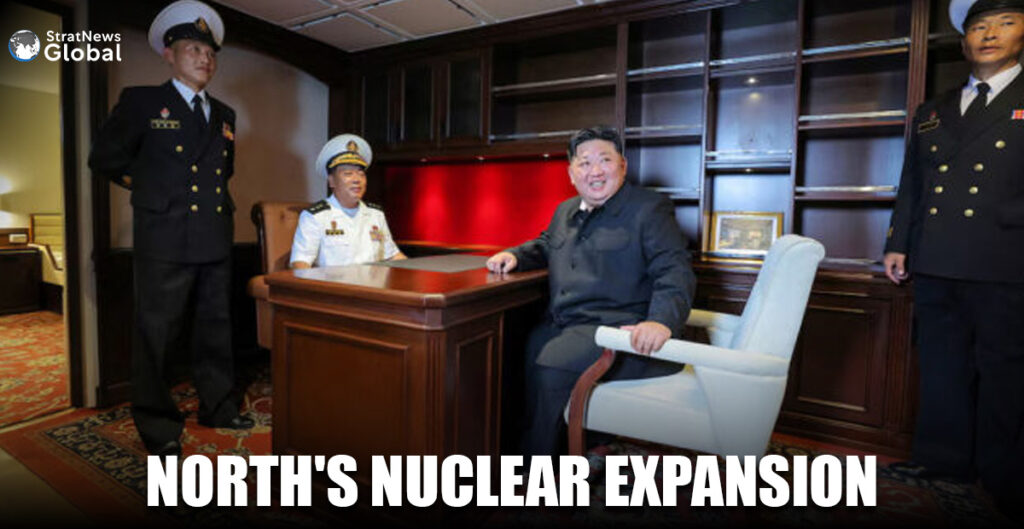
North Korean leader Kim Jong Un has called for a swift expansion of the country’s nuclear arsenal, criticising US-South Korea joint military drills as a clear sign of provocation and intent to wage war, state media KCNA reported on Tuesday.
South Korea and its ally the United States kicked off joint military drills this week, including testing an upgraded response to heightened North Korean nuclear threats.
Pyongyang regularly criticises such drills as rehearsals for invasion and sometimes responds with weapons tests, but Seoul and Washington say they are purely defensive.
Ulchi Freedom Shield
The 11-day annual exercises, called Ulchi Freedom Shield, will be on a similar scale to 2024 but adjusted by rescheduling 20 out of 40 field training events to September, South Korea’s military said earlier. Those delays come as South Korean President Lee Jae Myung says he wants to ease tensions with North Korea, though analysts are sceptical about Pyongyang’s response.
‘Hostile And Confrontational’
The exercises were a “clear expression of … their intention to remain most hostile and confrontational” to North Korea, Kim said during his visit to a navy destroyer on Monday, according to KCNA’s English translation of his remarks.
He said the security environment required the North to “rapidly expand” its nuclear armament, noting that recent US-South Korea exercises involved a “nuclear element”.
Efforts by the United States and its allies to tackle North Korea’s development of nuclear weapons are expected to be discussed at an upcoming meeting between US President Donald Trump and South Korean President Lee Jae Myung in Washington.
North Korea Remains Adamant
“Through this move, North Korea is demonstrating its refusal to accept denuclearisation and the will to irreversibly upgrade nuclear weapons,” said Hong Min, North Korea analyst at the Korea Institute for National Unification.
A report by the Federation of American Scientists last year concluded that while North Korea may have produced enough fissile material to build up to 90 nuclear warheads, it had likely assembled closer to 50.
North Korea plans to build a third 5,000-tonne Choe Hyon-class destroyer by October next year and is testing cruise and anti-air missiles for those warships.
(With inputs from Reuters)
Ukraine May Get Security Guarantees, Not NATO Entry
NATO Secretary General Mark Rutte said on Monday NATO membership for Ukraine was not under discussion but that there was a discussion on “Article 5” type security guarantees for the country that Russia invaded in February 2022.
Article 5 of NATO’s founding treaty enshrines the principle of collective defence, in which an attack on any of its 32 members is considered an attack on all. Joining the Atlantic alliance is a strategic objective for Kyiv that is enshrined in the country’s constitution.
No NATO Membership For Ukraine
“The situation is this – that the US and some other countries have said that they are against NATO membership for Ukraine. The official NATO position … is that there is an irreversible path for Ukraine into NATO,” Rutte said during an interview on Fox News’ “The Ingraham Angle” show.
“But what we are discussing here is not NATO membership, what we are discussing here is Article 5 type of security guarantees for Ukraine and what exactly they will entail will now be more specifically discussed.”
Rutte’s comments noted that a security guarantee of that scale could be offered to Ukraine in lieu of NATO membership, which Russian President Vladimir Putin has ruled out.
Security Guarantees
After a Friday summit with Putin in Alaska, US President Donald Trump met Ukrainian President Volodymyr Zelenskyy and NATO and European leaders at the White House on Monday.
Rutte told Fox News that security guarantees for Ukraine were discussed in the meeting and that there was no discussion about boots on the ground.
‘Very Good’ Meeting
Trump described Monday’s meetings as “very good” and said he called Putin to begin arrangements for a meeting between the Russian and Ukrainian presidents before a trilateral meeting that would also include Trump.
“I had a very good meeting with distinguished guests, President Volodymyr Zelenskyy, of Ukraine, President Emmanuel Macron, of France, President Alexander Stubb, of Finland, Prime Minister Giorgia Meloni, of Italy, Prime Minister Keir Starmer, of the United Kingdom, Chancellor of the Federal Republic of Germany, Friedrich Merz, President of the European Commission, Ursula von der Leyen, and Secretary General of NATO, Mark Rutte, in the White House, which ended in a further meeting in the Oval Office,” part of the US President’s post on Truth Social read.
“During the meeting we discussed Security Guarantees for Ukraine, which Guarantees would be provided by the various European Countries, with a coordination with the United States of America. Everyone is very happy about the possibility of PEACE for Russia/Ukraine.
“At the conclusion of the meetings, I called President Putin, and began the arrangements for a meeting, at a location to be determined, between President Putin and President Zelenskyy. After that meeting takes place, we will have a Trilat, which would be the two Presidents, plus myself.
“Again, this was a very good, early step for a War that has been going on for almost four years. Vice President JD Vance, Secretary of State Marco Rubio, and Special Envoy Steve Witkoff, are coordinating with Russia and Ukraine. Thank you for your attention to this matter!” Trump said.
(With inputs from Reuters)
India–Bangladesh Connectivity: Can the Golden Chapter Be Rewritten?
The political upheaval in Bangladesh since the 2024 student‑led “monsoon revolution,” which ended Prime Minister Sheikh Hasina’s 15‑year tenure, has pushed bilateral ties with India to their most precarious point in over a decade.
Nobel Laureate Prof. Muhammad Yunus now leads an interim government, but instability has halted what, for years, had been one of South Asia’s most successful connectivity partnerships. In a report published by the Centre for Social and Economic Progress (CSEP) titled “What Future for India–Bangladesh Connectivity?”, Sushovan Chakraborty and Riya Sinha warn that nearly every major road, rail, energy, and digital link has been disrupted.
With elections due in early 2026, India faces a stark choice: safeguard hard‑won gains or cede space to regional rivals, most notably China.
The CSEP study details how flagship projects like the Agartala–Akhaura and Khulna Mongla rail links have been mothballed mere months after their inauguration. Passenger train services have ceased, digital integration plans are on ice, and the India–Bangladesh Friendship Pipeline (IBFP), designed to supply diesel to northern Bangladesh, has been idled.
India’s suspension of land‑route transshipment rights has particularly hurt Bangladesh’s garment sector, wiping $770 million—42% of bilateral trade—off the books. Dhaka, as noted in the CSEP report, responded with import restrictions, new transit fees, and tighter customs checks. The result: businesses on both sides face rising costs, falling profits, and deepening mistrust.
Bilateral tensions intensified when India offered refuge to the ousted Hasina. Dhaka’s rhetoric shifted—from portraying Bangladesh as a partner in regional integration to framing itself as the “gateway to the ocean” for India’s “landlocked” Northeast.
The power shift was unmistakable in June 2025, when Bangladesh hosted a trilateral summit with China and Pakistan. Beijing has since moved aggressively: reviving an air base near the Indian border, wooing Bangladeshi medical tourists (a market India once dominated), and reportedly eyeing Indian‑supported port developments. Without a course correction, the strategic space India built painstakingly over the last decade could narrow rapidly.
Building on the CSEP report’s recommendations, there are pragmatic ways for New Delhi to limit further losses and rebuild trust during Dhaka’s political transition:
- Low‑visibility, high‑impact cooperation – As the CSEP authors note, smaller, economically vital projects are less politically vulnerable. Quietly reviving the Friendship Pipeline, resuming freight rail, and expanding tripartite energy projects with Nepal and Bhutan could deliver tangible results without triggering controversy.
- Work with trusted partners – Japan’s infrastructure track record in Bangladesh, from Matarbari port to the Joydebpur–Ishurdi railway upgrade, shows the value of triangular partnerships. Co‑branding with trusted countries reduces risks that the CSEP paper warns can derail bilateral projects.
- Invest in people‑to‑people links—the CSEP study emphasises the resilience of grassroots engagement. Initiatives like border haats, scholarships, skill‑building workshops, and heritage conservation projects, such as Satyajit Ray’s ancestral home, can maintain goodwill despite political headwinds.
- Use subnational diplomacy—border states share cultural and linguistic ties with Bangladesh that central governments can’t replicate. The CSEP report points to paradiplomacy as a way to maintain trade, tourism, and cooperation on disaster management even when Delhi–Dhaka ties are strained.
India’s strategic calculus rests on more than economics—it’s about securing Northeast India’s access to the sea, insulating trade corridors from external dependence, and balancing China’s growing influence. But as the CSEP report underlines, connectivity is as much about mutual trust as concrete and steel. You can rebuild railways; rebuilding confidence is harder.
The months leading up to Bangladesh’s 2026 elections are a critical preparation period. Meaningful progress won’t come through high‑profile announcements, but through patient, behind‑the‑scenes work so India is ready to move when political stability returns to Dhaka.
If New Delhi can heed the tactical caution and strategic urgency in the CSEP study by Chakraborty and Sinha, it might yet revive the “golden chapter” of India–Bangladesh connectivity. If not, it risks watching China write the next one.
Trump Pledges Executive Order To End Mail-In Voting Ahead Of 2026 Midterms
U.S. President Donald Trump on Monday vowed to issue an executive order banning mail-in ballots and voting machines ahead of the 2026 midterm elections, a move expected to benefit Republicans and trigger legal challenges from several states.
Democratic voters typically use mail-in ballots more than Republicans, who more often vote in person.
Trump’s pledge is his latest effort to reshape the midterm election battlefield to his party’s advantage. He has also urged Republicans in states including Texas and Indiana to redraw congressional districts to increase the likelihood of a Republican candidate being elected.
The November 3, 2026, elections will be the first nationwide referendum on Trump’s domestic and foreign policies since he returned to power in January. Democrats will be seeking to break Republicans’ grip on both the House of Representatives and the Senate to block Trump’s domestic agenda.
“I am going to lead a movement to get rid of MAIL-IN BALLOTS, and also, while we’re at it, Highly ‘Inaccurate,’ Very Expensive, and Seriously Controversial VOTING MACHINES,” Trump wrote in a social media post.
Trump, who has promoted the false narrative that he, not Democrat Joe Biden, won the 2020 election, has also long cast doubt on the security of mail-in ballots, although evidence of voter fraud is vanishingly rare.
Johanna Warshaw, a spokesperson for the Democratic Governors Association, called Trump’s threats a blatant attempt to silence voters.
“Democratic governors are the last line of defence against Trump’s attacks on our fundamental freedoms, and they will stand up for the rule of law and the right to vote at every turn,” Warshaw said.
Mail-In Ballots
Trump has for years called for the end of electronic voting machines, pushing instead for the use of paper ballots and hand-counts, a process that election officials say is time-consuming, costly and far less accurate than machine counting.
Some Republican-led states, such as Florida, have embraced mail-in voting as a safe, convenient way to expand voter participation. Trump himself voted by mail in some previous elections and urged his supporters to do so for the 2024 presidential election.
Mail-in ballots hit record highs in the U.S. in 2020 as states expanded options for voters amid the COVID-19 pandemic, but the numbers dropped in 2024, according to the U.S. Election Assistance Commission.
More than two-thirds of voters in the 2024 general election cast their ballots in person, while about three in 10 ballots were cast through the mail, according to the commission.
Trump’s comments follow his meeting with his Russian counterpart on Friday, after which Trump said Vladimir Putin agreed with him on ending mail-in balloting.
Each of the 50 U.S. states runs elections separately, but Trump warned them to comply.
“Remember, the States are merely an ‘agent’ for the Federal Government in counting and tabulating the votes. They must do what the Federal Government, as represented by the President of the United States, tells them, FOR THE GOOD OF OUR COUNTRY, to do,” Trump wrote.
Every U.S. state has some form of absentee or mail-in ballot option, according to the National Conference of State Legislatures.
There are 28 states that allow absentee voting without a reason required, eight states and Washington, D.C., conduct their elections entirely by mail, and the remaining states require a voter to provide an excuse to qualify for an absentee or mail ballot, the NSCL said.
The practice of mail-in balloting has become a source of litigation in recent presidential election cycles, with both parties suing election officials over procedures for counting mail-in ballots.
(With inputs from Reuters)
Palestinians Start Evacuating Gaza City Ahead Of Israeli Offensive
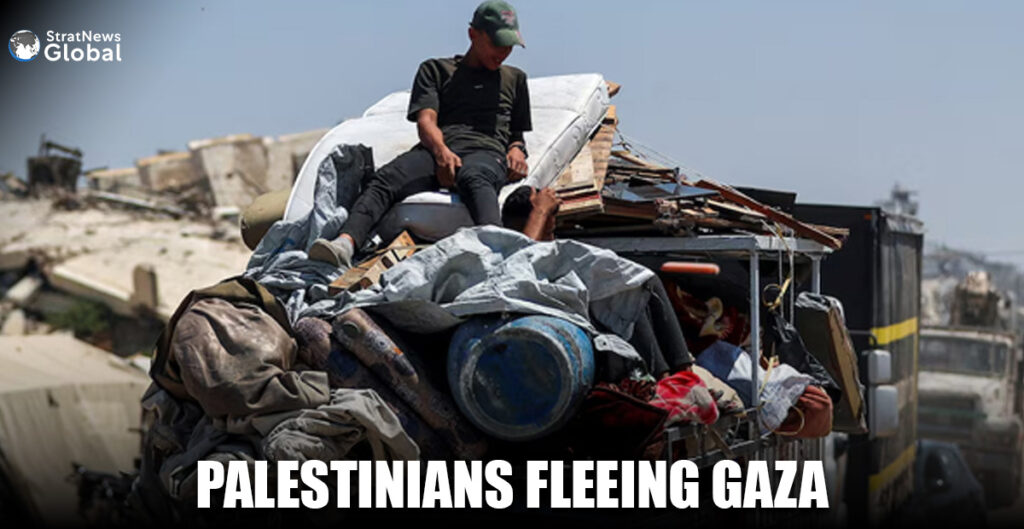
Fearing an imminent Israeli offensive, some Palestinian families have started leaving eastern Gaza City, which is under continuous Israeli bombardment, moving westward and in some cases considering further evacuation south.
Israel’s plan to seize control of Gaza City has stirred alarm abroad and at home, where tens of thousands of Israelis held some of the largest protests seen since the war began, urging a deal to end the fighting and free the remaining 50 hostages held by Palestinian militants in Gaza.
The planned offensive has spurred Egyptian and Qatari ceasefire mediators to step up efforts in what a source familiar with the talks with Hamas militants in Cairo said could be “the last-ditch attempt.”
Hamas’ Last Stronghold
Israeli Prime Minister Benjamin Netanyahu has described Gaza City as Hamas’ last bastion. But, with Israel already holding 75% of Gaza, the military has warned that expanding the offensive could endanger hostages still alive and draw troops into protracted and deadly guerrilla warfare.
In Gaza City, many Palestinians have also been calling for protests soon to demand an end to a war that has demolished much of the territory and wrought a humanitarian disaster, and for Hamas to intensify talks to avert the Israeli ground offensive.
An Israeli armoured incursion into Gaza City could see the displacement of hundreds of thousands of people, many of whom have been uprooted multiple times earlier in the war.
“The people of Gaza City are like someone who received a death sentence and is awaiting execution,” said Tamer Burai, a Gaza City businessman.
“I am moving my parents and my family to the south today or tomorrow. I can’t risk losing any of them should there be a surprising invasion,” he told Reuters via a chat app.
A protest is scheduled for Thursday in Gaza City by different unions, and people took to social media platforms vowing to participate, which will raise pressure on Hamas.
The last round of indirect ceasefire talks ended in late July in deadlock, with the sides trading blame for its collapse.
Sources close to the Cairo talks said Egyptian and Qatari mediators had met with leaders of Hamas, allied militant group Islamic Jihad and other factions with little progress reported. Talks will continue on Monday, the sources added.
Hamas told mediators it was ready to resume talks about a U.S.-proposed 60-day truce and release of half the hostages, one official, who asked not to be named, told Reuters, but also for a wider deal that would end the war.
Diplomatic Deadlock
Israel says it will agree to cease hostilities if all the hostages are released and Hamas lays down its arms – the latter demand publicly rejected by the Islamist group until a Palestinian state is established.
Gaps also appear to linger regarding the extent of an Israeli withdrawal from Gaza and how humanitarian aid will be delivered around the enclave, where malnutrition is rife and aid groups warn of unfolding famine.
On Saturday, the Israeli military said it was preparing to help equip Gazans with tents and other shelter equipment ahead of relocating them from combat zones to the south of the enclave. It did not provide further details on quantities or how long it would take to get the equipment into the enclave.
Palestinian economist Mohammad Abu Jayyab said at least 100,000 new tents would be needed to house those heading to central and southern areas of the coastal strip should Israel begin its offensive or the army orders Gaza City’s entire population to evacuate.
“The existing tents where people are living have worn out, and they wouldn’t protect people against rainwater. There are no new tents in Gaza because of the (Israeli) restrictions on aid at the (border) crossings,” Abu Jayyab told Reuters.
He said some families from Gaza City had begun renting property and shelters in the south and moved in their belongings.
“Some people learned from previous experience, and they don’t want to be taken by surprise. Also, some think it is better to move earlier to find a space,” Abu Jayyab added.
The U.N. humanitarian office said last week that 1.35 million people were already in need of emergency shelter items in Gaza.
Deadly War
The war began when Hamas-led militants stormed across the border into southern Israel on October 7, 2023, killing 1,200 people and taking 251 hostages back to Gaza, according to Israeli tallies.
More than 61,000 Palestinians have since been killed in Israel’s ensuing air and ground war in Gaza, according to local health officials, with most of the 2.2 million population internally displaced.
Five more Palestinians have died of malnutrition and starvation in the past 24 hours, the Gaza health ministry said on Monday, raising the number of people who died of those causes to 263, including 112 children, since the war started.
Israel disputed the figures provided by the health ministry in the Hamas-run territory.
(With inputs from Reuters)
Severe Drought And Wheat Shortage Pose Major Test For Syria’s New Leadership
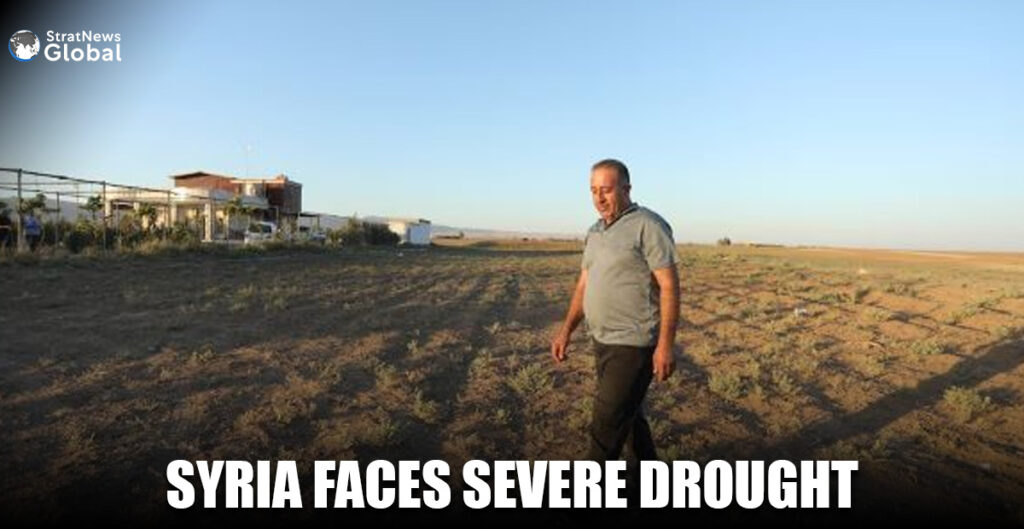
Syria is confronting the threat of a food crisis after its worst drought in 36 years cut wheat output by about 40%, placing further strain on the country’s cash-strapped government, which has so far failed to secure large-scale imports.
Around three million Syrians could face severe hunger, the United Nations’ World Food Programme said in written answers to questions, without giving a timeframe.
Over half of the population of about 25.6 million is currently food insecure, it added.
In a June report, the U.N.’s Food and Agriculture Organization estimated that Syria faced a wheat shortfall of 2.73 million metric tons this year, or enough to feed around 16 million people for a year.
The drought situation poses a challenge to President Ahmed al-Sharaa, whose government is seeking to rebuild Syria after a 14-year civil war that saw the toppling of long-time ruler Bashar al-Assad in December.
Wheat is Syria’s most important crop and supports a state-subsidised bread programme – a vital part of everyday life.
Yet Sharaa’s government has been slow to mobilise international support for big grain purchases.
Challenge For Sharaa’s Government
A Syrian official, three traders, three aid workers and two industry sources with direct knowledge of wheat procurement efforts, said more imports and financing were needed to alleviate the impending shortage.
The new government has only purchased 373,500 tons of wheat from local farmers this season, the Syrian government official said, speaking on condition of anonymity. That is around half of last year’s volume.
The government needs to import around 2.55 million tons this year, the source added.
So far, however, Damascus has not announced any major wheat import deals and is relying on small private shipments amounting to around 200,000 tons in total through direct contracts with local importers, the two industry sources said, also declining to be named due to the sensitivity of the matter.
The ministry of information did not respond to a request for comment.
“Half of the population is threatened to suffer from the drought, especially when it comes to the availability of bread, which is the most important food during the crisis,” Toni Ettel, FAO’s representative in Syria, said.
So far, Syria has received only limited emergency aid, including 220,000 tons of wheat from Iraq and 500 tons of flour from Ukraine.
‘The Worst Year’
While Syria consumes around four million tons of wheat annually, domestic production is expected to fall to around 1.2 million tons this year, down 40% from last year, according to FAO figures.
“This has been the worst year ever since I started farming,” said Nazih Altarsha, whose family has owned six hectares of land in Homs governorate since 1960.
Abbas Othman, a wheat farmer from Qamishli, part of Syria’s breadbasket region in northeast Hasaka province, didn’t harvest a single grain.
“We planted 100 donums (six hectares) and we harvested nothing,” he said.
Only 40% of farmland was cultivated this season, much of which has now been ruined, particularly in key food-producing areas like Hassakeh, Aleppo, and Homs, the FAO said.
Local farmers were encouraged to sell what they salvaged from their crop to the government at $450 a ton, around $200 per ton above the market price as an incentive, the official source said.
“In a good year I can sell the government around 25 tons from my six hectares but this year I only managed to sell eight tons,” said Altarsha, the Homs farmer.
“The rest I had to just feed to my livestock as it wasn’t suitable for human consumption,” he said, hoping for better rains in December when the new planting season begins.
Before the civil war, Syria produced up to four million tons of wheat in good years and exported around one million of that.
U.S. Policy Shift
In a major U.S. policy shift in May, President Donald Trump said he would lift sanctions on Syria that risked holding back its economic recovery.
The U.S. Department of Agriculture estimates Syria will need to import a record 2.15 million tons of wheat in 2025/26, up 53% from last year, according to the department’s database.
Still, Syria’s main grain buying agency is yet to announce a new purchasing strategy. The agency did not respond to questions over the issue.
Wheat imports also face payment delays due to financial difficulties despite the lifting of sanctions, according to two sources with direct knowledge of the matter.
Food was not restricted by Western sanctions on Assad’s Syria, but banking restrictions and asset freezes made it difficult for most trading houses to do business with Damascus.
Russia, the world’s largest wheat exporter and a staunch supporter of Assad, had been a steady supplier but to a large extent has suspended supplies since December over payment delays and uncertainty about the new government, sources said following Assad’s ouster.
(With inputs from Reuters)
Congo, M23 Rebels Fail To Meet Doha Peace Deal Deadline
Congo’s government and M23 rebels missed Monday’s deadline to finalise a peace agreement in Doha, heightening concerns that tensions between the two sides could disrupt talks and undo progress toward resolving the conflict.
Fighting in eastern Congo has intensified this year, with the M23 group launching an offensive that allowed it to capture the two largest cities in the region.
Under a mediation effort hosted by Qatar, Congo and the rebels signed a declaration of principles on July 19 in which they vowed to start negotiating a deal no later than August 8 with the goal of reaching it by August 18.
The AFC-M23 Movement said in a statement on Sunday that only the full implementation of the declaration of principles, which includes the release of prisoners, would enable the next round of talks to proceed.
A senior AFC source said on Monday that while rebels didn’t expect significant progress from the talks, they would send a small delegation in the coming days due to Qatar’s pressure as negotiators.
“Our delegation will simply reinforce the need to implement these measures before we can engage in negotiations,” the source said.
A governmental source said authorities had received a draft agreement from the mediation team, and both parties are working on their comments before delegates return to Doha later this week.
It added that the release of prisoners is a complicated prerequisite because it can be a subject of negotiations rather than a condition to continue talks.
A Qatari official told Reuters on Sunday that while the timeline outlined in the declaration of principles had not been met, both parties expressed a willingness to continue negotiations.
(With inputs from Reuters)