

Support us by contributing to StratNewsGlobal on the following UPI ID
ultramodern@hdfcbank

Strategic affairs is our game, South Asia and beyond our playground. Put together by an experienced team led by Nitin A. Gokhale. Our focus is on strategic affairs, foreign policy and international relations, with higher quality reportage, analysis and commentary with new tie-ups across the South Asian region.
You can support our endeavours. Visit us at www.stratnewsglobal.com and follow us on YouTube, Twitter, Facebook and Instagram.
र 500 per month
र 1000 per month
र 5000 per year
र 10000 per year
Donate an amount of your choice
र 500 per month
Donate र 500 per month

र 1000 per month
Donate र 1000 per month
र 5000 per year
Donate र 5,000 per year
र 10000 per year
Donate र 10,000 per year
Donate an amount of your choice
Donate an amount of your choice
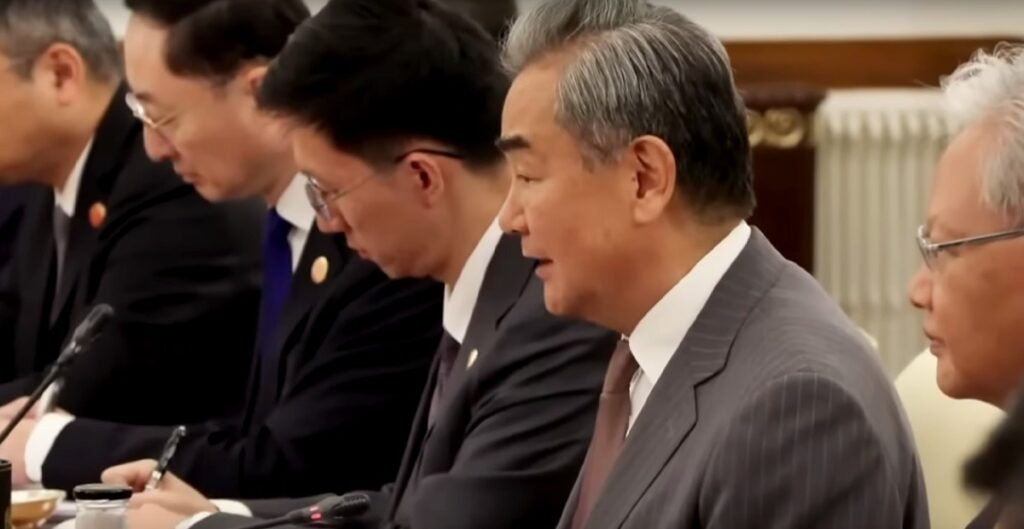
Wang Yi Heads to Islamabad Next; Is China Serious About Reset With India?
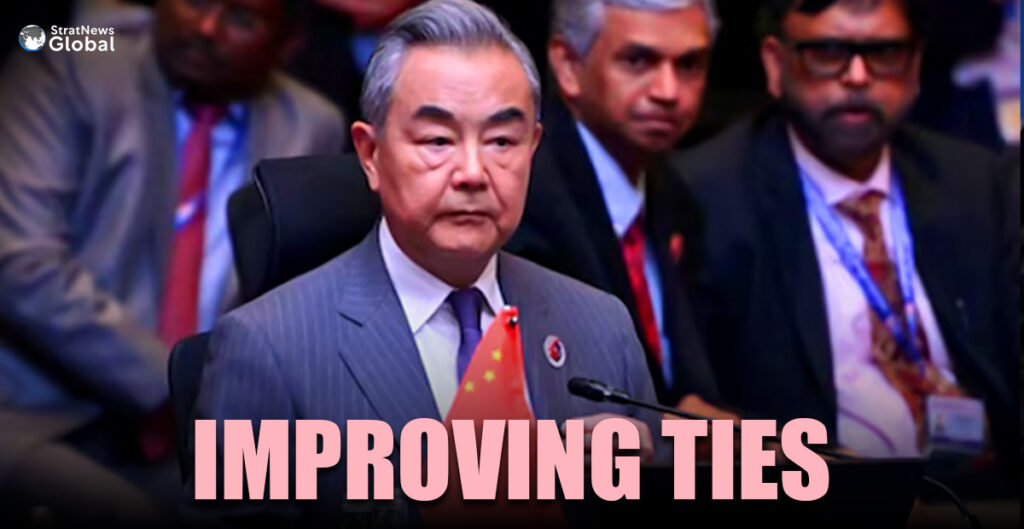
From New Delhi, Chinese Foreign Minister Wang Yi is set to travel to Islamabad on August 21. The timing and sequencing of this visit has generated fresh debate over Beijing’s intent and sincerity in recalibrating ties with India.
Wang, who’s now on a three-day visit to India, has met External Affairs Minister S. Jaishankar and National Security Adviser Ajit Doval. The two sides discussed border disengagement, restoring diplomatic normalcy and economic cooperation, including lifting of Chinese export curbs on fertilisers, rare earths and infrastructure machinery.
Wang Yi’s Agenda In Islamabad
Wang’s two-day visit to Pakistan at the invitation of Deputy PM and Foreign Minister Mohammad Ishaq Dar is part of what both nations call “regular high-level exchanges”. According to Pakistan’s Ministry of Foreign Affairs, Wang will
- Co-chair the sixth Pakistan-China Strategic Dialogue
- Hold talks with Pakistan’s civilian and military leadership
- Review progress on the China-Pakistan Economic Corridor (CPEC)
- Discuss regional security, economic cooperation and bilateral relations
Preparations for Pakistani PM Shehbaz Sharif’s visit to China, slated for August 31 to attend the Shanghai Cooperation Organisation (SCO) Summit, will also be on the agenda.
Timing Raises Eyebrows In New Delhi
Wang Yi’s visit to Pakistan comes soon after his discussions in India aimed at mending strained ties post-Galwan. While Indian officials have welcomed recent Chinese statements on border stability and economic cooperation, Wang heading straight to Islamabad from New Delhi makes for bad optics.
Observers believe Beijing engaging India on one hand while reaffirming strategic alignment with Pakistan on the other sends confusing signals about its commitment to meaningful normalisation of ties with India.
Balancing Act Or Diplomatic Tightrope?
Chinese officials may argue that Wang’s visit reflects Beijing’s broader strategy of regional balance, engaging both South Asian neighbours as part of its multilateral agenda. However, India has long viewed China’s close ties with Pakistan, especially around projects like CPEC, which run through disputed territory, as fundamentally incompatible with a neutral stance.
Moreover, this trip comes amid renewed India-Pakistan tension over the Pahalgam terrorist attack in April and India’s subsequent military response—Operation Sindoor. That flare-up renewed concerns in New Delhi about Pakistan’s military posture and China’s silent support, through economic and security cooperation.
The Strategic Backdrop
The back-to-back visits by Wang Yi also play into wider geopolitical dynamics:
- CPEC remains a cornerstone of China’s Belt and Road Initiative. Beijing is keen on expanding it to new areas, including energy, logistics and defence technology.
- Pakistan’s economic dependence on China has deepened post-Covid. Wang’s visit is expected to give new financial assurances.
- With U.S.-China tensions escalating, especially over trade and Indo-Pacific alignments, Beijing appears to be shoring up its regional alliances ahead of the SCO summit, where both India and Pakistan will be at the table.
For New Delhi, the message is clear: While talks with Beijing on trade and border stability are welcome, any meaningful improvement in ties must be matched by actions, not optics.
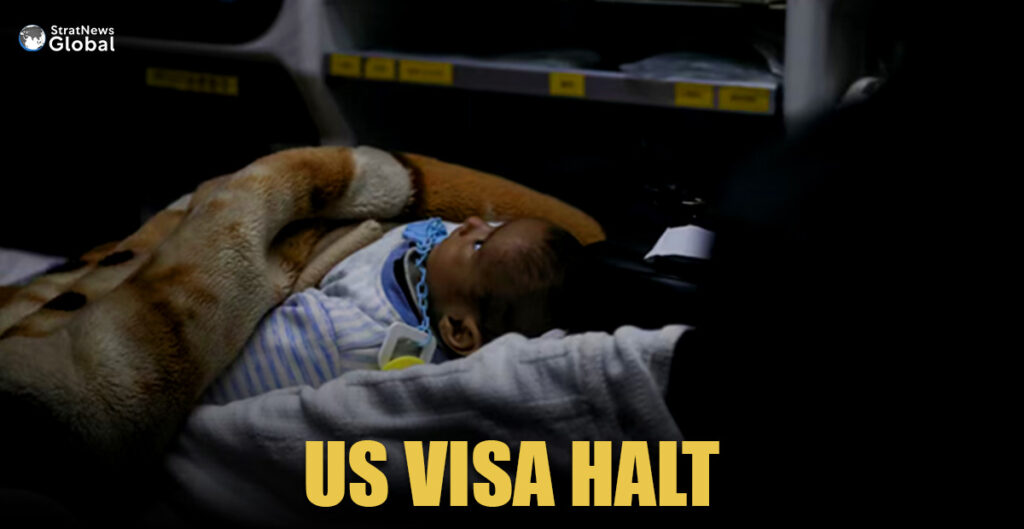
US Charity Warns Visa Halt For Gazans Will Endanger Injured Children
The U.S.-based charity HEAL Palestine, along with other rights organisations, condemned the State Department’s move to halt visitor visas for Palestinians from Gaza, warning that the decision would endanger wounded children who rely on short-term U.S. visas for critical medical treatment.
The State Department said on Saturday it was halting all visitor visas for Gazans while it conducted “a full and thorough” review, after far-right conspiracy theorist Laura Loomer said Palestinian refugees were entering the U.S.
‘No Refugee Resettlement Programme’
HEAL Palestine said there was no refugee resettlement programme, as stated by Loomer and that the group’s efforts were part of a medical treatment program. It also said the program was run on donations and did not use U.S. government money.
The charity sponsored and brought “severely injured children to the U.S. on temporary visas for essential medical treatment not available at home,” it said in a statement.
“After their treatment is complete, the children and any accompanying family members return to the Middle East.”
US Visitor Visas
The U.S. has issued more than 3,800 B1/B2 visitor visas, which permit foreigners to seek medical treatment in the U.S., to holders of Palestinian Authority travel documents so far in 2025. That figure includes 640 visas issued in May.
The Palestinian Authority issues travel documents to residents of the Israeli-occupied West Bank and Gaza.
The State Department said a small number of temporary medical-humanitarian visas were issued to people from Gaza in recent days, but did not provide a figure.
The Council on American Islamic Relations and the Palestine Children’s Relief Fund condemned the decision to stop the visas.
‘Islamic Invaders’
Loomer told the New York Times she spoke to Secretary of State Marco Rubio to warn about what she called a threat from “Islamic invaders.”
Rubio said the government was evaluating the process of granting such visas after concerns by some members of Congress regarding alleged ties to extremism. He said their offices had presented evidence of such ties, but he gave no details.
Gaza has been devastated by Israel’s military assault, which has killed tens of thousands, caused a hunger crisis, and prompted genocide and war crimes accusations at international courts.
The U.S. ally denies the accusations and says its offensive is in self-defence after an October 2023 attack in Israel by Hamas militants in which 1,200 were killed and about 250 taken hostage.
(With inputs from Reuters)
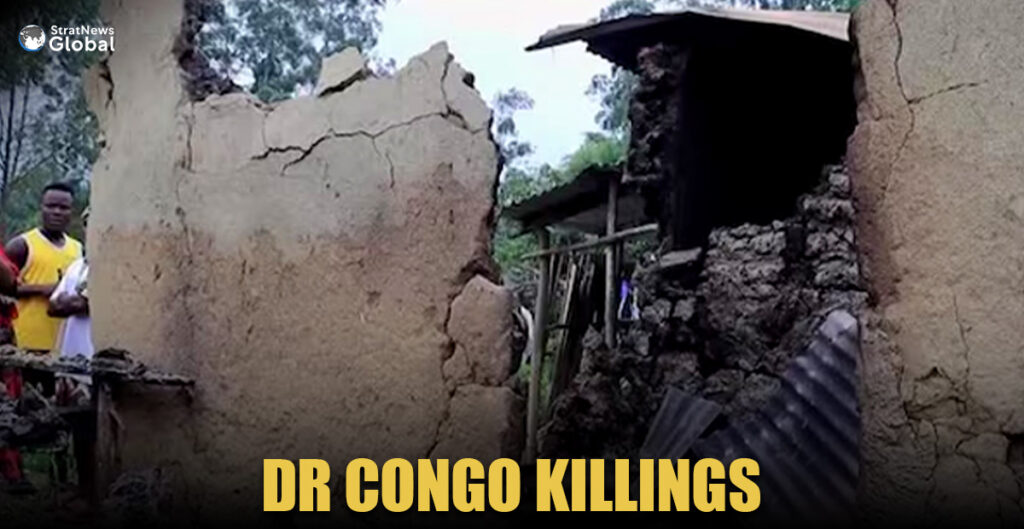
Machete-Wielding Rebels Kill Over 52 In Eastern Congo
Islamic State-backed rebels wielding machetes and hoes have killed at least 52 civilians in recent days across Beni and Lubero in eastern Democratic Republic of Congo, according to UN and local officials.
The Allied Democratic Forces (ADF) rebels were taking revenge on civilians after suffering defeats by Congolese forces, Lieutenant Elongo Kyondwa Marc, a regional Congolese army spokesperson, said.
“When they arrived, they first woke the residents, gathered them in one place, tied them up with ropes, and then began to massacre them with machetes and hoes,” Macaire Sivikunula, chief of Lubero’s Bapere sector, told Reuters over the weekend.
About 30 civilians were killed in the village of Melia alone, Alain Kiwewe, a military administrator for the Lubero territory, told Reuters.
“Among the victims were children and women whose throats were slit in their homes, while several houses were set on fire,” he said.
MONUSCO Condemns Attacks
The United Nations Organisation Stabilisation Mission in the Democratic Republic of the Congo (MONUSCO) condemned “in the strongest possible terms” the attacks by the ADF between August 9 and 16, the mission’s spokesperson said on Monday.
The attacks killed at least 52 civilians, including eight women and two children, and the toll could rise as the search is ongoing, the spokesperson said.
The ADF is among several militias wrangling over land and resources in Congo’s mineral-rich east.
Congo’s army and its ally, Uganda, have intensified operations against the ADF in recent weeks.
In late July, ADF rebels killed 38 people in an attack on a church in eastern Congo.
(With inputs from Reuters)
Afghanistan’s Poor: Forgotten Before, Forgotten Now
Pre-Taliban or post-Taliban, the condition of ordinary Afghans remains unchanged and overlooked.
Jill Suzanne Kornetsky, an American social entrepreneur who has lived in Afghanistan since 2015, told StratNewsGlobal that the “Kububble” of Kabul elites shaped the narrative, as they spoke foreign languages and represented the entire country, despite being a tiny minority. Their lives dominated media coverage, while the majority were ignored.
For most Afghans, life is the same as before 2021. They were poor then and are poor now. They were uneducated then and remain uneducated now. They lacked food then and lack food now. Kornetsky noted that those who once received large salaries to build institutions now complain about their absence.
Agriculture, the main occupation, continues to suffer. Farmers lack resources, knowledge, and infrastructure to deal with poor soil and climate. Cities consumed resources while the countryside remained neglected. To elites, Kornetsky said, the poor existed only to serve, not as equals. Neither the Taliban nor the previous government addressed their needs.
The old government departed without accountability. Even prominent figures such as Dr. Sima Samar fled abroad. Victims were silenced, with the Truth and Reconciliation Commission abandoned and an amnesty law protecting perpetrators.
For women, many jobs that existed before the Taliban takeover remain. Girls’ schools still have female teachers, female doctors continue to work, and women are employed in telecoms, grocery stores, maternity clinics, and cleaning jobs. Some must be accompanied by a male relative, but they still work. The low percentage of women in ministries and companies remains about the same as before. Kornetsky stressed that only the privileged 1%—mainly in Kabul—saw real change in their lives after the Taliban’s return.
Online schools have emerged for girls, but they mostly benefit the privileged. Poor girls in provinces like Kandahar never had access to education or freedom, even before 2021.
“Things are not good,” Kornetsky said. “But except for the elites it never was though. So, to what are we comparing today’s situation?” she asked.
(This article was written by Tisya Sharma, she is an intern at StratNewsGlobal)
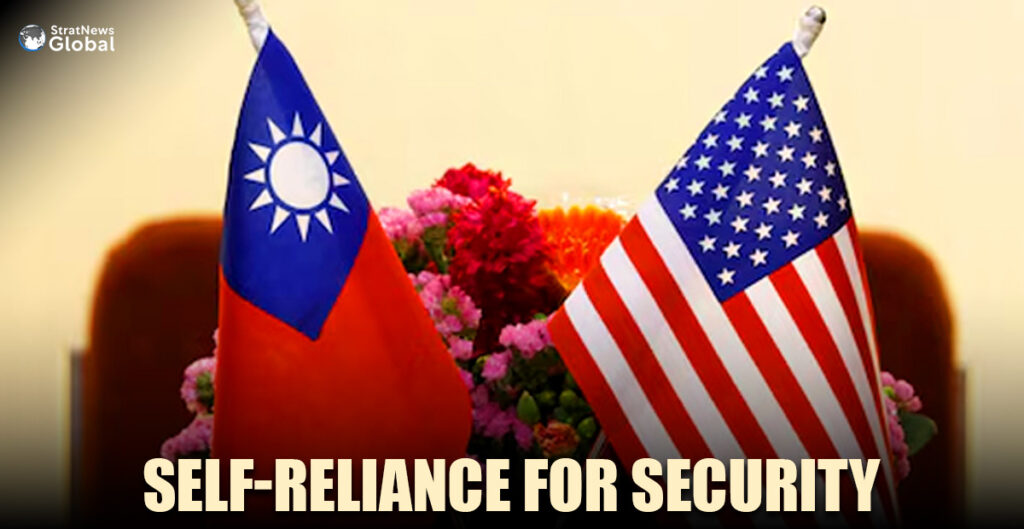
Taiwan Responds To Trump, Stresses Self-Reliance For Security
Taiwan must depend on its own strength for security, the island’s foreign ministry said on Tuesday, in response to United States President Donald Trump’s remarks that Chinese President Xi Jinping assured him there would be no invasion of the island during Trump’s time in office.
Democratic Taiwan has, over the past five years or so, faced ramped-up military and political pressure from China, which views the separately governed island as its “sacred” territory. Beijing has never renounced the use of force to bring Taiwan under its control.
Asked about Trump’s remarks, Taiwan Foreign Ministry spokesperson Hsiao Kuang-wei said the government closely monitored interactions between senior U.S. and Chinese officials.
“Taiwan’s security must be achieved through its own efforts, so our country has been dedicating itself to raising its self-defence capabilities and resilience. Our country will keep working hard to do this,” Hsiao told reporters in Taipei.
The United States is Taiwan’s most important international backer and arms supplier, although there are no formal diplomatic ties. There is also no defence treaty, so should China attack, Washington is under no obligation to help.
The United States, which is, however, bound by law to provide Taiwan with the means to defend itself, has long stuck to a policy of “strategic ambiguity,” not making clear whether it would respond militarily to a Chinese attack on Taiwan.
Trump made the invasion comments in an interview with Fox News, ahead of talks in Alaska with Russian President Vladimir Putin over Moscow’s war in Ukraine.
‘Purely An Internal Affair’
On Monday, China’s foreign ministry said Taiwan was an internal matter that was for the Chinese people to resolve.
“The Taiwan issue is purely an internal affair of China, and how to resolve the Taiwan issue is a matter for the Chinese people,” Chinese Foreign Ministry spokesperson Mao Ning said.
“We will do our utmost to strive for the prospect of peaceful reunification. But we will never allow anyone or any force to separate Taiwan from China in any way.”
China views Taiwan as its own territory and has vowed to “reunify” with the democratic and separately governed island. Taiwan vehemently opposes China’s sovereignty claims.
(With inputs from Reuters)
China Vows To Address India’s Rare Earths Needs Amid Fresh Border Talks: Sources
India–China relations are witnessing an upward trajectory, with Beijing assuring New Delhi that it will meet its requirements on rare earths, a senior Indian official and a source said on Tuesday, as both neighbours work to restore ties that were strained and damaged by the border clash of 2020.
Chinese Foreign Minister Wang Yi is visiting India for the 24th round of border talks with Indian National Security Advisor Ajit Doval and is also due to meet Prime Minister Narendra Modi on Tuesday, days before Modi travels to China for the summit of the Shanghai Cooperation Organisation.
“There has been an upward trend. Borders have been quiet. There has been peace and tranquillity,” Doval told Wang as he opened the talks. “Our bilateral engagements have been more substantial.”
“The new environment that has been created has helped us in moving ahead in the various areas that we are working on,” he said.
Wang said the setbacks the two countries experienced over the past few years were not in the interests of the people of the two countries, according to a translation of his remarks by Indian news agency ANI.
China Assures India’s Key Needs
Earlier on Tuesday, an Indian source said that China had promised to address three key Indian concerns. Wang, the source said, had assured Indian Foreign Minister Subrahmanyam Jaishankar that Beijing is addressing India’s need for fertilisers, rare earths and tunnel boring machines.
The Indian foreign and mines ministries did not respond immediately to Reuters requests for comment.
China’s commerce ministry also did not immediately respond to a request for comment.
It was not immediately clear whether China had agreed to approve export licenses faster or grant blanket exemptions for India.
China has previously committed to speeding up export licenses for Europe and the U.S. without actually dismantling the control regime.
China’s exports of rare earths and related magnets jumped in June after these agreements and as the commerce ministry worked through a huge backlog of applications.
However, rare earth magnet exports to India were still down 58% compared to January levels, according to Chinese customs data. June is the last month for which country-level data is available.
India has the world’s fifth-largest rare earth reserves, at 6.9 million metric tons, but there is no domestic magnet production. India relies on imported magnets, mainly from China.
(With inputs from Reuters)
Trump Provocative, Aggressive With India But Still Wants A Trade Deal
Misunderstandings
Gabbard: UK Agrees To Abandon Apple ‘Backdoor’ Mandate
On Monday, U.S. Director of National Intelligence Tulsi Gabbard announced that the United Kingdom had withdrawn its mandate requiring Apple to create a “backdoor” into iPhones, a measure that would have granted access to the encrypted data of American citizens.
Gabbard issued the statement on X, saying she had worked for months with Britain, along with President Donald Trump and Vice President JD Vance to arrive at a deal.
British Prime Minister Keir Starmer was in Washington on Monday along with other European leaders to meet Trump and discuss Russia’s war in Ukraine.
The UK government and Apple did not immediately respond to requests for comment on Gabbard’s statement.
U.S. lawmakers said in May that the UK’s order to Apple to create a backdoor to its encrypted user data could be exploited by cybercriminals and authoritarian governments.
Apple, which has said it would never build such access into its encrypted services or devices, had challenged the order at the UK’s Investigatory Powers Tribunal (IPT).
Bilateral Agreement
The iPhone maker withdrew its Advanced Data Protection feature for UK users in February following the UK order. Users of Apple’s iPhones, Macs and other devices can enable the feature to ensure that only they — and not even Apple — can unlock data stored on its cloud.
U.S. officials said earlier this year they were examining whether the UK broke a bilateral agreement by demanding that Apple build a backdoor allowing the British government to access backups of data in the company’s encrypted cloud storage systems.
In a letter dated February 25 to U.S. lawmakers, Gabbard said the U.S. was examining whether the UK government had violated the CLOUD Act, which bars it from issuing demands for the data of U.S. citizens and vice versa.
Cybersecurity experts said that if Apple chose to build a backdoor for a government, that backdoor would eventually be found and exploited by hackers.
Apple has sparred with regulators over encryption as far back as 2016 when the U.S. government tried to compel it to build a tool to unlock the iPhone of a suspected extremist.
(With inputs from Reuters)
U.S. Terror Tag on BLA Sparks Questions Over Motives
As Balochistan marked its 78th Independence Day on 11th August, the United States designated the Pakistan-based Balochistan Liberation Army (BLA) and its alias, the Majeed Brigade, as a Foreign Terrorist Organisation (FTO), citing its “commitment to countering terrorism.”
Baloch leader Mir Yar Baloch, however, insisted that the BLA is not a terrorist group but a victim of state repression.
Several countries, including the U.K. and China, already recognise the BLA as a terrorist organisation, but none have designated it as an FTO or equivalent.
Dr. Ajai Sahni, Founding Member & Executive Director of the Institute for Conflict Management, and Editor, South Asia Intelligence Review and the South Asia Terrorism Portal (SATP) told StratNewsGlobal that this is because the BLA poses no threat outside Pakistan. He described it as an internal insurgency arising from the denial of social, political, economic, and developmental rights to the Baloch people.
The U.S. rationale remains unclear. One of the three criteria for FTO designation is that a group’s activities must threaten the security of U.S. nationals or the United States itself. Sahni pointed out that this does not apply to the BLA, which operates only within Pakistan and has no proven links with other groups. He also noted the contrast with President Donald Trump’s earlier critical stance on Pakistan, calling the move an “abrupt transformation.”
The designation came two weeks after the announcement of a U.S.-Pakistan deal to develop “massive oil reserves.” Sahni described the timing as “significant,” suggesting the decision could facilitate closer U.S.-Pakistan engagement.
Balochistan, rich in minerals, has long been cited by Pakistani experts as holding vast oil and gas potential, left untapped due to security concerns linked to the separatist movement. The province is also key to the China-Pakistan Economic Corridor (CPEC), but projects there have faced repeated setbacks, including the 2021 Gwadar suicide bombing and Operation Baam earlier this year. Any U.S.-Pakistan attempts to benefit from the region could encounter similar resistance.
According to the U.S. Government Accountability Office, FTO designation allows Washington to use measures such as the Authorisation for Use of Military Force if threats emerge against U.S. nationals, facilities, or interests abroad. This means that attacks on U.S. assets in Pakistan by the BLA could provide legal grounds for American military action, which Islamabad would be unlikely to oppose.
While Trump’s broader intentions remain uncertain, the move raises questions over whether the designation is also a signal to the Baloch not to obstruct U.S. objectives in the region.
(This article was written by Tisya Sharma, she is an intern at StratNewsGlobal)
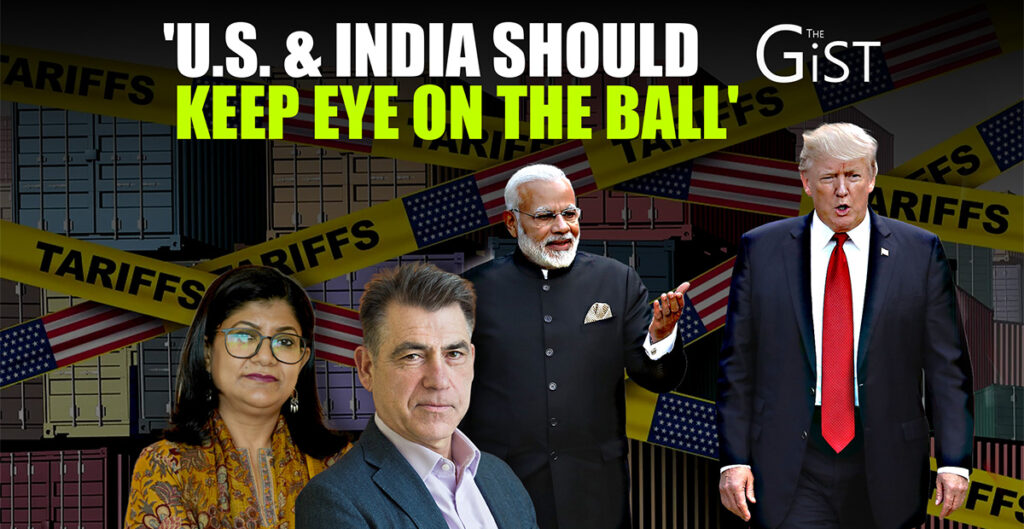
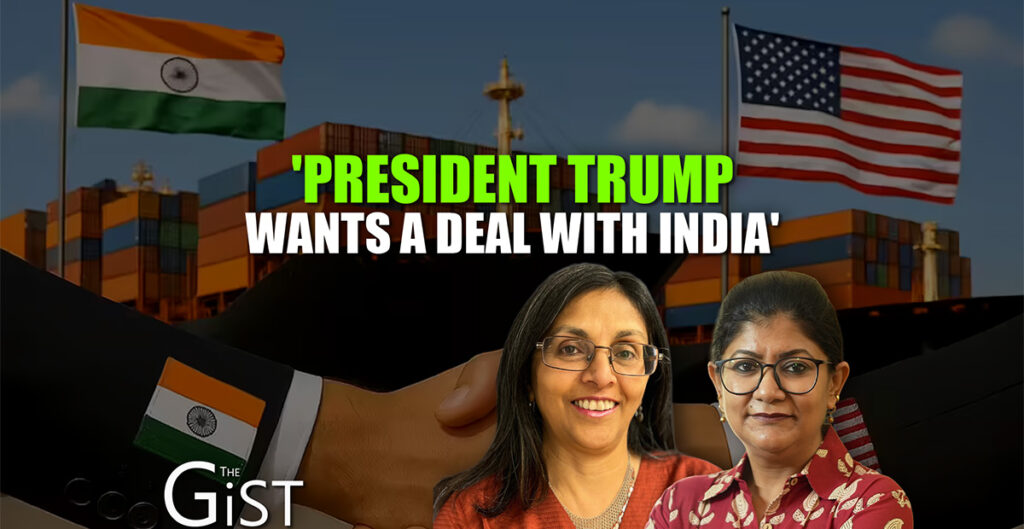
Can A Modi-Trump Conversation Resolve The Deadlocked Trade Talks?
India and the United States were on the “cusp of signing an ambitious” trade deal, however Operation Sindoor – India’s military intervention against Pakistan – and the role by Washington during the 96-hour conflict derailed the signing of the pact, according to Nisha Biswal, Partner, The Asia Group and former Assistant Secretary at the US State Department.
Speaking exclusively with StratNews Global from Washington DC over videoconferencing, Biswal said, business and investors in both India as well as in the US will “take a hit” if two-way trade between US and India takes a backseat.
“I think that in the recent crisis on India and Pakistan, the fact that Pakistan, on the one hand, acknowledged role for the United States and for President Trump and India kind of minimised it probably did not sit well with the administration,” said Biswal.
Additionally, she said, one of the main reasons why the US-India BTA hit a roadblock was due to the fact that unlike in India’s case, the US President Donald Trump has acted as the “negotiator-in-chief” even as he himself got engaged in signing similar trade pacts with the European Union (EU), Japan, Korea and others.
“The administration had concluded what it could at a working level. But ultimately, the president of the United States feels like he is the negotiator in chief. He had played a direct role in bringing deals across the finish line with the EU, with Japan, with Korea, with Vietnam. And it seemed like the Indian side was unwilling to have the conversation at the leader level,” she added.
According to Biswal, President Trump sought to “have more concessions in play” in agriculture and dairy products.
“Now, in the midst of all of this, you know, the U.S.’ dynamic with Russia has been evolving. And, as the US puts more pressure on Russia to conclude and reach some sort of a closure to the conflict with Ukraine, India came in the crosshairs with respect to the energy imports from Russia.
“All (these factors) combined in a very unfortunate and unhelpful way to sideline what I had hoped was going to be really a game changer in terms of the economic partnership between the United States and India,” she underscored.
India-US Tensions
Biswal, who served as Deputy CEO of the U.S. International Development Finance Corporation, is of the opinion that there exists an “underlying tension” between both the countries that did not allow the trade agreement to go through smoothly.
“The fact that neither the (US-India) strategic partnership nor the trade agreement that was on offer were sufficient to kind of carve the path forward points to the fact that there’s an underlying tension there that got in the way,” said Biswal.
“These are two individuals (Trump and Modi) who are strong leaders, who are very attentive to their own politics. I think Donald Trump is extraordinarily focused on domestic politics and domestic issues and how things play and is playing for that audience.
“And I think Narendra Modi is also very much attuned to the needs and the sentiments of the Indian population, of his base and of where the criticisms are across the political spectrum,” she said adding, which is adding on to the tensions and preventing a conciliatory approach.
Trade Deal Needed
According to Biswal, despite all the ongoing tensions between the US and India that began after Trump labelled India as a “dead economy”, Washington is still keen to have the trade pact with India.
“United States ultimately wants to have a deal with India. I don’t think it’s in the US interest to not have a trade deal with India. The question is the terms by which that becomes possible. And it’s not about the terms of the deal itself. It’s about the terms of the negotiations or the optics,” she said.
She also said, “Until there is some kind of an understanding at the leader level, it is not likely to come to pass … I think that if there’s a win-win equation that can be eked out for a leader level conversation, then I think we will see progress…I think if both leaders are in a position where they’re not willing to make a conciliatory gesture towards the other, then I think the impasse continues.”
During her conversations with US-based companies and investors, Biswal said, she has found out how keen they are to have a deepening of economic ties with India. She stressed that India needs to look at US-based companies as its partners and be willing to work with them in pushing the BTA across the finishing line.
“Can the US economy survive a cooling off of trade with India? Of course, it can. Can the Indian economy survive? Yes, it can. But both economies will take a hit. And, businesses in both countries will be disadvantaged. And consumers in both countries will take a hit. So it’s not in anyone’s interest. And especially if you start looking at additional sectors, as the President has indicated, including pharma. This really is jumping off a cliff in some ways, and, without a parachute,” she stressed.
Biswal added, “US businesses would like to see lowering of tariffs, lowering of barriers and real deepening of that economic corridor between the US and India. They certainly don’t want to see the imposition of tariffs … I would not want India to be left out of a trade agreement. I think that that would be deeply damaging for U.S. businesses, they want to see deeper trade ties across the board.”