

Support us by contributing to StratNewsGlobal on the following UPI ID
ultramodern@hdfcbank

Strategic affairs is our game, South Asia and beyond our playground. Put together by an experienced team led by Nitin A. Gokhale. Our focus is on strategic affairs, foreign policy and international relations, with higher quality reportage, analysis and commentary with new tie-ups across the South Asian region.
You can support our endeavours. Visit us at www.stratnewsglobal.com and follow us on YouTube, Twitter, Facebook and Instagram.
र 500 per month
र 1000 per month
र 5000 per year
र 10000 per year
Donate an amount of your choice
र 500 per month
Donate र 500 per month

र 1000 per month
Donate र 1000 per month
र 5000 per year
Donate र 5,000 per year
र 10000 per year
Donate र 10,000 per year
Donate an amount of your choice
Donate an amount of your choice


New Nvidia AI Chip May Outperform H20 In China: Reports
Nvidia is reportedly working on a new AI chip for the Chinese market, built on its latest Blackwell architecture and expected to be more advanced than the current H20 model permitted for sale under US export restrictions, according to two individuals familiar with the matter.
US President Donald Trump last week opened the door to the possibility of more advanced Nvidia chips being sold in China. But the sources noted US regulatory approval is far from guaranteed amid deep-seated fears in Washington about giving China too much access to US artificial intelligence technology.
B30A
The new chip, tentatively known as the B30A, will use a single-die design that is likely to deliver half the raw computing power of the more sophisticated dual-die configuration in Nvidia’s flagship B300 accelerator card, the sources said.
A single-die design is when all the main parts of an integrated circuit are made on one continuous piece of silicon rather than split across multiple dies.
The new chip would have high-bandwidth memory and Nvidia’s NVLink technology for fast data transmission between processors, features that are also in the H20 – a chip based on the company’s older Hopper architecture.
The chip’s specifications are not completely finalised but Nvidia hopes to deliver samples to Chinese clients for testing as early as next month, said the sources who were not authorised to speak to media and declined to be identified.
In Compliance With Govt Guidelines
Nvidia said in a statement: “We evaluate a variety of products for our roadmap, so that we can be prepared to compete to the extent that governments allow.”
“Everything we offer is with the full approval of the applicable authorities and designed solely for beneficial commercial use,” it said.
The US Department of Commerce did not respond to a Reuters request for comment.
Flashpoint
The extent to which China, which generated 13% of Nvidia’s revenue in the past financial year, can have access to cutting-edge AI chips is one of the biggest flashpoints in US-Sino trade tensions.
Nvidia only received permission in July to recommence sales of the H20. It was developed specifically for China after export restrictions were put in place in 2023, but company was abruptly ordered to stop sales in April.
Trump said last week he might allow Nvidia to sell a scaled-down version of its next-generation chip in China after announcing an unprecedented deal that will see Nvidia and rival AMD give the US government 15% of revenue from sales of some advanced chips in China.
A new Nvidia chip for China might have “30% to 50% off”, he suggested in an apparent reference to the chip’s computing power, adding that the H20 was “obsolete”.
Wary Of China
US legislators, both Democratic and Republican, have worried that access to even scaled-down versions of flagship AI chips will impede US efforts to maintain its lead in artificial intelligence.
But Nvidia and others argue that it is important to retain Chinese interest in its chips – which work with Nvidia’s software tools – so that developers do not completely switch over to offerings from rivals like Huawei.
Huawei has made great strides in chip development, with its latest models said to be on par with Nvidia in some aspects like computing power, though analysts say it lags in key areas such as software ecosystem support and memory bandwidth capabilities.
Complicating Nvidia’s efforts to retain market share in China, Chinese state media have also in recent weeks alleged that the US firm’s chips could pose security risks, and authorities have cautioned Chinese tech firms about purchasing the H20. Nvidia says its chips carry no backdoor risks.
RTX6000D
Nvidia is also preparing to start delivering a separate new China-specific chip based on its Blackwell architecture and designed primarily for AI inference tasks, according to two other people familiar with those plans.
Reuters reported in May that this chip, currently dubbed the RTX6000D, will sell for less than the H20, reflecting weaker specifications and simpler manufacturing requirements.
The chip is designed to fall under thresholds set by the US government. It uses conventional GDDR memory and features memory bandwidth of 1,398 gigabytes per second, just below the 1.4 terabyte threshold established by restrictions introduced in April that led to the initial H20 ban.
Nvidia is set to deliver small batches of RTX6000D to Chinese clients in September, said one of the people.
(With inputs from Reuters)
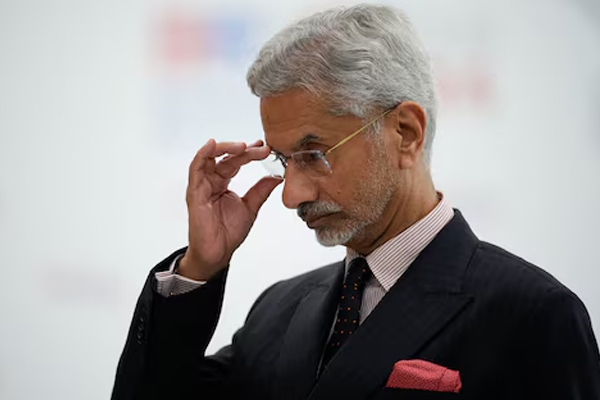
Jaishankar Heads To Moscow As US Tariff Deadline Nears
External Affairs Minister S. Jaishankar began a key three-day visit to Moscow on Tuesday. He will co-chair the 26th Session of the India-Russia Inter-Governmental Commission on Trade, Economic, Scientific, Technological and Cultural Cooperation on Wednesday and hold talks with his Russian counterpart Sergey Lavrov.
The talks are expected to reinforce the India-Russia “Special and Privileged Strategic Partnership,” a term both nations continue to emphasize despite growing Western scrutiny.
The visit is especially crucial for India’s economic diplomacy. A high-level delegation of Indian officials, including senior trade representatives, is on its way to Moscow to discuss expanding trade ties and explore mechanisms for local currency settlement.
A central point of the agenda will be advancing negotiations on a long-pending Free Trade Agreement between India and the Eurasian Economic Union (Armenia, Belarus, Kazakhstan, Kyrgyzstan, and Russia).
“The aim is to make progress on multiple economic fronts and ensure more balanced trade,” a source familiar with the talks said. “India is expected to underline its interest in narrowing the trade deficit with Russia, while also strengthening long-term cooperation.”
Bilateral trade between the two nations soared to an all-time high of $68.7 billion in FY25, a six-fold increase from pre-pandemic levels. However, the trade remains heavily slanted, with Indian exports accounting for just $4.88 billion and imports from Russia exceeding $63 billion, mainly driven by oil and fertiliser.
With Washington set to impose punitive tariffs on Indian exports starting August 27, totalling 50 per cent, including a 25 per cent surcharge specifically linked to India’s Russian dealings, Jaishankar’s Moscow mission has taken on heightened geopolitical and economic significance.
Incidentally, Prime Minister Modi and Putin will be at the SCO summit in Tianjin, China, at the end of August. It will be an opportunity to review the bilateral track and of course the course of negotiations on ending the Ukraine war. The Russian leader is also expected to visit India later this year for the annual dialogue.
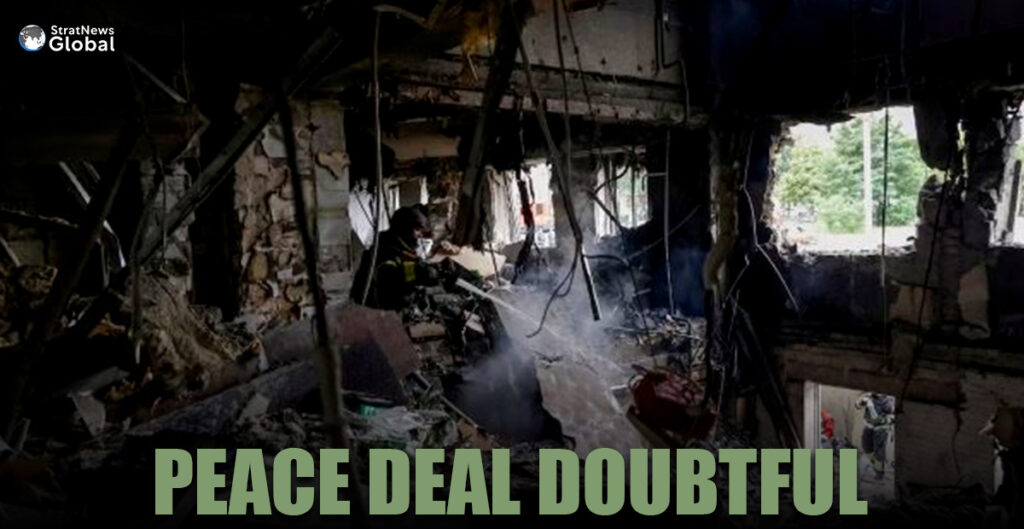
Trump Suggests Putin May Resist Deal To End Ukraine War
On Tuesday, U.S. President Donald Trump expressed hope that Russian President Vladimir Putin would take steps toward resolving the conflict in Ukraine but acknowledged the possibility that Putin may refuse any agreement, warning that such a stance would create a “rough situation” for the Kremlin leader.
In an interview with the Fox News “Fox & Friends” programme, Trump said he believed Putin’s course of action would become clear in the next couple of weeks.
Trump again ruled out American boots on the ground in Ukraine and gave no specifics about the security guarantees he has previously said Washington could offer Kyiv under any post-war settlement.
“I don’t think it’s going to be a problem (reaching a peace deal), to be honest with you. I think Putin is tired of it. I think they’re all tired of it, but you never know,” Trump said.
“We’re going to find out about President Putin in the next couple of weeks … It’s possible that he doesn’t want to make a deal,” said Trump, who has previously threatened more sanctions on Russia and nations that buy its oil if Putin does not make peace.
Trump’s Promise
Ukraine and its European allies have been buoyed by Trump’s promise of security guarantees to help end the war during an extraordinary summit on Monday but face many unanswered questions, including how willing Russia will be to play ball.
Ukrainian President Volodymyr Zelenskyy hailed Monday’s talks at the White House with the U.S. president as a “major step forward” towards ending Europe’s deadliest conflict in 80 years and setting up a trilateral meeting with Putin and Trump in the coming weeks.
Zelenskyy was flanked by the leaders of allies including Germany, France and Britain at the summit and his warm rapport with Trump contrasted sharply with their disastrous Oval Office meeting in February.
But beyond the optics, the path to peace remains deeply uncertain and Zelenskyy may be forced to make painful compromises to end the war, which began with Russia’s full-scale invasion in February 2022. Analysts say more than 1 million people have been killed or wounded in the conflict.
Russian Attacks
While the Washington talks allowed for a temporary sense of relief in Kyiv, there was no let-up in the fighting. Russia launched 270 drones and 10 missiles in an overnight attack on Ukraine, the Ukrainian air force said, the largest this month. The energy ministry said Russia had targeted energy facilities in the central Poltava region, home to Ukraine’s only oil refinery, causing big fires.
However, Russia also returned the bodies of 1,000 dead Ukrainian soldiers on Tuesday, Ukrainian officials said. Moscow received 19 bodies of its own soldiers in return, according to the state-run TASS news agency.
“The good news (from Monday’s summit) is that there was no blow-up. Trump didn’t demand Ukrainian capitulation nor cut off support. The mood music was positive and the trans-Atlantic alliance lives on,” John Foreman, a former British defence attache to Kyiv and Moscow, said.
“On the downside, there is a great deal of uncertainty about the nature of security guarantees and what exactly the U.S. has in mind.”
Ukraine’s allies held talks in the so-called “Coalition of the Willing” format on Tuesday, discussing additional sanctions to crank up the pressure on Russia. The grouping has also agreed that planning teams will meet U.S. counterparts in the coming days to advance plans for security guarantees for Ukraine.
NATO military leaders are expected to meet on Wednesday to discuss Ukraine, with U.S. General Dan Caine, the chairman of the Joint Chiefs of Staff, expected to attend the meeting virtually, officials said.
‘Tiptoeing Around Trump’
Russia has made no explicit commitment to a meeting between Putin and Zelenskyy. Foreign Minister Sergei Lavrov said on Tuesday that Moscow did not reject any formats for discussing peace in Ukraine but any meeting of national leaders “must be prepared with utmost thoroughness”.
Putin has said Russia will not tolerate troops from the NATO alliance in Ukraine. He has also shown no sign of backing down from demands for territory, including land not under Russia’s military control, following his summit with Trump last Friday in Alaska.
Neil Melvin, director, International Security at the Royal United Services Institute think-tank, said Russia could drag out the war while trying to deflect U.S. pressure with a protracted peace negotiation.
“I think behind this there’s a struggle going on between Ukraine and the Europeans on one side, and the Russians on the other, not to present themselves to Trump as the obstacle to his peace process,” Melvin said.
“They’re all tiptoeing around Trump” to avoid any blame, he said, adding that on security guarantees, “the problem is that what Trump has said is so vague it’s very hard to take it seriously”.
(With inputs from Reuters)
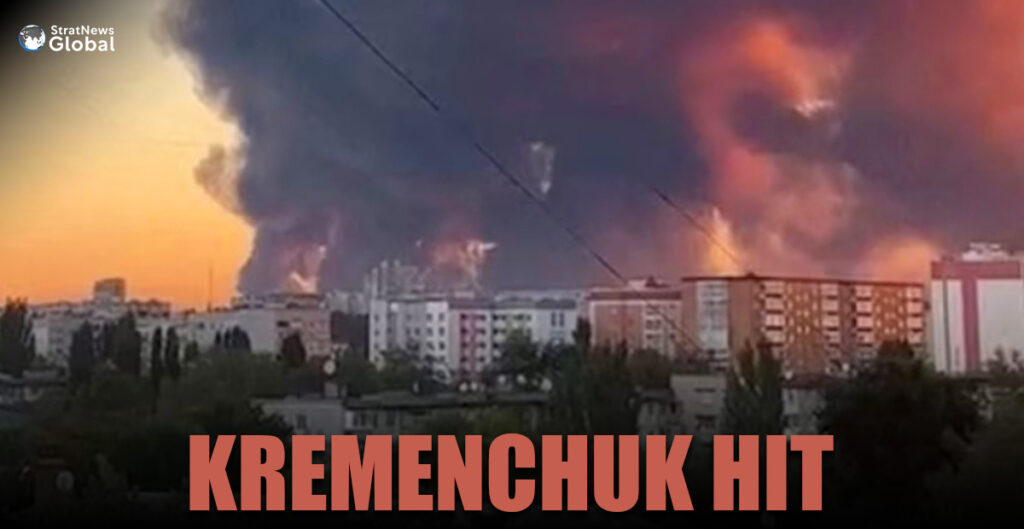
Russian Strike Hits Ukrainian City Of Kremenchuk Hours After Washington Summit
Russian forces attacked the central Ukrainian city of Kremenchuk at night, sending a thick column of smoke into the sky in what the local mayor described as proof that Russian President Vladimir Putin has no intention of pursuing peace.
The bombardment on that city as well as other locations in Ukraine was Russia’s largest so far in August, according to the Ukrainian air force.
It followed Donald Trump’s meeting with Ukrainian President Volodymyr Zelenskyy and European leaders in Washington on Monday as the U.S. president seeks an end to Russia’s war in Ukraine.
Moscow launched 270 drones and 10 missiles, the Ukrainian air force said. Although it said it had downed 230 of the drones, it said 16 sites were struck.
“While hard work to advance peace was underway in Washington, D.C. … Moscow continued to do the opposite of peace: more strikes and destruction,” Ukrainian Foreign Minister Andrii Sybiha wrote on X.
The governor of Poltava region, where Kremenchuk is located, said there were no casualties but nearly 1,500 households were left without electricity.
Oil Refinery Targeted
The Energy Ministry said energy facilities were hit in the attack, resulting in damage and a large fire.
The Russian Defence Ministry said its forces hit an oil refinery supplying Ukraine’s military. Kremenchuk is home to a large refinery, although the ministry did not say if this was the one that was struck.
Russian officials also said a Ukrainian drone attack overnight caused fires at an oil refinery and a hospital roof in the Volgograd region.
Both sides have been targeting infrastructure including oil facilities on each other’s territory.
“Once again, the world has seen that Putin does not want peace — he wants to destroy Ukraine,” said Kremenchuk Mayor Vitalii Maletskyi.
A photo posted by the mayor showed a vast, dark column of smoke billowing upwards and trailing across the sky.
Maletskyi said scores of blasts shook the city, targeting energy and transport infrastructure. He warned local residents not to approach or touch unexploded cluster munitions from Russian missiles which had been found in the city.
A Tuesday morning drone attack by Russia on Ukraine’s Chernihiv region also damaged infrastructure. Local energy official said more than 30,000 households lost power.
(With inputs from Reuters)
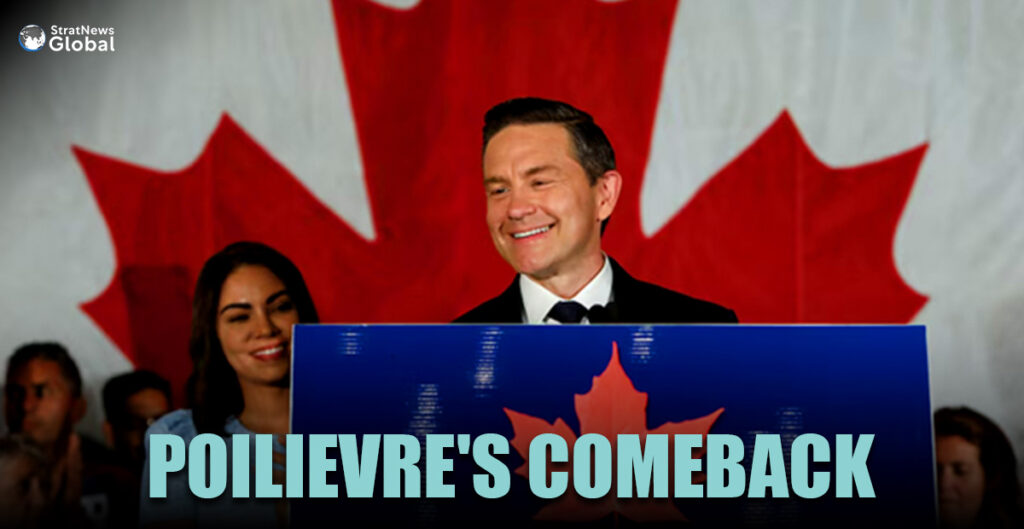
Canada: Poilievre Secures Seat, Set to Challenge Carney On Tariffs
Pierre Poilievre, the leader of Canada’s official opposition Conservatives, secured his return to Parliament and an opportunity to challenge Prime Minister Mark Carney over U.S. tariffs, marking a comeback after he had unexpectedly lost his seat during the April election.
Unofficial results from Elections Canada on Tuesday showed Poilievre had easily won a special election on Monday in the parliamentary constituency of Battle River-Crowfoot in the western Canadian province of Alberta, a Conservative stronghold.
Poilievre, who accuses the Liberal government of botching its handling of U.S. relations, will be able to confront Carney when the House of Commons returns on September 15.
Carney, who took over as prime minister in March, secured a strong minority government in April’s federal election, while Poilievre lost the Ottawa-area seat he had held for 21 years.
Carney won on a promise to stand up to U.S. President Donald Trump but has since moderated his approach even as Washington imposed more tariffs.
Poilievre Slams Carney
“Mark Carney has been failing. He’s failed, he’s backed down, he’s made concession after concession vis-a-vis the Americans,” Poilievre told a press conference last Thursday.
Carney, however, is in no immediate danger politically. Although the Liberals fell three seats short of a majority in April, they should be able to rely on the support of smaller parties to survive confidence votes.
A Nanos Research poll earlier this month put the Liberals at 44% popular support compared with 33% for the Conservatives.
Carney has pulled the Liberals more to the centre and Poilievre will find it harder to draw a sharp contrast, said pollster Nik Nanos, CEO of Nanos Research.
“Poilievre needs to articulate what he learned from the last federal election and how his government would be different from a Carney government,” he said via email.
At the start of the year, the Conservatives looked set for a crushing election victory over the Liberals of then-Prime Minister Justin Trudeau, who were far behind in polls after more than nine years in power.
But Liberal fortunes soared after Trudeau announced he was stepping down and Trump began threatening Canada with tariffs and annexation.
Poilievre secured about 80% of the vote, according to Elections Canada.
(With inputs from Reuters)
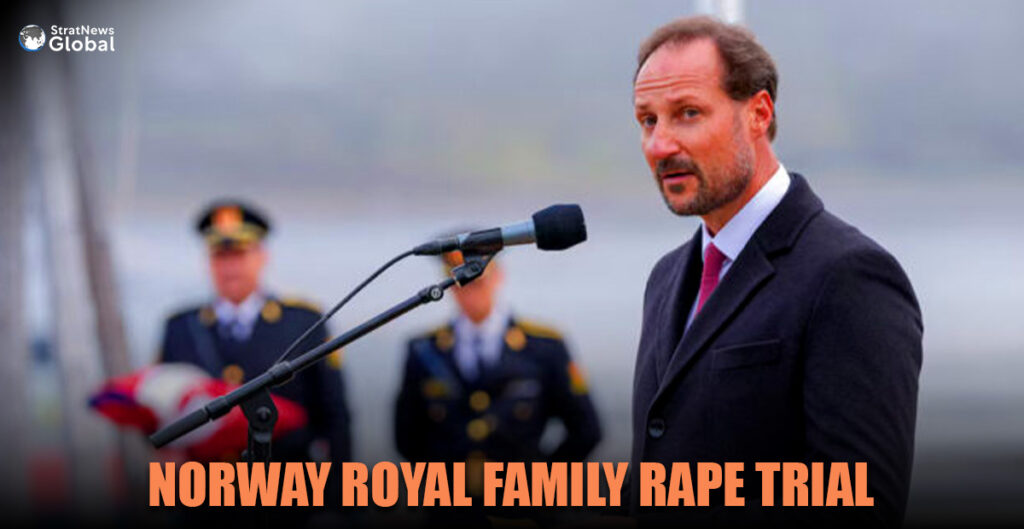
Rape Trial: Norway Royal Family To Carry On Despite Legal Trouble
Norway’s Crown Prince Haakon on Tuesday said the royal family would continue with their official responsibilities even as his stepson faces trial next year on rape charges, calling it a difficult and testing time for everyone concerned.
“We will continue to carry out our duties as best we can, as we always do,” Haakon said, in his first public remarks since the charges were announced. “Everyone involved in this case probably finds it challenging and difficult.”
Dozens Of Criminal Offences
Marius Borg Hoiby, 28, son of Crown Princess Mette-Marit and stepson to Haakon, was charged on Monday with 32 criminal offences, including the rape of four women as well as domestic violence and assault.
Hoiby denies the most serious accusations against him, including those of rape and domestic violence, but plans to plead guilty to some lesser charges in court when the trial starts, his lawyer told Reuters on Monday.
He could face up to 10 years in prison if found guilty of the most serious charges in a trial expected to start in January and run for six weeks, the prosecutor in the case has said.
It is up to Norway’s courts to decide the outcome of the case, Crown Prince Haakon told reporters on Tuesday while attending the opening of an industry conference.
Year-Long Investigation
The investigation began in August last year when police named Hoiby as a suspect in a physical assault against a woman with whom he had been in a relationship.
Hoiby, in a statement to the media at the time, admitted to causing bodily harm to the woman while he was under the influence of cocaine and alcohol, and said he regretted his acts.
Not A Royal
Hoiby, who has no royal title and is outside the line of succession, is the older half-brother of Princess Ingrid Alexandra, who is second in line to the throne after her father Haakon.
Hoiby is the son of Crown Princess Mette-Marit from a relationship prior to her marriage in 2001 to Crown Prince Haakon, Norway’s future king.
(With inputs from Reuters)
Israel Reviewing Hamas Response To Gaza Ceasefire Plan
Israel is reviewing Hamas’ response to a Gaza ceasefire proposal involving a potential 60-day truce and the release of half the Israeli hostages still held in the war-torn enclave, two officials said on Tuesday.
Efforts to pause the fighting gained new momentum over the past week after Israel announced plans for a new offensive to seize control of Gaza City, and Egypt and Qatar have been pushing to restart indirect talks between the sides on a U.S.-backed ceasefire plan.
The proposal includes the release of 200 Palestinian convicts jailed in Israel and an unspecified number of imprisoned women and minors, in return for 10 living and 18 deceased hostages from Gaza, according to a Hamas official.
Two Egyptian security sources confirmed the details and added that Hamas has requested the release of hundreds of Gaza detainees as well.
Truce Proposal
The proposal includes a partial withdrawal of Israeli forces, which presently control 75% of Gaza and the entry of more humanitarian aid into the enclave, where a population of 2.2 million people is increasingly facing famine.
Qatar’s Ministry of Foreign Affairs spokesperson Majed Al Ansari said the 60-day truce deal would include “a pathway to a comprehensive agreement to end the war.”
Israel had previously agreed to the outline, advanced by U.S. special Middle East envoy Steve Witkoff, but negotiations faltered over some of its details. The last round of talks ended in a deadlock in late July.
Israel’s plans to seize control of Gaza City in the heart of the Palestinian enclave have since stirred alarm abroad and among the estimated one million people presently living there.
On the ground, there were no signs of a ceasefire nearing as Israeli gunfire, tank shelling and airstrikes killed at least 20 Palestinians on Tuesday, according to Gaza health officials.
Tanks completed taking control of the Zeitoun suburb, an eastern neighbourhood on Gaza City’s outskirts, and continued to pound the nearby area of Sabra, killing two women and a man, medics said.
Local health authorities said dozens of people had been trapped in their houses because of the shelling. The Israeli military said it was checking the report.
Israeli Protesters Demand Deal
On Friday, it said its forces were operating in nearby Zeitoun to locate weapons, tunnels and gunmen.
“It has been one of the worst nights in Sabra and Gaza City as the explosions are heard throughout the city,” said Nasra Ali, 54, a mother of five, who lives in Sabra.
“I was planning to leave my house when I heard there is a possible ceasefire. I might stay for a day or two, if nothing happens, then I will run away with my kids,” she told Reuters via a chat app.
Thousands of people are estimated to have fled the area in the past few days.
In Israel, the threatened offensive prompted tens of thousands of Israelis on Sunday to hold some of the largest protests since the war began, urging a deal to end the fighting and free the remaining hostages held in Gaza.
Prime Minister Benjamin Netanyahu was expected to convene discussions about the ceasefire proposal soon, the two Israeli officials said. A response was expected in the coming two days, a Palestinian source close to the talks said.
Mounting Pressure
Netanyahu faces domestic political pressure from his far-right government partners who object to a truce with Hamas. Ministers Bezalel Smotrich and Itamar Ben-Gvir have demanded to keep the war going until Hamas’ defeat, and annexe Gaza.
Hamas official Izzat El-Reshiq said that the truce proposal it has agreed to is an interim accord that would pave the way for negotiations on ending the war.
A source close to the talks said that, unlike previous rounds, Hamas accepted the proposal with no further demands.
But prospects for agreeing on an end to the war appear remote, with gaps remaining on the terms. Israel is demanding that the group lay down its arms and that its leaders leave Gaza, conditions which Hamas has so far publicly rejected.
The war began when Hamas-led fighters stormed into Israel, killing 1,200 people and taking 251 hostages. Israel’s offensive has since killed more than 61,000 Palestinians, plunged Gaza into a humanitarian crisis and displaced most of its population.
(With inputs from Reuters)
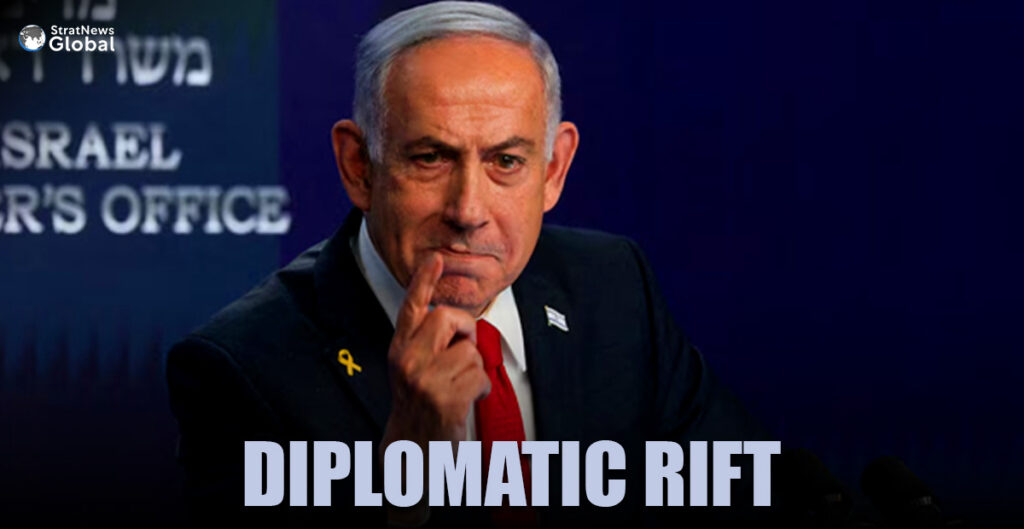
Netanyahu Accuses Australian PM Albanese Of Abandoning Jewish Community
Israeli Prime Minister Benjamin Netanyahu on Tuesday said that his Australian counterpart, Anthony Albanese, had abandoned Australia’s Jewish community and betrayed Israel, a statement that could further strain already tested diplomatic relations amid the ongoing war in Gaza.
Netanyahu’s comment followed Israel’s revocation of the visas of Australian diplomats to the Palestinian Authority on Monday, after a decision by Canberra to recognise a Palestinian state and cancel the visa of an Israeli lawmaker.
Diplomatic Rift
Israel’s foreign minister announced on Monday that visas granted to Australian diplomats working with the Palestinian Authority had been revoked, a move taken in response to Canberra’s recognition of a Palestinian state and its cancellation of an Israeli lawmaker’s visa.
The Australian government said it had cancelled the visa of a lawmaker from Prime Minister Benjamin Netanyahu’s governing coalition who has advocated against Palestinian statehood and called for Israel to annexe the occupied West Bank.
Israeli Foreign Minister Gideon Saar said Australia’s ambassador to Israel had been informed that the visas of representatives to the Palestinian Authority had been revoked.
Like many countries, Australia maintains an embassy to Israel in Tel Aviv and a representative office to the Palestinian Authority in the West Bank city of Ramallah.
Netanyahu Slams Albanese
“History will remember Albanese for what he is: A weak politician who betrayed Israel and abandoned Australia’s Jews,” Netanyahu said on the official prime minister’s X account in English.
The Israeli lawmaker had been due to meet with Australia’s Jewish community, which has faced a sharp rise in antisemitic attacks since the beginning of Israel’s war with Palestinian militant group Hamas in Gaza, almost two years ago.
Australian Foreign Minister Penny Wong on Monday called Israel’s visa revocation counter-step an “unjustified reaction” and said Netanyahu’s government was increasing Israel’s diplomatic isolation.
Israel has been facing mounting international pressure over the toll its military offensive has taken on the civilian population in the shattered Gaza Strip.
‘In Denial’
Albanese said on August 12 that Netanyahu was “in denial” about the humanitarian crisis in Gaza.
Albanese made his remark a day after announcing Australia may recognise a Palestinian state at the United Nations General Assembly in September, following France, Britain and Canada.
Netanyahu has said this would serve as a reward for Hamas’ October 7, 2023, attack on Israel, which triggered the Gaza war.
(With inputs from Reuters)
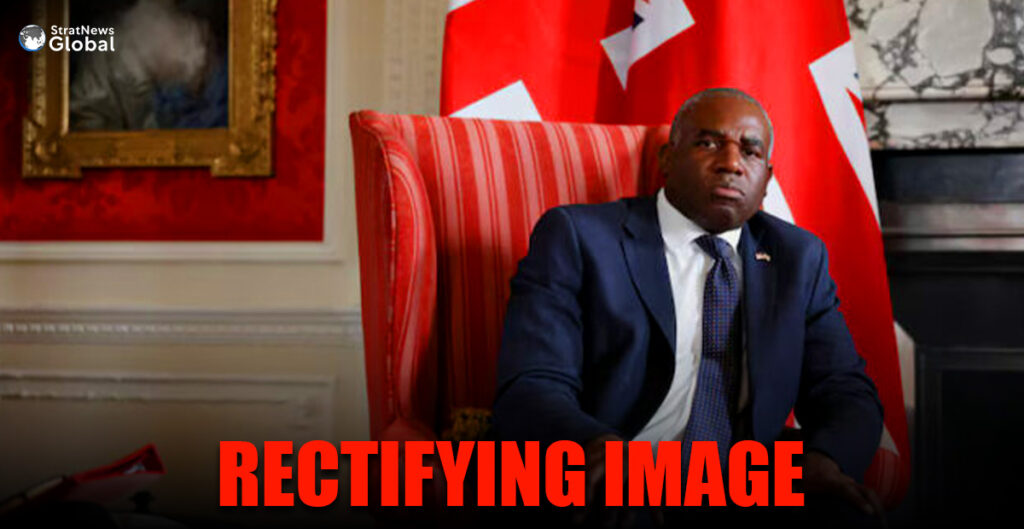
Switzerland In Talks to Join UK-Led Anti-Kleptocracy Group
Switzerland is looking to join a UK-led international task force aimed at cracking down on kleptocrats and recovering stolen assets, a UK government official said, as the country tries to move past its long-standing image as a safe haven for illicit wealth.
Foreign minister David Lammy discussed the International Anti-Corruption Coordination (IACCC) with the Swiss government during a visit to the country earlier this month, according to the official, who spoke on the condition of anonymity.
The Swiss government did not immediately respond to a request for comment.
‘Key Partner’
Joining the task force would allow Swiss authorities to share intelligence and work more closely with other countries on major investigations targeting dirty money.
Lammy told Reuters that Switzerland is “a key partner in the fight against illicit finance and corruption” and its participation in the IACCC would be “invaluable”.
Switzerland, the world’s largest manager of offshore wealth, has tried to shed its image as a safe haven for illicit funds and has recently taken steps to improve transparency, including proposing stricter rules on beneficial ownership.
Billions Identified, Millions Of Accounts Frozen
The IACCC task force was launched in 2017 and is hosted by Britain’s National Crime Agency (NCA). It brings together enforcement bodies from countries including the United States, Australia, Canada and New Zealand to share intelligence and coordinate investigations.
Since it was founded, it has identified 1.8 billion pounds in suspected stolen funds, and frozen 641 million pounds of assets, the IACCC says.
UK’s Challenges
Britain has ramped up its efforts to tackle illicit finance since Russia’s full-scale invasion of Ukraine in 2022. It has positioned itself as a leader in the global fight against kleptocracy, but it still faces its own challenges on that front.
The NCA estimates that over 100 billion pounds ($135.32 billion) is laundered through or within the UK each year, often via British-registered corporate structures.
($1 = 0.7390 pounds)
(With inputs from Reuters)
India-China Signal Forward Movement On Rare Earths, But Distrust Remains
Ahead of the SCO summit in Tianjin, China has announced it has given clearance for the export to India of rare earths used in electric vehicles. It came at the end of Chinese Foreign Minister Wang Yi’s talks in Delhi.
Indian External Affairs Ministry sources told StratNewsGlobal that “Wang Yi had assured that India’s needs of fertiliser, rare earths and tunnel boring machines” would be addressed.
It now remains to be seen how smoothly the process of China issuing licences for the export of rare earths goes through. That is a separate discussion between the commerce or trade ministries of the two countries, where apart from export licences for rare earths, processing of the same could come up.
Over the past year, supply disruptions and opaque export licensing from the Chinese side had delayed several Indian public and private sector projects, prompting the Indian government to raise the issue at a ministerial level.
Sources confirmed that China’s willingness to resume exports was presented as part of a “confidence-building” gesture ahead of the upcoming SCO summit, which Prime Minister Narendra Modi is likely to attend in person.
The decision may also be part of China’s broader diplomatic play to present itself as a responsible regional actor ahead of the SCO summit — where economic cooperation is expected to be a central theme.
This renewed economic outreach appears to be driven by a combination of geopolitical and strategic economic factors. US President Donald Trump’s trade policies, including proposed 250% tariffs on pharmaceuticals, are pushing both India and China to diversify their export markets and reduce dependence on Western economies.
With global supply chains still reeling from COVID-19-era disruptions, both countries are being urged by their domestic industries to normalize flows of essential materials.
There are at least two Chinese firms that have past contracts for the supply of tunnel boring machines to India. Then there is China Rare Earth Group which has exported neodymium to India in the past while Sinochem Holdings has exported bulk urea and phosphate fertiliser.
Tenders for fertilizer imports from Chinese suppliers have already been floated by Indian state trading companies, according to senior executives in the agriculture ministry.
While the broader economic relationship remains fragile due to geopolitical mistrust, the lifting of export restrictions is seen as a pragmatic move — and possibly the first step in a calibrated re-engagement between Asia’s two largest economies.