

Support us by contributing to StratNewsGlobal on the following UPI ID
ultramodern@hdfcbank

Strategic affairs is our game, South Asia and beyond our playground. Put together by an experienced team led by Nitin A. Gokhale. Our focus is on strategic affairs, foreign policy and international relations, with higher quality reportage, analysis and commentary with new tie-ups across the South Asian region.
You can support our endeavours. Visit us at www.stratnewsglobal.com and follow us on YouTube, Twitter, Facebook and Instagram.
र 500 per month
र 1000 per month
र 5000 per year
र 10000 per year
Donate an amount of your choice
र 500 per month
Donate र 500 per month

र 1000 per month
Donate र 1000 per month
र 5000 per year
Donate र 5,000 per year
र 10000 per year
Donate र 10,000 per year
Donate an amount of your choice
Donate an amount of your choice
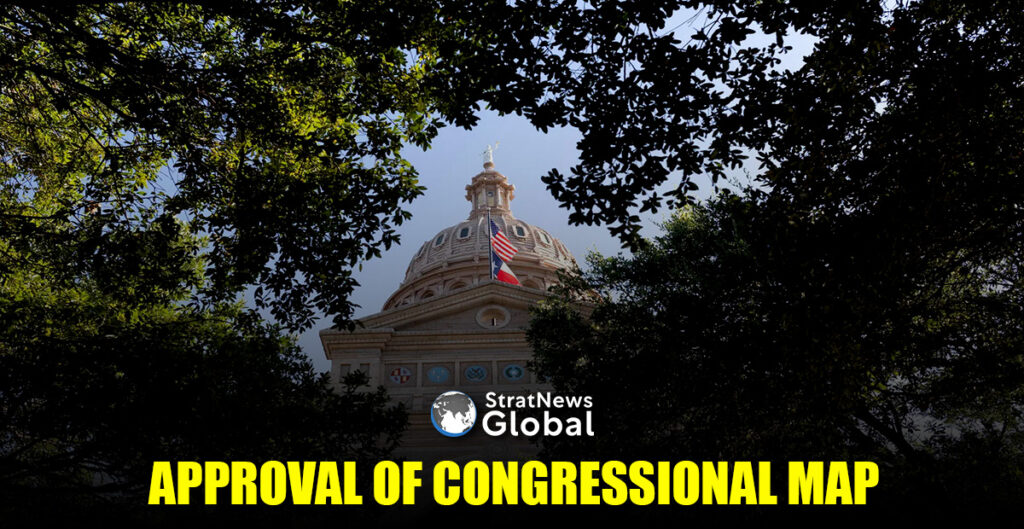



Texas Republicans Near Approval Of Trump-Backed Congressional Map After Extended Political Battle
Texas Republicans are preparing to advance a new congressional map on Wednesday designed to shift five U.S. House seats from Democratic to Republican control in the 2026 midterm elections, following the end of a two-week walkout by Democratic lawmakers that had delayed its approval.
Republican state legislators have undertaken a rare mid-decade redistricting at the behest of President Donald Trump, who is seeking to improve his party’s odds of preserving its narrow U.S. House of Representatives majority despite political headwinds.
The gambit has triggered a national redistricting war, with governors of both parties threatening to initiate similar efforts in other states.
Democratic California Governor Gavin Newsom is advancing an effort to neutralize Texas’ move by redrawing his state’s map to flip five Republican seats, pitting the nation’s most populous Democratic state against Texas, its most populous Republican one. The Texas map aims to flip five Democratic seats.
Other Republican states including Ohio, Florida, Indiana and Missouri are moving forward with or considering their own redistricting efforts, as are Democratic states such as Maryland and Illinois.
Redistricting typically occurs every 10 years after the U.S. Census to account for population changes, and mid-decade redistricting has historically been unusual. In many states, lawmakers manipulate the lines to favor their party over the opposition, a practice known as gerrymandering.
New Map Controversy
Texas’ new map was listed on Wednesday’s schedule for the state House, though it was not clear how quickly Republicans could move to approve it. The bill is still subject to debate on the floor, and Democrats can also introduce amendments to be voted upon.
Democrats fled the state earlier this month to deny the Texas House a quorum. In response, Republicans undertook extraordinary measures to try to force them home, including filing lawsuits to remove them from office and issuing arrest warrants.
The walkout ended when Democrats voluntarily returned on Monday, saying they had accomplished their goals of blocking a vote during a first special legislative session and persuading Democrats in other states to take retaliatory steps.
Republican House leadership assigned state law enforcement officers to monitor Democrats to ensure they would not leave the state again. One Democratic representative, Nicole Collier, slept in the Capitol building on Monday night rather than accept a police escort.
Republicans, including Trump, have openly acknowledged that the new congressional map is aimed at increasing their political power. The party currently controls 25 of the state’s 38 districts under a Republican-drawn map that was passed four years ago.
Democrats and civil rights groups have said the new map dilutes the voting power of racial minorities in violation of federal law and have vowed to sue.
Nationally, Republicans captured the 435-seat House in 2024 by only three seats. The party of the president historically loses House seats in the first midterm election, and Trump’s approval ratings have sagged since he took office in January.
(With inputs from Reuters)
India Rejects Dhaka Charge Of Allowing Awami League Activities
| The Muhammad Yunus-led interim government in Dhaka has accused India of allowing “multifarious engagements” by the banned Awami League whose leader and ousted former prime minister Sheikh Hasina, is a fugitive in India. A strongly worded note verbale from the foreign ministry in Dhaka said “Attention of the Government of Bangladesh has been drawn to the reported establishment of offices of the banned political party Bangladesh Awami League in the Indian Capital of Delhi, and Kolkata. This development comes in the backdrop of growing anti-Bangladesh activities undertaken by the leadership of the Bangladesh Awami League from being based on the Indian soil.” The Yunus-led government also said, “Many of the senior leaders of the party, absconding in several criminal cases in Bangladesh on account of grievous crimes committed against humanity, remain in Indian territory.” India has categorically rejected the claims and urged the Bangladesh government to rather focus on holding “free, fair and inclusive elections.” “The Government of India is not aware of any anti-Bangladesh activities by purported members of the Awami League in India or of any action that is contrary to Indian law. The Government does not allow political activities against other countries to be carried out from Indian soil. The Press Statement by the Interim Government of Bangladesh is thus misplaced,” Randhir Jaiswal, spokesperson, Ministry of External Affairs, said Wednesday. The Yunus-led administration also blamed the Press Club of India in Delhi for providing a platform to the Awami League workers, who are on the run. “Earlier, on 21 July 2025 evening, under the garb of a nondescript NGO, some of the senior leaders of this banned party planned to hold a public outreach at the Delhi Press Club and eventually distributed booklets among the attending members of the Press. To date, several reports in Indian media affirm increasing overtures of the Party while being on the Indian soil,” the statement said. Earlier in May, the Yunus government had banned the Awami League from conducting any activities. The ban is under the Anti-Terrorism Act. Hasina was ousted from power last year in August following a student-led uprising, after which she took refuge in India and has been living in the country ever since. Hasina occasionally addresses her former party workers on social media platforms. She is not allowed to meet anyone publicly even as the Narendra Modi government has not made any statement on this matter. According to sources, the Awami League has been “making efforts towards regrouping” amongst some of the members who are living in Kolkata under “different identity.” However, sources said, they have not been able successfully do anything. The Yunus government went on to say that if India allows such activities to continue then it will be seen as a move “against the people and State of Bangladesh.” “Any form of political activity campaigning against the interests of Bangladesh by Bangladeshi nationals, particularly by the absconding leaders/activists of a banned political party, staying on Indian soil, legally or illegally, including the establishment of offices is an unambiguous affront against the people and State of Bangladesh,” the note stated. It also added, “This development also risks the good-neighbourly relations with India driven by mutual trust and mutual respect, and lends serious implications for the political transformation underway in Bangladesh. This may also trigger public sentiment in Bangladesh which may in turn impact the ongoing efforts of the two countries in further enhancing the relationship.” The Yunus-led government also urged India to “take immediate steps to ensure that no anti-Bangladesh activity is undertaken by any Bangladeshi national on Indian soil, including not permitting or supporting any such activities in any manner and an immediate closure of the political office(s) of the banned Bangladesh Awami League on the Indian soil.” Gautam Lahiri, President, Press Club of India refuted the charges and said, “Press Club is open to everyone and we take bookings only from legitimate organizations. Even Jamaat-i-Islami party members have held events here previously. The programme that is being alluded to in the statement was being organized by the Bangladesh Human Rights Watch and not a single former worker from Awami League attended the programme. In fact, officials from the Bangladesh High Commission attended the event,” he said.
|
India, Eurasian Economic Union To Work Towards FTA
After years of on and off negotiations, India and the five-nation Eurasian Economic Union signed the Terms of Reference for negotiating a Free Trade Agreement (FTA).
The document was signed in Moscow by Ajay Bhadoo, Additional Secretary in the Commerce Ministry, and Mikhail Cherekaev, Deputy Director, Trade Policy Department of the Eurasian Economic Commission (EEC)—the regulatory body overseeing the Russia-led economic bloc.
The Eurasian Union established in 2015, comprises Russia, Armenia, Belarus, Kazakhstan, and the Kyrgyz Republic, representing a single market of 183 million people and a combined GDP exceeding $2.5 trillion.
Together with India, the potential FTA would cover economies with a total GDP of approximately $6.5 trillion.
Last year, India’s trade with the union reached $69 billion, but the lion’s share of this trade is between India and Russia ($63.8 billiion). Of this India’s exports were $4.8 billion with imports accounting for by discounted Russian oil.
India’s Commerce Ministry said the proposed FTA would boost market access for Indian exporters, diversify export destinations, and create new opportunities for Indian Micro, Small and Medium Enterprises.
India is expected to prioritize agriculture and engineering goods for greater access to the Eurasian market market and is also eyeing energy sector investments in Russia and Kazakhstan.
Officials said the terms of reference will serve as a blueprint for formal talks, helping unlock untapped trade potential and establishing a durable institutional framework for long-term cooperation.
There is a strong political will on both sides to conclude the agreement at the earliest, with the aim of positioning the India–EAEU FTA as a model for regional cooperation.
Formal negotiations on the FTA may be announced or launched during President Putin’s visit later this year.
Aid Agencies Report Gaza Still Blocked From Receiving Shelter Supplies
International relief organizations said on Tuesday that aid and shelter materials are still not reaching Gaza, even though Israeli officials have announced the restrictions on such goods were lifted, warning that continued delays could lead to more deaths.
Aid organisations say Israel had in effect been blocking the delivery of materials for shelters for nearly six months, with tent poles previously listed among items Israeli authorities considered could have a military as well as civilian use.
With international concern over the plight of Palestinians mounting as the war in Gaza continues, Israel announced measures last month to let more aid into Gaza and said on Saturday that it would start allowing shelter materials in from the next day.
Aid And Shelter Materials Still Not Reaching Gaza
But officials from five aid groups, including U.N. agencies, said that shelter materials needed by large numbers of displaced Palestinians were still not reaching Gaza and blamed Israeli bureaucratic hurdles.
“The United Nations and our partners have…not been able to bring in shelter materials following the Israeli announcement,” the U.N. Office for the Coordination of Humanitarian Affairs (OCHA), spokesperson Jens Laerke said.
“There’s a set of impediments that still needs to be addressed, including Israeli customs clearance.”
CARE International, ShelterBox and the Norwegian Refugee Council also said they had not yet received any authorisation to deliver shelter materials. Another international NGO, which declined to be identified, said it had been unable to deliver such supplies but was trying to get clearance.
Over 1.3 million Gazans lack tents, the United Nations said this month, and more people are expected to be displaced by an Israeli operation to seize Gaza City.
COGAT, the Israeli military agency that coordinates aid, did not immediately respond. It has previously said it invests considerable efforts to ensure aid reaches Gaza and has denied restricting supplies.
After nearly two years of war, many displaced Palestinians are living in the rubble of their homes or in tents.
“Life in the tent is no life at all…There’s no proper bathroom, not even a decent place to sit. We end up sitting in the street, suffocating in the heat,” 55-year-old Ibrahim Tabassi said in the southern Gazan city of Khan Younis.
He shares his cramped tent, made from tarpaulin sheets and scrap metal, with nine other family members. Clothes and pots hang inside.
Another Gaza resident, Sanaa Abu Jamous, said that she, like many other Gazans, had been using the same tattered tent throughout the war.
“My tent is extremely worn out,” she said.
Deliveries Via Kerem Shalom Crossing
Israel said on Saturday that deliveries of materials for shelters would be allowed via the Kerem Shalom Crossing with Israel but would have to undergo security inspections.
The Red Cross said it had received permission from COGAT to bring in shelter materials from what is known as the Jordanian corridor to Kerem Shalom, but that many challenges remain.
CARE International said it had received no confirmation that the change in policy had been enacted.
The Norwegian Refugee Council, a humanitarian organisation, said it had applied for permission to deliver 3,000 tents across Gaza, including the north, but had not yet received a reply.
Many aid groups are resisting Israeli demands – under measures imposed in March – to register because it means disclosing personal information about Palestinian staff.
COGAT says the mechanism is a security screening intended to ensure aid goes directly to the population rather than to the Palestinian terrorist group Hamas.
ShelterBox’s regional director, Haroon Altaf, said granting permission to only a select number of aid groups would not meet demand for shelter materials.
“If it’s only a handful of organisations that can bring shelter aid in, it doesn’t really change much and it’s deeply concerning. People are going to die because of it,” he said.
(With inputs from Reuters)
Perspective On Pakistan By Indian Diplomats And Scholars
“India-Pakistan relations have been all snakes and no ladders,” says a chapter in the book, ‘Whither India-Pakistan Relations Today? Can They Ever Be Good Neighbours?’
Edited by former Ambassador Surendra Kumar, it brings together opinions and perspectives authored by 14 eminent persons, two of them former foreign secretaries, two ex-generals, two academics and a former journalist, a clutch of retired ambassadors, only one of whom, curiously, served in Pakistan as high commissioner.
The army perspective is there in the introduction and the first chapter. Maj Gen Ashok Mehta makes two points: that dialogue with Pakistan should be “uninterrupted and uninterruptible”, and that India has failed to engage with the decision makers in that country, meaning the army. He urges strategic patience and calls for setting aside the Modi government’s stance that “talks and terror cannot go together.”
Former army chief Gen Deepak Kapoor writes that frequent “Balakot-like strikes” will be counterproductive and hopes that the disillusionment evident among sections of Pakistanis will translate into political change.
Former foreign secretary Shyam Saran, regarded as among the most astute of Indian diplomats, believes that Pakistan’s current parlous economic situation offers an opportunity for India to take the lead as the big regional power. Not that Pakistan is close to collapse, far from it. He warns that “a permanent fracture between the peoples of the two neighbouring countries … carries within it the seeds of even greater hostility in future.”
Kanwal Sibal, another former foreign secretary, adheres to the more standard narrative on Pakistan to zero in on the nub of the problem: “The structures of Pakistan’s polity have to change in a major way for it to possibly live as a good neighbour of India. But this is not for tomorrow.”
Author and former journalist MJ Akbar argues that Modi has made a “radical” departure from previous governments on Pakistan. A neighbour is defined by reach, like the Gulf states, all Muslim, but it’s hard to get a ticket when flying from India because of the demand. Indonesia, too, is far closer with direct flights now underway. Between India and Pakistan, there are none.
At a function in Delhi to release the book, one of the panelists, former high commissioner TCA Raghavan made the point that “What concerns Pakistan is not your military strength, but your economy, your political strengths, your social fabric, and most of all, the capacity of your cultural institutions to change Pakistani thinking, although very slowly.”
Another speaker, Shashi Tharoor, made a point that will probably resonate throughout the country. “Given the record of Pakistani behaviour, they’re the ones who have to take the first steps to show some sincerity about dismantling the terror infrastructure on their lands.
It is acknowledged that there are no 100% perfect neighbours. Nepal isn’t, nor is Bangladesh, look at the Maldives and Sri Lanka. But they don’t stoke terrorism against India. The late Prime Minister Manmohan Singh’s dream of “breakfast in Amritsar, lunch in Lahore, and dinner in Kabul,” was denied him, but there’s always hope that reason and good sense will prevail someday.
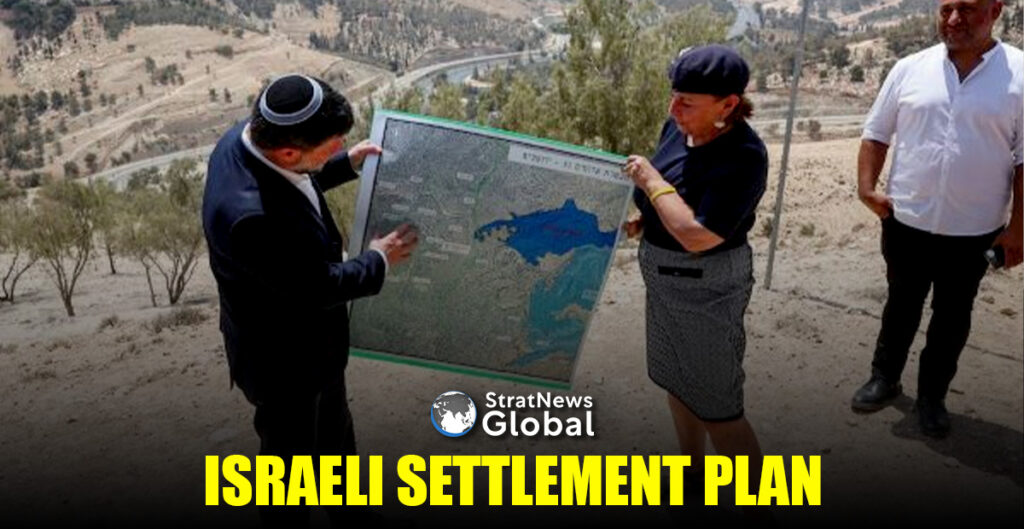
Israel Grants Final Approval To Settlement Plan Aimed At Blocking Palestinian State
Israeli Finance Minister Bezalel Smotrich announced on Wednesday that a settlement plan, widely condemned abroad, had been granted final approval, cutting across territory that the Palestinians want for a future state.
The approval of the E1 project, which would bisect the occupied West Bank and cut it off from East Jerusalem, was announced last week by Smotrich and received final go-ahead from a defence ministry planning commission on Wednesday, he said.
Restarting the project could further isolate Israel, which has watched some Western allies frustrated by its continuation and planned escalation of the Gaza war announce they may recognise a Palestinian state at the United Nations General Assembly in September.
“With E1 we are delivering finally on what has been promised for years,” Smotrich, an ultra-nationalist in the ruling right-wing coalition, said in a statement. “The Palestinian state is being erased from the table, not with slogans but with actions.”
The Palestinian foreign ministry condemned the announcement on Wednesday, saying that the E1 settlement would isolate Palestinian communities living in the area and undermines the possibility of a two-state solution.
A German government spokesperson commenting on the announcement told reporters on Wednesday that settlement construction violates international law and “hinders a negotiated two-state solution and an end to the Israeli occupation of the West Bank”.
Israeli Prime Minister Benjamin Netanyahu has not commented on the E1 announcement.
Two-State Solution
However on Sunday, during a visit to Ofra, another West Bank settlement established a quarter of a century ago, he made broader comments, saying: “I said 25 years ago that we will do everything to secure our grip on the Land of Israel, to prevent the establishment of a Palestinian state, to prevent the attempts to uproot us from here. Thank God, what I promised, we have delivered.”
The two-state solution to the decades-old Israeli-Palestinian conflict envisages a Palestinian state in East Jerusalem, the West Bank and Gaza, existing side by side with Israel.
Western capitals and campaign groups have opposed the settlement project due to concerns that it could undermine a future peace deal with the Palestinians.
The plan for E1, located adjacent to Maale Adumim and frozen in 2012 and 2020 amid objections from the U.S. and European governments, involves construction of about 3,400 new housing units.
Infrastructure work could begin within a few months, and house building in about a year, according to Israeli advocacy group Peace Now, which tracks settlement activity in the West Bank.
Most of the international community considers Israeli settlements in the West Bank illegal under international law.
Israel disputes this, citing historical and biblical ties to the area and saying the settlements provide strategic depth and security.
(With inputs from Reuters)
Uganda Refutes Report On Deal To Accept US Deportees
A top official in Uganda has refuted claims made in a US media report that the country has agreed to receive deportees from the United States. Speaking on Wednesday, the official stated that Uganda does not have the necessary infrastructure to accommodate individuals deported from the US.
Citing internal US government documents, CBS News reported on Tuesday that Washington had reached deportation deals with Uganda and Honduras as part of its drive to step up expulsions of migrants to countries where they do not have citizenship.
“The documents indicate Uganda in East Africa recently agreed to accept deportees from the US who hail from other countries on the continent, as long as they don’t have criminal histories. It’s unclear how many deportees Uganda would ultimately accept under the arrangement with the US government,” the report from CBS News read.
Flat Denial
Denying such an agreement, Okello Oryem, state minister for foreign affairs, told Reuters by text message: “To the best of my knowledge we have not reached such an agreement.”
“We do not have the facilities and infrastructure to accommodate such illegal immigrants in Uganda.”
Trump’s Migrant Crackdown
President Donald Trump aims to deport millions of immigrants who entered the US illegally and his administration has sought to increase removals to third countries, including by sending convicted criminals to South Sudan and Eswatini.
The CBS report said the agreements with Uganda and Honduras were based on a provision of US immigration law that allows people seeking asylum to be rerouted to third countries if the US government determines those nations can fairly hear their claims.
Uganda, a US ally in East Africa, also hosts nearly two million refugees and asylum-seekers, who mostly come from countries in the region such as Democratic Republic of Congo, South Sudan and Sudan.
Looking For Accommodation
Since the second Trump administration took office, at least a dozen countries have already accepted — or agreed to accept — deportees from other nations. US officials have been actively engaging with foreign governments in this regard.
Internal government documents reveal that the Trump administration has also approached countries such as Ecuador and Spain, requesting them to accept these so-called third-country deportees from the United States.
(With inputs from Reuters)
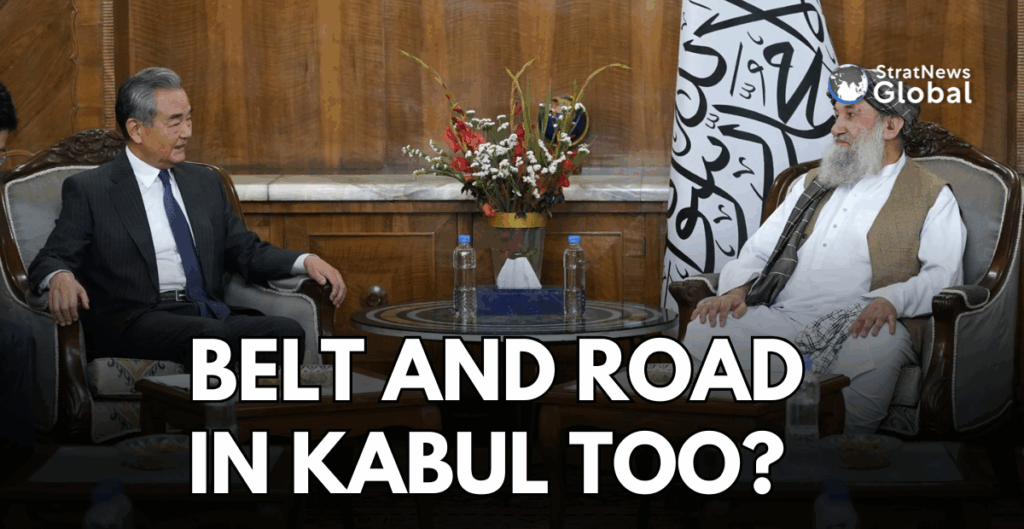
Wang Yi In Kabul: China Eyes BRI, Mining Deals With Taliban
Chinese Foreign Minister Wang Yi visited Kabul on Tuesday, holding talks with senior Taliban leaders on trade, security, and regional cooperation, in the latest leg of a regional tour that took him from New Delhi to Afghanistan and onwards to Islamabad.
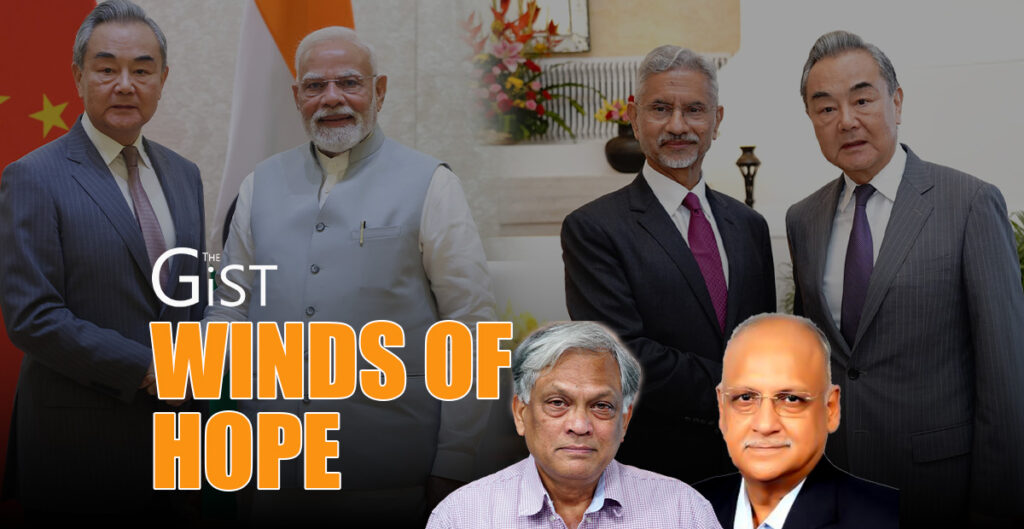
Wang arrived in Kabul after chairing a meeting of special representatives on the India–China border issue in New Delhi. During his visit there, he handed Prime Minister Narendra Modi an invitation from President Xi Jinping to attend the upcoming Shanghai Cooperation Organisation (SCO) summit, which Modi accepted.
In Kabul, Wang met Afghan Foreign Minister Mawlawi Amir Khan Muttaqi, Prime Minister Mullah Muhammad Hassan Akhund, and Interior Minister Khalifa Sirajuddin Haqqani.
The visit also coincided with the Sixth Trilateral Foreign Ministers Dialogue in Kabul, attended by Wang Yi, Pakistani Foreign Minister Ishaq Dar, and Afghan Foreign Minister Muttaqi. The three sides reaffirmed their commitment to joint efforts against terrorism, deepening trade and transit ties, combating drug trafficking, and extending the multibillion-dollar China–Pakistan Economic Corridor (CPEC) to Afghanistan.
Muttaqi described relations with China as “progressing” and noted annual trade had reached one billion dollars. He proposed expanding cooperation in transportation, banking, and trade balance, urging intergovernmental commissions to intensify technical discussions. He also reiterated that Afghan soil would not be used against neighbors.
Wang Yi said Afghanistan would be officially included in the Belt and Road Initiative and expressed interest in mineral exploration and extraction, with practical mining operations expected to start this year. He pledged political and economic support and said barriers to Afghan agricultural exports would be removed.
Prime Minister Akhund said the Islamic Emirate had resolved many challenges since taking power and sought “sustainable and positive relations” with all countries, including China.
Interior Minister Haqqani welcomed Wang Yi, describing Afghanistan–China relations as “historic” and noting that China had always maintained positive engagement. Wang responded that ties had “deep roots in history.” Their talks covered security, narcotics control, border coordination, agriculture, trade, and training programs.
Wang, calling China’s friendship “sincere and steadfast,” noted he was the only foreign minister among the permanent members of the UN Security Council to have visited Afghanistan twice. He stressed the importance of security cooperation as a foundation for development and urged Afghan authorities to address China’s concerns.
Both in bilateral and trilateral settings, Afghan leaders assured that Afghan territory would not be used to threaten others.
Pakistan’s foreign office said Wang is visiting Islamabad at the invitation of foreign minister Dar to co-chair the sixth Pakistan-China foreign ministers’ strategic dialogue on August 21.
India-China Look For Early Resolution Of Border Dispute In Middle Sector
“Early harvest is something which can be easily achieved. That is what it means. And if you look at the boundary issue, boundary question, there are three sectors that are involved with the Middle, Eastern and the Eestern sectors,” said Lt Gen SL Narasimhan (Retd) former defence attache in Beijing who also headed the External Affairs Ministry’s think tank Centre for Contemporary Chinese Studies.
The middle sector is the easiest to resolve, Gen Narasimhan said. It runs around 600+ km from Ladakh to Nepal and includes parts of Himachal Pradesh and Uttarakhand. The area has seen Chinese incursions particularly in Bara Hoti, but a deal is seen as feasible here although that could also take some years to negotiate.
In fact, maps of the Middle Sector were exchanged many years ago that laid down either country’s perception as to where the Line of Actual Control ran. But the Chinese stonewalled when it came to the other sectors and the issue remained dormant until suddenly revived now.
An expert group is now being set up, following Chinese foreign minister Wang Yi’s visit, and will go into the modalities of how to go about delimiting the area, which means identifying the area on the ground. The Chinese are however talking about demarcation, so clearly there is a gap between the two sides that has to be bridged.
“There seems to be an understanding that we must move on from what happened (Galwan clash) and bring back some semblance of normalcy in this relationship,” Narasimhan said, “If Mr. Modi is going to China and he has got a problem on the border … then it would be difficult to actually justify this (visit), so the Chinese must have relented.”
The interesting point about this understanding is the designation of three-star generals by both sides to drive the ground level process, since they are present in the location.
Tune in for more in this conversation with Lt Gen SL Narasimhan (Retd), former DG of the Centre for Contemporary Chinese Studies
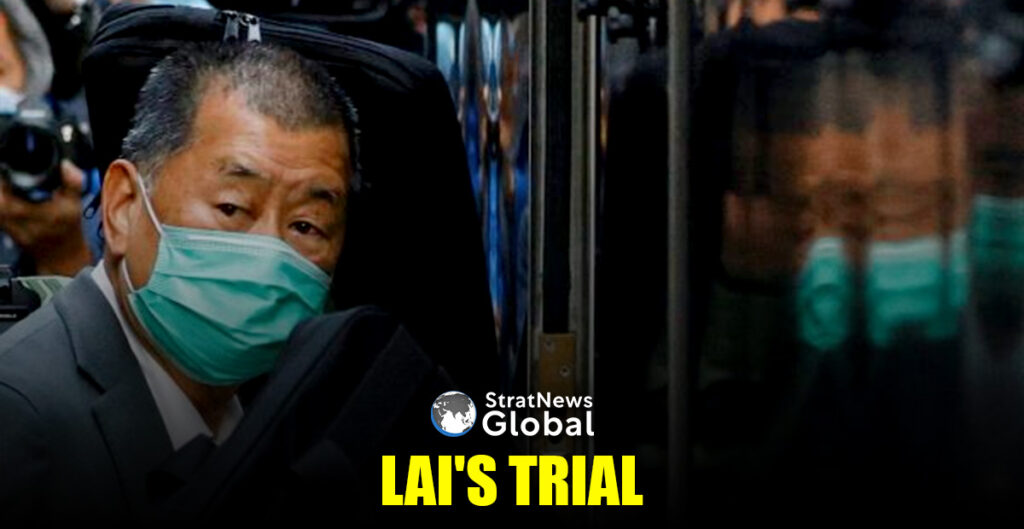
Hong Kong: Lai’s Trial Puts Free Speech, Judiciary Under Spotlight
In the final phase of a high-profile national security trial, the lawyer for Hong Kong media tycoon Jimmy Lai argued on Wednesday that standing up for individual rights should not be treated as a crime.
Lai, 77, who founded the pro-democracy Apple Daily newspaper, has pleaded not guilty to two charges of conspiracy to collude with foreign forces, and a charge of conspiracy to publish seditious material. He faces a maximum life sentence.
Test Of Judicial Independence
The trial is widely seen as a test for judicial independence in the financial hub under national security laws that were imposed by China in 2020 in response to mass pro-democracy demonstrations.
Lai, a longstanding critic of the Chinese Communist Party, is one of the most high-profile figures to face prosecution under the law. His trial has been condemned by some countries like the United States as politically motivated.
Basic Rights And Freedom
Hong Kong and Chinese authorities say Lai is being given a fair trial.
Lai’s lawyer Robert Pang, who began his final legal submission on Wednesday, said Lai had been defending and exercising basic rights.
“It is not wrong to support freedom of expression. It is not wrong to support human rights,” Pang told the three-judge panel that is expected to deliver a verdict later this year once this current round of final legal submissions is concluded after around one week.
“It is not wrong to try to persuade the government to change its policy. Nor is it wrong not to love a particular administration or even the country, because … you can’t force someone to think in one way or another,” Pang added.
Judge Counters Defence Arguments
One of the judges, Esther Toh, said that this was not what the prosecution argued. “It’s not wrong not to love the government, but if you do that by certain nefarious means, then it’s wrong,” Toh said.
Pang also disputed the prosecution’s citing of 161 articles published by the Apple Daily between April 1, 2019, and June 24, 2021, as seditious, saying they were “insufficient to draw any inference” of a conspiracy.
Prosecution Labels Lai ‘Mastermind’
The prosecution alleges that Lai colluded with overseas officials including those in the first Trump administration to impose sanctions or conduct hostile activities against Chinese and Hong Kong authorities, including trade embargoes.
Earlier on Wednesday, the prosecution wrapped up its final submission, saying there was “overwhelming evidence” to show Lai was the “mastermind” of the alleged conspiracy to collude with foreign forces.
Alleged Links To Advocacy Groups
It added that Lai had done nothing to stop illegal activities engaged in by other co-conspirators and through advocacy groups critical of China, such as “Stand With Hong Kong” and the Inter-Parliamentary Alliance on China (IPAC).
Lai, whose health is fragile according to his family, was provided with a heart monitor and medication after the court was told that he had suffered heart “palpitations”.
Over 320 people have been arrested under the national security laws so far, including prominent activist Joshua Wong who is serving a 4-year, 8-month prison term for subversion, and now faces a fresh security charge.
(With inputs from Reuters)